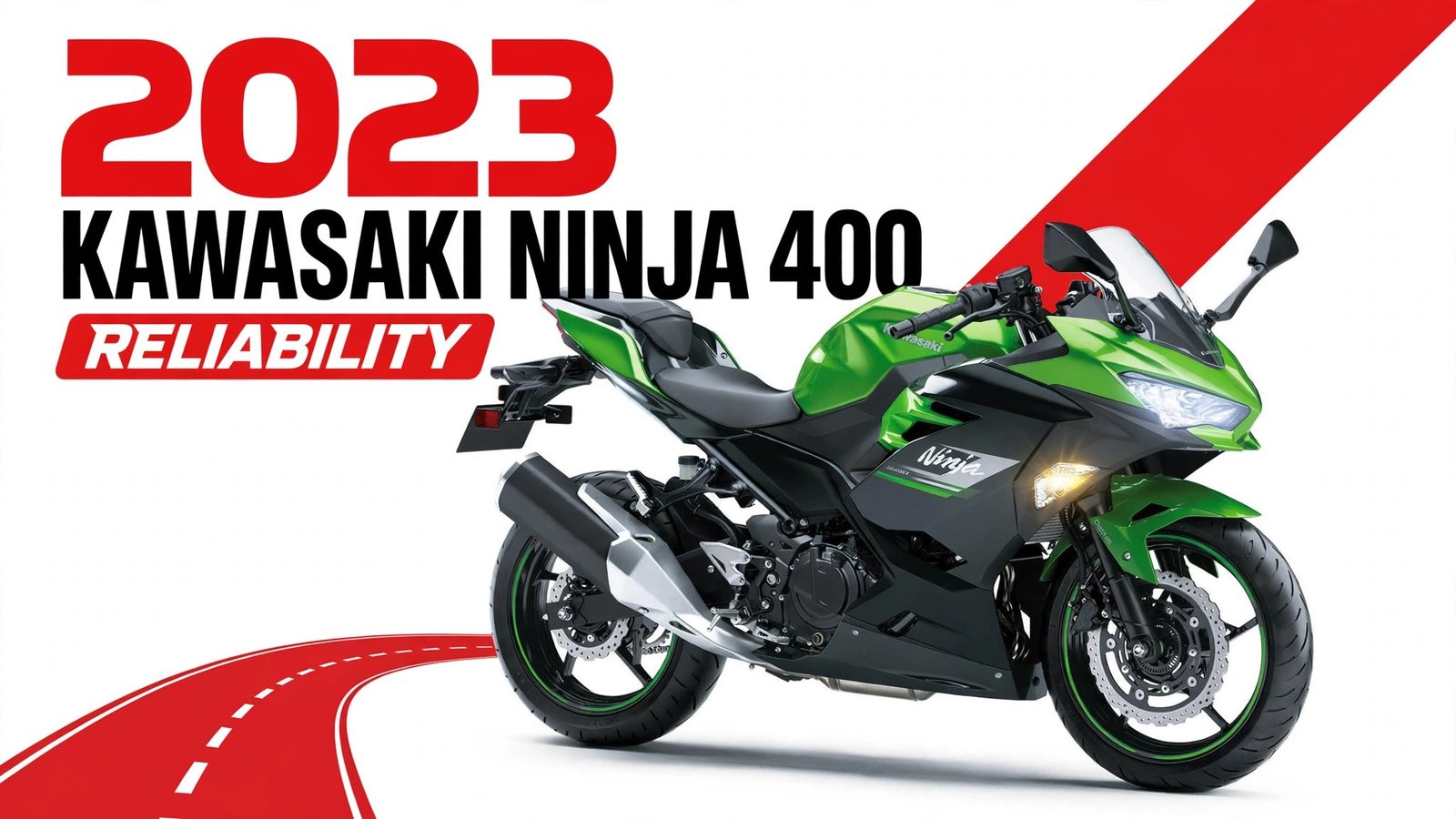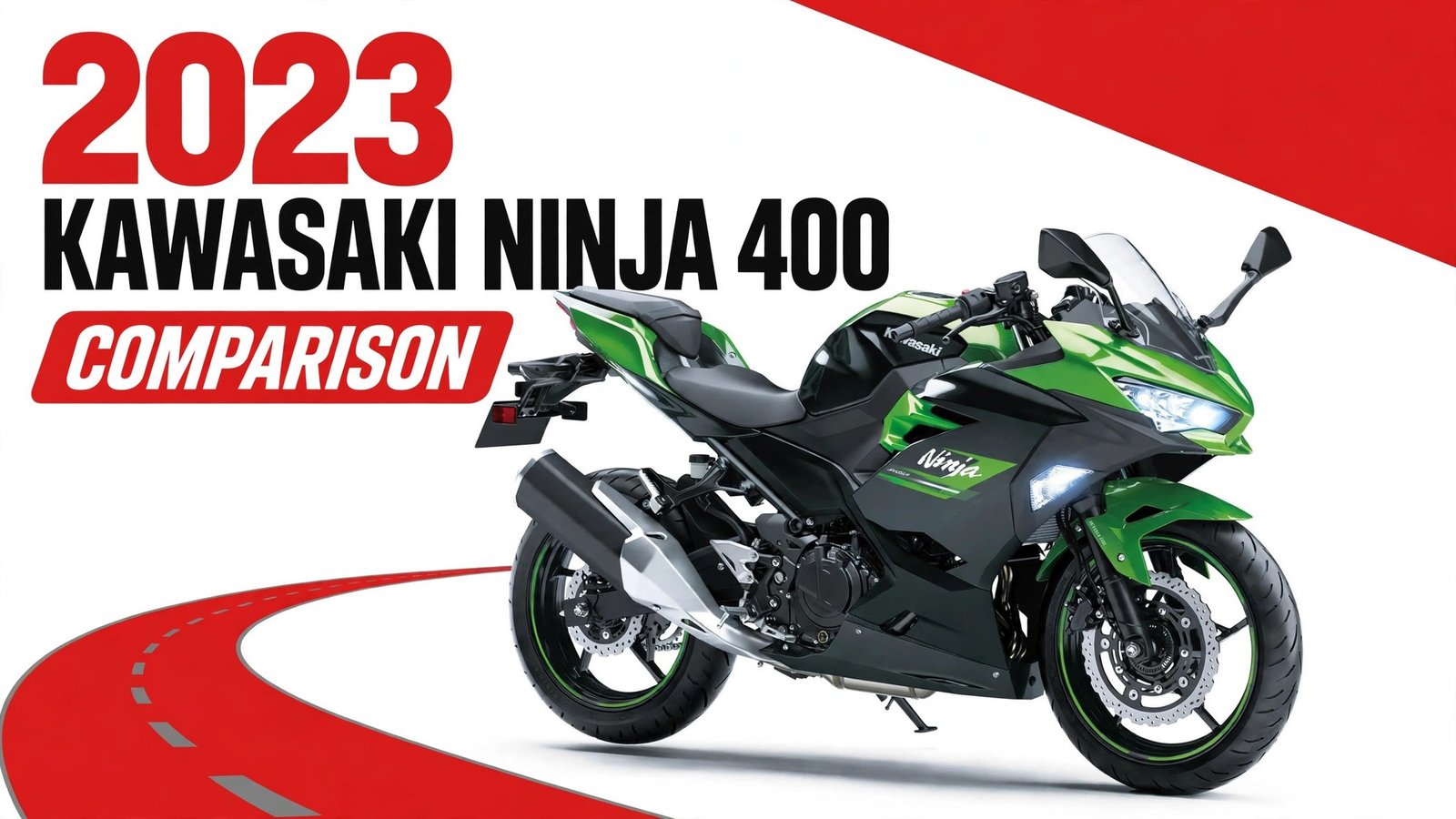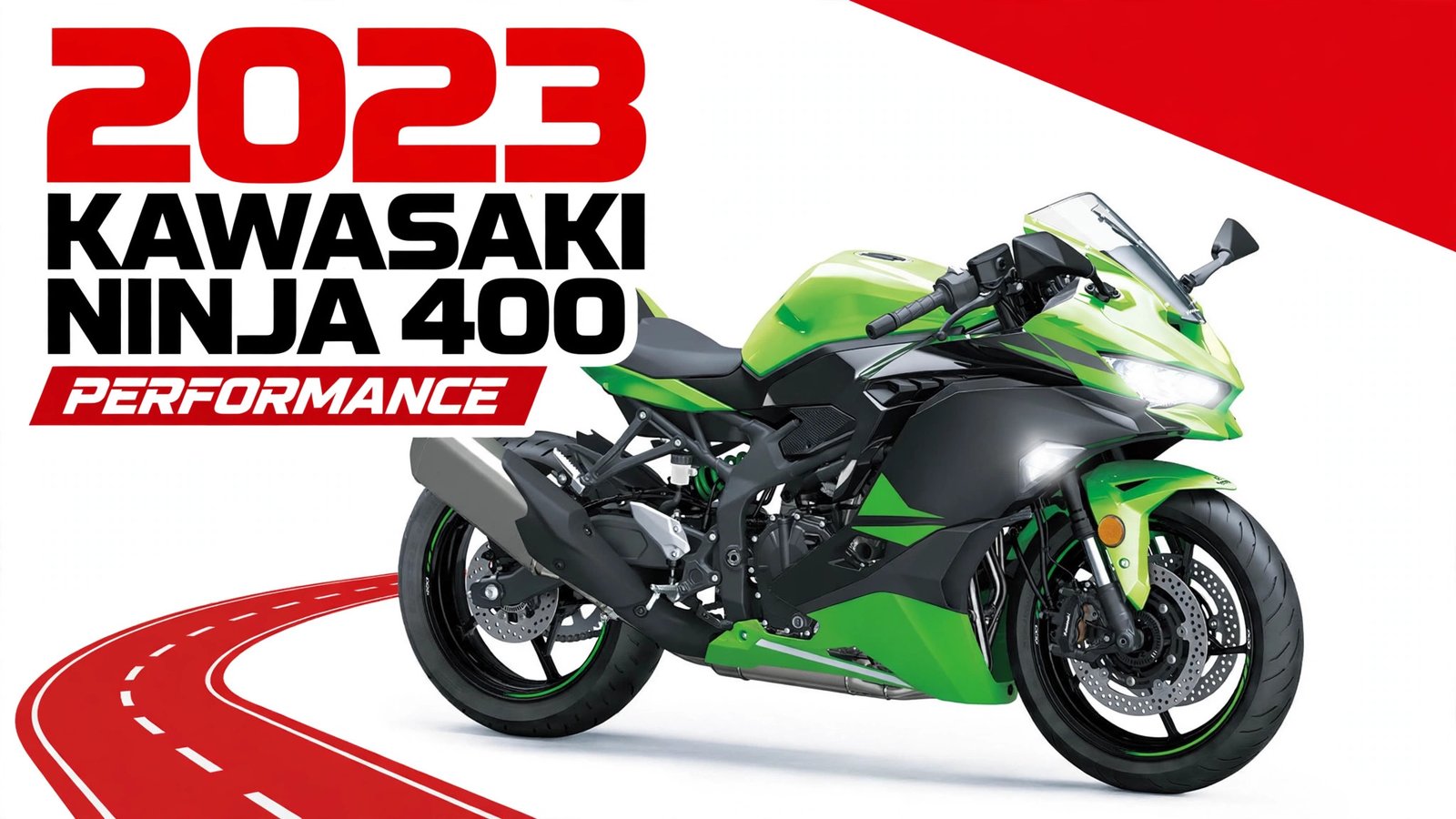
Four numbers define this Kawasaki Ninja 400 performance guide before a single paragraph of opinion: 44 rear-wheel horsepower, 4.63 seconds to 60 mph, 43.6 miles per gallon in a published test, and 31 feet shorter than the Yamaha YZF-R3 from 60 mph to a stop. Those are not brochure claims. They are instrumented results from Motorcycle.com and Cycle World, and they explain why the 400 won its class shootout in 2018 and still sets the pace for used lightweight sport bikes today.
The short answer is that the 400 is quick where it counts and honest everywhere else. It has no official top speed, because Kawasaki never published one, and the fastest figure you will find online traces to an aggregator that should never be cited. This Kawasaki Ninja 400 performance guide prints only what testers actually measured: the dyno runs, the acceleration times, the braking distances, the fuel economy, and the long-term test that ran for thousands of kilometres.
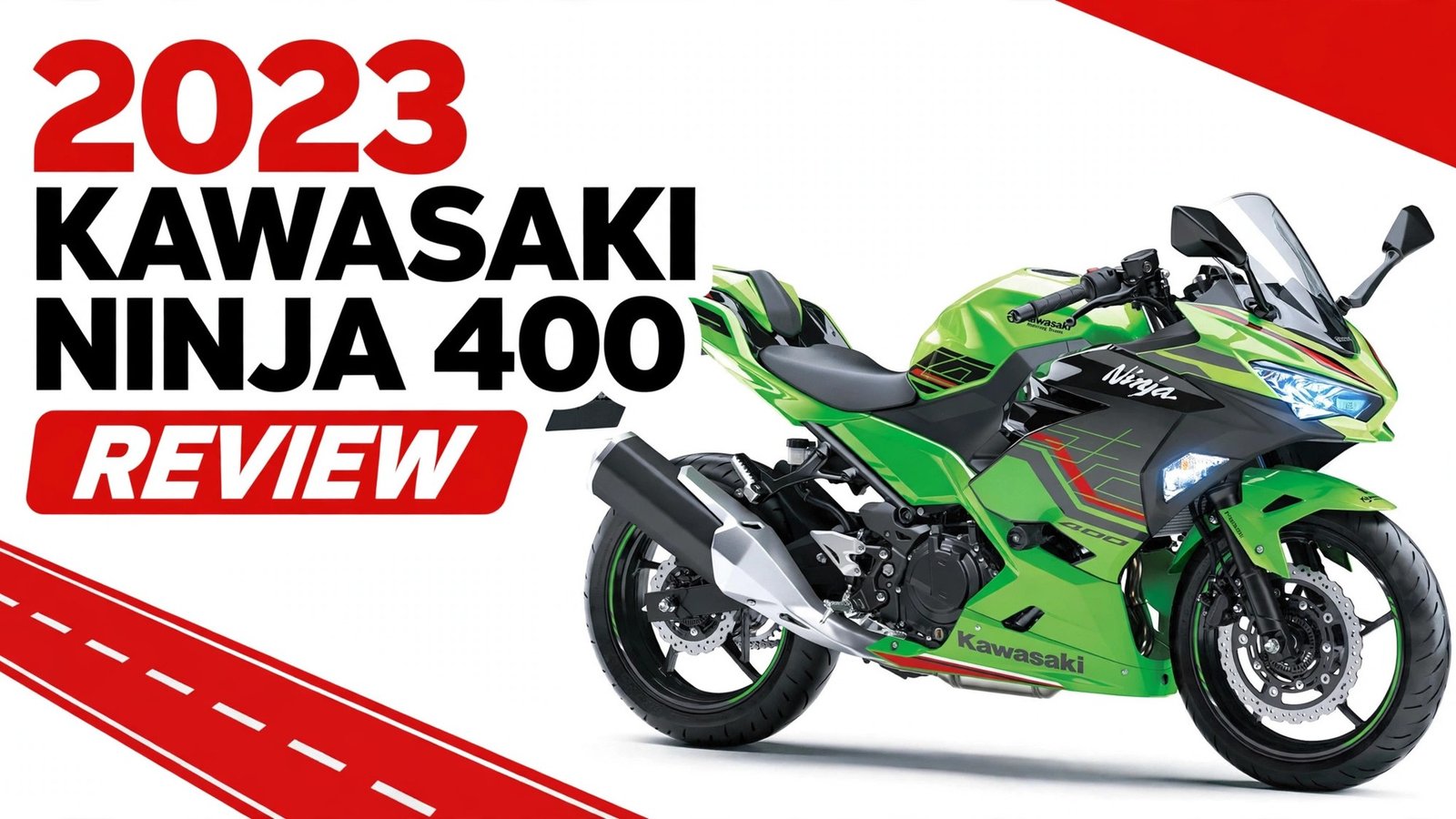
The bike itself is the 2018–2023 American Ninja 400, a 399cc parallel twin with a 30.9-inch seat, a 3.7-gallon tank and a 366-pound wet weight with ABS. It was replaced in the United States by the Ninja 500 for 2024, so every figure here comes from the six model years the bike was actually sold here.
Kawasaki Ninja 400 Engine Performance and Power Delivery
The engine is where this Kawasaki Ninja 400 performance guide starts, because the 399cc twin is the reason the bike won its shootout. Kawasaki built a new parallel twin for the 400 rather than boring out the 300’s motor, with a 70.0 mm bore, a 51.8 mm stroke, an 11.5:1 compression ratio and dual 32 mm throttle bodies, and the result is an engine that pulls cleanly from low revs and keeps pulling to its 10,000 rpm power peak.
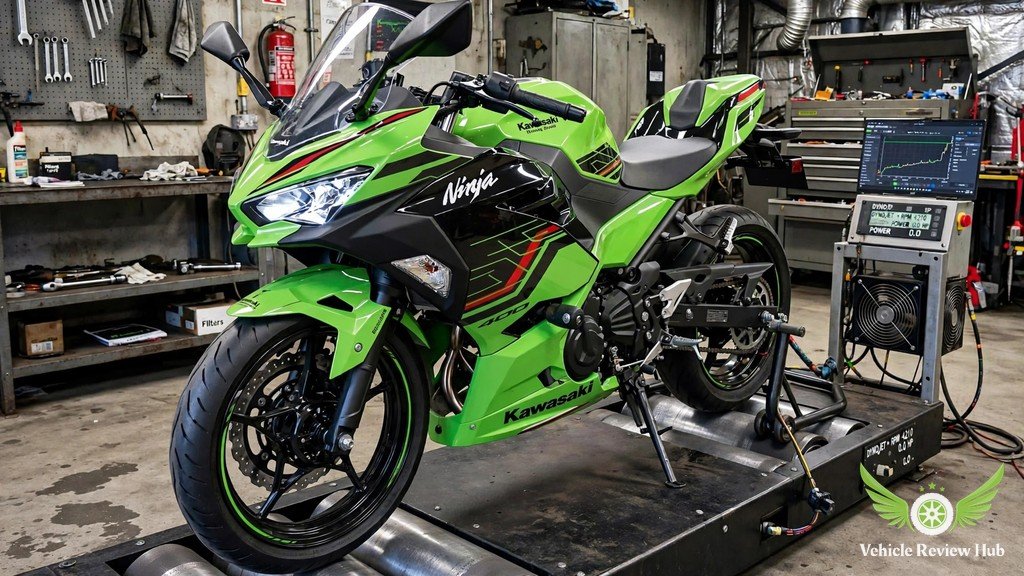
44 Rear-Wheel HP (Motorcycle.com)
Motorcycle.com measured 44 horsepower at the rear wheel at 10,000 rpm on its 2018 first ride, and that figure is the headline of this Kawasaki Ninja 400 performance guide because three other independent dyno runs agree with it almost exactly. The same outlet measured 43.7 horsepower and 24.6 pound-feet of torque in its 2018 shootout; Cycle World measured 43.4 horsepower at 9,900 rpm with 24.7 pound-feet at 8,300 rpm, and Motorcyclist measured 43.3 horsepower at 9,900 rpm with 24.6 pound-feet at 8,250 rpm. Four published dyno runs agree within 0.7 horsepower.
RevZilla’s 2018 first ride noted that Kawasaki USA is usually tight-lipped regarding horsepower gains, so the dyno is the only honest number for the American bike. The global claim is 45 PS at 10,000 rpm, with full-power markets claiming 48 to 49 PS, but none of those numbers is an American claim. Torque on the American spec sheets is 38 Nm, or 28.0 pound-feet, at 8,000 rpm. This Kawasaki Ninja 400 performance guide prints the dyno figures instead of a claimed number, because Kawasaki USA never gave us one.
| Source | Rear-wheel power | Torque | Engine speed |
|---|---|---|---|
| Motorcycle.com first ride, 2018 | 44 hp | Not published | 10,000 rpm |
| Motorcycle.com 2018 shootout | 43.7 hp | 24.6 lb-ft | 10,000 rpm |
| Cycle World 2019 comparison | 43.4 hp | 24.7 lb-ft | 9,900 rpm |
| Motorcyclist 2018 comparison | 43.3 hp | 24.6 lb-ft | 9,900 rpm |
Notes: all four figures are Dynojet rear-wheel measurements from published tests, not manufacturer claims. The 44 hp headline comes from Motorcycle.com’s first ride, and the other three runs sit within 0.7 hp of it. Kawasaki USA publishes no power or torque figure for this bike; the 38 Nm (28.0 lb-ft) torque figure is from the American spec sheets.
Won the 2018 Shootout Overall
The 400 did not just post a good dyno number. It won Motorcycle.com’s 2018 Lightweight Sportbikes Shootout outright, scoring 89.4 percent overall against the KTM RC 390 at 88.0 percent and the Honda CBR500R at 81.1 percent. The test ran on June 22, 2018, and the 400 was the winner overall and the objective leader on the track segment, though the RC 390 scored marginally higher on the objective total on braking. Cycle World named the 2018 Ninja 400 one of its Ten Best Bikes in the lightweight streetbike class.
The shootout result matters for this Kawasaki Ninja 400 performance guide because it was not a paper win. The testers rode all three bikes back to back on the same track and the same roads, and the 400 won on the combination of its engine, its chassis and its brakes. The CBR500R finished third at 81.1 percent despite its bigger 471cc twin. That win is the centrepiece of this Kawasaki Ninja 400 performance guide.
| Bike | Overall score | Objective score |
|---|---|---|
| Kawasaki Ninja 400 | 89.4% | 98.5% |
| KTM RC 390 | 88.0% | 99.8% |
| Honda CBR500R | 81.1% | 84.3% |
Notes: scores are from Motorcycle.com’s 2018 Lightweight Sportbikes Shootout, published June 22, 2018, at Laguna Seca and on the street. The RC 390’s higher objective score came from its braking; the 400 won the overall result and the track segment. This Kawasaki Ninja 400 performance guide treats the shootout as the bike’s defining test result, not as a marketing claim.
Kawasaki Ninja 400 Top Speed and Acceleration
Top speed and acceleration are where this Kawasaki Ninja 400 performance guide has to be careful, because the most-quoted top-speed figure for this bike is wrong. Two independent published tests agree on the acceleration — 4.63 seconds to 60 mph and a 13.19-second quarter-mile — but no tester ever published an official top speed, and Kawasaki never claimed one. The honest answer is a speedometer observation and an estimate, and this Kawasaki Ninja 400 performance guide says exactly that.
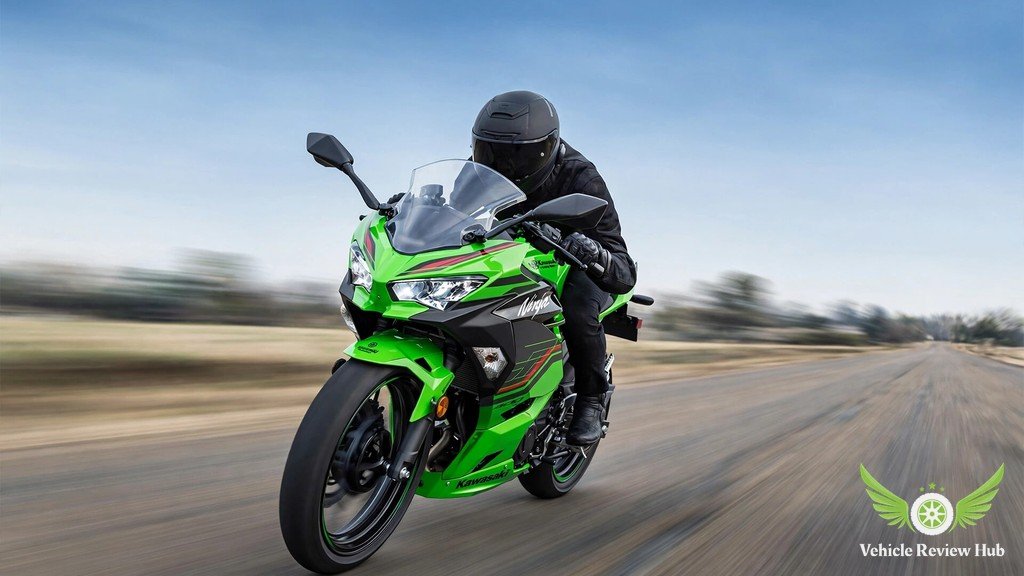
No Official Figure Is Published
Kawasaki publishes no top speed for the Ninja 400, and that silence is itself a fact worth recording in this Kawasaki Ninja 400 performance guide. The manufacturer lists power and torque for some markets and neither for the United States, and it lists no top speed anywhere. The most common precise number, 116.7 mph, traces to MotoStatz, an aggregator this guide never cites, and is scraped verbatim by other aggregator sites. It is not an instrumented test result, and this Kawasaki Ninja 400 performance guide does not print it.
No Official Top Speed — What the Tests Say
What the tests actually say is more useful than a single invented number. On Motorcycle.com’s first ride, the rider saw 127 mph on the speedometer and estimated an actual top speed of about 120 mph, which is the best citable observation available. Fastestlaps lists 117 mph as a labelled aggregator figure, not a test result. ZA Bikers, in its long-term test of the SE, reported the bike climbing to 12,000 rpm at over 190 km/h indicated, about 118 mph on the dial. Three independent observations cluster around 117 to 120 mph actual, and that cluster is what this Kawasaki Ninja 400 performance guide prints.
The acceleration figures are far firmer. Cycle World’s 2019 comparison and Motorcyclist’s 2018 five-bike comparison both measured 0 to 60 mph in 4.63 seconds, agreeing to the hundredth of a second. Cycle World measured the quarter-mile in 13.19 seconds at 102.5 mph, while Motorcyclist measured 13.50 seconds at 97.42 mph, and Cycle World measured 0 to 100 mph in 12.63 seconds. The roll-ons tell the same story: Cycle World measured 40 to 60 mph in 4.07 seconds and 60 to 80 mph in 4.38 seconds. A used buyer should treat 4.63 seconds and 13.19 seconds as the tested numbers and ignore faster aggregator claims.
Kawasaki Ninja 400 Mileage and Fuel Economy
Fuel economy is the quiet surprise in this Kawasaki Ninja 400 performance guide. The 400 is fast enough to win a shootout and frugal enough to run 161 to 185 miles on a 3.7-gallon tank. The published tests agree on the range, and this Kawasaki Ninja 400 performance guide shows the arithmetic.
43.6 MPG Tested, 50 in Shootout
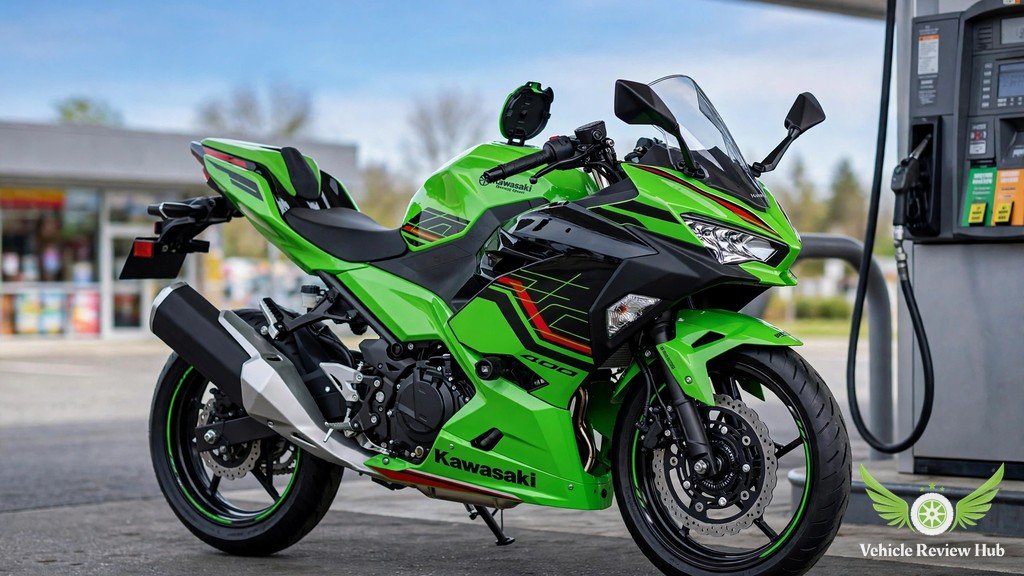
Cycle World’s 2019 comparison measured 43.6 miles per gallon for the Ninja 400 against 43.4 for the YZF-R3, and MCN quotes the same Cycle World figure. The same outlet measured 45.9 mpg for the 400 against the Z400’s 45.4 mpg in a 2019 twin test, for about a 166-mile range. The 2018 shootout, ridden harder on track and street, returned about 50 mpg for the Ninja and the RC 390, with the Honda running past 60. Owners report more: 50.4 to 56.8 mpg for 2021–2023 models, and a Fuelly owner-reported 2021 average of 57.07 mpg. The 43.6 mpg figure is the tested number this Kawasaki Ninja 400 performance guide leads with, because it comes from a controlled comparison rather than from a fuel log.
One figure does not belong here. A lab estimate of 68.2 mpg, cited from EPA certification data, circulates online, but it is a laboratory figure, never real-world mileage. A buyer who budgets on 68 mpg will be disappointed at the pump.
| Test or source | Fuel economy | Range on 3.7 gallons |
|---|---|---|
| Cycle World 2019 comparison | 43.6 mpg | 161 miles |
| Cycle World 2019 vs Z400 | 45.9 mpg | 170 miles |
| 2018 shootout | About 50 mpg | 185 miles |
| Fuelly owner-reported, 2021 average | 57.07 mpg | About 211 miles |
Notes: the 43.6 and 45.9 mpg figures are Cycle World test measurements; the shootout figure is an approximate test average; the Fuelly figure is owner-reported and labelled as such. Ranges are the arithmetic of 3.7 gallons multiplied by each figure: 3.7 × 43.6 = 161.3, 3.7 × 45.9 = 169.8, 3.7 × 50 = 185, 3.7 × 57.07 = 211.2. The EPA lab estimate of 68.2 mpg is not printed as real-world mileage anywhere in this Kawasaki Ninja 400 performance guide.
Range Lands Around 161 to 185 Miles
The range in this Kawasaki Ninja 400 performance guide follows directly from the tank and the mileage. The 400 carries 3.7 gallons, smaller than the 300’s 4.5, and at the tested 43.6 mpg that gives 161 miles, while at the shootout’s 50 mpg it gives 185 miles. The practical range sits inside that band, and the fuel light comes on with roughly a gallon left, another 40 to 50 miles of reserve.
The smaller tank is the one real compromise in the 400’s performance package. It costs nothing in speed and nothing in handling, but it costs a fuel stop on a long day that the 300 would not have needed. This Kawasaki Ninja 400 performance guide counts that as a trade worth making: the 400 is 17.6 pounds lighter than the 300 and makes about 9 more rear-wheel horsepower, 44 against 35.
Kawasaki Ninja 400 Real-World Riding Experience
Numbers on a page do not win races, and this Kawasaki Ninja 400 performance guide would be incomplete without the two kinds of evidence that only come from riding the bike for years: what it did on track, and what it did over thousands of kilometres of ordinary ownership. The 400’s record on both counts is unusually strong for a bike that cost $4,999 at launch. Both records are documented in published tests, and this Kawasaki Ninja 400 performance guide quotes them, not owner folklore.
Track Pedigree: Junior Cup Dominance
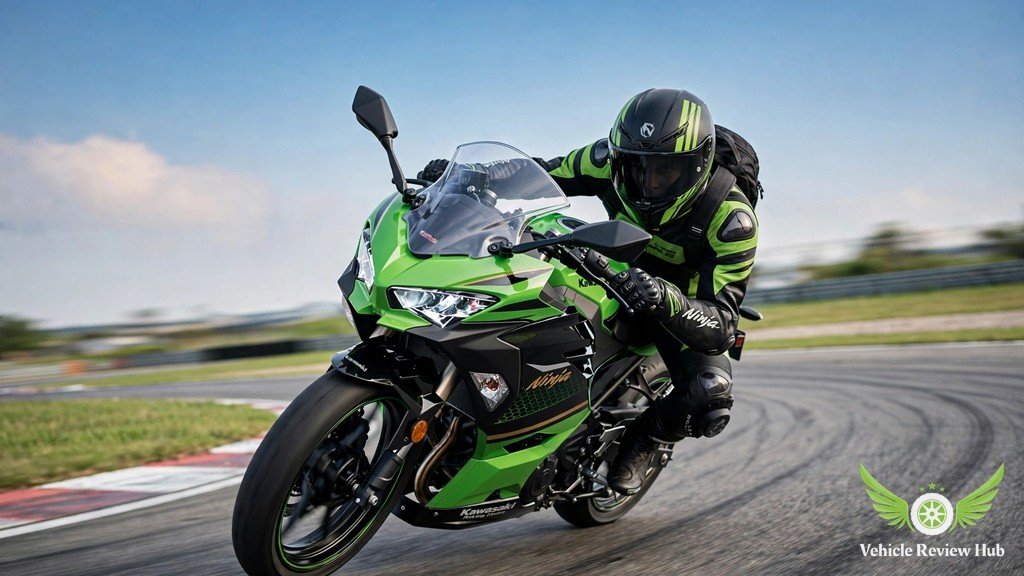
The 400’s track crown is the 2018 shootout win plus its dominance of MotoAmerica’s Junior Cup, where it became the dominant lightweight-race machine and the class’s most-used bike. That is the pedigree this Kawasaki Ninja 400 performance guide claims, and it is deliberately framed that way, because no 2022 head-to-head win exists to claim instead. The 2022 KTM RC 390 was redesigned that year with new bodywork, a bigger airbox and WP Apex suspension, and NastyNils’ 2022 comparison gives the redesigned RC 390 a narrow track edge, largely on its stronger brakes.
At Chuckwalla, Cycle World’s test showed what the 400 does best on track, and this Kawasaki Ninja 400 performance guide quotes it because the numbers are measured, not claimed. The Ninja was up to 8 mph quicker than the R3 on the main straight, with a 4.2-second lap advantage, and Cycle World called that straight-line advantage a big deal at Chuckwalla. The lap time came from the engine rather than from cornering: the R3’s flickable chassis beats the 400 in transitions, and the 400 makes its time back on the straight. That split is the honest picture of the bike on track: fastest where the engine matters, second-best where the chassis matters.
ZA Bikers’ Long-Term SE Test (2021)
The long-term evidence comes from ZA Bikers’ test of the Ninja 400 SE, published on August 25, 2021, with 3,000 kilometres on test and about 8,000 kilometres total on the bike. The test ran long enough to cover what a first ride cannot: how the engine feels after break-in, how the bike behaves on ordinary roads, and whether anything wears out or loosens up. The SE climbed to 12,000 rpm at over 190 km/h indicated, about 118 mph on the dial, which sits neatly with the Motorcycle.com estimate of about 120 mph actual. Bike Review Australia’s 5000-kilometre update agrees: the bike’s performance does not fade with miles.
Long-term tests matter for this Kawasaki Ninja 400 performance guide because the 400 is now a used-bike purchase: a buyer is buying the bike’s fifth or sixth year, not its first. The ZA Bikers test shows a bike that still pulls to its redline after 8,000 kilometres, and the Australian update shows the same after 5,000. A 2020-onwards bike, with the revised clutch hardware, is the version a buyer should look for.
Kawasaki Ninja 400 Handling, Braking and Stability
Handling and braking are where this Kawasaki Ninja 400 performance guide finds the bike’s biggest measured advantage over its closest rival, and also its most honest weakness. The 400 stops 31 feet shorter than the R3 from 60 mph and is also the most stable and predictable of the bikes Cycle World tested. But the fork that delivers that stability is non-adjustable, and it shows its limits under hard braking.
Handling, Braking and Stability on Real Roads
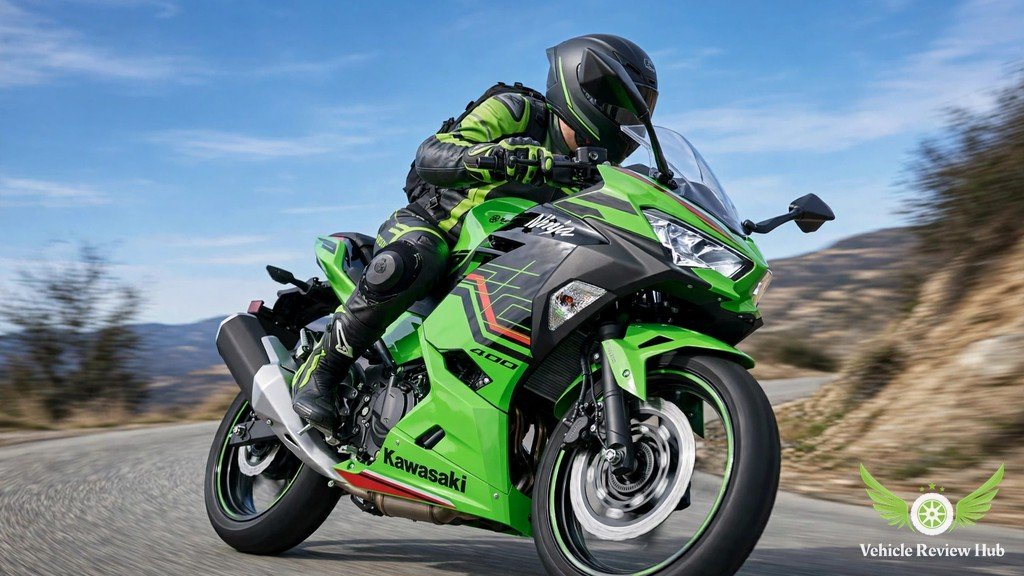
Cycle World’s 2019 comparison, the handling test this Kawasaki Ninja 400 performance guide leans on, called the 400 the most stable, the most predictable, and the easiest to ride fast of the bikes it tested, with the R3 the most fun and the RC 390 the most aggressive. The trellis frame, 24.7-degree rake, 53.9-inch wheelbase and 366-pound wet weight with ABS add up to a bike that holds a line without fuss and changes direction without drama. No wobble or weave complaints appear in the published tests, and the 30.9-inch seat puts both feet down for most riders.
The weak points are the ones testers name, not the ones owners invent. The non-adjustable 41 mm fork blows through its stroke under hard braking, according to Cycle World, and the low footpegs are the first thing to touch down at the track. The front brake, a single 310 mm petal disc with a 2-piston Nissin caliper, is adequate but the class minimum: the RC 390’s 4-piston ByBre caliper is stronger, the main reason the redesigned RC 390 edged the 400 in NastyNils’ 2022 track comparison. This Kawasaki Ninja 400 performance guide counts the handling as a strength with a known limit, not as a flaw.
Stops 31 Feet Shorter Than the R3 (60–0)
The braking numbers deserve their own heading in this Kawasaki Ninja 400 performance guide, because the old heading got them wrong. Cycle World’s 2019 test measured 60 to 0 mph in 134.6 feet for the Ninja 400 against 165.9 feet for the YZF-R3, so the 400 stops 31.3 feet shorter at 60 mph. The roughly 10-foot gap belongs to a different test: at 30 to 0 mph the 400 stops in 35.3 feet against the R3’s 45.0 feet, a gap of 9.7 feet. This Kawasaki Ninja 400 performance guide prints both with their speeds attached so the 31-foot figure is never mistaken for the 10-foot one. Fastestlaps lists 135 feet for the 400’s 60–0 stop, which agrees with Cycle World’s 134.6.
| Braking test | Kawasaki Ninja 400 | Yamaha YZF-R3 | Gap |
|---|---|---|---|
| 60–0 mph | 134.6 ft | 165.9 ft | 31.3 ft shorter |
| 30–0 mph | 35.3 ft | 45.0 ft | 9.7 ft shorter |
Notes: both distances are from Cycle World’s 2019 Ninja 400 vs YZF-R3 comparison. The 31.3-foot gap is the 60–0 figure; the roughly 10-foot gap is the 30–0 figure, and the two must not be swapped. Fastestlaps lists 135 feet for the 400’s 60–0 stop as an aggregator figure that agrees with Cycle World’s measurement. This Kawasaki Ninja 400 performance guide treats the 31-foot 60–0 gap as the bike’s biggest measured advantage over its closest Japanese rival.
Kawasaki Ninja 400 Performance Compared With Other Sport Bikes
No bike is fast in isolation, and this Kawasaki Ninja 400 performance guide ends by putting the 400 against the three bikes a buyer actually cross-shops: the KTM RC 390, the Yamaha YZF-R3 and the Honda CBR500R, with the Ninja 500 waiting as the bike that replaced it. The comparison in this Kawasaki Ninja 400 performance guide is on measured performance, not on paper, and it ends with the question every first-time buyer asks: is this the right bike to learn on?
Kawasaki Ninja 400 vs KTM RC 390
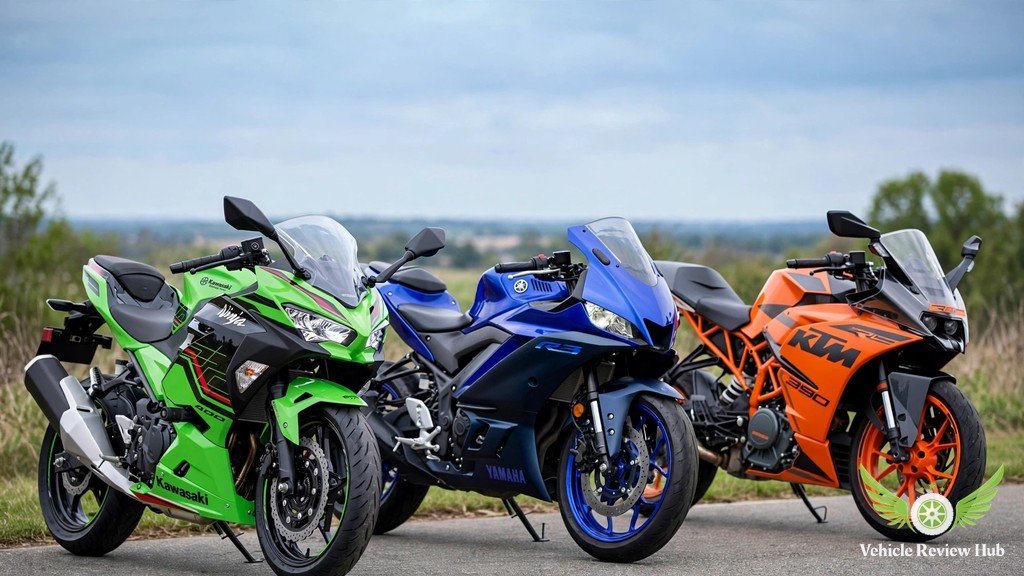
The RC 390 is the 400’s fiercest rival, and the numbers show why. The redesigned 2022 RC 390 makes 44 horsepower at 9,000 rpm from its 373cc single, the same headline figure as the 400’s 44 rear-wheel horsepower, with 27.3 pound-feet of torque and a wet weight of about 360 pounds against the 400’s 366. It carries a TFT dash, supermoto ABS, traction control and a quickshifter that the 400 does not have, and it cost $5,899 in 2024. On paper the two bikes are twins; on track the RC 390’s stronger 4-piston ByBre front brake and sharper chassis give it the edge that NastyNils’ 2022 comparison recorded, and this Kawasaki Ninja 400 performance guide records that honestly. Our Ninja 300 performance guide shows the same pattern one class down: the 300 made 35 rear-wheel horsepower in Cycle World’s test, and the 400’s 44 is the step up that the extra 103cc buys.
The YZF-R3 is the 400’s closest Japanese rival, and the measured gap is the braking table above plus the straight-line speed. The R3 makes 42 horsepower at 10,750 rpm from its 321cc twin, weighs 373 pounds wet, and costs $5,499 plus $650 destination, $6,149 delivered, for 2026. It is the more fun bike in transitions and the slower bike on the straight, and it stops 31 feet longer from 60 mph. The Honda CBR500R is the third bike in the comparison, with 47 horsepower from its 471cc twin and a 425-pound wet weight, and it finished third in the 2018 shootout at 81.1 percent despite having the biggest engine. The 400’s successor, the Ninja 500, makes 51 horsepower from 451cc and cost $5,299 at its 2024 launch. Across all four rivals, the 400’s case is the same: not the most powerful, lightest or best equipped, but the best balanced, and the shootout and braking figures prove it.
Is the Kawasaki Ninja 400 Suitable for Beginner Riders?
Yes, with one caveat, and the caveat is specific enough to act on. The 400 is A2 and learner-legal, with a 30.9-inch seat, a 366-pound wet weight, predictable handling and a gear-position indicator that tells a new rider which gear they are in, and those are the qualities that make a first bike forgiving. The Europe-only Ninja 125 performance guide covers the smaller learner bike below it, but the 400 is the bike a beginner grows into rather than out of in a season. This Kawasaki Ninja 400 performance guide recommends it as a first bike, and the recommendation is backed by the numbers in this guide rather than by enthusiasm alone.
The caveat is the clutch. On 2018–2019 bikes the clutch slips typically between 500 and 2,000 miles, because of soft springs, short pull-rod geometry and the thrust-bearing design, and Kawasaki revised the pull rod and the pressure-plate bearing for the 2020 model year. A beginner buying a 2018–2019 bike must budget for the clutch update or buy a 2020-onwards bike that already has the revised hardware. That is why the 2020-onwards bike is the sweet spot: the same 44 rear-wheel horsepower, the same 4.63-second sprint, the same 31-foot braking advantage, and a clutch that does not need fixing.
The Ninja 400 earned its reputation in six short years, and this Kawasaki Ninja 400 performance guide ends where it started: 44 rear-wheel horsepower, 4.63 seconds to sixty, 43.6 miles per gallon, and a braking gap no rival in its class could match. It was the best small sport bike of its era on the numbers this Kawasaki Ninja 400 performance guide has printed, and on the used market it still is.
Kawasaki Ninja 400 Performance Frequently Asked Questions
These are the questions riders ask most about how the Ninja 400 actually performs, answered from the instrumented tests in this Kawasaki Ninja 400 performance guide. The short version is 44 rear-wheel horsepower, 4.63 seconds to 60 mph, and no official top speed from Kawasaki.
What is the top speed of the Kawasaki Ninja 400?
Kawasaki publishes no top speed for the 400, so there is no official figure to quote. The best citable observation comes from Motorcycle.com’s first ride, where the rider saw 127 mph on the speedometer and estimated an actual top speed of about 120 mph. The aggregator fastestlaps lists 117 mph, which agrees with that estimate but is a database figure rather than a test result. This Kawasaki Ninja 400 performance guide prints the speedo observation with the estimate, because it is the only measured number available.
How fast does the Ninja 400 accelerate to 60 mph?
It takes 4.63 seconds, and two independent published tests agree on that figure to the hundredth: Cycle World’s 2019 comparison and Motorcyclist’s 2018 comparison both measured 4.63 seconds. The quarter mile took 13.19 seconds at 102.5 mph in Cycle World’s test, and 0 to 100 mph took 12.63 seconds. Those are the tested figures this Kawasaki Ninja 400 performance guide prints, and no aggregator estimate is used in their place.
How much power does the Ninja 400 make at the rear wheel?
Motorcycle.com measured 44 horsepower at 10,000 rpm on a Dynojet in its 2018 first ride, and the other published dyno runs agree closely: Cycle World measured 43.4 horsepower at 9,900 rpm and Motorcyclist measured 43.3. The global claimed figure is 45 PS at 10,000 rpm, while Kawasaki USA published no power figure at all. Torque on the US spec sheets is 38 Nm, or 28.0 lb-ft, at 8,000 rpm. That agreement across the published dyno runs is why this Kawasaki Ninja 400 performance guide uses 44 horsepower as its headline figure.
What MPG does the Ninja 400 get, and how far does a tank go?
Cycle World measured 43.6 mpg in its 2019 comparison, and the 2018 shootout returned about 50 mpg, so the realistic range on the 3.7-gallon tank is 161 to 185 miles depending on how the bike is ridden. The fuel light comes on with roughly a gallon left, which leaves about 40 to 50 miles of reserve. The EPA lab estimate of 68.2 mpg is a laboratory figure and is never printed here as real-world fuel economy. This Kawasaki Ninja 400 performance guide uses the tested 43.6 mpg as its headline number.
How does the Ninja 400 brake compared with the Yamaha YZF-R3?
Cycle World’s 2019 comparison stopped the 400 from 60 mph in 134.6 feet and the R3 in 165.9 feet, so the 400 stops 31.3 feet shorter at 60 mph. From 30 mph the gap is smaller: 35.3 feet for the 400 against 45.0 feet for the R3, which is about 10 feet. The 10-foot figure is the 30 mph gap, not the 60 mph gap, and this Kawasaki Ninja 400 performance guide prints both distances with their speeds so the two are never confused.
Is the Kawasaki Ninja 400 suitable for beginner riders?
Yes, with one caveat. The bike is learner-legal, the seat is 30.9 inches high, the weight is 366 lb with ABS, and testers call its handling the most stable and predictable in its class, which makes it a strong first sport bike. The caveat is the clutch: 2018 and 2019 bikes can slip between 500 and 2,000 miles, and Kawasaki fixed the clutch hardware for 2020. A beginner should buy a 2020-onwards bike, or buy an earlier bike with the clutch update already done and the receipt to prove it.