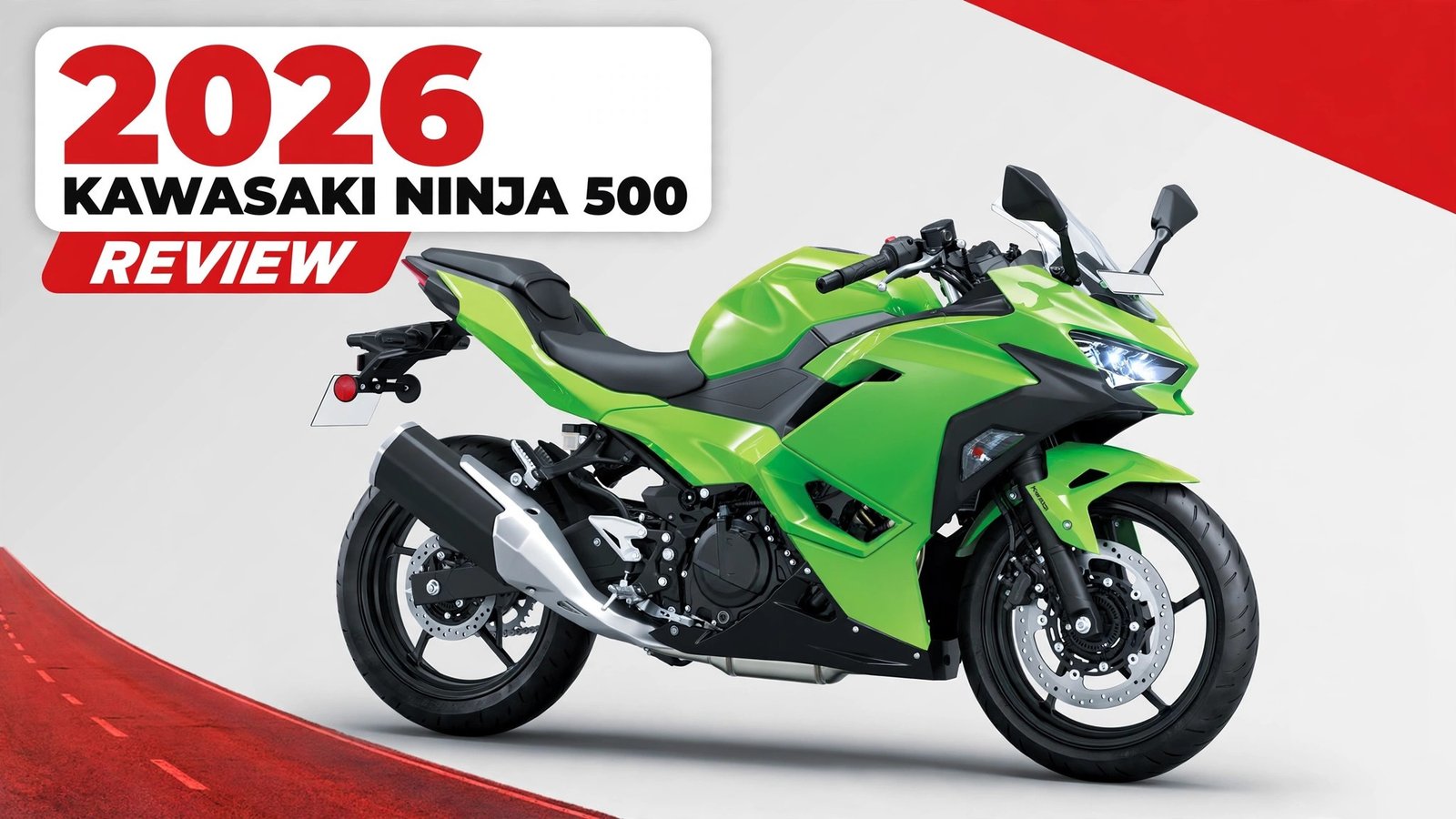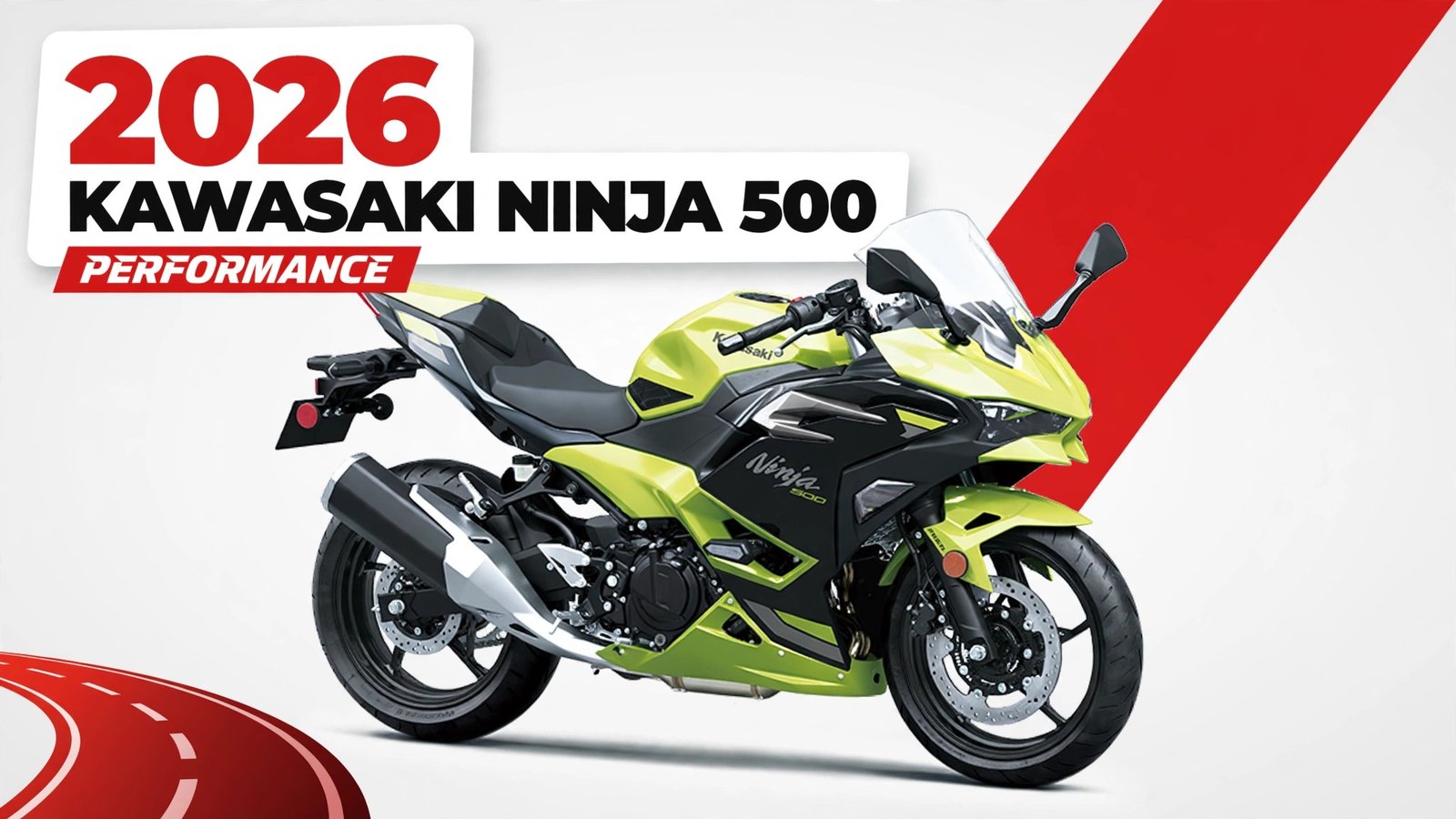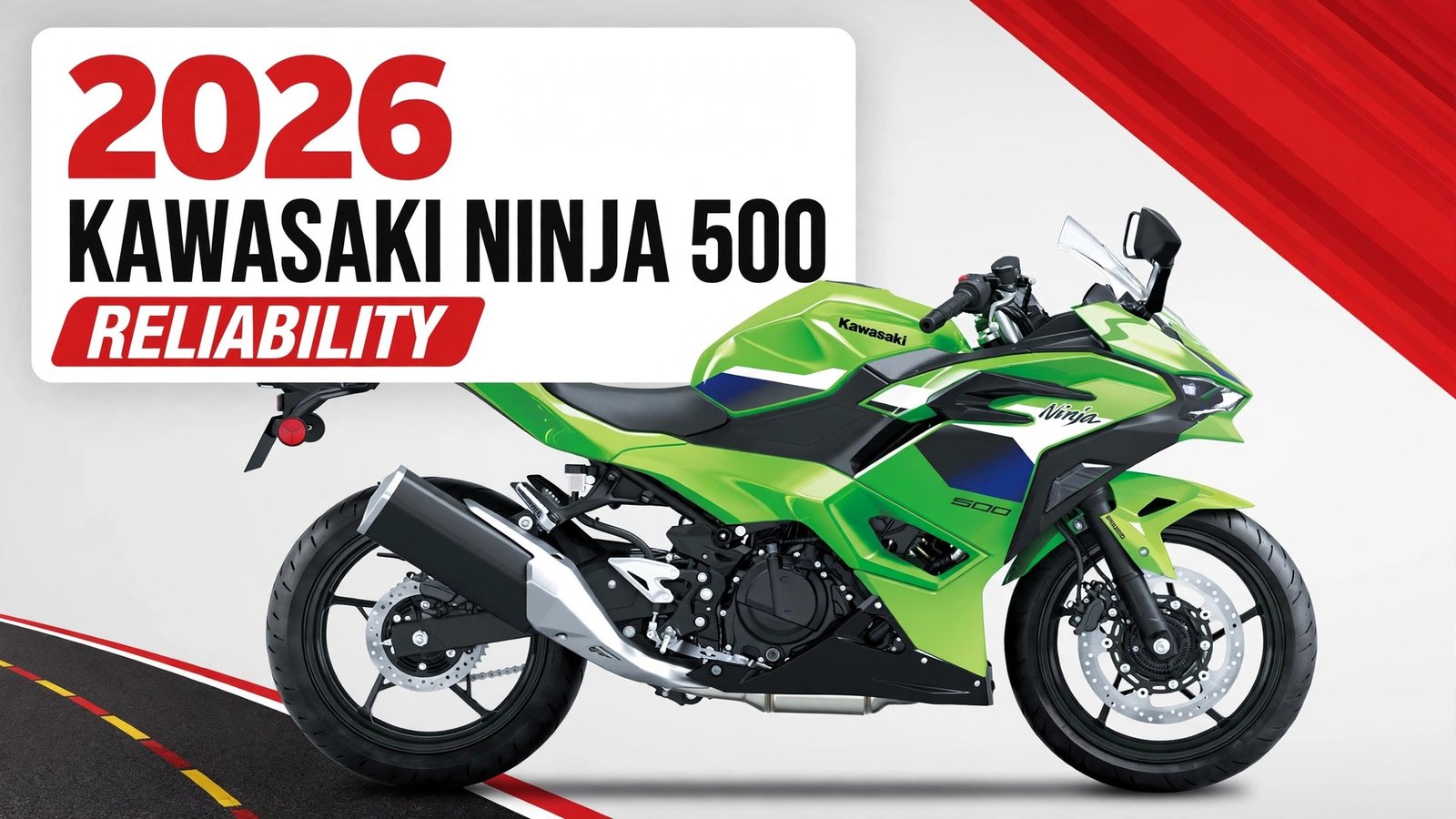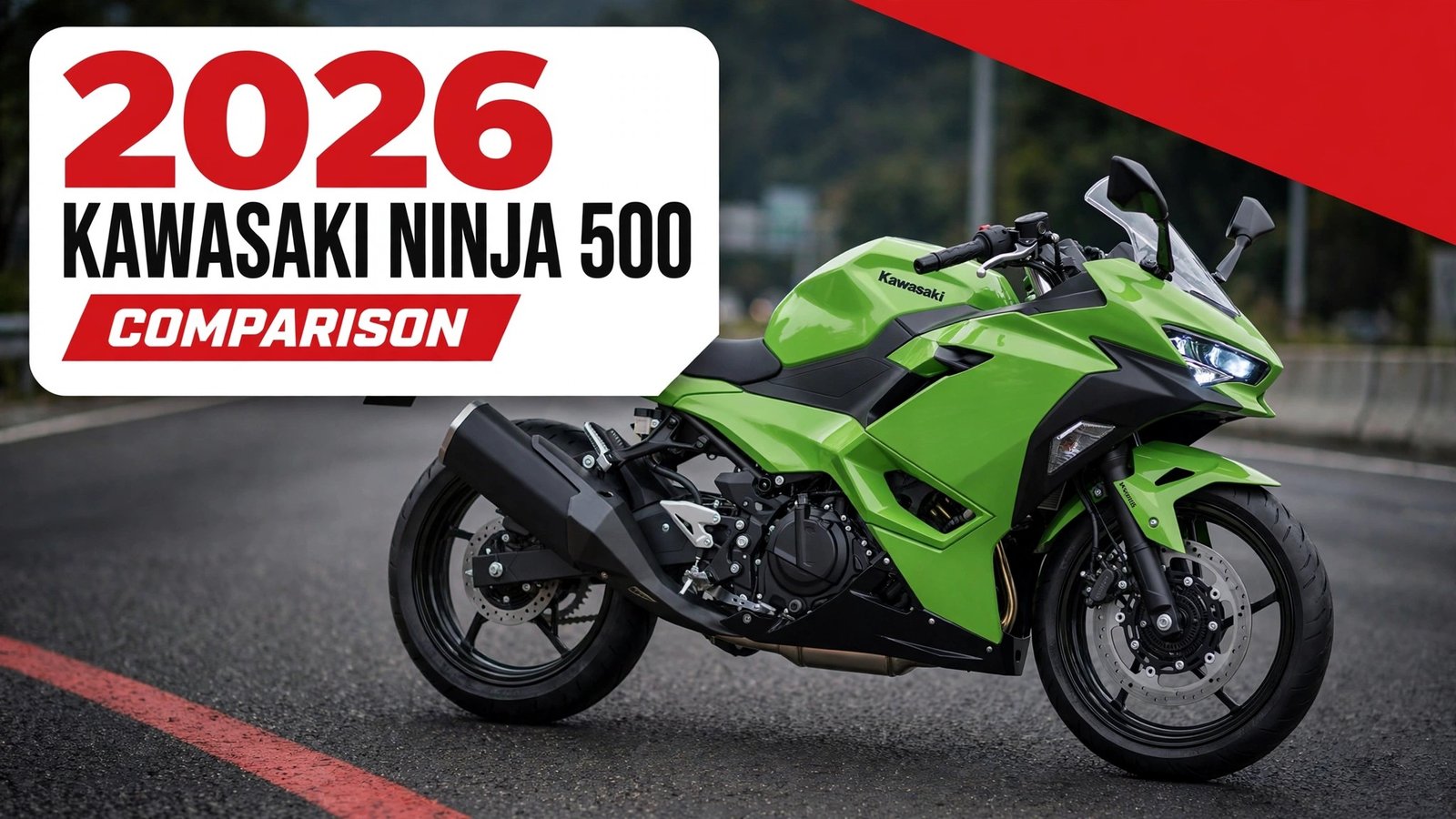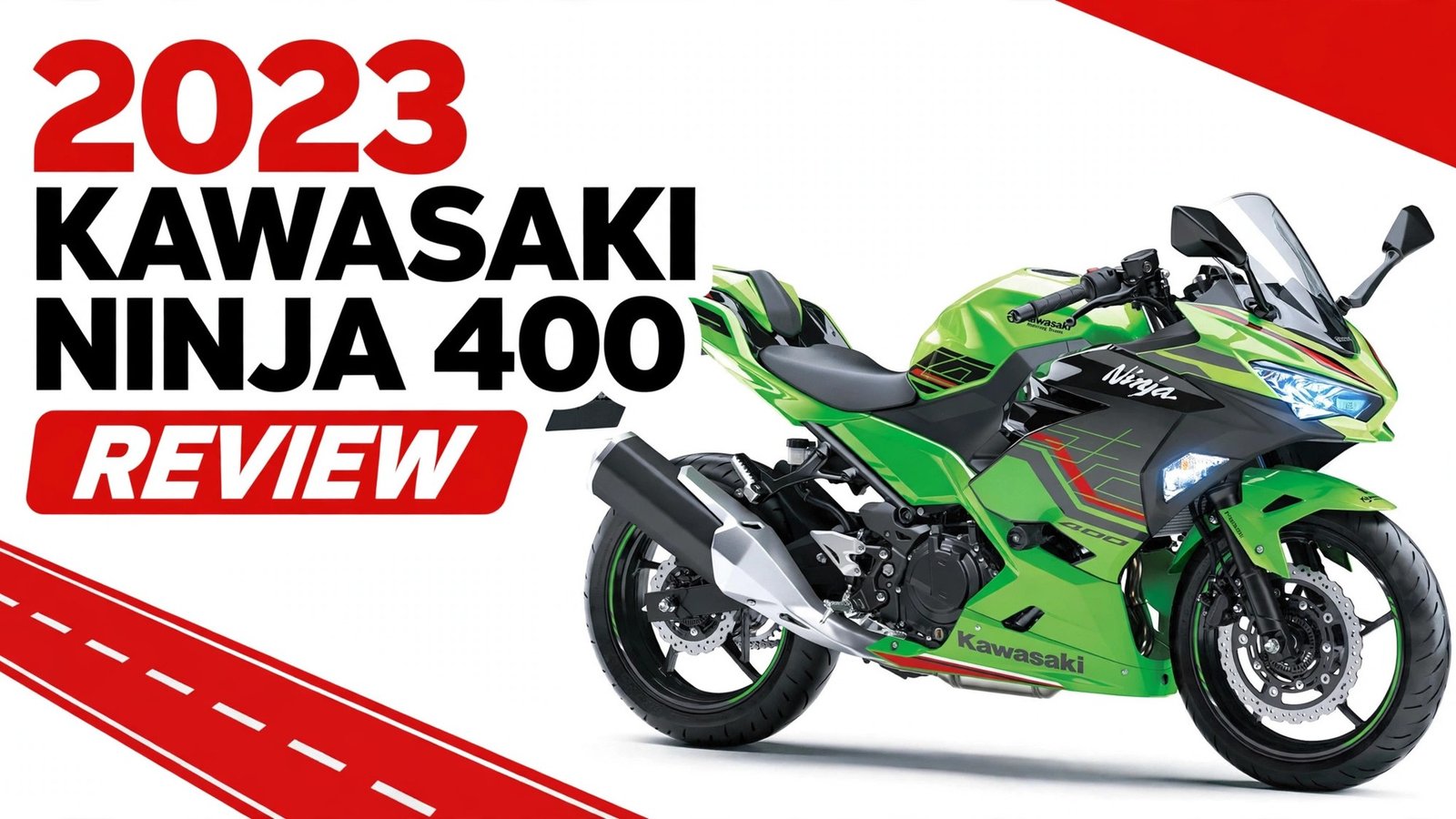
Kawasaki Ninja 400 comparison ends with the 400 still winning on value — but only as a used bike. The 400’s US run ended in 2023, so there is no new 400 to buy, and the choice is between a used 400, the Ninja 500 that replaced it, the Yamaha YZF-R3 and the Honda CBR500R. On the numbers, a clean 2020-onwards 400 under $4,500 beats all three of its rivals on price, and it still beats the R3 on braking by 31 feet from 60 mph.
This Kawasaki Ninja 400 comparison is built from the tests, not the brochures: Motorcycle.com’s 2018 shootout, Cycle World’s 2019 R3 comparison, the manual’s spec figures and live November 2026 used listings. Every price below is year-labelled and the used band is dated — a comparison that hides its date is a guess. Start with the table in the overview, then read the rival you are actually considering — that is how this Kawasaki Ninja 400 comparison is built to be used.
Kawasaki Ninja 400 Overview and Its Closest Rivals
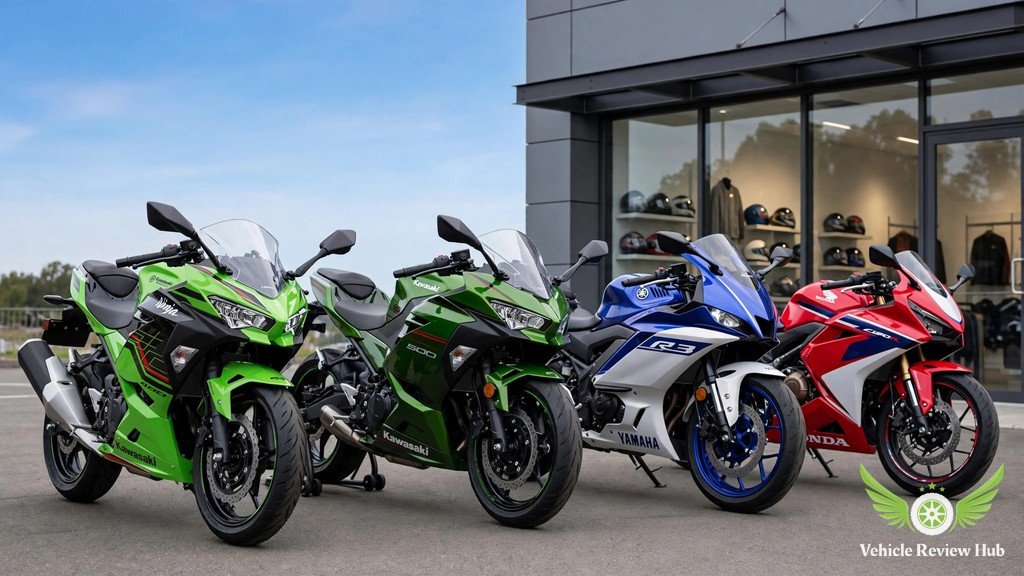
The 400 sits in the middle of Kawasaki’s small-bike family and in the middle of the class. It is bigger and lighter than the 300 it replaced and smaller and cheaper than the 500 that replaced it, and it spent its US run, 2018 to 2023, as the bike the class was measured against. This Kawasaki Ninja 400 comparison starts with the four bikes a buyer actually cross-shops, then takes them one at a time.
Motorcycle.com’s 2018 Lightweight Sportbikes Shootout video — the Ninja 400 vs the CBR500R and the KTM RC 390 at Laguna Seca, the shootout the 400 won overall with 89.4%.
Squeezed by Two Newer Ninjas
The squeeze comes from Kawasaki’s own showroom. Below the 400 sits the revived Ninja 300 — back for 2026 at $4,999 after nine years away — and above it sits the Ninja 500, the 400’s successor at $5,399 for 2026. The 400’s final-year base price was $5,299, so a buyer shopping the $5,000s on sticker price can choose a brand-new 300 at $4,999, a brand-new 500 at $5,399, or a clean used 400 — and that is the whole of this Kawasaki Ninja 400 comparison in one sentence.
The squeeze does not make the 400 a bad bike — it makes it a used-bike value. A new 300 is $300 cheaper than the 400’s final-year price but gives up 103cc, about 9 rear-wheel horsepower and 22 lb (the 300’s curb is 388.1 lb against the 400’s 366.0 lb ABS). A new 500 costs $100 more than the 400’s final-year base price and gives back 52cc and about 6 claimed horsepower. The 400’s case is that it is the only one of the three under $4,500 — and that is where this Kawasaki Ninja 400 comparison keeps coming back to.
How the Four Bikes Differ at a Glance
Four bikes, four characters: the 400 is the benchmark no longer sold new, the 500 is its bigger successor, the R3 is the lightest-feeling Japanese rival, and the CBR500R is the roomiest and the priciest. The table below puts the verified figures side by side, and the rest of this Kawasaki Ninja 400 comparison takes each rival in turn.
| Bike | Engine | Claimed power | Base price, delivered |
|---|---|---|---|
| Ninja 400 (2023, final year) | 399cc parallel twin | 45 PS global — no US figure published | $5,734 ($5,299 + $435) |
| Ninja 500 (2026) | 451cc parallel twin | 51 hp @ 10,000 rpm | $6,049 ($5,399 + $650) |
| YZF-R3 (2026) | 321cc parallel twin | 42 hp @ 10,750 rpm | $6,149 ($5,499 + $650) |
| CBR500R (2026) | 471cc parallel twin | 47 hp @ 8,500 rpm | $6,999 ($6,399 + $600) |
Notes: prices are year-labelled — the 400’s figure is its final-year 2023 base price delivered, the other three are 2026 base prices delivered. Kawasaki USA never published a power figure for the 400, so the 45 PS figure is the global claim and the dyno figure is 44 rear-wheel hp. This Kawasaki Ninja 400 comparison compares claimed figures against the 400’s global claim.
Kawasaki Ninja 400 vs Kawasaki Ninja 500
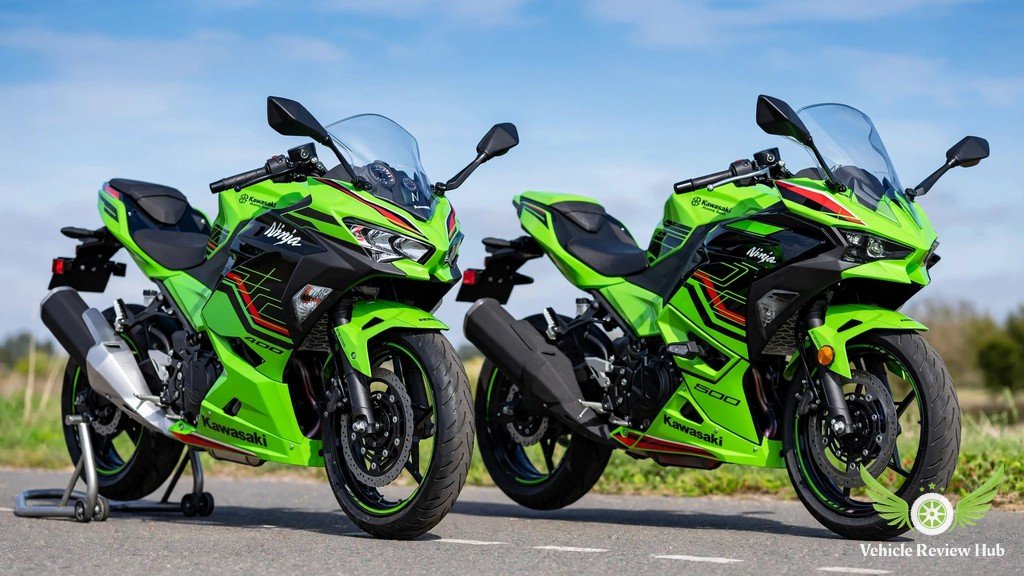
The 500 is the 400’s own successor, and the closest comparison in this Kawasaki Ninja 400 comparison — same trellis frame, same 70.0 mm bore, 6.8 mm more stroke, same 310 mm front disc and the same clutch. The question is not whether the 500 is better — it is bigger and newer — but whether it is worth about $1,500 more than a clean used 400. The 500 is the only rival in this Kawasaki Ninja 400 comparison that shares the 400’s engine family.
Engine, Specs and Performance Side by Side
The 500’s engine is the 400’s engine grown by 52cc: the bore stays at 70.0 mm and the stroke grows 6.8 mm to 58.6 mm, taking the twin from 399cc to 451cc. Claimed power rises from the 400’s global 45 PS to 51 hp at 10,000 rpm, and torque from 28.0 lb-ft at 8,000 rpm to 31.7 lb-ft at 7,500 rpm. On paper that is about 6 horsepower and about 4 lb-ft, and the 400’s own dyno figure of 44 rear-wheel horsepower is already within 7 hp of the 500’s claimed crank figure. That gap is the whole of the 500’s performance case in this Kawasaki Ninja 400 comparison.
The chassis story is continuity, not change. The 500 keeps the trellis frame, the 41 mm telescopic fork and the 310 mm front petal disc, and it keeps the assist and slipper clutch — including the same clutch components that slipped on 2018–2019 400s. Kawasaki fixed the 400’s clutch with revised parts for 2020, and the 500 carries the revised hardware — but the 500’s own clutch recall, campaign 25V-146, is a 500 recall, not a 400 recall, and this Kawasaki Ninja 400 comparison names it so a buyer searching “Ninja 400 clutch recall” is not misled. That shared clutch is why this Kawasaki Ninja 400 comparison spends a paragraph on a recall that is not the 400’s.
Price, Equipment and Which Suits Which Rider
New against new, the 500 wins the showroom and loses the wallet. The 500 launched for 2024 at $5,299 — the same as the 400’s final-year base price — and for 2026 it is $5,399 base, $5,799 ABS and $6,499 SE ABS, plus $650 destination. The SE adds a TFT dash with smartphone connectivity, which the 400 never had. A rider who wants a new bike with a warranty buys the 500; a rider who wants the same riding experience for about $1,500 less buys a used 400.
The 500 suits the rider who wants a new bike and the extra 52cc; the 400 suits the rider who wants the same riding experience for about $1,500 less.
| Item | Ninja 400 (2023) | Ninja 500 (2026) |
|---|---|---|
| Engine | 399cc parallel twin | 451cc parallel twin |
| Claimed power | 45 PS global (no US figure) | 51 hp @ 10,000 rpm |
| Torque | 28.0 lb-ft @ 8,000 rpm | 31.7 lb-ft @ 7,500 rpm |
| Clutch | Assist & slipper; 2018–2019 slip, 2020 fix | Same components; 25V-146 is the 500’s recall |
| Dash | Analogue tach + LCD, gear indicator | Updated LCD; SE adds TFT + smartphone connectivity |
| Base MSRP | $5,299 (2023, final year) | $5,399 (2026) |
| Delivered, base | $5,734 ($5,299 + $435) | $6,049 ($5,399 + $650) |
Notes: the 500’s figures are 2026 prices; the 400’s are final-year 2023 prices. The 500’s 51 hp is a claimed crank figure and the 400’s 44 hp is a rear-wheel dyno figure, so this Kawasaki Ninja 400 comparison quotes the claimed figures side by side. Prices are from Cycle World’s Ninja 500 buyer’s guide.
Kawasaki Ninja 400 vs Yamaha YZF-R3
The R3 is the 400’s closest Japanese rival and the benchmark for the braking comparison — and the bike the 400 beat on the straight at Chuckwalla by up to 8 mph. This Kawasaki Ninja 400 comparison treats the R3 as the handling rival — the bike a buyer cross-shops first.
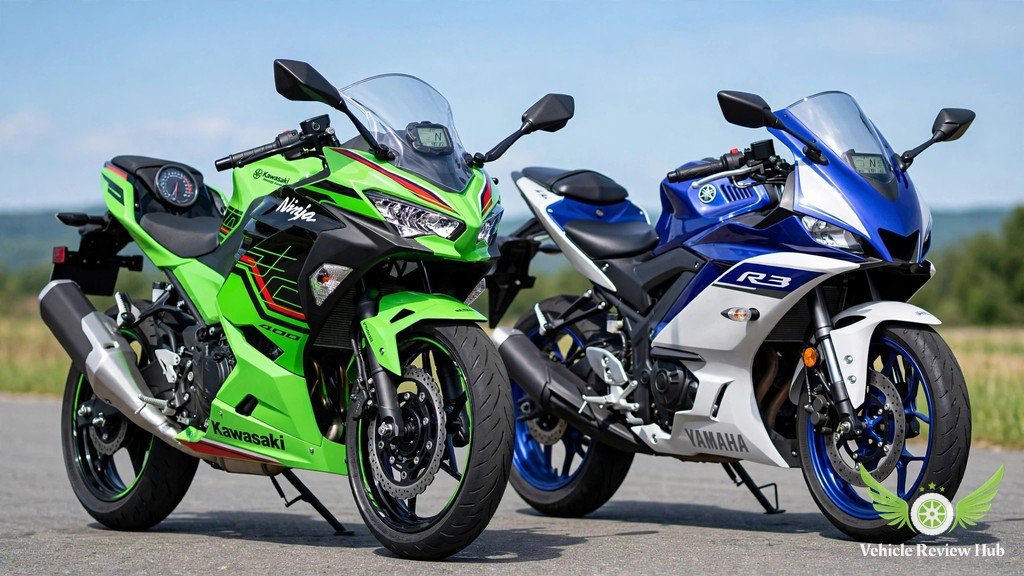
Engine, Specs and Performance Side by Side
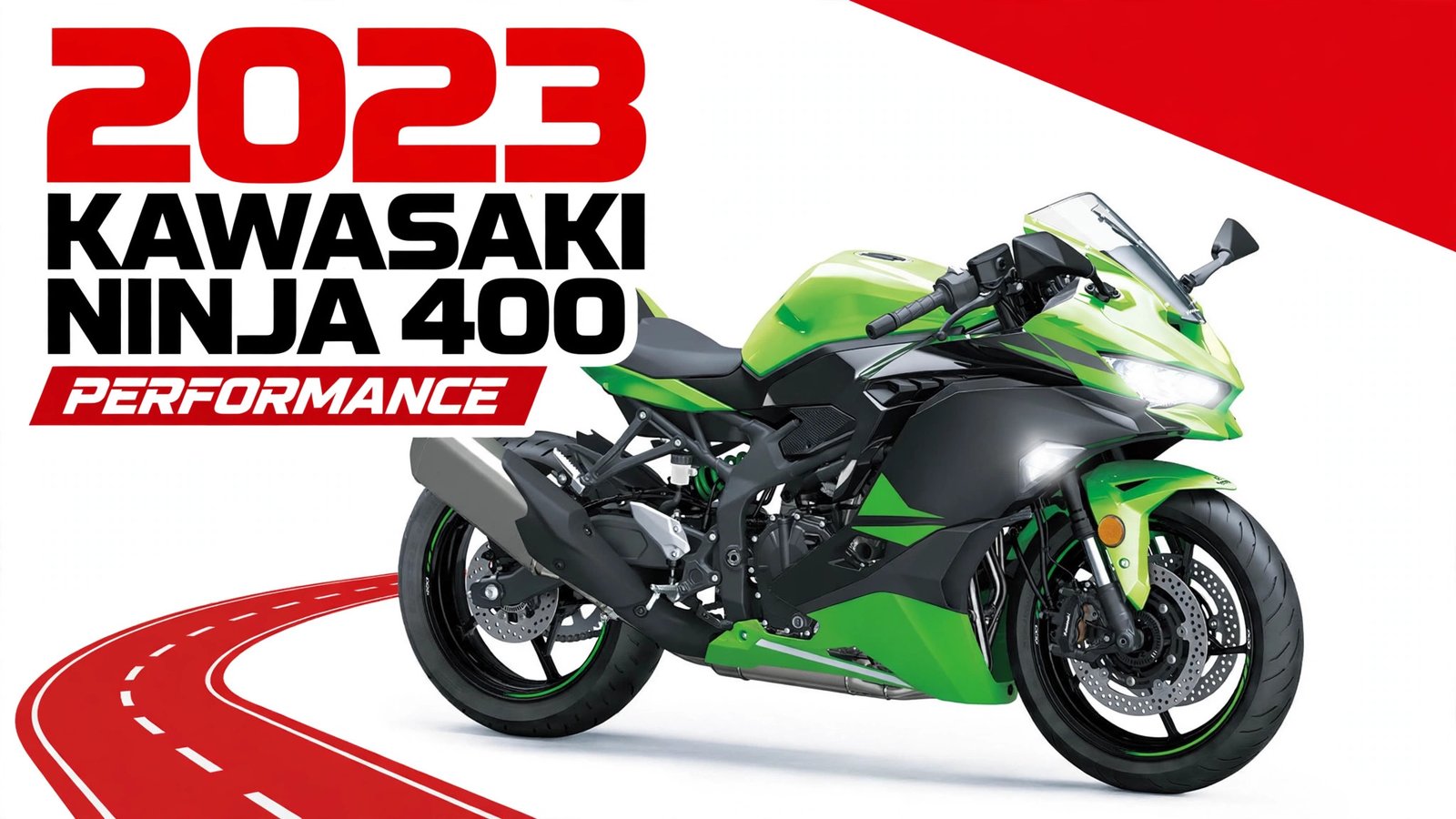
The R3’s 321cc twin makes 42 hp at 10,750 rpm and 21.8 lb-ft — less than the 400’s global 45 PS claim and about 6 lb-ft short of the 400’s 28.0 lb-ft. On the road the gap is bigger: the 400’s rear-wheel dyno figure is 44 hp, and Cycle World’s 2019 comparison found the 400 up to 8 mph quicker than the R3 on the main straight at Chuckwalla, with a 4.2-second lap advantage. The R3 answers with a chassis testers call more flickable in transitions, even though the scales give it nothing: 373 lb wet against the 400’s 366.0 lb curb ABS.
Braking is where the 400’s advantage is measured, not argued. Cycle World’s 2019 test stopped the 400 from 60 mph in 134.6 feet and the R3 in 165.9 feet — 31.3 feet shorter — and from 30 mph in 35.3 feet against the R3’s 45.0 feet. The R3’s brakes are not bad; the 400’s are simply better, and the gap is the largest single measured advantage in this Kawasaki Ninja 400 comparison.
Price, Equipment and Which Suits Which Rider
New against new, the R3 costs $6,149 delivered for 2026 — $5,499 plus $650 destination — against the 400’s final-year $5,734 delivered. That is about $1,650 more than a clean used 2021 ABS 400 at $4,499. ABS is standard on every R3, where the 400 charged $300–$400 for it by trim, and the R3’s dash is an LCD — not a TFT, whatever one aggregator headline claims.
The R3 suits the rider who wants a new bike with the sharpest-handling chassis in the class. The 400 suits the rider who wants more power, better brakes and a gear indicator for about $1,650 less on the used market. Our YZF-R3 review covers the Yamaha in full. That $1,650 gap is the R3’s problem in this Kawasaki Ninja 400 comparison.
| Item | Ninja 400 (2023) | YZF-R3 (2026) |
|---|---|---|
| Engine | 399cc parallel twin | 321cc parallel twin |
| Claimed power | 45 PS global (no US figure) | 42 hp @ 10,750 rpm |
| Braking, 60–0 | 134.6 ft | 165.9 ft |
| Braking, 30–0 | 35.3 ft | 45.0 ft |
| Seat height | 30.9 in | 30.7 in |
| Weight | 366.0 lb curb, ABS | 373 lb wet |
| Delivered, base | $5,734 ($5,299 + $435) | $6,149 ($5,499 + $650) |
Notes: braking figures are Cycle World’s 2019 comparison — the same test, the same day, the same riders. This Kawasaki Ninja 400 comparison does not print a top speed for either bike. Kawasaki publishes none for the 400, and the best citable observation is the 400’s 127 mph speedo reading, about 120 mph actual.
Kawasaki Ninja 400 vs Honda CBR500R
The CBR500R is the roomiest bike in this Kawasaki Ninja 400 comparison and the one the 400 beat most clearly in 2018 — 89.4% to 81.1% in Motorcycle.com’s shootout. It is also the most expensive bike here, and the heaviest, which is exactly the trade it asks the buyer to make.
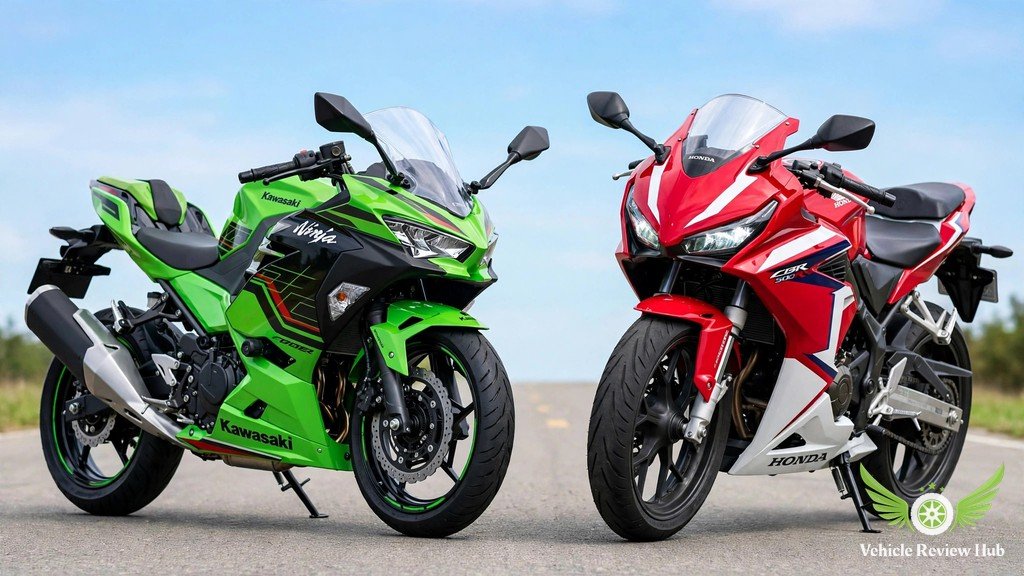
Engine, Specs and Performance Side by Side
The CBR500R’s 471cc twin is the biggest engine in this comparison, and it makes 47 hp at 8,500 rpm — about 2 hp more than the 400’s global 45 PS claim, from 72cc more displacement. But the Honda carries the weight: 425 lb wet against the 400’s 366.0 lb curb ABS, about 59 lb more, and that weight eats the power advantage. The 400’s rear-wheel dyno figure is 44 hp, and the Honda’s extra displacement buys it torque and midrange, not speed — Motorcycle.com’s 2018 shootout had the 400 winning overall, 89.4% against the Honda’s 81.1% (objective scores 98.5% to 84.3%). Weight is the CBR500R’s problem in this Kawasaki Ninja 400 comparison.
The Honda’s character is the opposite of the 400’s. Where the 400 is a light, revvy sport bike that won a shootout on track pace, the CBR500R is a roomier, calmer twin — 30.7 in at the seat against the 400’s 30.9 in — built for taller riders and longer days. The 400 is the sharper tool; the Honda is the more comfortable one — and this Kawasaki Ninja 400 comparison does not pretend one is always better.
Price, Equipment and Which Suits Which Rider
New against new, the CBR500R is the priciest bike here at $6,999 delivered for 2026 — $2,500 more than a clean used 2021 ABS 400 at $4,499 — for a bike that finished third in the 2018 shootout. That $2,500 gap is the hardest number in this Kawasaki Ninja 400 comparison for the Honda to answer.
The CBR500R suits the taller rider who wants the calmest, roomiest 500-class twin. The 400 suits the rider who wants the quicker, lighter, cheaper bike — and would rather keep $2,500.
| Item | Ninja 400 (2023) | CBR500R (2026) |
|---|---|---|
| Engine | 399cc parallel twin | 471cc parallel twin |
| Claimed power | 45 PS global (no US figure) | 47 hp @ 8,500 rpm |
| Weight | 366.0 lb curb, ABS | 425 lb wet |
| 2018 shootout, overall | 89.4% — winner | 81.1% — third |
| Delivered, base | $5,734 ($5,299 + $435) | $6,999 ($6,399 + $600) |
Notes: shootout scores are Motorcycle.com’s June 22, 2018 shootout — the 400 won overall, the CBR500R finished third of three. This Kawasaki Ninja 400 comparison prices both bikes delivered, with destination included, so the $1,265 gap is the real gap.
Kawasaki Ninja 400 Price and Value Compared
Price is where this Kawasaki Ninja 400 comparison is decided. New, the 400 is gone — its final-year base price was $5,299, $5,734 delivered — and every rival is a new bike with a new-bike price. Used, the 400 is the cheapest bike in its class, and the question is which used 400 to buy.
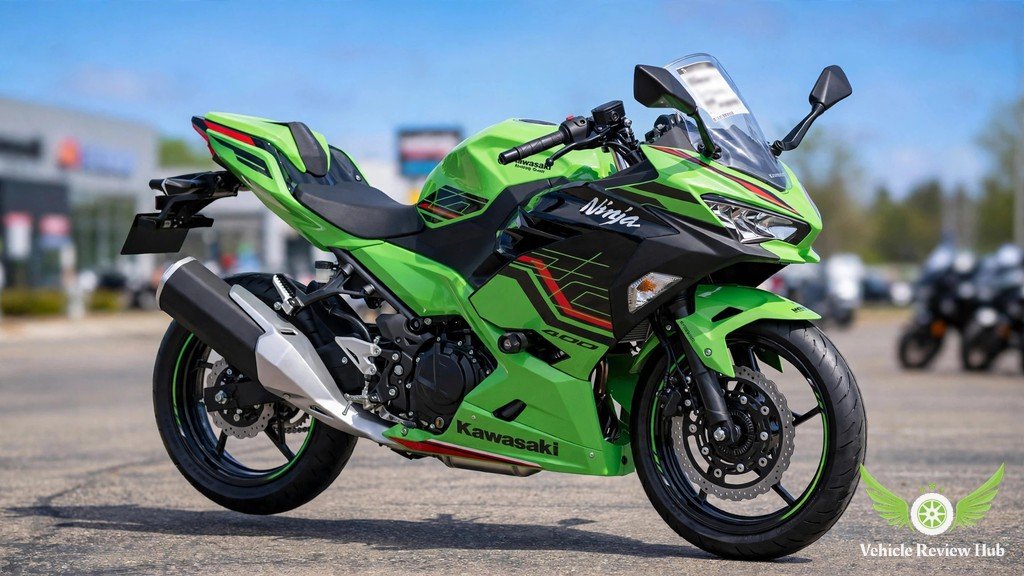
Clean Win Only Under $4,500
The heading is a rule with a year split, and the listings prove it. For 2018–2021 ABS bikes the clean win holds: a 2018 ABS with 5,463 miles at Action Powersports in Broken Arrow, Oklahoma, listed at $3,995; a 2019 ABS with 4,143 miles at Triplenine Motors in Hallandale, Florida, at $4,500 — dealer fees not disclosed on that listing; a 2020 ABS in Sacramento at $4,495; and a 2021 ABS with 7,775 miles at Miller’s Motorsports in Alliance, Ohio, at $4,499. Four bikes, four dealers, all at or under $4,500 — and that is the clean win this Kawasaki Ninja 400 comparison is built on.
Above $4,500 the win stops being clean. A 2018 ABS with 5,316 miles in Chicago listed at $4,795 — over the line — and a 2023 ABS at SF Moto in San Francisco listed at $6,696, which is more than a new 2023 ABS cost delivered. The one exception is a 2023 ABS in Pearl Blizzard White at Team Mancuso in Houston, listed at $3,995 — strikingly low for a 2023, and this Kawasaki Ninja 400 comparison flags it as an outlier, not a price: a buyer should verify it before believing it.
The band the listings support, dated November 2026: 2018–2020 bikes typically $3,400–$4,800, and 2021–2023 bikes typically $4,200–$5,500. Against a new 2023 ABS at $6,134 delivered, a clean used 2021 ABS at $4,499 saves $1,635. The band is the evidence behind every price claim in this Kawasaki Ninja 400 comparison.
Running Costs and Resale Value Compared
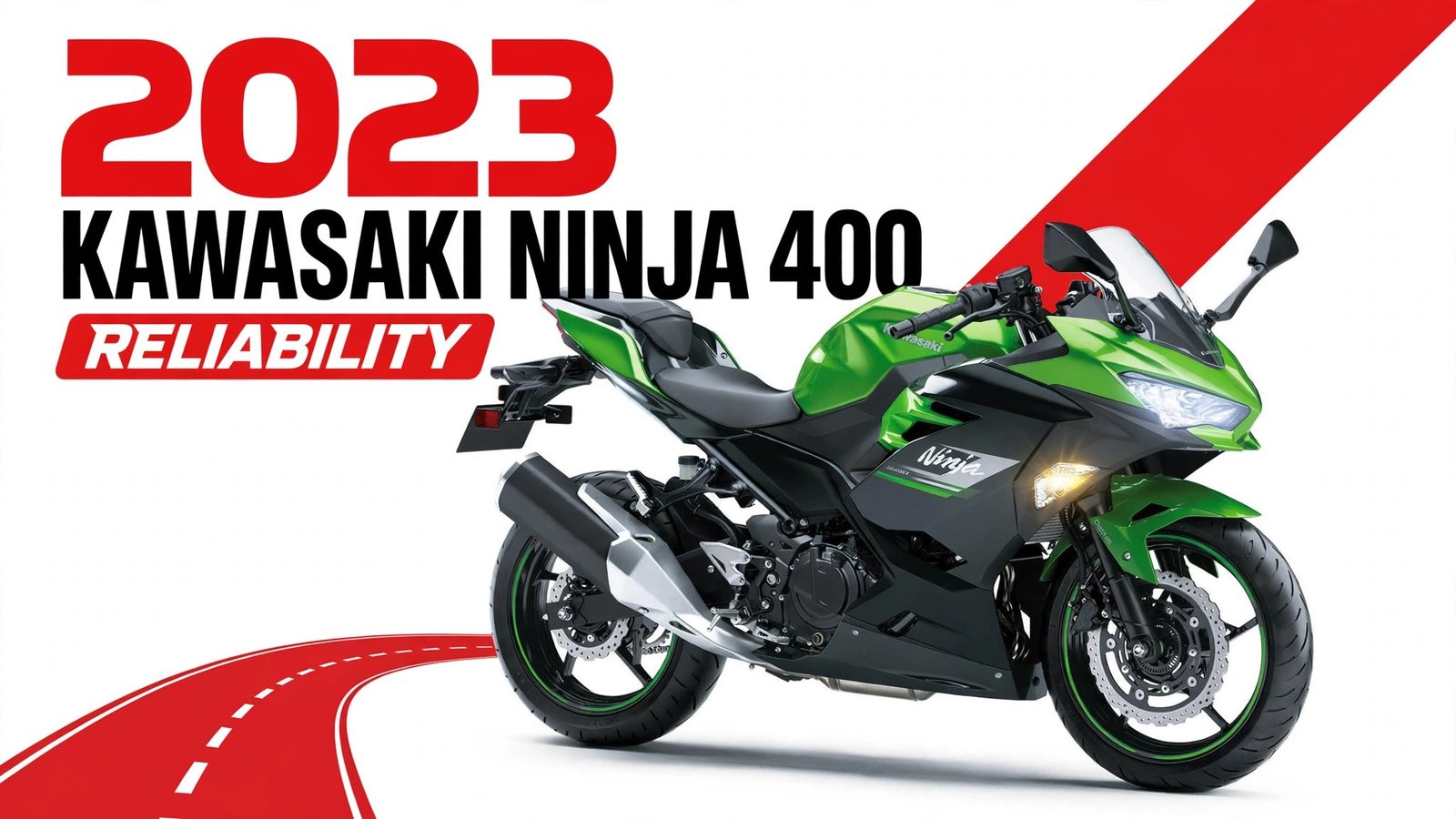
Running costs are the 400’s second advantage, and they are small because the schedule is small. Oil and filter every 7,600 miles or once a year — 2.0 litres of SAE 10W-40 and a Kawasaki 16097-0008 filter — the spark plug is an NGK LMAR9G, the chain is a 520 lubricated every 400 miles with 20–30 mm of slack, and the valve inspection comes at 15,200 miles. The only non-routine cost is the clutch fix on a 2018–2019 bike, roughly $350–$700 at a workshop, and the only recall is the 2021 cam chain tensioner — campaign 20V-774, 1,770 bikes — which a buyer checks on the NHTSA recall lookup before paying. A short schedule is cheap to follow, and this Kawasaki Ninja 400 comparison prices it in parts, not promises.
Resale is where this Kawasaki Ninja 400 comparison stops and says what it does not know. No published resale-percentage figure exists for the 400, so none is printed here — only the dollar saving above. What the listings do show is a floor: 2018–2020 ABS bikes still ask $3,400–$4,800 eight years after launch, and the 2020-onwards bikes hold better still, because the clutch fix is already in them.
| Year | Trim | Miles | Dealer, location | Asking price |
|---|---|---|---|---|
| 2018 | ABS | 5,463 mi | Action Powersports, Broken Arrow OK | $3,995 |
| 2019 | ABS | 4,143 mi | Triplenine Motors, Hallandale FL | $4,500 |
| 2020 | ABS | — | Specialty Motorsports, Sacramento CA | $4,495 |
| 2021 | ABS | 7,775 mi | Miller’s Motorsports, Alliance OH | $4,499 |
| 2018 | ABS | 5,316 mi | Chicago IL | $4,795 |
| 2023 | ABS | — | Team Mancuso, Houston TX | $3,995 — outlier |
| 2023 | ABS | — | SF Moto, San Francisco CA | $6,696 — high end |
Notes: listings are Cycle Trader dealer listings from November 2026 — a dated snapshot, not a standing valuation, and asking prices are not sale prices. The Houston 2023 at $3,995 is flagged as an outlier; the San Francisco 2023 at $6,696 is the high end. This Kawasaki Ninja 400 comparison prints the band, not a single price: 2018–2020 typically $3,400–$4,800, 2021–2023 typically $4,200–$5,500.
Kawasaki Ninja 400 Comparison Verdict and US Alternatives
The verdict is short, because the numbers are short. Buy a 2020-onwards 400 used, buy it under $4,500 if you can, and check the 2021 recall. This Kawasaki Ninja 400 comparison ends with the alternatives, because the 400 is discontinued and the alternatives are the point.
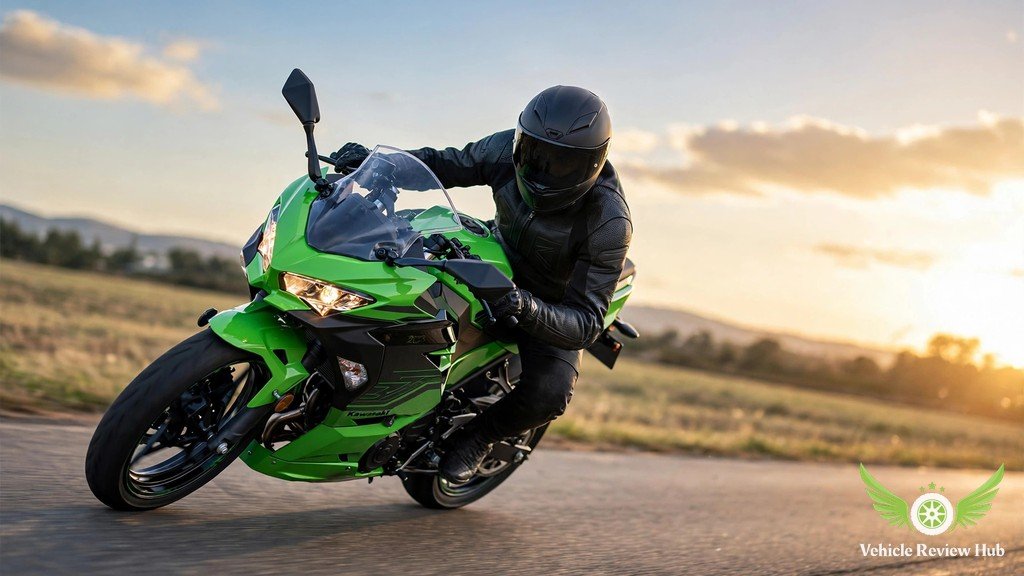
Verdict: The 2020-Onwards Sweet Spot
The sweet spot is 2020-onwards, and the reason is the clutch. Kawasaki revised the pull rod and the pressure-plate bearing for the 2020 model year, so a 2020-onwards bike has the revised hardware from the factory and a 2018–2019 bike needs proof the update was done — a receipt, not a claim — or a $350–$700 budget for the job. A beginner buying a 400 should buy 2020-onwards, or buy 2018–2019 with the clutch money set aside; either way the bike is learner-legal at 30.9 inches and 366 lb. That clutch fix is the reason the sweet spot starts in 2020 in this Kawasaki Ninja 400 comparison.
The 2021 bike carries one extra check: the cam chain tensioner recall, campaign 20V-774, covers 1,770 bikes built between July 1 and October 27, 2020, with 1,621 remedied by October 2024. A buyer checks the VIN on the NHTSA recall lookup — the API returns no recalls for the 400, which is wrong, so the Part 573 report is the source. The smaller Ninja 125 shows the same pattern one class down, and our Ninja 125 comparison covers that bike’s own record.
Revived Ninja 300 Costs the Same
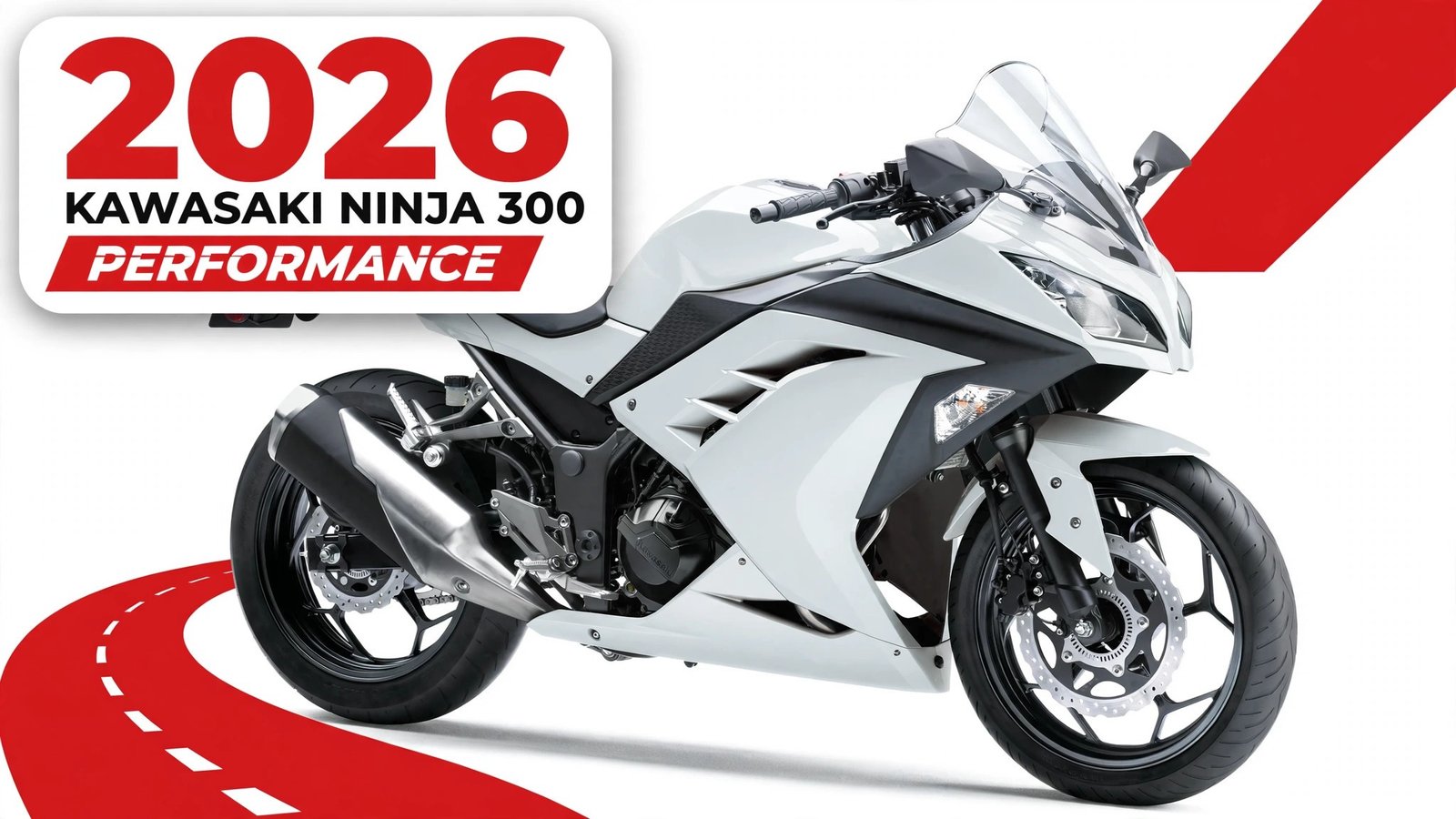
The revived Ninja 300 costs the same — but only against the 400’s launch price, and this Kawasaki Ninja 400 comparison states that precisely. The 2026 Ninja 300 is $4,999, which equals the 400’s 2018 launch price of $4,999, but it undercuts the 400’s final-year 2023 base price of $5,299 by $300. The 300 is the cheaper new bike and the slower one: 296cc, 38.9 hp, 388.1 lb, a 4.5-gallon tank, and no gear indicator where the 400 has one. A buyer choosing between a new 300 and a used 400 is choosing between a warranty and 9 more rear-wheel horsepower. The $300 gap is small, and this Kawasaki Ninja 400 comparison does not pretend otherwise. Our Ninja 300 comparison covers the revived bike in full.
The Ninja 500 is the new-bike answer at $5,399. The YZF-R3 is the handling answer at $5,499. The CBR500R is the roomy answer at $6,399. And for the rider who wants four cylinders, the ZX-4RR KRT is $9,699 — $4,400 more than the 400’s final-year base price, for a different engine, a TFT dash and traction control. The 400’s answer to all of them is the same: a used 2020-onwards bike, under $4,500, with the clutch already fixed and the recall already done.
| Buyer | Best pick | Why |
|---|---|---|
| First bike, under $4,500 used | 2020–2021 Ninja 400 ABS | Revised clutch, recall checkable, cheapest in class |
| New bike, warranty wanted | 2026 Ninja 500, $5,399 | The 400’s successor, 52cc more, TFT on the SE |
| New bike, tightest budget | 2026 Ninja 300, $4,999 | Cheapest new 400-class bike; slower, heavier, no gear indicator |
| Track days | Used 400, 2020-onwards | 2018 shootout winner; Junior Cup dominance |
| Four cylinders | ZX-4RR KRT, $9,699 | Inline-four, TFT, traction control — $4,400 over the 400’s base |
Notes: prices are year-labelled MSRP before destination, except where the text says delivered. The used picks assume the November 2026 band in this Kawasaki Ninja 400 comparison — 2018–2020 typically $3,400–$4,800, 2021–2023 typically $4,200–$5,500 — and a 2021 bike needs the 20V-774 tensioner check. No resale percentage is printed, because no published figure exists.
Kawasaki Ninja 400 Comparison Frequently Asked Questions
These are the questions buyers ask most when they cross-shop the Ninja 400 against its rivals, answered from the tests and the live listings in this Kawasaki Ninja 400 comparison. The short version is that the 400 is no longer sold new, so the choice is a used 400 against three new rivals, and the used 400 wins on price.
Can you still buy a new Kawasaki Ninja 400?
No. The 400’s US run ended in 2023, and Kawasaki replaced it with the Ninja 500 for 2024, so there is no new 400 in a US showroom. A buyer who wants a new bike in this class chooses the Ninja 500 at $5,399 for 2026 or the revived Ninja 300 at $4,999, both before destination. A buyer who wants the 400 itself buys used, and this Kawasaki Ninja 400 comparison treats the used bike as the real purchase throughout.
Which is better, the Ninja 400 or the Ninja 500?
The 500 is the better new bike and the 400 is the better value. The 500’s engine is the 400’s engine grown by 52cc, from 399cc to 451cc, and claimed power rises from the 400’s global 45 PS to 51 hp at 10,000 rpm, with torque from 28.0 lb-ft to 31.7 lb-ft. The 2026 500 costs $5,399 base, or $6,049 delivered, against the 400’s final-year $5,299 base, or $5,734 delivered. A rider who wants a new bike with a warranty buys the 500, and a rider who wants the same riding experience for about $1,500 less buys a used 400. This Kawasaki Ninja 400 comparison does not pretend the 500 is not the better bike, only that it is not $1,500 better.
How does the Ninja 400 compare with the Yamaha YZF-R3?
The 400 is the quicker bike and the R3 is the sharper-handling one. The R3’s 321cc twin makes 42 hp at 10,750 rpm against the 400’s global 45 PS claim, and the 400’s rear-wheel dyno figure is 44 hp. Cycle World’s 2019 comparison found the 400 up to 8 mph quicker than the R3 on the main straight at Chuckwalla, and stopped the 400 from 60 mph in 134.6 feet against the R3’s 165.9 feet, which is 31.3 feet shorter. The R3 answers with a chassis testers call more flickable in transitions, and it costs $6,149 delivered for 2026 against the 400’s final-year $5,734. This Kawasaki Ninja 400 comparison gives the straight-line and braking wins to the 400.
How does the Ninja 400 compare with the Honda CBR500R?
The Honda has the bigger engine and the 400 has the better numbers in this Kawasaki Ninja 400 comparison. The CBR500R’s 471cc twin makes 47 hp at 8,500 rpm, about 2 hp more than the 400’s global 45 PS claim, but the Honda weighs 425 lb wet against the 400’s 366.0 lb curb with ABS, about 59 lb more, and that weight eats the power advantage. Motorcycle.com’s 2018 shootout gave the 400 an 89.4% overall score against the Honda’s 81.1%. The CBR500R costs $6,999 delivered for 2026, which is $2,500 more than a clean used 2021 ABS 400 at $4,499, and this Kawasaki Ninja 400 comparison calls that gap the hardest number for the Honda to answer.
How much should I pay for a used Ninja 400?
The November 2026 listings support a band of $3,400 to $4,800 for 2018 to 2020 bikes and $4,200 to $5,500 for 2021 to 2023 bikes. The clean win holds under $4,500 for 2018 to 2021 ABS bikes: a 2018 ABS listed at $3,995, a 2019 ABS at $4,500, a 2020 ABS at $4,495 and a 2021 ABS at $4,499. Above $4,500 the win stops being clean. Against a new 2023 ABS at $6,134 delivered, a clean used 2021 ABS at $4,499 saves $1,635. No published resale percentage exists for the 400, so this Kawasaki Ninja 400 comparison prints dollar savings only.
Which used Ninja 400 should a beginner buy?
A 2020-onwards bike, under $4,500 if possible, is the pick this Kawasaki Ninja 400 comparison recommends for a first bike. Kawasaki revised the pull rod and the pressure-plate bearing for the 2020 model year, so a 2020-onwards bike has the revised clutch hardware from the factory, while a 2018 or 2019 bike needs proof the clutch was updated, a receipt rather than a claim, or a $350 to $700 budget for the job. A 2021 bike carries one extra check, the cam chain tensioner recall 20V-774, which the buyer checks on the NHTSA recall lookup by VIN. The bike itself is learner-legal, with a 30.9-inch seat and 366 lb with ABS, and a gear indicator the revived Ninja 300 does not have.