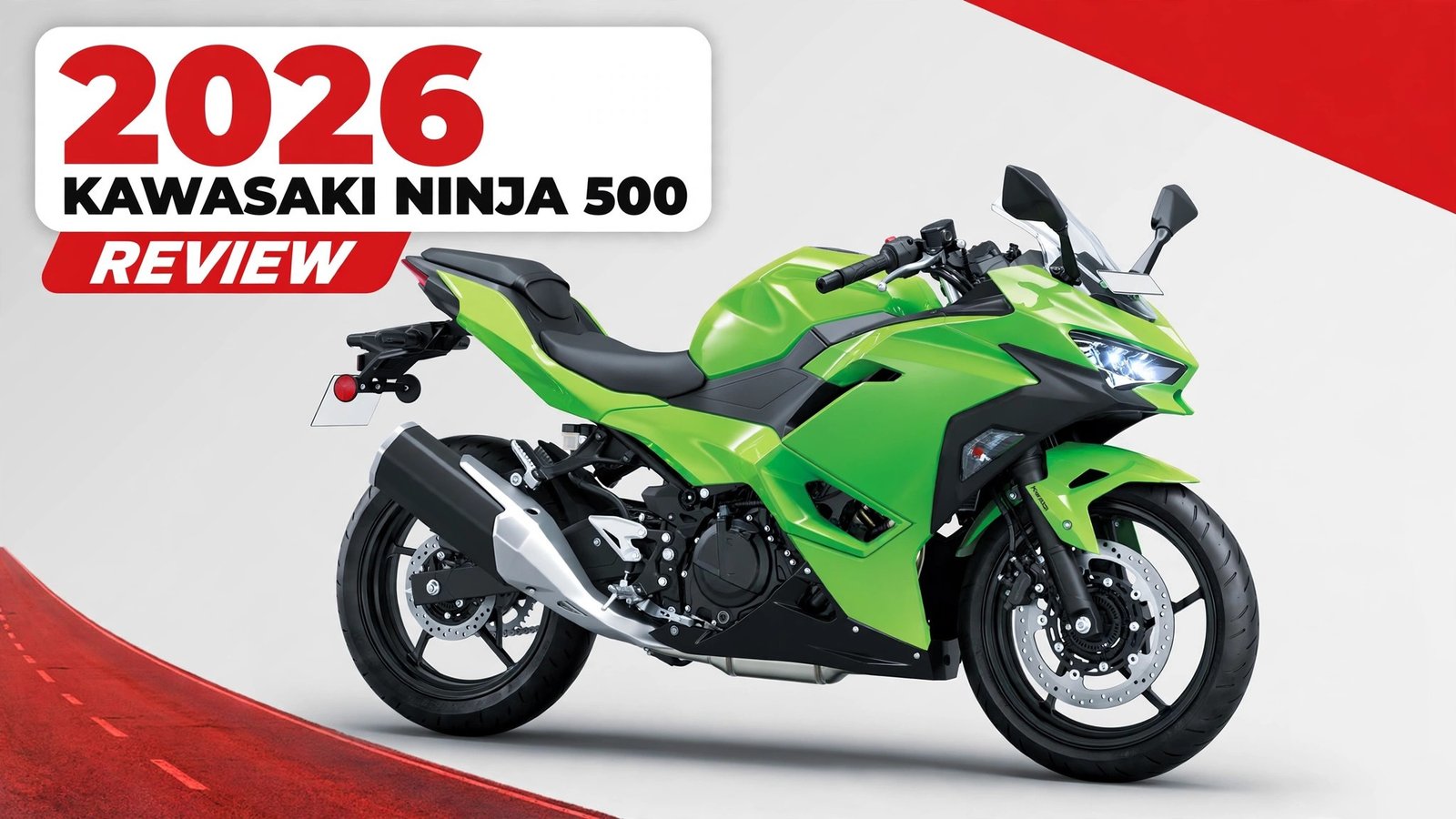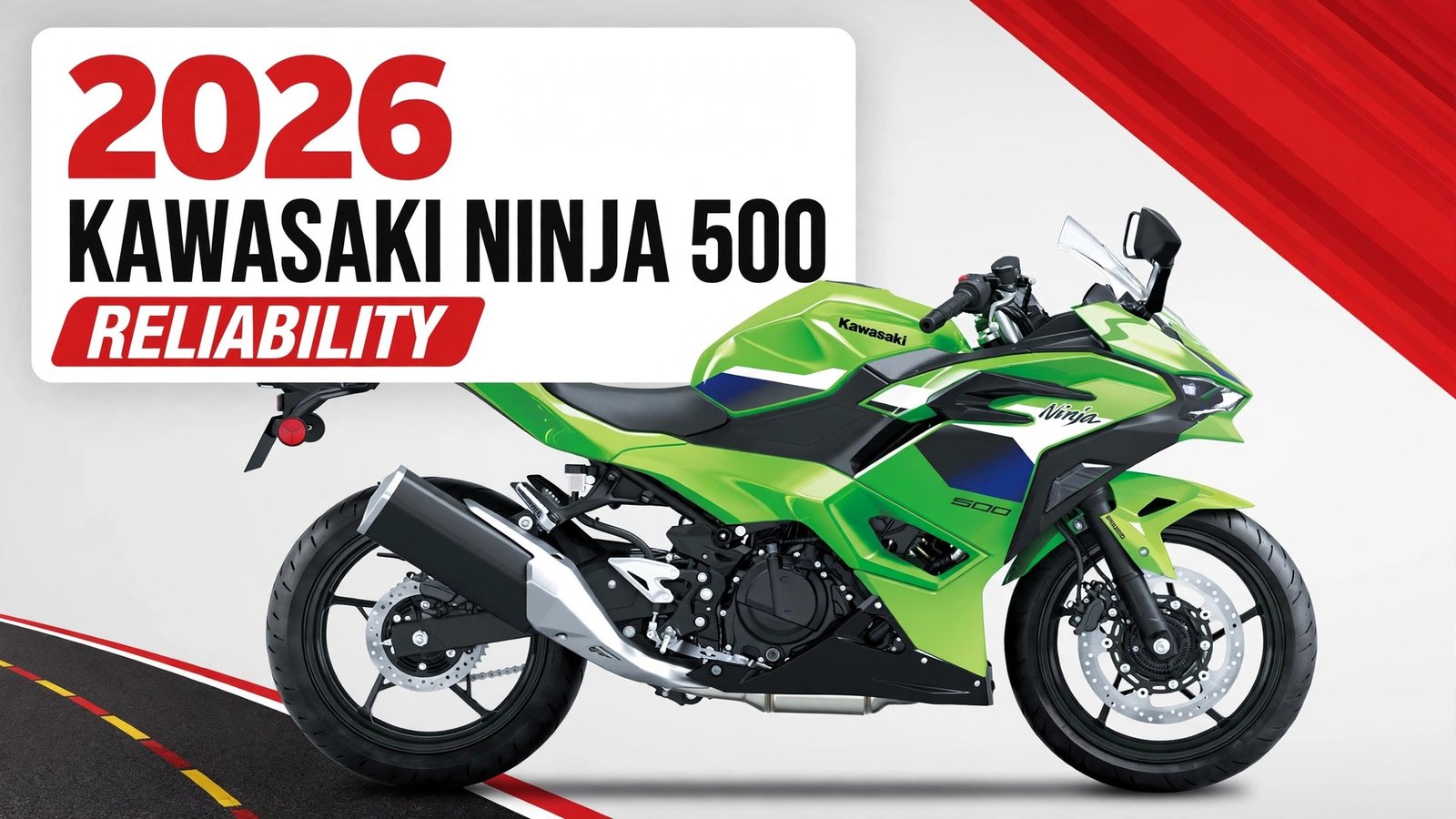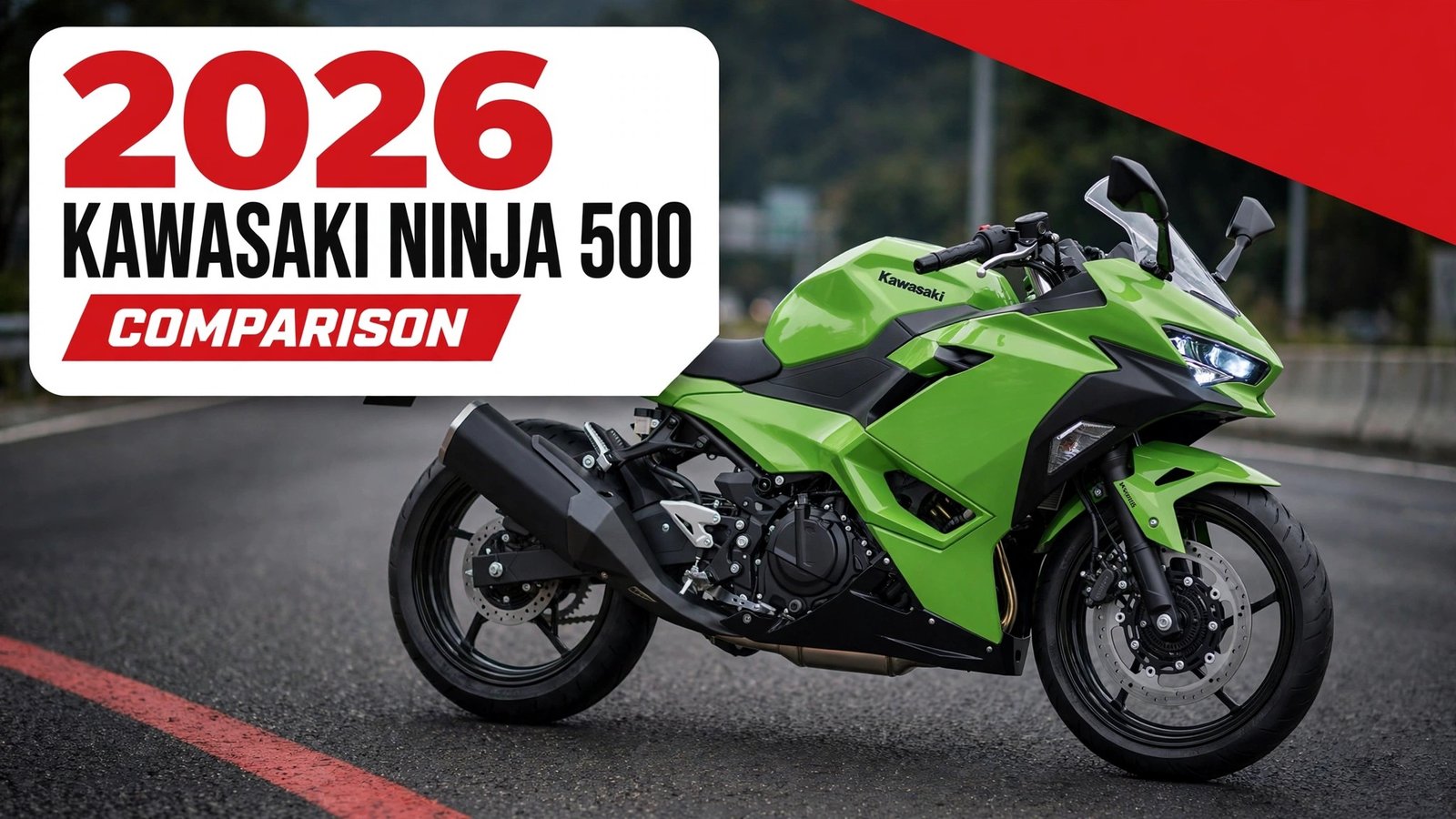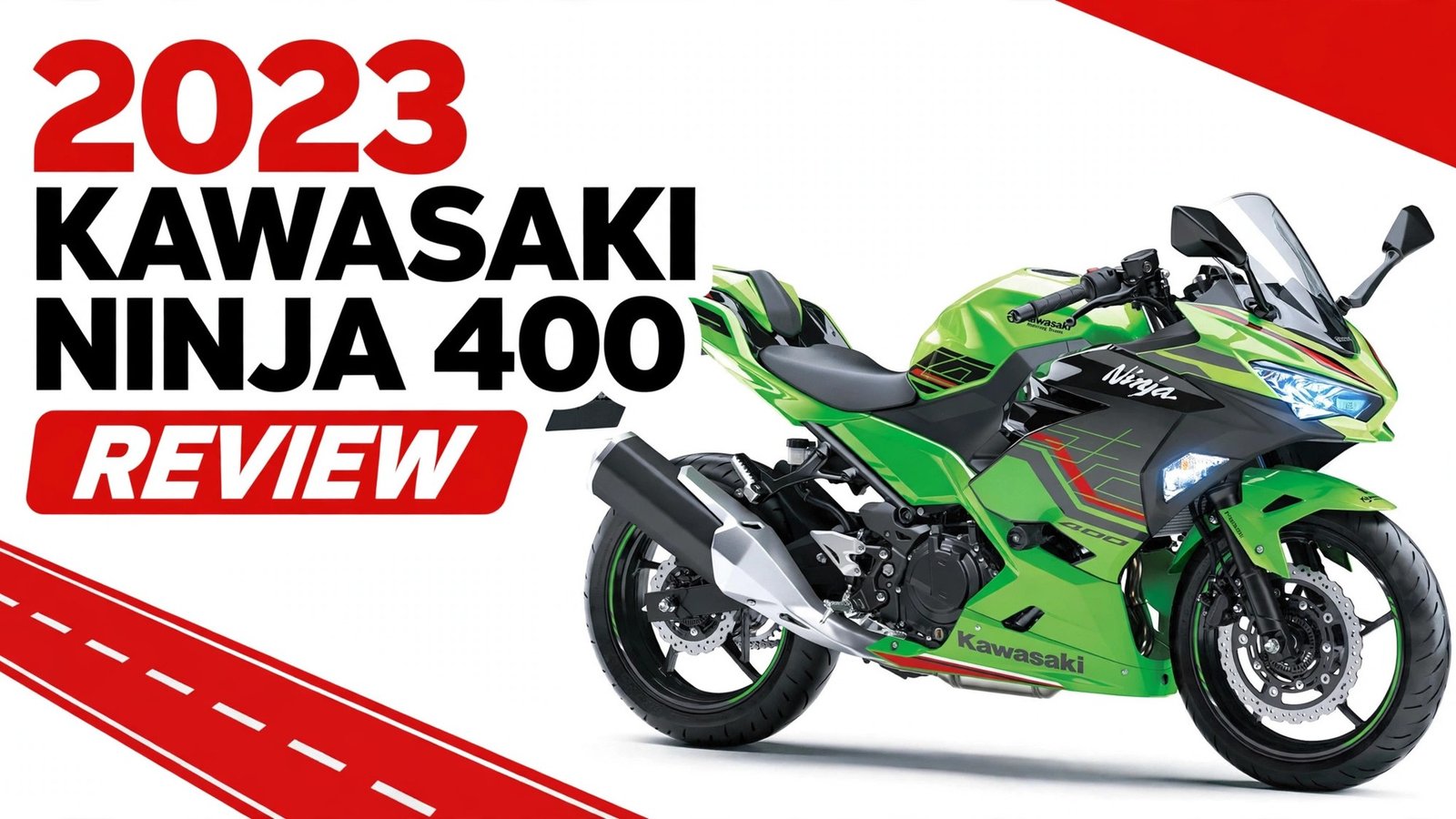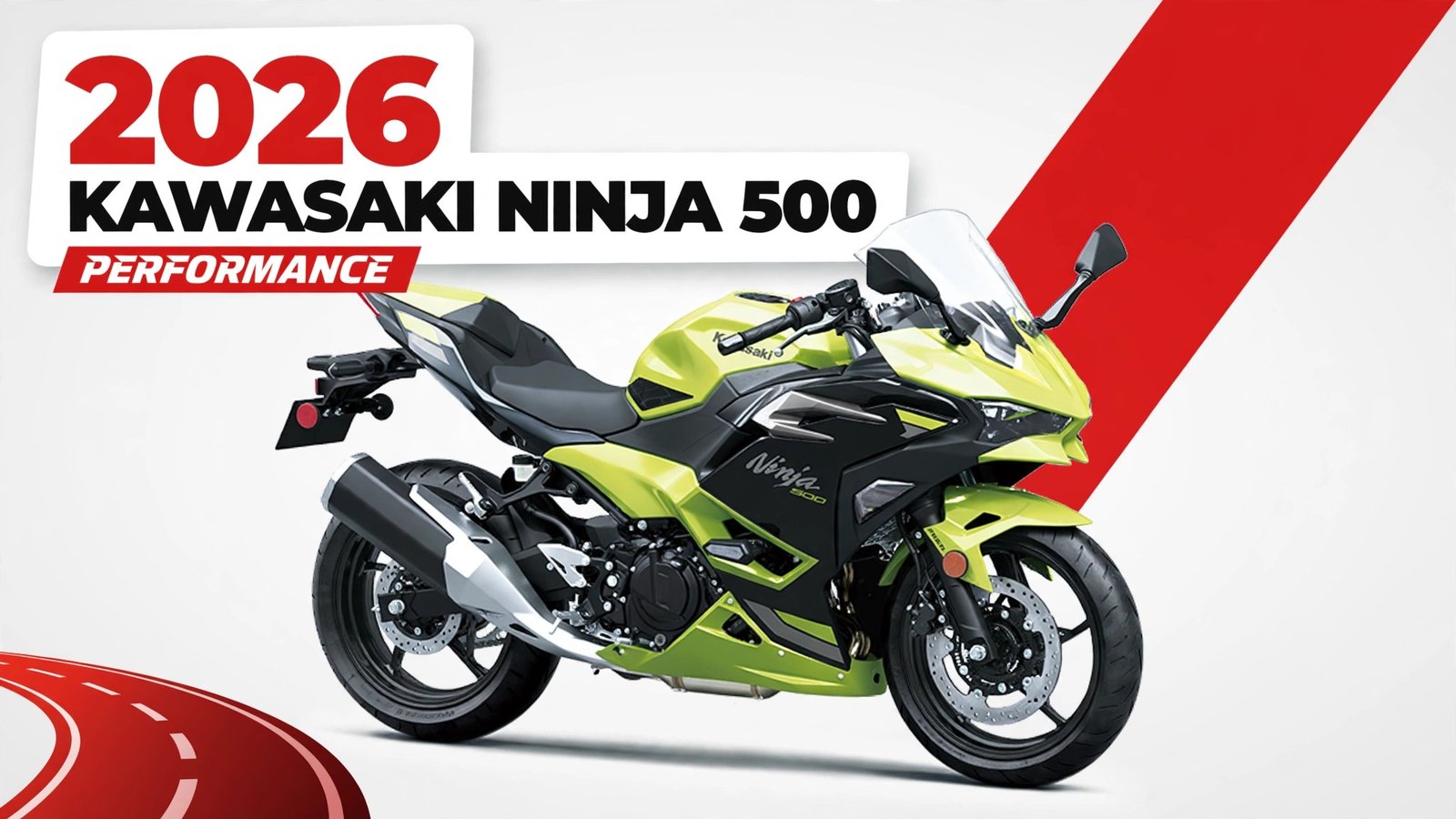
This Kawasaki Ninja 500 performance guide starts with the honest answer: Kawasaki claims 51 hp at 10,000 rpm from the stroked 451cc twin, but no major US outlet has published a dyno, a quarter-mile time or a top speed for the bike. What is measured is thin, and what is viral is mostly wrong.
The short version is that the 500 is a stronger mid-range bike than the 400 it replaced, not a faster top-end one. The longer stroke adds 3.7 lb-ft of torque and moves the peak 500 rpm earlier, the redline drops to 11,700 rpm, and RevZilla’s scales show the bike nine pounds heavier than the 400. The full spec sheet and prices are in our Kawasaki Ninja 500 review.
One warning before the numbers: the internet is full of Ninja 500 performance figures that belong to other bikes. The 4.8-second 0–60 and the 74 mpg are TopSpeed estimates that do not survive their own arithmetic. Every figure in this Kawasaki Ninja 500 performance guide is either a Kawasaki claim, a named tester’s measurement or a labelled lab figure — and where nothing was measured, the guide says so.
Kawasaki Ninja 500 Engine Performance and Power Delivery
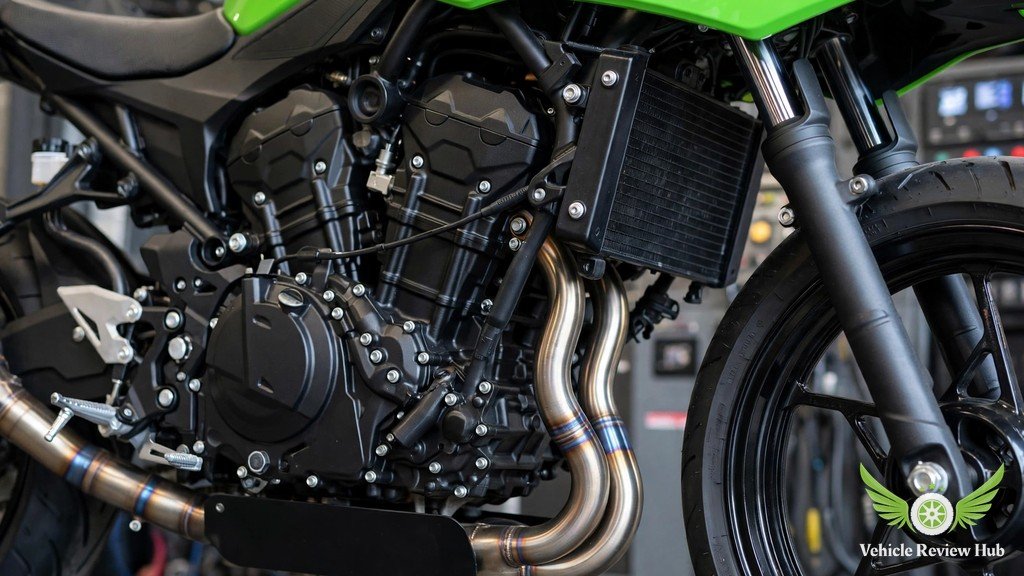
The engine is the whole story of this Kawasaki Ninja 500 performance guide, because almost everything else on the bike carries over from the 400. The 451cc twin is the 400’s 399cc twin with the stroke stretched 6.8 mm, from 51.8 mm to 58.6 mm, on the same 70.0 mm bore, with a new crankshaft, connecting rods and piston. Kawasaki claims 51.0 hp at 10,000 rpm and 31.7 lb-ft at 7,500 rpm, both measured to ISO standard 4106 — torque is up 3.7 lb-ft on the 400 and arrives 500 rpm earlier.
No US Dyno of the 500 Exists
No major US outlet has published a dyno run of the Ninja 500. Cycle World, Motorcycle.com, RevZilla and Cycle News have all ridden the bike, but none has put one on a Dynojet and printed rear-wheel figures, as of the research for this Kawasaki Ninja 500 performance guide in November 2026. Any website that prints a dyno figure for the Ninja 500 is either guessing or borrowing a number from another bike, and this guide does not print one.
For scale, the 400’s published rear-wheel figures were 43.4 hp (Cycle World), 43.7 hp (Motorcycle.com’s first ride shootout) and 43.3 hp (Motorcyclist). A buyer who wants a measured number will have to wait for a magazine or a shop to publish one, and until then the claimed 51 hp is the only power figure this Kawasaki Ninja 500 performance guide can stand behind.
47.22 HP Is Eliminator Data
The one dyno number that keeps appearing next to the Ninja 500’s name is 47.22 hp at 10,430 rpm, with 29.03 lb-ft at 7,510 rpm. It is a real number from a real test — Cycle World’s dyno run of the 2024 Eliminator SE ABS — but it is not a Ninja 500 number. The Eliminator is a cruiser with different gearing and exhaust, and it weighed 395 lb on Cycle World’s scales. This Kawasaki Ninja 500 performance guide names the 47.22 hp figure only to reject it, because printing it as the 500’s dyno result would be wrong in exactly the way a reader cannot detect.
The confusion is understandable, because the Eliminator was the first bike to carry the 451cc twin, and its dyno run is the closest thing to a 451cc measurement that exists. Until a Ninja 500 itself goes on a dyno, the honest statement is that the engine makes a claimed 51 hp, the Eliminator SE made 47.22 hp at the wheel, and the two numbers describe two different motorcycles.
| Specification | 2026 Ninja 500 | 2023 Ninja 400 |
|---|---|---|
| Engine | 451cc liquid-cooled DOHC parallel twin, 8 valves | 399cc liquid-cooled DOHC parallel twin, 8 valves |
| Bore x stroke | 70.0 x 58.6 mm | 70.0 x 51.8 mm |
| Compression ratio | 11.3:1 | 11.5:1 |
| Claimed power | 51.0 hp at 10,000 rpm (ISO 4106) | No US figure published (45 PS global claim) |
| Claimed torque | 31.7 lb-ft at 7,500 rpm (ISO 4106) | 28.0 lb-ft at 8,000 rpm |
| Redline | 11,700 rpm | About 13,000 rpm |
| Dyno, rear wheel | None published | 43.4 hp at 9,900 rpm (Cycle World) |
Notes: all figures in this Kawasaki Ninja 500 performance guide are Kawasaki USA’s claimed figures unless stated otherwise. Power and torque are ISO 4106 figures, not SAE. The 400’s rear-wheel figure is Cycle World’s measured number for the 400, not the 500’s.
Kawasaki Ninja 500 Top Speed and Acceleration
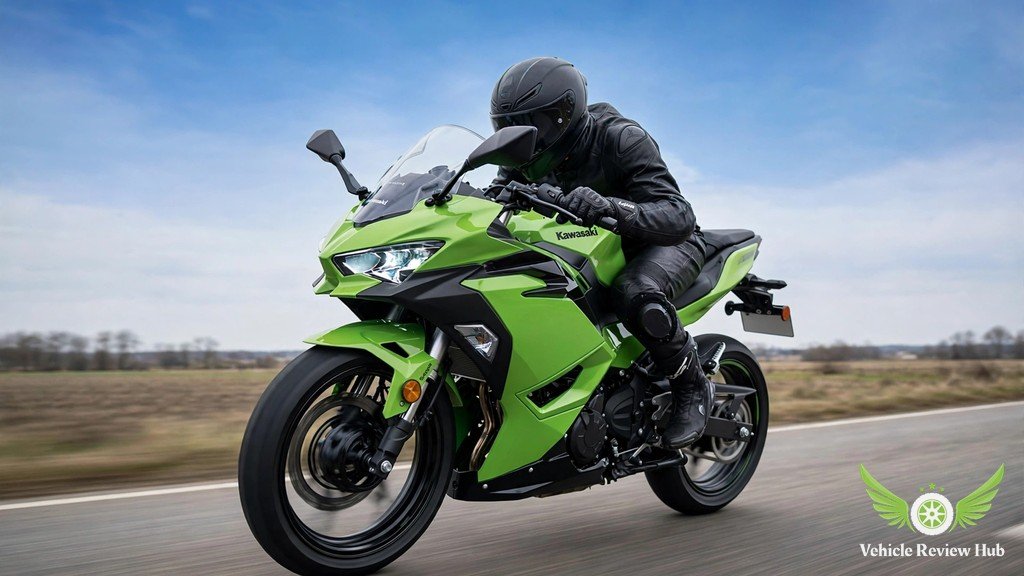
Speed is where the Ninja 500’s story goes thinnest, and this Kawasaki Ninja 500 performance section is honest about that. Kawasaki publishes no top speed, no US outlet has instrumented one, and no 0–60 or quarter-mile time exists from a major tester. The only measured acceleration figure verified for the bike is a 40–80 mph roll-on in third gear, timed by one owner. This Kawasaki Ninja 500 performance guide prints what is measured and labels what is not.
118 MPH Figures Are the Old Bike’s
Search for the Ninja 500’s top speed and the first number you will meet is 118 mph. It is a real top speed, printed in Cycle magazine in January 1987 — for the old Ninja 500, the carburetted 498cc EX500 that ran from 1987 to 2009. That bike made 60 hp at 9,800 rpm and ran the quarter mile in 12.98 seconds at 99.0 mph. This Kawasaki Ninja 500 performance guide does not print 118 mph as the new bike’s speed, because the new bike is fuel-injected, makes 51 hp to ISO 4106, and has no published top speed at all.
The same trap catches the quarter mile. The old bike’s 12.98-second quarter is sometimes quoted beside the new bike’s name, and there is no new-bike quarter mile to replace it with. No major US outlet has published a quarter-mile time for the 2024–2027 Ninja 500, and this Kawasaki Ninja 500 performance guide leaves the cell blank. The old bike’s figures are carried by the CycleChaos EX500 wiki, and that is where they belong.
No Official Figure Is Published
Kawasaki publishes no top speed for the Ninja 500, and no instrumented top speed from a major US outlet was found in the research for this Kawasaki Ninja 500 performance guide. TopSpeed’s review lists a 0–60 mph time of 4.8 seconds in its spec table, but the figure is an estimate, not a test, and this Kawasaki Ninja 500 performance guide does not print it. The same review lists 74 mpg and a 229-mile range, which do not agree: 74 mpg from a 3.7-gallon tank would be 274 miles.
The only measured acceleration figure verified for the 500 is Chase on Two Wheels’ 40–80 mph roll-on in third gear: 5.43 seconds, from his written review of the 2025 bike. That is a roll-on, not a 0–60 and not a quarter mile, and this Kawasaki Ninja 500 performance guide prints it as exactly that — one owner’s timed roll-on, attributed to Chase.
| Figure | Ninja 500 (2024–2027) | Source |
|---|---|---|
| Top speed, official | None published | Kawasaki USA publishes no top speed |
| Top speed, instrumented | None found | No major US outlet has tested one |
| 0–60 mph | None published | TopSpeed’s 4.8 sec is an estimate, not printed |
| Quarter mile | None published | Old EX500: 12.98 sec at 99.0 mph (Cycle, Jan 1987) |
| 40–80 mph roll-on, 3rd gear | 5.43 seconds | Chase on Two Wheels, measured |
| Braking, 60–0 mph | None published | The 400’s 134.6 ft is NOT the 500’s figure |
Notes: this Kawasaki Ninja 500 performance guide prints no acceleration or top-speed figure without a named measurement behind it. The old bike’s figures are labelled as the old bike’s. TopSpeed’s estimated figures are not printed.
Kawasaki Ninja 500 Mileage and Fuel Economy
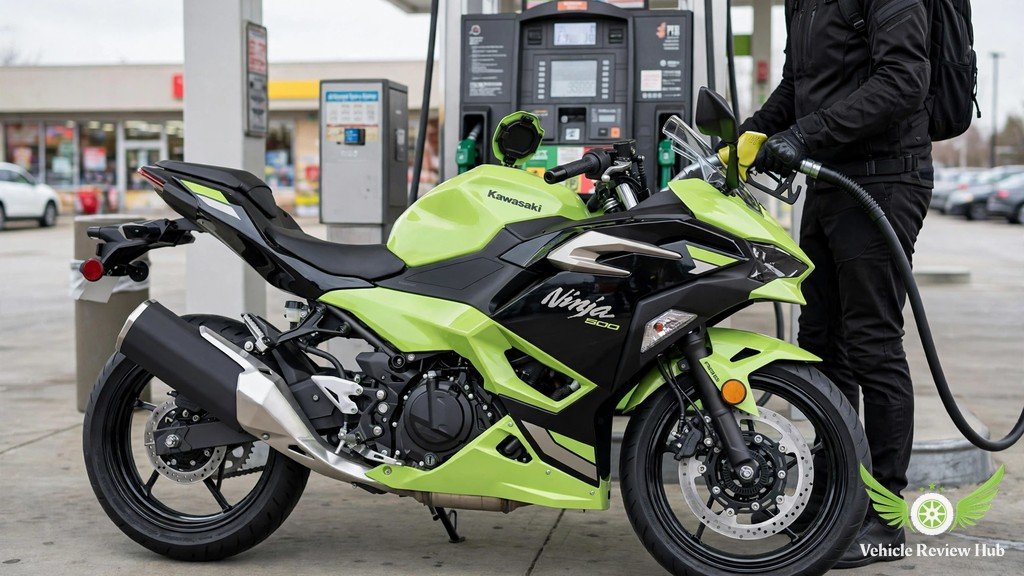
Fuel economy is the one performance area where the 500 has a lab figure, a single owner measurement and a split in the owner reports — and no tester figure at all. This Kawasaki Ninja 500 performance section keeps the three kinds of number apart: the lab figure, the owner figure, and the absence of a tester figure.
No Tester MPG Published
No US outlet has published a measured MPG figure for the Ninja 500. The lab figure is the only official economy number: TotalMotorcycle’s 2025 fuel-economy guide lists the 2025 Ninja 500 at 62.0 mpg (US), the manufacturer’s WMTC figure, or 229 miles from the 3.7-gallon tank. That 229-mile figure is a lab range, not a real-world one.
One Owner Measured 54 MPG
The only US owner-measured fuel-economy figure verified for this Kawasaki Ninja 500 performance guide is Chase on Two Wheels’ 54 mpg on a 222-mile mountain day, recorded in the description of his six-month ownership video. One rider, one day, mountain roads — not an average and not a promise for every rider. This Kawasaki Ninja 500 performance guide prints the 54 mpg as one owner’s measured day, and nothing more.
There is no US owner average to print beside it. No Fuelly page for the Ninja 500 was found, so there is no aggregate of owner fill-ups to quote. Indian owner reports split even wider: BikeWale owners report 21 kmpl, about 49.4 mpg, while ZigWheels users report 26 kmpl, about 61 mpg, for the Indian-market bike. This Kawasaki Ninja 500 performance guide prints the Indian split with the market named.
| Figure | Value | What it is |
|---|---|---|
| WMTC lab fuel economy | 62.0 mpg (US) | Manufacturer’s WMTC figure (TotalMotorcycle guide) |
| Lab range | 229 miles | 62 mpg x 3.7 gal tank |
| Owner-measured, US | 54 mpg | Chase on Two Wheels, 222-mile mountain day |
| Indian owners, BikeWale | 21 kmpl, about 49.4 mpg | Indian-market owner reports, labelled |
| Indian owners, ZigWheels | 26 kmpl, about 61 mpg | Indian-market owner reports, labelled |
| TopSpeed “74 MPG (claimed)” | Not printed | Inconsistent with its own 229-mile range |
Notes: this Kawasaki Ninja 500 performance guide prints the lab figure as a lab figure and the owner figures with their market and sample size. No tester MPG exists. The 50–54 mpg band is not printed as a settled owner average.
Kawasaki Ninja 500 Real-World Riding Experience
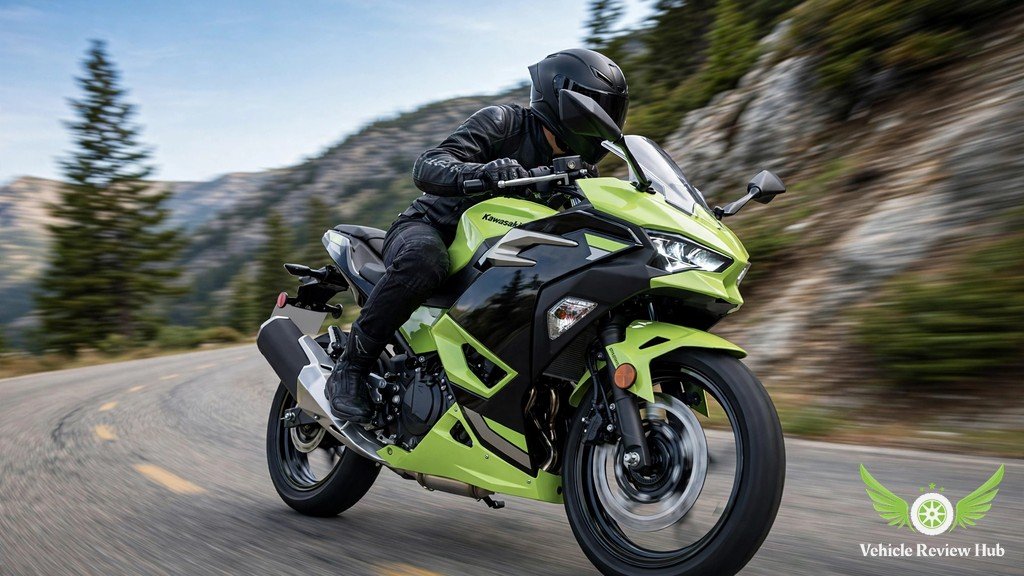
On the road the 500 is a mid-range bike, and this Kawasaki Ninja 500 performance section is where the numbers meet the riding. The testers agree on the character even though they never instrumented it: more mid-range pull, a smoother clutch than the 400’s, a lower redline, and a bike that is easy to ride fast.
Redline Sits at 11,700 RPM
The redline is 11,700 rpm, down from the 400’s near 13,000 rpm, and the change is the whole character of the engine in one number. RevZilla and Cycle News agree on the 11,700 rpm redline against the 400’s 13,000. The longer stroke gives more area under the torque curve, in MCN’s review, so the bike pulls well without needing to be thrashed to the redline. This Kawasaki Ninja 500 performance guide treats the lower redline as a trade, not a loss: less top-end scream, more mid-range punch, and a bike that is faster in the gears a rider actually uses.
MCN’s review makes the point directly: the extra stroke means extra low-down punch and mid-range, and the bike does not particularly like being thrashed to the redline, but pulls well with plenty of in-gear grunt meaning you do not have to work the gearbox too hard. Cycle News calls the power super smooth and predictable, and says there is plenty of it to be way fun. That is the riding character this Kawasaki Ninja 500 performance guide keeps coming back to.
No Long-Term Test Exists
No long-term press test of the Ninja 500 exists. The four major US outlets have all published first rides, but none has run the bike for a season, so this Kawasaki Ninja 500 performance guide cannot quote a press long-term verdict. The closest things are owner YouTube videos, and the guide names them as owner videos, not press tests: Chase on Two Wheels’ six-month ownership video, OfficeMotorsports’ one-year review, and Brahpuccino’s 5,000-mile review.
Chase on Two Wheels lived with a 2025 Ninja 500 for six months and filmed what he actually thought of it. Watch his review below — and note that the bike in the video carries an aftermarket exhaust, an Andreani cartridge kit and a Nitron rear shock fitted during those six months, so the suspension and the sound are not stock. This Kawasaki Ninja 500 performance guide pairs his owner view with the press first rides above, and it does not cite his handling impressions as stock-bike evidence.
The video above is Chase’s six-month owner review of the Ninja 500, covering cost, performance, ergonomics and ride feel from an owner’s point of view rather than a press launch. His written review scored the bike 63 out of 100, and his 40–80 mph roll-on at 5.43 seconds is the only timed number in this Kawasaki Ninja 500 performance guide. The recall and the service schedule are in our Kawasaki Ninja 500 reliability guide.
| Reviewer | Score | What it is |
|---|---|---|
| Motorcycle.com first ride | 86.5% editor score | Engine 18/20, Value 9/10, first ride not a long-term test |
| Chase on Two Wheels, written review | 63/100 | 29 ride points + 34 usability points, one owner after six months |
| MCN owner reviews | 5/5 reliability | 2 owners, UK market, used £5,500–£6,100 |
Notes: this Kawasaki Ninja 500 performance guide quotes press scores as press scores and owner scores as owner scores. Motorcycle.com’s 86.5% is an editor score from a first ride, not a long-term verdict. Chase’s 63/100 is one owner’s score after six months.
Kawasaki Ninja 500 Handling, Braking and Stability
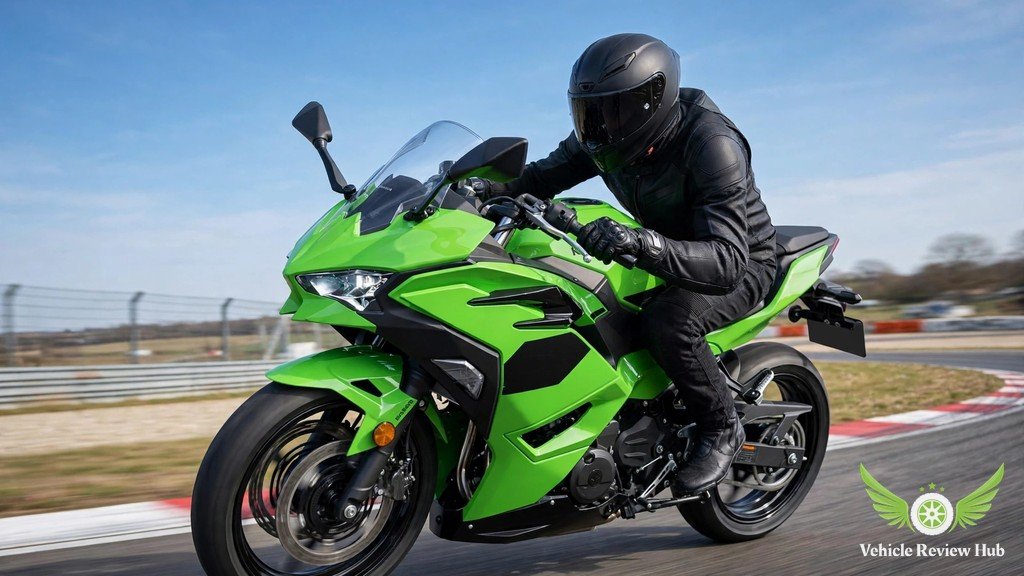
Handling is where the 500’s nine extra pounds meet its skinny tyres and short wheelbase, and this Kawasaki Ninja 500 performance section weighs the trade. The testers call the bike ultra nimble, stable and predictable through mid-corner bumps, with a rider triangle unchanged from the comfortable 400.
Handling, Braking and Stability on Real Roads
RevZilla’s verdict on the handling is short: with a curb weight around 380 pounds and relatively skinny tires, the Ninja 500 is ultra nimble and extremely easy to ride. Cycle News agrees from a different angle, calling the bike stable and predictable, maintaining its lean angle and direction through mid-corner bumps without wavering. Motorcycle.com scored the suspension 12 out of 15 and the brakes 9 out of 10. Together: a light, narrow bike that changes direction with very little effort and holds its line when the road gets rough.
The braking hardware is simple and it works: a single 310 mm front disc with a two-piston caliper, a 220 mm rear disc with a single-piston caliper, and ABS on the ABS and SE trims. But there are no instrumented braking figures for the 500 — no 60–0 and no 30–0 from a major US outlet — and this Kawasaki Ninja 500 performance guide does not carry the 400’s Cycle World figures, 60–0 in 134.6 feet, across to the 500. Chase scored the stock suspension 5 out of 10 and later replaced it with an Andreani cartridge kit and a Nitron rear shock — aftermarket parts, not a factory fix.
Nine Pounds Heavier Than the 400
RevZilla put its 2024 test bike on its own scales and recorded 381 pounds — nine pounds more than the last Ninja 400 it had in the shop. That measured comparison is the weight figure this Kawasaki Ninja 500 performance guide uses. The claimed curb weights tell the same story in a range: 370.4 lb for the non-ABS bike, 374.9 lb for the ABS and 379.3 lb for the SE, against the 400’s 361.6 lb non-ABS and 366.0 lb ABS.
Nine pounds is not much, and the bike does not feel it. The torque gain more than covers it: 31.7 lb-ft against the 400’s 28.0, arriving 500 rpm earlier. This Kawasaki Ninja 500 performance guide treats the nine pounds as a fair trade for 52cc.
| Trim | Claimed curb weight | Gain vs the 400 |
|---|---|---|
| Ninja 500 non-ABS | 370.4 lb (372.6 lb 50-state) | +8.8 lb vs 400 non-ABS (361.6 lb) |
| Ninja 500 ABS | 374.9 lb (377.1 lb 50-state) | +8.9 lb vs 400 ABS (366.0 lb) |
| Ninja 500 SE ABS | 379.3 lb (381.5 lb 50-state) | +15.5 lb vs 400 KRT ABS (366.0 lb) |
| RevZilla measured (2024 test bike) | 381 lb on RevZilla’s scales | Nine pounds more than the last 400 in the shop (372 lb) |
Notes: claimed curb weights in this Kawasaki Ninja 500 performance guide are Kawasaki USA’s spec-sheet figures. RevZilla’s 381 lb is a measured figure on the magazine’s own scales — the article does not name the test bike’s trim. The nine-pound gain is RevZilla’s measured comparison, not a claimed delta.
Kawasaki Ninja 500 Performance Compared With Other Sport Bikes
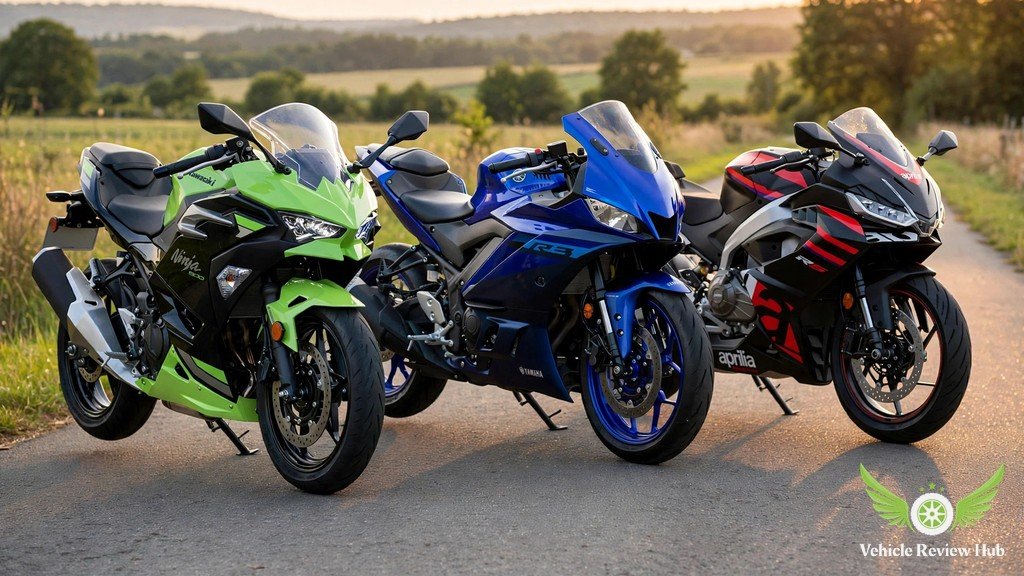
Against its rivals the 500’s performance case is torque and weight, not headline power or equipment. This Kawasaki Ninja 500 performance section puts the 500 next to the bike it replaced and the bikes a buyer actually cross-shops, on claimed power, torque, weight, power-to-weight and delivered price. The full rival-by-rival numbers are in our Kawasaki Ninja 500 comparison guide, and the smaller Ninjas are covered in our Kawasaki Ninja 300 performance guide and our Kawasaki Ninja 125 performance guide.
Kawasaki Ninja 500 vs Kawasaki Ninja 400
The 400 is the comparison that matters most, because the 500 is its replacement and every buyer of one has considered the other. The 500’s 451cc twin makes a claimed 51 hp and 31.7 lb-ft against the 400’s global claim of 45 PS and 28.0 lb-ft, and the 500’s torque peak arrives 500 rpm earlier. This Kawasaki Ninja 500 performance guide calls the swap an upgrade in mid-range torque and equipment, not outright speed.
The 400’s one measured advantage is that it was instrumented. Cycle World timed the 400 at 4.63 seconds to 60 mph and 13.19 seconds in the quarter mile, and measured 60–0 braking in 134.6 feet. None of those numbers exists for the 500, so a buyer who wants tested acceleration and braking figures will find them only for the older bike. The full 400 comparison, with prices and used values, is in our Kawasaki Ninja 400 performance guide.
Is the Kawasaki Ninja 500 Suitable for Beginner Riders?
Yes — with the standard caveats, and this Kawasaki Ninja 500 performance guide answers the question directly because it is the question most buyers ask. The seat is 30.9 inches high, the bike weighs around 375 lb wet, and the clutch pull is noticeably smoother and easier than on the 400, according to Motorcycle.com. There is no traction control, no ride mode and no quickshifter, so the bike rewards learning rather than nannying the rider — Chase’s words are that it will not throw you, and it will reward the rider who actually learns it.
The caveats are real. RevZilla notes legroom can feel tight for taller riders — its reviewer is 6 foot 2 — and the bike has no rider aids to catch a mistake. That is the answer this Kawasaki Ninja 500 performance guide gives. The Yamaha alternative is covered in our YZF-R3 review, and the 2024 variants and prices are in Cycle World’s buyer’s guide.
| Bike | Claimed power | Claimed torque | Curb weight | Power-to-weight | Delivered price |
|---|---|---|---|---|---|
| Ninja 500 ABS | 51 hp at 10,000 rpm | 31.7 lb-ft at 7,500 rpm | 374.9 lb | 0.136 | $6,449 |
| Ninja 400 ABS (2023) | 45 PS, global claim | 28.0 lb-ft at 8,000 rpm | 366.0 lb | Not computed, no US hp figure | $6,134 |
| YZF-R3 (2026) | 42 hp | 21.8 lb-ft | 373 lb | 0.113 | $6,149 |
| Aprilia RS 457 (2026) | 47 hp at 9,400 rpm | 32 lb-ft at 6,700 rpm | 385 lb wet | 0.122 | About $7,649 |
| Honda CBR500R (2026) | 47 hp, EU claim | 29.77 lb-ft, Cycle World dyno | Not verified | Not computed | $6,999 |
| Ninja 300 (2026) | 38.9 hp at 11,000 rpm | 19.3 lb-ft at 10,000 rpm | 388.1 lb | 0.100 | $5,649 |
Notes: power-to-weight in this Kawasaki Ninja 500 performance guide is claimed horsepower divided by claimed curb weight, except where noted. The RS 457’s delivered price uses a dealer destination of about $800. Aprilia publishes no fixed US destination charge. The CBR500R has no verified 2026 curb weight, so its power-to-weight is not computed. The 400 has no US power figure, so its power-to-weight is not computed.
Kawasaki Ninja 500 Performance Frequently Asked Questions
These answers give the Ninja 500’s measured performance figures in this Kawasaki Ninja 500 performance guide: power, top speed, acceleration, fuel economy, braking and handling, with every figure labelled by its source, because most of the numbers quoted for this bike were never tested.
How much power does the Ninja 500 make?
Kawasaki claims 51.0 hp at 10,000 rpm and 31.7 lb-ft at 7,500 rpm, both measured to ISO 4106, from the stroked 451cc twin. No major US outlet has published a dyno run of the Ninja 500, so there is no rear-wheel figure to quote. The 47.22 hp figure that keeps appearing next to the bike’s name is Cycle World’s dyno run of the 2024 Eliminator SE, a cruiser with different gearing and exhaust, and this Kawasaki Ninja 500 performance guide names it only to reject it.
What is the Ninja 500’s top speed?
There is no official figure and no instrumented figure. Kawasaki publishes no top speed, and no major US outlet has tested one. The 118 mph figure that search results keep returning belongs to the old 1987–2009 Ninja 500, a carburetted 498cc bike, and this Kawasaki Ninja 500 performance guide does not print it as the new bike’s speed. There is also no published 0–60 mph time or quarter-mile time for the new bike: TopSpeed’s 4.8-second 0–60 is an estimate, not a test.
How fast does the Ninja 500 accelerate?
The only measured acceleration figure verified for the bike is Chase on Two Wheels’ 40–80 mph roll-on in third gear: 5.43 seconds, from his written review of the 2025 bike. That is a roll-on, not a 0–60 and not a quarter mile, and this Kawasaki Ninja 500 performance guide prints it as exactly that — one owner’s timed roll-on, attributed to Chase.
What fuel economy does the Ninja 500 get, and how far does it go?
No US outlet has published a measured MPG figure for the Ninja 500. The lab figure is 62.0 mpg on the WMTC cycle, or about 229 miles from the 3.7-gallon tank, and that is a lab range, not a real-world one. The only verified US owner figure is Chase on Two Wheels’ 54 mpg on a 222-mile mountain day — one rider, one day, not an average — and this Kawasaki Ninja 500 performance guide prints the 54 mpg as one owner’s measured day, and nothing more. Indian owner reports split, about 49 mpg on BikeWale against about 61 mpg on ZigWheels, for the Indian-market bike.
How does the Ninja 500 brake and handle?
There are no instrumented braking figures for the 500 — no 60–0 and no 30–0 from a major US outlet — so this Kawasaki Ninja 500 performance guide does not carry the 400’s Cycle World figures across to it. The hardware is a single 310 mm front disc with a two-piston caliper and a 220 mm rear disc, with ABS on the ABS and SE trims. Testers call the bike ultra nimble and extremely easy to ride, and stable and predictable through mid-corner bumps. RevZilla weighed it at 381 lb, nine pounds more than the last Ninja 400, and the torque gain more than covers the extra weight.
Is the Ninja 500 suitable for beginner riders?
Yes, with the standard caveats. The seat is 30.9 inches high, the bike weighs around 375 lb wet, the clutch pull is noticeably smoother and easier than on the 400, and it has a slipper clutch and ABS on the ABS trims. ABS is effectively standard from 2027, when the non-ABS trim was deleted. There is no traction control, no ride mode and no quickshifter, so the bike rewards learning rather than nannying the rider. RevZilla notes legroom can feel tight for taller riders, and Chase calls it the rare beginner bike you can grow into instead of out of.