Mostly yes — with six recalls to check first. The Kawasaki Ninja H2 SX is a 998cc supercharged sport-tourer on sale in the US from 2018 through 2027, and its reliability record is defined by a short list of specific, fixable items. This Kawasaki Ninja H2 SX reliability guide works through all six campaigns, the manual’s schedule, and the wear items to check.
The headline numbers are small. The six campaigns together touch 3,532 SX-only units across the whole US run, and the largest single SX slice is 1,166 bikes. A used H2 SX with all six fixes proven is the same reliable tourer as any other — and this Kawasaki Ninja H2 SX reliability guide shows exactly how to prove it, campaign by campaign.
Kawasaki Ninja H2 SX Reliability Overview
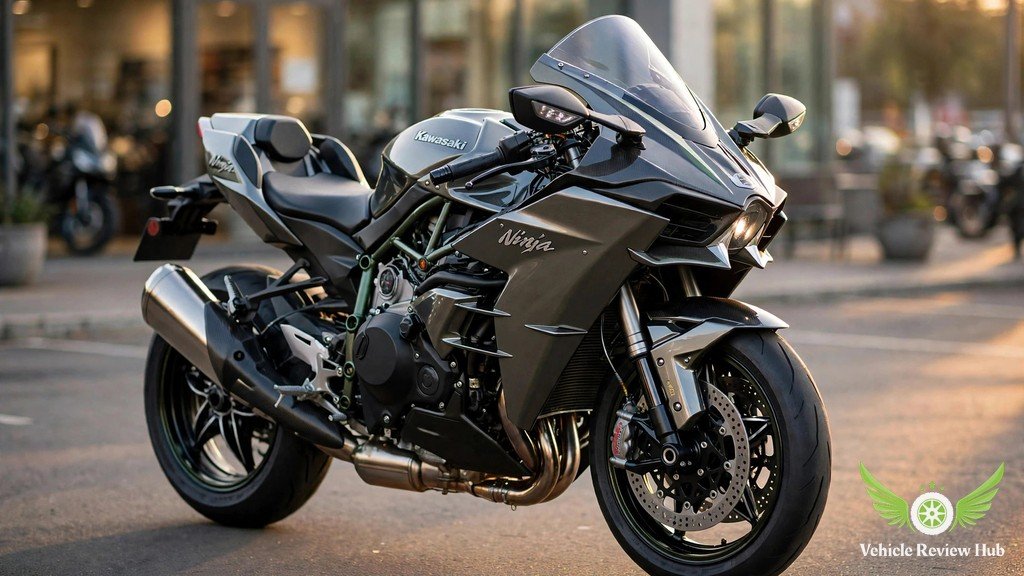
Nothing about the supercharged engine has produced a pattern of failures, and every serious defect Kawasaki found was caught by a recall with a free fix. The bike’s defining component is the balanced supercharger on the 998cc inline-four, and the owner’s manual puts a supercharger inspection on the service schedule — the one SX-specific servicing item no buyer should skip.
Supercharger Check Every 7,600
The owner’s manual lists a supercharger inspection at the 12,000 km service — 7,600 miles in the US manual. That is a check, not a replacement, done at every 7,600-mile service alongside the oil and filter change. The kilometre figure converts to 7,456 miles, so 7,600 is Kawasaki’s own rounded mile figure — this Kawasaki Ninja H2 SX reliability guide prints the manual’s miles.
Why the check matters is simple: the supercharger is the one part of this bike that no other touring motorcycle has. A neglected supercharger inspection is the single SX-specific servicing question a buyer should ask about, ahead of any generic wear item — and this Kawasaki Ninja H2 SX reliability guide puts it first.
How Mileage, Storage and Previous Care Affect Reliability
No model-specific failure-rate data was found for the H2 SX, so this Kawasaki Ninja H2 SX reliability guide does not invent any. Service history matters more than the odometer. A 30,000-mile bike with a full dealer service record and all six recall fixes proven is a better buy than a 5,000-mile bike with no records at all.
Storage is the second factor. A bike that sat for years needs its brakes, tyres, chain and fuel system checked before anything else — brake fluid absorbs moisture, tyres age whether ridden or not, and stale fuel fouls injectors. Previous care is the third: owners who paid flagship money usually kept flagship records, but “usually” is not proof. Check the records, run the VIN, and inspect the bike — that is the order this Kawasaki Ninja H2 SX reliability guide recommends.
Kawasaki Ninja H2 SX Common Problems and Wear Items
The H2 SX’s common problems are, for the most part, its recalls. Six NHTSA campaigns cover the bike’s whole US run from 2018 to 2022, and each one names a specific defect, a specific set of bikes, and a free fix. Outside the campaigns, the wear items are ordinary — tyres, brakes, chain, plugs, filters and battery.
Six Recalls, Small Slices
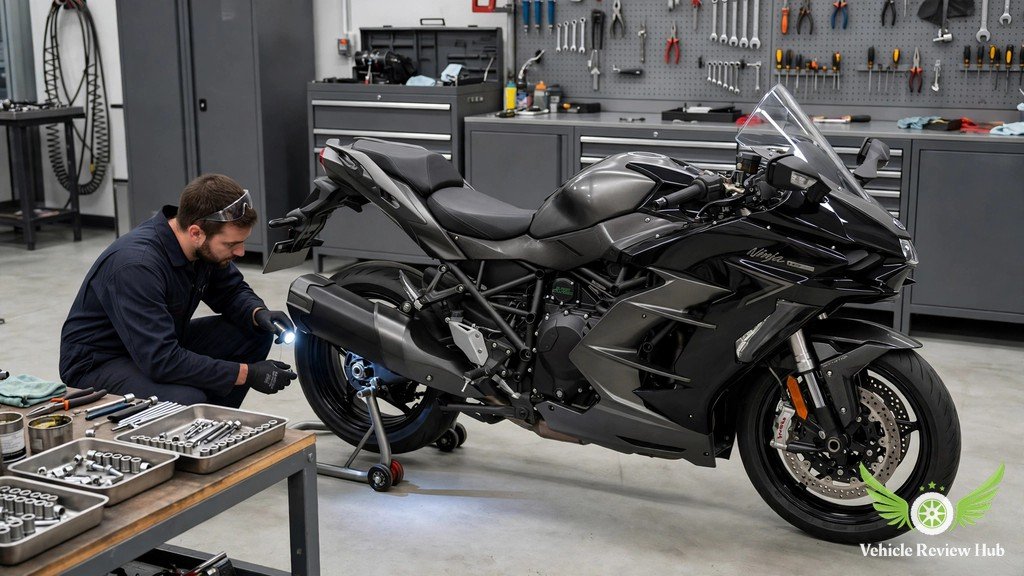
Six campaigns sounds alarming until the numbers in this Kawasaki Ninja H2 SX reliability guide are on the table. The SX-only units across all six campaigns total 3,532 bikes — 390 + 799 + 120 + 857 + 1,166 + 200. The slices are small because the bike sells in small numbers: the 2022 campaign covered 100% of that year’s production, and that was 200 bikes. The two shared-family campaigns touch the SX only in slices — 120 of 1,523 and 1,166 of 3,172. A pre-purchase VIN check on NHTSA’s recall lookup covers all six in one search.
| Campaign | Defect | SX units | Remedy | Completion |
|---|---|---|---|---|
| 18V-580 (2018) | Centre stand pin weld may fail, stand drops | 390 | Replace left centre stand bracket (kit P/N 99999-0688) | 282/390, Q1 2019 |
| 20V-676 (2020) | Gear misengagement, 4th/5th — DO NOT RIDE | 799 | Reprogram FI-ECU; white mark under rear seat = done | Not published |
| 21V-593 (2021) | Oil pressure relief valve may come off, engine may seize | 120 of 1,523 | Replace oil pressure relief valve | 1,190/1,523, Q2 2023 |
| 21V-594 (2021) | Rear hub needle bearing, insufficient grease — wheel may lock | 857 | Replace needle bearing (kit P/N 99999-0819) | 498/857, Q4 2022 |
| 22V-912 (2022) | Cam chain tensioner plunger may lock, engine may stall | 1,166 of 3,172 | Replace tensioner (P/N 12048-0120) + gasket | Not published |
| 22V-913 (2022) | Meter software — speed display may fail or restart | 200 (all 2022 bikes) | Update meter software (kit P/N 99999-0872) | 171/200, Q3 2024 |
Note: “Not published” means no completion count was verified for that campaign. The 20V-676 white mark and the 22V-913 meter update are the two fixes a buyer can verify on the bike itself; the other four need the VIN lookup and the service record.
The most serious campaign in this Kawasaki Ninja H2 SX reliability guide is 20V-676. Gear misengagement in fourth or fifth gear can fracture the output gears and cause a loss of control, which is why Kawasaki issued a do-not-ride notice for the 799 affected bikes from model years 2018 to 2020. The remedy is an FI-ECU reprogram, proved by a white paint mark on the rear frame beneath the rear seat.
Beyond the recalls, the wear items are straightforward. Tyres are 120/70 ZR17 front and 190/55 ZR17 rear at 36 psi front and 42 psi rear cold. Brakes are Brembo Stylema pads on 320 mm front rotors on 2022-and-later bikes (330 mm on 2018–2021) with a 250 mm rear disc. Spark plugs are NGK SILMAR9E9, four of them, every 12,000 km. The air filter is due every 18,000 km, and the battery is a YTZ10S. The chain is a sealed chain — its size, link count and slack figure were not verified for this bike.
18V-089 Is Not This Bike
The most famous recall buyers attach to the H2 SX does not apply to it at all — and this Kawasaki Ninja H2 SX reliability guide says so plainly. Campaign 18V-089 is the ZX-10R and ZX-10RR transmission-gear recall: 3,964 units from 2016 to 2018, where second, third and fourth output gears and the second input gear may break under high-impact shifting. It carried its own do-not-ride notice, proved by a white paint mark on the upper left of the frame. No H2 SX model code — ZX1002A, B, D or R — appears in it.
The confusion comes from the shared ZX100 prefix, the 2018 year, and the H2 SX’s own gears campaign, 20V-676. The two are different defects on different bikes, and this Kawasaki Ninja H2 SX reliability guide keeps them separate: 18V-089 is broken gears under hard shifting on the ZX-10R, fixed by replacing gears; 20V-676 is gear misengagement on the H2 SX, fixed by reprogramming the ECU. The Ninja ZX-10R reliability guide covers 18V-089 as the sixth of the ZX-10R’s eight campaigns.
Kawasaki Ninja H2 SX Maintenance Schedule and Servicing
The H2 SX’s maintenance schedule comes from the owner’s manual, and it is shorter than the bike’s price suggests. The first service is the break-in service at 1,000 km (600 miles), then oil and filter every 12,000 km (7,600 miles) or 12 months, with the supercharger inspection at 7,600 miles and the valve check and oil screen at 15,200 miles. This Kawasaki Ninja H2 SX reliability guide prints the manual’s own mile figures throughout.
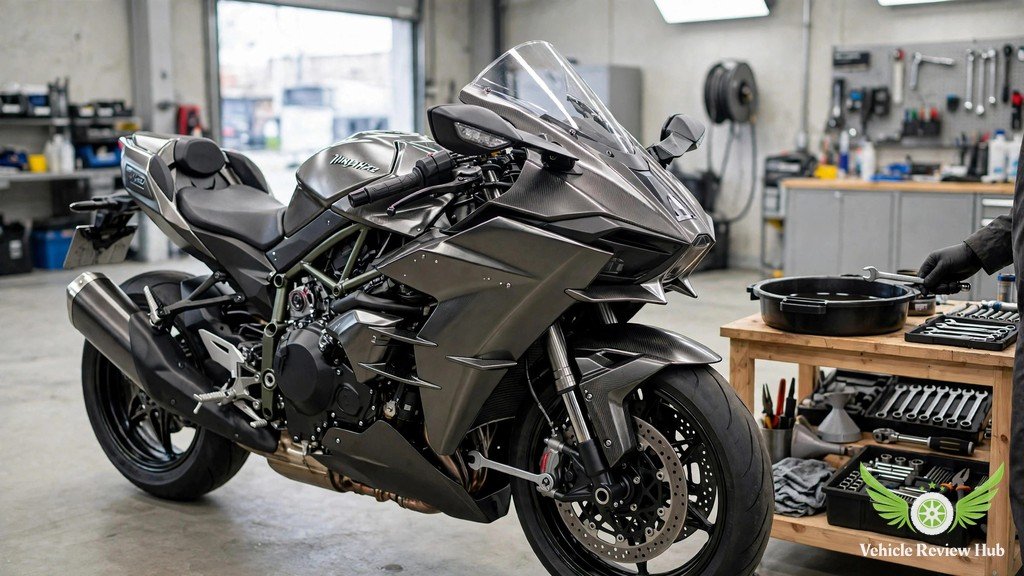
22V-912: SX Slice Is 1,166
Campaign 22V-912 is the largest recall in this Kawasaki Ninja H2 SX reliability guide — 3,172 bikes across the whole supercharged H2 family from 2015 to 2023 — and the SX slice is 1,166 of them. The defect: the camshaft chain tensioner plunger may lock up and stall the engine while riding. The remedy is a new tensioner (P/N 12048-0120) plus a gasket, fitted free. The Part 573 record states the SX figure plainly: “ZX1002A/B/D/R (Kawasaki/Ninja H2 SX/SX SE/1,166)”.
The H2 and H2 Carbon account for 830 bikes, the H2 SX and SX SE for 1,166, and the Z H2 and Z H2 SE for 1,176. The SX is the middle slice at 36.8% of the campaign, and still a small absolute number. Owner letters went out on December 21, 2022; no completion count was verified.
21V-593: SX Slice Is 120
Campaign 21V-593 is the smallest SX slice in this Kawasaki Ninja H2 SX reliability guide: 120 bikes out of a 1,523-bike campaign. The defect: oil pressure relief valve components may come off through improper assembly, losing oil pressure and seizing the engine. The remedy is a replacement valve, up to three hours’ work. The Part 573 record names the SX slice exactly: “ZX1002D (Kawasaki/Ninja H2 SX SE+/2021): 120 units”. The rest of the campaign is spread across the 2020–2021 H2, the 2021 ZX-10R and ZX-10RR, and the Z H2 family — the SX is 7.9% of it.
The completion figure this Kawasaki Ninja H2 SX reliability guide prints is verified: 1,190 of the 1,523 bikes had the fix by the second quarter of 2023. The SX’s 120 bikes are all 2021 SE+ models, so the check is narrow — if the bike you are looking at is a 2021 SE+, run its VIN. webBikeWorld’s recall coverage lists both this campaign and the rear hub bearing campaign that followed it.
| Service item | Interval | Note |
|---|---|---|
| First (break-in) service | 1,000 km (600 mi) | Oil and filter, full inspection |
| Engine oil + filter | Every 12,000 km (7,600 mi) or 12 months | SAE 10W-40, JASO MA2; 4.4 L with filter, 3.8 L drain-only, 5.0 L dry (owner’s manual via MotoSpecDB) |
| Supercharger inspection | Every 7,600 mi | Check at each oil service, not a replacement |
| Spark plugs (NGK SILMAR9E9 ×4) | Every 12,000 km | Four plugs, from the owner’s manual |
| Air filter | Every 18,000 km | Inspect sooner in dusty riding |
| Valve clearance check | Every 24,000 km (15,200 mi) | Check only — clearance figures not printed here |
| Oil screen (strainer) | Every 24,000 km (15,200 mi) | Due at the same service as the valve check |
Note: The intervals above are the owner’s manual’s stated figures in the manual’s own miles — 7,600 and 15,200 — not the kilometre conversions. This Kawasaki Ninja H2 SX reliability guide does not print valve clearance figures or a chain slack figure: neither was verified for this bike.
Kawasaki Ninja H2 SX Tires, Brakes and Suspension Maintenance
The H2 SX carries 590.9 lb at the curb on the 2022-and-later bikes, and its tyres, brakes and suspension are specced for that weight plus a passenger and luggage. The tyre pressures are the same solo or loaded — 36 psi front and 42 psi rear cold. The brakes are Brembo Stylema calipers and the suspension is Showa’s semi-active Skyhook system on the SE models. This Kawasaki Ninja H2 SX reliability guide covers all three systems together, because on a 590.9 lb tourer they wear together.
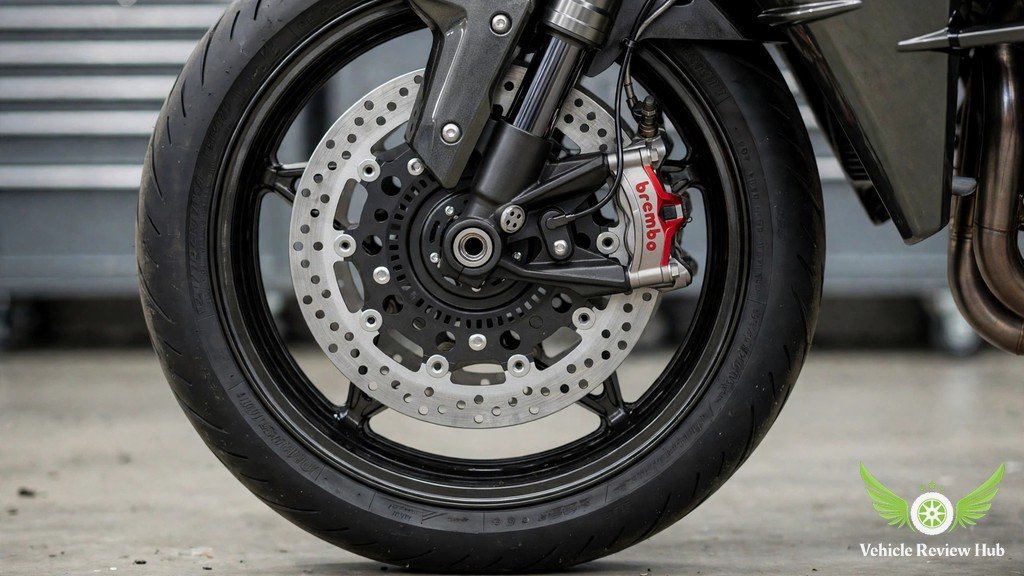
Valve Checks at 15,200 Miles
The valve clearance check falls every 24,000 km, which the US manual states as 15,200 miles — the same service at which the oil screen is due. It is a check, and the distinction matters in this Kawasaki Ninja H2 SX reliability guide: most bikes pass it without adjustment, and the cost of the check is the cost of getting to the valves on a fully-faired supercharged four, not the cost of new shims.
What this Kawasaki Ninja H2 SX reliability guide does not print is the clearance figures themselves. They were not verified for this bike — the likely source is the service manual rather than the owner’s manual — and printing them from memory would be guessing at the one measurement that decides whether a valve needs work. The interval is verified; the figures are not. Any shop doing the check will have the service manual open, and the recorded measurements matter more than the book figures in any case.
Tire, Brake and Suspension Checks That Matter
Start with the tyres. The sizes are 120/70 ZR17 front and 190/55 ZR17 rear, and the pressures are 36 psi front and 42 psi rear cold, solo or two-up. Check the pressures cold, check the tread depth, and check the date code — the three tyre checks this Kawasaki Ninja H2 SX reliability guide puts first. A tyre that has sat for five years is done even if the tread looks new.
Then the brakes — the second system this Kawasaki Ninja H2 SX reliability guide checks. The front rotors are 320 mm on 2022-and-later bikes and 330 mm on 2018–2021 bikes, with a single 250 mm rear disc, and the calipers are Brembo Stylema units with KIBS cornering ABS behind them. Check pad thickness, rotor condition and brake fluid colour — dark fluid has absorbed moisture and needs changing. Then the suspension: the SE models run Showa Skyhook semi-active suspension (KECS on the SE+), which needs its fork oil and seals serviced per the owner’s manual like any other fork, with the electronics adding a diagnostic check.
Kawasaki Ninja H2 SX Maintenance and Ownership Costs
Owning an H2 SX costs flagship money to buy and sensible money to run. The 2027 SE lists at $29,999, and the price ladder behind it runs from $19,000 for the 2018 base bike and $22,000 for the 2018 SE, through $25,000 for the 2020 SE+, $27,500 for the 2022 SE and $28,000 for the 2023 SE, to $29,100 for the 2025 SE. The running costs are fuel, oil, tyres, pads, plugs and filters, with the valve check at 15,200 miles as the one big service bill. This Kawasaki Ninja H2 SX reliability guide prices the running costs from the verified figures only.
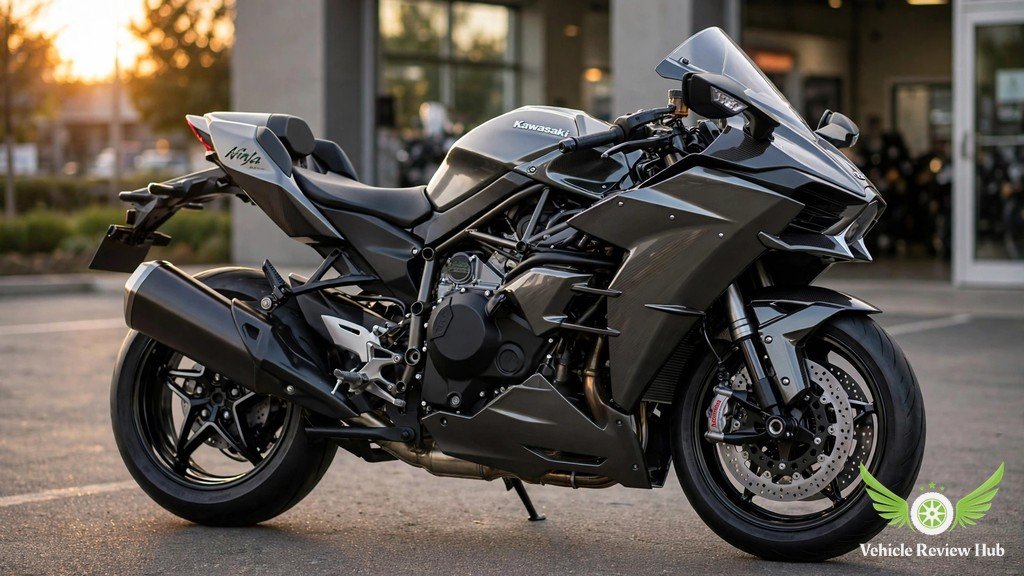
Fuel, Routine Servicing, Tires and Replacement Parts
Fuel is the most variable cost. The tested figures spread from just over 51 mpg on a dash readout to 38 mpg in RevZilla’s 2025 comparison, with a 41.1 mpg test average in between — and the 5.0-gallon tank turns those figures into roughly 180 to 250 miles between stops. Budget on the averages: about 200 miles between stops is the practical number. This Kawasaki Ninja H2 SX reliability guide uses the same figures the Kawasaki Ninja H2 SX performance guide prints, with the same sources.
Routine servicing in this Kawasaki Ninja H2 SX reliability guide is the oil and filter every 7,600 miles or 12 months — 4.4 litres of SAE 10W-40 (JASO MA2) with the filter, 3.8 litres drain-only — with the filter part number 16097-0008 shared across Kawasaki’s inline-four family. The drain bolt torque is 29 N·m with a fresh crush washer. Tyres are the biggest wear bill after fuel: a 190/55 rear on a 590.9 lb bike with 166 hp at the rear wheel will not last as long as the same tyre on a middleweight. Plugs are four NGK SILMAR9E9 every 12,000 km, and the air filter every 18,000 km — and the fairing has to come off to reach them.
Oil Screen Due at 15,200 Too
The oil screen — the strainer — is due at the same 24,000 km (15,200-mile) service as the valve clearance check. It is the kind of item that gets skipped because it is out of sight, and this Kawasaki Ninja H2 SX reliability guide flags it for that reason: the screen sits in the oiling system and catches what the filter does not.
The warranty behind all of this is a 12-month limited warranty, with Kawasaki Protection Plus available as an optional 12, 24, 36 or 48-month extension. The 12-month term was confirmed across the 2022, 2023 and 2025 spec listings. A used bike inside its warranty window with all six recalls done is the lowest-risk way in; outside it, the bike lives or dies on its service record.
How to Keep a Kawasaki Ninja H2 SX Reliable
Keeping an H2 SX reliable is mostly a matter of records. The bike has no chronic failure pattern, the supercharger inspection is on the schedule, the valve check is at 15,200 miles, and every serious defect was recalled. What turns a reliable bike into an unreliable one is missing history: services skipped and recalls never checked. This Kawasaki Ninja H2 SX reliability guide closes with that checklist.
Preventive Maintenance, Records and Regular Inspections
Keep every receipt — the first rule of this Kawasaki Ninja H2 SX reliability guide. The service record is what proves the supercharger was inspected at the 7,600-mile services, the valves were checked at 15,200 miles, and the oil screen was done with them. A seller who can show all of it is selling a looked-after bike; a seller who cannot is asking you to trust them instead of the paperwork.
Inspect regularly between services: tyre pressures cold at 36 front and 42 rear, chain condition and slack checked by the manual’s method, brake fluid colour and a look at the rear hub bearing area on 2018–2021 bikes. The chain’s size, link count and slack figure were not verified for this bike, so this Kawasaki Ninja H2 SX reliability guide does not print them — check them against the owner’s manual, not against another Kawasaki’s numbers. For a first bike, the honest recommendation is still the Ninja 650 — the H2 SX is a second or third bike, not a learner’s.
Centre Stand Recalled on 2018s
The centre stand recall is the oldest campaign in this Kawasaki Ninja H2 SX reliability guide, and the easiest to overlook. Campaign 18V-580 covers the 2018 H2 SX SE: the centre stand pin weld may fail, the stand can drop, and the bike can fall. The remedy is a replacement left centre stand bracket, kit part number 99999-0688, and 282 of the 390 affected bikes had it done by the first quarter of 2019. It is the one recall that can put the bike on its side in your own garage.
The verdict on this bike’s reliability is the same as the opening answer: mostly yes, with six recalls to check. Check the VIN, check the white mark, check the records — and, as this Kawasaki Ninja H2 SX reliability guide concludes, the H2 SX will tour for years. The Kawasaki Ninja H2 SX review covers the price ladder and the riding experience behind the numbers in this guide.
Kawasaki Ninja H2 SX Reliability: Frequently Asked Questions
These are the questions buyers actually ask about the H2 SX’s recalls, servicing and long-term reliability, answered with the verified figures from this Kawasaki Ninja H2 SX reliability guide.
Is the Kawasaki Ninja H2 SX reliable?
Mostly yes, with six recalls to check: the headline items are the 20V-676 do-not-ride gear recall (799 units) and the 22V-912 cam chain tensioner recall (SX slice 1,166). A bike with all six fixes proven is the same reliable tourer as any other, and this Kawasaki Ninja H2 SX reliability guide shows how to prove each one.
How many recalls does the H2 SX have?
Six NHTSA campaigns: 18V-580 (centre stand, 390), 20V-676 (gears, 799), 21V-593 (oil relief valve, SX slice 120 of 1,523), 21V-594 (rear hub bearing, 857), 22V-912 (cam chain tensioner, SX slice 1,166 of 3,172), 22V-913 (meter software, 200). The SX-only total across all six is 3,532 bikes, and this Kawasaki Ninja H2 SX reliability guide lists every campaign.
What is the 18V-089 recall, and does it affect the H2 SX?
18V-089 is the ZX-10R / ZX-10RR transmission-gear recall (3,964 units). It does NOT affect the H2 SX — the confusion comes from the shared ZX100 model-code prefix and the 2018 year. The H2 SX’s own gears campaign is 20V-676 — a different defect on different bikes, and the one this Kawasaki Ninja H2 SX reliability guide covers.
How do I check whether the recalls were done on a used H2 SX?
Run the VIN on NHTSA.gov for all six campaigns. For 20V-676 specifically, a white paint mark on the rear frame beneath the rear seat proves the ECU reprogram was done. Ask for the service record showing the other fixes, and this Kawasaki Ninja H2 SX reliability guide recommends checking the record before paying, not after.
How often does the H2 SX need a valve check?
Every 15,200 miles (24,000 km). The supercharger is inspected every 7,600 miles, and the oil screen is due at 15,200 miles too. Oil and filter every 7,600 miles or 12 months; spark plugs every 12,000 km; air filter every 18,000 km — the schedule this Kawasaki Ninja H2 SX reliability guide prints from the manual.
What oil does the H2 SX take?
SAE 10W-40 (JASO MA2), 4.4 litres with the filter (3.8 litres drain-only). The filter is part number 16097-0008. Tyres are 120/70-17 front and 190/55-17 rear at 36/42 psi cold, and this Kawasaki Ninja H2 SX reliability guide prints those figures from the owner’s manual.