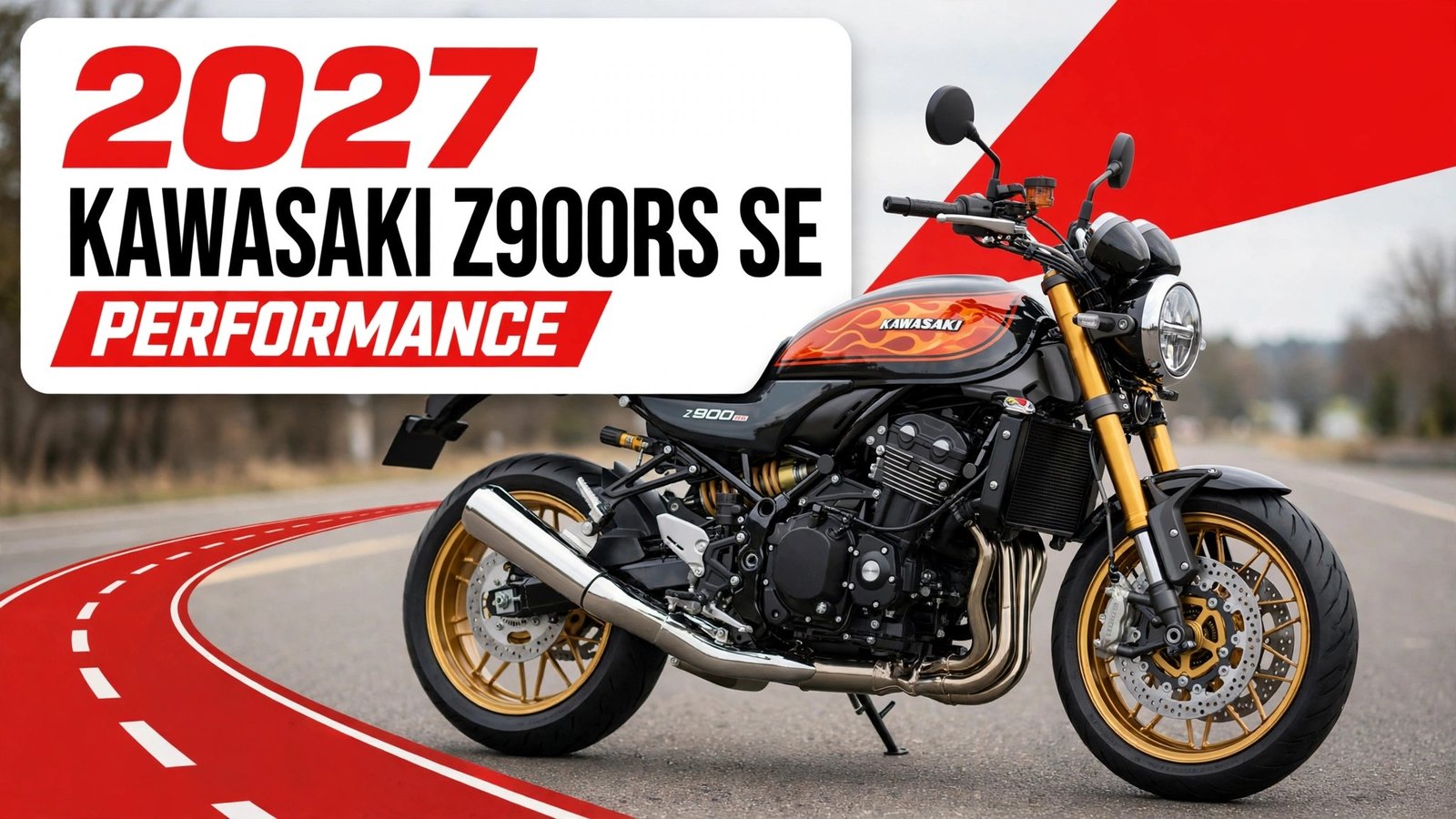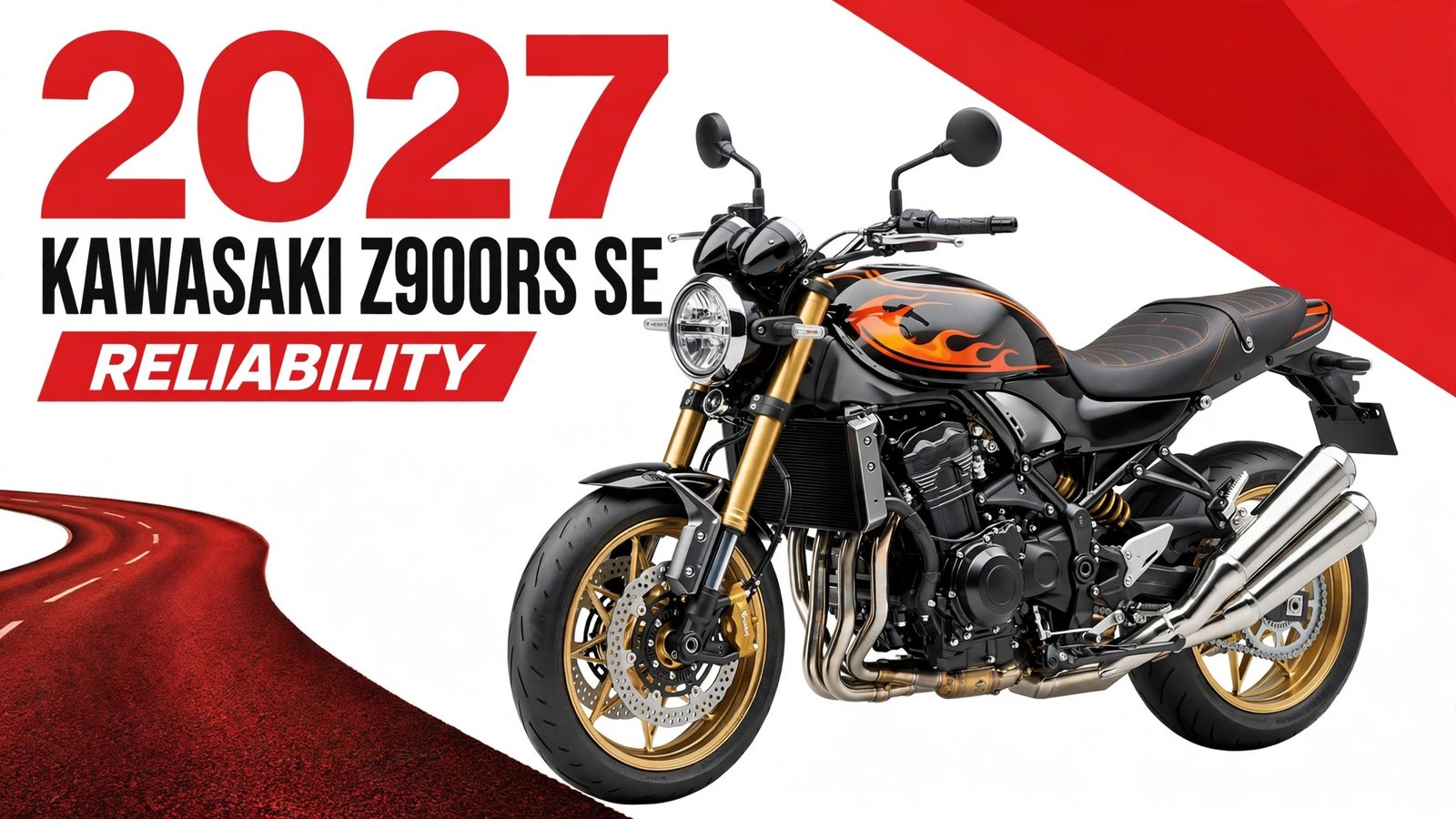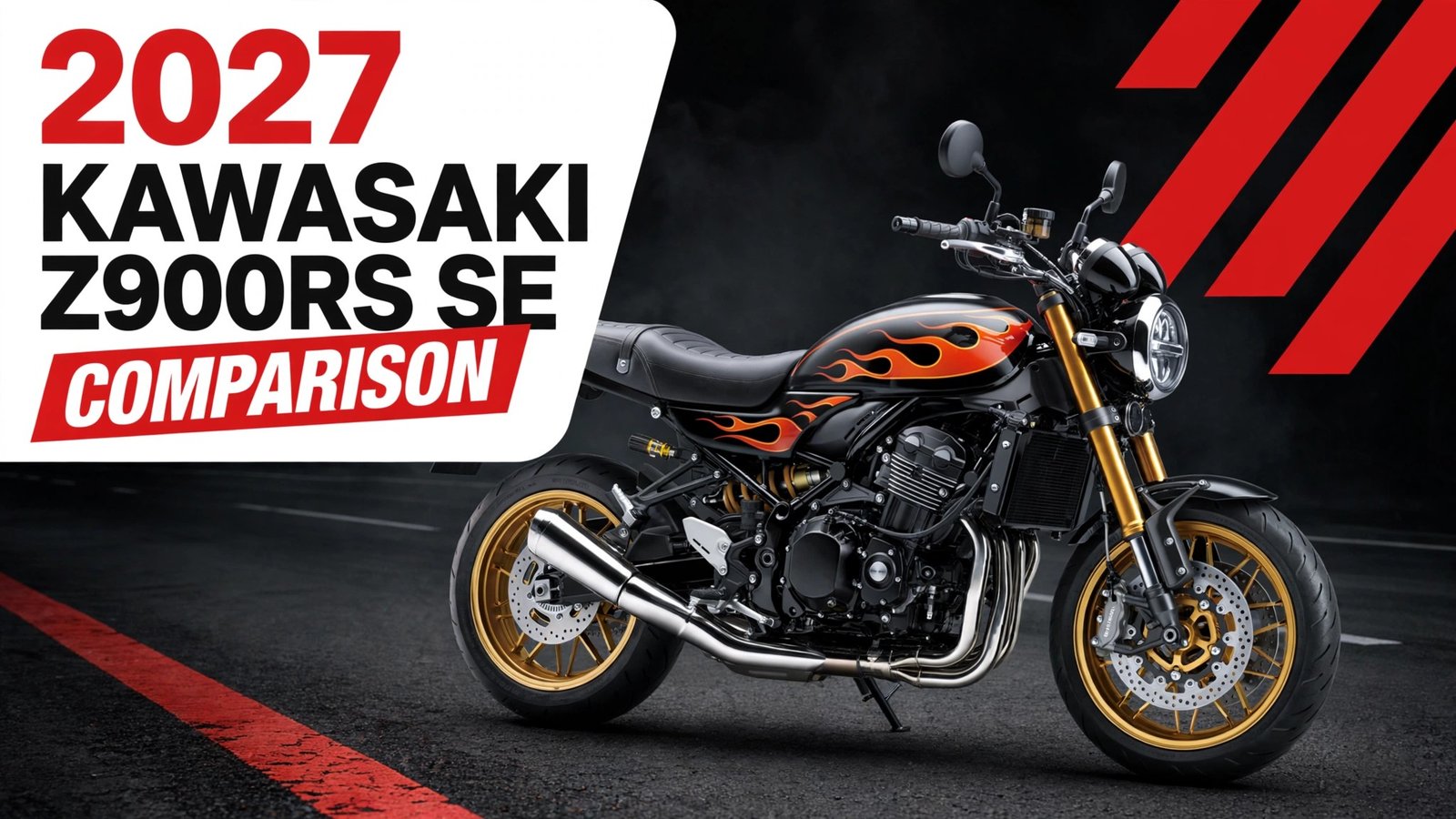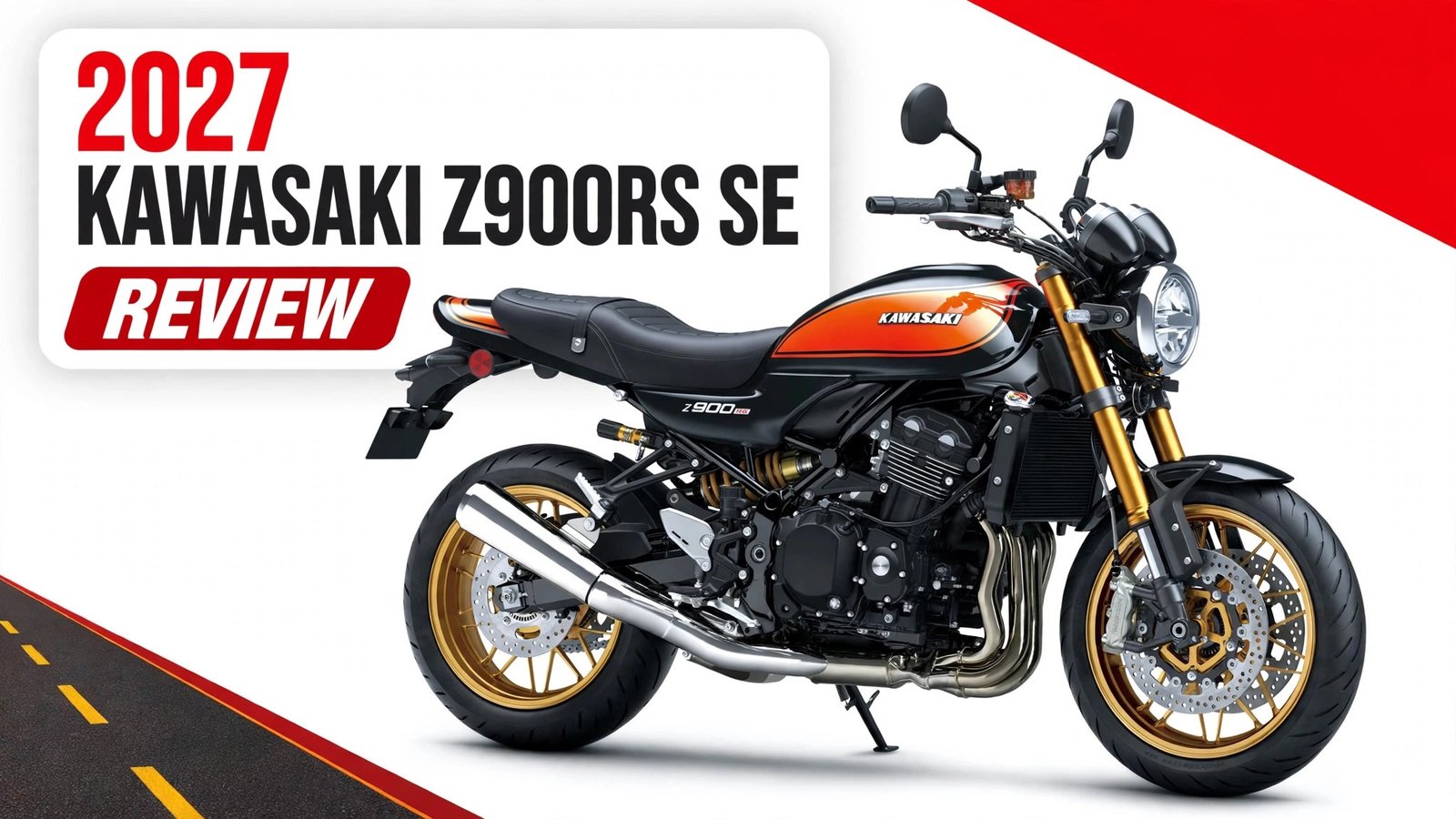
The Kawasaki Z900RS SE is the most expensive bike in the RS family, and this Kawasaki Z900RS SE review starts with the question every buyer asks first: what does the extra money actually buy? For 2027 the answer is $14,699 plus an $840 destination charge, or $15,539 delivered — $1,700 more than the base RS. That premium buys Brembo brakes, an Öhlins shock, gold hardware and a USB-C outlet — no extra power, no extra electronics and no TFT display.
What it does buy is the best version of the RS Kawasaki sells, in both of the bike’s two eras. The 2022 launch bike arrived with the Yellow Ball livery and the improved throttle mapping; the 2026 bike carries the full electronics update with the SE kit unchanged. This Kawasaki Z900RS SE review covers both eras, the prices year by year and the verdict at the end.
Kawasaki Z900RS SE Overview and Model-Year Updates
The Z900RS SE sits at the top of the RS family in every year it is sold: the base RS’s 948cc inline-four and trellis chassis, plus the SE hardware kit — the engine, the electronics and the 476 lb curb weight are the same as the base bike in each era. This Kawasaki Z900RS SE review treats the SE as two bikes in one model line: the Era A bike of 2022–2025 and the Era B bike of 2026–2027.
Era B Carries the 2026 Update
The 2026 update is the dividing line in this Kawasaki Z900RS SE review, and the biggest change the RS family has had since the model launched in 2018. Kawasaki’s press release of 3 November 2025 announced the 2026 family through a limited order period beginning that November, and the SE carries the update in full: electronic throttle valves in place of the cable, a Bosch six-axis IMU feeding the new Kawasaki Cornering Management Function, two-mode traction control, an up/down quickshifter from 1,500 rpm, cruise control and RIDEOLOGY phone connectivity.
The engine was revised with the electronics: new cam profiles, compression up from 10.8:1 to 11.8:1, a flywheel lighter by about 10 percent, a 43-tooth rear sprocket and a new megaphone silencer extended by 70 mm. The result is 115.0 hp at 9,300 rpm and 73.0 lb-ft at 7,700 rpm on the 2027 spec sheet, up from 111 hp and 72.3 lb-ft on the pre-2026 bike. The dials stay — twin analogue-style dials with a multi-function LCD, no TFT in 2026 or 2027. That is the full update this Kawasaki Z900RS SE review tracks in the table below.
Only Extra Is USB-C
The SE adds no electronics over the Era B base beyond the USB-C outlet — the only electronic extra this Kawasaki Z900RS SE review can credit to the SE. The IMU, the cornering management, the quickshifter, the cruise control and the phone connectivity are standard on the base RS too, and the base RS does not list a USB-C outlet.
Cycle News’s ride review of the 2022 Z900RS SE — the launch bike in the Yellow Ball livery — covers the Brembo brakes, the Öhlins shock and the improved throttle mapping. The bike on screen is the Era A bike: cable throttle, no IMU, no quickshifter and no cruise control — the video this Kawasaki Z900RS SE review embeds, since the 2026 update came later and is not in it.
| Feature | Era A (2022–2025) | Era B (2026–2027) |
|---|---|---|
| Throttle | Cable | Ride-by-wire (ETV) |
| IMU / cornering management | None | Bosch 6-axis IMU + KCMF |
| Traction control | KTRC, 3 modes | KTRC, 2 modes (Mode 1 / Mode 2) |
| Quickshifter | None | KQS up/down, from 1,500 rpm |
| Cruise control | None | Standard |
| Compression | 10.8:1 | 11.8:1 |
| Power / torque (US claim) | 111 hp @ 8,500 rpm / 72.3 lb-ft @ 6,500 rpm | 115.0 hp @ 9,300 rpm / 73.0 lb-ft @ 7,700 rpm |
| Seat height | 33.3 in | 32.3 in |
| Curb weight | 474.1 lb | 476.3 lb |
| SE kit | Brembo M4.32, Öhlins S46, gold fork/wheels, USB-C | Brembo M4.32, Öhlins S46, gold fork/wheels, USB-C |
Note: The 2026 update is an electronics and engine update, not an SE-kit update — the kit is unchanged across the eras. The 2025 SE sheet prints 110.0 hp, one less than the 111 hp launch figure; both are printed and labelled in the engine section below.
Kawasaki Z900RS SE Engine and Specifications
The SE’s engine is the base RS’s engine, unchanged in each era. This Kawasaki Z900RS SE review starts the specifications with that fact, because it is the one buyers most often get wrong: the premium buys suspension, brakes and gold hardware, not horsepower. The 948cc liquid-cooled inline-four and the six-speed gearbox are shared with the base bike in both eras.
Kit: Ohlins, Brembo, Gold
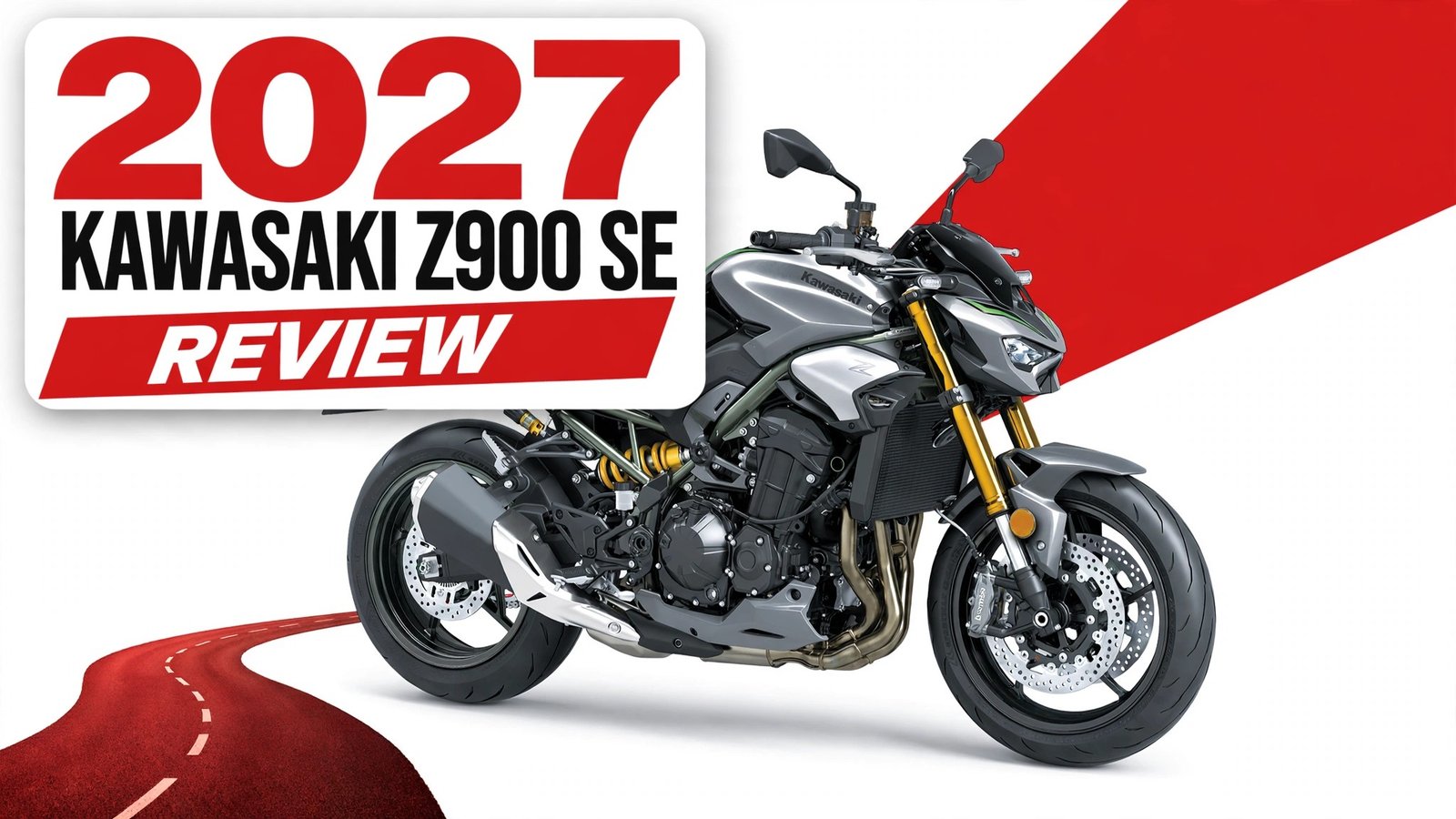
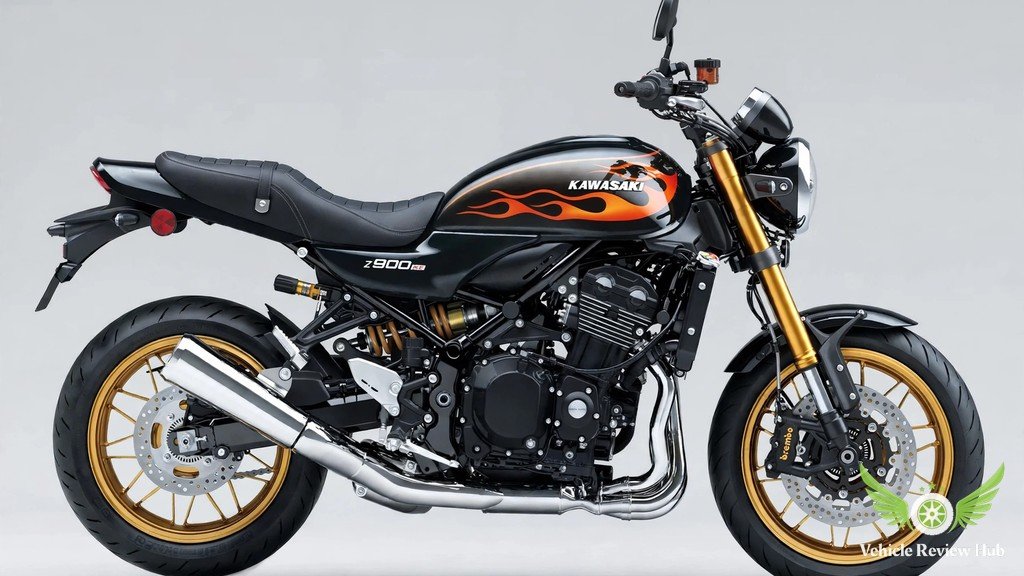
The kit is the heart of this Kawasaki Z900RS SE review, and it is the same in both eras. Up front sit radial-mount Brembo M4.32 monobloc calipers gripping dual 300 mm discs, fed by a smaller-diameter Nissin radial-pump master cylinder through stainless-steel braided lines. At the rear, an Öhlins S46 shock with a remote preload adjuster and 30-position rebound damping replaces the base bike’s unit, the 41 mm inverted fork has gold outer tubes, and the wheels are gold. A USB-C outlet on the right handlebar completes the kit.
The rear brake is a single 250 mm disc with a single-piston caliper, and the Nissin ABS unit is standard on every US SE. The wheels wear Dunlop SPORTMAX GPR-300 tyres — 120/70ZR17 front and 180/55ZR17 rear — and the front tyre is the one to check on a 2024 bike, because the only recall that touches the SE is the 2024 front-tyre campaign, covered in the Kawasaki Z900RS SE reliability guide. The instruments are twin analogue-style dials with a multi-function LCD, and no TFT was added in either era, a point this Kawasaki Z900RS SE review repeats because buyers keep asking.
No Power Gain, Either Era
The SE makes the same power as the base RS in each era, and the dyno figures tell the same story in this Kawasaki Z900RS SE review. Era A claims 111 hp at 8,500 rpm — although the 2025 SE sheet itself prints 110.0 hp, a 1 hp sheet-to-sheet difference printed here with both figures labelled. Era B claims 115.0 hp at 9,300 rpm with 73.0 lb-ft at 7,700 rpm, identical on the SE and base sheets. The 2024 SE sheet prints no maximum-horsepower line at all.
On the dyno, Cycle World’s 2022 SE made 95.24 hp at 8,620 rpm and 64.03 lb-ft at 6,150 rpm on a Dynojet 250i, while the same publication’s 2020 Cafe made 94.65 hp on the same dyno — the SE and the base make the same rear-wheel power within dyno variance. Motorcycle.com’s 2026 SE made 100.4 hp at 9,200 rpm and 65.6 lb-ft at 7,600 rpm on its own dyno, but it is a different bike on a different dyno and is never presented here as a gain over the 2022 run. The SE’s advantage, as this Kawasaki Z900RS SE review keeps stressing, is braking, suspension and feel, not horsepower.
Kawasaki Z900RS SE Price and Market Availability
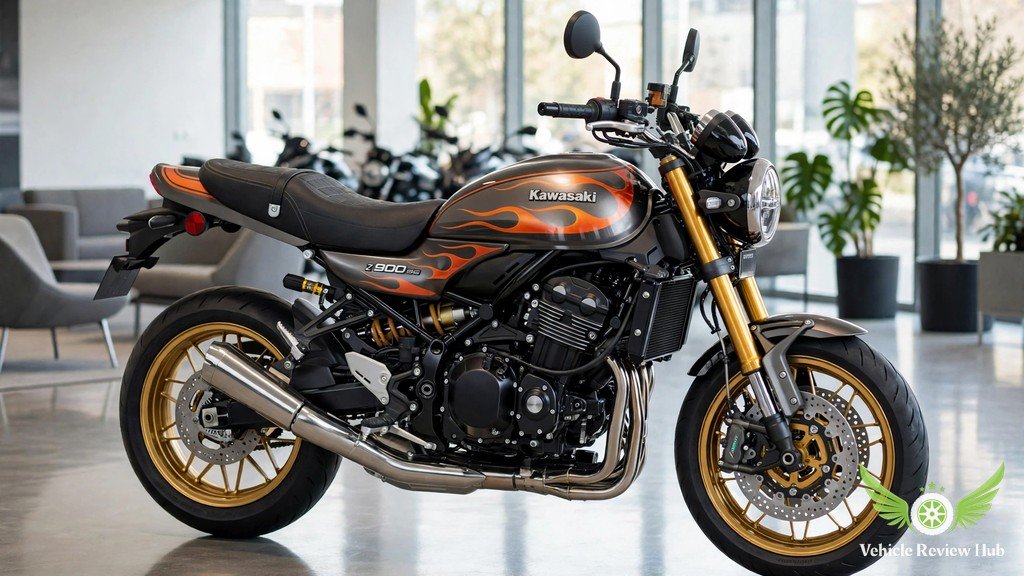
Price is where this Kawasaki Z900RS SE review gets precise, because the SE’s price story is a ladder that moves every year. The 2027 bike is $14,699 plus an $840 destination charge — $15,539 delivered — and the premium over the base has swung between $1,500 and $2,000. The SE and the base share the same destination charge in every year, so the premium is identical on MSRP and delivered alike.
Kawasaki Z900RS SE Price in the USA: $14,699 (2027)
The 2027 price is the headline of this Kawasaki Z900RS SE review: $14,699 MSRP plus an $840 destination charge, or $15,539 delivered. The 2026 bike was $14,599 plus $840, or $15,439 delivered; the 2025 and 2024 bikes were both $14,149, delivered at $14,964 and $14,624. The 2022 launch bike was $13,449 — but its destination charge was never separately verified, so no 2022 delivered price is printed here. The 2023 bike cannot be priced at all: no Kawasaki sheet exists, the Motorcycle.com database page returns a 404 at both URL slugs, and no dealer price was found.
| Year | MSRP | Destination (MO-db) | Delivered | Colour (US) |
|---|---|---|---|---|
| 2022 | $13,449 | Not found | Not verified | Metallic Diablo Black (Yellow Ball) |
| 2024 | $14,149 | $475 | $14,624 | Metallic Diablo Black |
| 2025 | $14,149 | $815 | $14,964 | Metallic Graphite Gray / Ebony |
| 2026 | $14,599 | $840 | $15,439 | Metallic Spark Black (Fireball) |
| 2027 | $14,699 | $840 | $15,539 | Metallic Spark Black (Fireball) |
Note: Delivered means MSRP plus destination only; setup, documentation and tax are excluded. Destination charges are the Motorcycle.com database figures, labelled as such on every use. The 2023 column is omitted deliberately: no verified 2023 figure exists, and this Kawasaki Z900RS SE review invents none.
| Trim (2027) | MSRP | Destination (MO-db) | Delivered |
|---|---|---|---|
| Z900RS ABS | $12,999 | $840 | $13,839 |
| Z900RS Cafe ABS | $13,399 | $840 | $14,239 |
| Z900RS SE ABS | $14,699 | $840 | $15,539 |
Note: All three 2027 trims share the same 115.0 hp and 73.0 lb-ft claim and the same 476.3 lb curb weight on the sheets, so this Kawasaki Z900RS SE review uses the family table as the yardstick. The SE is the most expensive RS and the heaviest by nothing: its $1,700 premium over the base buys hardware and paint, not weight savings and not power.
Premium Swings Year to Year
The premium ladder in this Kawasaki Z900RS SE review runs $1,700 at launch in 2022, up to $2,000 in 2024, down to $1,500 in 2025, and back to $1,700 for 2026 and 2027. The swing has a simple cause: in 2024 the base rose $400 while the SE rose $700, and in 2025 the base rose $500 while the SE held flat at $14,149. Against the Kawasaki Z900RS review figures for the base bike, the ladder is exact in every year. Two published figures are wrong: Ultimate Motorcycling’s “$1,600 more than the standard” for 2022 — the real gap is $1,700 — and Cycle News’s “$13,499” for the 2022 SE, a typo for $13,449.
| Year | SE MSRP | Base RS MSRP | Premium |
|---|---|---|---|
| 2022 | $13,449 | $11,749 | $1,700 |
| 2024 | $14,149 | $12,149 | $2,000 |
| 2025 | $14,149 | $12,649 | $1,500 |
| 2026 | $14,599 | $12,899 | $1,700 |
| 2027 | $14,699 | $12,999 | $1,700 |
Note: Because the SE and the base share the same destination charge in every year, the premium is identical on MSRP and delivered alike. What the premium buys in 2027 is the Brembo M4.32 calipers, the Öhlins S46 shock, the gold fork tubes and wheels, and the USB-C outlet — not horsepower, and this Kawasaki Z900RS SE review states that plainly. The 2023 premium cannot be computed.
Kawasaki Z900RS SE Design, Features and Technology
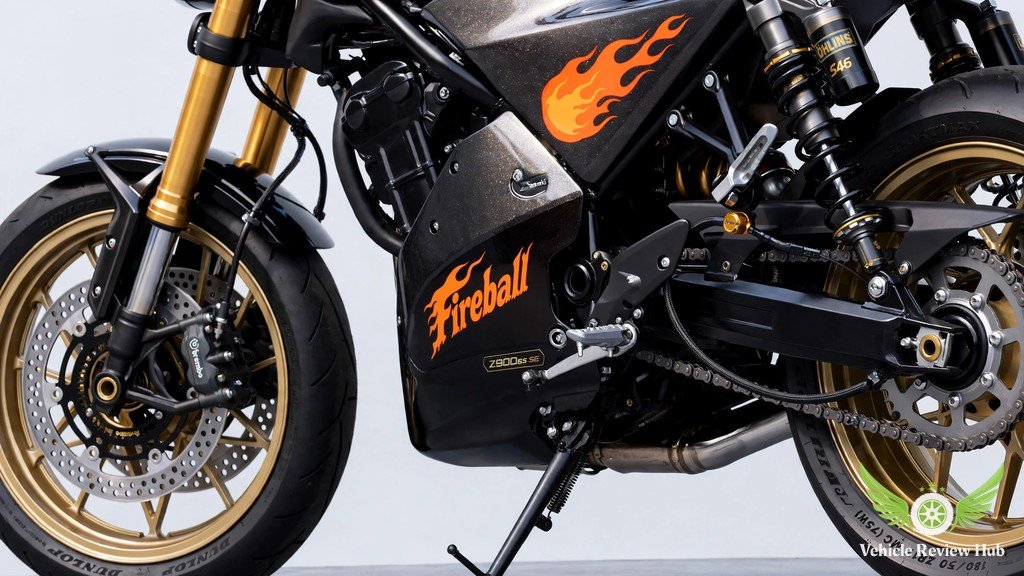
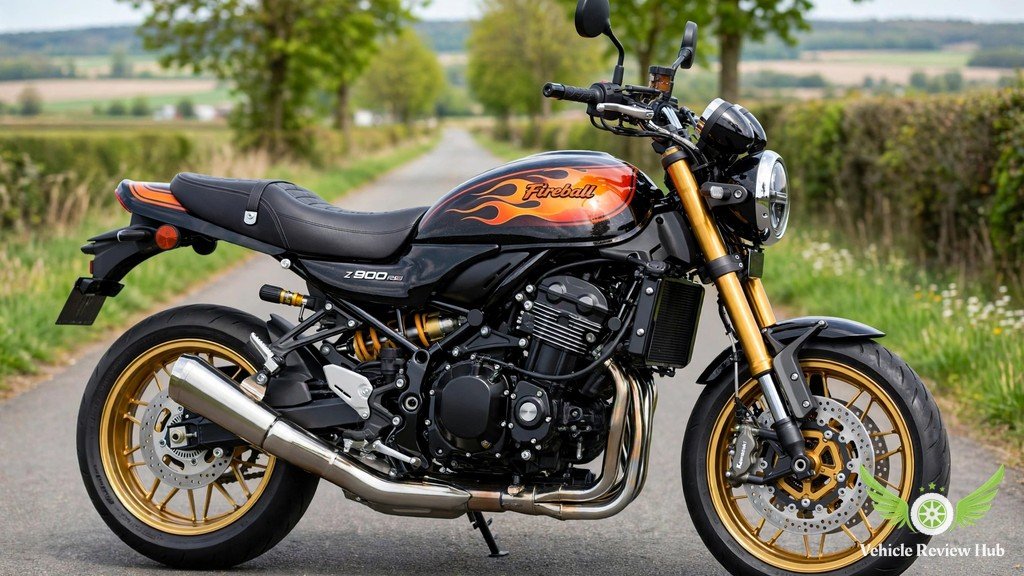
The SE looks like the most expensive RS because it is. This Kawasaki Z900RS SE review turns to the design next: the Fireball livery, the gold hardware and the shock that has not changed in either era. The 2027 bike wears Metallic Spark Black bodywork with orange Fireball graphics, gold fork outer tubes and gold wheels.
Same Shock Part Both Eras
The shock is the one part this Kawasaki Z900RS SE review keeps coming back to, because its specification is identical across the eras: an Öhlins S46 with a 30-position rebound damping adjuster, stepless spring preload, a remote preload adjuster and 5.5 in of rear travel, on every sheet from 2024 to 2027. Cycle News, riding the 2026 bike, called it “the same setup as the previous iteration of the model”. The part number, however, was not verified — the Kawasaki parts fiche is not publicly searchable, and the only part numbers found belong to the aftermarket Öhlins STX46, a different unit from the OEM S46. So the specification is unchanged; the part number is never claimed identical.
The same honesty applies to the parts prices: the often-quoted $1,224 for the shock alone and $1,997 for the shock plus master cylinder are not verified figures, and this review never claims the Brembo calipers are listed unavailable anywhere — the fiche could not be read. The 2024 sheet omits the Brembo and S46 tokens, but the 2024 bike is the same hardware.
Launch Colour: Yellow Ball
The colour story in this Kawasaki Z900RS SE review runs from yellow to black. The 2022 launch bike wore the Yellow Ball livery: Metallic Diablo Black paint with yellow highlights on the teardrop tank and rear fender, and gold wheels — a homage to the 1972 Z1, confirmed by Rider Magazine’s first look. The 2024 bike stayed Metallic Diablo Black, the 2025 bike moved to Metallic Graphite Gray and Ebony, and the 2026 and 2027 bikes wear Metallic Spark Black with Fireball graphics. The 2023 colour was not verified anywhere, so none is printed here.
The Fireball livery is a paint scheme, not a priced option, and no US price list shows a separate Fireball upcharge. Every SE spec sheet lists a single MSRP per year, and the $1,700 premium pays for the Brembo brakes, the Öhlins shock, the gold hardware and the USB-C outlet — not for the paint. A buyer who wants the Fireball look pays the SE premium for the hardware; the paint itself costs nothing extra.
Kawasaki Z900RS SE Riding Experience and Comfort
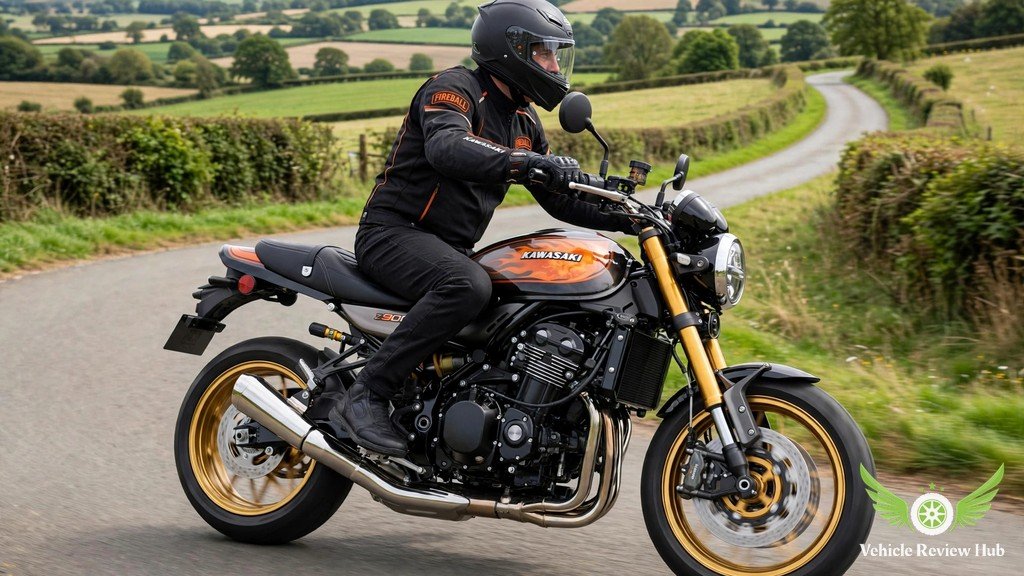
On the road the SE is the base RS with better brakes and a better shock. This Kawasaki Z900RS SE review looks at the riding position next, because the seat height is the one figure on the spec sheet that Kawasaki’s own documents disagree about. The position itself is upright and relaxed: a wide, flat handlebar, a bench seat and mid-mounted footpegs.
Seat Is 0.4 in Taller
The SE’s seat sits 0.4 in taller than the base bike’s in both eras — 33.3 in against 32.9 in on the Era A sheets, and 32.3 in against 31.9 in on the 2026 and 2027 sheets. Bennetts explains why: the Öhlins shock raises the rear a fraction, adding about 10 mm to the seat height and lifting the SE’s ground clearance to 5.5 in against the base’s 5.3 in. This Kawasaki Z900RS SE review prints the sheet figures and names the conflict in the same paragraph.
The conflict is real. Kawasaki’s own 2026 press release prints 32.8 in, disagreeing with its own 2026 sheet by 0.9 in, while UK and European sources still print the pre-2026 835 mm and 845 mm, and MCN’s 2026 review prints 33.3 in in its at-a-glance box. A rider who measures about 32.9 in is not wrong, and this Kawasaki Z900RS SE review says so plainly. One figure is never the standard: 810 mm is the optional ERGO-FIT Low Seat, 25 mm lower than the standard, and a print of 820 mm is simply the sheet’s 32.3 in converted.
Riding Position and Comfort Over Longer Distances
The riding position is where this Kawasaki Z900RS SE review finds the SE most convincing as a road bike. The 2026 update brought what Kawasaki calls a new relaxed riding position, with the overall width down from 34.1 in to 32.1 in and the height down from 45.3 in to 44.7 in. The wheelbase is 57.7 in, the fuel tank holds 4.5 gallons, and Cycle News puts the fuel range at adequate for 170-mile rides. The seat removes without tools, and ERGO-FIT low and high seats are available.
On the move, the testers agree on the character: Cycle News calls the SE neutral and predictable in corners and planted and confidence-inspiring, while MCN calls it the most fun and rewarding to ride in the midrange. The throttle story matters too: abrupt on the 2018–2021 bikes from an emissions-lean fuel map, improved by mapping in 2022, and cured by the 2026 ride-by-wire throttle. The power-modes question is a documented discrepancy, not a feature: the sheet lists “Power Modes”, Kawasaki’s press release never mentions them, and Ultimate Motorcycling tells riders not to go looking for power modes. The only selectable electronic modes are KTRC Mode 1 and Mode 2.
Kawasaki Z900RS SE Review: Pros, Cons and Verdict
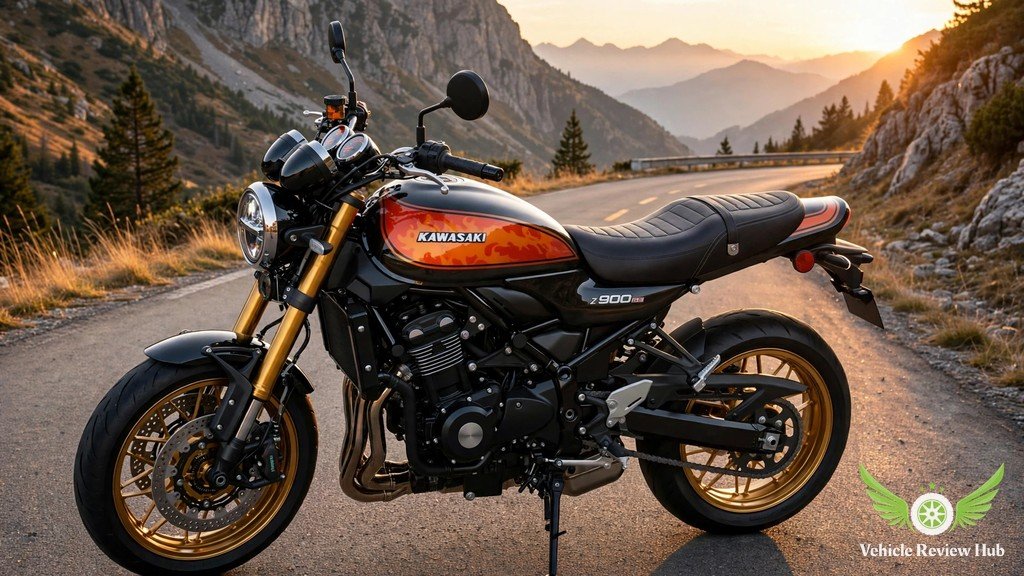
The verdict in this Kawasaki Z900RS SE review is that the SE is the best RS and it is priced so. The premium buys real hardware — Öhlins and Brembo, gold and USB-C — and the price is the flaw Motorcycle.com names. The SE is the most expensive bike in its comparison except the Triumph, and the only one with a 1972 Z1 bloodline and a sub-$16,000 delivered price.
Main Advantages and Limitations of the Kawasaki Z900RS SE
The advantages start with the kit. The Brembo M4.32 calipers and the Öhlins S46 shock are the reason the SE exists, and Ultimate Motorcycling concludes that the shock and brakes earn the premium for riders who value ride quality and braking feel. The 2026 electronics — ride-by-wire, the six-axis IMU, the quickshifter and cruise control — close the technology gap the pre-2026 bike had, while the twin analogue dials stay for riders who prefer them. The Z1 heritage is real, and this Kawasaki Z900RS SE review says so plainly: Japan-built, with JKA VINs, in the Fireball livery that honours the 1972 Z1.
The limitations are just as plain. The $1,700 premium buys no extra power — the SE claims the same 115.0 hp as the base in 2027 — and Motorcycle.com’s verdict is blunt: with an MSRP of $14,599, the 2026 SE is significantly more expensive than Yamaha’s XSR900 at $10,599, a $4,000 delta on MSRP that is hard to ignore. The warranty is 12 months limited, half the Triumphs’ 24 months with unlimited mileage. And the SE is not a beginner bike: 948cc, 115 hp and 476 lb at $14,699 put it firmly in experienced-rider territory. That is the balance this Kawasaki Z900RS SE review lands on: the best RS, priced like it.
2023 Price Cannot Be Priced
The one gap this Kawasaki Z900RS SE review cannot fill is the 2023 bike. No Kawasaki spec sheet exists for the 2023 SE — the 2022 and 2023 sheet PDFs are HTML 404 pages, not sheets — the Motorcycle.com database page returns a 404 at both URL slugs, and no dealer price was found. The 2023 SE exists globally: 1000PS lists a 2023 SE, and one is for sale in Sheffield in the UK. But no US price and no US colour were verified anywhere, so none is printed here. A used buyer should treat 2023 as a blank year and price against the verified 2022 and 2024 figures.
For used buyers generally, the checks are the same as for the base RS. Check any used SE by VIN on the NHTSA recall lookup, and on a 2024 bike confirm the front tyre was replaced under campaign 24V-270 — the free remedy for the front-tyre blister that is the SE’s only recall, covering 525 bikes across the 2024 RS, Cafe and SE. No US used-price figure was verified for this review.
Kawasaki Z900RS SE Review FAQs
The six questions below are the ones buyers ask most about the SE, answered from the verified figures in this Kawasaki Z900RS SE review.
How much does the 2027 Kawasaki Z900RS SE cost in the USA?
$14,699 MSRP plus an $840 destination charge (Motorcycle.com database), or $15,539 delivered — the headline price of this Kawasaki Z900RS SE review. The 2026 bike is $14,599 MSRP, $15,439 delivered.
What does the SE add over the base Z900RS?
Brembo M4.32 front calipers with a smaller Nissin radial-pump master cylinder and braided lines, an Öhlins S46 rear shock with a remote preload adjuster, gold fork outer tubes, gold wheels, a USB-C outlet and Fireball paint — for a $1,700 premium in 2026 and 2027, as this Kawasaki Z900RS SE review sets out above. It adds no power: both bikes claim 115 hp.
Was the Z900RS SE sold in the USA?
Yes. The SE was US-sold from 2022 — $13,449 that year, in the Yellow Ball livery. The 2023 US price cannot be verified: no Kawasaki sheet and no database page exists for it. The 2023 gap is the one hole in the price record this Kawasaki Z900RS SE review could not fill.
What changed on the Z900RS SE for 2026?
It carries the 2026 update in full: ride-by-wire throttle, a 6-axis IMU, cornering management, a two-mode traction control, an up/down quickshifter, cruise control and smartphone connectivity, plus a revised engine making 115 hp, up from 111 hp — the change this Kawasaki Z900RS SE review calls Era B. The SE hardware kit is unchanged.
Does the 2026 Z900RS SE have a TFT display?
No. It keeps the twin analogue-style dials with a multi-function LCD, as this Kawasaki Z900RS SE review notes in the design section. No TFT was added in 2026 or 2027.
What is the seat height of the 2027 Z900RS SE?
Kawasaki’s US spec sheet prints 32.3 inches (31.9 inches for the base) — the figures this Kawasaki Z900RS SE review adopts. Note the conflict: Kawasaki’s own 2026 press release prints 32.8 inches and UK sources print 845 mm (33.3 inches). See the “Seat Is 0.4 in Taller” section.