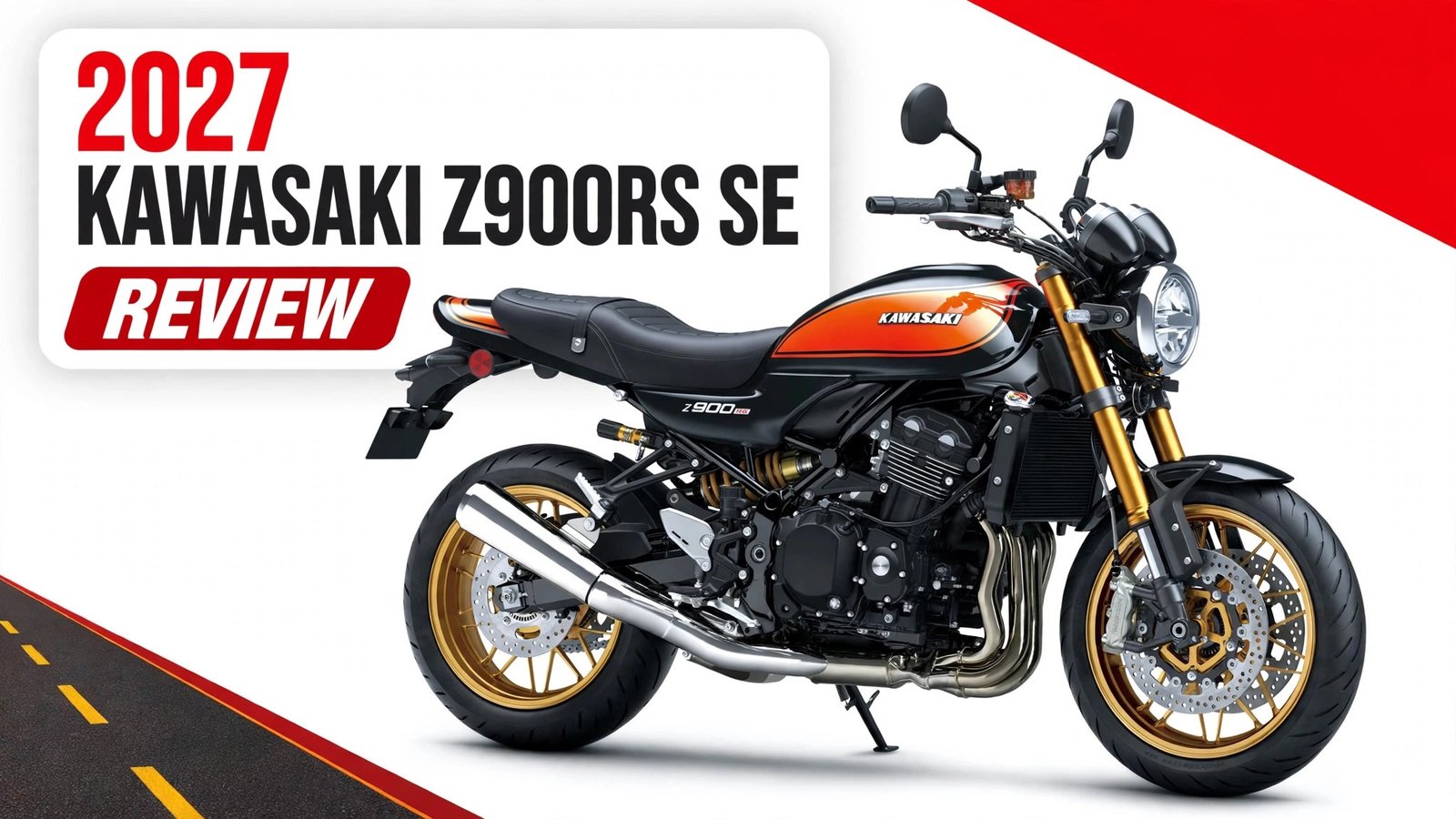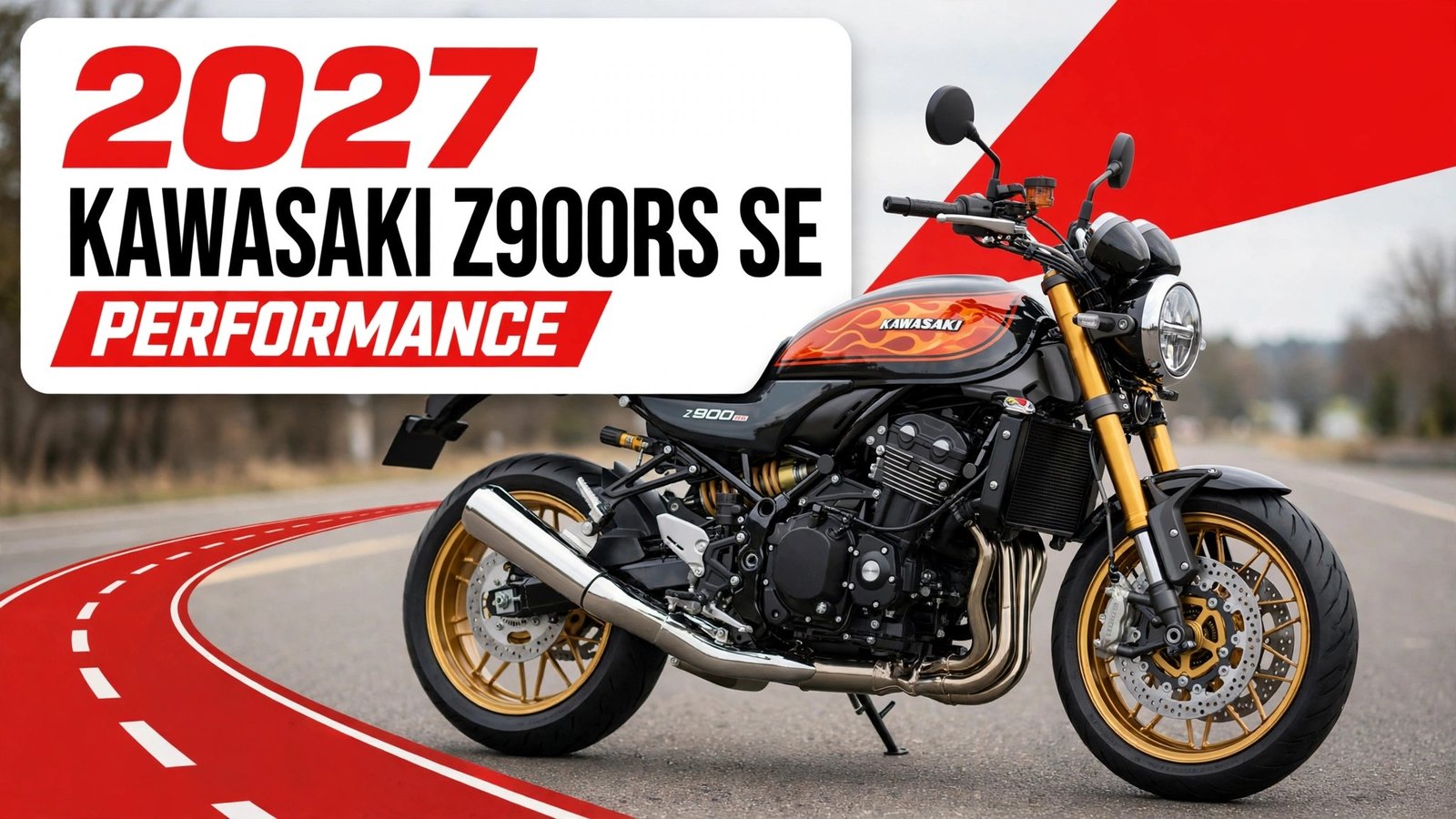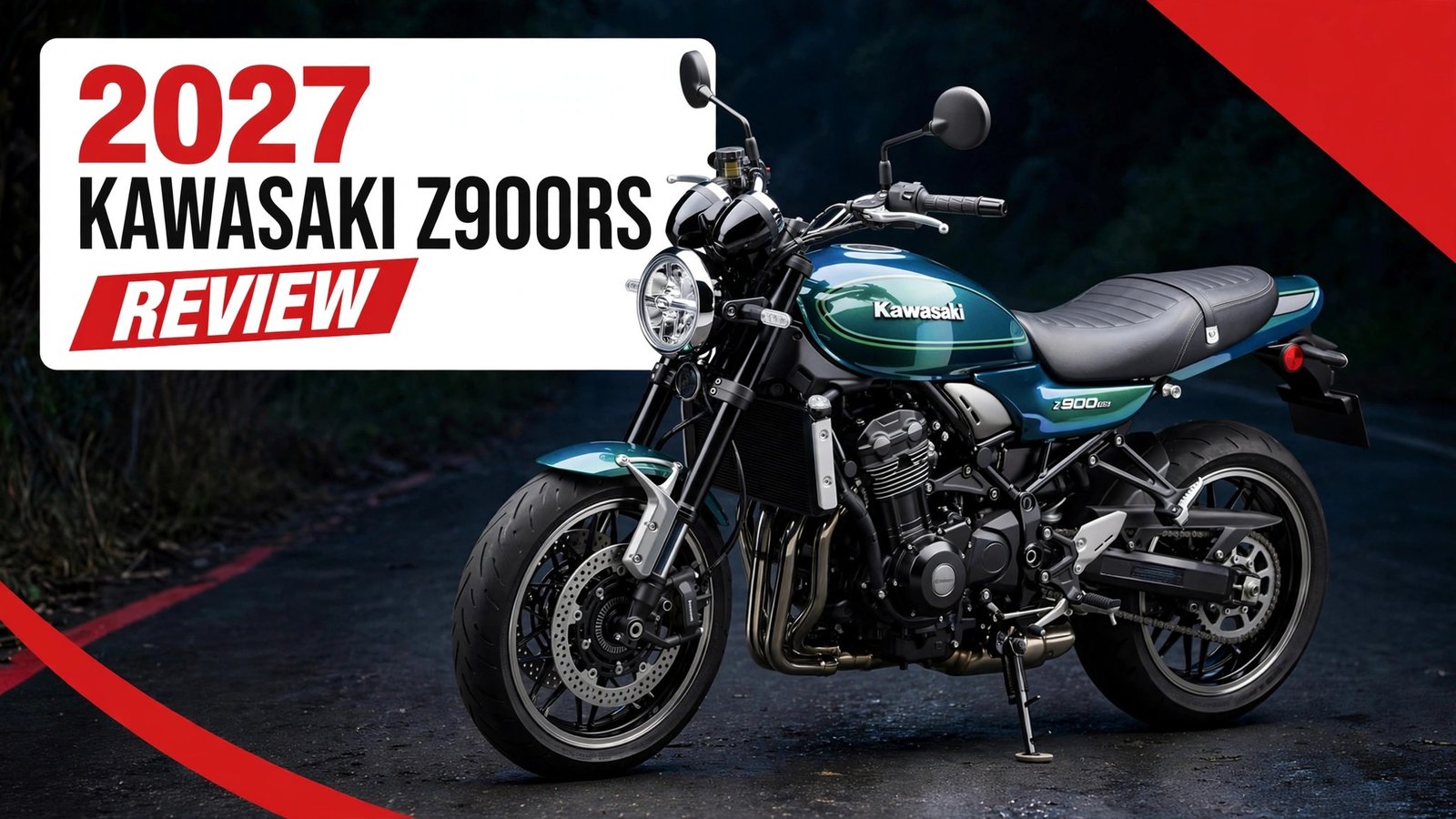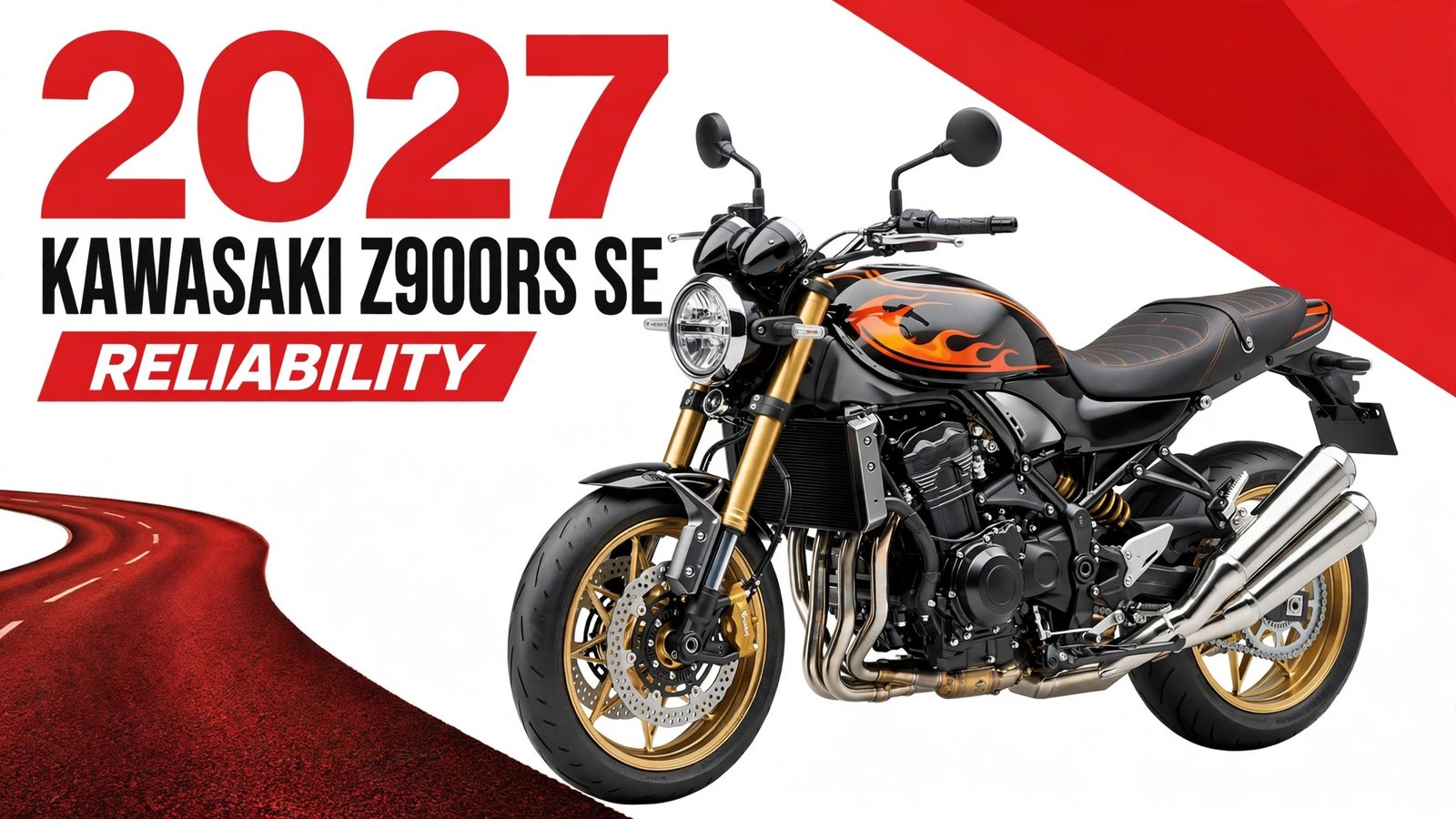
The Kawasaki Z900RS SE is the most expensive bike in the RS family, and its reliability story is the shortest one in the line: one recall, zero complaints, and a maintenance schedule borrowed straight from the RS family’s own manual. This Kawasaki Z900RS SE reliability guide starts with that record — a single shared 2024 tyre campaign, no other recall in any year, and no NHTSA complaint on file for the RS family across ten model years. The 2026 and 2027 sheets list “Power Modes”, but Kawasaki’s own press release never mentions power modes and the testers say none exist — the only tester-confirmed selectable modes are KTRC Mode 1 and Mode 2.
That short record is the point, and this Kawasaki Z900RS SE reliability guide does not pad it. The SE shares its engine, chassis and electronics with the base RS in each era, so its reliability is the RS family’s reliability, with two SE-specific questions on top: the 2024 front-tyre recall that touches the SE, and the Brembo and Öhlins kit that costs more to replace than the base bike’s parts.
Kawasaki Z900RS SE Reliability Overview
On the record alone, this Kawasaki Z900RS SE reliability guide finds the SE is a low-drama motorcycle. It has been recalled once, in a campaign it shares with the base RS and the Cafe, and the NHTSA complaints database returns zero complaints for the RS family for every model year from 2018 to 2027. The SE’s full story — prices, hardware and the 2026 update — is in the Kawasaki Z900RS SE review.
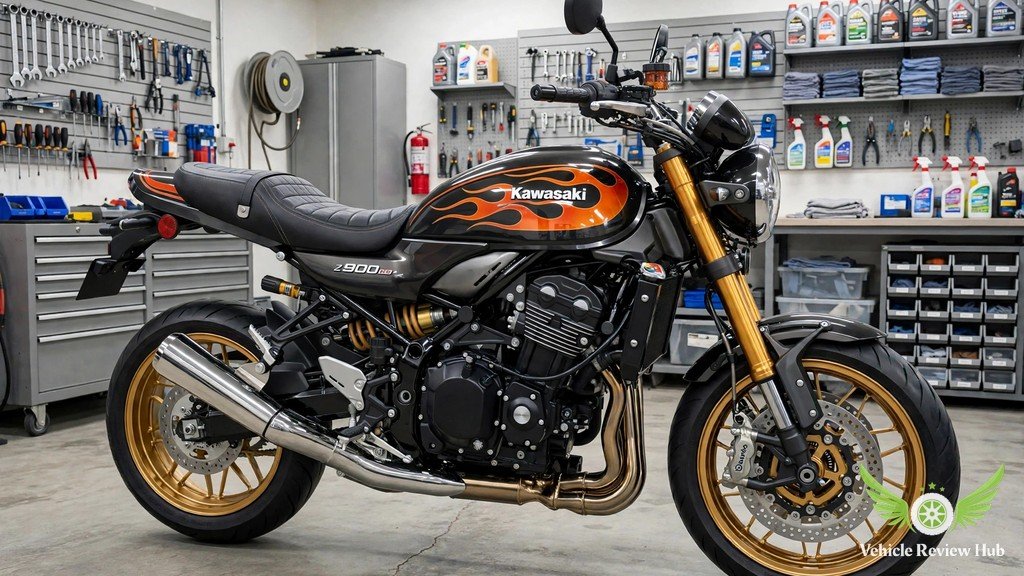
One Recall Touches the SE
One recall touches the SE, and only one. NHTSA campaign 24V-270, filed in April 2024, covers 525 model-year 2024 Z900RS family bikes — the base RS, the Cafe and the SE — whose front Dunlop GPR-300 tyre may blister on its inner surface and fail the federal tyre standard. This Kawasaki Z900RS SE reliability guide names that campaign in full below, and it names the two older recalls only to say they do not apply: the 2018 and 2019 campaigns both pre-date the SE, which arrived for 2022, and the 2017–2018 Z900 campaign covers the Z900 only.
How Mileage, Storage and Previous Care Affect Reliability
No SE-specific data exists on how mileage, storage or previous care affect this bike’s reliability, so this Kawasaki Z900RS SE reliability guide says so plainly and gives the standard buying advice instead, labelled as general advice rather than SE-specific findings.
Kawasaki Z900RS SE Common Problems and Wear Items
This Kawasaki Z900RS SE reliability guide keeps the common-problems list honest by keeping it short. SlashGear’s owner-problems round-up lists the throttle and the three recalls and nothing else mechanical.
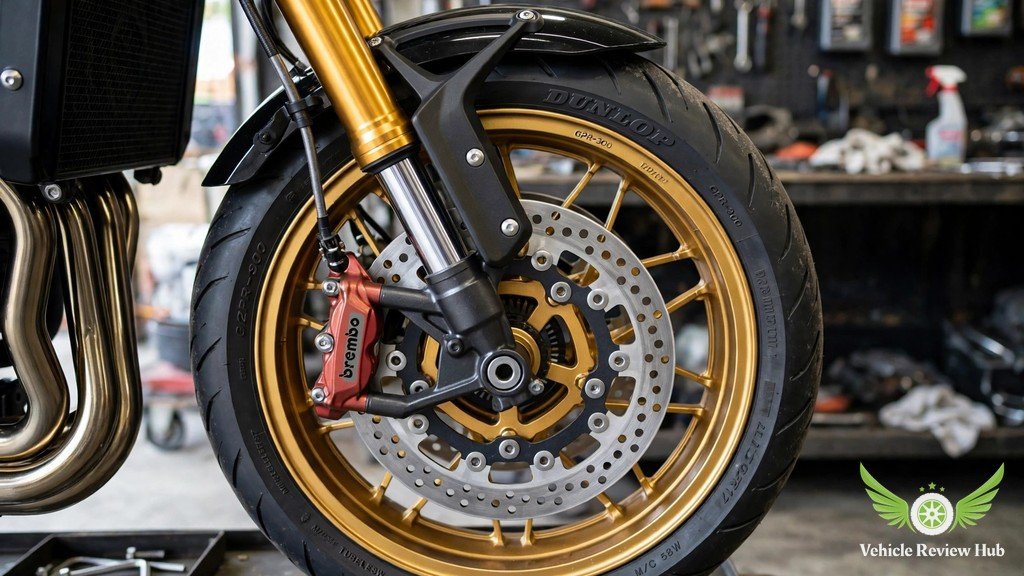
24V-270 Is Shared, 525 Total
NHTSA campaign 24V-270 is the SE’s only recall, and it is shared. The Part 573 report, filed 16 April 2024, covers 525 model-year 2024 bikes across three models — the Z900RS ABS (ZR900C), the Z900RS Cafe ABS (ZR900E) and the Z900RS SE ABS (ZR900N) — built between 20 July 2023 and 26 January 2024. The defect is the front tyre, a Dunlop SPORTMAX GPR-300F in size 120/70ZR17, that may blister on its inner surface because of a sidewall-rubber error at supplier Sumitomo Rubber Industries. A blistered tyre can fail FMVSS 119; the report estimates 40% of the 525 carry the defect. Kawasaki’s recall code is DAL491A, owner notification went out 16 May 2024, and the remedy is a free front-tyre replacement at a Kawasaki dealer, with reimbursement for owners who already paid for one. TopSpeed reported the recall in May 2024. The Part 573 report is the source here, because the NHTSA recalls API returns zero for the SE’s own model name — the recalls are filed under sibling model codes.
The two older campaigns are named here only to rule them out. Campaign 18V-866, from 2018, covers 1,173 units in total across the 2018 Z900, Z900 ABS and Z900RS — a rear brake hose and sensor-wire routing issue — and campaign 19V-083, from 2019, covers 497 units in total across the 2019 Z900 ABS, RS ABS and Cafe ABS, for debris in the ABS hydraulic unit. Both pre-date the SE, which was never built in 2018 or 2019, and neither is an SE recall. The table below is the whole recall record for the SE, and this Kawasaki Z900RS SE reliability guide prints nothing beyond it.
| Campaign | Year | Units | Applies to the SE? | Defect |
|---|---|---|---|---|
| 24V-270 | 2024 | 525 total | Yes — shared with RS and Cafe | Front Dunlop GPR-300 tyre may blister, FMVSS 119 |
| 18V-866 | 2018 | 1,173 total | No — pre-dates the SE | Rear brake hose and sensor-wire routing |
| 19V-083 | 2019 | 497 total | No — pre-dates the SE | Debris in the ABS hydraulic unit |
| 17V-703 | 2017–2018 | Not verified | No — Z900 only | Z900-only campaign, not an RS/SE recall |
Note: The 525-unit figure for 24V-270 is the total across all three 2024 models — the Part 573 report does not break out how many of the 525 are SEs, and this Kawasaki Z900RS SE reliability guide never prints an SE-only unit count because none exists. The 1,173 and 497 figures are likewise family totals, not Z900RS-only counts. Source: NHTSA Part 573 Safety Recall Report 24V-270.
SE Slice Cannot Be Split
The SE’s share of the 525 cannot be split out, and that is a verified fact, not a gap in this Kawasaki Z900RS SE reliability guide’s research. The Part 573 report gives one total for the three 2024 models and no breakdown by trim, so no publication, database or dealer listing can say how many SEs were recalled. That is why this Kawasaki Z900RS SE reliability guide puts the VIN lookup first in the used-buyer checklist below. The check is free and the remedy is free, and the recall lookup is the only reliable check.
The other half of the common-problems picture is the throttle, and it is a finding, not a fault. The snatchy low-speed throttle on pre-2026 bikes — an abrupt off-to-on transition from an emissions-lean fuel map — is the single most-reported rideability finding on the RS family, and it is not a defect, not a recall, and not a reliability failure. Beyond the throttle and the tyre campaign, this Kawasaki Z900RS SE reliability guide found no verified common problem: no electrical failures, no oil consumption, no clutch failures, no suspension failures. The dyno and throttle story in full is in the Kawasaki Z900RS SE performance guide. The wear items that remain are consumables — tyres, chain, brake pads and battery — covered in the maintenance sections below with the manual’s intervals, never presented as SE-specific failures.
Kawasaki Z900RS SE Maintenance Schedule and Servicing
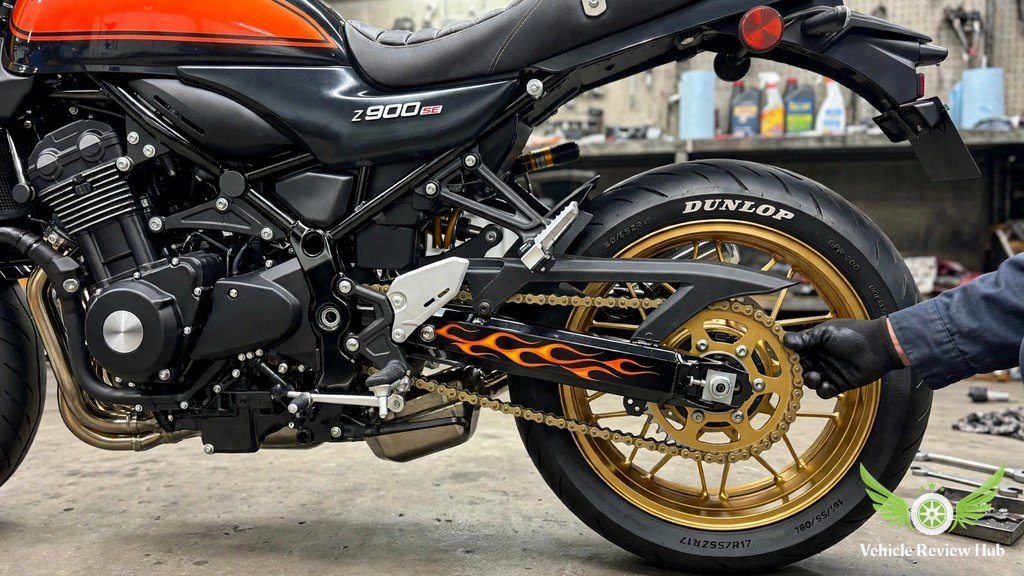
The SE follows the RS family’s own maintenance chart from the owner’s manual, and this Kawasaki Z900RS SE reliability guide prints that chart as it stands — no interval invented, no figure carried in from the Z900. The headline number is the valve check at 24,000 km, or 15,200 miles. One item is missing from the chart entirely, and this guide says so rather than filling it in: no Kawasaki or Öhlins publication gives a service interval for the OEM Öhlins S46 rear shock.
No Ohlins Interval Published
No Öhlins service interval is published for this bike, anywhere. No Kawasaki spec sheet, owner’s manual or press release gives one, and no Öhlins publication gives one for the OEM S46 shock fitted to the RS SE. The owner’s-manual maintenance schedule lists no shock service interval at all. This Kawasaki Z900RS SE reliability guide therefore prints no interval — no “every two years”, no mileage figure of any kind for the shock — because inventing one would be worse than admitting the gap. That is not a published interval, and this guide does not present it as one.
Model Schedule: 15,200 Valves
The valve clearance inspection falls every 24,000 km, or 15,200 miles — the RS family’s own figure from its manual, not a number carried across from the Z900. Kawasaki’s 2027 SE spec sheet lists the same 948cc engine and Öhlins S46 rear shock the schedule serves. The 15,200-mile valve interval is the longest single interval on the chart, and it is the one owners most often ask about, so this Kawasaki Z900RS SE reliability guide states it plainly and once: valves every 24,000 km. What it does not state is any valve clearance in millimetres, because no verified clearance figure exists from the manual.
| Service item | Interval | Detail |
|---|---|---|
| Engine oil and filter | Every 12,000 km (7,600 mi) or annually | SAE 10W-40, JASO MA2; 3.8 L with filter, 3.3 L drain-only |
| Valve clearance check | Every 24,000 km (15,200 mi) | Inspect and adjust; clearance values in mm not verified from the manual |
| Chain slack check | Every 600 mi (1,000 km) | 30–40 mm (1.2–1.6 in); lubricate every 400 mi (600 km) |
| Spark plugs | Per the manual schedule | NGK CR9EIA-9 |
| Tyre pressures | Check regularly | 36 PSI front, 42 PSI rear (250 / 290 kPa) |
Note: All intervals above are the RS family’s own owner’s-manual schedule. This Kawasaki Z900RS SE reliability guide prints no brake-fluid or coolant interval, because neither is verified from the manual, and no valve clearance in millimetres, because no verified clearance figure exists. Database figures that contradict the manual — 20–30 mm or 25–35 mm chain slack, a 42,000 km valve interval — are wrong and are not printed here. This Kawasaki Z900RS SE reliability guide prints the manual’s schedule and nothing else.
Kawasaki Z900RS SE Tires, Brakes and Suspension Maintenance
The SE’s tyres, brakes and suspension are where the premium lives, and this Kawasaki Z900RS SE reliability guide treats them as the parts that need the closest watching. The front tyre is the one part on the bike with a recall behind it, the Brembo calipers and braided lines are the parts a buyer cannot price from a public fiche, and the Öhlins shock is the part with no published service interval. This Kawasaki Z900RS SE reliability guide checks them against the manual and the recall report.
Fiche Lists Kit as Unavailable
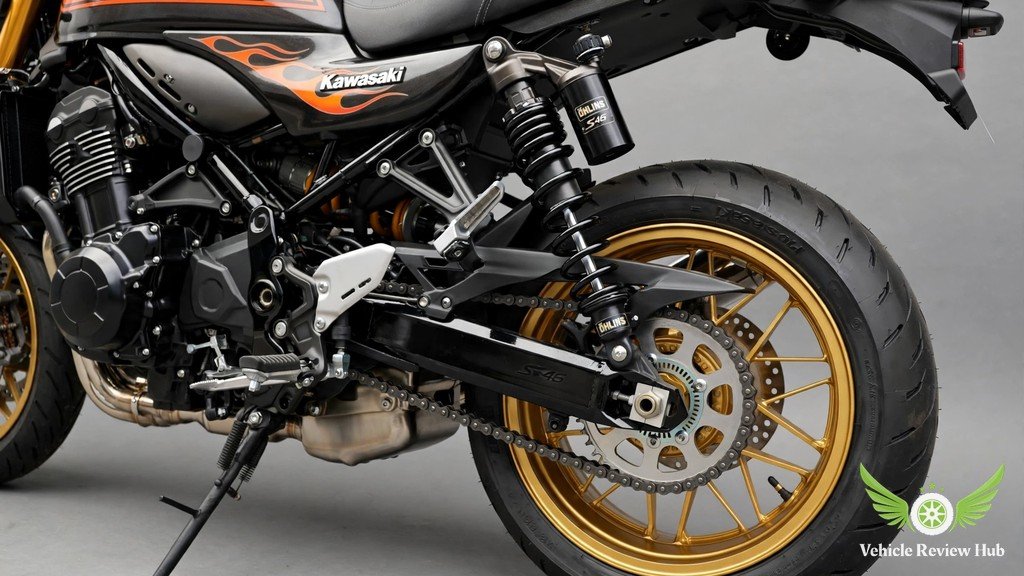
The doc heading above stays as written, but this Kawasaki Z900RS SE reliability guide must be plain about what it could not verify: the Kawasaki parts fiche is not publicly searchable, and no fiche page for the SE’s Brembo calipers, Öhlins shock or master cylinder could be read, so no search result confirms any kit part as unavailable. The heading does not say which kit is unavailable, and the body will not claim the Brembo M4.32 calipers, the Öhlins shock or any other SE part is listed unavailable anywhere. That is a pricing gap, not a parts-availability finding, and this Kawasaki Z900RS SE reliability guide labels it as one.
The discs changed across the eras — petal on the Era A bike, per Rider’s 2022 first-look, and round on the 2026 and 2027 bikes — while the calipers, master cylinder, braided lines and shock did not change at all. A used buyer checking an Era A bike should therefore expect petal discs and a used buyer checking a 2026 or 2027 bike should expect round ones, and this Kawasaki Z900RS SE reliability guide notes the difference so neither is mistaken for wear or a swap.
Tire, Brake and Suspension Checks That Matter
The checks that matter start with the front tyre on a 2024 bike. Any 2024 SE still wearing its original front Dunlop GPR-300 needs the 24V-270 remedy — a free replacement at a Kawasaki dealer — and the check is the VIN lookup, not the tyre’s appearance, because a blister forms on the inner surface where it cannot be seen. Tyre age matters as much as tread: a five-year-old tyre with tread left is still a five-year-old tyre.
| Component | SE specification | Check |
|---|---|---|
| Front tyre | Dunlop GPR-300, 120/70ZR17 | 2024 bikes: confirm the 24V-270 free replacement by VIN |
| Rear tyre | Dunlop GPR-300, 180/55ZR17 | Tread depth and tyre age; pressures 36 PSI front, 42 PSI rear |
| Front brakes | Dual 300 mm discs, Brembo M4.32, smaller Nissin radial-pump master | Pad wear, braided lines, master-cylinder condition; discs petal Era A, round 2026–2027 |
| Rear brake | Single 250 mm disc, single-piston caliper, Nissin ABS standard | Pad wear; ABS standard on every US SE |
| Rear shock | Öhlins S46, 30-position rebound, remote preload, 5.5 in travel | Inspect at services for weeping seals; no published service interval |
| Front fork | 41 mm inverted, gold outer tubes | Seal condition; Era A 13-way/11-way, Era B 12-way/10-way adjustability |
Note: The fork and shock specifications are identical across both eras for the SE kit — only the fork’s adjustability clicks changed (13-way/11-way to 12-way/10-way) and the discs changed from petal to round. This Kawasaki Z900RS SE reliability guide prints no brake-fluid or coolant interval, because neither is verified from the manual. The shock inspection is the one check this Kawasaki Z900RS SE reliability guide flags as owner homework, since no published interval exists.
Kawasaki Z900RS SE Maintenance and Ownership Costs
Ownership costs for the SE start with the purchase price and end with the consumables, and this Kawasaki Z900RS SE reliability guide can verify the first and the last but not the middle. The MSRP ladder and the delivered prices are verified year by year from Kawasaki’s sheets and the Motorcycle.com database, and the oil, plugs, chain and tyres are verified from the manual. This Kawasaki Z900RS SE reliability guide verifies the purchase prices and the consumables, and leaves dealer labour unpriced.
Fuel, Routine Servicing, Tires and Replacement Parts
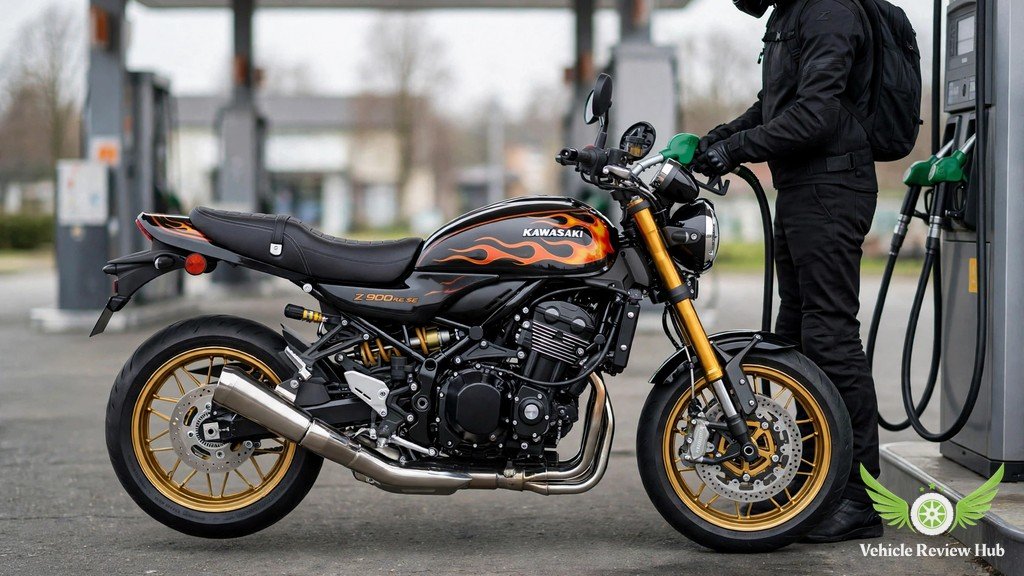
Fuel is the one running cost with a tested figure behind it: Motorcycle.com’s 2026 SE returned a consistent 37 mpg under hard riding, on a 4.5-gallon tank, and that is the SE’s tested figure — not the base bike’s 39–40 mpg long-term figure, which belongs to the base RS and is never printed as the SE’s mileage. Tyres are the Dunlop GPR-300 pair, 120/70ZR17 front and 180/55ZR17 rear, and the front tyre on a 2024 bike is a free replacement under the recall rather than a cost at all. The warranty is a 12-month limited warranty. Beyond that, this Kawasaki Z900RS SE reliability guide will not invent a dollar service cost: MCN in the UK prints £200 a year for annual servicing, but that is a UK figure, and no US equivalent was verified.
Premium Roughly Covered Aftermarket
The doc heading above stays as written, but the aftermarket arithmetic behind it is not verified, and this Kawasaki Z900RS SE reliability guide will not print a total. No clean US aftermarket arithmetic exists for the SE’s kit: the fragments that do exist are European list prices for different or single units — an aftermarket Öhlins STX46 at €941.98 in the EU, which is a different unit from the OEM S46, and a single Brembo M4.32 caliper at 2,495 Danish kroner, which is one aftermarket caliper, not the OEM unit, not a pair, and not a US price.
What is verified is the premium itself, and the ladder tells its own story. The SE cost $1,700 more than the base RS at launch in 2022, peaked at a $2,000 premium in 2024, fell to $1,500 in 2025 when the base rose $500 and the SE held flat, and returned to $1,700 for 2026 and 2027.
| Year | MSRP | Destination (MO-db) | Delivered | Premium over base RS |
|---|---|---|---|---|
| 2022 | $13,449 | Not found | Not published | $1,700 |
| 2024 | $14,149 | $475 | $14,624 | $2,000 |
| 2025 | $14,149 | $815 | $14,964 | $1,500 |
| 2026 | $14,599 | $840 | $15,439 | $1,700 |
| 2027 | $14,699 | $840 | $15,539 | $1,700 |
Note: The 2023 column is omitted deliberately — no 2023 SE sheet, database page or dealer price was found, so no verified 2023 figure exists to print. The 2022 destination charge was not found, so no 2022 delivered price is printed. All destination figures are Motorcycle.com database figures, never Kawasaki-published, and this Kawasaki Z900RS SE reliability guide labels the 2027 $840 destination as MO-db-only on every use. Sources: Kawasaki USA SE spec sheets 2024–2027 and the Motorcycle.com database SE pages.
How to Keep a Kawasaki Z900RS SE Reliable
Keeping an SE reliable is mostly keeping to the manual, and this Kawasaki Z900RS SE reliability guide closes with the practical version of everything above: service it on the chart, check the chain and tyres on their intervals, and check a used bike by VIN before buying.
Preventive Maintenance, Records and Regular Inspections
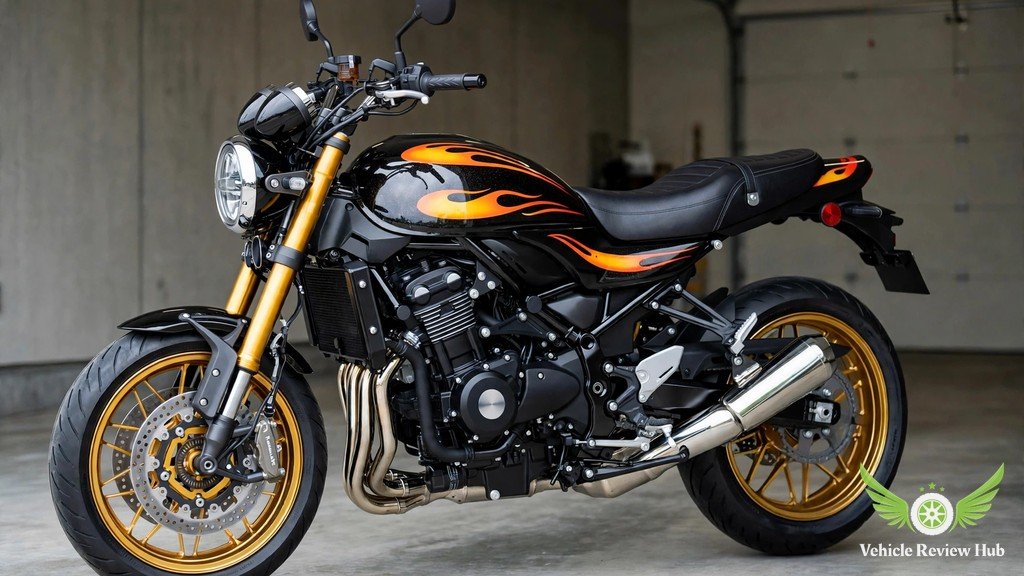
Preventive maintenance on the SE is the manual’s chart, followed on time. Oil and filter every 12,000 km or 7,600 miles, valve check every 24,000 km or 15,200 miles, chain slack checked every 600 miles at 30–40 mm and lubricated every 400 miles, tyre pressures at 36 PSI front and 42 PSI rear — and the records kept, because a stamped service history is the single best predictor of a used SE’s condition and the single best answer to a buyer who asks whether the bike was looked after.
Check the 2024 Tyre Remedy
A buyer of a used 2024 SE has one job above all others: check whether the front tyre was replaced under campaign 24V-270. The check is the VIN lookup on NHTSA’s recall database, and the remedy — a free front tyre at a Kawasaki dealer — is still the remedy whether the bike is on its first owner or its fourth. This Kawasaki Z900RS SE reliability guide ends the buying advice there, because the record ends there too: one recall, zero complaints, and a maintenance chart that asks for oil, valves, chain and tyres on time.
| Used-buyer check | What to do | Why it matters |
|---|---|---|
| VIN recall check | Check the VIN on NHTSA’s recall lookup | Confirms the 24V-270 remedy is done; the API returns zero for the SE’s own name, so use the lookup |
| 2024 front tyre | Confirm the front tyre was replaced free under 24V-270 | The recalled GPR-300 may blister on its inner surface |
| Service records | Ask for stamped service history | Oil every 7,600 mi, valves every 15,200 mi — records prove the chart was followed |
| Chain and sprockets | Check slack at 30–40 mm and sprocket wear | Chain slack checked every 600 mi, lubricated every 400 mi |
| Tyre age and tread | Check date codes and GPR-300 condition | Age matters as much as tread; pressures 36 PSI front, 42 PSI rear |
| Throttle behaviour | Note Era A mapping versus Era B ride-by-wire | Snatchy throttle is a fuel-map finding, not a fault — cured in 2026 |
Note: The checks above are general buying advice, labelled as such — no SE-specific failure data exists beyond the recall and the throttle finding. This Kawasaki Z900RS SE reliability guide recommends the VIN lookup first on any used SE, and the 2024 front-tyre remedy first on any 2024 bike.
Kawasaki Z900RS SE Reliability FAQs
The six questions below are the ones buyers ask most about how the SE holds up over time, answered from this Kawasaki Z900RS SE reliability guide’s verified figures.
Has the Kawasaki Z900RS SE been recalled?
Once. NHTSA campaign 24V-270 covers 525 model-year 2024 RS, Cafe and SE bikes whose front Dunlop GPR-300 tyre may blister. The SE’s share of the 525 is not published. The 2018 and 2019 recalls pre-date the SE and do not apply to it, and this Kawasaki Z900RS SE reliability guide lists them only to rule them out.
Does the 2024 Z900RS SE have a tyre recall?
Yes — NHTSA campaign 24V-270. Dealers replace the front tyre free of charge. Check any 2024 SE by VIN before buying — this Kawasaki Z900RS SE reliability guide recommends the lookup first, because the Part 573 VIN range is not sequential and only the lookup gives a reliable answer.
When do the valves need checking on a Z900RS SE?
Every 24,000 km (15,200 miles) per the owner’s-manual maintenance schedule. Never quote a valve clearance in millimetres — no verified figure exists, and this Kawasaki Z900RS SE reliability guide prints none.
What is the chain slack on a Z900RS SE?
30–40 mm (1.2–1.6 inches), checked every 600 miles and lubricated every 400 miles. Some databases print 20–30 mm or 25–35 mm — those are wrong; the manual says 30–40 mm.
What oil does the Z900RS SE take?
SAE 10W-40 (JASO MA2), 3.8 litres with a filter change or 3.3 litres for a drain only, changed every 12,000 km (7,600 miles) or annually. Spark plugs are NGK CR9EIA-9, and this Kawasaki Z900RS SE reliability guide prints the manual’s figures and no others.
Are there any NHTSA complaints about the Z900RS SE?
None on file. NHTSA’s complaints database returns zero complaints for the RS family for every model year 2018–2027, which is the cleanest part of this Kawasaki Z900RS SE reliability guide’s record.