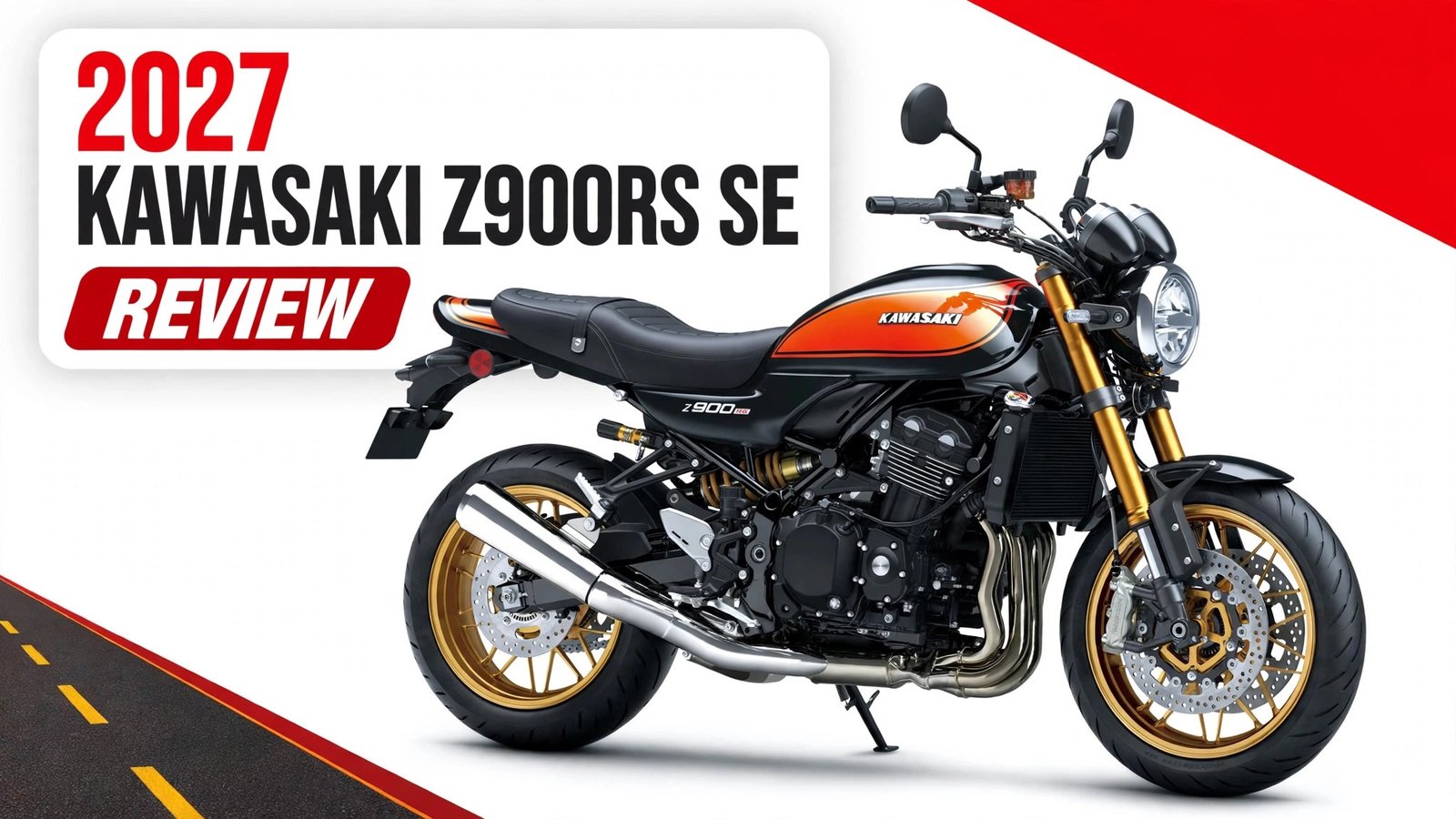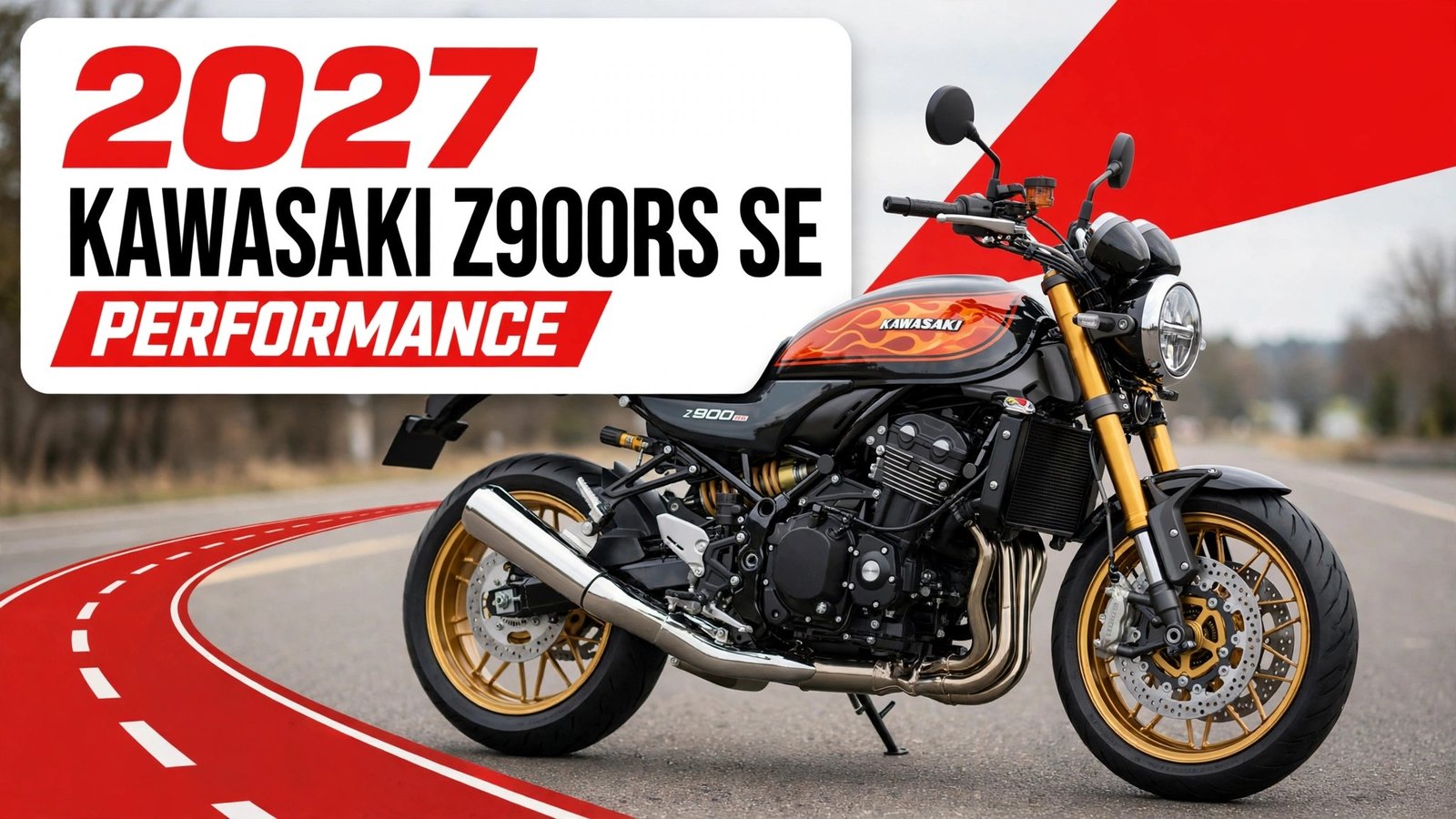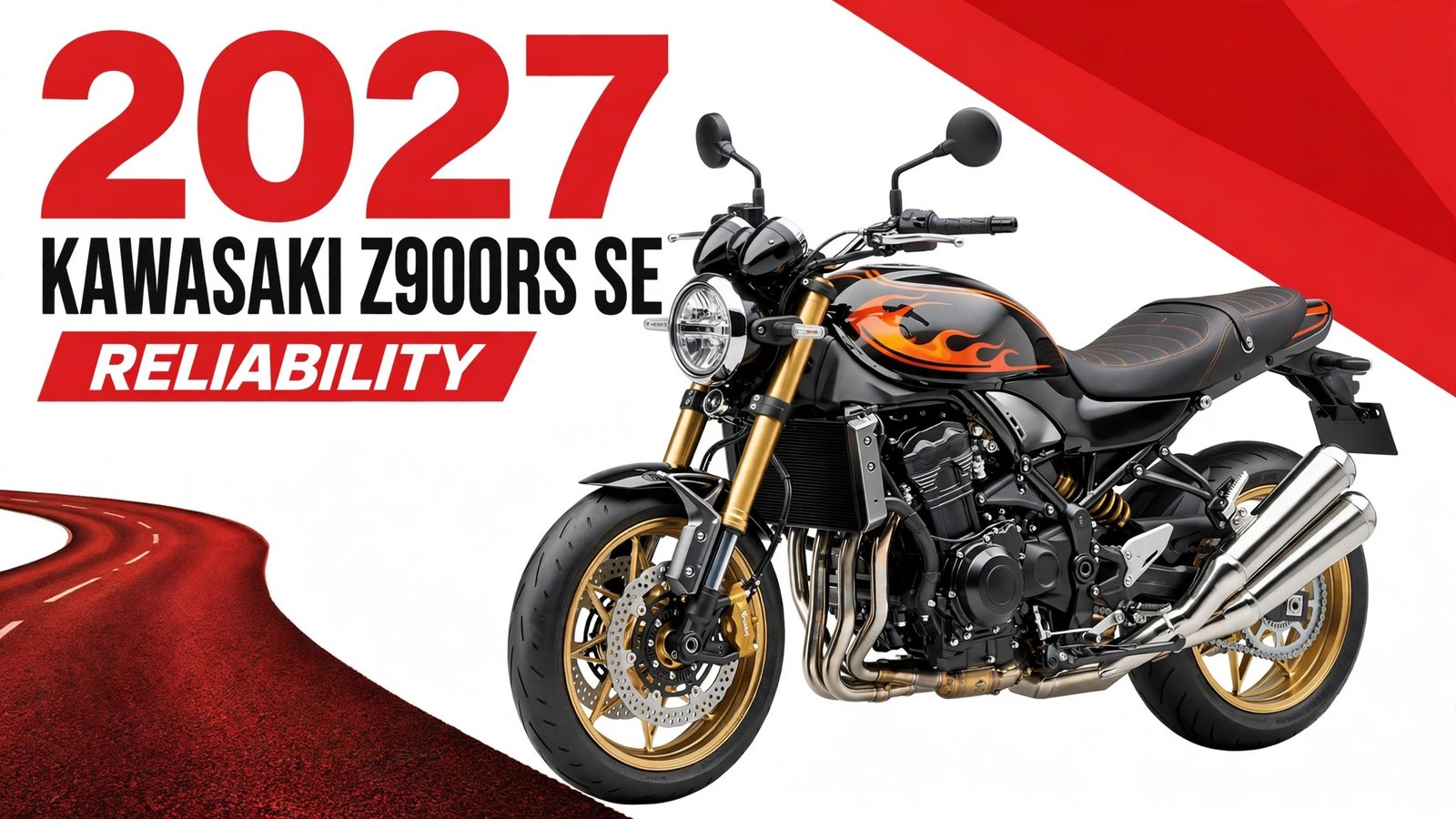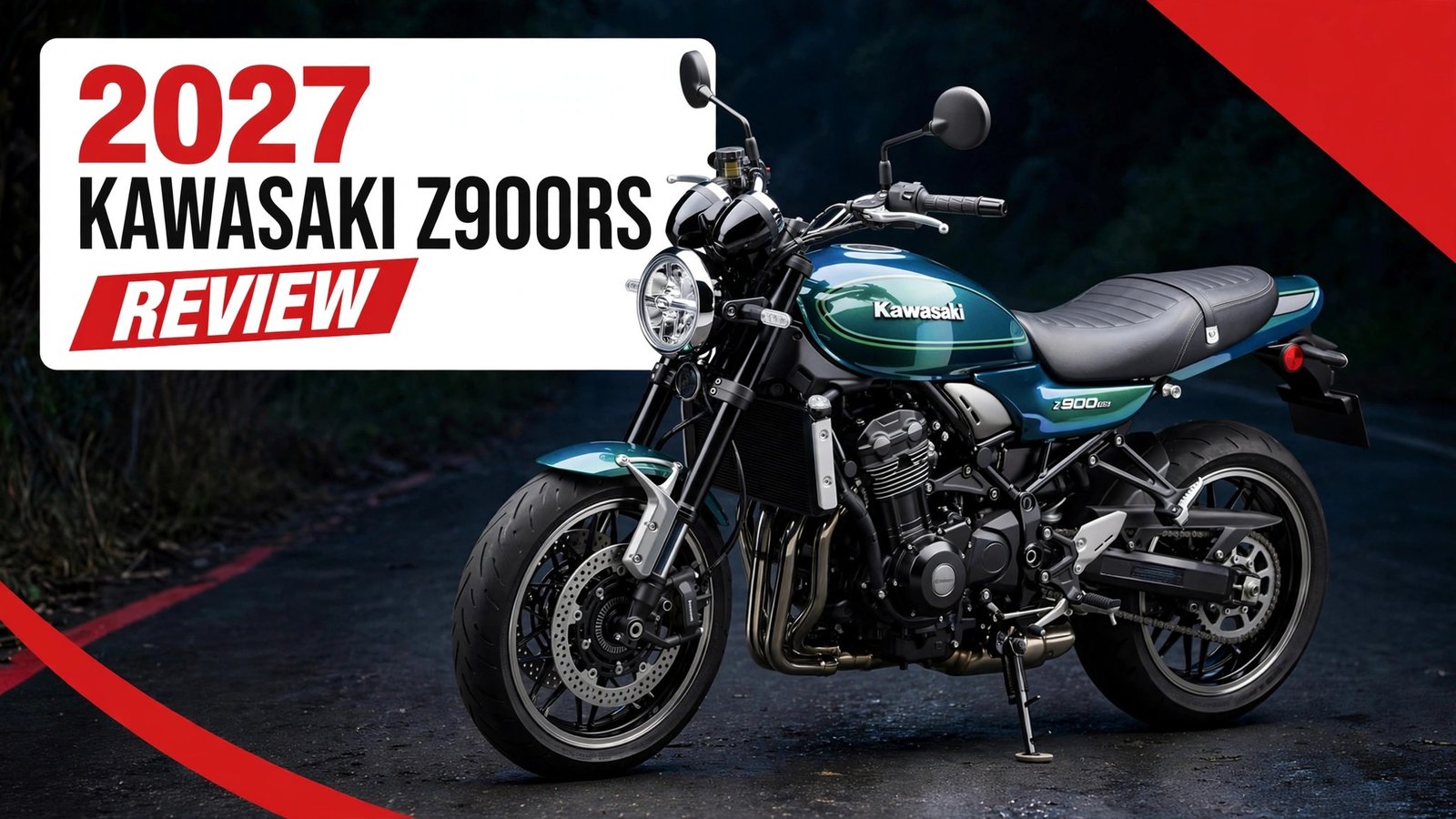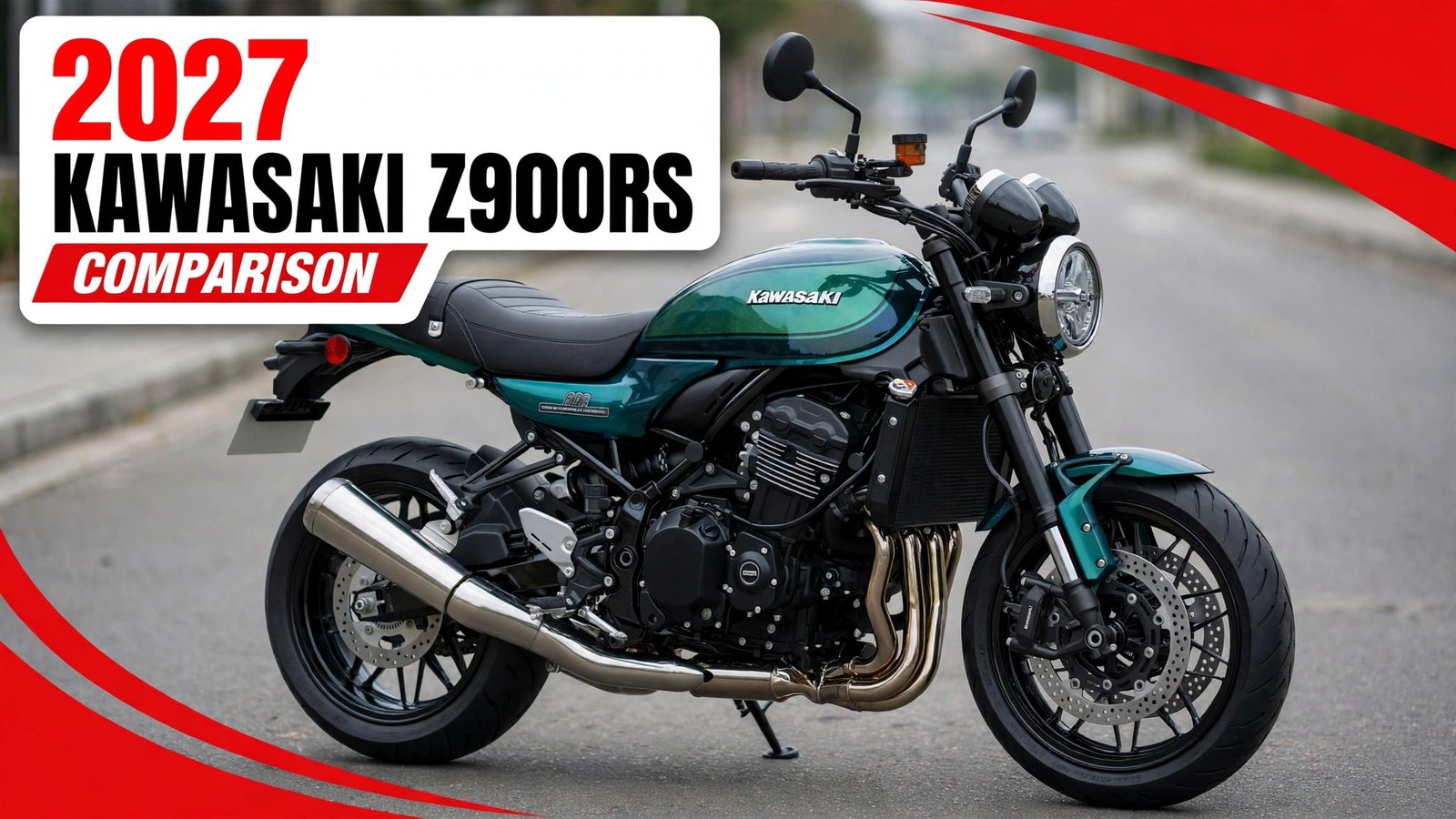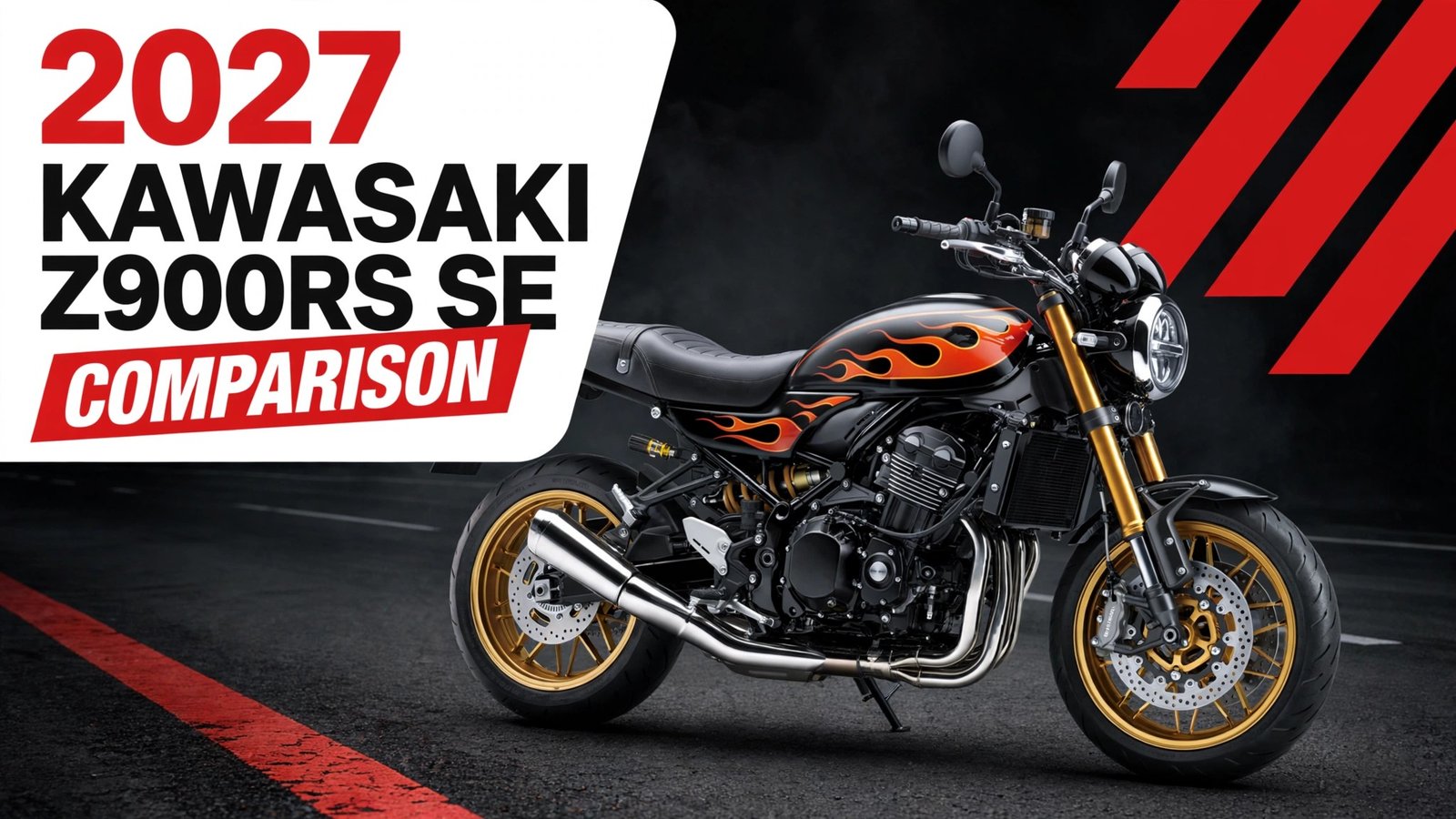
The Kawasaki Z900RS SE is the priciest retro naked in this Kawasaki Z900RS SE comparison except for one British twin — so is the hardware worth the price? This Kawasaki Z900RS SE comparison puts the 2027 SE, at $15,539 delivered, against its three rivals.
Against the base RS the $1,700 premium buys real Brembo and Öhlins hardware; against the XSR900 it buys heritage and torque at a $4,240 delivered premium; against the Speed Twin 1200 RS the SE is the cheaper bike, by $1,181 on the latest published prices. This Kawasaki Z900RS SE comparison works through each pairing with verified figures.
Kawasaki Z900RS SE Overview and Its Closest Rivals
The SE sits at the top of a four-bike group chasing the same buyer: a buyer who wants a retro-styled naked with modern brakes, suspension and electronics. The base Z900RS is the SE without the kit, the XSR900 the lighter and cheaper Yamaha, the Speed Twin 1200 RS the pricier Triumph. This Kawasaki Z900RS SE comparison starts with the prices.
1000PS’s 2022 Retro Rumble video lines up the three rival models as this Kawasaki Z900RS SE comparison, with three gaps: the 2022 base Z900RS, not the SE; the standard Speed Twin, not the RS; and 2022 models that pre-date the 2026 update. The English narration is YouTube’s auto-dubbed track.
MO Calls Price a Fatal Flaw
Motorcycle.com’s 2026 SE review names the price directly, and this Kawasaki Z900RS SE comparison quotes it once: “But here is its fatal flaw: the price tag. With an MSRP of $14,599, it is significantly more expensive than Yamaha’s retro-naked XSR900 and Honda’s new modern-vintage offering, the CB1000F, which both carry a price tag of $10,599… a $4,000 delta is hard to ignore.” On MSRP the gap is $4,000; delivered in 2027 it is $4,240. The CB1000F is named in the quote only.
How the Four Bikes Differ at a Glance
The table below is the whole Kawasaki Z900RS SE comparison at a glance, with every price year-labelled. The SE and the base RS share engine, power claim and curb weight.
| Bike (2027 unless noted) | MSRP | Delivered | Power | Torque | Weight |
|---|---|---|---|---|---|
| Kawasaki Z900RS SE | $14,699 | $15,539 | 115.0 hp @ 9,300 rpm | 73.0 lb-ft @ 7,700 rpm | 476.3 lb curb |
| Kawasaki Z900RS (base) | $12,999 | $13,839 | 115.0 hp @ 9,300 rpm | 73.0 lb-ft @ 7,700 rpm | 476.3 lb curb |
| Yamaha XSR900 | $10,599 | $11,299 | 117 hp @ 10,000 rpm | 68.6 lb-ft @ 7,000 rpm | 425 lb wet |
| Triumph Speed Twin 1200 RS (2025 price) | $15,995 | $16,720 | 103.5 hp @ 7,750 rpm | 82.6 lb-ft @ 4,250 rpm | 478.4 lb wet |
Note: Delivered means MSRP plus destination or freight: $840 for the SE and the base RS (Motorcycle.com database), $700 for the XSR900, $725 freight for the Speed Twin 1200 RS. The Speed Twin row uses the 2025 price, the latest unanimous published US price. This Kawasaki Z900RS SE comparison never prints the unverified “$1,217” figure as a settled fact.
Kawasaki Z900RS SE vs Kawasaki Z900RS
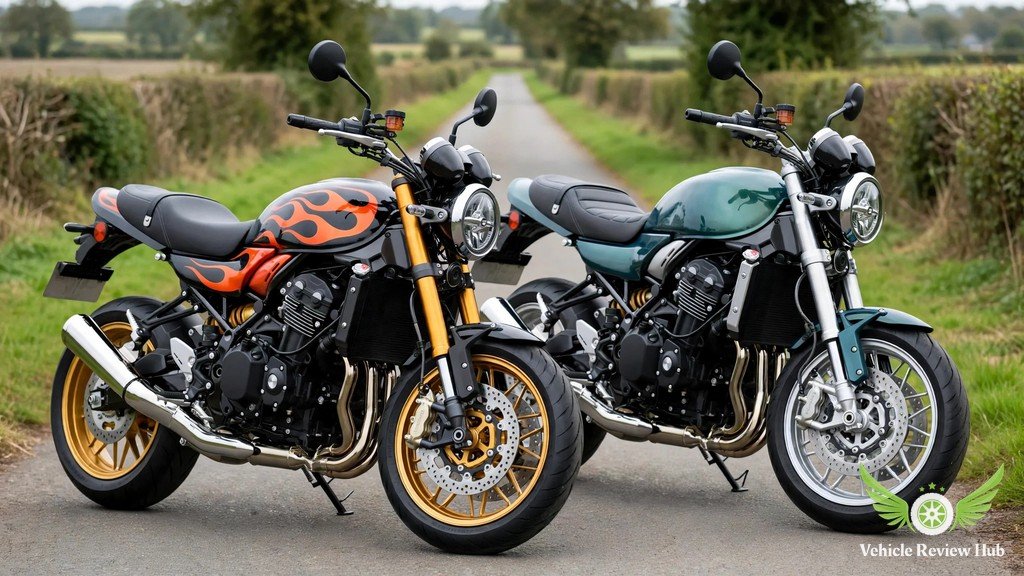
This is the simplest pairing in the whole Kawasaki Z900RS SE comparison: the same motorcycle, differing only in the SE kit. The two share the 948cc inline-four, the trellis chassis, the 2026 electronics update and the 476.3 lb curb weight — the 2027 base RS sheet prints the same figures. The full Kawasaki Z900RS SE review covers the SE.
Engine, Specs and Performance Side by Side
On the claim sheet there is nothing to separate them: both claim 115.0 hp at 9,300 rpm and 73.0 lb-ft at 7,700 rpm for 2026 and 2027, with the same fork, tank and wheelbase. The pre-2026 bikes claimed 111 hp at 8,500 rpm, and the 2025 SE sheet itself prints 110.0 hp — a 1 hp difference, printed here labelled, never settled. The dyno figures confirm it: Cycle World’s 2022 SE made 95.24 hp on a Dynojet 250i, its 2020 Cafe 94.65 hp on the same dyno, and Motorcycle.com’s 2026 SE 100.4 hp on its dyno — a different bike on a different dyno, and this Kawasaki Z900RS SE comparison never presents it as a gain over the 2022 figure. Neither bike has a measured top speed; the 142 mph figure sometimes quoted is the base RS’s speedometer reading, not a GPS measurement and not the SE’s.
| Spec (2027) | Z900RS SE | Z900RS (base) |
|---|---|---|
| Engine | 948cc inline-four, 11.8:1 | 948cc inline-four, 11.8:1 |
| Power / torque (US claim) | 115.0 hp @ 9,300 rpm / 73.0 lb-ft @ 7,700 rpm | 115.0 hp @ 9,300 rpm / 73.0 lb-ft @ 7,700 rpm |
| Front brakes | Dual 300 mm discs, Brembo M4.32, smaller Nissin radial-pump master, braided lines | Dual 300 mm discs, 4-piston monobloc calipers |
| Rear shock | Öhlins S46, remote preload adjuster, 30-position rebound | Standard rear shock |
| Fork | 41 mm inverted, gold outer tubes | 41 mm inverted, standard finish |
| Seat height | 32.3 in | 31.9 in |
Note: The seat heights are the US spec-sheet figures: 32.3 in for the SE and 31.9 in for the base. The conflict is labelled wherever it arises: Kawasaki’s own 2026 press release prints 32.8 in, and UK and European sources still print the pre-2026 835 mm (32.9 in). 810 mm is the optional ERGO-FIT Low Seat, never the standard height. The dyno figures are labelled by publication, bike and year in the text above. This Kawasaki Z900RS SE comparison prints no 2024 claimed horsepower, because the 2024 SE sheet prints no maximum-horsepower line.
Price, Equipment and Which Suits Which Rider
The premium is $1,700 in 2027 ($14,699 against $12,999 on MSRP; $15,539 against $13,839 delivered). The premium has swung: $1,700 in 2022, $2,000 in 2024, $1,500 in 2025, $1,700 in 2026 and 2027. What it buys has never changed: Brembo M4.32 brakes, the Öhlins S46 shock, gold fork tubes and wheels, the USB-C outlet and the Fireball paint. The only electronic extra over the base is the USB-C outlet; the rest of the electronics are standard on the base too. Ultimate Motorcycling’s verdict on the kit is this: “The Öhlins shock and Brembo brakes earn the SE’s price premium for riders who value ride quality and braking feel.” The sheet lists “Power Modes”, the press release never mentions them, and testers say there are none — the only tester-confirmed selectable mode is KTRC Mode 1 and Mode 2 on the 2026 and later bikes, and this Kawasaki Z900RS SE comparison prints that conflict rather than settling it. The base buyer saves $1,700 and gives up braking feel, suspension quality and gold hardware — and neither buys more power, because there is none to buy.
Kawasaki Z900RS SE vs Yamaha XSR900
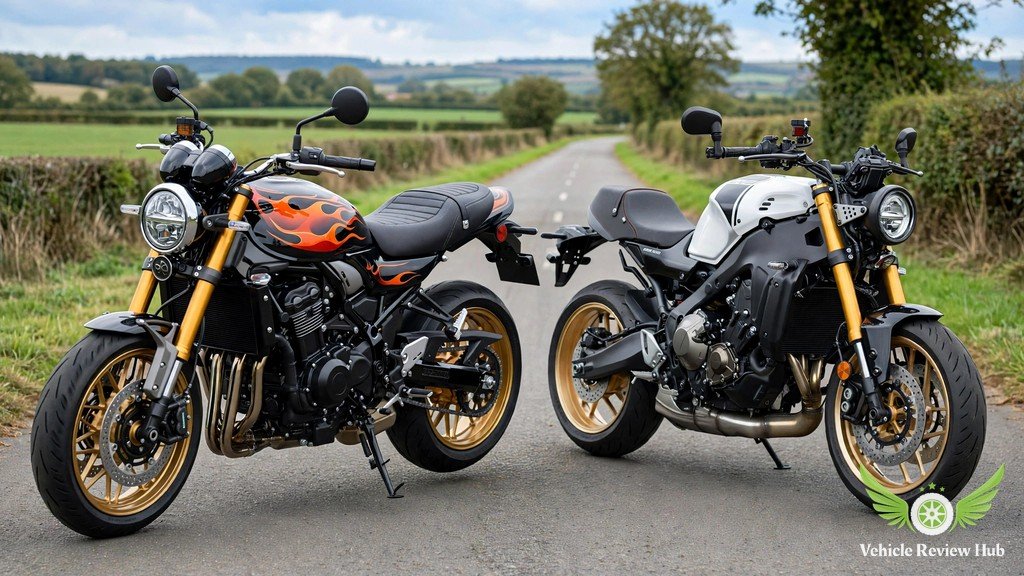
This is the pairing Motorcycle.com’s “fatal flaw” line is about, and the hardest one for the SE to win on paper. The XSR900 is cheaper, lighter, stronger on paper and thriftier, and this Kawasaki Z900RS SE comparison names it as the value pick. The SE’s answer is torque, hardware and heritage — and this Kawasaki Z900RS SE comparison asks whether those three are worth $4,240 delivered.
Engine, Specs and Performance Side by Side
The XSR900’s 890cc CP3 triple claims 117 hp at 10,000 rpm against the SE’s 115.0 hp at 9,300 rpm, so on paper the Yamaha is the stronger bike by 2 hp. The SE answers lower down, with 73.0 lb-ft at 7,700 rpm against 68.6 lb-ft at 7,000 rpm. The weight gap is the bigger story: 425 lb wet against the SE’s 476.3 lb curb, or 51 lb lighter, with a 3.7-gallon tank against the SE’s 4.5. The XSR900’s equipment list is the longer one — a 6-axis IMU, lean-sensitive controls, a back-slip regulator, a speed limiter and a third-generation quickshifter — and it also carries a fully adjustable 41 mm KYB inverted fork and Bridgestone Battlax Hypersport S23 tyres. On fuel the Yamaha wins clearly: 49 mpg combined on Yamaha’s own figure against the SE’s 37 mpg observed on Motorcycle.com’s 2026 bike under hard riding. The SE has no tested economy figure for 2022 to 2025, and the base RS’s 39–40 mpg long-term figure belongs to the base bike, never the SE. This Kawasaki Z900RS SE comparison keeps the two bikes’ figures in their own lanes: Yamaha’s combined figure against Motorcycle.com’s observed figure, labelled as such.
| Spec (2027) | Z900RS SE | Yamaha XSR900 |
|---|---|---|
| Engine | 948cc inline-four | 890cc CP3 triple |
| Power / torque | 115.0 hp @ 9,300 rpm / 73.0 lb-ft @ 7,700 rpm | 117 hp @ 10,000 rpm / 68.6 lb-ft @ 7,000 rpm |
| Weight | 476.3 lb curb | 425 lb wet |
| Wheelbase / fuel | 57.7 in / 4.5 gal | 58.9 in / 3.7 gal |
| Front suspension | 41 mm inverted fork, gold outer tubes | 41 mm KYB inverted fork, fully adjustable |
| Rear suspension | Öhlins S46, remote preload adjuster | Standard rear shock |
Note: The XSR900’s 117 hp is Yamaha’s US figure; the European 119 PS figure is the same engine, never printed as horsepower. The XSR900’s seat height is Yamaha’s own 31.9 in, not the 32.1 in a third-party listing prints. The SE’s 37 mpg is Motorcycle.com’s observed figure on the 2026 bike under hard riding, not a Kawasaki claim. This Kawasaki Z900RS SE comparison prints no timed 0–60 mph or quarter-mile figure for either bike, because no publication has timed the SE.
Price, Equipment and Which Suits Which Rider
The money is blunt: $10,599 against $14,699 on MSRP, $11,299 against $15,539 delivered — $4,240 cheaper delivered, the same story Motorcycle.com tells with its $4,000 MSRP delta. The SE buyer gets more torque, the kit and the 1972 Z1 bloodline no Yamaha can offer. The full Kawasaki Z900RS SE performance guide covers the SE’s dyno and mileage figures. This Kawasaki Z900RS SE comparison calls it plainly: value goes to the XSR900, heritage goes to the SE, and the buyer who chooses the SE pays $4,240 for the heritage and the kit, not for speed.
Kawasaki Z900RS SE vs Triumph Speed Twin 1200 RS
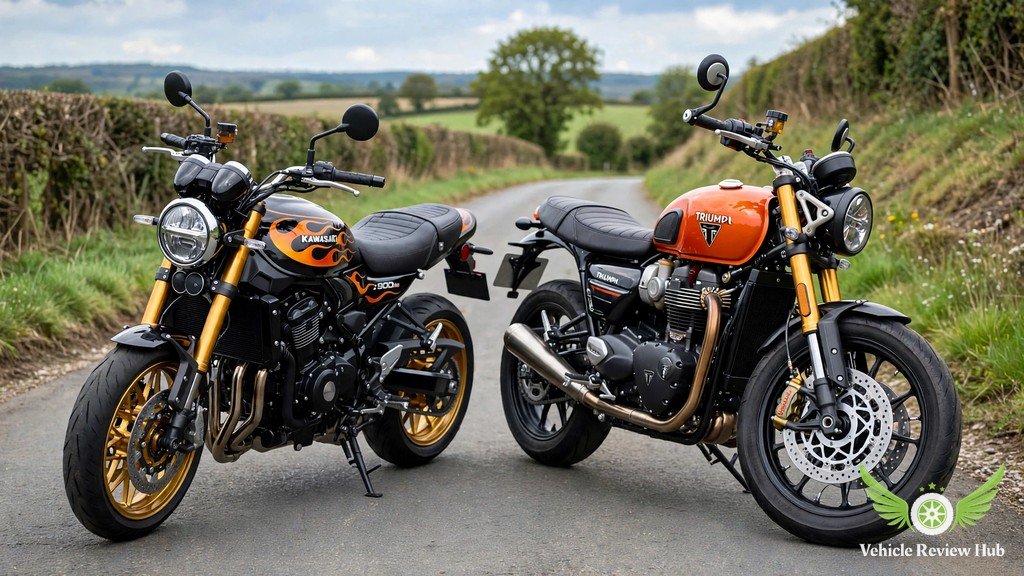
This is the SE’s true hardware rival, and the only pairing in this Kawasaki Z900RS SE comparison where the SE is the cheaper bike. The Triumph is a 1,200cc parallel twin against the SE’s 948cc four, and the two engines deliver their power very differently. The comparison anchors on the 2025 RS price of $15,995, the latest unanimous published US price.
Engine, Specs and Performance Side by Side
The numbers split cleanly: 115.0 hp at 9,300 rpm against 103.5 hp at 7,750 rpm — the four is stronger by 11.5 hp. The RS answers with torque: 82.6 lb-ft at 4,250 rpm against 73.0 lb-ft at 7,700 rpm. The RS’s 103.5 hp is 105 PS, never printed here as “105 hp”, because PS is not horsepower. The weights are a wash — 476.3 lb curb against 478.4 lb wet. The hardware is where the two bikes rhyme: the RS carries a fully adjustable 43 mm Marzocchi upside-down fork, twin Öhlins piggy-back rear units and Brembo Stylema calipers, with a Triumph Shift Assist quickshifter and Metzeler Racetec RR K3 tyres. The RS sits at 810 mm, or 31.9 in, which is 5 mm taller than the standard Speed Twin’s 805 mm. On fuel the Triumph’s combined figure is 53.4 to 53.5 mpg on the EPA procedure, against the SE’s 37 mpg observed under hard riding — different measures, labelled as such. Neither bike has a published timed acceleration figure in this Kawasaki Z900RS SE comparison, because no publication has timed the SE.
| Spec | Z900RS SE (2027) | Speed Twin 1200 RS |
|---|---|---|
| Engine | 948cc inline-four | 1,200cc parallel-twin, 270° firing order |
| Power / torque | 115.0 hp @ 9,300 rpm / 73.0 lb-ft @ 7,700 rpm | 103.5 hp @ 7,750 rpm / 82.6 lb-ft @ 4,250 rpm |
| Seat height | 32.3 in | 31.9 in (810 mm) |
| Wheelbase / fuel | 57.7 in / 4.5 gal | 55.1 in / 3.8 gal |
| Front suspension | 41 mm inverted fork, gold outer tubes | 43 mm Marzocchi USD fork, fully adjustable |
| Rear suspension | Öhlins S46, remote preload adjuster | Twin Öhlins piggy-back RSUs |
| Brakes | Brembo M4.32, braided lines | Brembo Stylema calipers |
| Warranty | 12-month limited | 24-month, unlimited mileage |
Note: The RS’s torque is 82.6 lb-ft (112 Nm); Triumph’s own copy rounds it to 83 lb-ft, and this Kawasaki Z900RS SE comparison prints the 82.6 lb-ft figure. The RS’s fuel figure is an EPA-procedure combined figure, not a road-tested one, and the SE’s 37 mpg is Motorcycle.com’s observed figure under hard riding; the two are not directly comparable.
Price, Equipment and Which Suits Which Rider
The RS costs more, and the gap depends on which year is anchored. On the 2025 RS price of $15,995, the RS is $1,296 more on MSRP and $1,181 more delivered: $16,720 against $15,539. On the 2026 RS prices the gap grows: $16,995 (Motorcycle.com database) gives $17,720 delivered, or $2,181 more, and $17,195 (dealers) gives $17,920 delivered, or $2,381 more. The 2027 RS is EPA-certified for the USA, but its 2027 US price has not been published anywhere, so the comparison anchors on the 2025 figure. The limited editions sit higher still. The RS buyer gets more torque; the SE buyer gets more power and the lower price. It is the closest fight of the three in this Kawasaki Z900RS SE comparison: the hardware is a draw, the engines are a matter of taste, and the SE wins on price by $1,181 on the latest published figures.
Kawasaki Z900RS SE Price and Value Compared
Every gap in this Kawasaki Z900RS SE comparison is arithmetic. The SE’s 2027 delivered price is $15,539, and every rival gap below is computed against that figure. The one figure not computed here is the doc’s “$1,217 premium”, because no clean arithmetic produces it — and this Kawasaki Z900RS SE comparison does not print it as settled.
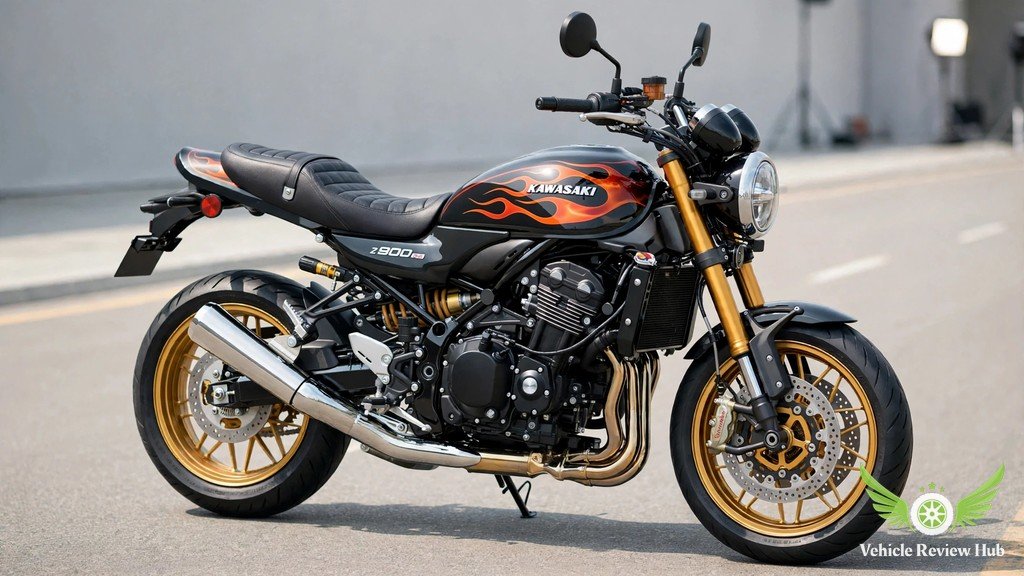
About $1,217 Premium Survives
The heading above stays as written, but the $1,217 figure behind it is not verified and is not printed here as a settled fact. On delivered prices the 2027 SE at $15,539 against the 2025 RS at $16,720 is $1,181; against the 2026 RS at $17,720 it is $2,181; against the 2026 RS at $17,920 it is $2,381. The SE is cheaper than the RS on every anchor, so this Kawasaki Z900RS SE comparison never presents a single “the RS costs $X more” without the year beside it.
| Rival price anchored | Rival delivered | SE delivered ($15,539) | Gap |
|---|---|---|---|
| Speed Twin 1200 RS 2025 ($15,995 + $725 freight) | $16,720 | $15,539 | RS costs $1,181 more |
| Speed Twin 1200 RS 2026, MO-db ($16,995 + $725 freight) | $17,720 | $15,539 | RS costs $2,181 more |
| Speed Twin 1200 RS 2026, dealers ($17,195 + $725 freight) | $17,920 | $15,539 | RS costs $2,381 more |
| Yamaha XSR900 2027 ($10,599 + $700 destination) | $11,299 | $15,539 | SE costs $4,240 more |
| Kawasaki Z900RS base 2027 ($12,999 + $840 destination) | $13,839 | $15,539 | SE costs $1,700 more |
| Kawasaki Z900 SE 2027 ($12,199 + $840 destination) | $13,039 | $15,539 | SE costs $2,500 more |
Note: All destination and freight figures are labelled by source: the SE and base RS $840 and the XSR900 $700 are Motorcycle.com database figures, the RS $725 freight a dealer figure. The $1,217 figure in the heading is the doc’s figure and is unverified — the verified gaps are $1,181, $2,181 and $2,381 delivered, and $1,296 and $2,296 on MSRP. This Kawasaki Z900RS SE comparison prints no 2023 SE price and no 2022 SE delivered price, because neither was ever verified.
Running Costs and Resale Value Compared
Running costs are where this Kawasaki Z900RS SE comparison has to be honest about what is not known. No US servicing-cost figure was verified for any of the four bikes, and no US resale or depreciation figure for the SE, so no dollar figure is printed here. Warranties: 12 months limited for the SE and XSR900, 24 months unlimited for the Triumphs. On fuel: the XSR900’s 49 mpg combined is Yamaha’s own figure, the Speed Twin 1200 RS’s 53.4 to 53.5 mpg combined is an EPA-procedure figure, and the SE’s 37 mpg is Motorcycle.com’s observed figure on the 2026 bike under hard riding — three different measures, labelled as such. The recall record is the SE’s quiet advantage: its only recall is the shared 2024 tyre campaign, NHTSA campaign 24V-270, covering 525 model-year 2024 RS, Cafe and SE bikes. The complaints database returns zero complaints for the RS family for every model year from 2018 to 2027. The full Kawasaki Z900RS SE reliability guide covers the recall and the maintenance schedule. Servicing prices vary by dealer, and this Kawasaki Z900RS SE comparison invents no number here.
Kawasaki Z900RS SE Comparison Verdict and US Alternatives
The verdict of this Kawasaki Z900RS SE comparison is the same verdict the testers reach: the SE is the best RS, and it is priced so. The $1,700 premium over the base buys hardware that every tester praises, the $4,240 premium over the XSR900 buys heritage no spec sheet can price.
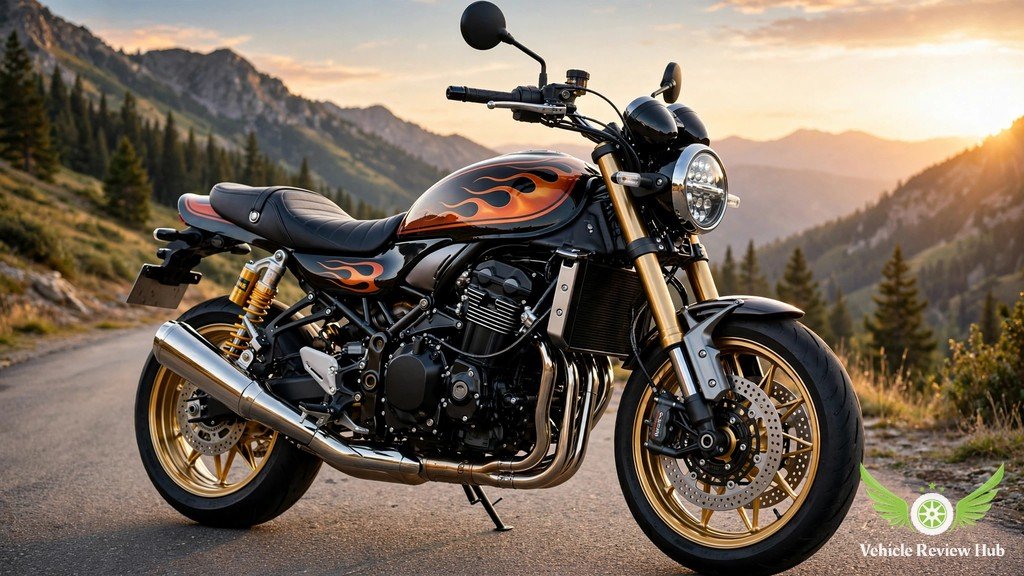
Verdict: Best RS, Priced So
The SE is the most expensive bike in this Kawasaki Z900RS SE comparison except the Triumph, and the only one with a 1972 Z1 bloodline, a Brembo and Öhlins kit, and a sub-$16,000 delivered price. Against the base RS it is $1,700 more delivered for the brakes, the shock and the gold hardware. Against the XSR900 it is $4,240 more delivered for more torque, the kit and the heritage, against a lighter, thriftier Yamaha. Against the Speed Twin 1200 RS it is $1,181 less delivered on the latest published prices, $2,181 to $2,381 less on the 2026 RS prices. The Fireball paint carries no separate upcharge. This Kawasaki Z900RS SE comparison recommends the SE to the buyer who wants the best RS and will pay for the kit, the base RS to the buyer who wants the RS and will not, the XSR900 to the buyer who wants the most value, and the Speed Twin 1200 RS to the buyer who wants the twin. The Z650RS is the cheaper way into the RS family.
Z900 SE Is $2,500 Less
The cheapest way into the same Brembo and Öhlins kit idea is not in this Kawasaki Z900RS SE comparison’s rival list at all — it is the Z900 SE, the naked sibling’s premium trim. The 2027 Z900 SE is $12,199 plus the same $840 destination charge (Motorcycle.com database), or $13,039 delivered, against the RS SE’s $15,539 delivered. The gap is $2,500 exactly. The Z900 SE is a different bike — a modern naked with 123.0 hp, 73.1 lb-ft and a 469.7 lb curb weight in grey colours — and the $2,500 buys the retro RS package: Z1 styling, the midrange 948cc engine, the bench seat and the heritage. The full Kawasaki Z900 SE review covers it. This Kawasaki Z900RS SE comparison calls the $2,500 the price of the retro story, and the buyer who does not want the story should buy the Z900 SE and keep the money.
Kawasaki Z900RS SE Comparison FAQs
The six questions below are the ones buyers ask most, answered from this Kawasaki Z900RS SE comparison’s verified figures.
Is the Kawasaki Z900RS SE worth $1,700 more than the base Z900RS?
Yes, for the rider who values the hardware — and this Kawasaki Z900RS SE comparison says so on the arithmetic. The 2027 SE is $14,699 against the base’s $12,999 — $1,700 either way. The premium buys the Brembo brakes, the Öhlins shock, the gold hardware and the USB-C outlet. Ultimate Motorcycling says the Öhlins shock and Brembo brakes “earn the SE’s price premium for riders who value ride quality and braking feel.”
Z900RS SE or Yamaha XSR900 — which is the better buy?
The XSR900 is $4,240 cheaper delivered ($11,299 vs $15,539), 51 lb lighter and thriftier at 49 mpg combined. The SE answers with more torque (73.0 vs 68.6 lb-ft), the Öhlins and Brembo kit and the Z1 heritage. This Kawasaki Z900RS SE comparison names the XSR900 as the value pick.
How much is a Triumph Speed Twin 1200 RS?
This Kawasaki Z900RS SE comparison anchors on the latest published US prices: $15,995 for 2025, $16,995 for 2026 (Motorcycle.com database) and $17,195 for 2026 (dealers). The 2027 RS has no published US price. The SE is cheaper than the RS on every anchor — $1,181 less delivered on the 2025 price.
Z900RS SE or Z900 SE — which costs less?
The Z900 SE is $2,500 less delivered ($13,039 vs $15,539). The $2,500 buys the retro RS package: the Z1 styling, the midrange-tuned 948cc engine, the bench seat and the heritage. This Kawasaki Z900RS SE comparison states the arithmetic once: $15,539 minus $13,039 is $2,500 exactly.
Is there a premium for the Fireball paint?
No. No US price list shows a separate Fireball upcharge. Fireball is the SE’s livery (Metallic Spark Black with orange graphics); the SE’s $1,700 premium over the base pays for the Brembo brakes, Öhlins shock and gold hardware. This Kawasaki Z900RS SE comparison finds no Fireball premium anywhere.
What is the cheapest way into a new premium retro in 2027?
The Yamaha XSR900 at $11,299 delivered undercuts the SE by $4,240. The SE itself is $15,539 delivered. This Kawasaki Z900RS SE comparison names the XSR900 as the cheapest way in.