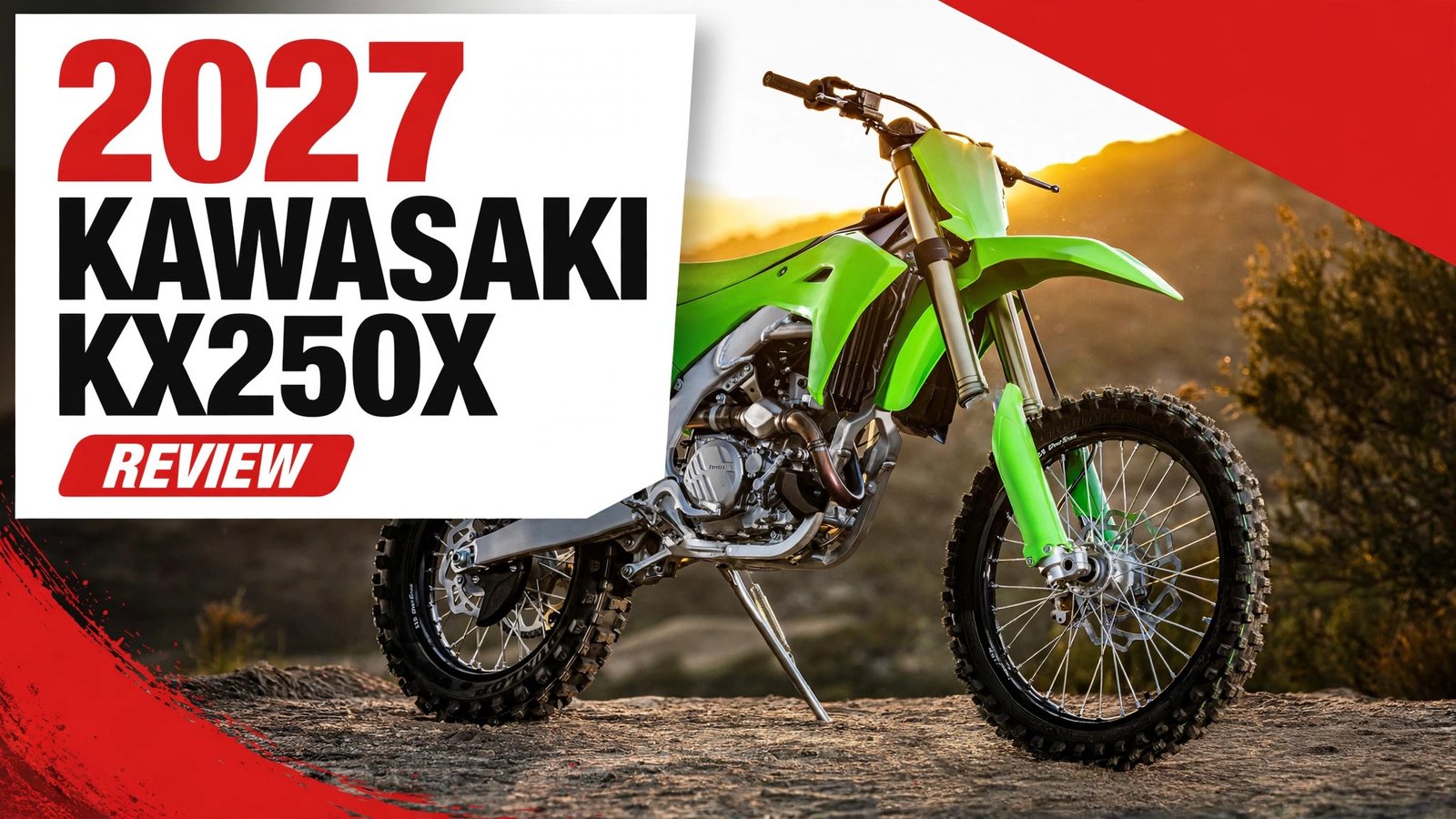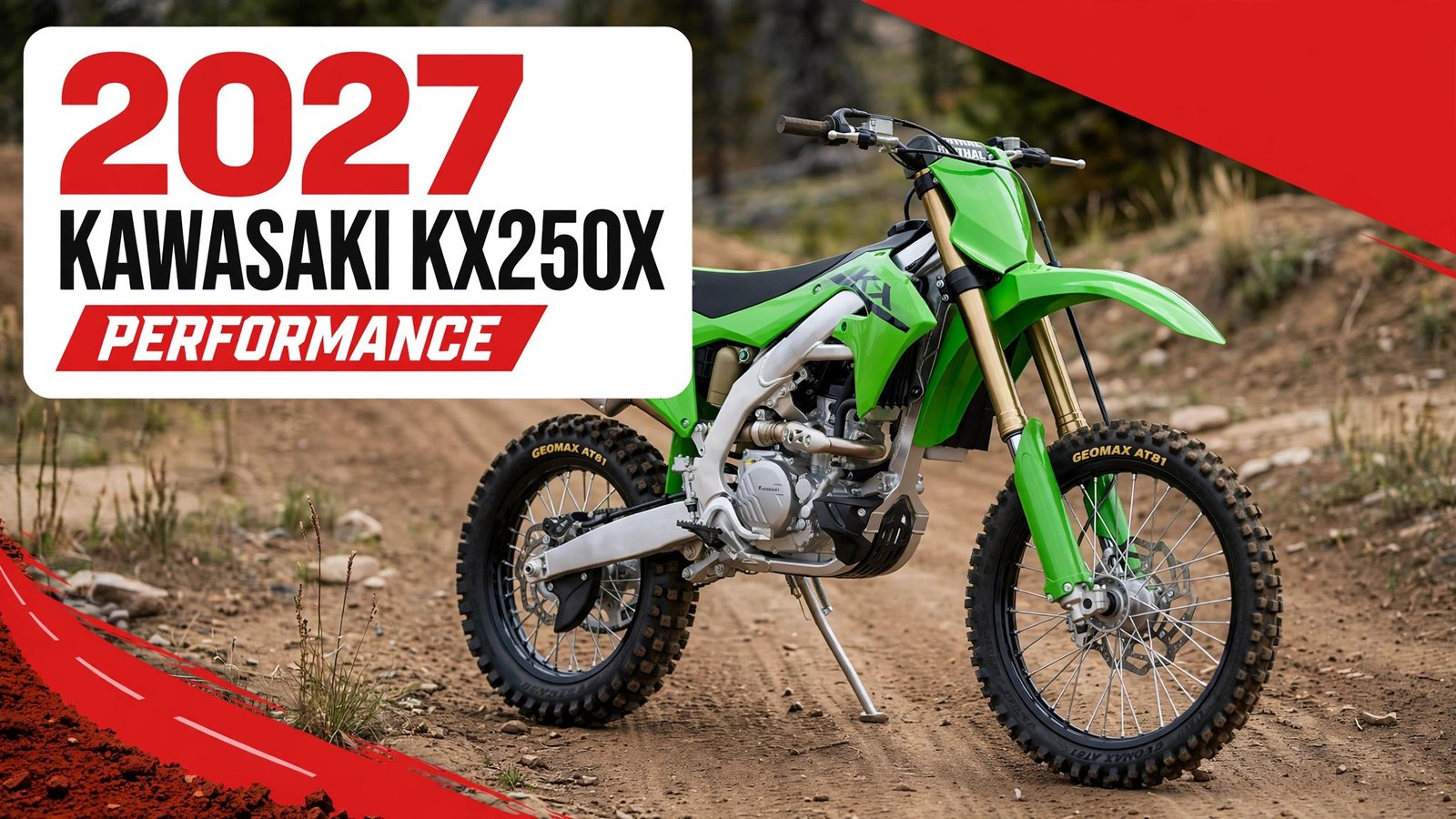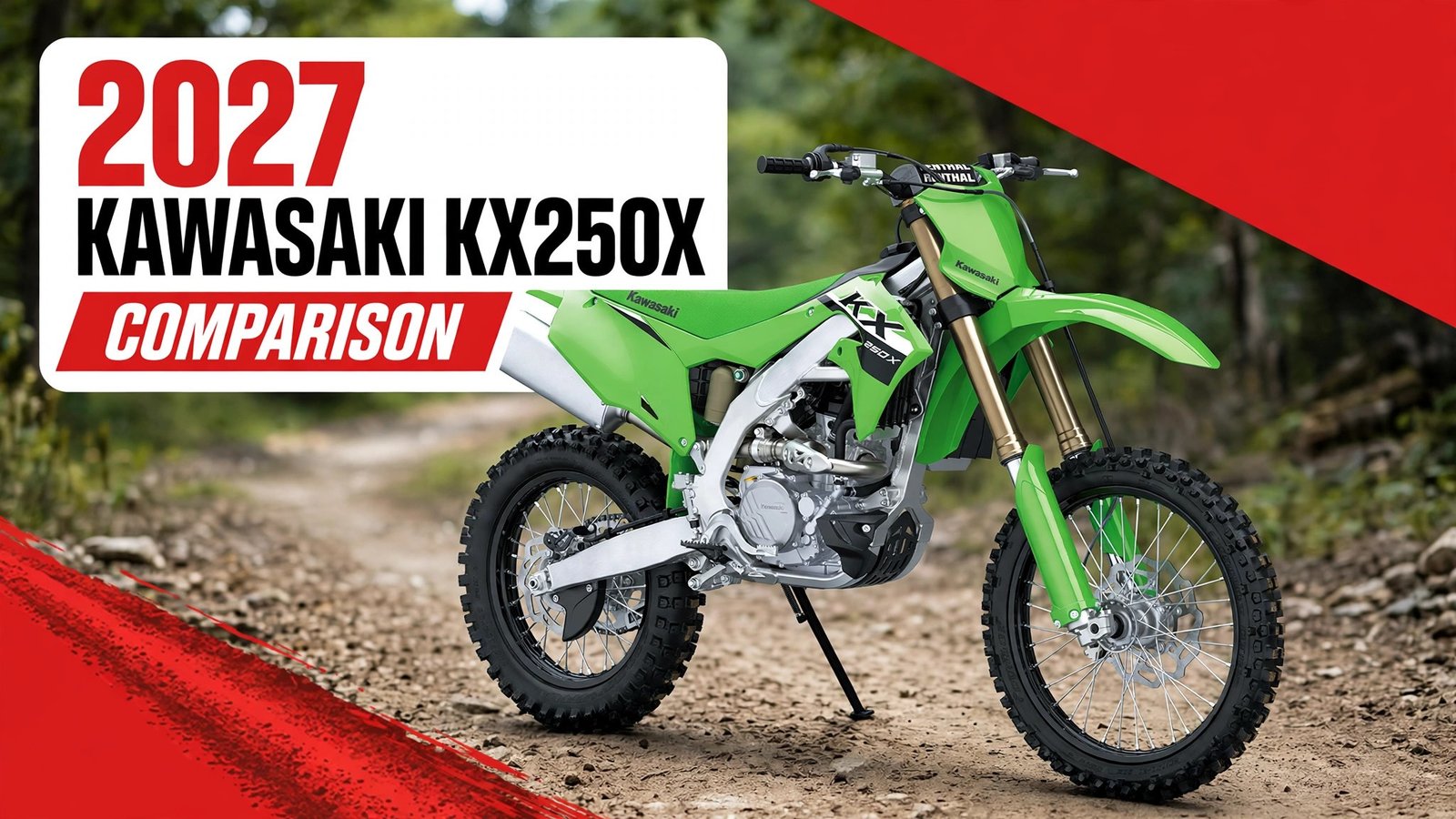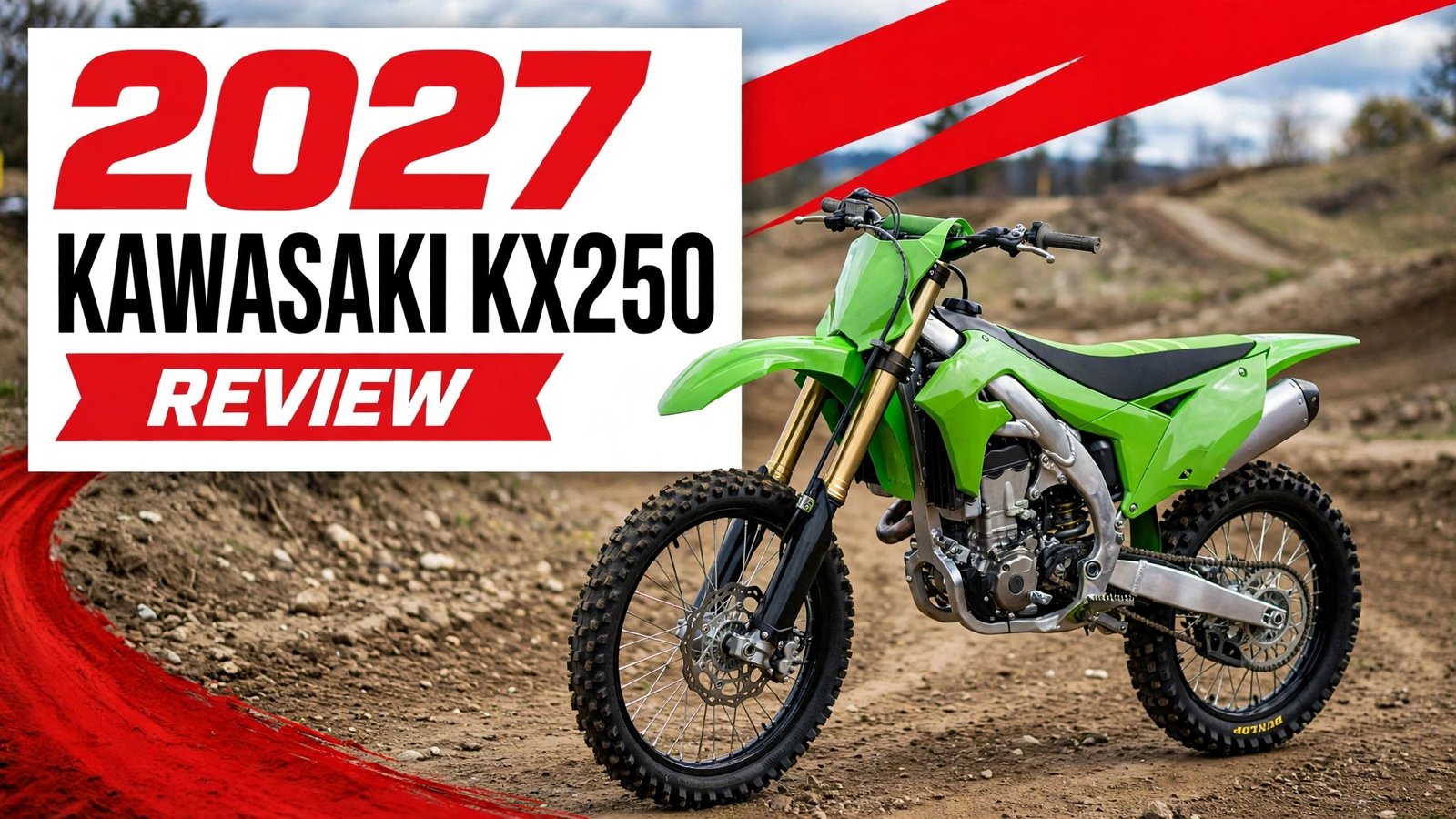
This Kawasaki KX250X reliability guide starts with the fact that shapes everything else in it: the X is a closed-course competition motorcycle, not a trail bike with lights and a warranty. Kawasaki lists the warranty as “Not Available” on every spec sheet, and the bike is sold as-is for racing. That does not make it unreliable. It makes Kawasaki KX250X reliability a matter of service rhythm, because a race bike serviced on its race schedule stays fast and stays together, while the same bike serviced late gets expensive in a hurry.
The second fact is that no recall names any year of the KX250X or the KX250FX, and no owner survey or long-term reliability dataset exists for the X. What exists instead is the KX250 family’s published maintenance chart, the tests that raced the X, and the parts prices as they stood in November 2026. This Kawasaki KX250X reliability guide uses exactly those sources, labels every family figure, and says plainly where no X-specific figure was found.
Kawasaki KX250X Reliability Overview
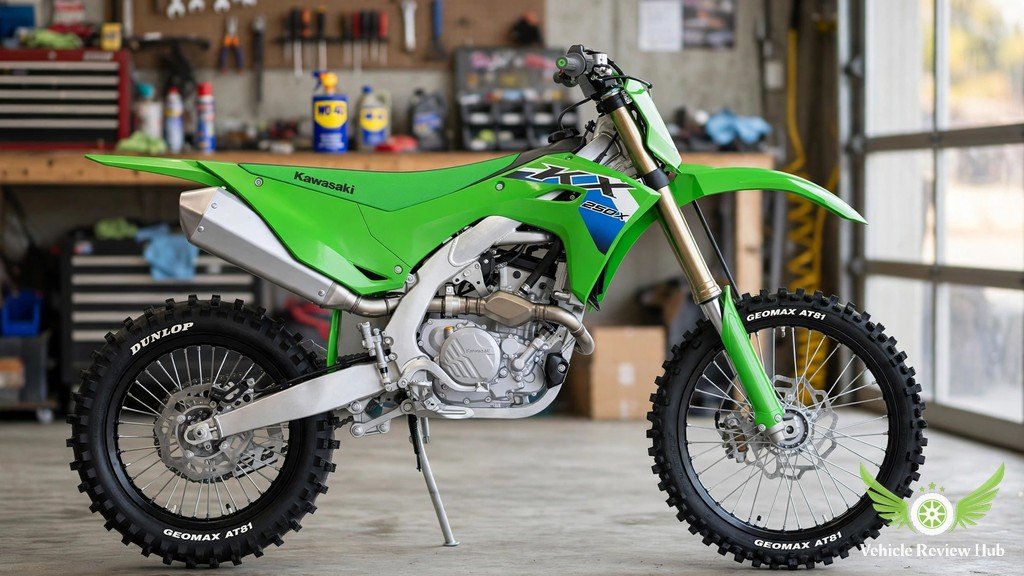
The short version of Kawasaki KX250X reliability is that the bike is a proven KX250 engine in a cross-country chassis, serviced on a race calendar. There is no road-bike mileage schedule to follow, because the X has no odometer and no road use. Its service chart counts races and hours, not miles, and the owners who keep up with it report long, uneventful service lives, which is what Kawasaki KX250X reliability means in practice. The owners who do not keep up pay for pistons, valves and filters instead.
No Recall Names the 250X
No recall names any year of the KX250X or the KX250FX. That is the whole recall story for this bike, verified against the Consumer Product Safety Commission, the only recall authority for a closed-course competition motorcycle. The National Highway Traffic Safety Administration does not cover competition bikes, so no NHTSA search applies here and this Kawasaki KX250X reliability guide cites none.
One older recall does carry a “KX250” name, so it belongs here with its label attached. CPSC recall 01-065, announced on January 11, 2001, covered about 18,000 Kawasaki motocross motorcycles, including the 2001 KX250 two-stroke, because the rear brakes could fail. That 2001 KX250 is a two-stroke motocrosser from twenty years before the X existed. It is not an X recall, and it has nothing to do with the 2021 to 2027 X or FX.
How Mileage, Storage and Previous Care Affect Reliability
Hours matter more than miles on an X, and the bike gives its owner no easy way to count them. There is no hour meter fitted as standard, so a used bike’s hours are whatever the seller says they are, unless the bike is a 2025 or newer model with RIDEOLOGY THE APP KX connectivity, where the app logs can back the claim up. That gap is the first thing a buyer should check.
Storage matters in the way the family owner’s manual describes it: drain the fuel or add stabilizer, fog the cylinder, look after the battery, clean and lubricate the chain, and store the bike dry and covered. A bike that sat with fuel in its tank and a dirty air filter will show it on the first ride, and Kawasaki KX250X reliability on a neglected bike is mostly a story about the last owner, not the model. The checks that matter on a used X are the piston and valve service records against the 15-hour family rhythm, the air filter’s condition, and the skid plate and frame-guard wear, which show how hard the bike was used on rocks.
Kawasaki KX250X Common Problems and Wear Items
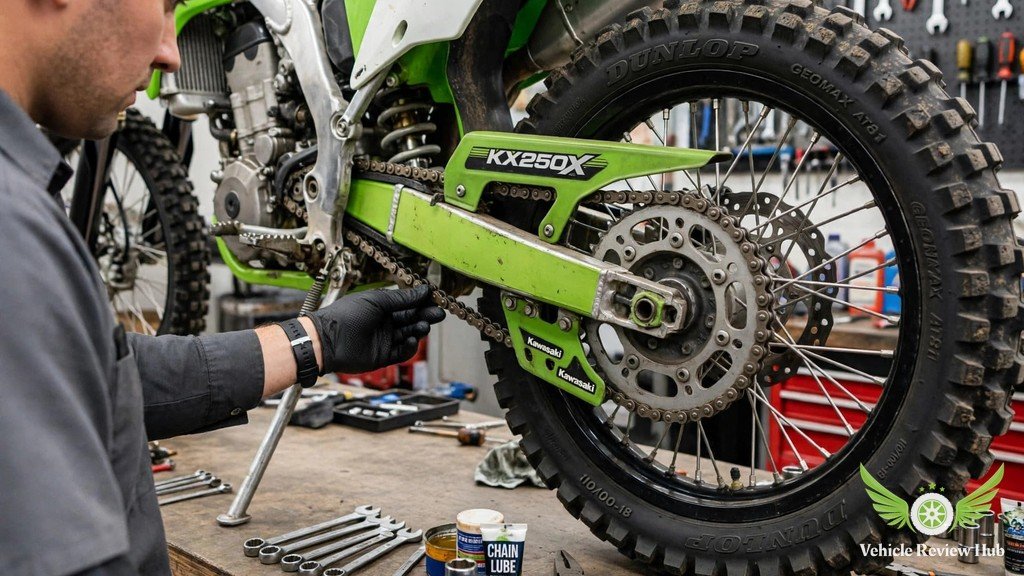
There is no published failure pattern for the X. No test, no recall and no owner survey names a part that fails on this bike, and this Kawasaki KX250X reliability guide will not invent one. What the tests do name are wear items and annoyances, and they are the real subject of Kawasaki KX250X reliability: an air filter that is a pain to service, a bulky kickstand, a gen-1 skid plate that testers called nearly non-existent, and a 1.64-gallon tank that forces fuel stops on long races.
25-238 Is KX450 Only
The biggest Kawasaki recall of recent years does not touch this bike. CPSC recall 25-238, announced on April 24, 2025, covered about 3,400 model year 2025 KX series competition and cross-country motorcycles because the crankshaft primary gear can fail. The notice names only the 2025 KX450, KX450SR and KX450X, and no 250X owner needs to check a VIN against it. The announcement says “KX series” in its headline, but the named models are the 450s only, and Kawasaki KX250X reliability is unaffected by it.
Its Own Piston Figure Missing
Kawasaki has published no piston replacement interval specifically for the KX250X. That is the finding, and the heading says so. Kawasaki’s Owner Center manual downloads are gated by VIN and model, and the web searches behind this guide returned only the KX250F family manuals, never an X-specific piston-hour figure. Any site that prints a piston interval and calls it the X’s own figure is guessing, and this Kawasaki KX250X reliability guide does not repeat the guess.
What does exist is the KX250 family’s published figure. The 2012 KX250F owner’s manual puts piston and piston-ring replacement in the column for every 6 races or 15 hours, and the 2004 to 2005 service manual and the 2018 owner’s manual carry the same figure. A 2024 KX250F owner video cites the same factory-manual recommendation. Use the 15-hour figure as the KX250 family’s published rhythm, with the attribution attached every time. The X’s own piston interval is still not published in full, and this Kawasaki KX250X reliability guide treats the family figure as the working schedule.
One owner, in a Dirt Bike Magazine Facebook comment thread, reported 120 hours on a KX250X with minimal wear: a single anonymous comment, not a test.
Kawasaki KX250X Maintenance Schedule and Servicing
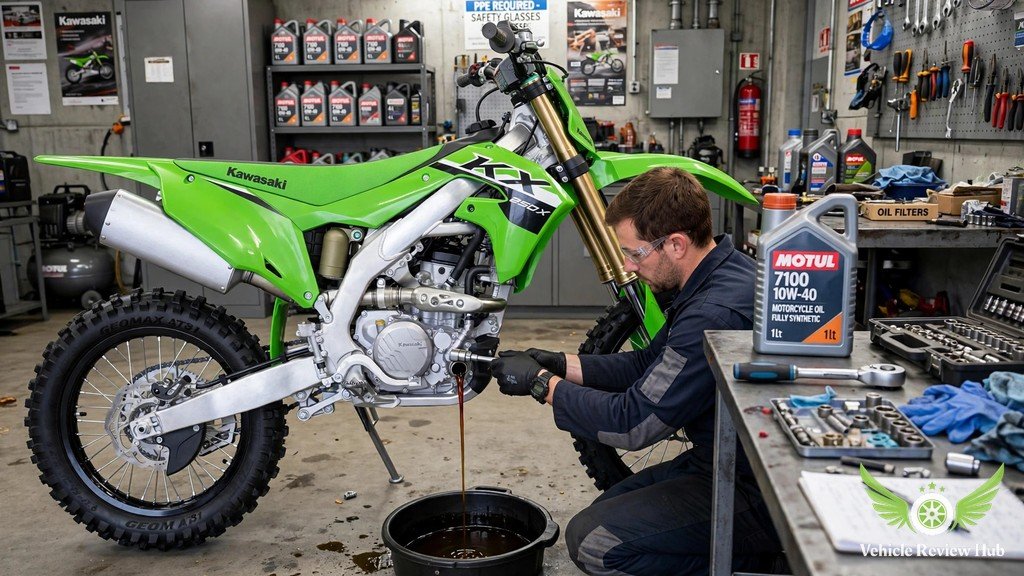
The maintenance schedule for the X is a race calendar from the KX250 family’s published owner’s-manual chart, because no X-specific manual page was retrieved. The chart counts races and hours, and the rhythm is short: something is due after every race, something else every three races, and the big items every six. Kawasaki KX250X reliability is built on that rhythm, and the table below is the whole schedule in one place.
Valves Every 15 Hours
Valve clearance inspection sits in the 15-hour column of the KX250 family’s published maintenance chart, the same column as the piston replacement. The clearances are stable across the family manuals from 2004 to 2018: exhaust 0.17 to 0.22 mm, intake 0.10 to 0.15 mm. The attribution matters here exactly as it does for the piston: the 15-hour valve check is the KX250 family’s published interval, not a figure published specifically for the X, and no X-specific manual page was retrieved, so this Kawasaki KX250X reliability guide states the attribution every time.
Most Items Every Race
Most of the schedule is not the big items at all. After every race the family chart calls for cleaning the air filter and inspecting the brakes, the chain and the spokes, and those small jobs are the foundation of Kawasaki KX250X reliability. Dirt Bike Test’s 2022 woods comparison called air-filter service on the X “a pain”, and a filter that is a pain to reach is a filter that gets skipped.
| Interval (KX250 family chart) | What is due |
|---|---|
| After each race (or 2.5 hours) | Clean air filter; inspect brakes, chain and spokes |
| Every 3 races (or 7.5 hours) | Engine oil change; clutch adjustment |
| Every 6 races (or 15 hours) | Piston and piston ring replacement; valve clearance inspection (exhaust 0.17–0.22 mm, intake 0.10–0.15 mm) |
| Every 12 races (or 30 hours) | Deeper inspection items |
| Every 2 years | Brake fluid change; brake master-cylinder cup and dust seal replacement |
| Every 4 years | Brake hose replacement |
Note: Intervals from the KX250F family owner’s-manual chart (2012 manual, same structure 2004–2018); the brake-fluid, seal and hose intervals are from the 2004–2005 service manual. No X-specific manual page was retrieved, so every interval here is the family figure for Kawasaki KX250X reliability planning. Engine oil capacity of 2.3 litres with a filter change is the shared-engine family figure, not a figure verified for the X specifically.
Kawasaki KX250X Tires, Brakes and Suspension Maintenance
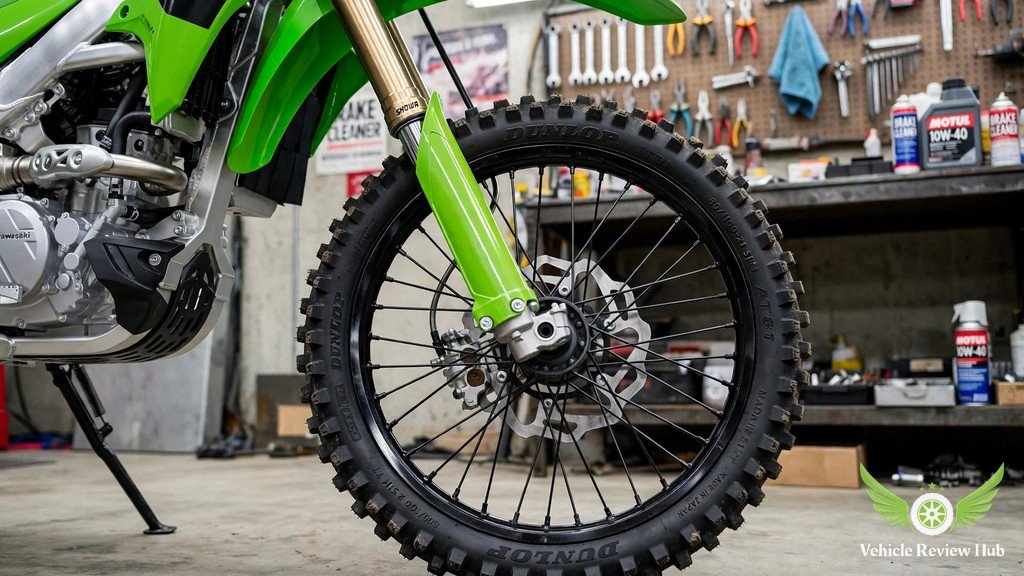
The X’s tyres, brakes and suspension never changed in spirit across the generations, even when the 2025 redesign changed the hardware underneath them. Braking is the same every year, a 270 mm petal disc up front and a 240 mm petal disc at the rear, and no test named the brakes a weakness. The tyres are Dunlop Geomax AT81s, an 80/100-21 front and a 110/100-18 rear, and the 18-inch rear is the X’s real handling difference against the motocrosser. Kawasaki KX250X reliability here is about checking those parts on the family rhythm and replacing them before they fail.
Air Filter Price
A correction belongs here: the document outline for this blog gave this section a price that could not be verified. The outline heading read “Air Filter Costs $55.06”, and three searches found no $55.06 price for any KX250X air filter anywhere. The heading has been corrected to “Air Filter Price” and the $55.06 figure is not printed as a fact here. What is verified is the part and the prices buyers actually see.
The OEM air filter element is Kawasaki part 11013-0811. Aftermarket filters fitting the X were listed as follows in November 2026: Twin Air standard at $37.00 or $38.95, Twin Air Factory Pre-Oiled at $41.75 against a list price of $43.95, No Toil Pre-Oiled at $33.95, and FunnelWeb ProLine at $39.95, all listed as fitting the KX250X from 2021 to 2024. That puts the as-seen aftermarket range at $33.95 to $41.75, dated November 2026. One caution: Kawasaki’s own shop lists a different element, part 11013-0745, at $48.58, and that is not the X’s element, so check the part number before ordering. The filter is the cheapest item in this Kawasaki KX250X reliability guide and the most important one to service, because the X’s engine breathes through it after every race.
Tire, Brake and Suspension Checks That Matter
The checks that matter for Kawasaki KX250X reliability are the ones the family chart already names, plus the wear the tests saw on the X itself. After every race, inspect the brakes, the chain and the spokes, and look at the 18-inch rear tyre, because the AT81’s taller sidewall wears faster than a 19-inch motocross tyre on hardpack, which is general knowledge rather than a test finding. The 2025 redesign brought a sealed, heavy-duty O-ring chain on the gen-2 bike; the gen-1 chain type is not specified as an O-ring, so this guide does not claim it. The 2025 bike runs a 49 mm Showa fork in place of the gen-1 48 mm KYB fork, with settings two spring rates lighter front and rear.
| Item | Specification | Check |
|---|---|---|
| Front tyre | 80/100-21 Dunlop Geomax AT81 | Tread and sidewall after every race |
| Rear tyre | 110/100-18 Dunlop Geomax AT81 | Tread and sidewall after every race; wears faster than a 19-inch MX tyre on hardpack |
| Front brake | 270 mm petal disc | Pad wear and disc condition after every race; fluid every 2 years |
| Rear brake | 240 mm petal disc | Pad wear and disc condition after every race; fluid every 2 years |
| Front fork | 49 mm Showa (2025+); 48 mm KYB (2021–2024) | Seals and stanchions; settings two spring rates lighter than the motocrosser |
| Chain | Sealed heavy-duty O-ring (2025+) | Slack, lubrication and wear after every race |
Note: Tyre, brake and fork specifications from Kawasaki’s spec sheets and the 2025 redesign press release. The rear-tyre wear note is general knowledge, not a test finding. No verified tyre price was collected for the X, so this Kawasaki KX250X reliability guide prints none.
Kawasaki KX250X Maintenance and Ownership Costs
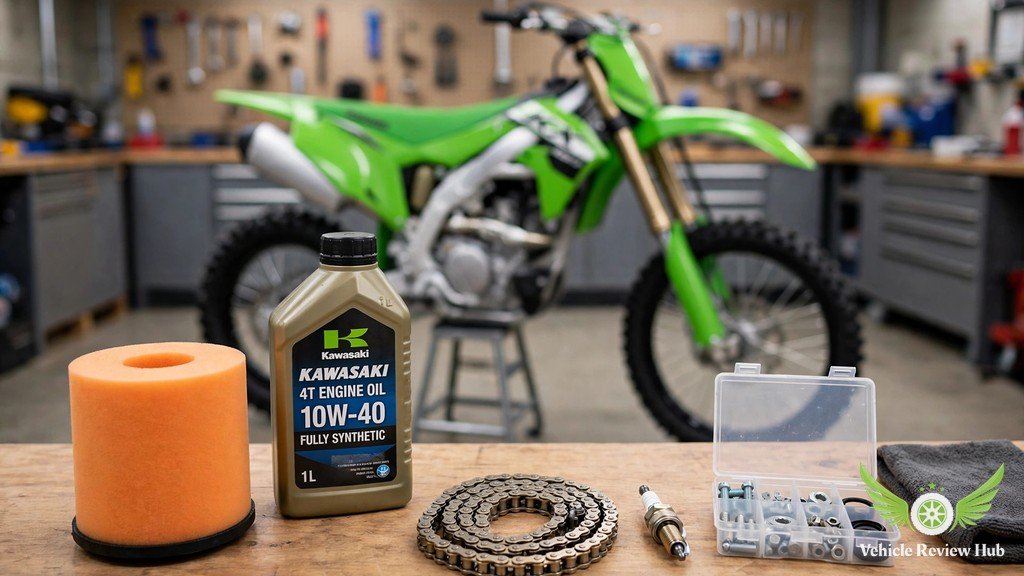
Owning an X costs what a race bike costs, and the purchase price is the cheap part. The 2027 KX250FX lists at $8,699 plus a $650 destination charge, $9,349 delivered, and the 2026 X listed at $9,199. After that, the money goes on fuel, filters, oil, tyres and the 15-hour family service rhythm. Kawasaki KX250X reliability is cheap when the owner does the every-race jobs himself and expensive when the dealer does them late, because a race bike’s service is mostly labour and mostly frequent.
Fuel, Routine Servicing, Tires and Replacement Parts
Fuel is the running cost every rider feels first, because the tank is small and the bike is thirsty at race pace. The X runs on premium unleaded, carries 1.64 gallons, and Dirt Bike Test’s 2025 first impression put a tank at about 50 minutes. There is no published miles-per-gallon figure for the X, so this Kawasaki KX250X reliability guide measures fuel in minutes, not miles per gallon, exactly as the tests did. Routine servicing is the every-race filter clean and the oil change every three races, and the parts that wear are the tyres, the chain and the brake pads.
Resale is the one cost area where a number exists, and it is a discount snapshot rather than a used-value guide. Leftover 2026 X bikes were advertised at $7,149 to $7,424 against the $9,199 list price, a dealer discount on new leftovers, not a price for a used bike. No verified used-price dataset exists for the X, so this guide prints no used value and no resale forecast. Price a used X on its hours and its service records, not on a table.
Calibration Kit Price
A second correction belongs here, for the same reason as the air filter. The document outline gave this section a price of $825.17 for the KX FI Calibration Kit, and two searches found no price for the kit anywhere. The only “$825.17” hit in search is a Mopar powertrain control module, a coincidence and not the Kawasaki kit. The heading has been corrected to “Calibration Kit Price” and the $825.17 figure is not printed as a fact here.
What is verified is the kit itself. The KX FI Calibration Kit, the handheld unit owners use to adjust fuel and ignition maps, is Kawasaki part 99999-0615. The sub-harness that connects the kit to the bike is part 26011-0933, listed at $39.75 on Kawasaki’s own shop for the KX250X among other models. The kit matters to Kawasaki KX250X reliability because mapping tunes the X’s engine character: the X runs motocross mapping while its Honda and Yamaha rivals run off-road mapping. On 2025 and newer bikes the RIDEOLOGY THE APP KX connectivity does the same job for free. No verified price for the kit itself was found, so this Kawasaki KX250X reliability guide prints the part numbers and the sub-harness price.
| Item | Price as seen, November 2026 | Note |
|---|---|---|
| Twin Air air filter, standard | $37.00 / $38.95 | Fits KX250X 2021–2024; OEM element is part 11013-0811 |
| Twin Air air filter, Factory Pre-Oiled | $41.75 (list $43.95) | Fits KX250X 2021–2024 |
| No Toil air filter, Pre-Oiled | $33.95 | Fits KX250X 2021–2024 |
| FunnelWeb ProLine air filter | $39.95 | Fits KX250X 2021–2024 |
| KX FI Calibration Kit sub-harness (part 26011-0933) | $39.75 | Connects kit part 99999-0615 to the bike; kit price not verified |
| Leftover 2026 KX250X, advertised | $7,149–$7,424 | Against $9,199 MSRP; a discount snapshot, not a used value |
Note: Prices as seen in November 2026 from RevZilla, Cycle Gear and Kawasaki’s own shop. No verified OEM air-filter list price, OEM piston price, chain and sprocket price, or brake-pad price was collected for the X, so none is printed. The $55.06 air-filter figure and the $825.17 calibration-kit figure from the document outline are both unverified and are not printed as facts anywhere in this Kawasaki KX250X reliability guide.
How to Keep a Kawasaki KX250X Reliable
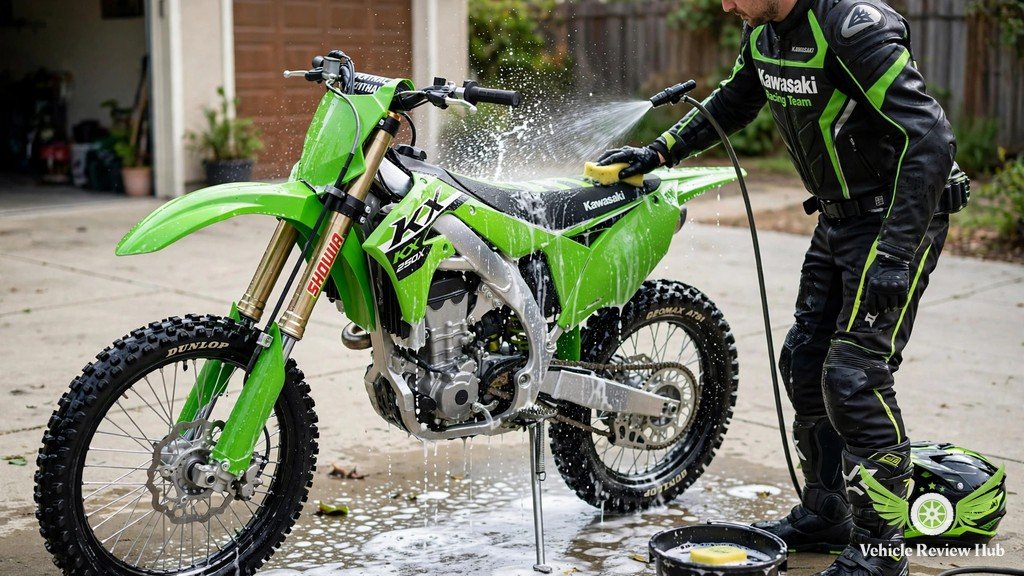
Keeping an X reliable is not a mystery and it is not a single trick. It is the every-race filter clean, the oil change every three races, the piston and valve check every 15 hours on the family rhythm, and a record of all of it. The bike rewards the owner who treats the schedule as a habit. Our KX250X performance guide shows what the engine delivers when it is healthy, and this Kawasaki KX250X reliability guide is about keeping it that way.
Preventive Maintenance, Records and Regular Inspections
The single most useful habit for Kawasaki KX250X reliability is a written record. Write down the hours, or the races, at every service, and keep the receipts. A bike with a record sells faster and for more money than a bike without one. On a 2025 or newer bike the RIDEOLOGY app logs help, but they do not replace a written record.
Regular inspections mean the after-every-race jobs from the family chart, plus the wear the tests named: the air filter, the chain and spokes, the brake pads and discs, and the skid plate and frame guards. Cycle News found the gen-1 suspension noticeably softer and much better suited to the trail than the motocrosser, and Dirt Bike Test’s long-term racing report ran the 2021 bike through four events up to the 6 Hours of Glen Helen and found a high fun factor across testers from Pro to Vet. Neither test named a failure, which is the point: a serviced X is raced hard and keeps going, and that is Kawasaki KX250X reliability in practice. Our KX250 reliability guide covers the family chart in the same terms.
Gen 2 Skid Plate Is an Extra
The skid plate is the one part whose status changed with the generations, and it matters because it protects the engine cases on rocks. The 2021 to 2024 X came with a skid plate as standard equipment, and Dirt Bike Test’s 2022 comparison still called the gen-1 plate nearly non-existent. From the 2025 redesign the skid plate is an accessory that the owner buys separately, so a gen-2 buyer should budget for one before the first rocky race. A buyer of a used gen-2 bike should check whether the plate is fitted at all, and a buyer of a used gen-1 bike should check whether the original is still there. Kawasaki KX250X reliability on rocky ground starts with that plate, and on a gen-2 bike it starts with buying one.
The X is a closed-course race bike with no warranty, no spark arrestor and no lights, and Ultimate Motorcycling called the 2021 bike an instant winner. It stays a winner when its owner keeps the race schedule. For a rider who wants lights, a spark arrestor and a lower seat, Kawasaki’s own answer is the KLX300R trail bike, and our KX250X review covers the full model-year story.
Kawasaki KX250X Reliability: Frequently Asked Questions
The questions below are the ones buyers ask about Kawasaki KX250X reliability, answered from the verified facts in this guide.
Has the Kawasaki KX250X ever been recalled?
No. No recall names any year of the KX250X or the KX250FX, the headline finding of this Kawasaki KX250X reliability guide. The big 2025 CPSC recall, 25-238, names only the 2025 KX450, KX450SR and KX450X, and the only older CPSC Kawasaki motocross recall, 01-065 from 2001, names the 2001 two-stroke KX250, which is a different bike.
How often should the KX250X piston be replaced?
Kawasaki has published no piston interval specifically for the KX250X. The KX250 family’s manuals put piston replacement at every 6 races or 15 hours, and this Kawasaki KX250X reliability guide recommends using that family figure with the attribution attached, not as the X’s own published figure.
How often do the KX250X valves need checking?
Every 15 hours, per the KX250 family’s published maintenance chart, with valve clearance of exhaust 0.17 to 0.22 mm and intake 0.10 to 0.15 mm. As with the piston, the 15-hour valve check is the family figure, and Kawasaki KX250X reliability planning should treat it as the working schedule until Kawasaki publishes an X-specific figure.
What does a KX250X air filter cost?
The OEM element is Kawasaki part 11013-0811. Aftermarket filters fitting the X were listed at $33.95 to $41.75 in November 2026, and no verified OEM list price was found. The $55.06 figure from the document outline is unverified, and this Kawasaki KX250X reliability guide does not print it.
Does the 2025 KX250X come with a skid plate?
No. The 2021 to 2024 X had a skid plate as standard, and from the 2025 redesign the skid plate is an accessory the owner buys separately. A gen-2 buyer planning for Kawasaki KX250X reliability should budget for one before the first rocky race.
Does the Kawasaki KX250X have a warranty?
No. Kawasaki lists the warranty as “Not Available” on every spec sheet, and the X is sold as-is as a closed-course competition motorcycle. On a bike with no warranty, the service records are the only proof the bike was looked after, and that is the first rule of Kawasaki KX250X reliability.