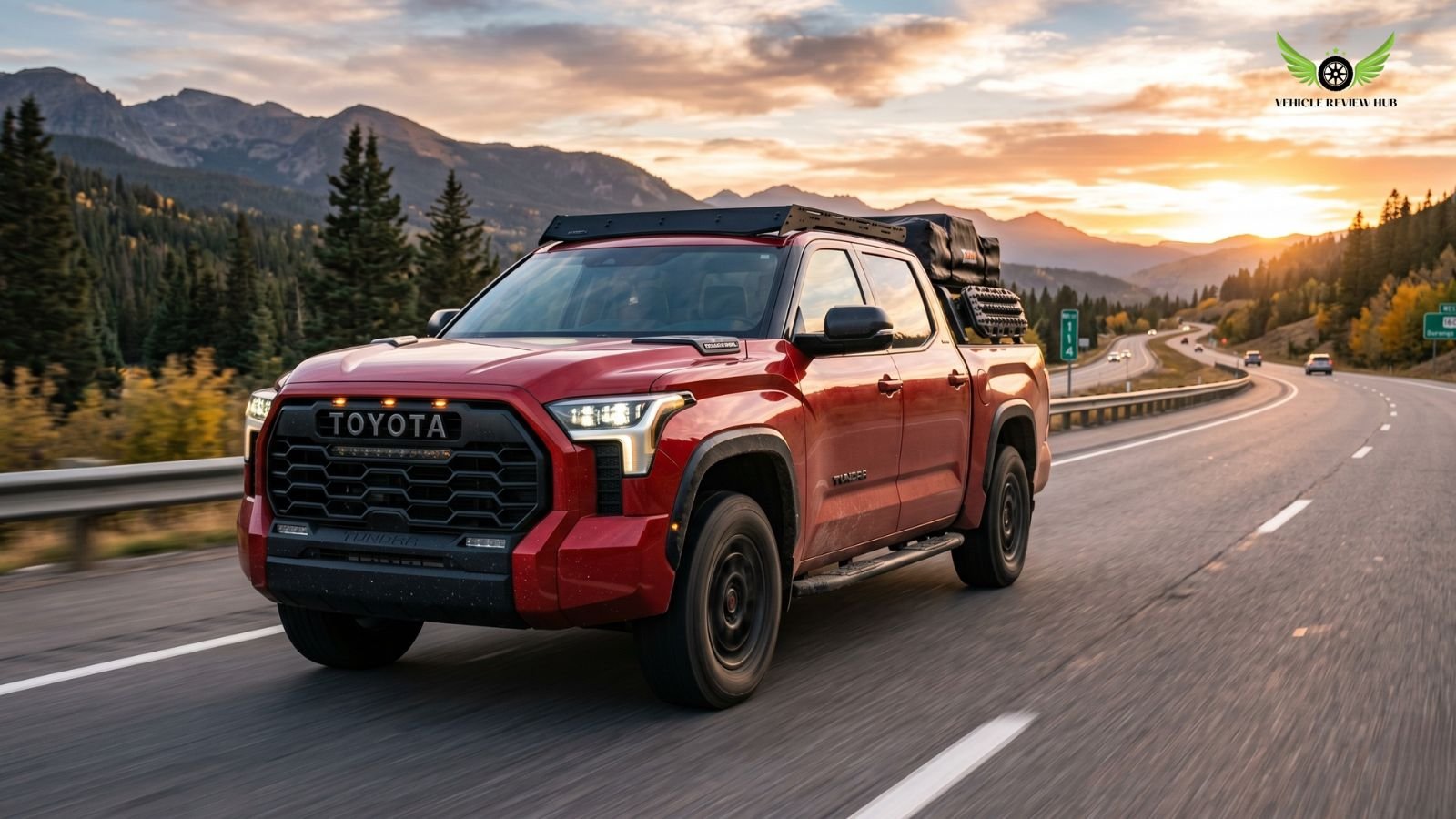
In this Toyota Tundra Performance overview, the current model focuses on torque, stability, and real-world usability rather than just peak numbers. The truck uses a 3.4L twin-turbo V6 with an available hybrid system, both designed to deliver strong low-end power for towing and daily driving.
The standard engine produces up to 389 horsepower and 479 lb-ft torque, while the hybrid system increases output to 437 horsepower and 583 lb-ft torque. This higher torque is the key reason the truck feels responsive at low speeds and under load.
Acceleration is competitive for a full-size truck. Most configurations reach 0–60 mph in around 6.0–6.6 seconds, while hybrid versions can be slightly quicker. In real driving, the power delivery feels smooth rather than aggressive, which helps in city traffic and highway merging.
Towing capability is a major part of Toyota Tundra Performance. When properly equipped, the truck can tow up to around 12,000 lbs. Payload capacity ranges from about 1,600 to 1,940 lbs, depending on trim and setup. These numbers are practical for trailers, boats, and daily work use.
The Toyota Tundra Off-Road Capability is strongest in TRD models. Features like Multi-Terrain Select, Crawl Control, and off-road suspension tuning improve traction on mud, sand, and uneven terrain. In real use, this allows the truck to handle light to moderate off-road conditions without modification.
For daily driving, Toyota Tundra On-Road Driving has improved compared to older models. The coil-spring rear suspension provides better ride comfort, and the 10-speed automatic transmission keeps gear changes smooth. On highways, the truck feels stable and controlled even at higher speeds.
Overall, this Toyota Tundra Performance setup delivers a balanced result—strong torque, solid towing capability, usable off-road features, and comfortable on-road driving.
Toyota Tundra Engine Performance Breakdown
The current Tundra uses a 3.4L twin-turbo V6 with an optional hybrid system. The goal is simple—deliver strong torque at low RPM so the truck feels responsive in daily driving and controlled when towing.
Twin-Turbo V6 vs Old V8 Performance Comparison
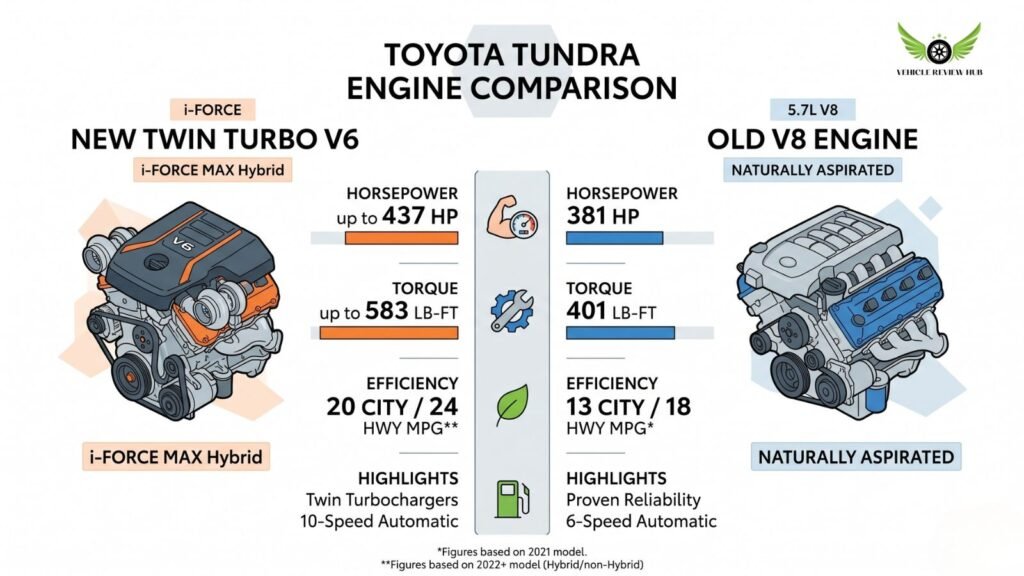
Engine Type | Horsepower | Torque | Real-World Behavior |
5.7L V8 (Previous) | ~381 HP | ~401 lb-ft | Smooth, linear pull; power builds at higher RPM |
3.4L Twin-Turbo V6 | 358–389 HP | 406–479 lb-ft | Quicker response; more torque available earlier |
The newer V6 brings its torque in earlier, which you feel when pulling away from a stop or carrying weight. In everyday use, it feels quicker and easier to manage. The old V8 had a classic, steady push, but needed more revs to deliver the same kind of pull.
Hybrid i-FORCE MAX Power Output (Up to 437 HP)
Powertrain | Horsepower | Torque | What It Changes |
i-FORCE MAX Hybrid | 437 HP | 583 lb-ft | Stronger launch, smoother low-speed response |
The hybrid adds an electric motor to the V6, increasing torque right from the start. In real driving, that means smoother acceleration in traffic and better control when towing or climbing. It doesn’t just add power—it makes the truck feel more responsive and easier to drive under load.
Toyota Tundra Acceleration and Real Driving Performance
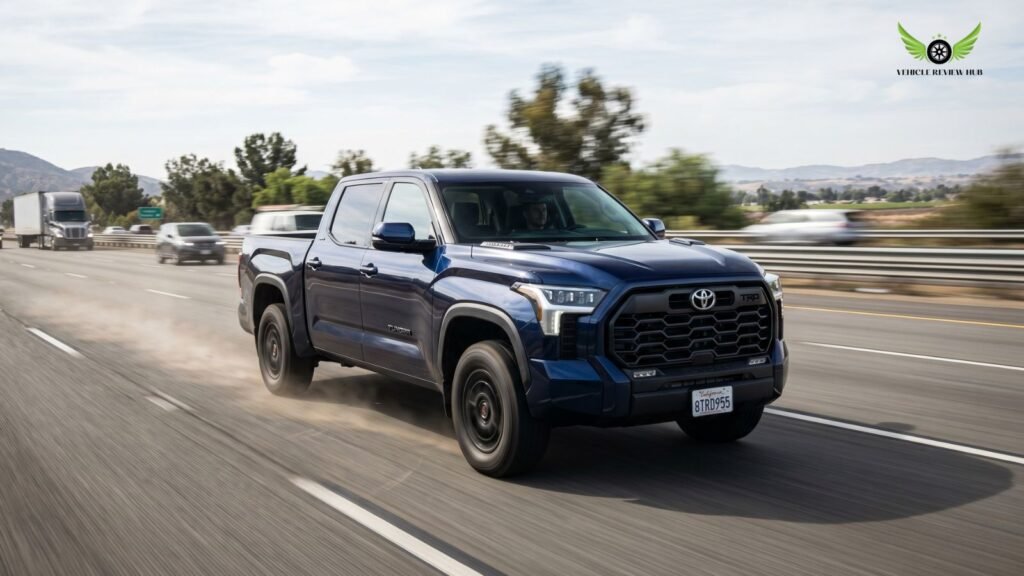
Acceleration in the Tundra is built around usable torque and steady power delivery. In real driving, it does not feel aggressive like a sports vehicle, but it responds quickly when you need it—especially when merging, carrying load, or driving on highways.
0–60 mph (~5.5–6 sec Range)
Configuration | 0–60 mph Time | Real Driving Feel |
Twin-Turbo V6 (389 HP) | ~6.0–6.5 sec | Smooth, controlled acceleration |
Hybrid (437 HP) | ~5.5–5.7 sec | Quicker launch, stronger initial response |
In real-world use, the hybrid version feels faster at low speed because of instant torque from the electric motor. The standard V6 is slightly slower, but still delivers enough performance for daily driving without hesitation. Most drivers will not feel a lack of power in normal conditions.
Highway Power and Overtaking Capability
At highway speeds, the Tundra performs best in mid-range acceleration. The engine delivers up to 479 lb-ft torque (V6) and 583 lb-ft (hybrid), which helps the truck maintain speed and pass vehicles without effort.
From real driving experience:
- The truck holds speed consistently on long highway drives
- Overtaking feels predictable and stable, not sudden
- The 10-speed transmission shifts smoothly and keeps the engine in its power band
Even with passengers or cargo, the truck does not struggle during overtaking. Power builds in a steady way, which makes highway driving feel controlled and confident rather than aggressive.
Toyota Tundra Towing and Payload Capability Explained
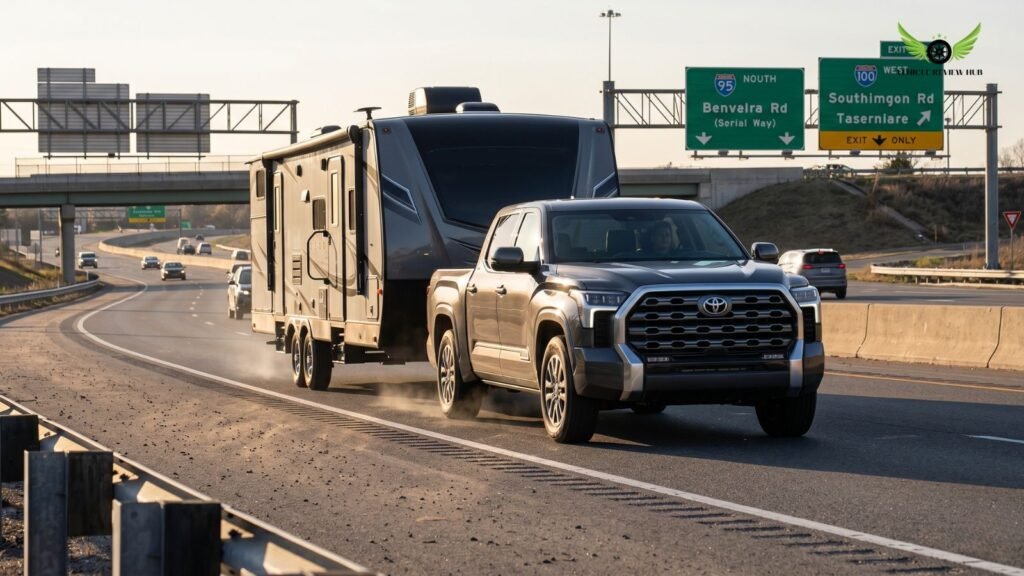
Towing and payload are where the Tundra shows its real purpose. The current model is built to handle everyday hauling as well as heavier work, but the actual numbers depend on configuration—engine type, drivetrain, and trim all make a difference.
Max Towing Capacity (~12,000 lbs)
Configuration | Towing Capacity |
Base setups | ~8,000–9,000 lbs |
Mid configurations | ~10,000–11,400 lbs |
Best-equipped setup | up to ~12,000 lbs |
When properly configured, the truck can tow up to around 12,000 lbs. This figure is usually achieved with rear-wheel drive and specific trim setups. Hybrid versions typically come slightly lower, often in the 11,000 lbs range, due to added system weight.
In practical terms, this level of towing covers most real use cases—trailers, boats, and mid-size equipment—without pushing the truck to its limits.
Real-World Towing Experience in the USA
In real driving conditions, towing is less about maximum numbers and more about control and stability.
From actual usage:
- The twin-turbo V6 delivers strong low-end torque, which helps when starting with a load
- The truck stays stable on highways, even with moderate trailers
- The 10-speed transmission manages gear shifts smoothly, avoiding sudden power loss
Most drivers operate well below maximum towing capacity. In that range, the truck feels predictable and easier to control, especially during long-distance towing.
Payload Capacity (~1,600–1,940 lbs)
Configuration | Payload Capacity |
Lower trims | ~1,600–1,700 lbs |
Mid trims | ~1,750–1,860 lbs |
Best setup | up to ~1,940 lbs |
Payload capacity varies based on trim and equipment. Higher trims often have slightly lower payload due to added weight from features and upgrades.
In real use, this capacity is enough for tools, construction materials, and daily hauling needs. The truck performs best when payload is kept within a moderate range, where ride quality and control remain stable.
Toyota Tundra Off-Road Capability (TRD Models Deep Dive)
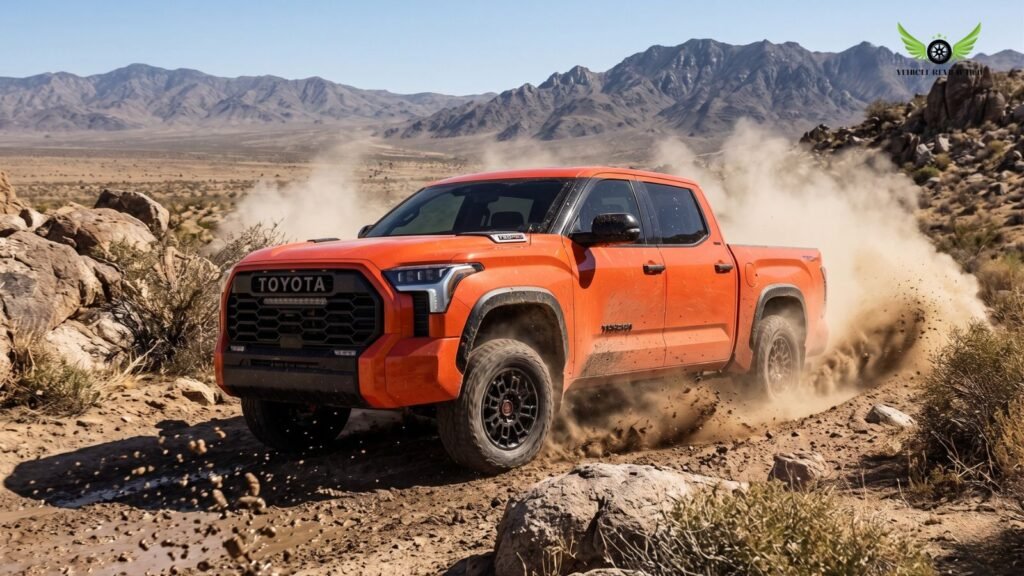
The Tundra’s off-road strength comes from its TRD packages, which add real mechanical upgrades rather than just styling. These models focus on traction, suspension control, and low-speed stability, making the truck capable on trails, dirt roads, and uneven terrain.
TRD Off-Road vs TRD Pro Comparison
Feature Area | TRD Off-Road | TRD Pro |
Suspension | Bilstein shocks tuned for mixed use | FOX internal bypass shocks with ~1-inch front lift |
Drivetrain | 4WD with rear locking differential | Standard 4WD with upgraded off-road tuning |
Tires | All-terrain tires | Larger all-terrain tires (33-inch class) |
Focus | Balanced daily + off-road use | More serious off-road capability |
TRD Off-Road is better suited for drivers who want occasional off-road use without sacrificing daily comfort. TRD Pro is built for more demanding terrain, with improved suspension travel and ground clearance.
Crawl Control, Multi-Terrain Select and Suspension
The Tundra uses electronic systems to improve traction in difficult conditions.
- Crawl Control manages throttle and braking at very low speeds, helping the truck move steadily over rocks or uneven surfaces
- Multi-Terrain Select adjusts traction control based on surface type such as mud, sand, or rock
- Rear locking differential ensures both rear wheels receive equal power for better grip
- TRD suspension systems (Bilstein or FOX) absorb impacts and maintain stability on rough terrain
From real use, these features are most useful when traction is limited. They reduce wheel slip and help maintain control without constant driver input.
Real Off-Road Performance (Trail, Mud, Desert)
In practical conditions, the Tundra performs well on light to moderate off-road terrain.
- Trail driving: Ground clearance around 9–11 inches (depending on trim) helps clear obstacles without scraping
- Mud and sand: Traction systems reduce wheel spin and keep the truck moving forward
- Desert or rough terrain: Suspension tuning improves stability at moderate speeds
From real-world experience, the truck feels stable and predictable rather than aggressive. It handles uneven surfaces confidently but is not designed for extreme rock crawling. TRD Pro models perform better in tougher conditions due to upgraded suspension and tire setup.
Overall, the off-road setup is practical. It supports real use cases like weekend trails and rough roads while keeping the truck usable for daily driving.
Toyota Tundra On-Road Driving Dynamics
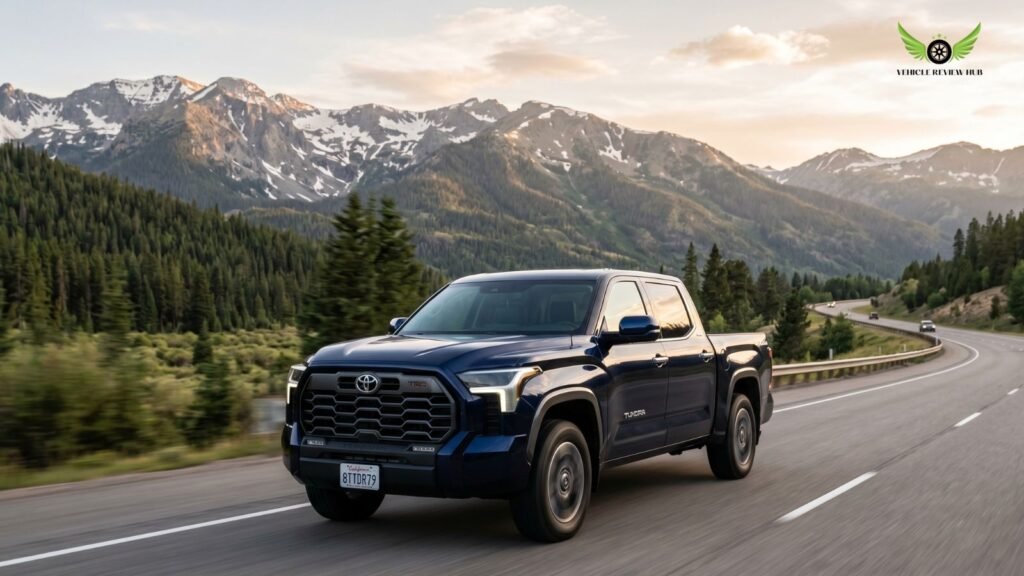
On-road behavior in the Tundra is built around stability and control rather than softness. The current generation uses a coil-spring rear suspension, which improves ride comfort compared to older models and helps keep the truck balanced during daily driving.
Ride Comfort vs Competitors
The shift from leaf springs to coil springs makes a noticeable difference. In normal driving, the truck feels more composed over bumps and uneven roads.
From real driving experience:
- Road imperfections are absorbed better than before
- The ride stays stable even with passengers or light cargo
- Long highway trips feel less tiring compared to older setups
When compared with competitors, the difference depends on what you expect. Trucks like the RAM 1500 offer a softer and more refined ride, especially with air suspension. The Tundra feels slightly firmer, but that firmness adds confidence when carrying weight or driving on mixed road conditions.
Steering Stability and Highway Control
Steering in the Tundra is tuned for predictability. It is not overly sharp, but it remains consistent, which is important for a full-size truck.
In real use:
- The truck holds its lane well at highway speeds
- Steering corrections are minimal during long drives
- The 10-speed transmission keeps acceleration smooth and controlled
Even when loaded, the truck maintains balance and does not feel unstable. Power delivery stays steady, which makes overtaking and merging easier without sudden movements.
Overall, the driving experience focuses on control and consistency. It may not feel as soft as some competitors, but it delivers a stable and confident ride in everyday conditions.
Is Toyota Tundra Powerful Enough?
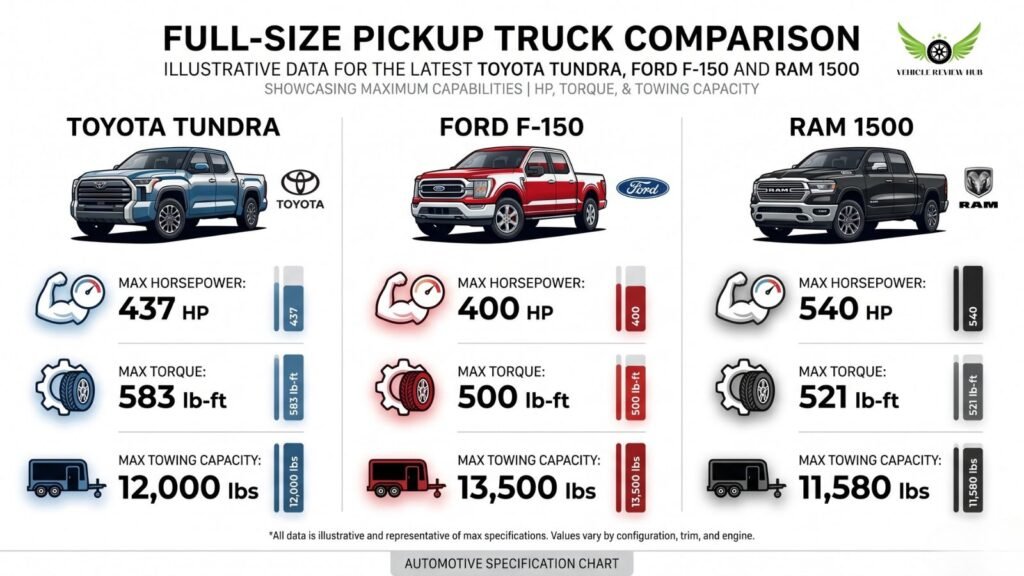
In real use, power in the Tundra is defined by torque and consistency rather than just peak numbers. The current setup delivers up to 437 HP and 583 lb-ft torque, which is more than enough for daily driving, towing, and highway use. It does not aim to lead every category, but it delivers usable power where it matters most.
Comparison with Ford F-150 and RAM 1500
Truck | Max Power | Max Torque | Max Towing | Real Strength |
Toyota Tundra | 437 HP | 583 lb-ft | ~12,000 lbs | Strong low-end torque, balanced performance |
Ford F-150 | Up to ~450+ HP | ~570 lb-ft | Up to ~13,500 lbs | Higher towing capacity, more engine options |
RAM 1500 | Up to ~540 HP | ~521 lb-ft | Up to ~12,750 lbs | Smooth driving and refined ride quality |
The Tundra stands out for torque delivery, especially with the hybrid system. That extra torque is noticeable in real driving when pulling weight or accelerating from low speeds.
The F-150 offers higher towing capacity in certain configurations, which makes it more suitable for heavy-duty work. The RAM 1500 focuses more on comfort and smooth power delivery rather than raw pulling strength.
Best Use Case for Power Buyers
The Tundra works best for drivers who need strong, reliable performance in everyday conditions.
It fits well for:
- Daily driving with occasional towing
- Drivers who need steady power for hauling and highway use
- Buyers who value consistent performance over extreme specs
It may not be the best option if:
- You need the highest towing capacity in the segment
- You are looking for maximum horsepower as the main priority
From real-world use, most drivers operate below maximum limits. In that range, the truck feels controlled, stable, and easy to drive. That makes it a practical choice for buyers who want dependable performance rather than chasing the highest numbers.
Toyota Tundra Performance FAQs – Key Questions Answered
These are common questions buyers ask when evaluating performance, towing, and daily usability.
Is the Toyota Tundra powerful enough for daily use?
Yes. It delivers up to 437 HP and 583 lb-ft torque, which is more than enough for daily driving, highway use, and moderate towing.
How fast is the Toyota Tundra 0–60 mph?
Most models reach 0–60 mph in about 6.0–6.6 seconds, while hybrid versions can be closer to 5.5–5.7 seconds.
What is the real towing capacity of the Toyota Tundra?
When properly configured, it can tow up to around 12,000 lbs, though most real-world towing is done below that range.
Is the hybrid Tundra better for performance?
Yes. The hybrid system adds instant torque, which improves acceleration, towing response, and low-speed driving feel.
How does the Toyota Tundra perform on highways?
It feels stable and controlled. The truck maintains speed well and offers smooth acceleration for overtaking.
Is the Toyota Tundra good for off-road driving?
Yes. TRD models include features like Crawl Control and Multi-Terrain Select, which improve traction on mud, sand, and trails.
Does the Toyota Tundra feel comfortable for long drives?
Yes. The coil-spring rear suspension improves ride comfort compared to older models, especially on highways.
Is Toyota Tundra performance better than competitors?
It depends on the use case. Some competitors offer higher towing or horsepower, but the Tundra stands out for balanced performance and strong torque delivery.