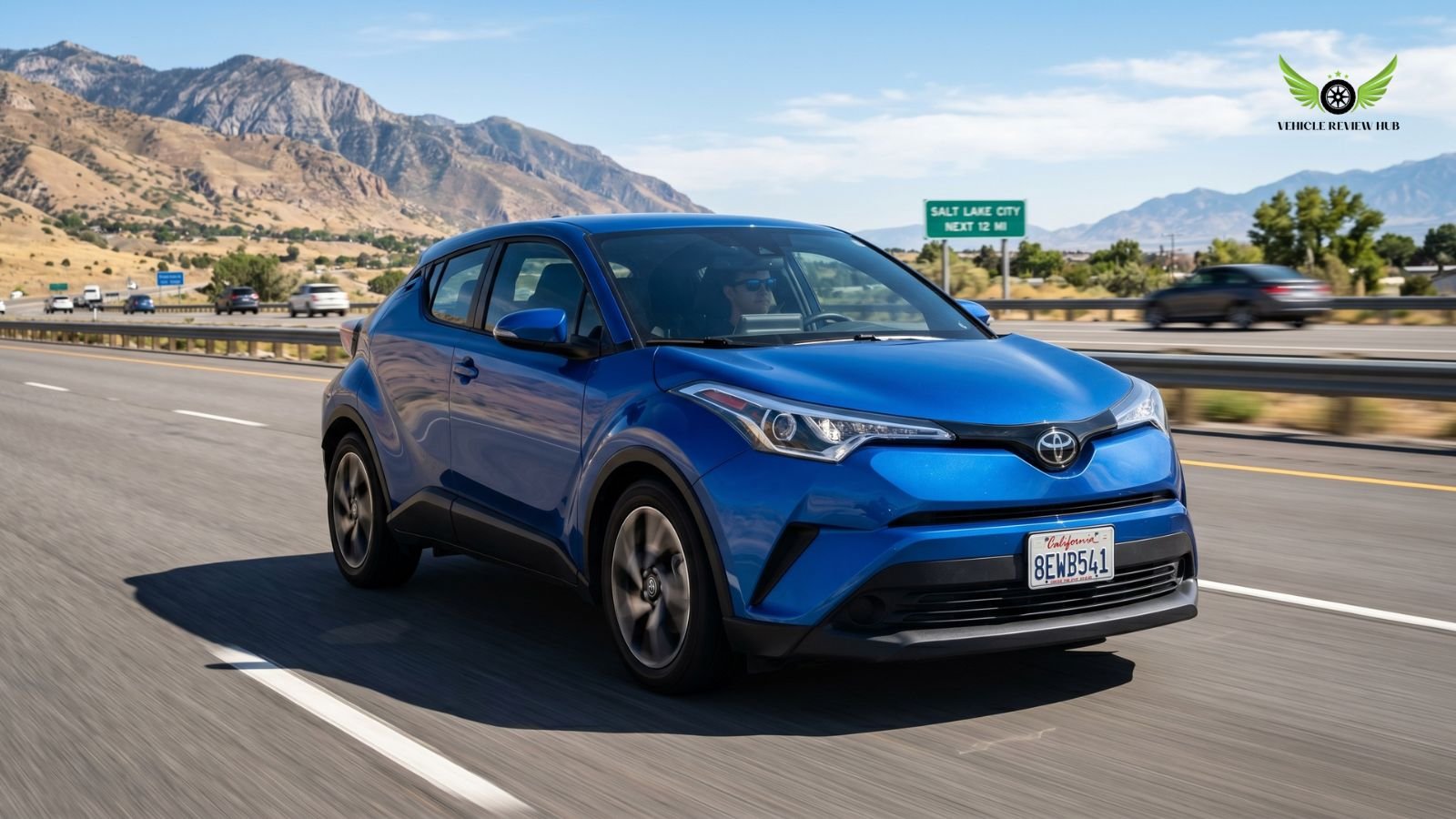
The Toyota C-HR is designed for steady efficiency, and real U.S. data shows consistent results in daily use. This Toyota C-HR Mileage overview focuses on verified EPA figures and how the car performs in real driving.
The gasoline model is rated at 27 MPG city and 31 MPG highway, with a combined average around 29 MPG. These numbers reflect a setup tuned for smooth fuel use rather than high power. In typical driving, the results stay close to these ratings without large variation.
Looking at Toyota C-HR Fuel Economy in real conditions, highway performance often improves. Many tests show 35–37 MPG during steady-speed driving, which is higher than the official rating. This happens because the CVT keeps engine speed stable and reduces fuel consumption during cruising.
From real usage, the Toyota C-HR Real-World Experience remains predictable. In city traffic, fuel use stays controlled due to gradual acceleration and consistent power delivery. On longer trips, the car maintains efficiency as long as speed changes are minimal.
Overall, the Toyota C-HR delivers reliable mileage that closely matches its official ratings, with better results possible on highways under steady driving conditions.
Toyota C-HR Fuel Economy Overview
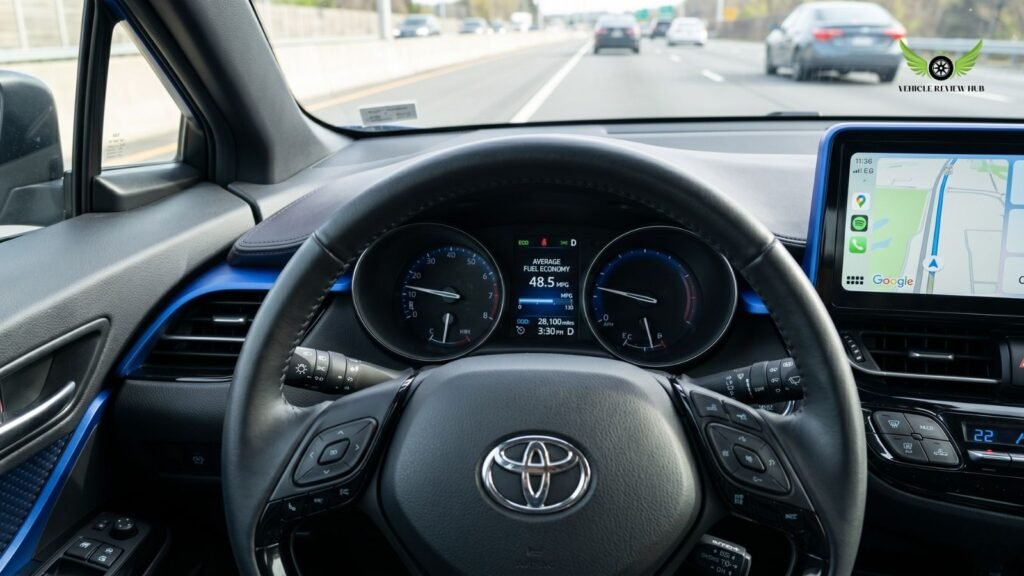
This Toyota C-HR Mileage overview focuses on verified EPA data and real highway results. The main point is consistency—official ratings and real-world numbers are close, with slightly better results during steady highway driving.
Official EPA Ratings (~27–31 MPG Gas Model)
The Toyota C-HR gasoline model is rated at:
- 27 MPG city
- 31 MPG highway
- 29 MPG combined
These figures come from EPA testing and reflect a setup designed for stable fuel use rather than high performance. In everyday driving, most users see results close to this combined average.
From real usage, the engine and CVT work together to keep fuel consumption predictable. The car does not show large drops in efficiency unless driven aggressively.
Real Highway MPG (Up to ~37 MPG Observed)
Highway driving often produces better results than the official rating.
- Observed highway mileage: 33–37 MPG under steady conditions
This happens because the CVT keeps engine RPM low at constant speeds, which improves efficiency. When speed remains stable and acceleration is smooth, fuel consumption drops compared to city driving.
From actual driving behavior, many drivers report highway mileage in the mid-30 MPG range, especially during long trips with minimal traffic.
Hybrid and EV Efficiency Comparison
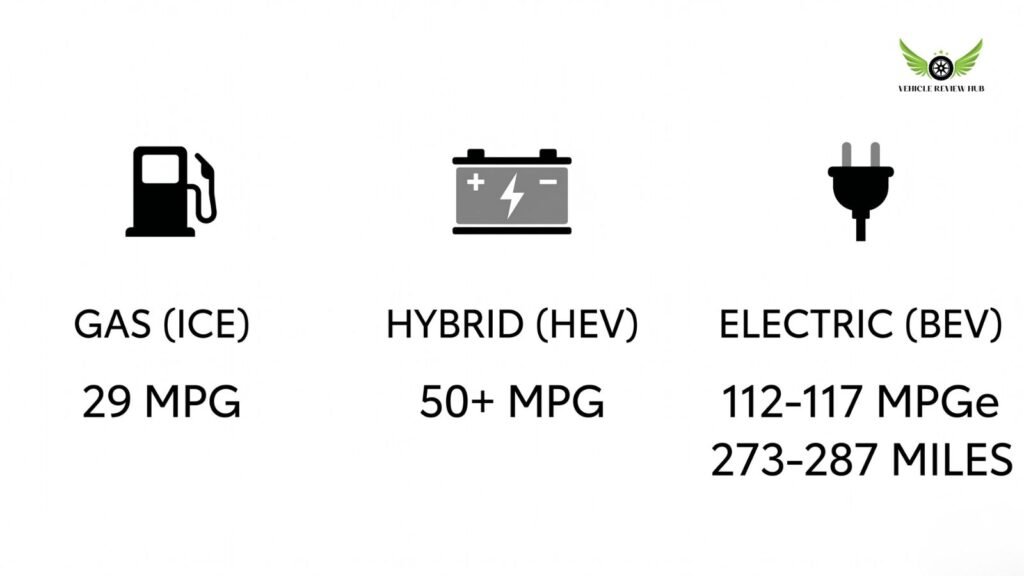
The difference becomes clear when looking at how Toyota improved efficiency beyond the original gas model. Hybrid and electric versions use a different approach to reduce fuel use and increase range.
Hybrid MPG (50+ MPG Range in Real Use)
Hybrid versions of the Toyota C-HR, available in global markets, use a combined engine and electric motor system.
- 1.8L hybrid: about 50–55 MPG in real driving
- 2.0L hybrid: about 45–50 MPG depending on driving style
In daily use, fuel savings come mostly from low-speed driving. The car can rely more on the electric motor in traffic, which reduces fuel consumption.
In real conditions:
- City driving usually gives higher MPG
- Stop-and-go traffic improves efficiency compared to gas models
- Highway MPG stays stable but slightly lower than city results
Many drivers report that reaching around 50 MPG does not require special driving habits. This makes Toyota C-HR Fuel Economy much stronger in hybrid form, especially for urban use.
EV Efficiency (~112–117 MPGe and 273–287 Mile Range)
The electric version takes a different direction by removing fuel completely.
- Efficiency: about 112–117 MPGe combined
- Range: around 273–287 miles per charge
In real driving, range depends on speed and conditions.
- City driving keeps range closer to the official estimate
- Highway speeds can reduce it to around 200–230 miles
- Smooth driving helps maintain better efficiency
The electric system also uses regenerative braking, which helps recover energy during normal driving.
Toyota C-HR Real-World Fuel Economy from Owners
Owner-reported data gives a clearer view of Toyota C-HR Mileage than lab ratings. Across U.S. drivers, results stay close to EPA figures with predictable variation based on traffic, speed, and driving style.
City Driving Mileage Results
In city use, the gas model typically returns 24–28 MPG, compared with the 27 MPG EPA rating. Results dip in heavy stop-and-go traffic and improve with smoother throttle inputs.
From real use:
- Short trips and frequent stops lower MPG
- Smooth acceleration helps keep consumption steady
- The CVT maintains low engine speed, supporting consistent fuel use
For Toyota C-HR Fuel Economy, most owners report numbers near the mid-20s in dense traffic and closer to the high-20s in lighter city conditions.
Highway and Long Trip Efficiency
Highway driving usually improves results.
- Typical real-world highway MPG: 31–37 MPG
- EPA highway rating: 31 MPG
At steady speeds, many drivers see mid-30 MPG on longer trips. Consistent cruising helps the engine stay in an efficient range.
From real driving patterns:
- Stable speed increases MPG
- Strong acceleration reduces efficiency
- Longer trips produce more consistent results
Overall, Toyota C-HR Real-World Experience shows stable mileage that aligns with official ratings in the city and often exceeds them on highways.
Toyota C-HR Driving Range and Daily Usability
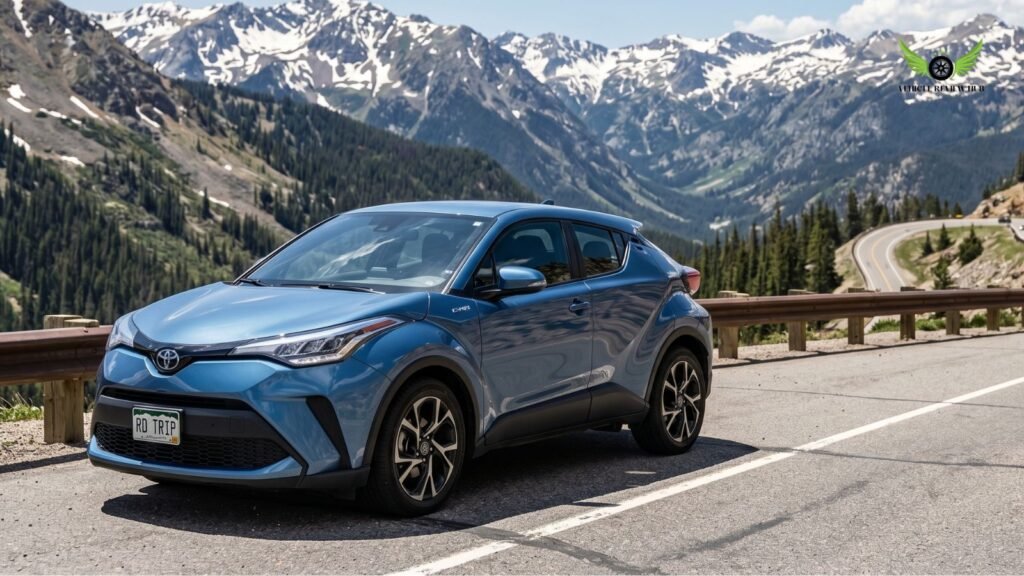
Toyota C-HR range depends on the powertrain, and real U.S. numbers show how it works in daily use. Both gas and electric versions provide enough range for regular driving, but they behave differently in practice.
Fuel Tank Range (Gas Model)
The gasoline model uses a 13.2-gallon fuel tank with EPA ratings of 27 MPG city and 31 MPG highway.
In real driving:
- City range: about 350–360 miles per tank
- Highway range: about 400–410 miles per tank
- Mixed driving: roughly 370–390 miles
From a Toyota C-HR Mileage perspective, these numbers remain consistent for most drivers. Stop-and-go traffic lowers range slightly, while steady highway speeds increase it.
EV Range and Charging Reality (200–280 Miles)
The electric version is rated at about 273–287 miles per charge, supported by a battery around 74.7 kWh.
In real use:
- City driving: about 260–280 miles
- Highway driving: around 200–230 miles
Charging plays a key role:
- DC fast charging: 10% to 80% in about 30 minutes
- Level 2 home charging: usually completed overnight
From a Toyota C-HR Real-World Experience, the EV feels practical for daily commuting. Longer trips require planning, especially when driving at higher speeds.
Toyota C-HR Real-World Driving Experience
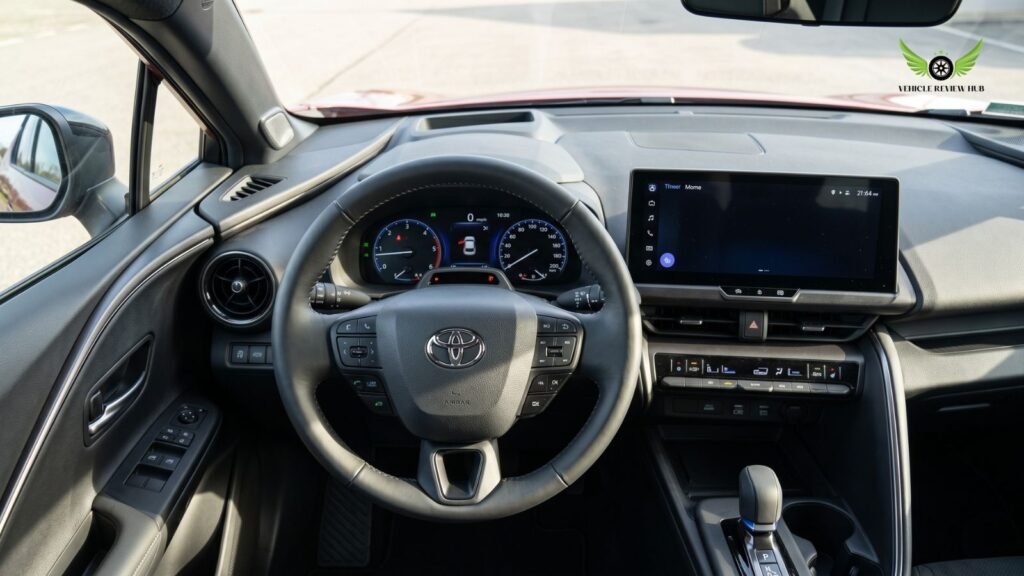
Real use shows a clear pattern: the Toyota C-HR is tuned for comfort, stability, and easy daily use. In this Toyota C-HR Real-World Experience, the focus is on how it feels in city traffic, on highways, and inside the cabin.
City Driving and Daily Use
In urban conditions, the car feels simple to drive and predictable.
- Light steering helps with parking and tight turns
- Smooth throttle response works well in stop-and-go traffic
- Compact size makes it easy to move through crowded streets
With a 2.0L engine (144 HP) and CVT, acceleration builds gradually. That helps keep driving calm and controlled in traffic rather than quick. For daily commuting, this setup reduces driver fatigue and keeps the ride consistent.
Highway Comfort and Ride Quality
At highway speeds, stability remains solid.
- The car stays planted at steady speeds
- Steering becomes more stable as speed increases
- Suspension keeps the ride balanced on normal road surfaces
Cabin noise is moderate, with some engine sound during acceleration due to the CVT. Long drives feel comfortable overall, but overtaking requires planning because of limited power. This matches what most drivers notice in real highway use.
Interior Comfort and Passenger Experience
The interior is designed for everyday comfort rather than luxury.
- Front seats provide good support for longer trips
- Driving position feels natural and easy to adjust
- Controls are simple and within reach
Rear space is more limited:
- Legroom is tighter compared to larger SUVs
- The sloping roofline reduces rear visibility
From a practical standpoint, the cabin works well for individuals or small families. The overall Toyota C-HR Mileage and efficiency also support daily usability, keeping running costs predictable.
Is Toyota C-HR Fuel Efficient Enough?
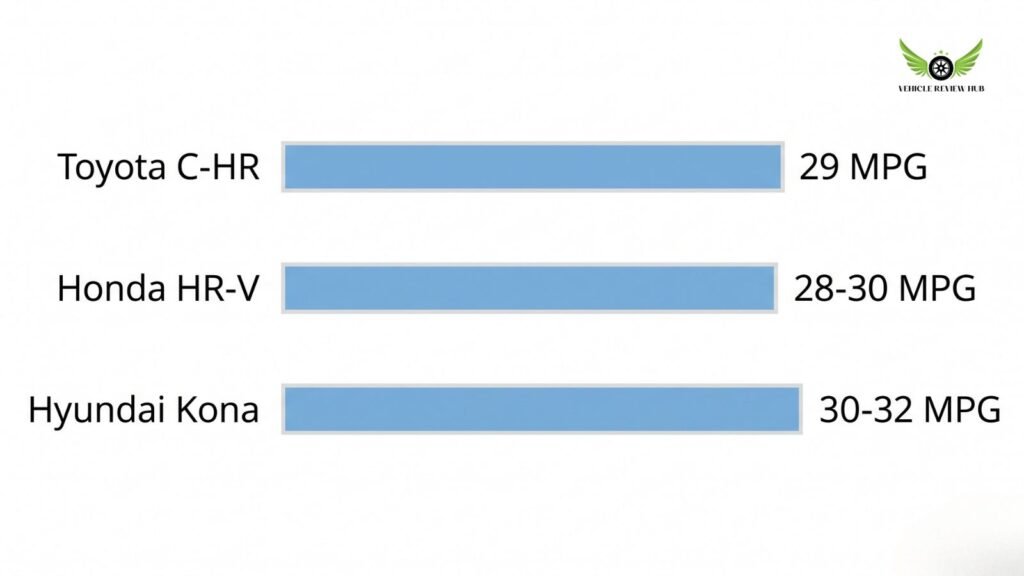
The Toyota C-HR Mileage is built around consistency. In the U.S., the gas model delivers 27 MPG city / 31 MPG highway / 29 MPG combined (EPA), and most real-world results stay close to these numbers with small variation. That makes it predictable for daily use, even if it is not the top MPG in the segment.
Comparison with Subcompact SUV Rivals
Vehicle | Engine | City MPG | Highway MPG | Combined MPG |
Toyota C-HR | 2.0L NA | 27 | 31 | 29 |
Honda HR-V | 2.0L NA | 26 | 32 | 28 |
Hyundai Kona (2.0L) | 2.0L NA | 30 | 35 | 32 |
Real-world notes:
- Toyota C-HR highway tests often reach 33–37 MPG with steady cruising
- HR-V typically returns 28–33 MPG combined in mixed driving
- Kona can reach 34–36 MPG highway, especially with lighter driving
The gap is usually 1–3 MPG. In practical terms, that difference is small—fuel cost over a year does not change significantly for most drivers.
From a Toyota C-HR Fuel Economy perspective, the key strength is stability. It does not show large drops in efficiency when driving conditions change.
Best Use Case for Efficiency Buyers
The Toyota C-HR works best when efficiency needs to be reliable rather than maximum.
- Daily commuting (city + short highway trips)
- Drivers who want stable and predictable fuel usage
- Buyers who value long-term reliability with consistent mileage
Less suitable for:
- Drivers focused on the highest MPG in the segment
- Long-distance highway users who want maximum fuel savings
From a Toyota C-HR Real-World Experience, fuel economy stays close to EPA ratings without needing special driving habits. That consistency is often more useful than slightly higher MPG numbers that vary in real use.
Toyota C-HR Mileage & Fuel Economy FAQs
These quick answers cover the most common questions about Toyota C-HR Mileage, based on real data and everyday driving results.
What MPG does the Toyota C-HR get in real life?
Most drivers get around 27–31 MPG, with a combined average close to 29 MPG. In mixed driving, real results usually stay between 28–32 MPG.
Is the Toyota C-HR good on gas?
Yes. It delivers stable fuel economy for daily use. While not the highest in the segment, Toyota C-HR Fuel Economy remains consistent and predictable.
What is the highway MPG of the Toyota C-HR?
The official rating is 31 MPG highway, but real-world driving can reach 33–37 MPG when speed is steady.
Does the Toyota C-HR save fuel in city driving?
In city conditions, it typically returns 24–28 MPG. Smooth driving helps keep it closer to the EPA rating of 27 MPG.
How far can a Toyota C-HR go on a full tank?
With a 13.2-gallon tank, the range is about 350–400 miles, depending on driving conditions.
Is Toyota C-HR better than Honda HR-V in fuel economy?
The difference is small. HR-V may offer slightly better highway MPG, but real-world results are very close.
Is Toyota C-HR better than Hyundai Kona in MPG?
The Kona can offer slightly higher MPG, especially in base engine versions, but the gap is usually 2–3 MPG.
Does driving style affect Toyota C-HR Mileage?
Yes. Smooth acceleration and steady speed improve mileage, while aggressive driving reduces efficiency.
Are hybrid or EV versions more efficient than the gas model?
Yes. Hybrid versions can exceed 50 MPG, and the EV version offers around 273–287 miles of range with high energy efficiency.
Is Toyota C-HR Fuel Economy reliable in daily use?
Yes. The Toyota C-HR Real-World Experience shows that mileage stays close to official ratings without large variation.