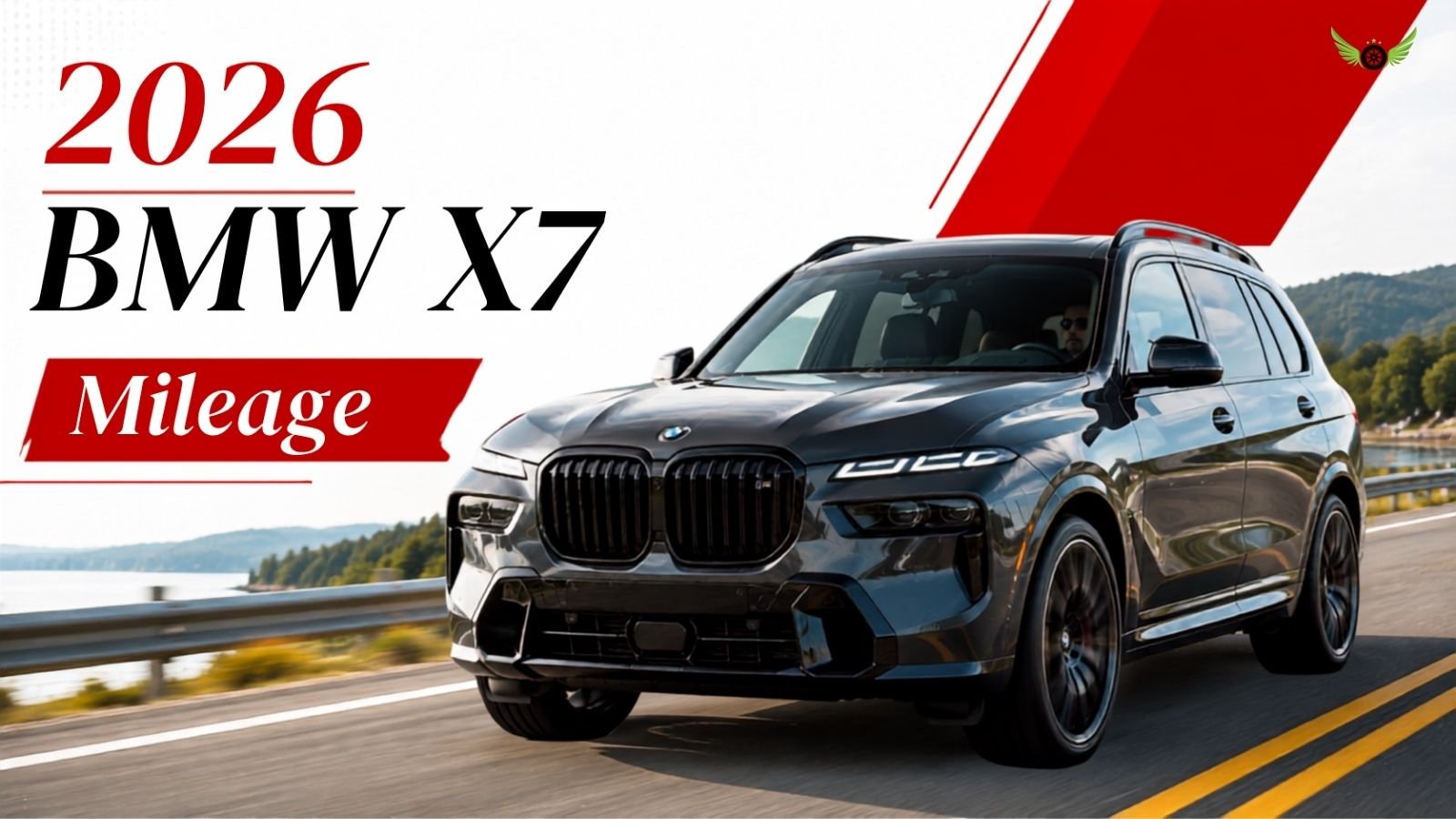
The 2026 BMW X7 is designed for buyers who want a large three-row luxury SUV without giving up strong performance and confident driving dynamics. In the USA, the BMW X7 combines standard all-wheel drive, a 48-volt mild-hybrid powertrain, and an adaptive air suspension to deliver a balance of everyday comfort and engaging road performance.
For most buyers, BMW X7 Mileage and fuel economy are strongest with the xDrive40i, while the V8-powered M60i prioritizes quicker acceleration. Independent testing also suggests that the X7 drives more like a smaller SUV than its size might suggest, although third-row and cargo space are not class-leading.
This review covers the BMW X7 MPG, performance, ride comfort, daily usability, AWD capability, and real-world driving experience to help U.S. buyers understand what the X7 is like beyond the specification sheet.
BMW X7 Mileage & Fuel Economy
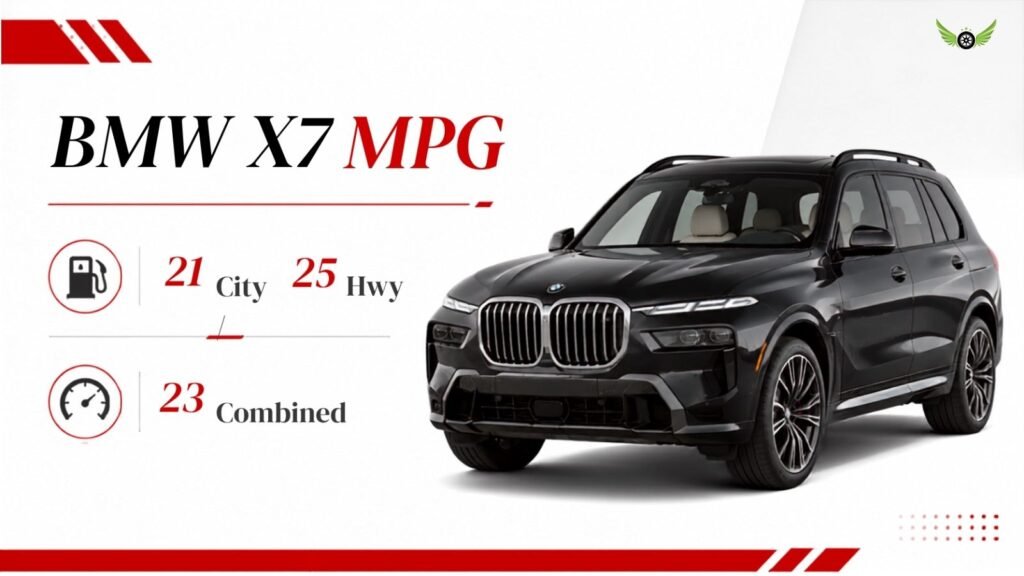
Fuel economy is an important consideration because this is a large, three-row luxury SUV with standard all-wheel drive. According to our analysis of the available EPA listings and real-world testing, the six-cylinder xDrive40i is the better choice for drivers who want a balance of power and everyday fuel efficiency, while the V8-powered M60i prioritizes performance.
For the 2026 model, BMW USA states that official EPA fuel-economy ratings had not yet been announced on its website when the page was last updated. However, major automotive data sources currently list EPA estimates for both trims, so buyers should verify the final EPA figures before making a purchase decision.
Official EPA Fuel Economy Ratings
Current published EPA estimates list the 2026 BMW X7 xDrive40i at 21 MPG city, 25 MPG highway, and 23 MPG combined. The more powerful M60i is listed at 16 MPG city, 20 MPG highway, and 18 MPG combined. The difference is expected, as the M60i uses a twin-turbocharged V8 and is focused more heavily on performance.
Model | City | Highway | Combined |
X7 xDrive40i | 21 MPG | 25 MPG | 23 MPG |
X7 M60i | 16 MPG | 20 MPG | 18 MPG |
For most U.S. buyers, the xDrive40i offers the more sensible fuel economy without sacrificing strong everyday acceleration. BMW also confirms that both 2026 trims use a 21.9-gallon fuel tank.
Real-World BMW X7 Fuel Economy
Real-world fuel use can vary with traffic, speed, weather, driving style, passenger load, and wheel size. According to our analysis of independent road testing, highway driving can produce results close to—or in some cases better than—official estimates, but city-heavy driving will naturally increase fuel consumption.
Car and Driver recorded 23 MPG on its 75-mph highway fuel-economy route with the V8-powered M60i, showing that steady highway driving can be relatively efficient for a vehicle of its size. The same publication describes the six-cylinder version as comparatively efficient for its class. These test results are useful real-world reference points, but they should not be treated as guaranteed results for every driver.
Overall, the BMW X7 Mileage is best suited to buyers who prioritize luxury and performance over maximum efficiency. If fuel costs are a major concern, the xDrive40i is the stronger everyday choice, while the M60i makes more sense for drivers willing to trade MPG for V8 power.
BMW X7 Performance & Driving Experience
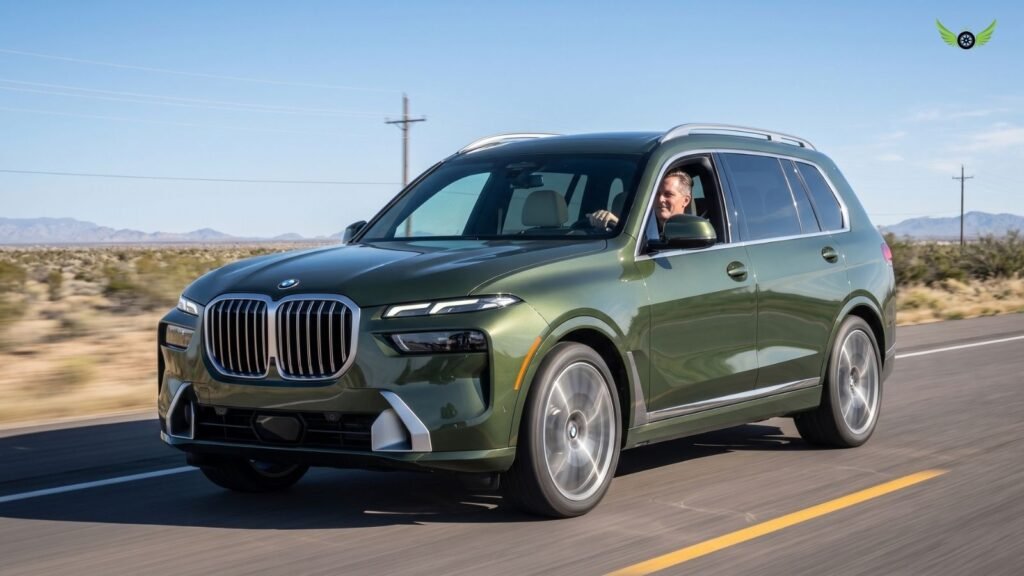
The 2026 BMW X7 stands out because it combines the comfort expected from a large luxury SUV with stronger driving dynamics than most three-row rivals. According to recent independent testing, the xDrive40i already delivers quick acceleration and responsive handling, while the M60i adds substantially more power for buyers who want a more performance-focused experience. Both models use an eight-speed automatic transmission, BMW xDrive all-wheel drive, and adaptive air suspension.
Mild Hybrid Inline-6 vs Twin-Turbo V8 Performance
The xDrive40i uses a 3.0-liter turbocharged inline-six with a 48-volt mild-hybrid system, producing 375 horsepower and up to 398 lb-ft of torque. BMW estimates 0–60 mph in 5.6 seconds, although Edmunds recorded 5.1 seconds in its independent testing. That makes the standard powertrain more than capable for everyday driving, highway merging, and carrying a full family.
The M60i uses a 4.4-liter twin-turbocharged V8 with 48-volt mild-hybrid technology, producing 523 horsepower and 553 lb-ft of torque. BMW estimates a 0–60 mph time of 4.5 seconds, while Car and Driver recorded 3.8 seconds in its testing. The difference is immediately noticeable when accelerating or passing at highway speeds.
Model | Engine | Power | Torque | 0–60 mph |
X7 xDrive40i | 3.0L Turbo Inline-6 Mild Hybrid | 375 hp | 398 lb-ft | 5.6 sec (BMW estimate) |
X7 M60i | 4.4L Twin-Turbo V8 Mild Hybrid | 523 hp | 553 lb-ft | 4.5 sec (BMW estimate) |
According to our analysis of the available test data, the xDrive40i offers the better balance for most buyers. The M60i is significantly quicker, but the inline-six already provides strong performance while being the more practical choice for everyday use.
Acceleration, Ride Comfort & Highway Driving
One of the strongest parts of the BMW X7 Performance experience is that its size does not make it feel overly cumbersome on the road. Car and Driver describes the SUV as surprisingly agile, noting its accurate steering and standard air suspension. Available rear-wheel steering and active chassis technology can further improve maneuverability and cornering control.
Ride comfort is generally a major strength, particularly on long highway trips. However, independent testing shows that the suspension character can vary by driving mode and wheel setup. Edmunds found the ride comfortable but somewhat floaty in Comfort mode, while Sport mode provided better body control without a major loss of comfort. Car and Driver also notes that larger wheel options can make the ride less forgiving on rough pavement.
For U.S. highway driving, this three-row SUV feels stable, quiet, and effortless at cruising speeds. The xDrive40i is the better all-round option for most families, while the M60i is for drivers who want exceptional acceleration without giving up luxury and everyday comfort.
BMW X7 Daily Driving Experience
The BMW X7 works well as a daily luxury SUV if you need comfortable seating, a quiet cabin, and confident highway performance. Its large size is noticeable in crowded cities, but good outward visibility and parking technology make it easier to manage than many buyers may expect. The first two rows are spacious, while the third row and cargo area involve some practical compromises.
City Driving, Visibility & Parking
For a three-row SUV measuring about 203.6 inches long, the X7 is relatively manageable from the driver’s seat. Independent testing by Edmunds found outward visibility better than in many large SUVs, helped by large mirrors and rear-side windows. Standard front and rear parking sensors, a rearview camera, and automatic parking assist also help with low-speed maneuvering.
However, its size still matters in tight parking garages and narrow city streets. According to our analysis of its dimensions and road-test feedback, the X7 is best suited to drivers who want full-size SUV space but are comfortable handling a larger vehicle every day.
Third-Row Comfort & Cargo Practicality
The first and second rows offer generous space and are comfortable for adults. The third row is usable, but it is better suited to children or occasional adult passengers, especially on longer trips. Independent reviews consistently identify the rear-most seating area as less spacious than some key luxury SUV rivals.
Cargo capacity is limited when all three rows are occupied but becomes much more practical when the rear seats are folded:
Cargo Configuration | Cargo Space |
Behind the third row | 12.8 cu ft |
Behind the second row | 48.6 cu ft |
Maximum with rear rows folded | 90.4 cu ft |
The split tailgate adds everyday convenience, particularly when loading groceries or luggage. Overall, the BMW X7 is a strong choice for families that want three-row flexibility and premium daily comfort, but buyers who regularly carry adults in the third row or large amounts of cargo should compare its interior space with larger alternatives.
BMW X7 xDrive AWD & Driving Modes
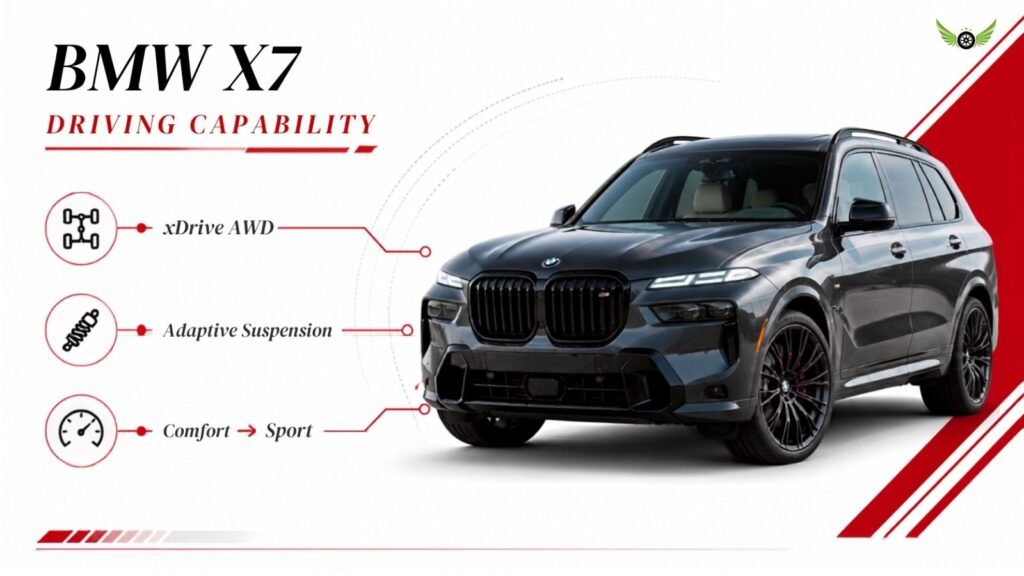
The BMW X7 is built primarily for confident on-road driving, combining standard xDrive all-wheel drive with an adaptive air suspension. According to our analysis of BMW’s specifications and independent road tests, this setup is most valuable for maintaining comfort, stability, and traction in changing everyday driving conditions. The SUV’s driving modes also allow drivers to choose between a more relaxed or more controlled driving feel.
Adaptive Air Suspension & All-Weather Performance
The 2026 X7 comes with a self-leveling air suspension, and BMW says its adaptive system automatically responds to road conditions to balance comfort and agility. Independent testing from Consumer Reports found that the air suspension keeps the SUV steady and planted while doing a good job of absorbing potholes and broken pavement.
BMW’s xDrive system dynamically distributes power between the front and rear wheels to improve traction and stability in conditions such as rain and snow. The air suspension can also provide additional ground clearance when needed. However, AWD does not improve braking on snow or ice, making appropriate tires essential for drivers in colder parts of the USA.
Drive Modes, Steering & Highway Stability
Driving modes noticeably affect how this large luxury SUV responds. Comfort mode prioritizes a softer, more relaxed ride, while Sport mode delivers firmer body control and sharper responses. In Edmunds’ real-world testing, Comfort mode could feel somewhat floaty, whereas Sport mode made the vehicle feel more settled without significantly reducing ride comfort.
Driving Mode | What Changes Most |
Comfort | Softer ride and relaxed driving response |
Sport | Firmer body control and sharper responses |
Despite its size, the X7’s steering is widely praised for being accurate and well weighted. Car and Driver reports that every X7 uses adaptive dampers and active anti-roll bars, while available rear-axle steering can further improve maneuverability and handling. On long highway drives, the stable chassis and quiet, comfortable cabin help the SUV feel composed rather than cumbersome. Larger 23-inch wheels, however, can reduce ride comfort on rough pavement.
BMW X7 vs Mercedes-Benz GLS & Audi Q7
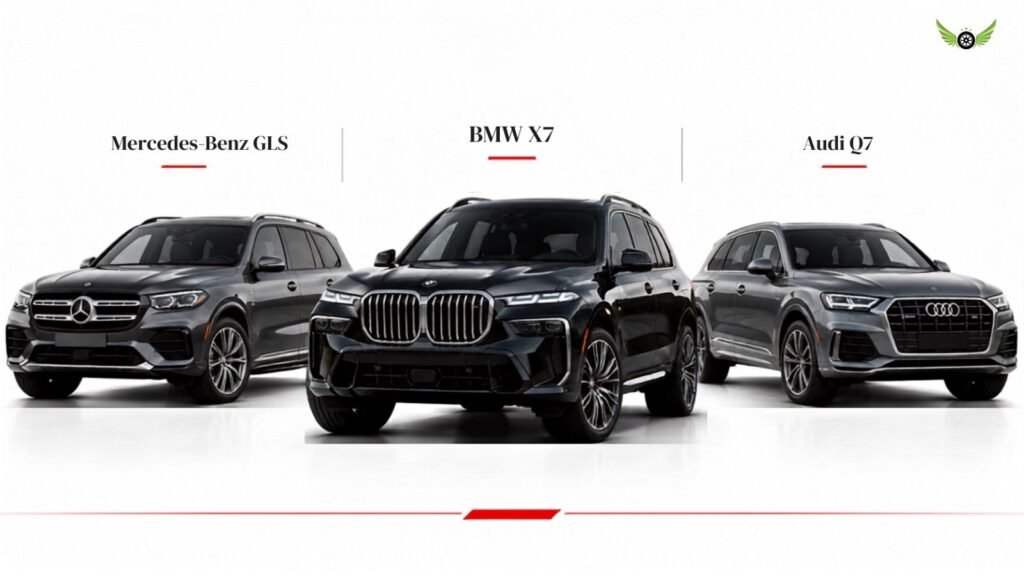
The BMW X7, Mercedes-Benz GLS, and Audi Q7 all offer premium three-row luxury, but they suit different types of drivers. According to our analysis of current specifications and independent comparisons, the X7 places the strongest emphasis on driving engagement, the GLS offers more passenger-focused space and comfort, and the Q7 provides a smaller, easier-to-manage alternative with confident handling. The biggest consideration is how often you need the third row and how you prefer a luxury SUV to drive.
Driving Dynamics Comparison
The BMW X7 is the most performance-oriented choice for buyers who want a large SUV that feels responsive on the road. Its standard air suspension and available performance chassis features help control body movement, while the xDrive40i’s 375-hp inline-six provides strong acceleration. Independent testing also rates the X7 highly for its combination of size, power, and driving dynamics.
The Audi Q7 feels more compact and agile, particularly in urban driving. The 2026 Q7 55 TFSI produces 335 horsepower and reaches 60 mph in a manufacturer-estimated 5.5 seconds, while available all-wheel steering improves low-speed maneuverability and high-speed stability. The GLS 450, with 375 horsepower and a 5.8-second 0–60 mph estimate, focuses more on smooth, relaxed driving than sporty handling.
SUV | Driving Character | Best For |
BMW X7 | Responsive and engaging for its size | Drivers who enjoy performance and handling |
Mercedes-Benz GLS | Smooth and comfort-focused | Relaxed long-distance family travel |
Audi Q7 | Agile and easier to manage | Drivers who prefer a smaller luxury SUV |
Comfort, Refinement & Family Usability
For passenger space, the Mercedes-Benz GLS has an advantage. Mercedes lists 41.9 inches of second-row legroom, 34.6 inches in the third row, and 17.4–84.7 cubic feet of cargo capacity, making it a strong option for families that regularly use all three rows.
The X7 combines a premium, quiet cabin with strong everyday comfort, but its third row is better suited to occasional use than frequent adult seating. The Q7 is the smallest of the three and its third row is more limited, making it a better fit for families that need seven seats occasionally rather than on a regular basis. A current comparison also highlights the X7’s larger cargo area behind the second row compared with the Q7, reinforcing its advantage for buyers who need more everyday practicality.
According to our analysis, the BMW X7 is the best-balanced choice for buyers who want luxury, strong road performance, and three-row flexibility. The GLS is better suited to families that prioritize maximum passenger comfort, while the Q7 makes more sense for those who prefer a smaller and more maneuverable luxury SUV.
BMW X7 Mileage, MPG, Performance & Real-World Driving Experience FAQs
Before choosing the 2026 BMW X7, most U.S. buyers want clear answers about real-world fuel economy, engine performance, ride comfort, daily practicality, and how it compares with other luxury three-row SUVs. These FAQs cover those key buying and ownership questions using current available specifications and independent testing.
What is the real-world fuel economy of the 2026 BMW X7?
The xDrive40i is the more fuel-efficient choice. Current EPA listings show 21 MPG city, 25 MPG highway, and 23 MPG combined, while Consumer Reports recorded 22 MPG overall in its testing. Actual fuel economy will vary based on driving conditions and driving style.
Which BMW X7 engine is better: the inline-six or V8?
For most buyers, the 375-hp inline-six xDrive40i offers the better balance of performance and fuel economy. The 523-hp M60i V8 delivers significantly stronger acceleration and is better suited to drivers who prioritize performance.
Is the BMW X7 fast for a three-row luxury SUV?
Yes. Edmunds tested the 2026 xDrive40i from 0–60 mph in 5.1 seconds, while BMW estimated 5.6 seconds. Independent testing confirms that the X7 offers strong acceleration for a large luxury SUV.
Is the BMW X7 comfortable for long highway trips?
Yes. Its air suspension, quiet cabin, comfortable seating, and stable road manners make it well suited to long-distance travel. Independent testing also found the ride comfortable, although Comfort mode can feel somewhat floaty for drivers who prefer tighter body control.
Is the BMW X7 easy to drive and park every day?
It is manageable for its size, but it remains a large SUV at 203.6 inches long. Edmunds found outward visibility better than in many large SUVs, while available parking technology can make tight spaces easier to handle.
Is the BMW X7 third row practical for families?
The third row provides useful flexibility for families, but buyers who regularly carry adults in all three rows should compare it with roomier alternatives. The X7 is generally better suited to occasional third-row use than constant full-capacity family travel.
Is the BMW X7 good in snow and bad weather?
Standard xDrive all-wheel drive helps provide traction in changing road conditions. However, AWD does not replace proper winter tires, especially for regular driving on snow or ice. Tire choice remains important for safe winter performance.
How does the BMW X7 compare with the Mercedes-Benz GLS and Audi Q7?
The X7 is generally the choice for buyers who want a more engaging driving experience in a large luxury SUV. The GLS is better known for maximizing passenger comfort and space, while the smaller Q7 can be easier to maneuver. The right choice depends on whether driving dynamics, interior room, or everyday manageability matters most.