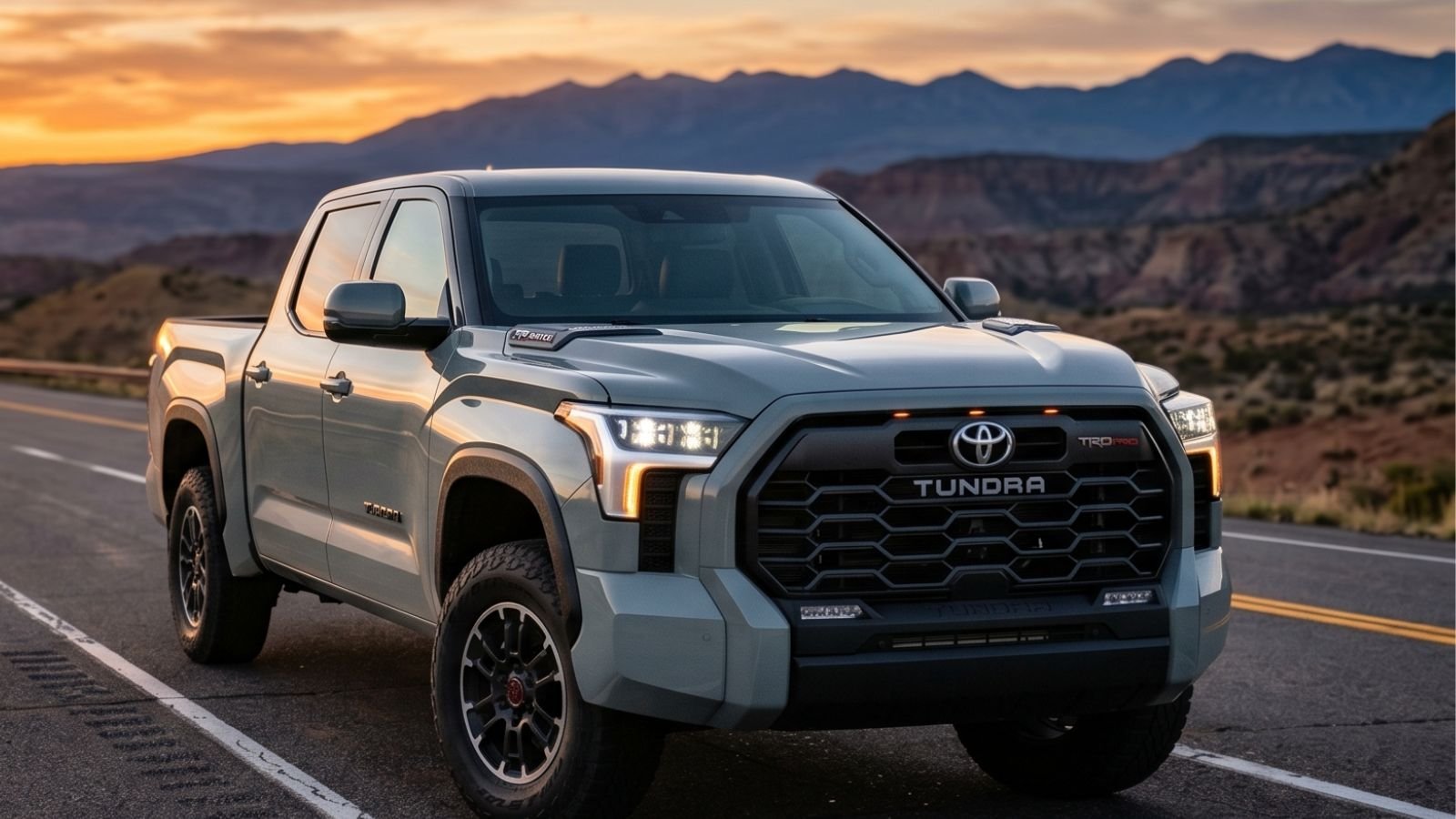
If you’re planning to buy a full-size truck in the USA, this Toyota Tundra Review will give you a clear and practical idea before spending your money. From my observation, most buyers today are not only focused on power—they want reliability, comfort, and long-term value. That’s exactly why the Tundra still holds a strong position in the American truck market.
The latest generation of the Toyota Tundra comes with major changes compared to older models. Toyota removed the traditional V8 engine and replaced it with a 3.4L twin-turbo V6 and an available hybrid system. Based on real-world feedback, this change improved low-end torque and daily driving smoothness, especially in city traffic.
When it comes to Toyota Tundra Price, the truck starts at around $42,000 for the base SR trim and can go beyond $70,000 depending on trim level and features. From real market experience, higher trims like TRD Pro and Capstone often cost more at dealerships due to demand.
In terms of specs, the standard engine produces up to 389 horsepower, while the hybrid version delivers up to 437 horsepower and 583 lb-ft torque. This makes it strong enough for towing up to around 12,000 lbs, which is more than enough for most daily and work needs. From my observation, the hybrid version feels more responsive during acceleration and performs better under load.
Based on user feedback and long-term ownership data, reliability is still one of the biggest reasons people choose Tundra over competitors. Many US drivers prefer Toyota trucks because they are known to last longer with fewer major issues. However, fuel economy is not its strongest point, especially when compared to some rivals.
This Toyota Tundra Buying Guide is designed to help you understand whether this truck fits your needs. If you want a dependable full-size truck with strong performance and long-term value, the Tundra is a solid choice. But if your priority is maximum fuel efficiency or the highest towing numbers in the segment, you may want to compare other options before deciding.
What Is the Toyota Tundra and Why It’s a Top Full-Size Truck in the USA
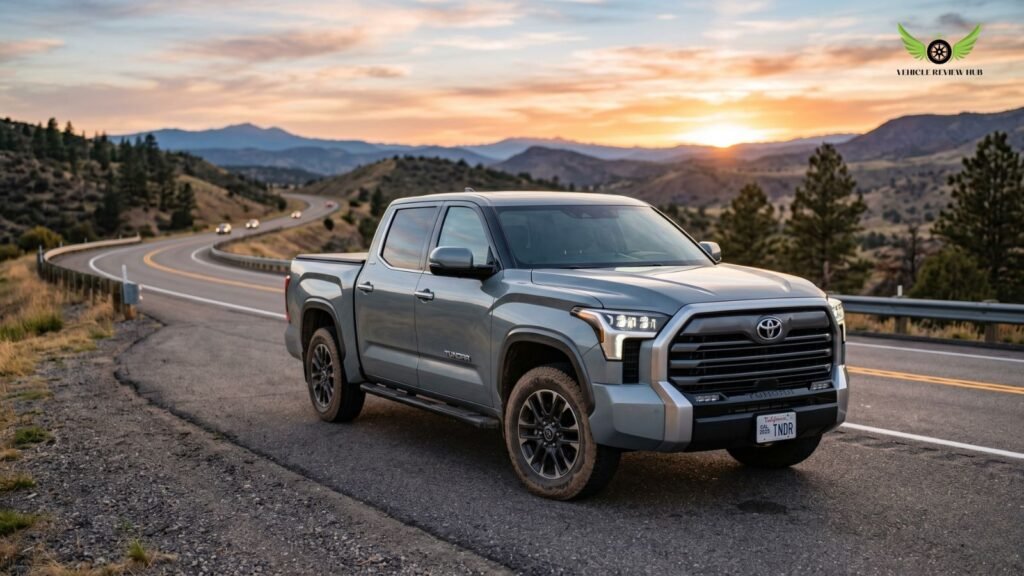
In this Toyota Tundra Review, it’s important to first understand what this truck really represents in the U.S. market. The Tundra is Toyota’s full-size pickup, built specifically for American buyers who need strength, space, and long-term dependability. It’s assembled in the United States and designed for real-world use—daily driving, highway travel, and moderate to heavy towing.
From my observation, what makes the Tundra stand out is not just its specs, but its consistency over time. Many trucks offer impressive numbers on paper, but the Tundra focuses on delivering a balanced experience—power when needed, comfort in daily driving, and reliability over years of ownership. That’s one of the main reasons it continues to hold a strong position in a highly competitive segment.
Toyota Tundra Overview and Market Position
Within the full-size truck segment, the Tundra competes directly with the Ford F-150 and RAM 1500, but its strategy is slightly different. Instead of chasing every performance benchmark, Toyota focuses on long-term value and ownership confidence.
Based on current model data, the Tundra offers:
- Up to 389 horsepower from the standard twin-turbo V6
- Up to 437 horsepower and 583 lb-ft torque in hybrid form
- Towing capacity close to 12,000 lbs when properly equipped
From real user feedback, these numbers are strong enough for most use cases, but the real strength of the Tundra is how it performs consistently over time. Many U.S. drivers choose it because they want a truck that still feels solid after years of use, not just something impressive on day one.
Another important factor is resale value. From my observation, Tundra models tend to hold their value well compared to many competitors. This is a key reason why long-term owners often stick with Toyota when upgrading.
Latest Generation Changes (V6 + Hybrid Shift)
One of the biggest changes highlighted in any Toyota Tundra Review is the move away from the traditional V8 engine. Toyota replaced it with a 3.4L twin-turbo V6 and introduced the i-FORCE MAX hybrid system.
The current setup delivers:
- 358–389 HP from the standard engine
- 437 HP and 583 lb-ft torque from the hybrid system
From my observation, this change improved real-world driving more than many people expected. The hybrid system adds instant torque, which makes acceleration smoother and more responsive, especially in city traffic or when merging onto highways.
In everyday use, the truck feels quicker at lower speeds compared to older V8 models. This is something many drivers notice immediately. The 10-speed automatic transmission also helps keep power delivery smooth and controlled.
However, based on early owner feedback, some traditional truck users initially missed the V8 sound and simplicity. Over time, most drivers have adjusted because the new setup offers better efficiency and stronger low-end performance, which matters more in daily driving.
Who Should Buy the Toyota Tundra
This Toyota Tundra Buying Guide is simple:
Best fit:
- Long-term owners (5–10+ years)
- Daily drivers who also tow occasionally
- Buyers who prioritize reliability over maximum specs
Not ideal:
- If you want best fuel economy
- If you need highest towing capacity in class
In this Toyota Tundra Review, the truck is best for buyers who want consistent performance, strong torque, and long-term dependability—not just top numbers on paper.
Toyota Tundra Price in the USA (Real Market Analysis)
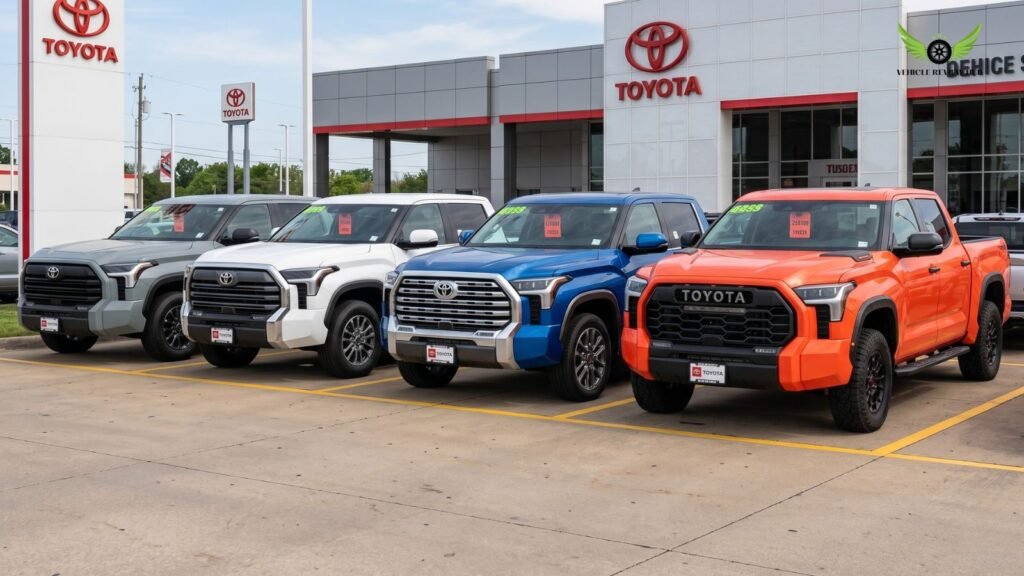
In this Toyota Tundra Review, pricing reflects how the truck is positioned in the U.S. full-size segment. The current model range starts just above $40,000 and can go beyond $80,000 depending on trim, drivetrain, and hybrid configuration. From real market behavior, most buyers choose mid-level trims where features and cost stay balanced, rather than going for the base or highest trims.
Base MSRP to Top Trim Pricing Breakdown ($42K–$66K Range)
Here is the current MSRP range for major trims:
Trim | Starting MSRP (Approx) |
SR | $40,000–$42,000 |
SR5 | $45,000–$47,000 |
Limited | $53,000–$55,000 |
Platinum | $62,000–$64,000 |
1794 Edition | $63,000–$65,000 |
TRD Pro | $72,000+ |
Capstone | $80,000+ |
The $42K–$66K range mainly covers SR to Platinum trims, where most buyers focus. Hybrid trims and premium variants increase the price significantly.
SR, SR5, Limited, Platinum, 1794 Edition & TRD Pro Comparison
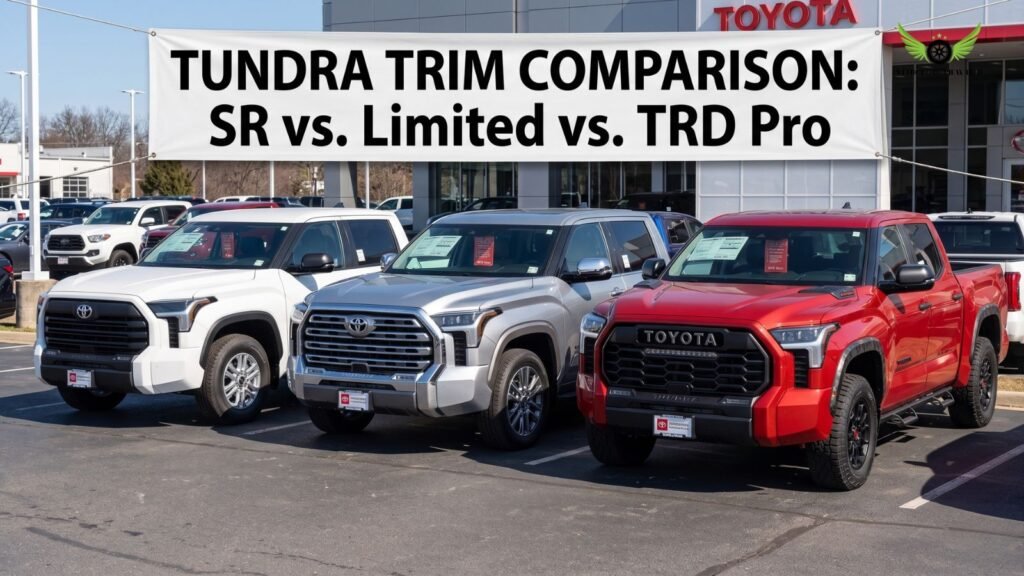
Each trim targets a different type of buyer based on budget and usage:
- SR / SR5 are practical choices with essential features and lower cost
- Limited adds comfort, larger screens, and better interior quality
- Platinum and 1794 Edition focus on premium materials and advanced features
- TRD Pro is built for off-road use and comes with the hybrid system
From real buyer patterns, Limited is often selected because it balances price, features, and daily usability without going into the highest price range.
Real Dealer Pricing vs MSRP in the USA
Actual transaction prices often differ from MSRP depending on supply and demand. Standard trims usually sell slightly below MSRP when inventory is stable, with typical discounts ranging from $1,500 to $3,000.
High-demand versions such as TRD Pro or hybrid trims behave differently. Limited supply and strong demand often keep prices at or above MSRP. In some cases, buyers pay a premium to secure these models quickly.
Used Toyota Tundra Pricing Trends and Resale Value
Resale value is one of the strongest points highlighted in any Toyota Tundra Review. In the used market, Tundra models consistently retain value better than many competitors.
- 2–3 year old models often keep a high percentage of their original price
- TRD and higher trims maintain stronger demand in resale markets
- Depreciation is slower compared to many full-size trucks
From a long-term ownership perspective, this helps reduce overall cost. Even though the initial Toyota Tundra price can be higher, strong resale value makes it a practical option for buyers who plan to keep or later resell their truck. This is also an important consideration in any Toyota Tundra Buying Guide, especially for buyers focused on long-term value.
Toyota Tundra Engine, Specs & Platform Details
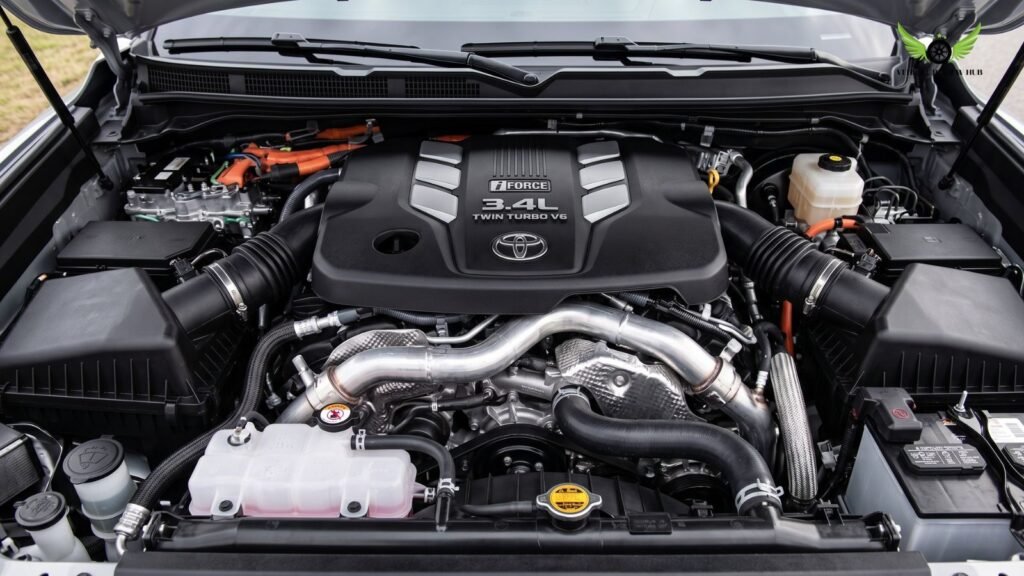
In this Toyota Tundra Review, the engine and platform are the core of how the truck performs in real conditions. The current model is built on Toyota’s GA-F body-on-frame platform, using a fully boxed frame. This improves structural strength, towing stability, and ride comfort compared to older designs.
The truck is powered by a twin-turbo V6 engine, with an optional hybrid system. Both setups are paired with a 10-speed automatic transmission, which keeps power delivery smooth across different driving conditions.
Twin-Turbo V6 Engine (3.4L i-FORCE) Overview
The standard engine is a 3.4L twin-turbo V6 designed to replace the older V8.
Engine Type | Horsepower | Torque |
3.4L Twin-Turbo V6 | 358–389 HP | 406–479 lb-ft |
From real-world driving, this engine focuses on low-end torque. That makes it more responsive when starting from a stop or pulling weight, which is more useful than high-RPM power in daily truck use.
i-FORCE MAX Hybrid Powertrain Explained
The hybrid system combines the same V6 engine with an electric motor integrated into the transmission.
Powertrain | Horsepower | Torque |
i-FORCE MAX Hybrid | 437 HP | 583 lb-ft |
This setup improves torque delivery at low speeds. In practical driving, it feels smoother in traffic and more controlled when carrying load or towing.
Horsepower (358–437 HP) and Torque (up to 583 lb-ft)
Configuration | Horsepower | Torque |
Standard Output | 358 HP | 406 lb-ft |
Higher Output | 389 HP | 479 lb-ft |
Hybrid | 437 HP | 583 lb-ft |
In real use, torque plays a more important role than horsepower. The higher torque output helps the truck handle weight more efficiently and improves overall drivability.
Towing Capacity (Up to ~12,000 lbs) and Payload
Capability | Value |
Max Towing Capacity | ~12,000 lbs |
Max Payload Capacity | ~1,940 lbs |
Towing capacity depends on configuration, but properly equipped models reach around 12,000 lbs. Hybrid versions offer strong torque but may have slightly lower towing numbers compared to some non-hybrid setups.
Transmission and Drivetrain Options (RWD vs 4WD)
All versions use a 10-speed automatic transmission, designed to balance power and efficiency.
- RWD (Rear-Wheel Drive) provides better fuel efficiency and slightly higher towing potential
- 4WD (Four-Wheel Drive) improves traction in off-road, snow, and rough conditions
From real usage, most buyers prefer 4WD for flexibility, while RWD works well for highway-focused driving and lighter-duty use.
Toyota Tundra Pros and Cons (Real USA Insights)
In this Toyota Tundra Review, real U.S. owner feedback shows a consistent pattern. The truck delivers strong performance, modern engineering, and long-term value, but it also comes with trade-offs that matter depending on how you plan to use it.
Strengths Based on Owner Feedback
Owners consistently highlight the engine performance as a major advantage. The twin-turbo V6, especially in hybrid form, delivers up to 437 horsepower and 583 lb-ft of torque. In real driving, this translates into strong low-end pull, which is more useful than high-speed power in daily use and towing situations.
Ride quality has also improved compared to previous generations. The coil-spring rear suspension makes the truck feel more stable and comfortable on highways. From my observation, this is noticeable during long drives where the truck feels less stiff than older body-on-frame pickups.
Technology is another strong point. The available 14-inch touchscreen and updated infotainment system provide a modern user experience. Many drivers also appreciate the improved cabin layout and driving position.
One of the biggest reasons people still choose Tundra, as seen in any Toyota Tundra Review, is long-term reliability perception. Older models built strong trust in the U.S. market, and that reputation continues to influence buying decisions today. This also supports strong resale value over time.
Weaknesses vs Ford F-150 and RAM 1500
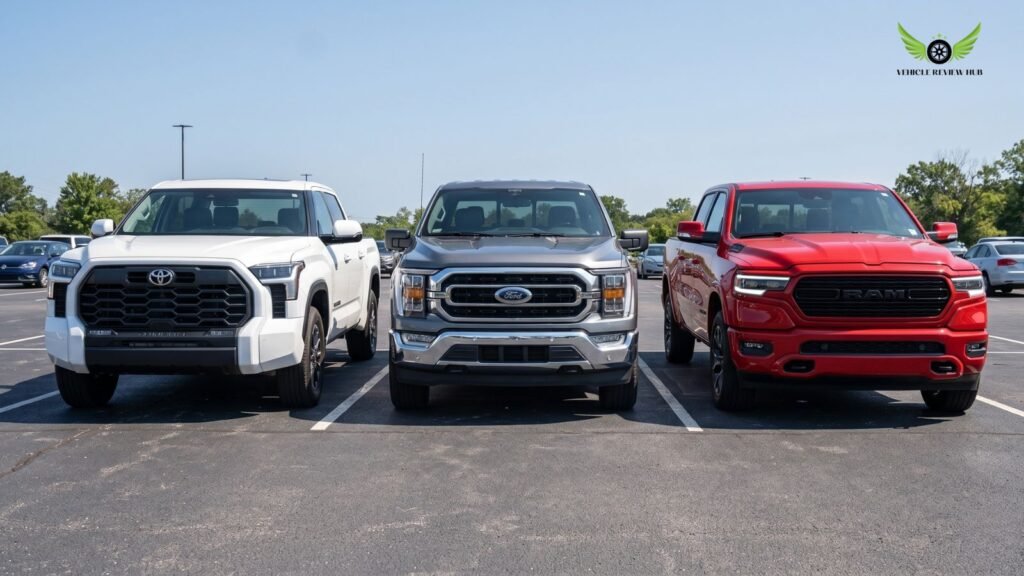
Fuel economy is one of the most common concerns. In real-world driving, most owners report around 17–20 MPG depending on usage, which is not class-leading. When towing or driving aggressively, fuel consumption increases noticeably.
Build quality in newer models has received mixed feedback. Some owners mention minor issues such as interior rattles, panel gaps, or small fit-and-finish problems. While not universal, these issues appear more often compared to older Tundra generations.
When compared directly, competitors offer certain advantages. The Ford F-150 provides higher maximum towing in some configurations, while the RAM 1500 stands out for its smoother ride and more refined interior. From a daily comfort perspective, RAM still leads in cabin quality.
There have also been early reports of mechanical concerns in newer models, including engine-related issues in specific production batches. These cases are not widespread but are part of recent ownership discussions.
Best Buyer Profiles in the USA
This Toyota Tundra Buying Guide shows that the truck fits a specific type of buyer rather than everyone.
It works best for drivers who plan to keep their truck for many years and want consistent performance over time. Buyers who need strong torque for daily use, occasional towing, and highway driving will find it practical.
It is also a good match for those who value resale strength and brand reliability over chasing the highest numbers in every category.
On the other hand, it may not be the best choice for buyers focused mainly on fuel efficiency or those who want the most refined interior experience available in this segment.
From real usage patterns in the U.S., the most satisfied Tundra owners are those who prioritize long-term dependability and balanced performance rather than short-term advantages.
Toyota Tundra Final Buying Verdict
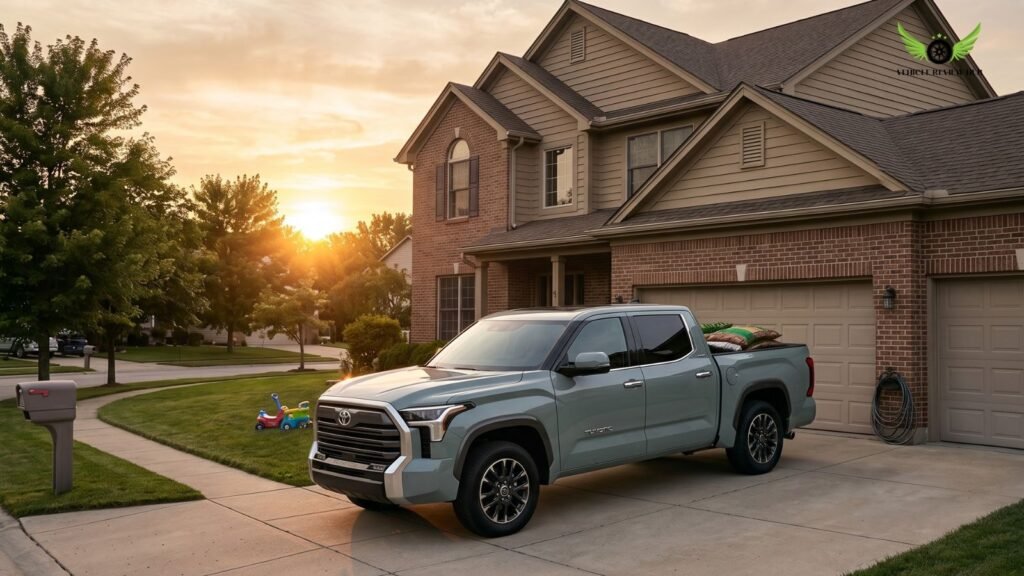
In this Toyota Tundra Review, the final decision comes down to real-world usability rather than just specs. The current generation delivers strong torque, modern engineering, and a solid ownership experience. It may not lead every category, but it offers a balanced package that works well for most full-size truck buyers in the U.S.
Is Toyota Tundra Worth Buying in 2025–2026?
The 2025–2026 model brings clear improvements over older versions. The twin-turbo V6 and hybrid setup produce up to 437 horsepower and 583 lb-ft of torque, which gives strong low-end power in daily driving and towing situations. The truck can tow around 12,000 lbs, which is enough for most real use cases such as trailers, boats, or work equipment.
From real driving experience, the truck feels stable on highways and smooth in city conditions. The hybrid system improves responsiveness at low speeds, which is noticeable during acceleration and when carrying load.
Fuel economy remains a trade-off. Most owners report real-world numbers in the mid to high teens MPG, especially when towing or driving aggressively. This is not class-leading, but it is typical for a truck in this category.
Reliability is still one of the biggest reasons buyers consider it. While newer models have had mixed early feedback, Toyota’s long-term track record continues to influence buyer confidence. This is a key point highlighted in any Toyota Tundra Review, especially for buyers planning long-term ownership.
Overall, the truck is worth buying if your priority is consistent performance, strong torque, and long-term value rather than chasing the highest specs in every category.
Best Trim Recommendation Based on Budget and Use Case
Budget Range | Recommended Trim | Why It Fits |
$40K–$48K | SR / SR5 | Suitable for basic daily use and light work, lower entry cost |
$54K–$58K | Limited | Best balance of price, features, and comfort for most buyers |
$63K–$66K | Platinum / 1794 Edition | Premium interior and more advanced features for comfort-focused use |
$70K+ | TRD Pro / Capstone | TRD Pro for off-road performance, Capstone for top-level luxury |
From real buyer behavior in the U.S., the Limited trim stands out as the most practical option. It offers upgraded interior quality, better technology, and improved comfort without moving into the highest price range.
This Toyota Tundra Buying Guide shows that choosing the right trim depends on how you plan to use the truck. Budget buyers will find SR and SR5 enough, while those looking for daily comfort and long drives benefit more from Limited or higher trims.
Toyota Tundra FAQs – Common Buyer Questions Answered
Buyers often look for clear, practical answers before making a decision. These FAQs cover the most important points from this Toyota Tundra Review and help you understand real-world ownership, cost, and usability.
Is the Toyota Tundra reliable for long-term ownership?
Yes. The Tundra has a strong reputation for long-term reliability, and many owners keep it for 8–10 years with fewer major issues.
What is the real fuel economy of the Toyota Tundra?
Most drivers report around 15–20 MPG combined in real driving, depending on load, driving style, and conditions.
How much can the Toyota Tundra tow?
Properly equipped models can tow up to around 12,000 lbs, which is enough for trailers, boats, and work use.
Is the hybrid Toyota Tundra worth it?
Yes, if you want more torque and smoother driving. The hybrid system delivers up to 583 lb-ft torque, which improves acceleration and towing performance.
Which Toyota Tundra trim is best for value?
The Limited trim is the most practical option. It offers a good balance of price, comfort, and features without going into higher price ranges.
Is the Toyota Tundra good for daily driving?
Yes. It provides stable highway performance, smooth acceleration, and comfortable driving for everyday use.
How does the Toyota Tundra compare to competitors?
It stands out for reliability and resale value, while competitors may offer better fuel economy or a more refined interior.
Does the Toyota Tundra hold its value?
Yes. It has strong resale value in the U.S. market, which helps reduce overall ownership cost.