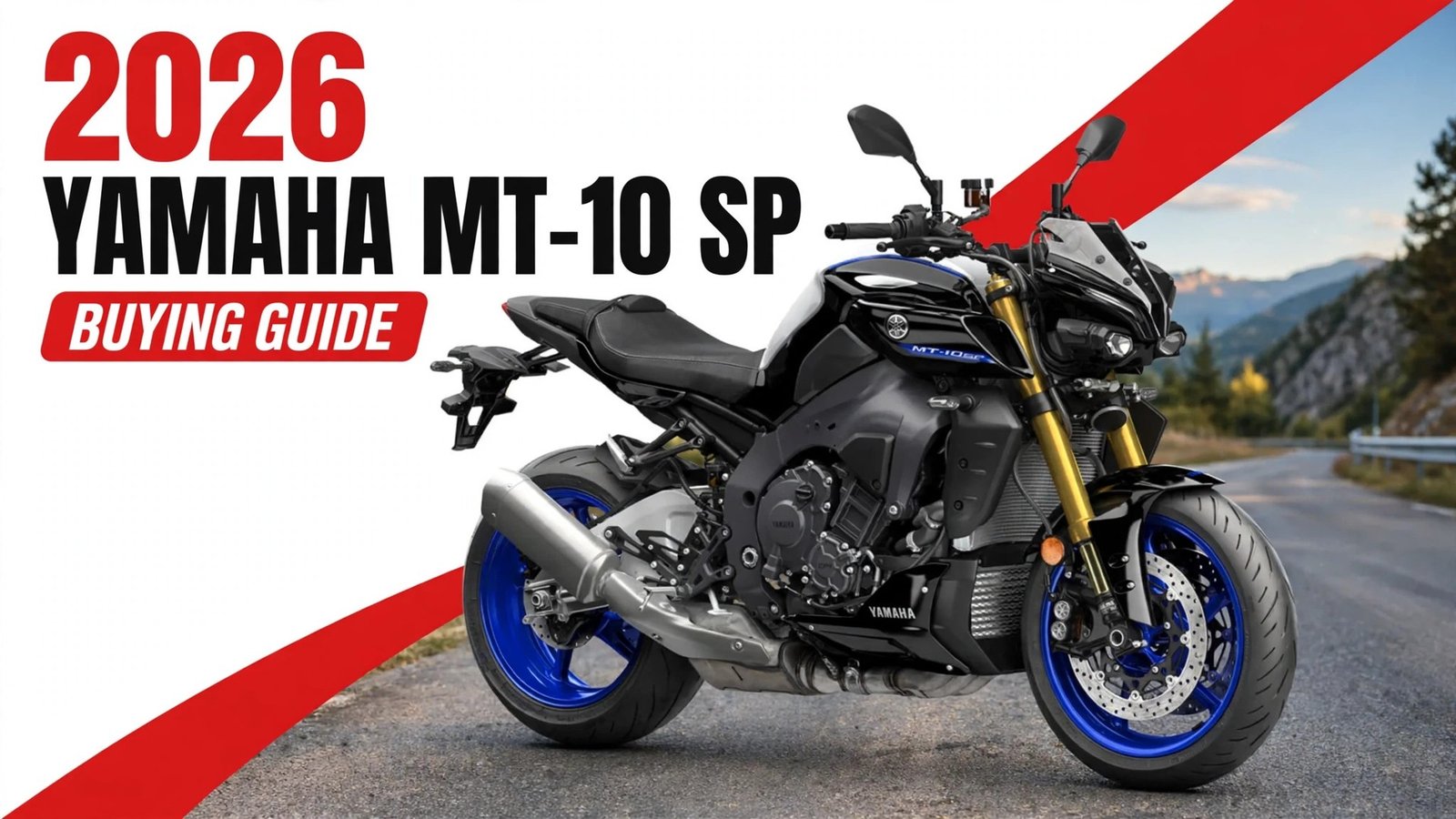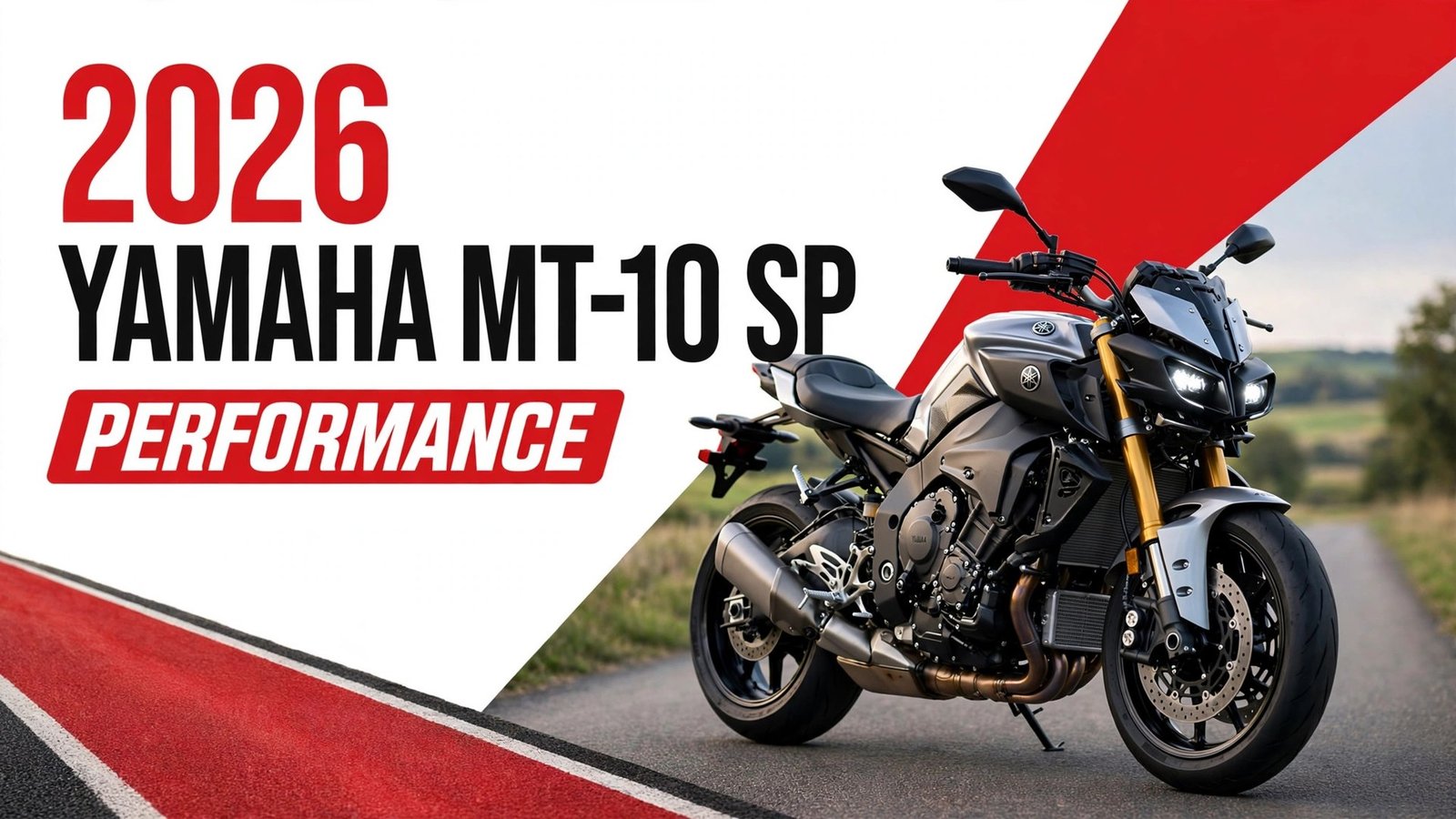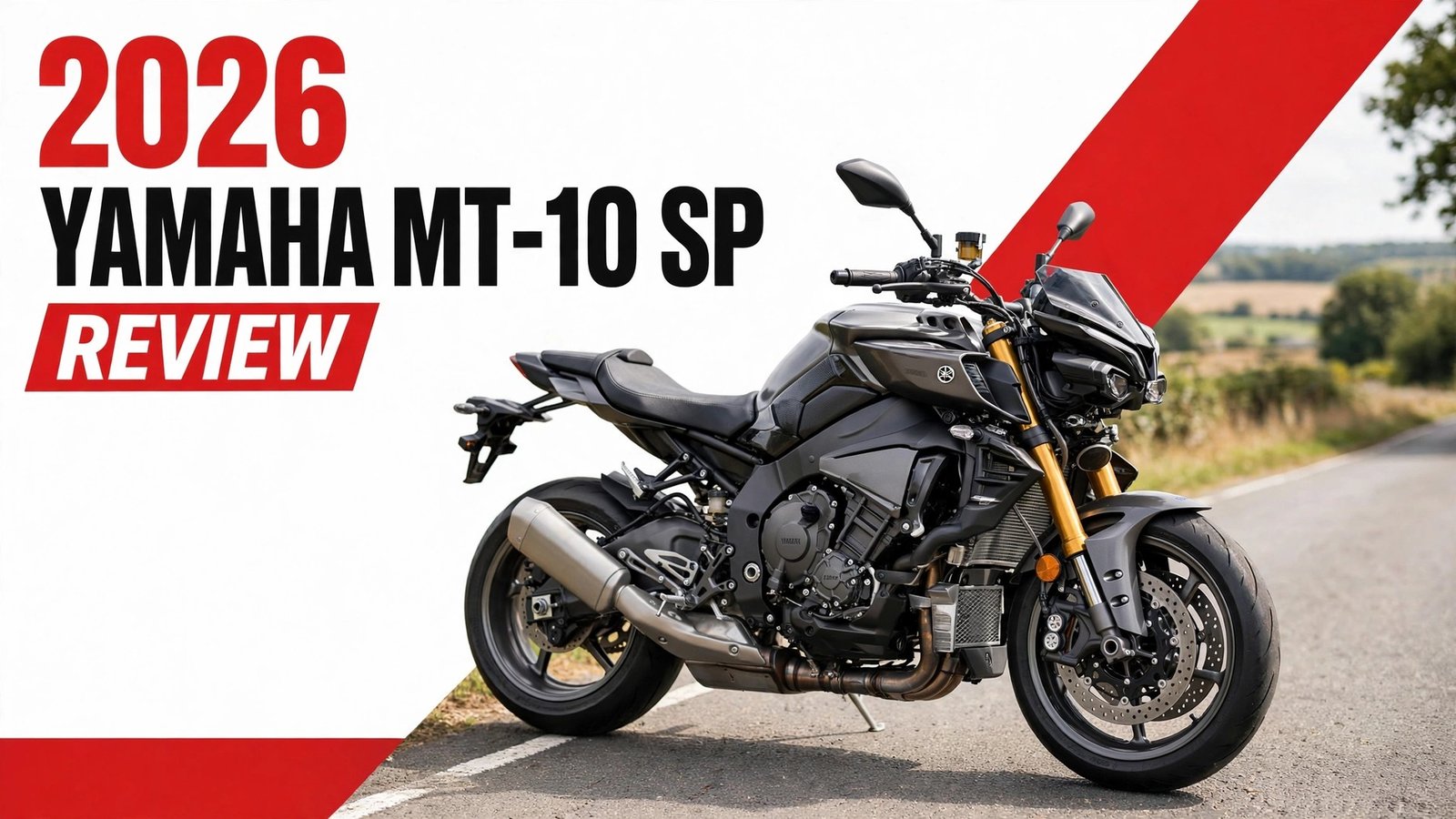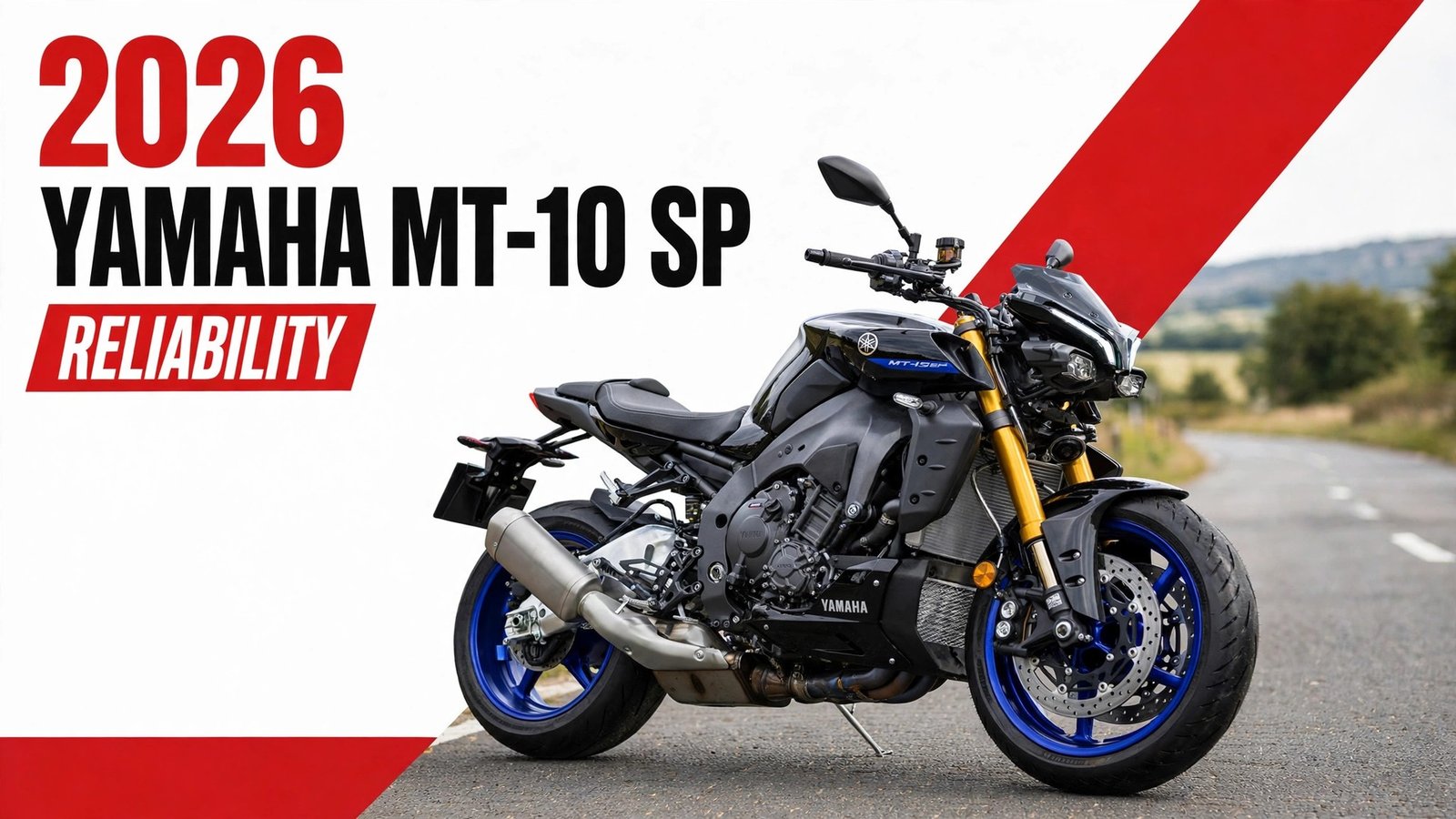
Yamaha MT-10 SP reliability is strong, with one important caveat: the glowing owner ratings behind that verdict come from a very small sample. The SP pairs Yamaha’s proven 998cc CP4 crossplane engine with Ohlins semi-active suspension and a full six-axis electronics suite, and owners generally report a fault-free experience. The known trouble spots for Yamaha MT-10 SP reliability are wear items and two recalls that need careful reading, not a pattern of engine failures.
Yamaha MT-10 SP Reliability Overview
Yamaha MT-10 SP reliability starts from a strong foundation: the SP uses the same liquid-cooled 998cc CP4 inline-four as the standard MT-10, an engine shared with the YZF-R1 and retuned for stronger mid-range torque. The SP adds Ohlins semi-active suspension, braided steel lines, and Liquid Metal/Raven styling, but the core is familiar Yamaha hardware, so parts, service knowledge, and owner experience all support Yamaha MT-10 SP reliability.
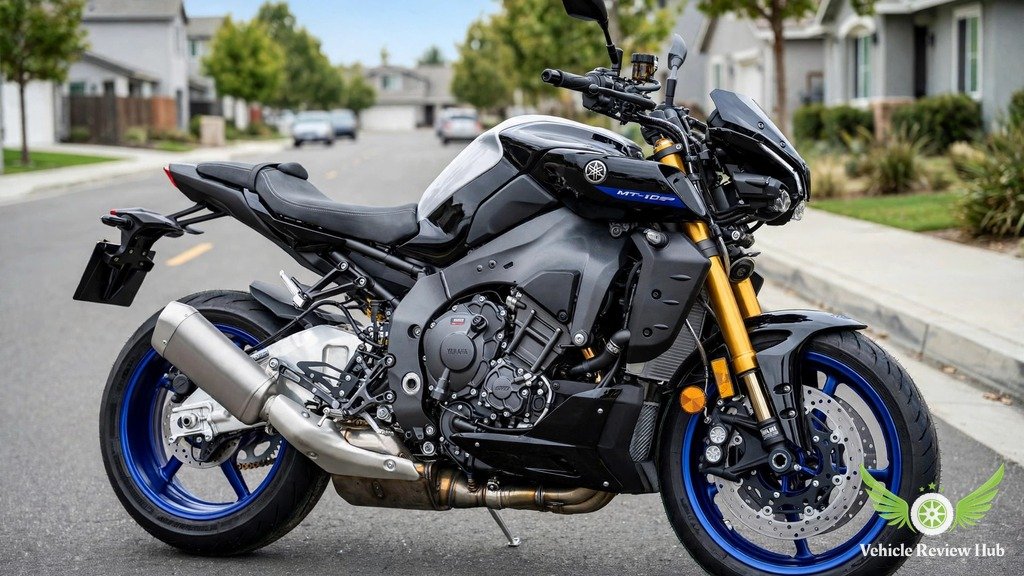
The MT-10 SP review covers the full specification: a claimed 163.6 bhp in UK specification, 214 kg (472 lb) wet, a 4.5-gallon tank, and a 32.9-inch seat height. Those numbers describe a serious liter-class naked, so discipline matters more than ratings for Yamaha MT-10 SP reliability.
MCN Reliability 4.9 Out of 5 From Only 10 UK Owners: Evidence Explained
The most quoted figure in any discussion of Yamaha MT-10 SP reliability is MCN’s 4.9-out-of-5 reliability rating for the 2022-on MT-10 SP, published on MCN’s MT-10 SP review pages. Read it with its sample size attached: MCN lists just 10 owner reviews behind the current-generation SP’s scores, plus a 4.6 owners’ rating and a 4-out-of-5 expert rating. Ten owners is a small base, so the 4.9 is encouraging early evidence rather than a large-sample verdict on Yamaha MT-10 SP reliability. The previous-generation SP scored 4.6 out of 5 from 11 owner reviews according to MCN’s earlier SP review page, with no pattern pointing to a single recurring failure, which supports Yamaha MT-10 SP reliability.
How Mileage, Maintenance History and Previous Use Affect Reliability
Mileage alone is a poor predictor of Yamaha MT-10 SP reliability. A 20,000-mile SP with a stamped service book, fresh fluids, and a careful owner is a better bet than a 5,000-mile bike that sat unridden for two years, was ridden hard from cold, and skipped its first service. A used SP deserves a closer consumables check than its odometer suggests: ask for service invoices and look for crash damage around the bar ends and fork bottoms. When judging Yamaha MT-10 SP reliability on a used example, treat the maintenance record as primary evidence and the odometer as supporting detail.
Yamaha MT-10 SP Common Problems and Wear Items
Yamaha MT-10 SP reliability is not defined by one big defect. The honest picture is wear items, minor niggles, and two model-year-specific recalls. No verified widespread failure pattern has emerged.
Engine, Cooling System and Fuel System Inspection Points
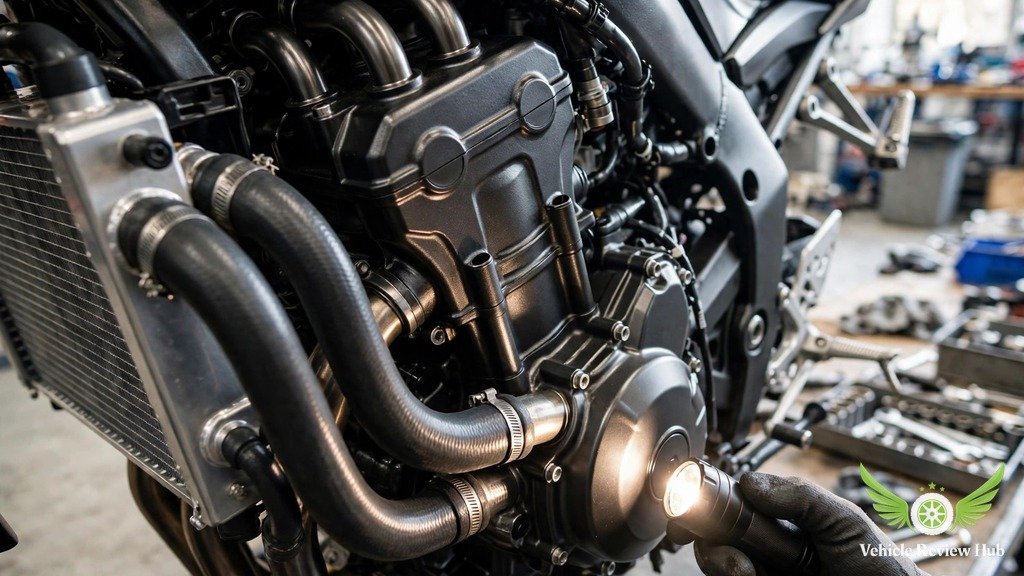
The CP4 engine has no recurring failure story on the MT-10 SP, good news for Yamaha MT-10 SP reliability. The checks that matter are ordinary: oil level and condition, coolant level and color, and any weeping around the water pump, radiator hoses, or thermostat housing. The SP requires premium unleaded gasoline (RON 95 or higher); ethanol blends up to E10 are acceptable, but fuel containing methanol is not recommended. Finally, listen for cam-chain noise on a cold start and watch for startup smoke: neither is a reported SP pattern, but both are cheap checks that matter for Yamaha MT-10 SP reliability.
Clutch, Gearbox, Chain, Sprockets and Electrical Checks
The most commonly reported MT-10 niggle affecting Yamaha MT-10 SP reliability is notchy shifting, and the causes are mundane: a misadjusted shift linkage, incorrect chain tension, insufficient clutch lever free play, or oil past its best. Before assuming gearbox trouble, check linkage lubrication, chain slack, and clutch lever free play. Cruise control is the second electrical item to test: owner guides list complaints about it refusing to engage or switching itself off, from a faulty front brake switch on older standard MT-10s to sensor issues. Test cruise control, riding modes, and the TFT display during a ride, and have any bike showing warning lights diagnosed with Yamaha dealer tools first. Chain and sprockets wear fast on a 160-plus-horsepower naked, so check for tight spots, hooked teeth, and a chain that will not hold adjustment — constant adjustment says much about the previous owner’s habits, and about Yamaha MT-10 SP reliability for that bike.
Yamaha MT-10 SP Maintenance Schedule and Servicing
The US maintenance schedule is the backbone of Yamaha MT-10 SP reliability. Yamaha’s US manual calls for a service every 4,000 miles or 6 months, whichever comes first, with the bigger items layered on top of that rhythm. The MT-10 maintenance schedule summary reproduces the full schedule in plain form.
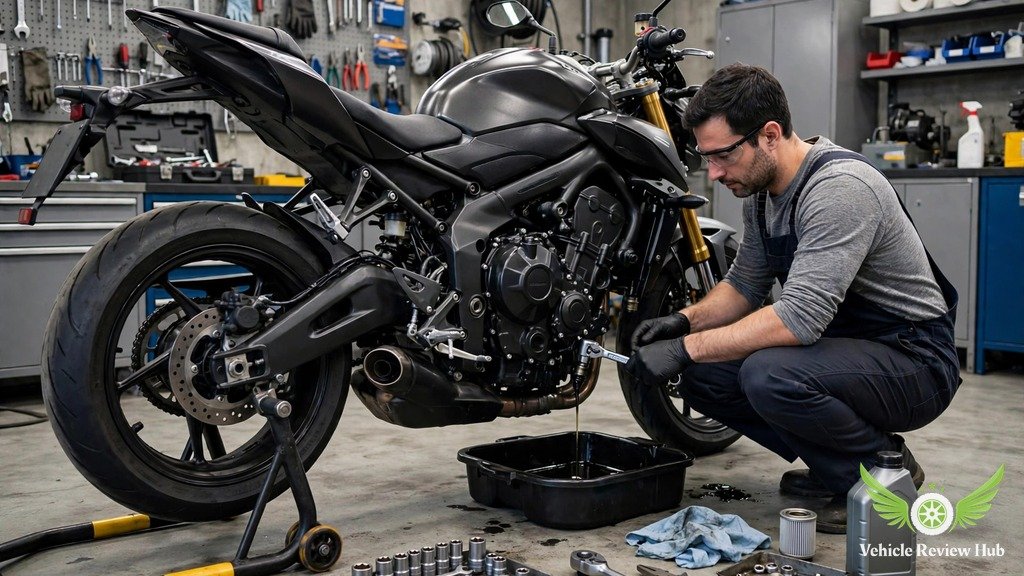
MotoUK’s walkthrough shows exactly what an MT-10 SP oil and filter change involves.
Service Every 4,000 Miles, Engine Oil, Filters and Spark Plugs Every 8,000 Miles
Every 4,000-mile service underpins Yamaha MT-10 SP reliability, covering engine oil, plus checks of the brakes, clutch, cooling hoses, tires, wheel bearings, swingarm pivot, steering bearings, and fasteners. The oil filter and spark plugs are replaced every 8,000 miles. The break-in service at 600 miles covers the first oil and filter change and a full check-over, and it is the service most often skipped on used bikes, to the detriment of Yamaha MT-10 SP reliability. After break-in, sticking to the 4,000-mile rhythm is the single most effective thing an owner can do for Yamaha MT-10 SP reliability.
Valve-Clearance Checks Every 26,600 Miles and Coolant at 16,000 Miles
Valve-clearance checks are due every 26,600 miles in the US manual, or 42,000 km, while the European manual lists 40,000 km, or 24,000 miles. US owners should use the 26,600-mile figure for Yamaha MT-10 SP reliability. This is a dealer job and the largest single routine bill. These time-based items are the ones low-mileage bikes miss: a five-year-old SP with 6,000 miles still needs fresh brake fluid and coolant. When evaluating Yamaha MT-10 SP reliability on a garage-kept example, check age-based services first; they are the most commonly overdue items.
| Service item | US interval | Notes |
|---|---|---|
| General service including engine oil | Every 4,000 miles or 6 months | Full synthetic 10W-40 or 15W-50, JASO MA |
| Oil filter replacement | Every 8,000 miles | At that visit |
| Spark plug replacement | Every 8,000 miles | NGK LMAR9E-J, gap 0.6–0.7 mm |
| Coolant change | 16,000 miles or 2 years | Check hoses at every service |
| Valve-clearance check | Every 26,600 miles | Dealer job, cold engine |
| Air filter replacement | Every 24,000 miles | Inspect earlier in dusty use |
| Brake fluid change | Every 2 years | DOT 4 only |
| Brake hose replacement | Every 4 years | Inspect at every service |
| First service | 600 miles | Oil, filter, and full check-over after break-in |
This schedule protects Yamaha MT-10 SP reliability in practice.
Yamaha MT-10 SP Tires, Brakes and Suspension Maintenance
Tires, brakes, and suspension are where Yamaha MT-10 SP reliability meets the road most directly, and where the SP differs most from the standard MT-10. The SP’s Ohlins suspension rewards proper setup, while its brakes are consumable-heavy.
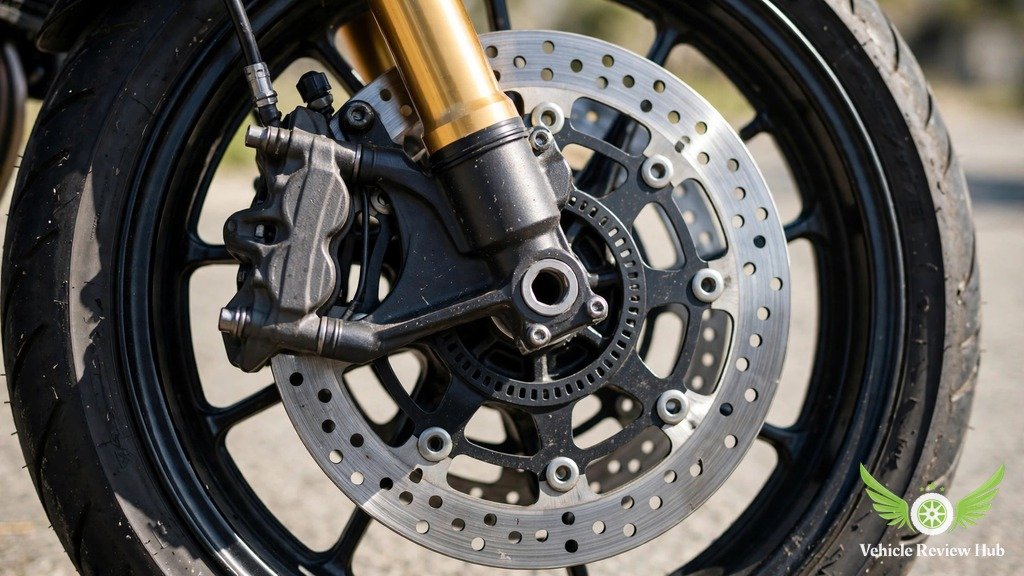
Tire Condition, Pressure, Tread Wear and Replacement
The SP runs a 120/70ZR17 front tire and a 190/55ZR17 rear, both Bridgestone Battlax Hypersport S22 tubeless tires as standard, with cold tire pressures of 36 psi front and 42 psi rear, solo or two-up, as listed in the 2022 MT-10 SP owner’s manual. Tire life is the running-cost surprise for new owners: one owner reported only about 1,600 miles from the original tires, a figure reflecting aggressive riding but still illustrating the range honestly. When buying used, measure tread, check date codes, and look for squared-off rears and uneven front wear, pointing to highway miles or wrong pressures. Tires also reveal how a used SP was ridden, a useful clue for Yamaha MT-10 SP reliability.
Brake Pads, Brake Discs, Ohlins Forks and Rear Suspension Checks
Braking is handled by dual 320 mm front discs with radial-mount four-piston calipers and a 220 mm rear disc, all with ABS, and braided steel lines are standard. Pads are checked at every service and replaced as needed for Yamaha MT-10 SP reliability, with front pads listed as EBC FA380HH pattern parts and the rear as FA174HH. The Ohlins system is the SP’s defining hardware and its most expensive potential repair: the current SP uses Ohlins’ next-generation electronically controlled suspension with spool valve damping, offering three semi-active modes (A-1, A-2, A-3) and three manual modes (M-1, M-2, M-3). On inspection, check fork seals for weeping, oil mist on the fork legs and shock, and whether the damping modes change ride feel. The standard MT-10’s KYB suspension is cheaper to service, the one running-cost area where the SP’s premium hardware genuinely costs more when weighing Yamaha MT-10 SP reliability against running costs.
Yamaha MT-10 SP Maintenance and Ownership Costs
Yamaha MT-10 SP reliability has a price tag, higher than a middleweight’s but fair for the performance. The bike listed at $17,299 in Yamaha’s 2025 US dealer brochure. Fuel is the everyday expense, tires are the surprise expense, and the valve service is the big scheduled expense for Yamaha MT-10 SP reliability.
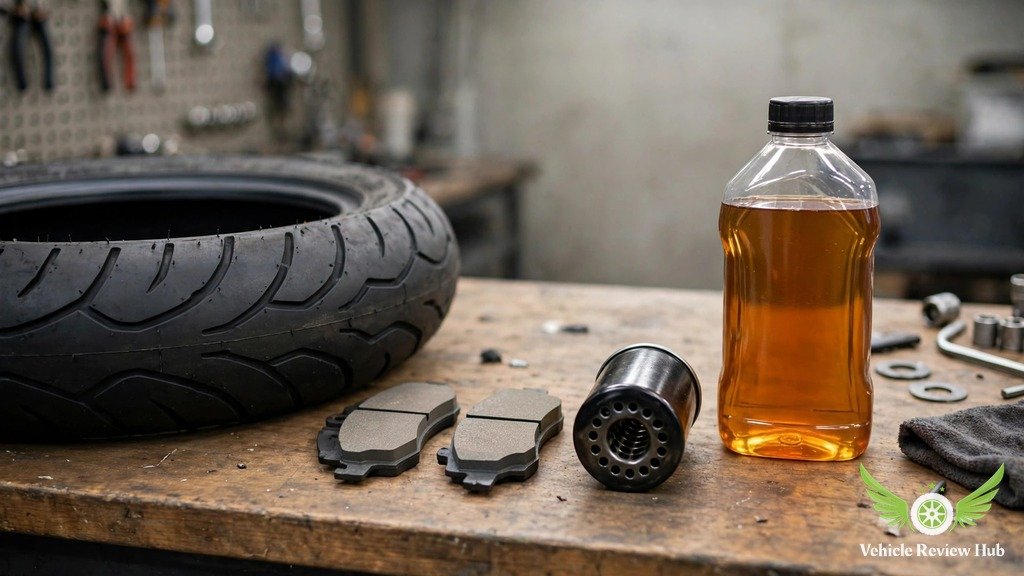
Fuel, Routine Servicing, Tires and Replacement Parts
Fuel economy is the SP’s weakest everyday number. MCN lists 41 mpg, and owner reports cluster in the late 30s for mixed riding, under 30 mpg when riding hard and close to 49 mpg on gentle runs. Routine servicing costs affecting Yamaha MT-10 SP reliability are well documented: UK owners on MCN report annual servicing around £220 to £230, figures to read as UK evidence rather than US pricing. For the US, a published MT-10 maintenance log shows the DIY side: about $50 to $65 for a home oil change, $230 for a front tire and $310 to $380 for a rear, $76 for front brake pads, $55 for an air filter, and $57 for spark plugs, all parts or DIY costs. Parts availability is a genuine strength for Yamaha MT-10 SP reliability: the CP4 engine’s shared lineage with the R1 and the standard MT-10 means filters, plugs, pads, and chains are stocked widely, and SP-specific suspension parts are available through Ohlins specialists, though at premium prices. The MT-10 SP buying guide covers how service history affects what a used bike is worth.
Repair Expenses, Parts Availability and Long-Term Ownership Costs
Repair expenses for Yamaha MT-10 SP reliability split into two groups: cheap shared parts and expensive SP-specific parts. Engine, brake, chain, and electrical parts are mostly shared with the standard MT-10 and priced accordingly, while Ohlins suspension components, the TFT display, and IMU-linked electronics cost more and sometimes need specialist diagnosis. Owners doing their own basic servicing report the MT-10 is straightforward to work on for a liter bike, which keeps long-term Yamaha MT-10 SP reliability affordable for hands-on owners.
| Cost item | Typical cost | Notes |
|---|---|---|
| DIY oil change | About $50–$65 | One owner’s logged MT-10 costs, parts only |
| Front tire | About $230 | One owner’s logged MT-10 costs |
| Rear tire | About $310–$380 | One owner’s logged MT-10 costs |
| Front brake pads | About $76 | EBC FA380HH pattern parts, logged cost |
| Air filter / spark plugs | About $55 / $57 | One owner’s logged MT-10 costs |
| UK dealer annual service | About £220–£230 | MCN owner reviews, UK figures |
| Valve-clearance service | Varies by dealer | Get a written quote before 26,600 miles |
How to Keep a Yamaha MT-10 SP Reliable
Keeping Yamaha MT-10 SP reliability high is mostly discipline rather than expertise. The owners with the best experiences follow the schedule, warm the bike properly, keep the chain clean and adjusted, and fix small issues before they become large ones, which is the essence of Yamaha MT-10 SP reliability.
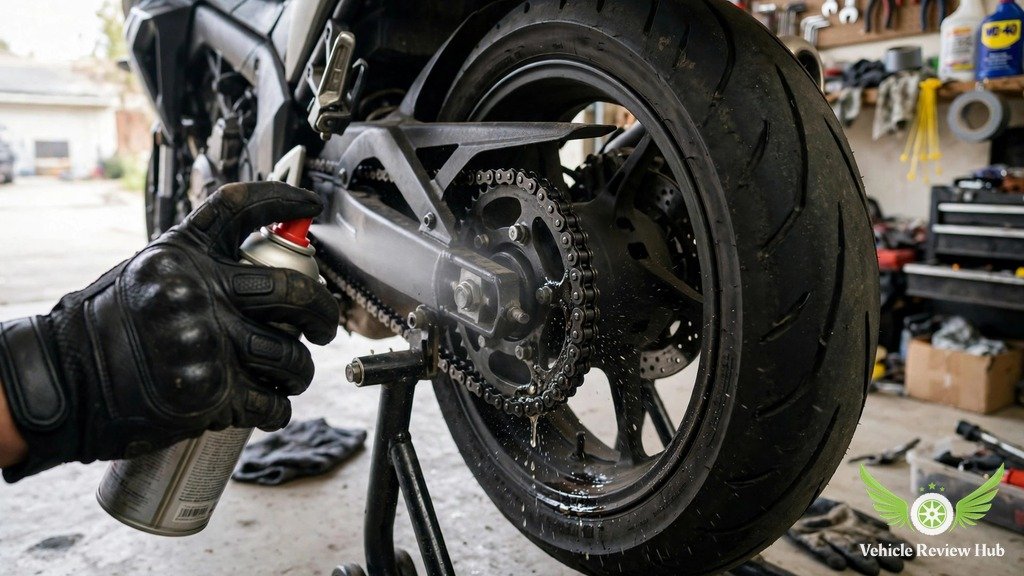
Preventive Maintenance, Proper Lubrication and Regular Inspections
Between services, the highest-value habit for Yamaha MT-10 SP reliability is chain care: clean and lubricate with a proper O-ring chain lubricant, check slack and alignment regularly, and replace chain and sprockets as a set when worn. A neglected chain wears sprockets, strains the gearbox output bearing, and delivers the notchy shifting owners mistake for gearbox trouble, so chain discipline pays for itself several times over. The YZF-R7 reliability, YZF-R3 reliability, and R125 reliability guides show the same schedule-first pattern on smaller Yamahas. Keep records: a stamped book plus invoices is worth real money at resale.
Recall Check: 25V248 Hawaii TPS Filing and Why 20V814 Does Not Include the SP
Recall checks confuse SP buyers most for Yamaha MT-10 SP reliability, because two different recalls sound similar but cover different bikes. The first is NHTSA campaign 25V248, filed by Pure Sports Distributing Inc., trading as Yamaha of Hawaii, covering certain 2022-2023 and 2025 MT-10 SP motorcycles plus other Yamaha models. It concerns the throttle position sensor, whose brushes may slide excessively due to improper ECU programming, possibly causing unstable idling or stalling. The remedy is a free ECU reprogram plus TPS replacement. The critical detail is the filing party: this is a Hawaii distributor filing covering 216 units, not a nationwide Yamaha Motor Corporation, USA recall, and the 25V248 recall record states that scope plainly. The second recall is 20V814, the nationwide front brake switch recall from late 2020, covering 18,203 bikes. Its published model list names the standard MT-10 from 2017 to 2020, alongside the Tracer GT, Niken GT, Super Tenere, FJR1300, and Star models, but not the MT-10 SP as a separate model. The defect is silicon oxide raising resistance in the front brake switch, leaving the brake light on or canceling cruise control; the remedy is a free switch replacement. The 20V814 brake switch record confirms that model list. For a current-generation SP, 25V248 is the filing to check; for a pre-2021 standard MT-10, 20V814 is the one that matters. For what the SP delivers when properly maintained, see the performance figures for the MT-10 SP.
Yamaha MT-10 SP Reliability FAQs
Direct answers on Yamaha MT-10 SP reliability, from headline ratings to service intervals and recall checks.
Is the Yamaha MT-10 SP reliable?
Yes. MCN rates the 2022-on SP at 4.9 out of 5 for Yamaha MT-10 SP reliability, with no verified widespread engine or gearbox failure pattern. Caveat: the rating rests on only 10 UK owner reviews.
What is the MCN reliability rating for the MT-10 SP?
MCN lists the 2022-on SP at 4.9 out of 5 for Yamaha MT-10 SP reliability, with a 4.6 owners’ rating from 10 reviews. The 2017-2021 SP scored 4.6 out of 5 from 11 reviews. Both samples are small and UK-based.
What are the common problems on the Yamaha MT-10 SP?
Minor issues dominate: notchy shifting from linkage adjustment, chain tension, clutch free play, or old oil; cruise control occasionally refusing to engage or switching off; and fast tire, chain, and brake pad wear under hard use. No recurring engine failure pattern has been verified for Yamaha MT-10 SP reliability.
How often does the MT-10 SP need servicing?
Every 4,000 miles or 6 months under the US manual. Oil at every service; filter and plugs every 8,000 miles; coolant at 16,000 miles or 2 years; brake fluid every 2 years; hoses every 4 years; valves every 26,600 miles; first service at 600 miles.
When is the valve-clearance service due on the MT-10 SP?
Every 26,600 miles under the US manual (42,000 km). The European manual lists 40,000 km (24,000 miles) for the same engine, so US owners should use 26,600 miles. It is a dealer job and the largest single routine bill.
What engine oil does the MT-10 SP use?
Full synthetic SAE 10W-40 or 15W-50, API SG or higher and JASO MA; the oil also lubricates the clutch. Capacity is 4.10 liters (4.33 US quarts) with a filter change, 3.90 liters without. Avoid Energy Conserving oils, which can cause clutch slip.
What tires and tire pressures does the MT-10 SP use?
A 120/70ZR17 front and 190/55ZR17 rear, Bridgestone Battlax Hypersport S22 as standard. Cold pressures are 36 psi front and 42 psi rear, solo or two-up, checked before riding. Stock tires wear quickly (one owner reported about 1,600 miles); sport-touring tires are a popular alternative.
Does the MT-10 SP have any recalls?
Yes. NHTSA campaign 25V248, a Hawaii-only filing by Yamaha of Hawaii covering certain 2022-2023 and 2025 MT-10 SP bikes, covers a throttle position sensor issue causing unstable idling or stalling, fixed free with an ECU reprogram and TPS replacement. The nationwide 20V814 brake switch recall names the standard 2017-2020 MT-10, not the SP. Always check by VIN.
Is the MT-10 SP expensive to maintain?
More expensive than a middleweight but reasonable for a liter naked. UK owners report annual servicing around £220 to £230, while a logged US history shows DIY oil changes around $50 to $65, tires at $230 front and $310 to $380 rear, and brake pads around $76. Tires cost most often; the valve service costs most per visit for Yamaha MT-10 SP reliability.
Is the SP’s Ohlins suspension reliable?
Generally dependable for Yamaha MT-10 SP reliability, with no verified pattern of electronic suspension failures on the SP. Concerns are ordinary: fork seal weeping, specialist servicing at higher mileages, and higher parts prices than the standard MT-10’s KYB suspension. Check that the A-1 to A-3 and M-1 to M-3 modes change damping feel.
Should I buy a used MT-10 SP?
Yes, if the service history checks out: a recorded 600-mile first service, oil changes every 4,000 miles, the valve service done on time if mileage requires it, fresh tires and chain, and a clean VIN recall check covering 25V248. Complete history matters more than low mileage for Yamaha MT-10 SP reliability.
How long will an MT-10 SP last?
With the US schedule followed, a well-maintained MT-10 SP should cover high mileages and strong Yamaha MT-10 SP reliability: the CP4 engine has a long production history and no verified systemic weakness. Longevity depends on oil discipline, chain care, coolant and brake fluid changes on time, and the valve service at 26,600 miles.