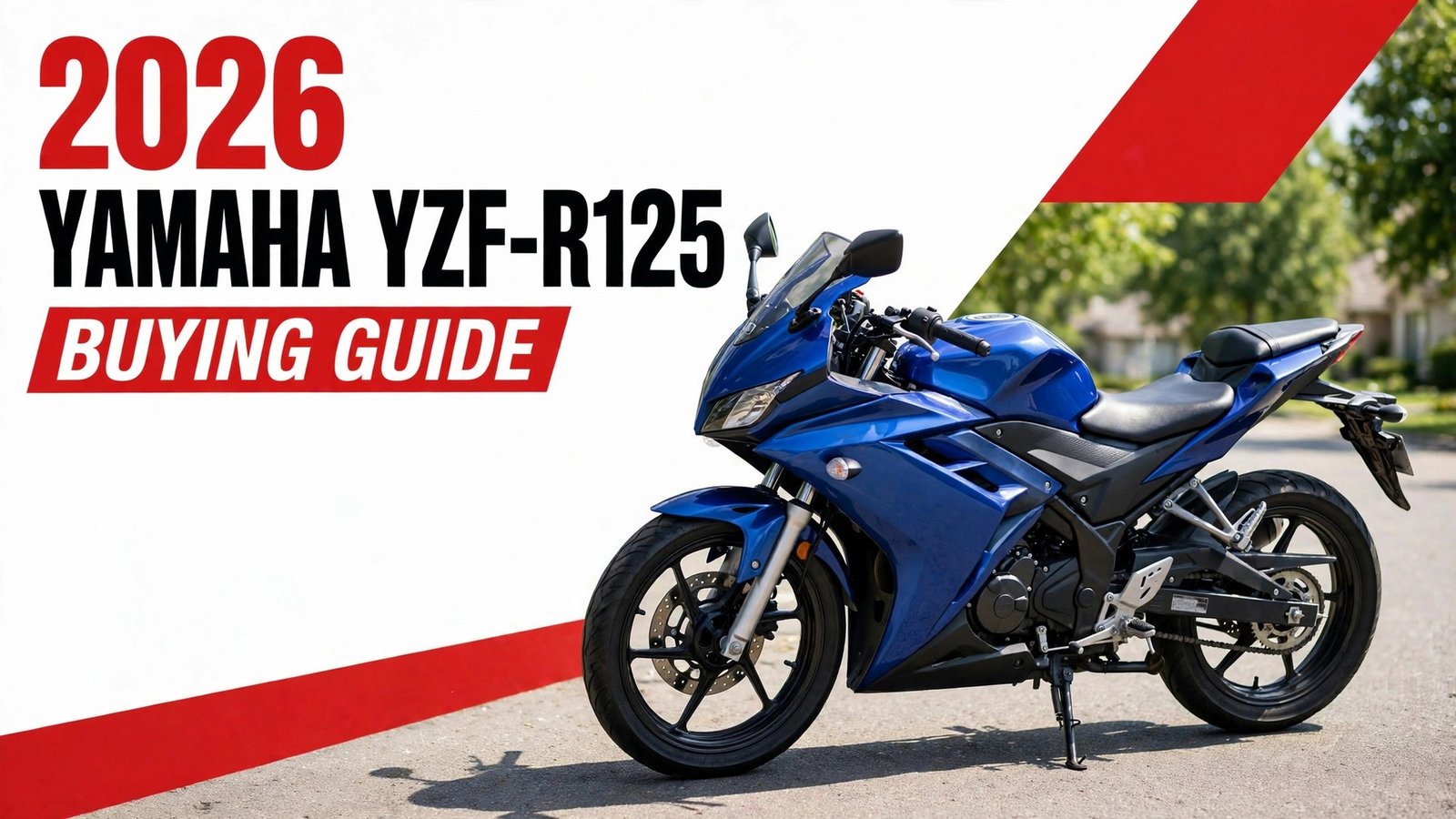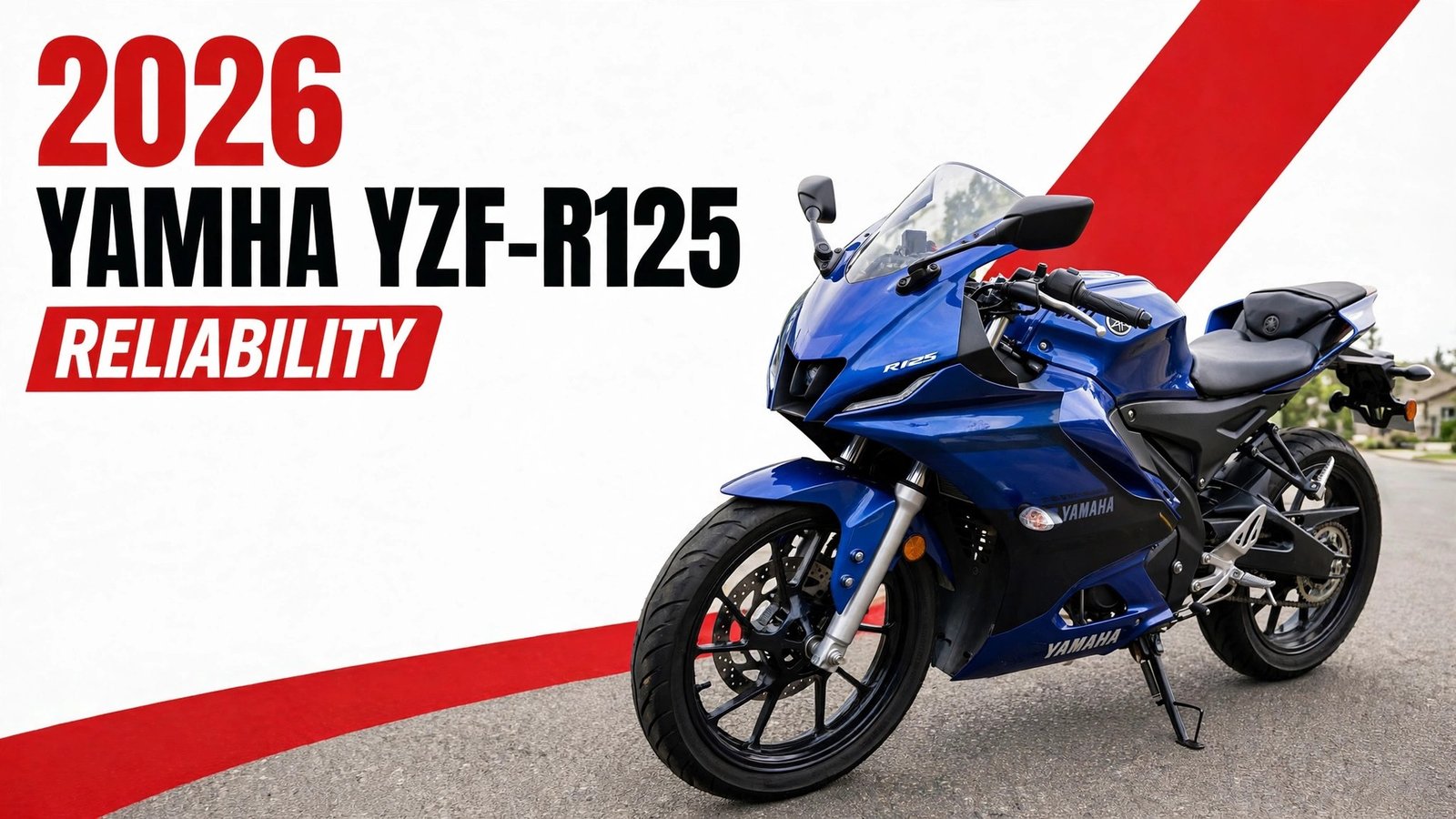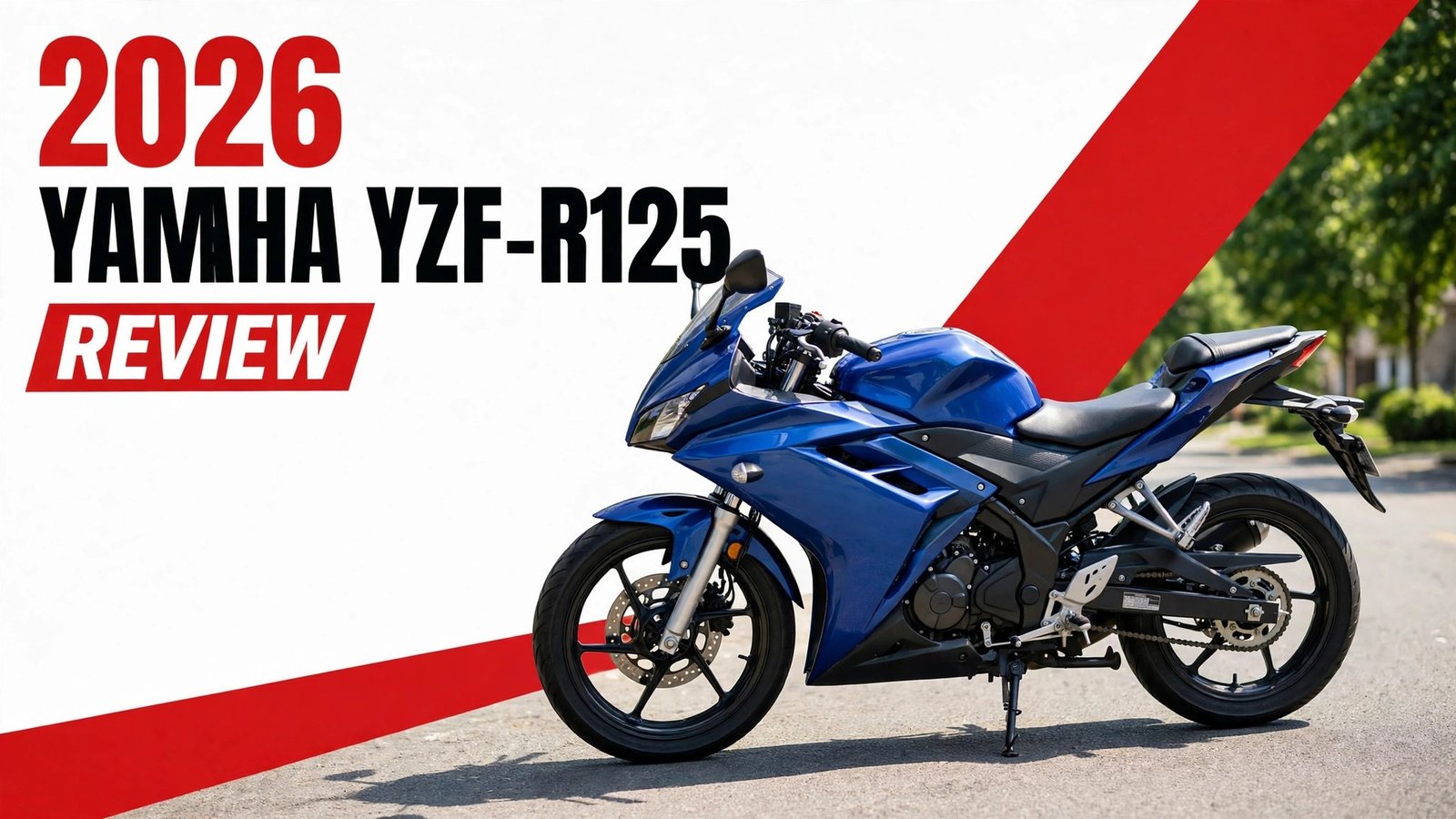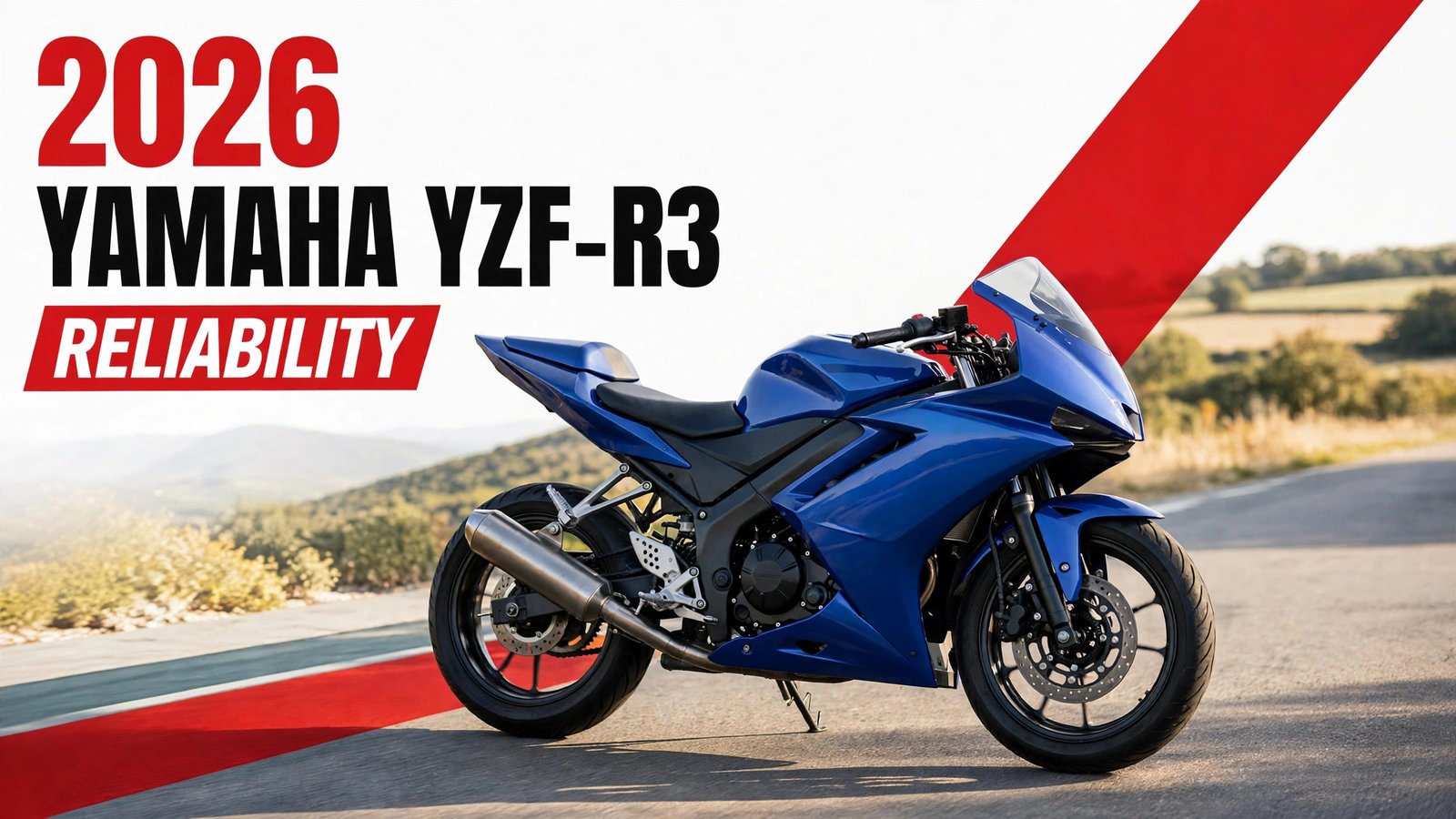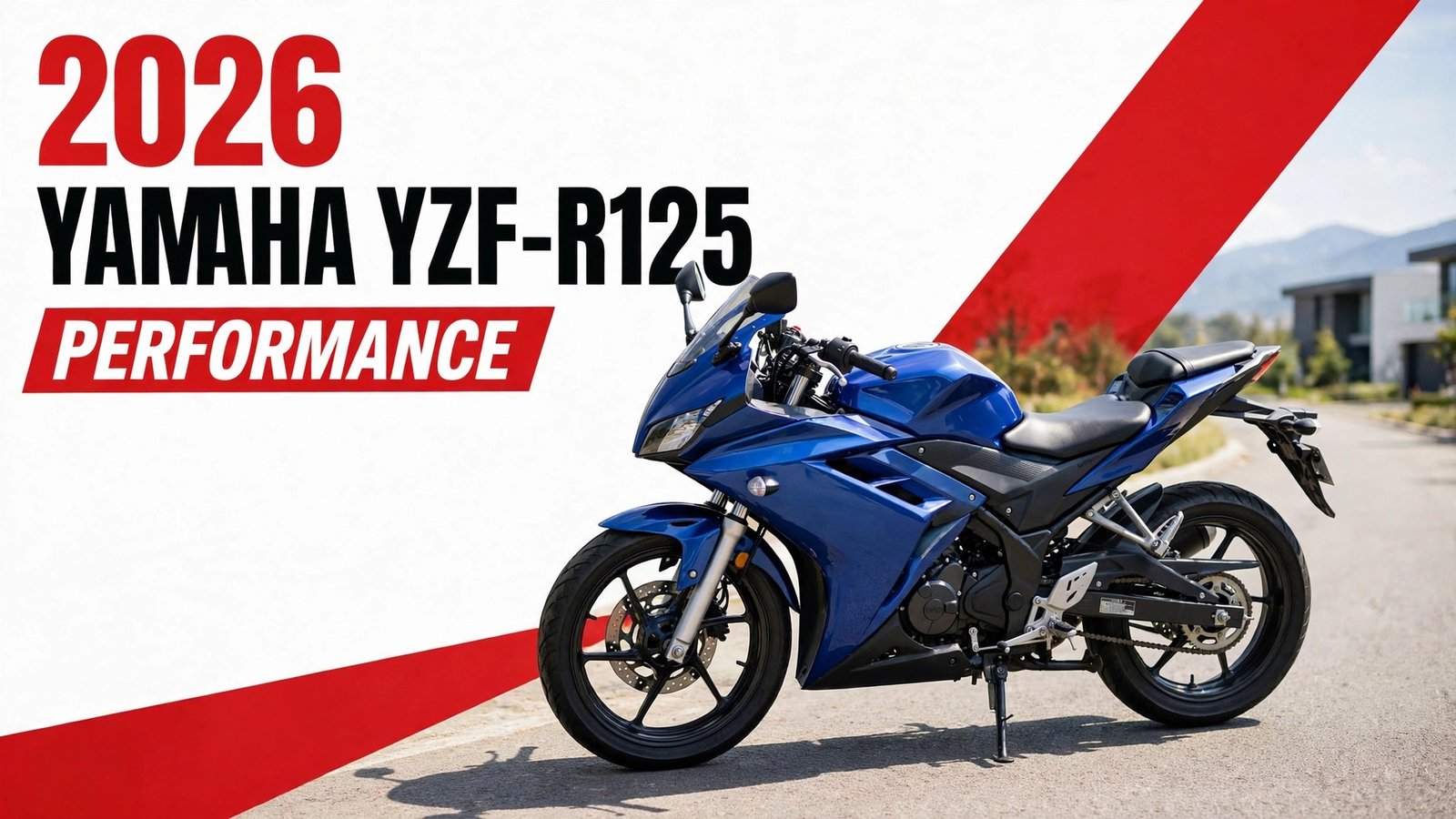
Yamaha YZF-R125 performance is a study in doing a lot with very little: a 125cc single limited by law to 15 horsepower, yet shaped by variable valve timing, a six-speed gearbox and a proper supersport chassis into a bike that reaches a tested 80 mph and returns close to 100 mpg in real riding. The direct answer on Yamaha YZF-R125 performance is that it is quick enough for city traffic, dual carriageways and A-roads, honest about its limits on motorways, and among the most economical motorcycles you can ride.
Note for American readers: the R125 is not officially sold in the United States, so there is no US price or US dealer network; The figures here are UK and European market figures for Yamaha YZF-R125 performance, labeled as such.
Yamaha YZF-R125 Engine Performance and VVA Power Delivery
The engine defines Yamaha YZF-R125 performance more than any other part of the bike: small, high-revving, and using a clever valve system to feel bigger than 125cc.
How Variable Valve Actuation Works at 7,400 to 7,800 RPM
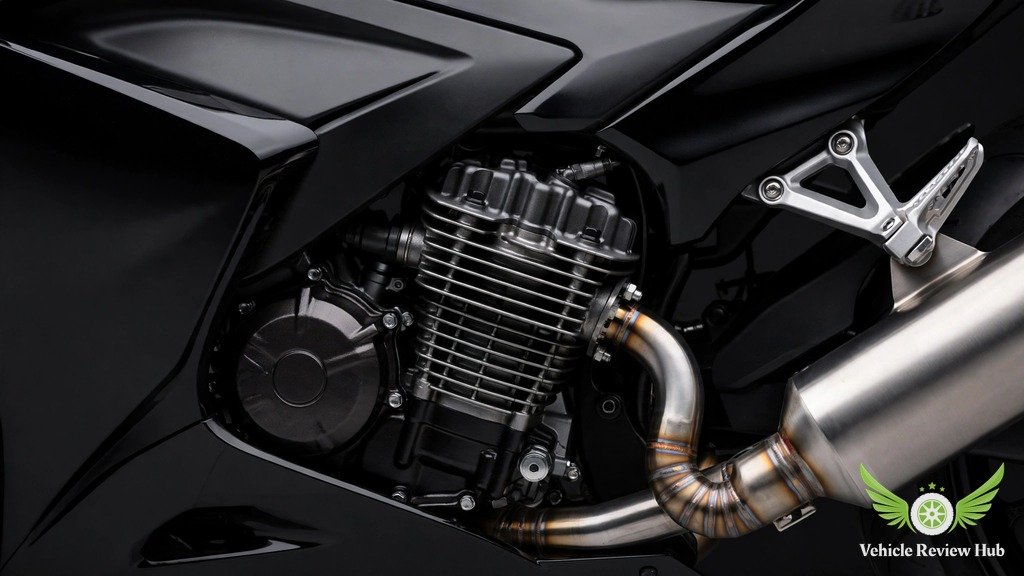
At the heart of Yamaha YZF-R125 performance sits a 125cc liquid-cooled, single-cylinder, four-stroke engine with single overhead camshaft and four valves, displacing 124.7cc through a 52.0 mm bore and 58.7 mm stroke at an 11.2:1 compression ratio. Yamaha rates it at 11.0 kW (15.0 PS) at 10,000 rpm with 11.5 Nm (8.5 lb-ft) of torque at 8,000 rpm, figures confirmed on Yamaha’s official R125 factsheet. Those numbers are capped by A1 licence law, which limits learner motorcycles to 11 kW and 125cc.
The shaping tool is Variable Valve Actuation, or VVA, fitted since the 2019 overhaul. Below 7,400 rpm, only a low-lift cam lobe works the intake valves, giving clean low-rev torque and good fuel economy. At 7,400 rpm, an ECU-operated solenoid pushes a pin through the rocker arms, locking a high-lift follower into the drive, and a small VVA indicator appears on the dash. The changeover is deliberately seamless, with no step or surge toward the 11,000 rpm redline, and the result is flexibility most 125cc singles lack: clean pull around town on the low cam, and a genuine top-end rush on the high cam. That flexibility is what defines Yamaha YZF-R125 performance for new riders.
Six-Speed Transmission, Gear Ratios and Acceleration Feel
The six-speed constant-mesh gearbox is the other half of Yamaha YZF-R125 performance. With only 15 horsepower on tap, gear selection is how the rider keeps the engine in its useful band: the ratios are close enough that dropping a gear or two puts the engine straight back above the 7,400 rpm VVA point, and the assist-and-slipper clutch lightens the lever and reduces rear-wheel hop on aggressive downshifts. Acceleration feel follows directly from that setup — the R125 pulls away cleanly and builds speed steadily rather than explosively, and it rewards riders who use the gearbox actively and keep revs high. Short-shifting at 6,000 rpm leaves the high-lift cam unused and much of Yamaha YZF-R125 performance untapped. Generations and equipment are covered in the R125 review.
Yamaha YZF-R125 Top Speed and Acceleration
Top speed is the number every prospective Yamaha YZF-R125 performance buyer asks about first, and it is also the number most often exaggerated online. This section sticks to tested figures, and says plainly where no trustworthy figure exists.
Yamaha YZF-R125 Top Speed: MCN Tested 80 MPH Explained
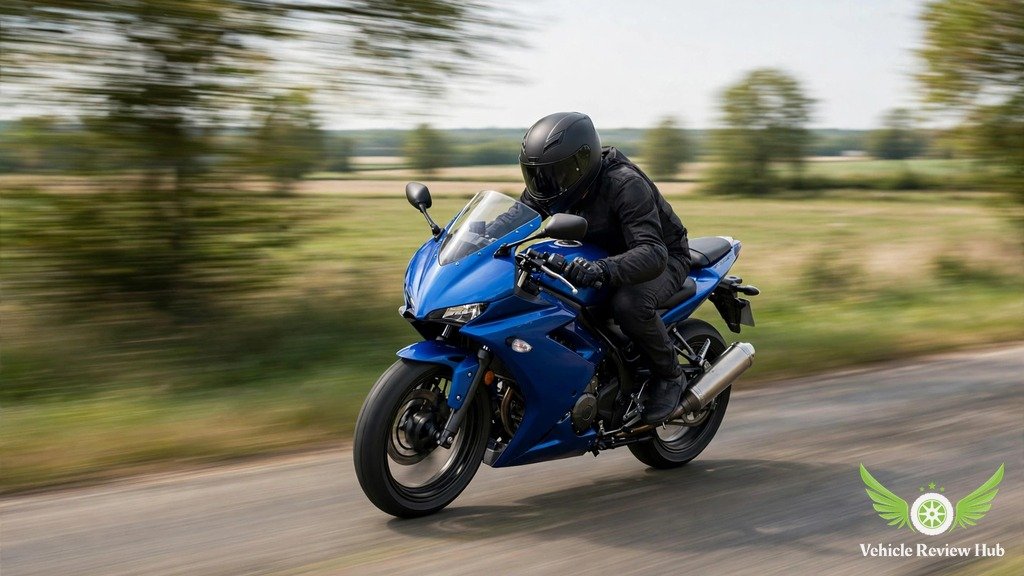
The headline figure for Yamaha YZF-R125 performance is 80 mph, listed by MCN’s R125 review as the bike’s top speed for the current model. MCN’s review text adds that, on a private road, Yamaha says the bike will head north of 80 mph — so 80 mph is a realistic road figure, not a mechanical ceiling. Owner reports agree: indicated speeds in the low 80s mph are common on a flat road with a tucked rider. Read it as a band: around 78–82 mph in normal conditions, with 80 mph the fair single number.
The video above is MCN’s ride review of the 2019 R125 (with the R3), showing the bike ridden on real roads rather than a speedometer claim. It makes the point better than any number: the R125 builds speed steadily, needs its gears worked, and holds its own in traffic, but works hard at the top of its range.
Why There Is No Credible Verified 0-60 MPH Test
Here is an honest gap: no credible, instrumented 0–60 mph test figure for the current Yamaha YZF-R125 performance package could be verified for this guide. MCN’s own data panel for the bike leaves the quarter-mile acceleration field blank, and no major publication was found publishing a GPS-verified 0–60 mph time for the 2023-on model. What can be said safely about Yamaha YZF-R125 performance matches every published road test: acceleration is brisk off the line for a 125, strong through the first three gears, and increasingly gradual as speed rises and aerodynamic drag grows. Any precise 0–60 mph figure for this bike without a named test method should be treated with skepticism.
Factors That Affect Top Speed: Rider Weight, Wind and Gearing
Three factors dominate real-world Yamaha YZF-R125 performance at the top end. First, rider weight and size: on a bike weighing 144 kg wet, a 60 kg rider and a 100 kg rider represent very different total loads. Second, wind and gradient: a headwind or slight uphill grade can cost 3–5 mph, while a tailwind or downhill stretch can add a similar amount to the speedometer reading. Third, riding position: tucking behind the screen reduces drag noticeably, which is why testers quote tucked figures separately from upright cruising speeds. Stock gearing balances acceleration against top speed; aftermarket changes are trade-offs, not free speed.
Yamaha YZF-R125 Mileage and Fuel Economy
If top speed is the R125’s most asked-about number, fuel economy is the most impressive side of Yamaha YZF-R125 performance.
Official 2.1 L/100km: 134.5 MPG UK and 112 MPG US Conversion
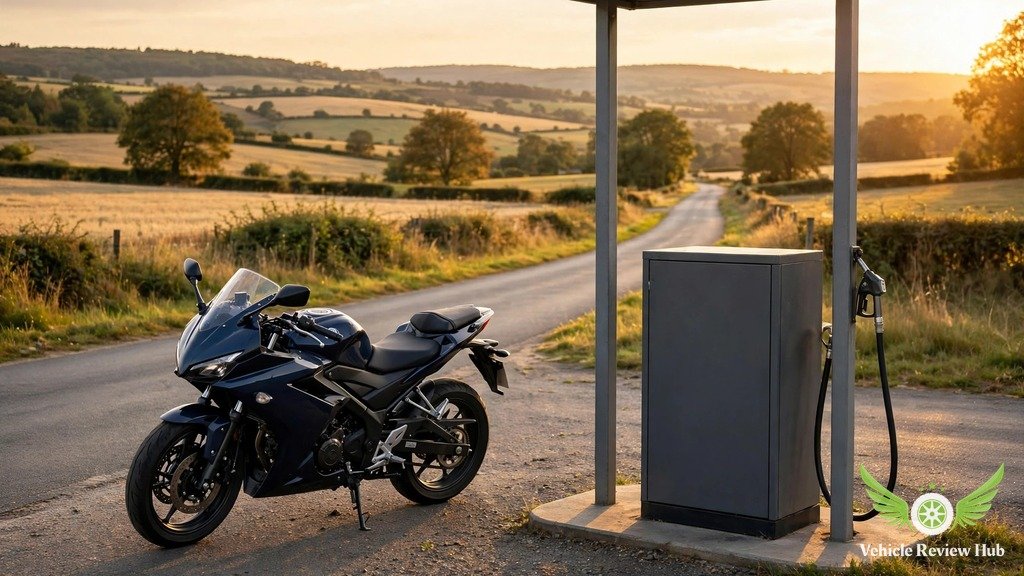
Yamaha’s official fuel consumption for the current R125 is 2.1 litres per 100 km. Converting that Yamaha YZF-R125 performance figure honestly requires stating which gallon is meant, because the UK imperial gallon (4.546 litres) and the US gallon (3.785 litres) give different answers: 134.5 miles per imperial gallon and 112 miles per US gallon — the same consumption expressed in two different measures, not two different claims. American readers should use the 112 mpg US figure; British readers should use 134.5 mpg imperial. It is a standardized test result, not a promise for every ride.
Bennetts Tested 97 MPG UK and Real-World Fuel Range From 11L Tank
Real-world Yamaha YZF-R125 performance testing backs up the official figure remarkably well. Bennetts’ 2023 R125 review reports a claimed 134.5 mpg (imperial) and records 97 mpg (imperial) in press-launch riding, including track sessions, which still gives a stated 240-mile range from the 11-litre tank. That tested figure is the more useful planning number for Yamaha YZF-R125 performance, because it reflects hard use rather than gentle test conditions. From the 11-litre tank (2.42 imperial gallons, 2.91 US gallons): about 325 miles at the official 134.5 mpg imperial, about 235–240 miles at Bennetts’ tested 97 mpg imperial, and about 271 miles at MCN’s listed average of 112 mpg. For Yamaha YZF-R125 performance planning, a practical rule is to expect 230–270 miles between fill-ups in mixed riding.
| Fuel economy scenario | Miles per gallon | Range from 11 litres |
|---|---|---|
| Yamaha official figure (imperial) | 134.5 mpg UK | About 325 miles |
| Yamaha official figure (US gallons) | 112 mpg US | About 325 miles |
| MCN listed average | 112 mpg | About 271 miles |
| Bennetts tested (hard riding) | 97 mpg UK | About 240 miles |
| Practical planning range | 97–112 mpg | 230–270 miles |
Note: MCN’s 112 mpg average and the official figure’s 112 mpg US conversion share the same number by coincidence — MCN’s figure is in imperial gallons (hence about 271 miles), while the official US-gallon figure gives about 325 miles from the same 11-litre tank.
Yamaha YZF-R125 Acceleration in City and Highway Riding
Test numbers only go so far. What makes Yamaha YZF-R125 performance work daily is how the package behaves where most owners ride: city streets first, faster roads second.
City Riding, Traffic Performance and Everyday Acceleration
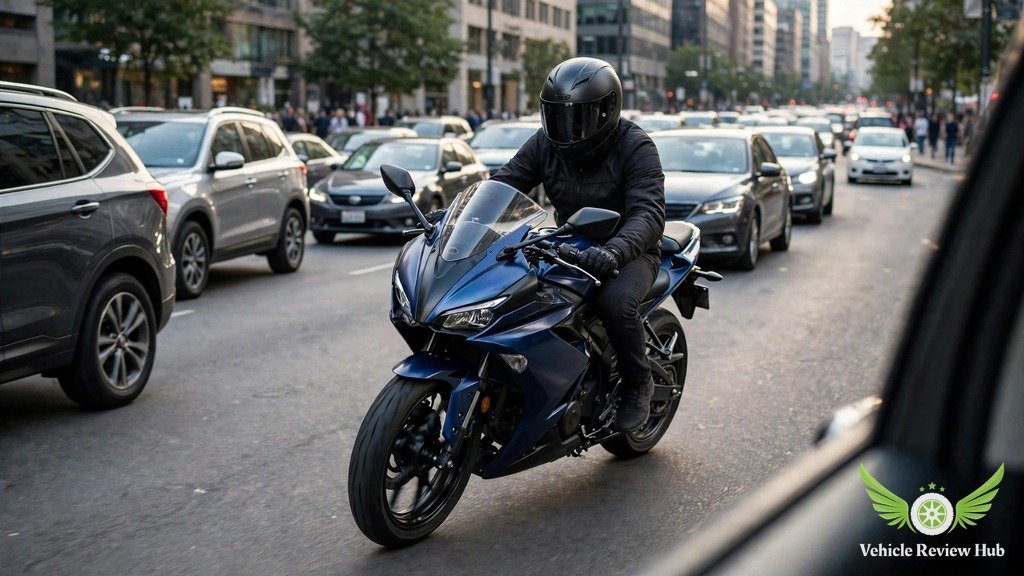
In city traffic, Yamaha YZF-R125 performance is at its best. The 820 mm seat height, 144 kg wet weight and compact 1,325 mm wheelbase make the bike easy to manage at low speed and filter through traffic, while the low-lift VVA cam gives clean pull from low revs without constant clutch work. Published road tests consistently praise the bike’s town manners: light steering, a friendly clutch, and enough low-end torque to pull away from lights and roundabouts without drama. For a new rider, that low-speed confidence is arguably the most valuable part of Yamaha YZF-R125 performance, because that is where riding skill is built.
70 MPH Cruising, Overtaking Planning and Long-Distance Limitations
On faster roads, Yamaha YZF-R125 performance is capable but honest about its limits. The bike cruises at 70 mph, and reviewers report it holding national speed-limit pace without complaint, but it is working hard to do so — revs high, wind noise present, and very little acceleration left in top gear. Overtaking at highway speed needs planning: dropping two gears, using the high-lift cam above 7,400 rpm, and allowing a longer gap. Sustained high-speed cruising also brings single-cylinder vibration and limited wind protection, which is why most owners call the R125 a brilliant 150-mile-day bike rather than a touring machine. Riders who want effortless highway pace should look at the step up to a larger bike, as the bigger R3 shows with its twin-cylinder torque and relaxed cruising.
Yamaha YZF-R125 Handling, Braking and Stability
If the engine defines the R125’s speed, the chassis defines how much of it a rider can use. Handling is the most praised part of Yamaha YZF-R125 performance in published tests, and the hardware explains why.
Deltabox Chassis, USD Fork, Tires and Cornering Performance
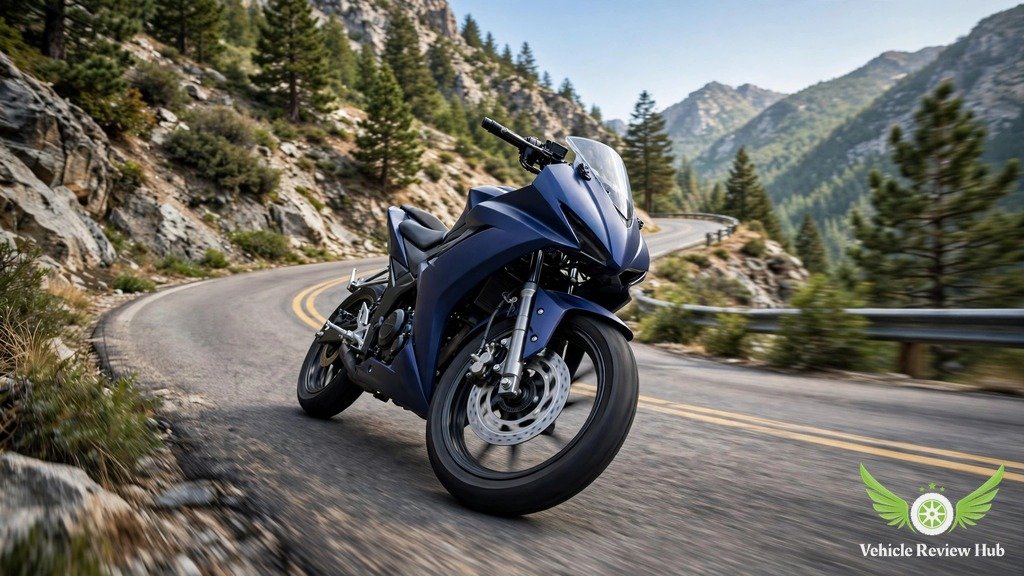
The steel Deltabox frame, 41 mm upside-down KYB fork with 130 mm of travel, and link-type rear suspension with 110 mm of travel give the R125 a chassis that reviewers compare favorably with much bigger sportbikes. The geometry — 26-degree caster, 95 mm trail, 1,325 mm wheelbase — is stable without being slow-steering. On a twisty road, Yamaha YZF-R125 performance comes fully alive: the bike holds a line well at lean, changes direction quickly, and stays composed over bumps. Tires are 100/80-17 front and 140/70-17 rear, a wider rear than the 130-section tire on earlier generations, adding stability and grip.
292mm Front and 220mm Rear Discs, ABS and Traction Control
Braking hardware on the current R125 is a single 292 mm front disc with a radially mounted caliper and a single 220 mm rear disc, both with standard ABS. That setup stops the light bike well in normal riding, with progressive feel rather than fierce initial bite — the right priority for a learner motorcycle. Since the 2023 update, switchable traction control joins the Yamaha YZF-R125 performance package, operated through the 5-inch colour TFT display, plus a programmable shift light and optional quickshifter wiring (an accessory, not standard). Staying on top of brake servicing is the simplest way to keep Yamaha YZF-R125 performance under braking at its best, since worn pads or old fluid dull the response of any brake system.
Yamaha YZF-R125 Performance Compared With Named 125cc Rivals
Every 125cc sportbike lives under the same A1 law — 11 kW maximum, 125cc maximum — so rivals differ not in headline power but in weight, chassis, equipment and price — which makes Yamaha YZF-R125 performance comparisons unusually honest.
Yamaha YZF-R125 vs KTM RC 125 and Aprilia RS 125
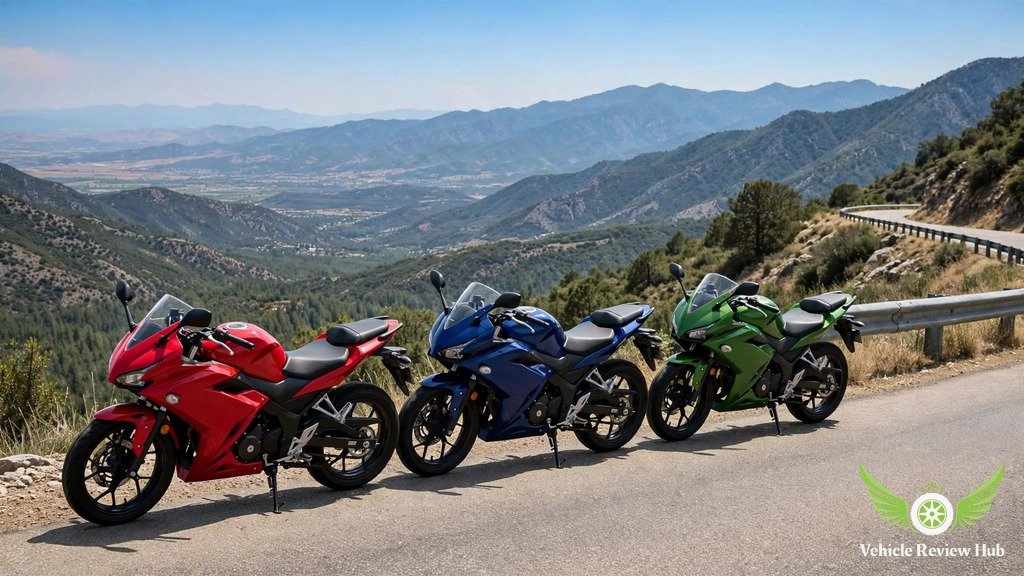
The KTM RC 125 is the R125’s most technology-loaded rival. Its 124.7cc single makes the same A1-limited 11 kW, but with 12 Nm of torque at 7,500 rpm, a WP 43 mm fork, a 320 mm front disc, cornering ABS, ride-by-wire, traction control and a TFT display — all listed on KTM RC 125 specifications. The trade-off is weight and thirst: around 156 kg kerb weight and 2.42 L/100 km, against the Yamaha’s 144 kg and 2.1 L/100 km. The Aprilia RS 125 takes a different route: Italian racing heritage, a 14.5-litre tank, and a kerb weight around 144 kg, with the same 15-horsepower A1 ceiling and a top speed in the same 75–80 mph region. Where Yamaha YZF-R125 performance counters both is refinement and running costs: VVA flexibility, dealer network and proven reliability.
Yamaha YZF-R125 vs Suzuki GSX-R125 and Kawasaki Ninja 125
The Suzuki GSX-R125 is the lightweight of the group. Its 124.4cc DOHC single makes 15 horsepower and 8.49 lb-ft of torque, carried in a steel-tube backbone frame with LED lighting, keyless ignition and a full LCD dash. Top speed reporting for the Suzuki varies more than for any rival — MCN lists 69 mph, other outlets cite 70–80 mph. The Kawasaki Ninja 125 is the quiet achiever of the class: an 11 kW single in a full Ninja fairing, top speed around 118 km/h (about 73 mph), an 11-litre tank and a low 785 mm seat height that suits shorter riders. Against Yamaha YZF-R125 performance, the Suzuki counters with a lower price and lighter feel, the Ninja with Kawasaki’s image and an easier reach to the ground, while Yamaha YZF-R125 performance answers with VVA flexibility, a TFT display, traction control and a more premium chassis feel.
Yamaha YZF-R125 vs Honda CBR125R: Discontinued Rival Explained
The Honda CBR125R is the ghost at this comparison table: a genuinely good motorcycle that you can no longer buy new. Production ran from 2004 to 2016, and the bike went off sale in 2018, leaving Honda’s 125 range to the naked CB125R and CB125F. The CBR125R’s final form made 13 bhp from its 124.7cc single, weighed about 136 kg, carried a 10-litre tank, and was estimated at around 70 mph top speed and 75 mpg — figures summarized in Honda CBR125R history and contemporary buying guides. Why the discontinued Honda still matters for Yamaha YZF-R125 performance buyers is the used market: a clean used CBR125R remains a cheap, reliable entry to faired 125cc riding, but it gives up a decade of progress — no VVA, no TFT display, no traction control, a smaller tank and less power.
| Model | Power (A1 limit) | Weight | Tank | Top speed (reported) |
|---|---|---|---|---|
| Yamaha YZF-R125 (current) | 15 hp @ 10,000 rpm | 144 kg wet | 11.0 L | 80 mph (MCN) |
| KTM RC 125 (2024) | 15 hp | ~156 kg kerb | 13.7 L | ~75–80 mph |
| Aprilia RS 125 | 15 hp | ~144 kg kerb | 14.5 L | ~75–80 mph |
| Suzuki GSX-R125 | 15 hp | Lightest in class | ~11 L | 69–80 mph (varies by source) |
| Kawasaki Ninja 125 | 15 hp | ~144 kg class | 11.0 L | ~73 mph |
| Honda CBR125R (discontinued) | 13 bhp | ~136 kg | 10.0 L | ~70 mph (est) |
Yamaha YZF-R125 Performance FAQs
Direct answers to the questions riders ask most about Yamaha YZF-R125 performance, from top speed to fuel economy, rivals and highway riding.
What is the Yamaha YZF-R125 performance top speed?
MCN lists a Yamaha YZF-R125 performance top speed of 80 mph for the current model, and Yamaha says the bike will head north of 80 mph on a private road. Results vary with rider weight, wind and gradient, so 78–82 mph is the honest band.
What is the Yamaha YZF-R125 0-60 mph time?
No credible, instrumented 0–60 mph test figure for the current model could be verified, and MCN’s data panel leaves the quarter-mile field blank. Do not trust a precise 0–60 mph figure for this bike unless its test method and conditions are named.
How does VVA improve Yamaha YZF-R125 performance?
VVA switches intake valve timing at 7,400 rpm from a low-lift to a high-lift cam, giving clean low-rev torque below the switch and strong top-end pull above it. The changeover is seamless by design, so Yamaha YZF-R125 performance feels flexible across the rev range.
How much horsepower does the Yamaha YZF-R125 make?
The current engine is rated at 11.0 kW (15.0 PS) at 10,000 rpm with 11.5 Nm of torque at 8,000 rpm, the maximum allowed under A1 licence law. That cap is why Yamaha YZF-R125 performance differences against rivals come from weight, chassis and equipment rather than power.
What is the Yamaha YZF-R125 performance fuel economy?
Yamaha’s official figure is 2.1 litres per 100 km, which converts to 134.5 mpg in imperial gallons and 112 mpg in US gallons. Bennetts tested 97 mpg imperial in hard riding, and MCN lists a 112 mpg average.
How far can the Yamaha YZF-R125 go on a full tank?
With an 11-litre tank, Yamaha YZF-R125 performance range works out to about 325 miles at the official figure, about 271 miles at MCN’s listed average, and about 240 miles at Bennetts’ tested 97 mpg. A practical planning range is 230–270 miles in mixed riding.
Is the Yamaha YZF-R125 good on the motorway?
It holds 70 mph, but it works hard to do so, with high revs, noticeable vibration and little overtaking reserve. Yamaha YZF-R125 performance on motorways is adequate for short stretches, but the bike’s home is A-roads, back roads and city riding.
Is the Yamaha YZF-R125 faster than the KTM RC 125?
Not in any meaningful way. Both are capped at 15 horsepower, and both reach roughly 75–80 mph. The KTM counters with sharper electronics and a bigger front brake, while Yamaha YZF-R125 performance answers with lighter weight, better fuel economy and VVA flexibility.
Is the Yamaha YZF-R125 sold in the USA?
No. The R125 is not officially sold in the United States, so there is no US price or US dealer network. American readers researching Yamaha YZF-R125 performance should compare the US-sold R3, which offers more power and full dealer support at home.
What limits Yamaha YZF-R125 performance at the top end?
Aerodynamic drag and the 15-horsepower legal cap. At 80 mph the Yamaha YZF-R125 performance package is spinning hard in top gear with a tucked rider, and drag rises faster than the engine’s remaining power can overcome. Rider size, position, wind and gradient move the result by several mph.