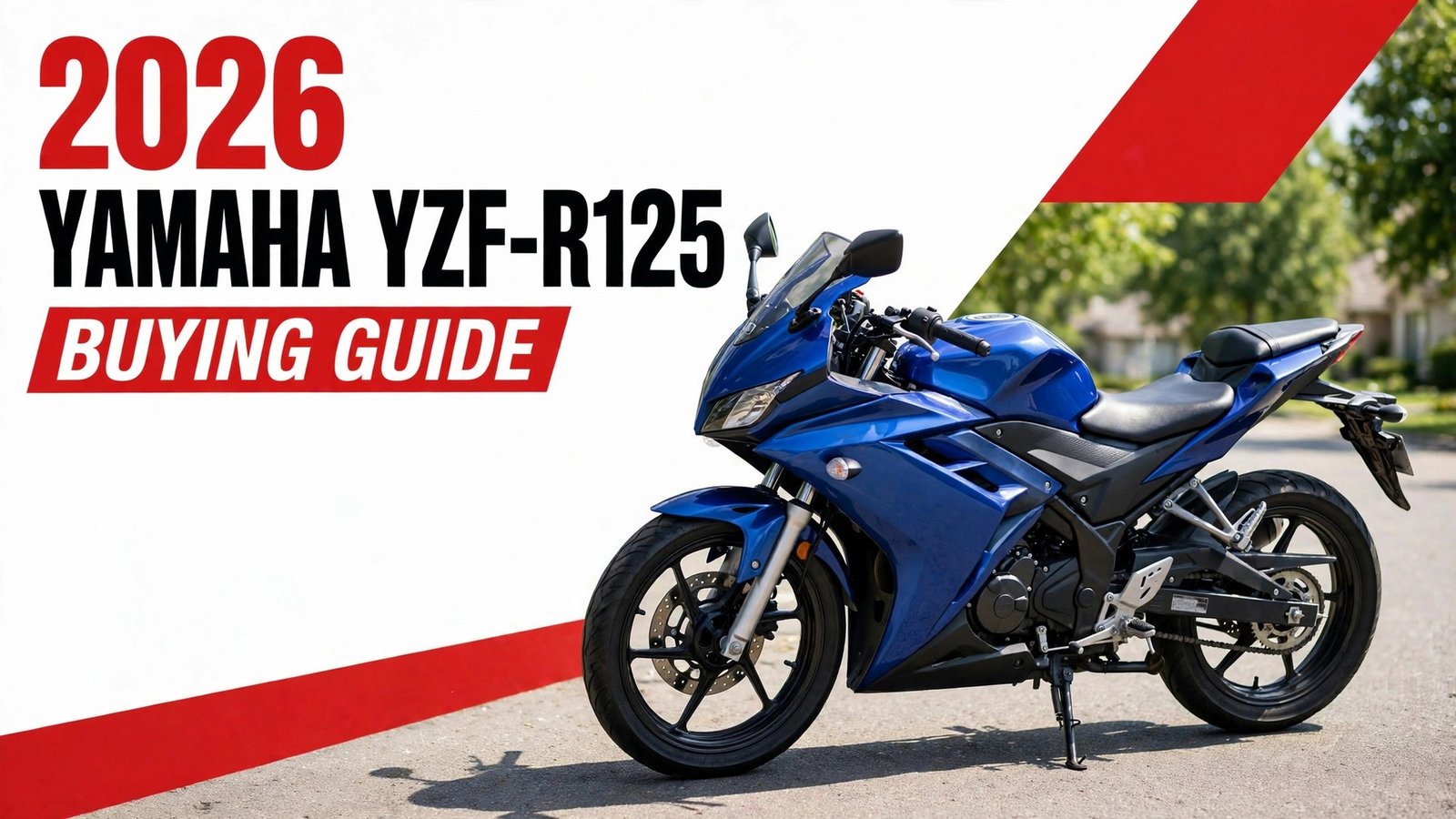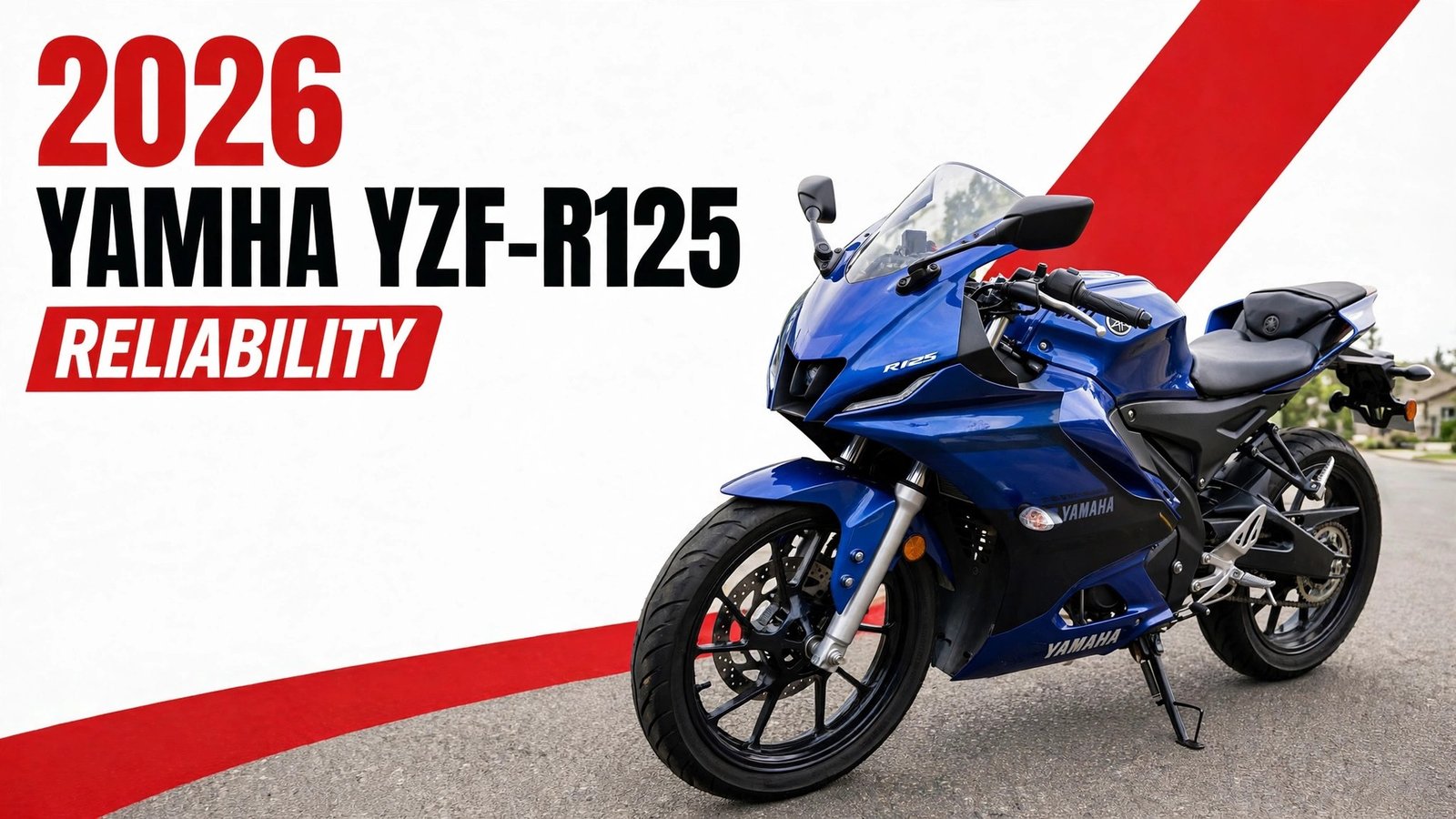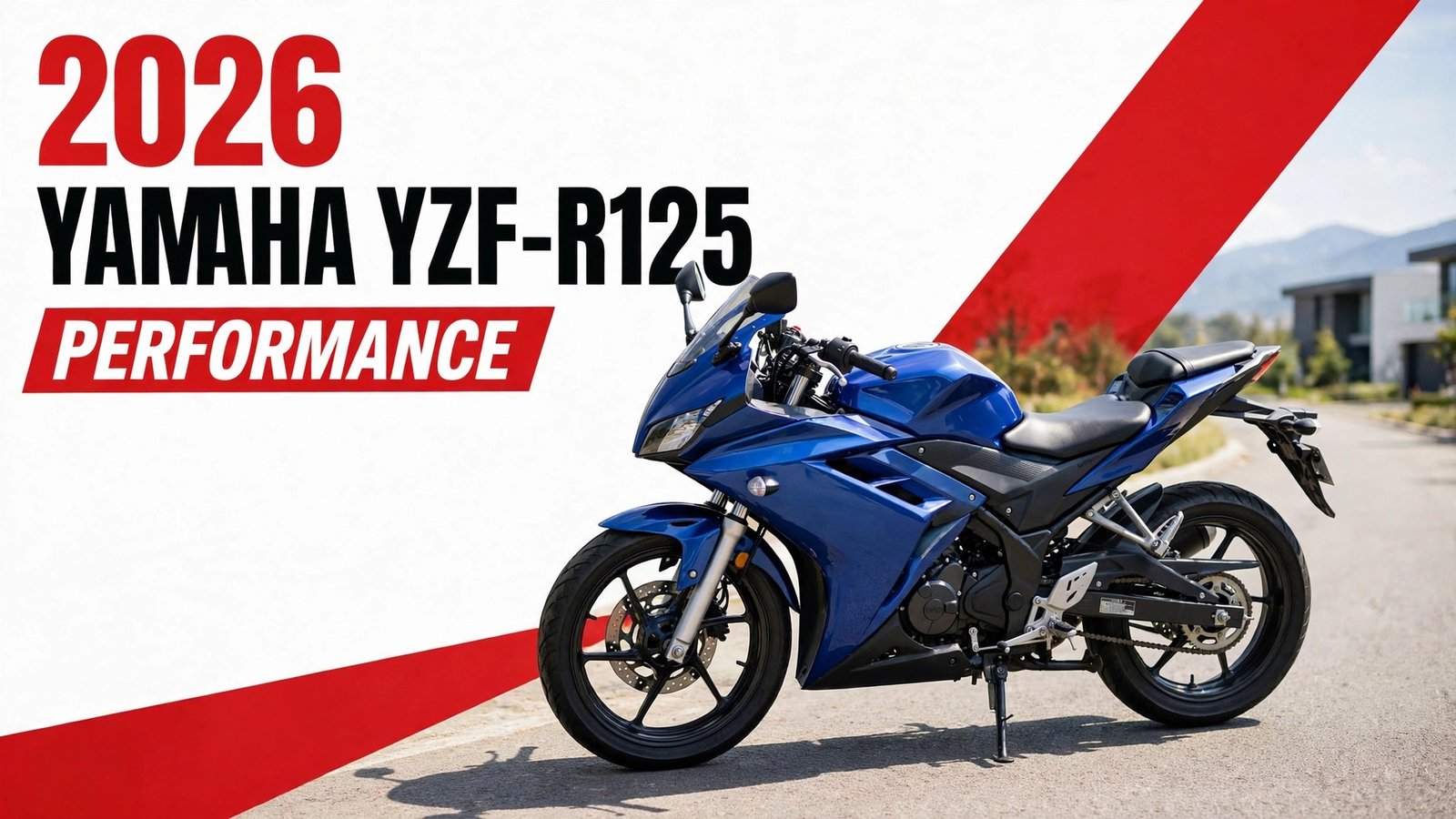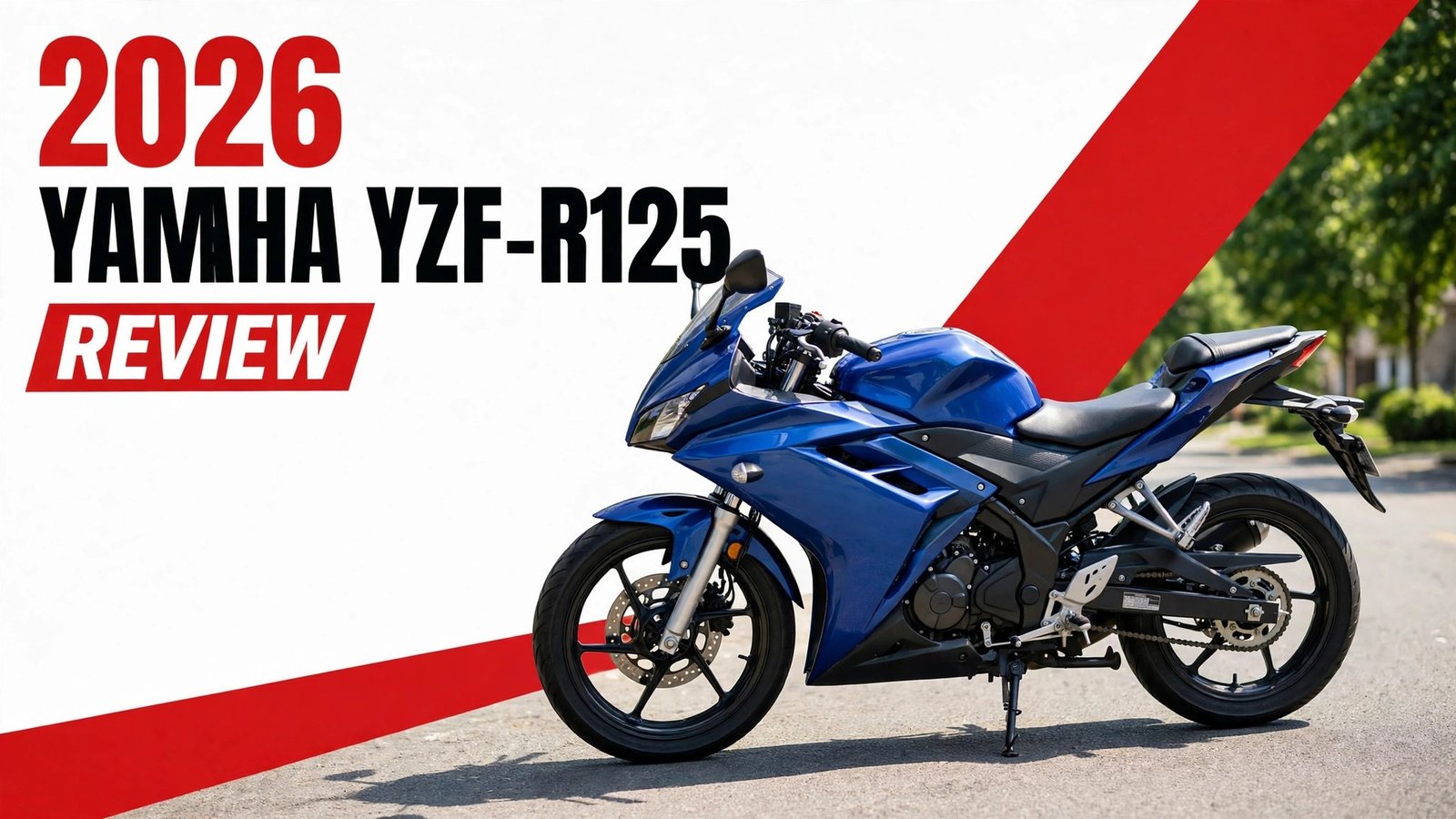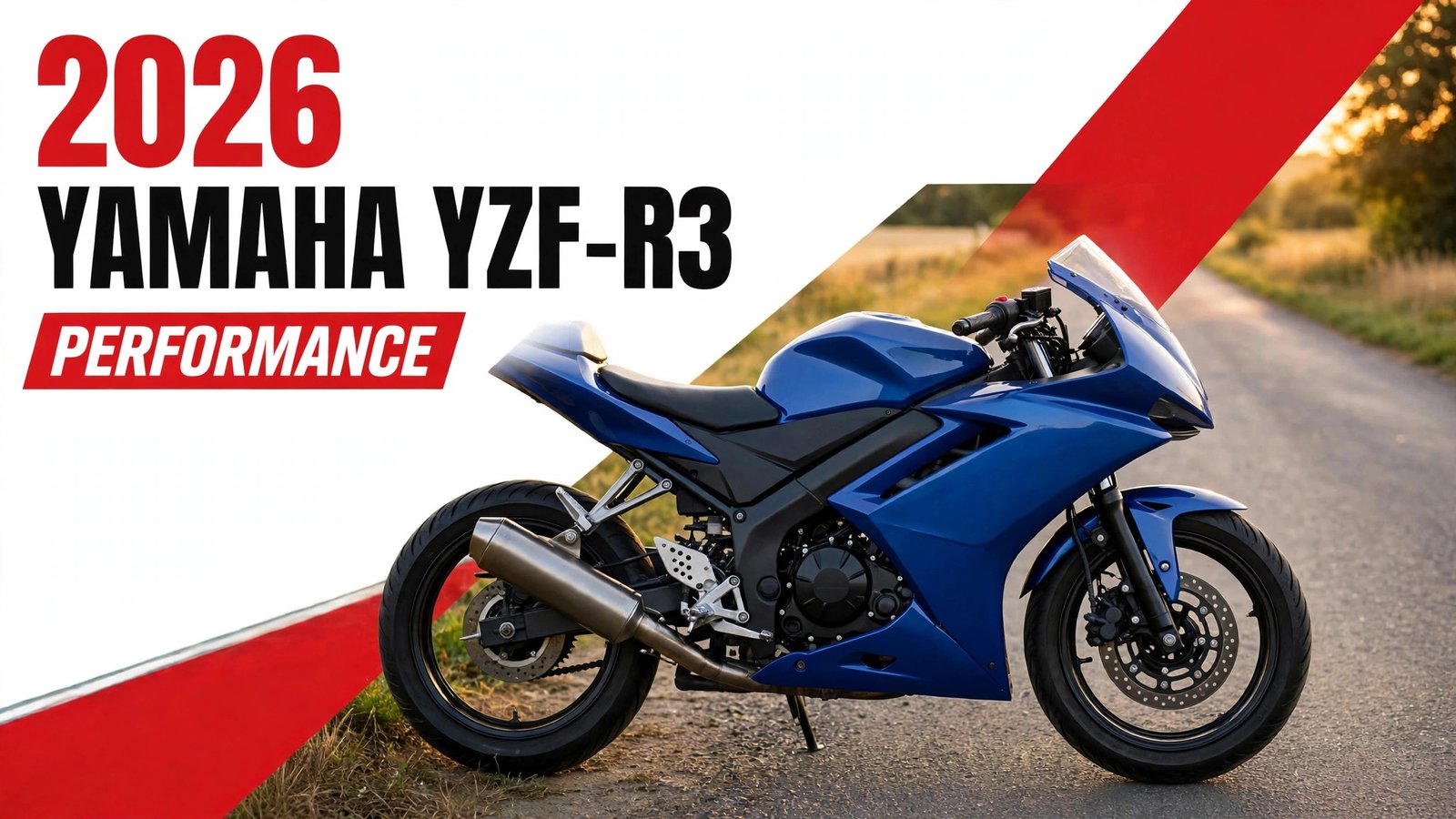
The 2026 Yamaha YZF-R3 performance story is about usable speed, not headline horsepower. Yamaha claims 42 horsepower from the 321cc twin, a 373-pound wet weight, and an estimated 56 mpg, and independent GPS testing backs that up with 0–60 mph in about 5.2 seconds and a tested top speed of 112 mph. This guide to Yamaha YZF-R3 performance covers how the little twin makes its speed, where it runs out of breath, what it returns at the pump, and how the chassis and brakes cope in traffic, on the highway, and on twisty roads.
Yamaha YZF-R3 Engine Performance
The engine is the whole personality of the bike. It is small, it revs high, and it rewards riders who use the gearbox — which is why Yamaha YZF-R3 performance feels so different from a bigger twin that does its best work at low revs.
Power Delivery and High-RPM Engine Character
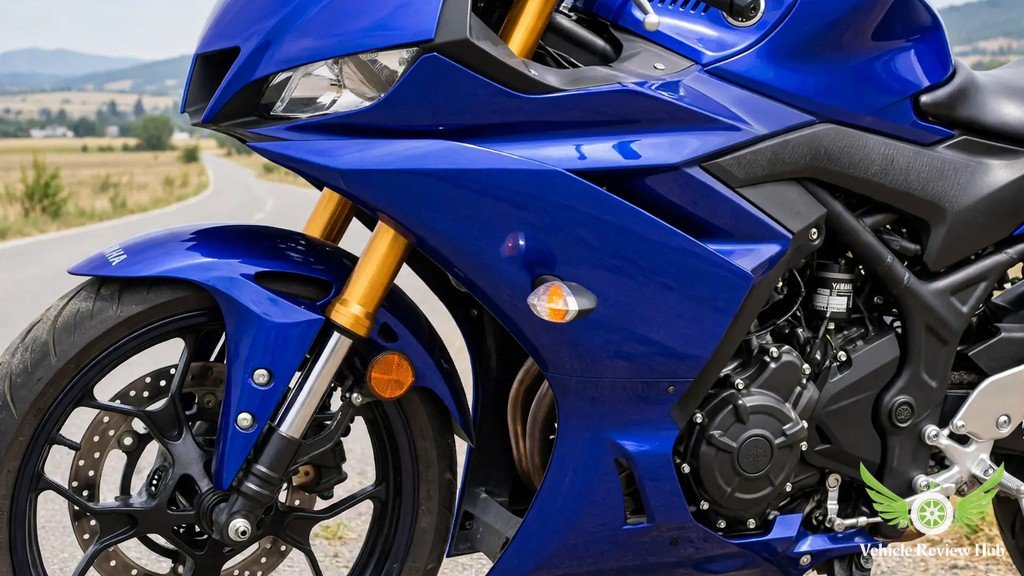
At the heart of Yamaha YZF-R3 performance sits a 321cc liquid-cooled, DOHC parallel twin with a 180-degree crankshaft, 68.0 mm bore and 44.1 mm stroke, and an 11.2:1 compression ratio, fed by fuel injection. Yamaha claims 42 horsepower at 10,750 rpm and 21.8 lb-ft of torque at 9,000 rpm, figures that Total Motorcycle’s 2026 YZF-R3 specification listing repeats alongside the rest of the factory numbers. Independent dyno reporting puts rear-wheel output nearer 37 horsepower, the usual gap between a crankshaft claim and what reaches the tire. The 2026 model is mechanically unchanged from the recent bike, with new colors and a 70th Anniversary Edition at $5,699 joining the $5,499 base model.
That character is all about revs. Below about 7,000 rpm the R3 feels polite rather than quick — enough torque to pull away cleanly and hold city speeds without fuss, but nothing that shoves you back in the seat. Cross 7,000 rpm and the twin wakes up, pulling with a smooth, rising urgency toward a redline near 12,500 rpm, and that top-end rush is where Yamaha YZF-R3 performance lives. Published reviews describe the same split personality: refined and almost quiet at low revs, eager and buzzy as the needle climbs.
Light weight is what makes 42 claimed horsepower feel like enough. At 373 pounds wet, the R3 carries roughly 8.9 pounds per claimed horsepower, and that is why Yamaha YZF-R3 performance punches above its displacement. The steel diamond-type frame, near 50/50 weight distribution, and compact 54.3-inch wheelbase help the bike change direction with very little effort, so the engine never has to overcome a heavy chassis.
Throttle Response, Gear Changes and Acceleration
Throttle response is refreshingly simple in Yamaha YZF-R3 performance, because there is no ride-by-wire system, no ride modes, and no traction control to interpret your right hand — just a cable throttle, fuel injection, and a direct connection between wrist and rear wheel. That simplicity is a genuine part of Yamaha YZF-R3 performance: fueling is clean and predictable at small openings, which matters in traffic, and wide-open throttle gives you everything the engine has. The trade-off is that there is no safety net beyond standard ABS.
The six-speed gearbox is central to getting the best out of the bike. Gearing is short, and the quickest acceleration comes from shifting in the 10,500–12,500 rpm band and keeping the engine boiling — short-shifting at 7,000 rpm leaves a lot of Yamaha YZF-R3 performance on the table. The assist-and-slipper clutch lightens the lever and reduces rear-wheel hop on aggressive downshifts, and it is listed among the standard features on Yamaha’s official 2026 YZF-R3 features page. There is no quickshifter, so every shift is manual — fine for learning proper technique. Launch technique matters more than usual here: because torque is modest, an abrupt clutch release preserves momentum better than a slow, slipping one, and that detail can move a 0–60 time by a few tenths.
Yamaha YZF-R3 Top Speed and Acceleration
Straight-line numbers are where Yamaha YZF-R3 performance is easiest to measure and easiest to exaggerate, so this section sticks to instrumented testing. Yamaha publishes no official top speed for the R3, and any article quoting one as a factory figure is guessing.
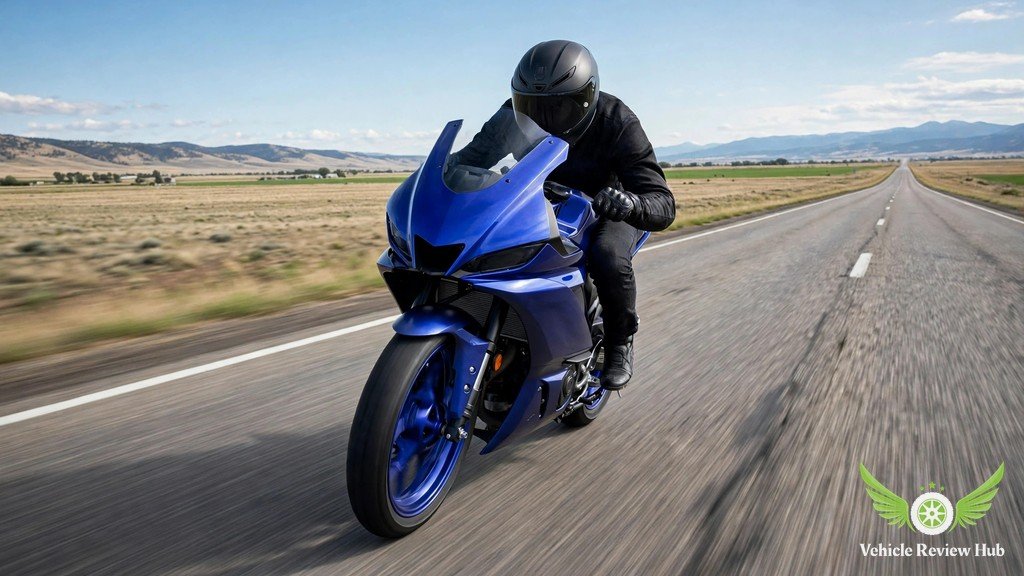
What Independent Tests Report About Top Speed
The most detailed independent data for Yamaha YZF-R3 performance comes from MotoStatz comparison test, which recorded a YZF-R3 top speed of 112.1 mph. The same test notes that a good tuck can stretch that toward 115 mph, and a favorable tailwind or slight downhill grade can push the speedometer toward 120 mph — but 112 mph is the honest, repeatable GPS figure, and speedometers on small bikes typically read several percent optimistic. That distinction matters for Yamaha YZF-R3 performance claims, because dashboard videos showing 118 or 120 mph usually show an optimistic speedometer, not GPS speed.
For context, the same MotoStatz test recorded 118.3 mph for the Ninja 400, which has about 7 more horsepower. The gap is real but small, and it tells you where Yamaha YZF-R3 performance sits in its class: quick enough to be genuinely fast on any public road, but not the fastest bike in the 300–400cc group. The video below is a practical R3 review built around real-world riding tests, including acceleration runs and twisty-road riding, rather than a GPS top-speed run.
The video makes the key point about Yamaha YZF-R3 performance better than any number: the R3 builds speed steadily, needs its gears worked, and rewards a rider who stays in the powerband. At the top end the little twin spins high in sixth gear with the rider tucked tight, and aerodynamic drag limits speed as much as engine power does. A taller rider sitting upright, a headwind, or a passenger will all cost a few mph.
Published Acceleration Results and Testing Limitations
MotoStatz’s full acceleration table for Yamaha YZF-R3 performance reads: 0–60 mph in 5.17 seconds, 0–80 mph in 8.74 seconds, 0–100 mph in 16.80 seconds, a standing quarter mile in 14.00 seconds at 94.9 mph, and a 60–100 mph roll-on of 11.67 seconds. Other summaries round those figures slightly differently — 5.1 seconds to 60, 14.07 seconds for the quarter mile, 17.13 seconds to 100 — reflecting different test days rather than a contradiction. Either way, the shape of Yamaha YZF-R3 performance is consistent: brisk to 60, respectable to 80, and increasingly slow beyond 100 mph, where the small engine fights drag with little power in reserve.
| Test measurement (MotoStatz, GPS) | Yamaha YZF-R3 |
|---|---|
| 0–60 mph | 5.17 seconds |
| 0–80 mph | 8.74 seconds |
| 0–100 mph | 16.80 seconds |
| Quarter mile | 14.00 seconds at 94.9 mph |
| 60–100 mph | 11.67 seconds |
| Top speed (GPS) | 112.1 mph |
Testing limitations explain why owners report different numbers. Rider weight matters more on a 373-pound bike than on a 500-pound one; wind, gradient, altitude, tire condition, chain condition, and fuel load all move results by tenths of a second and several mph. The honest way to read Yamaha YZF-R3 performance figures is as a band — roughly 5.1–5.3 seconds to 60 mph and 110–115 mph flat out — rather than a single magic number, and any seller quoting a 130 mph top speed for a stock R3 is quoting a speedometer fantasy, not a measurement.
Yamaha YZF-R3 Mileage and Fuel Range
Fuel economy is the quiet superpower of Yamaha YZF-R3 performance. The bike sips fuel, and the gap between Yamaha’s estimate and real-world riding is smaller than on most motorcycles — provided you ride it the way most owners actually do.
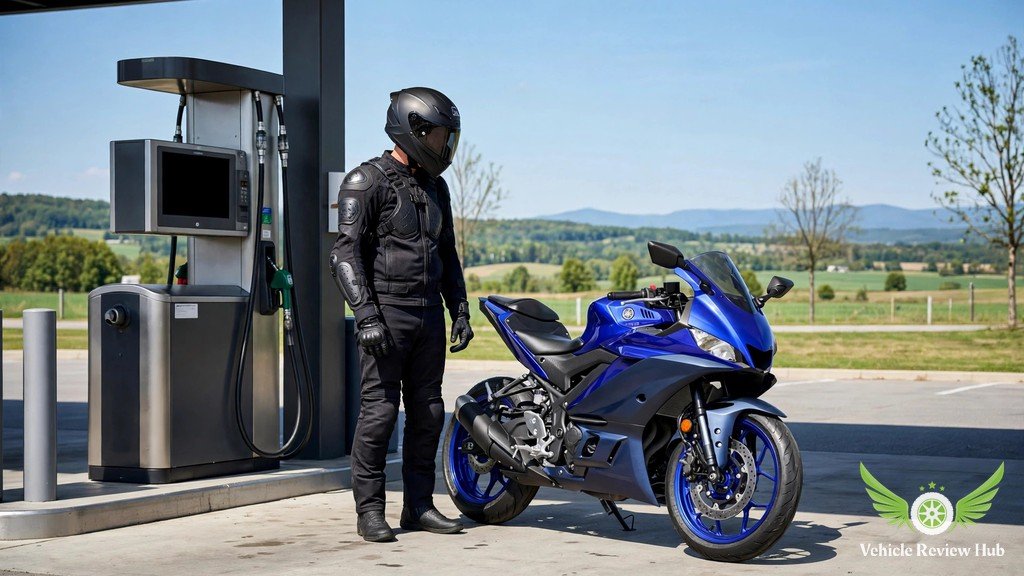
Yamaha’s Estimated 56 MPG Fuel Economy
Yamaha lists the 2026 YZF-R3 at an estimated 56 mpg, a figure confirmed on Yamaha’s official 2026 YZF-R3 page, which notes that the fuel-economy figure is an estimate. That number is a manufacturer estimate under controlled conditions, not an EPA-style test result, so read it as a realistic target for mixed riding rather than a guarantee. The engine earns that figure honestly: a small 321cc twin with fuel injection, a relatively tall sixth gear, and a light chassis does not need much fuel to hold steady speeds, and Yamaha YZF-R3 performance at a cruise is efficient precisely because the bike carries no extra weight or displacement.
Real-World MPG and Factors That Affect Consumption
Owner-reported data lines up well with Yamaha’s estimate. Fuelly’s owner-logged Yamaha YZF-R3 fuel economy records, drawn from hundreds of thousands of tracked miles, show year-by-year averages mostly in the upper 50s to low 60s mpg. Those are owner logs, not laboratory tests, and recent model years have small sample sizes, but the picture is consistent: gentle mixed riding meets or beats Yamaha’s estimate, while hard riding drops it. Published reviews describe the same spread for Yamaha YZF-R3 performance in daily use — mid-50s mpg commuting, high 40s to low 50s when ridden hard, and low 60s on gentle back-road rides.
Speed is the biggest single factor. Aerodynamic drag rises sharply with speed, and a small faired bike at 80 mph works much harder than the same bike at 55 mph, so sustained fast highway riding is the fastest way to drop below 50 mpg. Short trips with a cold engine cost fuel too, since the engine runs rich until warm, and a neglected chain, underinflated tires, or a dragging brake all add hidden consumption. Holding high revs for fun is the whole point of Yamaha YZF-R3 performance, and it is also the surest way to watch the fuel gauge move faster — though even at 45 mpg, a 150-mile week costs barely over three gallons.
Estimated Range from the 3.7-Gallon Fuel Tank
The R3 carries 3.7 gallons, and the range math is simple. At Yamaha’s estimated 56 mpg, a full tank theoretically covers about 207 miles; at a real-world 50 mpg, that falls to about 185 miles; at 60 mpg on a gentle ride, it stretches to about 222 miles. In practice, most riders plan fuel stops around 160–190 miles, because the low-fuel warning leaves a reserve margin. That planning range is generous for a sportbike and is one of the practical strengths of Yamaha YZF-R3 performance: a 150-mile weekend ride needs no fuel stop at all.
| Average fuel economy | Range from 3.7 gallons |
|---|---|
| 45 mpg (hard riding) | About 167 miles |
| 50 mpg (brisk mixed riding) | About 185 miles |
| 56 mpg (Yamaha estimate) | About 207 miles |
| 60 mpg (gentle riding) | About 222 miles |
| Practical planning range | 160–190 miles before refueling |
Yamaha YZF-R3 Real-World Riding Performance
Numbers on a page only go so far. What makes Yamaha YZF-R3 performance special in daily use is how the whole package — light weight, revvy engine, honest chassis, and modest brakes — works together where most riders actually ride.
City Traffic and Low-Speed Handling
In city traffic, Yamaha YZF-R3 performance is at its friendliest. The 30.7-inch seat height lets most riders put both feet down at a stop, the 373-pound wet weight makes U-turns and parking maneuvers easy, and the engine pulls cleanly from low revs without snatching or stalling. The light assist clutch and clean-shifting gearbox mean stop-and-go riding never feels like work. The sporty-but-not-extreme riding position and slim bodywork make threading between cars feel natural. For a new rider, this low-speed confidence is arguably the most valuable part of Yamaha YZF-R3 performance, because it is where riding skill is actually built. That approachability is a core part of Yamaha YZF-R3 performance.
Highway Cruising, Passing Power and Engine Vibration
On the highway, Yamaha YZF-R3 performance is capable but honest about its limits. The bike cruises comfortably at 65–75 mph, and the fairing takes the worst of the wind off the rider’s chest, though the small windscreen still lets wind noise and buffeting through above 65 mph. Passing at highway speed needs planning: dropping a gear or two and using the upper rev range is essential, because the 60–100 mph roll-on takes nearly 12 seconds. Riders who understand that find Yamaha YZF-R3 performance perfectly manageable on the highway.
Engine vibration is the other highway talking point. The 180-degree twin is smooth at moderate revs, but sustained high-rpm cruising sends a noticeable buzz through the bars and footpegs, and published reviews mention it as the main comfort complaint on longer rides. It is not harsh on a short commute, but on a two-hour highway stretch it becomes tiring — one reason many owners call the R3 a brilliant 150-mile-day bike rather than a touring machine. Compared with the larger R7, which pulls highway speeds at lower revs with more torque in reserve, the R3 asks more of its rider on the freeway, as the R7’s performance hardware shows in its own right.
Cornering, Suspension Feedback and Braking
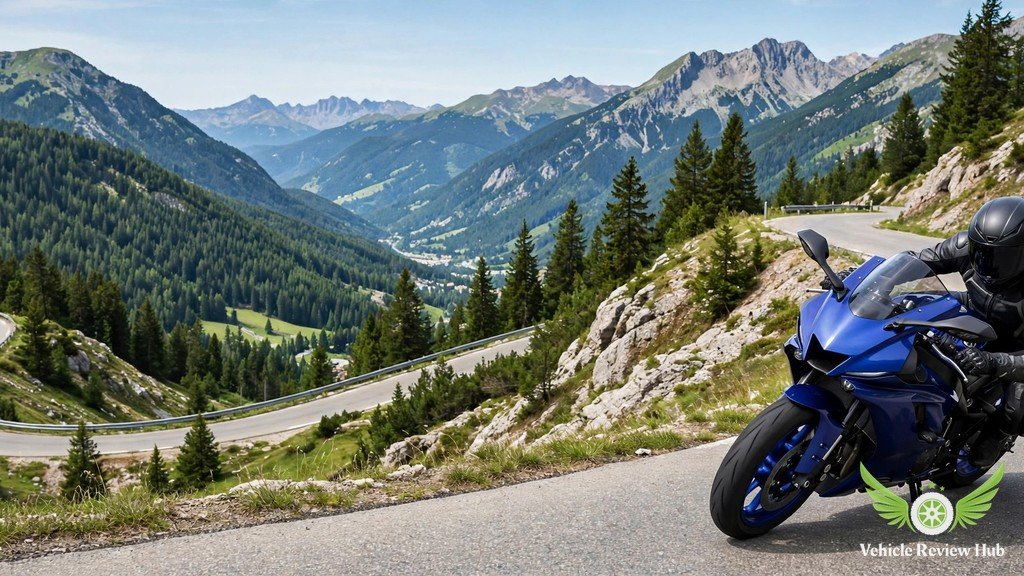
On a twisty road, Yamaha YZF-R3 performance comes fully alive, and this is where owners and reviewers are most enthusiastic. Light weight, a 25-degree rake, 3.7 inches of trail, and a 54.3-inch wheelbase give quick, predictable steering without nervousness, and the bike holds a line well at lean while staying easy to correct mid-corner. The inverted KYB fork with 5.1 inches of travel and the preload-adjustable Monocross rear shock with 4.9 inches of travel are basic by supersport standards, but they are well matched to the bike’s weight and give clear feedback about what the tires are doing. Dunlop Sportmax GPR-300 tires, 110/70-17 front and 140/70-17 rear, offer dependable grip for road riding and track-day learning.
Braking is adequate rather than outstanding, and honesty matters here for Yamaha YZF-R3 performance. A single 298 mm front disc with a two-piston caliper and a single 220 mm rear disc, both with standard ABS, stop the light bike well in normal riding, but they lack the bite and feel of the multi-piston setups on bigger sportbikes, and repeated hard stops on a track day will reveal their budget origins. For road riding and learning, the setup is well judged: progressive and backed by ABS that works unobtrusively. Staying on top of brake servicing is the simplest way to keep Yamaha YZF-R3 performance under braking at its best, since worn pads or old fluid dull the response of any brake system.
Yamaha YZF-R3 Performance FAQs
Direct answers to the questions riders ask most about Yamaha YZF-R3 performance, from top speed and acceleration to fuel economy and highway comfort.
What is the Yamaha YZF-R3 performance top speed?
GPS-instrumented independent testing recorded a Yamaha YZF-R3 performance top speed of 112.1 mph, with a good tuck stretching that toward 115 mph. Yamaha publishes no official top speed, so 112 mph is a tested figure, not a factory claim.
How fast does the Yamaha YZF-R3 accelerate to 60 mph?
Independent GPS testing recorded 0–60 mph in 5.17 seconds for Yamaha YZF-R3 performance, with other summaries of the same testing rounding it to 5.1 seconds. The quarter mile takes about 14.0 seconds at roughly 95 mph, and 0–100 mph takes about 16.8 seconds.
How much horsepower does the Yamaha YZF-R3 make?
Yamaha claims 42 horsepower at 10,750 rpm and 21.8 lb-ft of torque at 9,000 rpm for the 321cc twin behind Yamaha YZF-R3 performance. Independent dyno reporting puts rear-wheel output nearer 37 horsepower, the normal gap between a crankshaft claim and measured wheel output.
What is the Yamaha YZF-R3 performance fuel economy?
Yamaha estimates 56 mpg, and owner-logged data mostly supports that figure for Yamaha YZF-R3 performance in mixed riding, with year-by-year averages in the upper 50s to low 60s mpg. Hard riding drops it into the high 40s, while gentle back-road riding can reach the low 60s.
How far can the Yamaha YZF-R3 go on a full tank?
With a 3.7-gallon tank, Yamaha YZF-R3 performance range works out to about 207 miles at Yamaha’s 56 mpg estimate, about 185 miles at 50 mpg, and about 222 miles at 60 mpg. Most riders plan fuel stops at 160–190 miles to keep a reserve margin.
Is the Yamaha YZF-R3 good on the highway?
Yes, for typical highway speeds. Yamaha YZF-R3 performance covers 65–75 mph cruising comfortably with passing power available if you drop a gear and use the upper rev range, but the 60–100 mph roll-on takes nearly 12 seconds, so passing needs planning rather than a lazy twist in top gear. Sustained high-speed cruising also brings noticeable engine vibration through the bars and pegs.
Does the Yamaha YZF-R3 have rider aids like traction control?
No. Beyond standard ABS, Yamaha YZF-R3 performance comes without traction control, ride modes, a quickshifter, or wheelie control — the throttle is a direct cable connection, which keeps the bike simple and predictable.
Is Yamaha YZF-R3 performance enough for a beginner?
Yes. Yamaha YZF-R3 performance is widely regarded as ideal beginner-sportbike territory: manageable power, a light 373-pound weight, a low 30.7-inch seat, and standard ABS make it forgiving to learn on, while the high-revving engine and sharp chassis keep it interesting as skills grow. Shoppers weighing a new bike against a cheaper used example can compare typical asking prices before deciding, since the value gap is often the deciding factor.
How does Yamaha YZF-R3 performance compare with the Kawasaki Ninja 400?
The Ninja 400 is quicker in the same independent test, with a 118.3 mph top speed and 0–60 mph in 4.07 seconds against the R3’s 112.1 mph and 5.17 seconds. The R3 counters with a lighter feel, a lower price, and a smoother low-rev character.
What limits Yamaha YZF-R3 performance at the top end?
Aerodynamic drag and modest power. At 112 mph the 321cc twin behind Yamaha YZF-R3 performance is spinning high in sixth gear with a rider tucked tight, and drag rises faster than the engine’s remaining power can overcome. Rider size, position, wind, and gradient all move the result by several mph, so tested figures should be read as a band, not a single number.