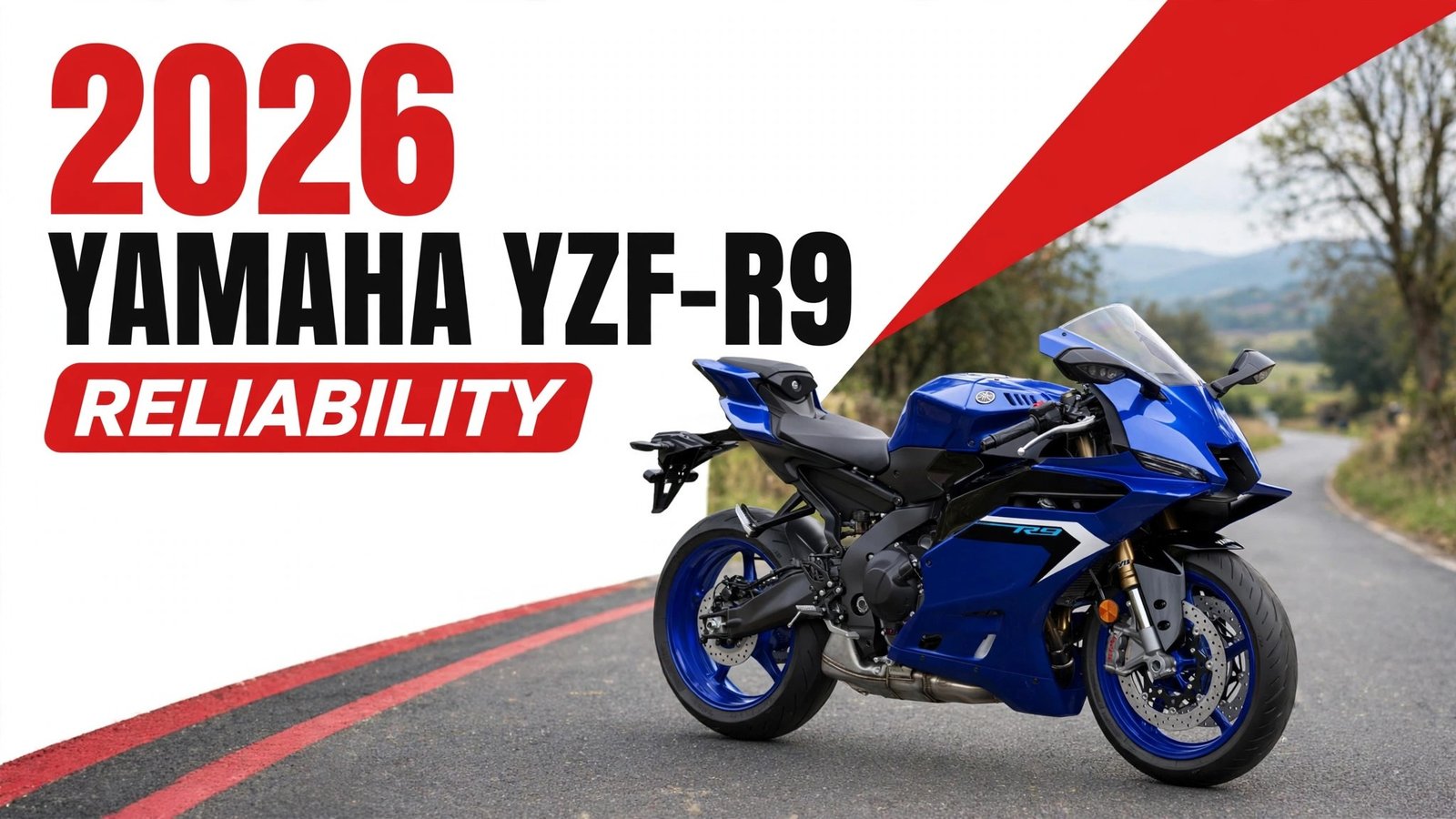
The short answer is encouraging, with one honest limit: Yamaha YZF-R9 reliability looks strong so far, because the 890cc CP3 triple underneath it has earned its reputation since 2014, but the R9 itself has only about 19 months of United States history, so no long-term verdict on this exact motorcycle exists yet. This guide separates what is known about the R9 from what is borrowed from its CP3 relatives, because Yamaha YZF-R9 reliability deserves that honesty.
Yamaha YZF-R9 Reliability Overview
Any fair verdict on Yamaha YZF-R9 reliability starts with the calendar. The R9 was announced in October 2024 and reached United States dealers in March 2025, so even the earliest American bikes have covered only a short ownership span by late 2026.
 YZF-R9 review covers the model-year changes behind this picture.
Yamaha YZF-R9 Common Problems and Wear Items
So far, the R9 problem list reads like a first-year checklist rather than a fault catalogue. That labelling is central to honest Yamaha YZF-R9 reliability reporting.

Early Owner Niggles, Indicator and Fastener Finish Inspection Points
The clearest early R9 niggles are small and electrical or cosmetic rather than mechanical, which is reassuring for Yamaha YZF-R9 reliability overall. Motor Cycle News flagged the pessimistic fuel gauge described above, a nuisance that can make a rider stop for fuel far earlier than necessary, and BikeReview’s four-month test recorded a traction-control glitch that stopped the system working, with the cause still awaiting Yamaha’s explanation at the time of writing. None of this amounts to a pattern of failure, and Yamaha YZF-R9 reliability should not be judged on niggles alone, but a buyer who checks these points will catch the exact small issues the first year actually produced, which is practical Yamaha YZF-R9 reliability advice.
Clutch, Gearbox, Chain, Sprockets and Electrical Checks
The mechanical checks that matter most are the ordinary ones, done carefully, and they tell you more about Yamaha YZF-R9 reliability than any spec sheet. The six-speed gearbox uses a cable-actuated slip-and-assist clutch, and the third-generation quickshifter is part of the bike’s appeal, so test every gear change both with the clutch and with the quickshifter, up and down, and listen for false neutrals or a shifter that intermittently refuses to act. On the electrical side, confirm that the six-axis IMU systems, ride modes, cruise control, and 5-inch TFT display all behave consistently, and that no warning light stays lit after start-up. Yamaha YZF-R9 reliability in this area is as much about software and sensors as about metal, and a used-bike buyer should insist on a cold start, a full dash self-check, and a ride long enough for the electronics to complete their checks.
Yamaha YZF-R9 Maintenance Schedule and Servicing
Yamaha’s service pattern for this platform is conventional and owner-friendly, which is good news for Yamaha YZF-R9 reliability: a short first service, regular oil services, and a long valve interval. The figures below follow the United States pattern used across Yamaha’s modern liquid-cooled range, with the European difference noted where it applies.

The service walkthrough below shows a real R9 oil change from start to finish, so you can see exactly where the filter, drain plug and fill point sit on this bike before your first service.
Service Every 4,000 Miles, Engine Oil, Filters and Routine Maintenance
In the United States, Yamaha’s modern liquid-cooled motorcycles follow a minor service every 4,000 miles or six months, whichever comes first, with the first service at 600 miles or one month, and that pattern is the right expectation for Yamaha YZF-R9 reliability planning. The 600-mile service is more than an oil change: it confirms the new bike is settling correctly, checks fasteners and chain adjustment after break-in, and creates the dealer service record that supports any later warranty claim. A useful cross-check is the published comparison of Yamaha US and European service intervals, which explains why the same motorcycle can show different numbers in different markets. Never stretch the 4,000-mile oil rhythm to save a visit, because clean oil is the cheapest protection a high-output triple has, and Yamaha YZF-R9 reliability over time will depend more on that discipline than on any single part choice. That discipline is the simplest Yamaha YZF-R9 reliability habit an owner can adopt.
| Service item | United States pattern | Note |
|---|---|---|
| First service | 600 miles or 1 month | Oil, filter, fastener and chain check |
| Minor service | Every 4,000 miles or 6 months | Oil change and general inspection |
| Oil filter and spark plugs | Every second minor service | Follow the manual for your model year |
| Valve clearance check | Every 26,600 miles | Dealer job; see next section |
| European comparison | 10,000 km minor intervals | Same bike, different market schedule |
Valve-Clearance Checks Every 26,600 Miles in US Schedules
The headline long-interval job is the valve-clearance check at 26,600 miles in United States schedules, and it is one of the strongest practical arguments for Yamaha YZF-R9 reliability. The same figure appears across Yamaha’s modern liquid-cooled range in the US, where it is printed as 26,600 miles (42,000 km), while European manuals for comparable models list the valve check at 40,000 km — a small rounding difference between markets, not a different engine requirement. The check itself is a dealer job for most owners: the fairing and fuel tank come off, clearances are measured cold with feeler gauges, and any shim outside specification is replaced, which is why the bill is labour-heavy even when no parts are needed. Owners can confirm the exact chart for their bike in the 2025 Yamaha R9 owner’s manual, whose periodic maintenance charts set out the full schedule. Skipping this check does not make Yamaha YZF-R9 reliability fail overnight, but it removes the early warning that catches a tightening valve before it burns, which is exactly what the interval exists to prevent, and that is why Yamaha YZF-R9 reliability guidance always stresses it.
Yamaha YZF-R9 Tires, Brakes and Suspension Maintenance
Tires, brakes, and suspension are where a supersport’s running costs concentrate, and where Yamaha YZF-R9 reliability meets the rider’s wallet most directly.
Tire Condition, Pressure, Tread Wear and Replacement
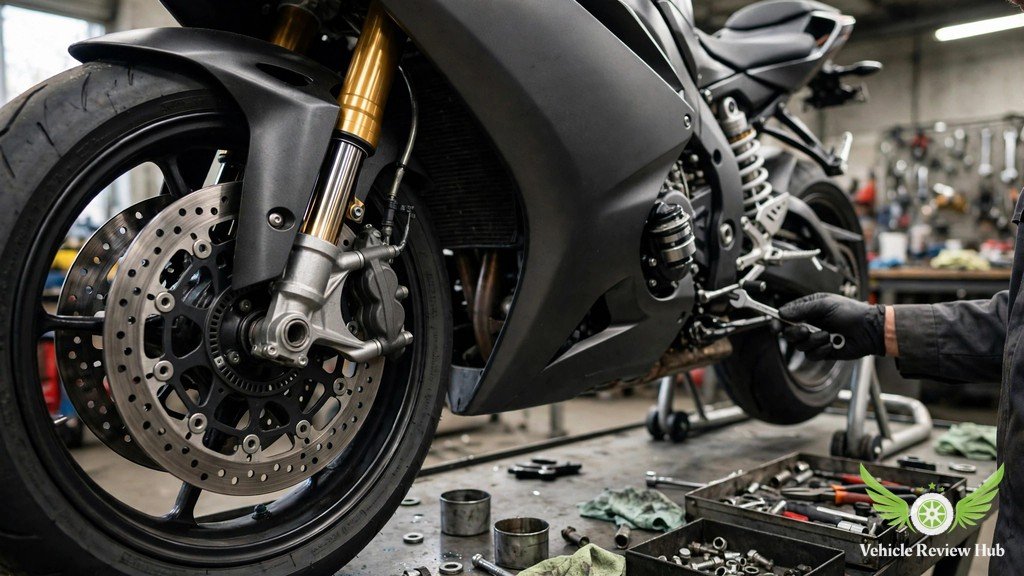
The R9 wears 120/70 ZR17 front and 180/55 ZR17 rear sport tires — Bridgestone Battlax Hypersport S22 rubber on the launch bike, with Motor Cycle News’ long-termer arriving on Bridgestone RS11 tires — and tire life is the most predictable running cost on the bike. Yamaha YZF-R9 reliability is not threatened by tire wear itself, but a worn tire masks every other handling judgement on a test ride, so a used bike with tired rubber should be judged on its brakes, chain, and service history instead. That test-ride caution is sound Yamaha YZF-R9 reliability practice, and it applies to any faired sportbike.
Brake Pads, Brake Discs, Forks and Rear Suspension Checks
Braking hardware deserves a careful look, because the first-ride press verdict was mixed in exactly this area, and brakes are central to Yamaha YZF-R9 reliability in daily use. The bike uses dual 320 mm front discs with Brembo Stylema radial-mount four-piston calipers, a strong specification, yet Motorcycle.com’s first ride listed weak-feeling brake pads among its few complaints, which suggests pad compound and bed-in matter more than caliper brand on this bike. Good Yamaha YZF-R9 reliability practice is to have suspension serviced — oil and seals — on the manual’s schedule rather than waiting for a leak, because a faired bike hides early weeping behind bodywork that a naked bike would show at once, and catching it early keeps Yamaha YZF-R9 reliability costs down.
Yamaha YZF-R9 Maintenance and Ownership Costs
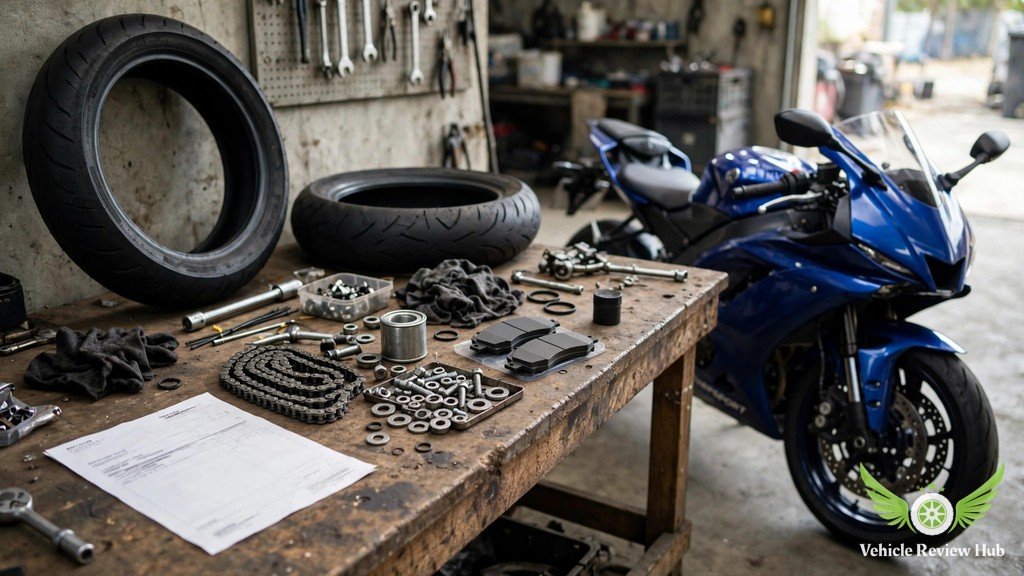
Ownership costs for the R9 fall into three buckets: fuel and routine servicing, consumables that wear with riding style, and the occasional larger job. The figures in this section are clearly labelled planning views, not dealer quotes, because Yamaha YZF-R9 reliability costs vary by dealer, region, and how the bike is ridden.
Fuel, Routine Servicing, Tires and Replacement Parts
Fuel is the most predictable cost, since the R9 carries a 3.7-gallon tank and Yamaha’s official estimate sits near 48 mpg, giving a planning range of roughly 160 to 180 miles per tank in mixed riding. Tires are the largest routine consumable: a sport tire set is a recurring purchase, and a rider who commutes gently will stretch tire life far beyond a rider who does regular track days. Replacement parts are a strength for Yamaha YZF-R9 reliability budgeting, because CP3 parts are shared across the MT-09, Tracer 9, and XSR900 families, which keeps common filters, pads, chains, and sprockets widely available through Yamaha dealers and the aftermarket. Shared parts are a quiet but real Yamaha YZF-R9 reliability advantage, and they help keep long-term ownership affordable.
| Cost area | Planning view | What moves the number |
|---|---|---|
| Minor service | Routine, every 4,000 miles | Dealer labour vs home oil change |
| Tires | Largest routine consumable | Routine, every 4,000 miles |
| Chain and sprockets | Wear item, inspect often | Lubrication habit and mileage |
| Valve check | Labour-heavy, 26,600 miles | Shims needed, dealer rates |
| Fairing panels | Highest single-part risk | Falls, tip-overs, track use |
Repair Expenses, Parts Availability and Long-Term Ownership Costs
The larger repair question is warranty cover. Yamaha lists a one-year limited factory warranty for the R9 in the United States, which is short compared with the bike’s expected life, so the first year is the window for reporting niggles — a traction-control fault, a gauge complaint, a weeping seal — while Yamaha pays. After that, Yamaha YZF-R9 reliability costs fall on the owner, and the smart move is a documented service history from day one, because a bike with dealer stamps and a clean valve record will always sell more easily than one with gaps. For the wider performance context behind these costs, the YZF-R9 performance guide explains how the engine’s delivery affects tire and brake wear, and that context matters for Yamaha YZF-R9 reliability budgeting over several seasons.
How to Keep a Yamaha YZF-R9 Reliable
Keeping an R9 reliable is mostly a matter of discipline: follow the manual, keep the chain clean, watch the electronics, and act on small faults before they grow. The checklist below is the routine that best protects Yamaha YZF-R9 reliability, and it ends with the recall reality check every buyer should run.

Preventive Maintenance, Proper Lubrication and Regular Inspections
None of this is exotic, and that is the point: Yamaha YZF-R9 reliability rewards ordinary care done on time, and punishes neglect more than it rewards exotic parts. Owners weighing a used purchase should also read the YZF-R9 buying guide, which turns this checklist into an inspection routine for Yamaha YZF-R9 reliability.
Recall Reality Check: 22V130 and 25V248 Do Not Include the R9
Two well-known Yamaha campaigns are often wrongly attached to newer models, so this check matters for Yamaha YZF-R9 reliability reporting. Campaign 22V130, Yamaha number 990158, recalled certain 2021–2022 MT-09, MT-09 SP, and Tracer 9 GT motorcycles — 3,594 units — for ECU programming that could limit throttle response, cause a stall, or fail to light the engine warning lamp. Campaign 25V248, the Hawaii-distributor filing covering certain 2022–2025 MT-09 and MT-09 SP models, certain 2022–2023 and 2025 MT-10 SP models, certain 2022–2024 MT-10 models, and certain 2022–2024 XSR900 models for throttle-position-sensor and ECU programming, is likewise a list the R9 does not appear on. Yamaha YZF-R9 reliability reporting must therefore state plainly: neither 22V130 nor 25V248 includes the R9, and neither should be cited as an R9 recall. Separately, a direct check of the United States recall database at writing time returned no R9-specific record at all: the National Highway Traffic Safety Administration’s recalls API returned Count 0 for both the 2025 and 2026 Yamaha YZF-R9, which supports the honest wording that no R9-specific United States recall had surfaced by October 2026. That is not a guarantee for the future, and every owner should still run their own VIN through the NHTSA recalls lookup before buying, because campaigns are issued by VIN range, not by model enthusiasm. The campaign records themselves are public: the 22V130 recall record names only the MT-09 family models above, and the 25V248 recall record names its Hawaii-distributor model list, with no R9 entry in either. For the platform comparison, the MT-09 reliability guide covers the family history that produced those campaigns, and that history is useful context for Yamaha YZF-R9 reliability.
Frequently Asked Questions About Yamaha YZF-R9 Reliability
These answers cover the questions buyers actually ask about Yamaha YZF-R9 reliability, from service intervals and recall checks to tires, warranty, and whether a nearly new R9 is a safe used purchase. Where the evidence is still thin, each answer says so rather than filling the gap with confidence.
Is the Yamaha YZF-R9 reliable?
Early evidence says yes, with a caveat: Yamaha YZF-R9 reliability looks strong in its first year, backed by a CP3 engine family proven since 2014, but the R9 itself has only about 19 months of United States history, so a true long-term verdict is not yet possible.
How often does the Yamaha YZF-R9 need servicing?
Follow the United States pattern: a first service at 600 miles or one month, then a minor service every 4,000 miles or six months, with the oil filter and spark plugs on a longer cycle and the valve check at 26,600 miles. Always confirm the chart in the manual supplied with your own bike for Yamaha YZF-R9 reliability.
When is the first valve-clearance check due?
At 26,600 miles in United States schedules, which corresponds to 42,000 km; European manuals for comparable models list 40,000 km. It is a dealer job, and a clean first report is a strong sign for Yamaha YZF-R9 reliability on a used bike.
Has the Yamaha YZF-R9 been recalled in the United States?
No R9-specific United States recall had surfaced at writing time: the NHTSA recalls API returned Count 0 for both the 2025 and 2026 YZF-R9. Campaigns 22V130 and 25V248 do not include the R9. Run your own VIN through the NHTSA lookup before buying, because recalls are VIN-specific.
What are the most common early problems?
Small niggles, not major failures: a pessimistic fuel gauge reported by Motor Cycle News, a traction-control glitch on BikeReview’s four-month test bike, and the usual fastener-finish and indicator checks after any fall. No early engine failure pattern has been reported.
Is the CP3 engine proven?
Yes, as a platform. The CP3 triple has powered MT-09 family motorcycles since 2014, and Yamaha YZF-R9 reliability benefits directly from that history, even though CP3 history must never be presented as R9 history itself.
How long do tires last on the Yamaha YZF-R9?
Check pressures before every ride and tread depth at every service, and budget tires as the largest routine consumable for Yamaha YZF-R9 reliability.
Are brake pads a weak point?
Motorcycle.com’s first ride listed weak-feeling brake pads among its few complaints, despite strong Brembo Stylema calipers and 320 mm discs, so pad compound and bed-in deserve attention. Check pad thickness and fluid at every service and replace fluid on the manual’s two-year cycle.
What warranty does the Yamaha YZF-R9 carry in the USA?
Yamaha lists a one-year limited factory warranty in the United States, which makes the first year the right window for reporting any niggle while Yamaha pays.
Does the Yamaha YZF-R9 share parts with the MT-09?
Many service parts do, because the CP3 engine family is shared across the MT-09, Tracer 9, and XSR900 lines, which keeps filters, pads, chains, and sprockets widely available. R9-specific fairing panels and electronics are a different story and can cost more and take longer to source.
Should I buy a used Yamaha YZF-R9?
A nearly new R9 with a full dealer service history, a clean valve record where due, and a clean VIN recall check is a reasonable purchase, and Yamaha YZF-R9 reliability evidence so far supports that view.
How can I keep my Yamaha YZF-R9 reliable?
Follow the 4,000-mile service rhythm, lubricate and adjust the chain regularly, check tires and brakes before every ride, service suspension on schedule, and act on small electronic faults promptly. Ordinary care done on time is what protects Yamaha YZF-R9 reliability most.