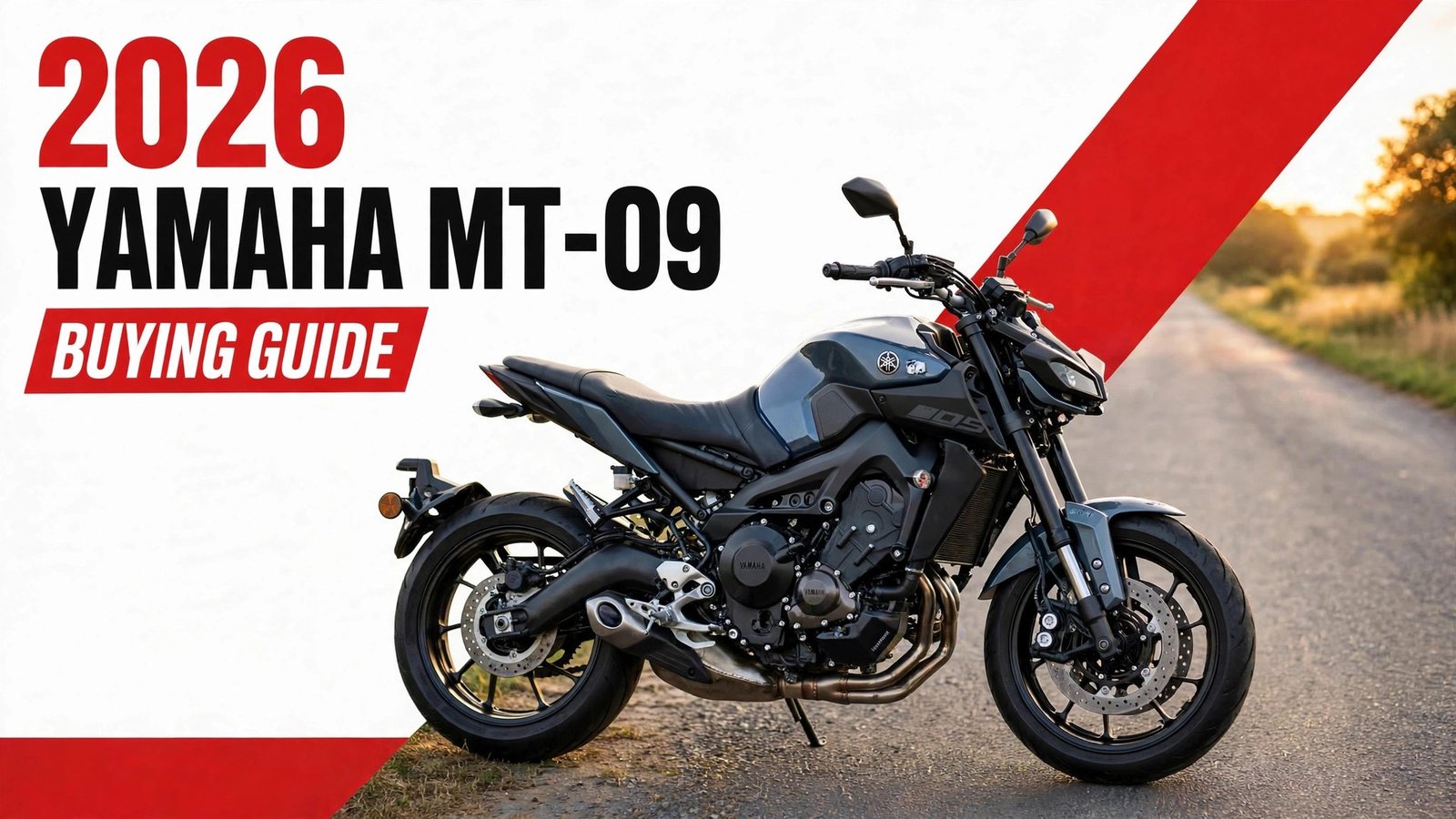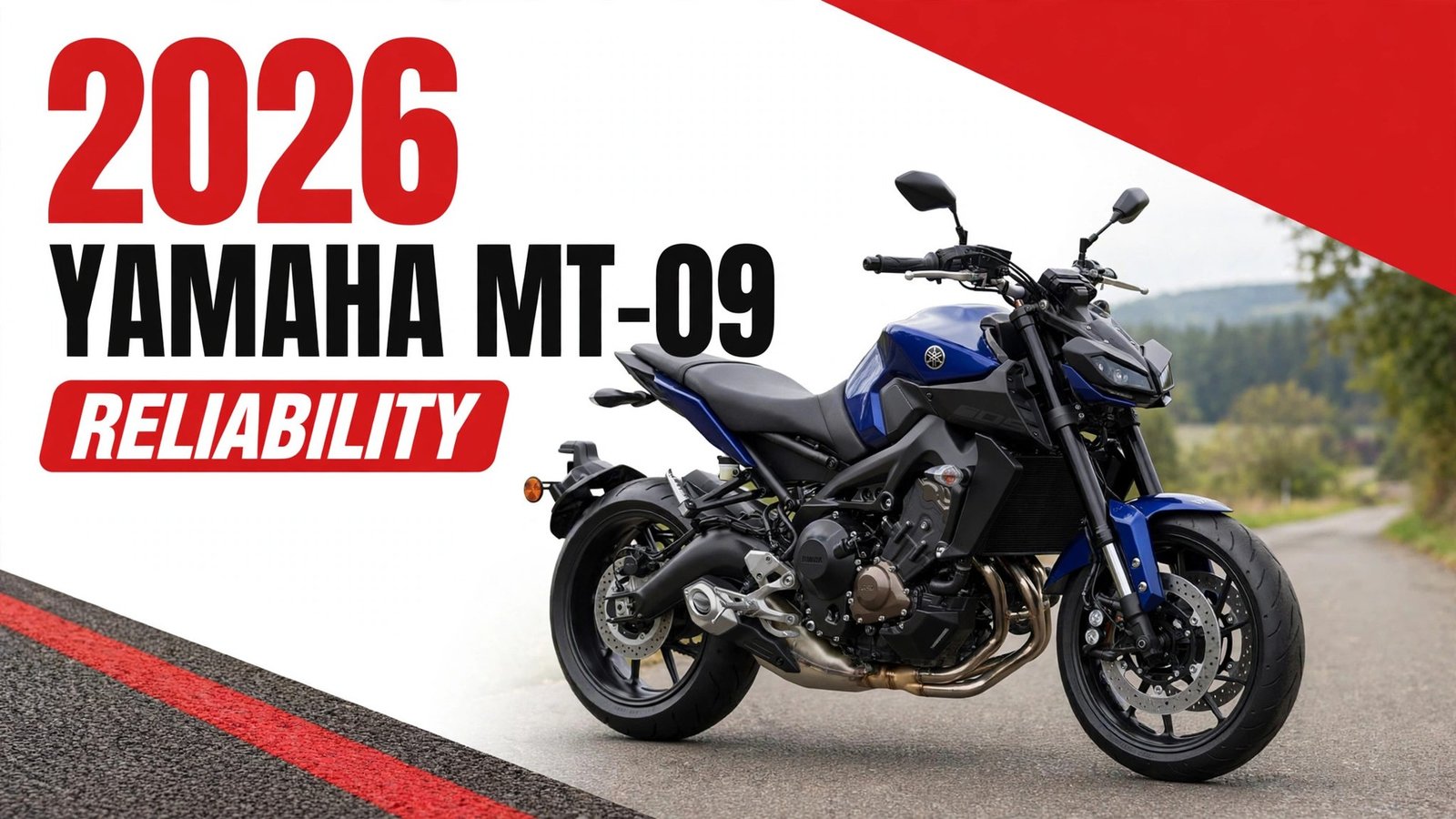
The short answer on Yamaha MT-09 reliability is reassuring: the standard MT-09 is a strong used buy, built on the proven 890cc CP3 triple, a simple service schedule, and owner ratings near the top of the middleweight class. Yamaha MT-09 reliability on any individual bike still depends less on the badge and more on how that bike was serviced, ridden, and stored, so this guide separates verified facts from owner-reported watchpoints, lists the US maintenance schedule, and covers the three recall checks every buyer should run by VIN.
Yamaha MT-09 Reliability Overview
Yamaha MT-09 reliability starts from a strong base. The standard bike shares the 890cc CP3 triple and die-cast aluminum frame of the SP, but it uses its own KYB suspension and Advics brakes, and it costs $1,600 to $1,800 less than the SP depending on the year. The CP3 platform has held a high-mileage reputation since the original 847cc FZ-09 arrived in 2014.

MCN Reliability 4.8 Out of 5 for 2024-On and 4.4 for 2021-2023 Explained
The headline figures for Yamaha MT-09 reliability come from MCN owner reviews, and the sample sizes matter as much as the scores. The 2024-on standard MT-09 rates 4.8 out of 5 for reliability, but that figure rests on only 4 owner reviews, so it is encouraging rather than conclusive. The 2021–2023 standard bike rates 4.4 out of 5 from 17 owner reviews, a larger and therefore more useful sample, while the older 2013–2020 generation rates 4.5 out of 5 from 24 owners. The MCN 2024 MT-09 review page also lists an overall owner rating of 4.8 out of 5 for the current bike.
Those small samples do not change the mechanical picture for Yamaha MT-09 reliability: the standard bike shares its engine, gearbox, and frame with the SP and Tracer 9 GT family, and no verified widespread failure pattern has emerged for the 890cc engine.
How Mileage, Maintenance History and Previous Use Affect Reliability
Mileage alone tells you little about Yamaha MT-09 reliability. A 20,000-mile bike with a full service history, fresh fluids, and a garaged life is a better bet than a 6,000-mile bike that sat outside for two winters on its original oil. What separates good examples from tired ones is chain and sprocket condition, brake fluid age, coolant age, tire age, and whether the valve check was done on time.
Previous use matters just as much. Track use wears chains, clutches, and fork seals faster than commuting. Stunt use, crash damage, and amateur modifications are the real red flags.
Yamaha MT-09 Common Problems and Wear Items
No motorcycle is trouble-free, and Yamaha MT-09 reliability is no exception. The honest picture is that its problems are mostly small, cheap, predictable wear items rather than engine or gearbox failures. Below, verified recall issues are kept separate from owner-reported watchpoints that Yamaha has never confirmed as defects,.

Engine, Cooling System and Fuel System Inspection Points
The 890cc CP3 triple is the strongest part of the Yamaha MT-09 reliability story, with no verified widespread failure pattern and many high-mileage examples running on regular oil changes. The checks that matter are basic: cold starts, oil and coolant level and color, and weeping hose clamps, which owners report seeping after winter storage and usually fix by re-torquing.
Fueling is the one engine area where Yamaha MT-09 reliability has official history. The 2021–2022 890cc bikes were recalled for an ECU fault that could limit throttle response or stall the engine, covered in full later in this guide.
Clutch, Gearbox, Chain, Sprockets and Electrical Checks
The six-speed gearbox and assist-and-slipper clutch are robust, with complaints focused on feel rather than failure. A dragging clutch or a lever with no free play usually points to adjustment, and the manual’s clutch and cable checks belong at every service.
Chain and sprockets are the most frequent wear items for Yamaha MT-09 reliability. A stretched chain or hooked teeth are normal wear, not a design flaw,. The MT-09 buying guide covers the inspection step by step.
Yamaha MT-09 Maintenance Schedule and Servicing
Yamaha MT-09 reliability is built on a simple schedule: servicing every 4,000 miles, an oil filter every 8,000 miles, and a valve check every 26,600 miles under the US manual. Every interval below follows the US owner’s manual pattern for the 890cc bike,.

Service Every 4,000 Miles, Engine Oil, Filters and Routine Maintenance
For Yamaha MT-09 reliability, the first service lands at 600 miles or one month, After that, engine oil is changed every 4,000 miles or 6 months, and the filter cartridge every 8,000 miles or 12 months. Specified oil is SAE 10W-40 meeting API SG or higher and JASO MA: 3.2 liters with a filter change and 2.8 liters without.
The video below is an owner’s account of living with a standard MT-09 and the problems he has actually had, a useful reality check beside the official schedule for Yamaha MT-09 reliability.
Beyond oil, the Yamaha MT-09 reliability routine is short: the air filter element is replaced every 24,000 miles, and more often in wet or dusty riding; brake fluid is DOT 4 from a sealed container every 2 years; brake hoses every 4 years; The MT-09 maintenance schedule summary lists the same backbone.
| Service item | US interval | Notes |
|---|---|---|
| First service | 600 miles / 1 month | Oil and filter, chain, fasteners, controls |
| Engine oil (10W-40, JASO MA) | Every 4,000 miles / 6 months | 3.2 L with filter, 2.8 L without |
| Oil filter cartridge | Every 8,000 miles / 12 months | Also at first service |
| Air filter element | Every 24,000 miles | Sooner in wet or dusty riding |
| Coolant (1.72 L + 0.28 L reservoir) | On the manual’s time interval | Follow your own manual’s year |
| Brake fluid (DOT 4) | Every 2 years | Sealed container only |
| Brake hoses | Every 4 years | Regardless of appearance |
| Valve clearance | Every 26,600 miles (US) | Follow the US figure in the USA |
Valve-Clearance Checks Every 26,600 Miles in US Manuals
The valve check is the most expensive routine job, which is why owners get nervous about it. In US manuals the interval is 26,600 miles.
Cost is the honest caveat for Yamaha MT-09 reliability: a valve check with the tank and airbox removed takes real shop time, so get a written quote before booking. That stamp is the single best proof of Yamaha MT-09 reliability a seller can offer.
Yamaha MT-09 Tires, Brakes and Suspension Maintenance
Tires, brakes, and suspension are where Yamaha MT-09 reliability becomes a hands-on habit. These parts wear every ride, and a skipped check has safety consequences. The hardware is high quality and uses common sizes any shop stocks,.

Tire Condition, Pressure, Tread Wear and Replacement
The standard MT-09 runs a 120/70ZR17 front and 180/55ZR17 rear, with cold pressures of 36 psi front and 42 psi rear. Minimum tread depth is 1.6 mm at both ends, but the practical rule for Yamaha MT-09 reliability is stricter: replace tires that have squared off, cracked, picked up a nail, or aged past five years, even with legal tread remaining.
The sizes are standard sport-naked fitment, so there is no standard-MT-09 tire tax. Bridgestone Battlax Hypersport S22 tires were fitted to 2021–2023 bikes and S23 tires from the 2024 redesign. That is why tire condition tops any Yamaha MT-09 reliability checklist, and why a bike on aged tires should be discounted by the cost of a set.
Brake Pads, Brake Discs, KYB Forks and Rear Suspension Checks
This is the section where the standard bike must not be confused with the SP, because the hardware is visibly different. The standard MT-09 uses a 41mm KYB inverted fork in a standard dark finish — not the SP’s gold-finished, DLC-coated fork — and a KYB rear shock, not an Öhlins unit with a gold spring. The 2024-on standard bike pairs a Brembo radial master cylinder with Advics calipers on dual 298mm front discs and a 245mm rear disc, with ABS. The MT-09 performance figures for braking assume this standard setup, not the SP’s brakes.
For Yamaha MT-09 reliability, inspect pads regularly and replace them when the friction material reaches its limit, and flush DOT 4 fluid every two years, since old fluid absorbs water and softens the lever. Check fork seals for weeping, and check the rear shock for leaks and for a linkage that moves smoothly without notchiness.
| Item | Spec / limit | Check interval |
|---|---|---|
| Tire sizes | 120/70ZR17 front, 180/55ZR17 rear | Before every ride |
| Tire pressures (cold) | 36 psi front, 42 psi rear | Weekly |
| Minimum tread depth | 1.6 mm front and rear | Monthly |
| Front brakes (standard) | Dual 298mm discs, Advics calipers, Brembo master cylinder (2024-on) | Every service |
| Rear brake | Single 245mm disc | Every service |
| Front fork (standard) | 41mm KYB, standard dark finish, fully adjustable | Each service |
| Rear shock (standard) | KYB single shock, adjustable preload and rebound | Each service |
Yamaha MT-09 Maintenance and Ownership Costs
Running costs are where Yamaha MT-09 reliability turns into a budget line. The standard bike is cheap to keep: modest fuel use, simple servicing, and parts shared across the MT-09 family.

Fuel, Routine Servicing, Tires and Replacement Parts
Fuel is the smallest surprise for Yamaha MT-09 reliability: 48 mpg officially for 2024-on bikes, with US owners typically seeing low-40s figures in mixed riding. Rider Magazine’s 2024 standard-bike test recorded 41.3 mpg, with the 3.7-gallon tank giving roughly 150 to 170 miles of real-world range.
Chain and sprocket sets show the value of doing the job on time: roughly 150 to 250 dollars in parts plus 100 to 150 dollars in labor, due every 15,000 to 20,000 miles with regular cleaning and lubrication. A full pad replacement runs roughly 150 to 300 dollars in parts plus 100 to 200 dollars in labor. For Yamaha MT-09 reliability, the cheapest maintenance is the maintenance done on schedule.
Repair Expenses, Parts Availability and Long-Term Ownership Costs
Parts availability is a genuine strength for Yamaha MT-09 reliability: the standard bike shares its engine, gearbox, frame, wheels, and most wear parts with the SP and the Tracer 9 GT, Standard-specific parts such as the KYB shock and Advics calipers cost less than the SP’s Öhlins and Stylema equivalents. The MT-10 SP reliability picture is similar in structure, with rare failure but higher parts prices at the top of the range.
The valve check is the only routine service running into several hundred dollars of labor, so get a written quote before booking. The MT-09 review covers purchase pricing year by year for buyers still deciding between generations,.
How to Keep a Yamaha MT-09 Reliable
Keeping Yamaha MT-09 reliability strong means doing the small things on time and checking every recall before you buy. The CP3 forgives a lot, but not neglected oil, a dry chain, or ancient brake fluid.
Preventive Maintenance, Proper Lubrication and Regular Inspections
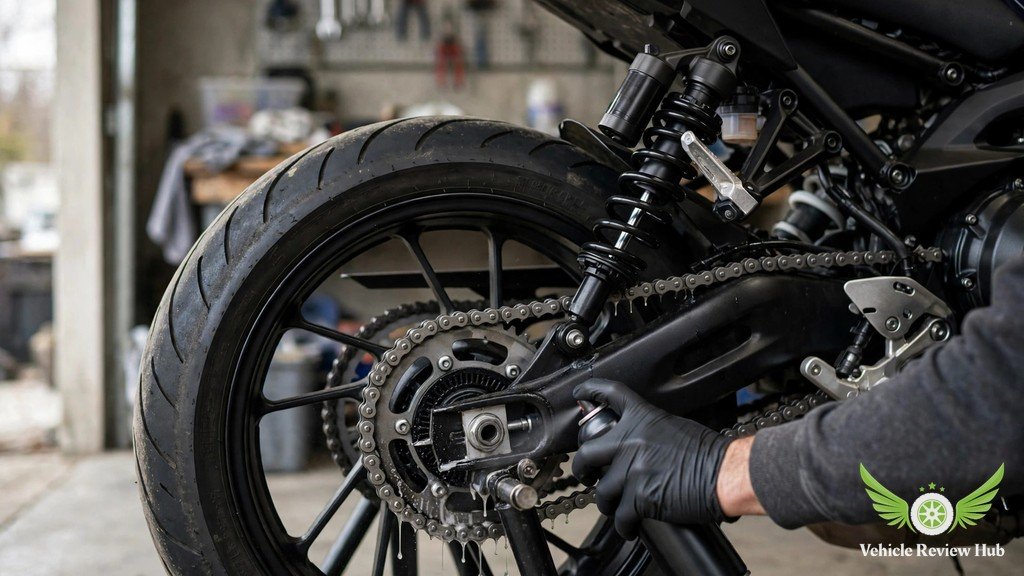
Start with the chain, the part owners neglect most. Clean it with kerosene and a soft brush, wipe it dry, and lubricate with a special O-ring chain lubricant, never engine oil. Lubricate after washing, rain, and wet rides, and check slack against your own manual every 300 to 600 miles,.
Monthly, check tire pressures and tread, pad thickness and fluid level, coolant and oil level, fork seals, and chain slack. For Yamaha MT-09 reliability, this walk-around catches almost every problem while it is cheap.
Recall Checks: 22V130 ECU, 25V248 Hawaii TPS and FZ-09 Era Recalls
Three recall checks belong on every Yamaha MT-09 reliability checklist, and all three are free at a dealer when they apply. The first is NHTSA campaign 22V130000, a nationwide Yamaha recall of 3,594 certain 2021–2022 MT-09, MT-09 SP, and Tracer 9 GT motorcycles. Improper ECU programming could limit throttle response, stall the engine, or fail to light the warning lamp, and the remedy is a free ECU reprogram. The full 22V130 recall details list Yamaha’s number 990158 and its line, 1-866-894-1626.
The second is recall 25V248, and it must not be described as SP-only. It is a Hawaii-only filing by Pure Sports Distributing, Yamaha of Hawaii, covering 216 units across several models, including certain 2021–2025 standard MT-09 bikes as well as certain MT-09 SP, MT-10, MT-10 SP, Tracer GT, and XSR900 bikes. The fault is throttle position sensor brush wear from improper ECU programming, fixed free with a reprogram and sensor replacement. Only a VIN check can tell whether a specific bike is included, and Yamaha MT-09 reliability advice that skips the VIN check is incomplete advice.
The third check reaches back to the FZ-09 era, and it does verify: Yamaha recalled certain 2015–2017 FJ-09, 2014–2017 FZ-09, and 2016–2017 XSR900 motorcycles — 22,433 units — because a painting issue and inadequate thread-locking agent could let the lower handlebar holder loosen. The FZ-09 handlebar recall report gives the NHTSA campaign as 17V221000, Yamaha’s number 990114,, with free dealer replacement of the lower handlebar holder. An earlier, smaller FZ-09-era action covered a shift cam segment stopper on bikes built in late 2014, but its campaign number could not be verified from a primary record in this research, so it is flagged here rather than stated as a numbered recall.
Yamaha MT-09 Reliability FAQ
These are the questions buyers and owners actually ask about Yamaha MT-09 reliability, answered with the verified figures above, from service intervals and recall checks to the standard bike’s suspension and brakes.
Is the Yamaha MT-09 reliable?
Yes. Yamaha MT-09 reliability is rated 4.8 out of 5 by MCN owners for 2024-on bikes and 4.4 out of 5 for 2021–2023 bikes, the CP3 triple has no verified widespread failure pattern, and servicing is simple.
What does the MCN 4.8 out of 5 reliability rating really mean?
For Yamaha MT-09 reliability, it means a strong listed score based on only 4 owner reviews for 2024-on bikes. Treat it as encouraging, and judge any bike on service history. The 2021–2023 standard bike scores 4.4 out of 5 from 17 owners, which is the better-supported figure.
How often does the Yamaha MT-09 need an oil change?
Yamaha MT-09 reliability starts with oil every 4,000 miles or 6 months. Use SAE 10W-40 meeting API SG or higher and JASO MA: 3.2 liters with a filter change, 2.8 without. The filter is replaced every 8,000 miles or 12 months.
When is the valve-clearance check due on the MT-09?
Yamaha MT-09 reliability includes a valve check every 26,600 miles in US manuals. A bike near or past that mileage should have a stamped record of the check.
Does the standard MT-09 have an Öhlins shock or gold forks?
No. That is the key standard-versus-SP distinction for Yamaha MT-09 reliability: the standard bike uses a KYB rear shock and a KYB fork in a standard dark finish. Gold-finished DLC-coated forks and an Öhlins rear shock with a gold spring belong to the SP only.
What brakes does the standard MT-09 have?
For Yamaha MT-09 reliability under braking, the 2024-on standard bike uses a Brembo radial master cylinder with Advics calipers on dual 298mm front discs and a 245mm rear disc, with ABS. Brembo Stylema calipers are SP-only.
What are the common problems on the Yamaha MT-09?
Mostly small owner-reported watchpoints, not verified defects: fueling snatch on early software, a notchy quickshifter, and fork seal weeping. The official Yamaha MT-09 reliability issues are the 22V130, 25V248, and FZ-09-era handlebar recalls.
What is recall 22V130 on the MT-09?
For Yamaha MT-09 reliability, note the nationwide recall of 3,594 certain 2021–2022 MT-09, MT-09 SP, and Tracer 9 GT bikes for ECU programming that could limit throttle response, stall the engine, or fail to light the warning lamp.
What is recall 25V248, and does it affect a standard MT-09?
Yamaha MT-09 reliability also involves a Hawaii-only distributor filing, not a nationwide recall, covering 216 units across several Yamaha models including certain 2021–2025 standard MT-09 bikes. The fault is throttle position sensor brush wear, fixed free with a reprogram and sensor replacement. Only a VIN check confirms inclusion, and it must never be described as SP-only.
Was there an FZ-09-era recall?
Yes. Yamaha MT-09 reliability history includes the 2017 handlebar-holder recall, campaign 17V221000, covering certain 2014–2017 FZ-09 bikes among 22,433 units, with free replacement of the lower handlebar holder. A smaller late-2014 shift-cam action was reported, but its campaign number could not be verified from a primary record here, so check any early bike by VIN.
How long does the MT-09 chain last?
Yamaha MT-09 reliability depends on a chain and sprocket set lasting typically 15,000 to 20,000 miles
How much does Yamaha MT-09 maintenance cost per year?
For Yamaha MT-09 reliability on a budget, tires and chains are the biggest recurring costs. A chain set runs roughly 150 to 250 dollars in parts plus 100 to 150 in labor; a full pad replacement roughly 150 to 300 in parts plus 100 to 200 in labor.
Is the MT-09 good for high mileage?
Yes, with records. Yamaha MT-09 reliability at high mileage depends on oil change history, valve service at 26,600 miles, and chain and brake maintenance, not the odometer alone. Documented beats undocumented, every time.
Which is more reliable, the 2021–2023 or the 2024-on MT-09?
For Yamaha MT-09 reliability, both generations share the same CP3 platform with no verified widespread failure pattern. The 2021–2022 bikes carry the 22V130 ECU recall, which must be verified as remedied, while the 2024-on bikes add the 5-inch TFT, cruise control, and Brembo master cylinder with Advics calipers. Choose on condition first.
What should I check before buying a used MT-09?
Yamaha MT-09 reliability checks start with all three recall numbers against the VIN, verify the valve service if mileage is near or past 26,600 miles, inspect chain and sprockets, check fork seals and pad thickness, and ask for the service book. A seller with receipts for oil, tires, and chains offers the strongest evidence of Yamaha MT-09 reliability there is.