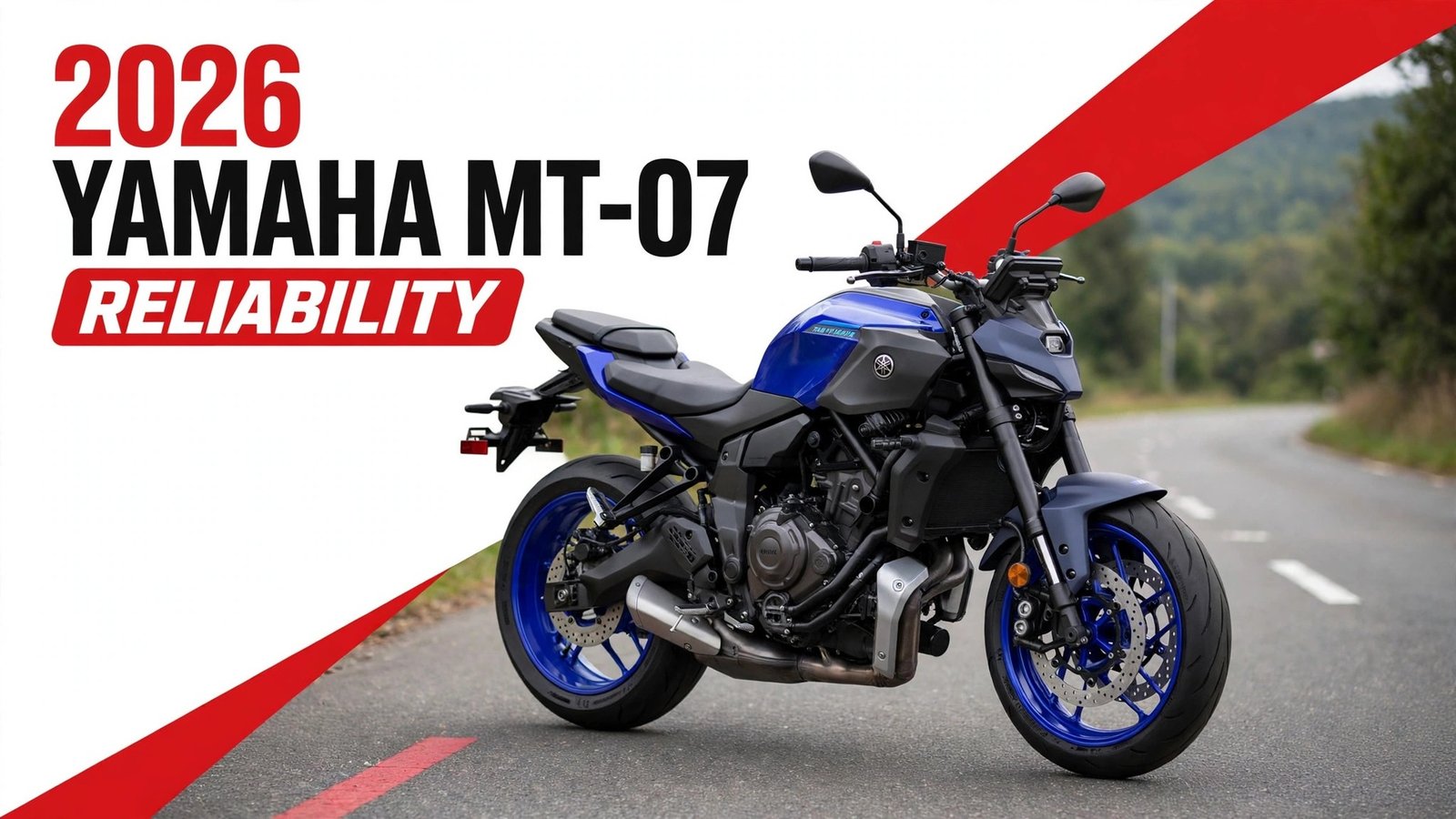
The short answer on Yamaha MT-07 reliability is reassuring with one honest caveat: the 689cc CP2 twin is one of the most proven middleweight engines Yamaha has ever built, and the bike’s service schedule is simple and cheap to follow, but owners rate its finish and corrosion resistance lower than its mechanical dependability. Yamaha MT-07 reliability on any individual bike still depends less on the badge and more on how that bike was serviced, stored, and ridden through winter, so this guide separates verified facts from owner-reported watchpoints.
One distinction matters before anything else in this guide to Yamaha MT-07 reliability: the MT-07 is a 689cc parallel twin, not a smaller MT-09. It has no IMU, no cornering ABS, no ride-by-wire or traction control before the 2025 redesign, and no SP variant. Judging Yamaha MT-07 reliability against the MT-09’s triple, or expecting the bigger bike’s electronics, is the fastest way to misunderstand this motorcycle.
Yamaha MT-07 Reliability Overview
Yamaha MT-07 reliability starts from a strong mechanical base. The CP2 twin has powered the MT-07 since the FZ-07 arrived in 2015, and the same engine family now runs in the XSR700 and the Tenere 700. The 2025 redesign added ride-by-wire, riding modes, switchable traction control, a 41mm inverted KYB fork, and a 5-inch TFT display, but the engine at the heart of Yamaha MT-07 reliability is fundamentally the same proven twin.

MCN Owners 3.6 Out of 5 for 2021-2024 and Finish and Corrosion Comments
The headline figure for Yamaha MT-07 reliability comes from MCN owner reviews: owners of the 2021–2024 MT-07 rated the bike 3.6 out of 5 for reliability and build quality. The sample behind that score is small: MCN lists an owners’ rating of 4 out of 5 from 7 reviews for the same 2021–2024 bike, so the 3.6 score should be read as a small-sample owner verdict, not a laboratory measurement. The MCN 2025 MT-07 review page notes that the bulk of the lower ratings were aimed at finish quality and a lack of corrosion resistance, not at engine or gearbox failure.
That distinction is the key to Yamaha MT-07 reliability. Owners report fasteners, exhaust headers, and fork lowers showing surface corrosion after winter or all-weather use, and paint and plating that age faster than the mechanical parts. Those are owner-reported cosmetic complaints, not a verified Yamaha defect, and they say nothing bad about the CP2 engine itself. A garaged, washed bike will look far better than one that wintered outside.
How Mileage, Maintenance History and Previous Use Affect Reliability
Mileage alone tells you little about Yamaha MT-07 reliability. A 25,000-mile bike with a full service history, fresh fluids, and a garaged life is a better bet than a 6,000-mile bike that sat outside for two winters on its original oil. Chain condition, fluid age, tire age, and valve-check history separate good examples from tired ones.
Previous use matters just as much: commuting wears chains and tires steadily, track use wears chains, clutches, and fork seals faster, and stunt use, crash damage, and amateur modifications are the real red flags. For Yamaha MT-07 reliability, a documented history beats a low odometer every time, and the MT-07 buying guide covers the inspection step by step.
Yamaha MT-07 Common Problems and Wear Items
No motorcycle is trouble-free, and Yamaha MT-07 reliability is no exception. The honest picture is that its problems are mostly small, cheap, predictable wear items and cosmetic aging, rather than engine or gearbox failures. Below, verified recall issues are kept separate from owner-reported watchpoints that Yamaha has never confirmed as defects.

Engine, Cooling System and Fuel System Inspection Points
The 689cc CP2 twin is the strongest part of the Yamaha MT-07 reliability story, with no verified widespread failure pattern. The checks that matter are basic: cold starts, oil level in the sight glass, coolant level and color, and weeping hose clamps, which owners report seeping after winter storage and usually fix by re-torquing.
Fueling on the MT-07 is generally clean, and the fuel-injected twin starts reliably in cold weather when the battery is healthy. The main engine-area warning is neglect: skipped oil changes and old coolant cause more harm than any known CP2 weakness.
Clutch, Gearbox, Chain, Sprockets and Electrical Checks
The six-speed gearbox and wet multi-plate clutch are robust, with complaints focused on feel rather than failure, and that gearbox toughness is part of Yamaha MT-07 reliability. A dragging clutch or a lever with no free play usually points to cable adjustment, and some owners report a notchy clutch feel that a dealer adjustment or fresh oil improves. For Yamaha MT-07 reliability, clutch feel is a check item, not a known defect, and buyers should also run a VIN check for any clutch-related action, as explained in the recall section below.
Chain and sprockets are the most frequent wear items for Yamaha MT-07 reliability. A stretched chain or hooked teeth are normal wear, not a design flaw, and the CP2’s strong low-end torque rewards riders who keep the chain clean, lubricated, and correctly tensioned. Electrically, the MT-07 is simple by modern standards, with no IMU, no cornering ABS, and a conventional ABS system, so fewer electronic failure points. Battery health is the main electrical check, especially on bikes that sat unused.
Yamaha MT-07 Maintenance Schedule and Servicing
Yamaha MT-07 reliability is built on a simple schedule: servicing every 4,000 miles, an oil and filter routine any home mechanic can learn, and a valve check every 26,600 miles under the US manual. Every interval below follows the US owner’s manual pattern for the MT-07, and where US and European manuals differ, this guide uses the US figure.

Service Every 4,000 Miles, Engine Oil, Filters and Routine Maintenance
For Yamaha MT-07 reliability, the first service lands at 600 miles or one month. After that, engine oil is changed every 4,000 miles or 6 months under the US schedule. Specified oil is SAE 10W-40, and a workshop guide for the MT-07 puts the fill at roughly 2.6 litres on a filter change, always confirmed against the sight glass. The US versus European Yamaha service intervals comparison confirms the pattern: US manuals call for a general service every 4,000 miles or 6 months, while European manuals stretch it to 10,000 km or 12 months.
The video below is a workshop-style oil-change walkthrough on a 2019 MT-07, a useful visual companion for Yamaha MT-07 reliability.
Beyond oil, the Yamaha MT-07 reliability routine is short: the air filter element is replaced every 24,000 miles, coolant every 16,000 miles or 2 years under the US manual, brake fluid is DOT 4 from a sealed container every 2 years, and brake hoses every 4 years.
| Service item | US interval | Notes |
|---|---|---|
| First service | 600 miles / 1 month | Oil and filter, chain, fasteners, controls |
| Engine oil (SAE 10W-40) | Every 4,000 miles / 6 months | About 2.6 L with filter; confirm on sight glass |
| Air filter element | Every 24,000 miles | Sooner in wet or dusty riding |
| Coolant | Every 16,000 miles / 2 years (US) | European manual uses 3 years; follow the US manual |
| Brake fluid (DOT 4) | Every 2 years | Sealed container only |
| Brake hoses | Every 4 years | Regardless of appearance |
| Valve clearance | Every 26,600 miles (US) | European figure is 24,000 miles; follow the US figure in the USA |
Valve-Clearance Checks Every 26,600 Miles in US Manuals
The valve check is the most expensive routine job, which is why owners get nervous about it. In US manuals the interval is 26,600 miles (42,000 km). European manuals list the same check at 40,000 km, or 24,000 miles, which is why some owners quote a shorter interval; in the USA, the 26,600-mile figure applies.
Cost is the honest caveat: a valve check with the tank and airbox removed takes real shop time, so get a written quote before booking. That stamp is the single best proof of Yamaha MT-07 reliability a seller can offer.
Yamaha MT-07 Tires, Brakes and Suspension Maintenance
Tires, brakes, and suspension are where Yamaha MT-07 reliability becomes a hands-on habit. These parts wear every ride, and a skipped check has safety consequences. The hardware is simple and uses common sizes any shop stocks, which keeps costs down.

Tire Condition, Pressure, Tread Wear and Replacement
The MT-07 runs a 120/70ZR17 front and 180/55ZR17 rear, with cold pressures of 33 psi front and 36 psi rear, the same for one or two riders and high-speed riding. Minimum tread depth is 1.6 mm at both ends, but for Yamaha MT-07 reliability the practical rule is stricter: replace tires that have squared off, cracked, or aged past five years, even with legal tread remaining.
The sizes are standard middleweight fitment, so there is no MT-07 tire tax. The 2025 bike wears Dunlop Sportmax Q5A tires in those sizes.
Brake Pads, Brake Discs, Forks and Rear Suspension Checks
Braking on the 2025-on MT-07 is straightforward: dual 298mm front discs with radial-mount four-piston calipers, a single 245mm rear disc, and conventional ABS. There is no IMU and no cornering ABS on any MT-07, including the 2025 bike. The MT-07 performance figures for braking assume this standard setup.
For Yamaha MT-07 reliability, inspect pads regularly and replace them when the friction material reaches its limit, and flush DOT 4 fluid every two years, since old fluid absorbs water and softens the lever. Suspension differs by generation: pre-2025 bikes use a conventional telescopic fork, while the 2025 redesign brought a 41mm KYB inverted fork with 5.1 inches of travel, paired with a KYB single rear shock adjustable for preload and rebound. For Yamaha MT-07 reliability, check fork seals for weeping on any generation, and check the rear shock for leaks.
| Item | Spec / limit | Check interval |
|---|---|---|
| Tire sizes | 120/70ZR17 front, 180/55ZR17 rear | Before every ride |
| Tire pressures (cold) | 33 psi front, 36 psi rear | Weekly |
| Minimum tread depth | 1.6 mm front and rear | Monthly |
| Front brakes | Dual 298mm discs, radial-mount calipers, ABS | Every service |
| Rear brake | Single 245mm disc, ABS | Every service |
| Front fork | Conventional fork pre-2025; 41mm KYB inverted fork 2025-on | Each service |
| Rear shock | KYB single shock, adjustable preload and rebound | Each service |
Yamaha MT-07 Maintenance and Ownership Costs
Running costs are where Yamaha MT-07 reliability turns into a budget line. The MT-07 is cheap to keep: modest fuel use, simple servicing, and shared CP2 parts.
Fuel, Routine Servicing, Tires and Replacement Parts
Fuel is the smallest surprise for Yamaha MT-07 reliability: the official claimed figure is 57 mpg, and Motorcycle.com’s 2025 test bike averaged 47.7 mpg, with the 3.7-gallon tank giving roughly 175 miles of real-world range. The Motorcycle.com 2025 MT-07 review also confirms a 403-pound curb weight for the redesigned bike.
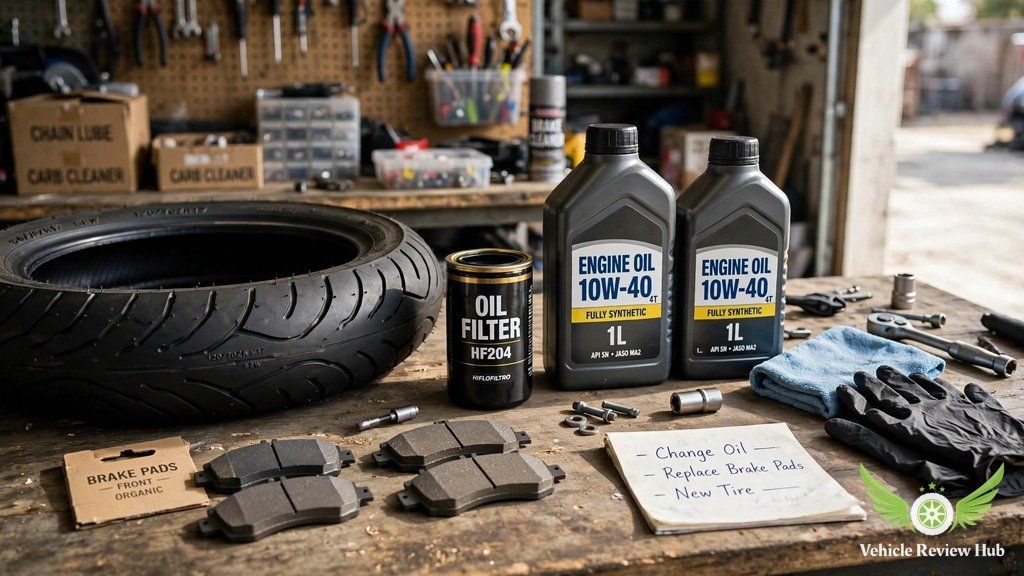
Chain and sprocket sets show the value of doing the job on time: roughly 150 to 250 dollars in parts plus 100 to 150 dollars in labor, due every 15,000 to 20,000 miles with regular cleaning and lubrication. A full pad replacement runs roughly 150 to 300 dollars in parts plus 100 to 200 dollars in labor.
Repair Expenses, Parts Availability and Long-Term Ownership Costs
Parts availability is a genuine strength for Yamaha MT-07 reliability: the bike shares its engine, gearbox, and most wear parts with the XSR700 and the Tenere 700, and the CP2 has been in production since 2014, so new and used parts are easy to find.
The valve check is the only routine service running into several hundred dollars of labor, so budget it into Yamaha MT-07 reliability planning and get a written quote before booking. The MT-07 review covers purchase pricing year by year, and the larger MT-09 reliability picture is a useful contrast: the bigger bike costs more to service and insure.
How to Keep a Yamaha MT-07 Reliable
Keeping Yamaha MT-07 reliability strong means doing the small things on time, protecting the finish that owners criticize, and checking every recall before you buy.

Preventive Maintenance, Proper Lubrication and Regular Inspections
Start with the chain, the part owners neglect most. Clean it with kerosene and a soft brush, wipe it dry, and lubricate with a special O-ring chain lubricant, never engine oil. Lubricate after washing, rain, and wet rides, and check slack against your own manual regularly.
Monthly, check tire pressures, pad thickness, fluid levels, fork seals, and chain slack. For Yamaha MT-07 reliability, this walk-around catches almost every problem while it is cheap. And because finish and corrosion draw the most owner complaints, wash the bike after wet or salted-road rides and treat exposed fasteners with a corrosion inhibitor before winter.
Recall Checks: Battery Cable 2015, Chain Guard 2018 and Clutch VIN Check
Two recall checks belong on every Yamaha MT-07 reliability checklist, and both are free at a dealer when they apply. The first is NHTSA campaign 14V657, covering certain model year 2015 FZ-07 motorcycles built from May 1 to September 30, 2014, a total of 3,100 units. The positive battery cable could be pinched between the seat base and the seat bracket, chafe, and short-circuit, and the remedy is a free replacement cable under Yamaha number 990089.
The second is NHTSA campaign 18V483, covering certain 2018 MT-07J and MT-07JC motorcycles plus the XSR700J and XSR700JC, a total of 3,493 units. The bolts fixing the drive chain guard to the swingarm could loosen, letting the guard contact the drive chain and break, and dealers replace both bolts and their collars free of charge under Yamaha number 990120.
The third item is a VIN check, not a numbered recall this guide can state: buyers should run the VIN for any clutch-related action on the bike they are considering, because no verified US campaign number for a clutch action on the MT-07 was confirmed from a primary record in this research. Always confirm recall completion by VIN with a dealer, since coverage is by VIN and build date, not by model year alone.
Yamaha MT-07 Reliability FAQ
These are the questions buyers and owners actually ask about Yamaha MT-07 reliability, answered with the verified figures above.
Is the Yamaha MT-07 reliable?
Yes, mechanically. Yamaha MT-07 reliability rests on the proven 689cc CP2 twin and a simple service schedule, while the main owner complaint is finish and corrosion resistance rather than engine or gearbox failure.
What does the MCN 3.6 out of 5 reliability rating really mean?
For Yamaha MT-07 reliability, it means owners of the 2021–2024 bike rated it 3.6 out of 5 for reliability and build quality, with the lower ratings aimed mainly at finish quality and corrosion resistance. The sample is small, with an owners’ rating of 4 out of 5 from 7 reviews, so read it as an owner verdict, not a test result.
How often does the Yamaha MT-07 need an oil change?
Yamaha MT-07 reliability starts with oil every 4,000 miles or 6 months under the US schedule. Use SAE 10W-40, with roughly 2.6 litres on a filter change, confirmed on the sight glass.
When is the valve-clearance check due on the MT-07?
Yamaha MT-07 reliability includes a valve check every 26,600 miles in US manuals. A bike near or past that mileage should have a stamped record of the check, and the job should be priced into any bike that still needs it.
Does the MT-07 have cornering ABS or an IMU?
No. Yamaha MT-07 reliability is helped by simplicity here: the bike has conventional ABS only, with no IMU and no cornering ABS on any generation, including the 2025 redesign, which added ride-by-wire, riding modes, and switchable traction control but not lean-sensitive braking.
Does the 2025 MT-07 have an inverted fork?
Yes, and it matters for Yamaha MT-07 reliability checks: from 2025 the standard MT-07 carries a 41mm KYB inverted fork with 5.1 inches of travel. Pre-2025 bikes use a conventional telescopic fork.
What are the common problems on the Yamaha MT-07?
For Yamaha MT-07 reliability, the list is mostly owner-reported watchpoints, not verified defects: finish and corrosion, chain and sprocket wear, fork seal weeping, and battery weakness after storage. The official Yamaha MT-07 reliability issues are the 14V657 battery cable recall and the 18V483 chain guard recall.
What is recall 14V657 on the MT-07?
For Yamaha MT-07 reliability, note the recall of 3,100 certain 2015 FZ-07 motorcycles built from May 1 to September 30, 2014, where the positive battery cable could be pinched between the seat base and bracket, chafe, and short-circuit. The remedy is a free replacement cable under Yamaha number 990089.
What is recall 18V483 on the MT-07?
Yamaha MT-07 reliability also involves the recall of 3,493 certain 2018 MT-07 and XSR700 motorcycles, where chain guard mounting bolts could loosen and let the guard contact the chain and break.
Is there a clutch recall on the MT-07?
No verified US clutch campaign number for the MT-07 was confirmed from a primary record in this research, so this guide states no number. Run the VIN with a dealer before buying, and treat any quoted clutch recall number without a source as unverified for Yamaha MT-07 reliability.
How long does the MT-07 chain last?
Yamaha MT-07 reliability depends on a chain and sprocket set lasting typically 15,000 to 20,000 miles with regular cleaning and lubrication.
How much does Yamaha MT-07 maintenance cost per year?
For Yamaha MT-07 reliability on a budget, tires and chains are the biggest recurring costs. A chain set runs roughly 150 to 250 dollars in parts plus 100 to 150 in labor; a full pad replacement roughly 150 to 300 in parts plus 100 to 200 in labor.
Is the MT-07 good for high mileage?
Yes, with records. Yamaha MT-07 reliability at high mileage depends on oil change history, valve service at 26,600 miles, and chain and brake maintenance, not the odometer alone.
What should I check before buying a used MT-07?
Yamaha MT-07 reliability checks start with both recall numbers against the VIN, verify the valve service if mileage is near or past 26,600 miles, inspect chain and sprockets, check fork seals and pad thickness, and ask for the service book.