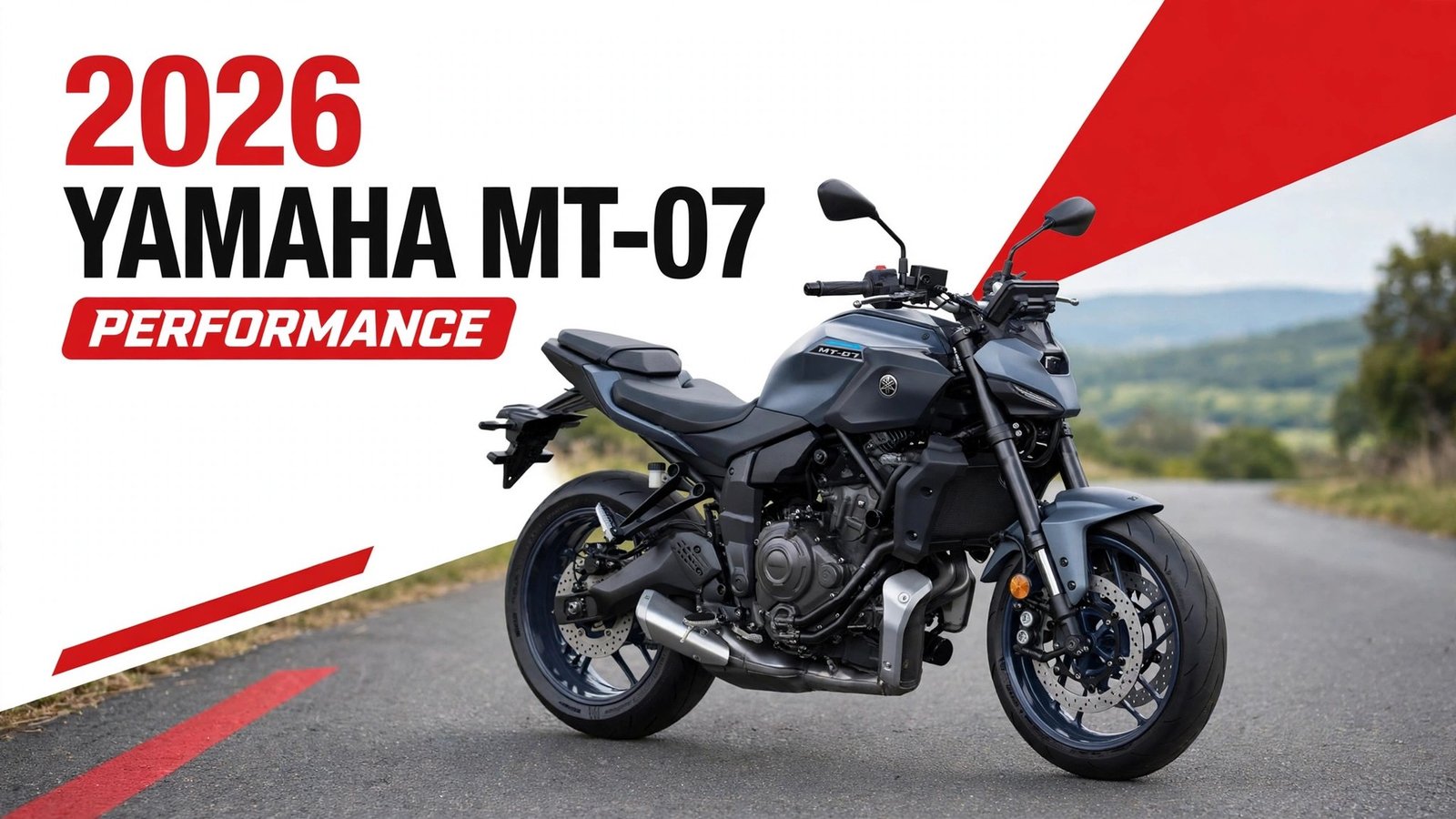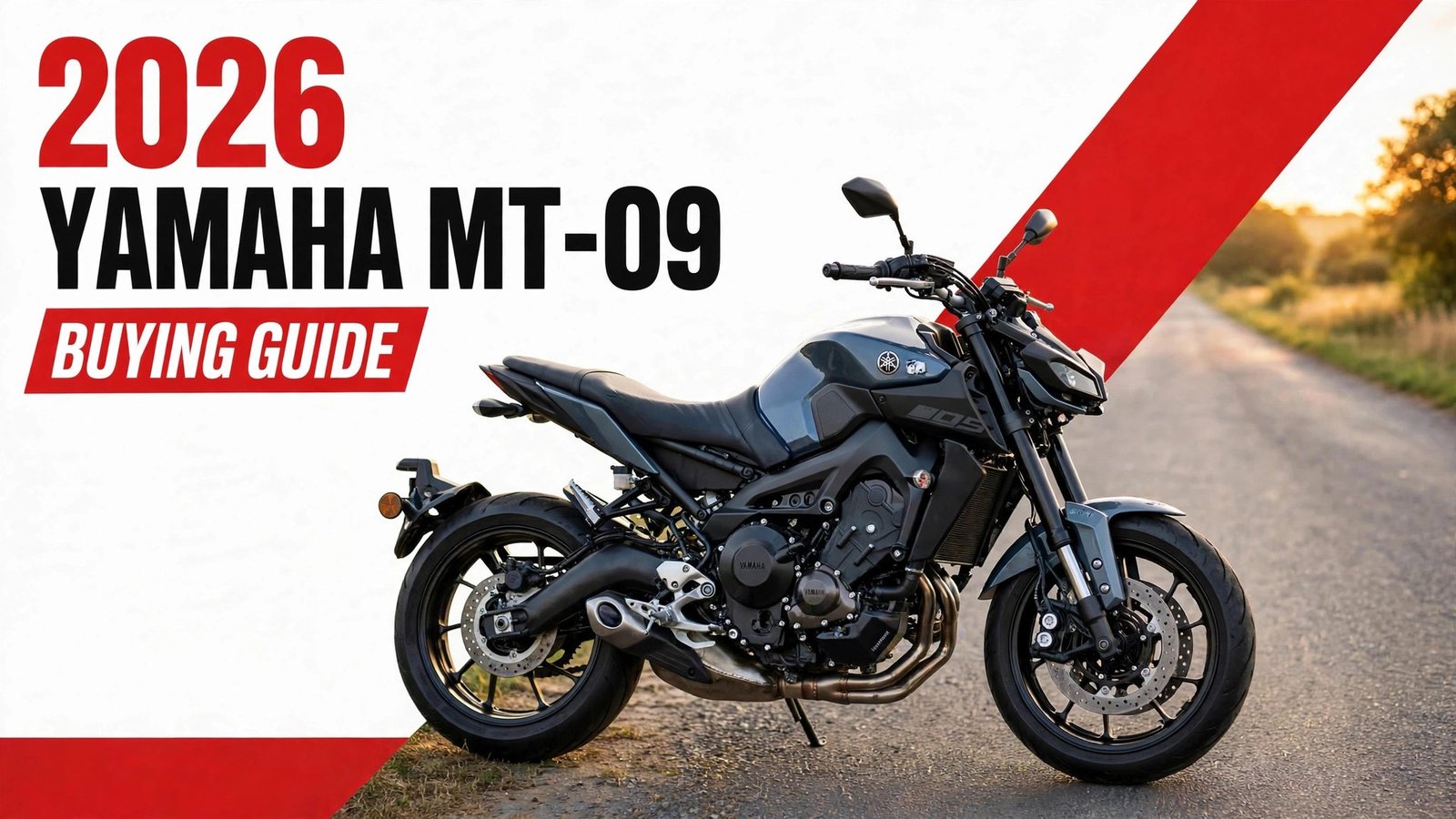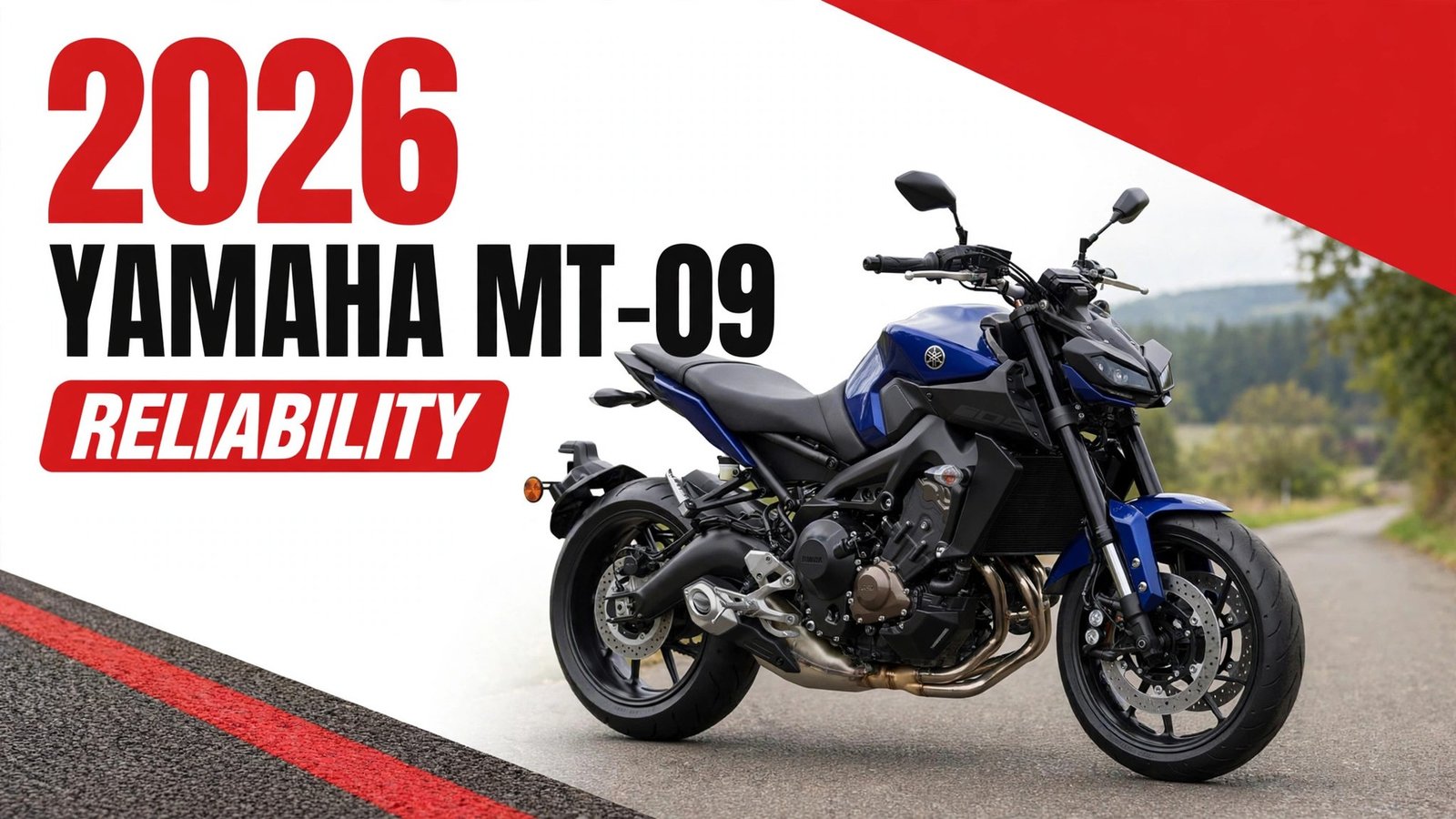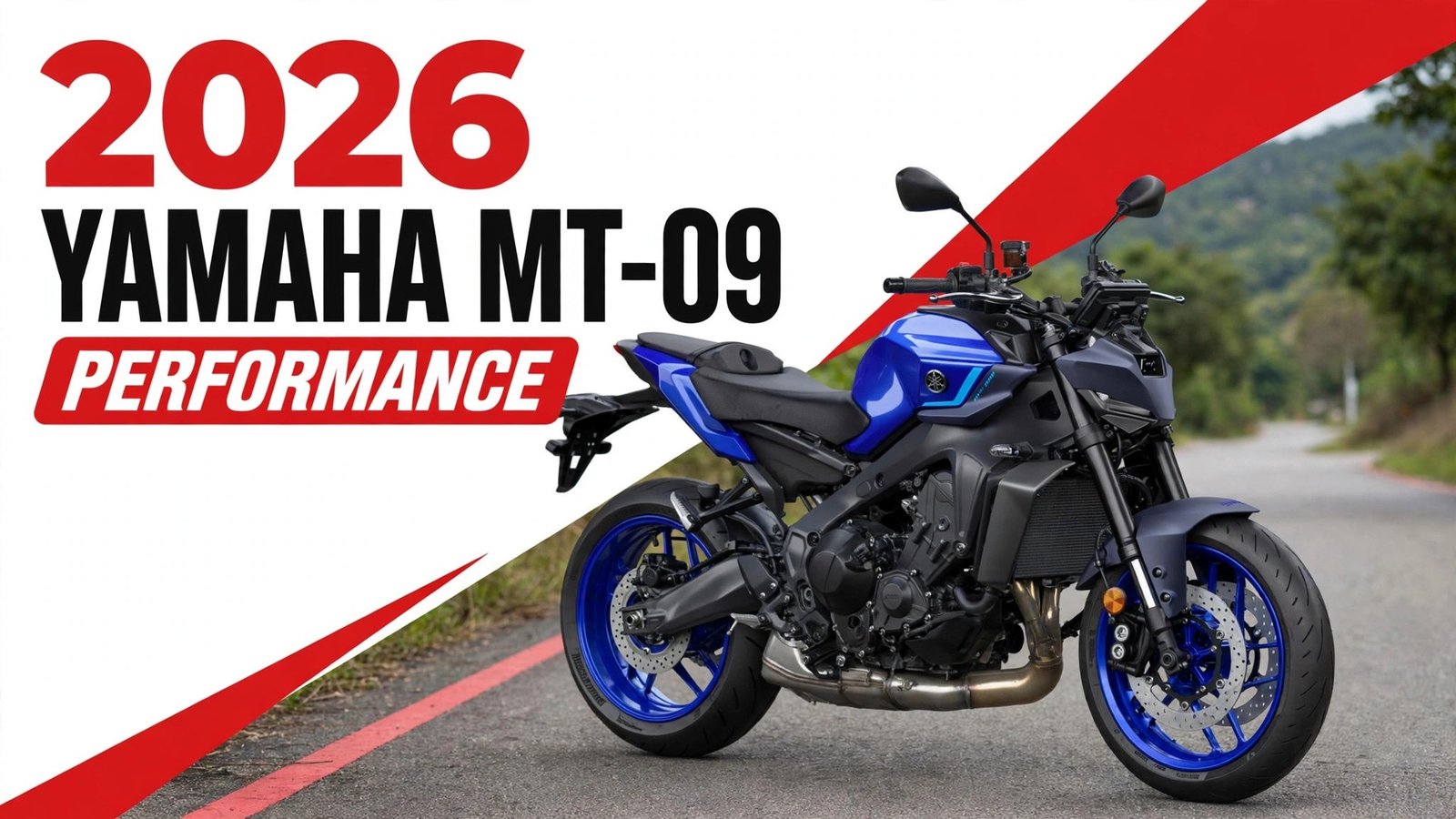
Yamaha MT-09 performance starts with a measured fact, not a slogan: the standard bike made 105.8 rear-wheel horsepower at 9,900 rpm on Motorcycle.com’s dyno. That number comes from a test of the standard model itself. Yamaha’s claimed figure is 117 horsepower at the crankshaft, and the bike weighs 425 pounds wet, so the power-to-weight ratio sits among the best in the middleweight naked class.
There is one honest gap in the Yamaha MT-09 performance story. Yamaha publishes no top speed for the MT-09, and no credible instrumented acceleration test of the stock standard 890 exists. The figures most often quoted online, including 0-60 mph in 3.32 seconds, come from SP tests and must not be used for the standard bike. This article keeps standard and SP results for Yamaha MT-09 performance strictly apart.
On fuel, Yamaha MT-09 performance is easy to verify. Yamaha quotes 48 mpg, Rider Magazine’s spec chart for the 2024 standard bike lists 41.3 mpg, and the 3.7-gallon tank therefore gives roughly 150 to 178 miles of range. Below: the engine, the top-speed question, real fuel economy, everyday riding, handling, brakes, and rivals.
Yamaha MT-09 Engine Performance and Power Delivery
The engine is the reason Yamaha MT-09 performance has such a loyal following. The 890cc liquid-cooled CP3 triple fires with its crankpins offset 120 degrees, giving strong midrange torque and a distinctive growl, and most usable thrust arrives in the middle of the rev range, exactly where street riding happens.
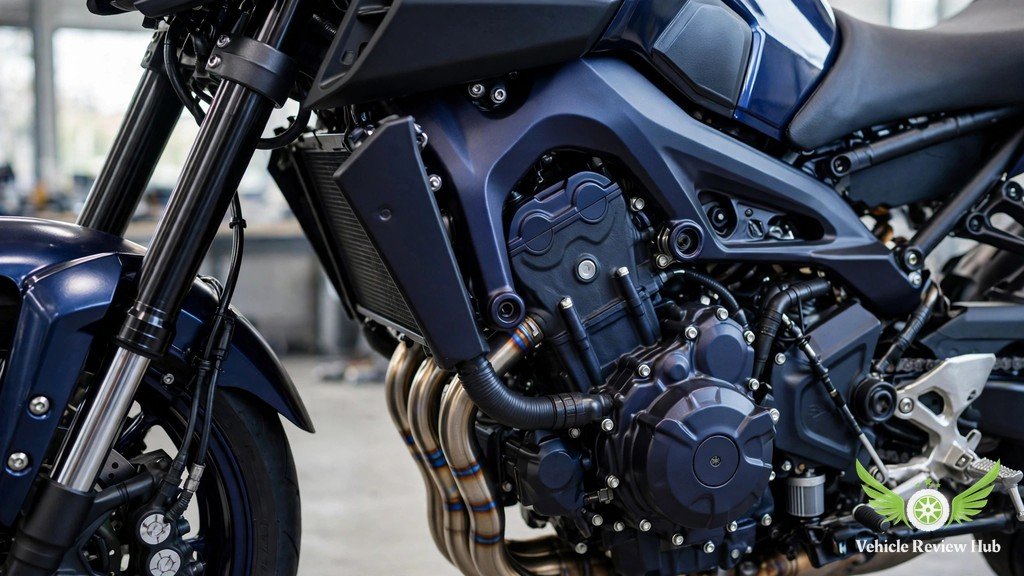
Motorcycle.com Dyno 105.8 RWHP at 9,900 RPM for the Standard Bike
For judging Yamaha MT-09 performance, rear-wheel horsepower matters most, because it measures what actually reaches the road. Motorcycle.com’s dyno test recorded 105.8 rear-wheel horsepower at 9,900 rpm and 62.8 lb-ft of torque at 7,000 rpm, and the publication states explicitly that those figures were measured on the standard MT-09. These are standard-bike numbers, not borrowed SP results.
Against Yamaha’s factory claim of 117 horsepower and 69 lb-ft, the gap of about 11 horsepower is normal driveline loss. The torque story is better: peak torque arrives at 7,000 rpm, but strong thrust is available well below that.
Keep the generations straight when comparing Yamaha MT-09 performance figures. The original FZ-09 used an 847cc triple making roughly 110 horsepower, while every MT-09 from 2021 onward uses the larger 890cc engine (78.0 x 62.1 mm, 11.5:1).
| Engine figure | Standard MT-09 (890cc) | Source |
|---|---|---|
| Displacement | 890cc inline triple | Yamaha / Rider Magazine |
| Claimed power | 117 hp at 10,000 rpm (factory claim) | Rider Magazine spec chart |
| Claimed torque | 69 lb-ft at 7,000 rpm (factory claim) | Rider Magazine spec chart |
| Measured rear-wheel power | 105.8 hp at 9,900 rpm | Motorcycle.com dyno, standard bike |
| Measured rear-wheel torque | 62.8 lb-ft at 7,000 rpm | Motorcycle.com dyno, standard bike |
| Wet weight (2024-on) | 425 lb (factory claim) | Rider Magazine spec chart |
Six-Speed Transmission, Third-Generation Quickshifter and CP3 Power Delivery
Yamaha MT-09 performance depends as much on the gearbox as on the engine. The six-speed transmission on the 2024 bike received new drive dogs and gears that improve shift engagement and reduce backlash, and the cable-actuated slip-and-assist clutch keeps lever effort light in traffic while helping prevent rear-wheel hop on hard downshifts.
The 2024 standard bike also carries Yamaha’s third-generation quickshifter, working from as low as 9 mph, with downshifts during acceleration and upshifts during deceleration. Tied into the six-axis IMU electronics, it keeps shifts smooth even when leaned over. Cruise control, standard from 2024 after previously being SP-only, plus lean-sensitive traction control, slide control, and wheelie control, round out a package far richer than the original FZ-09 offered. For Yamaha MT-09 performance, the payoff is simple: short-shift at 6,000 rpm and the bike still pulls hard.
Yamaha MT-09 Top Speed and Acceleration
Top speed and acceleration are the first questions about Yamaha MT-09 performance, and for the standard MT-09 they are also the questions with the least reliable answers online. This section states what is verified about Yamaha MT-09 performance, what is not, and why the most quoted figures should not be trusted.
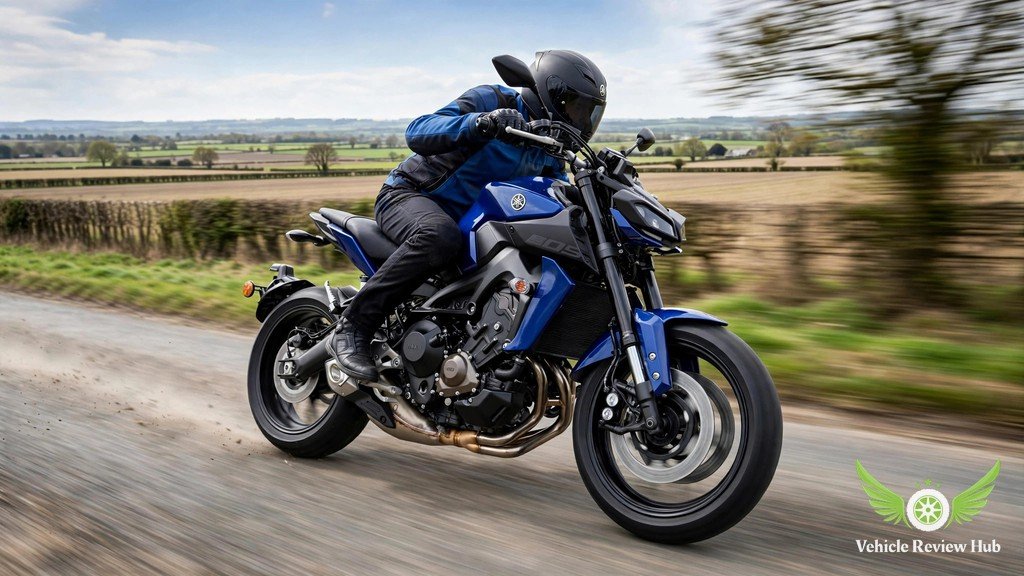
Why No Verified Top Speed or Instrumented Test Exists for the Standard 890
Yamaha publishes no top speed for the MT-09, which is normal for naked bikes. What is unusual is that no credible instrumented test of the stock standard 890 has surfaced either: major US magazines tested the bike in depth, but none published a verified GPS top speed or a timed 0-60 mph run for the standard model.
That leaves Yamaha MT-09 performance without a verified top speed or acceleration time. Owner anecdotes and aggregator figures are not evidence: a speedometer is not a test instrument, and aggregator numbers that mix model years prove nothing.
The video below is Rider Magazine’s first-ride review of the standard 2024 bike. It shows Yamaha MT-09 performance on real roads; watch it as a riding impression, not a timed test.
Why SP Figures 3.32 Seconds and 11.22 Seconds Must Not Be Used for the Standard Bike
Here is where most online coverage of Yamaha MT-09 performance goes wrong. The figures 0-60 mph in 3.32 seconds and a quarter-mile in 11.22 seconds at 125.77 mph come from a Cycle World test of the MT-09 SP, not the standard bike, and the SP’s dyno figure of 107.21 rear-wheel horsepower is likewise an SP test result. Quoting those numbers for the standard MT-09 is incorrect.
The temptation is understandable, since both share the same 890cc CP3, but the SP carries different suspension and brakes. A buyer reading SP acceleration figures while shopping for a standard bike is being misled. SP test data belongs in the SP performance figures guide, where it is labeled as SP results. For the standard bike, the honest summary is that the dyno proves 105.8 rear-wheel horsepower in a 425-pound motorcycle, and in roll-on acceleration Yamaha MT-09 performance feels as quick as anything in its class.
Yamaha MT-09 Mileage and Fuel Economy
Fuel economy turns Yamaha MT-09 performance into a practical question: with a 3.7-gallon tank, every mpg counts toward real range.
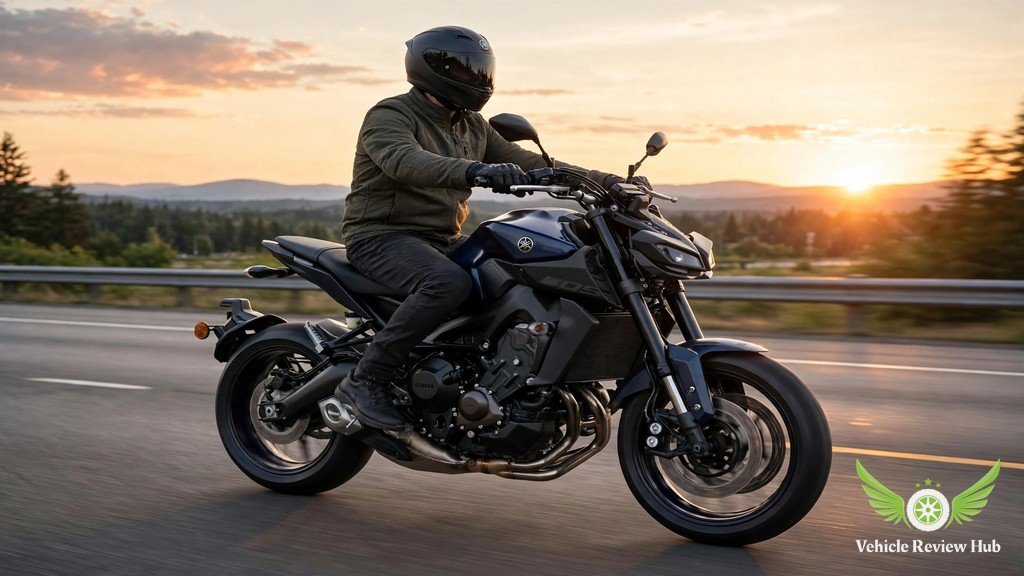
Official Yamaha 48 MPG Estimate and 3.7-Gallon Tank Range
Yamaha’s official figure for the current MT-09 is 48 mpg, and the 3.7-gallon tank theoretically covers about 178 miles. In practice nobody runs a tank dry, so a sensible planning number for Yamaha MT-09 performance on a trip is 150 to 160 miles, allowing a reserve margin.
That range suits commuting and weekend rides but is not touring-bike territory, and it is one real limitation of Yamaha MT-09 performance on longer trips. Sustained high-speed cruising will use fuel faster than the official figure suggests, because wind resistance on a naked bike rises sharply with speed. Treat 48 mpg as a mixed-riding estimate, not a highway guarantee.
Real-World US Tested 41.3 MPG by Rider Magazine and Riding Style Effects
Rider Magazine’s spec chart for the 2024 standard MT-09 lists 41.3 mpg, the best real-world US reference for Yamaha MT-09 performance. At that figure, the 3.7-gallon tank gives about 153 miles of range, roughly 25 miles less than the official figure implies. The gap is not a contradiction: official estimates come from controlled conditions, while a test bike is ridden hard.
Riding style moves the number more than any other factor. Gentle throttle use, early upshifts, and steady cruising push economy toward the official figure, while aggressive canyon riding and high-speed freeway work pull Yamaha MT-09 performance below 41.3 mpg. Note one coincidence: an owner-logged 41.3 mpg average also appears for the SP on fuel-tracking sites, but that is a different source measuring different bikes.
| Scenario | Fuel economy | Range on 3.7 gallons |
|---|---|---|
| Official Yamaha estimate | 48 mpg | About 178 miles |
| Rider Magazine spec chart (2024 standard bike) | 41.3 mpg | About 153 miles |
That 41.3 mpg figure is the number to remember when judging Yamaha MT-09 performance in the real world. For servicing costs, see the service intervals in the reliability guide.
Yamaha MT-09 Real-World Riding Performance
Spec sheets tell half the Yamaha MT-09 performance story. Yamaha MT-09 performance in daily use is about how the bike behaves in traffic and on the freeway, where the CP3’s character matters more than any single figure.
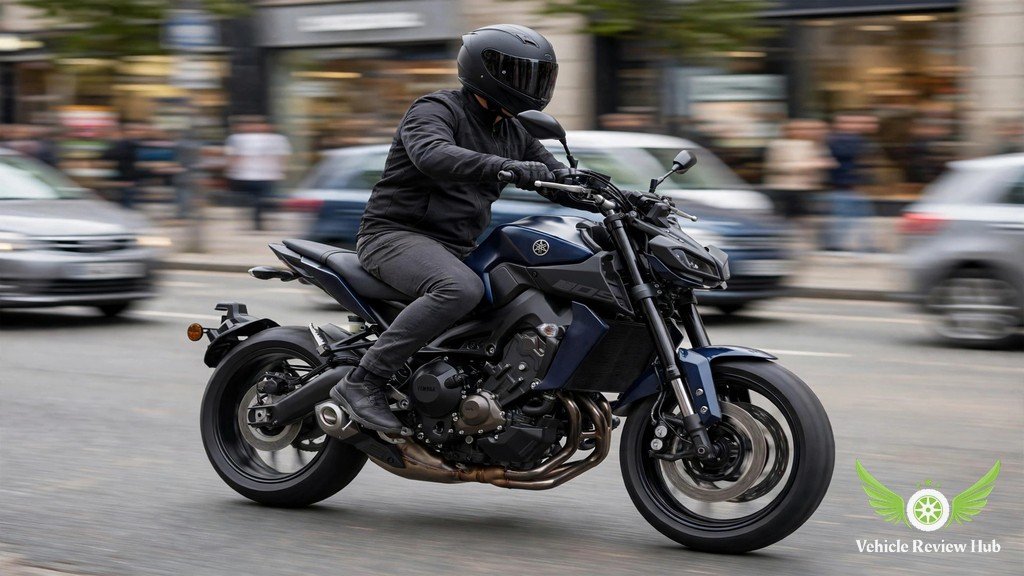
City Riding, Traffic Performance and Everyday Acceleration
Around town, Yamaha MT-09 performance is surprisingly easy to live with: the third-generation quickshifter works from as low as 9 mph, throttle response in Street mode is smooth rather than snappy, and the 425-pound weight and 32.5-inch seat make it manageable at stoplights, with an upright handlebar giving good visibility over traffic.
Everyday acceleration is where the MT-09 earns its reputation. A gap in traffic that would need a downshift on a smaller bike is handled with a simple roll of the wrist in third gear, and the CP3 pulls cleanly from low revs. That flexibility is why Yamaha MT-09 performance works as a commuter too: fast without being frantic. The one city drawback for Yamaha MT-09 performance is heat in slow summer traffic, common to all high-performance nakeds, and the small tank means a daily commuter visits fuel stations more often than a small-bike rider would.
Highway Riding, Overtaking Ability and Long-Distance Limitations
On the highway, Yamaha MT-09 performance shows both its strength and its limit. Overtaking is effortless: at freeway speeds the engine sits in the meat of its torque curve, so passing needs no downshift, and the bike is stable at speed, with cruise control fitted as standard from 2024 easing long freeway stretches and a 5-inch TFT with Y-Connect and Garmin StreetCross navigation keeping the rider informed.
The limitations are shared by every naked bike. Without a fairing or windscreen, sustained speeds above 75 mph push a lot of wind onto the rider, which tires you over long distances, and the 3.7-gallon tank caps realistic highway range at roughly 140 to 150 miles between stops. A fuller picture of prices and alternatives is in the used prices and buying guide. None of that changes the core verdict: Yamaha MT-09 performance is strongest exactly where most owners ride.
Yamaha MT-09 Handling, Braking and Stability
If the engine is the reason people buy into Yamaha MT-09 performance, the chassis is the reason they keep it. Yamaha MT-09 performance in corners depends on a stiff aluminum frame, fully adjustable KYB suspension, and tires updated for 2024.
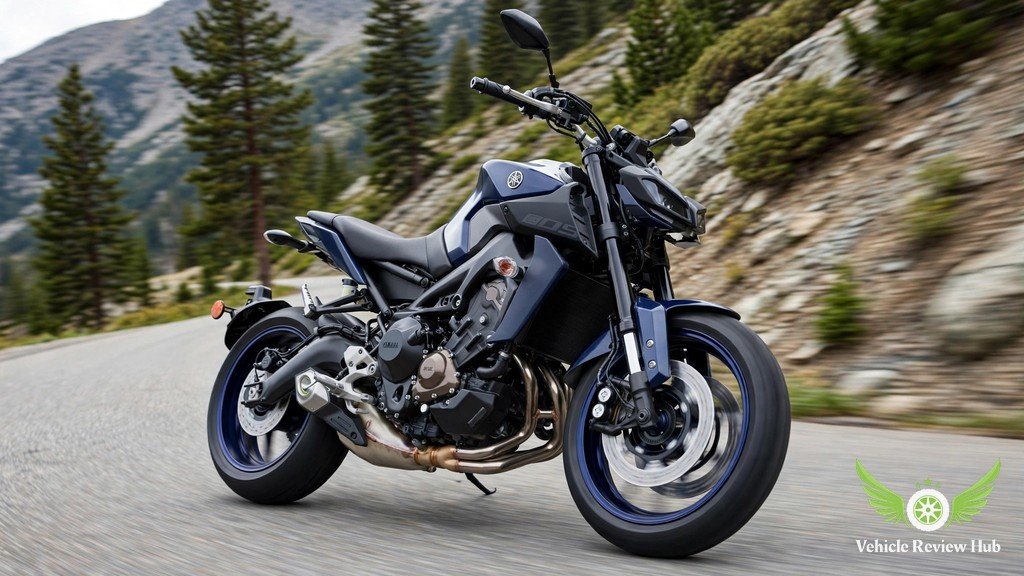
KYB Suspension, Chassis, Bridgestone S23 Tires and Cornering Performance
Yamaha MT-09 performance hardware starts with a fully adjustable 41mm inverted KYB fork with 5.1 inches of travel and a KYB single rear shock adjustable for preload and rebound damping with 4.6 inches of travel on the 2024-on bike. For 2024, Yamaha raised the fork spring rate, firmed up damping, thickened the engine brackets, and revised the rear linkage ratio. The fork has a standard dark finish, not the SP’s gold finish, and the rear shock is a KYB unit, not an Öhlins unit.
Tires are Bridgestone Battlax Hypersport S23 radials on the 2024-on bike (120/70ZR17 front, 180/55ZR17 rear), replacing the S22 tires fitted to 2021-2023 models. With a 56.3-inch wheelbase, 24.7-degree rake, and 4.3-inch trail, the MT-09 changes direction quickly without feeling nervous, and revised ergonomics put more weight on the front tire. Rider Magazine’s testers praised its composure in tight transitions: Yamaha MT-09 performance in corners is among the best in the middleweight naked class.
Brembo Master Cylinder, Advics Calipers and ABS Features: Stylema Is SP Only
Braking is a point where buyers often get confused about Yamaha MT-09 performance, so the facts deserve stating clearly. The standard bike uses dual 298mm floating front discs with four-piston radial calipers made by Advics, a single 245mm rear disc, and, from 2024, a Brembo radial front master cylinder, as Bennetts’ 2024 review of the standard bike confirms.
What the standard bike does not have is Brembo Stylema calipers: Stylema monoblocks are SP-only, and any listing showing them on a bike described as standard is showing an SP or a modified bike. The same applies to gold fork tubes and a gold Öhlins rear spring: those are SP signatures, not standard equipment. The standard bike’s brakes are nonetheless strong, with good feel from the Brembo master cylinder and lean-sensitive ABS. For Yamaha MT-09 performance on track days, pad choice and brake fluid matter more than the caliper brand. That honesty about hardware is part of what makes Yamaha MT-09 performance easy to trust.
| Chassis / brake item | Standard MT-09 (2024-on) | SP difference |
|---|---|---|
| Front fork | 41mm KYB inverted, fully adjustable, 5.1-in travel, standard finish | Gold-finished DLC-coated KYB fork |
| Rear shock | KYB single shock, preload + rebound, 4.6-in travel | Öhlins semi-active shock with gold spring |
| Front brakes | Dual 298mm discs, Advics 4-piston radial calipers | Brembo Stylema monoblock calipers |
| Tires | Bridgestone S23, 120/70ZR17 + 180/55ZR17 | Bridgestone S23, same sizes |
| Wheelbase / seat / weight | 56.3 in / 32.5 in / 425 lb wet | 56.3 in / 32.5 in / 428 lb wet (2024-on SP) |
Yamaha MT-09 Performance Compared With Other Middleweight Naked Bikes
No bike exists in a vacuum, and Yamaha MT-09 performance only makes sense in context. The two most relevant rivals are the Triumph Street Triple R and the KTM 990 Duke, both strong middleweight nakeds with very different characters.
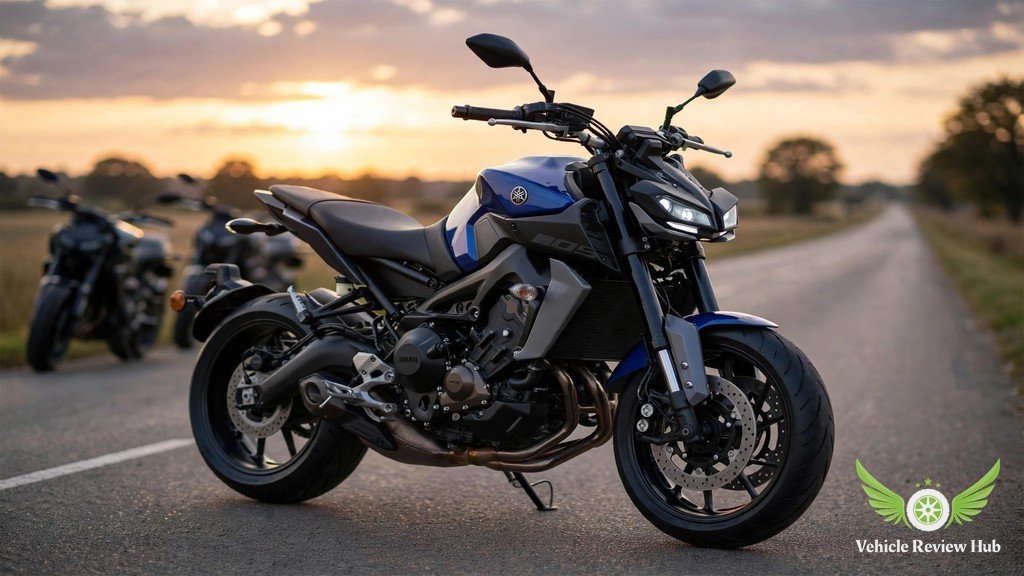
Yamaha MT-09 vs Triumph Street Triple R and KTM 990 Duke
Against the Triumph Street Triple R, the MT-09 offers more torque and a lower price. The 2024 Street Triple R costs $9,995, uses a 765cc triple claimed at 118 horsepower and 59 lb-ft, weighs a claimed 417 pounds wet, and runs Showa suspension with Brembo M4.32 calipers on 310mm discs. Where Yamaha MT-09 performance wins is midrange thrust: the CP3’s 62.8 lb-ft at the rear wheel makes the Yamaha feel stronger in everyday riding.
Against the KTM 990 Duke, the comparison shifts. The 2024 990 Duke costs $12,500, uses a 947cc twin claimed at 123 horsepower and 76 lb-ft, and KTM claims 50 mpg from its 3.9-gallon tank. Its factory weight claim of 395 pounds is a no-fuel figure, not a wet weight; independent measurement put a fully fueled 990 Duke at roughly 423 pounds, close to the Yamaha’s 425 pounds wet. The KTM is the more aggressive and more expensive machine, while Yamaha MT-09 performance makes the standard bike the more versatile all-rounder. Those Yamaha MT-09 performance comparison figures come from RevZilla’s Street Triple first look and Rider Magazine’s 990 Duke review, with weight labels kept as published.
Is the Yamaha MT-09 Suitable for Experienced Riders and Daily Riding?
The short answer is yes to both, with one qualification. For experienced riders, Yamaha MT-09 performance is genuinely satisfying: the engine has real depth, the chassis rewards good technique, and the electronics can be tailored. A rider stepping up from a 300 or 400 will find it a big jump in power and should respect it, especially in Sport mode, but a rider with a season or two on a mid-size bike will find it challenging in a good way.
For daily riding, Yamaha MT-09 performance makes the MT-09 one of the easiest fast bikes to live with. It is light, narrow, comfortable for an hour or two, economical at around 41 mpg in real use, and equipped from 2024 onward with cruise control and a clear TFT display. Its weaknesses as a daily bike are the small tank and the lack of wind protection, which matter most on long highway commutes. The full MT-09 review covers comfort and model-year differences in more depth.
Yamaha MT-09 Performance FAQs
Direct answers about Yamaha MT-09 performance: power, top speed, fuel economy, brakes, suspension, and rivals.
How much horsepower does the standard Yamaha MT-09 make?
For Yamaha MT-09 performance, Yamaha claims 117 horsepower and Motorcycle.com measured 105.8 rear-wheel horsepower on the standard bike. The difference is normal driveline loss.
What is the top speed of the Yamaha MT-09?
There is no verified top speed for the standard MT-09: Yamaha publishes none, and no credible instrumented test of the stock standard 890 has been published. Any figure quoted without a named test method and test bike is a guess.
What is the 0-60 time of the standard MT-09?
There is no verified instrumented 0-60 time for the standard 890. The widely quoted 3.32-second figure comes from a Cycle World SP test and must not be presented as a standard-bike result.
What is the real-world MPG of the Yamaha MT-09?
Rider Magazine’s spec chart for the 2024 standard bike lists 41.3 mpg, against Yamaha’s official estimate of 48 mpg. Gentle riding moves economy toward the official figure, while aggressive riding pulls Yamaha MT-09 performance below 41 mpg.
How far can the MT-09 go on a tank?
With a 3.7-gallon tank, the MT-09 covers about 153 miles at 41.3 mpg and about 178 miles at 48 mpg. A sensible planning number for Yamaha MT-09 performance is a fuel stop every 140 to 150 miles.
Does the standard MT-09 have an Öhlins shock?
No. The standard MT-09 uses a KYB rear shock adjustable for preload and rebound damping; the Öhlins semi-active shock with its gold spring is SP-only.
Does the standard MT-09 have gold forks?
No. The gold-finished, DLC-coated KYB fork is SP-only from 2024 onward; the standard bike’s 41mm KYB fork has a standard dark finish and is fully adjustable.
Does the standard MT-09 have Brembo Stylema calipers?
No. The standard bike uses Advics four-piston radial calipers on 298mm front discs, paired from 2024 with a Brembo radial master cylinder; Brembo Stylema calipers are SP-only.
Does the standard MT-09 have a quickshifter?
Yes. The 2024 standard bike carries Yamaha’s third-generation quickshifter, working from as low as 9 mph, handling downshifts during acceleration and upshifts during deceleration.
Does the standard MT-09 have cruise control?
Yes, from 2024 onward; before that it was exclusive to the SP.
Is the Yamaha MT-09 good for beginners?
The MT-09 suits riders with some experience. Its power delivery is manageable in Street and Rain modes, but 105.8 rear-wheel horsepower in a 425-pound bike is a large step up.