Short answer: Honda CB500F reliability is genuinely strong — this is one of the most dependable middleweight motorcycles Honda has ever sold, backed by a decade of owner data and a simple service schedule. But every reader of this Honda CB500F reliability guide must know one identity fact first: the CB500F is the same motorcycle as the CB500 Hornet, under its older name. Europe renamed the naked 471cc twin the CB500 Hornet for 2024, and the United States followed for 2026, with the same CB500FA model code throughout. So when this Honda CB500F reliability guide quotes an owner score, a service interval, or a recall, it describes the same bike covered in our CB500 Hornet reliability guide — no F-vs-Hornet difference is invented below.
That matters because Honda CB500F reliability is not a story of dramatic failures or secret defects. It is a story of ordinary wear, honestly reported: chains and sprockets that wear out, fasteners that corrode if neglected, fork seals that eventually weep, and one larger bill at the 16,000-mile valve service. Get the maintenance right and the 471cc twin routinely covers high mileages with little drama. Get it wrong and even a Honda will punish you.
Honda CB500F Reliability Overview
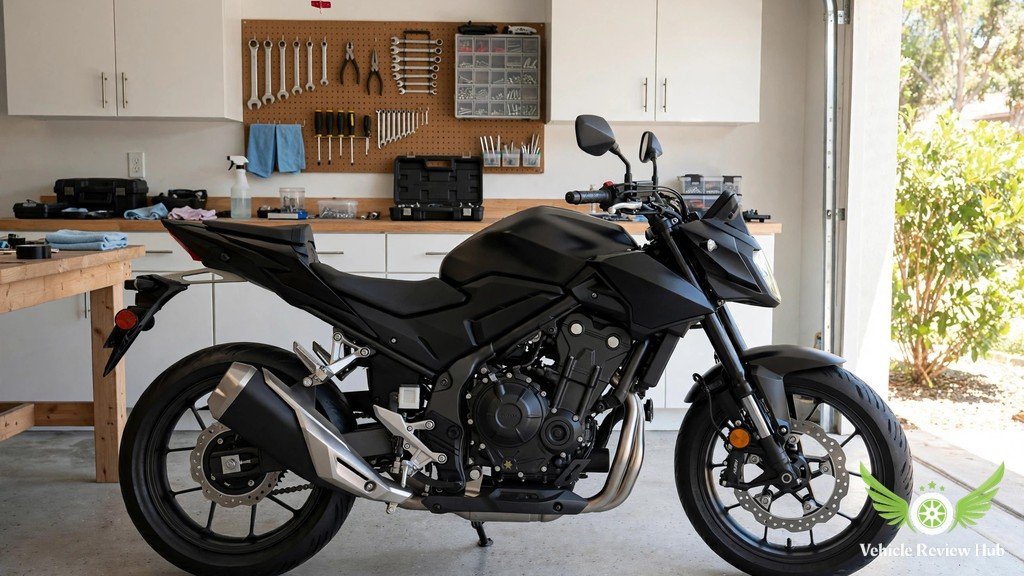
The headline for Honda CB500F reliability is simple: owners rate this motorcycle highly, and Honda CB500F reliability holds up across all three generations. UK owner data from MCN gives reliability sub-scores of 4.6 out of 5 for 2016–2018 (9 owners), 4.3 for 2019–2021 (12 owners), and 4.7 for 2022-on (6 owners, overall 4.2). These small UK samples are never merged into one invented score — but no generation has a bad reputation, and the newest bikes score best.
MCN Owners Rate Reliability 4.3 to 4.7 Out of 5 by Generation
MCN owners rate reliability 4.3 to 4.7 out of 5 by generation, and the spread itself tells a useful story for Honda CB500F reliability. The 2019–2021 generation scores lowest at 4.3, matching what used-buyer coverage says about that era: mechanically sound bikes, but finish complaints and crash damage drag owner sentiment down. The 2022-on bikes, with their chassis revision and dual front discs, score 4.7 on reliability even though their overall owner score is 4.2 — owners love the mechanical package slightly more than the complete bike. MCN’s CB500F owner reviews show the same pattern in words: one owner complains about corrosion, another calls the bike effectively unbreakable.
The video below is Honda’s own launch film for the 2024 CB500 Hornet — the same motorcycle under its new name — not a service tutorial, notes this Honda CB500F reliability guide.
How Mileage, Storage and Previous Care Affect Reliability
How mileage, storage, and previous care affect reliability matters more than the model year on the badge for Honda CB500F reliability. A 2015 F with 8,000 garaged miles and a full dealer service book is a safer buy than a 2023 F with 20,000 hard miles, no valve-service receipt, and a chain adjusted once a year. Mileage alone rarely condemns one of these twins — the understressed 471cc engine routinely runs well past 50,000 miles — but neglected maintenance compounds: a dry chain wears sprockets, a missed valve check hides tightening clearances, and stale fuel gums injectors. Outdoor-kept bikes show fastener corrosion and tired batteries sooner. The single most valuable document on any used F is proof of the 16,000-mile valve service. For the full ownership picture, see our Honda CB500F review.
Honda CB500F Common Problems and Wear Items
Common problems on the CB500F are refreshingly ordinary: no chronic engine failure, no gearbox scandal, no electrical plague. What exists for Honda CB500F reliability is a short list of wear items any competent inspection catches, plus crash damage — as Bennetts puts it bluntly, lots of these bikes get dropped.

Fastener and Finish Corrosion and ABS Sensor-Ring Checks
Fastener and finish corrosion is the most-reported cosmetic complaint in Honda CB500F reliability coverage, and it is worth taking seriously even though it rarely stops the bike. Owners and used guides point to exposed fasteners, nuts and bolts around the engine, the headlight mount, and the bottom yoke, where the finish can look substandard with age — especially on bikes kept outdoors or ridden through winters without cleaning. Heavy corrosion on a low-mileage bike tells you it lived outside and was rarely washed. The ABS sensor ring deserves its own check: give the ring and the sensor a close look, because corrosion there can make the sensor fail or misread, triggering an ABS error light. For Honda CB500F reliability checks, a persistent ABS light is not a reason to panic, but it is a reason to negotiate. For the faired twin’s parallel record, see our CBR500R reliability guide.
Chain, Sprockets, Tires, Fork Seals, Brakes and Electrical Checks
Chain, sprockets, tyres, fork seals, brakes, and electrics make up the rest of the Honda CB500F reliability watch list, and every item is a routine used-bike check rather than a design defect. Chain and sprockets wear first: look for tight spots, hooked sprocket teeth, and missing O-rings, and replace chain and sprockets as a set when adjustment runs out — never just the chain. Fork seals weep with age; check for oil mist on the fork legs. Tyre age matters as much as tread depth on low-mileage examples; a five-year-old tyre with deep tread is still a replacement item. On brakes, check pad thickness, disc condition (feel for pulsing that suggests a warped disc), and caliper movement — Bennetts’ used guide notes a two-piston caliper can stick, with a refresh kit around £30 if caught early. For Honda CB500F reliability checks, electrics are simple: ABS self-test, TFT/HSTC on 2024-on bikes, lights, indicators, horn. Finally, check for crash damage: scraped fork legs, aftermarket bar ends, bent bars, and history notes hinting at a fall.
Honda CB500F Maintenance Schedule and Servicing
The maintenance schedule is the backbone of Honda CB500F reliability, and it is reassuringly simple: first service at 600 miles, oil and filter every 8,000 miles or 12 months, valve-clearance inspection every 16,000 miles, plus time-based items owners most often forget. Follow it and the bike rewards you; the most expensive mistake is treating the 16,000-mile service as optional.

First Service at 600 Miles, Oil Every 8,000 Miles or One Year
First service at 600 miles, oil every 8,000 miles or one year — that pairing is the heartbeat of Honda CB500F reliability. The 600-mile first service clears break-in debris and establishes the service book; a used F without it deserves a discount. After that, oil and filter go every 8,000 miles or 12 months, using 10W-30 JASO MA oil. One figure this Honda CB500F reliability guide deliberately does not assert as a single number is oil capacity: Bennetts quotes 3.2 litres, other summaries 2.7 or 3.4 litres — use your year manual and the sight-glass level check. The valve-clearance inspection falls every 16,000 miles; owners report the valves rarely need adjustment, but the check still costs labour.
Spark Plug Replacement at 16,000 Miles in the US Manual
Spark plug replacement at 16,000 miles in the US manual is an F-specific detail that Honda CB500F reliability readers must not blur with the faired twin’s schedule. On the naked F, the US schedule summaries replace the spark plugs at 16,000 miles, in both the 2019–2021 and 2022-on summaries. On the faired CBR500R, by contrast, the plugs are inspected at 16,000 miles and replaced at 32,000 miles. Same engine family, different plug schedule. The table below keeps the full F schedule in one place. See the CB500F maintenance schedule summary and the 2022 CB500F owner’s manual for year-specific detail.
| Service item | Honda CB500F interval (US) | Notes |
|---|---|---|
| First service | 600 miles | Establishes the service book |
| Engine oil + filter | Every 8,000 miles / 12 months | 10W-30 JASO MA |
| Valve clearance | Inspect every 16,000 miles | Rarely needs adjustment, still costs labour |
| Spark plugs | Replace at 16,000 miles | F-specific — not the R’s inspect/replace split |
| Chain care | Lube + slack check every 600 miles | Slack figure by year manual (see below) |
| Brake fluid | Replace every 2 years | Time-based, not mileage-based |
| Coolant | Replace every 3 years | F summaries — not the R’s 24,000-mile figure |
| Summary | Oil 8,000 mi, valves 16,000 mi | The 16,000-mile service is the big bill |
Honda CB500F Tires, Brakes and Suspension Maintenance
Tyres, brakes, and suspension are where Honda CB500F reliability meets the road most directly. The F’s running gear changed in 2022, so model years matter for the parts you replace most.

Chain Check and Lube Every 600 Miles Explained
Chain check and lube every 600 miles is the single highest-value habit for Honda CB500F reliability, because the chain is the fastest-wearing expensive item and the easiest to neglect. Every 600 miles, clean the chain, lubricate it properly, and check slack against your year manual’s figure. The chain-slack specification changed between manual years, and this Honda CB500F reliability guide reports both rather than blending them. The 2015/2016 manual gives 35–45 mm of slack, with a do-not-ride limit past 60 mm; the 2022 manual gives 25–35 mm, with a do-not-ride limit past 50 mm. Use your year manual’s figure, and replace chain and sprockets as a set when adjustment runs out. Tyres are 120/70R-17 front and 160/60-17 rear, affordable replacements — but for Honda CB500F reliability, always check the date code as well as the tread.
Brake Fluid Every Two Years and Coolant Every Three Years
Brake fluid every two years and coolant every three years are the two time-based items that Honda CB500F reliability owners most often miss, because neither is tied to mileage. For Honda CB500F reliability, brake fluid absorbs moisture with age, so a low-mileage bike that has never had a fluid change can still have spongy brakes — replace it every two years regardless of miles. Pre-2022 F bikes used a single front disc (320mm); 2022-on bikes use dual 296mm front discs with a 240mm rear disc, so pads and discs are year-specific — order by year. Coolant runs on a three-year cycle in the F’s summaries — another F-specific figure, not the faired R’s 24,000 miles. Suspension advice is the same for all years: check fork seals for weeping, and treat a misted fork leg as a near-term seal job. For the performance story behind these parts, see our Honda CB500F performance guide.
Honda CB500F Maintenance and Ownership Costs
Ownership costs are where Honda CB500F reliability pays off in cash. This is a cheap motorcycle to keep: frugal fuel, sensibly sized consumables, plentiful parts after a decade of 500 twins, and only one genuinely large bill — the 16,000-mile valve service. No published US servicing-cost figure for the F was found, so the workshop figures below are labelled UK guidance — benchmarks, never American quotes.

Fuel, Routine Servicing, Tires and Replacement Parts
Fuel, routine servicing, tyres, and replacement parts form the everyday running costs in Honda CB500F reliability, and all four are modest. Fuel first: Cycle World’s F test averaged 59.0 mpg and Rider’s 2017 F test recorded 62.4 mpg over 274 miles — roughly 265 miles from the 4.5-gallon tank at the Cycle World average. Routine servicing in the UK runs around £250 for a minor service per Bennetts’ used guide, with a DIY service kit (oil filter, spark plugs, air filter, oil) around £50–80 for about two hours of home work. For Honda CB500F reliability, tyres are affordable in the F’s sizes, and a chain-and-sprocket set is a routine replacement rather than a surprise when the 600-mile lubrication habit is kept. Parts availability is a genuine strength of Honda CB500F reliability: with the same 471cc twin family under the F, the R, and the NX500, filters, pads, chains, and consumables are common parts — though trim parts are model-specific.
Repair Expenses, Parts Availability and Long-Term Ownership Costs
Repair expenses, parts availability, and long-term ownership costs complete the Honda CB500F reliability money picture, and the shape is simple: cheap years punctuated by one expensive service. The 16,000-mile valve service is the big bill — around £500 professional per Bennetts’ UK coverage — and the service most likely to be skipped by a previous owner, which is exactly why its receipt matters so much on a used bike. Beyond that, long-term costs stay low: no chronic failure means no chronic repair. The table below gathers the cost evidence with its labels attached.
| Cost item | Figure | Label |
|---|---|---|
| Routine minor service | Around £250 | UK guidance, Bennetts used guide |
| Valve service (16,000 mi) | Around £500 professional | UK guidance, Bennetts used-bike coverage |
| DIY routine service kit | £50–80 | UK guidance, Bennetts used guide |
| Fuel economy | 59.0 mpg Cycle World / 62.4 mpg Rider | US tests, labelled by outlet |
| US servicing cost | No published figure found | Stated plainly, never estimated as a quote |
| Summary | Cheap years, one big valve bill | UK prices are benchmarks, not US quotes |
How to Keep a Honda CB500F Reliable
Keeping a CB500F reliable means doing the simple things on time. Nothing in Honda CB500F reliability requires exotic tools — just a calendar, a chain habit, and a service book proving the work was done.
Preventive Maintenance, Service Records and Regular Inspections
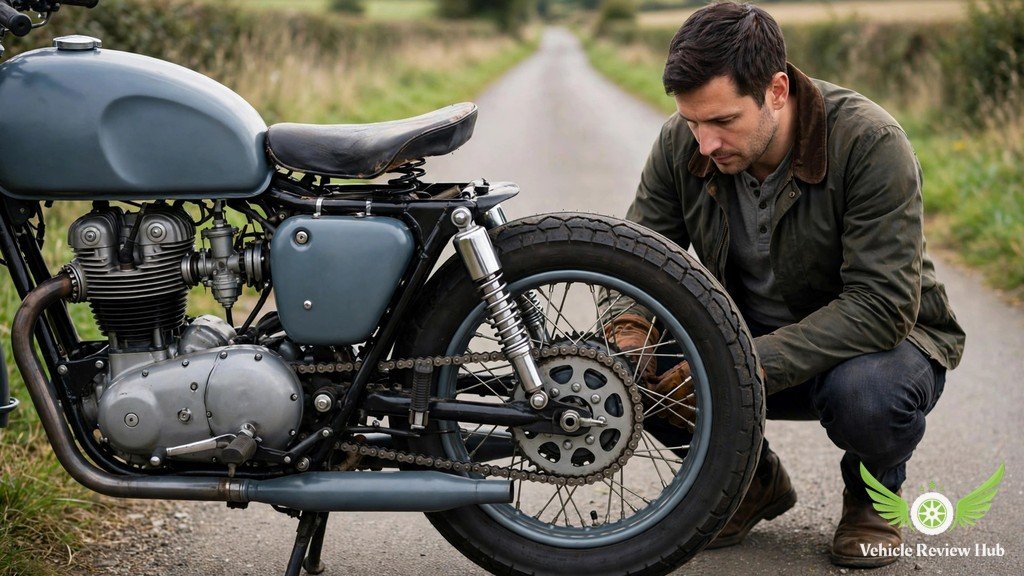
Preventive maintenance, service records, and regular inspections are the three habits that define Honda CB500F reliability in practice. For Honda CB500F reliability, preventive maintenance means the 600-mile chain habit, oil every 8,000 miles, brake fluid every two years, coolant every three years, and the 16,000-mile valve check booked before it is overdue. Service records mean keeping every receipt: a complete book is worth real money at resale. Regular inspections mean a two-minute pre-ride check — tyres, chain, brakes, lights, oil level — plus a seasonal look at fork seals, pads, battery, and fastener corrosion. Storage counts as maintenance too: a battery tender, fuel stabiliser, and stands for a winter lay-up prevent a spring restart becoming a workshop bill. For the buying decision, see our Honda CB500F buying guide.
Exactly Four Recalls Name the F: 21V-690 Is Not One of Them
Exactly four recalls name the F, and 21V-690 is not one of them — that heading is literal, and Honda CB500F reliability readers should treat any list that includes 21V-690 for the F as wrong. The four are: 14V056, 2013 bikes, rocker-arm shaft retaining bolts (6,954 units across the CB500 and CBR500 families); 15V475, campaign JT1, 2013–2015 bikes, fuel level sensor float arm (14,575 units R+F — the CB500X is not affected, different tank); 15V439, 2014–2015 bikes, starter relay switch (47,168 units multi-model, no F-only count — never quote 47,168 as an F count); and 21V-382, campaign KM3, the F for 2021 only, 256 units, rear reflector under FMVSS 108. Secondary claims of “2020–2021 CB500Fs” under 21V-382 are wrong, because there is no 2020 US F. And 21V-690 covers the CBR500XA and CBR500RA (X+R, 262 units) — never the F. For Honda CB500F reliability buyers, the instruction is absolute: run the VIN through Honda’s recall lookup and get the answer in writing, because NHTSA counts for 2022–2026 F and Hornet bikes were not verified here. Check the reflector campaign against the NHTSA 21V-382 recall document.
| Recall | F coverage (year-exact) | Units / note |
|---|---|---|
| 14V056 | 2013 F | 6,954 multi-model; rocker-arm bolts |
| 15V475 / JT1 | 2013–2015 F | 14,575 R+F; fuel sensor float arm |
| 15V439 | 2014–2015 F | 47,168 multi-model; no F-only count |
| 21V-382 / KM3 | 2021 F only | 256 units; rear reflector |
| 21V-690 — NOT the F | CBR500XA / CBR500RA only | 262 units X+R; never list for the F |
| Buyer rule | Run the VIN, get it in writing | 2022–2026 counts not verified — VIN-first |
Honda CB500F Reliability FAQs
Direct answers to the Honda CB500F reliability questions buyers and owners ask most.
Is the Honda CB500F reliable?
Yes. For Honda CB500F reliability, MCN owners rate reliability 4.3 to 4.7 out of 5 by generation, and the 471cc twin has a decade-long record of trouble-free running when maintained.
Is the CB500F the same bike as the CB500 Hornet?
Yes. For Honda CB500F reliability readers, the Hornet is the F under its new name — same CB500FA code — renamed in Europe for 2024 and in the United States for 2026.
What are the common problems on a CB500F?
For Honda CB500F reliability shoppers, the watch items are fastener and finish corrosion, ABS sensor-ring corrosion, chain and sprocket wear, fork-seal weeping, tyre age, brake wear, and crash damage.
What is the CB500F service schedule?
For Honda CB500F reliability, the schedule is first service at 600 miles, oil and filter every 8,000 miles or 12 months, valve-clearance inspection every 16,000 miles, and chain care every 600 miles.
When do the spark plugs get replaced on the F?
For Honda CB500F reliability, the F’s US schedule replaces the spark plugs at 16,000 miles — unlike the faired CBR500R, whose plugs are inspected at 16,000 and replaced at 32,000 miles.
How often should brake fluid and coolant be changed?
For Honda CB500F reliability, brake fluid every two years and coolant every three years — both time-based, so low-mileage bikes still need them on schedule.
What is the correct chain slack for a CB500F?
For Honda CB500F reliability, use your year manual: the 2015/2016 manual gives 35–45 mm (do not ride past 60 mm), while the 2022 manual gives 25–35 mm (do not ride past 50 mm).
Which recalls affect the CB500F?
For Honda CB500F reliability checks, exactly four name the F: 14V056, 15V475, 15V439, and 21V-382 for 2021 only (256 units). 21V-690 does not name the F.
How much does servicing cost?
For Honda CB500F reliability budgeting, UK guidance runs around £250 for a minor service and around £500 for the 16,000-mile valve service; no published US servicing figure was found.
Does the CB500F have E-Clutch in the US?
No. For Honda CB500F reliability readers, no US F or Hornet has E-Clutch — Europe gets it on the 500 twins for 2026, but American bikes are manual.