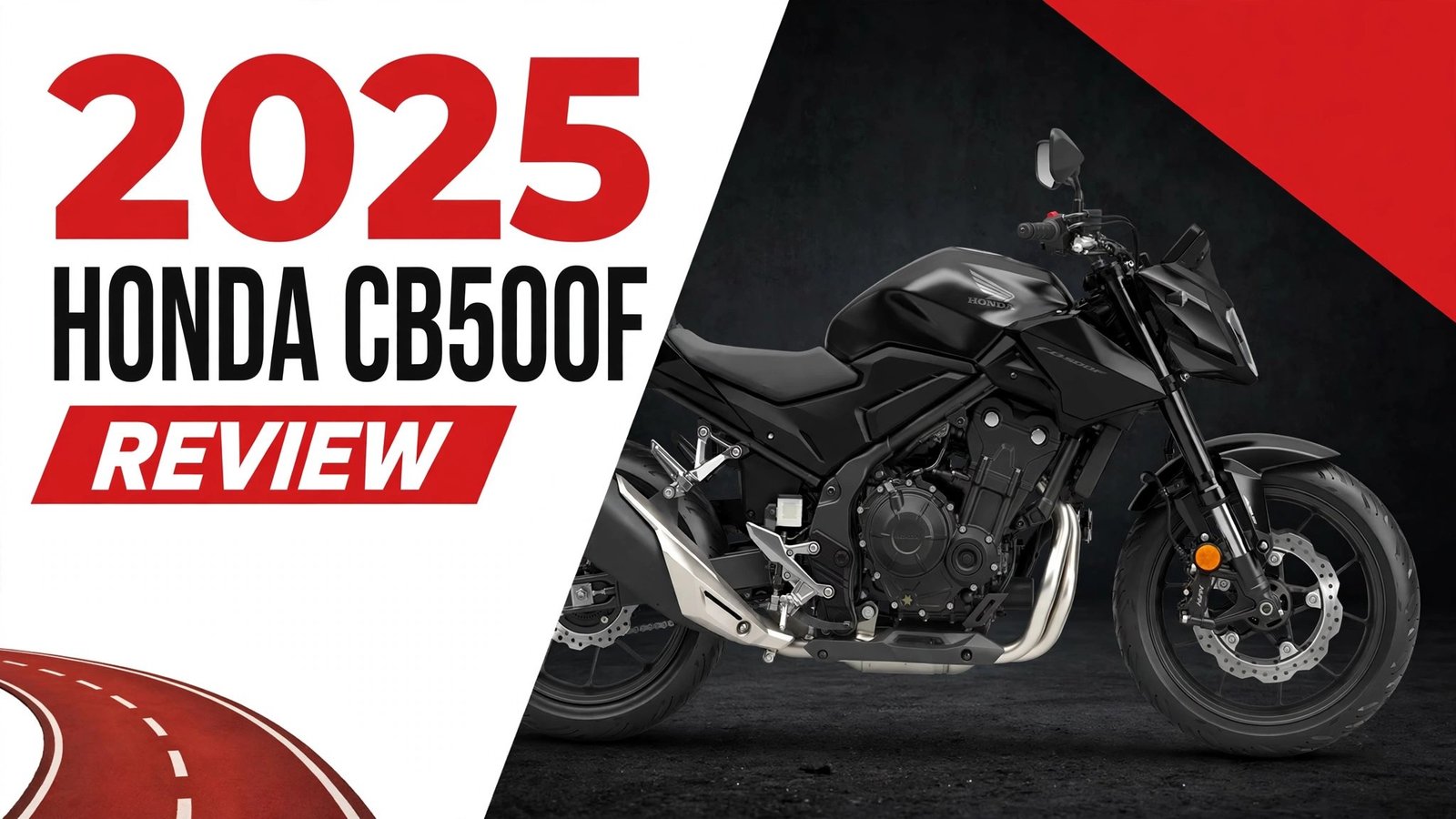
Short answer: the Honda CB500F review story is the story of Honda’s most honest middleweight naked bike — a 471cc twin that ran in the United States from 2013 to 2025, skipped 2020 entirely, and then changed its badge rather than its character. For 2026 the same motorcycle became the CB500 Hornet, same CB500FA model code, same engine, same everyday usability. This Honda CB500F review covers the full run: the price history from $5,499 at launch to $6,899 in its final year, the engine and chassis facts, the riding experience, and the verdict on whether a used F still makes sense now that a new Hornet costs $5,899.
One identity point governs this whole Honda CB500F review, so it goes up front: the CB500F and the CB500 Hornet are the same motorcycle under two names. Europe renamed the bike for 2024; the United States kept the CB500F name for 2024 and 2025 and adopted “Hornet” only for 2026. Nothing in this Honda CB500F review invents a difference between the two — any difference you read about is a model-year difference, like the 2022 chassis revision or the 2024 TFT dash, never an F-versus-Hornet difference. For the renamed bike’s own story, see our Honda CB500 Hornet review.
Honda CB500F Overview and Model-Year Updates
The overview of this Honda CB500F review starts with longevity: twelve model years in the United States, one skipped year, and a final act that was really a rename. The F launched in 2013 alongside the faired CBR500R and the adventure-styled CB500X, and it outlasted plenty of flashier rivals by simply being easy to live with. This Honda CB500F review treats that long run as the bike’s main credential — a motorcycle Honda kept refining rather than replacing.
US Run 2013 to 2025 With No 2020 Model Year
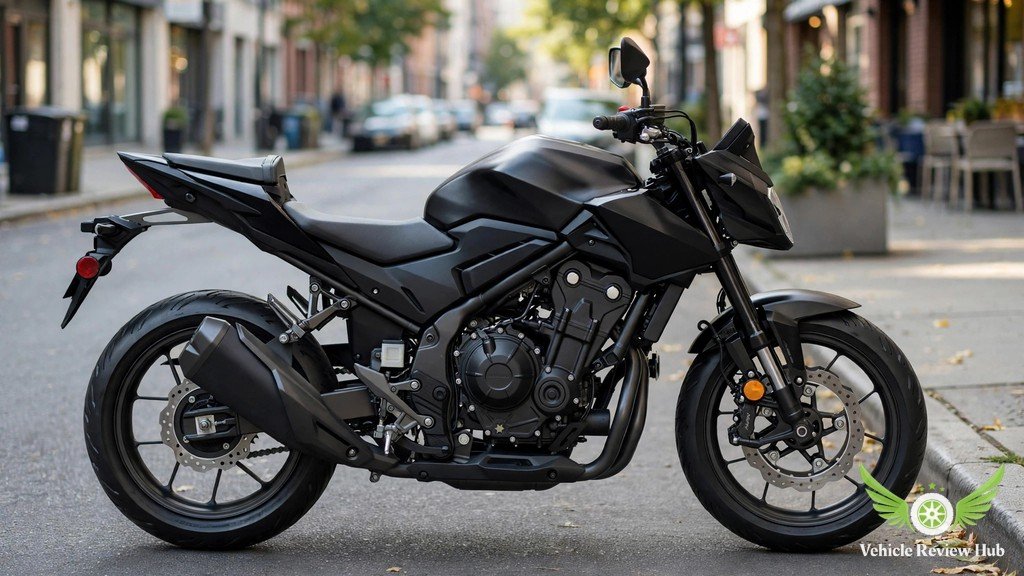
The United States run of the F in this Honda CB500F review spans 2013 to 2025 with one gap: there was no 2020 US model year at all. Buyers sometimes meet a “2020 CB500F” in a listing, but no such American model exists — check the VIN and the year tells before trusting the title. The real milestones are easy to follow: first revisions in 2016, redrawn styling plus an assist/slipper clutch in 2019, a chassis revision with a new fork and dual front discs in 2022, and a sharper-styled update with a TFT dash for 2024. Each step made the same basic motorcycle slightly better, and this Honda CB500F review follows those steps rather than treating every year as a different bike.
Renamed CB500 Hornet for 2026: Same Model ID, Not a New Bike
The rename is the twist this Honda CB500F review keeps returning to: for 2026 the bike became the CB500 Hornet, same model ID, not a new bike. The proof is hiding in plain sight — Honda USA’s own 2026 Hornet page still lives under the old CB500F web address, a rename caught mid-transition. The 2026 Hornet also costs $1,000 less than the final F, at $5,899 plus $600 destination, which matters enormously for used-F values: no used F asking near new-Hornet money makes sense, a point this Honda CB500F review carries into the buying discussion. The faired sibling kept its own name throughout; for its story, see our Honda CBR500R review.
Honda CB500F Engine and Specifications
The engine section of this Honda CB500F review is short on surprises and long on sense. Honda built the 500 twins around one 471cc parallel twin, tuned for friendly midrange rather than headline horsepower, and the F got the most approachable version of it — upright bars, a low seat, and a chassis that never intimidates. This Honda CB500F review reports the specifications exactly as they belong to the F, with year splits attached wherever a number changed.
471cc Parallel-Twin at 10.7:1 With Assist and Slipper Clutch
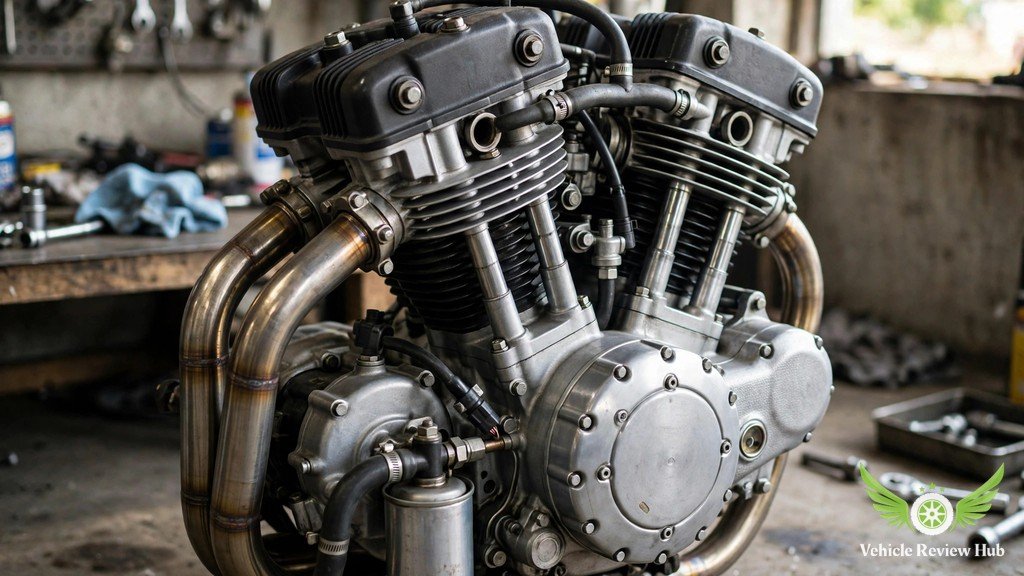
At the heart of this Honda CB500F review is the 471cc liquid-cooled DOHC parallel twin: 67.0 x 66.8mm bore and stroke, 10.7:1 compression, PGM-FI fuel injection through 34mm throttle bodies, a six-speed gearbox, chain final drive, and — from the 2019 update — an assist/slipper clutch that lightens the lever and calms downshifts. Honda USA publishes no horsepower figure for the F, a fact this Honda CB500F review states plainly rather than filling with an aggregator number. Independent tests put rear-wheel output in the low forties; the precise figure depends on the dyno, and the performance story belongs in our Honda CB500F performance guide. What matters on the road is the delivery: smooth, flexible, and happy to cruise at highway speed without strain.
Tank Grew 4.1 to 4.4 to 4.5 Gallons and Weight Fell to 414 lb
The tank and weight story in this Honda CB500F review shows Honda quietly improving the package. Tank capacity grew across the run: 4.1 gallons on the 2013–2015 bikes (15.5 litres), then 4.4 gallons, then 4.5 gallons (17.1 litres) on current bikes — so quote the tank by year, never as a single figure. Claimed curb weight settled at 414 lb, while Cycle World’s scales recorded 417 lb fully fuelled on its 2022 test bike; this Honda CB500F review reports both, since the gap is just fuel and test method. The rest of the chassis numbers are stable: 31.1-inch seat height, 55.5-inch wheelbase, 25.5 degrees of rake, 4.0 inches of trail, and 120/70R-17 front and 160/60-17 rear tyres. A 240mm rear disc and, from 2022, a 41mm Showa SFF-BP fork complete a chassis that feels light and neutral.
| Specification | Honda CB500F figure | Note |
|---|---|---|
| Engine | 471cc liquid-cooled DOHC parallel twin | 67.0 x 66.8mm, 10.7:1 compression |
| Gearbox / clutch | 6-speed, assist/slipper clutch from 2019 | Chain final drive |
| Tank | 4.1 gal (2013–2015) → 4.4 gal → 4.5 gal | Quote by year |
| Weight / seat | 414 lb claimed; 417 lb Cycle World scales | 31.1-inch seat height |
| Summary | Friendly twin, light chassis | Honda publishes no hp figure for the F |
Honda CB500F Price and Market Availability
Price is where this Honda CB500F review gets interesting, because the F’s sticker climbed steadily for a decade and then its successor dropped by $1,000. Understanding that arc is the key to judging both new leftover pricing and used values. This Honda CB500F review lays out the verified price history year by year, with destination charges stated per year rather than blended.

Honda CB500F Price History: $5,499 at Launch, $6,899 by 2024
The price history in this Honda CB500F review starts at $5,499 at launch in 2013 — $500 under the faired CBR500R’s $5,999, a gap that held in spirit throughout the run. By 2024 the F had reached $6,899, a rise of $1,400 over eleven model years that bought real improvements: the slipper clutch, the SFF-BP fork, dual front discs, and the TFT dash. Destination charges varied by year, so this Honda CB500F review quotes the $600 figure only for 2025 and 2026, not as a universal add-on. For the faired bike’s pricing arc, see our Honda CBR500R review; for the adventure twin, see our Honda NX500 review.
Final F Year 2025 at $6,899 Plus $600 in Matte Black Only
The final F year in this Honda CB500F review is 2025: $6,899 plus $600 destination, in Matte Black Metallic only. Single-colour years were the F’s habit late in life, and 2024–2025 both wore Matte Black Metallic alone — European colours were never American colours, so do not let a European review’s palette confuse a US purchase. Dealer sheets for 2025 carry the model code CB500FAS, and Honda USA’s 2025 page name field already reads “CB500 Hornet” while the URL stays on the CB500F path. Ultimate Motorcycling’s first look at the 2026 CB500 Hornet covers the rename and the $1,000 price cut in detail. That cut is the ceiling over every used F: a used example asking at or above $6,499 before tax and fees — new-Hornet money — makes no sense.
Honda CB500F Design, Features and Technology
Design is where the F earned its keep in this Honda CB500F review: not by chasing fashion, but by being the easiest 500 twin to live with. The naked styling stayed clean and upright across every generation, the riding position stayed natural, and the technology arrived in sensible steps rather than gimmicks. This Honda CB500F review covers the two technology milestones that matter most to buyers: the dash and the brakes.
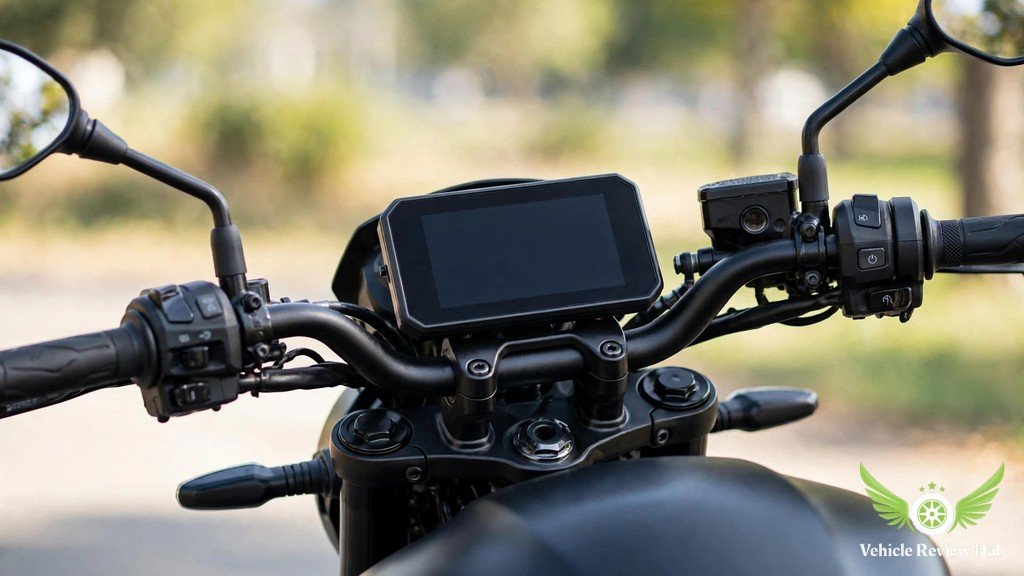
TFT Dash and HSTC Arrived on the 2024 F Update in the US
The 2024 update in this Honda CB500F review brought the bike properly up to date: a 5-inch TFT dash and Honda Selectable Torque Control arrived on the American F, alongside sharper styling and detail upgrades. The TFT is clear in sunlight and easy to read at a glance, and HSTC adds a safety net without dulling the bike’s friendly character. One caution from this Honda CB500F review: European 500 twins get E-Clutch for 2026, but no American F or Hornet has E-Clutch — do not let a European review convince you otherwise, and confirm clutch specification on Honda USA’s page for your model year. The dash and HSTC are 2024-on tells, useful when checking a used bike’s claimed year.
ABS Optional Until 2019 and Standard From 2021 Explained
The ABS story in this Honda CB500F review has a gap that confuses buyers, so it is worth stating exactly: ABS was optional on early F models until 2019, and standard from 2021. The missing piece is 2020 — the year the F skipped in the USA — so there is no contradiction, just a gap year. A pre-2021 bike needs its ABS status checked individually: look for the ABS ring and the self-test light, and confirm on the paperwork, because an “ABS” badge in a listing is not proof. From 2021 onward every American F carries ABS as standard, and from 2022 the front brakes improved further with dual 296mm discs replacing the earlier single disc. For servicing and wear items, see our Honda CB500F reliability guide.
Honda CB500F Riding Experience and Comfort
Comfort is the F’s strongest argument in this Honda CB500F review, and the reason testers kept recommending it to new and returning riders alike. The upright bars, the low 31.1-inch seat, and the light steering make the bike feel smaller than its 471cc suggests, while the twin’s flexibility keeps it calm in traffic and capable on the highway. This Honda CB500F review separates city manners from highway manners, because the bike’s one real weakness shows up only at sustained speed.
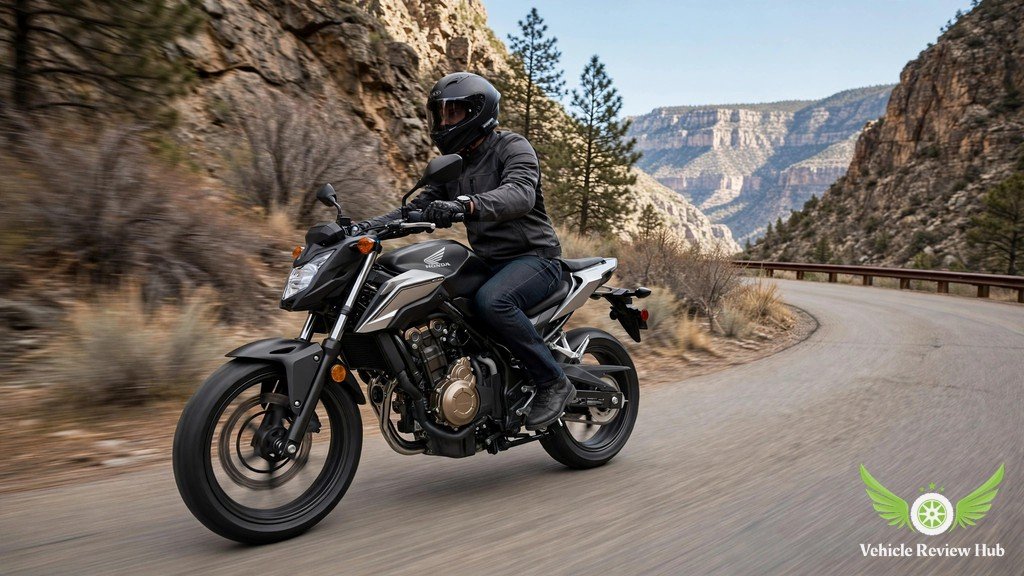
Riding Position, Handling and Low-Speed Maneuverability
The riding position in this Honda CB500F review is the bike’s signature: upright bars, a natural reach, feet easily flat on the ground for most riders, and a narrow waist that helps shorter riders most. Testers consistently preferred the F’s wider, higher bar to the faired R’s clip-ons for everyday riding, and low-speed maneuverability is a genuine strength — U-turns, parking-lot work, and filtering through traffic all feel easy. The chassis stays neutral and forgiving, and the slipper clutch (from 2019) keeps downshifts smooth when a newer rider grabs a lower gear too eagerly. Nothing about the F demands experience; it rewards it quietly instead. That ease is also why this Honda CB500F review recommends the F so strongly as a second bike for experienced riders: it asks nothing of you on a tired evening commute, yet it still entertains on a Sunday back road, and its light weight means a garage shuffle never becomes a chore. Riders moving down from a heavier machine often report the same surprise — the smaller Honda simply gets ridden more often, because every trip feels effortless rather than like an occasion.
Highway Comfort, Wind Exposure and Everyday Practicality
Highway comfort in this Honda CB500F review is good with one honest caveat: wind exposure. The naked bike has no fairing, so sustained 70-mph running puts wind on the rider’s chest, and longer highway days tire you sooner than the faired R would. Around town and on back roads, though, the F is the more practical bike — easier to ride slowly, easier to park, cheaper to drop. Fuel economy helps the everyday case too: Cycle World’s F test averaged 59.0 mpg, and a 4.5-gallon tank gives roughly 265 miles of planning range. The video below is Visordown’s 2022 review of the real CB500F, honestly named as an F review, and it captures the bike’s easy character well.
For the full performance picture behind this Honda CB500F review — dyno figures, acceleration, and fuel economy in depth — see our Honda CB500F performance guide.
Honda CB500F Review: Pros, Cons and Verdict
The verdict in this Honda CB500F review is simple, and it has survived a decade of rivals: the F is one of the safest, easiest, and most sensible middleweight purchases available, new or used. Its limitations are real but narrow, and they matter less to the riders the bike is built for. This Honda CB500F review weighs both sides before the final call.

Main Advantages and Limitations of the Honda CB500F
The advantages in this Honda CB500F review start with approachability: a low seat, light handling, a flexible twin, and Honda reliability backed by a decade of parts availability. MCN’s CB500F review covers the naked bike’s everyday strengths in depth. Running costs stay modest — 59.0-mpg test economy, affordable tyres in sensible sizes, and a simple service schedule covered in our Honda CB500F reliability guide and in Bennetts’ used CB500F guide. The limitations are equally plain: highway wind blast with no fairing, modest power that will not thrill an experienced rider, and a suspension that prioritises comfort over track precision. None of those is a flaw for the bike’s intended rider; all of them are reasons to test-ride the faired R as well before deciding. For the buying decision in full, see our Honda CB500F buying guide.
Honda USA Never Published a Horsepower Figure for the F
The final heading in this Honda CB500F review is literal, and it deserves emphasis: Honda USA never published a horsepower figure for the F. That absence is not a gap in this Honda CB500F review — it is the fact. Any page quoting a Honda horsepower number for the F has borrowed it from a European spec sheet (the 47-hp A2 licence cap), an aggregator’s rounded crank claim, or a dyno test, and this Honda CB500F review labels those sources whenever it mentions them. Judge the F on its tested behaviour — flexible, friendly, and fast enough — not on a factory number that was never printed. The verdict stands: a used F in good condition, priced below new-Hornet money, remains one of the smartest buys in the middleweight class.
Honda CB500F Review FAQs
Direct answers to the Honda CB500F review questions buyers ask most, covering the bike’s run, its rename, its prices, and its everyday character.
Is the Honda CB500F the same bike as the CB500 Hornet?
Yes. This Honda CB500F review confirms the CB500F and CB500 Hornet are the same motorcycle, model code CB500FA throughout — Europe renamed it for 2024, the United States for 2026.
What years was the Honda CB500F sold in the USA?
From 2013 to 2025, says this Honda CB500F review, with no 2020 US model year — the F skipped 2020 entirely in America.
How much did the Honda CB500F cost?
From $5,499 at launch in 2013 to $6,899 plus $600 destination in its final year, 2025, in Matte Black Metallic only, per this Honda CB500F review.
What engine does the Honda CB500F have?
A 471cc liquid-cooled DOHC parallel twin, 67.0 x 66.8mm, 10.7:1 compression, six-speed gearbox, with an assist/slipper clutch from 2019, says this Honda CB500F review.
How much horsepower does the Honda CB500F make?
Honda USA never published a figure, says this Honda CB500F review. Independent rear-wheel dyno tests land in the low forties; the 47-hp European figure is an A2 licence cap, not a US number.
Does the Honda CB500F have ABS?
ABS was optional until 2019 and standard from 2021, says this Honda CB500F review. Check pre-2021 bikes individually, since the F skipped 2020.
When did the Honda CB500F get a TFT dash?
With the 2024 update in the United States, says this Honda CB500F review, alongside Honda Selectable Torque Control.
Is the Honda CB500F good for beginners?
Yes — a low 31.1-inch seat, light handling, and a friendly twin make it one of the best first big bikes, says this Honda CB500F review.
What is the Honda CB500F’s fuel economy?
Cycle World’s F test averaged 59.0 mpg, says this Honda CB500F review, giving roughly 265 miles of range from the 4.5-gallon tank.
Should I buy a used CB500F or a new CB500 Hornet?
Buy the used F only if it is priced well below new-Hornet money ($5,899 plus $600), says this Honda CB500F review — otherwise the new bike, with its warranty, wins.