Short answer: a used Honda NC750X is one of the easiest middleweight buys in the USA, provided you buy the right year and check two recalls before paying. This Honda NC750X buying guide compares real November 2026 dealer listings with original MSRPs, explains the missing US insurance average, and covers the checks that matter most: frunk, DCT filters, and the 16,000-mile valve service. The current new bike is the 2027 NC750X DCT at $9,499 plus $600 destination; clean used 2019–2024 examples asked $6,090 to $7,987.
Honda NC750X Price and Market Availability
Used NC750X prices sit in a narrow, friendly band. This Honda NC750X buying guide starts there: a four- or five-year-old example typically costs about two-thirds of a new one, and condition and mileage matter more than the year alone — the pricing rule this Honda NC750X buying guide applies.

What Does a Used Honda NC750X Cost in the USA by Year?
Start with new prices, because they frame every used bargain in this Honda NC750X buying guide. The table below uses original MSRPs at launch, pulled from the Honda NC750X review for context. Note the 2021 overlap: early stock carried the March 2021 launch price, later stock the revised price.
| Year | Manual | DCT | Notes |
|---|---|---|---|
| 2018 | $7,999 | $8,699 | First US 750; DCT adds HSTC, combined ABS |
| 2019 | — | $8,899 | DCT price from dealer brochures |
| 2020 | $8,099 | $8,899 | Unchanged from 2018 |
| 2021 | $8,699* | $9,299* | Redesign year |
| 2022 | $8,699 | $9,299 | Last year with a manual |
| 2023 | — | $9,399 | DCT-only in the USA |
| 2024 | — | $9,499 | DCT-only; Nightshade Blue |
| 2025 | — | $9,499 | Dual discs, TFT, RoadSync |
| 2026 | — | $9,499 | Matte Pearl White; $600 destination |
| 2027 | — | $9,499 | Current model; Matte Mud Gray |
| *2021 launched at $8,199 / $8,999 in March 2021; later stock listed at $8,699 / $9,299 — the launch prices applied to early shipments only. | |||
Here is what real US sellers asked in early November 2026. Treat this Honda NC750X buying guide table as a snapshot, not a guarantee: asking prices change weekly.
| Year and version | Miles | Asking price | Seller, location |
|---|---|---|---|
| 2019 NC750X | 10,427 | $6,090 | J&J Motors, Massillon, Ohio |
| 2020 NC750X DCT ABS | 12,451 | $6,598 | Arlington Motorsports, Arlington, Texas |
| 2021 NC750X manual | 9,672 | $6,388 | Western Reserve Honda, Mentor, Ohio |
| 2023 NC750X DCT | 3,579 | $7,987 | Shawnee Motorsports, Shawnee, Oklahoma |
| 2024 NC750X | 4,127 | $6,500 | St. Louis Powersports, Chesterfield, Missouri |
| Snapshot: US dealer listings observed November 2–3, 2026, before tax, title, and dealer fees. One 2018 with 20,000+ miles asked $4,995 at a Florida independent — priced accordingly. | |||
Is the Honda NC750X Available Through Official US Dealers?
Yes. Honda USA lists the 2027 NC750X DCT as a current model: announced October 8, 2026, in Matte Mud Gray at $9,499 plus $600 destination, with November availability. The 2027 announcement confirms the color, price, and November availability, the update this Honda NC750X buying guide reports as the latest news.
Honda NC750X Insurance and Ownership Costs
Insurance is where many buying guides invent a number, and this Honda NC750X buying guide will not. No insurer publishes a model-specific US average for the NC750X — the honest answer is that quotes depend on your age, record, location, and coverage, as the NC750X reliability and maintenance guide explains when it breaks down ownership costs.

Why No Model-Specific US Insurance Average Exists for the NC750X
US insurers price by risk class, not by publishing a neat average for every model. The NC750X sells in modest numbers, so it never appears in the published rate tables. What is known: it sits in the lowest motorcycle risk class (standard/commuter, ~750cc, ~54 hp), so it prices alongside other midsize standards — typically well below sportbike rates for the same rider. Get three quotes; the spread is often larger than any published average would be anyway.
How to Estimate Fuel, Maintenance, Parts and Other Ownership Expenses
Fuel is the NC750X’s party trick. Honda USA publishes no MPG figure, but Motorcyclist’s MC Commute test of the 2021 bike recorded 53 mpg, and owner reports cluster at 52–53 mpg — the planning figure used in this Honda NC750X buying guide: roughly 5,000 commuter miles per year at 53 mpg and $3.50/gallon is about $330 in fuel. Maintenance follows the NC750X performance figures owner’s rhythm: oil and filter every 8,000 miles (~$60 DIY), air filter every 12,000 miles (~$25), DCT clutch filters at the service schedule (~$40), coolant every 3 years (~$30), and the 16,000-mile valve check ($400–$600 at a dealer, often just an inspection on these engines). Tires: the 160/60-17 rear and 120/70-17 front in touring compounds run about $280–$350 a set fitted, lasting 8,000–12,000 miles. Brake pads are inexpensive (~$40/axle). Budget roughly $600–$900 per year in consumables for a 5,000-mile commuter, plus insurance and registration.
How to Inspect a Used Honda NC750X
An NC750X inspection is mostly paperwork plus a few model-specific checks, because the bike is famously hard to wear out. MCN’s 2021-on page rate the bike 4.6 out of 5 overall — but note the honest sample size: just 16 owners, a correction this Honda NC750X buying guide makes so you do not over-read the score.

Checking the Engine, Frunk Lock and Seal, Service and DCT Filter Records
Start cold: ask the seller not to start the bike before you arrive. Listen for cam-chain rattle that persists past warm-up (rare, but a walk-away sign). Check the frunk: it should latch positively with the key, stay dry inside (look for water stains), and the seal should be intact — a leaking frunk is the most common NC750X-specific complaint. On DCT bikes, ask for DCT clutch filter change records; neglected filters are the main preventable DCT issue. Service records matter more than mileage: a 20,000-mile bike with records beats a 6,000-mile bike without. The reliability record explains why these intervals matter.
Inspecting the Frame, Tires, Brakes, Chain and 16,000-Mile Valve Service
Check the tubular steel diamond frame for crash damage at the steering head and engine mounts. Surface rust on fasteners is cosmetic; flaking at welds is not. Tires: the stock rubber is touring-biased — check date codes (over 5 years old, budget a replacement) and even wear. Brakes: 2021–2024 bikes have a single 320mm front disc; 2025-on have dual 296mm discs — check rotor condition and pad thickness either way. Chain and sprockets: look for tight spots and hooked teeth; a neglected chain on a shaft-drive-priced bike is a bargaining chip. Ask whether the 16,000-mile valve service was done — many owners skip it because the engines rarely need adjustment, but a skipped service is a $400–$600 negotiation point.
Honda NC750X Model Years and Features to Compare
Choosing a model year is really choosing a transmission, a dashboard, and brakes, because the engine barely changed. This Honda NC750X buying guide sorts the generations so you pay for the features you want and nothing else.
Comparing Manual and DCT 2018-2022 Models With DCT-Only 2023-On Versions
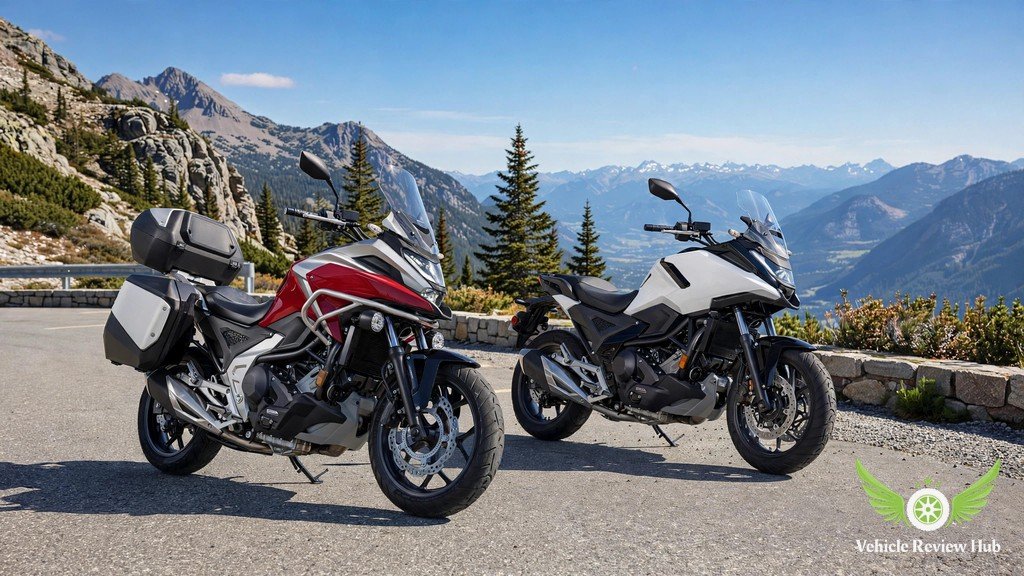
From 2018 through 2022, American buyers could choose: a six-speed manual with a clutch lever, or Honda’s DCT automatic. The webBikeWorld 2023 review states the DCT-only change plainly, and the performance figures show what the transmissions do differently on the road.
Which Features Matter Most: ABS by Year, Frunk Size and Dual Front Discs?
ABS has been standard throughout, but on pre-2021 bikes, only the DCT added traction control and combined ABS — manuals made do with standard ABS. The Bennetts 2021 reveal report details. The fuel tank sits under the seat, holding 3.7 gallons. Dual front discs are the third feature worth paying for: the Gear Patrol 2025 update. If your budget stretches to a 2025, the brakes and TFT are worth it; if not, a 2021–2024 bike gives you the redesigned chassis and the bigger frunk at a discount.
Honda NC750X vs Kawasaki Versys 650: Which One to Buy in the USA
This is the comparison most NC750X shoppers actually make: the Versys 650 is the closest rival on price and purpose, and this Honda NC750X buying guide calls the decision honestly.

DCT Commuter With Frunk Against the Manual-Only Versys 650 LT ABS
The Versys 650 LT ABS is manual-only: a 649cc parallel twin with a six-speed gearbox and clutch lever, no automatic option, no frunk — but standard saddlebags on the LT trim and a more engaging top-end. Choose the NC750X if commuting dominates: the DCT removes clutch fatigue in traffic, the frunk swallows a helmet, and 53 mpg beats the Versys’s ~47 mpg. Choose the Versys if weekend scratching matters more: it is livelier above 6,000 rpm and the aftermarket is deeper.
When a Tiger Sport 660 With Cornering ABS Makes More Sense
The Triumph Tiger Sport 660 is the bike to buy when your budget stretches past $10,000. The 2026 Tiger Sport 660 starts around $9,995, and brings a 660cc triple with 80 hp, cornering ABS, and a TFT dash — a genuinely more exciting bike. But it drinks more, costs more to insure, and needs valve checks every 12,000 miles. For the commuter mission, the used NC750X remains the value pick; the Tiger is the upgrade you buy when commuting is only half the story.
Is Buying a Used Honda NC750X Worth It?
Yes, with two conditions: buy on paperwork, not shine, and match the generation to your riding. A used NC750X is one of the lowest-risk motorcycle purchases in America — the Honda NC750X review verdict and the reliability data both point the same way.

Before the final verdict, watch an owner’s comparison in this Honda NC750X buying guide. The video below pits the NC750X DCT against Yamaha’s Tracer 7 with automated manual — the closest rival gearbox in the class.
Benefits and Risks of Buying a Used NC750X in the USA
About 53 mpg means weekly commuting costs little; the frunk removes the daily helmet problem; the DCT removes clutch fatigue; insurance sits in the lowest risk class; and depreciation is gentle because demand is steady. Risks: neglected DCT filters on high-mileage automatics, skipped 16,000-mile valve services, leaking frunk seals on early bikes, and the two recalls (21V-901 and the 2021 DCT stall) that must be verified by VIN before money changes hands.
US-Market Alternatives: V-Strom 650, Tenere 700 and F 800 GS
If the NC750X is not quite right, three alternatives cover the spread in this Honda NC750X buying guide. The Suzuki V-Strom 650 is the budget rival: cheaper used, similar mission, no DCT, no frunk. The Tenere 700 is the natural read if weekends include gravel — but it is $1,500 more than the Honda, with no frunk and no automatic option. The BMW F 800 GS is the premium pick: more capability, more cost, more maintenance. Stepping up in the Honda range, read the Africa Twin buying guide, and the middleweight split in the Transalp buying guide. For pure commuting value, though, none beats a used NC750X on running costs, and that is why this Honda NC750X buying guide ends where it began: buy the right year, check the recalls, and enjoy the cheapest serious commuting in motorcycling.
Honda NC750X Buying Guide FAQs
These are the questions used NC750X shoppers actually ask, answered directly from the verified figures in this Honda NC750X buying guide.
What is the best year Honda NC750X to buy used?
For most buyers, a 2021 or 2022 bike is the sweet spot in this Honda NC750X buying guide: the redesigned chassis, bigger frunk, and lower price than the 2025-on bikes, with your choice of manual or DCT. Commuters who want the best brakes and dash should stretch to a 2025.
How much does a used Honda NC750X cost?
In early November 2026, real US dealer listings in this Honda NC750X buying guide ranged from $6,090 (2019, 10,427 miles) to $7,987 (2023 DCT, 3,579 miles). Budget $6,000–$8,000 for a clean 2019–2024 bike, and verify the price against original MSRP — anything above 80% of new price should be nearly new.
Is there a 2027 Honda NC750X?
Yes. Honda announced the 2027 NC750X DCT on October 8, 2026, at $9,499 plus $600 destination in Matte Mud Gray, with November availability. It is DCT-only, as every US NC750X has been since 2023.
What MPG does the Honda NC750X actually get?
Plan on 52 to 53 mpg in mixed US riding, the planning figure used throughout this Honda NC750X buying guide. That is roughly 190 miles from the 3.7-gallon tank before reserve — the frunk-to-fuel-cap practicality that defines the bike.
What are the NC750X recalls I must check?
Two, and this Honda NC750X buying guide insists you check both by VIN. Recall 21V-901 covers certain 2021 models for a drive-chain issue; the 2021 DCT stall recall covers certain 2021 DCT bikes for an engine-stall risk. Run the VIN through Honda’s recall checker and ask the seller for completion paperwork. See the official recall notice for the 2021 DCT stall issue for full scope, the check this Honda NC750X buying guide insists on.
Should I buy new or used?
Buy used if you want the best value: a clean 2021–2024 bike at $6,400 to $8,000 gives you nearly everything the new bike offers at two-thirds the price. Buy new (the 2027 DCT at $9,499 plus destination) if you want the dual front discs, TFT dash with RoadSync, the full warranty, and zero recall history to chase.