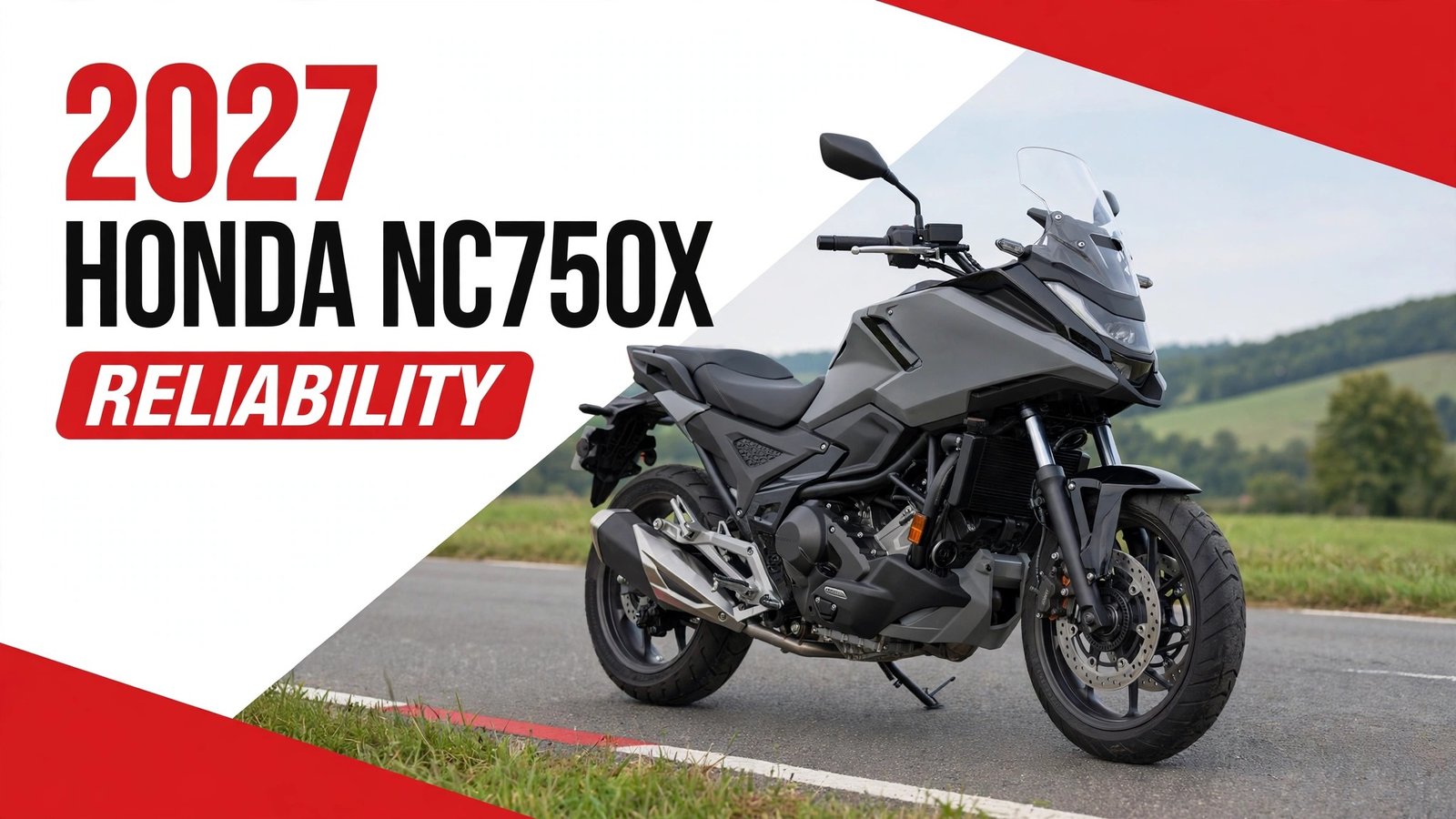
Yes — Honda NC750X reliability is one of the strongest reasons to buy this bike: a low-stress 745cc twin built for commuting, with 8,000-mile oil-change intervals, a simple chain drive, and an owner record to back it up — 96 owners rated reliability 4.6 out of 5 on MCN’s 2014–2021 review page. That does not mean the NC750X is trouble-free. Winter corrosion on fasteners and brake banjo bolts, DCT service items owners sometimes forget, and two narrowly scoped recalls are what actually matter for Honda NC750X reliability. This guide covers what goes wrong, what the schedule asks for, and what it costs.
Honda NC750X Reliability Overview
The short version of Honda NC750X reliability is this: the engine is understressed, the electronics are simple, and most problems are wear, weather, and skipped maintenance, not design failures. Honda NC750X reliability rests on a 745cc parallel twin with a 270-degree crank, a modest 10.7:1 compression ratio, and a single overhead camshaft.
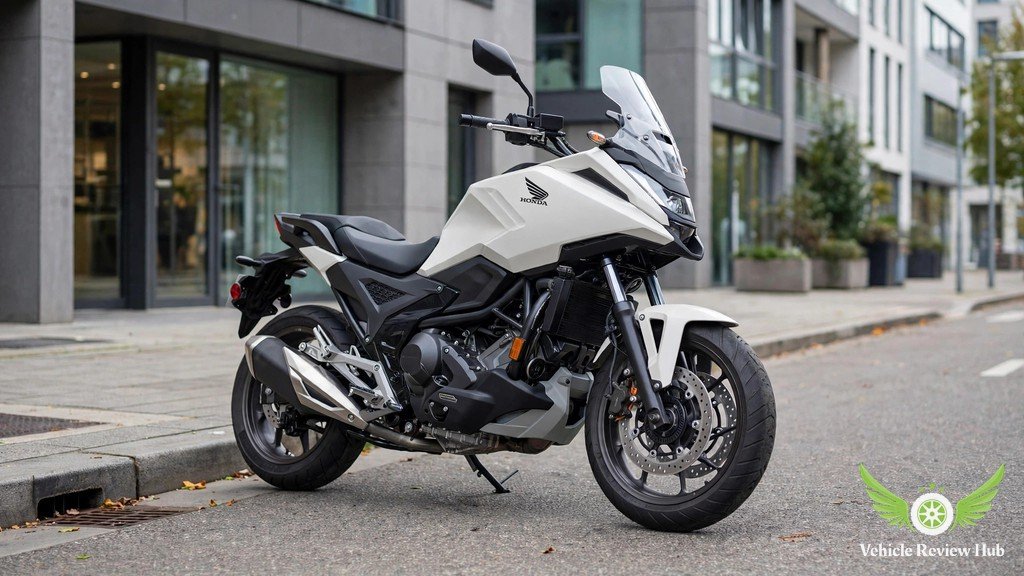
MCN Owners Reliability 4.6 Out of 5 From Around 95 Reviews Explained
The headline figure behind Honda NC750X reliability comes from MCN’s 2014–2021 NC750X review page: 96 owners rated reliability and build quality 4.6 out of 5, overall 4.5 out of 5, and value against rivals 4.9 out of 5. The document outline says “around 95 reviews” and the live figure is 96, so the outline’s wording is fair — but the exact sample matters, because this is a 96-owner first-generation sample, not a manufacturer claim. MCN’s 2021-on page tells a smaller story: 16 owners, reliability 4.4 out of 5, overall 4.6 out of 5. That sample is too small to quote as a rating on its own, but it confirms Honda NC750X reliability did not collapse after the 2021 redesign.
The video below is a long-term ownership review after 20,000 miles across two NC750X bikes, not a service guide — but for judging Honda NC750X reliability, a high-mileage owner describing what actually wore out is more useful than a first ride. The reviewer praises the DCT and the engine’s easy character, and criticises the stock suspension’s wheel control, which he later upgraded.
How Mileage, Maintenance History and Previous Use Affect Reliability
High mileage alone does not hurt Honda NC750X reliability — skipped maintenance does. One owner reported the original chain and sprockets still fitted at 42,000 miles, which says more about gentle use and regular lubrication than about any magic in the parts. When you read any claim about Honda NC750X reliability, ask what the sample rode and whether the service book is complete.
Honda NC750X Common Problems and Wear Items
No bike is fault-free, and Honda NC750X reliability is best understood through its recurring wear items: cosmetic corrosion, consumables that wear on schedule, and DCT-specific service items that get overlooked.
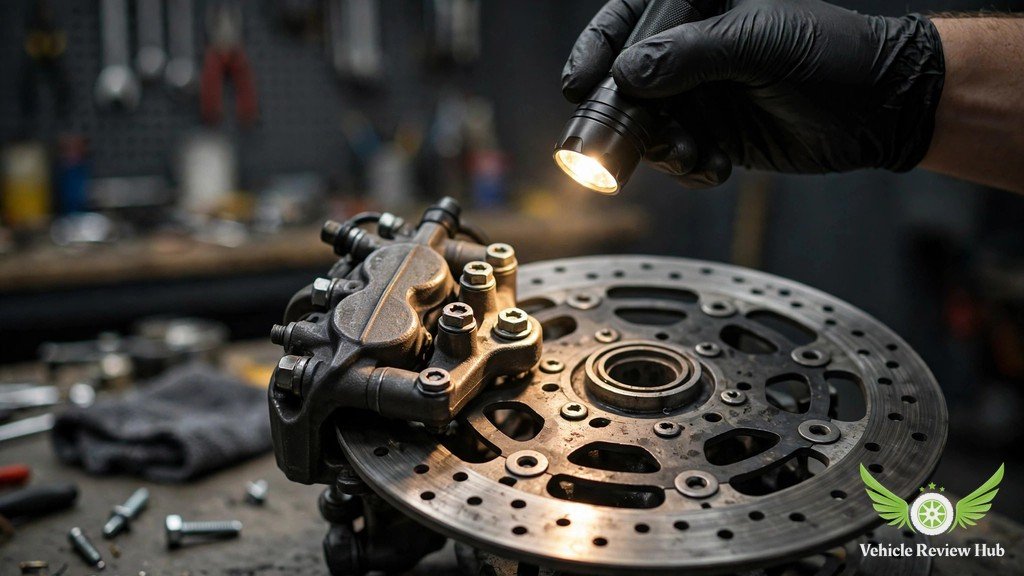
Corrosion on Banjo Bolts and Fasteners and Finish Inspection Points
The most widely reported Honda NC750X reliability complaint is not mechanical at all — it is corrosion. MCN’s long-term guidance warns the bike needs anti-corrosion treatment to stop fasteners, brake banjos, and small parts deteriorating in winter use, and owner reports back that up. This is a finish issue, not a structural one: exposed steel fasteners and banjo bolts fur up without regular cleaning and a protective coating. On inspection, check the banjo bolts at both calipers, the fork-bottom and engine-case fasteners, and the small bodywork brackets. Surface corrosion here is common and cosmetic, but heavy corrosion on brake fittings deserves a proper look. A garage-kept bike with clean fasteners is one of the simplest positive signs for Honda NC750X reliability.
DCT System, Chain, Sprockets, Battery and Electrical Checks
On DCT models, Honda NC750X reliability depends on two service items manual-bike owners never think about: the DCT clutch oil filter and the parking-brake (brake lock) operation. The clutch oil filter is replaced at the first service and then every 16,000 miles, at the same stops as the engine oil filter; the brake-lock operation is inspected at every service. Per the 2025 DCT manual, a blinking dash in the gear-position window means a serious DCT problem — park safely and get the bike to a dealer. Electrical checks are routine: battery, charging, lights, and RoadSync on 2025-on bikes — all simple systems that support Honda NC750X reliability. The chain is the other regular wear item: a #520 chain (17/41-tooth on the 2026-2027 bikes), checked for lubrication and slack every 600 miles. Chain life varies enormously with care — remember that 42,000-mile original set — so a worn chain on a low-mileage bike says more about neglect than about Honda NC750X reliability.
Honda NC750X Maintenance Schedule and Servicing
The NC750X service schedule is one of the bike’s real strengths: long intervals, a simple engine, and only two cylinders. Honda NC750X reliability is helped by how easy the schedule is to follow — and hurt whenever owners confuse the 4,000-mile inspection stops with oil changes, because the oil itself is replaced every 8,000 miles. That distinction matters: some generic websites quote a 4,000-mile oil interval, which matches neither the manual nor MCN. Follow it, and Honda NC750X reliability largely takes care of itself.
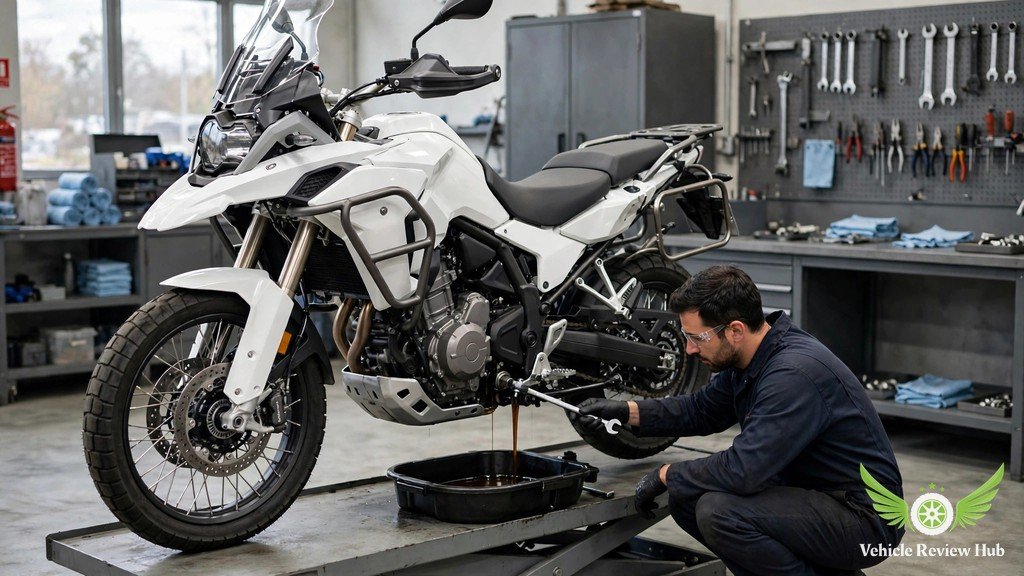
First Service at 600 Miles, Oil Every 8,000 Miles and Routine Checks
The first service lands at 600 miles, and it sets the pattern for Honda NC750X reliability: engine oil and both filters (engine and, on DCT bikes, clutch oil filter) are replaced, plus a full inspection. After that, engine oil is replaced every 8,000 miles or once a year, using Pro Honda GN4 10W-30. Capacity with a filter change is 3.6 US quarts on DCT models and 3.8 on manual models. Every 8,000-mile service also runs the full checklist: throttle, fuel lines, idle speed, brakes, headlight aim, side stand, suspension, steering-head bearings, fasteners, and wheels and tires. The air cleaner is replaced at 12,000 and 24,000 miles. The full schedule is compiled on the Honda NC750X maintenance schedule page.
| Service item | Interval |
|---|---|
| First service (oil + filters + inspection) | 600 miles |
| Engine oil (Pro Honda GN4 10W-30) | Every 8,000 miles or 1 year |
| Engine oil filter | 600 miles, then every 16,000 miles |
| DCT clutch oil filter (DCT models only) | 600 miles, then every 16,000 miles |
| Spark plug inspection / replacement | Inspect 16,000 miles / replace 32,000 miles |
| Valve clearance inspection | Every 16,000 miles |
| Air cleaner replacement | 12,000 and 24,000 miles |
| Radiator coolant replacement | Every 3 years |
| Brake fluid replacement (Honda DOT 4) | Every 2 years |
| Chain lubrication and slack check | Every 600 miles |
Valve-Clearance Inspection at 16,000 Miles and Spark Plugs at 32,000
The 16,000-mile service is the major one for Honda NC750X reliability: valve clearances are inspected, the spark plug condition and gap are checked, and both filters are replaced. With only two cylinders and one head, the valve inspection is relatively straightforward — though it is still the most expensive routine service. The plug itself is replaced at 32,000 miles (NGK IFR6G-11K, 1.0–1.1 mm gap), so a bike nearing that mileage without a plug change is simply due. For buyers, the 16,000-mile valve service is the most useful history stamp. A bike that has had it done on time, with the DCT filter changed at the same stop, is a bike whose owner understood the schedule — and that history is worth more to Honda NC750X reliability than any cosmetic condition.
Honda NC750X Tires, Brakes and Suspension Maintenance
Tires, brakes, and suspension are where the NC750X’s budget roots show, and where regular checks pay off. Nothing here is exotic — standard 17-inch sizes, conventional forks, simple brakes — which is good news for Honda NC750X reliability and parts prices. The one year split to know is the front brake: single disc before 2025, dual discs from 2025 on.
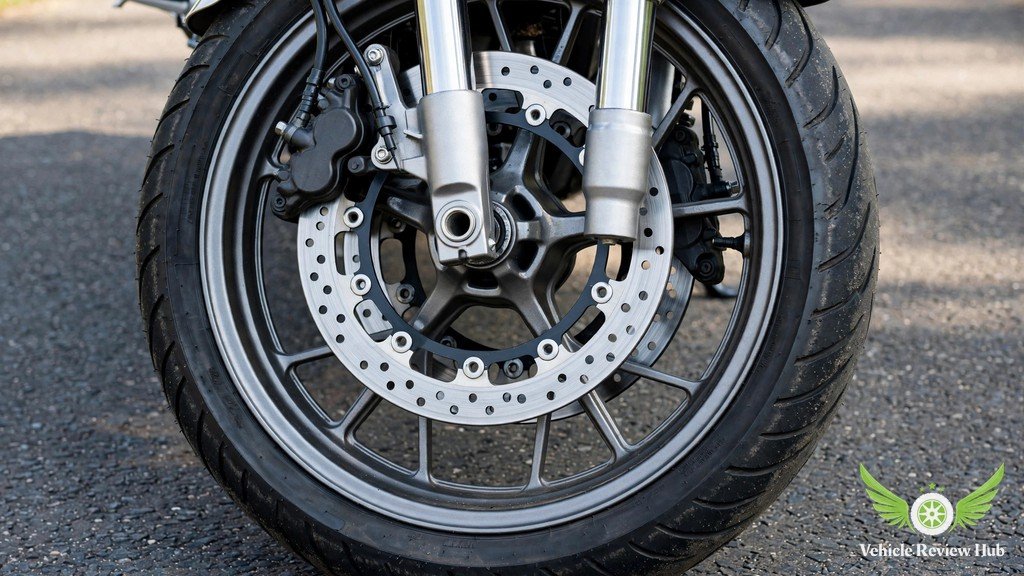
Tire Condition, Pressure, Tread Wear and Replacement
The NC750X runs a 120/70-17 front tire at 36 psi cold and a 160/60-17 rear at 42 psi cold, with Dunlop D609F or Bridgestone BW-502 tires standard on earlier bikes. Those are common sizes, so replacements are easy to find and reasonably priced — a quiet advantage for Honda NC750X reliability over bikes with unusual rubber. Correct pressures also protect Honda NC750X reliability, since underinflation accelerates wear and hurts handling. Check pressures cold, and inspect for squared-off rears, cracking on older tires, and road-debris damage. Age matters as much as tread: a five-year-old tire with plenty of tread is still due for replacement. Good tires are a basic part of Honda NC750X reliability. For more on choosing between model years, see the Honda NC750X buying guide.
| Tire | Size | Pressure (cold) |
|---|---|---|
| Front | 120/70ZR-17 | 36 psi |
| Rear | 160/60ZR-17 | 42 psi |
Brake Pads, Brake Fluid Every Two Years, Forks and Shock Checks
Brake pads are checked at every service and replaced on wear — heavy-traffic commuting wears pads faster than open-road touring. Brake fluid is replaced every two years with Honda DOT 4, regardless of mileage, because it absorbs moisture; a skipped two-year fluid change means quietly neglected brakes. Brake hardware changed for 2025: earlier bikes used a single 320mm front disc, while 2025-on bikes, including the 2026-2027 NC750X DCT, use dual 296mm front discs with a 240mm rear disc, all with ABS. Suspension is deliberately basic — a conventional 41mm Showa fork (4.7 inches of travel on the 2026-2027 bikes) and a single rear shock. Checks are simple: fork seals, smooth fork and shock action, and steering-head bearings. Owner feedback on stock suspension is mixed — the long-term reviewer above found the wheel control sloppy and upgraded — but as a maintenance matter the setup is simple, cheap to service, and rarely a source of Honda NC750X reliability complaints. Simple brakes, honestly maintained, are a quiet pillar of Honda NC750X reliability. The Honda NC750X performance guide covers how that suspension behaves on the road.
Honda NC750X Maintenance and Ownership Costs
Running costs are where Honda NC750X reliability turns into real money saved. Fuel use is low, service intervals are long, and the parts that wear are common Honda items, not model-specific exotica. No model-specific US insurance average exists, so this section deals with what can be verified.

Fuel, Routine Servicing, Tires and Replacement Parts
Fuel is the NC750X’s cheapest habit. The 3.7-gallon tank sits under the seat — the space where a conventional tank would be holds the 23-litre front storage compartment instead — and the low-revving twin keeps fill-ups infrequent. Owner reports of 80–90 mpg or more are UK imperial-gallon figures, not US mpg — but the direction is right: fuel cost is a minor line in any ownership budget. Tires are widely available in standard sizes, and common parts are shared across Honda’s range — the standard oil filter fits many Honda models. That parts commonality is an underrated part of Honda NC750X reliability: a bike you can get parts for quickly is a bike that spends less time off the road. Cheap fuel and long intervals are why Honda NC750X reliability also means low running costs.
Repair Expenses, Parts Availability and Long-Term Ownership Costs
Out-of-warranty repair expenses are generally modest, because there is little to go wrong expensively. The engine has no history of major internal failures in owner reports, the electronics are simple — no IMU, no cornering ABS, no cruise control on any year — and the chassis uses conventional, serviceable parts. The repairs that do cost money are predictable: a DCT fault on a neglected bike, fork seals and bearings on high-mileage examples, and corrosion repair if winter care was skipped. Long-term ownership costs stay low as long as the schedule is followed — and the single most expensive mistake is deferring the 16,000-mile valve service and DCT filter changes, which turns cheap prevention into a real repair bill. That discipline is the practical core of Honda NC750X reliability over 50,000 miles and beyond. That is the financial side of Honda NC750X reliability: little to break, and cheap parts when something does.
How to Keep a Honda NC750X Reliable
Keeping an NC750X reliable means doing the small things on time. The schedule is forgiving, but it is not optional: oil, filters, chain, and fluid changes separate the 4.6-out-of-5 bikes from the ones that develop problems. The Honda NC750X review covers the bike’s overall strengths; this section is the practical routine for protecting Honda NC750X reliability.
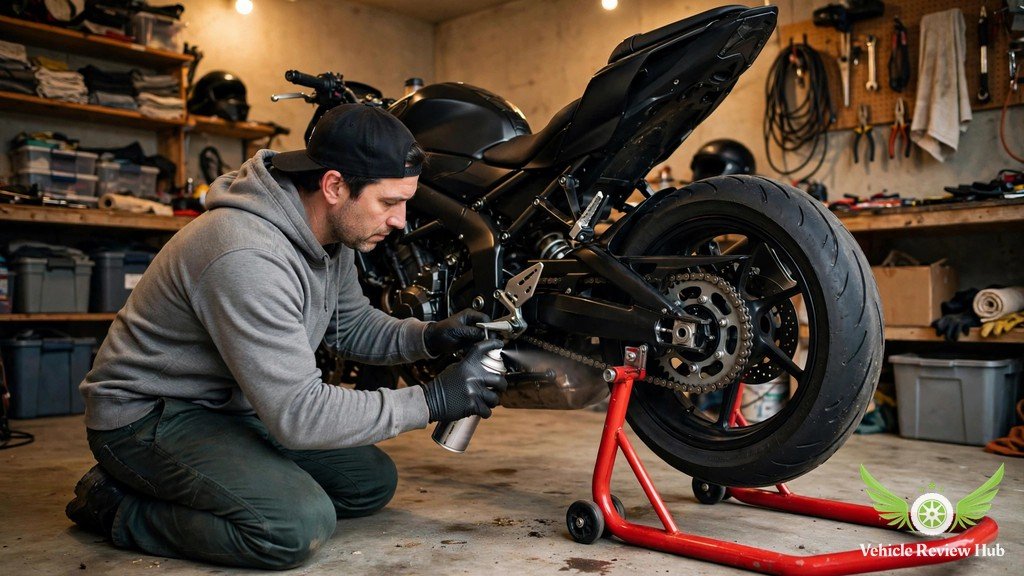
Preventive Maintenance, Chain Care Every 600 Miles and Inspections
Preventive maintenance on the NC750X starts with the chain: check lubrication and slack every 600 miles, lubricate after washing, and check more often in dusty or rainy conditions. That habit does more for Honda NC750X reliability than any upgrade, because a dry, loose chain wears sprockets, the slider, and itself all at once. Beyond the chain: wash the bike, treat fasteners and banjo bolts before winter, check tire pressures cold, keep fluid changes on their clocks, and inspect the frunk lock and seal. On DCT bikes, add the brake-lock check to every service and never ignore a blinking gear indicator. On manual bikes (offered alongside DCT through 2022), the conventional clutch gets the same inspection attention. None of this is difficult, and all of it is cheaper than the repair it prevents. That routine is Honda NC750X reliability in practice.
Recall Checks: ECU Stall 21V-901 for 2021 and Front Tyre 25V-435 for 2024
Two recalls touch this model, and both have narrow scopes that are often misstated — so check by VIN, not by model year alone. Recall 21V-901 covers certain 2021 NC750XD motorcycles — the DCT version only, not manual bikes and not other years. Incorrect fuel injection software could give insufficient fuel when stopping or accelerating from a stop, causing a stall. The remedy is free dealer reprogramming; owner letters were mailed January 10, 2022, under Honda campaign KN0. Only 357 motorcycles were affected — but a 2021 DCT bike without a recall record deserves a VIN check. Recall 25V-435 covers certain 2024 NC750X motorcycles only: a manufacturing fault could let the front tire’s inner structure loosen and unravel, causing a loss of handling and a Federal Motor Vehicle Safety Standard 119 failure. The remedy is a free front tire replacement; owner letters were mailed August 4, 2025, under Honda campaign KS4. Neither recall is a reason to avoid the model — both have free remedies and narrow scopes — but run the VIN on any 2021 DCT or 2024 bike you consider. Recalls handled promptly are part of Honda NC750X reliability, not a mark against it. A clean recall record, a complete service book, and clean fasteners together are the best evidence of Honda NC750X reliability you can ask for. For comparison with the bigger twin in the range, see the Honda Africa Twin reliability guide.
Honda NC750X Reliability FAQs
These are the questions buyers and owners actually ask about Honda NC750X reliability, answered from the service schedule, owner data, and recall records.
Is the Honda NC750X a reliable motorcycle?
Yes. Honda NC750X reliability is rated 4.6 out of 5 by 96 owners on MCN’s 2014–2021 review page, and the 2021-on sample of 16 owners rates it 4.4 out of 5. Owner reports show no pattern of major engine failures.
What is the most common Honda NC750X reliability problem?
Corrosion on fasteners, brake banjo bolts, and small parts in winter use is the most widely reported issue. It is cosmetic in most cases and preventable with cleaning and anti-corrosion treatment, but it is the first thing to inspect on any used bike.
How often does the Honda NC750X need an oil change?
Engine oil is replaced every 8,000 miles or once a year, after a first service at 600 miles. The 4,000-mile stops are inspection visits, not oil changes — a distinction some generic websites get wrong, and one that matters for Honda NC750X reliability.
What is the DCT clutch oil filter interval on the Honda NC750X?
On DCT models, the clutch oil filter is replaced at 600 miles and then every 16,000 miles, matching the engine oil filter pattern. Skipping it can make DCT shifting less clean over time, which is a needless dent in Honda NC750X reliability.
Was the Honda NC750X recalled for stalling?
Recall 21V-901 covers certain 2021 NC750XD (DCT) motorcycles only, where incorrect fuel injection software could cause a stall when stopping or accelerating from a stop. The free remedy is dealer software reprogramming. Manual bikes and other years are not in scope. A completed recall is one less open item for Honda NC750X reliability.
Was the 2024 Honda NC750X recalled for a tire problem?
Yes, recall 25V-435 covers certain 2024 NC750X motorcycles whose front tire inner structure could loosen and unravel, risking a loss of handling. The remedy is a free front tire replacement. Only certain 2024 bikes are affected, so a VIN check settles Honda NC750X reliability on any 2024 example.
Does the Honda NC750X have cruise control or cornering ABS?
No. There is no IMU, no cornering ABS, and no cruise control on any model year. The electronics are deliberately simple — ride modes and HSTC traction control from 2021, and a 5-inch TFT with Honda RoadSync from 2025 — which is part of why Honda NC750X reliability stays strong.
What should I check before buying a used Honda NC750X?
Check the service book for the 600-mile first service and 16,000-mile valve service, confirm DCT filter changes, run the VIN for recalls 21V-901 (2021 DCT) and 25V-435 (2024), inspect fasteners and banjo bolts for corrosion, and check tire age as well as tread — together, that is the practical checklist for Honda NC750X reliability.
How much does it cost to service a Honda NC750X?
MCN’s UK owner data lists annual servicing at £180 for the earlier generation and £150 for 2021-on bikes — UK figures, not US dealer prices. In the US, expect the 8,000-mile oil service to be small and the 16,000-mile valve service expensive; no model-specific US servicing average is published, so Honda NC750X reliability should never be sold with an invented dollar figure attached.