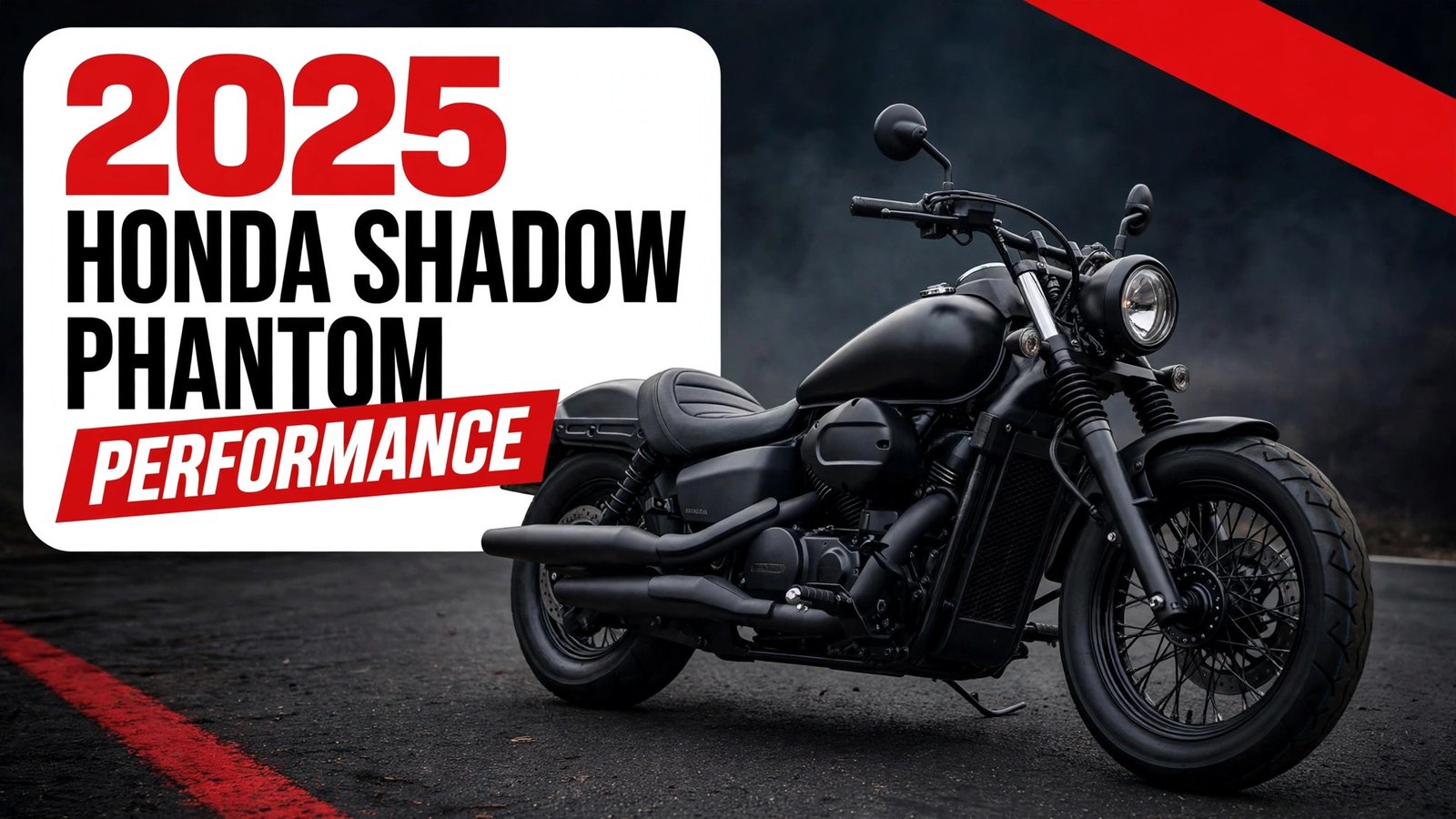
The short answer on Honda Shadow Phantom performance is simple: this is a gentle, torque-first cruiser, not a fast motorcycle. Rider’s 2010 test measured about 38 horsepower and 43 lb-ft of torque at the rear wheel, Cycle World found it would pull past 100 mph given room, and real-world fuel economy lands between roughly 47 and 57 mpg from a 3.9-gallon tank. This Honda Shadow Phantom performance guide separates tested figures from claimed ones and explains the 2024 suspension and brake changes. Read on for where Honda Shadow Phantom performance shines and where it runs out of breath.
Honda Shadow Phantom Engine Performance and Power Delivery
The Phantom’s engine is the oldest part of the motorcycle, and for Honda Shadow Phantom performance that is a compliment: a 745cc liquid-cooled 52-degree V-twin tuned for low-end pull, not peak numbers. The Shadow Phantom review covers the bike’s history and pricing; this guide covers what that engine actually does.

Rider Dyno 38 HP and 43 lb-ft at the Rear Wheel From 2010
Rider magazine’s 2010 road test is the anchor figure for Honda Shadow Phantom performance: “about the same output (38 horsepower and 43 lb-ft of torque at the rear wheel)” as the carbureted Shadow 750s before it. Those are rear-wheel figures, not crankshaft claims. The engine is a liquid-cooled 52-degree V-twin with a single overhead cam, three valves per cylinder, dual spark plugs, and PGM-FI fuel injection through a 34mm throttle body. Power reaches the rear wheel through a wide-ratio five-speed and a shaft final drive. Treat the figures as approximate — Rider says “about the same output” — but they remain the only published rear-wheel test numbers for Honda Shadow Phantom performance.
Low-End Torque, Throttle Response and Honda Publishes No HP Claim
Low-end torque is the whole point of Honda Shadow Phantom performance. The narrow-angle V-twin makes its modest torque just off idle, so a small twist of the throttle moves the bike cleanly away from a stoplight without a downshift. Throttle response is crisp thanks to fuel injection, but the engine signs off early, with no top-end rush above 5,000 rpm. Honda itself publishes no horsepower claim on its Shadow Phantom specification pages, which is why secondary summaries quoting roughly 44.6 to 44.9 horsepower and 47.9 lb-ft must be labelled claimed figures, not test results. The gap to Rider’s rear-wheel figures is normal driveline loss, and for Honda Shadow Phantom performance the rear-wheel numbers are the honest ones.
| Figure | Value | Source and type |
|---|---|---|
| Engine | 745cc liquid-cooled 52-degree V-twin, SOHC, 3 valves per cylinder, dual spark plugs | Honda specification pages |
| Rear-wheel power (tested) | About 38 hp, 43 lb-ft | Rider 2010 road test (approximate) |
| Claimed power (not tested) | About 44.6–44.9 hp at 5,500 rpm, 47.9 lb-ft at 3,500 rpm | Secondary spec summaries (claimed) |
| Curb weight | 544 lb (2010 test bike); 543 lb (2024); 553 lb (2025) | Rider; MCN; dealer specification sheets |
Honda Shadow Phantom Top Speed and Acceleration
Top speed is where Honda Shadow Phantom performance gets its most quoted — and most misunderstood — figure. There is no factory top-speed claim; what exists is one Cycle World observation, and everything else is estimation.
Cycle World Observed It Pull Past 100 MPH Given Room in 2010
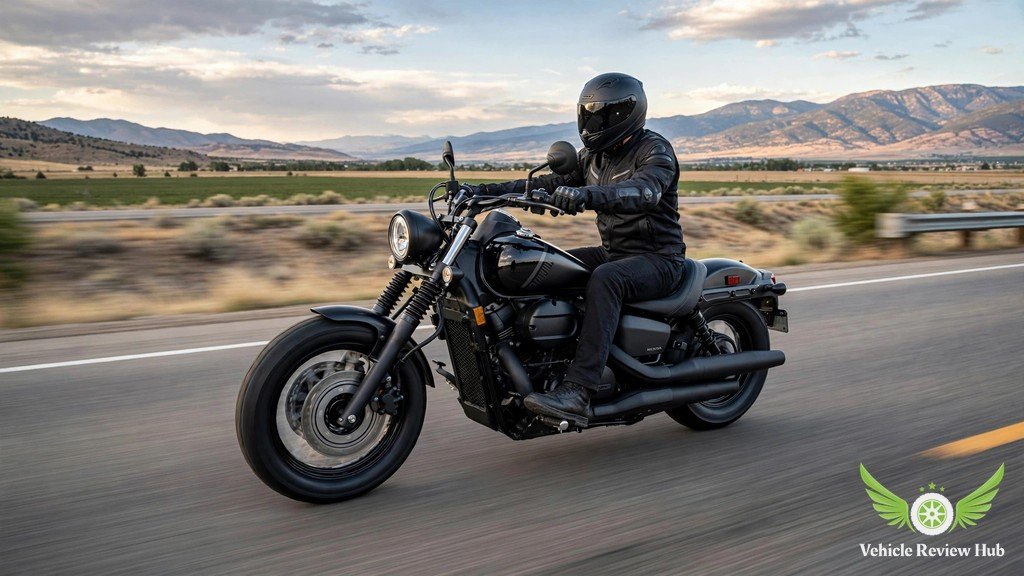
Cycle World’s April 2010 QuickRide is the source behind the top-speed claim, and its wording is worth quoting precisely: the Phantom “rumbles nicely along at 65, feels a little busy at 80 and buzzy beyond there — though it will pull itself up past the ton given room.” That is an observed ride impression, not an instrumented run. For Honda Shadow Phantom performance, the practical reading is that 65 to 70 mph is the comfortable zone, 80 mph is busy, and anything past the ton is an effort rather than a cruising speed. Aggregator tables listing exactly 95 or 100 mph are estimates from this observation, not separate tests. The 2025 bike, with the same engine and gearing philosophy, will behave the same way — Honda Shadow Phantom performance at the top end is unchanged.
Why No Instrumented 0-60, Quarter Mile or GPS Top Speed Test Exists
No verified instrumented 0-60 mph time, quarter-mile time, or GPS-verified top speed exists for the Honda Shadow Phantom. Neither Rider nor Cycle World published a timed acceleration run in their 2010 tests, and no later first ride timed one either. Every precise 0-60 figure quoted for Honda Shadow Phantom performance online is therefore a guess, an owner estimate, or a number borrowed from another motorcycle, and this guide will not invent one. What the evidence supports is qualitative: roughly 43 lb-ft just off idle makes the Phantom launch willingly through the first two gears, then acceleration flattens as the low-rev tuning runs out of breath. The absence of a test is itself the honest answer for Honda Shadow Phantom performance.
Honda Shadow Phantom Mileage and Fuel Economy
Fuel economy is where Honda Shadow Phantom performance quietly over-delivers. The understressed twin sips fuel at a cruise, and the 3.9-gallon tank turns good economy into useful range. The numbers below separate Honda’s published figure from tested results.

Honda Published 56 MPG on Many Years and the 3.9-Gallon Tank
Honda’s published fuel economy figure for the Shadow Phantom is 56 mpg, carried on specification sheets across many model years including the 2025 bike, and the tank holds 3.9 gallons with a warning light on the last 0.9 gallon. That gives about 218 miles of theoretical range, or about 168 miles before the warning light. That published figure is a manufacturer estimate, not a road-test result, and for Honda Shadow Phantom performance it is a best-case planning number rather than a promise. One period test cites 3.7 gallons instead of 3.9; Honda’s sheets list 3.9 including the reserve warning, and that is the figure used here. The tank is a genuine advantage over rivals with smaller tanks, and a big part of why Honda Shadow Phantom performance works as transport.
Rider Tested 57.4, 51.0 and 49.4 MPG and Real-World Range
Rider magazine’s 2010 road test gives the tested answer for Honda Shadow Phantom performance fuel economy, and it comes as three numbers: a high of 57.4 mpg, an average of 51.0 mpg, and a low of 49.4 mpg, from the test bike’s specification box. That spread is the honest picture: gentle cruising beats Honda’s published 56 mpg, average riding lands just under it, and hard use drops below 50 mpg. On the 3.9-gallon tank that means about 224 miles at the high figure, 199 at the average, and 193 at the low, so plan fuel stops near 150 to 170 miles. Cycle World observed around 47 mpg, slightly below Rider’s low. For Honda Shadow Phantom performance planning, expect roughly 50 mpg in mixed riding and 190 to 200 miles between fill-ups. A 2014 period test recorded 54 mpg, squarely inside the same band.
| Riding condition | Economy | Range on 3.9 gal |
|---|---|---|
| Gentle cruising (Rider high) | 57.4 mpg | About 224 miles |
| Mixed riding (Rider average) | 51.0 mpg | About 199 miles |
| Hard use (Rider low) | 49.4 mpg | About 193 miles |
| Honda published figure | 56 mpg | About 218 miles |
Honda Shadow Phantom Real-World Riding Performance
On paper, a 543- to 553-pound cruiser with 38 rear-wheel horsepower sounds like hard work. On the road, period testers found the opposite at normal speeds, and this is where Honda Shadow Phantom performance stops being a spec sheet and becomes a riding experience.
City Riding, Traffic Performance and Everyday Acceleration
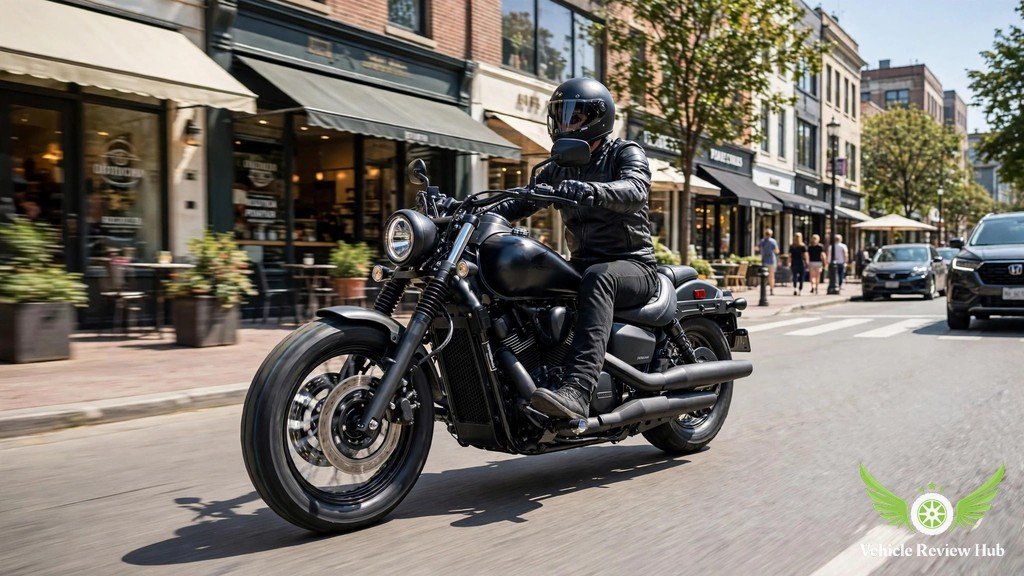
Around town, the Phantom is easier than it looks: the 25.6-inch seat (25.8 before 2024) puts most riders’ feet flat on the ground, and the low center of gravity makes the weight manageable at low speeds. Rider’s 2010 test and the 2024 first rides agree: RevZilla found the Phantom handles nicely with a front suspension “quite good, better than it needs to be,” while Ultimate Motorcycling called it “a pleasure to ride in the city and out in the twisties.” Torque from just off idle pulls cleanly away from lights without downshifting, the clutch is light, and finding neutral is easy — the heart of Honda Shadow Phantom performance in traffic. The annoyances are standard cruiser fare: a wide turning circle, early-touching footpeg feelers, and a long wheelbase. See the Phantom in action in the video below.
Highway Riding, Passing Ability and 2024 First-Ride Findings
On the highway, the Phantom settles into a relaxed cruise: the long wheelbase and low center of gravity give the straight-line stability testers praised, and lazy torque means 60 to 70 mph asks little. Passing needs planning — with no sixth gear and an engine that signs off early, an 80 mph pass takes a downshift and a longer clear stretch, and the engine feels busy at 80 mph and buzzy beyond, per Cycle World. With no windshield as standard, sustained highway speed is a wind-blast test for the rider — the main long-trip limit for Honda Shadow Phantom performance. For Honda Shadow Phantom performance, the 2024 first rides add detail: Motorcycle.com scored the bike 80.25 percent and praised the new rear disc brake, while RevZilla found its handling better than its spec sheet suggests. The Shadow Phantom reliability guide covers the 2024 brake and ABS changes in ownership terms.
Honda Shadow Phantom Handling, Braking and Stability
Handling is where the Phantom’s spec sheet causes the most confusion: two different front travel figures and two different rear figures circulate. Both sets are real, and for Honda Shadow Phantom performance in corners the chassis is stable and neutral at the speeds it was built for.
Suspension Travel Figures Conflict in Honda Sources Explained
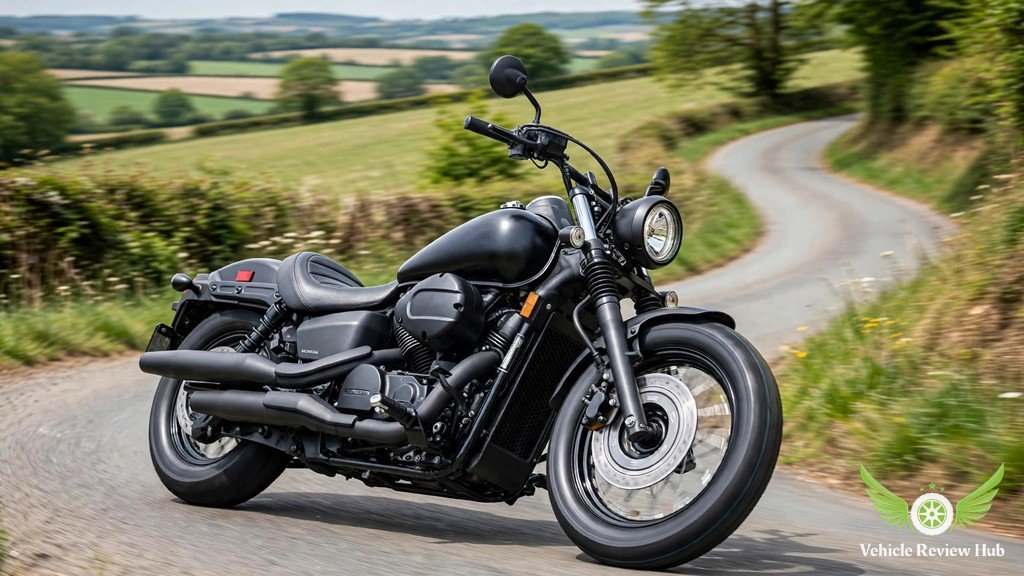
The suspension conflict is real, with a documented explanation rather than a winner. Before 2024, front fork travel was 4.6 inches; for 2024, MCN says it rose to 5.1 inches, while RevZilla’s and Motorcycle.com’s 2024 tables and the 2025 dealer sheet list 5.5 inches. The rear shows the same split: 3.5 inches in Rider’s 2010 test, MCN, and MotorcycleCruiser, against 3.6 in the tables. The likely explanation for this Honda Shadow Phantom performance puzzle is that text and tables came from different Honda releases. For Honda Shadow Phantom performance, the takeaway is simple: front travel is roughly five to five-and-a-half inches, rear travel roughly three-and-a-half, the fork is a non-adjustable 41mm unit, and the rear is dual shocks with five-position preload adjustment. Motorcycle.com’s observation that nearly all fork travel is used under braking matters more than the dispute: the fork is soft and dives.
Single 296mm Front Disc and the 2024 Rear Drum to Disc Change
The 2024 change is the most important Honda Shadow Phantom performance update in years. The front brake has always been a single 296mm disc with a twin-piston caliper; before 2024 the rear was a drum that Rider’s 2010 test said “could use more bite,” and for 2024 Honda replaced it with a 276mm rear disc, which also allows ABS on both wheels. For 2024, ABS was an option, not standard — RevZilla lists the 2024 bike at $8,399, or $8,699 with ABS, and Ultimate Motorcycling lists ABS as a $300 option, with both non-ABS (VT750C2B) and ABS (VT750CBS) models on sale. ABS became standard only with the 2025 Shadow Phantom ABS at $8,699. That corrects the shorthand that ABS arrived as standard in 2024. For Honda Shadow Phantom performance, the 2024 verdict is consistent: adequate and progressive rather than strong, with the front disc doing most of the work.
Honda Shadow Phantom Performance Compared With Other Entry Cruisers
Put the Phantom next to its two most natural rivals. The Vulcan S is the sportier alternative at a lower starting price, while the Rebel 500 is the lighter, more modern Honda at a lower price — and for Honda Shadow Phantom performance the comparison flatters on character and sobers on speed.
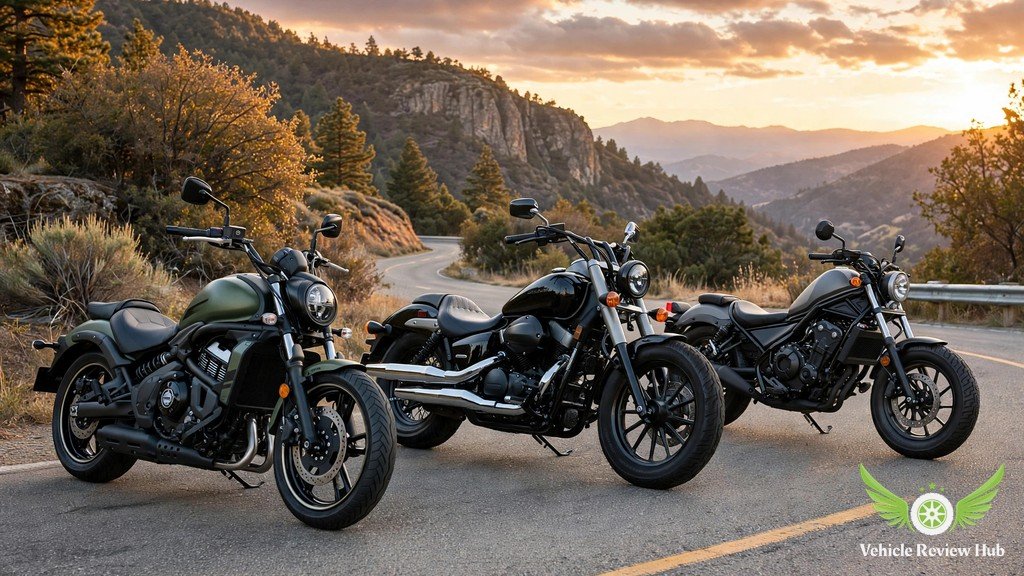
Honda Shadow Phantom vs Kawasaki Vulcan S and Honda Rebel 500
On price, the Phantom sits between its rivals: the 2025 Shadow Phantom ABS lists at $8,699 plus $600 destination, the 2026 Rebel 500 at $6,799 plus $600 with standard ABS, and the 2026 Kawasaki Vulcan S at $7,649 without ABS or $8,149 with ABS plus $685 destination. On engines: the Phantom’s 745cc V-twin with a five-speed and shaft drive against the Rebel’s 471cc parallel twin and the Vulcan’s 649cc parallel twin, both revving higher than the Phantom’s roughly 38 rear-wheel horsepower. What the Phantom keeps is its own case for Honda Shadow Phantom performance: the lowest seat, shaft drive, a 3.9-gallon tank, and V-twin character. The Rebel 500 performance and Fury performance guides show the lighter and bigger Honda alternatives. A buyer choosing on speed alone buys the Vulcan S; a buyer choosing on Honda Shadow Phantom performance per dollar still has reason to pick the Phantom.
| Figure | Honda Shadow Phantom (2025) | Honda Rebel 500 (2026) | Kawasaki Vulcan S (2026) |
|---|---|---|---|
| Price (MSRP) | $8,699 + $600 destination | $6,799 + $600 destination | $7,649 / $8,149 ABS + $685 destination |
| Engine | 745cc V-twin, liquid-cooled | 471cc parallel twin, liquid-cooled | 649cc parallel twin, liquid-cooled |
| Seat height | 25.6 in | 27.2 in | 27.8 in |
| ABS | Standard (2025) | Standard (2026) | Optional ($8,149 ABS model) |
Is the Honda Shadow Phantom Suitable for Beginners and Daily Riding?
Yes, with the right expectations: as a beginner’s first big bike and daily rider, the Phantom is close to ideal. For Honda Shadow Phantom performance as a beginner package: a 25.6-inch seat that lets most riders flat-foot, torque from idle that forgives clumsy clutch work, progressive brakes, roughly 50 mpg economy, and shaft drive. The limits are concrete: 543 to 553 pounds punishes slow-speed mistakes, the engine feels busy at 80 mph and buzzy beyond, rear travel is short over sharp bumps, and there is no wind protection or luggage as standard. Beginners should still take a safety course and sit on the bike first — the smart first step into Honda Shadow Phantom performance. The Shadow Phantom buying guide covers what to pay for each model year.
Honda Shadow Phantom Performance FAQs
Questions buyers actually ask about Honda Shadow Phantom performance, answered from the tested record — including where no test exists.
How much horsepower does the Honda Shadow Phantom make?
Rider’s 2010 test measured about 38 horsepower and 43 lb-ft at the rear wheel. Honda publishes no horsepower claim, and secondary summaries quoting roughly 44.6 to 44.9 horsepower are claimed figures, not test results — for Honda Shadow Phantom performance, the rear-wheel numbers are the honest ones.
What is the top speed of the Honda Shadow Phantom?
Cycle World’s 2010 QuickRide found the Phantom would pull past 100 mph given room, while feeling busy at 80 mph and buzzy beyond. There is no instrumented top-speed test, so treat 100 mph as an observed effort, not a tested limit, for Honda Shadow Phantom performance.
How fast is the Honda Shadow Phantom 0-60?
There is no verified instrumented 0-60 time for the Phantom. Neither Rider nor Cycle World published a timed run, so any precise 0-60 figure for Honda Shadow Phantom performance online is a guess or borrowed from another motorcycle.
What is the Honda Shadow Phantom’s MPG?
Honda publishes 56 mpg. Rider’s 2010 test recorded 57.4 mpg high, 51.0 average, and 49.4 low, while Cycle World observed around 47 mpg — so for Honda Shadow Phantom performance, expect roughly 50 mpg mixed.
How far can a Honda Shadow Phantom go on a tank?
Plan on roughly 170 to 200 miles between fuel stops. The 3.9-gallon tank gives about 199 miles at Rider’s 51.0 mpg average and 218 at Honda’s published 56 mpg, with the warning light on the last 0.9 gallon — the most useful Honda Shadow Phantom performance habit on long rides.
Does the Honda Shadow Phantom have ABS?
The 2025 bike has ABS standard on both brakes. For 2024, ABS was a roughly $300 option with both non-ABS and ABS models on sale, and pre-2024 bikes had no ABS — an important detail for Honda Shadow Phantom performance when buying used.
Did the 2024 Shadow Phantom get a rear disc brake?
Yes. For 2024 Honda replaced the rear drum with a 276mm rear disc, while the front stayed a single 296mm disc. That rear disc allows ABS on both wheels, and it is the most meaningful Honda Shadow Phantom performance change in years.
What is the Honda Shadow Phantom’s suspension travel?
It depends on the source: front travel is 5.1 inches in some 2024 coverage and 5.5 in tables and the 2025 sheet, up from 4.6 before 2024, while rear travel is 3.5 or 3.6 inches. For Honda Shadow Phantom performance, the practical point is that the fork is soft and dives under braking.
Is the Honda Shadow Phantom good for highway riding?
Yes for relaxed cruising, with limits. The long wheelbase gives excellent straight-line stability and the engine is unstressed at 60 to 70 mph, but passing at 80 mph needs a downshift and a long clear stretch, with no windshield — the honest picture for Honda Shadow Phantom performance.
Is the Honda Shadow Phantom good for beginners?
Yes, with a safety course and a test sit first. The low 25.6-inch seat, flat torque, forgiving brakes, and roughly 50 mpg economy make Honda Shadow Phantom performance approachable, but the 543- to 553-pound weight still demands respect at low speeds.
How does the Honda Shadow Phantom compare to the Rebel 500?
The Phantom costs more — $8,699 against the Rebel 500’s $6,799 for 2026 — but gives V-twin character, shaft drive, and a 3.9-gallon tank, while the Rebel is lighter and newer. On Honda Shadow Phantom performance alone the Rebel is quicker-feeling; on character the Phantom has its own case.
Is the Honda Shadow Phantom fast?
Quick off the line, not fast by modern standards. Around 43 lb-ft just off idle makes it feel strong through the first two gears, but acceleration flattens as speed climbs and the engine feels busy past 80 mph — that split defines Honda Shadow Phantom performance.