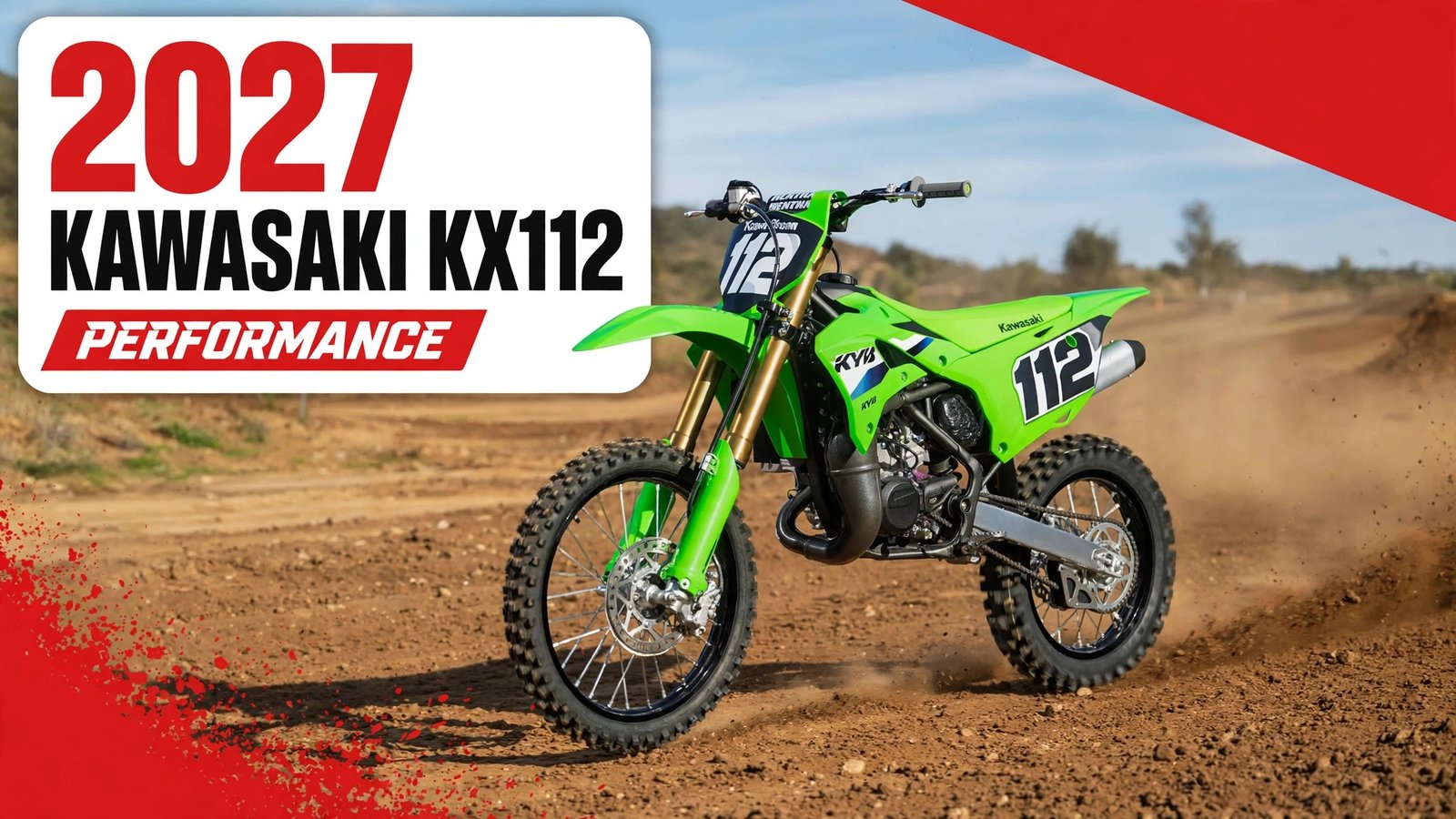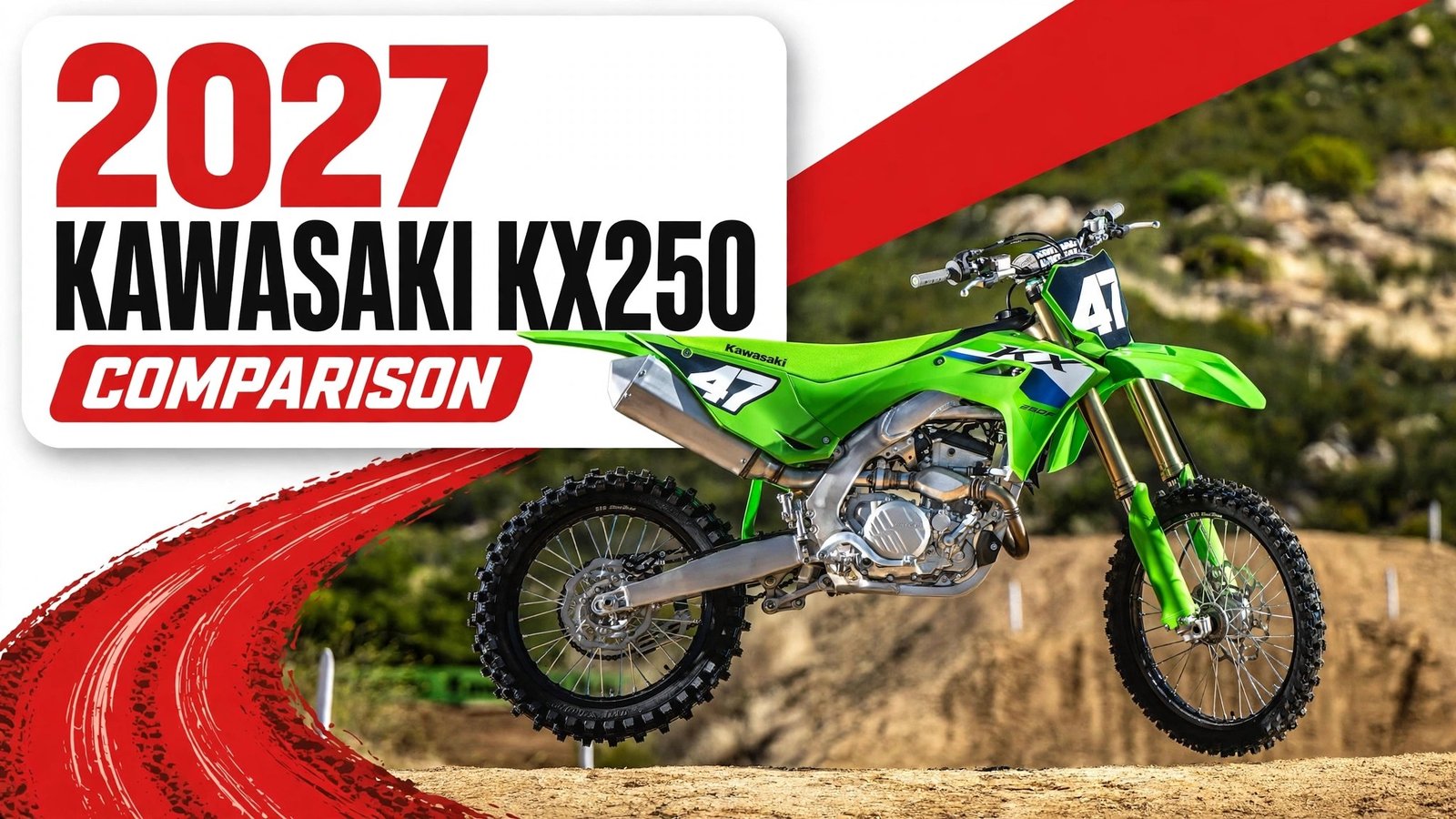
The 2027 Kawasaki KX250F is the cheapest Japanese 250F you can buy new, tied on sticker price with the Honda CRF250R and $500 under the Yamaha YZ250F. That is this Kawasaki KX250 comparison in one sentence — and it is also the trap: the cheapest bike finished last in Dirt Rider’s 2026 shootout and third in Cycle News’ 2027 shootout, while the dearest KTM was the most powerful on the dyno and second in both.
This Kawasaki KX250 comparison puts the 2027 four-stroke KX250F against the Yamaha YZ250F, the Honda CRF250R and the KTM 250 SX-F on delivered price, dyno power on the same machine, and weight with the basis stated for every bike. The Suzuki RM-Z250 and the woods-going KX250FX get their own sections. The companion Kawasaki KX250 review covers the price and spec sheet; the companion Kawasaki KX250 performance guide covers the dyno numbers.
Kawasaki KX250 Overview and Its Closest Rivals
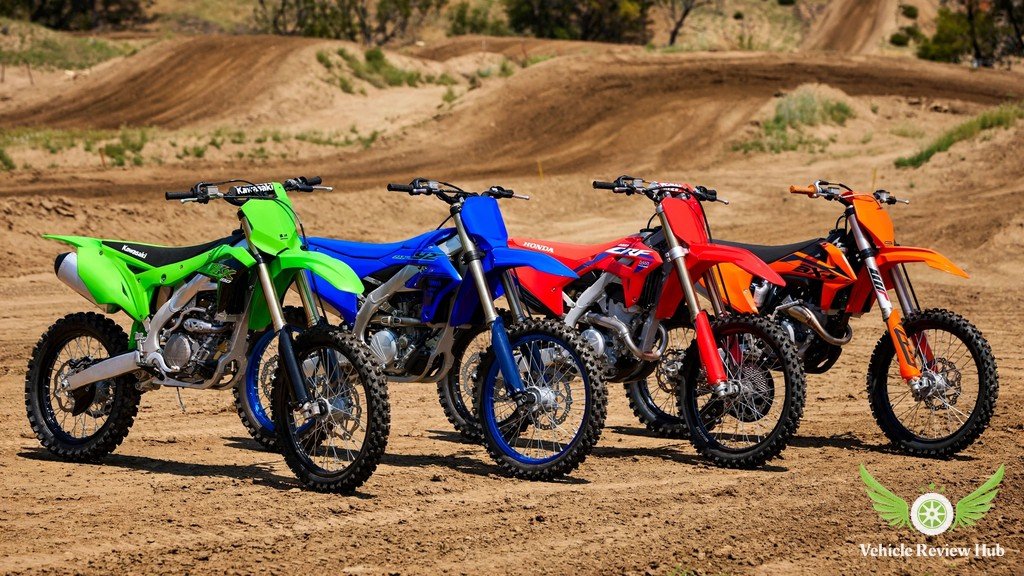
Four bikes define the 2027 250F class in this Kawasaki KX250 comparison, all sold in the USA: the Kawasaki KX250F, the Yamaha YZ250F, the Honda CRF250R and the KTM 250 SX-F. The Kawasaki is the 249cc four-stroke with the F back in its name for 2027, because the new two-stroke is the KX327. The Yamaha is all-new for 2027; the Honda is a targeted revision of its 2025–2026 bike; the KTM is the outlier — dearest, most powerful, lightest once the fuel basis is stated — the facts this Kawasaki KX250 comparison checks first.
2027 Price Undercuts Yamaha
The headline of this Kawasaki KX250 comparison is a price cut. The 2027 KX250F lists at $8,599 — $500 below the 2026 bike’s $9,099 MSRP and $500 below the 2027 Yamaha YZ250F’s $9,099. Delivered, the gap grows: the Kawasaki’s $650 destination charge is dealer-sourced, so the $9,249 total is computed and labelled, against the Yamaha’s maker-published $675 destination and $9,774 total. Against the Honda the story flips by a whisker: both list at $8,599, but Honda’s $600 destination charge makes the CRF250R $50 cheaper delivered at $9,199. Against the KTM there is no contest: the 250 SX-F lists at $10,699 with $690 dealer freight, $11,389 delivered — $2,140 more.
| Bike (2027) | MSRP | Destination / freight | Delivered |
|---|---|---|---|
| Suzuki RM-Z250 | $8,499 | $650 | $9,149 |
| Honda CRF250R | $8,599 | $600 (maker-published) | $9,199 |
| Kawasaki KX250F | $8,599 | $650 (dealer-sourced) | $9,249 |
| Yamaha YZ250F | $9,099 | $675 (maker-published) | $9,774 |
| KTM 250 SX-F | $10,699 | $690 (dealer-sourced) | $11,389 |
Note: Delivered totals are MSRP plus destination or freight in this Kawasaki KX250 comparison, with the basis labelled: Yamaha and Honda publish their charges, the Kawasaki and KTM figures are dealer-sourced. Tax and dealer fees are excluded.
How the Four Bikes Differ at a Glance
On paper the four bikes are remarkably close: all are 249–250cc four-stroke singles with five-speed gearboxes, electric start and 44 mm throttle bodies. The Kawasaki and the Honda both run 49 mm Showa forks; the Yamaha a KYB fork and the KTM a 48 mm WP XACT air fork. The Kawasaki’s seat is 37.6 inches, tied with the Honda; the Yamaha sits highest at 38.2. The Kawasaki also carries the heaviest claimed wet weight at 240.8 lb, against the Yamaha’s 236 lb wet and the Honda’s 234 lb curb — but the KTM’s 223.8 lb is measured without fuel, so it is not the same kind of number, and this Kawasaki KX250 comparison states that basis every time. The table in this Kawasaki KX250 comparison prints only verified figures: the Yamaha’s rear tyre size is left out because two sources disagree, and the KTM’s bore, stroke and compression are left out because KTM’s own 2027 tech-specs page does not publish them.
| Spec (2027) | Kawasaki KX250F | Yamaha YZ250F | Honda CRF250R | KTM 250 SX-F |
|---|---|---|---|---|
| Engine | 249cc single, DOHC | 250cc single, DOHC | 249cc single, DOHC | 249.9cc single |
| Bore x stroke | 78.0 x 52.2 mm | 77.0 x 53.6 mm | 79.0 x 50.9 mm | Not published |
| Compression | 14.1:1 | 14.1:1 | 13.9:1 | Not published |
| Front fork | 49 mm Showa, 12.0 in | KYB SSS, 12.2 in | 49 mm Showa, 12.2 in | 48 mm WP XACT AER, 12.2 in |
| Rear shock | Uni-Trak 12.1 in | KYB shock, 12.3 in | Pro-Link 12.1 in | WP XACT, 11.81 in |
| Brakes (front / rear) | 270 / 240 mm petal | 270 / 220 mm | 260 / 240 mm | 260 / 220 mm |
| Tyres (front / rear) | MX34 80/100-21 / 110/90-19 | MX33 80/100-21 / rear not printed | MX32 80/100-21 / 100/90-19 | Not on KTM’s page |
| Seat height | 37.6 in | 38.2 in | 37.6 in | 37.7 in |
| Fuel capacity | 1.64 gal | 1.6 gal | 1.7 gal | 1.9 gal |
| Weight | 240.8 lb curb | 236 lb wet | 234 lb curb | 223.8 lb without fuel |
Note: Specs are from each maker’s own 2027 page in this Kawasaki KX250 comparison, except where the cell says otherwise. Weights are not the same kind of number — the KTM figure is without fuel — so compare them only with the basis attached.
Kawasaki KX250 vs Yamaha YZ250F
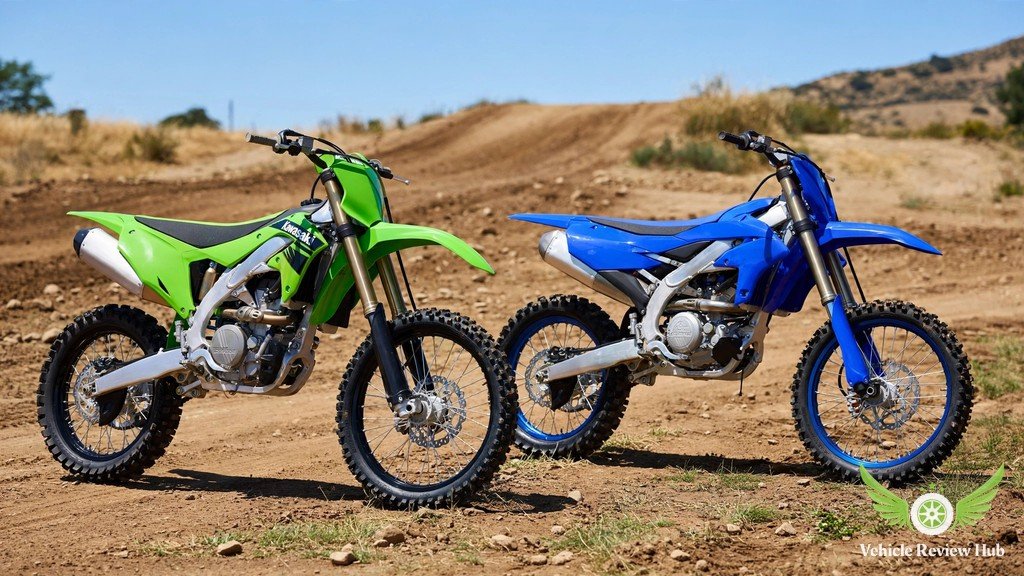
The Yamaha is the rival this Kawasaki KX250 comparison keeps coming back to: it beat the Kawasaki everywhere that mattered in 2026, then got all-new for 2027. The YZ250F won Dirt Rider’s 2026 shootout and Cycle News’ 2027 shootout, while the Kawasaki got a targeted revision. The $500 saving is real money — but it buys the older-generation bike.
Engine, Specs and Performance Side by Side
On the same dyno the two bikes are almost tied in this Kawasaki KX250 comparison: Dirt Rider’s Dynojet 250i measured the 2026 YZ250F at 39.5 hp and the 2026 KX250 at 39.2 hp, a gap no rider could feel, and the Kawasaki edges torque, 18.7 lb-ft against 18.4. What the dyno cannot show is where the power lives: testers call the Kawasaki a top-end screamer, weak at the very bottom and needing more clutch work, while the Yamaha’s all-new 2027 engine revs 700 rpm higher and was built to meet the new sound rules. The 2027 Kawasaki answers with a more hemispherical combustion chamber and a header about 3.5 inches longer, driven by the AMA’s 109 dB sound limit, and Kawasaki claims about 0.7 hp more peak power — a manufacturer claim only, because no 2027 dyno figure exists. The 2026 figures do not carry over to the all-new 2027 Yamaha engine.
Motocross Action’s own dyno reads higher than Dirt Rider’s, which is why this Kawasaki KX250 comparison never mixes the two. On MXA’s dyno the 2025–26 KX250 made 43.7 hp at 12,500 rpm with 20.48 lb-ft at 9,200 rpm, and the 2025 YZ250F about 41.7 hp at 12,900 rpm. The 45.11 hp figure is MXA’s for the 2024 bike, not the 2025–26 bike. The table prints the Dirt Rider numbers only — one dyno, one day, all five bikes.
| Bike (2026, Dirt Rider Dynojet 250i) | Peak horsepower | Peak torque |
|---|---|---|
| KTM 250 SX-F | 41.8 hp | 19.7 lb-ft |
| Yamaha YZ250F | 39.5 hp | 18.4 lb-ft |
| Kawasaki KX250 | 39.2 hp @ 12,700 rpm | 18.7 lb-ft @ 9,100 rpm |
| Honda CRF250R | 37.1 hp * | 17.5 lb-ft * |
| Suzuki RM-Z250 | 36.3 hp * | 18.6 lb-ft * |
Note: All five figures are Dirt Rider’s Dynojet 250i readings in this Kawasaki KX250 comparison, so the ranking — KTM, Yamaha, Kawasaki, Honda, Suzuki — is a same-dyno ranking. The Honda and Suzuki figures (marked *) are secondary-sourced.
Price, Equipment and Which Suits Which Rider
The Yamaha costs $500 more on MSRP and $525 more delivered in this Kawasaki KX250 comparison, and it spends that money on newness: an all-new engine, a YZ450F-derived frame, a rear brake system 180 grams lighter, and the Power Tuner App. A rider who wants the shootout winner buys the Yamaha; a rider who wants the cheapest Japanese 250F buys the Kawasaki. Neither bike in this Kawasaki KX250 comparison publishes a claimed power figure, and neither comes with a real warranty in the USA — the Kawasaki spec sheet prints “Not Available”, and the Yamaha’s 30-day limited warranty appears only in dealer-brochure mirrors.
Kawasaki KX250 vs Honda CRF250R
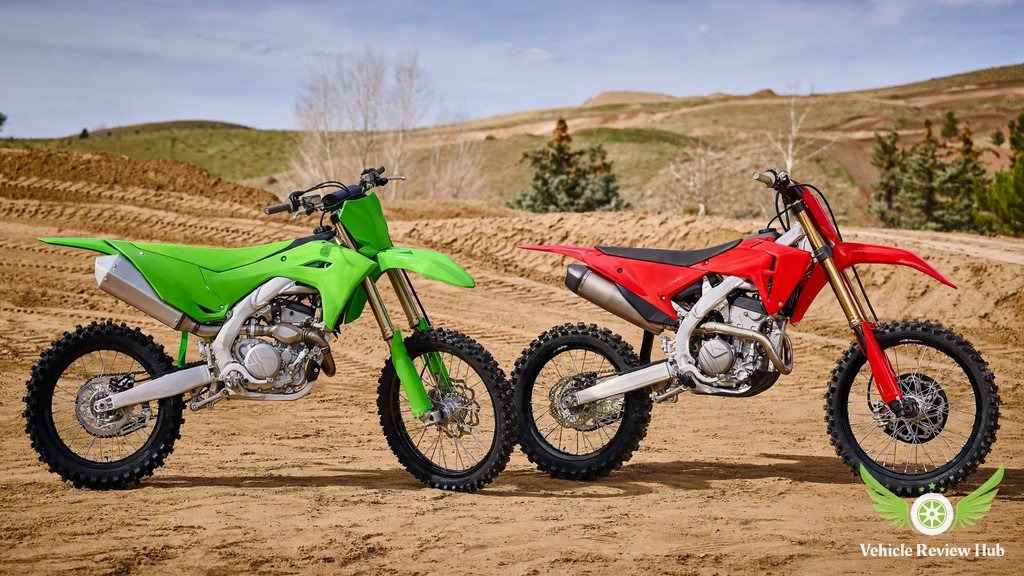
The Honda is the closest fight in this Kawasaki KX250 comparison, because the two bikes share a sticker price. Both list at $8,599, both run 49 mm Showa forks and seat the rider at 37.6 inches. Small differences: the Honda is $50 cheaper delivered, the Kawasaki makes more power, and the Honda finished third in Dirt Rider’s 2026 shootout while the Kawasaki finished last.
Engine, Specs and Performance Side by Side
The Kawasaki is a 249cc single, 78.0 x 52.2 mm and 14.1:1, fed by a 44 mm Keihin throttle body with dual injectors; the Honda is a 249cc single, 79.0 x 50.9 mm and 13.9:1, fed by a 44 mm PGM-FI throttle body. On Dirt Rider’s Dynojet the Kawasaki made 39.2 hp and 18.7 lb-ft against the Honda’s 37.1 hp and 17.5 lb-ft — a 2.1 hp gap in the Kawasaki’s favour, though the Honda figure is secondary-sourced. On MXA’s dyno the Honda made 41.52 hp at 12,000 rpm with 19.95 lb-ft at 9,500 rpm — a different dyno from Dirt Rider’s, kept apart in this Kawasaki KX250 comparison. The chassis numbers are nearly identical: 58.5 inches of wheelbase against 58.4, 27.0 degrees of rake against 27.3. The Honda’s tyres are the oddity in the class — a Pirelli Scorpion MX32 set with a narrow 100/90-19 rear, against the Kawasaki’s Dunlop Geomax MX34 110/90-19 — and its 260 mm front disc is the smallest in the group. The Honda is also the lighter bike on claimed figures, 234 lb curb against 240.8 lb.
Price, Equipment and Which Suits Which Rider
On price the Honda wins by the smallest margin in this Kawasaki KX250 comparison: $50 delivered, because Honda publishes a $600 destination charge against the Kawasaki’s dealer-sourced $650. The Honda’s 2027 changes are smaller — livery, a smaller airbox opening, a longer muffler, ECU mapping and fork fluid. Equipment splits the other way: the Kawasaki’s hydraulic clutch, Power Modes, traction control and launch control are standard, and the Honda’s #520 chain runs a 13T/50T sprocket set. The Honda is sold “as is” with no warranties, per its owner’s manual wording, and the Kawasaki spec sheet prints “Not Available” for warranty, so neither bike offers the buyer a safety net. A rider choosing between them weighs the Kawasaki’s dyno advantage against the Honda’s shootout result and its $50 saving. The companion Kawasaki KX250 reliability guide covers the 15-hour piston interval, though only the Kawasaki’s interval is factory-verified in this research.
Kawasaki KX250 vs KTM 250 SX-F
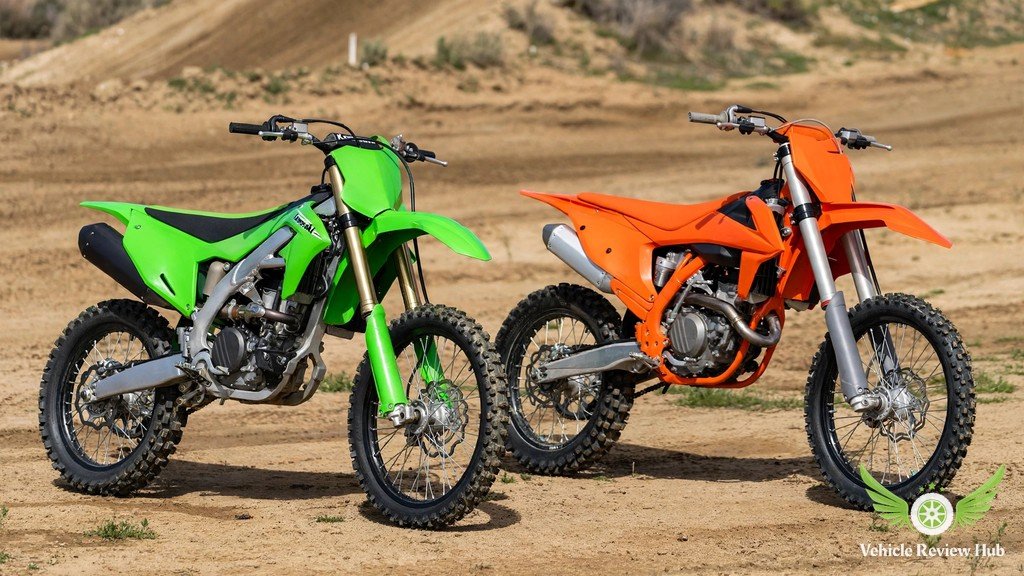
The KTM is the bike this Kawasaki KX250 comparison measures everything against. The 250 SX-F costs $2,140 more delivered, makes the most power on the dyno, and weighs the least — but its 223.8 lb figure is measured without fuel, and its price is dealer-sourced.
Engine, Specs and Performance Side by Side
The KTM’s engine is the strongest in the class on the only dyno that tested all five bikes: Dirt Rider’s Dynojet 250i measured the 2026 250 SX-F at 41.8 hp and 19.7 lb-ft, against the Kawasaki’s 39.2 hp and 18.7 lb-ft — a 2.6 hp and 1.0 lb-ft gap that testers can feel, and the reason the KTM finished second while the Kawasaki finished last. On MXA’s dyno the 250 SX-F runs “close to 45 horsepower” against the Kawasaki’s 43.7 hp — a different dyno from Dirt Rider’s, kept apart in this Kawasaki KX250 comparison. The KTM’s 249.9cc single runs a 44 mm Keihin throttle body with a wet multi-disc DS clutch and Brembo hydraulics. What KTM does not publish is as telling: its own 2027 tech-specs page carries no bore and stroke, no compression ratio and no claimed power figure, so this guide prints none of them. The chassis is the most different in the class: a steel double-cradle frame, a 48 mm WP XACT air fork, and 12.2 inches of front travel with 11.81 at the rear.
Price, Equipment and Which Suits Which Rider
The price gap is the whole argument: $10,699 MSRP against $8,599, $11,389 delivered against $9,249 — a $2,140 difference that buys the dyno advantage, the shootout result and the lightest weight in the class. What the extra money does not buy is certainty: no KTM 2027 warranty figure could be verified, so this Kawasaki KX250 comparison prints none, and the KTM’s $690 freight and $465 set-up charge push the real gap past $2,140. The Kawasaki’s answer is value: $2,140 left for pistons, tyres and entry fees. A rider who races for results buys the KTM; a rider who races for fun and counts the cost buys the Kawasaki and accepts the KTM is the faster bike.
Kawasaki KX250 Price and Value Compared
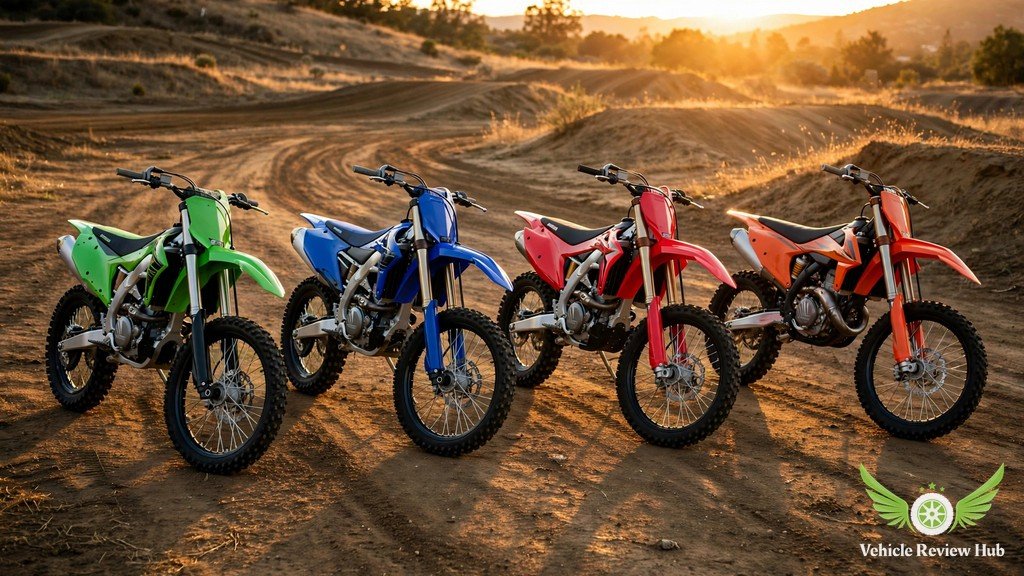
Price is where the Kawasaki wins; value is where the question gets harder. The KX250F is $500 cheaper than the Yamaha on MSRP, $50 dearer than the Honda delivered, and $2,140 cheaper than the KTM delivered — but the cheapest delivered bike is the Suzuki RM-Z250 at $9,149, and the running costs are where the Kawasaki’s 15-hour piston interval starts to count. This section prices the whole ownership picture.
RM-Z250 Still Sells New
Yes — Suzuki still sells the RM-Z250 new in the USA for 2027, and it is the cheapest delivered bike in this Kawasaki KX250 comparison at $8,499 MSRP and $9,149 delivered, $100 less than the Kawasaki and $50 less than the Honda. It is also the only 250F in the class still sold with kick start only and no electric start. The 2027 bike is the first real update since the 2019 redesign, and it carries a 249cc dual-injector single with a 37.5-inch seat and a 233 lb curb weight. On Dirt Rider’s dyno it is the weakest bike in the class at 36.3 hp — a secondary-sourced figure, the engine unchanged since 2019 — and Suzuki’s spec data lists its brakes only as single-rotor discs, with no disc sizes verified, so this guide prints neither. It is the value play in this Kawasaki KX250 comparison for a rider who does not mind kicking a bike to life — but it was not in Dirt Rider’s 2026 test at all.
Running Costs and Resale Value Compared
Running costs are where the Kawasaki’s factory honesty becomes a bill. Only the KX250’s piston interval is factory-verified in this research: piston and rings replaced every 15 hours, from the 2004–2005 service-manual chart, with the 2018 owner’s manual agreeing. Rival intervals are second-hand and conflicting, and this Kawasaki KX250 comparison prints none of them as factory fact. What is verified is the Kawasaki’s parts pricing: a Wiseco 14.5:1 piston kit at $331.85 and a Racer Elite Pro kit at $388.95, both as seen on 2026-11-25. The 15-hour schedule makes the cheapest bike to buy a dearer bike to keep. Resale is the honest blank: no KBB or NADA used values were found for the KX250 or any rival. The only usable cap is the new-bike market: leftover 2026 KX250s were advertised at $6,999, about $2,100 under the $9,099 MSRP. The MSRP saving is $500 only; the $1,750 was a leftover discount, never a sticker cut.
Kawasaki KX250 Comparison Verdict and US Alternatives
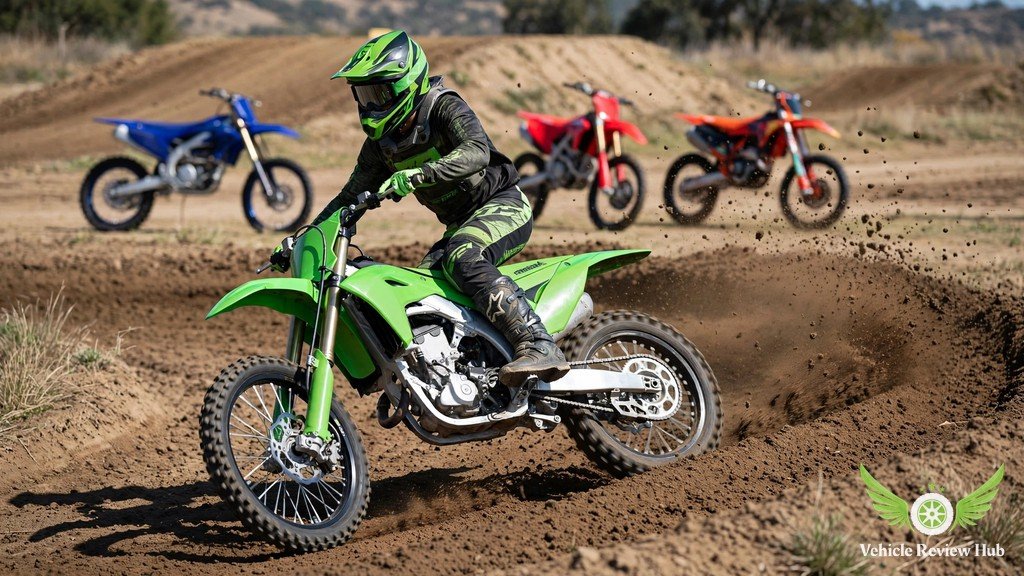
The verdict of this Kawasaki KX250 comparison is written in the shootouts, not in the price list. The Kawasaki is the cheapest Japanese 250F to buy new, tied with the Honda on MSRP. It finished last in Dirt Rider’s 2026 shootout and third in Cycle News’ 2027 shootout.
Verdict: Price Wins, Track Loses
Dirt Rider’s 2026 250F comparison test ranked seven bikes in this Kawasaki KX250 comparison and put the Kawasaki last, seventh of seven, with the verdict that “green could use more” power. Cycle News’ 2027 shootout was kinder: first Yamaha, second KTM, third Kawasaki. The reasons are consistent: a top-end engine weak at the very bottom, the heaviest claimed wet weight at 240.8 lb, and a praised chassis held back by the engine. Buy the Kawasaki if the $500 saving matters more than the result; buy the Yamaha if the result matters more; buy the Honda if $50 and third place are enough; buy the KTM if the podium is worth $2,140. No tested top speed, timed run or MPG figure exists for any of these bikes.
| Bike | Dirt Rider 2026 (7 bikes) | Cycle News 2027 (5 bikes) |
|---|---|---|
| Yamaha YZ250F | 1st | 1st |
| KTM 250 SX-F | 2nd | 2nd |
| Honda CRF250R | 3rd | Not verified |
| Kawasaki KX250F | 7th (last) | 3rd |
Note: Both rankings are verified in this Kawasaki KX250 comparison: Dirt Rider’s 2026 test ranked seven bikes with the Kawasaki last, and Cycle News’ 2027 shootout ranked five with the Kawasaki third. The Cycle News fourth and fifth places were not verified and are not printed.
Watch the shootout: Motocross Action’s “2026 250 Shootout” video ranks all eight 250 four-strokes from eighth to first, including the KX250 and all three of this blog’s rivals — the Yamaha, the Honda and the KTM — alongside the Triumph, Husqvarna, GasGas and Suzuki. The bikes shown are 2026 models, not 2027 bikes (the Husqvarna shown is a 2025, since Husqvarna brought no 2026 to the US), and the rankings are spoken in the video: MXA ranked the KX250 sixth of eight, behind the KTM 250 SX-F in first and ahead of the Triumph in seventh and the Suzuki in last. No dyno run is shown on screen — the horsepower figures are cited in the narration, and this Kawasaki KX250 comparison prints only the placement MXA spoke on camera.
KX250FX Is the Woods Version
The KX250FX is the woods and cross-country version of the KX250F — the renamed KX250X, because Kawasaki’s 2027 USA range lists the FX and no X. It costs $8,699, $100 over the F, and it trades the motocross bike’s 19-inch rear wheel for an 18-inch rear with a 110/100-18 tyre, drops the seat to 37.2 inches, and runs 14.0:1 compression against the F’s 14.1:1. The rest is the same 249cc four-stroke with the five-speed hydraulic clutch and the 49 mm Showa fork. The woods equipment — side stand, skid plate, O-ring chain and off-road tyres — appears in dealer copy, not on Kawasaki’s spec sheet, so this Kawasaki KX250 comparison attributes it to dealers. The FX was $500 less than the 2026 KX250X it replaces, which listed at $9,199. A rider who races cross-country should price the FX first.
Kawasaki KX250 Comparison: Frequently Asked Questions
The questions below are the ones buyers ask about this Kawasaki KX250 comparison.
Which is cheaper, the Kawasaki KX250F or the Yamaha YZ250F?
The Kawasaki. The 2027 KX250F is $8,599 against the YZ250F’s $9,099 — $500 cheaper on MSRP and $525 cheaper delivered, $9,249 against $9,774. The Yamaha is all-new for 2027, though, and it won both shootouts while the Kawasaki finished last and third, so the $500 saving buys the older-generation bike in this Kawasaki KX250 comparison.
Which is cheaper, the Kawasaki KX250F or the Honda CRF250R?
The Honda, by $50 delivered in this Kawasaki KX250 comparison. Both bikes list at $8,599 MSRP, but Honda publishes a $600 destination charge for a $9,199 total, against the Kawasaki’s dealer-sourced $650 for $9,249. On Dirt Rider’s dyno the Honda made less power, 37.1 hp against the Kawasaki’s 39.2 hp, but it finished third in Dirt Rider’s 2026 shootout while the Kawasaki finished last.
Which is cheaper, the Kawasaki KX250F or the KTM 250 SX-F?
The Kawasaki, by $2,140 delivered — $9,249 against $11,389. The KTM is the most powerful bike on Dirt Rider’s dyno at 41.8 hp and finished second in the 2026 shootout, but it costs $2,100 more on MSRP alone, and this Kawasaki KX250 comparison found no verified KTM warranty figure.
Does Suzuki still sell the RM-Z250 new?
Yes. The 2027 RM-Z250 is $8,499 MSRP, $9,149 delivered — the cheapest delivered bike in this Kawasaki KX250 comparison — and it is the only 250F still sold with kick start only and no electric start. It is also the weakest on the dyno at 36.3 hp on Dirt Rider’s machine, a secondary-sourced figure with the engine unchanged since 2019.
What is the KX250FX?
The woods and cross-country version of the KX250F — the renamed KX250X. For 2027 it is $8,699, $100 over the F, with an 18-inch rear wheel instead of 19-inch, a lower 37.2-inch seat, and 14.0:1 compression against 14.1:1 on the F. Side stand, skid plate and O-ring chain are dealer-copy claims, not spec-sheet items, and this Kawasaki KX250 comparison attributes them to dealers rather than to the factory.
Which of the four rivals holds its value best?
No verified resale figures exist for any of the four bikes in this Kawasaki KX250 comparison — no KBB or NADA used values were found — so no resale ranking can be printed. The honest answer is that the KX250F is the cheapest Japanese 250F to buy new, tied with the Honda on MSRP, and leftover 2026 KX250s were advertised at $6,999, which caps what a used one can ask.