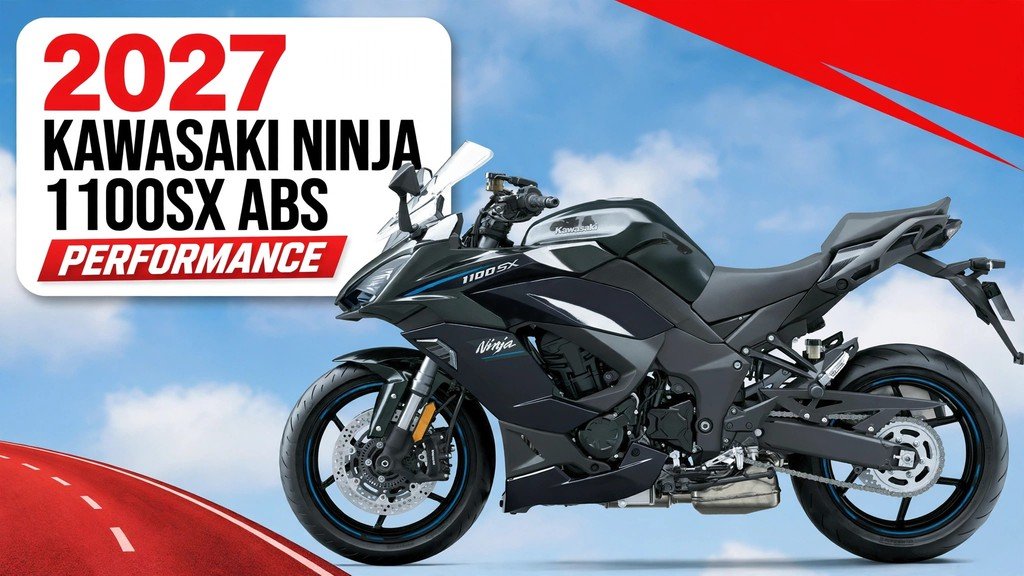
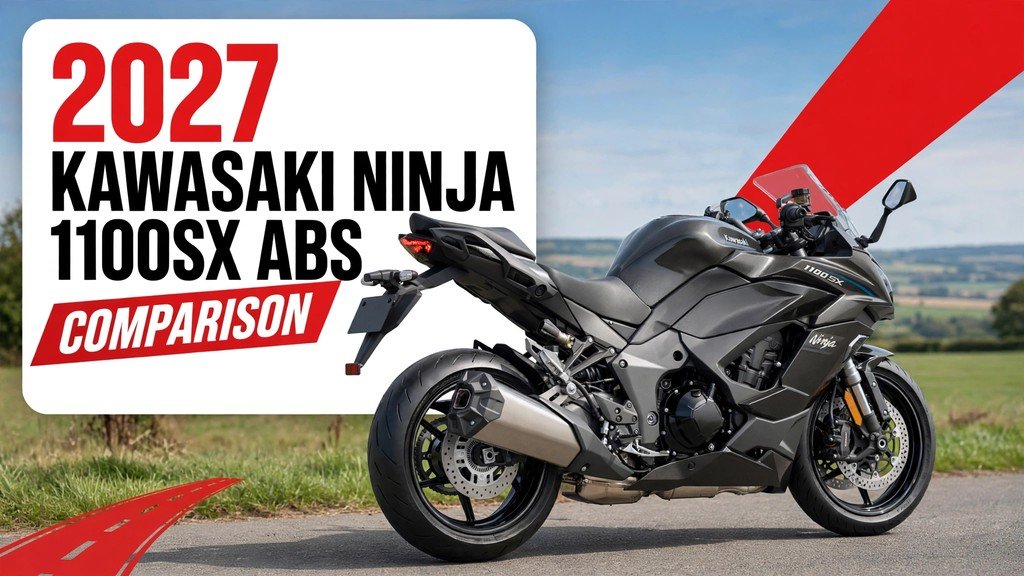
The short answer is that the Kawasaki Ninja 1100SX SE ABS performance story is a midrange story, not a top-speed story. Kawasaki claims 134 hp at 9,000 rpm, and the only dyno run that exists, Motorcycle.com’s rear-wheel test of a 2025 SE, measured 124.6 hp at 9,200 rpm. There is no measured top speed for the 1100SX, and testers actually measured 38.5 to over 40 mpg. This Kawasaki Ninja 1100SX SE ABS performance guide works through the dyno, the missing top speed, the mileage and the brakes.
Kawasaki Ninja 1100SX SE ABS Engine Performance and Power Delivery
The SE shares the standard bike’s engine outright: the same 1,099cc inline-four, the same 134 hp claim and the same 83.2 lb-ft of torque, with no extra power. This Kawasaki Ninja 1100SX SE ABS performance story matters because the SE is the only 1100SX anyone has put on a dyno, so its numbers are the platform’s numbers.

Its Own Dyno: 124.6 Horsepower
Motorcycle.com strapped a 2025 SE to its dyno and measured 124.6 hp at 9,200 rpm and 77.4 lb-ft at 7,600 rpm at the rear wheel. That is the only dyno run that exists for the platform, and it is this bike’s own run. Against Kawasaki’s claim of 134 hp at 9,000 rpm to the ISO 4106 standard, the rear-wheel figure sits 9.4 hp lower, a normal drivetrain loss, and the torque gap is smaller at 5.8 lb-ft below the claimed 83.2 lb-ft. The Motorcycle.com SE review carries the dyno chart. This Kawasaki Ninja 1100SX SE ABS performance guide labels that run rear-wheel every time it appears, because a crank claim and a rear-wheel measurement are not the same number.
Midrange Gains Belong to the 1100, Not the SE
The engine grew from 1,043cc to 1,099cc by stroke alone, from 56.0 mm to 59.0 mm, a 3.0 mm increase and not the 3.3 mm some outlets print. The bore stayed at 77.0 mm, compression is 11.8:1, and the heavier flywheel, milder cams and a rev limit 500 rpm lower than the old 1000SX all point the same way: more pull in the middle, less rush at the top. MCN’s long-term dyno found 6 to 8 bhp more than the outgoing 1000SX between 4,000 and 7,000 rpm, and the old bike only pulls ahead past 7,000 rpm. That midrange gain belongs to the 1,099cc engine, not to the SE trim, and this Kawasaki Ninja 1100SX SE ABS performance guide says so plainly, because the SE adds Brembo calipers, an Öhlins shock and heated grips, and not one extra horsepower.
| Figure | Kawasaki claim (ISO 4106) | Motorcycle.com rear-wheel dyno, 2025 SE |
|---|---|---|
| Peak power | 134 hp @ 9,000 rpm | 124.6 hp @ 9,200 rpm |
| Peak torque | 83.2 lb-ft @ 7,600 rpm | 77.4 lb-ft @ 7,600 rpm |
| Gap to the claim | — | 9.4 hp and 5.8 lb-ft lower |
| Standard-bike dyno | 134 hp @ 9,000 rpm | No standard-bike dyno exists |
Notes for this Kawasaki Ninja 1100SX SE ABS performance table: the claim is Kawasaki’s US figure to the ISO 4106 standard; the dyno figure is Motorcycle.com’s rear-wheel run on a 2025 SE; the stroke increase is 3.0 mm, not 3.3 mm; the SE’s run is the only dyno that exists for the platform.
The video below is Kawasaki’s own tech film for the new 1100SX, covering the bigger engine, the taller gearing and the SE brakes — the manufacturer’s own presentation, not an independent test.
Kawasaki Ninja 1100SX SE ABS Top Speed and Acceleration
No tester has published a measured top speed for the 1100SX, and no instrumented 0-60 or quarter-mile time exists for it either. This Kawasaki Ninja 1100SX SE ABS performance guide prints no top speed, because there is none to print.
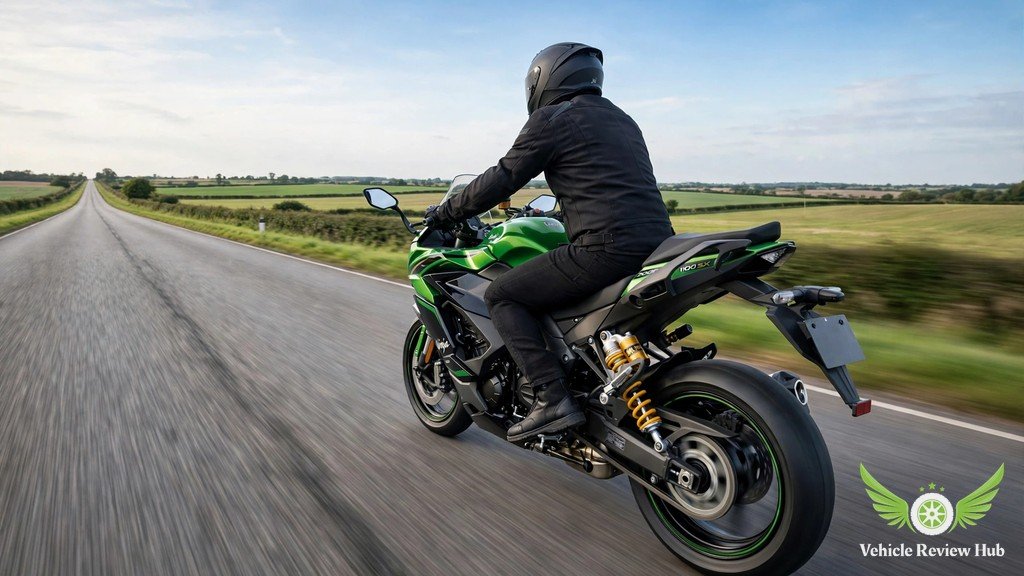
No Measured Top Speed Exists
No outlet has published a top-speed run for the 1100SX, because every test so far has been on public roads and press launches. The bike is geared for relaxed cruising: taller primary gearing, a shorter final drive and taller fifth and sixth gears put 70 mph at 4,200 rpm in sixth, about 300 rpm lower than the 2020 1000SX, and 60 mph at roughly 4,500 rpm in sixth. The RevZilla SE first ride records the gearing figures and the 85 mph cruise cap behind this section. This Kawasaki Ninja 1100SX SE ABS performance guide treats the absence of a top-speed figure as a fact in itself.
154 MPH Belongs to the Old 1000SX
The 154 mph figure that shows up next to the 1100SX in search results belongs to the old 1000SX, where RevZilla recorded 152 mph on GPS and 154 mph indicated. It is not an 1100SX figure, and it should not be carried over: the 1100SX has a heavier flywheel, milder cams and a rev limit 500 rpm lower than the old bike. The aggregator figures floating around the 1100SX, roughly 150 to 155 mph from sites that never tested the bike, are invented, and this Kawasaki Ninja 1100SX SE ABS performance guide prints none of them as fact. The same applies to acceleration: no instrumented 0-60 or quarter-mile time exists for the 1100SX, and the old 1000SX’s 10.5-second quarter-mile must not be carried over either.
Kawasaki Ninja 1100SX SE ABS Mileage and Fuel Economy
The fuel economy testers actually measured on the SE runs from 38.5 to over 40 mpg, and the tank is good for 170 miles or more in real riding. This Kawasaki Ninja 1100SX SE ABS performance guide uses the tester figures, because they are the only measured numbers, and it labels Kawasaki’s 50 mpg figure as the claim it is.
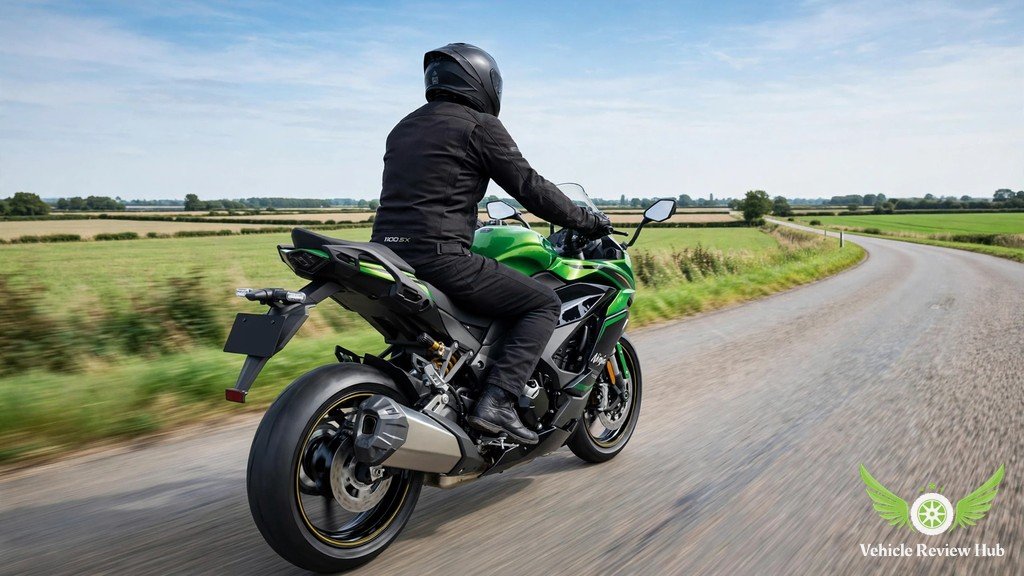
RevZilla Measured 38.5 MPG, Three Tanks
RevZilla averaged 38.5 mpg over three tanks across two weeks on the SE, with more city riding in the mix, Ultimate Motorcycling measured 39 mpg, and Motorcycle.com measured over 40 mpg on long hauls, with figures in the high 30s when ridden hard and 170 or more miles from the 5.0-gallon tank. MCN’s long-term fleet went 180 to 205 miles before the fuel light came on. Kawasaki claims 50 mpg, a theoretical 209 to 211 miles from the tank, but that is the manufacturer’s claim, not a test result, and no tester has matched it. The Ultimate Motorcycling SE review carries its 39 mpg figure and the 1,000-plus-mile test behind it. This Kawasaki Ninja 1100SX SE ABS performance guide treats 38.5 to 40-plus as the honest range, with the low end set by city riding and the high end by steady highway miles.
Suzuki Publishes No MPG Figure
Suzuki publishes no MPG figure for the GSX-S1000GT+, so there is no official Suzuki number to put next to the SE’s measured figures. The comparison still favours the Kawasaki on paper: the GT+ carries a 999cc four making 150 hp at 11,000 rpm, more peak power than the SE’s 134 hp, but its maker says nothing about economy. A buyer choosing on fuel costs alone has only the SE’s tester figures to work with, and they are good enough for 200-mile days. This Kawasaki Ninja 1100SX SE ABS performance guide notes the gap plainly rather than inventing a Suzuki figure to fill the table.
| Source | Fuel economy | How it was measured |
|---|---|---|
| RevZilla | 38.5 mpg | Three tanks over two weeks, more city riding |
| Ultimate Motorcycling | 39 mpg | 1,000-plus-mile test |
| Motorcycle.com | 40+ mpg | Long hauls; high 30s when ridden hard; 170+ mi per tank |
| MCN long-term | 180–205 mi before the fuel light | Long-term fleet; 200-mile days |
| Kawasaki claim | 50 mpg | Manufacturer claim; theoretical 209–211 mi range |
Notes for this Kawasaki Ninja 1100SX SE ABS performance table: all tester figures are from SE bikes; Kawasaki’s 50 mpg is a claim, not a measured result; Suzuki publishes no MPG figure for the GSX-S1000GT+.
Kawasaki Ninja 1100SX SE ABS Real-World Riding Experience
On real roads the SE’s headline equipment, the Brembo brakes, is the part the testers argue about most, and the windscreen is the part they split on. This Kawasaki Ninja 1100SX SE ABS performance guide covers both in the testers’ own words.
ABS Masks the Brembos, Says RevZilla
RevZilla’s verdict on the SE brakes is blunt: the Brembo M4.32 calipers should improve the brakes over the standard bike’s calipers, but they do not, because the non-adjustable ABS intervenes well before the rider has applied enough pressure to feel a difference. RevZilla pulled the ABS fuse and found a totally different beast, a bike that decelerates like a proper sport bike and trail-brakes deep into corners with impressive composure. The cruise control is part of the same picture: it maxes out at 85 mph, a verified 1100SX figure from RevZilla’s first ride, and traction control stays conservative even in Sport mode. A Kawasaki rep at the launch said the bike is ideal for the motorcyclist who likes to ride at 75 percent effort, and this Kawasaki Ninja 1100SX SE ABS performance guide takes that as a fair summary of the electronics: they keep the bike calm, and they keep it from showing what the Brembos could do.
Windscreen Praised by Cycle News, Not Criticized
Cycle News praised the windscreen, saying the multi-position screen does not buffet the rider’s head the way some class rivals do. RevZilla took the opposite view, calling the stock windscreen style over function and grouping it with mirrors that are too small and too far away and the intrusive ABS as things carried over from the old bike. Motorcycle.com praised it too, finding good wind deflection at pace with no helmet buffeting, and MCN’s long-term fleet found impressive protection. BikeReview found decent deflection but a loud ride. The outlets even disagree on how many positions the screen has, so this Kawasaki Ninja 1100SX SE ABS performance guide calls it multi-position. The Visordown SE review carries the road-test view of the windscreen, the brakes and the shock.
Kawasaki Ninja 1100SX SE ABS Handling, Braking and Stability
The SE handles like the standard bike with a better rear end: the same 56.7-inch wheelbase and 24-degree rake, the same 41 mm Showa fork, and an Öhlins rear shock. This Kawasaki Ninja 1100SX SE ABS performance guide separates what the shock does from what the brakes do, because the testers praise one and shrug at the other.
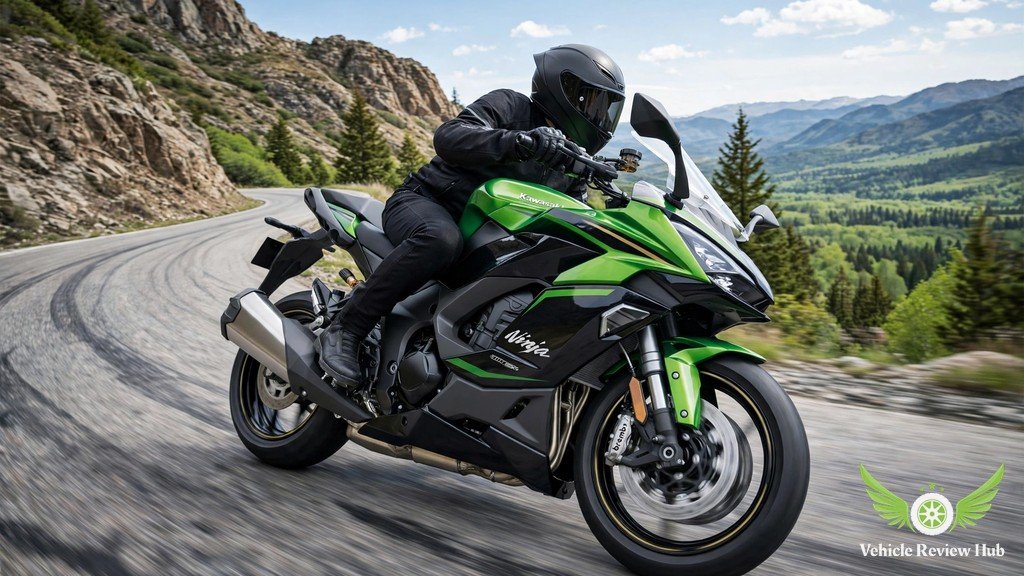
Handling, Braking and Stability on Tour
Motorcycle.com found the Öhlins S46 shock improves ride quality and support over the standard bike’s Showa unit, and a few turns of the remote preload adjuster let the bike carve through corners skillfully. MCN agreed the uprated shock improves ride quality, adjustment range and grip, while noting electronic suspension would have been more useful for mixed touring. The fork is the same fully adjustable Showa unit on both trims. Cycle News found road holding excellent on the Bridgestone Battlax S23 tyres, though the bike is not as nimble as a Yamaha Tracer 9, and noted the base settings suit anyone under 200 pounds. Both trims share dual 300 mm front discs and a single 260 mm round rear disc, with 5.6 inches of rear travel. The mirrors are too small and too far away, a complaint carried over from the 1000SX. This Kawasaki Ninja 1100SX SE ABS performance guide rates the handling as the SE’s strongest case.
Brakes Improved Less Than Expected
Motorcycle.com’s verdict on the brakes is a sigh: they have improved, but not as much as expected, with more than enough power on tap but a master cylinder that does not offer quite the feel the testers wanted. MCN said the SE’s Brembos add a touch of class, although their extra performance is not pronounced. Cycle News said the Brembos offer plenty of stopping power, although feel is a little diluted by the master cylinder and the ABS unit. Visordown said the standard bike’s brakes never lacked power or feel, so the SE’s stoppers only matter near a race track. MCN’s long-term fleet found the braking system intervened subtly, with no unwanted ABS intrusion, which sits against RevZilla’s complaint. This Kawasaki Ninja 1100SX SE ABS performance guide keeps the split in view.
The master cylinder is the one part where the sources do not agree, and this Kawasaki Ninja 1100SX SE ABS performance guide presents both sides rather than picking one. Kawasaki’s spec sheet claims a Brembo master cylinder on the SE. But Motorcycle.com’s road test of a real 2025 SE says the Nissin master cylinder doesn’t offer quite the feel we’d like, and Visordown also reports a Nissin master cylinder. So the claimed part is Brembo and the seen part is Nissin. The discs are the same story in miniature: the press material calls them Brembo discs, while Motorcycle.com describes plain 300 mm rotors. The calipers are not in dispute: the SE wears Brembo M4.32 calipers with steel-braided lines. The Kawasaki USA 2025 SE spec sheet carries the claimed figures, and the testers’ words carry the seen ones.
Kawasaki Ninja 1100SX SE ABS Performance Compared With Other Sport-Tourers
Against its rivals the SE is the smoothest bike in the group and the least powerful on paper, and its case rests on chassis and comfort. This Kawasaki Ninja 1100SX SE ABS performance guide puts the numbers side by side so the $1,800 premium can be judged against what the money buys.
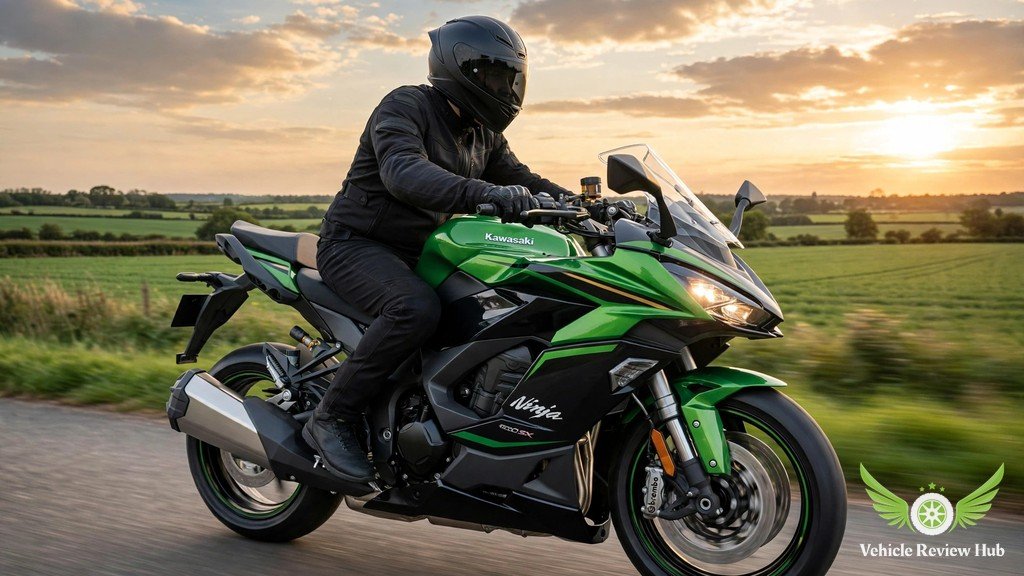
Kawasaki Ninja 1100SX SE ABS vs Ninja 1100SX ABS
The SE and the standard bike share the same engine, the same 134 hp claim, the same electronics and the same 5.0-gallon tank, so there is no performance gap between the trims on paper. The SE is 2.2 lb lighter at 516.0 lb against the standard bike’s 518.2 lb, which no rider will feel, and its only measured advantage is the dyno run itself. The premium is $1,700 in 2025 and $1,800 in 2026 and 2027: the 2025 SE costs $16,214 delivered against the standard bike’s $14,514, the 2026 SE costs $16,639 delivered against $14,839, and the 2027 SE costs $16,839 delivered against $15,039. Panniers cost $1,128.96 extra on either trim, so a 2026 SE with bags fitted costs $17,767.96. The standard 1100SX performance guide covers the base bike’s numbers, and the SE review covers the premium trim’s prices and riding experience. This Kawasaki Ninja 1100SX SE ABS performance guide recommends the SE for regular two-up touring and the standard bike for a solo rider who will fit their own suspension.
| Bike | Engine and power | Curb weight | 2026 delivered | Seat height |
|---|---|---|---|---|
| Kawasaki Ninja 1100SX SE ABS | 1,099cc four, 134 hp @ 9,000 rpm | 516.0 lb | $16,639 | 32.3 in |
| Kawasaki Ninja 1100SX ABS (standard) | 1,099cc four, 134 hp @ 9,000 rpm | 518.2 lb | $14,839 | 32.3 in |
| Suzuki GSX-S1000GT+ | 999cc four, 150 hp @ 11,000 rpm | 498 lb | $15,099 (bags included) | 31.9 in |
| Yamaha Tracer 9 | 890cc triple, 117 hp @ 10,000 rpm | 483 lb | $13,299 | 33.3 in |
Notes for this Kawasaki Ninja 1100SX SE ABS performance table: power figures are the manufacturers’ claims; the SE’s dyno run is 124.6 hp at the rear wheel and is the only dyno that exists; the GT+ has no cornering electronics and Suzuki publishes no MPG figure for it; the Tracer 9 seat is 33.3 to 33.9 inches on the 2025-plus generation.
Is the Kawasaki Ninja 1100SX SE ABS Suitable for Beginner Riders? No
No. A 134 hp litre-class sport-tourer weighing 516.0 lb is not a beginner bike, and the SE’s premium parts do nothing to change that. The engine makes its power smoothly and the electronics include traction control and cornering ABS, but the weight, the speed and the price all point the same way: this is a bike for an experienced rider, not a first bike. The 1000SX performance guide covers the bike the 1100SX replaced. This Kawasaki Ninja 1100SX SE ABS performance guide says it plainly in the heading because the question gets asked: no, it is not suitable for beginners.
Kawasaki Ninja 1100SX SE ABS Performance: Frequently Asked Questions
Direct answers to the Kawasaki Ninja 1100SX SE ABS performance questions buyers ask most.
How much horsepower does the Kawasaki Ninja 1100SX SE ABS make on a dyno?
Motorcycle.com measured 124.6 hp at 9,200 rpm and 77.4 lb-ft at 7,600 rpm at the rear wheel on a 2025 SE, the only dyno run that exists for the platform. This Kawasaki Ninja 1100SX SE ABS performance guide labels that run rear-wheel every time, because Kawasaki’s claim is 134 hp at the crank.
What is the top speed of the Kawasaki Ninja 1100SX SE ABS?
No measured top speed exists for the 1100SX. The 154 mph figure belongs to the old 1000SX, and aggregator figures around 150 to 155 mph are invented. This Kawasaki Ninja 1100SX SE ABS performance guide prints no top speed.
How many miles per gallon does the Kawasaki Ninja 1100SX SE ABS get?
RevZilla measured 38.5 mpg over three tanks, Ultimate Motorcycling measured 39 mpg, and Motorcycle.com measured over 40 mpg on long hauls. Kawasaki claims 50 mpg, which is a claim, not a test result. This Kawasaki Ninja 1100SX SE ABS performance guide uses the tester figures.
Does the Kawasaki Ninja 1100SX SE ABS have a Brembo master cylinder?
Kawasaki claims a Brembo master cylinder, but Motorcycle.com and Visordown both report a Nissin master cylinder on the test bikes they rode. This Kawasaki Ninja 1100SX SE ABS performance guide presents both sides.
Is the Kawasaki Ninja 1100SX SE ABS faster than the standard 1100SX?
No. Both trims share the same 1,099cc engine, the same 134 hp claim and the same electronics, and the SE adds no power. The SE is 2.2 lb lighter, which no rider will feel. This Kawasaki Ninja 1100SX SE ABS performance guide recommends the SE for its shock and grips, not for speed.
Is the Kawasaki Ninja 1100SX SE ABS good for highway cruising?
Yes. The taller gearing puts 70 mph at 4,200 rpm in sixth, the quickshifter works from 1,500 rpm, and cruise control maxes out at 85 mph. This Kawasaki Ninja 1100SX SE ABS performance guide rates the SE as a relaxed highway bike.
How far can the Kawasaki Ninja 1100SX SE ABS go on a tank?
Motorcycle.com measured 170 or more miles from the 5.0-gallon tank, and MCN’s long-term fleet went 180 to 205 miles before the fuel light came on. Kawasaki’s 50 mpg claim works out to a theoretical 209 to 211 miles, but no tester has matched it. This Kawasaki Ninja 1100SX SE ABS performance guide treats 170 miles as the honest figure.
Does the Kawasaki Ninja 1100SX SE ABS have a quickshifter?
Yes. The up and down quickshifter works from 1,500 rpm, down from 2,500 rpm on the old 1000SX, and Cycle News called it ‘almost robotic’. This Kawasaki Ninja 1100SX SE ABS performance guide lists the quickshifter as shared hardware with the standard bike.
What is the 0-60 time of the Kawasaki Ninja 1100SX SE ABS?
No instrumented 0-60 or quarter-mile time exists for the 1100SX, and the old 1000SX’s 10.5-second quarter-mile must not be carried over. This Kawasaki Ninja 1100SX SE ABS performance guide prints no acceleration time, because there is none to print.
Is the Kawasaki Ninja 1100SX SE ABS suitable for beginner riders?
No. A litre-class sport-tourer with 134 hp and a 516.0 lb curb weight is not a first bike, and the SE’s premium parts change nothing about that. This Kawasaki Ninja 1100SX SE ABS performance guide says so plainly, because the question gets asked.
How does the Kawasaki Ninja 1100SX SE ABS compare with the Suzuki GSX-S1000GT+ for performance?
The Suzuki makes more peak power, 150 hp at 11,000 rpm against the SE’s 134 hp, and weighs less at 498 lb, but it has no cornering electronics and no IMU, while the SE has a Bosch six-axis IMU with cornering ABS and traction control. MCN called the Suzuki more vibey and raw against the Kawasaki’s ultra-smooth delivery. This Kawasaki Ninja 1100SX SE ABS performance guide rates the SE as the smoother bike and the Suzuki as the rawer, faster one.
Does the Kawasaki Ninja 1100SX SE ABS have cruise control?
Yes, electronic cruise control is standard, and it maxes out at 85 mph, a verified 1100SX figure from RevZilla’s first ride. This Kawasaki Ninja 1100SX SE ABS performance guide notes the cap, because the old 1000SX had the same limit.
The 1100SX SE is the current new premium bike, the 1000SX is now a used buy, and there was never a 1000SX SE.