The short answer is that the Kawasaki Ninja 1100SX SE ABS comparison comes down to one question: is $1,800 of Brembo brakes, an Öhlins shock and heated grips worth it over the standard bike, and is $1,540 worth it over a Suzuki that brings its own panniers? This Kawasaki Ninja 1100SX SE ABS comparison works through the standard bike, the Suzuki GSX-S1000GT+ and the Yamaha Tracer 9 on price, power, weight and kit, and it ends with the honest split among testers on whether the premium is worth paying.
Kawasaki Ninja 1100SX SE ABS Overview and Its Closest Rivals
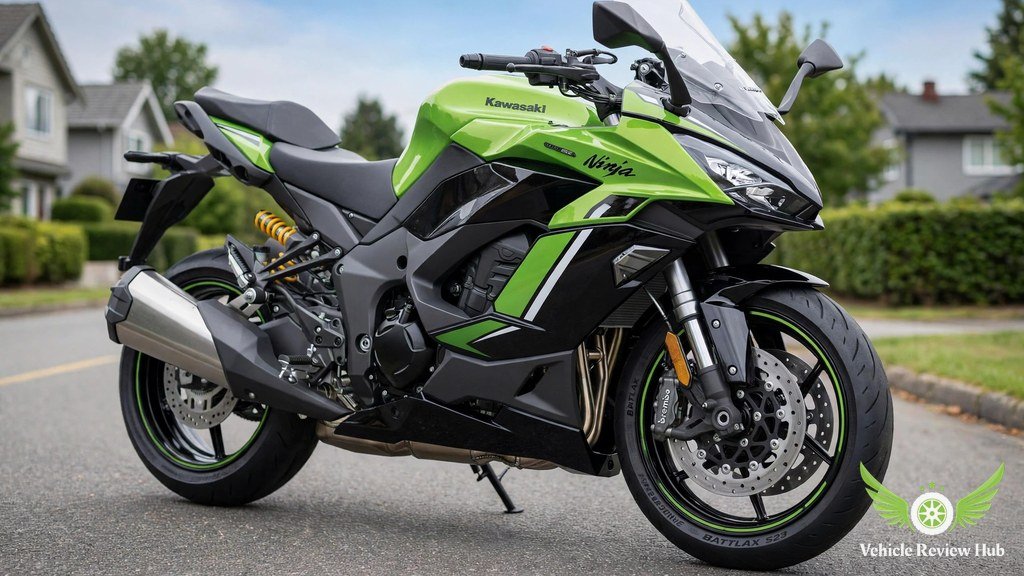
The SE sits in the middle of the sport-touring price ladder, and that is exactly why this Kawasaki Ninja 1100SX SE ABS comparison starts with the whole field before it zooms in on each rival. The standard 1100SX is the SE’s own twin at $1,800 less, the Suzuki GT+ is the power-first rival that includes its panniers, and the Yamaha Tracer 9 is the cheapest way into the class.
Why These Three Rivals: Standard, Suzuki, Yamaha
These three rivals are the only ones that matter for a buyer weighing the SE, because each one attacks the premium from a different direction. The standard 1100SX asks whether the SE hardware is worth $1,800 at all, since the engine, the electronics and the seat are identical. The Suzuki GT+ asks whether 150 horsepower and included panniers beat the SE’s Brembo and Öhlins kit for $1,540 less. This Kawasaki Ninja 1100SX SE ABS comparison picks these three because each one tests a different part of the premium.
How the Four Bikes Differ at a Glance
The Suzuki is the most powerful and the lightest, the Yamaha is the cheapest and the tallest, and the two Kawasakis are the smoothest and the best equipped with electronics. This Kawasaki Ninja 1100SX SE ABS comparison puts the numbers in one table so the trade-offs are visible before the detail begins.
| Bike | 2026 delivered price | Engine and power | Curb weight | Seat height |
|---|---|---|---|---|
| Kawasaki Ninja 1100SX SE ABS | $16,639 | 1,099 cc four, 134 hp @ 9,000 rpm | 516.0 lb | 32.3 in |
| Kawasaki Ninja 1100SX ABS | $14,839 | 1,099 cc four, 134 hp @ 9,000 rpm | 518.2 lb | 32.3 in |
| Suzuki GSX-S1000GT+ | $15,099 | 999 cc four, 150 hp @ 11,000 rpm | 498 lb | 31.9 in |
| Yamaha Tracer 9 | $13,299 | 890 cc triple, 117 hp @ 10,000 rpm | 483 lb | 33.3–33.9 in |
Notes for this Kawasaki Ninja 1100SX SE ABS comparison table: all prices are 2026 delivered figures, MSRP plus destination; the Suzuki price includes its panniers, while the Kawasaki and Yamaha prices do not; the 134 hp figure is Kawasaki’s ISO 4106 claim.

Kawasaki Ninja 1100SX SE ABS vs Kawasaki Ninja 1100SX ABS
This Kawasaki Ninja 1100SX SE ABS comparison treats it as the baseline: everything the SE does, the standard bike does too, except stopping, damping and warming the rider’s hands.
Engine, Specs and Performance Side by Side
There is nothing to separate on the engine, because the two bikes share it completely. Both run the 1,099 cc liquid-cooled inline-four with a 77.0 mm bore and a 59.0 mm stroke, and both make the same claimed 134 hp at 9,000 rpm and 83.2 lb-ft at 7,600 rpm. The only dyno run that exists belongs to the SE itself, Motorcycle.com’s rear-wheel run of 124.6 hp at 9,200 rpm and 77.4 lb-ft at 7,600 rpm, and there is no standard-bike dyno to compare it with. The SE is 2.2 lb lighter at 516.0 lb against 518.2 lb, which is a rounding error on a 516 lb bike, and the seat, the tank and the wheelbase are identical at 32.3 inches, 5.0 gallons and 56.7 inches. Both bikes carry the same Bosch six-axis IMU, the same cornering ABS and traction control, the same up-and-down quickshifter and the same cruise control, which RevZilla confirms maxes out at 85 mph on the SE. This Kawasaki Ninja 1100SX SE ABS comparison finds no performance reason to pay the premium.
Price, Equipment and Which Suits Which Rider
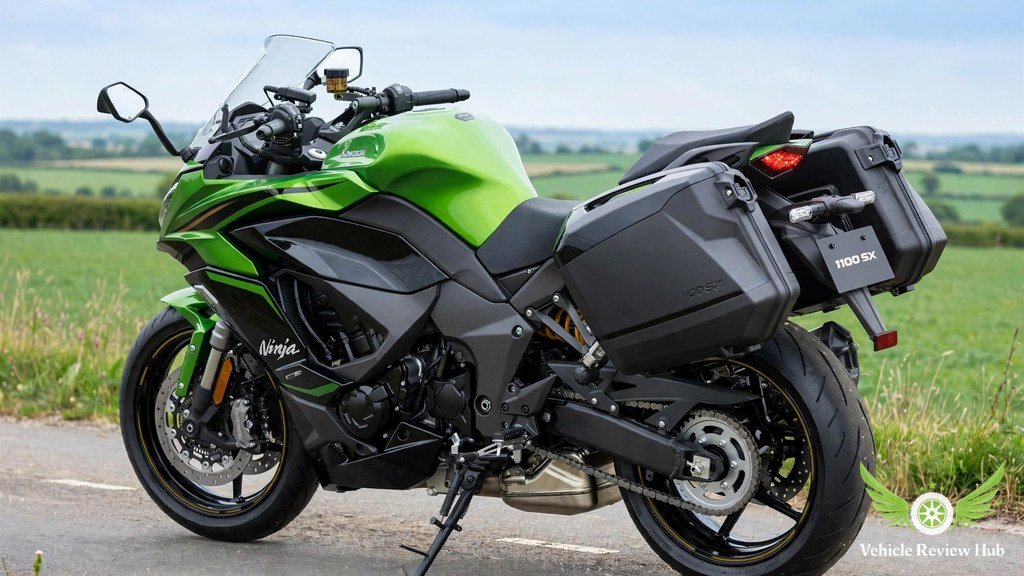
The price gap is $1,700 in 2025 and $1,800 in 2026 and 2027, and it buys exactly three things: Brembo M4.32 calipers with steel-braided lines, an Öhlins S46 rear shock with a yellow spring and remote preload, and heated grips. The master cylinder deserves a careful sentence, because Kawasaki’s spec sheet claims a Brembo master cylinder while Motorcycle.com and Visordown both report a Nissin master cylinder on the test bikes they rode, so this guide presents both sides and picks neither. The rider who tours two-up or rides hard on mountain roads will feel the Öhlins and use the grips, while the solo commuter who rides in fair weather will not miss any of it, and the standard bike is the better buy for that rider. That is the first verdict of this Kawasaki Ninja 1100SX SE ABS comparison, and it is the one the rest of the guide keeps coming back to.
Kawasaki Ninja 1100SX SE ABS vs Suzuki GSX-S1000GT+
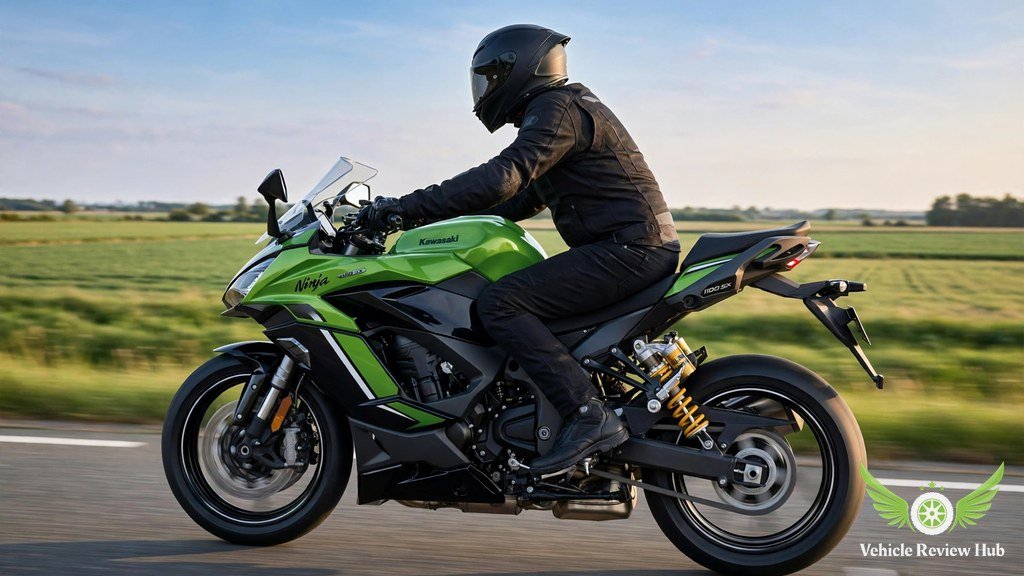
This Kawasaki Ninja 1100SX SE ABS comparison gives the GT+ its due before it explains why the Kawasaki still wins most of the group tests.
Engine, Specs and Performance Side by Side
The Suzuki’s 999 cc four makes 150 hp at 11,000 rpm and 79.6 lb-ft at 9,250 rpm, which is 16 hp more than the Kawasaki’s claimed 134 hp and a gap a rider can feel at full throttle. The Suzuki is also 18 lb lighter at 498 lb against the SE’s 516.0 lb, and its seat is lower at 31.9 inches against 32.3. What the Suzuki does not have is the Kawasaki’s electronics: no IMU, no cornering ABS and no cornering traction control, while the SE carries a Bosch six-axis IMU with cornering ABS, cornering traction control and cornering management. MCN’s verdict on the pair is blunt, calling the Suzuki “decidedly more vibey and raw” against the Kawasaki’s “ultra-smooth” four, and noting that the GT’s ABS and traction control are not angle-responsive. Power goes to the Suzuki, and smoothness and electronics go to the Kawasaki, and this Kawasaki Ninja 1100SX SE ABS comparison calls that the cleanest trade-off in the class.
The video below is an independent rider’s head-to-head of the SE and the GT+, the exact pairing this section covers, and it shows both bikes on the road rather than on a spec sheet. Watch it before deciding, because this Kawasaki Ninja 1100SX SE ABS comparison can quote the numbers but only a ride shows the difference in character.
Price, Equipment and Which Suits Which Rider
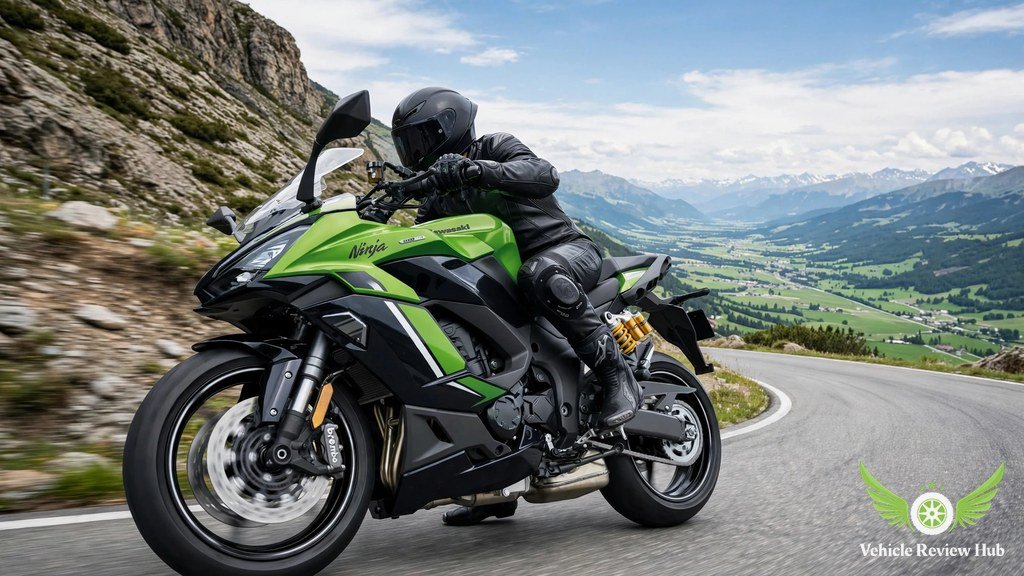
The Suzuki costs $15,099 delivered in 2026 with its panniers included, which is $1,540 less than the SE’s $16,639 before bags and $2,668.96 less than the SE’s $17,767.96 once the $1,128.96 pannier pair is added. In 2027 the gap narrows to $1,490, the SE at $16,839 against the GT+ at $15,349, but that is still the bagged Suzuki against the bare Kawasaki. The Suzuki’s kit is strong for the money, with cruise control, a quickshifter and ride modes, but it has no heated grips as standard and no Öhlins shock. The rider who wants the most power and the most luggage for the least money should buy the Suzuki, while the rider who wants the smoothest engine and the most complete electronics should buy the Kawasaki, and the SE performance guide covers the brakes in detail for anyone still torn. That price gap is the hardest number in this Kawasaki Ninja 1100SX SE ABS comparison, and the verdict section comes back to it.
Kawasaki Ninja 1100SX SE ABS vs Yamaha Tracer 9
This Kawasaki Ninja 1100SX SE ABS comparison treats it as the value pick, and then explains why most buyers still end up paying more for the Kawasaki.
Engine, Specs and Performance Side by Side
The Tracer 9 runs Yamaha’s 890 cc CP3 triple with 117 hp at 10,000 rpm and 68.6 lb-ft at 7,000 rpm, which is 17 hp less than the Kawasaki’s claimed 134 hp but delivered with the triple’s characterful midrange pull. The Yamaha is the lightest-feeling bike of the four, and its upright riding position and tall 33.3 to 33.9 inch seat suit taller riders better than the Kawasaki’s 32.3 inches. The US only gets the base Tracer 9, with no GT or GT+ trim, no radar and no Y-AMT semi-automatic gearbox, and no factory panniers at the $13,299 delivered price. The Kawasaki answers with a bigger engine and a smoother four. This Kawasaki Ninja 1100SX SE ABS comparison gives the Yamaha the character vote and the Kawasaki the equipment vote.
Price, Equipment and Which Suits Which Rider
The Yamaha costs $13,299 delivered in 2026, which is $3,340 less than the SE’s $16,639, and even with panniers added the gap is too large for luggage to erase, although no Yamaha pannier price was verified for this guide so the comparison stays qualitative. The Yamaha’s kit is thinner than the SE’s: no Brembo brakes, no Öhlins shock and no heated grips as standard. The rider who wants the cheapest way into sport-touring, or the tallest seat in the class, should buy the Yamaha, while the rider who wants the most complete touring package should buy the Kawasaki. The standard 1100SX comparison covers the same Yamaha pairing from the base bike’s side, where the gap is $1,540 instead of $3,340. That is the value question at the heart of this Kawasaki Ninja 1100SX SE ABS comparison, and the verdict section answers it directly.
Kawasaki Ninja 1100SX SE ABS Price and Value Compared
This Kawasaki Ninja 1100SX SE ABS comparison lays out the delivered prices year by year, with and without bags, so the premium is never hidden behind a headline figure.
Costs $1,490 More Than the Bagged Suzuki
The headline gap is a 2027 figure, and it needs its year tag. In 2027 the SE costs $16,839 delivered against the GT+ at $15,349 delivered, a gap of $1,490, and the Suzuki’s price already includes its panniers while the SE’s does not. In 2026 the gap before bags is $1,540, the SE at $16,639 against the GT+ at $15,099, and once the SE’s $1,128.96 pannier pair is added the gap grows to $2,668.96. In 2025 the SE cost $16,214 delivered against the standard bike’s $14,514. The Yamaha sits $3,340 below the SE in 2026, and the Honda NT1100 DCT undercuts the whole field at $12,774 delivered. That is why this Kawasaki Ninja 1100SX SE ABS comparison prints every price delivered and year-tagged, never as a bare MSRP.
Running Costs and Resale Value Compared
Running costs favour the Kawasaki’s frugality over the Suzuki’s thirst, although the comparison is incomplete because Suzuki publishes no MPG figure at all. The SE’s testers measured 38.5 mpg at RevZilla over three tanks, 39 mpg at Ultimate Motorcycling and over 40 mpg at Motorcycle.com on long hauls, which works out to roughly 190 to 200 miles from the 5.0-gallon tank, while Kawasaki claims 50 mpg, which is a claim rather than a test result. Servicing follows the 1000SX platform chart, with oil and filter every 7,600 miles, and the valve interval is disputed at 15,000 against 26,250 miles, with neither figure the official US figure, so no servicing-cost winner can be named. No US dealer service price exists for any of these bikes, and no used SE price has been verified, because the used SE market does not exist yet; the only used figure anywhere is a single 2025 base listing at 3,226 miles asking $10,899. The old 1000SX is the used alternative, a 2024 bike that cost $13,699 when new and now trades as a used buy only, with 140 hp and the 154 mph figure that belongs to it alone. The 1000SX comparison covers that used buy in full. This Kawasaki Ninja 1100SX SE ABS comparison cannot crown a running-cost winner on the figures available, and it says so rather than inventing one.
| Bike | 2026 delivered | With panniers (2026) | 2027 delivered |
|---|---|---|---|
| Kawasaki Ninja 1100SX SE ABS | $16,639 | $17,767.96 | $16,839 |
| Kawasaki Ninja 1100SX ABS | $14,839 | $15,967.96 | $15,039 |
| Suzuki GSX-S1000GT+ | $15,099 | $15,099 (bags included) | $15,349 (bags included) |
| Yamaha Tracer 9 | $13,299 | Panniers extra, price unverified | Not verified |
Notes for this Kawasaki Ninja 1100SX SE ABS comparison table: all figures are delivered prices, MSRP plus destination; the SE and standard bike add $1,128.96 for the pannier pair, while the GT+ price already includes its panniers; the Yamaha pannier price was not verified.
Kawasaki Ninja 1100SX SE ABS Comparison Verdict and US Alternatives
This Kawasaki Ninja 1100SX SE ABS comparison ends by matching each bike to the rider it suits, and by saying plainly where the testers disagree about the premium.
Testers Split on Whether the Premium Is Worth It
No major test outlet has called the premium worth it in general, and the brakes are the reason. RevZilla says the Brembo calipers “should improve the bike’s brakes over the standard Tokicos, but they don’t”, because the non-adjustable ABS intervenes before the rider can feel them, and Motorcycle.com’s sigh is that the “brakes have improved, but not as much as we’d like”. But the split is real: TopSpeed says that for two-up touring “the SE model will most certainly be the way to go” and calls the bike “incredible value for money”, and MCN named the Ninja 1100SX SE its Sports Tourer of the Year for 2025. This Kawasaki Ninja 1100SX SE ABS comparison therefore calls the premium worth it for the two-up tourer and the rider who will use the Öhlins and the grips every week, and not worth it for the solo fair-weather rider, who should save the $1,800 and buy the standard bike. The SE review covers the premium trim’s prices and riding experience in full. That split is the honest ending of this Kawasaki Ninja 1100SX SE ABS comparison, and it is why the heading above says testers split rather than testers agree.
BMW R 1300 RS Alternative
The BMW R 1300 RS is the step up for the buyer who finds the SE’s premium too small rather than too large. It costs $17,990 delivered in 2026, which is $1,351 more than the SE’s $16,639, and it brings a 1,300 cc boxer twin, shaft drive and a level of touring refinement the Kawasaki cannot match. This Kawasaki Ninja 1100SX SE ABS comparison keeps them as alternatives rather than rivals, because the SE’s real fight is with its own twin, the Suzuki and the Yamaha.
| Rider | Best pick | Why |
|---|---|---|
| Two-up tourer | Ninja 1100SX SE ABS | Öhlins, heated grips and smoothness earn the premium |
| Solo fair-weather rider | Ninja 1100SX ABS | Same engine and electronics, $1,800 less |
| Power-first rider | Suzuki GSX-S1000GT+ | 150 hp, lightest bike, bags included |
| Budget tourer | Yamaha Tracer 9 | $3,340 less than the SE, triple character |
| Tall rider | Yamaha Tracer 9 | Tallest seat at 33.3–33.9 in |
Notes for this Kawasaki Ninja 1100SX SE ABS comparison table: picks assume 2026 delivered prices; the two-up pick follows TopSpeed’s recommendation and the solo pick follows the four outlets that stayed lukewarm on the brakes; the SE’s own NHTSA record is clean, with zero recalls and zero complaints across 2025, 2026 and 2027.
Kawasaki Ninja 1100SX SE ABS Comparison: Frequently Asked Questions
Direct answers to the Kawasaki Ninja 1100SX SE ABS comparison questions buyers ask most, drawn from the delivered prices, the testers’ verdicts and the spec sheets behind this guide.
Which is better, the Ninja 1100SX SE or the standard 1100SX?
Neither is better in general, because the engine, the electronics and the seat are identical. This Kawasaki Ninja 1100SX SE ABS comparison gives the SE to the two-up tourer who will use the Öhlins shock and the heated grips, and the standard bike to the solo rider who will not, because that rider keeps the same bike and $1,800.
Is the SE worth $1,800 more than the standard bike?
Testers split. RevZilla, MCN, Motorcycle.com and Cycle News are all lukewarm on the brakes, which are most of the premium, while TopSpeed recommends the SE for two-up touring and MCN named it Sports Tourer of the Year 2025. It is worth it if you tour two-up; it is not if you ride solo in fair weather. This Kawasaki Ninja 1100SX SE ABS comparison therefore calls it a split decision, not a verdict.
Is the SE faster than the Suzuki GSX-S1000GT+?
No. The Suzuki makes 150 hp against the Kawasaki’s claimed 134 hp and is 18 lb lighter, so it is quicker at full throttle. The Kawasaki answers with a smoother engine and cornering electronics the Suzuki does not have, and MCN calls the Suzuki “decidedly more vibey and raw” against the Kawasaki’s “ultra-smooth” four. That power gap is the Suzuki’s headline win in this Kawasaki Ninja 1100SX SE ABS comparison.
Does the SE come with panniers?
No. The 28-litre pannier pair costs $1,128.96 and is a paid accessory on both the SE and the standard bike, never standard. A bagged SE costs $17,767.96 in 2026, while the Suzuki GT+ includes its $15,099 delivered price.
How much more does the SE cost than the bagged Suzuki?
$1,490 in 2027, the SE at $16,839 delivered against the GT+ at $15,349 with its bags included. In 2026 the gap is $1,540 before bags and $2,668.96 once the SE’s pannier pair is added, so the year tag matters.
Which has the lowest seat: SE, GT+, or Tracer 9?
The Suzuki GT+ at 31.9 inches, then the SE and the standard bike together at 32.3 inches, then the Yamaha Tracer 9 at 33.3 to 33.9 inches. This Kawasaki Ninja 1100SX SE ABS comparison ranks the SE second-lowest, the same as its own twin.
Does the SE have a Brembo master cylinder?
Kawasaki’s spec sheet claims one, but Motorcycle.com and Visordown both report a Nissin master cylinder on the test bikes they rode. This Kawasaki Ninja 1100SX SE ABS comparison presents both sides, because the claimed part is Brembo and the seen part is Nissin, and the calipers themselves are not in dispute.
What is the SE’s real-world fuel economy?
Testers measured 38.5 mpg at RevZilla over three tanks, 39 mpg at Ultimate Motorcycling and over 40 mpg at Motorcycle.com on long hauls, roughly 190 to 200 miles from the 5.0-gallon tank. Kawasaki claims 50 mpg, which is a claim rather than a test result, and Suzuki publishes no MPG figure at all. Those are the only verified figures this Kawasaki Ninja 1100SX SE ABS comparison can print.
Is there a measured top speed for the SE?
No. No measured top speed exists for the 1100SX, and the 154 mph figure sometimes quoted belongs to the old 1000SX. This Kawasaki Ninja 1100SX SE ABS comparison prints no top speed, because the aggregator figures circulating online are invented.
Which bike is best for two-up touring?
The SE, because the Öhlins shock with its remote preload adjuster and the heated grips are built for a passenger, and TopSpeed says the SE “will most certainly be the way to go” for two-up touring. The Suzuki is the cheaper two-up pick, but it has no heated grips as standard and no Öhlins shock. That is the two-up verdict of this Kawasaki Ninja 1100SX SE ABS comparison.
Should I buy a used Ninja 1000SX instead?
It depends on the budget. The 1000SX cost $13,699 when new in 2024, makes 140 hp and carries the 154 mph figure, but it is a used buy only, with no SE trim, petal front discs and S22 tyres. This Kawasaki Ninja 1100SX SE ABS comparison treats it as the bargain alternative, not the equal of the new SE.
What is the best-value alternative to the SE?
The Honda NT1100 DCT at $12,774 delivered in 2026, which undercuts the SE by $3,865, or the Yamaha Tracer 9 at $13,299. The SE reliability guide covers the clean NHTSA record behind the SE if long-term ownership is the deciding factor.
The SE is the best-equipped Japanese sport-tourer in its price band and the most expensive way to buy the 1100SX platform, and both halves of that sentence are true at once. This Kawasaki Ninja 1100SX SE ABS comparison ends where it started: the premium is worth it for the rider who tours two-up and uses the hardware, and the standard bike, the Suzuki and the Yamaha are all better buys for everyone else.