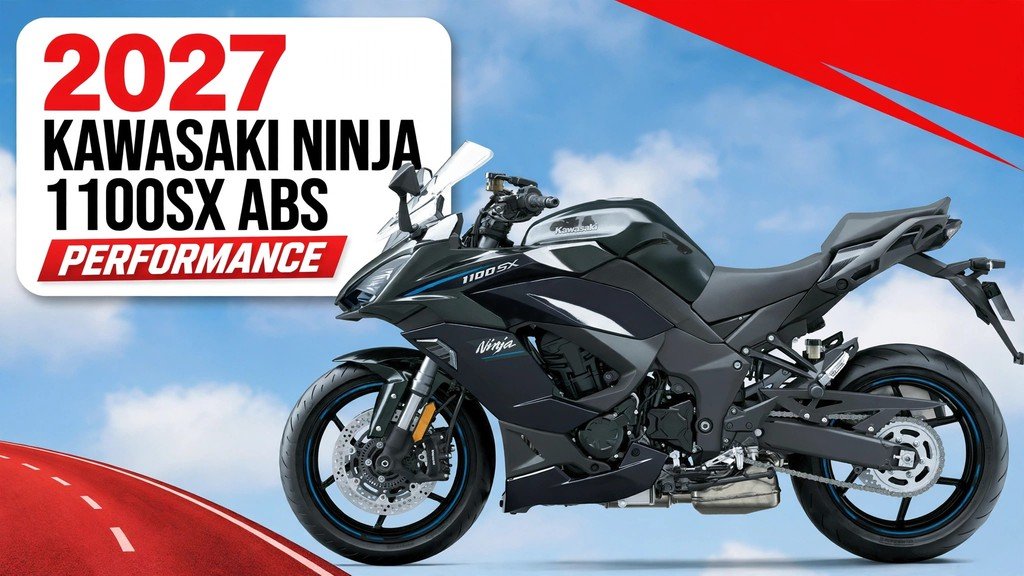
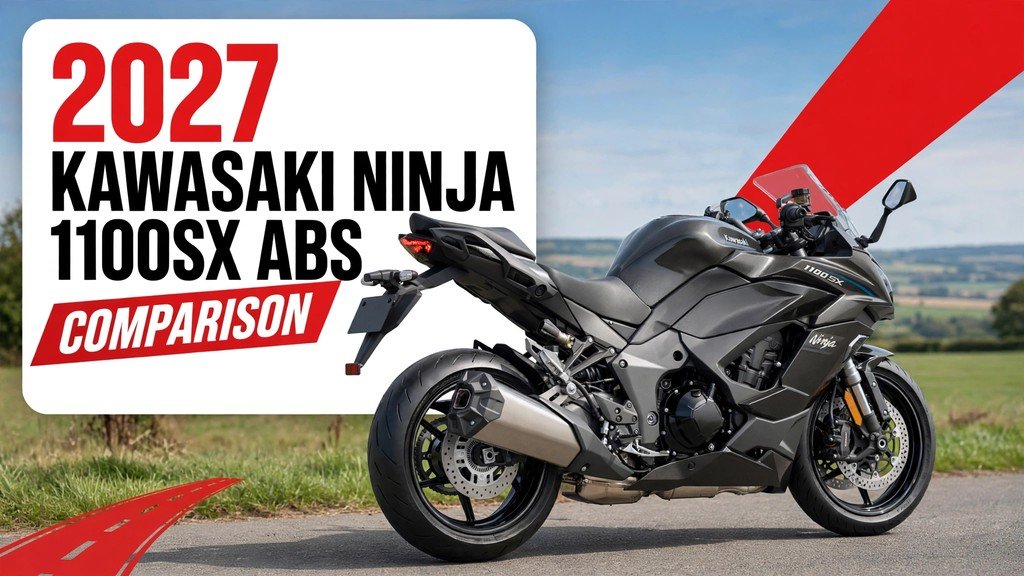
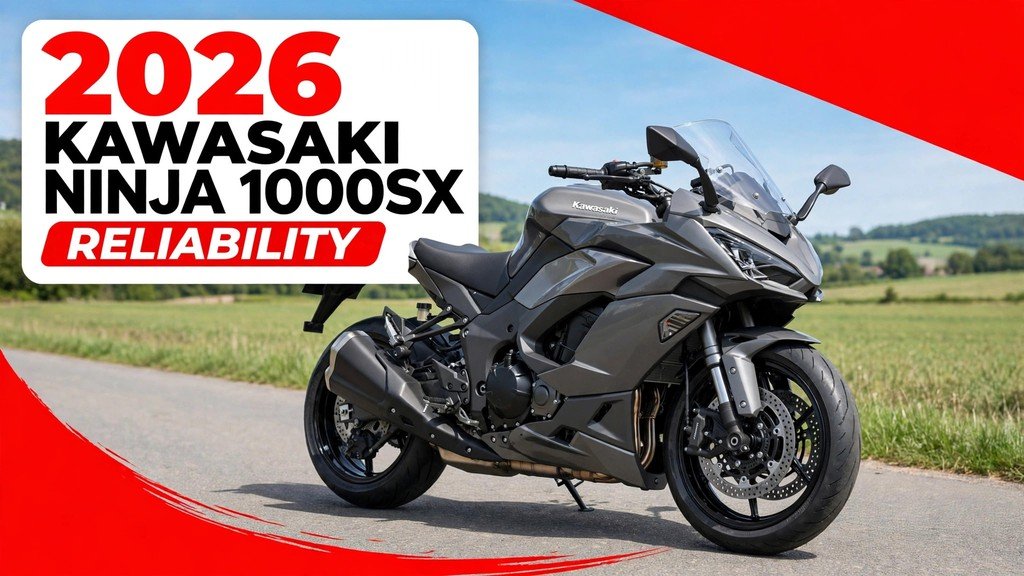
The short answer in this Kawasaki Ninja 1000SX comparison is that the used gen-4 bike is the value pick of the class, the new Ninja 1100SX is the obvious upgrade for buyers who want a warranty, the Suzuki GSX-S1000GT+ is the faster and better-equipped new rival, and the Yamaha Tracer 9 is the cheaper and lighter triple for riders who do not need a litre-four. Kawasaki stopped selling the 1000SX in the USA after 2024, so every 1000SX now is a used bike.
This Kawasaki Ninja 1000SX comparison lines the 2024 bike up against its three closest rivals on price, engine, weight, equipment and running costs, using verified figures only. The final-year 1000SX cost $13,699 before destination, made a claimed 140 hp, weighed 513.8 lb and carried a 12-month warranty. Its successor, the Ninja 1100SX, costs $14,839 delivered for 2026, makes a claimed 134 hp with more midrange torque, and weighs 518.2 lb. The Suzuki costs $15,099 delivered with a claimed 150 hp, and the Yamaha costs $13,299 delivered with a claimed 117 hp.
No used-price table exists for the 1000SX that can be verified, so this guide prints no used prices and argues value from the new prices and the recall record instead. The full Kawasaki Ninja 1000SX review covers the bike itself in detail, while this page is only about the rivals.

Kawasaki Ninja 1000SX Overview and Its Closest Rivals
Three bikes frame this Kawasaki Ninja 1000SX comparison, because three different buyers walk into the same showroom. The Suzuki is the direct Japanese rival that beat the Kawasaki in a magazine showdown. The Yamaha is the lighter, cheaper triple that does the same job with less power. The 1100SX is the bike Kawasaki built to replace the 1000SX, so it matters most for a buyer choosing between used and new.
Why These Three Rivals: GT, Tracer, Successor
The Suzuki GSX-S1000GT+ is the rival the 1000SX was measured against, and the 2022 Motorcycle.com showdown gave the Suzuki the win, 89.5 percent to 85.4 percent. The Yamaha Tracer 9 is the only other Japanese sport-tourer in the same price band, and it earns its place in this Kawasaki Ninja 1000SX comparison as the only rival with a triple engine and the lowest new price of the four. The Ninja 1100SX is the successor, sharing the 1000SX chassis and changing only the engine, which makes the used-versus-new choice a straight question of money.
How the Four Bikes Differ at a Glance
The table below puts the headline figures of this Kawasaki Ninja 1000SX comparison side by side, with delivered prices first and MSRP in brackets.
| Bike | Delivered price (MSRP) | Engine | Claimed power | Curb weight |
|---|---|---|---|---|
| 2024 Ninja 1000SX | $13,699 MSRP only | 1,043cc inline-four | 140 hp | 513.8 lb |
| 2026 GSX-S1000GT+ | $15,099 ($14,399 MSRP) | 999cc inline-four | 150 hp | 498 lb |
| 2026 Tracer 9 | $13,299 ($12,599 MSRP) | 890cc inline triple | 117 hp | 483 lb |
| 2026 Ninja 1100SX | $14,839 ($13,999 MSRP) | 1,099cc inline-four | 134 hp | 518.2 lb |
Notes for this Kawasaki Ninja 1000SX comparison table: delivered prices are MSRP plus destination, so the MSRP in brackets is the like-for-like figure. The 1000SX shows MSRP only because its destination charge was not verified, and the GT+ weight excludes its mounted side cases.
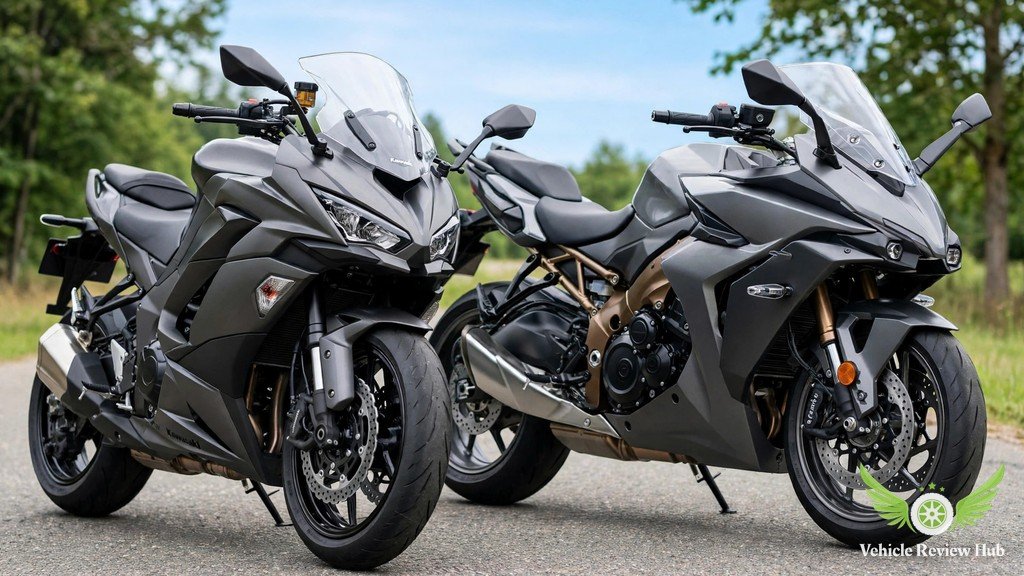
Kawasaki Ninja 1000SX vs Suzuki GSX-S1000GT+
The Suzuki is the rival that beat the Kawasaki head to head, and this Kawasaki Ninja 1000SX comparison starts there because the showdown result is the hardest fact in the class. The Motorcycle.com showdown scored the 2022 Suzuki GSX-S1000GT at 89.5 percent against 85.4 percent for the Ninja 1000SX, and the video below is the MCN test that asked the same question with the same two bikes.
The MCN video below pits the 2022 Suzuki GSX-S1000GT against the Kawasaki Ninja 1000SX as sports tourers.
Engine, Specs and Performance Side by Side
The Suzuki engine is smaller and stronger: a 999cc inline-four with 150 hp at 11,000 rpm and 79.6 lb-ft at 9,250 rpm, against the Kawasaki 1,043cc four with a claimed 140 hp and 81.7 lb-ft at 7,800 rpm. On the dyno the gap narrows but stays real: Kawasaki Ninja 1000SX performance testing measured 124.3 hp at the rear wheel from the 2020 bike, while the GT+ has been measured at 136 hp. Both bikes have cruise control, a quickshifter and fully adjustable suspension, but the electronics split them: the Ninja has an IMU with cornering ABS and lean-sensitive traction control, while the GT+ has no IMU, so its ABS and traction control do not lean with the bike. That gap is the single biggest technical difference in this Kawasaki Ninja 1000SX comparison, and it matters more than the 10 hp on paper.
Price, Equipment and Which Suits Which Rider
The Suzuki costs more and gives more. Its delivered price is $15,099 against the final-year Ninja MSRP of $13,699, a gap of $1,400 before destination is added to the Kawasaki, and the Suzuki price includes the integrated side cases that cost $1,129.95 extra on the Ninja at 2020 prices. The Suzuki also brings Brembo monobloc front calipers and a 6.5-inch TFT display, while the Ninja answers with its IMU, its cornering ABS and its clean NHTSA record. A rider who tours two-up with luggage and wants the newest kit should buy the Suzuki. A rider who values lean-sensitive electronics, a lower purchase price and a proven reliability record should buy the used Kawasaki, and that trade is the heart of this Kawasaki Ninja 1000SX comparison. The full Suzuki GSX-S1000GT review covers the Suzuki in detail.
| Item | Ninja 1000SX | GSX-S1000GT+ |
|---|---|---|
| Engine | 1,043cc inline-four | 999cc inline-four |
| Claimed power | 140 hp @ 10,000 rpm | 150 hp @ 11,000 rpm |
| Claimed torque | 81.7 lb-ft @ 7,800 rpm | 79.6 lb-ft @ 9,250 rpm |
| Rear-wheel dyno | 124.3 hp (Rider 2020) | 136 hp |
| Curb weight | 513.8 lb | 498 lb (excl. side cases) |
| Seat height | 32.3 in | 31.9 in |
| Front brakes | Dual 300 mm discs, Tokico calipers | Twin 310 mm discs, Brembo monobloc calipers |
| IMU and cornering ABS | Yes | No |
| Delivered price | $13,699 MSRP only | $15,099 ($14,399 MSRP) |
Notes for this Kawasaki Ninja 1000SX comparison table: the dyno figures come from different testers on different days, so they show the gap between the bikes rather than an exact number.

Kawasaki Ninja 1000SX vs Yamaha Tracer 9
The Yamaha is the cheapest way into this class, and this Kawasaki Ninja 1000SX comparison treats it as the sensible alternative. The 2026 Tracer 9 costs $13,299 delivered, which is $1,800 less than the Suzuki and $400 less than the final-year Ninja MSRP, and it is the only rival in this guide with a three-cylinder engine.
Engine, Specs and Performance Side by Side
The Tracer 9 engine is a 890cc CP3 triple with 117 hp at 10,000 rpm and 68.6 lb-ft at 7,000 rpm, which is 23 hp and 13.1 lb-ft less than the Ninja claims. On the dyno the gap is smaller: Cycle World measured 105.8 hp at the rear wheel from the 2024 Tracer 9 GT+, against 124.3 hp from the 2020 Ninja 1000SX. What the Yamaha gives back is lightness and economy: 483 lb against 513.8 lb, 48 mpg against the Ninja 37.6 mpg average, and about 240 miles per tank against about 185 miles. The Tracer 9 seat is taller at 33.3 to 33.9 inches against 32.3 inches, and the Yamaha is sold in the USA as a base model only, with no GT or GT+ trim on offer. That economy gap is the Yamaha’s strongest card in this Kawasaki Ninja 1000SX comparison.
Price, Equipment and Which Suits Which Rider
The Yamaha wins on money and loses on power. Its delivered price of $13,299 includes the hard side cases as standard, which the Ninja charged $1,129.95 for at 2020 prices, and its 48 mpg rating makes it the cheapest bike here to run. The TopSpeed review of the Tracer 9 calls the Tracer 9 a do-it-all bike, and the Yamaha brings KYB suspension, twin 298 mm front discs and the CP3 triple, but it gives up 23 hp and its taller seat rules it out for some riders. A rider who tours solo, values economy and wants a new bike with a warranty for the least money should buy the Yamaha. A rider who rides two-up or wants the strongest engine should look at the used Ninja instead, which trades the warranty for a bigger engine and a proven record of zero recalls, and that is why the Yamaha deserves its place in this Kawasaki Ninja 1000SX comparison despite giving up 23 hp.
| Item | Ninja 1000SX | Tracer 9 |
|---|---|---|
| Engine | 1,043cc inline-four | 890cc inline triple |
| Claimed power | 140 hp @ 10,000 rpm | 117 hp @ 10,000 rpm |
| Claimed torque | 81.7 lb-ft @ 7,800 rpm | 68.6 lb-ft @ 7,000 rpm |
| Rear-wheel dyno | 124.3 hp (Rider 2020) | 105.8 hp (Cycle World, 2024 GT+) |
| Curb weight | 513.8 lb | 483 lb |
| Seat height | 32.3 in | 33.3-33.9 in (adjustable) |
| Fuel economy | 37.6 mpg avg (Rider) | 48 mpg est. |
| Delivered price | $13,699 MSRP only | $13,299 ($12,599 MSRP) |
Notes for this Kawasaki Ninja 1000SX comparison table: the Tracer 9 dyno figure comes from the 2024 GT+ trim, because no dyno run of the US base model was found.

Kawasaki Ninja 1000SX vs Kawasaki Ninja 1100SX
The successor is the comparison that matters most, because this Kawasaki Ninja 1000SX comparison is really a used-versus-new question. The 1100SX shares the 1000SX chassis, tank, wheelbase and riding position, and changes the engine, so a buyer is choosing between a used bike with a known record and a new bike with a warranty.
Engine, Specs and Performance Side by Side
Kawasaki grew the engine from 1,043cc to 1,099cc with a 3 mm longer stroke, and the result is more midrange and less peak power. The 1100SX makes a claimed 134 hp at 9,000 rpm and 83.2 lb-ft at 7,600 rpm, against the 1000SX claimed 140 hp at 10,000 rpm and 81.7 lb-ft at 7,800 rpm. The successor trades 6 hp at the top for 1.5 lb-ft lower down, and that trade suits a sport-tourer, because touring lives in the midrange, which is why this Kawasaki Ninja 1000SX comparison rates the successor as the better new bike and the old bike as the better value. The 1100SX is also 4.4 lb heavier at 518.2 lb, and it keeps the same 5.0-gallon tank, wheelbase and 12-month warranty. The riding experience is the same bike with a stronger pull from low revs, as the RevZilla first look explains.
Price, Equipment and Which Suits Which Rider
The new bike costs $14,839 delivered for 2026, which is $1,140 more than the final-year 1000SX MSRP of $13,699, and the SE trim costs $16,639 delivered. That $1,140 buys a new bike with a warranty, a stronger midrange and the latest model year, while the used 1000SX buys the same chassis for less money. The used bike also has the cleaner story on paper: zero recalls and zero complaints on file with NHTSA, and parts shared across fourteen model years. A buyer who wants a warranty and the newest bike should buy the 1100SX, listed on the Kawasaki Ninja 1100SX page. A buyer who wants the best value in the class should buy a used gen-4 1000SX with a full service history, and that is the conclusion of this Kawasaki Ninja 1000SX comparison for buyers choosing between used and new.
| Item | Ninja 1000SX | Ninja 1100SX |
|---|---|---|
| Engine | 1,043cc inline-four | 1,099cc inline-four |
| Bore x stroke | 77.0 x 56.0 mm | 77.0 x 59.0 mm |
| Claimed power | 140 hp @ 10,000 rpm | 134 hp @ 9,000 rpm |
| Claimed torque | 81.7 lb-ft @ 7,800 rpm | 83.2 lb-ft @ 7,600 rpm |
| Curb weight | 513.8 lb | 518.2 lb |
| Seat height | 32.3 in | 32.3 in |
| Wheelbase | 56.7 in | 56.7 in |
| Delivered price | $13,699 MSRP only | $14,839 ($13,999 MSRP) |
Notes for this Kawasaki Ninja 1000SX comparison table: the 1100SX seat height matches the 1000SX because the chassis carries over, and the SE trim costs $16,639 delivered for 2026.
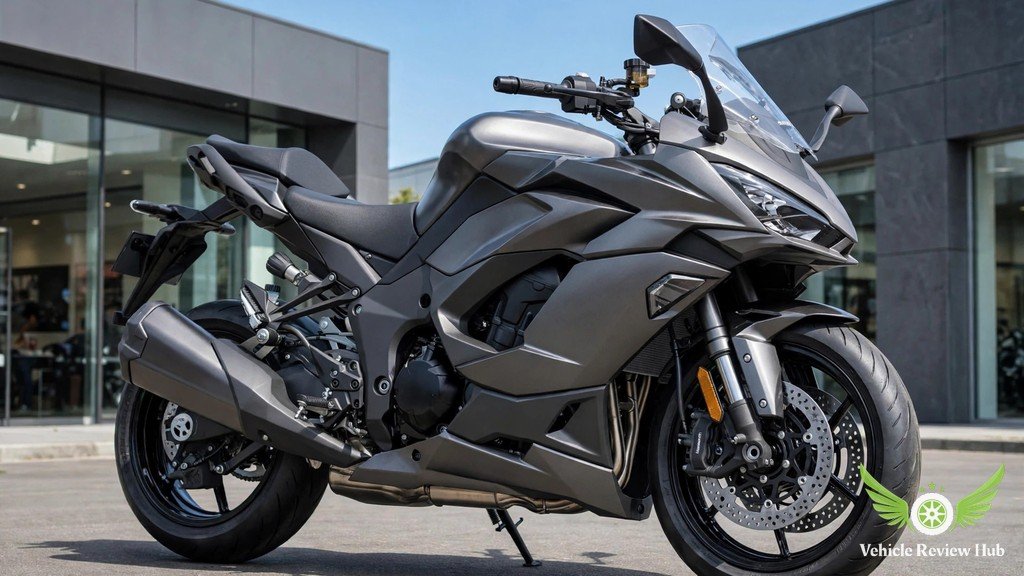
Kawasaki Ninja 1000SX Price and Value Compared
Price is where this Kawasaki Ninja 1000SX comparison is decided, because the used bike costs less than all three new rivals. The numbers below use delivered prices, with MSRP in brackets, because the delivered price is what a buyer pays before tax.
Used Gen 4 Is the Class Value Pick
The gen-4 bike, built from 2020 to 2024, is the value pick because it has everything the class needs. It has the TFT display, cruise control, quickshifter, IMU and cornering ABS on a bike whose final MSRP was $13,699. The new rivals cost $13,299 to $15,099 delivered. No verified used-price table exists for the 1000SX, so no used price is printed here, but its parts are shared across fourteen model years and its NHTSA record shows zero recalls and zero complaints. A buyer should check the valve-check stamp at 15,000 miles, the chain and sprockets and the VIN on the NHTSA site, and should walk away from a bike with no service history. The full Kawasaki Ninja 1000SX reliability guide covers that pre-purchase check in detail.
Running Costs and Resale Value Compared
Running costs favour the Yamaha on fuel and the Kawasaki on service. The Tracer 9 is rated at 48 mpg against the Ninja 37.6 mpg average, so the Yamaha goes about 240 miles per tank against about 185 miles. The Ninja answers with long service intervals: oil and filter every 7,600 miles, spark plugs at the same interval and valve checks every 15,000 miles, with no expensive surprises in the schedule. The Suzuki publishes no MPG figure, so no fuel cost is printed for it in this Kawasaki Ninja 1000SX comparison. Resale value cannot be quoted without a verified used-price table, so this guide prints none, but the 1000SX is the last of its line, its parts fit fourteen model years, and its clean recall record removes the biggest fear a used buyer has.
| Bike | Delivered price | MSRP | What the price includes |
|---|---|---|---|
| 2024 Ninja 1000SX | $13,699 MSRP only | $13,699 | Base bike; side cases $1,129.95 extra (2020 price) |
| 2026 GSX-S1000GT+ | $15,099 | $14,399 | Side cases standard |
| 2026 Tracer 9 | $13,299 | $12,599 | Hard side cases standard |
| 2026 Ninja 1100SX | $14,839 | $13,999 | Base bike; SE $16,639 delivered |
| 2026 Ninja 1100SX SE | $16,639 | $15,799 | SE trim |
Notes for this Kawasaki Ninja 1000SX comparison table: delivered prices are MSRP plus destination, so the MSRP column is the like-for-like figure. No used prices are printed because no verified used-price table exists for this bike.
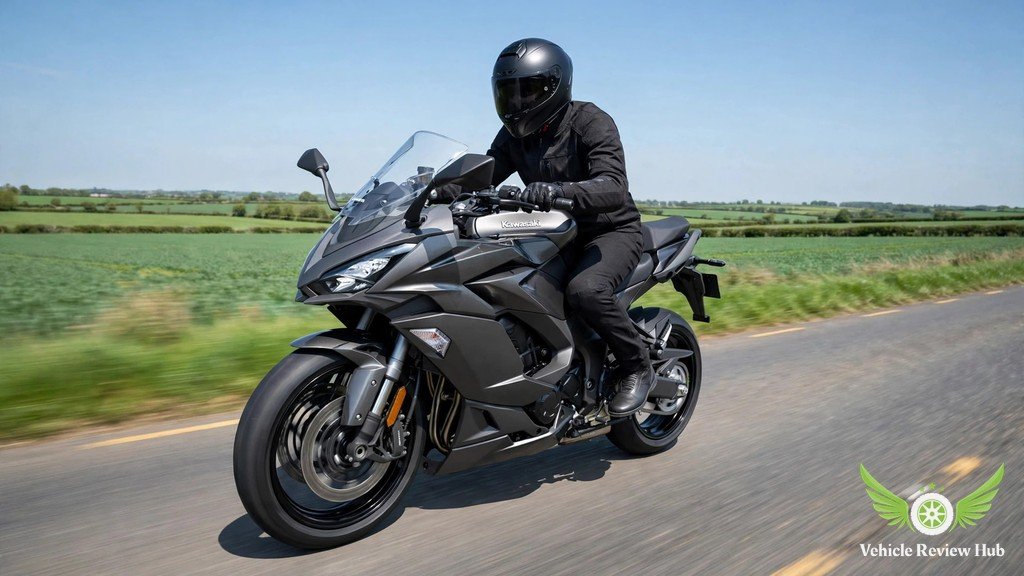
Kawasaki Ninja 1000SX Comparison Verdict and US Alternatives
Four bikes, four answers, and this Kawasaki Ninja 1000SX comparison ends with the buyer, not the bike. The right choice depends on whether the buyer wants the lowest price, the fastest bike, the cheapest running costs or a warranty.
Verdict: Buy the Used 1000 or New 1100
Buy the used gen-4 1000SX if the service book is complete. It is the value pick of the class, with the litre-four engine, the IMU electronics, cruise control and quickshifter, and a clean NHTSA record of zero recalls and zero complaints. Buy the new 1100SX if a warranty matters more than the saving, because the successor adds midrange torque for $14,839 delivered. The 1000SX is not the fastest bike here and it is not the newest, but it is the bike that gives a touring rider the most motorcycle for the least money, and that is why this Kawasaki Ninja 1000SX comparison calls the used gen-4 bike the class value pick.
BMW R 1300 RS Alternative
The BMW R 1300 RS is the premium alternative for a buyer whose budget stretches past the Japanese bikes. Its delivered price is $17,990, which is $2,891 more than the Suzuki and $4,291 more than the final-year Ninja MSRP, and it brings a 1,300cc boxer twin with 145 hp and 110 lb-ft, a 540 lb claimed weight and a 4.5-gallon tank. The BMW also brings a three-year warranty against twelve months on the Japanese bikes, though most US bikes arrive with accessory packages that push the price higher, as the R 1300 RS first look explains. Two cheaper alternatives sit below it: the BMW F 900 XR at $13,690 delivered, with an 895cc twin making 105 hp and a 476 lb wet weight, and the Honda NT1100 DCT at $12,774 delivered, with a 1,084cc twin making 101 hp and the only automatic gearbox in this guide, as the Rider NT1100 review covers. The Ducati Multistrada V2 sits at $17,990 delivered with an 890cc V-twin making 115 hp, but it is an adventure-styled bike rather than a pure sport-tourer, and it closes the alternatives list in this Kawasaki Ninja 1000SX comparison.
| Bike | Delivered price (MSRP) | Engine | Claimed power | Curb weight |
|---|---|---|---|---|
| BMW R 1300 RS | $17,990 ($16,995 MSRP) | 1,300cc boxer twin | 145 hp | 540 lb |
| BMW F 900 XR | $13,690 ($12,695 MSRP) | 895cc parallel twin | 105 hp | 476 lb wet |
| Ducati Multistrada V2 | $17,990 ($16,995 MSRP) | 890cc V-twin | 115 hp | 439 lb (wet, no fuel) |
| Honda NT1100 DCT | $12,774 ($11,999 MSRP) | 1,084cc parallel twin | 101 hp | 547 lb |
Notes for this Kawasaki Ninja 1000SX comparison table: the Multistrada V2 weight is measured without fuel, while the other weights include a full tank. The NT1100 DCT is sold in the USA only with the automatic gearbox, and its panniers are accessories.
Kawasaki Ninja 1000SX Comparison: Frequently Asked Questions
Direct answers to the Kawasaki Ninja 1000SX comparison questions buyers ask most.
Which is better, the Kawasaki Ninja 1000SX or the Suzuki GSX-S1000GT+?
The Suzuki won the 2022 showdown, 89.5 percent to 85.4 percent, but it costs $15,099 delivered against the final-year Ninja MSRP of $13,699. This Kawasaki Ninja 1000SX comparison calls the Suzuki the better new bike and the used Ninja the better value.
Is the Ninja 1000SX cheaper than the Ninja 1100SX?
Yes. The final-year 1000SX cost $13,699 before destination, while the 2026 1100SX costs $14,839 delivered. This Kawasaki Ninja 1000SX comparison prints no used prices, because no verified used-price table exists.
Is the Yamaha Tracer 9 a good alternative to the Ninja 1000SX?
Yes, if economy and lightness matter more than power. The Tracer 9 makes 117 hp against 140 hp, weighs 483 lb against 513.8 lb, is rated at 48 mpg against 37.6 mpg, and costs $13,299 delivered. This Kawasaki Ninja 1000SX comparison rates it the best new bike for the least money.
Should I buy a used Ninja 1000SX or a new Ninja 1100SX?
Buy the used 1000SX if the service book is complete, and buy the new 1100SX if a warranty matters more than the saving. This Kawasaki Ninja 1000SX comparison treats them as the same bike with a different engine.
Does the Suzuki GSX-S1000GT+ have cornering ABS?
No. The GT+ has no IMU, so its ABS and traction control do not lean with the bike, while the Ninja has an IMU with cornering ABS and lean-sensitive traction control. This Kawasaki Ninja 1000SX comparison calls that gap the single biggest technical difference between the two bikes.
What is the top speed of the Ninja 1000SX compared to its rivals?
No official top speed exists for the Ninja 1000SX, and testers recorded 152 mph by GPS and 154 mph indicated. This Kawasaki Ninja 1000SX comparison prints no rival top speeds, because no comparable verified figure was found for them.
Which sport-tourer is best for two-up touring?
The Suzuki GT+ is the strongest two-up pick, with factory luggage, 150 hp and a 31.9-inch seat. This Kawasaki Ninja 1000SX comparison rates the used Ninja as a sound two-up bike too, once the accessory side cases are fitted.
Is the Ninja 1000SX reliable compared to its rivals?
Yes. NHTSA lists zero recalls and zero complaints for the Ninja 1000SX in the model years checked, with service intervals of 7,600 miles for oil and plugs and 15,000 miles for valves. This Kawasaki Ninja 1000SX comparison does not rank the rivals on reliability.
What is the cheapest new sport-tourer in this comparison?
The Yamaha Tracer 9 at $13,299 delivered is the cheapest of the three head-to-head rivals. This Kawasaki Ninja 1000SX comparison notes that the Honda NT1100 DCT costs $12,774 delivered, which is cheaper still.
Does the Ninja 1000SX have a quickshifter and cruise control?
Yes, from 2020. The TFT, cruise control and quickshifter all arrived with the gen-4 bike, and cruise control is limited to 85 mph. This Kawasaki Ninja 1000SX comparison notes that the Suzuki GT+ also has both.
Is the BMW R 1300 RS worth the extra money over the Ninja 1000SX?
Only if the budget stretches. The BMW costs $17,990 delivered against the final-year Ninja MSRP of $13,699, and it brings 145 hp and a three-year warranty. This Kawasaki Ninja 1000SX comparison says most buyers are better served by the Japanese bikes.
Which bike in this comparison is best for beginners?
None of them. Every bike here makes over 100 hp and weighs over 470 lb, so none suits a new rider. This Kawasaki Ninja 1000SX comparison points beginners toward a smaller bike first.