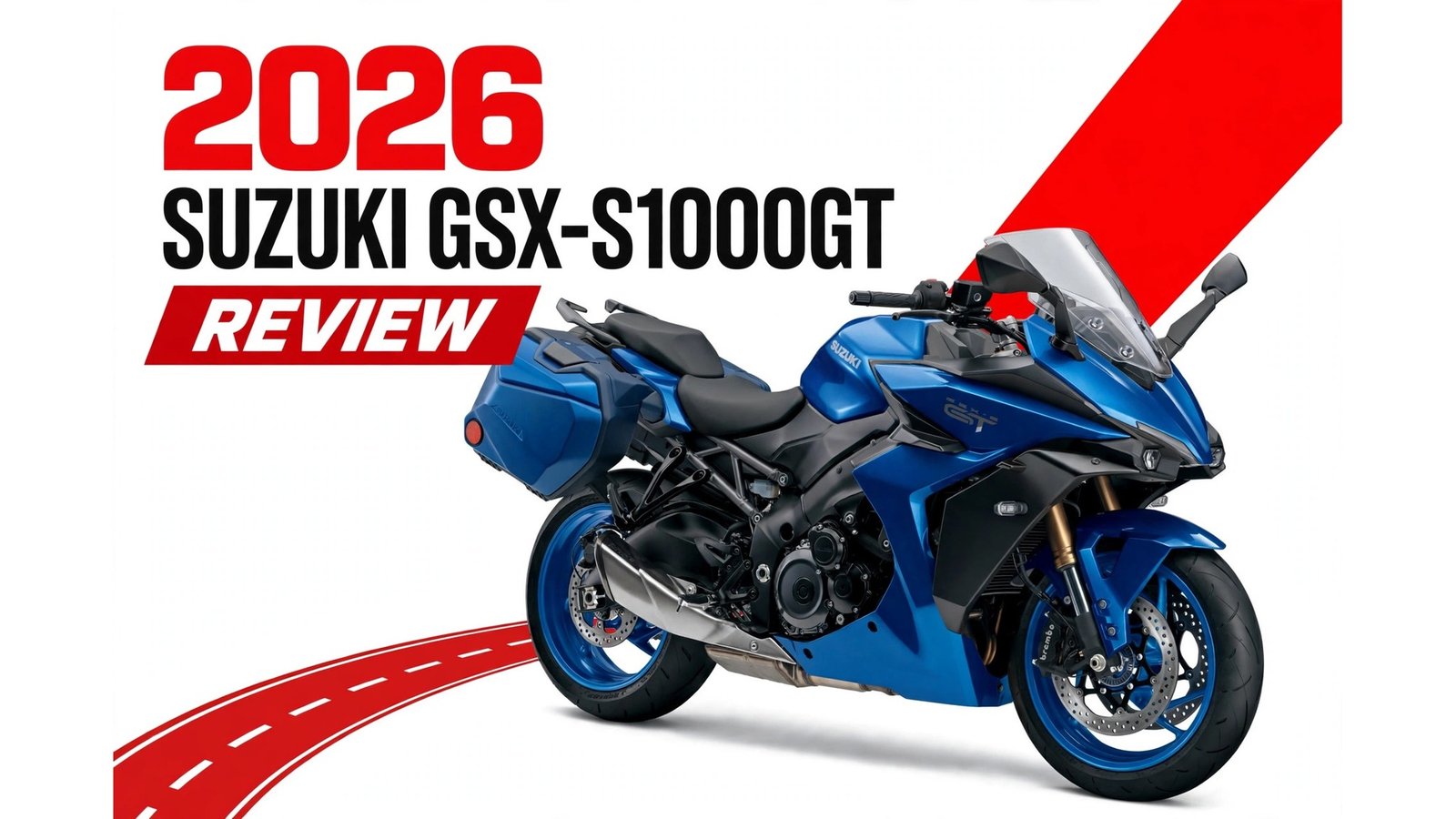
The Suzuki GSX-S1000GT is Suzuki’s litre-class sport-tourer, and this Suzuki GSX-S1000GT review finds it to be one of the best-value fast tourers you can buy in the USA. The 2027 model is the GT+ only, at $14,599 plus a $750 destination charge, and it comes with locking side cases, a taller screen, cruise control and a bi-directional quickshifter as standard. Under the fairing is a 999cc inline-four with a claimed 150 hp — a global figure, since Suzuki USA does not publish power numbers for the GT — and the bike won Rider’s 2022 Motorcycle of the Year. The short version of this Suzuki GSX-S1000GT review: huge engine character, honest pricing and real touring kit, held back by an electronics package that has no IMU and no cornering ABS. Read on for the full Suzuki GSX-S1000GT review.
Suzuki GSX-S1000GT Overview and Model-Year Updates
The GT is Suzuki’s answer to riders who want a fast, comfortable, faired motorcycle that can cross states without the bulk or price of an adventure bike. It sits on the updated Euro 5 GSX-S1000 platform with a full fairing, a revised subframe built for panniers, and cruise control. This Suzuki GSX-S1000GT review covers every US model year and the GT and GT+ split.
Latest US Year Is 2027: the GT+ Only
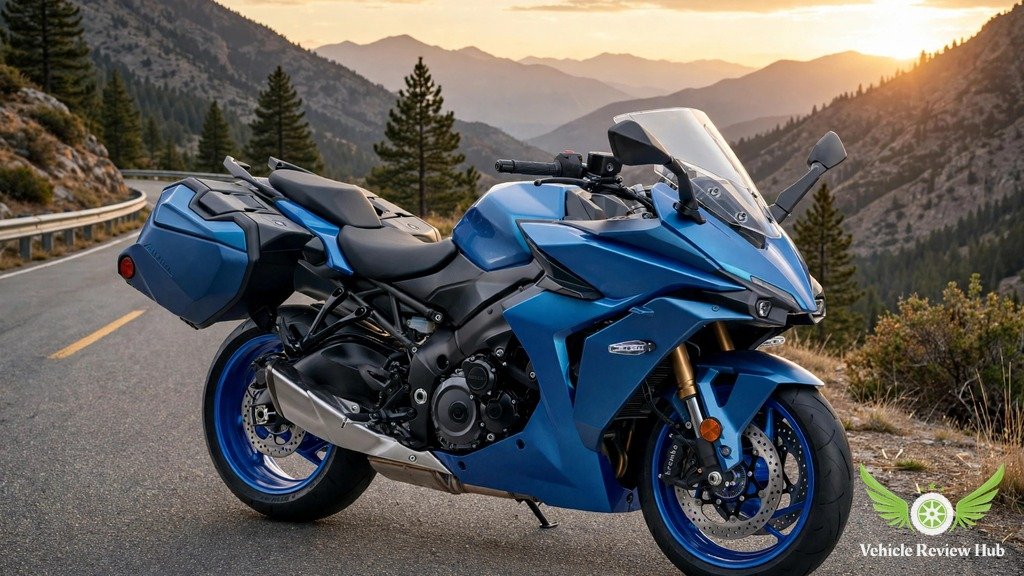
The latest US model year is 2027, and the US market gets the GSX-S1000GT+ only — the base GT is gone from the American line-up. The 2027 Suzuki GSX-S1000GT+ page lists the bike at $14,599 with a $750 destination charge, in Glass Sparkle Black or Pearl Vigor Blue. That is $200 more than the 2026 GT+ at $14,399, and the destination charge rose from $700 to $750 for 2027. This Suzuki GSX-S1000GT review treats the 2027 GT+ as the new bike to shop for; leftover 2025 and 2026 GT+ models may still be found at a discount. The GT+ package is the same idea it has been since launch: color-matched locking side cases and a taller windscreen, fitted from the factory.
Launched for 2022 Replacing the GSX-S1000F
Suzuki launched the GT late in 2021 for the 2022 model year, replacing the GSX-S1000F, which was last seen in 2020. MCN described the change as the GT taking over from the F on the updated Euro 5 GSX-S1000 platform, adding a full fairing, a revised subframe for panniers and cruise control. The GT was a step up — a TFT dash, a quickshifter, cruise control and factory luggage on the GT+. That is why this Suzuki GSX-S1000GT review treats the 2022 bike as the reference point: the engine, chassis and electronics have barely changed since. MCN called the GT Suzuki’s best bike in years, and it went on to win Rider’s 2022 Motorcycle of the Year and motorcycle.com’s Best Sport-Touring Motorcycle of 2022.
The video to watch first in this Suzuki GSX-S1000GT review is MCN’s launch review of the 2022 GT — a UK bike, but the same specification as the US bike, ridden on the roads the GT was built for.
Suzuki GSX-S1000GT Engine and Specifications
The engine is the heart of this Suzuki GSX-S1000GT review. It is a 999cc inline-four with roots in the 2005–2008 GSX-R1000, retuned for Euro 5 with a lower cam profile, a new airbox, new 10-point injectors and iridium spark plugs. The result is a claimed 150 hp with a broad, flat torque curve.

999cc Liquid-Cooled Inline-Four at 73.4 by 59.0mm
The engine displaces 999cc (999.8cc to be exact), liquid-cooled, DOHC, 16 valves, with a bore and stroke of 73.4 by 59.0 mm. It breathes through 40 mm throttle bodies and a 4-2-1 exhaust with dual catalytic converters tucked under the engine — the reason, incidentally, that the GT has no centrestand and no option for one. A slipper/assist clutch keeps the lever light. On Cycle World’s Dynojet, the GT put down 135.53 hp at 10,360 rpm and 73.15 lb-ft at 9,190 rpm, with more than 60 lb-ft from about 4,750 to 10,000 rpm. That flat spread is what makes the bike feel fast everywhere, not just at the top of the rev range — the key dyno number in this Suzuki GSX-S1000GT review. The full dyno picture is in the Suzuki GSX-S1000GT performance guide.
Compression 12.2:1 on a K5 GSX-R Architecture
Compression is 12.2:1, and the architecture is the K5 GSX-R1000’s long-stroke design from 2005–2008 — not the current short-stroke GSX-R1000R engine, which runs a 55.1 mm stroke, and not a K6 or later engine. The retune added 2 hp over the Euro 4 motor and smoothed the torque curve. The claimed figures are 150 hp at 11,000 rpm and 106 Nm at 9,250 rpm, which converts to 78.2 lb-ft — Suzuki UK and the global press print 150 hp and 78 lb-ft. Two numbers need care in this Suzuki GSX-S1000GT review: 152 PS is the same 150 hp figure in metric units, not a different output, and some US tables print 79.6 lb-ft instead of 78. Suzuki USA does not publish horsepower or torque for the GT at all, so the 150 hp and 78 lb-ft figures carry a global label — a label this Suzuki GSX-S1000GT review keeps on every power figure.
| Specification | Suzuki GSX-S1000GT / GT+ |
|---|---|
| Engine | 999cc liquid-cooled DOHC inline-four, 16 valves |
| Bore x stroke | 73.4 x 59.0 mm |
| Compression ratio | 12.2:1 |
| Claimed power (global) | 150 hp @ 11,000 rpm (152 PS) |
| Claimed torque (global) | 106 Nm @ 9,250 rpm (78 lb-ft) |
| Dyno (Cycle World) | 135.53 hp @ 10,360 rpm, 73.15 lb-ft @ 9,190 rpm |
| Gearbox / final drive | 6-speed, chain, slipper/assist clutch |
| Fuel capacity | 5.0 US gal (19 L) |
| Seat height | 31.9 in (810 mm) |
| Claimed weight | GT 498 lb / GT+ 518 lb |
Suzuki GSX-S1000GT Price and Market Availability
Pricing is where this Suzuki GSX-S1000GT review gets simple: the GT has always been the cheap way into litre-class sport-touring. The base GT is gone after 2024, so used buyers shop 2022–2024 bikes while new buyers shop the GT+ only.
Suzuki GSX-S1000GT Price in the USA: $14,599 for 2027
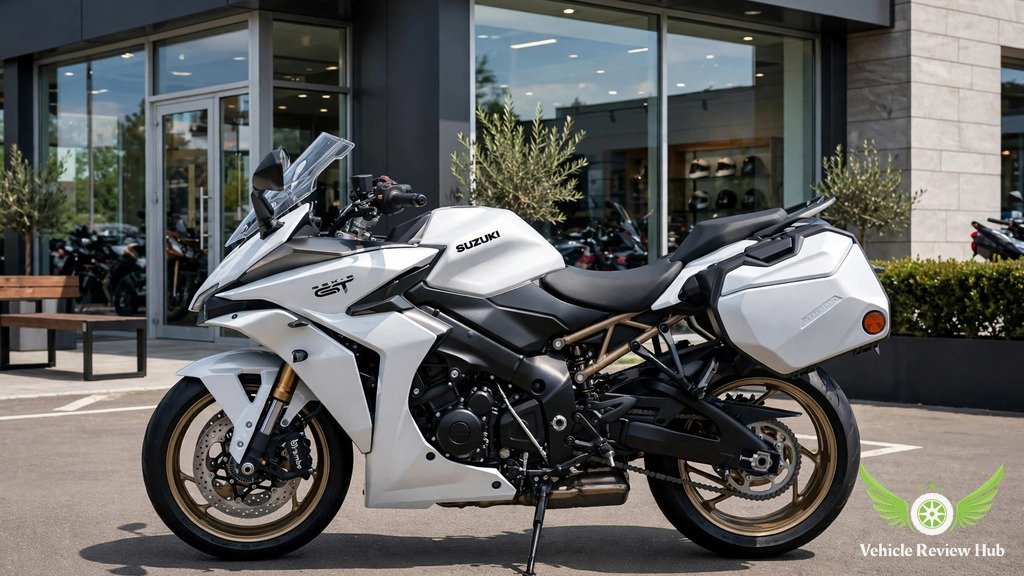
The 2027 GSX-S1000GT+ costs $14,599 plus a $750 destination charge, for $15,349 before tax and dealer fees — the number to remember from this Suzuki GSX-S1000GT review. That is the only new GT you can buy in the USA for 2027. The 2026 GT+ was $14,399 plus $700 destination, and the 2025 GT+ was $14,299 — a $300 rise over two years, gentle by current standards. Against its rivals the GT+ is still the value pick of the class, as the Cycle World 2024 buyer’s guide framed it. The rival picture in full — Ninja 1100SX, BMW S 1000 XR and Yamaha Tracer 9 — is covered in the Suzuki GSX-S1000GT comparison guide. UK and Australian prices are not US prices — never compare them with the American MSRP.
Base GT Pricing Ran 2022 Through 2024
The base GT, without the factory cases and taller screen, was sold in the USA from 2022 through 2024 only. In 2022 it cost $13,149 against the GT+ at $13,799, with a $425 destination charge — a $650 premium for the GT+ package. In 2023 the pair rose to $13,349 and $14,099. In 2024 the base GT was $13,499 and the GT+ $14,199, according to Cycle World’s 2024 buyer’s guide article text (the same page’s spec table lists $13,799 and $14,999, conflicting with its own article — this Suzuki GSX-S1000GT review follows the article text). After 2024 the base GT was dropped and the GT+ carried the line alone: $14,299 in 2025, $14,399 in 2026 and $14,599 in 2027 — a fact this Suzuki GSX-S1000GT review flags for used buyers. Destination charges for 2023, 2024 and 2025 were not verified individually, so no per-year destination ladder is printed here beyond the confirmed figures — $425 in 2022, $700 in 2026 and $750 in 2027. Colours by year: 2022 black or blue, 2024 GT+ red or black, 2025 grey or blue, 2026 blue or white, 2027 black or blue.
| Model year | GT MSRP | GT+ MSRP |
|---|---|---|
| 2022 | $13,149 | $13,799 |
| 2023 | $13,349 | $14,099 |
| 2024 | $13,499 | $14,199 |
| 2025 | Base GT dropped | $14,299 |
| 2026 | Base GT dropped | $14,399 |
| 2027 | Base GT dropped | $14,599 |
Suzuki GSX-S1000GT Design, Features and Technology
The GT looks like a modern sport-tourer, but its electronics are a generation behind the class leaders. Suzuki spent the money on the engine, the chassis and the standard equipment, and left the fancy rider aids out. This part of the Suzuki GSX-S1000GT review covers what you get, what you do not get, and the one figure Suzuki itself cannot agree on.

No IMU and No Cornering ABS: Standard ABS Only
The GT has no inertia measurement unit, and therefore no cornering ABS, no lean-sensitive traction control and no cornering-aware rider aids of any kind. Standard ABS only. That is confirmed by multiple test sources: zabikers notes there is no inertia measurement unit, MCN says there is no IMU gyro to control the rider aids, and Cycle News lists the missing IMU and cornering ABS among the bike’s deliberate omissions. What you do get is a 6.5-inch TFT — the first TFT on a Suzuki — with mySPIN connectivity, three ride modes (A, B and C, all full power), five levels of traction control plus off, a bi-directional quickshifter, cruise control, Easy Start and Low RPM Assist. The quickshifter earns special praise: RevZilla called it the best quickshifter the tester had used. For this Suzuki GSX-S1000GT review, the missing IMU is the bigger story. Note two details that trip up other write-ups: traction control is five levels plus off, not three, and heated grips are an accessory, not standard — one UK magazine wrongly lists them as included. The chassis is conventional: aluminium twin-spar frame, fully adjustable KYB 43 mm fork (4.7 in travel), KYB rear shock with preload and rebound only (5.1 in, no remote adjuster), Brembo four-piston calipers on 310 mm discs, Dunlop Roadsport 2 tyres, 57.5-in wheelbase and a 31.9-in seat.
Suzuki’s Own Case Capacity Figures Conflict
Here is the strangest fact in this Suzuki GSX-S1000GT review: Suzuki’s own numbers for the GT+ side cases do not agree with each other. The technical briefing, reported by Roadracing World and RevZilla, says 25.7 litres per bag — Cycle World and motorcycle.com round that to 26 litres per bag. Cycle News and MotorcycleDB print 27.5 litres. And Rider, quoting Suzuki’s marketing material, says 36 litres per side, big enough for most full-face helmets. TopSpeed printed 37-litre cases in July 2026. This Suzuki GSX-S1000GT review prints the conflict honestly: the engineering figure is 25.7 litres per bag, the marketing figure is 36 litres per side, and the two have never been reconciled in print. What matters on the road is the helmet test, and that one is consistent — most full-face helmets fit, one per case, with Roadracing World and motorcycle.com both confirming an Arai fits. The locking cases are keyed to the ignition, and retrofitting them to a base GT costs over $1,000 in parts alone.
Suzuki GSX-S1000GT Riding Experience and Comfort
On the road the GT is upright, stable and fast, with a riding position that suits long days better than its firm seat does. The bars are high and wide, the lean is slight, and the bike feels easy at low speed. This section of the Suzuki GSX-S1000GT review gathers what testers and owners said after living with the bike.

Riding Position, Handling and Low-Speed Maneuverability
The riding position is upright with a slight forward lean, and the 31.9-inch seat is low enough for most riders to plant both feet. Low-speed handling is easy — wide bars, a low centre of gravity and a light clutch make town work unremarkable, which is high praise for a 498-pound litre bike. At speed the GT is stable and unflappable at full lean, with a chassis that feels stiff and connected. The Brembo front brakes are powerful but slightly wooden, with initial bite that testers found lacking and an ABS system that robs some feel; the old master cylinder takes part of the blame. The Roadsport 2 tyres are widely replaced early with RoadSmart 3 or Road 6 rubber. The seat is the weak point for comfort in this Suzuki GSX-S1000GT review: flat and firm, good for sporty riding but tiring on long days, and the small pillion seat is not the best for two-up touring. Some buzz comes through the pegs and seat at motorway speeds — RevZilla found it no bother on a 300-mile ride, while MCN’s long-term bike found it uncomfortable at high rpm. The motorcycle.com first ride found the same trade: fun in the twisties, capable on the highway.
The Windscreen Is Fixed: a Taller One Is an Accessory
The windscreen is fixed and non-adjustable — there is no lever, no button and no tool-free adjustment. The standard screen does a good job for most riders, and MCN’s testers found it effective, but taller riders get wind on the chest and helmet, and riders over 1.8 metres tall notice it most. The fix is Suzuki’s taller touring screen, 70 mm taller than standard, sold as an accessory. It is worth noting that the GT+ already ships with a taller screen than the base GT — 2.75 inches (70 mm) taller — so GT+ buyers start from a better place. If you are tall and buying a base GT used, budget for the accessory screen on day one — this Suzuki GSX-S1000GT review counts that as essential tall-rider advice. The screen you get is the screen you keep, unless you pay for the taller one.
Suzuki GSX-S1000GT Review: Pros, Cons and Verdict
After the prices, the specs and the road time, this Suzuki GSX-S1000GT review comes down to a simple trade: a 150-horsepower sport-tourer with factory luggage, cruise control and a quickshifter for $14,599, against the modern electronics suite its rivals carry. For most riders, that is a good trade.
Main Advantages and Limitations of the Suzuki GSX-S1000GT
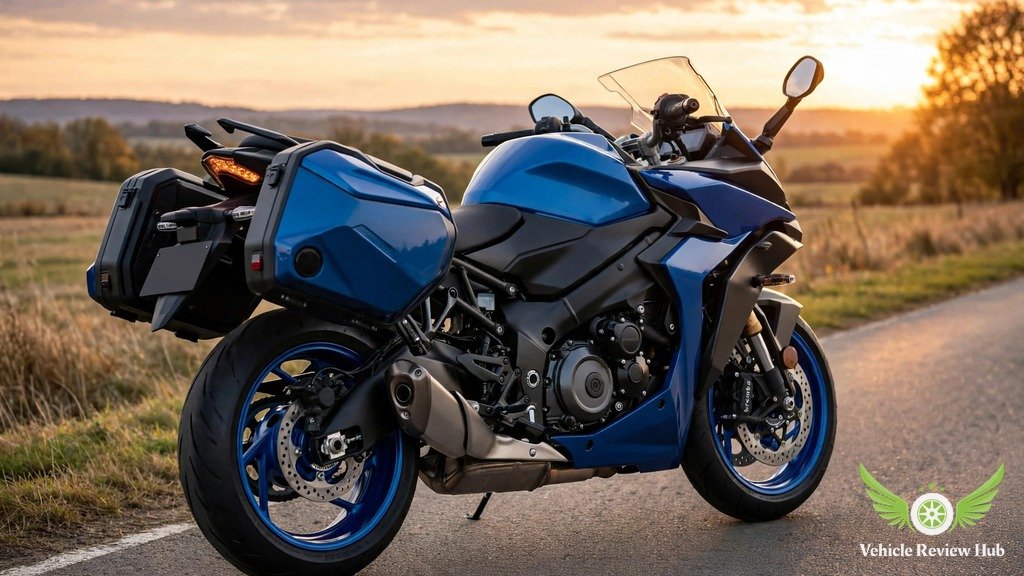
The advantages start with the engine: a strong, smooth, characterful inline-four with a flat torque curve and a dyno-verified 135.5 hp at the wheel, on a stiff, connected chassis. The price is the second advantage — $14,599 for a fully equipped GT+ undercuts every litre-class rival except the Yamaha Tracer 9, and the GT+ includes cases, a taller screen, cruise control and a quickshifter that rivals charge extra for — the value case in this Suzuki GSX-S1000GT review. It is also proven: Rider’s 2022 Motorcycle of the Year, and MCN owners rating it 4.2 out of 5, the engine 4.6. The limitations are equally clear. There is no IMU and no cornering ABS, the traction control is not lean-sensitive, the screen is fixed, the seat is firm, there is no centrestand and no option for one, heated grips cost extra, and the rear shock is soft for aggressive riding with no remote preload adjuster. Range is short at about 178 miles per tank, and owners say the mySPIN app is clumsy enough to avoid. None is a deal-breaker alone, and together they explain the price — but buyers who want the latest electronics should look at the Ninja 1100SX or BMW S 1000 XR instead, as the Suzuki GSX-S1000GT comparison guide shows.
Twelve-Month Unlimited-Mileage Warranty in the USA
In the USA the GSX-S1000GT carries a 12-month unlimited-mileage limited warranty, per Suzuki USA’s 2027 GT+ page and motorcycle.com’s specification comparison. Unlimited mileage matters for a touring bike: a rider who covers 15,000 miles in the first year is covered the whole way, where a mileage-capped warranty would have run out — the warranty’s best feature in this Suzuki GSX-S1000GT review. The catch is the twelve months — a year passes quickly, and after that you are on your own. UK buyers get two years, but that figure does not apply to American bikes and should not be quoted to US readers. The service schedule behind the warranty is covered in the Suzuki GSX-S1000GT reliability guide: oil every 3,750 miles under the US manual, spark plugs replaced at 7,500 and 15,000 miles, and a valve-clearance inspection at 15,000 miles. Keep the service records — they matter for resale.
Suzuki GSX-S1000GT Review: Frequently Asked Questions
Direct answers to the questions riders ask in a Suzuki GSX-S1000GT review. Every price in this Suzuki GSX-S1000GT review is a verified US figure unless stated otherwise, and every power figure is labelled claimed or tested.
What is the 2027 Suzuki GSX-S1000GT+ price in the USA?
In this Suzuki GSX-S1000GT review, the 2027 GSX-S1000GT+ costs $14,599 plus a $750 destination charge, for $15,349 before tax and dealer fees. It is the only new GT sold in the USA for 2027 — the base GT was dropped after 2024 — and it comes in Glass Sparkle Black or Pearl Vigor Blue.
Is the base Suzuki GSX-S1000GT still sold in the US?
No — this Suzuki GSX-S1000GT review confirms the base GT was sold from 2022 through 2024 only, priced from $13,149 to $13,499 over those years. From 2025 onward Suzuki sells the GT+ only in the USA. Used base GTs from 2022–2024 are still on the market, and the GT+ cases cost over $1,000 to retrofit, so a used GT+ is usually the better buy.
What is the difference between the GSX-S1000GT and the GT+?
In this Suzuki GSX-S1000GT review, the GT+ adds color-matched locking side cases and a taller windscreen — 2.75 inches (70 mm) taller than the base GT’s screen. The engine, chassis, TFT dash, quickshifter and cruise control are the same on both. In 2022 the GT+ premium was $650.
How big are the GSX-S1000GT+ side cases really?
Suzuki’s own figures conflict, and this Suzuki GSX-S1000GT review prints both: the technical briefing says 25.7 litres per bag (26 litres rounded), while Suzuki’s marketing material and Rider say 36 litres per side. Other sources print 27.5 litres. What is consistent is the helmet test — most full-face helmets fit, one per case.
What engine does the GSX-S1000GT use?
The engine in this Suzuki GSX-S1000GT review is a 999cc liquid-cooled DOHC inline-four with a 73.4 by 59.0 mm bore and stroke and 12.2:1 compression, derived from the 2005–2008 K5 GSX-R1000’s long-stroke architecture and retuned for Euro 5. It is not the current short-stroke GSX-R1000R engine.
How much horsepower does the GSX-S1000GT make?
The global claim in this Suzuki GSX-S1000GT review is 150 hp at 11,000 rpm with 78 lb-ft at 9,250 rpm — Suzuki USA publishes no figures. On Cycle World’s Dynojet the GT made 135.53 hp at 10,360 rpm and 73.15 lb-ft at 9,190 rpm.
Does the GSX-S1000GT have cornering ABS or an IMU?
No — as this Suzuki GSX-S1000GT review explains, the GT has no inertia measurement unit, so it has no cornering ABS and no lean-sensitive rider aids — standard ABS only. It does have three ride modes, five-level traction control plus off, a bi-directional quickshifter and cruise control.
Does the GSX-S1000GT have a quickshifter and cruise control?
Yes, both are standard, as this Suzuki GSX-S1000GT review notes — RevZilla called the bi-directional quickshifter the best one its tester had used. Heated grips, by contrast, are an accessory, not standard.
What is the seat height of the GSX-S1000GT?
In this Suzuki GSX-S1000GT review, the seat height is 31.9 inches (810 mm), which is low for a litre-class sport-tourer and lets most riders plant both feet. The pillion seat sits about 1.5 inches higher than the rider’s seat.
How much does the GSX-S1000GT weigh?
Suzuki claims 498 lb for the base GT and 518 lb for the GT+, as this Suzuki GSX-S1000GT review records. Some tables print 498 lb for the GT+ too, but that is the base GT’s weight.
Is the windscreen on the GSX-S1000GT adjustable?
No — this Suzuki GSX-S1000GT review states it plainly: the windscreen is fixed and non-adjustable. The GT+ ships with a taller screen than the base GT, and Suzuki sells an even taller touring screen, 70 mm taller than standard, as an accessory. Tall riders should budget for it.
Is the GSX-S1000GT still worth buying in 2026/2027?
Yes — this Suzuki GSX-S1000GT review says so plainly: if you value engine character and honest pricing over the latest electronics. At $14,599 the 2027 GT+ undercuts its litre-class rivals by thousands. If you want an IMU, cornering ABS and semi-active suspension, the Ninja 1100SX or BMW S 1000 XR will suit you better — but you will pay for them.