The short answer is that Kawasaki Ninja ZX-6R KRT Edition reliability is the standard ZX-6R’s reliability — the same 636cc engine, the same chassis, the same service schedule — with one large exception: the 2024–2026 bikes are covered by two do-not-ride crankshaft recalls, 25V376 and 25V798, and a KRT with either fix outstanding is not a bike to ride. Buy one with both fixes proven by the white crankcase marks and a VIN check, and you own the same proven middleweight.
This Kawasaki Ninja ZX-6R KRT Edition reliability guide covers the recalls, the checks, the service schedule and what the bike costs to keep.
Kawasaki Ninja ZX-6R KRT Edition Reliability Overview
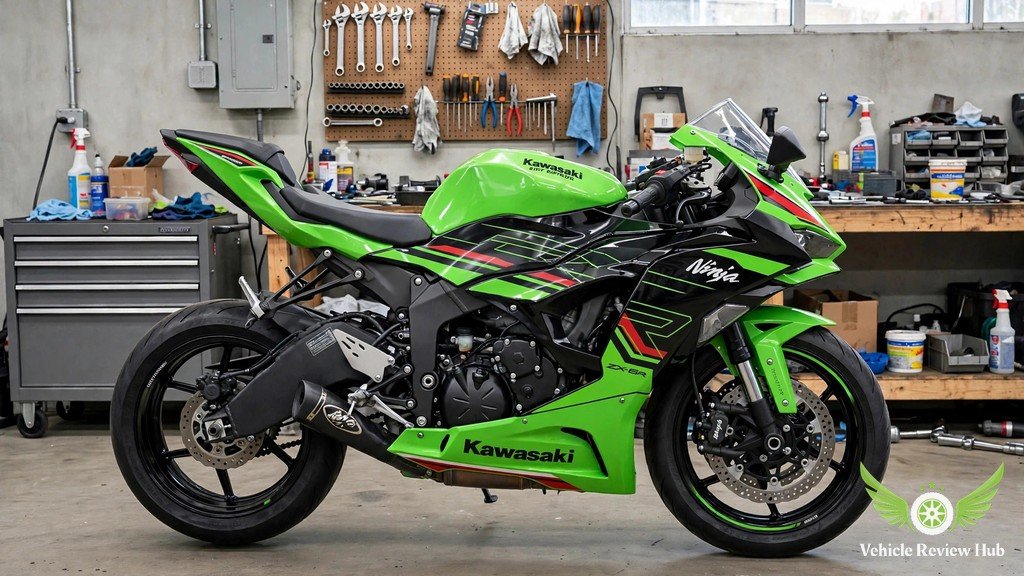
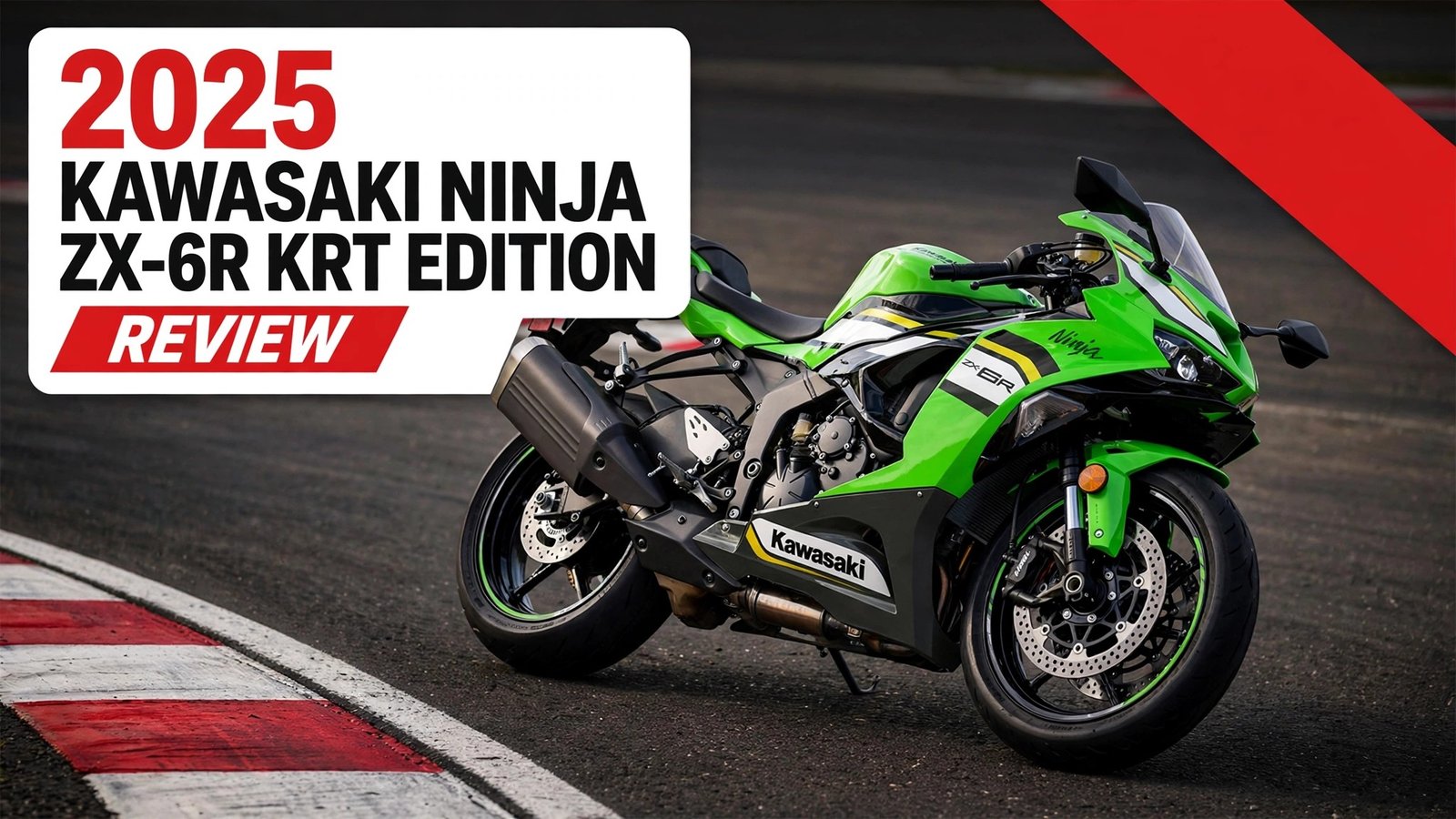
The KRT Edition is a Ninja ZX-6R in Kawasaki Racing Team paint, and that single fact decides most of Kawasaki Ninja ZX-6R KRT Edition reliability: no KRT-specific engine, chassis or service schedule. The 636 claims 127.0 hp with ram air, and Cycle World’s dyno of a stock 2023 standard ABS read 108.4 hp at the rear wheel. The standard ZX-6R reliability guide covers the platform in full; this guide adds the recall record, which names the KRT outright, and the checks a used buyer must run before paying KRT money for a repainted standard bike. That is the foundation of Kawasaki Ninja ZX-6R KRT Edition reliability.
Valve Split Hits KRT Years
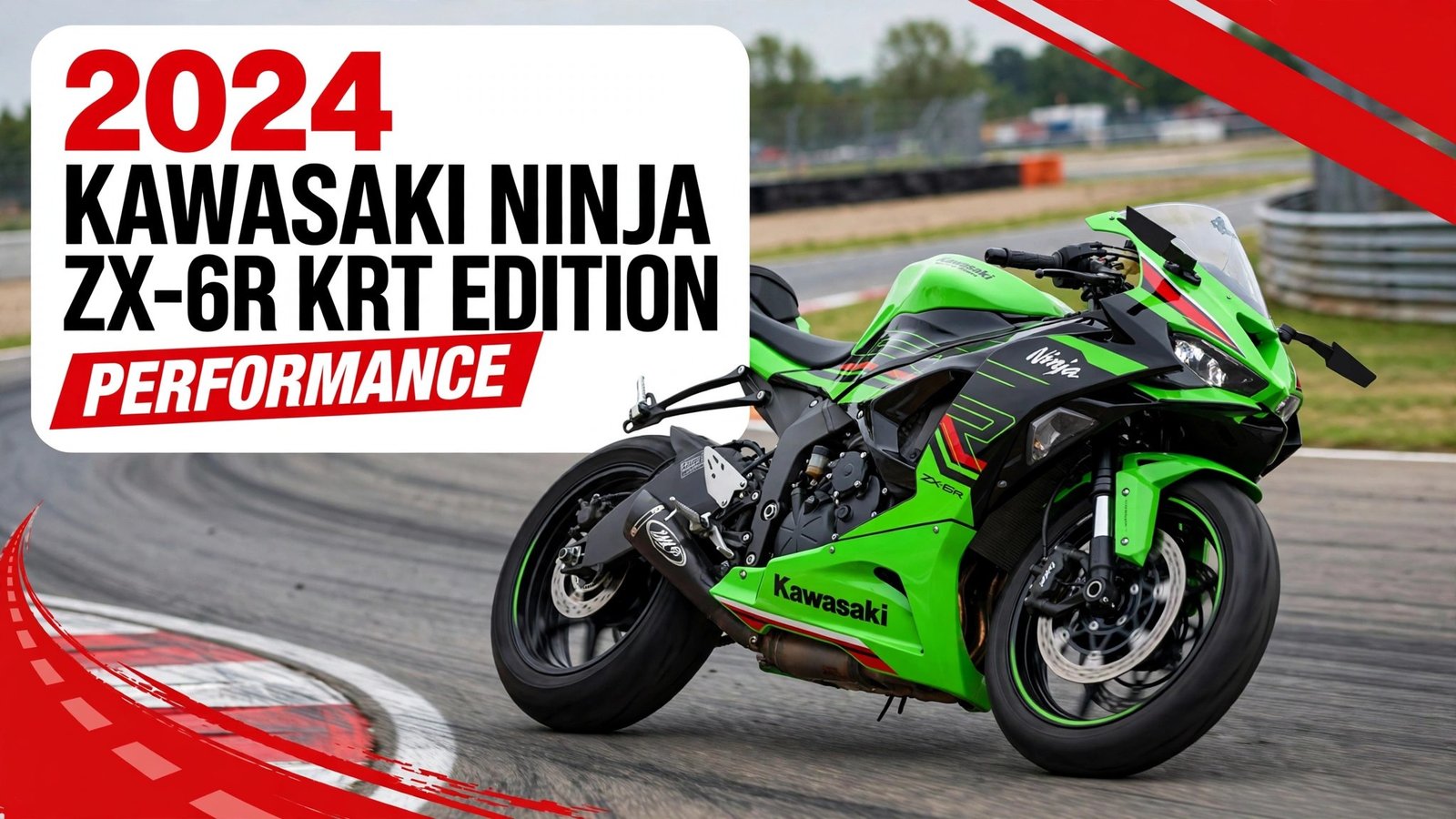
The valve-clearance interval split lands right across the KRT’s run: every 15,200 miles on 2013–2023 bikes, every 7,600 miles on 2024 and later bikes — the interval was halved for 2024, so a 2023 KRT and a 2024 KRT have different valve schedules even though the engine is the same 636. The practical point for Kawasaki Ninja ZX-6R KRT Edition reliability is simple: ask for the service record and check the year before you assume the schedule. A seller who says “valves done” on a 2024 bike should be able to show the 7,600-mile service; on a 2023 bike the same words mean the 15,200-mile service.
How Mileage, Storage and Previous Care Affect Reliability
Mileage matters less than storage and care. A 636 ridden regularly, serviced on schedule and stored indoors will outlast a low-mileage bike that sat for two years on old fuel. Full records and both crankcase marks matter more than the odometer reading for Kawasaki Ninja ZX-6R KRT Edition reliability.
Kawasaki Ninja ZX-6R KRT Edition Common Problems and Wear Items
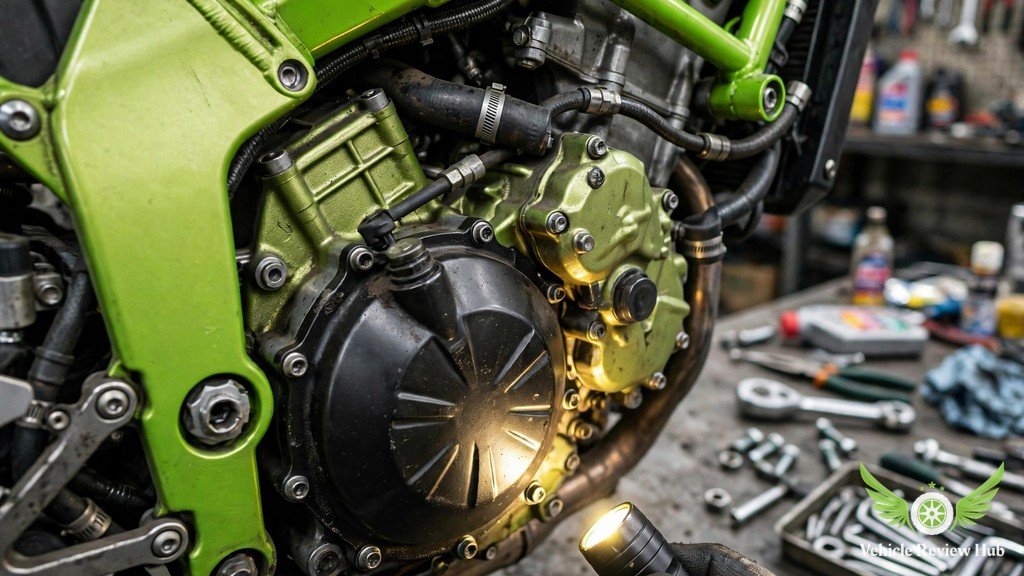
Common problems on the KRT are the standard ZX-6R’s problems, because the bikes are mechanically identical — and the dominant problem is not wear at all. It is the crankshaft recall pair, 25V376 and 25V798, which together cover every 2024–2026 ZX-6R including the KRT. For Kawasaki Ninja ZX-6R KRT Edition reliability, the recalls come before any wear item.
Recall Names KRT Outright
Recall 25V376, filed June 4, 2025, covers 17,792 ZX-6Rs from 2024 and 2025 — 7,809 from 2024 and 9,983 from 2025 — including the KRT and the 40th Anniversary Edition. The defect is over-torqued crankcase bolts that can damage the #5 crankshaft bushing, and a damaged bushing can seize the engine and stall the bike. It is a do-not-ride recall with a dealer stop-sale. The remedy is an inspection of the #5 bushing: re-torque if it is sound, replace the engine if it is damaged. NHTSA’s Part 573 report for 25V376 carries the full detail; a white paint mark on the LEFT side of the crankcase proves the repair was done — the left mark is half the proof system for Kawasaki Ninja ZX-6R KRT Edition reliability.
Recall 25V798, filed November 18, 2025, covers 19,823 ZX-6Rs from 2024–2026 per its Part 573 report — the acknowledgement letter says 20,301 — including the KRT and the KRT 40th Anniversary ABS. This recall proves a 2026 KRT existed: a December 2025 recall had to name a 2026 model year in production. The cause is the first recall’s own repair process, which over-tightened the bolts and caused the same #5 bushing damage — only four US cases of a previously repaired bike stalling were reported. Every eligible bike must be inspected again. NHTSA’s Part 573 report for 25V798 carries the full detail, and a white paint mark on the RIGHT side of the crankcase proves the 25V798 repair — the mark that matters most for Kawasaki Ninja ZX-6R KRT Edition reliability.
| Recall | Model years | Units | Defect and proof of repair |
|---|---|---|---|
| 25V376 | 2024–2025 | 17,792 | Over-torqued crankcase bolts damage the #5 bushing; white mark LEFT |
| 25V798 | 2024–2026 | 19,823 (Part 573; 20,301 ack letter) | First repair over-tightened the bolts; all eligible bikes re-inspected; white mark RIGHT |
| 12V-064 | 2009–2012 (predates the KRT) | 20,512 (acknowledgement letter says 20,544) | Regulator/rectifier overheats; bike stalls or will not start; free regulator replacement |
Note: 25V376 covers 2024–2025 only; 2026 bikes fall under 25V798. This Kawasaki Ninja ZX-6R KRT Edition reliability table lists the unit counts as the recall paperwork prints them, Part 573 first.
First Fix Must Be Redone
The uncomfortable part is that the first fix had to be redone: the 25V376 repair itself over-tightened the crankcase bolts on some bikes — the washer and the technique used — and the same #5 bushing damage came back. That is why 25V798 covers bikes already remedied under 25V376: a left-side mark with no right-side mark means the first repair, not the second. Kawasaki estimates about 1% of covered bikes carry the defect. For 25V376, 11,019 of 17,792 bikes had been remedied by October 17, 2025; for 25V798, no completion count has been published. The KRT review covers the ownership side, but the only check that counts for Kawasaki Ninja ZX-6R KRT Edition reliability is the individual bike: left mark, right mark, VIN check — all three, before money changes hands.
Kawasaki Ninja ZX-6R KRT Edition Maintenance Schedule and Servicing
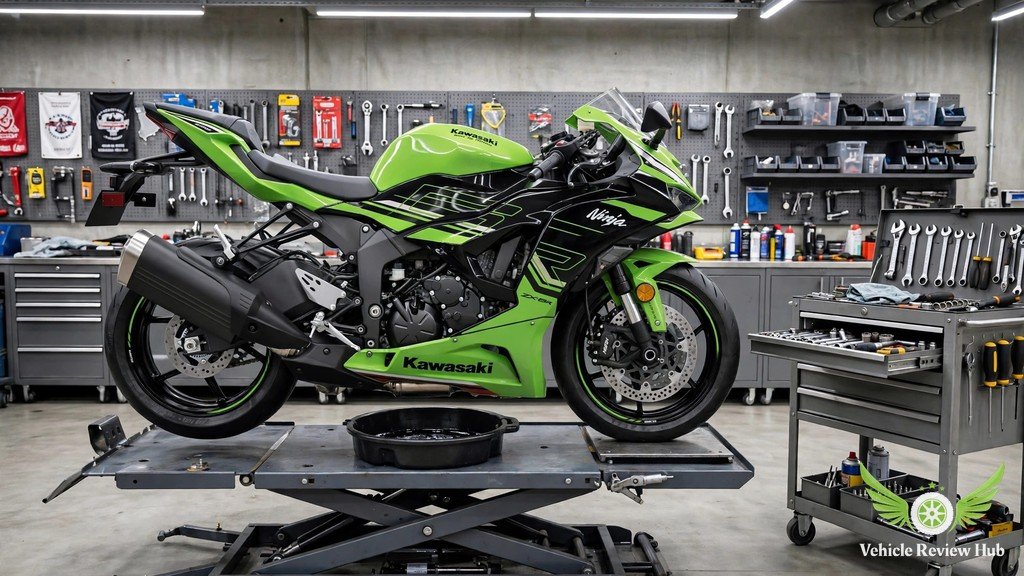
The service schedule is the standard ZX-6R’s schedule: the service interval is 7,600 miles, and on 2024 and later bikes every 7,600-mile service means oil, filter and all four spark plugs. The oil capacity is 3.1 litres with the filter, SAE 10W-40. What changed in 2024 is the valve check, which moved from every 15,200 miles to every 7,600 miles — so on a 2024 or later KRT it rides along with every service, while on a 2013–2023 KRT it comes every second service. Keeping that split straight, and keeping the records to prove it, is the heart of Kawasaki Ninja ZX-6R KRT Edition reliability at the service desk.
25V798 Is the Real Check
Of the two recalls, 25V798 is the check that matters most to a buyer: it is the wider one, it has no published completion count, and it covers bikes already fixed under 25V376 — so a left-side mark alone does not clear a bike. The remedy is an inspection of the #5 bushing on every eligible unit, with the angle-tightening method applied when the bushing is sound; the crankcase set is part number 14101-0021. Dealer notification went out December 12, 2025. Both repairs are free at the dealer — the cost that matters for Kawasaki Ninja ZX-6R KRT Edition reliability is the riding time lost while a bike sits waiting for its inspection.
Run the VIN at nhtsa.gov/recalls — that is the authoritative check for Kawasaki Ninja ZX-6R KRT Edition reliability — and look at the crankcase for the two white marks. A 2024 or 2025 KRT can need both recalls; a 2026 KRT can need only 25V798. A bike with no marks and a 2024–2026 VIN in the affected range is not cleared.
White Mark Proves Completion
The white paint marks are the whole proof system for Kawasaki Ninja ZX-6R KRT Edition reliability: left side of the crankcase means the 25V376 repair is done, right side means the 25V798 repair is done. A buyer who knows the two sides can verify a bike in the seller’s driveway without calling a dealer — the marks are small, so crouch down and look. That is Kawasaki Ninja ZX-6R KRT Edition reliability in five minutes. The KRT’s Lime Green paint tells you nothing about the crankcase bolts, and a clean, low-mileage 2025 KRT with no right-side mark is a do-not-ride bike until the 25V798 inspection is done. The KRT performance guide covers what the bike does once it is cleared to ride; this section covers the proof that it is cleared.
| Service item | Figure | Interval |
|---|---|---|
| Engine oil + filter (SAE 10W-40) | 3.1 litres with filter | Every 7,600-mile service |
| Spark plugs (×4) | Unsettled (CR9EIA-9 vs CR9E) | Every 7,600-mile service (2024 and later) |
| Valve clearance check | Unverified — not printed | Every 7,600 miles (2024+); every 15,200 miles (2013–2023) |
| Air filter | Part number 11013-0036 | 15,200 miles |
| Chain slack check | 30–40 mm at the loosest point | Every 600 miles |
| Chain lube | 520 chain, 112 links, 15T/43T | Every 400 miles |
| Tyre pressures (cold) | 36 psi front / 42 psi rear | Before riding, cold |
Note: The oil-filter part number (49065-0024 vs 16097-0008) and the spark-plug part number (CR9EIA-9 vs CR9E) are unsettled — this Kawasaki Ninja ZX-6R KRT Edition reliability table prints them as unsettled rather than picking one. Valve clearances from Kawasaki’s own manual are unverified and are not printed. Never use the ZX-4’s 25–35 mm chain slack, the Ninja 500’s 20–30 mm, or 32/36 psi tyre pressures on this bike.
Kawasaki Ninja ZX-6R KRT Edition Tires, Brakes and Suspension Maintenance
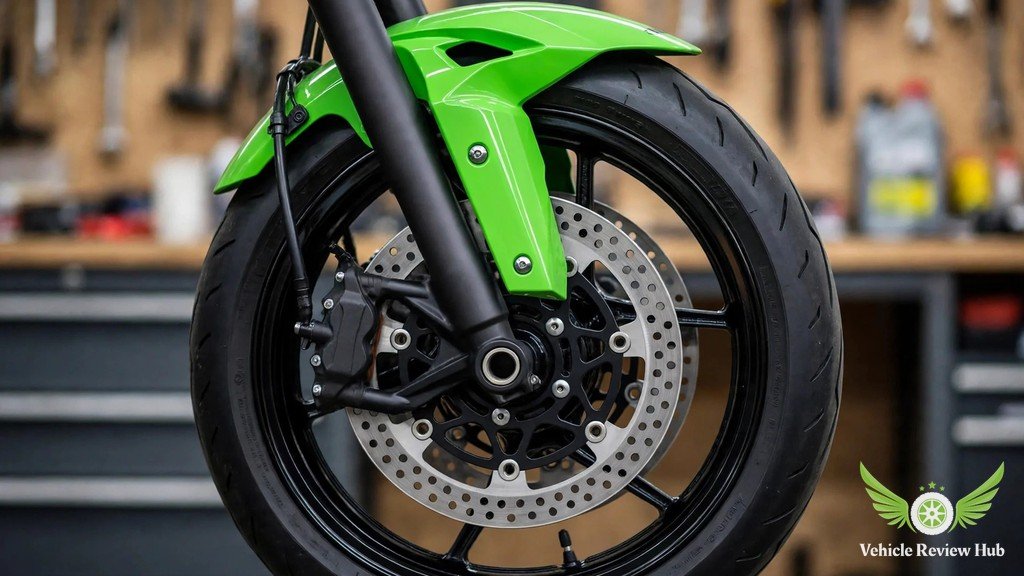
Tyres, brakes and suspension are where the KRT’s maintenance is most ordinary. The chassis is the standard ZX-6R’s: a 41 mm inverted Showa SFF-BP fork, fully adjustable, 4.7 inches of front travel, and a Bottom-link Uni-Trak rear shock, fully adjustable, 5.9 inches at the rear. The brakes are dual 310 mm front discs with radial-mounted monobloc four-piston calipers and a single 220 mm petal rear disc, with KIBS ABS on ABS models only. Nothing here is KRT-specific, and that is the point for Kawasaki Ninja ZX-6R KRT Edition reliability: the wear items are the platform’s wear items.
7,600-Mile Valves From 2024
The valve-interval change is the single most important maintenance fact for Kawasaki Ninja ZX-6R KRT Edition reliability on a 2024 or later KRT: the valve-clearance check is due every 7,600 miles from 2024, half the 15,200-mile interval of the 2013–2023 bikes. The engine did not change, but Kawasaki halved the interval, so the service bill on a 2024 KRT comes around twice as often for valves. What the check costs depends on the shop, and this guide will not invent a labour figure — but the clearances themselves are not printed here either, because Kawasaki’s own manual figures for them are unverified. The point is the interval, not the clearance number: 7,600 miles from 2024, 15,200 miles before it.
Tire, Brake and Suspension Checks That Matter
Tyre pressures are 36 psi front and 42 psi rear, cold — 250/290 kPa — and that figure deserves emphasis because a wrong figure circulates: one online source lists 33/36 psi for this bike, and it is rejected here. The tyres are Bridgestone Battlax Hypersport S22s, 120/70ZR17 front and 180/55ZR17 rear. Check pressures cold, before riding, and check the tread for squaring off — a 636 that has lived on the highway will show a flat centre on the rear, and a squared tyre handles nothing like a round one, which is why tyre condition is part of Kawasaki Ninja ZX-6R KRT Edition reliability, not a footnote.
Brakes on the KRT are Nissins, not Brembos — Chase’s 2025 KRT review confirms the calipers are Nissin — and the 2024 update brought round front rotors across the whole ZX-6R range, rear disc staying petal. The round disc is not a KRT feature. Check the pads for even wear and the discs for scoring. KIBS ABS is fitted on ABS models only, and the KRT was ABS-only in 2016, 2017, 2019, 2020 and 2021, with a non-ABS KRT sold in 2018 and from 2022 through 2026. Suspension checks are simpler: look for fork-seal weeping and set the sag for your weight. For Kawasaki Ninja ZX-6R KRT Edition reliability, the brake check is a pad-and-disc check, not a brand check.
Kawasaki Ninja ZX-6R KRT Edition Maintenance and Ownership Costs
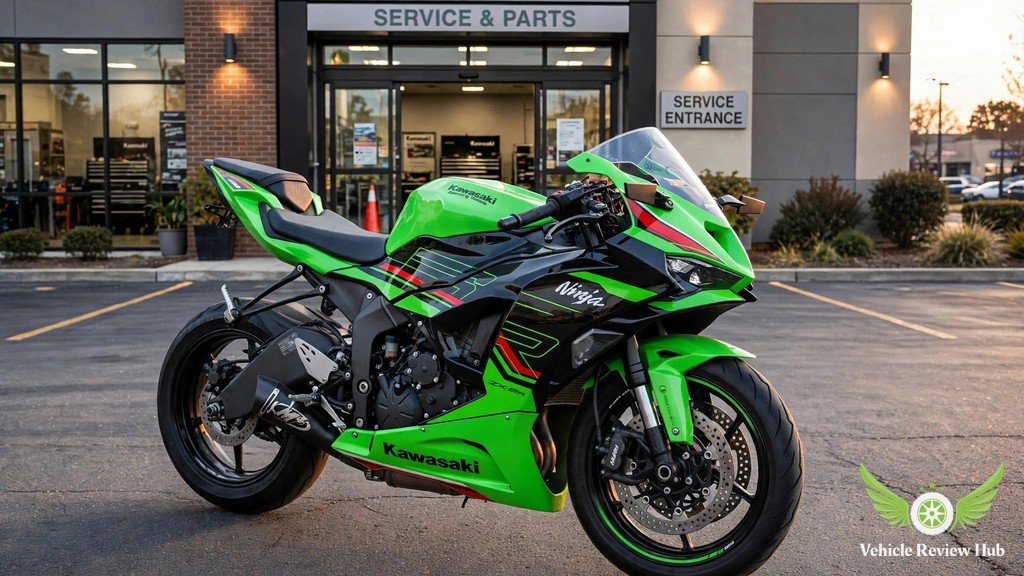
Kawasaki Ninja ZX-6R KRT Edition reliability in running costs starts here: ownership costs for the KRT are the standard ZX-6R’s costs — the KRT adds nothing to run. The fuel bill is the honest starting point: the EPA estimate is 40.6 mpg, but testers see the low-to-mid 30s, and SlashGear’s tester, riding a 2025 KRT, saw about 35 mpg over three tanks — the only tester-observed KRT fuel figure anywhere. Budget on the testers’ number: the 4.5-gallon tank gives a realistic range in the 150s, not the 183 miles the EPA arithmetic implies.
Fuel, Routine Servicing, Tires and Replacement Parts
Routine servicing for Kawasaki Ninja ZX-6R KRT Edition reliability is a 7,600-mile rhythm: oil and filter (3.1 litres, SAE 10W-40) plus four spark plugs on 2024 and later bikes, with the valve check joining the service on 2024+ bikes and every second service on earlier ones. The chain is a 520 with 112 links, 15T/43T, lubed every 400 miles and checked for its 30–40 mm of slack every 600 miles; a neglected chain is the most common expensive surprise on a used 600, because a worn chain takes the sprockets with it. Tyres are S22s in 120/70 front and 180/55 rear. No verified labour or parts prices were available for this bike, so none are printed here.
Replacement parts are standard ZX-6R parts at standard ZX-6R prices; only the paint costs differently — a buyer should price a full KRT fairing set before assuming a damaged KRT is cheap to restore. The two recalls are the dominant ownership event for 2024–2026 bikes: both repairs are free at the dealer, but a bike under a do-not-ride order cannot be ridden to the dealer for its own repair. That is the ownership cost nobody puts in a spreadsheet: the weeks a 2024–2026 KRT can spend waiting for its inspection — the hidden cost of Kawasaki Ninja ZX-6R KRT Edition reliability. The KRT itself was $11,399 in 2024 and 2025 and $11,599 in 2026, with the paint premium at $0 from 2023.
Panels Clone a KRT Easily
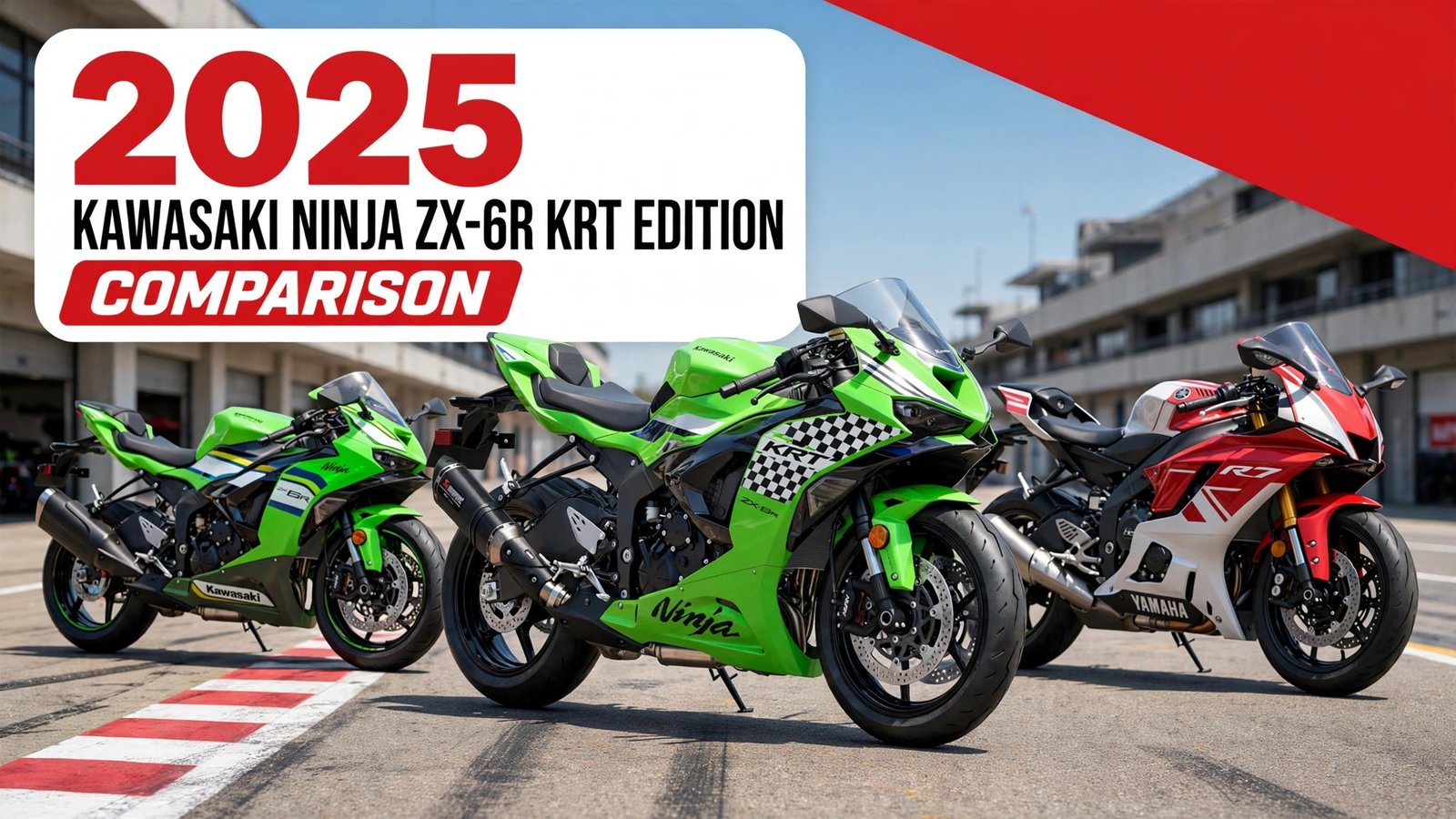
The KRT is paint-only, so a standard ZX-6R in KRT-colour panels is visually a KRT — and replica KRT fairing sets are sold widely as aftermarket kits. Kawasaki’s own 2024 KRT spec sheet lists “Exclusive Kawasaki Racing Team (KRT) color & graphics” — and nothing else — so the paint is the weakest proof of all: a used bike in KRT colours may be a genuine KRT or a repainted base bike, and the price difference is real money. The proof is the model code on the VIN plate — ZX636KRFAL for a 2024 KRT, ZX636KSFAL for a 2025 KRT, J-series codes for ABS models — plus the VIN check at nhtsa.gov/recalls. Check the plate before the paint, and the crankcase marks before the plate — that order is Kawasaki Ninja ZX-6R KRT Edition reliability at purchase time.
How to Keep a Kawasaki Ninja ZX-6R KRT Edition Reliable
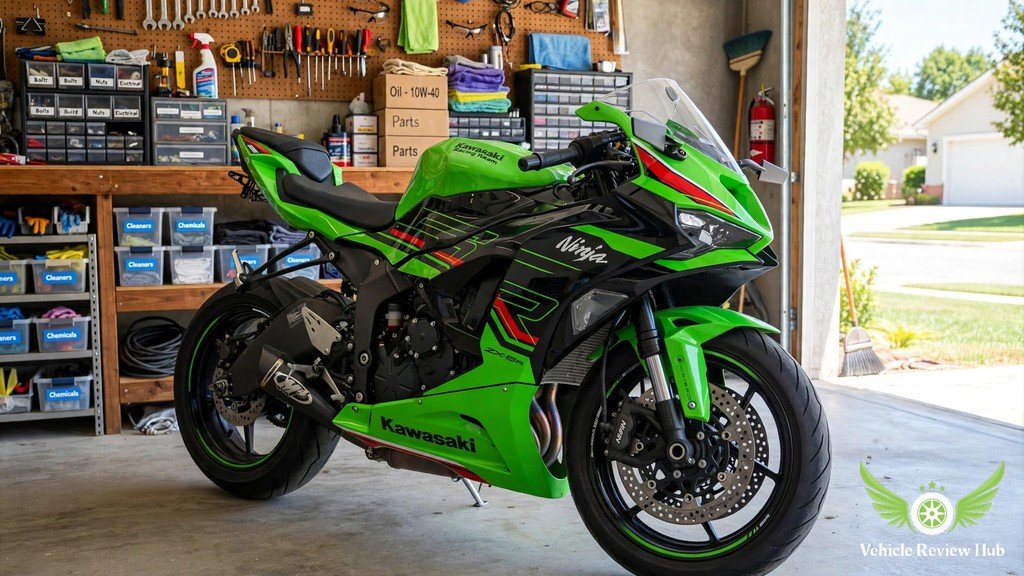
Keeping a KRT reliable is keeping a ZX-6R reliable, and the formula is unglamorous: service on schedule, lube the chain, check the tyres cold, store it indoors, and keep the records. The bike asks for little — a 7,600-mile service rhythm, a 400-mile chain lube, a 600-mile slack check. The one job that is not routine is the recall check, and that job comes first: no amount of careful servicing makes a do-not-ride bike safe to ride. That is Kawasaki Ninja ZX-6R KRT Edition reliability in one line: service it, check it, and prove the recalls are done.
Preventive Maintenance, Records and Regular Inspections
Preventive maintenance for Kawasaki Ninja ZX-6R KRT Edition reliability is a short list done often. The schedule is the table above: oil, filter and four plugs every 7,600 miles on 2024 and later bikes, valves at 7,600 miles on 2024+ and 15,200 miles before that. Records are the other half of the job: a service book with stamps, receipts, and the recall letters filed with the bike’s paperwork. A KRT with full records and both crankcase marks is the easiest used bike in the class to buy with confidence, and the Ninja 650 KRT Edition reliability guide tells the same story on the other KRT in this line.
A walk-around before every ride is the cheapest reliability tool there is: chain, tyres, pads, fork seals, fluid levels, and the crankcase marks on a 2024–2026 bike. A five-minute check catches a dry chain, a slow puncture and a weeping fork seal before any of them becomes a repair bill. For a rider stepping up to a 636 for the first time, the Ninja 650 is the honest alternative to learn on. For the rider who already owns a KRT, the habit is the same one that keeps any motorcycle reliable: look at it, service it, and write it down. That habit is Kawasaki Ninja ZX-6R KRT Edition reliability in daily practice.
12V-064 Predates the KRT
The oldest recall in the ZX-6R’s history is not a KRT recall. Recall 12V-064, filed February 17, 2012, covers 20,512 bikes from 2009–2012 (the acknowledgement letter says 20,544), and the fault was a voltage regulator/rectifier that overheats and stalls the bike or leaves it unable to start. The remedy was a free regulator replacement; 8,785 bikes had been remedied by December 31, 2012. The KRT Edition did not exist in 2009–2012, so no KRT was ever covered by 12V-064. The same applies to 18V-089, a ZX-10R recall only that covers no ZX-6R or KRT. That is the whole recall record for Kawasaki Ninja ZX-6R KRT Edition reliability: two live recalls to check, two old ones to ignore, and a white mark on each side of the crankcase as proof.
Kawasaki Ninja ZX-6R KRT Edition Reliability: Frequently Asked Questions
The answers below give the direct version of each question about Kawasaki Ninja ZX-6R KRT Edition reliability, with the figures and the sources behind them.
Is the Kawasaki Ninja ZX-6R KRT Edition reliable?
Mostly yes, with one big exception: the 2024–2026 bikes are covered by two do-not-ride crankshaft recalls (25V376 and 25V798). A KRT with both fixes proven is the same reliable 636 as the standard bike; a KRT with either fix outstanding is a do-not-ride bike. For Kawasaki Ninja ZX-6R KRT Edition reliability, the recall check comes before every other judgement about the bike.
What is the 25V376 recall on the KRT Edition?
25V376 covers 17,792 ZX-6Rs from 2024–2025, including the KRT and the 40th Anniversary Edition. Over-torqued crankcase bolts can damage the #5 crankshaft bushing and seize the engine. It is a do-not-ride recall. A white paint mark on the LEFT side of the crankcase proves the repair was done. 11,019 of 17,792 had been remedied by October 17, 2025 — the only published completion figure in the recall record for Kawasaki Ninja ZX-6R KRT Edition reliability.
What is the 25V798 recall, and why does it name the KRT outright?
25V798 covers 19,823 ZX-6Rs from 2024–2026 (20,301 per the acknowledgement letter), including the KRT and the KRT 40th Anniversary ABS. The first recall’s repair process itself over-tightened the bolts, so every eligible bike — including already-repaired ones — must be inspected again, with an angle-tightening method. A white paint mark on the RIGHT side of the crankcase proves the 25V798 repair — the mark that matters most for Kawasaki Ninja ZX-6R KRT Edition reliability. No completion count has been published for 25V798.
How often does the KRT Edition need a valve check?
Every 15,200 miles on 2013–2023 bikes, every 7,600 miles on 2024 and later bikes. The interval was halved for 2024, so a 2023 KRT and a 2024 KRT have different valve schedules. Kawasaki Ninja ZX-6R KRT Edition reliability depends on knowing which side of the split your bike falls on before you assume the schedule.
How much oil does the KRT Edition take, and what is the service interval?
3.1 litres with the filter, SAE 10W-40. Oil, filter and all four spark plugs at every 7,600-mile service on 2024 and later bikes. Chain slack is 30–40 mm, tyre pressures 36 psi front / 42 psi rear cold — the two figures to memorise for Kawasaki Ninja ZX-6R KRT Edition reliability on the road.
How do I prove a used KRT is really a KRT with both recalls fixed?
Check the VIN plate model code (ZX636KRFAL for a 2024 KRT, ZX636KSFAL for a 2025 KRT, and the J-series codes for ABS models) and run the VIN at nhtsa.gov/recalls. Paint alone proves nothing — KRT fairing panels are sold as aftermarket kits and a repainted standard bike can wear KRT colours — so for Kawasaki Ninja ZX-6R KRT Edition reliability, the plate and the marks are the proof, not the paint. Left crankcase mark = 25V376 done, right mark = 25V798 done.