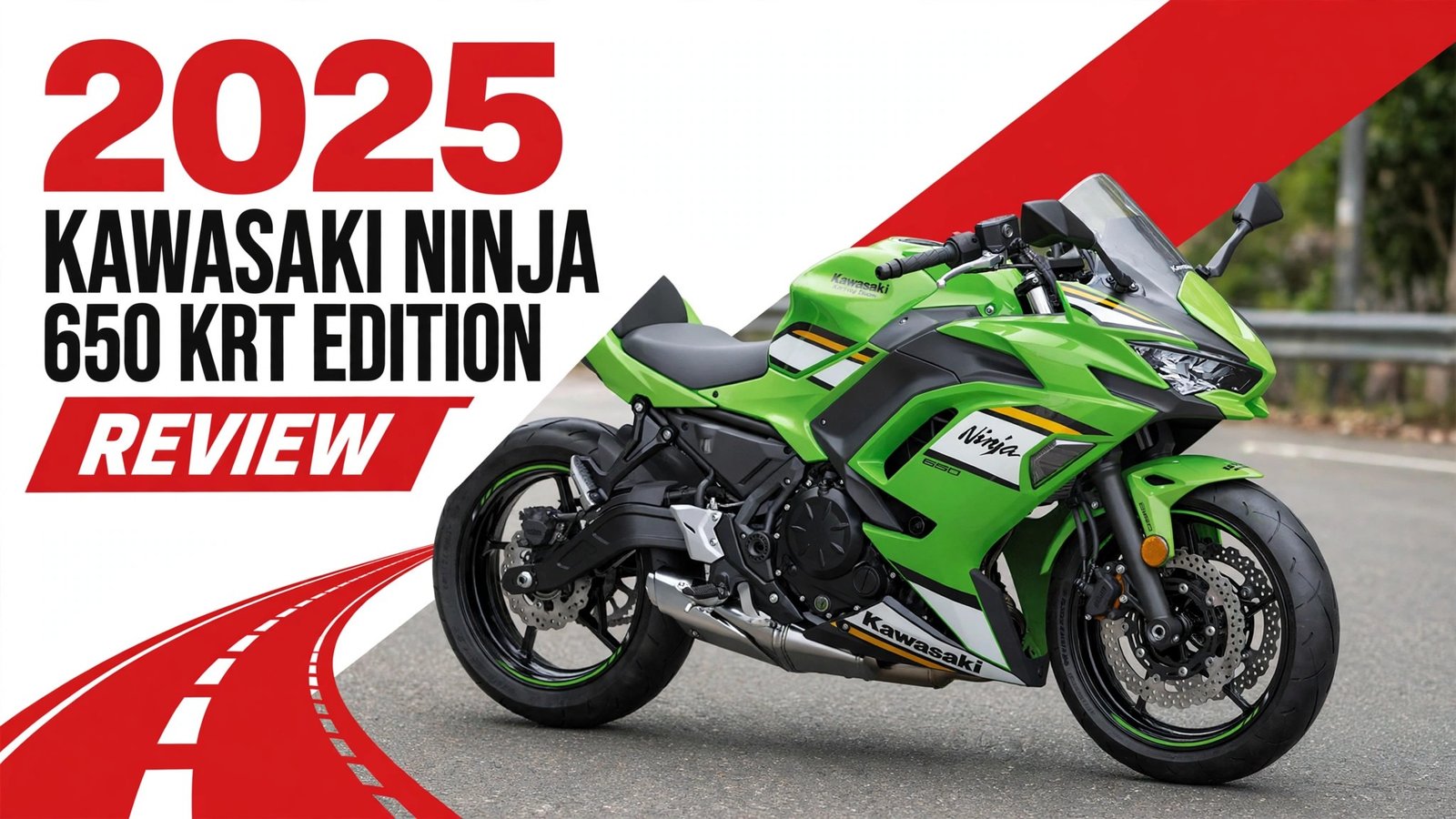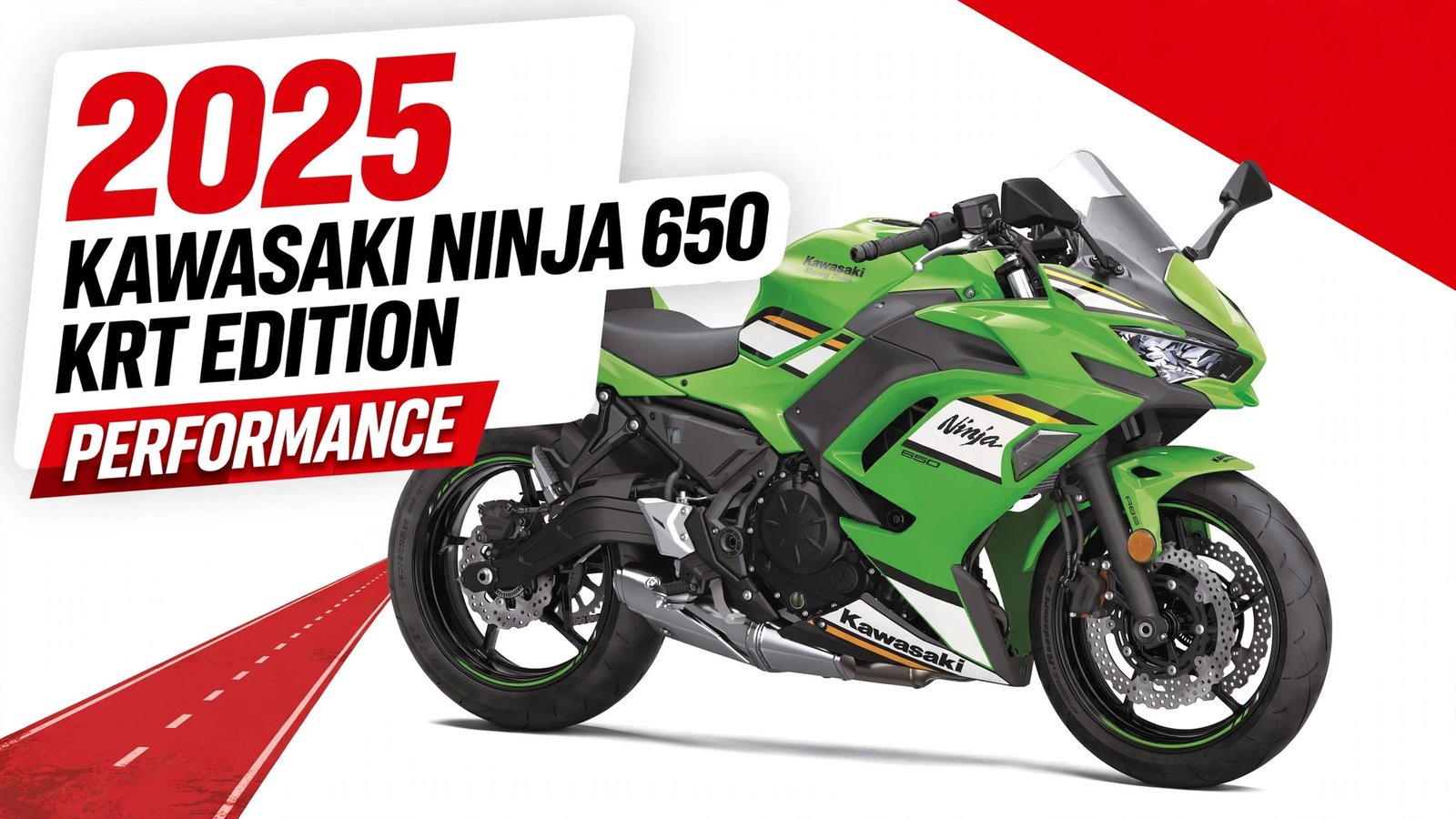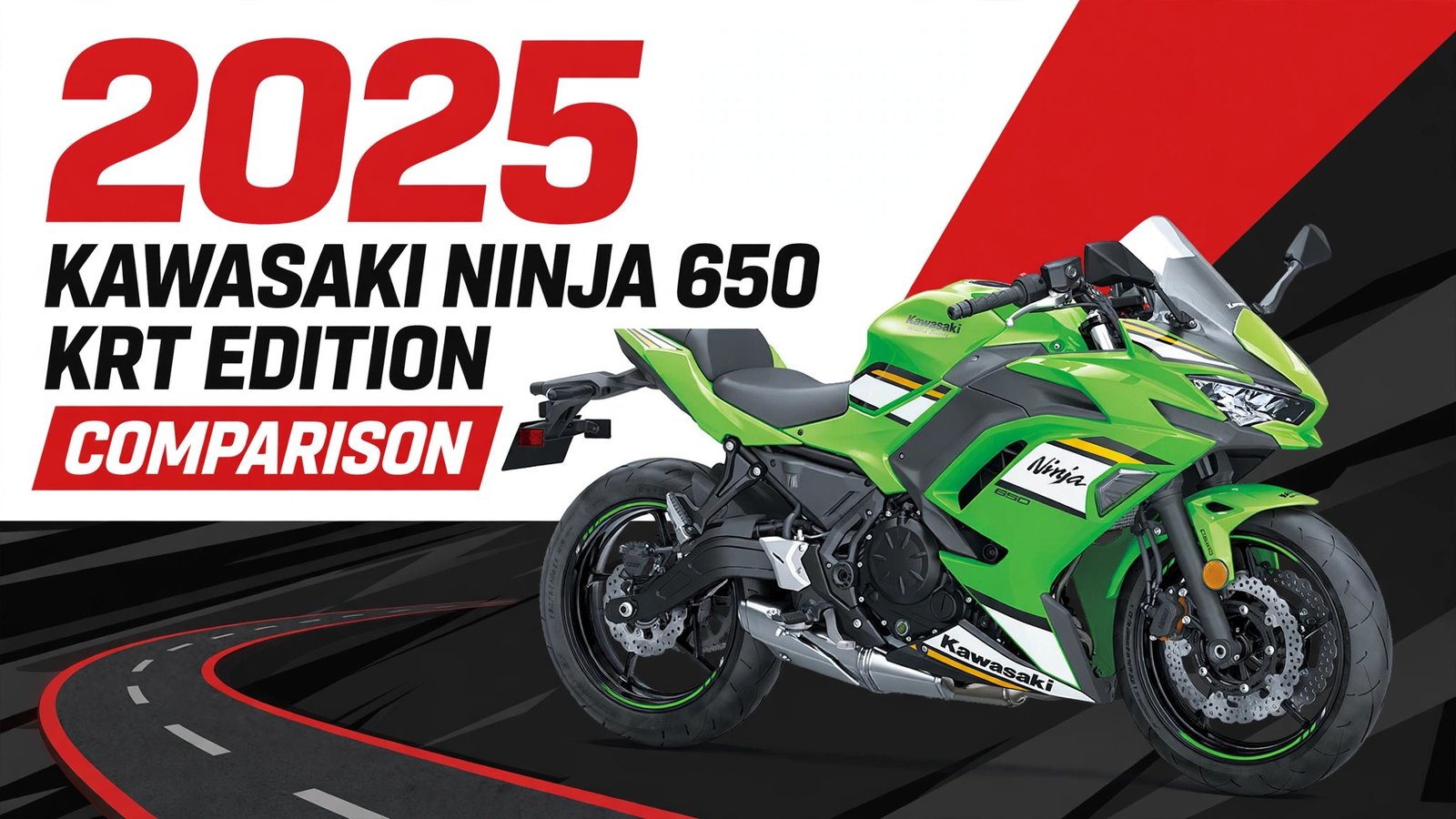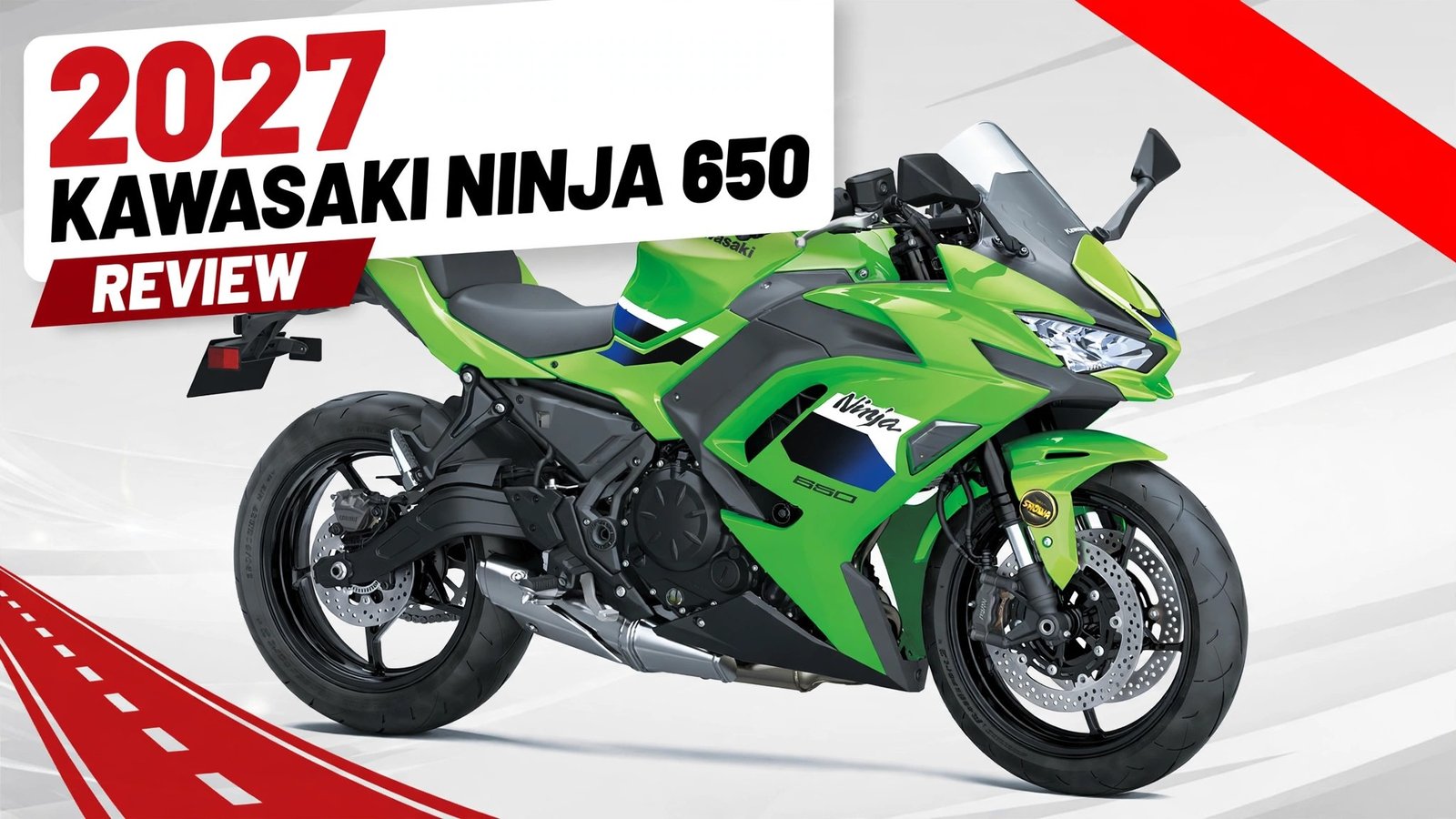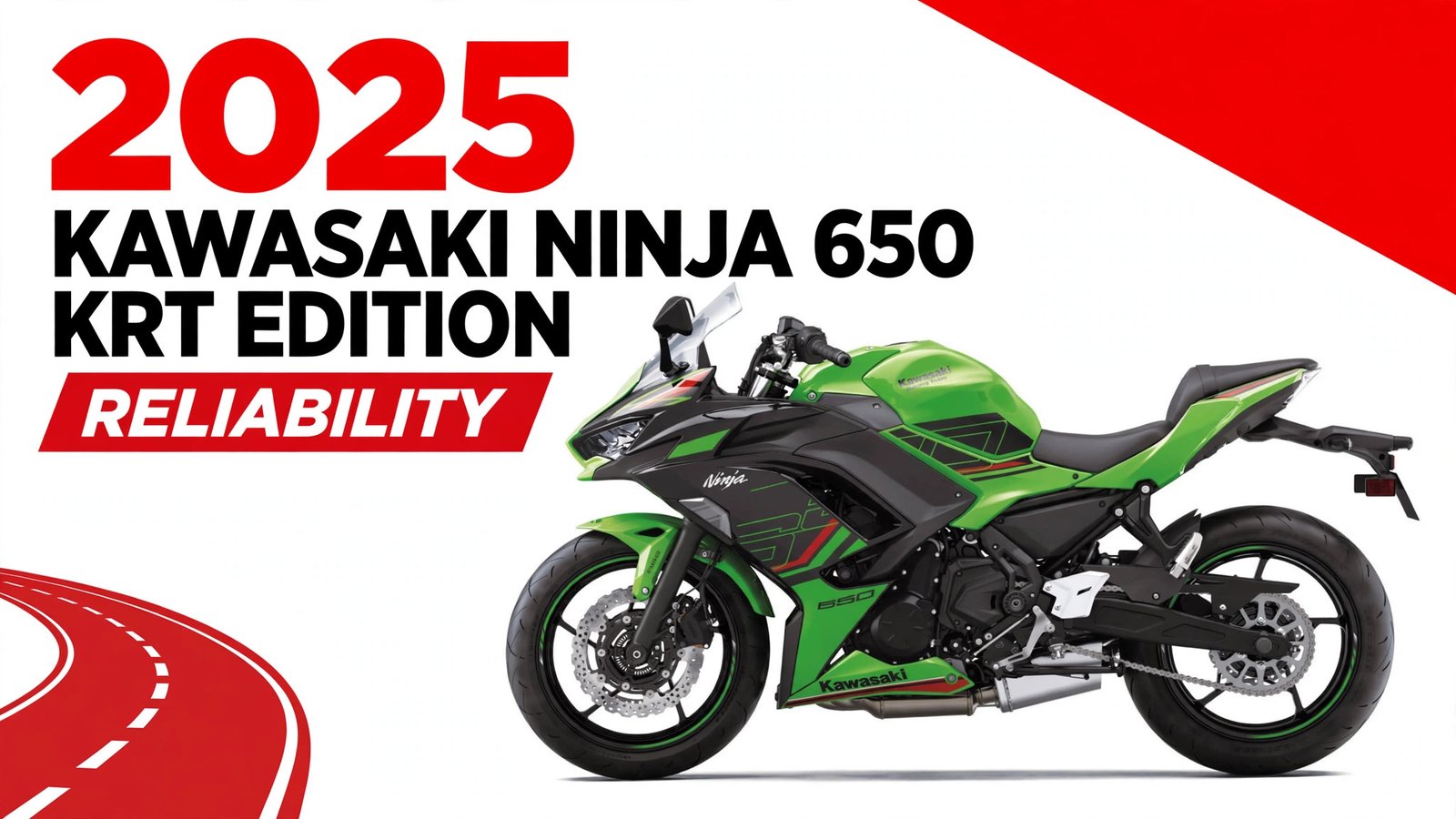
The Kawasaki Ninja 650 KRT Edition is as reliable as the standard Ninja 650, because it is the standard Ninja 650. Nothing under the green paint differs: same 649cc twin, same trellis frame, same brakes, same Bosch ABS, same service schedule. That is the short answer to Kawasaki Ninja 650 KRT Edition reliability — the trim adds no mechanical risk and no mechanical advantage. It also adds a paint-and-decal question on the used market: every green panel is a genuine Kawasaki part, so a plain ABS bike can be dressed as a KRT — and the only way to know what you are buying is to check the bike, its history and its paperwork.
Kawasaki Ninja 650 KRT Edition Reliability Overview
The KRT Edition ran for nine US model years, from 2017 to 2025, and no recall, no technical service bulletin and no known failure pattern ever singled out the KRT trim. So Kawasaki Ninja 650 KRT Edition reliability is really a question about the 650 platform, plus one trim-specific question — whether the green bike in front of you is a factory KRT or a conversion.
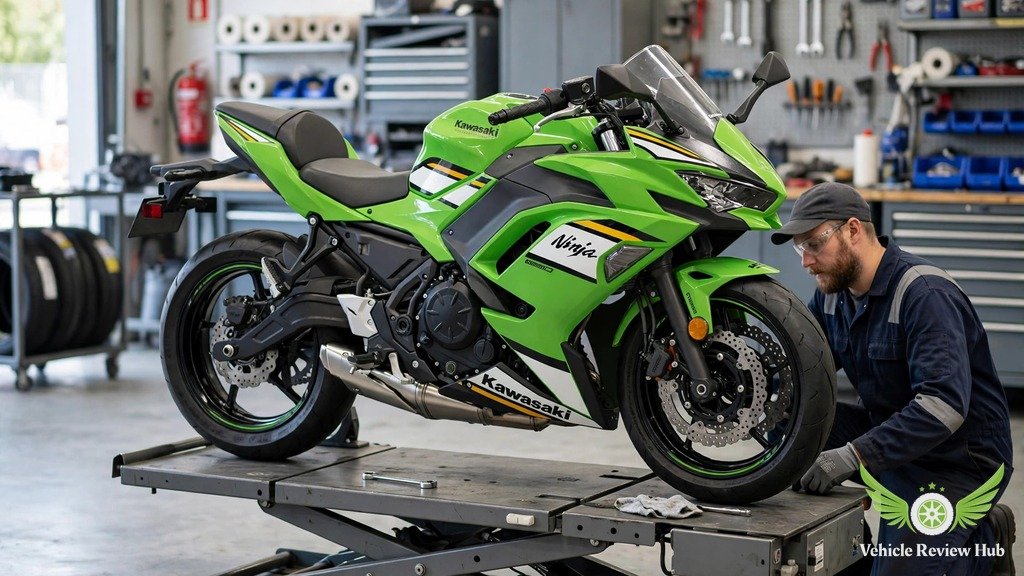
The video below is a dealer walkaround of a used one-owner 2017 KRT ABS with 2,795 miles, fully serviced — a sales video from National Powersports Distributors, not a review. It shows what a well-kept early KRT looks like at low mileage, and what Kawasaki Ninja 650 KRT Edition reliability looks like in practice: the lime green and ebony livery, the condition of the panels, and the state of a bike that has been looked after.
Valve Inspection at 15,000 Miles
The valve check is the big-ticket service item on the 650. The US and Canadian interval is every 24,000 km, and the manual’s own chart converts that to 15,200 miles. The doc rounds it to 15,000 miles, and this Kawasaki Ninja 650 KRT Edition reliability guide keeps that rounded figure while naming the chart column beside it. A KRT that has had its valve check done on schedule is a bike whose owner followed the book; a KRT that has skipped it is a bike whose next owner inherits the job. The valve train is not a known weak point — the interval matters because it is the most involved service, not because the valves fail. The Ninja 650 reliability guide covers the same interval for the standard bike.
How Mileage, Storage and Previous Care Affect Reliability
Mileage, storage and previous care matter more than model year on a KRT, and they matter more than model year for Kawasaki Ninja 650 KRT Edition reliability, because the bike is mechanically identical across its nine years. A 2017 KRT with 2,795 miles and a full service history — like the one-owner bike in the video above — is a better buy than a 2023 KRT with 15,000 miles and no records. Low mileage is not a guarantee: a bike that sat for two years with old fuel and a flat battery can need more work than a bike ridden every week and serviced on time.
Previous care shows up in ten minutes: chain, brake fluid, tyre dates, service book. The paint tells you whether the bike is a factory KRT: a converted plain ABS bike can wear every genuine green part, but the paint thickness, the decal edges and the wear pattern under the panels will not match a factory job on close inspection. The KRT Edition review sets out the nine-year price history, and the same rule applies here for Kawasaki Ninja 650 KRT Edition reliability — the bike’s history matters more than its year.
Kawasaki Ninja 650 KRT Edition Common Problems and Wear Items
The honest way to talk about common problems on the KRT is to say where the information comes from. No recall and no technical service bulletin covers the faults owners talk about online, and Kawasaki has never acknowledged them as defects. What exists is a set of owner-reported patterns — rectifier and regulator trouble, stator failures, cam-chain-tensioner rattle, throttle-body sync drift and fork-seal weeping — reported on forums and in owner groups, not verified by any manufacturer document. This Kawasaki Ninja 650 KRT Edition reliability guide lists them as owner-reported patterns with that caveat.
Both Recalls Predate the Trim
The 650 platform has two recalls in its history, and both happened before the KRT Edition existed. The first, campaign 10V-323 from 2010, covered cowling interference with the brake pedal on roughly 6,700 to 6,800 units. The second, campaign 12V-081 from 2012, covered footpeg circlips on 793 units in total across the 650, the 250 and the Versys — that 793 is the combined total, not the 650’s count alone. Neither campaign touches a 2017 or later bike, and neither names the KRT. The record comes from the Part 573 reports filed with NHTSA: the 10V-323 Part 573 report and the 12V-081 Part 573 report. A buyer checking a KRT’s recall history will find nothing to fix — but the check is still worth doing, since Kawasaki Ninja 650 KRT Edition reliability is judged on the whole history.
One warning: the NHTSA recalls API returns a zero count for every Ninja 650 model year from 2006 to 2025, for every model-name variant tried. That zero is a matching failure in the API, not a clean record — the two campaigns above are real and verified from the Part 573 PDFs. This Kawasaki Ninja 650 KRT Edition reliability guide states the record as it is: two campaigns, both before the trim existed.
| Campaign | Year | Issue | Units | KRT affected? |
|---|---|---|---|---|
| 10V-323 | 2010 | Cowling vs brake pedal interference | About 6,700–6,800 | No — predates the 2017 debut |
| 12V-081 | 2012 | Footpeg circlips | 793 total across 650, 250 and Versys | No — predates the 2017 debut |
Note: The 793 units for 12V-081 is the combined total for the 650, the 250 and the Versys — never the 650’s count alone. The 18V-580 campaign belongs to the Ninja H2 SX, not the 650. Both campaigns are verified from the NHTSA Part 573 PDFs — the record behind Kawasaki Ninja 650 KRT Edition reliability is the filings, not the API.
No KRT in Any US Campaign
No recall in the United States has ever named the KRT Edition or any KRT trim. The ABS system itself has never been recalled on the 650. The Bosch 9.1M two-channel ABS — documented on 2017-and-later bikes only — is conventional: not lean-sensitive, not cornering ABS, and no 650 carries an IMU. If the ABS fails, the warning lamp comes on and the conventional brakes keep working. The Ninja 650 ABS reliability guide covers the same ABS record, and the KRT shares it exactly. For a buyer, the practical point is simple: the KRT’s recall file is empty, and the only history that matters for Kawasaki Ninja 650 KRT Edition reliability is the individual bike’s service record.
Kawasaki Ninja 650 KRT Edition Maintenance Schedule and Servicing
The KRT follows the standard 650 service schedule exactly — no KRT-specific item, no extra inspection, no different interval. The schedule below is from the 650’s own manual and the 2017 service manual, and this Kawasaki Ninja 650 KRT Edition reliability guide recommends following it to the letter.
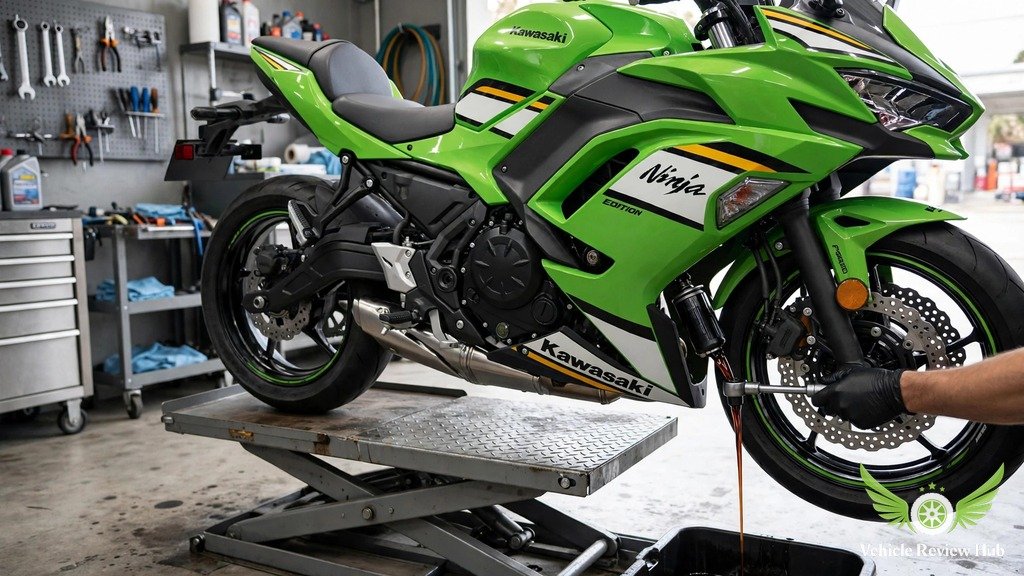
Service Every 7,500 Miles
Service is due every 7,500 miles or 12,000 km, or yearly — whichever comes first — and that interval is the backbone of Kawasaki Ninja 650 KRT Edition reliability. The oil change takes 1.8 litres of 10W-40, and the spark plugs are NGK CR9EIA-9, changed every 7,500 miles with a gap of 0.8 to 0.9 mm. Brake fluid is changed every two years. The RevZilla 2017 first ride tested the KRT bike itself at the Paso Robles launch. A used KRT with a stamped book has been looked after; a used KRT with gaps in the book needs a baseline service the day it changes hands.
| Service item | Interval | Detail |
|---|---|---|
| Routine service | Every 7,500 miles / 12,000 km or yearly | Whichever comes first |
| Engine oil | Every service | 1.8 L, 10W-40 |
| Spark plugs | Every 7,500 miles | NGK CR9EIA-9, gap 0.8–0.9 mm |
| Valve inspection | Every 24,000 km | Manual chart reads 15,200 miles; doc rounds to 15,000 |
| Brake fluid | Every 2 years | Front and rear circuits |
Note: Intervals are from the 650’s own manual and the 2017 service manual. The valve interval is 24,000 km; the chart reads 15,200 miles, and this Kawasaki Ninja 650 KRT Edition reliability guide keeps the doc’s 15,000-mile rounding.
Europe’s 42,000 km Is Not Ours
One figure that causes confusion online is the European valve interval of 42,000 km. That is the European schedule, and it does not apply to US bikes. The US and Canadian interval is 24,000 km. This Kawasaki Ninja 650 KRT Edition reliability guide names the US interval only.
Kawasaki Ninja 650 KRT Edition Tires, Brakes and Suspension Maintenance
Tyres, brakes and suspension are the wear items that decide how a used KRT feels on the road, and they are also the items a buyer can check without tools. The KRT runs 120/70-17 front and 160/60-17 rear tyres — Dunlop Sportmax D214 on 2017 to 2019 bikes and Roadsport 2 on 2020 to 2024 bikes. Curb weight is 423.4 lb for the ABS bike and 419 lb for the non-ABS bike — identical to the plain 650 in every year. The brakes are dual 300 mm petal-type front discs with Nissin two-piston calipers and a single 220 mm petal rear disc. The fork is a 41 mm telescopic unit, non-adjustable, with 4.9 inches of travel; the rear shock is preload-adjustable only, with 5.1 inches of travel. None of that is KRT-specific. This Kawasaki Ninja 650 KRT Edition reliability guide treats these as platform items, because that is what they are.
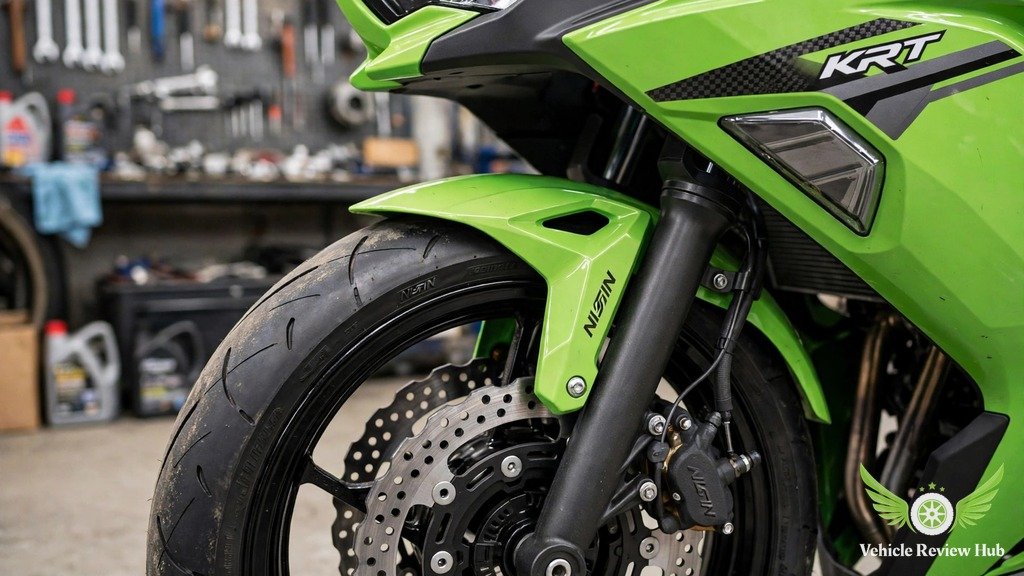
Green Panels Cost the Same as Any Colour
The green panels are the one place buyers expect a KRT tax, and there is none. A green upper cowling is the same part as a black or orange one with a different colour suffix — same part, same price, no premium for the colour. The part numbers are verified from Kawasaki’s own diagrams: the 2017 upper cowling in lime green is 55057-5358-777, and the 2024 upper cowling centre in lime green is 55028-0713-777, on the same diagram beside the same cowling in other colours. No live price could be verified for any green panel after three search passes, so this Kawasaki Ninja 650 KRT Edition reliability guide prints no panel price — and the figure from the doc heading is dropped entirely, because it could not be verified. The green panels cost no more than any colour. The Kawasaki 2025 KRT decals diagram lists the wheel patterns and the rim stripe applicator, and the Kawasaki 2024 KRT cowling diagram lists the green cowling beside its siblings.
Tire, Brake and Suspension Checks That Matter
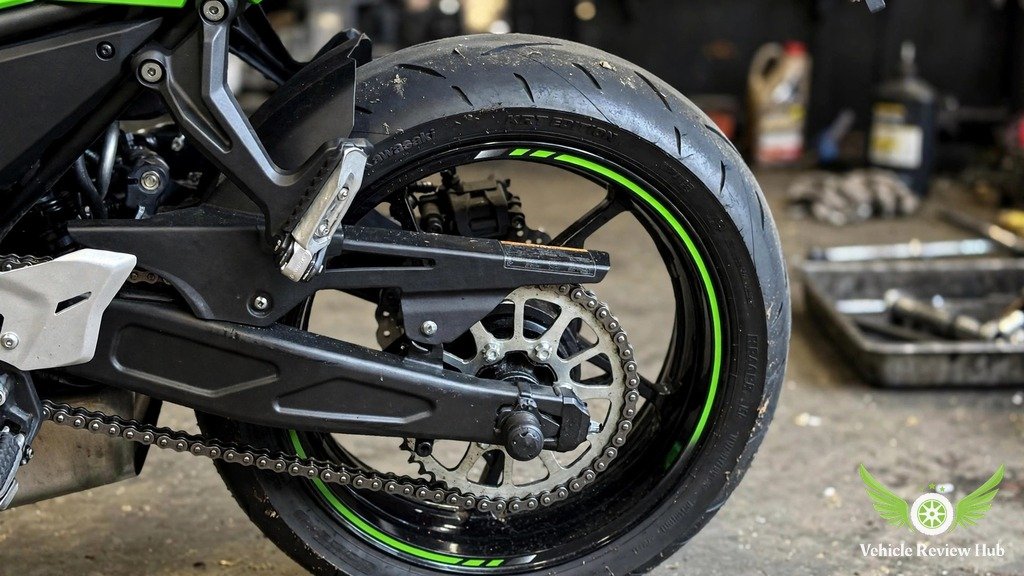
Before buying a used KRT, check the wear items in this order. Start with the tyres: tread depth and date code on the sidewall, and feel for flat spots or cracking on a bike that has sat. Then the brakes: pad thickness through the caliper, scoring or a lip on the discs, and the fluid colour in the reservoir — dark fluid means the two-year change was skipped. Then the suspension: oil weeping on the fork tubes, and bounce the rear to feel whether the shock still damps. Then the chain: slack against the manual, tight spots by rolling the bike, and sprocket teeth for hooking. The Motorcycle.com 2017 review notes the same soft, non-adjustable fork and preload-only shock, and the checks above are the ones that catch their wear — the checks that protect Kawasaki Ninja 650 KRT Edition reliability.
| Wear item | What to check | Warning sign |
|---|---|---|
| Tyres | Tread depth, date code, cracking | Old rubber, flat spots, sidewall cracks |
| Front brakes | Pad thickness, disc scoring, fluid colour | Thin pads, lipped discs, dark fluid |
| Rear brake | Pad thickness, disc condition | Thin pads, scored disc |
| Fork | Seal weeping, tube condition | Oil on the tubes, pitting |
| Rear shock | Damping, preload setting | No damping, sagging ride height |
| Chain and sprockets | Slack per the manual, tight spots, teeth | Hooked teeth, tight spots, rust |
Note: Chain slack and tyre pressure figures are deliberately not printed in this Kawasaki Ninja 650 KRT Edition reliability guide — they could not be verified from the 650’s own manual. Read them from the owner’s manual or the swingarm label.
Kawasaki Ninja 650 KRT Edition Maintenance and Ownership Costs
Owning a KRT costs the same as owning a standard 650, and this section is deliberately narrow about money: no cost table in this Kawasaki Ninja 650 KRT Edition reliability guide quotes a labour rate or a service total, because no verified figure exists for them. What can be stated honestly is what the bike needs, what its parts are, and what dated asking prices looked like in November 2026.
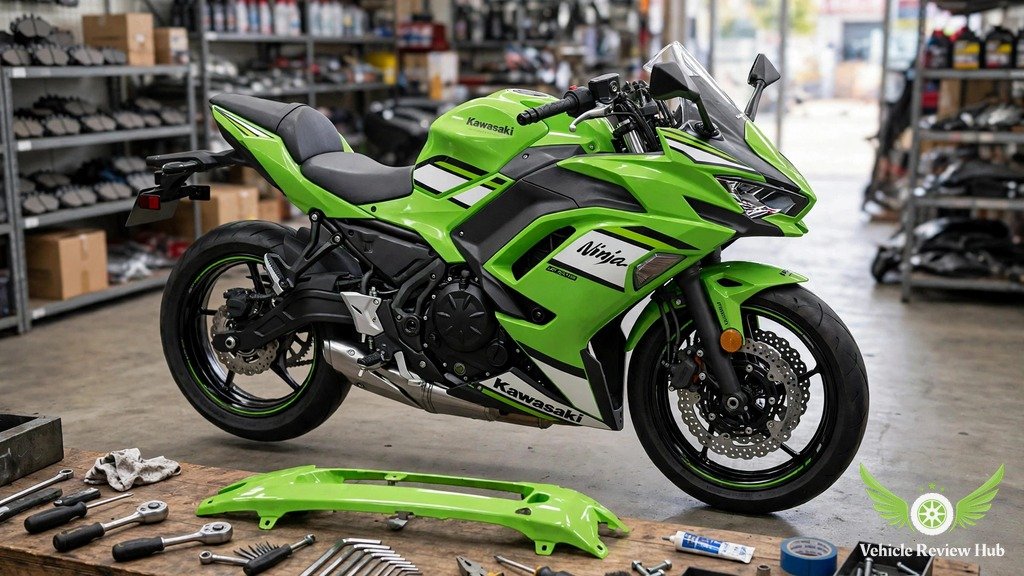
Fuel, Routine Servicing, Tires and Replacement Parts
Fuel economy on the 650 platform is genuinely good. MCN’s long-term test bike averaged 49.44 mpg over 9,500 miles, with gentle cruising over 60 mpg and a best of 69.54 mpg. Rider Magazine recorded 51 mpg on its 2017 first ride. Those are the figures a buyer can plan around, and they apply to the KRT exactly because the hardware is identical — the same figures behind Kawasaki Ninja 650 KRT Edition reliability. The KRT Edition performance guide carries the full fuel-economy record, and the KRT Edition comparison shows what the leftover bikes cost against the new 2027 ABS.
| Part | Kawasaki part number | Year |
|---|---|---|
| Upper cowling, lime green | 55057-5358-777 | 2017 |
| Upper cowling centre, lime green | 55028-0713-777 | 2024 |
| Fuel tank mark, KRT | 56054-4090 | 2025 |
| Front fender mark, KRT | 56054-4091 | 2025 |
| Wheel pattern, black | 56076-2170 | 2025 |
| Rim stripe applicator | 57001-1752 | 2025 |
Note: Part numbers are verified from Kawasaki’s own parts diagrams. No new price is printed for any of these parts in this Kawasaki Ninja 650 KRT Edition reliability guide — no live price could be verified.
Cloned KRTs Are Possible
Because the KRT is paint and decals only, and every piece is sold separately with a published part number, a plain 2025 ABS can be converted to full KRT appearance with genuine Kawasaki parts. In 2025 the conversion is undetectable on paper: the factory KRT and the plain ABS share the model code EX650PSFAL, so the VIN and the code do not distinguish a factory KRT from a converted one. A converted bike is still a genuine 650 wearing genuine parts, but the buyer should pay for the bike, not the paint, and judge Kawasaki Ninja 650 KRT Edition reliability on the bike, not the livery. The Ninja 400 reliability guide covers the same used-bike checks for a discontinued model, and the same discipline applies here: buy the history, not the colour.
In November 2026, new 2025 KRT ABS leftovers were listed at $7,999 at MSRP at Columbia Powersports Center, $7,408 total at Miller’s Motorsports of Rostraver, and $6,999 total at one dealer. Used examples included a 2022 KRT ABS at $5,999 asking with 13,788 miles and a 2022 KRT at $4,999 asking with 24,605 miles, both at MotoSport Hillsboro. No resale percentage is claimed, and no used price is a standing value for Kawasaki Ninja 650 KRT Edition reliability — these are asking prices on a date, and the market moves.
How to Keep a Kawasaki Ninja 650 KRT Edition Reliable
Keeping a KRT reliable is unglamorous work: service it on time, store it dry, and inspect it regularly. This Kawasaki Ninja 650 KRT Edition reliability guide closes with the routine that keeps the bike clean, serviced and honest.
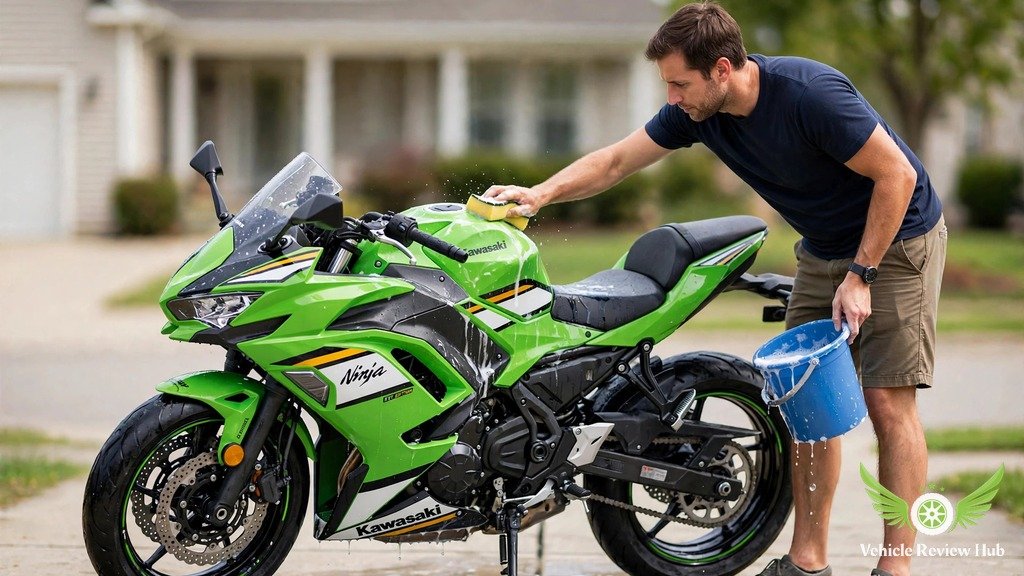
Preventive Maintenance, Records and Regular Inspections
Preventive maintenance on the KRT is the 7,500-mile schedule, done on time, with records kept. Keep every receipt and stamped service-book entry — the next buyer pays for a documented bike. Inspect the bike regularly between services: chain, brake fluid, fork seals, and the cam-chain rattle owners report on high-mileage bikes. None of this is difficult, and all of it is cheaper than the repair it prevents — the cheapest way to protect Kawasaki Ninja 650 KRT Edition reliability.
| Check | When | Why it matters |
|---|---|---|
| Service book and receipts | Before buying; every service after | Proves the 7,500-mile schedule was followed |
| Valve inspection record | At 24,000 km / 15,200 miles | The biggest service job; a skipped one is inherited |
| Recall history | Before buying | Two campaigns predate the trim; confirm none applies |
| Paint and decal inspection | Before buying | Factory KRT vs converted plain ABS |
| Chain, brakes, tyres, fork seals | Every inspection | The wear items that decide how the bike feels |
| Storage condition | Ongoing | Dry storage protects panels, fasteners and electrics |
Note: This checklist is for a used-KRT purchase and for ongoing ownership. The valve and service intervals in this Kawasaki Ninja 650 KRT Edition reliability guide are the manual’s figures, not estimates.
Clearcoat Question Unverified
One question about the KRT’s panels has no answer, and this guide says so plainly: no Kawasaki source says the KRT panels carry extra clearcoat, and no source says they do not. What the parts diagrams do show is that the green cowling sits in the same cowling family as the other colours, differing only by its colour suffix. Until Kawasaki or a paint shop publishes a measurement, the clearcoat question stays open, and the right way to look after the panels — and Kawasaki Ninja 650 KRT Edition reliability — is the ordinary way: wash them, dry them, keep them out of the sun when stored, and touch up stone chips before they spread.
Kawasaki Ninja 650 KRT Edition Reliability Frequently Asked Questions
These are the direct answers to the questions buyers ask most about Kawasaki Ninja 650 KRT Edition reliability — recalls, service intervals, parts, clones and the used-bike checks that matter.
Are there any KRT-specific recalls?
No. Both platform recalls — 10V-323 from 2010 and 12V-081 from 2012 — predate the KRT Edition’s 2017 debut, and no recall has ever named the KRT trim. The ABS system has no recall of its own on the 650. Kawasaki Ninja 650 KRT Edition reliability starts from a clean recall file, and the buyer checks the individual bike’s service record instead.
What is the valve-check interval?
Every 24,000 km. The manual chart’s mile column reads 15,200 miles, and the doc rounds it to 15,000 miles. The European interval of 42,000 km does not apply to US bikes. Ask for the receipt on a used KRT — a skipped valve check is a job the next owner inherits, and the single biggest service risk to Kawasaki Ninja 650 KRT Edition reliability.
How often is servicing?
Every 7,500 miles or 12,000 km, or yearly, whichever comes first. Oil is 1.8 litres of 10W-40, plugs are NGK CR9EIA-9 changed every 7,500 miles with a 0.8 to 0.9 mm gap, and brake fluid is changed every two years. Kawasaki Ninja 650 KRT Edition reliability depends on following that schedule, because the KRT follows the standard 650 schedule exactly.
Can I turn a plain 650 into a KRT?
Yes. Every green panel and KRT decal is sold separately by Kawasaki with a published part number — the 2017 upper cowling is 55057-5358-777, the 2024 upper cowling centre is 55028-0713-777, and the 2025 wheel pattern is 56076-2170. In 2025 a conversion is indistinguishable on paper, because the factory KRT and the plain ABS share the model code EX650PSFAL, so check the paint, the decals and the paperwork before paying for the livery — the check that protects Kawasaki Ninja 650 KRT Edition reliability.
Do green panels cost more?
No. A green panel is the same part as the same panel in any other colour, differing only by its colour suffix, and it costs the same as any colour. No live price could be verified for any green panel, so no panel price is printed in this guide — and the unverified figure from the doc heading is dropped entirely. There is no KRT tax on parts, and Kawasaki Ninja 650 KRT Edition reliability is unaffected by panel colour.
What should I check on a used KRT?
Check the clone question first — paint thickness, decal edges and original paperwork — then the service book and the valve-check receipt, the recall history, the mileage and storage condition, and the wear items: tyres, brakes, fork seals and chain. Kawasaki Ninja 650 KRT Edition reliability is the 650 platform’s reliability plus the bike’s own history, so buy the history, not the colour.