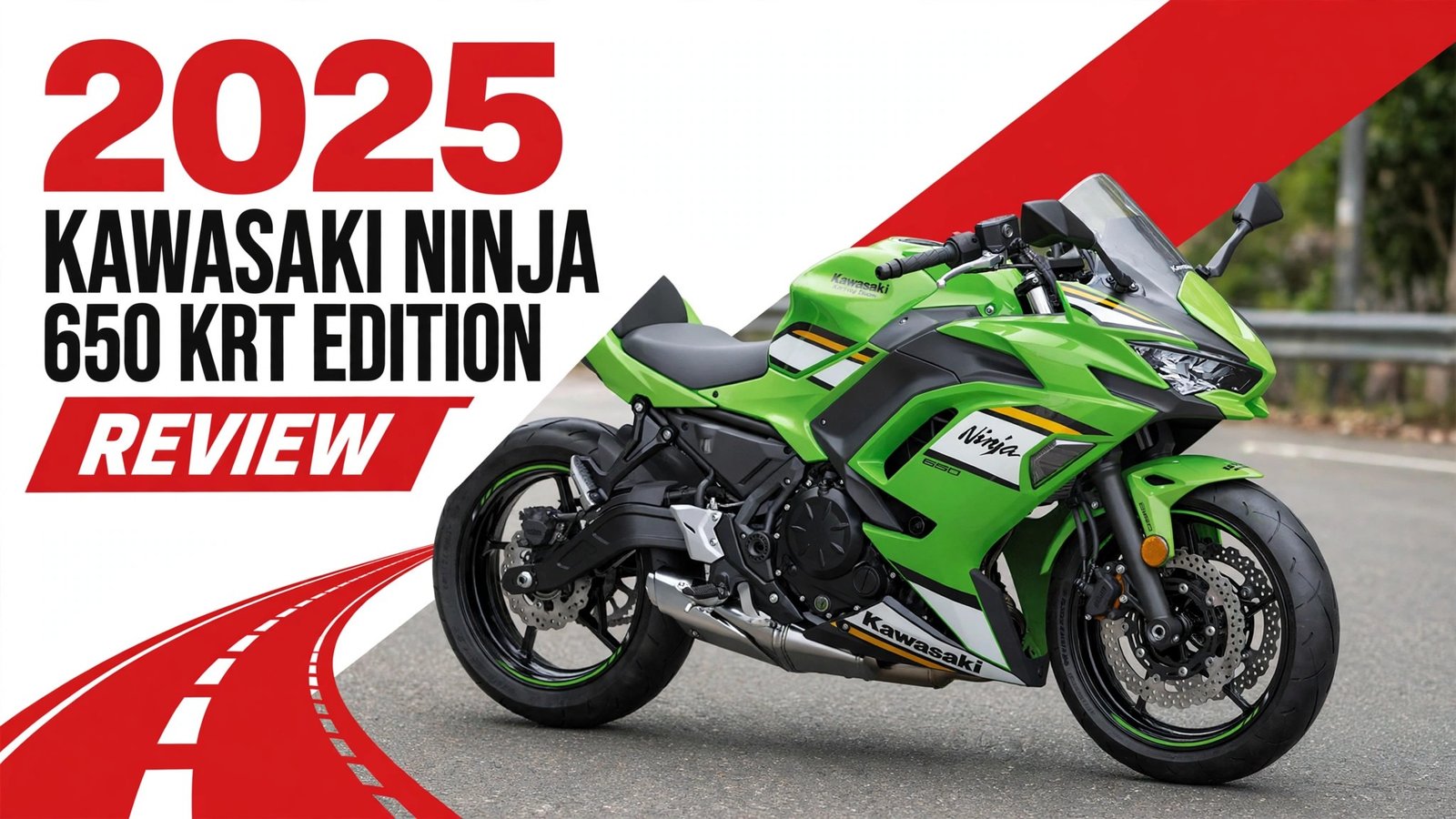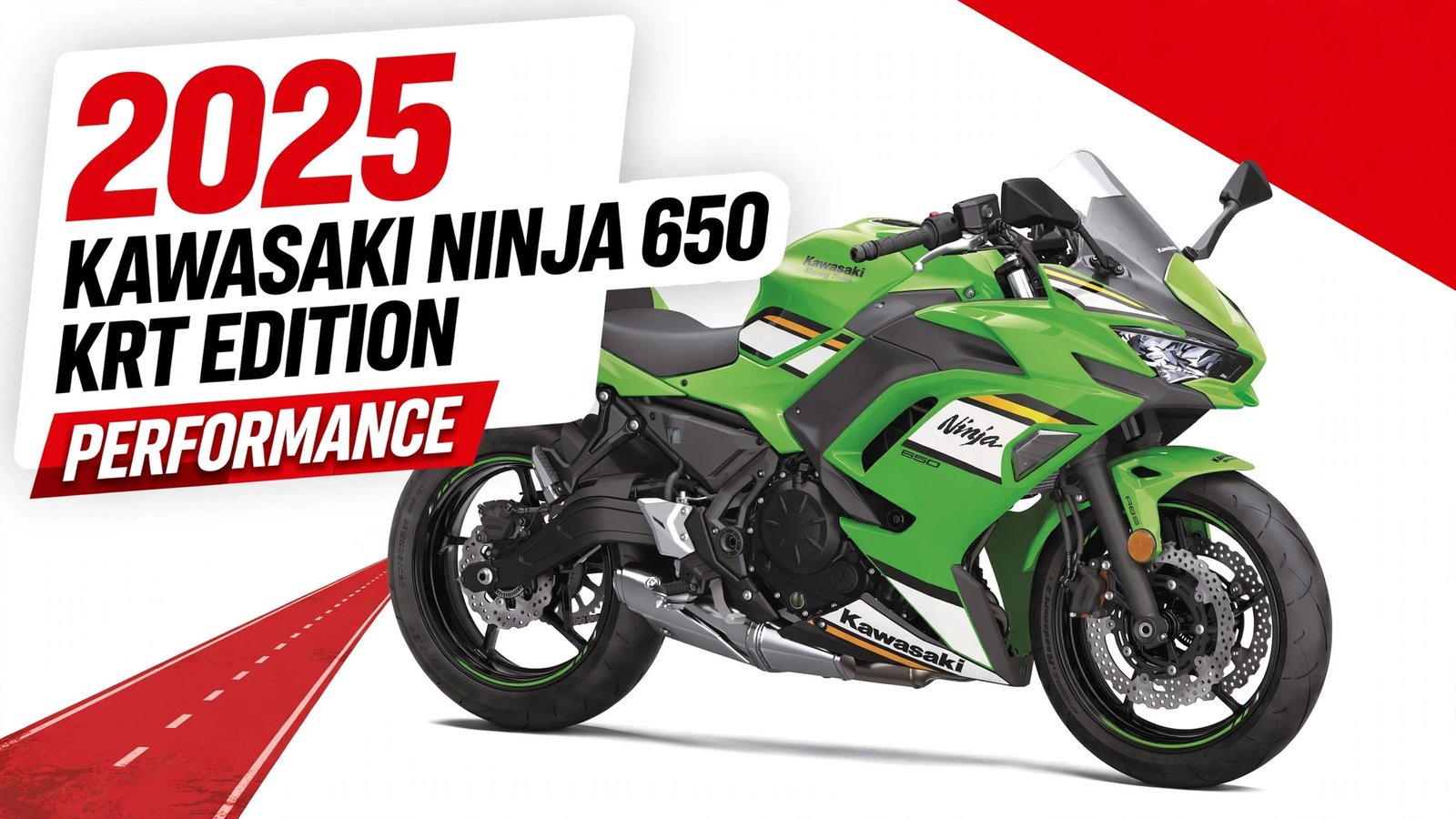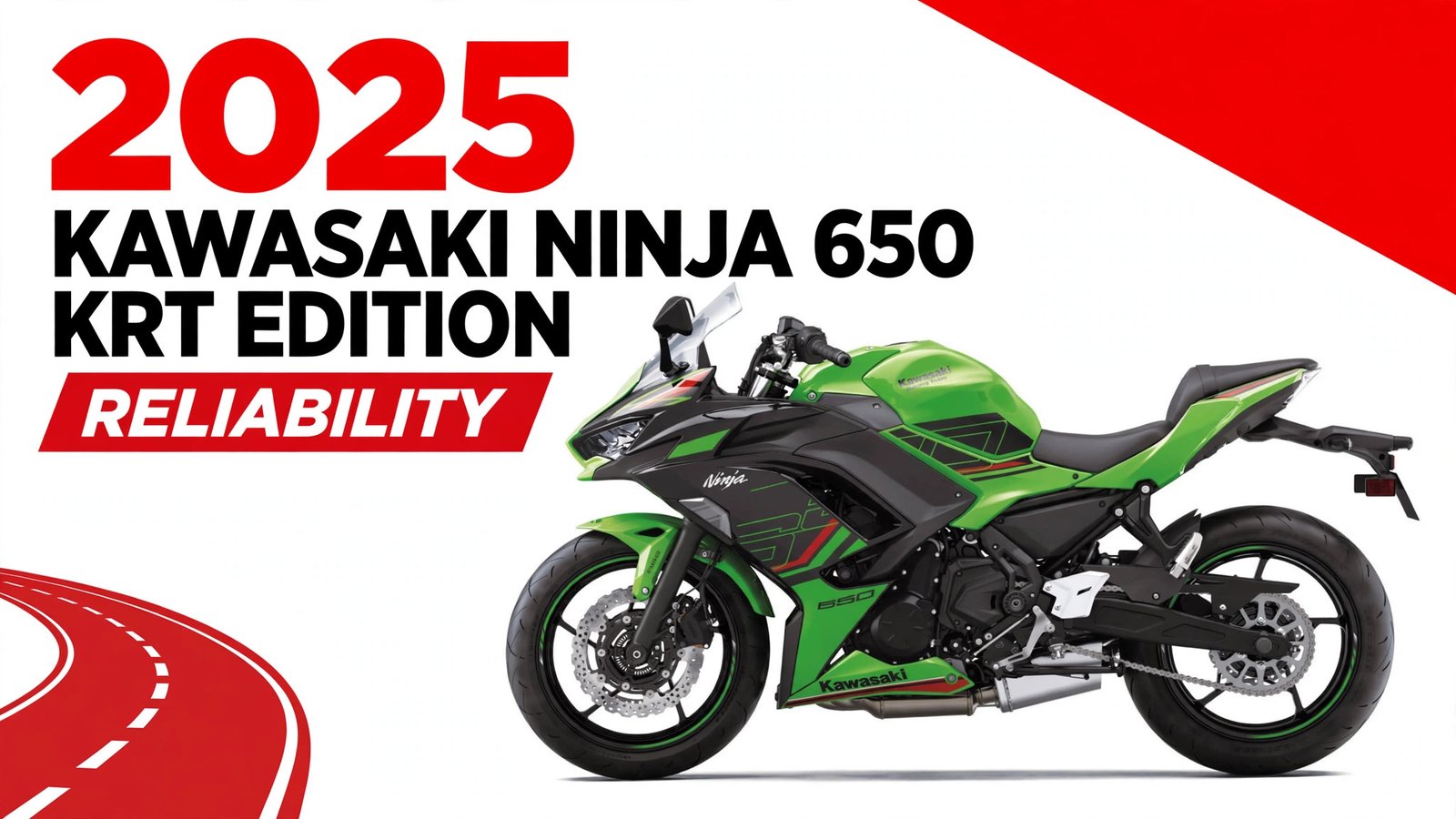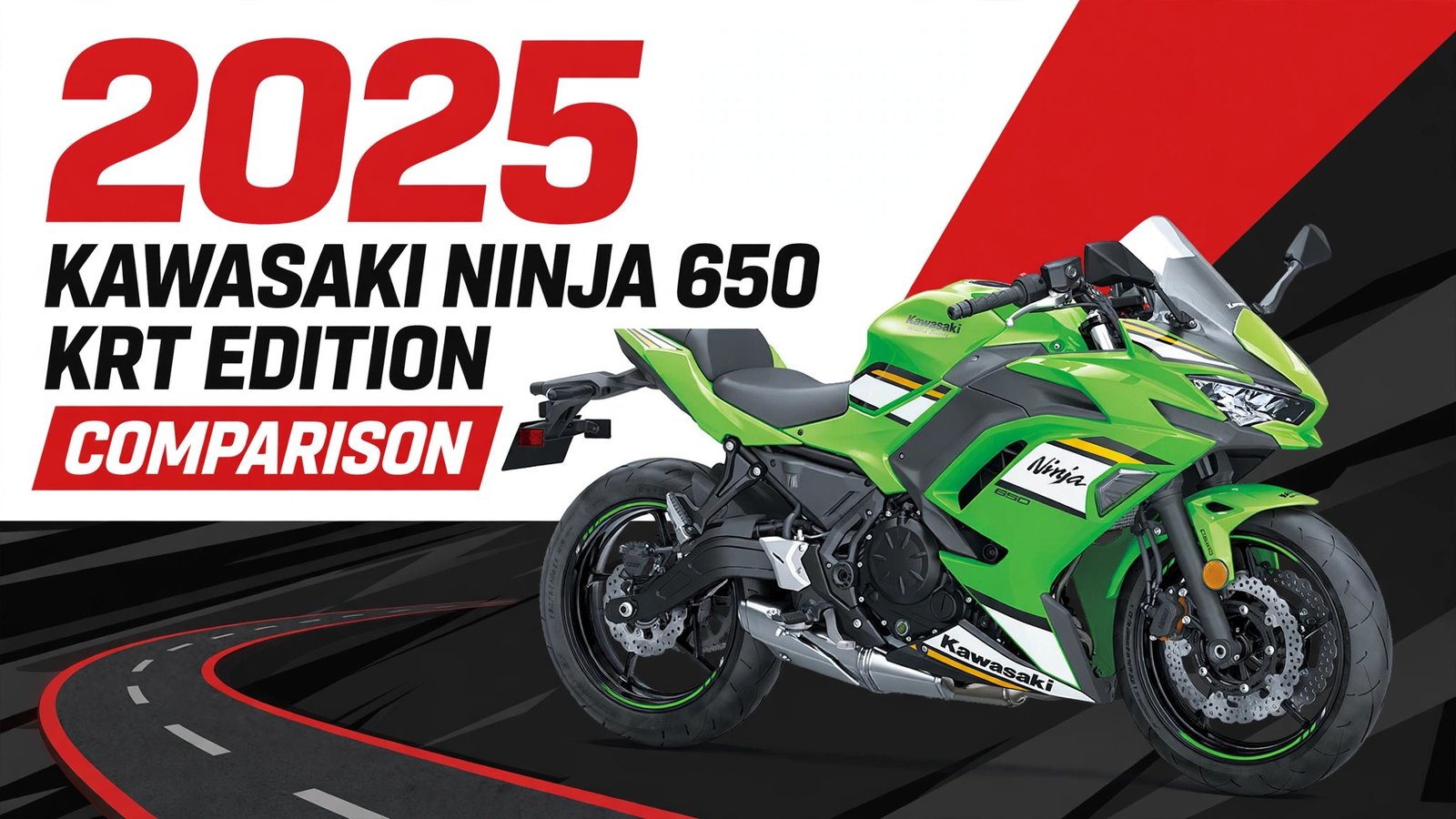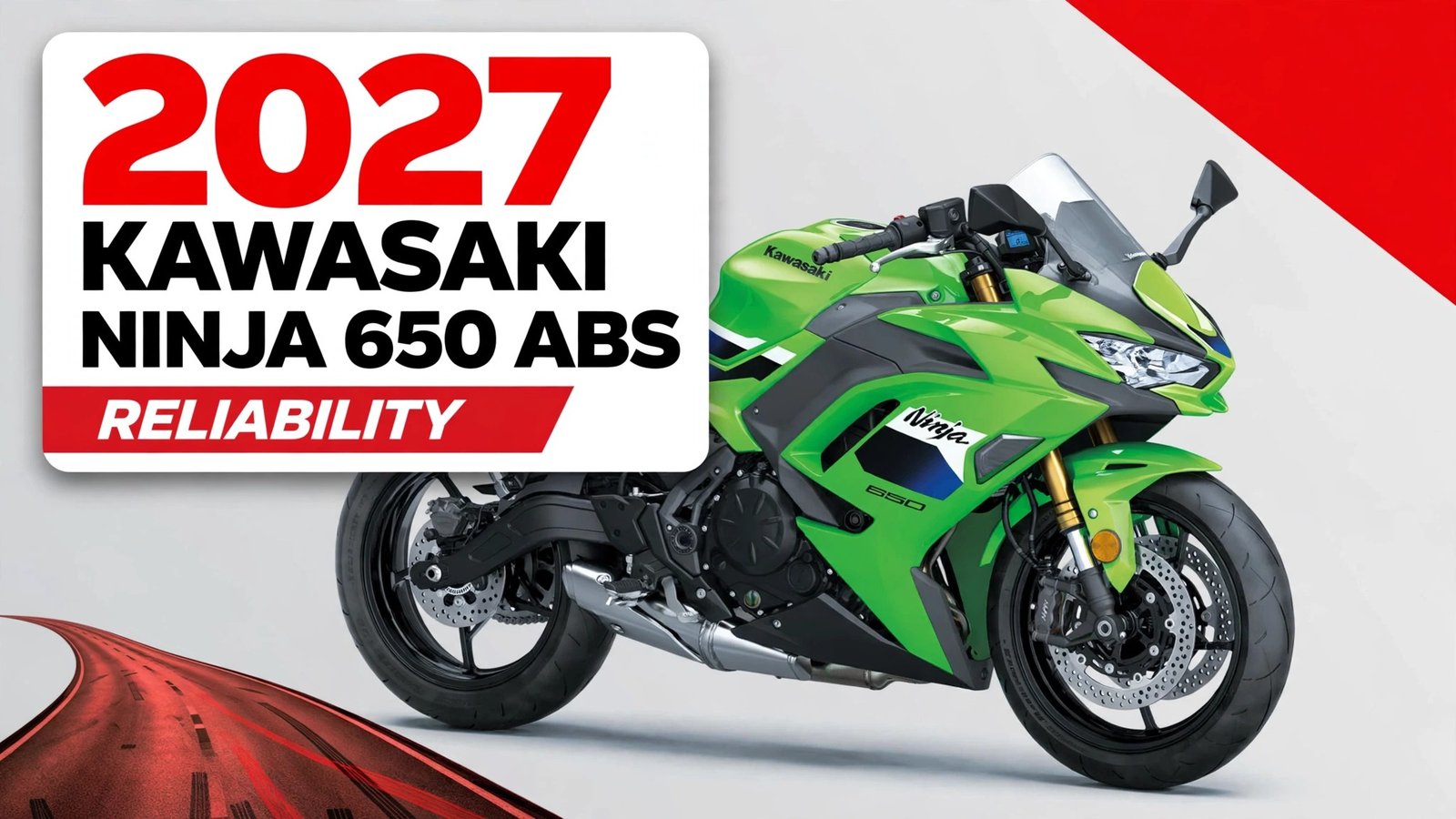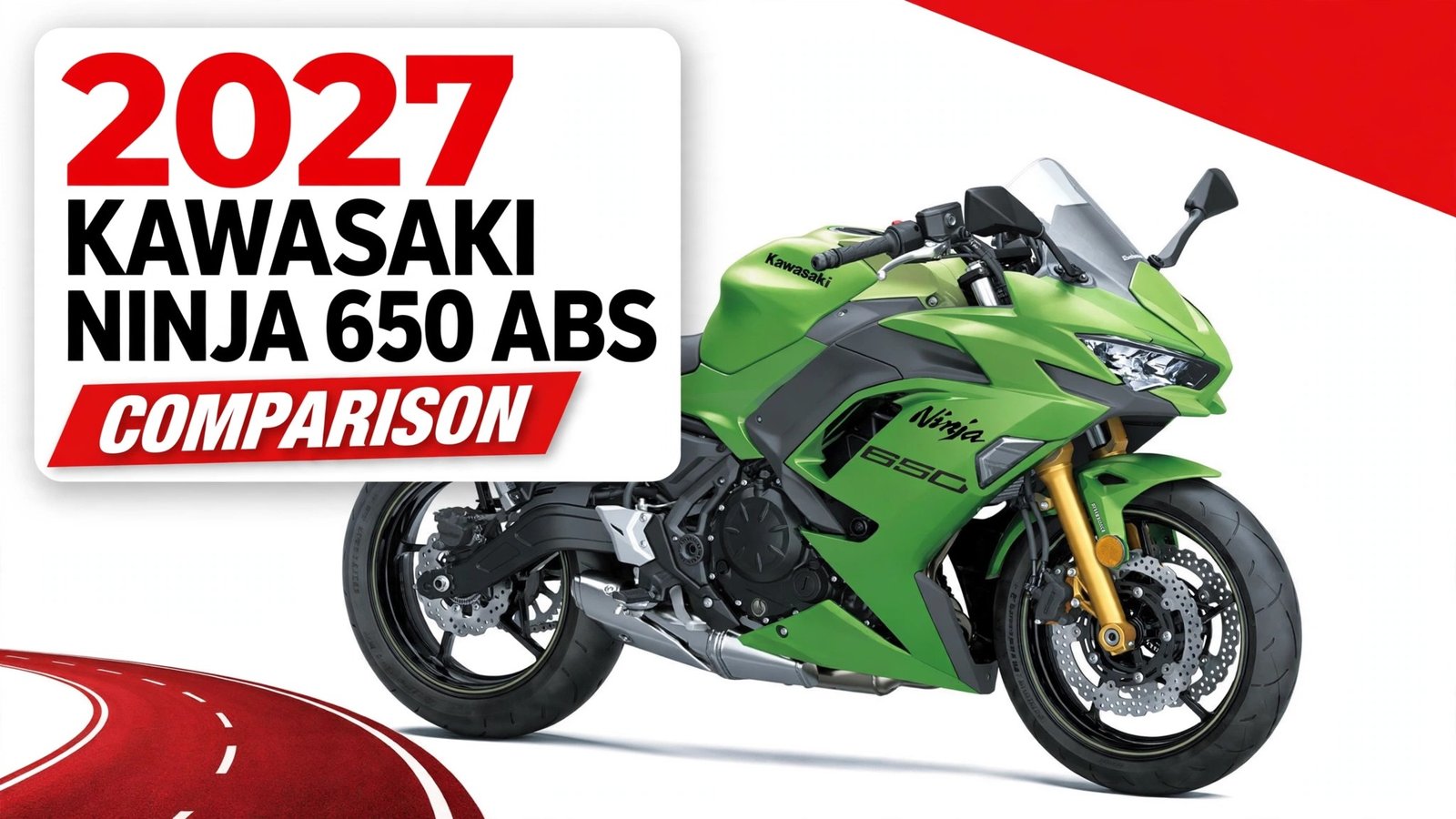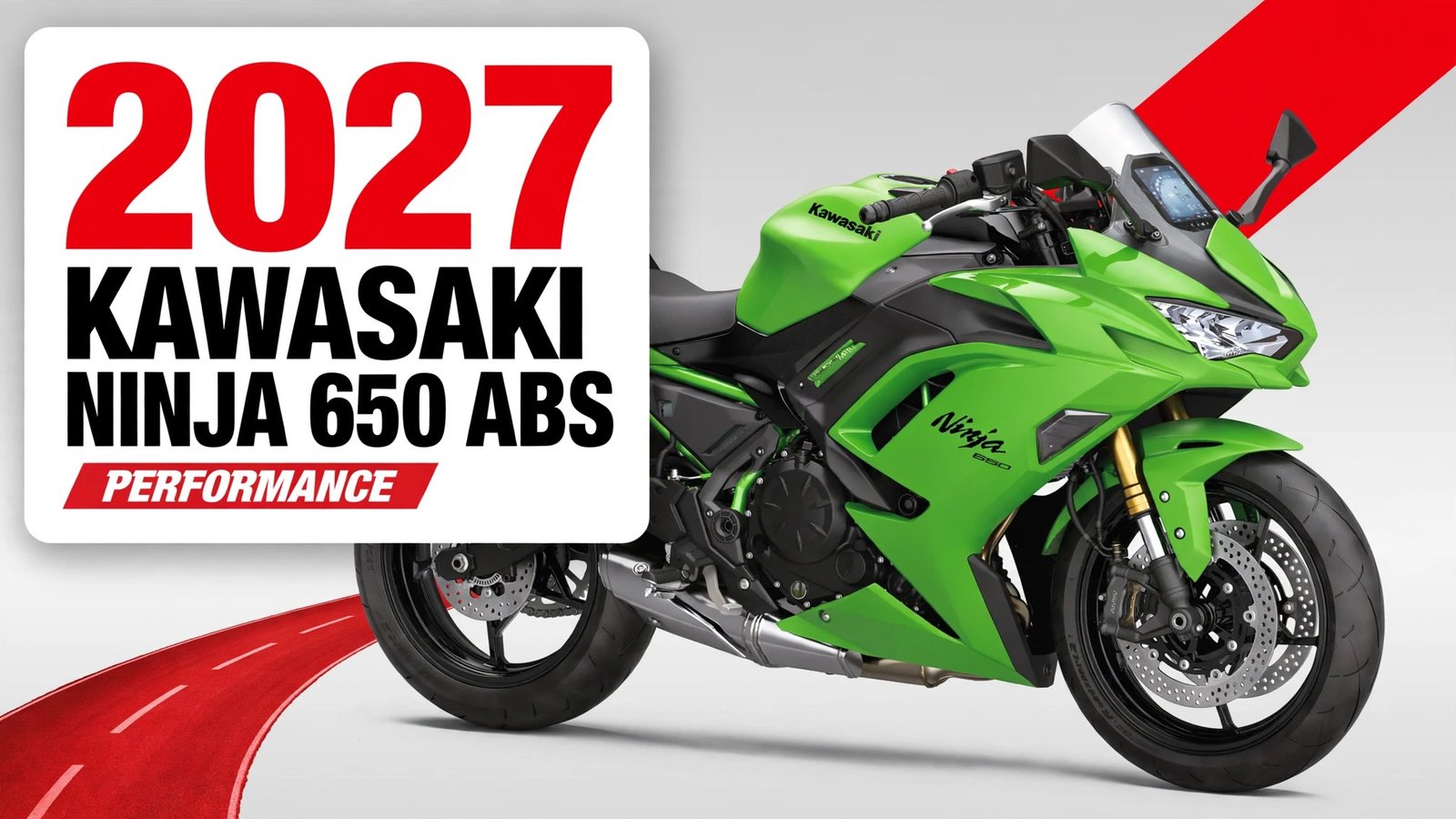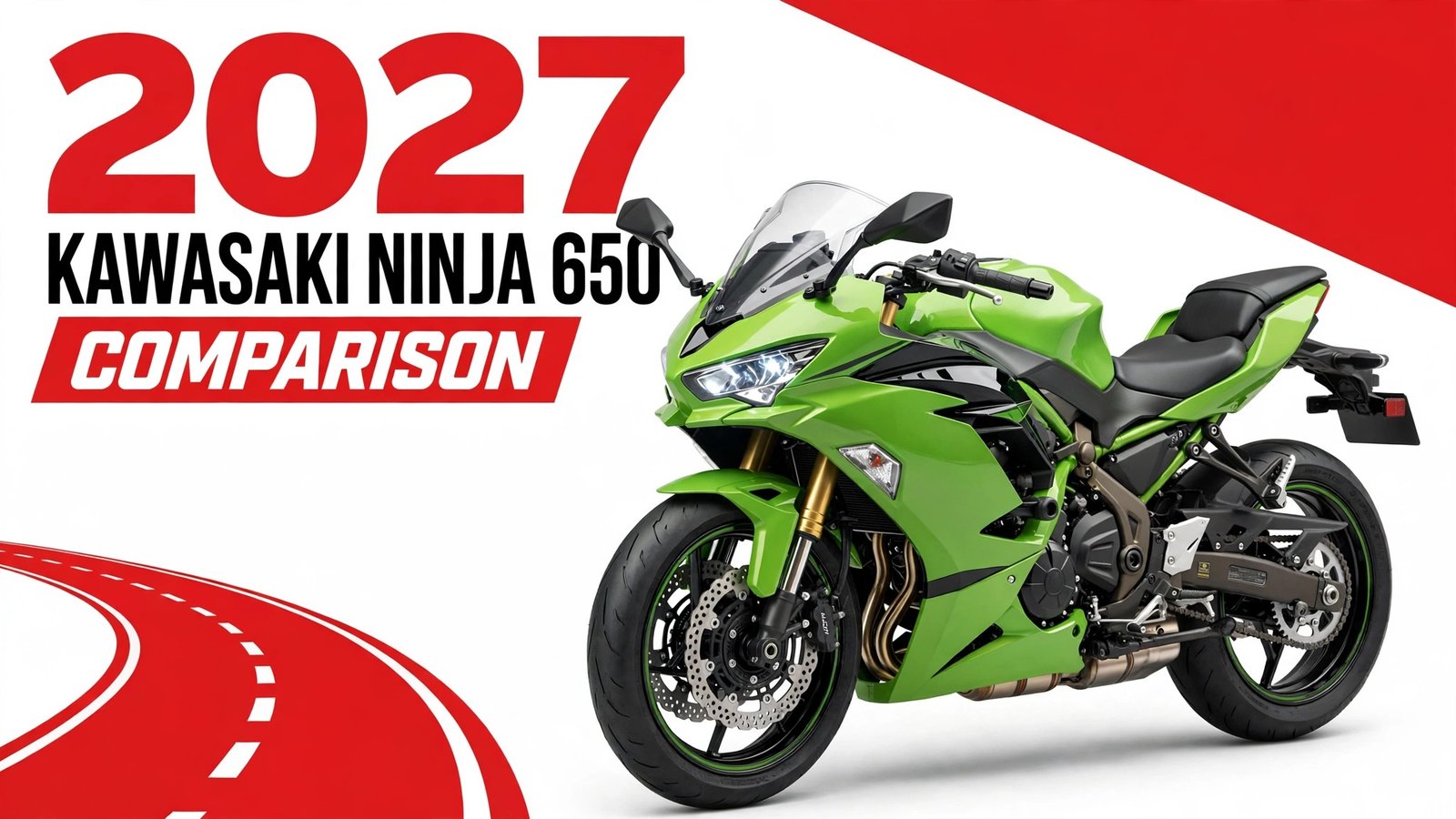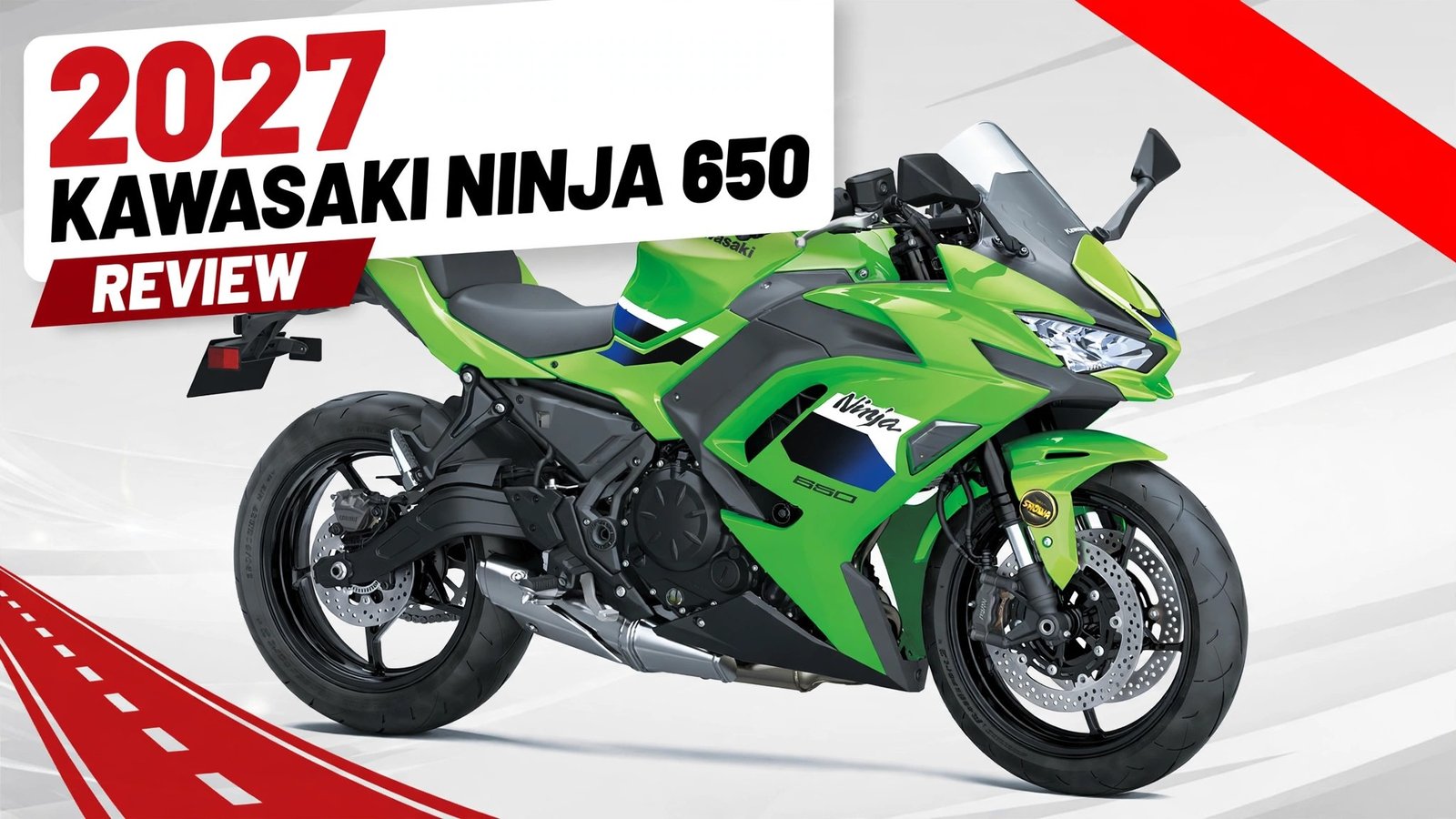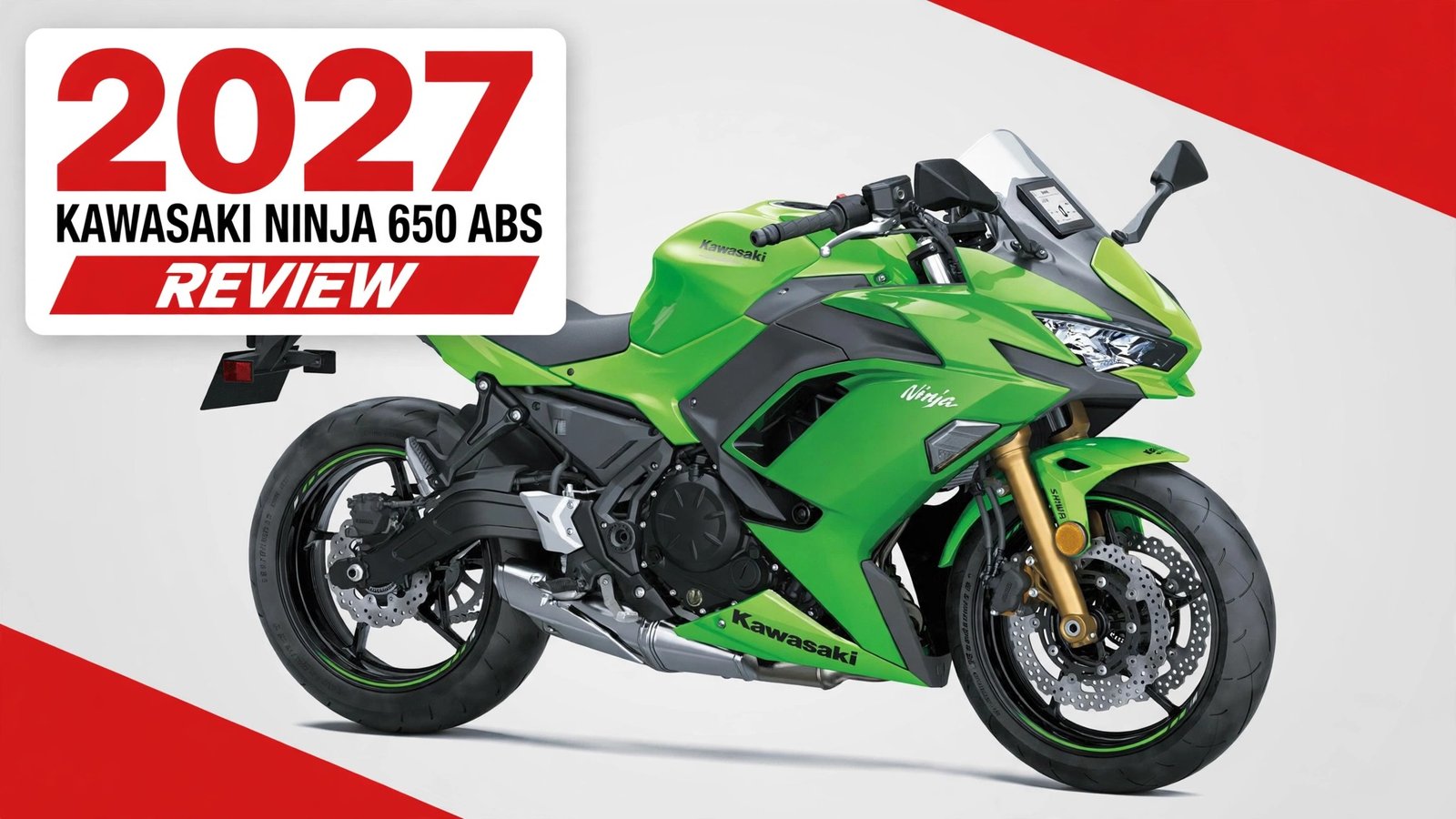
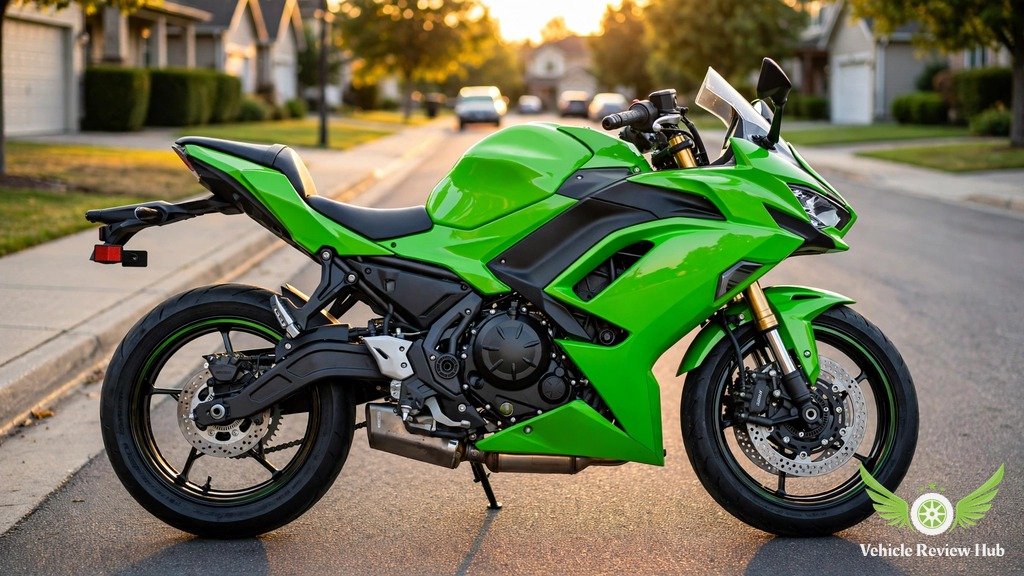
The 2027 Kawasaki Ninja 650 ABS costs $8,099, and for the first time the ABS is not an option you pay extra for. There is no non-ABS 2027 Ninja 650 and no 2027 KRT Edition, so the $400 to $600 premium that ABS carried for fourteen years has simply vanished. This Kawasaki Ninja 650 ABS review answers the question that change raises: what are you getting now that the safety net is standard, and is the 2027 bike worth its price? The bike keeps the same 67.0 hp parallel twin and the same comfortable riding position that made the 650 the friendly middleweight of its class, and for 2027 it finally gets the front end it always needed: a 37 mm inverted Showa fork with radial-mount four-piston calipers. The system is still a conventional two-channel unit with no cornering logic and no IMU, and this Kawasaki Ninja 650 ABS review explains what that means on real roads and who should buy the 2027 bike instead of a leftover.
Kawasaki Ninja 650 ABS Overview and Model-Year Updates
The Ninja 650 ABS is not a different motorcycle from the Ninja 650. It is the same 649cc parallel twin in the same trellis frame, with an anti-lock braking system fitted to it. That distinction matters, because this Kawasaki Ninja 650 ABS review is about the trim and the system, while our Ninja 650 review covers the bike itself in full.
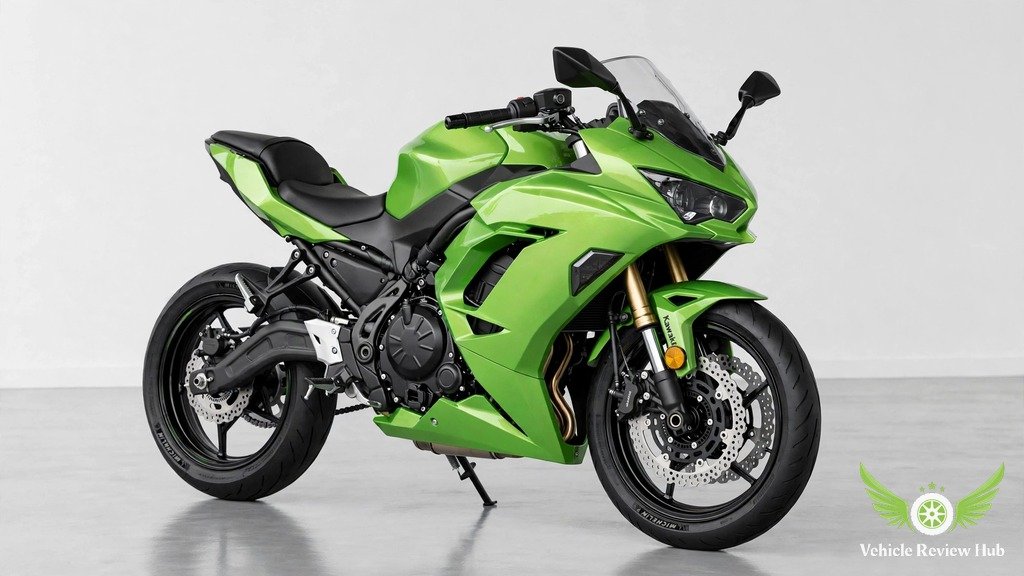
From Option to Only Choice
ABS arrived on the Ninja 650 for the 2013 model year. The standard bike cost $7,599 and the ABS bike cost $8,099, a $500 premium. From 2014 to 2022 the premium settled at $400: $7,299 against $7,699 in 2014, and $7,399 against $7,799 in both 2017 and 2020. The premium then moved to $600 for the 2023 to 2026 bikes, and in 2027 it disappeared entirely because there is no non-ABS bike left to compare against. A buyer shopping for a used 650 should know this history, because an older ABS bike is worth more than its non-ABS twin from the same year by exactly the premium of its year. As this Kawasaki Ninja 650 ABS review shows, the 2027 bike ends the argument.
2023: ABS Wore KRT Colours
The strangest year in the ABS story is 2023. That year Kawasaki sold the standard Ninja 650 at $7,999 and the KRT Edition at $8,199, but ABS was available only on the KRT Edition, at $8,599. Ultimate Motorcycling’s 2023 review makes the point directly: its test bike was the KRT Edition without ABS, and the review notes that you could not get ABS without also getting the KRT Edition. That matters for used buyers, because a 2023 KRT Edition without ABS is a real bike that exists, and its owner paid $8,199 for a bike with no anti-lock brakes at all. The KRT-only year lasted exactly one model year, and this Kawasaki Ninja 650 ABS review keeps that distinction in view whenever it quotes a 2023 test. That is the 2023 story this Kawasaki Ninja 650 ABS review tells.
Kawasaki Ninja 650 ABS Engine and Specifications
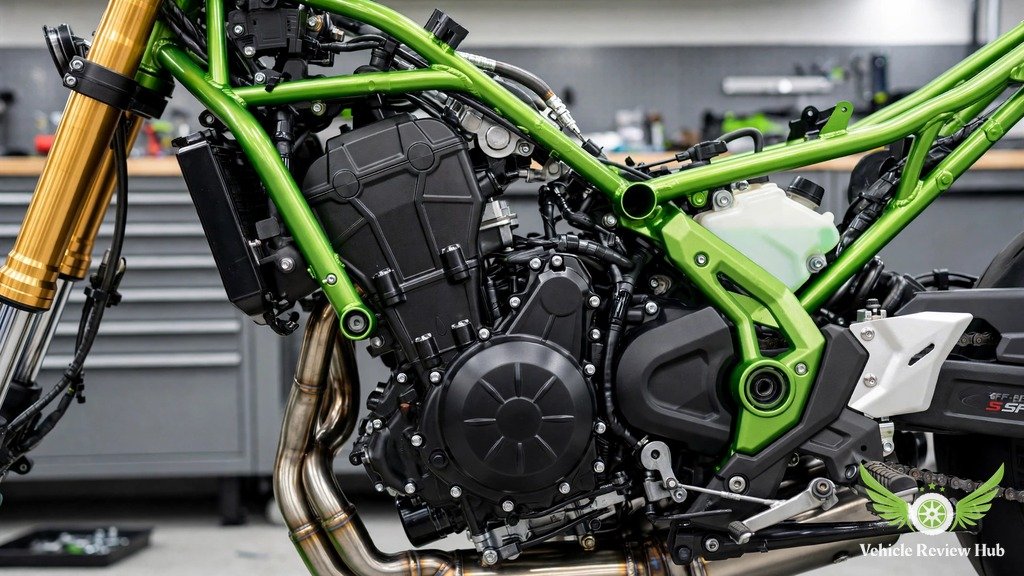
The 2027 Ninja 650 ABS is the same motorcycle underneath as the non-ABS 650. This Kawasaki Ninja 650 ABS review puts the full specification in the table below so the differences are easy to see. The table is the reference this Kawasaki Ninja 650 ABS review uses throughout.
| Figure | 2027 Ninja 650 ABS | 2026 Ninja 650 ABS |
|---|---|---|
| Engine | 649cc liquid-cooled parallel twin, DOHC, 83.0 x 60.0 mm, 10.8:1 | Same 649cc parallel twin |
| Claimed power | 67.0 hp @ 8,000 rpm / 48.5 lb-ft @ 6,700 rpm (ISO 4106) | 67.0 hp @ 8,000 rpm / 48.5 lb-ft @ 6,700 rpm (ISO 4106) |
| MSRP | $8,099 base / $8,299 premium colours | $8,199 |
| Destination / delivered | $685 / $8,784 base, $8,984 premium | $685 / $8,884 |
| Front fork | 37 mm inverted Showa SFF-BP, 4.9 in travel | 41 mm telescopic fork, 4.9 in travel |
| Front brakes | Dual semi-floating 300 mm discs, radial 4-piston calipers, ABS | Dual petal 300 mm discs, 2-piston calipers, ABS |
| Rear brake | Single 220 mm disc, single-piston caliper, ABS | Single petal 220 mm disc, single-piston caliper, ABS |
| Curb weight | 427.8 lb (50-state) / 425.6 lb (49-state) | 423.4 lb ABS / 421.2 lb non-ABS |
| Seat / wheelbase / tank | 30.9 in / 54.9 in / 4.0 gal | 31.1 in / 55.5 in / 4.0 gal |
| Dash / electronics | 4.3-in TFT with Rideology, KTRC 2 modes + OFF, no IMU | 4.3-in TFT with Rideology, KTRC 2 modes + OFF, no IMU |
| Tyres | 120/70-17 front / 160/60-17 rear | 120/70-17 front / 160/60-17 rear |
| Warranty | 12-month limited warranty | 12-month limited warranty |
Note: the figures in this Kawasaki Ninja 650 ABS review table come from Kawasaki’s own 2027 and 2026 spec sheets. The engine claim is identical for both years at 67.0 hp and 48.5 lb-ft, and Kawasaki publishes no redline for the 650. The 2027 bike is 4.4 lb heavier than the 2026 ABS bike in 50-state trim, sits 0.2 in lower, and rides on a 0.6 in shorter wheelbase. Those are the numbers this Kawasaki Ninja 650 ABS review checks every claim against.
Conventional ABS, No Cornering Logic
The ABS on the Ninja 650 is a conventional two-channel system. It watches both wheels and releases brake pressure in pulses when a wheel is about to lock, and it does that job only in a straight line. The owner’s manual says it plainly: the system helps prevent the wheels from locking up under hard braking while running straight, but it cannot control wheel slip caused by braking during cornering. There is no lean angle sensor, no inertial measurement unit, and no cornering logic anywhere on the bike. First, ABS is not designed to shorten braking distance, and on loose, uneven or downhill surfaces the stopping distance of a motorcycle with ABS may be longer than that of an equivalent motorcycle without it. But the 650’s ABS is a safety net, not a performance aid, and this Kawasaki Ninja 650 ABS review will not describe it as cornering ABS, lean-sensitive ABS, or an IMU-based system, because it is none of those things. The lean-sensitive systems belong to other bikes, and our YZF-R7 review covers what that bike’s six-axis IMU actually does.
Bosch Unit Documented on Gen 3
The ABS unit on the 2017-on bike is the Bosch 9.1M. Motorcycle.com’s 2017 review calls it the new Bosch 9.1M, lighter with more precise anti-locking measurements. This cluster uses the doc’s three-generation scheme: Gen 1 is 2006 to 2011, Gen 2 is 2012 to 2016, and Gen 3 is the 2017-on trellis bike. Under that scheme the Bosch 9.1M is documented on Gen 3, and the heading above is correct as written. No source checked names the supplier of the 2013 to 2016 ABS unit. The 2013 preview calls it only a compact, lightweight ABS unit, and the 2013 owner’s manual names no supplier in its ABS section. So this Kawasaki Ninja 650 ABS review does not say the first ABS bikes had a Bosch unit, because that was never verified. No source checked names the ABS supplier for 2027, and the 2027 spec sheet lists only “Anti-lock Brake System (ABS)” with no supplier named.
Kawasaki Ninja 650 ABS Price and Market Availability
The ABS premium kept moving and then vanished. The 2027 bike costs $8,099 in its base colours and $8,299 in its premium colours, plus a $685 destination charge, which puts the delivered price at $8,784 or $8,984. The table below shows how the ABS premium changed year by year, and this Kawasaki Ninja 650 ABS review explains the $8,099 headline and the $100 saving against the 2026 ABS bike. Our Ninja 650 comparison puts these prices against the SV650, the YZF-R7 and the GSX-8R for buyers weighing the whole middleweight class. Those are the prices this Kawasaki Ninja 650 ABS review works with.
| Model year | Standard bike MSRP | ABS bike MSRP | ABS premium |
|---|---|---|---|
| 2013 | $7,599 | $8,099 | $500 (first ABS year) |
| 2014 | $7,299 | $7,699 | $400 |
| 2017 | $7,399 | $7,799 | $400 |
| 2020 | $7,399 | $7,799 | $400 |
| 2023 | $7,999 | $8,599 (KRT Edition only) | $600 over standard / $400 over KRT |
| 2024 | MSRP unverified | $8,899 | Unverified |
| 2025 | $7,399 | $7,999 | $600 |
| 2026 | $7,599 | $8,199 | $600 |
| 2027 | No non-ABS trim | $8,099 base / $8,299 premium | Gone — ABS is standard |
Note: the figures in this Kawasaki Ninja 650 ABS review table are MSRP only, before destination. The 2025 prices are $7,399 and $7,999 from the Motorcycle.com database, SlashGear and dealer MSRP labels; one Kawasaki document still lists $8,899 for 2025, but that is the 2024 price carried into a stale file, and this Kawasaki Ninja 650 ABS review does not use it as the 2025 price.
Kawasaki Ninja 650 ABS Price in the USA: $8,099
The 2027 Ninja 650 ABS costs $8,099 in its base colours, Lime Green and Metallic Matte Twilight Blue with Candy Persimmon Red, and $8,299 in its premium colours, Metallic Flat Spark Black with Metallic Carbon Gray and Galaxy Silver. Add the $685 destination charge and the delivered price is $8,784 for the base colours and $8,984 for the premium colour. That is the full US price list, confirmed on Motorcycle.com’s 2027 ABS specification page. The premium colours cost $200 more than the base colours. Kawasaki is also running a Good Times promotion through 31 December 2026 that takes $300 off the 2026 ABS bike, taking it to $7,899 plus tax, title and licence at dealers like Got Gear.
Cheaper Than the 2026 ABS Bike
The 2027 ABS bike, at $8,099, is $100 cheaper than the 2026 ABS bike, which cost $8,199. The delivered gap is the same $100, because destination is $685 in both years: $8,784 against $8,884. Kawasaki removed the non-ABS trim and made ABS standard. The non-ABS 2026 bike cost $7,599, so a buyer who only ever wanted the cheaper bike will pay $500 more for the 2027 bike. But a buyer who was going to buy the ABS bike anyway, which was most buyers, pays $100 less and gets the inverted fork and the radial calipers as well. That is the right way to read it, and this Kawasaki Ninja 650 ABS review reads it that way.
Kawasaki Ninja 650 ABS Design, Features and Technology
This Kawasaki Ninja 650 ABS review looks at the design in two parts: the premium history that explains how the bike was sold, and the caliper and fork change that explains how it now stops. That is the design story this Kawasaki Ninja 650 ABS review tells.
Premium Moved $400 to $600
The ABS premium moved twice in the bike’s life, and both moves are worth understanding. It started at $500 in 2013, when the standard bike cost $7,599 and the ABS bike cost $8,099. It then settled at $400 for nine model years, from 2014 to 2022. The premium then moved to $600 for the 2023 to 2026 bikes. In 2023 it was $600 over the standard bike and $400 over the KRT Edition, because ABS that year was KRT-only. Then, for 2027, the premium vanished, not because ABS got cheaper, but because the non-ABS bike got deleted. The numbers are the story, and this Kawasaki Ninja 650 ABS review prints them all.
Calipers Grew, ABS Logic Did Not
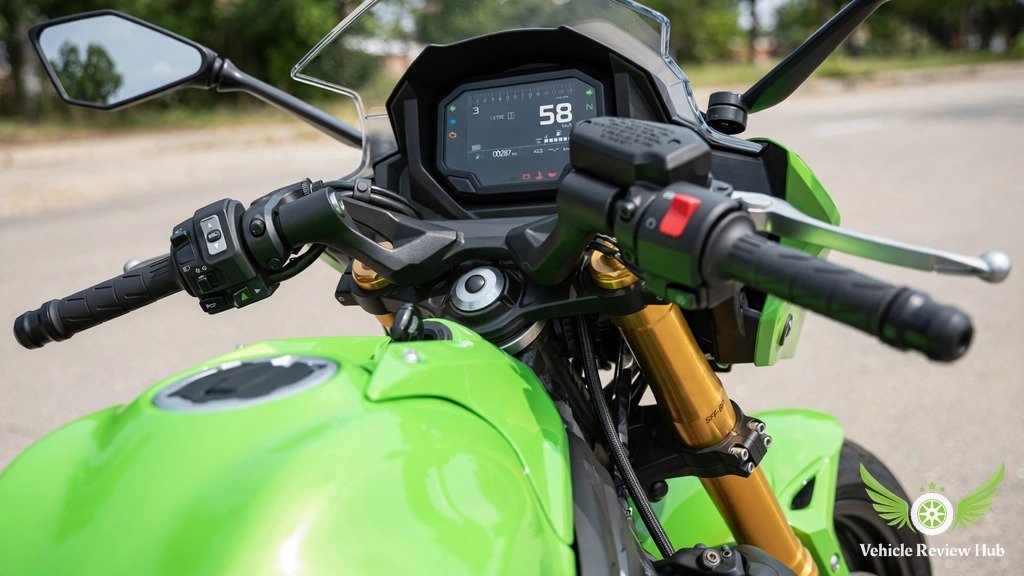
The calipers grew. The ABS logic did not. The 2026 ABS bike had dual petal 300 mm discs with two-piston calipers. The 2027 bike has dual semi-floating 300 mm discs with radial-mount four-piston calipers. The disc diameter is the same in both years, 300 mm at the front and 220 mm at the rear, so this is not a story about bigger discs. The 2026 bike had a 41 mm telescopic fork. The 2027 bike has a 37 mm inverted Showa SFF-BP fork with 4.9 inches of travel. The table below puts the two front ends side by side, and this Kawasaki Ninja 650 ABS review states the point once more: the calipers grew, the logic did not.
| Front end | 2027 Ninja 650 ABS | 2026 Ninja 650 ABS |
|---|---|---|
| Fork | 37 mm inverted Showa SFF-BP | 41 mm telescopic fork |
| Front disc | Dual semi-floating 300 mm | Dual petal 300 mm |
| Front caliper | Radial-mount 4-piston | 2-piston |
| Rear disc | Single 220 mm | Single petal 220 mm |
| ABS logic | Conventional two-channel, no cornering logic, no IMU | Conventional two-channel, no cornering logic, no IMU |
| Rake / trail | 24.0 degrees / 3.9 in | 24.0 degrees / 3.9 in |
Note: the disc sizes in this Kawasaki Ninja 650 ABS review table are identical for both years, 300 mm front and 220 mm rear, so any claim that the discs grew is wrong. The ABS logic is the same conventional two-channel system in both years, with no cornering logic and no IMU. That is what this Kawasaki Ninja 650 ABS review found in the spec sheets.
The 4.3-inch TFT dash with Rideology connectivity carries over, and KTRC traction control still has two modes plus off. The quickshifter is still an accessory, not standard equipment, and its price is unverified. What the rider feels is a firmer front end and stronger braking, not a smarter ABS, and that is the point this Kawasaki Ninja 650 ABS review keeps coming back to: the upgrade is mechanical, not electronic.
Kawasaki Ninja 650 ABS Riding Experience and Comfort
The riding experience of the Ninja 650 ABS is the riding experience of the Ninja 650, because the ABS adds almost nothing to how the bike feels until the moment it is needed. The seat is 30.9 inches on the 2027 bike, the bars are wide and upright, the pegs are low, and the 649cc twin makes its 67.0 hp in a smooth, friendly curve. This Kawasaki Ninja 650 ABS review puts the video below in this section because it shows a first ride, and the two sections that follow explain what two different testers said about the system in words. That is the riding experience this Kawasaki Ninja 650 ABS review describes.
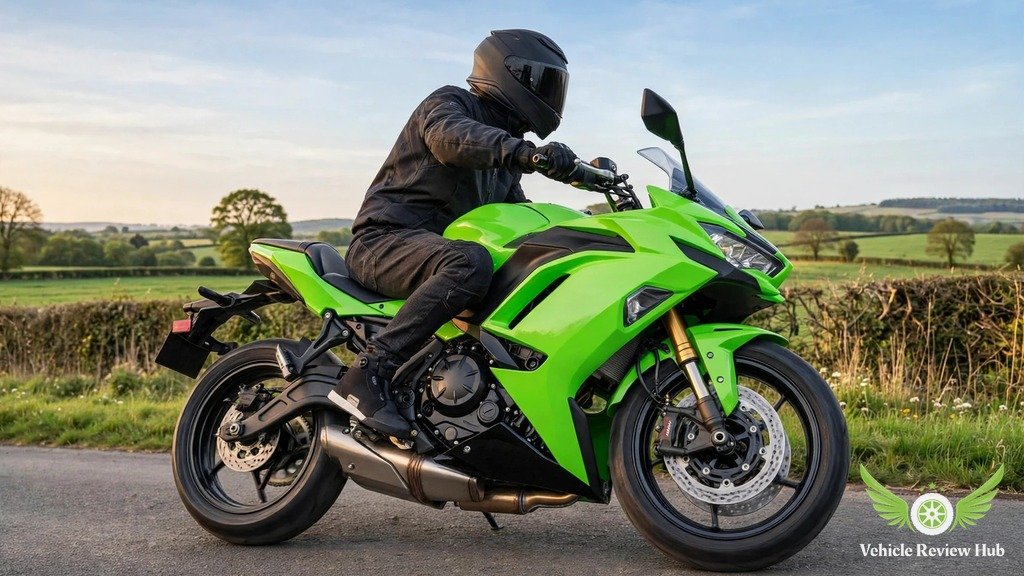
The video below is Ray Bowden’s first ride and review of a 2026 Kawasaki Ninja 650. The bike on screen is the 2026 bike, with the 41 mm telescopic fork and two-piston calipers, not the 2027 bike. The video does not say whether the bike on screen has ABS, so this Kawasaki Ninja 650 ABS review does not claim it does. That is the framing this Kawasaki Ninja 650 ABS review uses for the video.
“Hardly Noticed Until Needing It”
Cycle World magazine, in its April 2017 first ride of the new trellis-frame bike, wrote about the system in a single sentence. Tom Montano, the tester, said: “I hardly noticed the system until actually needing it.” That is the highest praise an ABS system can get. The Bosch 9.1M on the 2017 bike was felt only when it was needed, which is exactly what a good system should do. This Kawasaki Ninja 650 ABS review will not say “testers called the system transparent”, because only one tester was found saying anything like that, and pluralising one voice into many is how reviews lose their honesty. The quote is from 2017, about the Gen 3 bike with the Bosch 9.1M. The ZigWheels road test of the Indian-market BS6 bike gives the other side of the story. Its testers found the ABS kicking in far too early, and measured 100 to 0 km/h in 46.08 metres and 80 to 0 km/h in 30.39 metres.
Worth $400 and 7 lb (RevZilla)
In its 2017 first ride, RevZilla wrote: “the seven pounds and $400 that the Bosch ABS system adds are worth it.” The figures in that sentence are the 2017 figures. The 2017 ABS bike weighed 426 lb against the standard bike’s 419 lb, a difference of exactly 7 lb, and it cost $400 more. By 2026 the weight penalty had shrunk to 2.2 lb, 423.4 lb against 421.2 lb, and the price premium had grown to $600. So a writer who repeats “seven pounds and $400” as a general fact is wrong on both numbers for every year after 2017. But the spirit of the RevZilla verdict still holds, and this Kawasaki Ninja 650 ABS review endorses it.
Kawasaki Ninja 650 ABS Review: Pros, Cons and Verdict
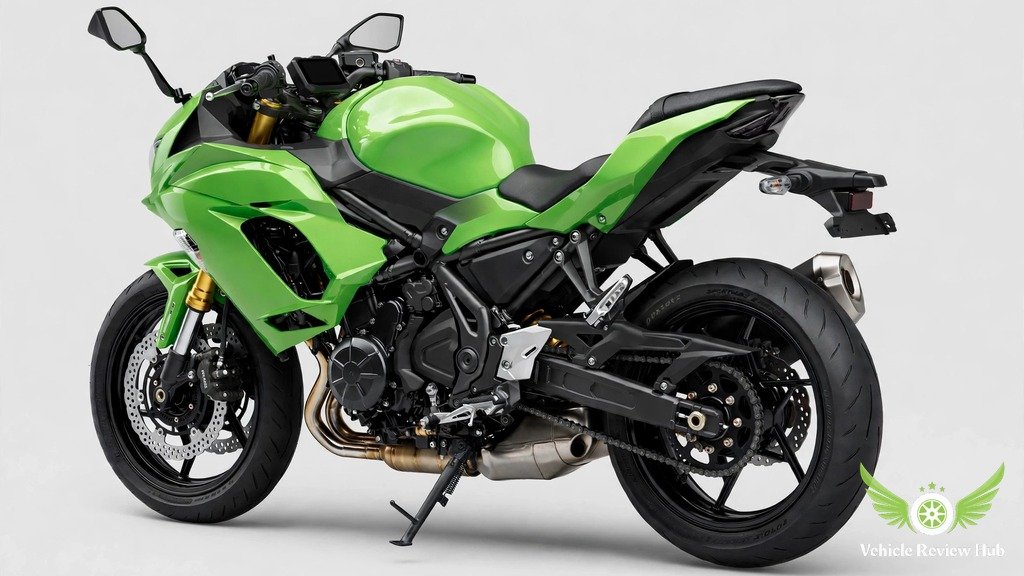
The 2027 Ninja 650 ABS is the best version of this bike Kawasaki has ever sold. It is the same friendly 649cc twin, the same comfortable position, and the same low seat, now with a proper front end and ABS as standard at a lower price than the 2026 ABS bike. The table below weighs the case for and against it, and this Kawasaki Ninja 650 ABS review points readers to our Ninja 650 ABS performance guide and our Ninja 650 ABS reliability guide for the numbers behind the verdict.
| Pros | Cons |
|---|---|
| ABS is standard in 2027 — no premium to pay | No cornering ABS and no IMU — straight-line only |
| $8,099 base — $100 cheaper than the 2026 ABS bike | $500 more than the 2026 non-ABS bike for riders who never wanted ABS |
| 37 mm inverted Showa SFF-BP fork and radial 4-piston calipers | 67.0 hp is the least power in its class — rivals make more |
| 30.9 in seat and upright bars — friendly for new riders | Quickshifter is an accessory, not standard equipment |
| 4.3-in TFT dash with Rideology and KTRC traction control | Only a 12-month warranty |
| Same 649cc twin as the non-ABS bike — no performance penalty | 2027 ABS supplier is unnamed — no Bosch claim is verified for this year |
Note: the pros and cons in this Kawasaki Ninja 650 ABS review table use the verified figures in this blog. The 7 lb ABS weight penalty is the 2017 figure only; the 2026 penalty was 2.2 lb, and no 2027 comparison exists because there is no non-ABS 2027 bike. The $100 saving is the MSRP difference between the 2027 base bike and the 2026 ABS bike, and the delivered saving is the same $100. Every figure here is one this Kawasaki Ninja 650 ABS review verified.
Main Advantages and Limitations of the Kawasaki Ninja 650 ABS
The main advantage of the Ninja 650 ABS is that it is a complete package with nothing left to choose. You get the 67.0 hp twin, the comfortable ergonomics, the TFT dash, the traction control, the inverted fork, the radial calipers and the ABS, all for $8,099. The 67.0 hp is the least power among its rivals, and the YZF-R3 review shows how much further a small bike can go, while the R7 and the GSX-8R make far more power for not much more money. None of these limitations is a deal-breaker for the bike’s real buyer, a new or returning rider looking for a friendly, safe, well-equipped middleweight, and this Kawasaki Ninja 650 ABS review does not hide them.
2025 Shares a Code With KRT ABS
One final detail matters for used-2025 buyers. For 2025 the standard ABS bike and the KRT Edition ABS bike share the same model code, EX650PSFAL, and the same price, $7,999. That has a practical consequence: a used 2025 KRT ABS bike is not worth more than a used 2025 standard ABS bike. Buyers who check both will not overpay, and this Kawasaki Ninja 650 ABS review recommends checking both before signing anything. The 2027 Ninja 650 ABS is $8,099, it is $100 cheaper than the 2026 ABS bike, it has the best front end the 650 has ever had, and the ABS is standard. If you were going to buy the non-ABS bike to save money, the 2027 bike costs $500 more than the 2026 non-ABS bike did, and a leftover 2026 with the $300 Good Times discount is worth a look before you decide.
Kawasaki Ninja 650 ABS Frequently Asked Questions
These are the questions buyers ask most about the 2027 Ninja 650 ABS, answered directly from the prices, spec sheets and test reports this Kawasaki Ninja 650 ABS review verified.
What is the 2027 Kawasaki Ninja 650 ABS price?
$8,099 in base colours and $8,299 in premium colours, plus a $685 destination charge. Delivered, that is $8,784 or $8,984.
Is ABS standard on the 2027 Ninja 650?
Yes. Kawasaki deleted the non-ABS trim for 2027, so every 2027 Ninja 650 has ABS.
Is the Ninja 650 ABS a cornering ABS system?
No. It is a conventional two-channel ABS that works only in a straight line, with no lean-sensitive logic and no IMU.
Which ABS unit does the Ninja 650 use?
This Kawasaki Ninja 650 ABS review found the Bosch 9.1M unit documented on the 2017-on bikes. No source names the 2027 supplier.
What changed on the 2027 Ninja 650 front end?
A 37 mm inverted Showa SFF-BP fork and radial-mount four-piston calipers on dual semi-floating 300 mm discs. Disc diameter is unchanged from 2026.
How much power does the Ninja 650 ABS make?
Kawasaki claims 67.0 hp at 8,000 rpm and 48.5 lb-ft at 6,700 rpm (ISO 4106), the same as 2026. No redline is published.