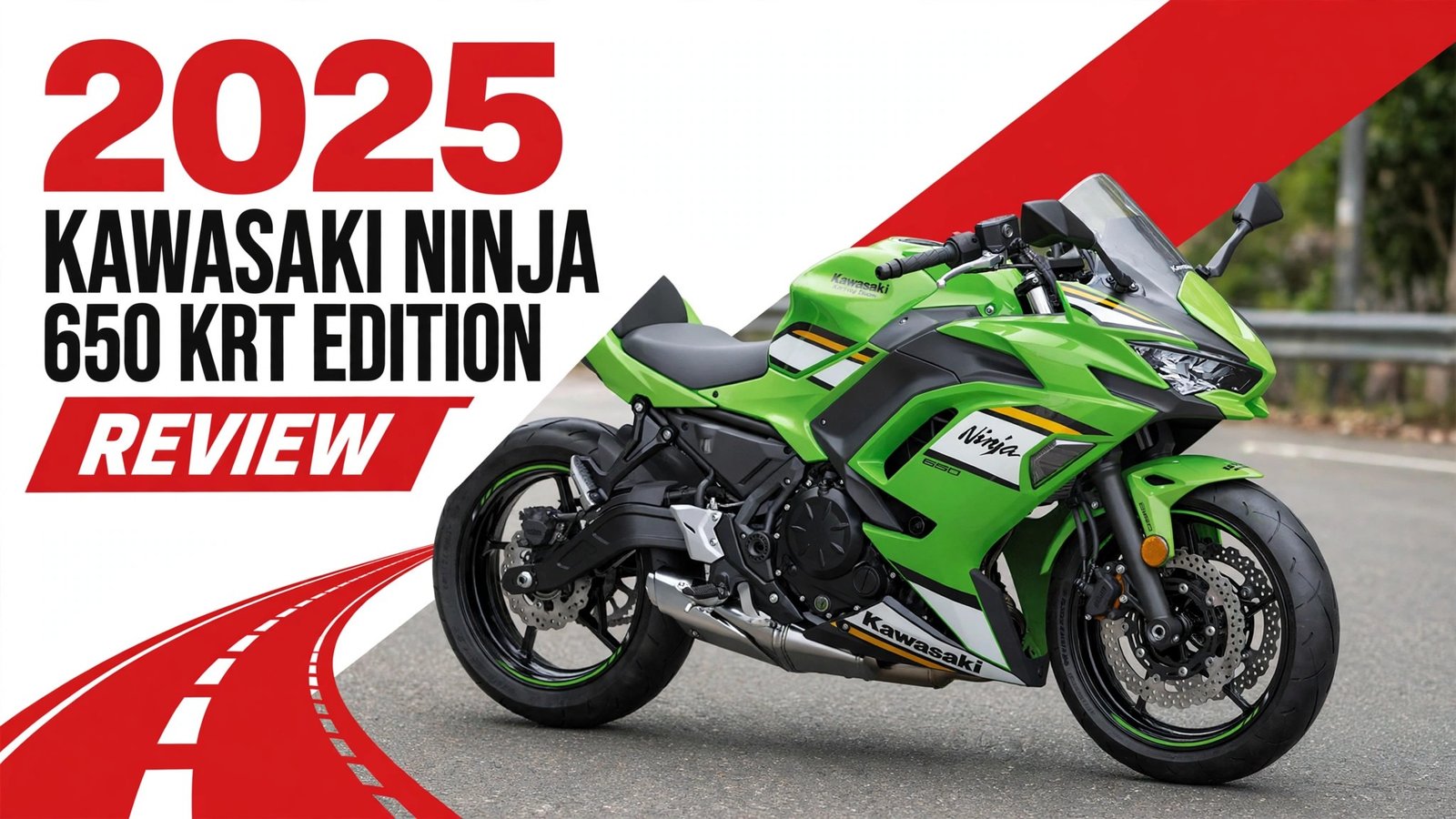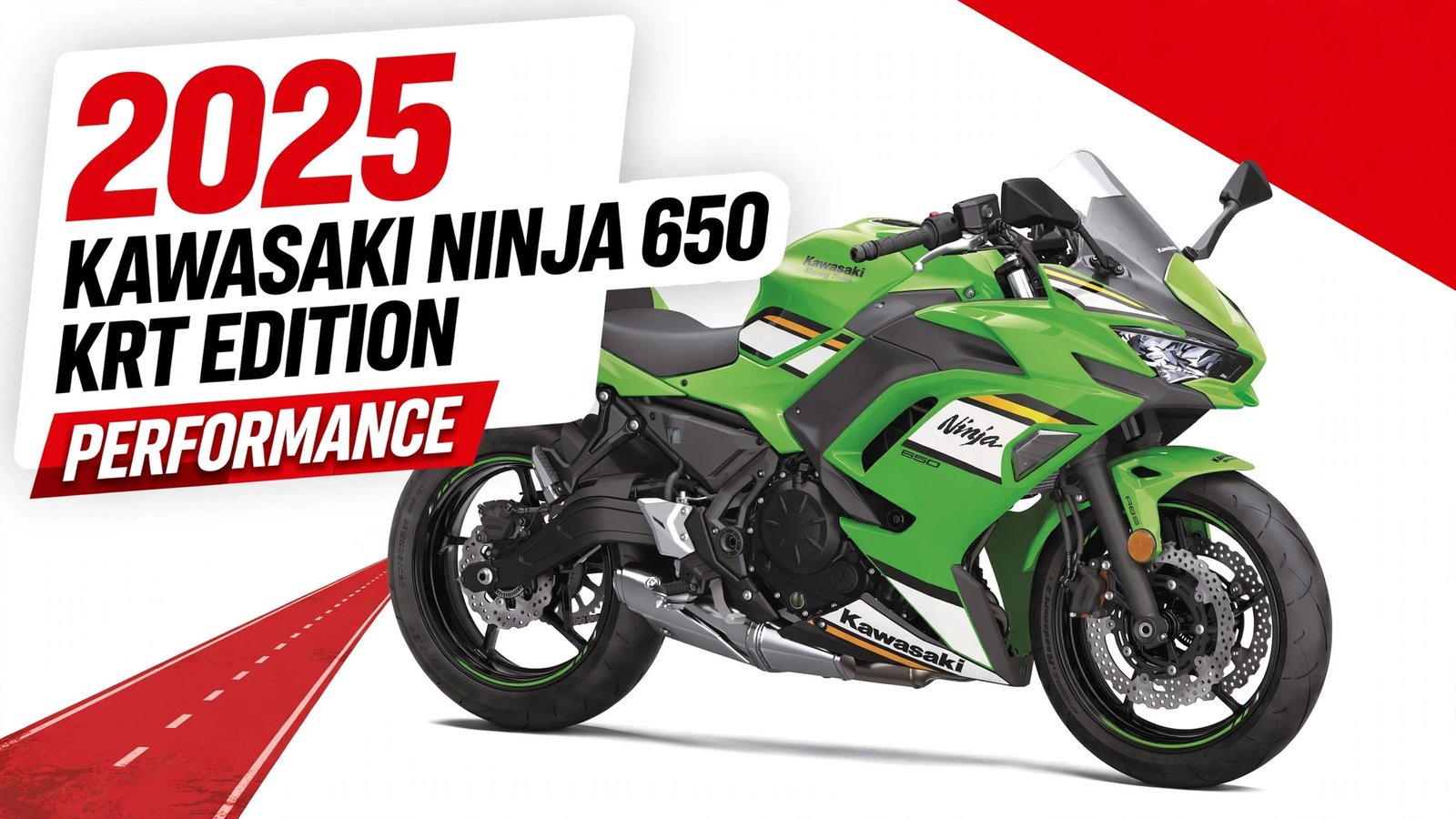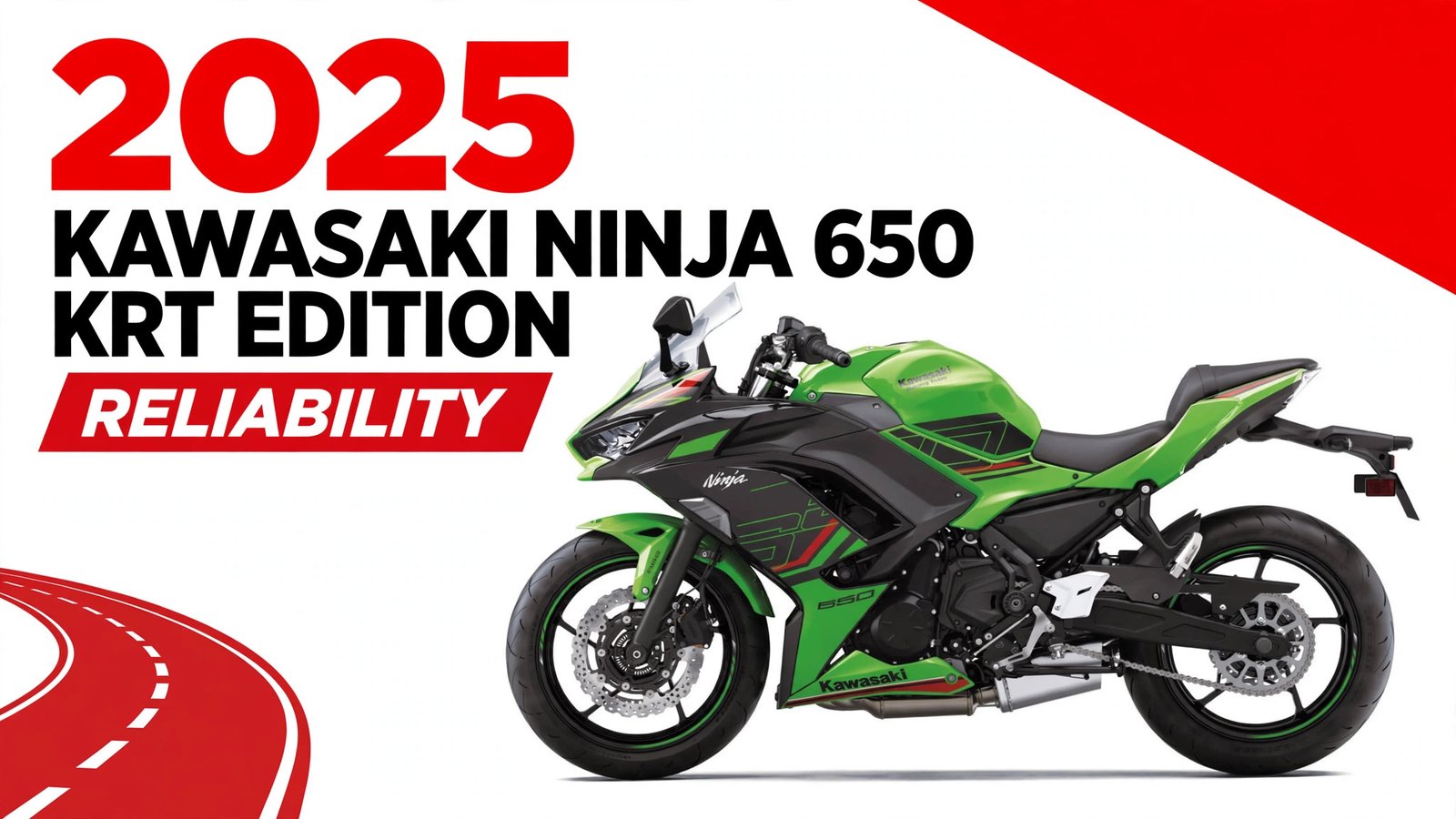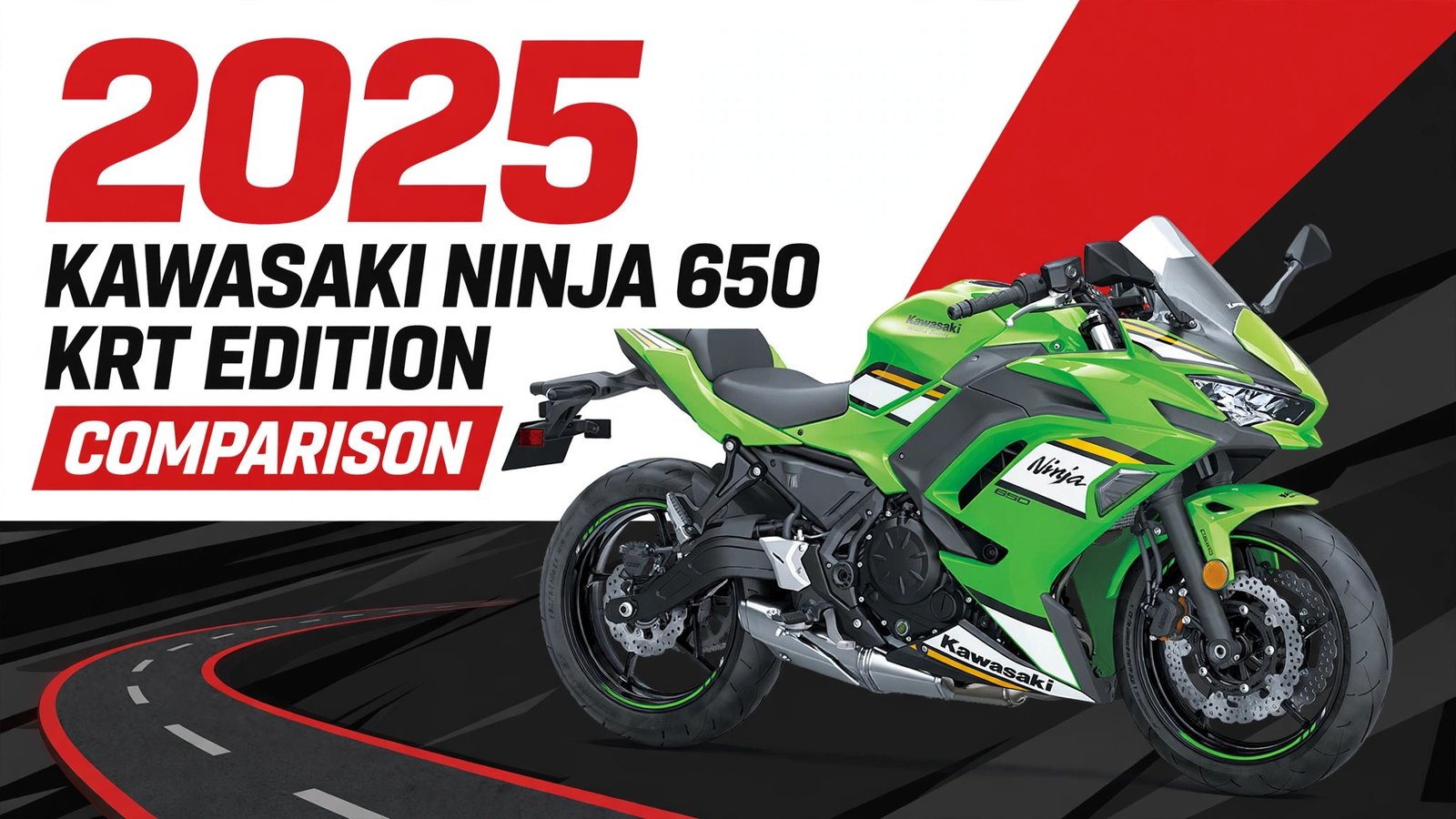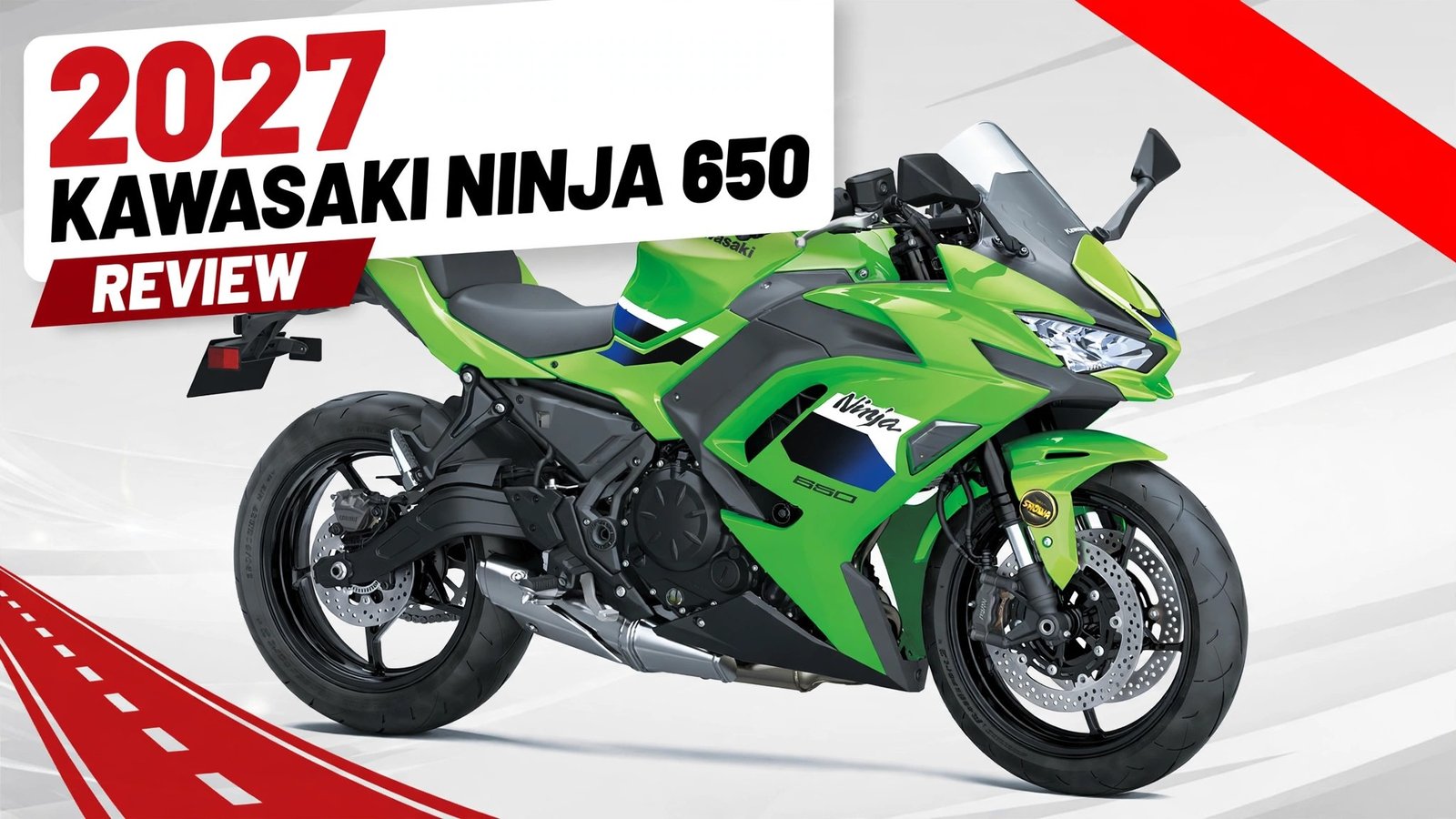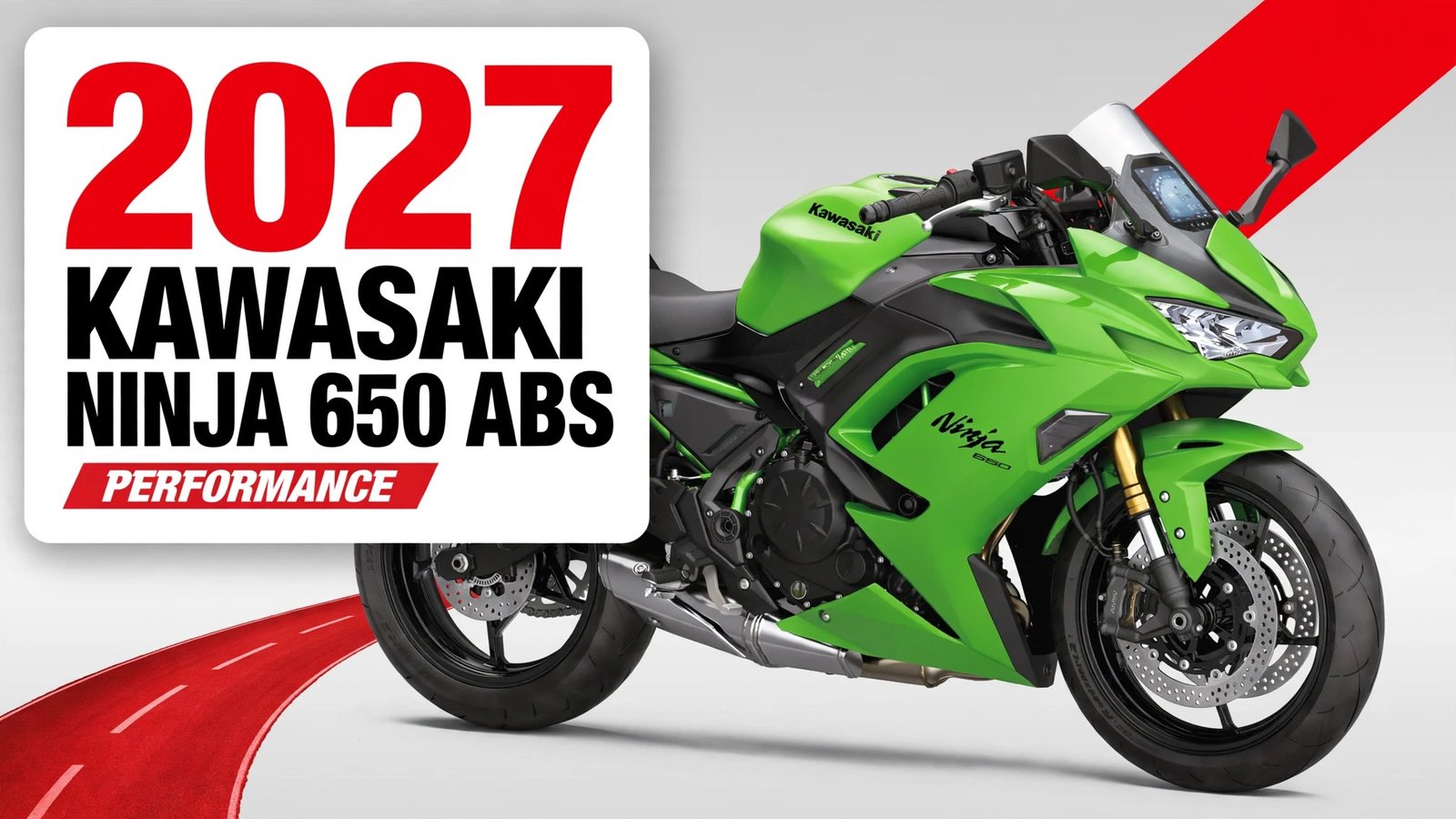
The 2027 Kawasaki Ninja 650 ABS claims 67.0 hp at 8,000 rpm and 48.5 lb-ft at 6,700 rpm, but the number that matters is the rear-wheel one: about 60 to 61 hp. This Kawasaki Ninja 650 ABS performance guide works from the measured figures, not the viral ones. There is no official top speed, no instrumented 0-60 time for the current bike, no US braking distance, and no ABS-specific fuel figure. The numbers aggregators print for those gaps are not measurements. What does exist is a solid measured record: two dyno runs that agree, a 9,500-mile fuel diary, and one instrumented Indian-market braking test. This Kawasaki Ninja 650 ABS performance guide gives each figure with its source, its market, and its year, and names every gap plainly.
Kawasaki Ninja 650 ABS Engine Performance and Power Delivery
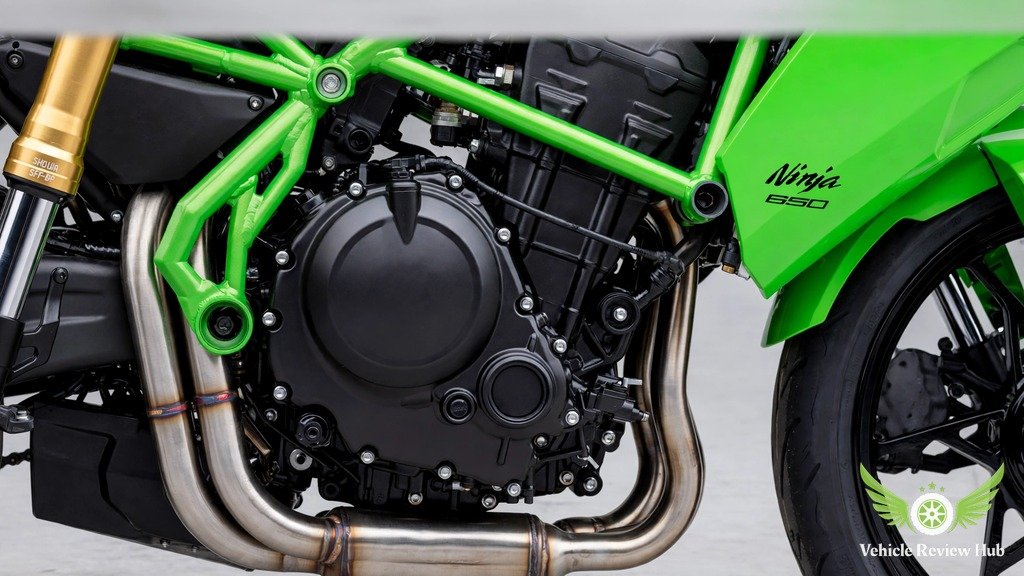
The 650’s engine has not changed since the 2017 retune, and the ABS hardware adds weight, not power. This Kawasaki Ninja 650 ABS performance guide starts with the claim, then the measured figures, then the tests that rode an ABS bike.
Tested on ABS Bikes in 2017
The 2017 launch tests rode ABS bikes, which is why the 2017 evidence is the strongest in this Kawasaki Ninja 650 ABS performance guide. RevZilla’s first ride said it plainly: “I was glad to be riding an ABS-equipped bike and did determine that it worked at least once.” Cycle World’s April 2017 test ran a spec box headed “2017 KAWASAKI NINJA 650 ABS” and priced the test bike at $7,799 against $7,399 for the non-ABS bike, with a claimed wet weight of 426 lb. Cycle News titled its 2017 test “2017 Kawasaki Ninja 650 Sport ABS First Test”. Motorcycle.com’s 2017 review discussed the new Bosch 9.1M ABS and printed the 419 lb and 426 lb curb figures, and Ultimate Motorcycling’s 2017 first ride recommended the Bosch 9.1M unit for its extra $400. Rider Magazine’s 2017 first ride listed the same two prices. Every one of those outlets tested the ABS bike, so their impressions belong to the ABS story. The full RevZilla 2017 first ride names the ABS bike, its price, and its weight.
MotoStatz Bike’s Trim Unstated
The numbers most often quoted for this bike online do not come from a test at all. MotoStatz prints 62 hp at the wheels, 0-60 mph in 3.53 seconds, a quarter mile of 12.3 seconds at 110 mph, and a top speed of 130 to 131 mph, and other sites republish them as if they were measured. They are not. MotoStatz is an aggregator, never a test outlet, and its acceleration page has a second defect: it never states its test bike’s trim anywhere in its text. The page never says ABS or non-ABS, so its figures could not be used as ABS-bike figures even if they were trustworthy. That is why this Kawasaki Ninja 650 ABS performance guide does not print the 62 hp, 3.53-second, or 130 mph figures as measurements.
| Figure | Value | Source and label |
|---|---|---|
| Claimed power | 67.0 hp @ 8,000 rpm | Kawasaki’s claim, ISO 4106, 2024 to 2027 sheets |
| Claimed torque | 48.5 lb-ft @ 6,700 rpm | Kawasaki’s claim, ISO 4106 |
| Rear-wheel power, MCN | 60.38 bhp stock | MCN long-term test; 63.48 bhp with an Arrow exhaust |
| Rear-wheel power, Rider | 60.6 hp @ 8,100 rpm | Rider, 2017 Z650, same engine; 43.9 lb-ft @ 6,700 rpm |
| Redline | Not published | Kawasaki publishes no redline for the 650 |
Note: the two measured figures agree within a quarter of a horsepower, and that agreement is the story of this Kawasaki Ninja 650 ABS performance guide. The 650 puts about 60 to 61 hp to the rear wheel, roughly 6 to 7 hp below the 67 hp crank claim. No US dyno of the current 2023-on bike exists.
Kawasaki Ninja 650 ABS Top Speed and Acceleration
Kawasaki publishes no top speed and no 0-60 figure for the 650, and no instrumented test of the current bike fills either gap. This Kawasaki Ninja 650 ABS performance guide prints what is actually known.
No Official Figure Is Published
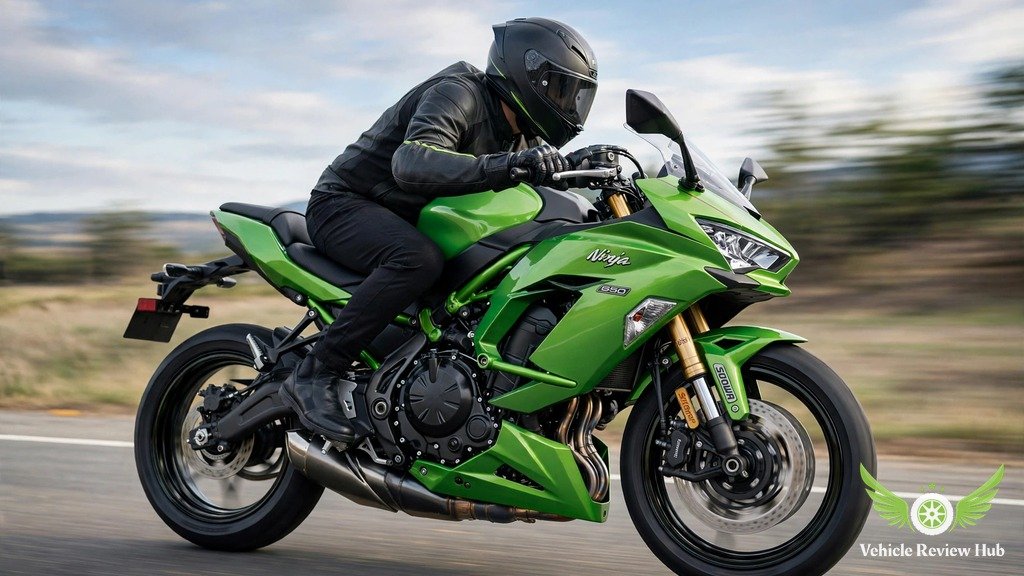
The honest top-speed number is a rider report, not a test. Riders report just over 200 km/h, about 124 to 125 mph, per SlashGear. TopSpeed prints 131 mph, but that is its own unattributed figure, not a test result, and the aggregator figure of 130 to 131 mph has no test behind it either. The 0-60 story is the same: Cycle World claims 3.5 seconds to 60 for the 2014 bike, the only named-outlet claim found anywhere, and owner runs sit around 4 seconds. No outlet has published an instrumented 0-60 time for the current bike, and the 3.53-second figure that circulates online belongs to the MotoStatz aggregator page, not to a test. That is the honest top-speed picture, and this Kawasaki Ninja 650 ABS performance guide prints nothing beyond it.
No Head-to-Head Test Exists
No US head-to-head acceleration or top-speed test of the ABS 650 against a rival was found, and this Kawasaki Ninja 650 ABS performance guide does not pretend otherwise. But one head-to-head does exist: ZigWheels’ Indian-market BS6 test put the Ninja 650 BS6 against the Z650 BS6, the same engine in two bodies, with instrumented acceleration. The Ninja BS6 did 0-100 km/h in 4.80 seconds against the Z650 BS6’s 4.81 seconds, while the older BS4 Z650 did 4.48 seconds. The Ninja BS6 also did the quarter mile in 13.02 seconds at 133 km/h, 30-70 km/h in third gear in 2.73 seconds, and 40-80 km/h in fourth gear in 3.32 seconds. Those are Indian-market figures in metric units, not the ABS 650 against a rival brand. The 2014 Motorcycle.com shootout also tested an ABS 650 against the CBR650F and FZ6R, but that was a comparison test, not an instrumented one. The ZigWheels figures are the only instrumented head-to-head numbers this Kawasaki Ninja 650 ABS performance guide can print.
| Figure | What is known | Source and label |
|---|---|---|
| Top speed, official | None published | Kawasaki publishes no top-speed figure |
| Top speed, rider-reported | About 124 to 125 mph | Riders reporting just over 200 km/h, per SlashGear |
| Top speed, aggregators | 130 to 131 mph | TopSpeed and MotoStatz print it; no test behind it |
| 0-60 mph, Cycle World | 3.5 seconds | 2014 bike only |
| 0-60 mph, owners | About 4.0 seconds | Owner reports, per SlashGear |
| 0-100 km/h, ZigWheels BS6 | 4.80 seconds | Indian-market BS6 Ninja 650; Z650 BS6 4.81 s, Z650 BS4 4.48 s |
| Quarter mile, ZigWheels BS6 | 13.02 seconds @ 133 km/h | Indian-market BS6, labelled |
Note: every figure in this table carries its label, because the labels are the point of this Kawasaki Ninja 650 ABS performance guide. A rider report is not a test, an aggregator print is not a measurement, and an Indian-market metric figure is not a US figure. The SlashGear top-speed article is the source for the 124 to 125 mph rider report and the 3.5-second Cycle World claim.
Kawasaki Ninja 650 ABS Mileage and Fuel Economy
No test has ever separated ABS from non-ABS fuel use, and Kawasaki publishes no MPG figure at all. This Kawasaki Ninja 650 ABS performance guide leans on the one measured record that exists.
No ABS-Specific Fuel Figure
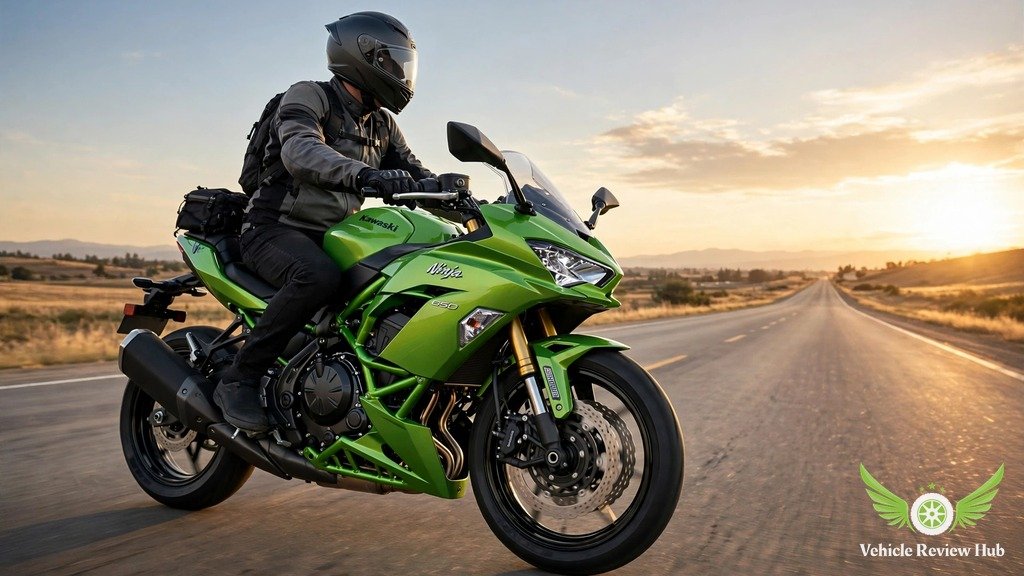
MCN’s long-term test of the 2017-on bike ran 9,500 miles with a meticulous fuel diary, the only long-term measured fuel record for the 650. The average was 49.44 mpg. Gentle cruising returned 60 mpg or slightly more, the best single figure was 69.54 mpg, and a trackday returned the worst figure of 39.16 mpg. On the 4.0-gallon tank, the 49.44 mpg average gives about 198 miles of range, a calculation, not a test result. That is the 650’s figure, not an ABS figure: the trim of MCN’s long-term bike is not stated as ABS, and the ABS hardware adds about 7 lb on the 2017 bike with no measured MPG difference. The “61 mpg” figure that appears online is unverified, and this Kawasaki Ninja 650 ABS performance guide does not print it as a fact. One secondary source prints 55 to 58 mpg, most likely imperial gallons, about 46 to 48 US mpg. There is no WMTC or lab fuel figure for the 650 at all, and the Ninja 500’s 62.0 mpg WMTC figure is not the 650’s — our Ninja 500 performance guide covers that bike’s lab figure. ZigWheels’ Indian-market BS6 test recorded city fuel use of 19.64 kmpl, about 46.2 US mpg, and highway use of 30.17 kmpl, about 71.0 US mpg, with the conversion shown and the market labelled.
UM’s 2023 Test Bike Had No ABS
One review that looks like ABS evidence is not. Ultimate Motorcycling’s 2023 review states it in its own fact list: “We didn’t have the KRT Edition with optional ABS, and that was fine for us… you can’t get ABS without also getting the KRT Edition.” Their as-tested bike was the KRT Edition without ABS, priced at $8,199, because in 2023 ABS was KRT-only at $8,599. None of Ultimate Motorcycling’s 2023 ride impressions is evidence about the ABS bike. This Kawasaki Ninja 650 ABS performance guide uses their 2023 review only for the fact that the test bike had no ABS, and the Ultimate Motorcycling 2023 review itself is the source for that fact.
| Figure | Value | Source and label |
|---|---|---|
| Average, MCN long-term | 49.44 mpg | MCN, 9,500 miles, fuel diary, 2017-on bike |
| Gentle cruising, MCN | 60+ mpg | MCN long-term test |
| Best single figure, MCN | 69.54 mpg | MCN long-term test |
| Trackday worst, MCN | 39.16 mpg | MCN long-term test |
| Range on a tank | About 198 miles | Calculation: 49.44 mpg x 4.0 gal |
| City, ZigWheels BS6 | 19.64 kmpl, about 46.2 US mpg | Indian-market BS6, conversion shown |
| Highway, ZigWheels BS6 | 30.17 kmpl, about 71.0 US mpg | Indian-market BS6, steady-state highway, not an average |
Note: no figure in this table is an ABS-specific figure, and this Kawasaki Ninja 650 ABS performance guide says so plainly. The MCN record is the 650’s measured fuel record, the ZigWheels figures are Indian-market figures in kmpl, and the 198-mile range is a calculation.
Kawasaki Ninja 650 ABS Real-World Riding Experience
The riding story of this bike is two stories about the same ABS: one American tester who barely noticed it, and one Indian test that found it intrusive. This Kawasaki Ninja 650 ABS performance guide presents both, labelled by market, bike, and year.
Calibration Called Transparent
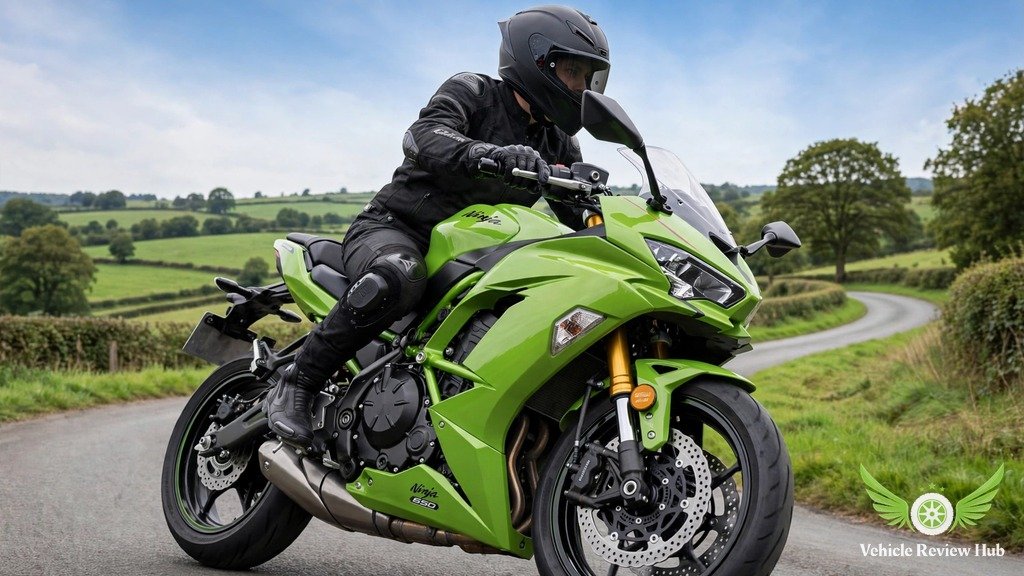
The “transparent” verdict comes from one tester, and this Kawasaki Ninja 650 ABS performance guide attributes it to him alone. Cycle World’s Tom Montano rode the 2017 Ninja 650 ABS in April 2017 and wrote: “New Nissin calipers and 300mm wave rotors are responsive and offer good feel and stopping power. The Bosch-controlled ABS even assisted me a few times, even though I hardly noticed the system until actually needing it.” His test bike was the 2017 ABS model at $7,799. No other named outlet is on record calling the system transparent, so this guide never says “testers” called it that. The counter-evidence comes from ZigWheels’ Indian-market BS6 road test, the only instrumented ABS-braking test of a 650 found anywhere. ZigWheels wrote: “When braking hard, ABS kicks in far too early at the front — and when it does, brake pressure is released excessively and for far too long, resulting in a brake lever that’s seemingly frozen solid, and some rather long braking distances. … At the rear, it’s the opposite story, because on many occasions the wheel completely locked up on both bikes before ABS decided to take any action.” ZigWheels partly blamed the Dunlop Sportmax Roadsport 2 tyres. The two verdicts are not the same bike, market, or year: a US tester on a 2017 ABS bike found the system transparent, and an Indian test on a 2020 BS6 ABS bike found it intrusive at the front and late at the rear. This guide presents both and does not declare a winner. The Cycle World April 2017 test is the source for the Montano quote, and the ZigWheels BS6 road test is the source for the counter-evidence.
Brakes Scored 8 Out of 10
Motorcycle.com’s 2017 Ninja 650 review gave the brakes 8.0 out of 10 on its scorecard, with an Editor Score of 86.5 percent. The review said the old brakes needed too much pressure to slow the bike quickly, and the new ones “seem to perform much more efficiently,” adding that the new ABS “is the Bosch 9.1M that’s lighter and offers more precise anti-locking measurements.” That score belongs to the 2017 bike’s brake package: Nissin 2-piston calipers on 300 mm petal-type discs. It does not belong to the 2027 bike’s radial-mount 4-piston calipers on semi-floating discs, which no outlet has scored. The 8.0 out of 10 is a 2017 verdict on 2017 hardware, and this Kawasaki Ninja 650 ABS performance guide keeps it labelled that way. The Motorcycle.com 2017 review is the source for the score and the Bosch 9.1M description.
Kawasaki Ninja 650 ABS Handling, Braking and Stability
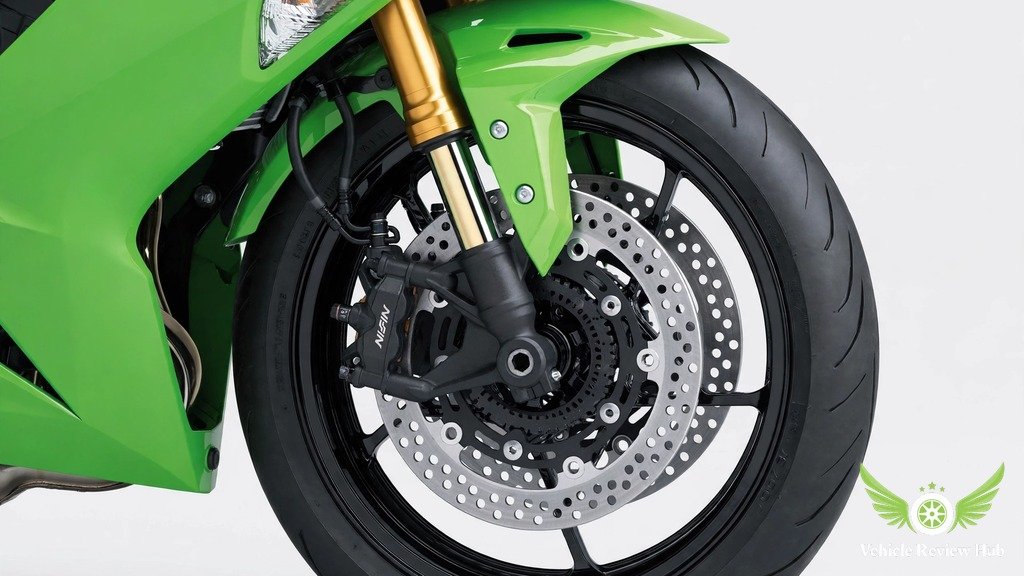
The 2027 bike’s front end is new, with an inverted Showa SFF-BP fork and radial four-piston calipers, but the ABS logic is the same conventional two-channel system since 2013. This Kawasaki Ninja 650 ABS performance guide separates the hardware upgrade from the electronics.
Handling, Braking and Stability on Real Roads
The chassis is the trellis frame from the 2017 bike, 42 lb lighter than the 2012 to 2016 bike. The 2027 bike runs a 24.0-degree rake, 3.9 inches of trail, and a 54.9-inch wheelbase, against the 2026 bike’s 55.5 inches, and the seat sits at 30.9 inches against 31.1 inches. No instrumented handling figure exists for this bike, so this Kawasaki Ninja 650 ABS performance guide describes the hardware instead of inventing numbers. The oldest verdict still holds: in Motorcycle.com’s January 2006 shootout, the SV650S won on handling, power, brakes, and suspension, while the Ninja 650R won on comfort and ease. The 2006 Motorcycle.com shootout is the source for that split. The 2027 fork and calipers should make the front end firmer, but no outlet has scored the new front end yet, and this Kawasaki Ninja 650 ABS performance guide does not score it either. The ABS itself does nothing for handling: it is a straight-line system with no cornering logic and no IMU.
The video below is ZigWheels’ October 2020 road test of the Indian-market BS6 Ninja 650 and Z650. The bike is an Indian-market BS6 Ninja 650 with 68 PS and standard ABS, not a US bike, and every figure in the test is in km/h. The braking figures and the ABS criticism in this Kawasaki Ninja 650 ABS performance guide come from that test.
No US Braking Distance Ever Measured
No US outlet has ever published a braking distance for the Ninja 650, and that is what the heading means. The only instrumented braking figures anywhere come from ZigWheels’ Indian-market BS6 test, and this Kawasaki Ninja 650 ABS performance guide prints them in metric, labelled by market. The BS6 Ninja 650 stopped from 100 km/h in 46.08 metres and from 80 km/h in 30.39 metres. Those figures sit beside ZigWheels’ criticism that the ABS kicks in too early at the front and too late at the rear. The GSX-8R’s 133.89-foot 60-0 figure is the 8R’s, not the 650’s.
| Braking test | Distance | Source and label |
|---|---|---|
| 100-0 km/h, Ninja 650 BS6 | 46.08 m | ZigWheels BS6 |
| 80-0 km/h, Ninja 650 BS6 | 30.39 m | ZigWheels BS6 |
| 100-0 km/h, Z650 BS6 | 50.91 m | ZigWheels |
| 80-0 km/h, Z650 BS6 | 32.91 m | ZigWheels |
| 80-0 km/h, Z650 BS4 | 31.38 m | ZigWheels |
| 60-0 mph, US test | None published | No US outlet has measured one |
Note: every distance in this table is a metric, Indian-market figure except the last row, which is the absence this Kawasaki Ninja 650 ABS performance guide is built around.
Kawasaki Ninja 650 ABS Performance Compared With Other Middleweights
The ABS bike’s closest rival is the same motorcycle without ABS, and for 2027 that rival no longer exists new. This Kawasaki Ninja 650 ABS performance guide compares the 2027 ABS bike with the 2026 non-ABS bike.
Kawasaki Ninja 650 ABS vs Kawasaki Ninja 650
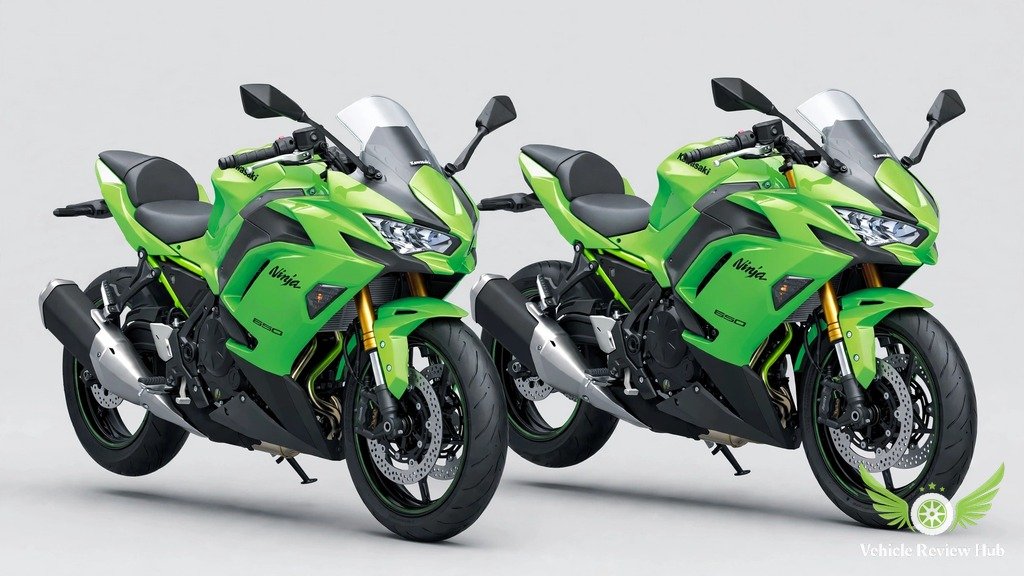
The two bikes are the same motorcycle except for the ABS hardware, price, and weight, as our Ninja 650 review records. The 2026 non-ABS bike cost $7,599 and weighed 421.2 lb, while the 2026 ABS bike cost $8,199 and weighed 423.4 lb, a $600 premium and 2.2 lb more. The 7 lb figure RevZilla quoted belongs to 2017, when the ABS bike weighed 426 lb against 419 lb without ABS, and this Kawasaki Ninja 650 ABS performance guide attaches it to 2017 only. For 2027 there is no non-ABS twin, so the comparison runs the 2027 ABS bike at $8,099 against the 2026 non-ABS bike at $7,599, and the $500 gap buys the new inverted fork, the radial calipers, and the ABS itself. The performance difference is nil: the same engine, gearing, and 67.0 hp claim. The ABS difference is safety, not speed. Our Kawasaki Ninja 650 ABS review covers the price story in full, while our Ninja 650 performance guide covers the same engine in the non-ABS bike, and this Kawasaki Ninja 650 ABS performance guide keeps that distinction in front of the reader. The Ninja 500 SE KRT Edition has no US dyno either, as our Ninja 500 SE KRT Edition performance guide records.
| Figure | 2027 Ninja 650 ABS | 2026 Ninja 650 non-ABS |
|---|---|---|
| MSRP | $8,099 base / $8,299 premium | $7,599 |
| Delivered | $8,784 / $8,984 | $8,284 |
| Curb weight | 427.8 lb (50-state) / 425.6 lb (49-state) | 421.2 lb |
| Front fork | 37 mm inverted Showa SFF-BP | 41 mm telescopic |
| Front brakes | Dual 300 mm semi-floating, radial 4-piston, ABS | Dual 300 mm petal, 2-piston, no ABS |
| Seat height | 30.9 in | 31.1 in |
| Wheelbase | 54.9 in | 55.5 in |
| Engine | 67.0 hp @ 8,000 / 48.5 lb-ft @ 6,700 | Same |
Note: the $500 MSRP gap between the two columns is the whole story of this Kawasaki Ninja 650 ABS performance guide. It buys the ABS, the inverted fork, and the radial calipers on a bike that is otherwise identical. Destination is $685 for both years.
Is the Kawasaki Ninja 650 ABS Suitable for Beginner Riders?
No as a first-ever motorcycle, and yes as a first big bike. The 650 ABS has 67 hp, a 30.9-inch seat, and a 425.6 to 427.8 lb curb weight. The ABS makes it more forgiving than the non-ABS bike, because a locked front wheel is the classic beginner crash. A rider coming from a small bike gets the friendliest version of this motorcycle ever sold. A rider who has never ridden at all should start smaller: our YZF-R3 review covers the small bike most new riders start on. That two-part answer is the honest one, and this Kawasaki Ninja 650 ABS performance guide does not flatten it into a yes or a no.
Kawasaki Ninja 650 ABS Performance Frequently Asked Questions
The questions riders ask most about the Ninja 650 ABS’s performance, answered from the measured figures in this Kawasaki Ninja 650 ABS performance guide.
How much power does the Ninja 650 ABS make?
Kawasaki claims 67.0 hp at 8,000 rpm and 48.5 lb-ft at 6,700 rpm. Measured at the rear wheel, it puts down about 60 to 61 hp: MCN measured 60.38 bhp and Rider measured 60.6 hp on the same engine in the Z650. That agreement is the number this Kawasaki Ninja 650 ABS performance guide trusts.
What is the Ninja 650 ABS top speed?
Kawasaki publishes no top speed. Riders report about 124 to 125 mph, and no instrumented top-speed test exists. The 130 mph figure that aggregators print is not a measured test, and this Kawasaki Ninja 650 ABS performance guide does not print it as one.
What MPG does the Ninja 650 ABS get?
No ABS-specific fuel figure exists. The only measured record is MCN’s long-term test: 49.44 mpg over 9,500 miles, about 198 miles from the tank. That is the 650’s figure, not an ABS figure, and this Kawasaki Ninja 650 ABS performance guide does not invent one.
Did any US test measure the Ninja 650 ABS braking distance?
No. No US test has ever published a braking distance for the 650. The only instrumented figures come from ZigWheels’ Indian-market BS6 test: 100-0 km/h in 46.08 m and 80-0 km/h in 30.39 m, printed in this Kawasaki Ninja 650 ABS performance guide in metric.
Is the Ninja 650 ABS good for beginners?
Not as a first-ever motorcycle, but yes as a first big bike. It has 67 hp, a 30.9-inch seat, and a 427.8-pound curb weight, and the ABS makes it more forgiving than the non-ABS bike.
Is the ABS on the Ninja 650 a cornering ABS?
No. It is a conventional two-channel system that works only in a straight line, with no lean-sensitive logic and no IMU. That is the same system Kawasaki has fitted since 2013, and this Kawasaki Ninja 650 ABS performance guide keeps it labelled that way. The 2027 upgrade is the fork and the calipers, not the ABS logic.