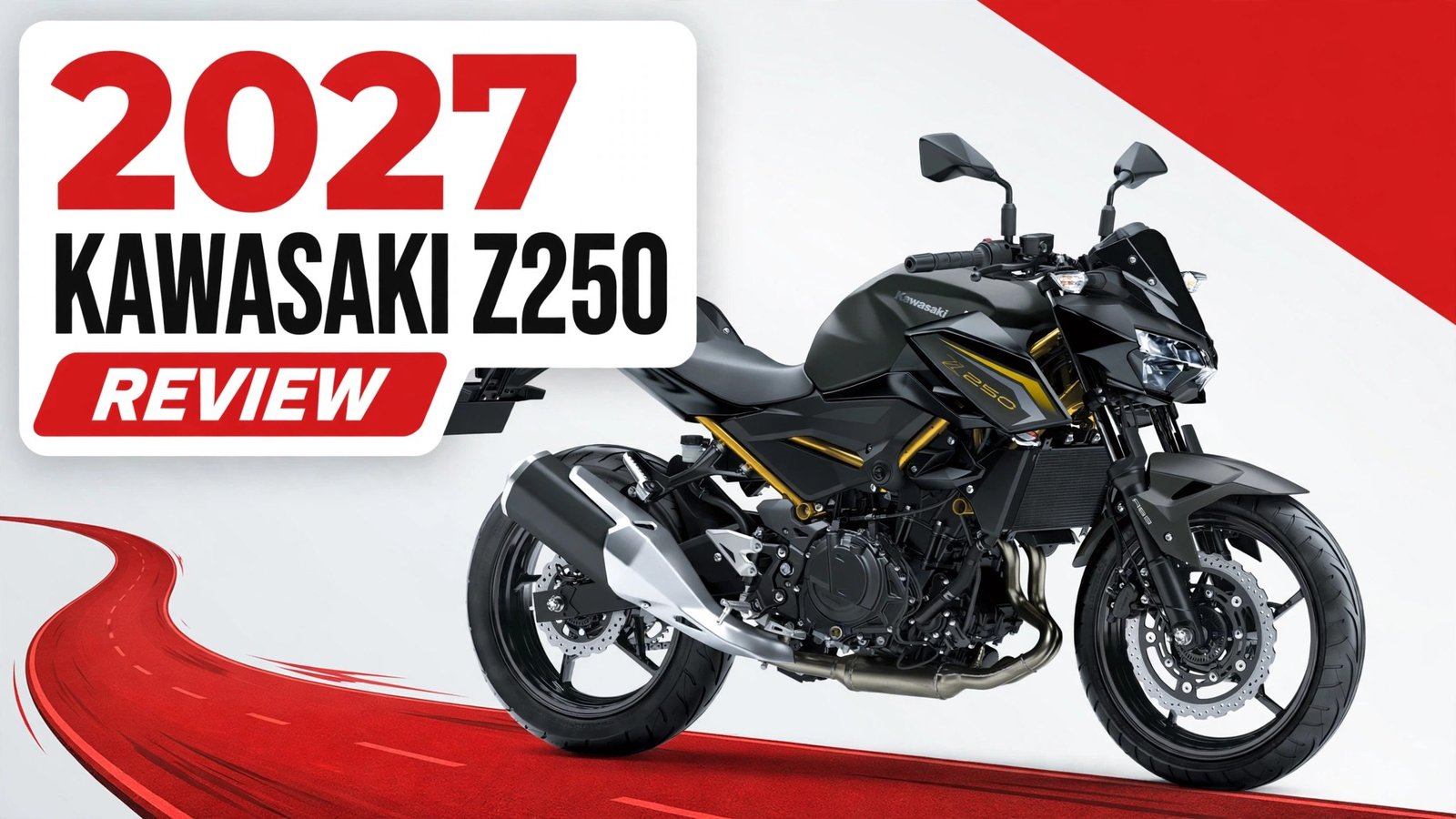
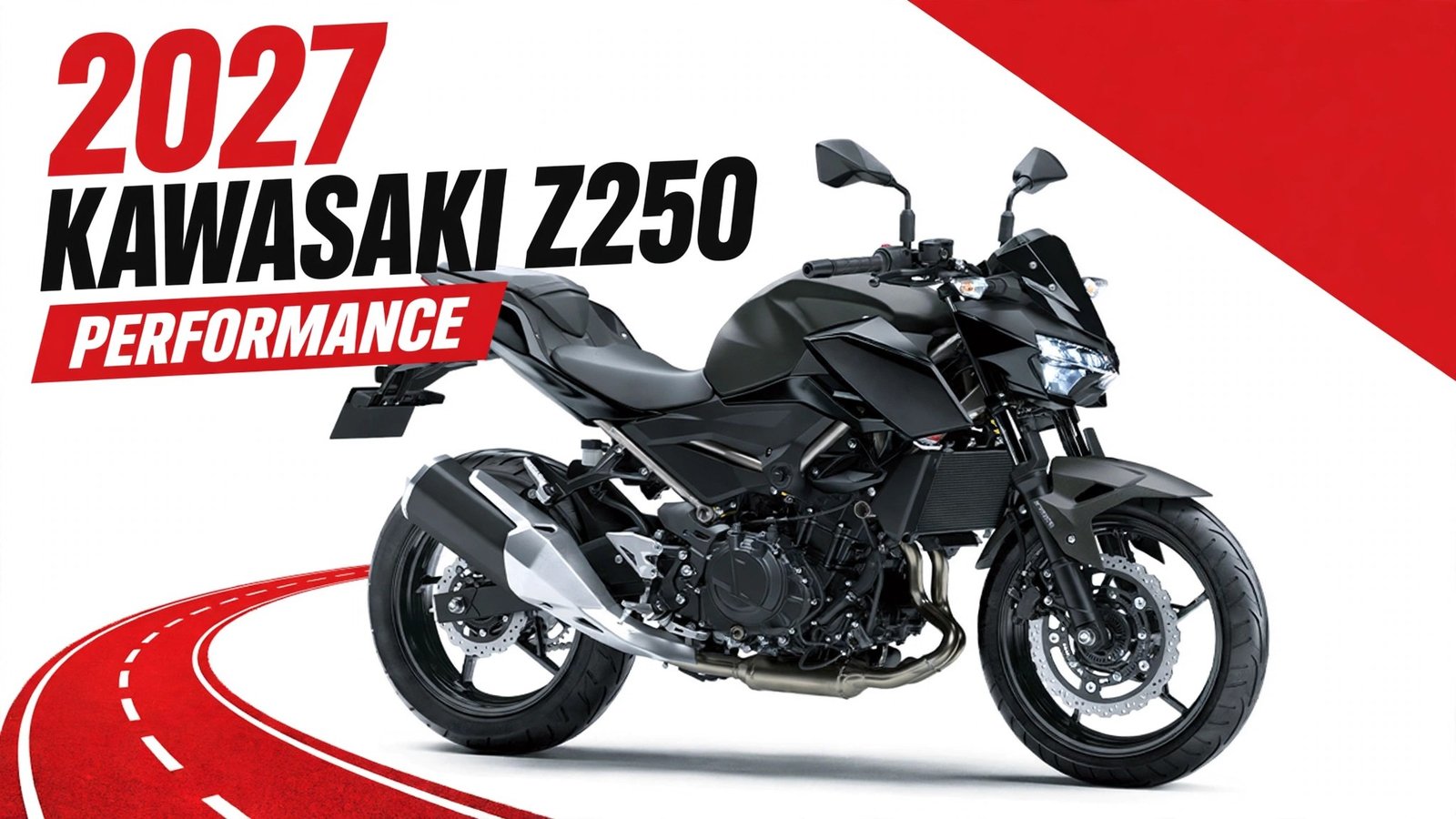
The short answer on Kawasaki Z250 reliability is that the twin is a simple, well-built machine with a clean record: three Japan recalls across both generations, 686 bikes in total, no verified pattern of engine, stator or gearbox failures. The bike was never sold in the USA, so there is no American recall or US service history — this Kawasaki Z250 reliability guide rests on the Japan MLIT recall documents, the Ninja 250 platform manuals and the Indian and Japanese road tests.
Most of what a buyer needs for Kawasaki Z250 reliability is unglamorous: the valve checks are platform data, not a Z250-manual quote; the oil capacity is the one figure on the official spec sheet; and the most repeated complaint is the stock tyres, not a mechanical failure. Every figure below names its generation and source; every gap is printed openly.
Kawasaki Z250 Reliability Overview
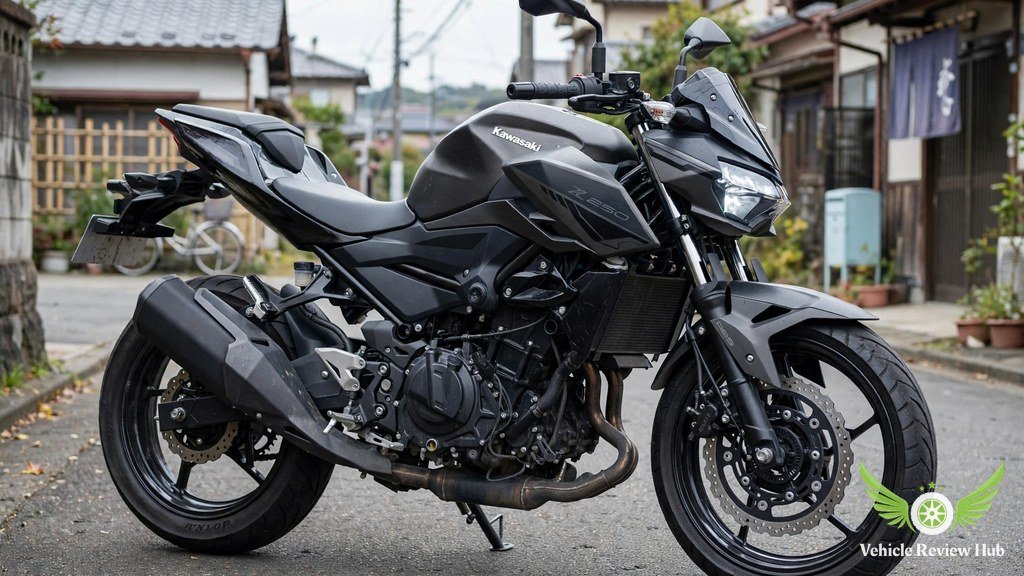
Kawasaki Z250 reliability starts with the bike’s basic shape: a 248cc liquid-cooled parallel twin, DOHC 8-valve, fuel-injected, with a 6-speed gearbox and an assist and slipper clutch, sold in Japan and other Asian markets. Two generations share the name — Gen 1 (2013–2017, ER250C) and Gen 2 (2019–present, ER250E). There was no 2018 Z250 in Japan — Gen 1 ended in 2017, Gen 2 launched 1 November 2019.
Three Japan Recalls Found
The whole recall history fits in one table: three Japan MLIT campaigns, 686 bikes in total, all with the remedy free at a Kawasaki dealer — 491 Gen 1 bikes in 2014, 78 Gen 2 in 2020 and 117 Gen 2 in 2025. There is no US recall in Kawasaki Z250 reliability — Kawasaki never sold it in the USA. The only American recall near it is NHTSA 25V-146, the 2024 Z500 and Ninja 500 clutch campaign — the same defect, a different bike’s recall.
| Recall | Bikes affected | Defect and remedy |
|---|---|---|
| 2014 rear shock seal (MLIT campaign 3320, filed 6 Mar 2014) | 491 Gen 1 bikes (JBK-ER250C, frames ER250C-A00048 to A03499, built 22 Feb to 5 Jun 2013) | Seal rubber lacked durability, deformed and leaked oil; remedy is a replacement rear shock with a new mounting nut and O-ring. Four defect reports, no accidents. |
| 2020 cam chain tensioner (MLIT filing 4864, filed 15 Dec 2020) | 78 Gen 2 bikes (2BK-EX250P, frames EX250P-A23991 to A24150, built 29 Sep to 4 Nov 2020) | Tensioner lacked strength and could break early, causing noise, timing slip and engine stall; remedy is a replacement tensioner. Fifteen defect reports, no accidents. |
| 2025 clutch release shaft weld (MLIT filing 5624, filed 6 Mar 2025) | 117 Gen 2 bikes (8BK-EX250Y, frames EX250Y-A40996 to A41115, built 29 Feb to 29 Aug 2024) | Clutch lever and shaft weld was improper and could break, leaving the clutch inoperable; remedy is a replacement shaft, free. Two defect reports, no accidents. |
Note: The three campaigns in this Kawasaki Z250 reliability guide total 491 + 78 + 117 = 686 Z250s. The 2020 campaign also covered the Ninja 250 (197 bikes); the 2025 campaign totalled 1,526 across the Eliminator (1,369), the Z400 (40) and the Z250 (117). Ask for the recall work by campaign — 2014 shock, 2020 tensioner, 2025 clutch shaft.
How Mileage, Storage and Previous Care Affect Reliability
For Kawasaki Z250 reliability, mileage matters less than care: the twin is not working hard at 35 PS in its current tune, and no verified pattern of engine wear, oil burning or gearbox trouble exists at any mileage. What matters is the service history — 12,000 km oil changes done on time beat two years sitting with old oil and a dead battery. The first service is at 1,000 km, and a bike without that first stamp deserves a harder look than one with 20,000 km and a full book.
Kawasaki Z250 Common Problems and Wear Items
Past the three recalls, Kawasaki Z250 reliability is about wear items and market complaints, not breakdowns. The road tests agree on the weak points: the stock tyres, the missing ABS on Indian Gen 1 bikes, the weak low end, tall gearing and the price. None of these is a failure — they are what a buyer budgets for.
2025: Clutch Shaft Weld
The newest recall sounds worst for Kawasaki Z250 reliability, because a broken clutch shaft leaves the bike unrideable. The 2025 campaign covers 117 Gen 2 Z250s built between 29 February and 29 August 2024, frames EX250Y-A40996 to A41115. The weld was improper and can break, leaving the clutch inoperable. Two defect reports, no accidents; the remedy is a replacement shaft, fitted free.
The confusion comes from its American cousin. The same defect sits behind NHTSA campaign 25V-146, which recalled 3,742 units of the 2024 Z500 and Ninja 500 in the USA. That campaign is real, and it is not this bike’s recall: the Z250 was never sold in the USA, so no NHTSA campaign covers it. For Kawasaki Z250 reliability, the check is the frame number and MLIT filing 5624, filed 6 March 2025 — and the fix costs the owner nothing.
2020: Tensioner, 78 Bikes
The middle recall in Kawasaki Z250 reliability is the smallest: 78 Gen 2 bikes, all 2BK-EX250P models built 29 September to 4 November 2020, frames EX250P-A23991 to A24150. The cam chain tensioner lacked strength and could break early, causing noise, then timing slip and an engine stall. Fifteen defect reports, no accidents; the remedy is a replacement tensioner, fitted free.
Beyond this 78-bike campaign there is no verified pattern of tensioner or rattle failures for the twin. The campaign also covered the Ninja 250 (197 bikes) and the ZX-25R, so the tensioner story belongs to a shared family part. With the work done it is a non-issue for Kawasaki Z250 reliability; without it, replace the tensioner first.
Kawasaki Z250 Maintenance Schedule and Servicing
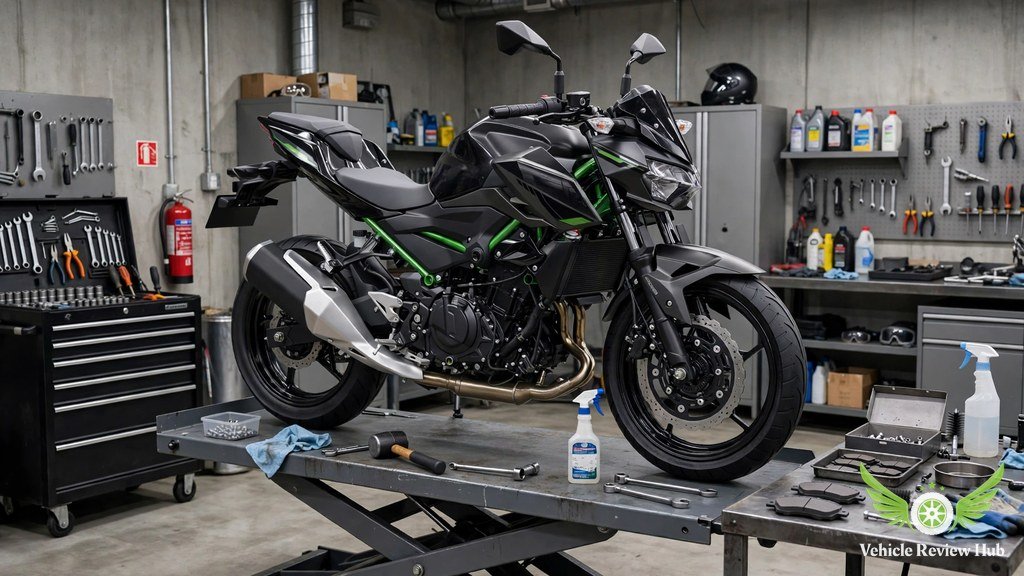
The service rhythm is gentle: first service at 1,000 km, then oil and filter every 12,000 km, air filter at 18,000 km, plugs at 12,000 km. Brake fluid is DOT 4, replaced every two years. One fact first: the Z250’s own manual was not available, so every interval below is platform data from the Ninja 250 family manuals — except the oil capacity, on the official 2027 PR Times spec sheet. This Kawasaki Z250 reliability guide says “per the Ninja 250 platform manual” wherever that is the source, and never pretends to quote a Z250 manual.
Valve Checks Are Platform Data
Valve-clearance checks are where the platform-data label matters most, because the check is the most expensive routine job. Per the Ninja 250 platform manual, the check falls every 12,000 km on Gen 1 and every 24,000 km on Gen 2 — the Gen 1 interval from the US EX250J manual’s chart (7,500 miles), the Gen 2 from the EX250P owner’s manual, the same interval as the Ninja 400 and Z400.
12,000 km Gen 1, 24,000 Gen 2
The split is the practical point for Kawasaki Z250 reliability. A Gen 1 bike needs its valves checked twice as often as a Gen 2 bike, so a 2013–2017 Z250 with 24,000 km on it should have had two valve checks, while a 2019–2022 Gen 2 bike at the same mileage should have had one. The 2023-onward Gen 2 bikes follow the same 24,000 km rhythm. The check is a workshop job, so the cost belongs in the ownership budget.
| Service item | Interval | Source |
|---|---|---|
| First (break-in) service | 1,000 km | Platform data (Ninja 250 family manuals) |
| Engine oil + oil filter | Every 12,000 km | Platform data; oil capacity 2.0 L is official (PR Times spec sheet) |
| Air filter | 18,000 km | Platform data |
| Spark plugs | 12,000 km | Platform data |
| Valve-clearance check, Gen 1 | Every 12,000 km | Platform data (US EX250J manual, 7,500 miles) |
| Valve-clearance check, Gen 2 | Every 24,000 km | Platform data (EX250P owner’s manual) |
| Brake fluid (DOT 4) | Replace every 2 years | Platform pattern |
| Chain lubrication | Every 800–1,000 km | Platform data (Gen 2 interval) |
Note: Coolant level is checked at every service; no replacement interval was verified, so no number is printed. Valve-clearance values in millimetres were not verified either — the table in this Kawasaki Z250 reliability guide gives the check interval only. Every interval above is platform data from the Ninja 250 family manuals unless the row says otherwise; the Z250’s own manual was not available for this Kawasaki Z250 reliability guide.
Kawasaki Z250 Tires, Brakes and Suspension Maintenance
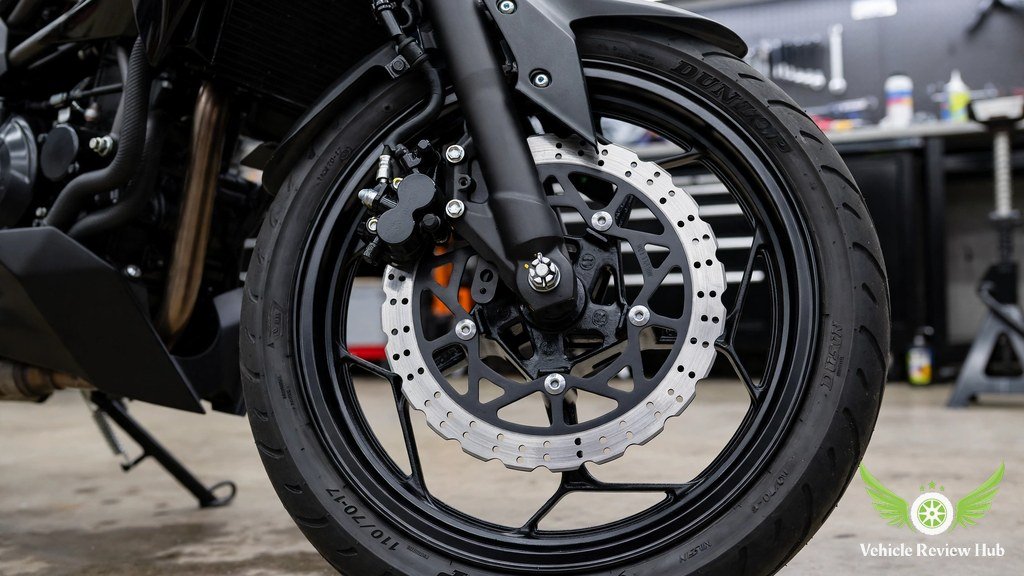
The running gear is where Kawasaki Z250 reliability meets the road, and where the oldest recall lives. The 2014 rear shock seal campaign sits here because the fix is a suspension job, not an engine job — and the shock, brakes and tyres are what a used buyer checks first.
2014: Rear Shock Seal
The first recall is also the biggest: 491 Gen 1 bikes, frames ER250C-A00048 to A03499, built 22 February to 5 June 2013. The rear shock’s seal rubber lacked durability, so it deformed and the shock leaked oil. Four defect reports, no accidents; the remedy is a replacement rear shock, plus a new mounting nut and O-ring, fitted free.
For Kawasaki Z250 reliability, a leaking rear shock is easy to spot: oil on the shock body or a weep at the seal is the sign. Any Gen 1 bike in the frame range that still has its original shock should have the work done, and any buyer should check the shock body for oil. The campaign is MLIT 3320, filed 6 March 2014.
Tire, Brake and Suspension Checks That Matter
The tyres are the most repeated complaint in Kawasaki Z250 reliability. The stock IRC Road Winner tyres — 110/70-17 front, 140/70-17 rear — were called weak by Overdrive, ZigWheels and MotorBeam in the same words, and a used buyer should plan on better rubber before judging the chassis. The tyre pressures, per the Ninja 250 platform manual, are 200 kPa front and 225 kPa rear cold (29 and 33 psi), and soft pressures wear tyres faster.
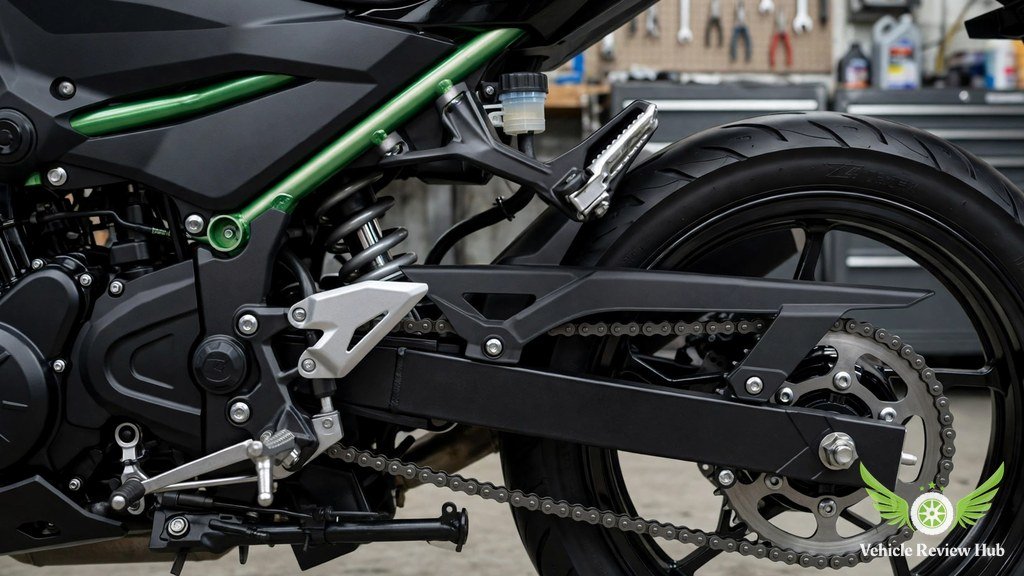
The brakes differ by generation. Gen 1 runs a single 290 mm petal front disc and a 220 mm rear disc, with ABS standard in Japan only from 15 May 2015 — and India never got ABS on the Gen 1 Z250 at all, which every Indian review lists as the bike’s biggest omission. Gen 2 upgrades the front to a 310 mm disc with the same 220 mm rear, and ABS is standard on the Gen 2 bike in Japan. The chain is a 520 sealed chain, 25–35 mm of slack, lubricated every 800–1,000 km on Gen 2 — the routine that keeps Kawasaki Z250 reliability intact. The fork is a 37 mm telescopic unit on Gen 1 and a 41 mm unit with 120 mm of travel on Gen 2, with a Uni-Trak rear monoshock and 130 mm of travel.
| Item | Specification | Source |
|---|---|---|
| Engine oil | SAE 10W-40, JASO MA2 — 2.0 L with filter, 1.6 L drain-only, 2.3 L dry | 2.0 L official (PR Times spec sheet); rest platform data |
| Oil filter | Kawasaki 16097-0008 | Shared platform part (Ninja 250/300/400/500, Z400/Z500) |
| Spark plugs | NGK LMAR8G / CR8E ×2, gap 0.8–0.9 mm | Platform data |
| Chain | 520 sealed, slack 25–35 mm, lube every 800–1,000 km | Platform data (Gen 2 lube interval) |
| Tyre pressures (cold) | 200 kPa front / 225 kPa rear (29 / 33 psi) | Platform data |
| Tyres | 110/70-17 front, 140/70-17 rear (stock IRC Road Winner) | Official spec; tyre criticism attributed to Overdrive, ZigWheels, MotorBeam |
Note: The 2.0 L oil capacity with a new filter is the one fluid figure on the official 2027 PR Times spec sheet in this Kawasaki Z250 reliability guide; the drain-only and dry figures, the plug gap, the chain slack and the tyre pressures are platform data from the Ninja 250 family manuals.
Kawasaki Z250 Maintenance and Ownership Costs
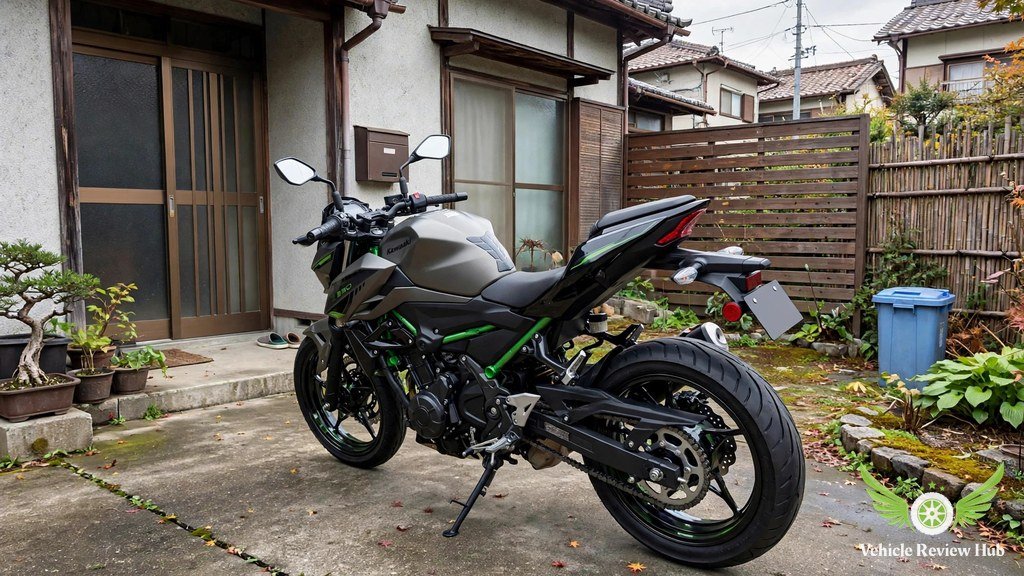
Running a Z250 is cheap by 250cc standards, and that is part of Kawasaki Z250 reliability: fuel, tyres, routine servicing and the occasional part. The 2027 model lists at ¥704,000 tax-included in Japan, released 5 September 2026 at the same price as the 2026 model, with a 2-year warranty. The price ladder runs from ¥465,000 ex-tax at the 2013 launch and ¥512,500 ex-tax for the 2015 ABS model, through ¥610,500 in 2019, ¥638,000 in 2023 and ¥682,000 in 2024 and 2025, with 2020–2022 prices unverified — a gap printed openly.
Fuel, Routine Servicing, Tires and Replacement Parts
Fuel is the smallest cost and the easiest to misquote — the figures change with the year and the test. The 2027 official sheet claims 25.1 km/L on the WMTC cycle and 32.3 km/L at a steady 60 km/h, while the 2019 launch sheet claimed 37.0 km/L steady and 27.2 km/L WMTC — always quote the year with the figure. The road tests sit between the lab numbers: MotorFan’s 2019 Japan test measured 28.2 km/L over about 120 km including Tokyo traffic, an Indian owner reported 22–23 km/L in everyday use, and MotorBeam’s shootout recorded 30 km/L. None is a US MPG figure — the bike was never EPA-tested.
Routine servicing for Kawasaki Z250 reliability runs on a 12,000 km rhythm: oil and filter and plugs at every interval, air filter at 18,000 km, brake fluid every two years. Tyres are the first real expense — the stock IRC Road Winner rubber is the weak point every Indian road test names, so a used bike on its original tyres needs a set budgeted in. Replacement parts are ordinary Kawasaki small-twin items, and the shared platform keeps them affordable: the oil filter, plugs and chain all come from the same parts bin as the Ninja 400 and Z500. Used prices seen in Japan: ¥340,000 total for a used example with 6,776 km and a 3-month warranty, and a 2026 new bike at ¥730,000 total on the road — that second figure includes fees, not the ¥704,000 list price.
US Platform Parts Help
For an American with a grey-import Z250, the shared platform is the whole Kawasaki Z250 reliability story. The bike was never sold in the USA, so there is no US dealer stock for Z250-specific parts — but the parts that wear out are not Z250-specific. The oil filter is Kawasaki 16097-0008, the same spin-on cartridge used across the Ninja 250, 300, 400 and 500 and the Z400 and Z500. The plugs are NGK LMAR8G or CR8E, and the chain is a 520 sealed chain — both standard US dealer items.
That help has limits. Bodywork, the trellis frame, the LED headlights and the 310 mm front disc are Z250-specific, and a grey-import owner who damages them orders from Japan, not a local dealer. The 2-year warranty on the 2027 Japan model does not travel with a private import either. The platform covers everything that wears on a schedule — and for a bike whose service rhythm is 12,000 km, that is most of what an owner will ever need. The closest new Z an American can buy is the Kawasaki Z125 PRO review bike — the 2027 Z125 PRO at $3,799, or $3,999 for the Cypher Camo Beige, plus $315 destination — and the direct US answer is the Kawasaki Z500 review twin, the naked twin Kawasaki actually sells in America.
| Item | Gen 1 (2013–2017) | Gen 2 (2019–present) |
|---|---|---|
| Engine | 249cc parallel twin, DOHC 8-valve | 248cc parallel twin, DOHC 8-valve |
| Power (Japan) | 31 PS @ 11,000 rpm | 37 PS @ 12,500 rpm (2019–2022); 35 PS @ 12,500 rpm (2023–) |
| Torque (Japan) | 2.1 kgf·m @ 8,500 rpm (20.6 Nm) | 23 Nm @ 10,500 rpm (launch); 22 Nm @ 10,500 rpm (2023–) |
| Weight | 168 kg non-ABS; 170 kg ABS (2015+) | 164 kg (ABS standard, Japan) |
| Fuel tank | 17 L | 14 L |
| Seat height | 785 mm | 795 mm |
| Frame / fork | Diamond steel frame; 37 mm fork | Trellis frame; 41 mm fork, 120 mm travel |
| Front brake | 290 mm petal disc; ABS from May 2015 (Japan only) | 310 mm disc; ABS standard (Japan) |
| Valve check | Every 12,000 km (platform data) | Every 24,000 km (platform data) |
Note: Indian-market Gen 1 figures differ — Indian publications print 32 PS @ 11,000 rpm and 21 Nm @ 10,000 rpm for the same engine, and India never got ABS on the Gen 1 Z250. The table in this Kawasaki Z250 reliability guide prints the Japan figures.
How to Keep a Kawasaki Z250 Reliable
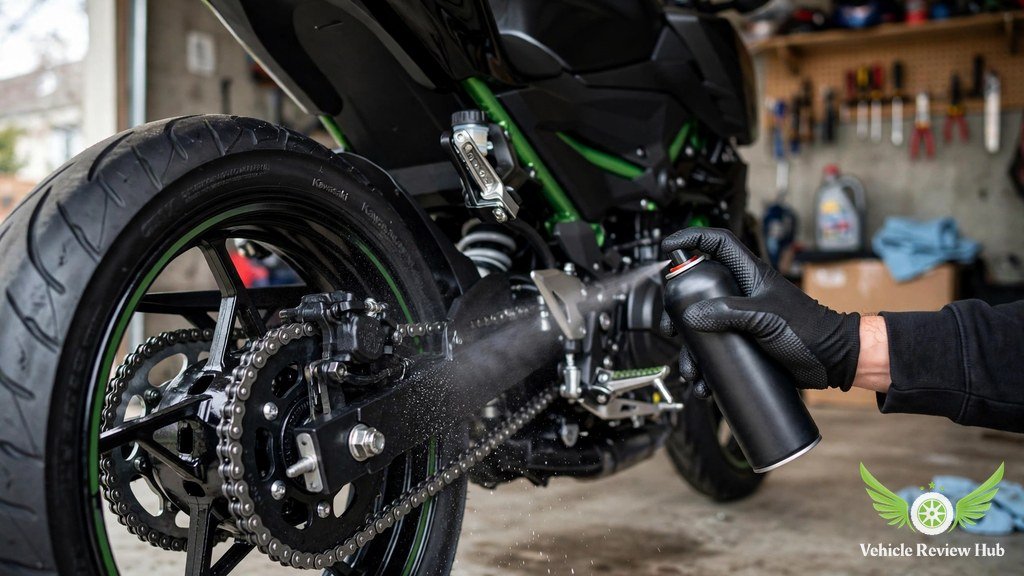
Kawasaki Z250 reliability is mostly doing the ordinary things on time. The twin asks little: oil and filter every 12,000 km, plugs at the same interval, air filter at 18,000 km, brake fluid every two years, chain lubricated every 800–1,000 km and valves checked at 12,000 km on Gen 1 or 24,000 km on Gen 2. The full Kawasaki Z250 review covers what the bike is, and the Kawasaki Z250 performance guide covers what it does — this section is about keeping it doing both for years.
Preventive Maintenance, Records and Regular Inspections
The single most valuable habit for Kawasaki Z250 reliability is keeping records: a stamped service book beats a low odometer reading. Inspect regularly: chain slack (25–35 mm), tyre pressures (200 kPa front, 225 kPa rear cold), fork seals, rear shock body for weeps, brake pads before they reach the metal. And check the recall work by frame number every time the bike changes hands.
Two things owners skip on Kawasaki Z250 reliability: the tyres — the stock IRC Road Winner rubber is the weak point every Indian road test names, and a used bike still on its original tyres should get better rubber before its chassis is judged. The second is the valve check, the most expensive routine job and the one most often skipped — a Gen 1 bike at 12,000 km without a check is overdue, as is a Gen 2 bike at 24,000 km. The official 2027 Kawasaki Motors Japan page confirms the 2-year warranty and ¥704,000 list price, and the MotorBeam shootout is the best read on the Gen 1 bike ridden hard.
42,000 km Figure Unproven
One number needs addressing directly: 42,000 km appears in the source outline for this blog and nowhere else. There is no verified 42,000 km figure for this bike. No source was found for what it refers to — not a service interval, not an engine-life rating, not a recall threshold — and no publication, manual or recall document names it. The heading exists only to say the figure is unproven, and this Kawasaki Z250 reliability guide does not treat it as a fact.
Kawasaki Z250 Reliability: Frequently Asked Questions
The answers below are short and direct, and every figure in this Kawasaki Z250 reliability guide names its generation and source. The three recalls are Japan MLIT campaigns, the service intervals are platform data from the Ninja 250 family manuals, and the oil capacity is the one fluid figure on the official spec sheet.
How many recalls does the Z250 have?
Three, all in Japan — and this Kawasaki Z250 reliability guide lists all three: a 2014 rear-shock seal recall (491 Gen 1 bikes), a 2020 cam-chain tensioner recall (78 Gen 2 bikes) and a 2025 clutch release-shaft weld recall (117 Gen 2 bikes) — 686 Z250s in total. No US recall exists, because the bike was never sold in the USA.
How often do the valves need checking?
The checks are platform data from the Ninja 250 family manuals: every 12,000 km on Gen 1 and every 24,000 km on Gen 2. The Z250’s own manual was not available for this Kawasaki Z250 reliability guide, so the intervals are platform figures, not a Z250-manual quote. No valve-clearance value in millimetres was verified, so none is printed.
How often should the oil be changed?
Every 12,000 km, with the filter changed at the same time, per this Kawasaki Z250 reliability guide. The engine takes 2.0 litres of SAE 10W-40 (JASO MA2) with a new filter — the 2.0-litre figure is on the official spec sheet — and the first service is at 1,000 km.
What parts does a US owner need for a grey-import Z250?
The shared-platform parts help, as this Kawasaki Z250 reliability guide shows: the oil filter is Kawasaki 16097-0008 (the same part as the Ninja 400 and Z500), the plugs are NGK LMAR8G or CR8E, and the chain is a 520 sealed chain. Those come from the US Ninja 400 and Z500 parts bin, so a grey-import owner can buy the wear items from a US dealer.
What goes wrong most often on a used Z250?
Beyond the three recalls, the repeated complaint in Kawasaki Z250 reliability is the stock IRC Road Winner tyres — every Indian road test calls them weak, so budget for better rubber. There is no verified pattern of engine, stator or gearbox failures on the twin.
What is the 42,000 km figure?
There is no verified 42,000 km figure for this bike in this Kawasaki Z250 reliability guide. The number appears in the source outline as an unproven claim with no identified source — not a service interval, not an engine-life rating, not a recall threshold. Do not treat it as a fact.