The short answer to this Suzuki Burgman 200 performance guide is that the 200 is a willing city scooter and a patient freeway scooter: a 199cc single with a global claim of 18.1 hp, an indicated top speed of about 81 mph, and tester-measured fuel economy of 58 to 65 mpg. This Suzuki Burgman 200 performance guide keeps every figure honest — the power claim is Suzuki’s global figure, not Suzuki USA’s, the top speed is indicated, not GPS-measured, and no dyno run from a named outlet exists.
Suzuki Burgman 200 Engine Performance and Power Delivery
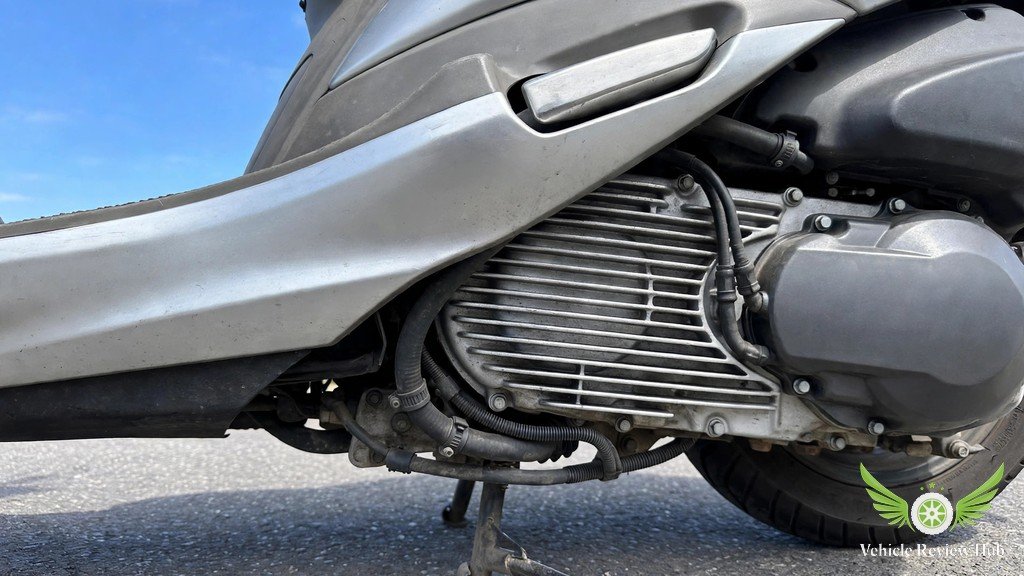
The engine is the first thing this Suzuki Burgman 200 performance guide has to frame correctly, because the headline power figure comes with an attribution problem. The 200 is a 199cc liquid-cooled, fuel-injected single with a SOHC four-valve head, an automatic CVT and a V-belt final drive — and Suzuki USA publishes no horsepower or torque figure for it at all.
Global Claim 18.1 HP, Not Suzuki USA’s
The figure every source quotes is 18.1 hp at 8,000 rpm with 12.5 lb-ft of torque at 6,000 rpm, and this Suzuki Burgman 200 performance guide attributes it exactly that way, because it is Suzuki’s global launch-press claim, not a Suzuki USA figure. Motorcycle.com printed the claim in its 2014 first ride, and Cycle World carried the same press-kit figures in its 2013 first look. Suzuki’s own global sources disagree: the launch press material says 13.5 kW (18.1 hp), while Suzuki’s Global Digital Library lists 14 kW (19 PS). Torque is consistent at 17 Nm in both. The full specification is in the full review.
No Named-Outlet Dyno Exists
No independent dyno test of the Burgman 200 exists from any named outlet. Three separate searches across Motorcycle.com, Cycle World, Ultimate Motorcycling, Motorcyclist, RevZilla, webBikeWorld, Top Speed and ScooterFile returned zero dyno results, and Motorcycle.com’s own comparison tool lists Burgman 200 horsepower as a dash. That means no rear-wheel horsepower figure and no torque curve to quote. This Suzuki Burgman 200 performance guide says so plainly instead of filling the gap with a guess: the only power number available is the global claim above, and every riding impression that follows comes from the 2014 launch tests, because no later professional test exists.
| Item | Suzuki Burgman 200 |
|---|---|
| Engine | 199cc liquid-cooled SOHC 4-valve single |
| Bore and stroke | 69.0 x 53.4 mm |
| Compression | 11.0:1 |
| Power | 18.1 hp @ 8,000 rpm (global claim; Suzuki USA publishes none) |
| Torque | 17 Nm / 12.5 lb-ft @ 6,000 rpm (global claim) |
| Fuel system | Suzuki Fuel Injection |
| Transmission | Automatic CVT, V-belt final drive |
| Clutch | Dry-shoe automatic centrifugal |
| Curb weight | 359 lb (California 362 lb) |
| Fuel tank | 10.5 L (2.8 US gal) |
| Dyno figure | None from any named outlet |
| 0–60 mph | No time exists from any named outlet |
Notes for this Suzuki Burgman 200 performance table: power and torque are Suzuki’s global claims, not Suzuki USA figures. The bore is 69.0 x 53.4 mm — the 63.0 mm figure on Suzuki USA’s site in 2014–2017 was Suzuki’s own error. No dyno run and no 0–60 time exists from any named outlet, so this Suzuki Burgman 200 performance guide prints neither.
Suzuki Burgman 200 Top Speed and Acceleration
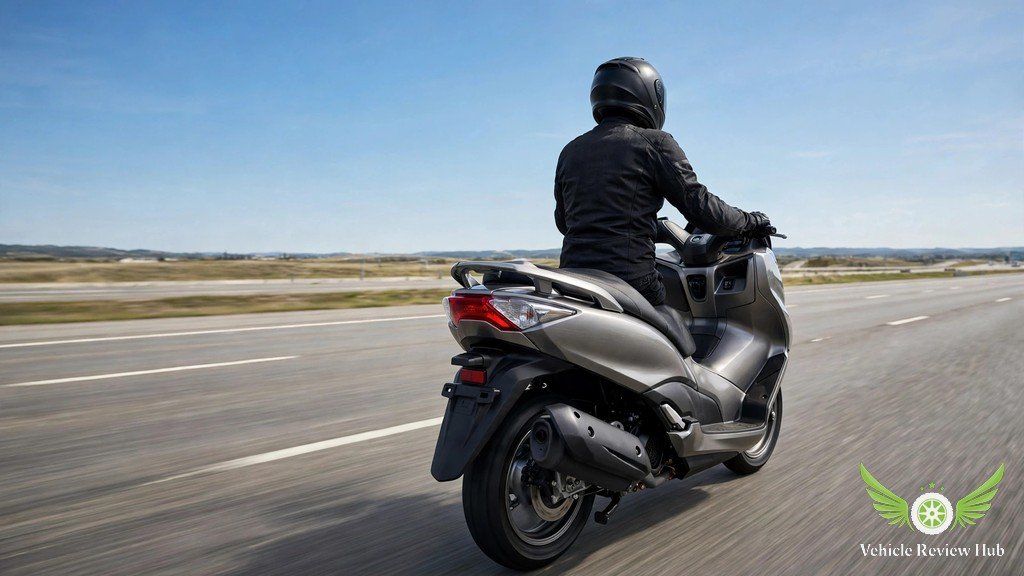
Top speed is where this Suzuki Burgman 200 performance guide has to be most careful with words, because the only number anyone measured was read off an analog speedometer, not a GPS. The honest band is about 75 to 81 mph indicated, wind and rider dependent — and “indicated” is the key word, because no GPS-measured top speed was found anywhere.
81 MPH Indicated, Tucked and Drafting
The 81 mph figure comes from Motorcycle.com and its 2014 first ride at the San Diego press launch: “Tucked and sitting in the draft of others, I saw 81 mph before running out of room.” Every word of that sentence matters for this Suzuki Burgman 200 performance guide. It was tucked, it was drafting other riders, and it was read off the analog speedometer. The other two launch tests point the same way: Ultimate Motorcycling calls the realistic top speed “about 80 mph”, and MotorcycleDaily saw “80-plus on the speedometer”. Speedometers typically read 5 to 10 percent high, so the 81 mph indicated figure is likely about 73 to 77 mph true. That is arithmetic on a general rule, not a measured Burgman 200 correction.
Passing Reserve Is Thin at Highway Pace
Getting to 65 mph is easy; staying quick above it is not. Motorcycle.com put it best: “If you want to get up to 65 mph, it’ll take you there easily. Asking for 70 mph requires a little waiting, and from there things get harder.” Ultimate Motorcycling is blunter about what that means in traffic: “Acceleration is limited once you’re up to freeway speeds, so ride accordingly. You will not be able to use a twist of the throttle to get you out of trouble.” That thin passing reserve is the limit of this Suzuki Burgman 200 performance guide’s top-speed story. Below 65 mph, Motorcycle.com found plenty of grunt to evade cars in city traffic and merge onto the freeway. As for measured acceleration, there is nothing to print: no 0–60 mph time, no 0–100 km/h time and no quarter-mile time exists from any named outlet.
Suzuki Burgman 200 Mileage and Fuel Economy
Fuel economy is where this Suzuki Burgman 200 performance guide has to untangle the numbers, because three figures circulate under Suzuki’s name and only two of them are distinct. Suzuki’s own claims sit at the optimistic end; the testers measured less.

Three Suzuki MPG Figures, All Different
The heading promises three figures, and this Suzuki Burgman 200 performance guide delivers them honestly: two are distinct Suzuki claims, and the third is one of those claims restated in metric. The first distinct claim is 70.8 mpg in US gallons, from Suzuki’s 2014 press material as quoted by Motorcycle.com with “[Source: Suzuki]”: the Burgman 200 gets 70.8 mpg, and a full 2.77-gallon tank should in theory give about 196 miles. The arithmetic checks out — 70.8 times 2.77 is 196. The second distinct claim is up to 21 km/L, or 49.4 US mpg, from Suzuki Singapore launch material, “depending on riding style”. The third figure in circulation, 30 km/L, is not a third Suzuki test at all: 30 km/L converts to 70.6 US mpg, which is the 70.8 mpg press claim in metric dress. No third distinct Suzuki figure was found, and this Suzuki Burgman 200 performance guide prints no WMTC number. The AI-roundup claim of “85–95 mpg” is rejected outright as unsourced.
Testers Measured 58 to 65 MPG
That 58 to 65 mpg band is Motorcycle.com’s trip-computer reading from the San Diego press launch, a roughly 120-mile mixed ride ridden hard, and this Suzuki Burgman 200 performance guide stresses that it is one tester’s trip-computer band, not the whole tester range. MotorcycleDaily put fuel economy “in the 60s” on the display and reckoned “70 or greater mpg would have been possible” on the ECO light. The full named-outlet spread is wider than the heading band: Drive.com.au in Australia measured 3.3 L/100 km in urban riding, which is 71.3 US mpg — its printed “85 mpg” is Imperial gallons and is never printed here without that word — and ZA Bikers in South Africa recorded 35 km/L, or 82.3 US mpg, from fill-up maths over mixed highway and town riding. The range maths follows from the tank: at Suzuki’s 70.8 mpg, 2.77 gallons gives 196 miles; at Motorcycle.com’s 58 to 65 mpg, the 2.8-gallon tank gives 162 to 182 miles.
| Figure | MPG (US gallons) | Source and basis |
|---|---|---|
| Suzuki press claim | 70.8 | Suzuki 2014 press material; 196 miles on 2.77 gal |
| Suzuki Singapore claim | 49.4 | Up to 21 km/L, depending on riding style |
| 30 km/L in circulation | 70.6 | The 70.8 mpg claim restated in metric, not a third test |
| Motorcycle.com tester | 58–65 | Trip computer, hard riding, ~120-mile mixed ride |
| MotorcycleDaily tester | 60s | Display reading; 70+ possible on the ECO light |
| Drive.com.au tester | 71.3 | 3.3 L/100 km urban; printed “85 mpg” is Imperial |
| ZA Bikers tester | 82.3 | 35 km/L, fill-up maths, mixed highway and town |
| Full tester spread | 58–82 | Named outlets only; owner reports excluded |
| Range at 70.8 mpg | 196 miles | Suzuki’s own figure, 2.77 gal |
| Range at 58–65 mpg | 162–182 miles | 2.8-gal tank, Motorcycle.com band |
Notes for this Suzuki Burgman 200 performance table: only two distinct Suzuki-attributable MPG figures could be verified — 70.8 mpg from Suzuki’s 2014 press material and up to 21 km/L (49.4 US mpg) from Suzuki Singapore. The “30 km/L” figure is the 70.8 mpg claim in metric dress, not a third Suzuki test, and no WMTC figure for the Burgman 200 was found on any Suzuki page. The 58–65 mpg band is Motorcycle.com’s trip-computer reading, not the whole tester range; the full named-outlet spread is 58 to 82 US mpg.
Suzuki Burgman 200 Real-World Riding Experience
The real-world story of this Suzuki Burgman 200 performance guide is a scooter that earns its keep in town and on the commute, and asks for patience once the road opens up. Every riding impression here traces to the 2014 launch tests, because no later professional test exists.
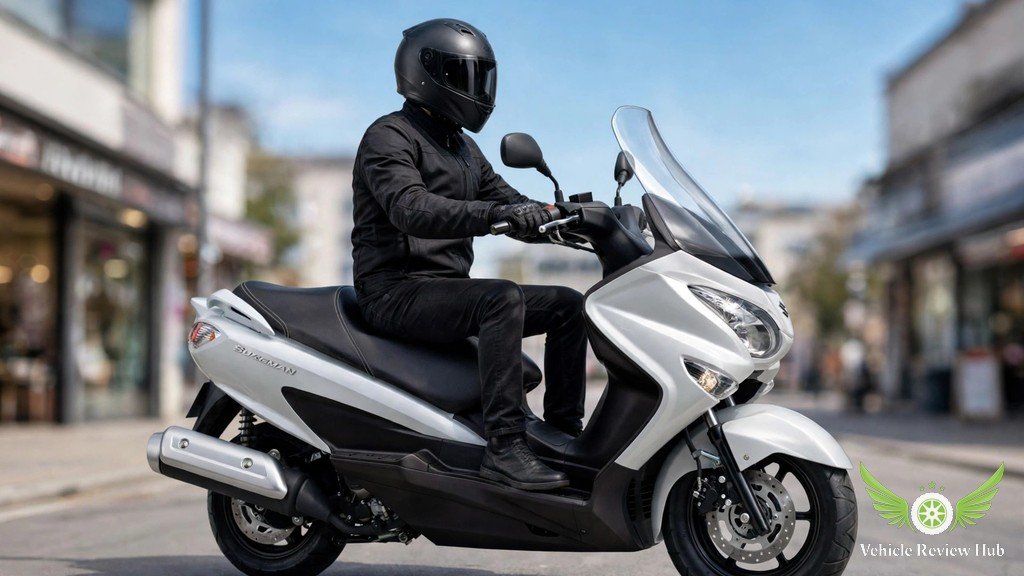
The video below is a Japanese touring video from the 闇夜野カラス channel — there is no English narration, and no English-language Burgman 200 touring video exists to embed instead. It shows the bike ridden at touring pace on a short ride during a break in the rainy season in Akita Prefecture, making the case that the Burgman 200 suits travel. The riding footage and the touring argument are the parts that match this Suzuki Burgman 200 performance guide.
Wind Protection Praised for the Class
The windscreen is the part of this Suzuki Burgman 200 performance guide the testers agreed on most. Motorcycle.com wrote of the “pocket of still air” behind the wind-tunnel-optimized windscreen, with the top of the screen deflecting air directly above the rider’s head. MotorcycleDaily found the protection “buffeting-free” with the stock screen, and the ride at 70 mph or greater “relatively quiet”. Cycle World noted an opening at the base of the non-adjustable windscreen that is said to reduce cockpit turbulence, and ZA Bikers reported “no excessive buffeting around the helmet”.
How to Check Speedometer and Fuel Gauge Health
A used buyer should check the instruments before trusting any performance claim the dash makes, and this Suzuki Burgman 200 performance guide gives the checks. First, the documented fault: Suzuki technical bulletin GV/AN/UH No. 54, dated October 8, 2019, covers the 2014 Burgman 200, where the speedometer or tachometer needle may not return fully to zero. An impact can jolt the needle, or the ignition can be switched on and then abruptly off while the system is still initializing. The check is simple — at key-on, watch both needles sweep and settle exactly on zero; a needle resting above or below zero is this fault. The fix is to cycle the ignition off and on until the needle returns to zero; if it still fails, the speedometer assembly needs replacing. That differs from the 2019–2020 speedometer recall — see the reliability guide. Second, speedometer optimism: no Burgman-200-specific GPS-versus-dash measurement was found. Speedometers typically read 5 to 10 percent high, and a buyer can check it against a GPS phone app at 30, 50 and 70 mph. Third, the fuel gauge: no quantified fuel-gauge fault was found, but two observations help. MotorcycleDaily found that after about 120 miles the gauge was still indicating a half to a third of the tank remaining — it reads optimistically and non-linearly. The check is to zero a trip meter at fill-up and note the miles covered to the low-fuel warning.
Suzuki Burgman 200 Handling, Braking and Stability
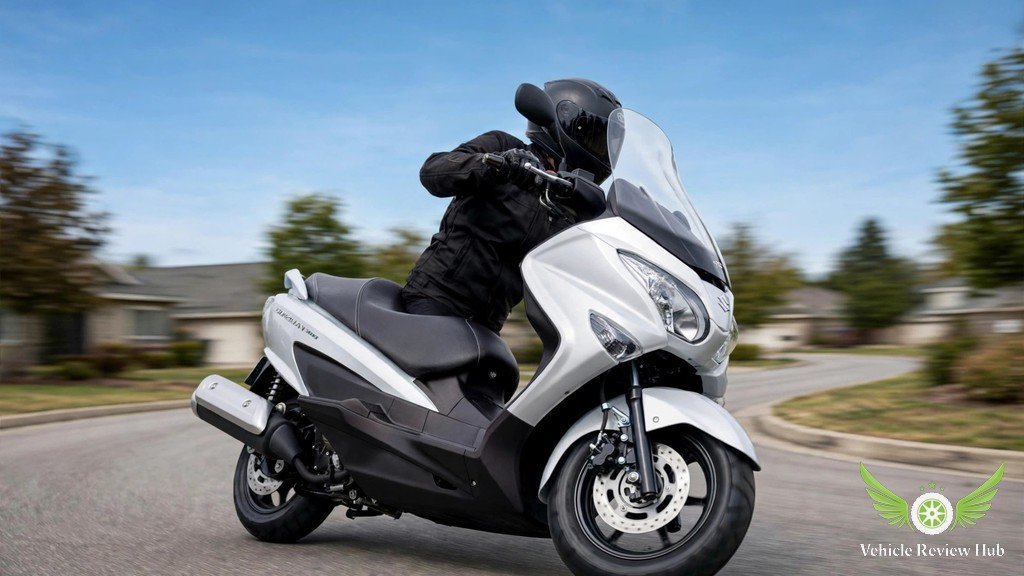
Handling is where this Suzuki Burgman 200 performance guide finds the scooter most like a small motorcycle and least like one at the same time. The 13-inch front and 12-inch rear wheels, the 57.7-inch wheelbase and the 359 lb curb weight add up to a machine that turns in quickly and holds a line well.
Handling, Braking and Stability Around Town
Around town the Burgman 200 feels like the small midsize it is. Motorcycle.com found the 13-inch front and 12-inch rear wheels “turn in surprisingly quickly”, then warned that “smooth and steady is the best method for dealing with corners. It’ll wallow and protest otherwise.” Ultimate Motorcycling agrees the long wheelbase means the scooter “will hold a line in a corner”. At freeway speed the long wheelbase pays off: Ultimate Motorcycling calls the handling “good at freeway speeds”. Braking is a strength: a 240 mm front disc with a two-piston caliper and a 240 mm rear disc with a single-piston caliper, with Nissin ABS standard on both wheels. Motorcycle.com found the system works well, “allowing completely ham-fisted brake grabs without drama”. Tyres are 110/90-13 front and 130/70-12 rear, tubeless; rake is 27.0° with 3.7-in trail. Whether the brakes are linked is unresolved — Ultimate Motorcycling says they are linked in operation, Motorcycle.com’s first-ride article says they are not, and Motorcycle.com’s own spec database says linked brakes are standard. This Suzuki Burgman 200 performance guide prints neither claim as settled fact; the owner’s manual is needed to settle it.
Rear Suspension Descriptions Conflict
The rear suspension is the one place this Suzuki Burgman 200 performance guide cannot give a single settled answer, because Suzuki’s own sources disagree. Suzuki’s spec tables — the 2018 one-sheet and the 2022 USA spec table — say “single shock”, coil spring, oil damped, preload-adjustable, with 3.3 inches of travel. The 2014 launch coverage — Cycle World, Motorcycle.com and Ultimate Motorcycling, all tracing to one press kit — says twin preload-adjustable shocks. Suzuki’s current global page says only “coil spring, oil damped” and gives no count either way. The front fork is not in dispute: telescopic, 33 mm, 3.6 inches of travel. This Suzuki Burgman 200 performance guide follows Suzuki’s spec-table wording and flags the conflict here, rather than printing “twin preload-adjustable shocks” as settled fact. For a buyer: MotorcycleDaily found that “the suspenders are crude, but the rates are well selected and there’s some damping”, and RevZilla‘s head-to-head tester preferred how much better the Burgman “ate up road bumps” than the Yamaha SMAX.
Suzuki Burgman 200 Performance Compared With Other Scooters
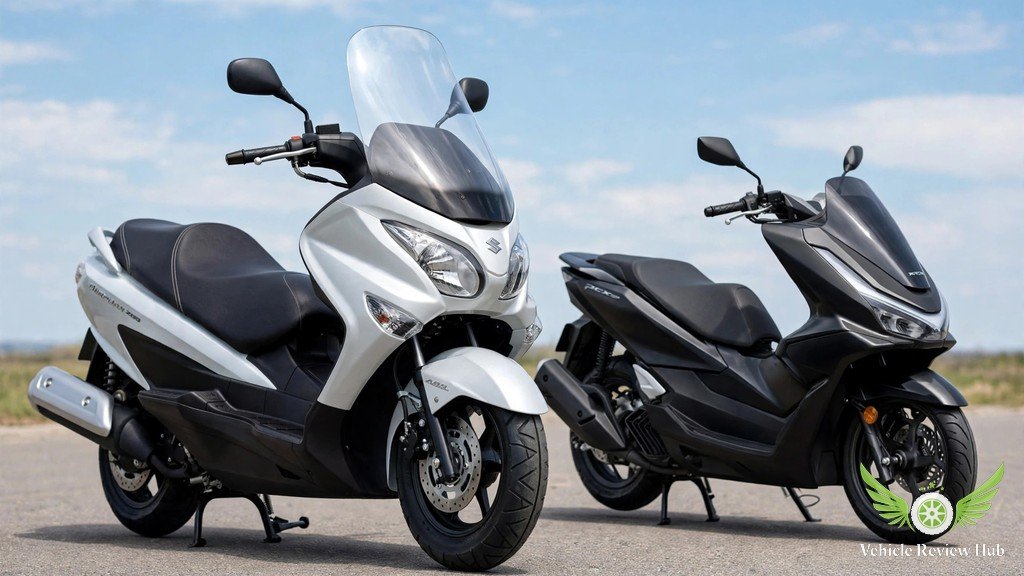
The fairest comparison for this Suzuki Burgman 200 performance guide is the one a named outlet actually ran: the 2014 Burgman 200 against the 2014 Yamaha SMAX and, by extension, the Honda PCX of the same era. The Burgman is the freeway-capable option in that company; the PCX is the lighter, cheaper, city-first benchmark.
Suzuki Burgman 200 vs Honda PCX
Against the 2014 Honda PCX150, the Burgman 200 is the bigger, heavier, faster and more expensive scooter — and the more capable one on the freeway. The PCX150 of that era was a 153cc single with a 286 lb curb weight, a 29.9-inch seat, 14-inch wheels at both ends, linked brakes, and no ABS. The Burgman 200 counters with 199cc against 153cc, a global claim of 18.1 hp, a 359 lb curb weight that is 73 lb heavier, a 28.9-inch seat that is an inch lower, 41 litres of underseat storage against the PCX’s 28 litres, and standard ABS on both wheels where the 2014 PCX had none. The price gap was $1,550 — about $3,449 for the PCX against $4,999 for the Burgman — which is why Motorcycle.com called the Burgman “a little steep for the class”. The performance gap that matters is at the top end: the Burgman will run at about 80 mph indicated, while the PCX of that era topped out around 67 to 70 mph by third-party roundups, a figure this Suzuki Burgman 200 performance guide labels approximate because no named outlet verified it. The current 2026 PCX160 is $4,349 plus $600 destination, or $4,949 delivered. The full three-rival price and value case is in the comparison.
Is the Suzuki Burgman 200 Suitable for Beginner Riders?
Yes, with caveats — and this Suzuki Burgman 200 performance guide takes the yes from MotorcycleDaily, which said it directly: “For newbies, it’s easy to ride, thanks to the low seat, good steering lock, well thought-out fuel mapping and low center of gravity… That makes it a good choice for beginner riders.” The low 28.9-inch seat lets most riders flat-foot it, the smaller wheels and wide bars make quick, easy U-turns, and shorter riders should feel confident paddling around to park or start out from a stop. The caveats are real. The 359 lb curb weight is heavy for a first scooter — 73 lb heavier than the 2014 PCX150. The $4,999 when-new price was steep for the class. The engine is buzzy at idle, and seating is optimized for riders under six feet tall. None of that changes the verdict: as a first scooter for a rider who needs freeway pace, the Burgman 200 is the beginner-friendly option in its class, and for town-only riding the lighter PCX is the easier machine to live with.
| Item | Suzuki Burgman 200 (2014) | Honda PCX150 (2014) |
|---|---|---|
| Engine | 199cc single | 153cc single |
| Power | 18.1 hp (global claim) | About 13–15 hp (class figure) |
| Curb weight | 359 lb | 286 lb |
| Seat height | 28.9 in | 29.9 in |
| Underseat storage | 41 L | 28 L |
| ABS | Both wheels, standard | None (2014) |
| Wheels | 13-in front / 12-in rear | 14-in both ends |
| Top speed | About 80 mph indicated | About 67–70 mph (approximate) |
| MSRP | $4,999 | About $3,449 |
Notes for this Suzuki Burgman 200 performance table: the PCX figures are the 2014-era PCX150, the Burgman’s same-era rival — not the current 157cc PCX160. The PCX top speed of about 67–70 mph is a third-party roundup figure, not verified from a named outlet, so this Suzuki Burgman 200 performance guide labels it approximate. Do not mix the generations: the comparison above is the 2014 PCX150 against the 2014 Burgman 200, both from the same era.
Suzuki Burgman 200 Performance: Frequently Asked Questions
Direct answers to the Suzuki Burgman 200 performance questions buyers ask most.
How much horsepower does the Suzuki Burgman 200 have?
The global claim is 18.1 hp at 8,000 rpm with 12.5 lb-ft at 6,000 rpm. This Suzuki Burgman 200 performance guide attributes it exactly that way: Suzuki USA publishes no power figure.
What is the top speed of the Suzuki Burgman 200?
About 75 to 81 mph indicated, wind and rider dependent. Motorcycle.com saw 81 mph indicated, tucked and drafting. This Suzuki Burgman 200 performance guide prints no GPS figure.
How fast does the Suzuki Burgman 200 accelerate?
No acceleration time exists from any named outlet — no 0–60 mph, no 0–100 km/h, no quarter-mile. This Suzuki Burgman 200 performance guide prints no acceleration time.
What is the fuel economy of the Suzuki Burgman 200?
Testers measured 58 to 65 mpg, and the full named-outlet spread is 58 to 82 US mpg. This Suzuki Burgman 200 performance guide keeps Suzuki’s two claims — 70.8 mpg and up to 21 km/L — apart.
How far can a Suzuki Burgman 200 go on a tank?
At Suzuki’s 70.8 mpg claim, 2.77 gallons gives 196 miles; at Motorcycle.com’s 58 to 65 mpg band, the 2.8-gallon tank gives 162 to 182 miles. This Suzuki Burgman 200 performance guide treats that band as the honest answer.
Does the Suzuki Burgman 200 have a dyno test?
No. No named-outlet dyno test exists. This Suzuki Burgman 200 performance guide invents no rear-wheel figure.
Is the Suzuki Burgman 200 good on the highway?
Yes, with patience. It holds freeway pace at about 80 mph indicated, but passing reserve is thin. This Suzuki Burgman 200 performance guide calls it freeway-capable, not freeway-quick.
Is the Suzuki Burgman 200 good for beginners?
Yes, with caveats. MotorcycleDaily called it a good choice for beginner riders. The caveats in this Suzuki Burgman 200 performance guide are the 359 lb weight and the buzzy idle.
How does the Suzuki Burgman 200 compare to the Honda PCX?
The Burgman is bigger, heavier, faster and more expensive than the same-era PCX150: 199cc against 153cc, 359 lb against 286 lb, about 80 mph indicated. This Suzuki Burgman 200 performance guide calls the Burgman the freeway-capable option.
Does the Suzuki Burgman 200 have linked brakes?
That is unresolved. Ultimate Motorcycling says the brakes are linked, Motorcycle.com’s first-ride article says they are not. This Suzuki Burgman 200 performance guide prints neither claim as settled fact.
How do I check the speedometer on a used Suzuki Burgman 200?
At key-on, watch both needles sweep and settle exactly on zero; a needle resting off zero is the GV/AN/UH No. 54 fault on 2014 bikes. This Suzuki Burgman 200 performance guide prints no correction percentage.
Is the Suzuki Burgman 200 fast enough for freeway commuting?
Yes, for a rider who plans around its limits. It reaches 65 mph easily and holds about 80 mph indicated. This Suzuki Burgman 200 performance guide calls it a capable commuter, not a fast one.