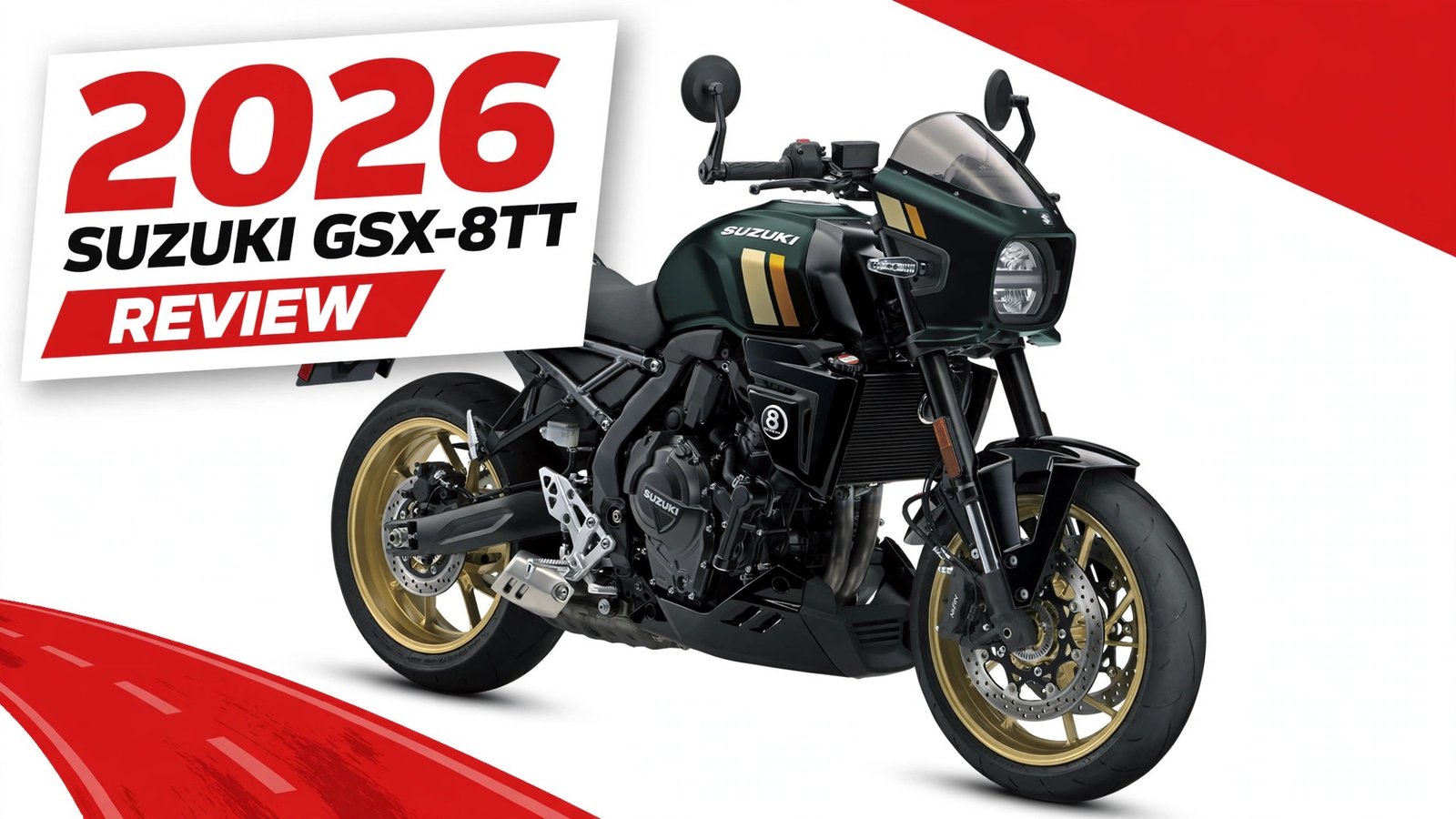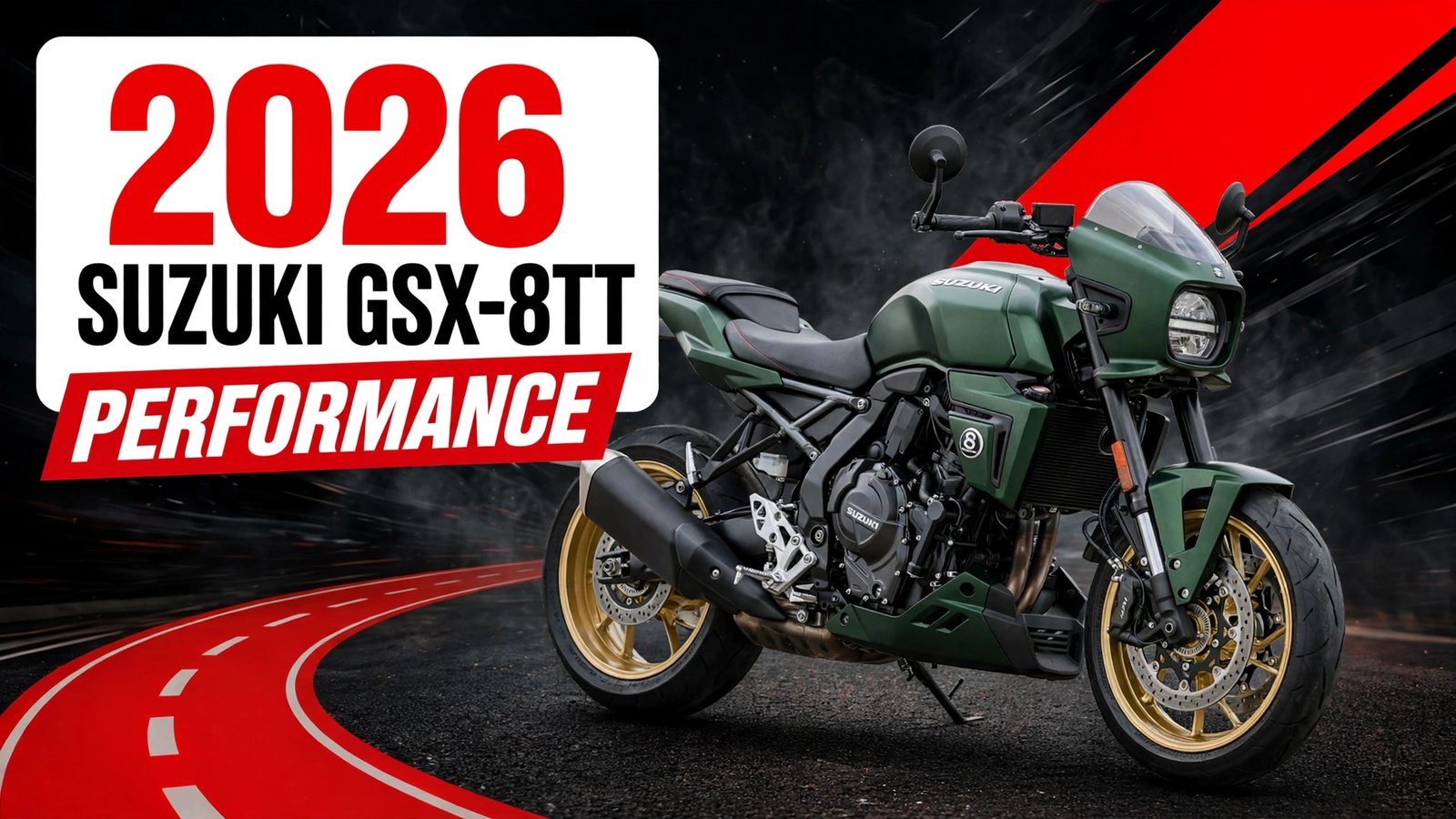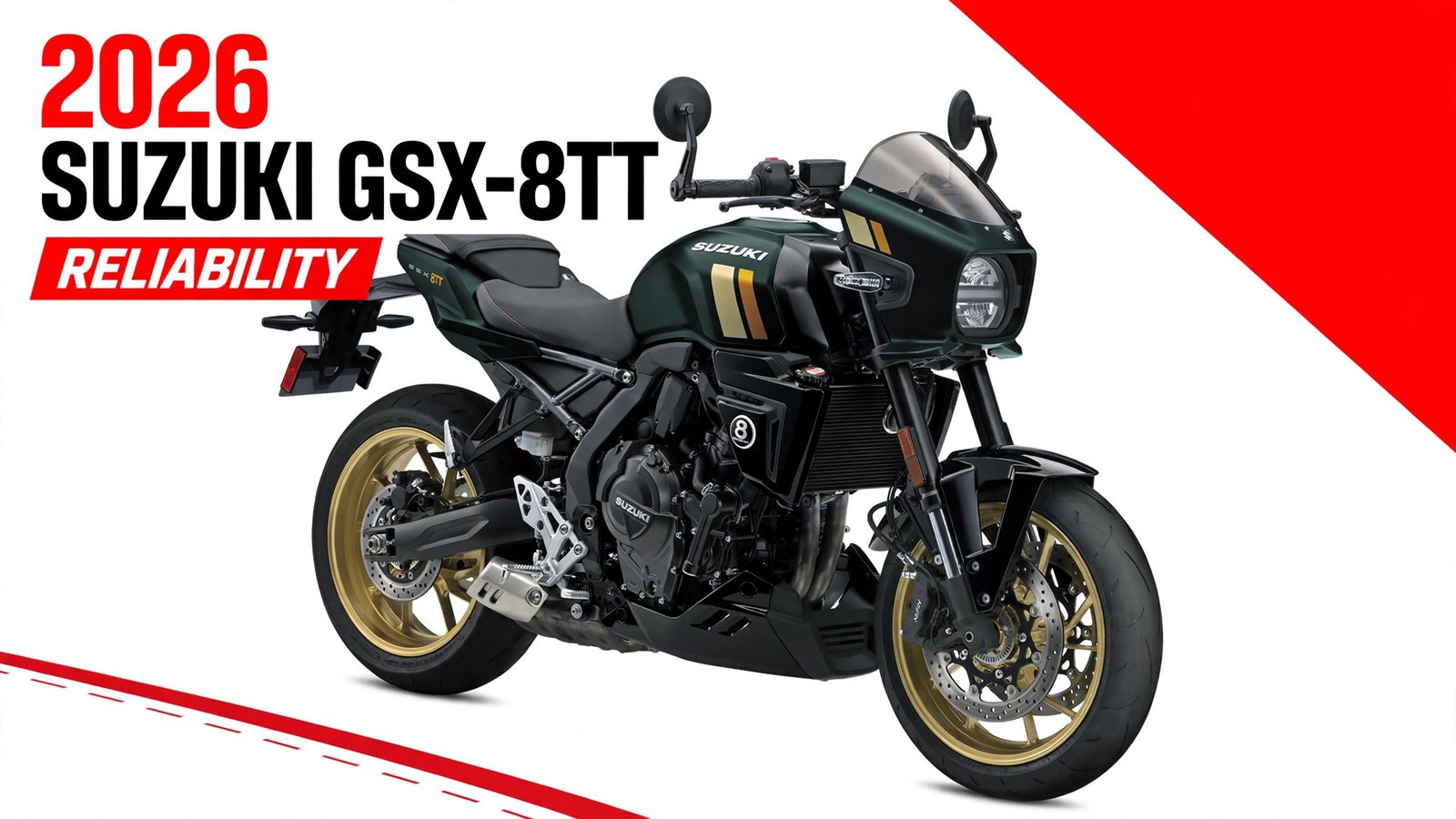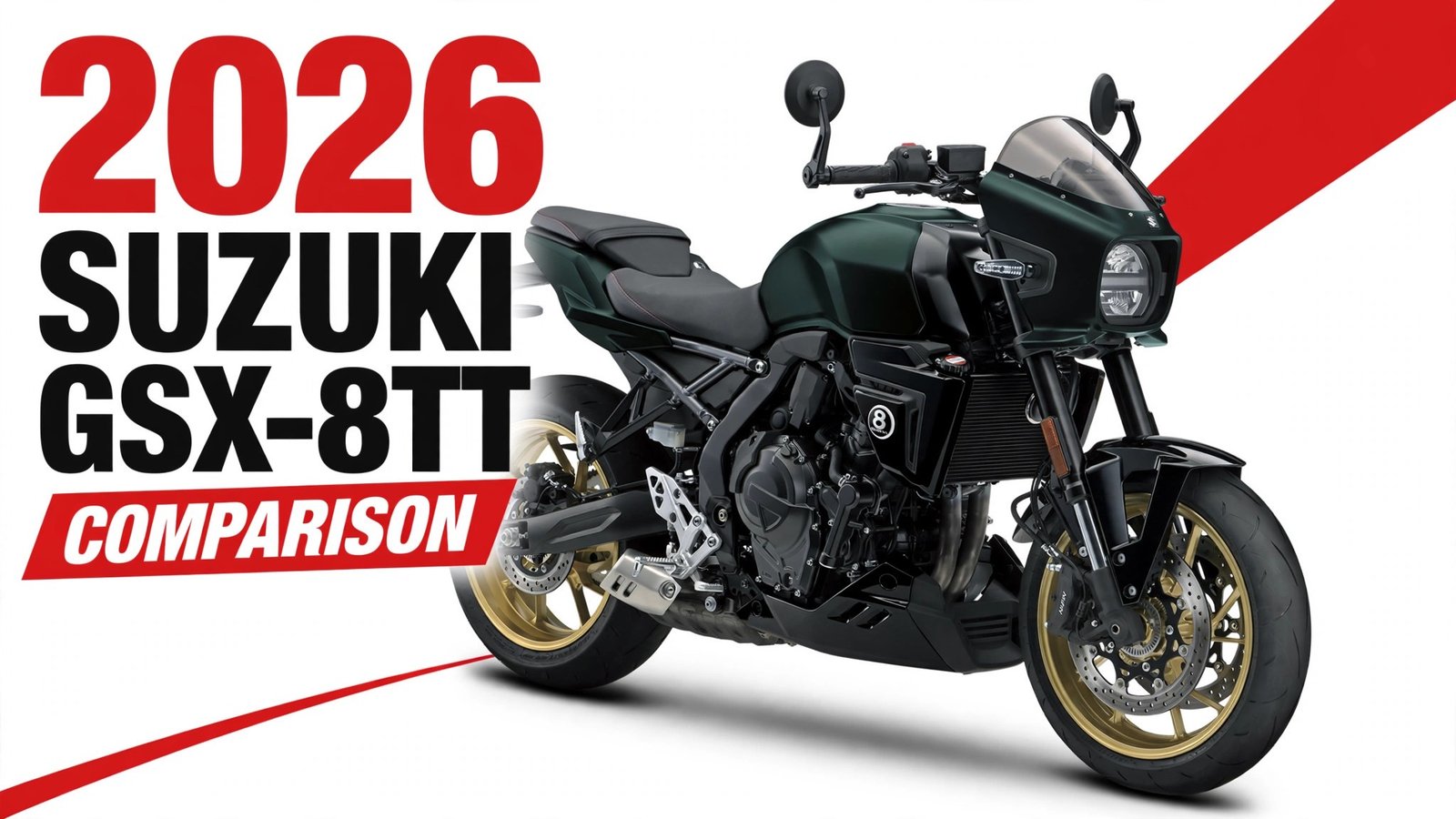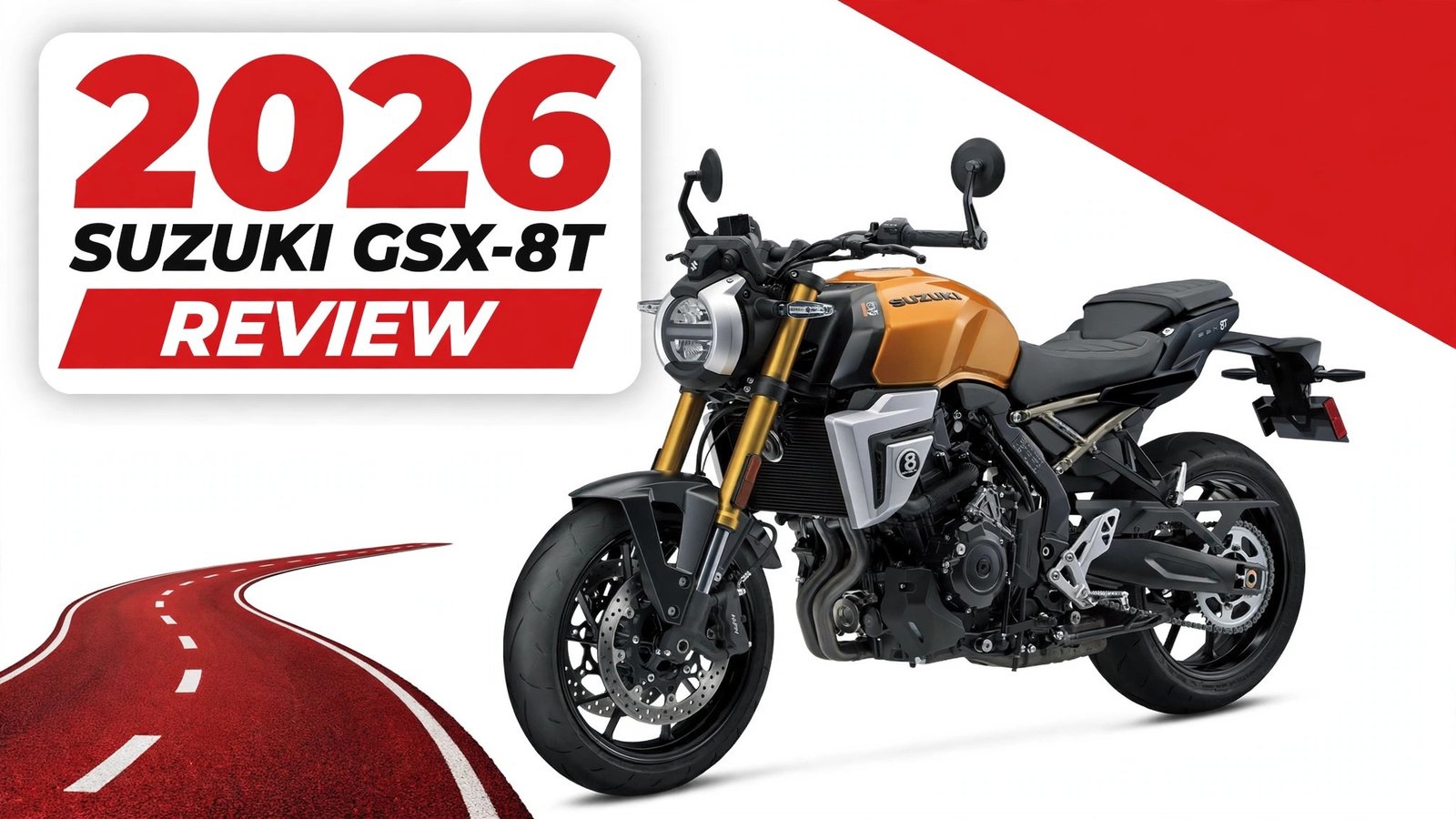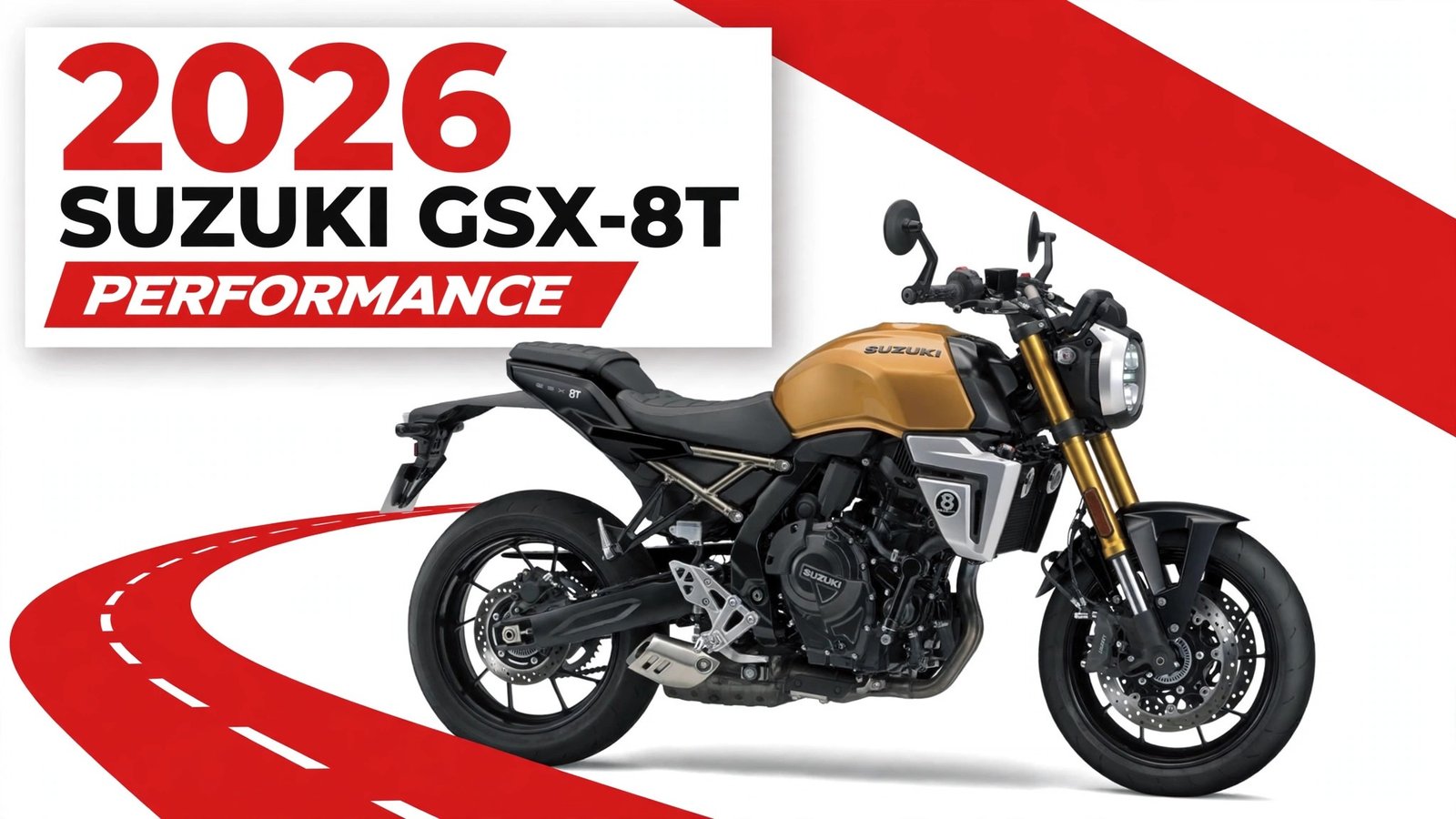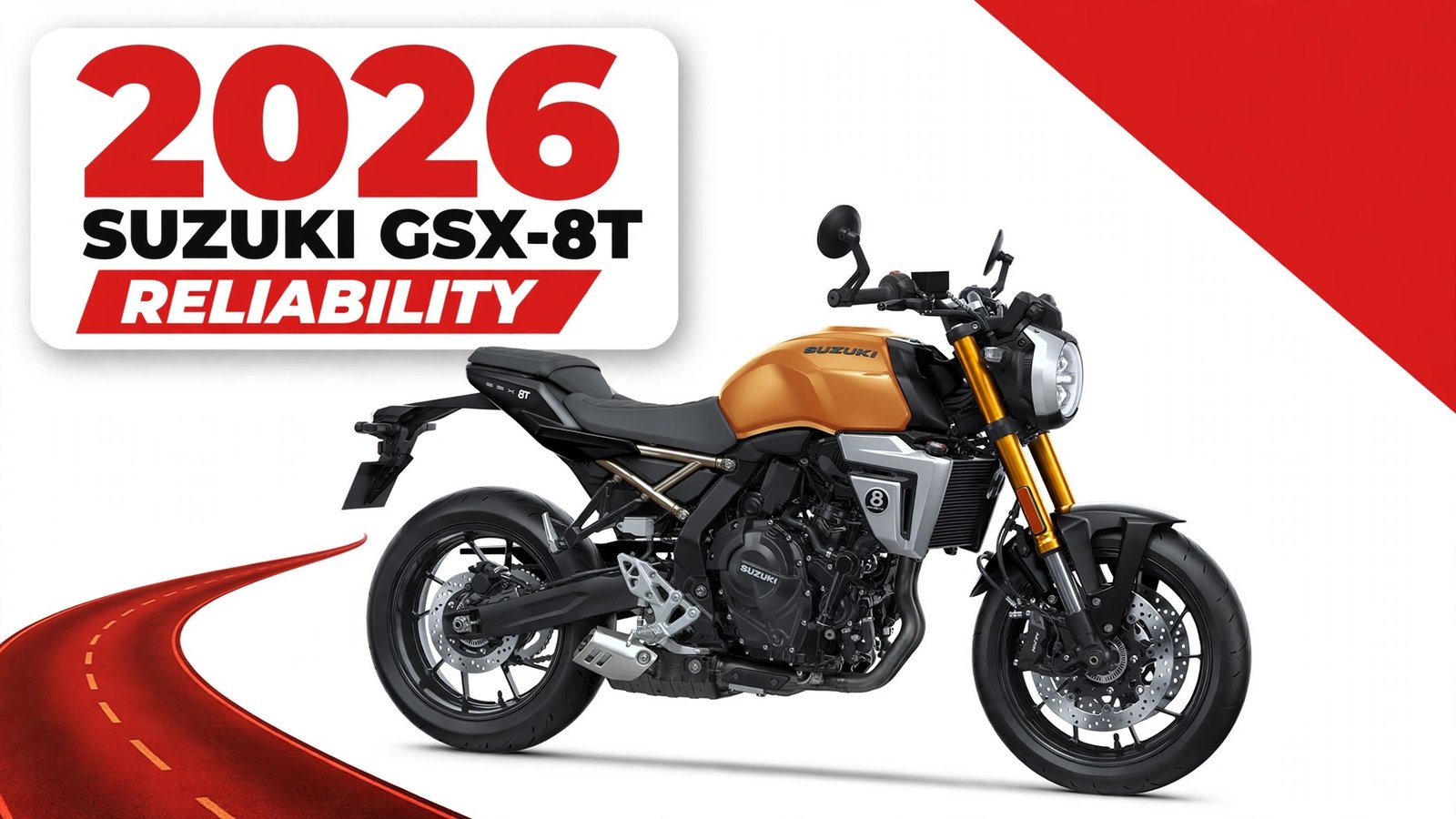
The short answer in this Suzuki GSX-8T reliability guide is that the bike is too new for an owner reliability record — and honest about it. The GSX-8T only reached American dealers in the summer of 2025, so no long-term ownership data exists yet. What does exist is the platform record: the same 776cc twin has powered the GSX-8S since 2023, with strong general reliability, no major recurrent issues, and no recall in published notices naming the 8T, the 8TT or the 8S. The service schedule is short but simple: oil and filter every 3,750 miles, spark plugs at 7,500 miles, and a valve check at 15,000 miles. This Suzuki GSX-8T reliability guide works through what is known, what is not known yet, and what it costs to keep the bike right.
Suzuki GSX-8T Reliability Overview
Suzuki GSX-8T reliability for a first-year model is a different question from reliability for a five-year-old one. There are no high-mileage 8Ts to study, no owner forums full of 20,000-mile reports, no pattern of failures to chart. What this Suzuki GSX-8T reliability guide can do is judge the platform, the recalls, and the maintenance schedule.

A Brand-New Model With No Owner Record Yet
The GSX-8T is a brand-new model with no owner record yet — the first thing to say, and the most important. The engine family dates to 2023, when the same 776cc twin debuted in the GSX-8S. Three years of 8S ownership is the evidence base, and it is a good one: MCN’s assessment is that general reliability is proving strong, with no major recurrent issues. That is platform evidence, not 8T evidence, and this Suzuki GSX-8T reliability guide keeps the two apart. The platform looks sound and the model is unproven.
The video below is Alfie of MOTOALFF, a UK owner, sharing his first impressions of his new GSX-8T — an owner’s first look at a brand-new bike, not a long-term reliability test, and worth watching for that reason.
MCN’s 5-of-5 Owner Rating Is a Placeholder
One number that looks like reliability evidence is not: MCN’s GSX-8TT review page shows an owners’ reliability rating of 5 out of 5, with no owner reviews counted behind it yet. It is a default display, a placeholder, and it should be read as one. MCN’s own expert reliability score for the 8TT is 4 out of 5 — a real judgement from their testers. The MCN 8TT review is still worth reading for its expert scores, but the 5-out-of-5 owner figure is not evidence of anything. For contrast, the closest real owner sample in this engine family is the GSX-8R: MCN records 4.8 out of 5 — from five owners. Five owners is a small sample, and this Suzuki GSX-8T reliability guide says so plainly — but it is at least a real one. The 1000PS test of the 8T itself gave 4.0 out of 5, its complaints aimed at presentation and price, not at things breaking. The evidence so far is positive, thin, and honest about being thin.
Suzuki GSX-8T Common Problems and Wear Items
There is no established list of common problems for the GSX-8T, because no common problem has had time to emerge. What this Suzuki GSX-8T reliability guide can do instead is set out the two things that matter: the recall picture, which is clean, and the wear items — chain, tyres, brakes and battery.
No Recall Names the 8T, the 8TT or the 8S
No recall found in published notices names the 8T, the 8TT or the 8S — that is the position this Suzuki GSX-8T reliability guide takes. The wording matters: it is “no recall found”, not “zero recalls exist”, because the NHTSA recall API is broken. A search of published NHTSA notices turns up nothing for any of the three bikes. Two recalls do exist in the same engine family — the 2024 GSX-8R drive-chain recall and the 2023–2024 V-Strom 800DE rear-tyre recall — but neither covers the 8T, and both are covered in detail later in this Suzuki GSX-8T reliability guide. Same engine family does not mean same recall. There is also no GSX-8S brake master cylinder recall: that one is an invention from an AI-spam buyer’s guide, and it should not be repeated. For a used buyer, run the VIN through NHTSA’s recall lookup before paying. The GSX-8T review covers the bike itself in full, and the GSX-8T performance guide covers what the engine does; this Suzuki GSX-8T reliability guide covers what can go wrong with it, and so far the answer is very little.
Chain, Sprockets, Tires, Fork Seals, Brakes and Electrical Checks
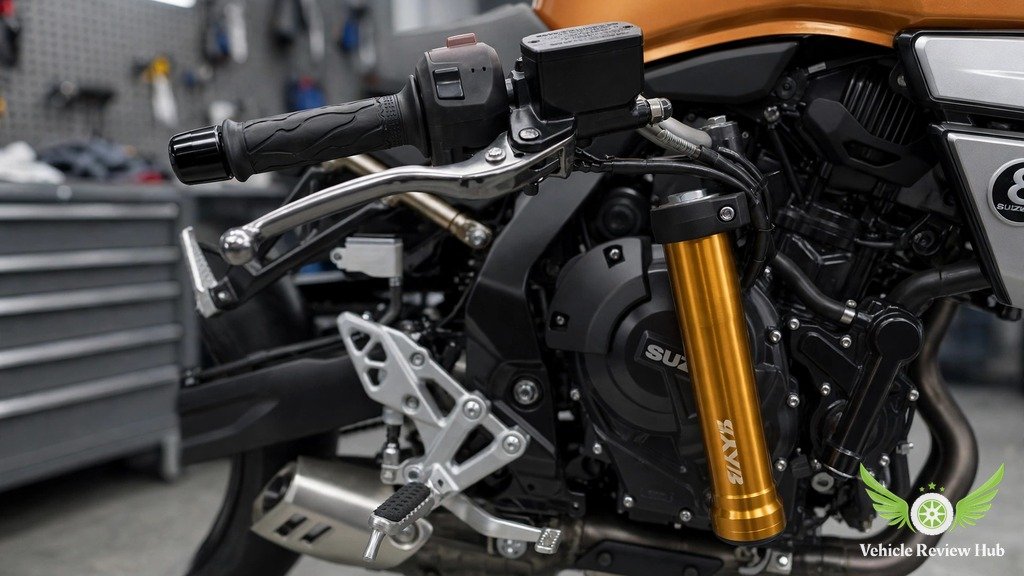
The wear items that shape Suzuki GSX-8T reliability are the ordinary ones, and they are all worth planning for. The chain is a 525 O-ring unit, 118 links — check its slack and lubrication roughly every 600 miles, a five-minute job that decides how long the chain and sprockets last. A lubed, correctly tensioned chain lasts thousands of miles longer than a dry, tight one. The tyres are Dunlop Roadsport 2s — check pressures weekly. The brakes are Nissin radial-mount 4-piston front calipers on twin discs, and testers call them excellent; the consumable is the pads. The fork seals deserve a mention because the front fork is a non-adjustable KYB inverted 41 mm unit — a weeping seal is the one front-end job that needs a dealer. On the electrical side, the battery is the new part: the 8T debuted Suzuki’s ELIIY Power HY93SS lithium-ion starter battery, about 900 grams and roughly 70 percent lighter than the 8S’s lead-acid battery. It needs a lithium-compatible charger — never a standard lead-acid desulfating charger, which can damage it. The one performance complaint every tester mentions is not a reliability fault: the quickshifter’s downshifts arrive delayed and do not rev-match sufficiently, according to RevZilla. It is a calibration gripe, not a failure — but test it on a demo ride.
Suzuki GSX-8T Maintenance Schedule and Servicing
The maintenance schedule is the most concrete part of this Suzuki GSX-8T reliability guide, because it is written down and it is short. The schedule printed here is the GSX-8S owner’s-manual platform schedule — the 8T’s own manual was not retrieved for this guide, as stated again under its own heading below.

| Service item | Interval (platform schedule) |
|---|---|
| First service | 600 miles / 1,000 km or 2 months |
| Engine oil + filter | Every 3,750 miles / 6,000 km or 12 months |
| Oil filter change | First service, then at 11,250 miles |
| Spark plugs | Inspect at 3,750 miles; replace at 7,500 miles / 12,000 km |
| Valve-clearance inspection | Every 15,000 miles / 24,000 km (48 months) |
| Air cleaner element | Clean every 3,750 miles; replace if dirty, clogged or damaged |
| Brake fluid | Every 2 years |
| Fuel and brake hoses | Replace every 4 years / 30,000 miles |
Platform Schedule: Oil and Filter Every 3,750 Miles
The headline interval in this Suzuki GSX-8T reliability guide is the oil change: engine oil and filter every 3,750 miles or 6,000 km, or every 12 months, whichever comes first. That is a short interval by modern standards, and it is the one most often misquoted. The wrong figure circulating online is 4,000 miles — the GSX-S1000S interval, not this engine family’s. The first service comes at 600 miles or 1,000 km, or two months — the running-in oil comes out, the filter is changed, and the dealer checks the fasteners, chain and controls. The oil specification is 10W-40 meeting API SJ, SL, SM or SN, with a JASO MA, MA1 or MA2 rating — the JASO MA part means it is safe for a wet clutch. Capacity is 3.0 litres for an oil-only change, 3.5 litres with a filter change, and 3.9 litres for a full overhaul. None of this is difficult or expensive, but it is frequent — an owner riding 7,500 miles a year does two oil changes a year. One figure deserves care: the torque peak is at 6,800 rpm, not 6,500 — RevZilla’s spec table prints 6,500 rpm, and that is RevZilla’s error, not Suzuki’s. The Bennetts technical review confirms the same 82.9 PS and 78 Nm at 6,800 rpm from Suzuki’s global data.
Valve Clearance Inspection at 15,000 Miles
The valve-clearance inspection comes every 15,000 miles or 24,000 km, or every 48 months, whichever comes first. For a middleweight twin, that is reasonable — most owners face it once in the first few years. The engine uses shim-under-bucket adjustment with a single cylinder head, so access is relatively simple: one head, two cylinders, eight valves, no fairing to remove. A valve check is mostly labour, so simpler access means fewer hours. The check measures the clearance between each cam lobe and its shim, swapping shims where it has drifted out of specification. Most shims will still be in specification at the first check. The 15,000-mile valve check is the first expensive service the bike will need — worth asking a dealer about before buying, since no verified US dealer price exists to quote here, and this Suzuki GSX-8T reliability guide does not invent one.
Suzuki GSX-8T Tires, Brakes and Suspension Maintenance
Between scheduled services, the parts that wear are the tyres, the brakes and the suspension seals — and the 8T’s simple chassis makes all three easy to look after. This Suzuki GSX-8T reliability guide treats them as the owner’s own maintenance — garage work, not dealer work.

Spark Plugs Replaced at 7,500 Miles
The spark plugs are inspected at 3,750 miles and replaced at 7,500 miles or 12,000 km. That is short by car standards and normal by motorcycle standards — and a cheap job: two plugs, a plug spanner, ten minutes with the tank lifted. Brake fluid is replaced every two years regardless of mileage, because it absorbs water and its boiling point falls with age. One interval this Suzuki GSX-8T reliability guide does not print is the engine coolant interval: it was not verified from the manual chart. Suzuki practice on other models is a two-year replacement, but that is not verified for this manual, and a guess dressed as a figure would be worse than an honest gap. The RevZilla first ride review calls the bike “balanced, nimble, and compact” — and notes the suspension is “more than adequate, assuming you don’t weigh more than 190 to 200 pounds”, which matters here because a non-adjustable fork cannot be tuned to a heavier rider.
The 8T Manual Itself Was Not Retrieved
The 8T manual itself was not retrieved — and this Suzuki GSX-8T reliability guide says so in its own heading. Every service interval in this Suzuki GSX-8T reliability guide comes from the GSX-8S owner’s manual, the platform schedule for the same engine and chassis. That is a solid basis: the 8T shares the 8S engine, frame, suspension and electronics — none of which changes an oil interval or a valve check. But it is still a platform figure, not an 8T-specific one — “most likely” is not “verified”, and this Suzuki GSX-8T reliability guide does not present it as verified. If a dealer quotes a different interval, ask to see it in the manual, and treat the manual as the authority over any article, including this one. The V-Strom 800DE reliability guide covers the same 776cc twin in adventure form — a useful cross-check, since the two bikes share the engine that defines the service intervals.
Suzuki GSX-8T Maintenance and Ownership Costs
Ownership costs are where this Suzuki GSX-8T reliability guide is most limited, and it is better to say that than to invent numbers. No verified US dealer service price, insurance figure or resale value exists for the 8T. What exists is the fuel bill, which is measurable, and European dealer cost context, labelled as European and never converted.

Fuel, Routine Servicing, Tires and Replacement Parts
Fuel is the cheapest part of owning the 8T, and the only running cost with a measured figure. The WMTC type-approval consumption is 4.2 litres per 100 km — 67.23 mpg imperial, 56 mpg US — and this Suzuki GSX-8T reliability guide uses the 56 mpg US figure throughout, because the 67 mpg figure is imperial and never American. Suzuki USA publishes no MPG figure at all. Real-world tests return 4.17 to 5.1 litres per 100 km, with a range of 320-plus kilometres from the 16.5-litre tank. The tyres are the first big consumable: a set of Dunlop Roadsport 2s lasts a careful rider a season or two and a hard rider considerably less, and prices vary by dealer and region. Routine servicing is the short-interval oil change every 3,750 miles — frequent but cheap. The only dealer cost context available is European, from a GSX-8S source: roughly €155 for a routine service and roughly €465 for a valve-check service — EU figures, never converted into US dollars. Insurance and long-term resale are not verified either — they vary by rider, by state and by dealer, so get quotes rather than trust a printed number. The warranty underneath all of it is twelve months, unlimited mileage, in the USA.
Recall 24V081 Covers the 8R’s Chain Only
Recall 24V081 — Suzuki campaign 3A02, issued February 7, 2024 — covers the 2024 GSX-8R only: 360 units. The fault is a drive chain that may detach, because rivets were missing from the chain joint, a supplier fault from RK Japan. It is worth a heading of its own in this Suzuki GSX-8T reliability guide, because it is the recall most likely to be wrongly attached to the 8T. Dealers inspect the chain and replace the chain joint and sprockets free of charge, and all 360 units were remedied by the second quarter of 2024. It does not cover the 8T, the 8TT or the 8S — the 8T was not even on sale when the recall was issued. A buyer who sees 24V081 listed against an 8T is looking at a database error, not a recall.
| Recall | Models covered | Units | Covers the 8T? |
|---|---|---|---|
| 24V081 (Feb 2024) | 2024 GSX-8R only — drive chain may detach | 360 | No |
| 24V535 (Jul 2024) | 2023–2024 V-Strom 800DE / 800DE Adventure only — rear tyre may crack | 1,688 | No |
| Any recall naming the 8T, 8TT or 8S | None found in published notices | — | — |
How to Keep a Suzuki GSX-8T Reliable
Keeping Suzuki GSX-8T reliability high is mostly a matter of doing the small things on time. The bike asks for frequent, simple maintenance and very little else. This Suzuki GSX-8T reliability guide closes with the practical checklist — and the second family recall, set out in full so its boundary is clear.

Preventive Maintenance, Records and Regular Inspections
Preventive maintenance, the heart of Suzuki GSX-8T reliability, starts with the schedule — and the dates matter as much as the miles. Between services, the owner’s own checks are the chain, tyres and brakes: chain slack and lubrication roughly every 600 miles, tyre pressures weekly, pads and fluid at every wash. The battery needs a lithium-compatible charger if the bike sits for weeks. Keep records of every service — a stamped history protects the twelve-month unlimited-mileage warranty and is what a future buyer asks for first. On a first-year model with no owner record yet, the owners who do the basics will write the reliability record. For the full comparison with the 8T’s rivals, the GSX-8T comparison works through them rival by rival.
Recall 24V535 Is a V-Strom 800DE Tire Campaign
Recall 24V535 is a V-Strom 800DE tire campaign — the second family recall, with the sharper warning. The recall, Suzuki campaign 3A03, was issued in July 2024 and covers the 2023–2024 V-Strom 800DE and 800DE Adventure only: 1,688 units. The fault is a rear tyre that may crack and deform, with a risk of tread separation, and it carries a do-not-ride warning — the strongest a recall can carry. Dealers replace the rear tyre free of charge, and owner letters went out on September 20, 2024. It does not cover the 8T, the 8TT or the 8S. The tyre is a V-Strom part, fitted to an adventure bike with different wheels and duty cycle. An 8T owner has nothing to do under 24V535 — but a V-Strom 800DE owner should check their VIN at once, because a do-not-ride warning is not a suggestion. The broader lesson is that Suzuki’s recall record on this engine family is narrow and specific: a 360-unit chain fault on one model year of one bike, and a 1,688-unit tyre fault on one adventure model. Neither touches the 8T — a clean record so far, not a promise about the future, and like everything else in this Suzuki GSX-8T reliability guide, stated as what it is.
Suzuki GSX-8T Reliability: Frequently Asked Questions
Direct answers to the questions riders ask about Suzuki GSX-8T reliability.
Is the Suzuki GSX-8T reliable?
Too new to say from owner data — but Suzuki GSX-8T reliability looks strong on the platform record: the same 776cc twin has powered the GSX-8S since 2023 with strong general reliability and no major recurrent issues, and no recall in published notices names the 8T, the 8TT or the 8S.
Does the Suzuki GSX-8T have any recalls?
No recall found in published notices names the 8T, the 8TT or the 8S. Two family recalls exist and neither covers the 8T: 24V081 covers the 2024 GSX-8R’s drive chain only, and 24V535 covers the 2023–2024 V-Strom 800DE’s rear tyre only. Run the VIN through NHTSA’s recall lookup before buying any used bike.
How often does the Suzuki GSX-8T need an oil change?
Every 3,750 miles or 6,000 km, or every 12 months, whichever comes first — engine oil and filter together. The figure is sometimes misquoted as 4,000 miles, but 4,000 is the GSX-S1000S interval, not this engine family’s.
When is the first service on a GSX-8T?
At 600 miles or 1,000 km, or two months, whichever comes first — the running-in oil comes out, the filter is changed, and the dealer checks the fasteners, chain and controls.
When do the valves need checking on a GSX-8T?
Every 15,000 miles or 24,000 km, or every 48 months. Shim-under-bucket adjustment with a single cylinder head keeps access simple, but it is still mostly a labour cost — worth asking a dealer about before buying.
When are the spark plugs replaced on a GSX-8T?
At 7,500 miles or 12,000 km. They are inspected at 3,750 miles and replaced at 7,500 — a cheap job, two plugs and ten minutes with the tank lifted.
What oil does the Suzuki GSX-8T use?
10W-40 meeting API SJ, SL, SM or SN, with a JASO MA, MA1 or MA2 rating — JASO MA means it is safe for a wet clutch. Capacity is 3.0 litres for an oil-only change, 3.5 litres with a filter change, and 3.9 litres for a full overhaul.
What tires does the Suzuki GSX-8T use?
Dunlop Roadsport 2 tyres — 120/70ZR17 front and 180/55ZR17 rear. Check pressures weekly. One correction: Rider wrote “Roadsmart 2” in its test, and that is Rider’s error — the tyre is the Roadsport 2.
How do I care for the GSX-8T lithium-ion battery?
Use a lithium-compatible charger or maintainer, never a standard lead-acid desulfating charger, which can damage a lithium-ion battery. The 8T’s battery is the ELIIY Power HY93SS, about 900 grams and roughly 70 percent lighter than the 8S’s lead-acid battery.
What is the Suzuki GSX-8T warranty?
Twelve months, unlimited mileage, in the USA — the same cover the GSX-8S and GSX-8R carry. The UK gets two years plus a third year when serviced at an authorised dealer, but that does not apply to American buyers.
Is the Suzuki GSX-8T good for beginners?
Mostly, yes — but this Suzuki GSX-8T reliability guide would not upgrade that to a full recommendation. Approachable power, a low 32.0-inch seat, light clutch and Low RPM Assist argue for it; the 443 lb weight, delayed quickshifter downshifts and no lean-sensitive ABS argue against it. A good second bike and a capable first big bike for a careful new rider.
How much does servicing a GSX-8T cost?
No verified US dealer service price exists to quote, so this Suzuki GSX-8T reliability guide does not invent one. The only cost context available is European: roughly €155 for a routine GSX-8S service and roughly €465 for a valve-check service — EU figures, never converted into dollars. Ask your dealer for a quote before buying.