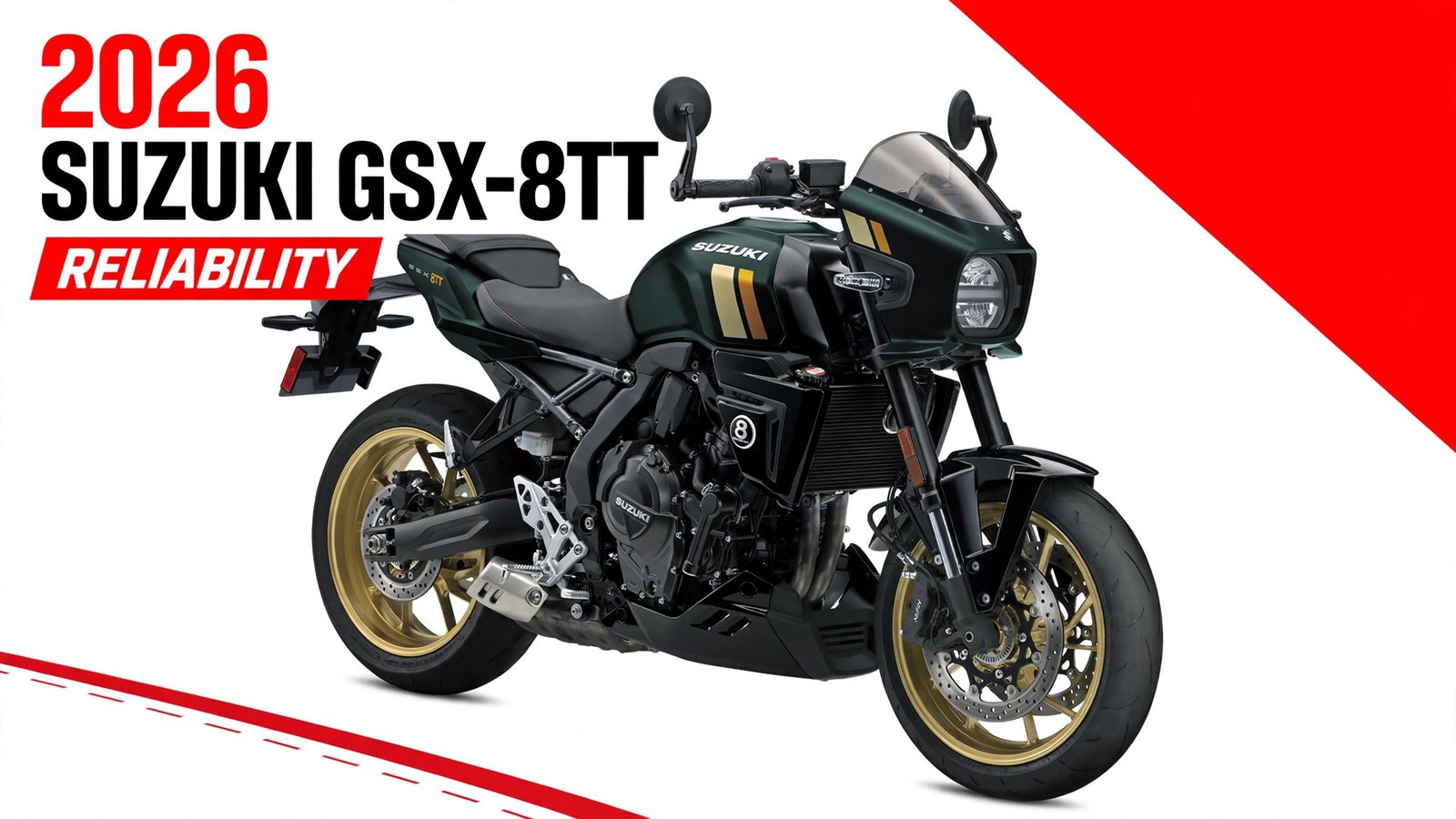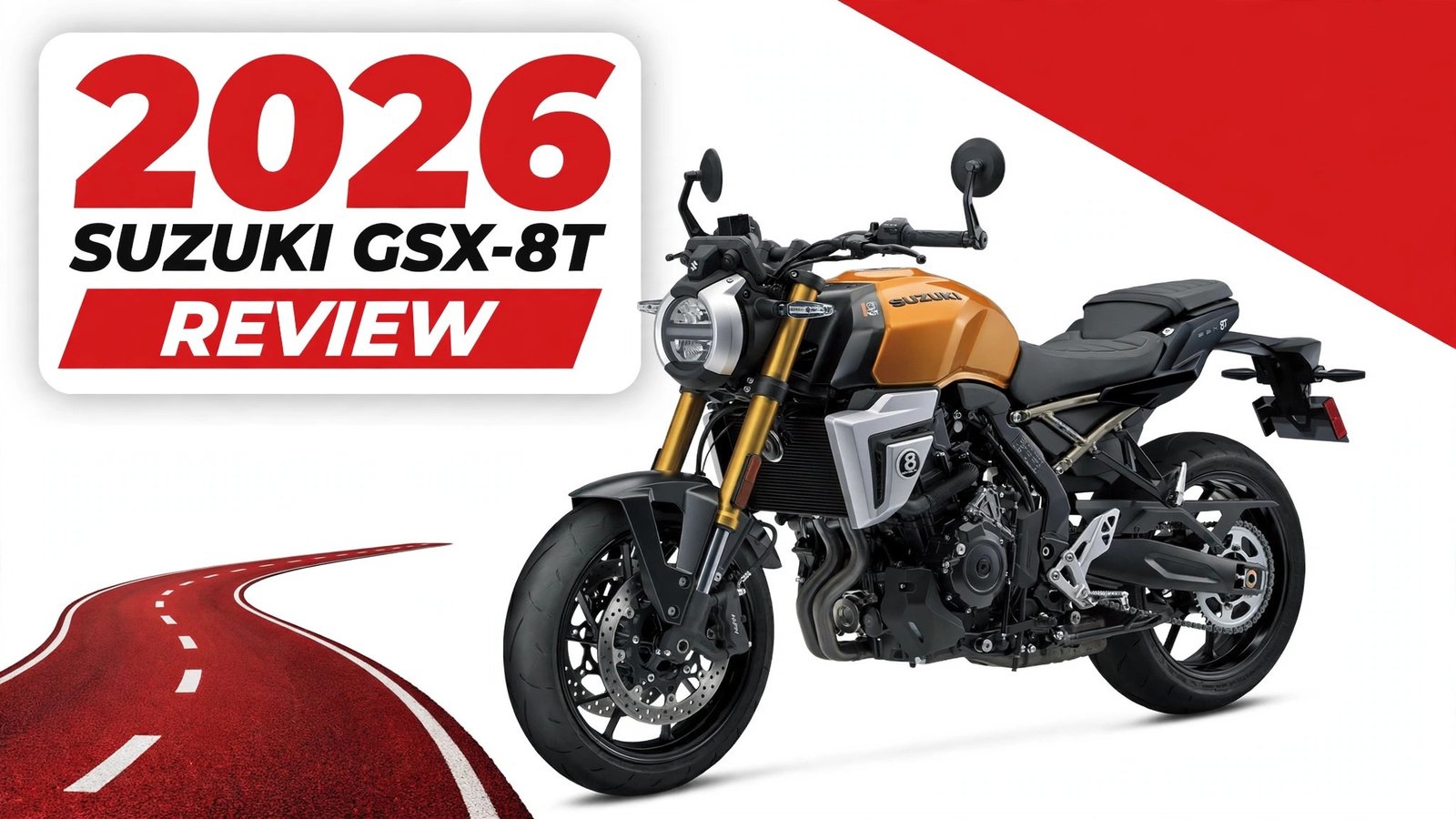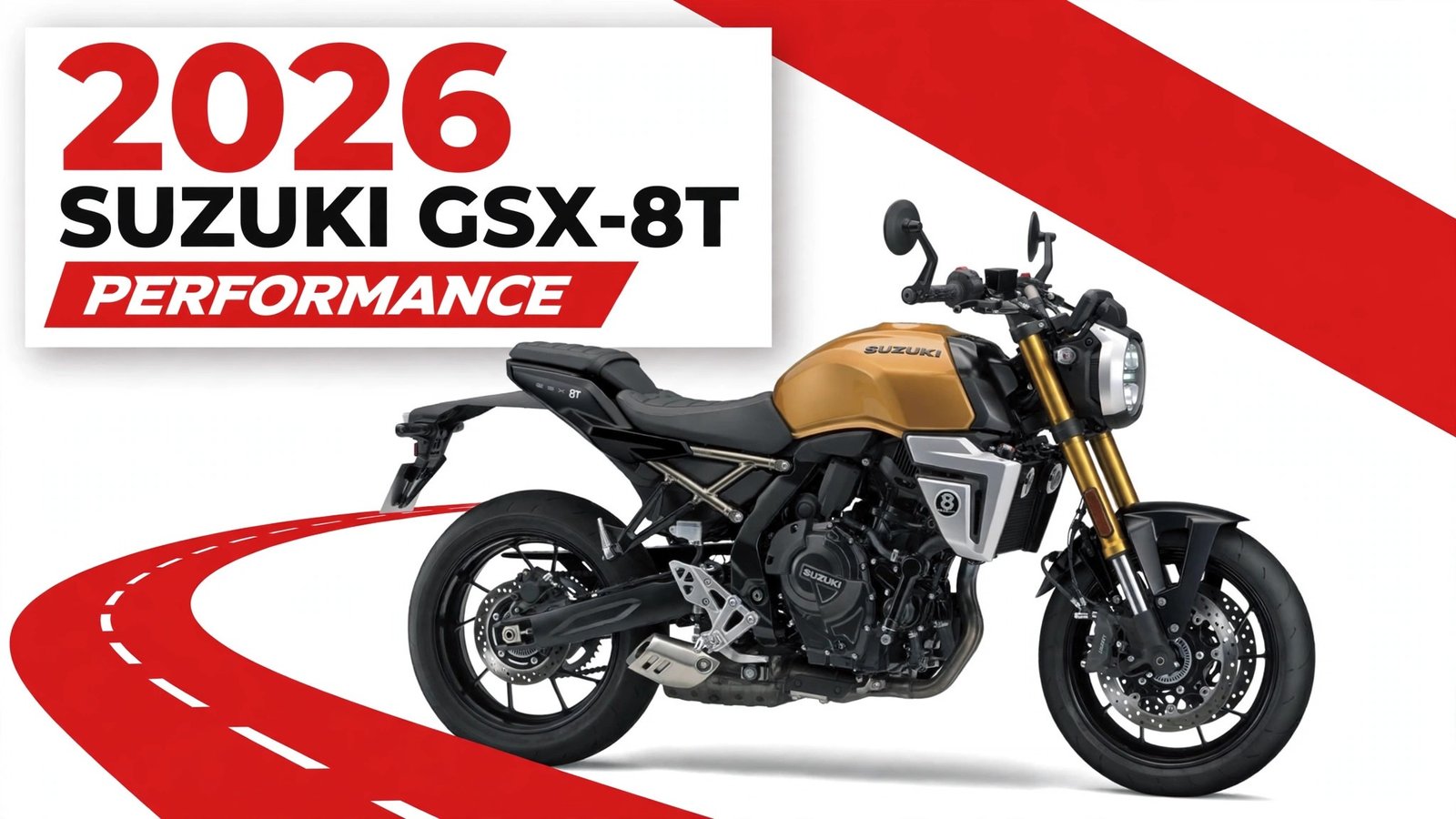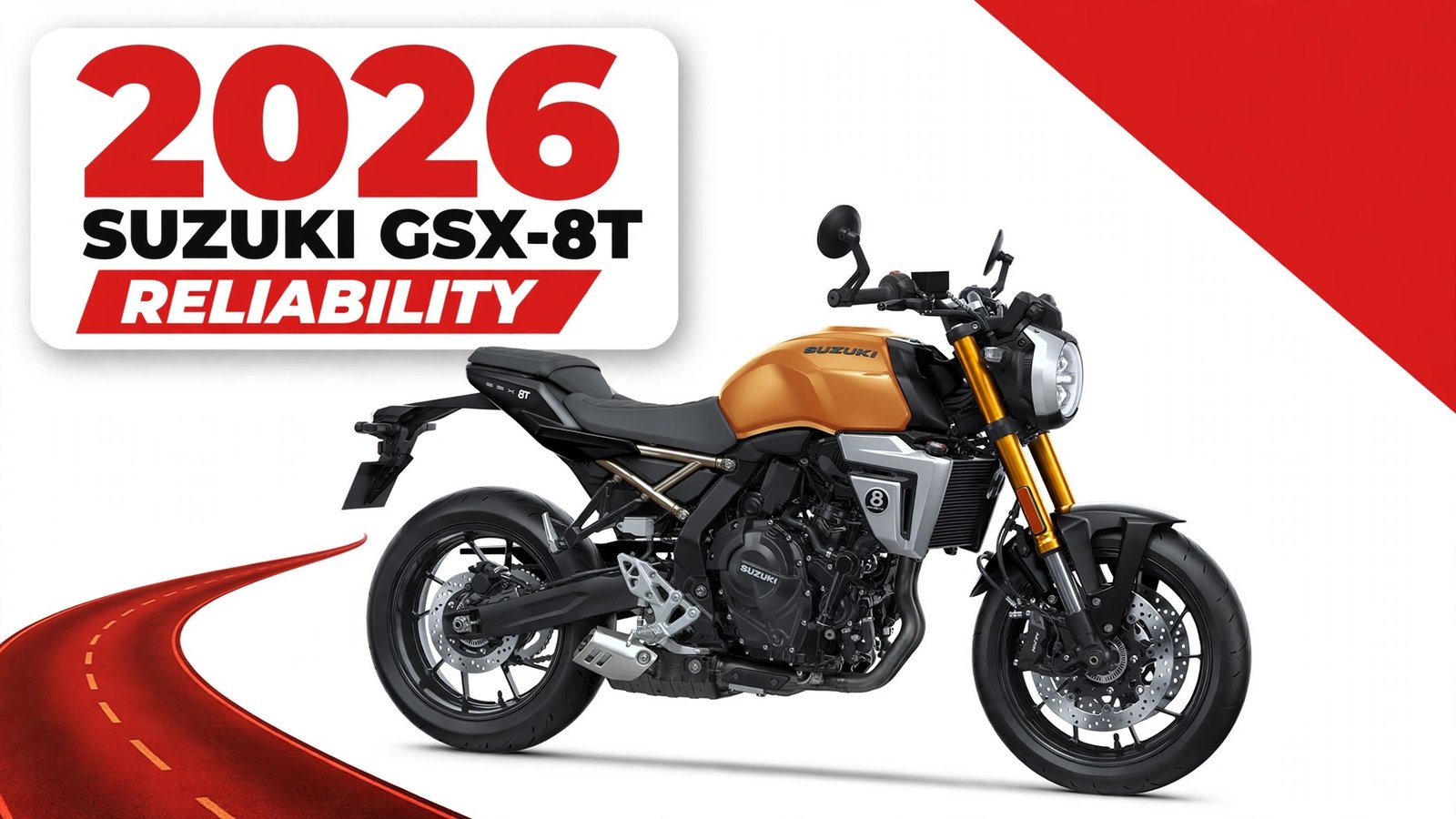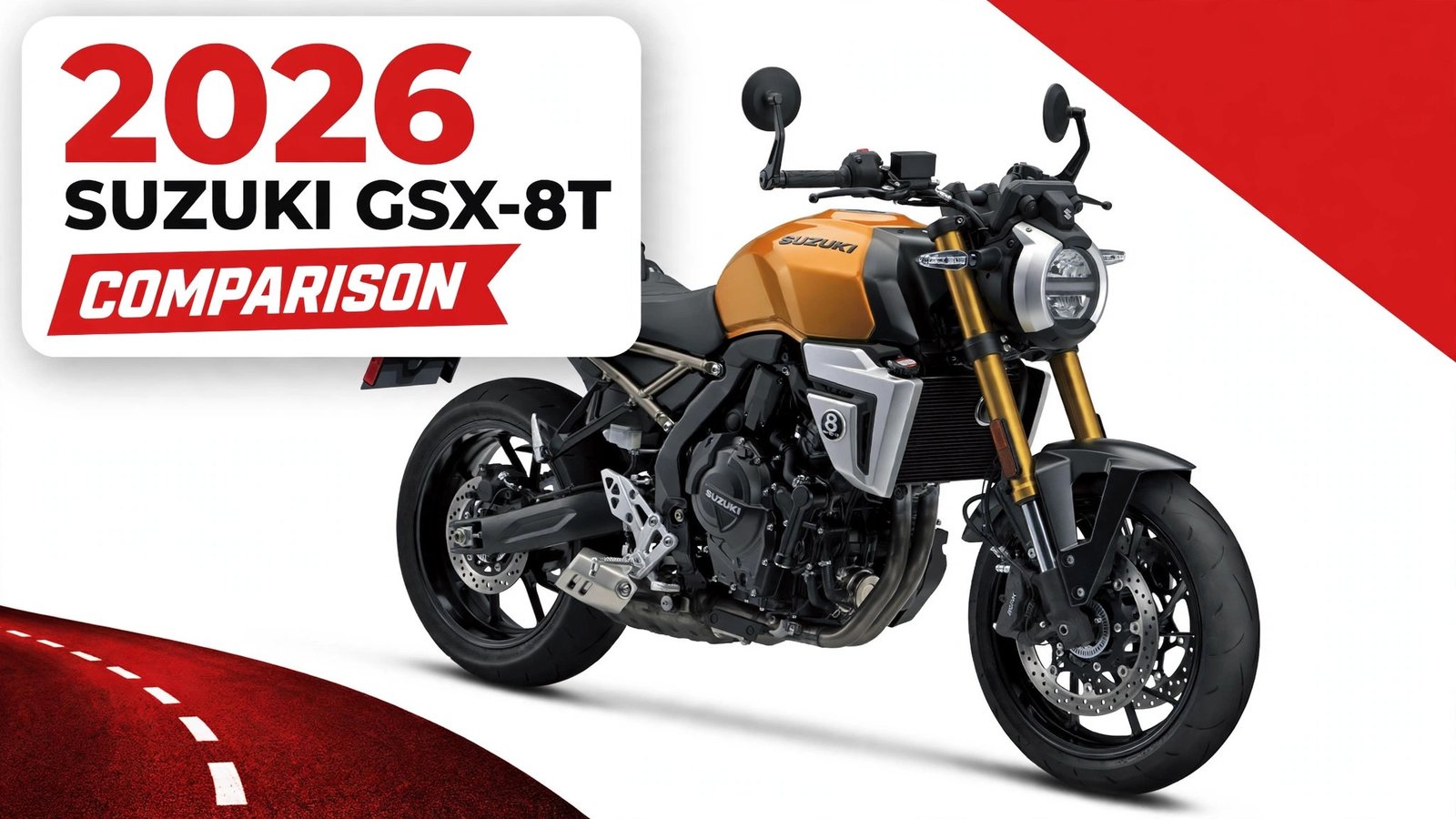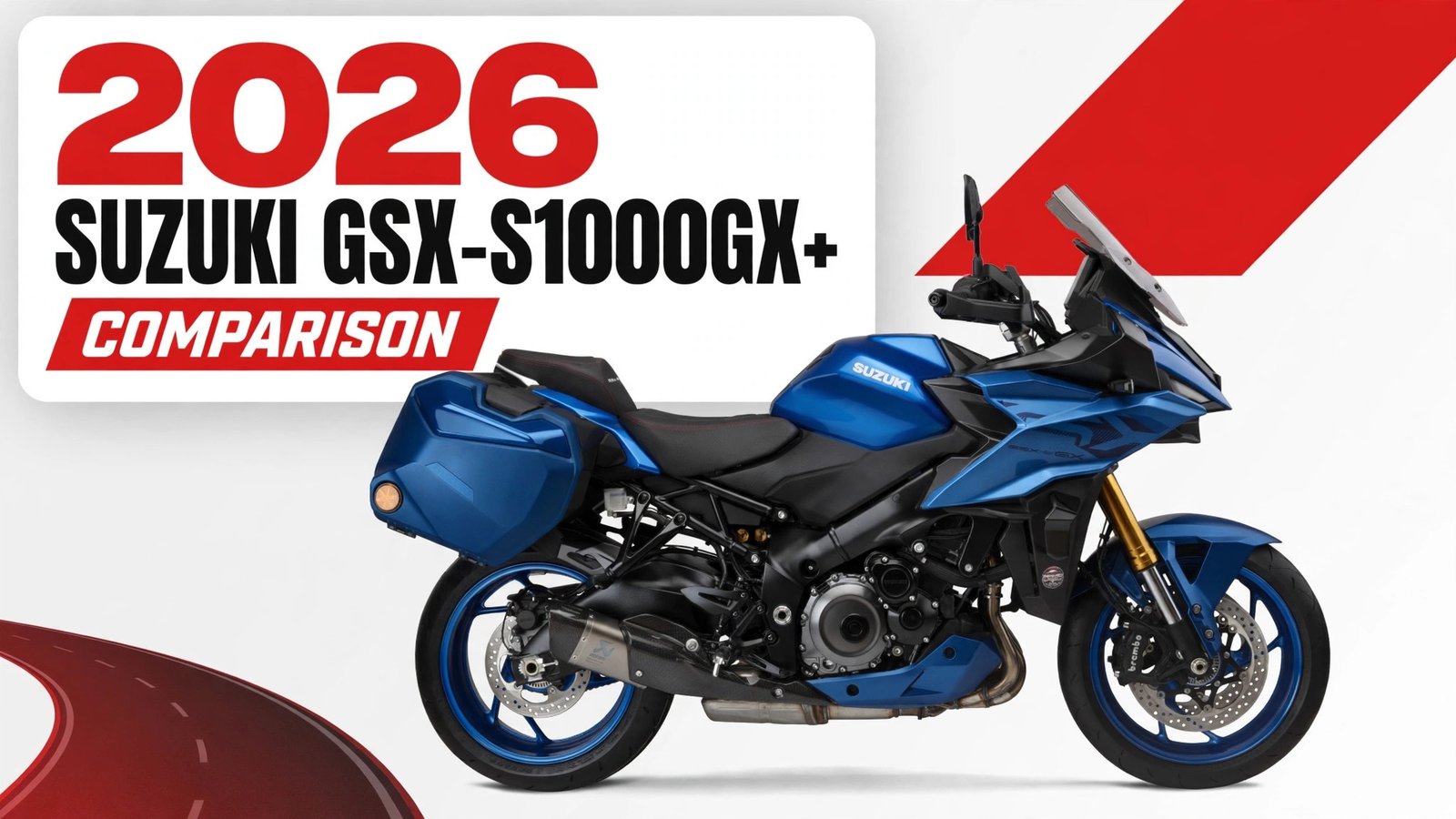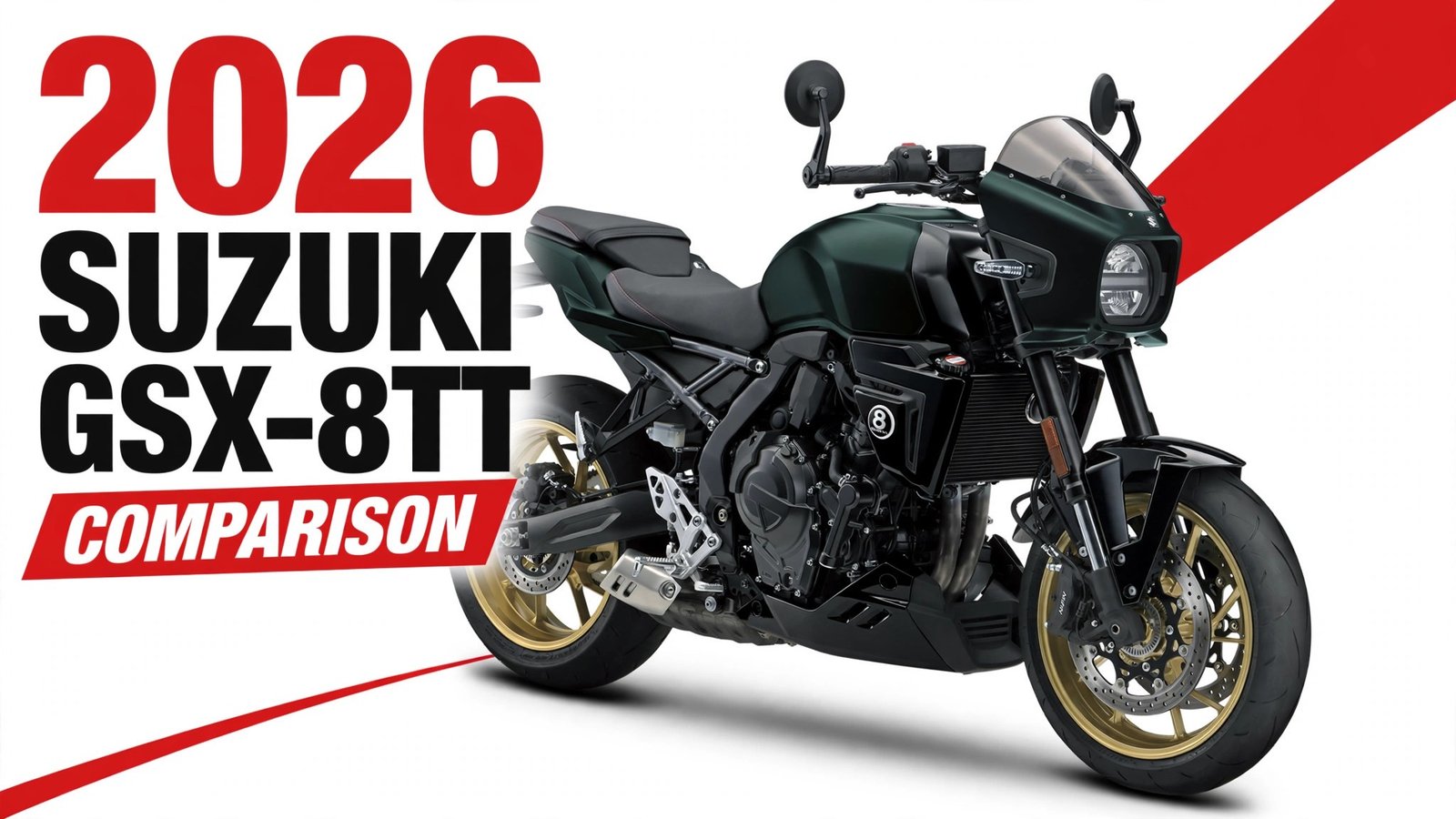
The short answer in this Suzuki GSX-8TT comparison is that the TT is the most expensive Japanese retro twin in its class — $11,849 in total against $9,274 for the Yamaha XSR700 and $9,684 for the Kawasaki Z650RS — and only the Triumph Speed Twin 900 costs more. The TT earns its premium on hardware: the biggest engine here at 776cc, the strongest claimed output at 81.8 hp, a 5-inch TFT, a standard quickshifter and a quarter fairing none of the others has. Whether that is worth $2,575 over an XSR700 depends on what you value — this Suzuki GSX-8TT comparison works through the four bikes on price, specs, equipment and running costs, with every figure labelled.
Suzuki GSX-8TT Overview and Its Closest Rivals
The four bikes in this Suzuki GSX-8TT comparison share one job — a retro-styled middleweight twin for real roads. The TT is the newest and the most powerful Japanese entry; the XSR700 and Z650RS are the established value picks; the Speed Twin 900 is the premium British alternative with the longest warranty and the most equipment.

The film below is Suzuki Global’s Red Dot Award 2026 film for the GSX-8T and GSX-8TT — a manufacturer award film, not a road test — and both bikes won the Red Dot Award for Product Design in 2026.
Why These Three Rivals: Same Class, Same Job
These three rivals were chosen for this Suzuki GSX-8TT comparison because they do the same job for the same money: retro-styled middleweight twins, all on sale in the USA as 2026 models, all built for weekend rides, commuting and back roads rather than track days. The Yamaha XSR700 is the longest-running of the three — Yamaha’s CP2-powered Sport Heritage retro. The Kawasaki Z650RS wraps the modern Z650 platform in styling drawn from the original Z family of the 1970s. The Triumph Speed Twin 900 is the Bonneville-based modern classic, the only one of the four with cruise control and cornering ABS. None of the three is a stretched rival: the Tracer 9 GT+ is Euro-only and is not a US rival, so it does not appear here. The Honda CB650R and Triumph Trident 660 appear only as brief also-consider notes in the verdict.
How the Four Bikes Differ at a Glance
At a glance, this Suzuki GSX-8TT comparison comes down to size, price and equipment. The TT has the biggest Japanese engine and the highest claimed power; the Speed Twin 900 has the biggest engine overall but the lowest claimed power; the XSR700 and Z650RS are the lighter, simpler, cheaper machines. Claimed power is not printed for the XSR700 or the Z650RS — neither figure was verified — and the Speed Twin’s freight is dealer-reported, so its total is estimated. The TT’s weight is Suzuki USA’s printed 445 lb for a 203 kg bike — the two numbers do not convert cleanly.
| Bike | Engine | Claimed power | Total price (USA) | Seat height |
|---|---|---|---|---|
| Suzuki GSX-8TT | 776cc parallel twin | 81.8 hp @ 8,500 rpm | $11,849 | 31.9 in |
| Yamaha XSR700 | 689cc CP2 twin | — | $9,274 | — |
| Kawasaki Z650RS | 649cc parallel twin | — | $9,684 | 31.5 in |
| Triumph Speed Twin 900 | 900cc parallel twin | 64 hp | ~$12,220 (freight estimated) | 30.7 in |
Suzuki GSX-8TT vs Yamaha XSR700
The XSR700 is the TT’s oldest and cheapest rival, and the one that sets the value bar in this Suzuki GSX-8TT comparison. At $9,274 in total it undercuts the TT by $2,575 — more than a fifth of the TT’s price. The question is what the extra money buys.
Engine, Specs and Performance Side by Side
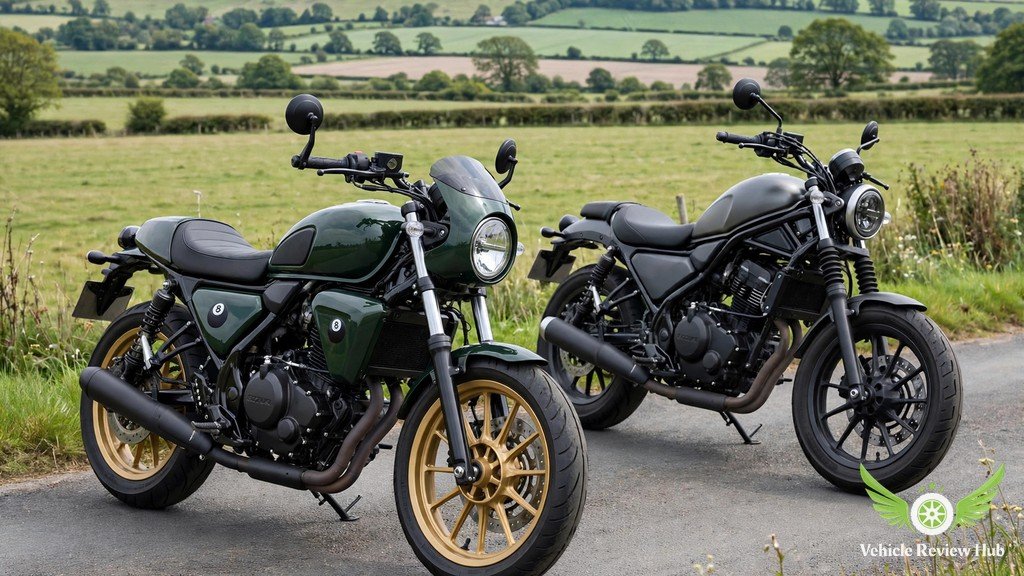
The TT wins on engine size: a 776cc parallel twin against the XSR700’s 689cc CP2 twin, both liquid-cooled with a 270-degree crank. The TT’s claimed output is 81.8 hp at 8,500 rpm with 57.5 lb-ft at 6,800 rpm — Suzuki USA publishes no horsepower or torque figures of its own, so this guide uses the global claim. Yamaha claims 58 mpg for the XSR700, against the TT’s WMTC figure of 56 mpg US (67.23 mpg imperial — always labelled imperial, never US). The TT carries more fuel — 4.3 US gallons against the Yamaha’s 3.7 — so it goes further between fill-ups. Brakes are twin 310 mm discs with Nissin radial-mount four-piston calipers on the TT — not 320 mm, as Cycle News’ spec table wrongly prints — against 298 mm front discs and ABS on the Yamaha. The TT’s electronics are a generation ahead: a 5-inch TFT, a standard bi-directional quickshifter, three ride modes and four-mode traction control, plus a USB-C socket and bar-end mirrors. The Yamaha keeps a round LCD panel and a simpler electronics package.
Price, Equipment and Which Suits Which Rider
On price the gap is the story: $11,849 for the TT against $9,274 for the XSR700, a $2,575 difference on totals — $2,550 on MSRP alone ($11,149 against $8,599). The TT’s extra money buys the quarter fairing and under-cowl, the stitched seat, the dedicated colours, the 3-D badges, the TFT, the quickshifter and the bigger tank. The XSR700’s money buys the Yamaha heritage — exposed aluminium details, retro-influenced bodywork, a stepped seat and the Yard Built custom culture — and a 12-month warranty, the same length as the TT’s. In this Suzuki GSX-8TT comparison, the XSR700 suits the rider who wants the cheapest way into a retro twin, who values the Yamaha’s custom scene and who does not need a fairing or a TFT. The TT suits the rider who wants the fairing, the bigger engine, the modern instruments and the quickshifter, and who is willing to pay $2,575 for them. The GSX-8TT review works through the TT’s price and styling in full, and the Yamaha XSR700 page is the source for the Yamaha’s 689cc engine, 58 mpg claim and 3.7-gallon tank.
Suzuki GSX-8TT vs Kawasaki Z650RS
The Z650RS is the closest-priced Japanese rival in this Suzuki GSX-8TT comparison, and the lightest bike here by a clear margin. At $9,684 in total it undercuts the TT by $2,165, and at 412.3 lb curb weight it is 32.7 lb lighter than the TT’s printed 445 lb.

Engine, Specs and Performance Side by Side
The engine gap is the biggest in this Suzuki GSX-8TT comparison: 776cc against 649cc, a 127cc difference. The TT’s claimed output is 81.8 hp at 8,500 rpm with 57.5 lb-ft at 6,800 rpm, and the torque-peak split is worth naming once here — Suzuki’s global figure is 57.5 lb-ft at 6,800 rpm, but Suzuki Philippines’ own site prints 78 Nm at 6,500 rpm and RevZilla’s spec table agrees, a genuine split within Suzuki’s own sites, not one outlet’s mistake. The Z650RS’s claimed power is not printed here — it was not verified for this comparison — but its other figures are Kawasaki’s own: a 649cc parallel twin, 412.3 lb curb weight, a 31.5-inch seat (0.4 in lower than the TT’s 31.9 in) and a 3.2-gallon tank against the TT’s 4.3 gallons. The Kawasaki’s electronics are stronger than the Yamaha’s: KTRC traction control with three modes, ABS and an assist-and-slipper clutch, with dual 300 mm petal front discs and a 220 mm rear disc. The TT answers with twin 310 mm discs, a 5-inch TFT, a standard quickshifter, three ride modes and four-mode traction control — but no cruise control, no IMU and no lean-sensitive ABS, which matters for newer riders. The GSX-8TT performance guide covers the TT’s claimed output and the torque-peak split in full, and the Kawasaki Z650RS ABS page is the source for the Kawasaki’s weight, seat, tank and electronics figures.
Price, Equipment and Which Suits Which Rider
The Kawasaki sits in the middle of the Japanese three on price: $9,684 in total against the TT’s $11,849 and the XSR700’s $9,274. The $2,165 gap to the TT buys the same things as the Yamaha gap — the fairing, the TFT, the quickshifter, the bigger engine and tank — plus the TT’s dedicated colours and stitched seat. The Z650RS keeps its own cards: the lightest bike in this Suzuki GSX-8TT comparison, the lowest Japanese seat at 31.5 in, three-mode traction control and a 12-month warranty, the same length as the TT’s. Its 2026 colours are Metallic Ocean Blue with gold wheels, Candy Emerald Green and Ebony, against the TT’s black-with-red-wheels and green-with-gold-wheels schemes. Which suits which rider comes down to feel in this Suzuki GSX-8TT comparison: the Z650RS suits the rider who wants the lightest, easiest-handling retro twin with the lowest seat and the classic Z1-inspired styling. The TT suits the rider who wants the bigger engine, the fairing and the modern instruments, and who will carry 32.7 lb more for them. The GSX-8T comparison covers the same rivals against the TT’s naked twin, $500 cheaper.
Suzuki GSX-8TT vs Triumph Speed Twin 900
The Speed Twin 900 is the only rival in this Suzuki GSX-8TT comparison that costs more than the TT — about $12,220 in total against $11,849, roughly $371 on estimated freight — and the only one that answers the TT with more equipment rather than a lower price.
Engine, Specs and Performance Side by Side
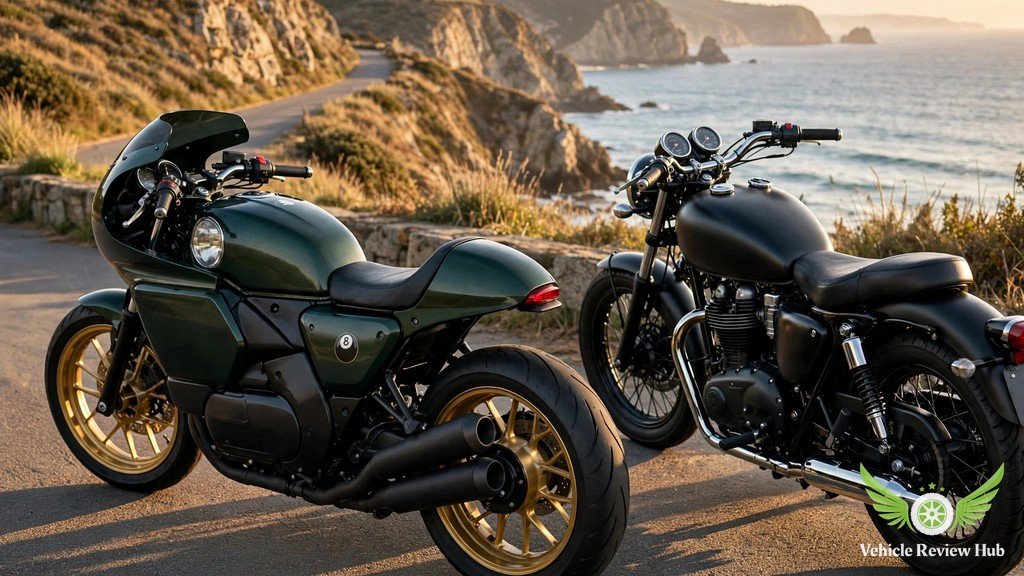
The Speed Twin 900 is the only bike here with a bigger engine than the TT — 900cc against 776cc — but it makes less power: 64 hp at 7,500 rpm against the TT’s claimed 81.8 hp at 8,500 rpm. Its torque comes lower and slightly higher — 59.0 lb-ft at 3,800 rpm against the TT’s 57.5 lb-ft at 6,800 rpm — so the Triumph pulls harder from low revs while the Suzuki wins at the top end. The Triumph is also the heaviest bike here at 476.2 lb wet — 31.2 lb more than the TT’s printed 445 lb — and it has the lowest seat at 30.7 in against the TT’s 31.9 in. Where the Triumph clearly leads is equipment: for 2026 it adds cruise control, Optimized Cornering ABS and a USB-C socket, on top of Marzocchi upside-down forks and a 2-year unlimited-mileage warranty — double the TT’s 12 months. The TT’s answers are its lighter weight, its stronger claimed power, its 5-inch TFT and its standard quickshifter — but no cruise control, no IMU and no lean-sensitive ABS. The Bennetts GSX-8T and GSX-8TT review is the source for the TT’s tested fuel figures and the “small screen and lacking cruise control” verdict quoted in this guide.
Price, Equipment and Which Suits Which Rider
The Triumph is the dearest of the four, but the gap is small and soft: $11,495 MSRP plus about $725 freight, dealer-reported and labelled estimated, for about $12,220 in total — roughly $371 over the TT. Two things can erase that gap: the $750 Triumph Cash offer running November 1–30, 2026, and dealer discounting, already visible on the TT — new TTs advertised at $8,999, though one listing also says “cash price $9,399”. The Speed Twin’s 2-year warranty against the TT’s 12 months is the clearest long-term value difference in this Suzuki GSX-8TT comparison, and its cruise control and cornering ABS are the clearest equipment difference. In this Suzuki GSX-8TT comparison, the Speed Twin 900 suits the rider who wants the lowest seat, the British Bonneville character, cruise control and cornering ABS, and the longest warranty — and who does not mind the extra 31.2 lb. The TT suits the rider who wants more claimed power, less weight, a fairing and a lower price before incentives. The MCN GSX-8TT review records the three real owner reviews behind the TT’s 5-out-of-5 reliability rating.
Suzuki GSX-8TT Price and Value Compared
Price is where this Suzuki GSX-8TT comparison is decided, because the four bikes are closer on character than on cost. The TT is the priciest Japanese retro twin here by a wide margin.
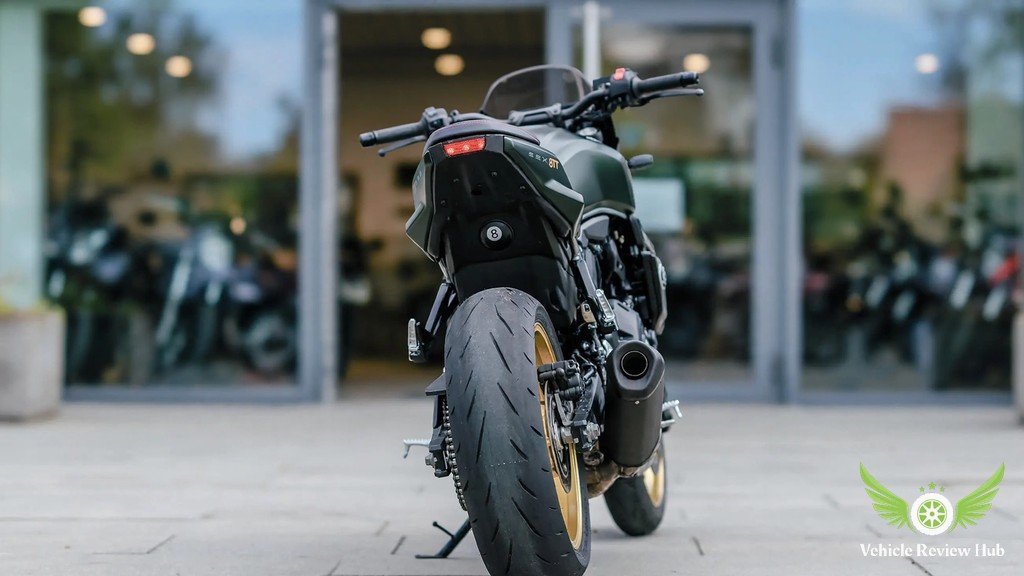
| Bike | MSRP | Destination / freight | Total (USA) | Warranty |
|---|---|---|---|---|
| Suzuki GSX-8TT | $11,149 | $700 | $11,849 | 12 mo unlimited-mileage |
| Yamaha XSR700 | $8,599 | $675 | $9,274 | 12 mo |
| Kawasaki Z650RS ABS | $8,999 | $685 | $9,684 | 12 mo |
| Triumph Speed Twin 900 | $11,495 | ~$725 (estimated) | ~$12,220 | 2 yr unlimited-mileage |
| Suzuki GSX-8T (for reference) | $10,649 | $700 | $11,349 | 12 mo unlimited-mileage |
| Suzuki GSX-8S (for reference) | $9,249 | $460 | $9,709 | 12 mo unlimited-mileage |
New Prices Across the Four Bikes in the USA
New prices across the four bikes in this Suzuki GSX-8TT comparison put the TT second from the top: $11,849 in total, $2,575 over the XSR700, $2,165 over the Z650RS, and roughly $371 under the Speed Twin 900 on estimated freight. Two things soften the TT’s sticker price. First, dealer discounting is already visible — new TTs advertised at $8,999 at several dealers, against the $11,149 list price — though one listing also says “cash price $9,399”, a conflict this guide notes without resolving. Second, Suzuki USA’s GSX-8TT page carries a footnote that a freight surcharge is effective on certain MY25 and MY26 models shipped on or after September 17, 2025 — amount unpublished, and whether it applies to the 8TT not stated — so no guide can add it to the price. The Speed Twin’s price is softened the other way: its ~$725 freight is dealer-reported, not Triumph-published, so its total is estimated, and the $750 Triumph Cash offer in November 2026 narrows the gap for buyers who qualify. Totals are MSRP plus destination throughout this guide — never print a total as an MSRP.
Running Costs and Resale Value Compared
Running costs and resale value are where this Suzuki GSX-8TT comparison has to be honest about what is not known. The TT’s service schedule is the GSX-8S owner’s-manual platform schedule, labelled as such because the TT’s own manual is not public yet: first service at 600 miles, oil and filter every 3,750 miles, plugs replaced at 7,500 miles, valve inspection at 15,000 miles. No US dealer service prices were verified for the TT, so this guide prints none — European dealer context puts a routine service at about €155 and a valve-check service at about €465, EU figures, never converted. No TT-specific US insurance data exists either, so no insurance figure is printed here. On fuel, the TT’s WMTC figure is 56 mpg US (67.23 mpg imperial); Bennetts tested 42.2 mpg imperial on the TT, or 35.1 mpg US; Yamaha claims 58 mpg for the XSR700. Resale is too early to call — the TT only reached US dealers in late 2025 — and the dealer discounting already visible says more about launch supply than long-term value. The GSX-8TT reliability guide covers the platform schedule, the recall boundaries and the ownership costs in full, and the Cycle News GSX-8TT review is the source for the TT’s road-test verdicts.
Suzuki GSX-8TT Comparison Verdict and US Alternatives
The verdict in this Suzuki GSX-8TT comparison is that the TT is the best-looking and best-equipped Japanese retro twin here, and the priciest. Two also-consider bikes sit outside the doc’s three rivals: the Honda CB650R E-Clutch at $8,699 plus $600 destination ($9,299 in total, E-Clutch only in the US for 2026) and the Triumph Trident 660 at $8,995 plus about $950 dealer-reported freight (about $9,945 in total, with a new 94 hp engine for 2026). The CB650R undercuts the TT by $2,550 and the Trident by about $1,904; neither has the TT’s fairing.
The Closest Comparator Is the 8T Itself, $500 Less
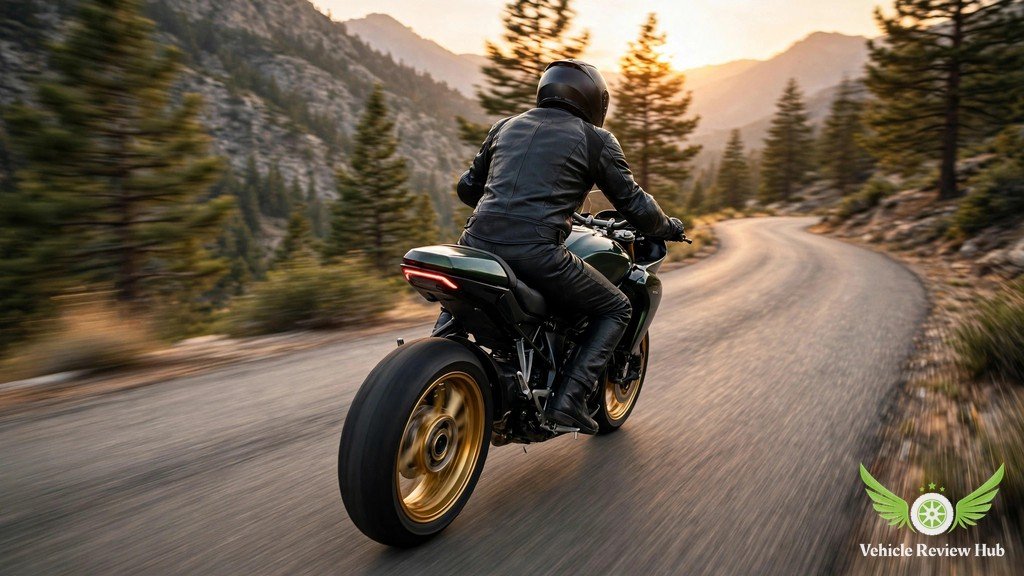
The closest comparator is the 8T itself, $500 less — the same bike minus the fairing. The GSX-8T is $10,649 plus $700 destination, $11,349 in total, against the TT’s $11,849. The two bikes share the engine, the tune, the frame, the suspension and the electronics; the TT’s $500 buys the quarter fairing, the under-cowl, the stitched seat, the dedicated colours with matching wheels and the 3-D badges — appearance, not performance. The Suzuki GSX-8TT comparison numbers are identical because the hardware is identical: 81.8 hp claimed, 57.5 lb-ft at 6,800 rpm, 445 lb against the 8T’s 443 lb, the same 16.5-litre tank, the same quickshifter, the same TFT. If you do not want the fairing, buy the 8T and keep $500. If you want the faired retro look — the GS1000S tribute, the cowl, the gold wheels on green — the TT is the only one of the four that offers it. The RevZilla first ride review covers the 8T’s riding experience, which is the TT’s riding experience without the cowl.
$1,900 Over an 8S Buys Appearance, Not Hardware
The $1,900 over an 8S buys appearance, not hardware — and that is the honest final line of this Suzuki GSX-8TT comparison. On MSRP the TT is $11,149 against the 8S’s $9,249, a $1,900 gap, and the two bikes share the engine, tune and suspension. The $1,900 buys retro styling, a bigger tank (16.5 litres against 14), the 5-inch TFT, the standard quickshifter, the USB-C socket, the lithium-ion battery and the bar-end mirrors — not performance. Motorcycle.com called the TT its favourite GSX-8 at 84.0 percent: it earns its price on looks and comfort, not hardware. That is the verdict here too. Buy the TT if you want the fairing, the colours and the best-equipped Japanese retro twin in this Suzuki GSX-8TT comparison. Buy the XSR700 for the best value, the Z650RS for the lightest bike with the lowest seat, the Speed Twin 900 for cruise control, cornering ABS and a two-year warranty, and the 8T for the TT without the fairing for $500 less.
Suzuki GSX-8TT Comparison: Frequently Asked Questions
Direct answers to the questions riders ask about the Suzuki GSX-8TT comparison.
Which bike is the best value among the four?
The Yamaha XSR700, at $9,274 in total in this Suzuki GSX-8TT comparison — $2,575 less than the TT and about $2,946 less than the Speed Twin 900. The TT is the priciest Japanese bike in this Suzuki GSX-8TT comparison; only the Triumph costs more.
Is the GSX-8TT faster than the XSR700?
No measured head-to-head exists — no instrumented test of a TT has been published. On paper the TT’s 776cc engine and 81.8 hp claim out-muscle the Yamaha’s 689cc CP2 twin, but no TT top-speed or 0–60 number exists to prove it.
Is the GSX-8TT faster than the Z650RS?
No measured test exists here either. The TT has 127cc more than the Z650RS’s 649cc twin, but the Kawasaki is 32.7 lb lighter at 412.3 lb curb weight against the TT’s printed 445 lb.
How much more does the GSX-8TT cost than the XSR700?
$2,575 on totals in this Suzuki GSX-8TT comparison — $11,849 against $9,274 — or $2,550 on MSRP alone ($11,149 against $8,599). The TT’s extra money buys the fairing, the TFT, the quickshifter and the bigger engine and tank.
Is the Speed Twin 900 worth the extra money over the TT?
It costs roughly $371 more on estimated freight — about $12,220 against $11,849 in this Suzuki GSX-8TT comparison — and buys cruise control, Optimized Cornering ABS, a 2-year warranty and the lowest seat at 30.7 in. The TT answers with more claimed power, 31.2 lb less weight and a lower price before incentives.
Should I buy the 8T instead of the 8TT?
If you do not want the fairing, yes — in this Suzuki GSX-8TT comparison the 8T is the same bike for $500 less. If you want the faired retro look, the cowl, the stitched seat and the gold wheels, only the TT offers them.
Is the GSX-8TT worth $1,900 more than the GSX-8S?
That is the MSRP gap in this Suzuki GSX-8TT comparison ($11,149 against $9,249), and it buys retro styling, a bigger tank, the TFT, the quickshifter, USB-C, the lithium-ion battery and bar-end mirrors — not performance.
Which bike is best for beginners?
All four are approachable, but the Z650RS is the easiest to manage at 412.3 lb with the lowest Japanese seat at 31.5 in. The TT’s verdict is “mostly” — approachable power and a low 31.9-inch seat, but about 445 lb and no lean-sensitive ABS.
Which bike has the lowest running costs?
Too early to rank honestly: no US dealer service prices were verified for the TT, and no TT-specific US insurance data exists. On fuel, Yamaha claims 58 mpg for the XSR700 against the TT’s 56 mpg US WMTC figure.
Does the GSX-8TT have cruise control like the Speed Twin 900?
No. The TT has no cruise control, no IMU and no lean-sensitive ABS. The Speed Twin 900 adds cruise control and Optimized Cornering ABS for 2026.
Has the Suzuki GSX-8TT been recalled?
No recall found in published notices names the 8TT. Recall 24V081 covers the 2024 GSX-8R’s drive chain only (360 units), and 24V535 covers the 2023–24 V-Strom 800DE’s rear tyre only (1,688 units).
What is the GSX-8TT’s torque peak — 6,800 or 6,500 rpm?
Suzuki’s global figure is 57.5 lb-ft at 6,800 rpm, and this guide uses it. But Suzuki Philippines’ own site prints 78 Nm at 6,500 rpm, and RevZilla’s spec table agrees — a genuine split.