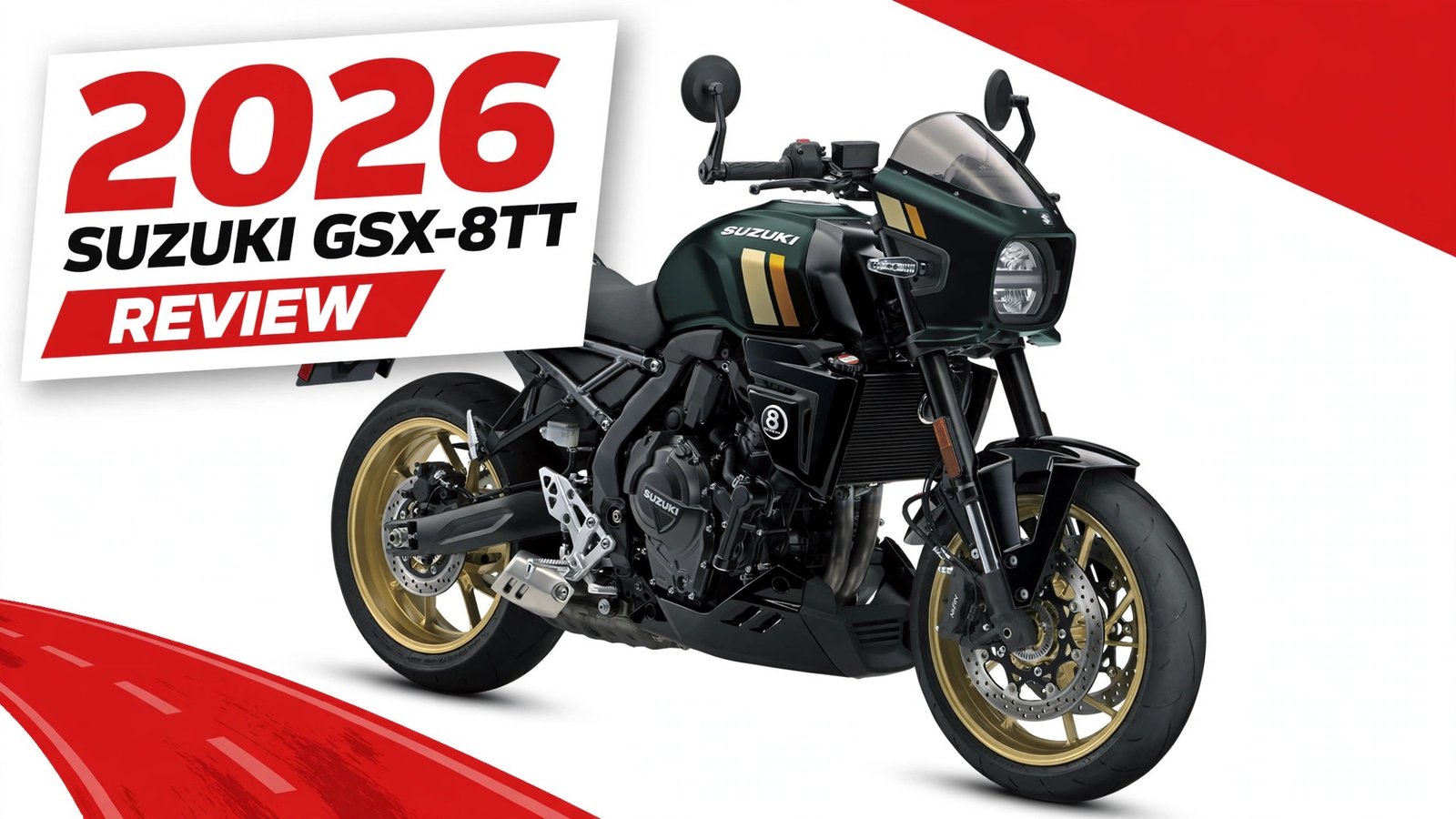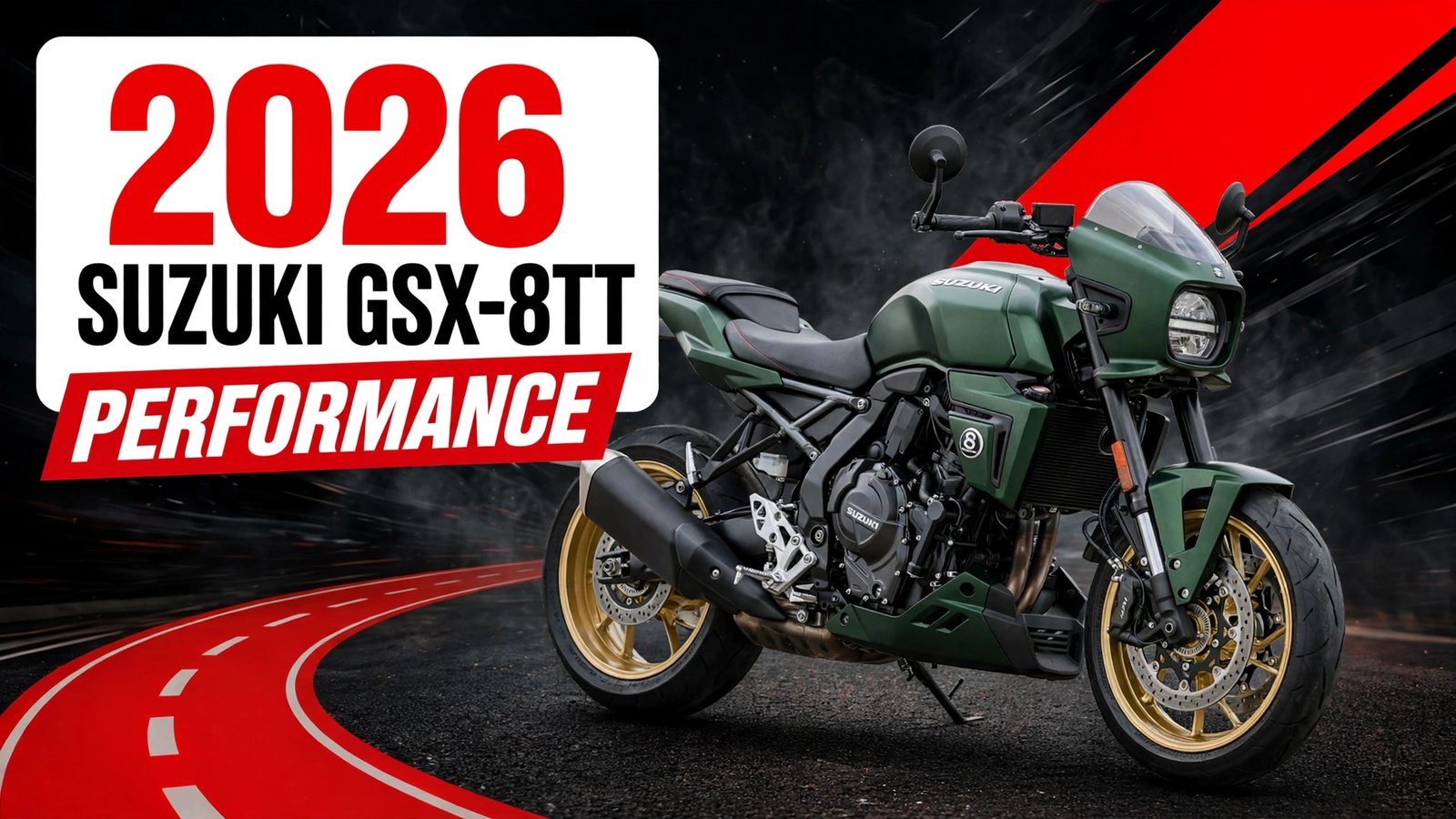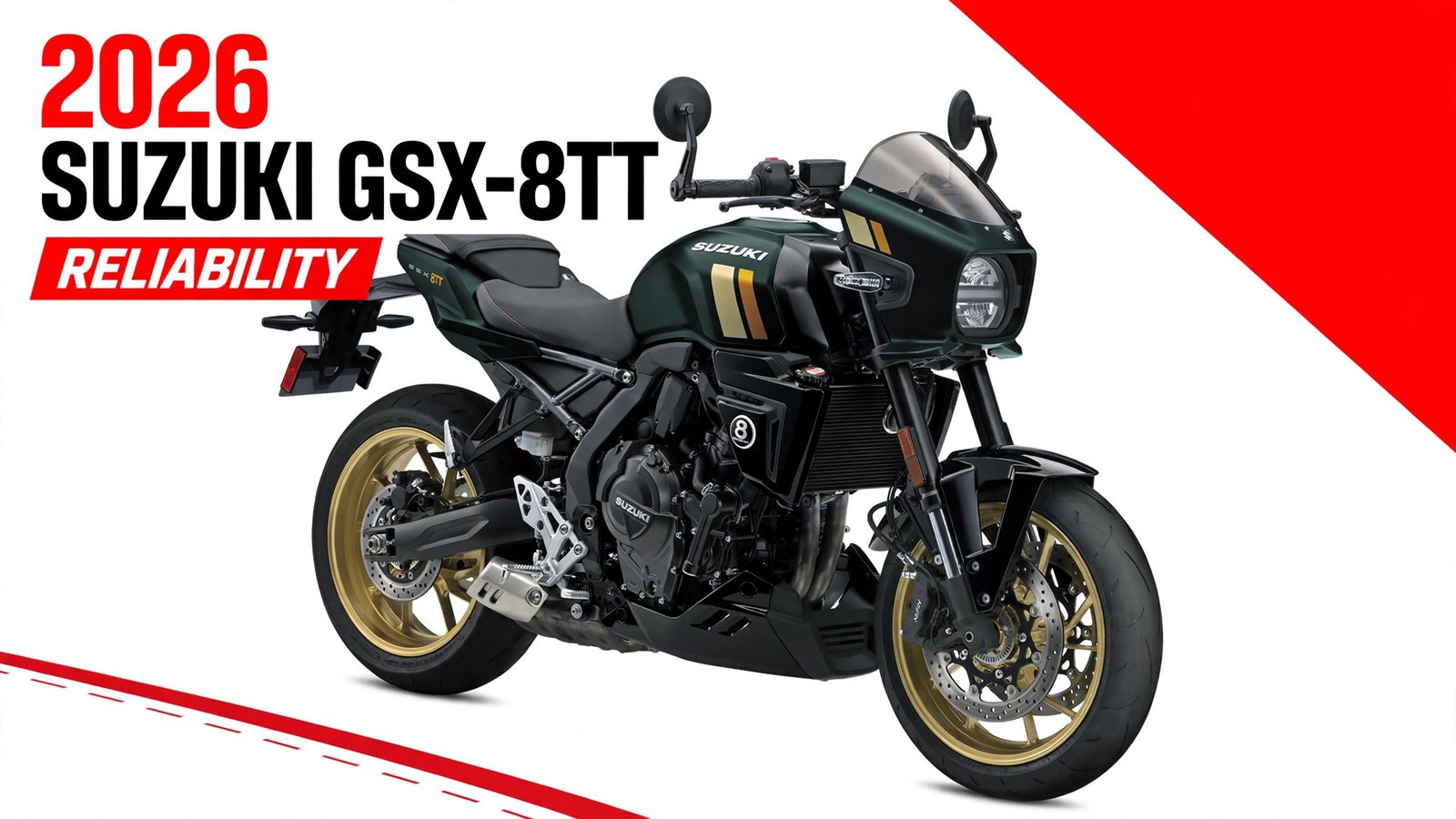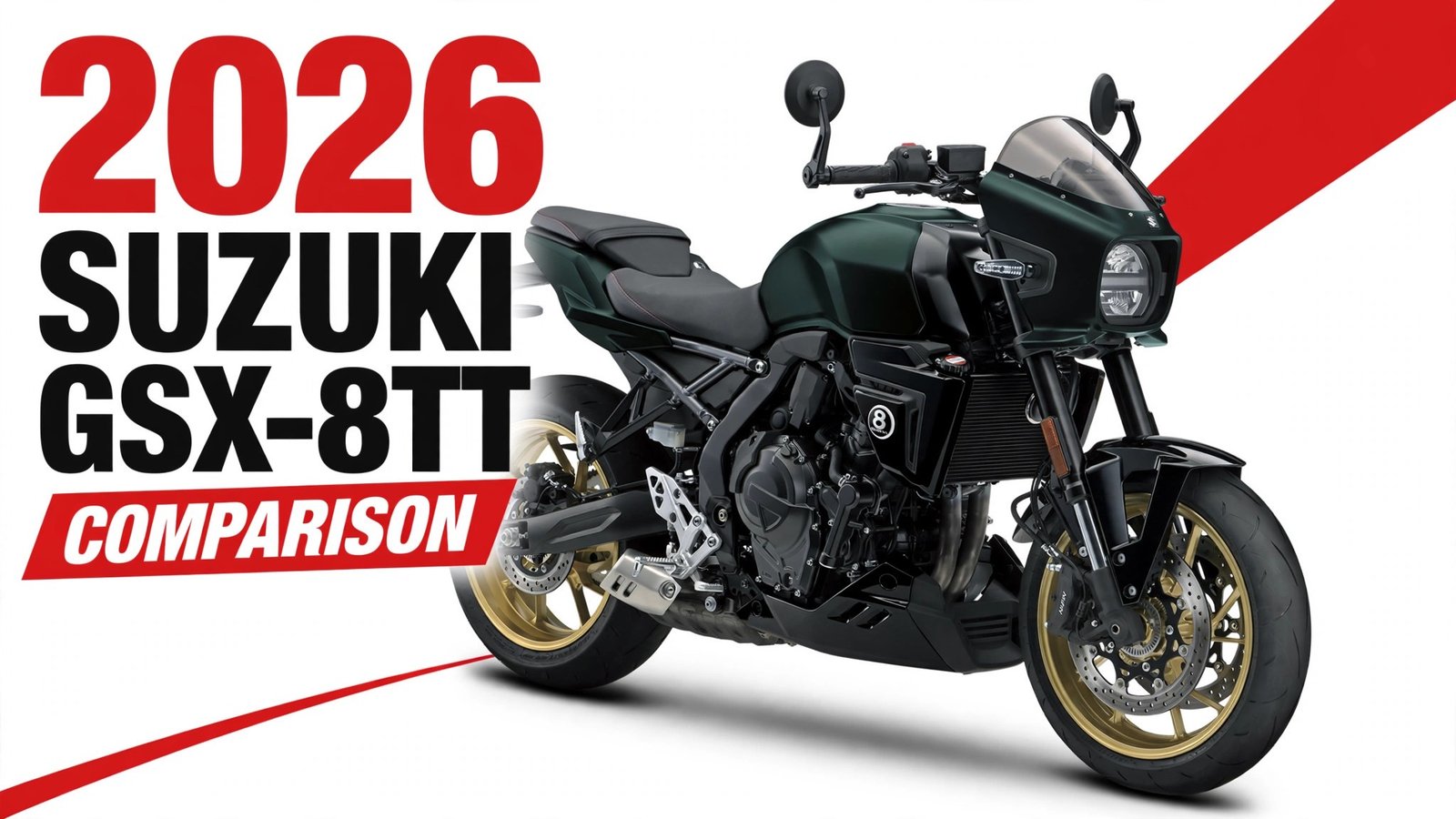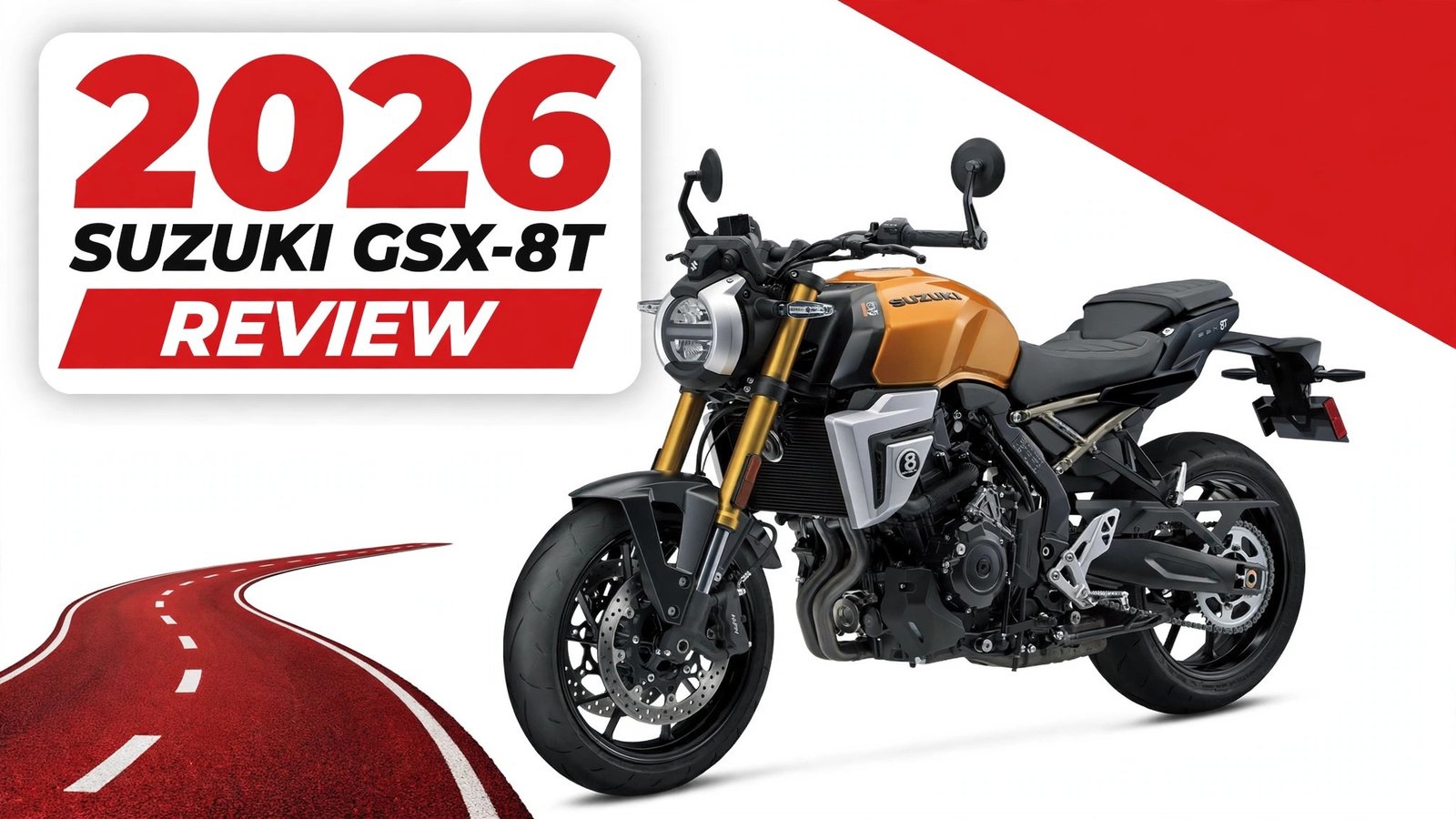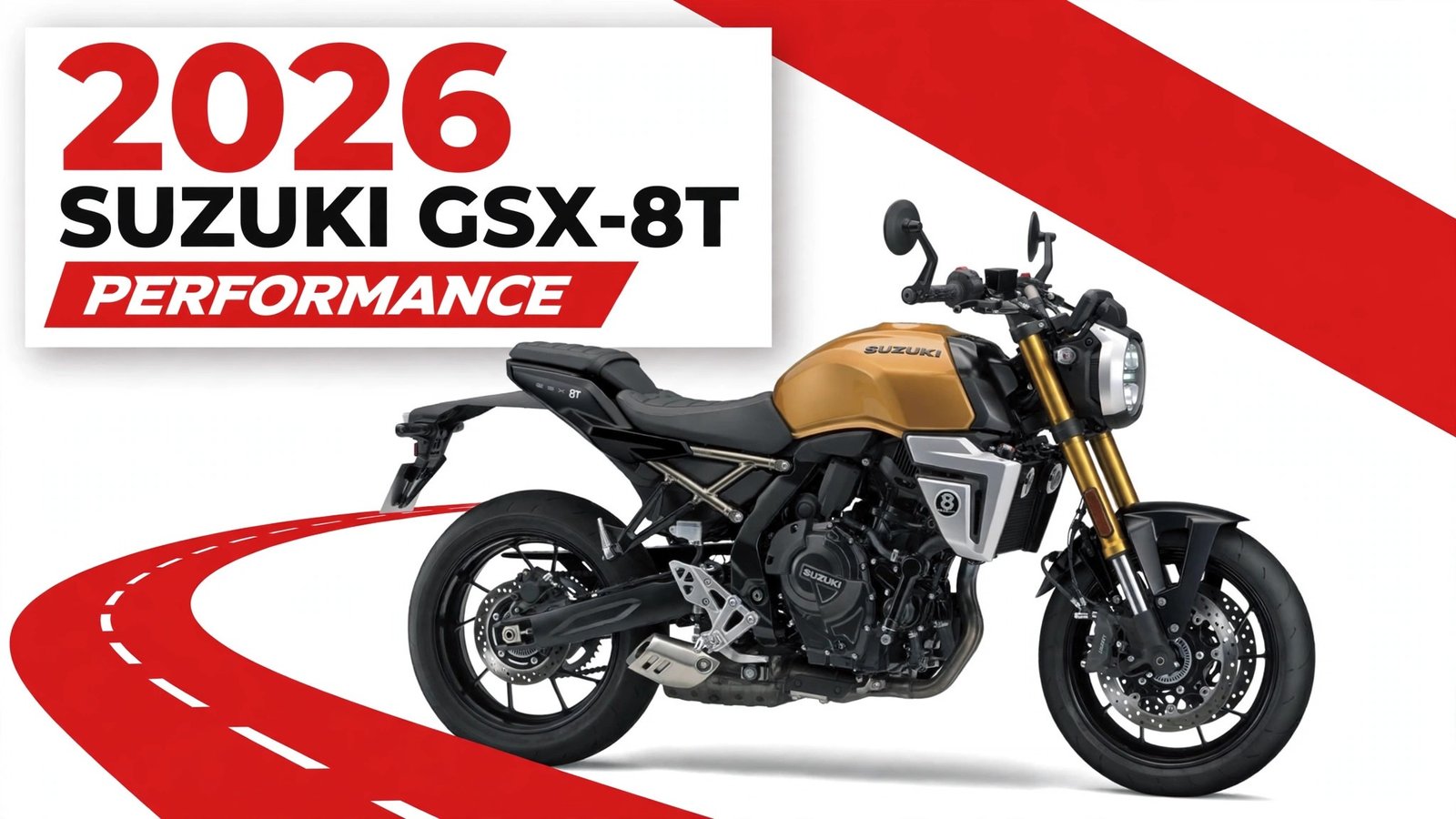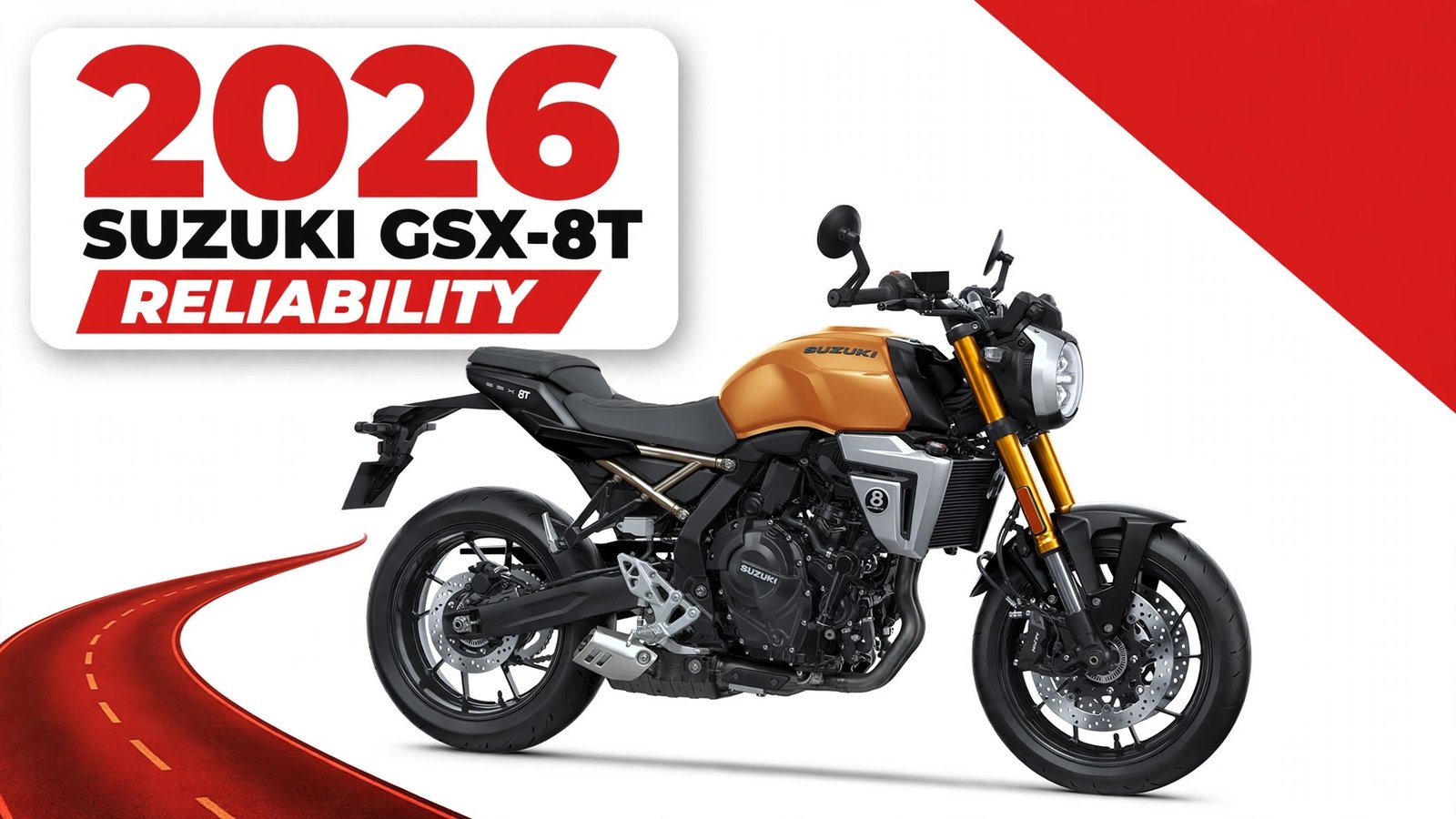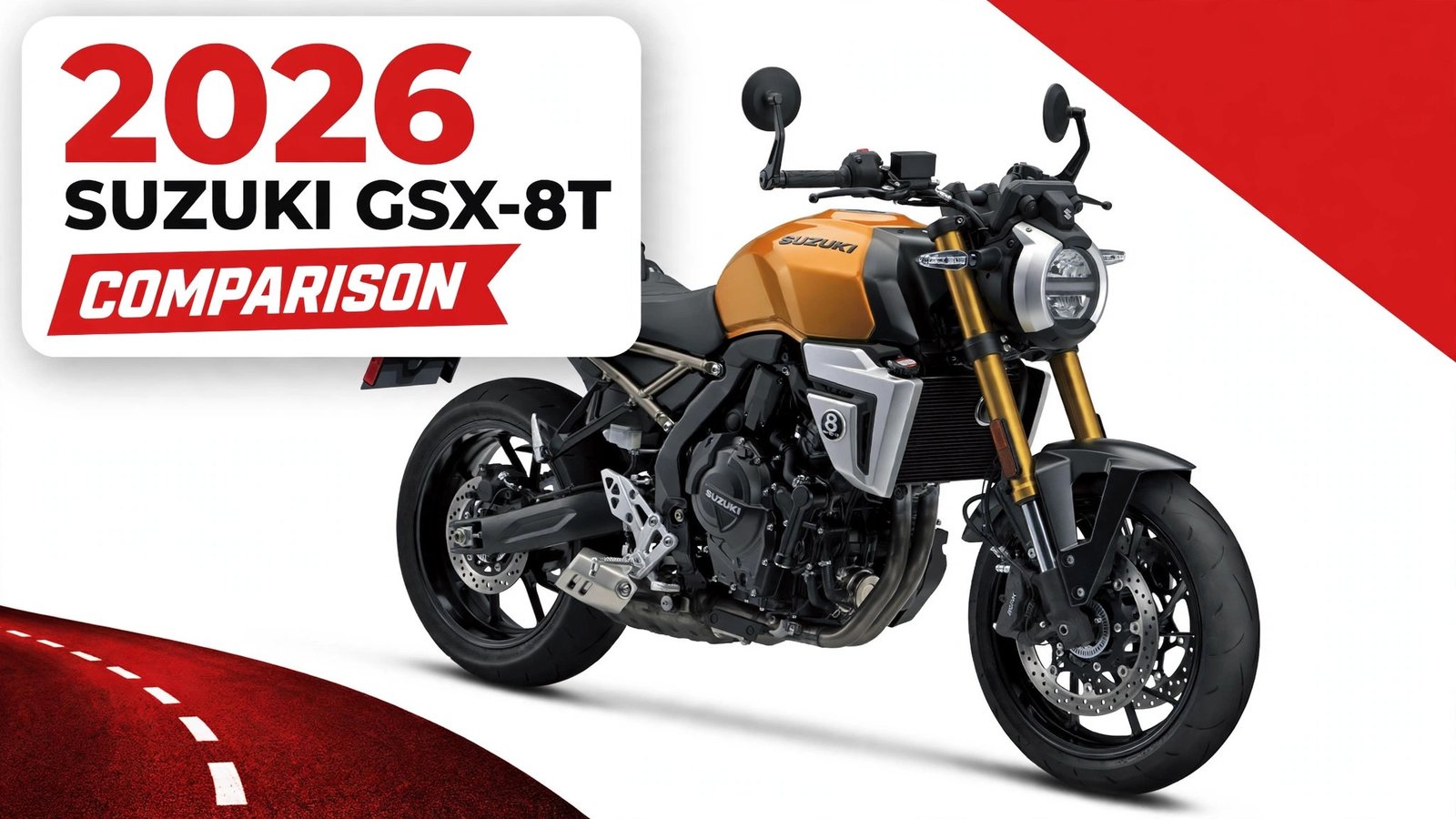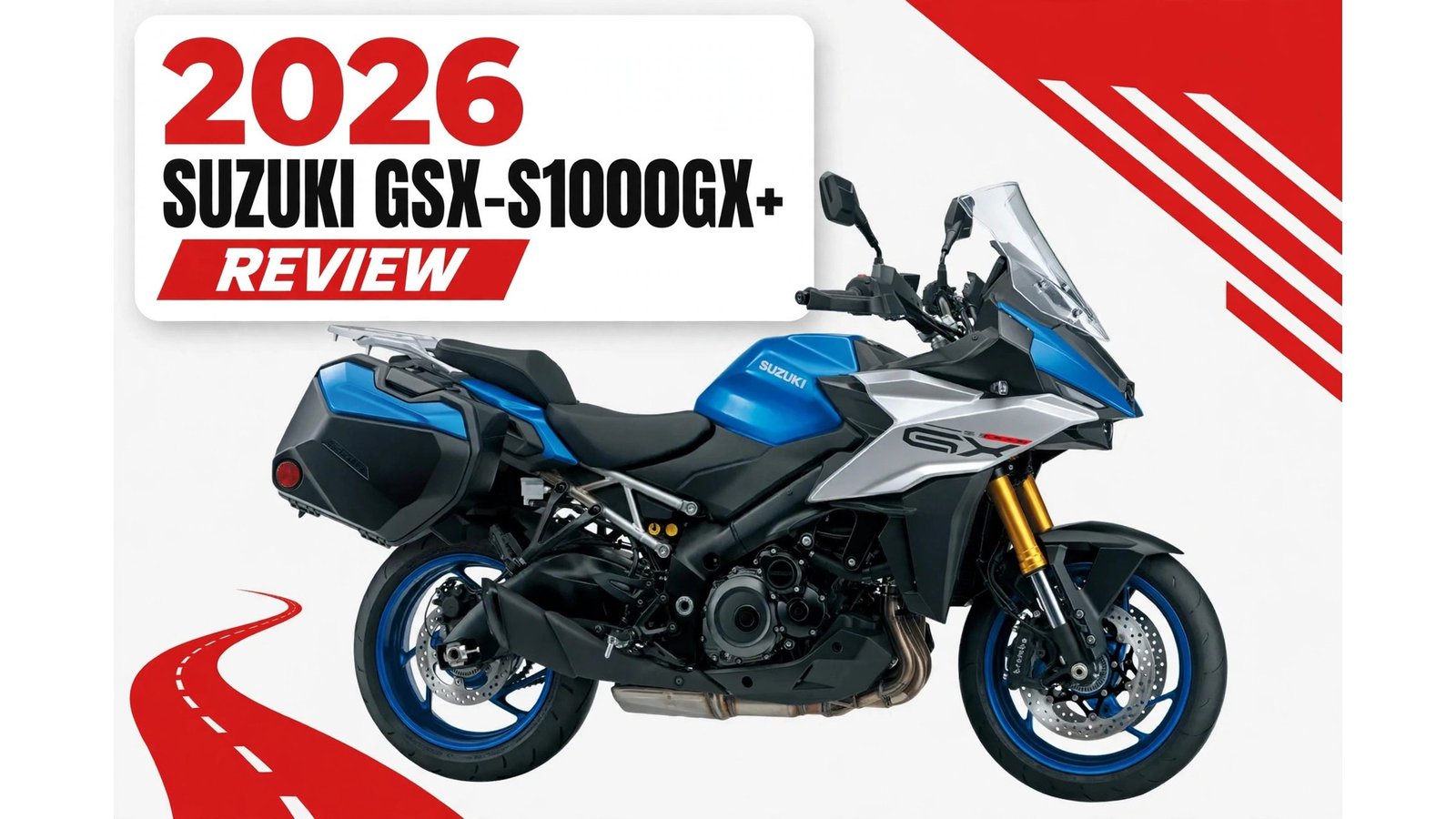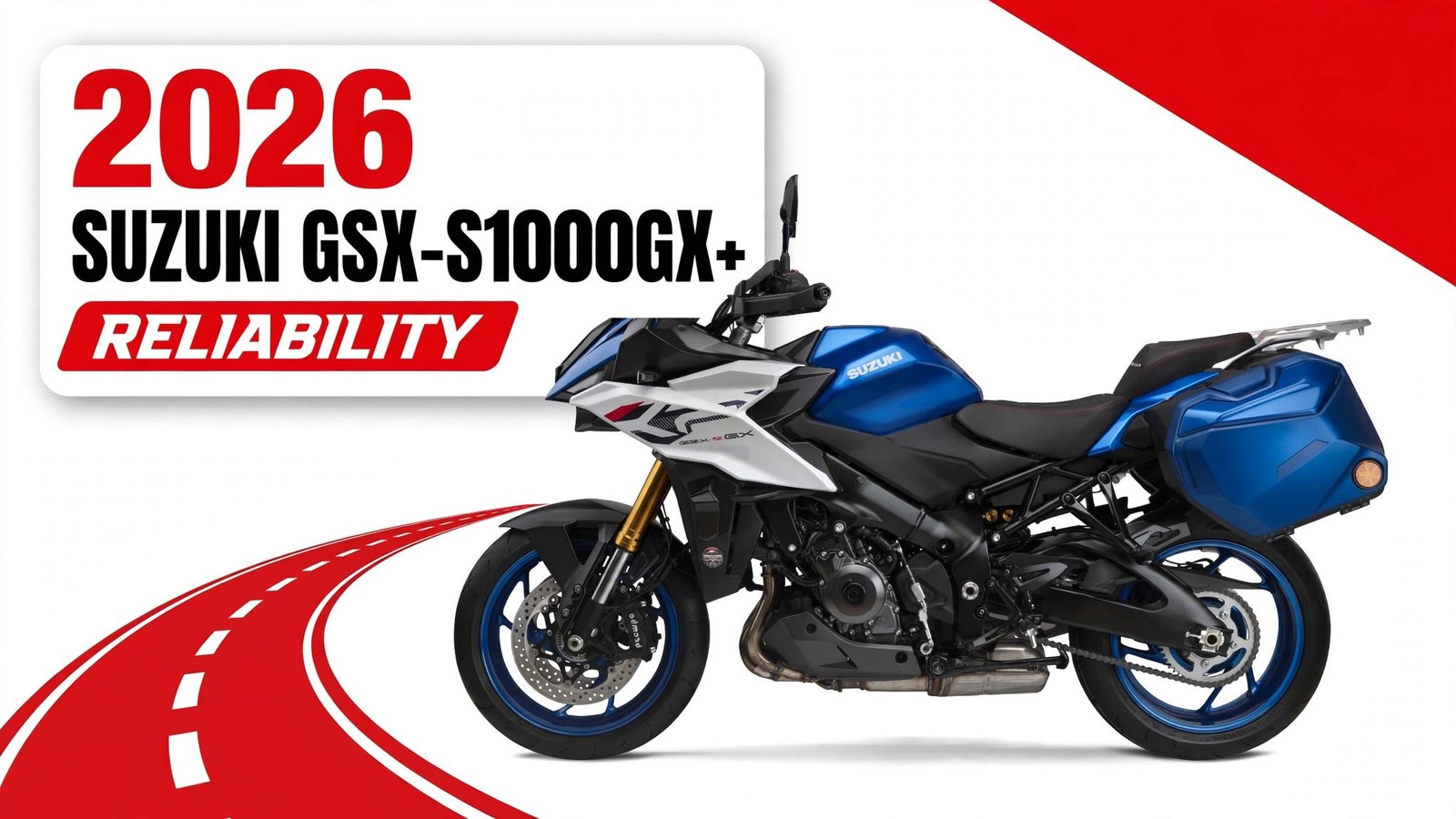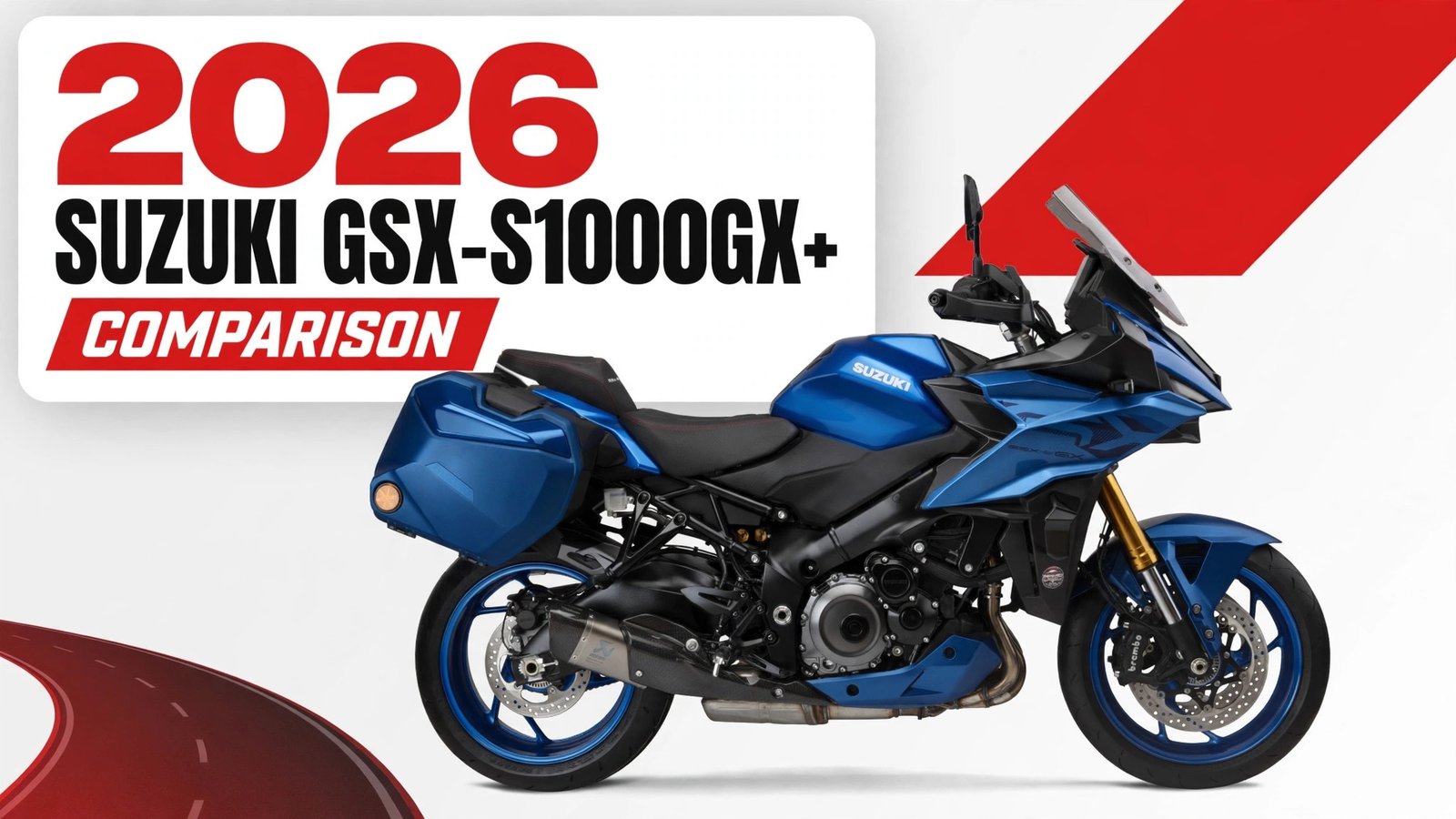
The short answer in this Suzuki GSX-S1000GX+ comparison is that the GX+ wins on standard equipment, not on base price: at $18,749 for 2026 it sits just $76 under the BMW S 1000 XR on MSRP, $4,750 above the Kawasaki Ninja 1100SX, and $11,246 below the Ducati Multistrada V4 S — and unlike the BMW, it comes with its cases, centrestand, semi-active suspension, cruise control and quickshifter as standard. The bike is the same GX Suzuki sells elsewhere — in the US it has only ever been sold as the Plus, panniers and centrestand fitted — so this Suzuki GSX-S1000GX+ comparison tests it against the three US-market rivals that do the same job: tall, fast, upright sport-tourers with full electronics and luggage.
Suzuki GSX-S1000GX+ Overview and Its Closest Rivals
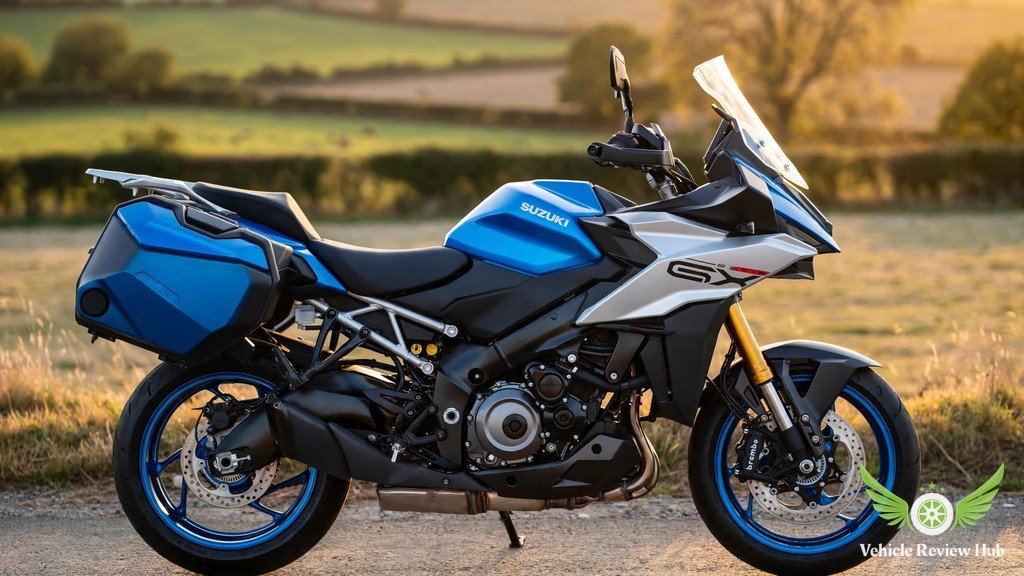
The GX+ is Suzuki’s crossover: a litre inline-four in a tall, upright chassis with 17-inch wheels, semi-active suspension and hard luggage as standard. Its rivals do the same job in the US: the BMW S 1000 XR, the same formula with a German badge; the Ducati Multistrada V4 S, the premium adventure-touring benchmark; and the Kawasaki Ninja 1100SX, the value pick. This Suzuki GSX-S1000GX+ comparison keeps the field to those three because they are the only direct US-market rivals with the same brief: road-biased, powerful, comfortable, and ready to tour.
Why These Three Rivals: Same Class, Same Job
All four are road-going sport crossovers built around a powerful multi-cylinder engine, upright ergonomics, full electronics and touring luggage. The GX+ is Suzuki’s entry; the XR is BMW’s identical-formula rival; the Multistrada V4 S is the premium benchmark with radar; the Ninja 1100SX is the value pick that undercuts the GX+ by $4,750. The Yamaha Tracer 9 GT+ is not in this Suzuki GSX-S1000GX+ comparison as a rival, because it is Euro-only — the US gets the base Tracer 9 only, and it appears later as an also-consider, not as a rival. The GX+ review covers the bike’s prices and specification year by year for readers who want the ownership picture before the head-to-head numbers.
How the Four Bikes Differ at a Glance
The GX+ and the XR are the same idea — a litre inline-four crossover — while the V4 S is the expensive adventure flagship and the Ninja is the cheaper sport-tourer. The table below is the whole Suzuki GSX-S1000GX+ comparison in one place.
| Bike (2026 US) | MSRP | Engine | Claimed power | Weight (claimed) |
|---|---|---|---|---|
| Suzuki GSX-S1000GX+ | $18,749 | 999cc inline-four | 150 hp @ 11,000 rpm | 511 lb excl. cases |
| BMW S 1000 XR | $18,825 | 999cc inline-four | 170 hp @ 11,000 rpm | Not verified |
| Ducati Multistrada V4 S | $29,995 | 1,158cc V4 | 170 hp @ 10,750 rpm | 511 lb wet, no fuel (Radar trim) |
| Kawasaki Ninja 1100SX ABS | $13,999 | 1,099cc inline-four | 134 hp @ 9,000 rpm | 518 lb wet (TopSpeed) |
The video below is Moto Journal’s four-bike touring comparison from France — in French, so US readers will not follow the narration, but the GX+ is in it: the Suzuki in the test is the GX+, alongside the Honda CB1000GT, the Yamaha Tracer 9 GT and the Kawasaki Versys 1100 SE. The CB1000GT and the Versys 1100 SE are not sold in the US.
Suzuki GSX-S1000GX+ vs BMW S 1000 XR
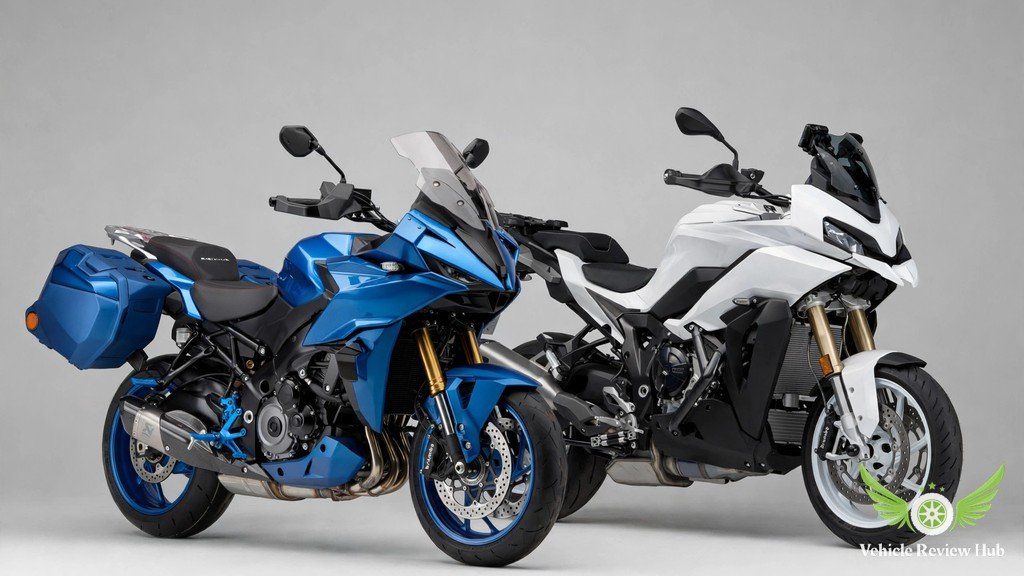
The XR is the closest rival in this Suzuki GSX-S1000GX+ comparison, because it is the same formula: a 999cc inline-four in a tall, upright crossover with semi-active suspension and road-biased 17-inch wheels. The two differ by $76 on 2026 MSRP — and the real gap is not the price tag, it is what comes with it.
Engine, Specs and Performance Side by Side
Same capacity, different output in this Suzuki GSX-S1000GX+ comparison: the XR’s 999cc inline-four makes a claimed 170 hp at 11,000 rpm and 84 lb-ft at 9,250 rpm, 20 hp and 6 lb-ft more than the GX+’s claimed 150 hp and 78 lb-ft. The XR is also faster at the top end, 155 mph against the GX+’s GPS-capped 132.92 mph, measured by MCN in the UK — MCN’s own review page lists 145 mph for the GX, but that is the claim, not the measurement. The only named GX dyno figure is MCN’s UK test, 143.2 bhp and 77.3 lb-ft at the rear wheel — labelled UK every time, because no US magazine has published a GX+ dyno run. MCN’s own “Fast facts” box mislabels these GX figures “Suzuki GSX-S1000GT+” — the 143.2 bhp, 77.3 lb-ft, 132.92 mph and 234.2 kg figures are all the GX’s, and the GT+ label is wrong. The MCN GX deep-dive test is the source for the dyno and top-speed numbers. On electronics, the XR’s Dynamic ESA semi-active suspension, 6-axis IMU and cornering ABS put it a generation ahead in breadth, though the GX+’s own SAES, IMU and cornering ABS close much of the gap. The GX+ performance guide covers the MCN dyno and GPS figures in full for readers who want the instrumented detail.
Price, Equipment and Which Suits Which Rider
The XR costs $18,825 plus a $995 destination charge, $19,820 in total, against the GX+’s $18,749 MSRP — and the 2026 GX+ destination charge is not verified in the sources used, so no 2026 GX+ total is printed here. On 2027 totals the GX+ undercuts the XR by only $121: $19,699 ($18,949 + $750) against the XR’s $19,820. But the base-price gap is not the value case: TopSpeed reported in October 2026 that the XR’s electronic suspension, cruise control and quickshifter come bundled in the Dynamic Package, while hard luggage, hand protection and grab rails sit under the Touring Package — “the infamous ‘BMW tech tax’… elevates the price to around $24,000 for things Suzuki provides straight out of the showroom.” That ~$24,000 is TopSpeed’s equipped-price estimate, labelled as such — it is not a BMW list price. Against it, the GX+’s 2027 total of $19,699 already includes the cases, centrestand, SAES suspension, cruise control and quickshifter as standard. The XR suits the rider who wants the faster, more powerful bike and is willing to pay for the packages; the GX+ suits the rider who wants the same formula with the equipment already fitted. The TopSpeed GX+ vs XR report is the source for the equipped-price estimate.
Suzuki GSX-S1000GX+ vs Ducati Multistrada V4 S
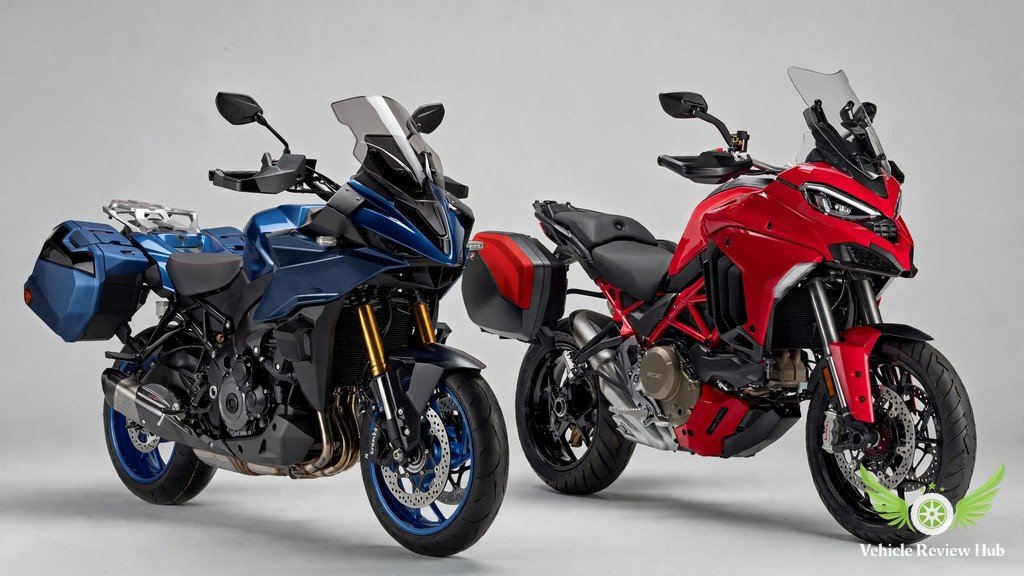
The Multistrada V4 S is the premium benchmark in this Suzuki GSX-S1000GX+ comparison — the most advanced bike here, and by far the most expensive at $29,995 against the GX+’s $18,749, a gap of $11,246 on 2026 MSRP. The question is not whether the Ducati is better equipped — it is — but whether its extras are worth eleven thousand dollars to a road rider.
Engine, Specs and Performance Side by Side
The V4 S runs a 1,158cc V4 Granturismo making a claimed 170 hp at 10,750 rpm and 91 lb-ft at 9,000 rpm — 20 hp and 13 lb-ft more than the GX+’s claim — with a 37,000-mile valve interval, the longest in the class, against the GX+’s 15,000-mile check. The electronics gap is the real story: the V4 S has radar standard — adaptive cruise control, forward collision warning and blind spot detection — plus Skyhook suspension with bump detection, an automatic lowering device, five riding modes, four power modes and a 6.5-inch TFT with navigation. The GX+ has no radar and no auto-lowering; its electronics are SAES semi-active suspension, a six-axis IMU, cornering ABS and seven-level traction control plus off. The V4 S is a true adventure-tourer with a 19-inch front wheel, 220 mm of ground clearance and an adjustable 840–860 mm seat, while the GX+ is a road crossover with 17-inch wheels and a 33.3-inch seat. The V4 S suits riders who want genuine adventure capability; the GX+ suits riders who want a road bike with adventure ergonomics, and that split decides this pairing. The motorcycle.com Multistrada V4 S specifications list the 170 hp figure, the 124 Nm torque and the $29,995 price.
Price, Equipment and Which Suits Which Rider
The V4 S costs $29,995 plus a $1,295 destination charge, $31,290 in total, against the GX+’s $18,749 MSRP in this Suzuki GSX-S1000GX+ comparison — an $11,246 gap on MSRP, and $11,591 on the 2027 GX+ total of $19,699. The V4 S buyer pays for the V4, the radar, the Skyhook suspension and the Ducati badge; the GX+ buyer gets roughly 90 percent of the road performance for roughly 60 percent of the money. The V4 S also carries a 24-month warranty, and its 37,000-mile valve interval means far fewer dealer visits than the GX+’s 15,000-mile check. For a rider who tours on tarmac and never leaves it, this Suzuki GSX-S1000GX+ comparison finds the GX+ the better buy; for a rider who wants radar cruise, genuine off-tarmac reach and the longest service intervals in the class, the V4 S earns its premium. The GX comparison tests the same bike under its shorter name, since the engine, chassis and suspension are identical with or without the plus sign.
Suzuki GSX-S1000GX+ vs Kawasaki Ninja 1100SX
The Ninja 1100SX is the value pick in this Suzuki GSX-S1000GX+ comparison, and the only rival that undercuts the GX+ on price: $13,999 plus $840, $14,839 in total, against the GX+’s $18,749 MSRP — a $4,750 gap. The Ninja is the cheaper bike; the GX+ is the better-equipped one.

Engine, Specs and Performance Side by Side
The Ninja’s 1,099cc inline-four makes a claimed 134 hp at 9,000 rpm in this Suzuki GSX-S1000GX+ comparison and 83.2 lb-ft at 7,600 rpm — 16 hp down on the GX+’s claim, but 5.2 lb-ft more torque, and a smoother engine. MCN’s 2025 group test called the Suzuki engine “rough and ready” next to the “ultra-smooth” SX SE — the GX+ shares the GT’s engine, so the same applies here. Both bikes have a six-axis IMU with cornering traction control and ABS; the Ninja adds a remote rear preload adjuster and a height-adjustable screen, while the GX+ counters with SAES semi-active suspension. The Ninja’s dash and rider aids are modern, and its engine is the more refined of the two. The GX+ reliability guide covers the GX+’s service schedule and the SAES inspection-only reality for readers weighing the ownership side of this pairing.
Price, Equipment and Which Suits Which Rider
The price gap is $4,750 on MSRP — $18,749 for the GX+ against $13,999 for the Ninja — and the equipment gap runs the other way: the GX+ comes with its hard cases as standard, while the Ninja’s cases are an add-on. In motorcycle.com’s Showdown the 2023 Ninja’s bags were listed at $922.95 on top of a $13,199 bike — the components only, since their printed total does not match the components. The Ninja is the value pick and the refinement pick; the GX+ is the electronics and luggage pick. In MCN’s 2025 group test, “Practical magic”, the Ninja won on refinement and the Suzuki won on engine character. The Ninja suits the rider who wants the smoothest engine and the lowest price; the GX+ suits the rider who wants semi-active suspension and luggage already fitted.
Suzuki GSX-S1000GX+ Price and Value Compared
On price the GX+ sits in the middle of this Suzuki GSX-S1000GX+ comparison — far above the Ninja, a hair under the XR, and far below the Multistrada. The 2026 GX+ destination charge is not verified, so no 2026 GX+ total is printed here.

New Prices Across the Four Bikes in the USA
The 2026 price ladder on MSRP runs Ninja 1100SX $13,999, then the GX+ at $18,749, then the S 1000 XR at $18,825, then the Multistrada V4 S at $29,995. With destination where verified, the totals run Ninja $14,839, XR $19,820 and V4 S $31,290 — the GX+ total is not printable for 2026. On 2027 totals the GX+ undercuts the XR by only $121: $19,699 ($18,949 + $750) against $19,820. The GX+ sits $4,750 above the Ninja and $11,246 below the V4 S on MSRP, and just $76 under the XR. The Suzuki USA 2027 GX+ page confirms the $18,949 price; its spec table still lists Metallic Triton Blue while the page image and dealers list Glass Sparkle Black — the contradiction, printed honestly, with no second 2027 US colour invented.
| Bike (2026 US) | MSRP | Destination | Total |
|---|---|---|---|
| Kawasaki Ninja 1100SX ABS | $13,999 | $840 | $14,839 |
| Suzuki GSX-S1000GX+ | $18,749 | Not verified | Not printable (2026) |
| BMW S 1000 XR | $18,825 | $995 | $19,820 |
| Ducati Multistrada V4 S | $29,995 | $1,295 | $31,290 |
Running Costs and Resale Value Compared
Fuel is the one running cost with a tested figure in this Suzuki GSX-S1000GX+ comparison: MCN measured the GX+ at 48 mpg imperial on test, about 40 mpg in US gallons, with the fuel light at around 150 miles. No named-test MPG was verified for the Ninja 1100SX, the S 1000 XR or the Multistrada V4 S in this session, so this Suzuki GSX-S1000GX+ comparison prints none for them — the Ninja’s Kawasaki WMTC lab figure of 5.6 L/100 km, about 42 mpg US, is a laboratory number, not a test result. On insurance, no GX+ dataset was found and no equivalent US figures were verified for the three rivals — compare like-for-like quotes. On servicing, the GX+ asks for oil every 3,750 miles and a valve check at 15,000 miles, while the V4 S needs its valves only every 37,000 miles. On resale, no verified US dataset exists for any of the four — the only adjacent figure is the TopSpeed-reported leftover 2024 GX+ advertised from $12,899, dealer advertising, not an MSRP or a resale value. Motorcycle.com scored the Portugal launch ride 88.5 percent overall, with the engine at 19 out of 20.
Suzuki GSX-S1000GX+ Comparison Verdict and US Alternatives
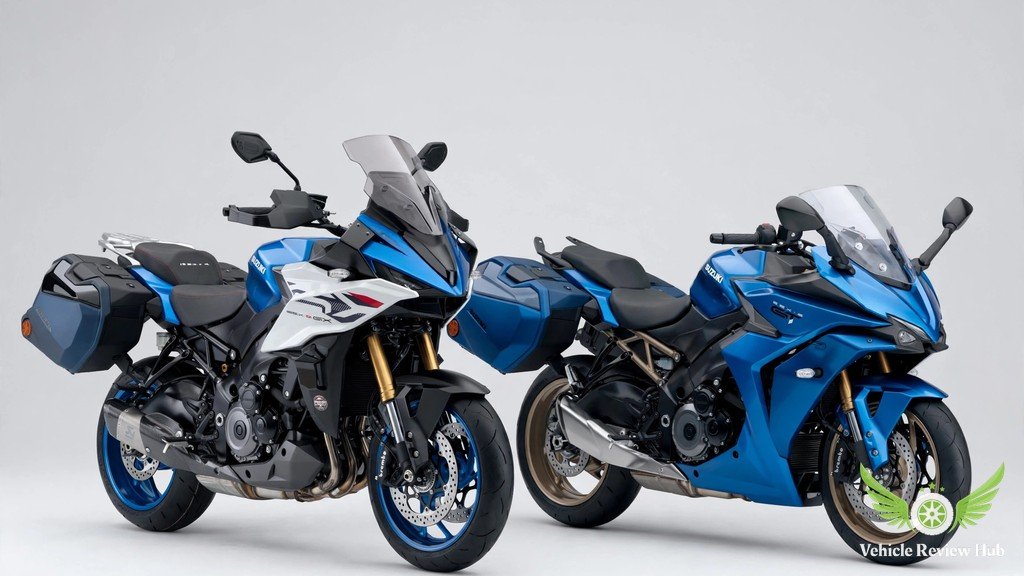
The verdict in this Suzuki GSX-S1000GX+ comparison is that the GX+ is the best-equipped bike for the money in its class: it matches the XR’s formula, undercuts the V4 S by eleven thousand dollars, and beats the Ninja on equipment while losing to it on price and refinement.
The S 1000 XR Matches the Formula, Costs More Equipped
The XR is the closest rival overall: same 999cc formula, same tall stance, same semi-active suspension idea — plus 20 hp, a 155 mph top speed and a longer warranty. But the XR costs more equipped in this Suzuki GSX-S1000GX+ comparison: TopSpeed’s estimate puts an XR with the Dynamic Package’s electronic suspension, cruise control and quickshifter plus the Touring Package’s luggage, hand protection and grab rails at around $24,000 — against the GX+’s 2027 total of $19,699 with the cases, centrestand, SAES suspension, cruise control and quickshifter all standard. Bennetts rated the GX 3 out of 5 and called it “composed and competent” — the fairest summary of the GX+ against the XR: the XR is the faster execution of the same idea, and the GX+ arrives fully equipped for thousands less. The Bennetts GX review is the source for the 3-out-of-5 verdict. The 1000PS long-term test covered 9,200 km with a 4.5-out-of-5 verdict.
Also Consider: the GT+ and the Base Tracer 9
Inside Suzuki’s own range, the GSX-S1000GT+ is the alternative in this Suzuki GSX-S1000GX+ comparison that saves thousands for the same engine: the 2026 GT+ costs $14,399 plus $700, $15,099 in total, and the 2027 GT+ is $14,599 plus $750, $15,349 — so the GT+ buyer saves $4,350 against the 2026 GX+ MSRP and $4,350 against the 2027 GX+ total, the same $4,350 twice. The GT+ gives up the SAES suspension, the IMU, the cornering ABS, the taller stance and the centrestand, and it runs a fixed windscreen where the GX+’s is adjustable — but it keeps the same 999cc engine and tune, with a lower 31.9-inch seat and a lighter 518 lb. The GT comparison tests the GT+ against its own rivals for readers weighing the in-family saving. The Yamaha base Tracer 9 is the budget alternative at $12,599 plus $700, $13,299, with its 890cc triple making 117 hp and hard cases standard — the Tracer 9 GT+ is Euro-only and is not sold in the US. A used KTM 1290 Super Duke GT is the last alternative: it ended in the US after 2024, and the 1390 was not brought to North America for 2025, so a used 2023–2024 GT is the only way in now. The Honda NT1100 and the Honda CB1000GT are not sold in the US and are not US alternatives. Heated grips are an accessory on the GX+, not standard, and the windscreen bolts are a small unresolved conflict — Visordown says three, motorcycle.com, Rider and MCN say four — so this Suzuki GSX-S1000GX+ comparison prints both counts and picks neither.
Suzuki GSX-S1000GX+ Comparison: Frequently Asked Questions
Direct answers to the questions riders ask about the Suzuki GSX-S1000GX+ comparison.
Which is better, the Suzuki GSX-S1000GX+ or the BMW S 1000 XR?
The XR is the faster, more powerful bike — 170 hp against 150 hp, 155 mph against a GPS-capped 132.92 mph — but the GX+ arrives fully equipped for thousands less.
Is the S 1000 XR worth more than the GSX-S1000GX+?
On base price the two are $76 apart on MSRP, so the XR is not worth more as a base bike. Equipped, TopSpeed estimates an XR with the Dynamic and Touring packages at around $24,000 against the GX+’s 2027 total of $19,699 with everything standard.
Which is faster, the GSX-S1000GX+ or the S 1000 XR?
The XR. Its top speed is 155 mph in this Suzuki GSX-S1000GX+ comparison, while MCN measured the GX+ at 132.92 mph by GPS because the bike is electronically restricted. The GX+’s 0–60 time is 3.10 seconds and its quarter-mile is 10.88 seconds at 129.99 mph, both MCN UK figures.
Is the Ducati Multistrada V4 S worth $11,000 more than the GSX-S1000GX+?
It is worth it for riders who want radar cruise, genuine adventure capability and a 37,000-mile valve interval. For a rider who tours on tarmac, the GX+ is the better buy — roughly 90 percent of the road performance for roughly 60 percent of the money.
Does the Multistrada V4 S have radar and the GX+ does not?
Yes. Radar — adaptive cruise control, forward collision warning and blind spot detection — is standard on the V4 S in this Suzuki GSX-S1000GX+ comparison. The GX+ has no radar and no auto-lowering device.
Which is better for touring, the GSX-S1000GX+ or the Ninja 1100SX?
The GX+ is the better touring bike on equipment: SAES semi-active suspension and hard cases as standard. The Ninja wins on refinement and price in this Suzuki GSX-S1000GX+ comparison: a smoother engine and a $4,750 lower MSRP.
Is the Ninja 1100SX cheaper than the GSX-S1000GX+?
Yes — $13,999 plus $840, $14,839 in total, against the GX+’s $18,749 MSRP, a $4,750 gap on MSRP in this Suzuki GSX-S1000GX+ comparison. The Ninja’s cases are an add-on, while the GX+’s are standard.
Which of the four bikes is cheapest to buy in the USA?
The Kawasaki Ninja 1100SX, at $13,999 MSRP and $14,839 in total in this Suzuki GSX-S1000GX+ comparison. Next comes the GX+ at $18,749 MSRP, then the S 1000 XR at $18,825 MSRP, then the Multistrada V4 S at $29,995 MSRP.
Does the GSX-S1000GX+ come with luggage while the Ninja does not?
Yes. The GX+ comes with its hard side cases as standard in this Suzuki GSX-S1000GX+ comparison, while the Ninja 1100SX’s cases are an add-on. The GX+ also has a centrestand as standard, which the GT+ does not offer.
What is the closest rival to the GSX-S1000GX+ overall?
The BMW S 1000 XR — the same 999cc inline-four formula, the same tall crossover stance, the same semi-active suspension idea, and a base price just $76 above the GX+ on MSRP. The XR is the GX+’s closest rival in this Suzuki GSX-S1000GX+ comparison.
Should I buy a GSX-S1000GX+ or save thousands on the GT+?
Buy the GT+ for the same engine for less money: it saves $4,350 against the GX+ on both the 2026 MSRP and the 2027 totals. Buy the GX+ for the SAES suspension, the IMU, the cornering ABS, the taller stance and the centrestand — the GT+ has none of those.
Is the Yamaha Tracer 9 GT+ sold in the USA?
No. The Tracer 9 GT+ is Euro-only. The US gets the base Tracer 9 only, at $12,599 plus $700, $13,299, with hard cases standard — the budget alternative in this Suzuki GSX-S1000GX+ comparison.