The 2027 Suzuki GSX-R1000R is a reliable litre superbike with one important qualification: it is a heavily revised version of the 2017 platform, not a clean-sheet new generation, so its reliability record is really the L7 bike’s record, stretched over nine model years. No R-specific chronic defect was ever documented, only two recalls can apply to the R — both 2017–2018 campaigns a VIN check settles in minutes — and the valve check at 14,500 miles is the one expensive service on the chart. This Suzuki GSX-R1000R reliability guide works through the owner evidence, the service schedule, the wear items track use creates, both recalls, and what the bike costs to keep on the road.
Suzuki GSX-R1000R Reliability Overview
The honest version of Suzuki GSX-R1000R reliability starts with what the evidence can and cannot prove. The R has been on sale since 2017, and Suzuki’s warranty is a twelve-month unlimited-mileage limited warranty. But the owner evidence is thin — eight owners on MCN — and there is no long-term fleet test of the 2027 bike yet.

MCN UK Owners: 4.2 Overall From Eight Owners
MCN’s owner ratings for the 2017–2022 GSX-R1000R come from just eight owners: overall 4.2 out of 5, engine 4.8, ride quality and brakes 4.4, value against rivals 4.4, equipment 4.6, and reliability and build quality 3.8 out of 5, with annual servicing cost listed at £280. The base GSX-R1000 scores higher — 4.7 overall and 4.7 for reliability — but that rests on only three owners, the less reliable of the two samples, so neither number should be quoted without the sample size attached. MCN’s own reliability text is vague — “some reliability issues with the engine and also thin paint” — and no specific engine defect is named anywhere. Individual owners repeat the thin-paint complaint, and one 2018 owner adds that the brakes are poor when standard — the 2019 R gained braided lines as standard. Do not mix MCN’s expert scores with the owner scores. The Suzuki GSX-R1000R review covers the price and specification behind these ratings.
How Mileage, Storage and Previous Care Affect Reliability
With a bike like the R, the previous owner’s habits matter more than the model year. A low-mileage bike that sat unridden for two years can be a worse buy than a higher-mileage bike with a full service history, because seals dry out, brake fluid absorbs moisture, fuel goes stale, and a flat battery can mask electrical faults. The chart has time-based items too — brake fluid every two years, brake hoses and coolant every four — so a low-mileage bike still needs those done. Check the service book for the 600-mile first service, the 7,500-mile plug change and the 14,500-mile valve inspection, and look for receipts, not stamps alone. A bike kept in a dry garage ages far better than one left outdoors under a cover, where condensation attacks the fasteners and the thin paint. The most useful check on any used R is a cold start: listen for cam-chain rattle, watch for smoke on warm-up, and confirm the dash shows no fault codes. Previous care also shows in the tyres and chain: a squared-off rear tyre and a dry, tight chain usually mean the bike was ridden hard and maintained late.
Suzuki GSX-R1000R Common Problems and Wear Items
The R has no headline defect that defines it the way some superbikes do. There is no R-specific chronic failure in the recall record and no proven cam-chain defect. What the R does have is a set of wear items that track use accelerates sharply, and a handful of owner complaints worth checking on any used bike.

No R-Specific Chronic Defect Was Documented
No R-specific chronic defect was documented in the recall record, in MCN’s owner material, or in the owner-forum material the brief’s research searched. That is meaningful for a bike on sale since 2017, but it is not a clean bill of health. Neither regulator recall covers the GSX-R1000 at all, and no L7 stator or regulator failure pattern was found. The cam chain is unproven as a weak point: the aftermarket tensioner that surfaces in searches fits only the 2009–2016 bike, not the L7, and no L7 cam-chain defect was documented — listen for a rattle at cold startup, but do not budget for a tensioner. One NHTSA complaint (ID 11360694, a 2018 bike at 2,200 miles) alleges low battery voltage disabled the ABS and stability management and caused a rear-wheel lock-up — one complaint, not a pattern. A 2025 proposed California class action alleges master-cylinder corrosion across 2005–2025 GSX-R1000s, but that is an allegation, not a finding, and the L7 master cylinder is the redesigned post-13V449 part. Thin paint recurs in owner reviews, so check the tank and fairing edges on a used bike.
Track Use Is the Biggest Wear Factor
Track use is the biggest wear factor on the R, and MCN’s own long-term 2017 GSX-R1000R provides the direct evidence. After 11,000 miles, four sets of tyres, a new chain and sprockets, two oil and filter changes and six track days, the bike was returned. The same MCN material adds that “the standard tyres aren’t up to hard track work” and that the brakes show “a little bit of feel missing and some fade after a handful of hard laps.” None of this makes the R fragile — it converts track days into consumables at a predictable rate. Budget for rubber first, then chain and sprockets, then brake pads and fluid. The Suzuki GSX-R1000R performance guide covers the dyno figures and the shootout results behind the bike’s track reputation.
Suzuki GSX-R1000R Maintenance Schedule and Servicing
The R shares the L7 service chart with the base GSX-R1000 — there is no R-specific schedule. The columns run 600, 4,000, 7,500, 11,000 and 14,500 miles, with oil replaced at every column, the filter replaced at 600, 7,500 and 14,500 miles, and the valve clearance inspected only at 14,500 miles.
The video below is an oil-and-filter change how-to on a 2017 GSX-R1000R, not a full service guide. It covers fairing removal, warming the engine, draining the oil, replacing the filter and refilling.
Oil Around Every 4,000 Miles, Shared Chart
Oil is replaced at every column of the chart — 600, 4,000, 7,500, 11,000 and 14,500 miles — roughly every 3,500 to 4,000 miles after the 600-mile first service. The filter is replaced only at 600, 7,500 and 14,500 miles, so the 4,000- and 11,000-mile services are oil-only changes. That filter pattern differs from the smaller GSX-R models, which replace the filter at 600 and 11,000. Suzuki specifies SAE 10W-40 or 10W-50 oil, and the filter part number is 16510-07J00. The chain is cleaned and lubricated every 600 miles, with 20 to 30 mm of slack. The full chart is below, from the L7 owner’s manual as transcribed by MaintenanceSchedule.
| Item | 600 mi | 4,000 mi | 7,500 mi | 11,000 mi | 14,500 mi |
|---|---|---|---|---|---|
| Engine oil | R | R | R | R | R |
| Engine oil filter | R | – | R | – | R |
| Spark plugs (NGK CR9EIA-9) | I | – | R | – | R |
| Valve clearance | – | – | – | – | I |
| Engine coolant | – | – | – | – | R |
| Brake fluid (DOT 4) | – | I | I | I | I |
| Brake hoses | – | I | I | I | I |
| Front forks | – | – | I | – | I |
| Rear suspension | – | – | I | – | I |
R means replace, I means inspect. Coolant is replaced every four years or 48,000 km, brake fluid every two years, and brake hoses every four years, regardless of mileage.
Valve Inspection Every 14,500 Miles
The valve clearance inspection falls due only at 14,500 miles — every 24,000 km — and it is the one service on the chart that needs real workshop time. The tank, airbox and cam cover come off, the clearances are measured cold, and any shim out of tolerance is replaced. There is no radiator step in the factory procedure. The L7 valve-clearance figures were not verified in the brief’s research, so they are not printed here — a dealer or the service manual is the source, not a forum post. Budget for the 14,500-mile service as the most expensive routine visit the bike will ever need.
Suzuki GSX-R1000R Tires, Brakes and Suspension Maintenance
Tyres, brakes and suspension are where the R’s running costs concentrate. The tyres are Bridgestone Racing Street RS11s, 120/70ZR17 front and 190/55ZR17 rear, and the brakes are Brembo Monobloc radial calipers on 320 mm T-drive floating rotors with gold-anodized carriers and stainless-steel lines, plus a Nissin single-piston rear caliper.
Plugs Replaced at 7,500 Miles
The spark plugs are NGK CR9EIA-9 iridium plugs, inspected at the 600-mile first service and replaced at 7,500 and 14,500 miles. A Denso IU27D is listed as an alternative. The 7,500-mile plug change is the natural moment to check the air filter. Do not stretch the interval: a worn plug on a 13.8:1 engine shows up first as a rough idle and a flat spot in the mid-range.
BFF and BFRC-Lite Service: No US Cost Data
There is no published US cost for servicing the R’s BFF fork or BFRC-Lite shock, and no R-specific service interval beyond the inspect-only entries in the chart — forks and rear suspension are inspected at 7,500 and 14,500 miles, with no fork-oil change or shock rebuild interval in the owner’s manual. Check for fork-seal leaks, smooth travel and a straight steering head at every service, and treat any weeping seal as a job for now. The only dollar figures found are generic — a US suspension specialist’s flat pricing of $300 for a fork overhaul and $280 for a shock overhaul, including seals and oil. That is a ballpark for budgeting, not a Suzuki dealer price and not an R-specific quote. The BFF fork and BFRC-Lite shock are fully adjustable by hand, with no electronic adjustment, so wrong-feeling damping is almost always oil age, a worn seal or a setup never matched to the rider’s weight. The Suzuki GSX-R1000R comparison covers what the suspension buys against the base bike and the wider litre-bike field.
Suzuki GSX-R1000R Maintenance and Ownership Costs
Ownership costs for the R split into three buckets: fuel and routine servicing; tyres and replacement parts, where track use shows up; and the two recalls, which cost the owner nothing when the work was done under the campaign.
Fuel, Routine Servicing, Tires and Replacement Parts
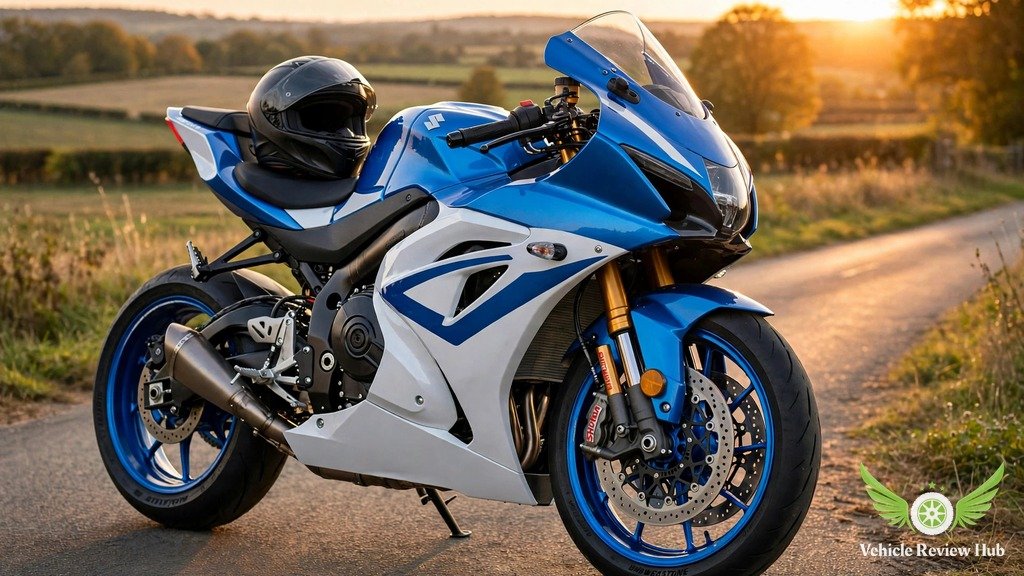
Fuel is the smallest surprise in the R’s running costs. There is no tested MPG figure for the R from any named US outlet, and Suzuki publishes no MPG figure, so the honest range comes from the base bike’s observed 36.7 mpg in Motorcycle.com’s 2017 street shootout — labelled as the base bike’s, not the R’s — and the European combined figure of 6.2 L/100 km, about 37.9 US mpg, for the 2017–2022 R. With a 4.2-US-gallon tank, practical range is roughly 150 to 160 miles of hard use. MCN lists the R’s annual servicing cost at £280, against £100 for the base — a UK figure from a thin sample. Tyres are the big variable: MCN’s long-term R went through four sets in 11,000 miles with six track days, so a buyer planning track days should budget for rubber first. Chain and sprockets follow the same pattern — the same bike needed a new set within 11,000 miles — and the chart calls for cleaning and lubrication every 600 miles with 20 to 30 mm of slack. The 2027 bike costs $17,939 before destination, or $18,689 delivered — $710 cheaper than the 2025 R at $18,649; the $18,299 figure that circulates for the 2025 bike was the 2023 price.
| Item | Cost / interval | Notes |
|---|---|---|
| Fuel (per tank) | Roughly 150–160 miles of hard use | 4.2-gal tank; no tested R MPG exists |
| Engine oil + filter | Oil every 3,500–4,000 mi; filter at 600, 7,500 and 14,500 mi | SAE 10W-40/10W-50; filter part 16510-07J00 |
| Spark plugs | Every 7,500 mi | NGK CR9EIA-9; Denso IU27D alternative |
| Tyres (set) | 4 sets in 11,000 mi with six track days | Bridgestone RS11; road use lasts longer |
| Chain + sprockets | New set within 11,000 mi (track use) | Clean and lubricate every 600 mi; slack 20–30 mm |
| Valve inspection | 14,500 mi | Most expensive routine service; no US price found |
| Annual servicing (MCN owners) | £280 (R) vs £100 (base) | UK figures; thin samples (8 vs 3 owners) |
Only Two Recalls Can Apply to the R
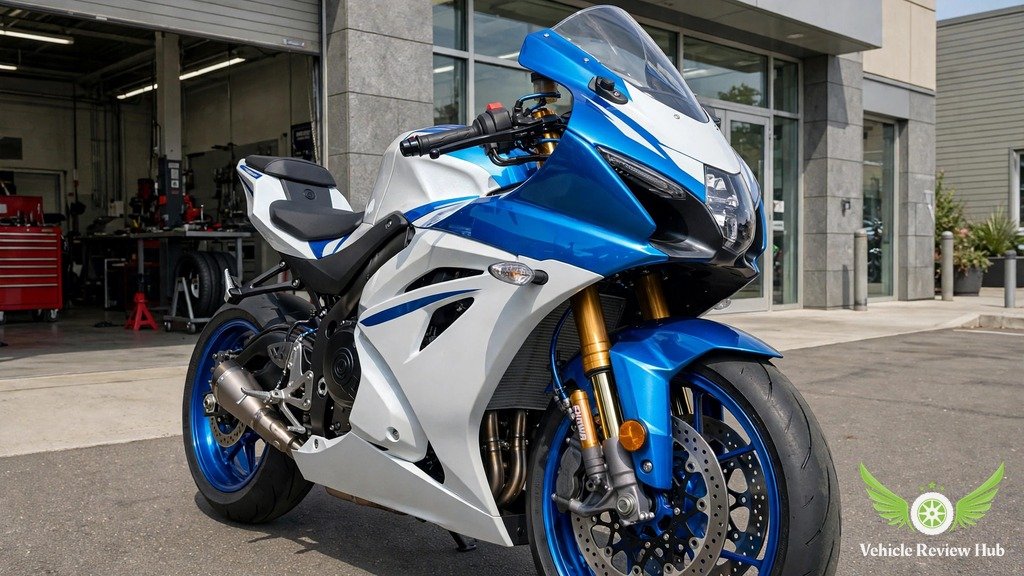
Only two recalls can apply to the R, both 2017–2018 campaigns; the earlier four campaigns that cover the base bike all predate the R, introduced as a 2017 model. The first is 18V064, an ECM fault: a missed upshift from first to second can leave the gearbox in a false neutral, and continued throttle opening can spin the engine to very high RPM, stretching or breaking the drive chain. The remedy is a replacement ECM programmed to prevent the very high RPM, plus an inspection of the drive chain and sprockets, replaced if stretched. It covers 3,097 bikes in total, of which the R accounts for 1,150 — 762 from 2017 and 388 from 2018. The second is 18V694, a fuel-pump O-ring that may have been twisted during installation, reducing the seal and possibly causing a fuel leak, with a fire risk if fuel meets an ignition source. It covers 6,928 bikes across five models, including the GSX-R1000R by name, but the US per-model split was never published, so no R-only count should be printed. The dealer remedy is a fuel-pump O-ring set replacement, not the “inner vessel” wording in NHTSA’s summary letter. Both campaigns began in 2018; 2019–2022 R bikes have no applicable US recall. The full picture is in the table.
| Campaign | Issue | R coverage | Units |
|---|---|---|---|
| 18V064 (Suzuki 2A76–2A81) | ECM fault — missed 1st to 2nd upshift, very high RPM, drive-chain stretch or break | Yes — 2017–2018 R | 3,097 total; R = 1,150 (2017: 762; 2018: 388) |
| 18V694 (Suzuki 2A86–2A88) | Fuel-pump O-ring twisted during installation — possible fuel leak, fire risk | Yes — 2017–2018 R | 6,928 combined, five models; US per-model split unknown |
| 09V022 (Suzuki 2A08) | Frame cracking or breakage | No — 2005–2006 only | 26,082 |
| 12V231 (Suzuki 2A29) | Side-stand interlock switch bolts loosen | No — 2009–2011 only | 4,969 |
| 13V449 (Suzuki 2A31–2A36) | Front brake master-cylinder corrosion | No — 2005–2013 only | 210,228 all models (oemdtc says 208,966 — conflict, NHTSA figure preferred) |
| 14V629 (Suzuki 2A40–2A43) | Left-side drive-chain adjuster | No — 2009–2014 only | 23,073 combined, GSX-R750 + GSX-R1000; split unknown |
The frame campaign appears in some listings as two campaigns, 08V-022 and 09V022, but it is one campaign counted twice — NHTSA’s own acknowledgement letter carries both numbers for the same 26,082-bike, 2005–2006 frame campaign. That double-count is why the base bike is sometimes said to have seven recalls when it has six. For the R, the count is two. The recall documents are public: the 18V064 Part 573 report gives the R’s 1,150-bike count, and the 18V694 acknowledgement letter names the GSX-R1000R explicitly.
How to Keep a Suzuki GSX-R1000R Reliable
Keeping an R reliable is mostly a matter of following the chart, keeping records, and inspecting the wear items before they become repairs. The R’s weak points are consumables, not chronic failures.

Preventive Maintenance, Records and Regular Inspections
Preventive maintenance on the R means three habits. First, follow the chart: oil at every column, filter at 600, 7,500 and 14,500 miles, plugs at 7,500 and 14,500, valve inspection at 14,500, and the time-based items — brake fluid every two years, brake hoses every four, coolant every four years — even on a low-mileage bike. Second, keep records: a folder of receipts is worth real money at resale. Third, inspect between services: chain slack 20 to 30 mm, lubricated every 600 miles, fork seals, pad thickness, fluid colour, and a cold-start listen for cam-chain rattle. The LCD dash will show fault codes — do not ignore a warning light and keep riding. The base bike’s schedule is identical, so the GSX-R1000 reliability guide is a useful cross-check.
2017-18 Bikes: Check Both Campaigns by VIN
Both recalls cover only certain 2017–2018 bikes, within specific production-date windows, so a VIN check is the only way to confirm whether a particular bike was included and whether the work was done. For 18V064, the R windows are March 10 to September 15, 2017 and September 14 to December 1, 2017. Suzuki’s recall lookup is at suzukicycles.com/recalls, and NHTSA’s is at nhtsa.gov/recalls — both free, and either settles the question in under a minute. Ask the seller for the recall paperwork: both jobs are free campaign work, and a bike that never had them done carries an outstanding safety item. A 2019–2022 R has no applicable US recall, so a VIN check on those years should come back clean. The Suzuki GSX-R1000R product page lists the current bike’s specification and warranty.
Suzuki GSX-R1000R Reliability: Frequently Asked Questions
Direct answers to the questions riders ask about Suzuki GSX-R1000R reliability, maintenance and ownership costs.
Is the Suzuki GSX-R1000R reliable?
Yes, within the limits of the evidence. No R-specific chronic defect was documented, and only two recalls can apply to the R. MCN’s eight owners rate the R 4.2 overall and 3.8 for reliability and build quality — a thin sample, so treat the scores as indicative rather than definitive.
How many recalls apply to the GSX-R1000R?
Only two recalls can apply to the R: 18V064, the ECM fault, and 18V694, the fuel-pump O-ring. Both cover only certain 2017–2018 bikes. The earlier four campaigns all predate the R. 2019–2022 R bikes have no applicable US recall.
What does the 18V064 ECM recall cover?
A missed upshift from first to second gear can leave the gearbox in a false neutral, and continued throttle opening can spin the engine to very high RPM, stretching or breaking the drive chain. The remedy is a replacement ECM plus a chain and sprocket inspection, replaced if stretched. It covers 3,097 bikes in total, of which the R accounts for 1,150.
What does the 18V694 fuel-pump recall cover?
A fuel-pump O-ring that may have been twisted during installation, reducing the seal and possibly causing a fuel leak, with a fire risk if fuel meets an ignition source. It covers 6,928 bikes across five models, including the GSX-R1000R by name. The US per-model split was never published.
How often does the GSX-R1000R need an oil change?
Oil is replaced at every column of the chart — 600, 4,000, 7,500, 11,000 and 14,500 miles — roughly every 3,500 to 4,000 miles after the first service. The filter is replaced only at 600, 7,500 and 14,500 miles.
When is the valve clearance check due?
At 14,500 miles only, every 24,000 km. The tank, airbox and cam cover come off for the check, and there is no radiator step in the factory procedure. It is the most expensive routine service on the chart.
When are the spark plugs replaced?
NGK CR9EIA-9 iridium plugs are inspected at 600 miles and replaced at 7,500 and 14,500 miles. A Denso IU27D is listed as an alternative.
How much does a valve service cost?
No US dealer price for the R’s valve service was found in the brief’s research, so no figure is printed here. The same applies to BFF fork and BFRC-Lite shock servicing — no US cost data exists. A generic US specialist’s flat pricing of $300 for a fork overhaul and $280 for a shock overhaul is the only ballpark available, and it is not R-specific.
Does the GSX-R1000R have a cam-chain problem?
No R-specific cam-chain defect was documented. The aftermarket tensioner that surfaces in searches fits only the 2009–2016 GSX-R1000, not the L7 bike. Treat the cam chain as unproven, and listen for a rattle on cold starts.
What wears out fastest on the GSX-R1000R?
Tyres, then chain and sprockets, then brake pads and fluid. MCN’s long-term R went through four sets of tyres and a new chain and sprockets in 11,000 miles with six track days. The standard tyres are not up to hard track work.
What is the warranty on the GSX-R1000R?
A twelve-month unlimited-mileage limited warranty, with longer coverage available through Suzuki Extended Protection.
Should I buy a 2017–2018 GSX-R1000R?
Yes, with a VIN check first. Both recalls cover only certain 2017–2018 bikes, so check the VIN at suzukicycles.com/recalls or nhtsa.gov/recalls and ask for the recall paperwork. A 2019–2022 R has no applicable US recall. Also check the 14,500-mile valve service and the chain and sprockets.