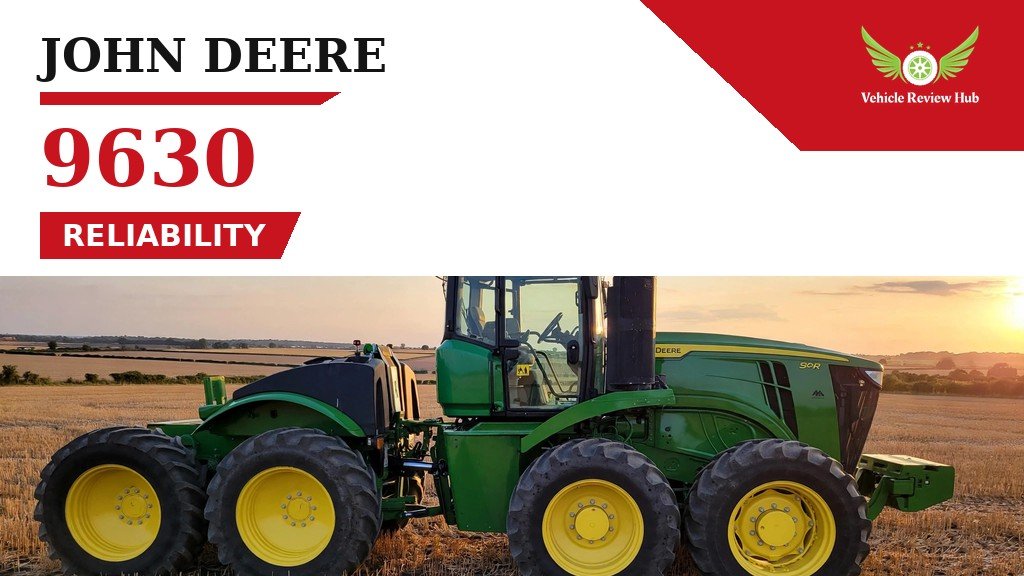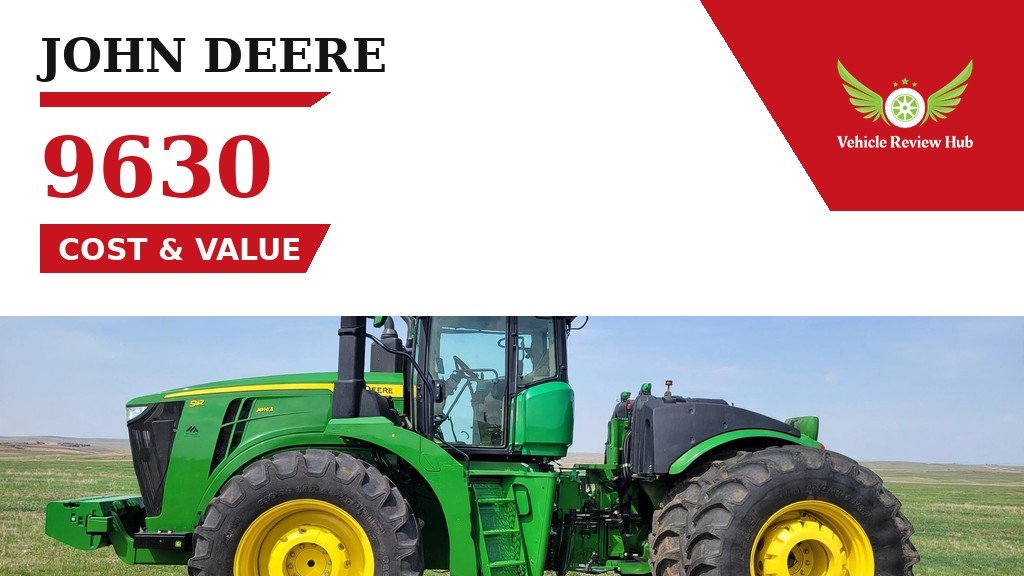
A John Deere 9630 is not a tractor you buy on horsepower alone. At 530 horsepower, with a 350-gallon tank and ballast past 54,000 pounds, it is serious tillage capacity — and the purchase price is only the first line of the bill. The real question behind John Deere 9630 ownership cost is what the machine costs to run, keep, and sell over five or ten hard seasons.
This guide covers John Deere 9630 ownership cost in full: running costs, used prices, parts supply, repair history, and a buying checklist for judging a specific machine. Listed figures are stated as such, and estimates are labeled, because John Deere 9630 ownership cost varies with hours, condition, and workload. The machine here is the wheeled, articulated four-wheel-drive tractor built in Waterloo, Iowa, from 2007 to 2011, as described in Deere’s 2007 announcement of the 9030 Series. The tracked 9630T is different; never price the two as the same machine.
John Deere 9630 Total Cost of Ownership
John Deere 9630 ownership cost has four parts: fuel, routine maintenance, major repairs and tires, and downtime. Fuel is the largest and most predictable. Major repairs and tires are lumpy. Downtime is the part of John Deere 9630 ownership cost most buyers forget, and in a planting window it can cost more than any single repair bill.
Fuel, Routine Maintenance and Annual Operating Expenses
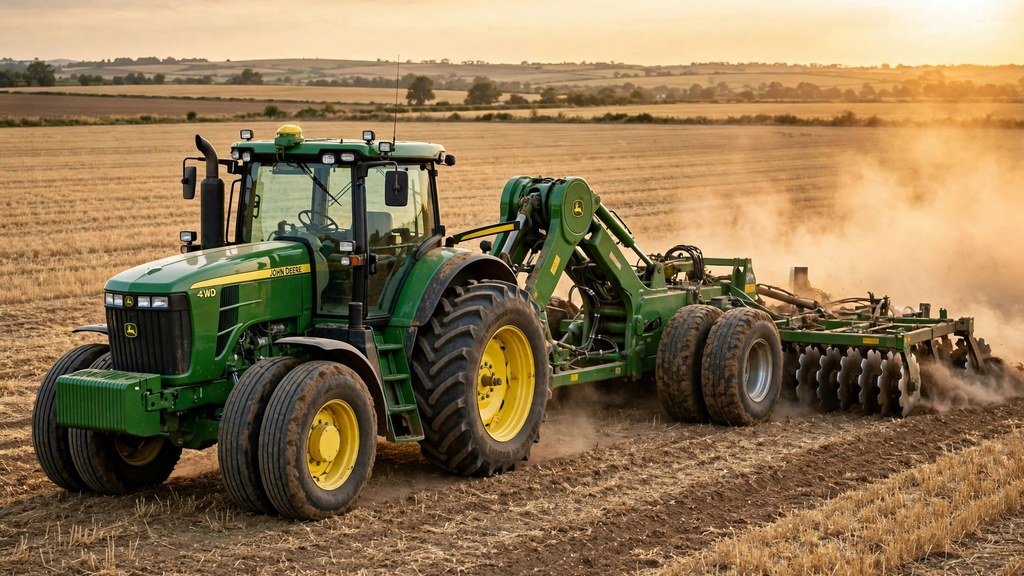
Fuel dominates John Deere 9630 ownership cost. The wheeled 9630 carries a 350-gallon tank and a 13.5-liter PowerTech Plus engine rated at 530 horsepower at 2,100 rpm, with a power bulge to 583 horsepower. A published specification compilation lists drawbar fuel use at 27.8 gallons per hour at full drawbar power — a compilation figure. For planning John Deere 9630 ownership cost, budget 18 to 28 gallons per hour under load, so a 300- to 500-hour season burns roughly 5,500 to 14,000 gallons, putting seasonal fuel at $19,000 to $49,000. That is why John Deere 9630 ownership cost must be calculated per hour, not per year.
Routine maintenance is modest by comparison, and it is where low John Deere 9630 ownership cost is won or lost. The 9030 Series schedule calls for the first engine oil and filter change at 100 hours, then every 250 hours, extendable to 375 hours with Plus-50 oil and a John Deere filter. Fuel filters follow the same rhythm, while axle, transmission, and hydraulic filters are changed at 100 and 750 hours, then every 750 hours. The primary air filter is annual; the cab recirculation filter is cleaned every 250 hours and replaced annually. A dealer-serviced annual routine, a fixed line in John Deere 9630 ownership cost, typically runs $3,500 to $7,000; doing it yourself roughly halves that, though fluids and filters alone still run into four figures.
Put together, a 300- to 500-hour season costs roughly $28,000 to $68,000 of John Deere 9630 ownership cost before any major repair: fuel $19,000 to $49,000, routine service $3,500 to $7,000, and a wear reserve of $5,000 to $12,000. On 3,000-plus acres a season, John Deere 9630 ownership cost stays competitive with custom work; on 800 acres, it rarely does.
Major Repairs, Tire Replacement and Downtime Budget
The repairs that move John Deere 9630 ownership cost are the ones tied to size. The 18-speed Automatic PowerShift is a strong unit, but a clutch-pack or valve-body job on it is a shop job with a five-figure bill. The same applies to the hydraulic pump and to the steering and articulation parts carrying a 37,000-plus-pound tractor. The variable-geometry turbo and EGR system are the other items to price before buying — either failing is a dealer-level repair. Hold $10,000 to $20,000 a year of John Deere 9630 ownership cost in reserve for major repairs on a mid-hour machine.
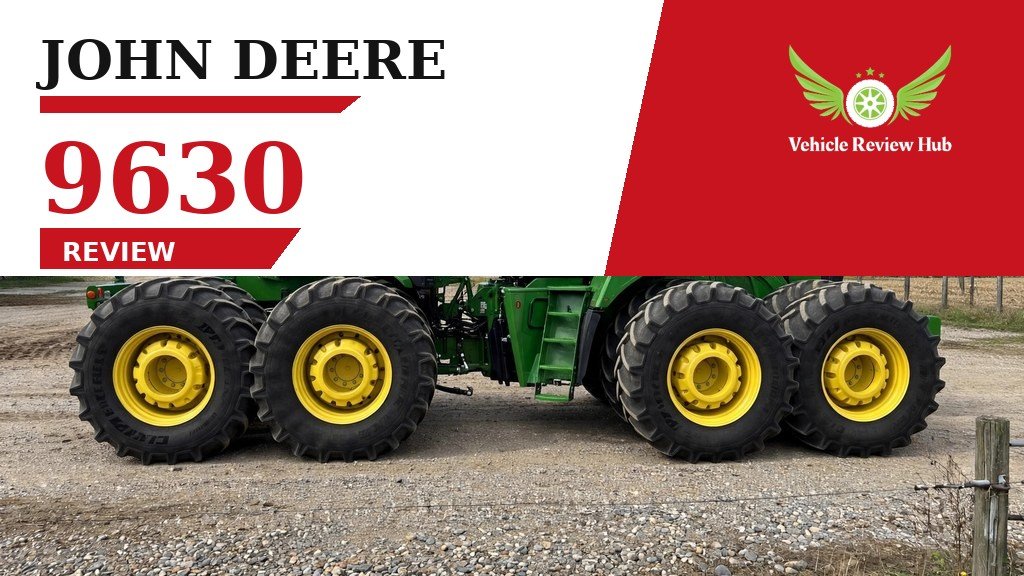
Tires are the most predictable large bill in John Deere 9630 ownership cost and the easiest to miss at purchase. A 9630 on duals runs eight tires, commonly 710/70R38 or 800/70R38, and a single 800/70R38 lists around $3,800 before fitting. A full set of eight, fitted, is a five-figure job, and a widely cited used-tractor inspection guide warns that replacing tires on a large tractor can cost up to $30,000. For planning John Deere 9630 ownership cost, budget $25,000 to $35,000 for a full dual set fitted, and treat any used 9630 with worn or weather-cracked rubber as if that bill were already due.
John Deere 9630 Used Prices and Resale Value
Used 9630 prices reward condition and punish neglect. Production ended in 2011, so buyers price on hours, tire setup, and documented care rather than model year alone. A clean, well-documented 9630 still holds strong money, which is good news for John Deere 9630 ownership cost at resale. The cheapest 9630 on the market is usually the most expensive one to own, and John Deere 9630 ownership cost proves that point within the first year.
How Model Year, Hours, Tire Setup and Condition Affect Price
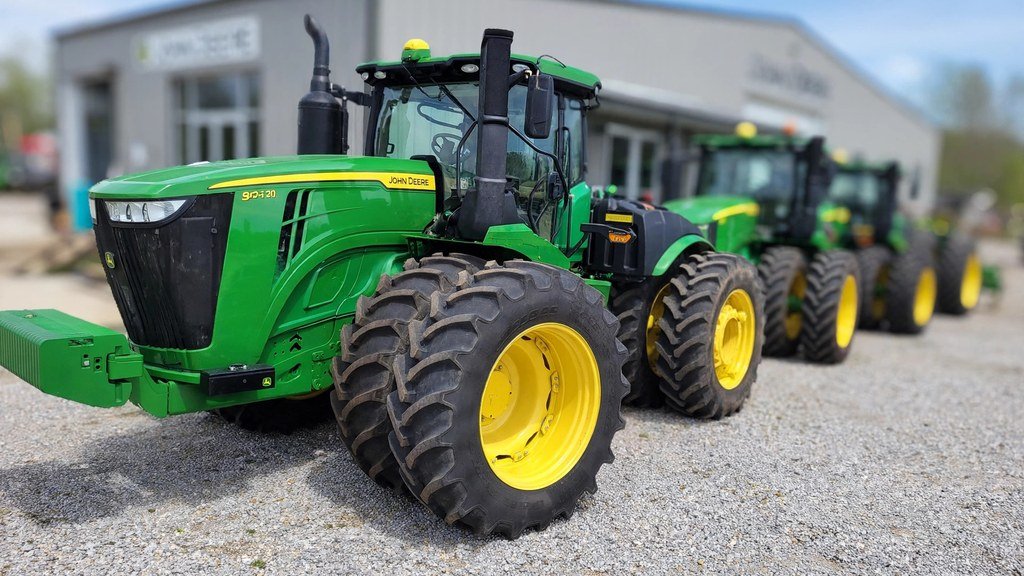
Hours are the first price lever, and John Deere 9630 ownership cost starts with the purchase price they produce. A useful anchor is a real sale: a 2011 John Deere 9630 with 2,988 hours, CommandView cab, active seat, PowerShift, five hydraulics, and Michelin 520/85R46 triples, sold at auction in Reynolds, North Dakota, on July 18, 2024, for $209,000. That late-production, mid-hour, well-equipped machine makes $209,000 a fair reference for a clean mid-hour example. A rough, high-hour machine with worn tires trades far lower, widening the range of John Deere 9630 ownership cost, and the gap between a clean machine and a rough one can exceed the cost of a full tire set.
Tire setup is the second lever, and it cuts both ways for John Deere 9630 ownership cost. Duals are the standard setup and the easiest to price. Triples, like those on the $209,000 auction machine, add flotation for soft ground, but they also add two more tires to the eventual replacement bill. Singles with heavy wheel weights suit road transport and firm ground but sacrifice flotation. Price tires separately when comparing machines, because tires distort John Deere 9630 ownership cost comparisons: 80 percent tread is worth thousands more than 30 percent.
Comparing Dealer Listings, Private Sales and Auction Results
Where you buy changes what you pay and what protection you get. Dealer listings sit at the top, typically 10 to 20 percent above private sales, but usually include inspection, fresh service, and a short warranty or return window. Private sales sit in the middle of John Deere 9630 ownership cost: negotiable price, owner-supplied history, and all inspection risk on the buyer. Auctions can produce the sharpest prices in either direction. Compare channels by pricing the same machine three ways: asking price, plus tires, plus the first-year repair reserve. On that basis, the dearer dealer machine is often cheaper to own for two years, and that comparison is the practical starting point for John Deere 9630 ownership cost.
The bands below are labeled estimates built around the $209,000 auction anchor, not quoted prices.
| Condition and hours | Planning price band | What usually comes with it |
|---|---|---|
| Rough, high-hour (5,000+ hours) | $120,000 – $170,000 | Worn tires, possible leaks; budget tires and a major repair reserve |
| Average, field-ready (2,500–5,000 hours) | $170,000 – $220,000 | Usable tires, straight frame, some records |
| Clean, low-hour (under 2,500 hours) | $220,000 – $280,000+ | Strong tires, full records; premium buys avoided repairs |
| Tracked 9630T equivalent | Priced separately | Track belts drive the big bill; do not compare with wheeled prices |
Resale value follows the same logic in reverse. A 9630 serviced on schedule, kept under cover, and sold with records and good tires will hold its value far better than one sold tired and undocumented. The spread between those two outcomes, a key part of John Deere 9630 ownership cost, is routinely larger than a year’s routine maintenance budget. The cheapest way to protect resale value is the same as the cheapest way to control John Deere 9630 ownership cost: maintain the machine and keep the paperwork.
John Deere 9630 Parts Availability and Ownership Risks
Parts availability is the question every buyer of a 2007–2011 tractor should ask before the price, because a cheap machine with an unobtainable part is not cheap. The 9630 shares its core platform with the 9030 Series, but some items now come through salvage or aftermarket channels. Those risks are manageable, but they need to be priced into John Deere 9630 ownership cost from the start.
Sourcing Engine, Transmission, Hydraulic and Axle Parts
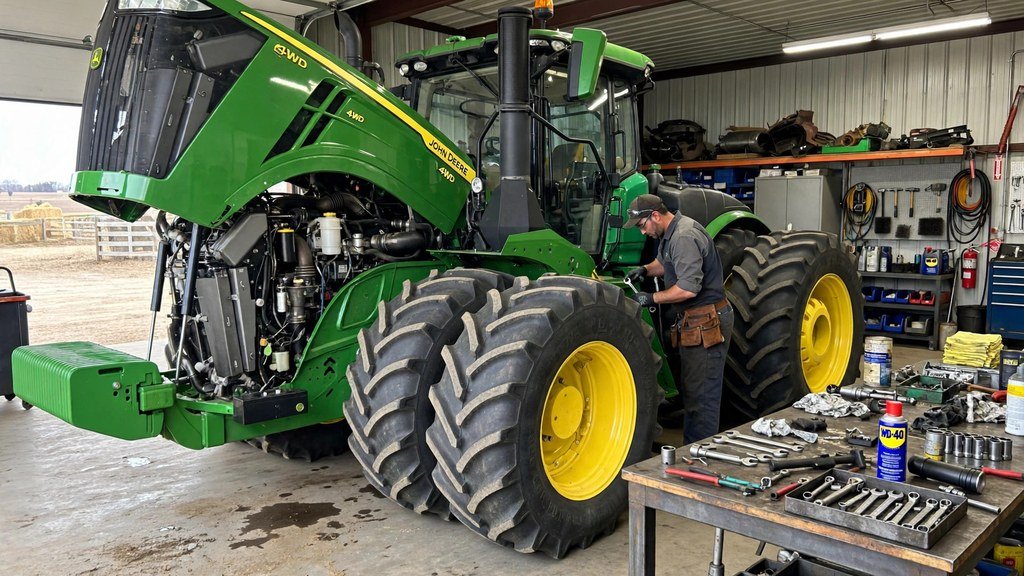
Engine parts for the 13.5-liter PowerTech Plus are generally available through Deere dealers. Filters, injectors, turbo parts, and cooling parts are stocked, and the published filter list for the 9030 wheel tractors is worth confirming with a dealer before purchase. PowerShift parts, a major variable in John Deere 9630 ownership cost, are available but expensive, and some internals are dealer-only items with lead times of days. Hydraulic parts follow the same pattern: pumps, SCV stacks, and hoses are available, but a high-flow 78-gallon-per-minute pump costs more than the standard 48-gallon unit, so confirm which pump the machine has.
Axle and articulation parts are the items to check hardest. The articulation joint, pins, bearings, and steering cylinders carry the tractor’s full weight through every turn; wear shows as wandering steering or a knock on direction changes. Labor is significant, because the tractor must be split or heavily stripped. Cab electronics are the other watch item in John Deere 9630 ownership cost: CommandView controls, the GreenStar display, and any StarFire receiver or AutoTrac activation should be tested in person, because a replacement display or receiver is a four-figure part. Salvage suppliers fill some gaps, but confirm availability with a dealer first.
Evaluating Repair History, Tires and Future Service Needs
A 9630’s repair history tells you more about future John Deere 9630 ownership cost than its hour meter does. Ask for the full service log, dealer work orders, and any records of transmission, hydraulic, or engine work, and be suspicious of a machine with a clean exterior and no paperwork. Ask specifically: PowerShift clutch or valve work, hydraulic pump replacement, turbo or EGR work, and articulation re-pinning. A machine with one major documented repair can be a better buy than the same hours with none, because the bill is already paid. A machine with hydraulic leaks, a weeping articulation joint, and no recent service is telling you where the next $20,000 will go.
Tires and future service needs should be priced on the same visit. Measure tread on all eight tires, the most visible part of John Deere 9630 ownership cost, and check for sidewall cracking and mismatched sizes, and confirm wheel weights and ballast — ballasted weight can reach 54,165 pounds. Then map the next 1,000 hours of service: which filters, fluids, and oil changes fall due. That map lets a buyer negotiate against real, dated items. That discipline is the most practical way to keep John Deere 9630 ownership cost under control in the first year, when most of the surprises arrive.
Buying a Used John Deere 9630
Buying a used 9630 well comes down to two visits: one careful inspection, and one honest test drive. Both happen before money changes hands, with the service schedule and price bands in mind, so every fault found is priced into John Deere 9630 ownership cost.
Pre-Purchase Inspection, Test Drive and Service Records
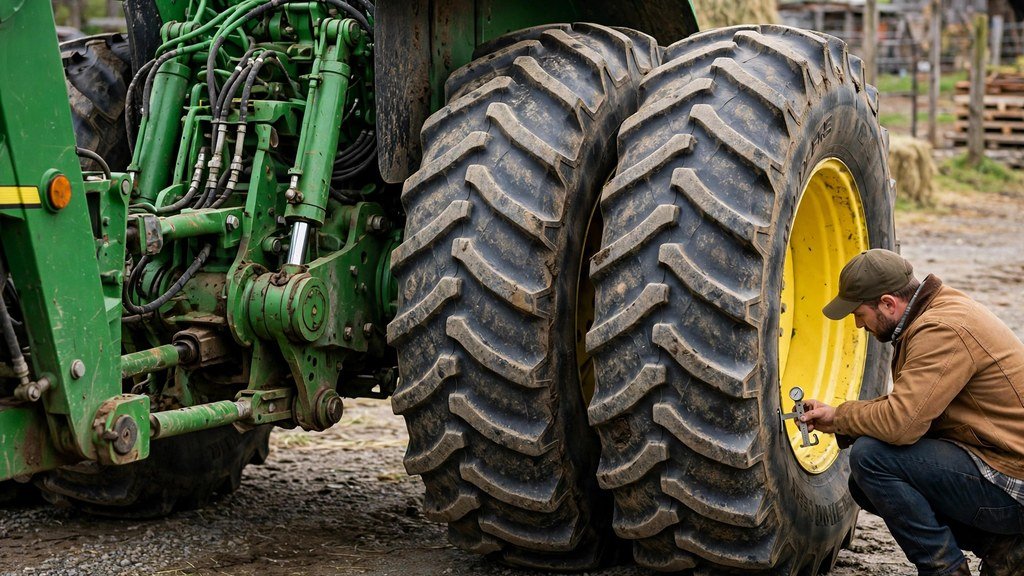
Start the inspection, the first defense of John Deere 9630 ownership cost, at the articulation joint, the most expensive wear point that is easy to check. Look for grease, metal shards, and play, then drive back and forth and listen for a knock, and watch for wandering steering that signals a bent main pin or worn pins. Check the engine compartment for leaks from hoses and hydraulic lines, cracked or worn lines, and the condition of the air filter. Check the cab for neglect, verify hours against service records, and test every display and guidance receiver, since those are costly to replace. Check the PTO shaft for smooth rotation, and hydraulics for leaks and seals, counting outlets against your implements. The inspection guidance behind this checklist also stresses asking for maintenance logs, work orders, and repair history at the point of sale.
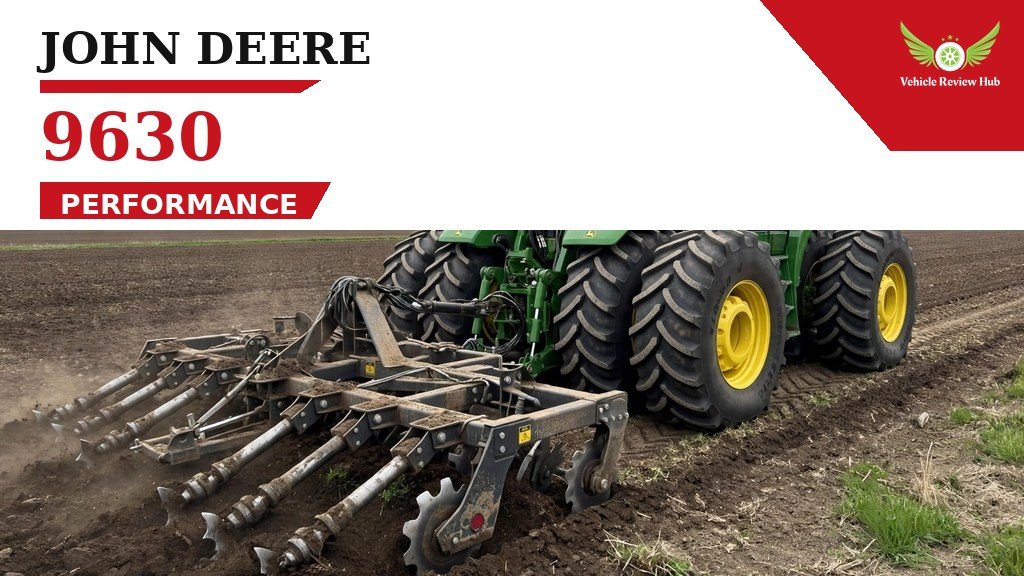
The test drive, a final check on John Deere 9630 ownership cost, should cover steering both ways at low speed, a full PowerShift run through the gears, hydraulic functions under load, differential lock engagement, and braking. Listen for transmission whine or harsh shifts, watch for hydraulic drift, and confirm the engine pulls cleanly to rated speed without smoke. Test guidance in the field, not the yard, and confirm which activations are included in the sale. How the 9630 performs under load is worth reading before the drive. The 9630’s headline specifications should also be checked against the machine in front of you.
Choosing the Right Hydraulic Package and Wheel Configuration
The hydraulic package and the wheel setup are the two options that most affect whether a 9630 fits your farm, and both should be chosen against your implements, not against the brochure. Standard is 48 gallons per minute with four SCVs; high-flow is 78 with up to six. Air seeders decide it: most need at least three outlets, some need five plus high flow, so hold out for the high-flow package rather than planning a retrofit. Check the SCV count, test each outlet under load, and confirm power beyond and return flow are fitted, or John Deere 9630 ownership cost rises with a retrofit. Getting this wrong adds directly to John Deere 9630 ownership cost in the first season.
Wheel configuration follows the same logic. Duals are the default for John Deere 9630 ownership cost: they spread weight and are easiest to price and replace. Triples add flotation on soft ground and were fitted to the $209,000 auction machine, but they widen the tractor, complicate transport, and add two more tires to the replacement bill. The tracked 9630T is separate: not articulated, steered by differential track speed, 330 gallons rather than 350, with track belts rather than tires as the big future bill. The video below is a Machinery Pete auction report from a June 2013 farm retirement sale in Lenox, Iowa — its opening minutes follow a one-owner, 17-hour 2010 John Deere 9630 4WD through live bidding, a reminder of what a truly low-hour example commands; the rest covers other auction lots.
John Deere 9630 Ownership Cost: Frequently Asked Questions
The questions below cover what buyers and owners ask most often about John Deere 9630 ownership cost.
What is the annual John Deere 9630 ownership cost?
For a 9630 working 300 to 500 hours a season, plan on roughly $28,000 to $68,000 a year before major repairs: fuel $19,000 to $49,000, routine service and fluids $3,500 to $7,000, and a wear reserve of $5,000 to $12,000. A major repair year adds $10,000 to $20,000 or more on top.
How much fuel does a John Deere 9630 use?
Plan on 18 to 28 gallons per hour under load, the largest single line in John Deere 9630 ownership cost, with heavy tillage toward the top of that band. A published specification compilation lists 27.8 gallons per hour at full drawbar power.
What does a used John Deere 9630 cost?
Planning bands for John Deere 9630 ownership cost, built around a real 2024 auction sale, run from $120,000 to $170,000 for rough, high-hour machines, $170,000 to $220,000 for average field-ready machines, and $220,000 to $280,000 or more for clean, low-hour examples. The anchor was a 2011 machine with 2,988 hours, sold for $209,000 in Reynolds, North Dakota, in July 2024.
How do hours affect John Deere 9630 resale value?
Hours are the single biggest price lever after condition. Machines under 2,500 hours with good tires and records command the top of the market; machines over 5,000 hours trade at a steep discount, because buyers price in the next repair.
How much does a full set of 9630 tires cost?
Budget $25,000 to $35,000 fitted for a full set of eight dual tires, a fixed part of John Deere 9630 ownership cost, as a planning estimate. A single 800/70R38 tire lists around $3,800 before fitting, and a widely cited inspection guide warns that replacing tires on a large tractor can cost up to $30,000.
What are the routine service intervals on a 9630?
First engine oil and filter at 100 hours, then every 250 hours, extendable to 375 hours with Plus-50 oil and a John Deere filter. Fuel filters at 100 and 250 hours, then every 250 hours. Axle, transmission, and hydraulic filters at 100 and 750 hours, then every 750 hours. Primary air filter annually, cab recirculation filter cleaned every 250 hours and replaced annually — small items in John Deere 9630 ownership cost, but skipped ones cause big bills. The service intervals it needs are in the maintenance guide.
Are parts still available for the John Deere 9630?
Yes, broadly. Engine, filter, and common hydraulic parts are stocked through Deere dealers, helped by the shared 9030 platform. Transmission internals, high-flow pumps, and some cab electronics can be dealer-only items with lead times of days.
What are the most expensive repairs on a 9630?
PowerShift clutch or valve work, hydraulic pump replacement, articulation re-pinning, and turbo or EGR repairs are the five-figure jobs. None is a routine wear item, but each is a shop job with significant labor that lands on John Deere 9630 ownership cost, hence the $10,000 to $20,000 annual reserve on a mid-hour machine.
What should I check first on a used 9630 inspection?
The articulation joint first, because it protects John Deere 9630 ownership cost more than any other check: look for play, grease, and metal shards, and listen for a knock on direction changes. Then engine leaks, air-filter condition, hydraulic leaks, SCV count, PTO smoothness, cab displays, tire tread on all eight tires, and service records. A seller who produces full records promptly is usually selling a machine he looked after.