This John Deere 9630 review starts with the number that defines the tractor: 530 horsepower from a 13.5-liter six-cylinder diesel, put to the ground through an articulated four-wheel-drive chassis. The 9630 was the flagship wheeled tractor of John Deere’s 9030 Series, built for farms where the implement keeps getting wider and the window for tillage, seeding, and manure work keeps getting shorter. This John Deere 9630 review keeps every figure tied to the wheeled machine, because the tracked 9630T shares the engine and badge but differs in fuel, weight, and running costs.
The short version of this John Deere 9630 review: the 9630 is a genuine big-acre tractor that has aged into the used market at a price a large farm can justify, provided the buyer checks hours, tire condition, and hydraulics before offering. It is not a small-farm tractor, and it is not cheap to feed, but for 2,000 acres and up it remains one of the most capable articulated machines of its generation. This John Deere 9630 review covers what it is, what it costs used, and where wheels beat tracks.
One buying rule runs through this John Deere 9630 review: judge the tractor by its hours and its tire bill, not by its year. Every 9630 is now a 15-year-old-plus machine, and a low-hour tractor on worn duals can cost more in its first year than a higher-hour tractor on fresh rubber.
John Deere 9630 Review, Features and Used Price
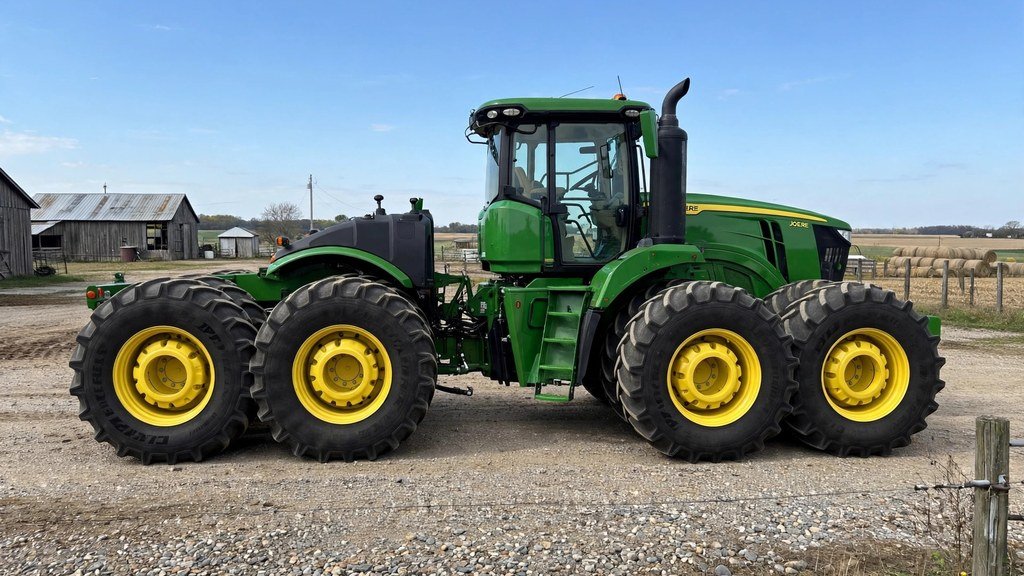
The 9630 sits at the top of the wheeled 9030 range, above the 9530 at 475 horsepower and the 9430 at 425, and this John Deere 9630 review positions it as the flagship. It is an articulated 4WD tractor in the classic sense: two frames joined at a center pivot, steered by bending in the middle, with equal-size tires all around. That layout puts 530 horsepower to the ground instead of spinning away, as this John Deere 9630 review notes.
Production Years, 4WD Design and Main Features
The 9030 Series was introduced in August 2007, and the 9630 was produced from 2007 through 2011 in Waterloo, Iowa, as part of a range that ran from the 325-horsepower 9230 to the 530-horsepower 9630, and this John Deere 9630 review treats that whole run as one buying pool. Deere’s own 9030 Series announcement lists the 9630 as a tire or scraper model with the 13.5-liter engine, an 18-speed PowerShift, and a 350-gallon fuel tank. The 9630 was also offered as a Scraper Special, a configuration tuned for scraper work, which is why some listings carry that name alongside the same 530-horsepower rating, and this John Deere 9630 review flags scraper machines separately because their wear patterns can differ from field-only tractors.
The articulated design is the heart of this John Deere 9630 review. Unlike a row-crop tractor with a steered front axle, the 9630 bends at its center joint, so all four tires stay planted and pulling in the direction of travel even in a turn. The CommandView cab was updated for the 9030 Series to be quieter and roomier, with GreenStar-ready AutoTrac guidance available.
The video below shows a wheeled 9630 packing a silage pile during alfalfa harvest in Indiana — field footage, not a walkaround, in this John Deere 9630 review.
Used Prices by Hours, Tire Setup and Condition
Used 9630 prices are driven by hours first, tire setup second, and model year a distant third. Two dated but real 2013 anchors show the pattern: a 2011 John Deere 9630 with 521 hours, 800/70R38 duals, 5 remotes, and power differential lock was listed at $296,500, while a 2010 machine with 900 hours, the same tire size, and 5 remotes was listed at $285,000. Those are 2013 prices, but they show how little the year mattered against hours and specification. A published 9630 specification compilation confirms the 2007–2011 production span behind those listings.
The planning bands below in this John Deere 9630 review are late-2026 estimates, not quoted prices, for a wheeled machine with duals. Always price tires separately: a full set of 800/70R38 duals is a five-figure bill, and 65-percent rubber is not the same purchase as 95-percent rubber.
| Condition band | Typical hours | Planning price range |
|---|---|---|
| Rough or high-hour machine | 5,000+ hours, worn tires | $90,000–$140,000 |
| Average, field-ready machine | 2,500–5,000 hours | $140,000–$210,000 |
| Clean, low-hour machine | Under 2,500 hours, good tires and records | $210,000–$280,000+ |
| Tire note | Duals vs. triples, singles vs. duals | Deduct a tire set on worn rubber |
Detailed fuel and field figures are in the John Deere 9630 performance analysis, for readers testing whether 530 horsepower covers their widest implement.
John Deere 9630 Engine, Horsepower and Specifications
Engine figures are the least controversial part of this John Deere 9630 review: the 9630 runs the PowerTech Plus 13.5-liter inline six, turbocharged with air-to-air aftercooling, rated at 530 horsepower at 2,100 rpm. Headline numbers come from Deere’s 9030 announcement and a published 9630 specification chart, with variances labeled where sources disagree.
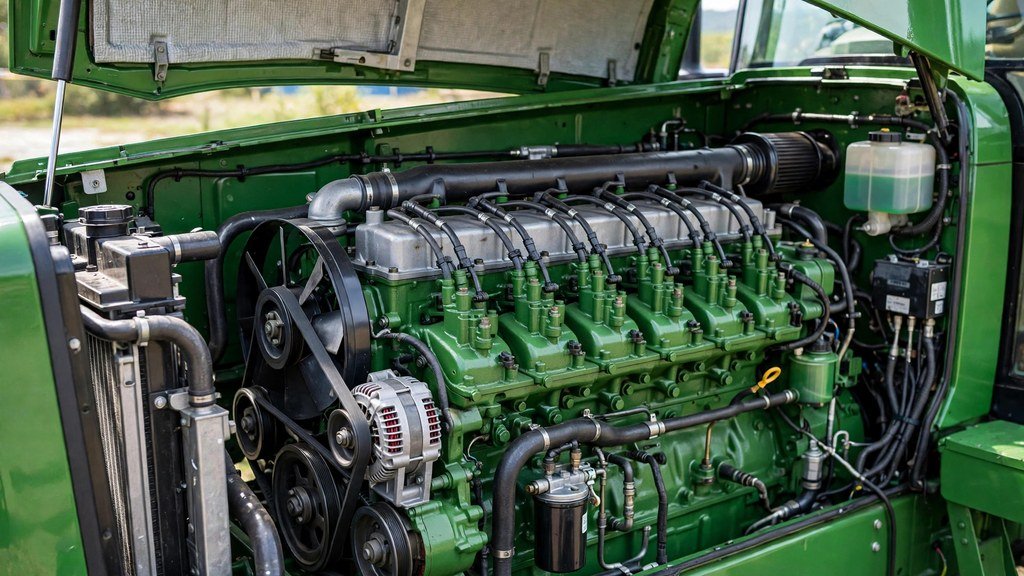
13.5L PowerTech Plus Diesel and 530 HP Rating
The PowerTech Plus in the 9630 displaces 13.5 liters (824 cubic inches) across six cylinders, with a 16:1 compression ratio, a variable-geometry turbocharger, exhaust gas recirculation, and a Tier 3 emissions rating. Rated power is 530 horsepower at 2,100 rpm, and Deere’s 9030 literature quotes a peak of 583 horsepower with power bulge, while a contemporary farm-press review of the same tractor quoted a maximum of 578 horsepower. This John Deere 9630 review states that variance plainly: peak output sits around 578–583 horsepower depending on the source and the measurement standard, and the 530-horsepower rated figure is the one to use for implement matching. Torque rise is 38 percent, which lets the tractor lug down under load without stalling or forcing constant downshifts.
Service intervals from the 9030 literature shape running costs, and this John Deere 9630 review notes them: engine oil service up to 375 hours with John Deere Plus-50 premium oil, and a 250-hour fuel filter interval through a dual 10-micron and 2-micron filter system with a water separator and a sensor that warns when a filter plugs.
| Specification | John Deere 9630 (wheeled) |
|---|---|
| Engine | PowerTech Plus 13.5L inline 6, turbocharged, air-to-air aftercooled |
| Rated power | 530 hp at 2,100 rpm |
| Peak power | About 578–583 hp with power bulge (source variance stated) |
| Torque rise | 38% |
| Transmission | 18-speed automatic PowerShift, 18 forward / 6 reverse |
| Fuel capacity | 350 gallons (wheeled); 330 gallons (9630T tracked) |
| Hydraulics | 48 gpm pump, 2,900 psi, 4 remotes standard (up to 6) |
| Base weight note | About 37,290 lb unballasted; 45,800–50,000 lb ballasted (Scraper figures) |
Fuel Capacity, Hydraulic Flow, Hitch Lift and Tractor Weight
The wheeled 9630 carries 350 gallons of fuel, twenty gallons more than the tracked 9630T at 330 gallons, a difference this John Deere 9630 review returns to in the wheeled-versus-track comparison. The hydraulic system is a closed-center, pressure- and flow-compensated design with a 48-gallon-per-minute pump at 2,900 psi, 30 gallons per minute at a single valve, and four remotes standard (up to six). One variance: a 2011 listing quoted 44 gpm against the 48 gpm manufacturer figure used here, so check the pump if flow is critical.
Weight is where buyers most often compare unlike with unlike, and this John Deere 9630 review separates the numbers. The wheeled 9630 weighs about 37,290 pounds unballasted, while Deere’s Scraper Special figures quote 45,800 to 50,000 pounds ballasted, and the tracked 9630T is about 43,920 pounds before ballast. Hitch lift is 15,300 pounds on the optional Category 4/4N hitch with quick coupler, and the Category 5 drawbar is standard with a 12,000-pound vertical-load capacity and a 2.75-inch hitch pin. The 9030 Series operator manual’s drawbar and hitch section confirms the Category 5 drawbar and the 15,300-pound hitch lift, and notes the Hitch Command feature that raises and lowers the hitch automatically to compensate for wheel slip.
John Deere 9630 Transmission and Implement Compatibility
A 530-horsepower tractor is only useful if its transmission, hydraulics, and drawbar can handle the implement behind it. This section of this John Deere 9630 review covers the gearbox, articulation, and hookup as one system, because on a machine this size they fail or succeed together.
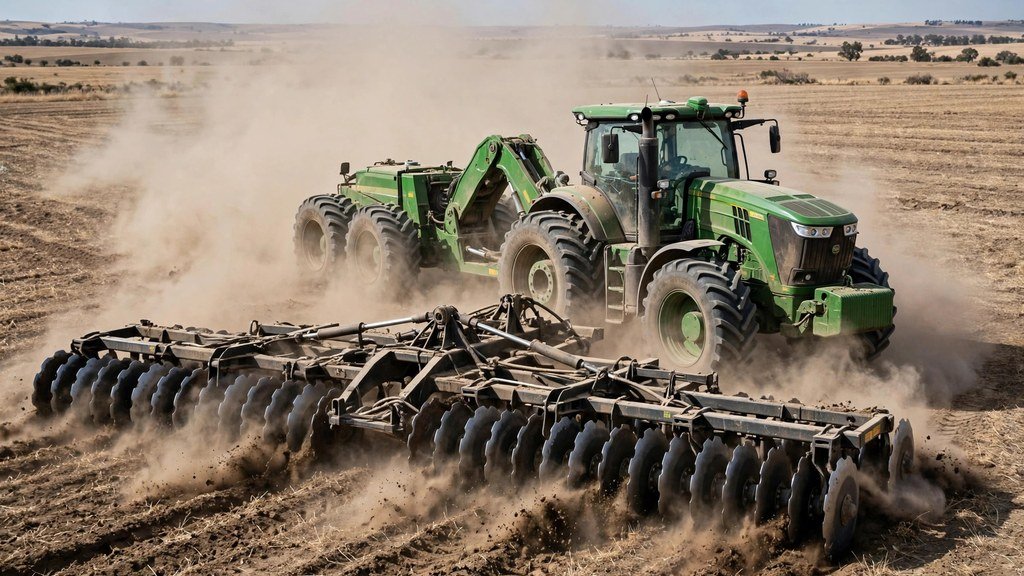
18-Speed PowerShift and Articulated Four-Wheel Drive
The 9630’s only transmission is the 18-speed automatic PowerShift, 18 forward and 6 reverse, updated for the 9030 Series for more lugging power, and this John Deere 9630 review rates that gearbox as a strength. Shifts are clutch-free and push-button, and the gearbox gives ten working speeds between 3 and 8 mph in roughly half-mile-per-hour steps, which is the speed band where most tillage and seeding work actually happens.
Articulated steering changes how the tractor behaves in the field and on the road, and this John Deere 9630 review covers it because it surprises first-time buyers. The center pivot lets the tractor turn by folding, which keeps all four tires driving in the direction of travel, though the rear swings wide on headlands and turns must be planned around implement width. Hydraulic differential lock is standard, and this John Deere 9630 review counts it as the essential tool for wet spots and soft headlands where one side would otherwise spin.
Hydraulic Remotes, Drawbar, Hitch and Heavy Implements
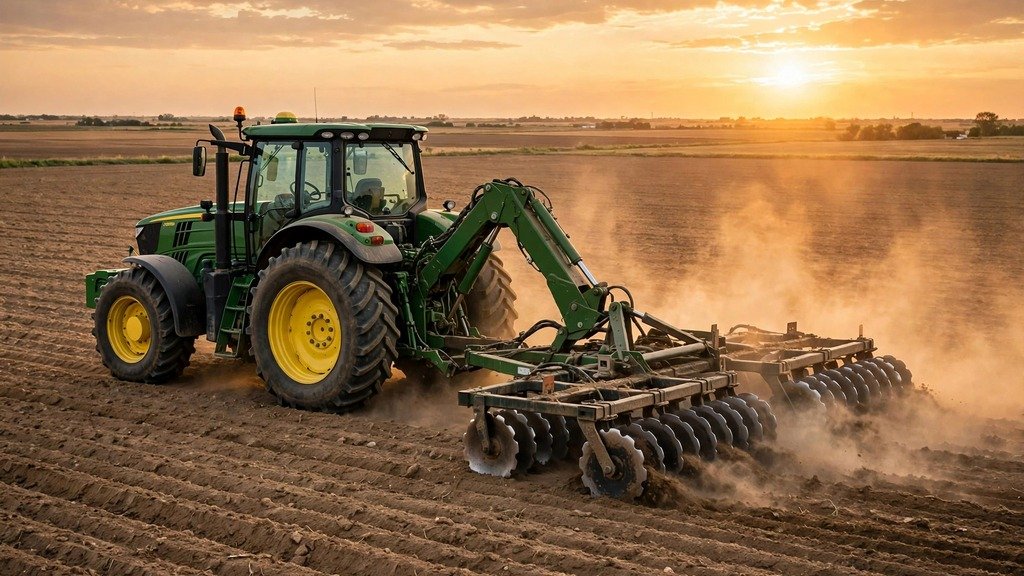
Implement compatibility on the 9630 starts with the Category 5 drawbar, standard on this model, which handles the heaviest pull-type implements: wide air seeders, large discs, deep rippers, and heavy cultivators, and this John Deere 9630 review counts that drawbar as a reason the tractor still suits the widest modern implements. The optional three-point hitch lifts 15,300 pounds, enough for heavy mounted plows and large planters, and the optional 1,000-rpm PTO with electrohydraulic push-button engagement drives grain carts, tillers, and other PTO implements. Published PTO horsepower figures for the 9630 family disagree across sources, with a Deere track-series sheet quoting 320 PTO horsepower and some compilations quoting 375, so this John Deere 9630 review quotes no single PTO figure as fact — check the specific machine’s documentation.
Hydraulic capacity decides whether a wide air seeder’s fans, markers, and lift all work at once without starving each other. Four remotes are standard and six are available, with TouchSet flow adjustment from the cab, and 30 gallons per minute at a single remote covers most large implement demands. The wear items to inspect are set out in the John Deere 9630 maintenance checklist that buyers should read before offering.
John Deere 9630 vs. 9630T and Similar 4WD Tractors
The 9630 does not compete with new tractors on price; this John Deere 9630 review compares it with its tracked twin and cross-shopped rivals. The comparison that matters most is inside the 9030 family, where the 9630T is often listed at a similar price.
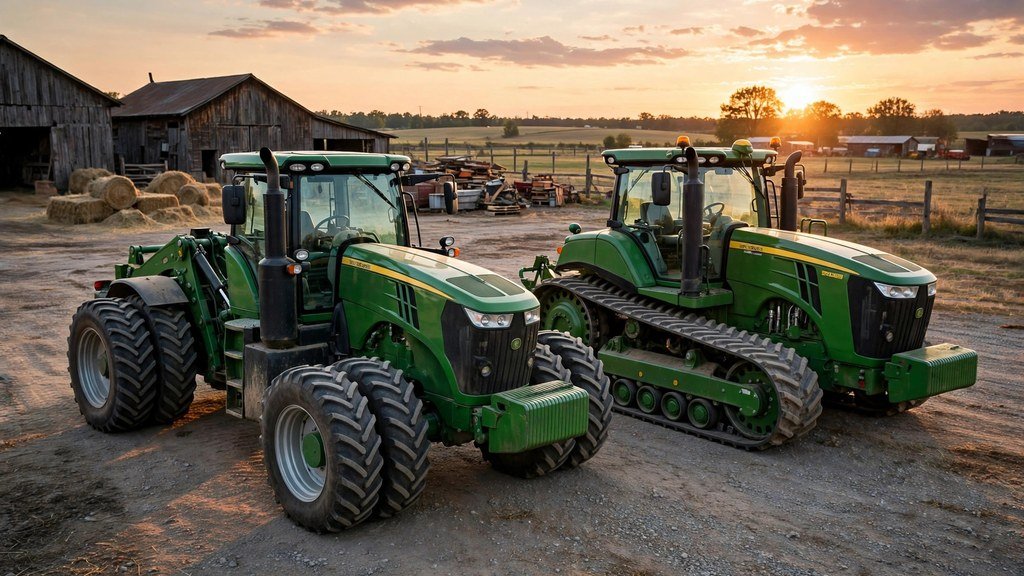
Wheeled vs. Track Configuration and Fuel Capacity
The wheeled 9630 and the tracked 9630T share the 530-horsepower engine, 18-speed PowerShift, 48-gallon-per-minute hydraulics, and 15,300-pound hitch lift, and an 9630T specification page confirms the tracked machine’s matching ratings, which is why this John Deere 9630 review compares them on running gear rather than power. Where they differ is everything that touches the ground. The wheeled 9630 carries 350 gallons of fuel against the tracked machine’s 330, weighs about 37,290 pounds unballasted against the tracked machine’s 43,920, and runs on 710/70R38 or 800/70R38 duals against the tracked machine’s 30-inch standard or 36-inch optional belts.
Tracks give flotation and traction in wet ground and on hillsides and spread weight over a larger footprint, reducing compaction. Wheels give simpler maintenance, cheaper parts, easier road travel, and lower running costs on firm ground, with no track wear from road miles. A contemporary comparison noted the tracked version cost roughly $100,000 more when new, and replacement tracks cost more than top-spec tires, though Deere claimed around 5,500 hours of track life. That price gap has narrowed on the used market, but the running-cost gap has not, and this John Deere 9630 review advises buyers to match the configuration to their ground: tracks for wet, hilly, or soft-soil farms, wheels for firm, flat, dry-land work with road travel between fields.
| Model | Engine | Fuel | Base weight |
|---|---|---|---|
| 9630 wheeled | 13.5L, 530 hp | 350 gal | About 37,290 lb |
| 9630T tracked | 13.5L, 530 hp | 330 gal | About 43,920 lb |
| 9530 wheeled | 13.5L, 475 hp | 350 gal | Lighter than 9630 |
| Gap in one line | Same engine family, same gearbox | Wheeled carries 20 gal more | Tracked is heavier before ballast |
Choosing the Right High-Horsepower Tractor for Your Farm
Choose the wheeled 9630 if your acres are large, your ground is firm, and your tractor travels roads between fields. Choose the 9630T if wet ground, hillsides, or compaction control dominate your season. Choose the 9530 if 475 horsepower covers your widest implement and the price gap is large. In every case, buy on hours, tire or track condition, and service records, not on the year on the serial plate.
The bottom line of this John Deere 9630 review is straightforward. The 9630 remains a sensible used buy for large farms, provided the buyer respects the wheeled-versus-tracked split, checks hours and tire condition, verifies the hydraulic pump output, and prices the tire bill into the offer, and this John Deere 9630 review closes on that checklist because it is where used buyers most often go wrong. Bought that way, it is a capable flagship with deep parts support; bought on horsepower alone, without inspection, it can become the most expensive machine on the farm. Running costs and resale are set out in the John Deere 9630 ownership cost breakdown to read before making an offer.
Frequently Asked Questions About the John Deere 9630
These answers in this John Deere 9630 review cover the questions buyers actually ask, from the wheeled-versus-tracked choice to hours, tires, and inspection.
How much horsepower does a John Deere 9630 have?
The 9630 is rated at 530 horsepower at 2,100 rpm from its 13.5-liter PowerTech Plus six-cylinder, and this John Deere 9630 review notes a peak of about 578–583 horsepower with power bulge depending on the source, with 38 percent torque rise.
What years was the John Deere 9630 made?
The 9630 was produced from 2007 through 2011 as part of the 9030 Series, built in Waterloo, Iowa, and this John Deere 9630 review treats that five-year run as a single buying pool. The 9030 Series was introduced in August 2007, and this John Deere 9630 review treats that run as one buying pool.
What is the difference between the John Deere 9630 and the 9630T?
Both share the 530-horsepower engine, 18-speed PowerShift, and 48-gallon-per-minute hydraulics, but the wheeled 9630 carries 350 gallons of fuel and weighs about 37,290 pounds unballasted, while the tracked 9630T carries 330 gallons and weighs about 43,920 pounds. Tracks suit wet ground; wheels suit firm ground and road travel, as this John Deere 9630 review explains.
How much fuel does a John Deere 9630 hold?
The wheeled 9630 holds 350 gallons of diesel, and the tracked 9630T holds 330 gallons, and this John Deere 9630 review lists fuel capacity early because it decides how far the tractor runs between fills. That 20-gallon gap buys roughly an extra hour of hard work between fills, as this John Deere 9630 review notes.
What transmission does the John Deere 9630 have?
The 9630 uses an 18-speed automatic PowerShift with 18 forward and 6 reverse gears, clutch-free push-button shifting, and ten working speeds between 3 and 8 mph, and this John Deere 9630 review counts that close speed spacing as a real advantage in tillage work. No manual was offered on the 9630, so every machine in this John Deere 9630 review carries the same gearbox.
How much can a John Deere 9630 lift on the hitch?
The optional Category 4/4N three-point hitch lifts 15,300 pounds with a quick coupler, and this John Deere 9630 review treats that lift figure as the test for any mounted implement a buyer plans to hang on the back. That lift figure is the test this John Deere 9630 review applies before any mounted purchase. The Category 5 drawbar is standard, with a 12,000-pound vertical-load capacity and a 2.75-inch hitch pin, which is why this John Deere 9630 review rates the tractor for the heaviest pull-type implements.
How much does a used John Deere 9630 cost?
Planning bands in this John Deere 9630 review run roughly $90,000–$140,000 for rough or high-hour machines, $140,000–$210,000 for average field-ready machines, and $210,000–$280,000 or more for clean, low-hour machines on good tires. Dated anchors: a 2011 machine at $296,500 with 521 hours and a 2010 at $285,000 with 900 hours, both 2013 listings.
What tire size does a John Deere 9630 use?
Common fitment is 710/70R38 or 800/70R38 tires, usually as duals, and this John Deere 9630 review warns buyers to price tire condition separately because a full set of duals is a five-figure bill. Tire condition moves a machine between price bands, as this John Deere 9630 review stresses.
Is the John Deere 9630 good for heavy tillage?
Yes, and this John Deere 9630 review rates heavy tillage as the tractor’s home ground: 530 horsepower, 38 percent torque rise, articulated traction, and a Category 5 drawbar suit wide discs, deep rippers, and large cultivators.
What should I check before buying a used John Deere 9630?
Check engine hours and service records, tire tread and sidewalls on all duals, hydraulic pump output and remote function, articulation joint play, differential lock operation, and the drawbar and hitch, and this John Deere 9630 review advises walking away if a seller will not allow those checks. Service records matter more than the model year, as this John Deere 9630 review advises throughout.
Should I buy a 9630 or spend more on a newer 9R?
Buy the 9630 if your acres and implements fit its 530 horsepower and your budget favors a proven Tier 3 machine, and this John Deere 9630 review frames that call around implement width, not badge prestige. Buy a newer 9R if you need more power or newer guidance and can justify the much higher price.