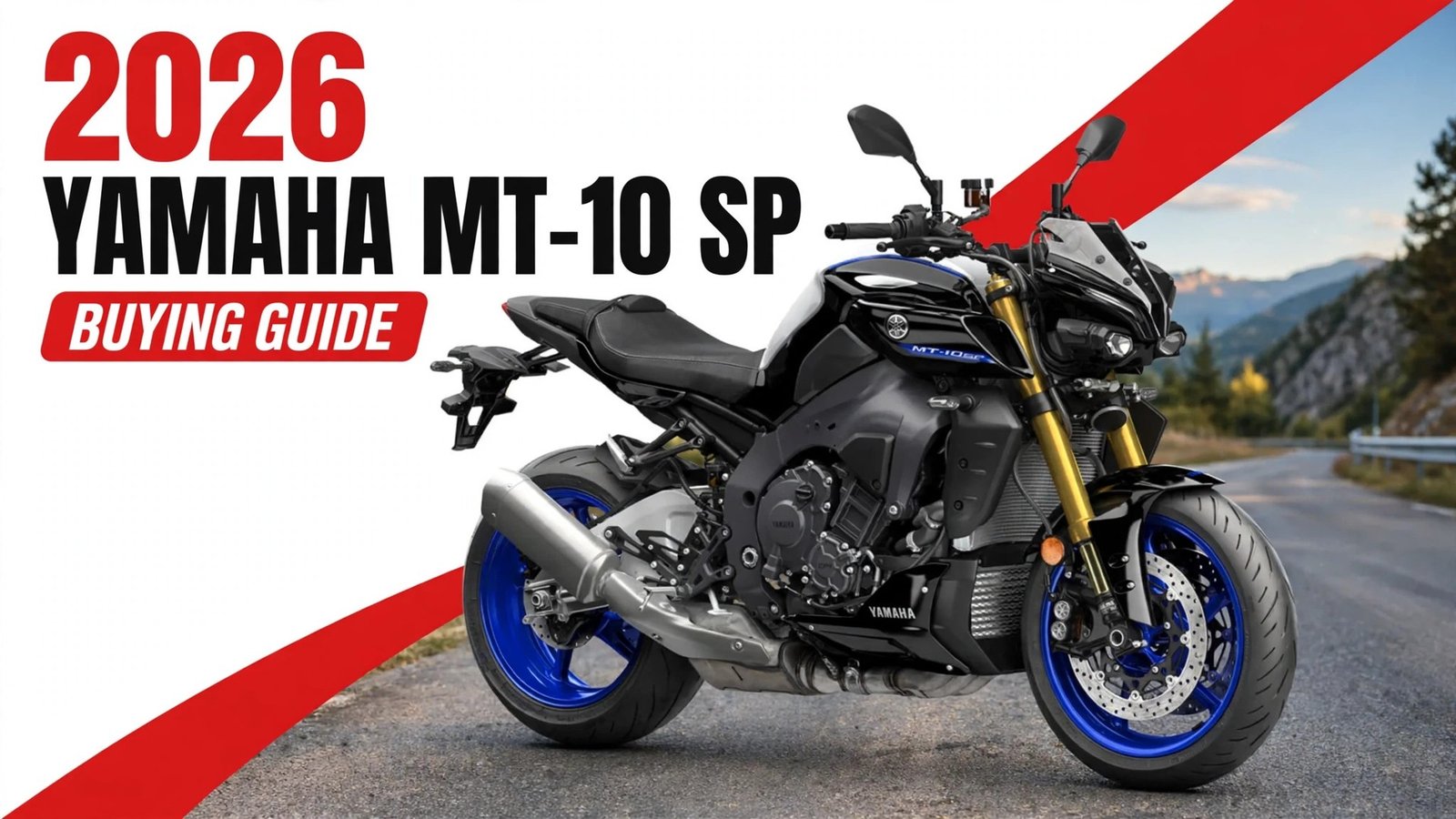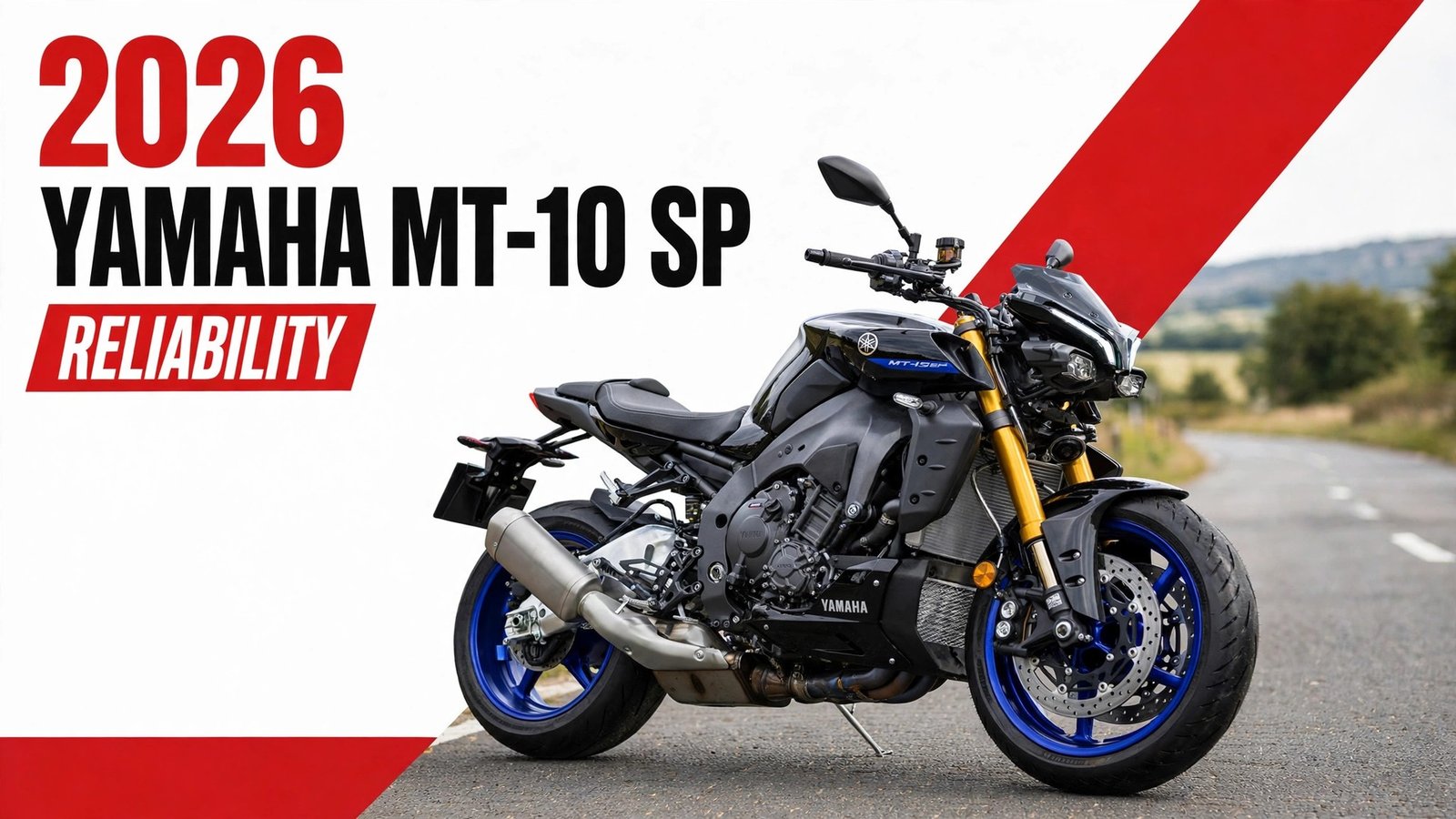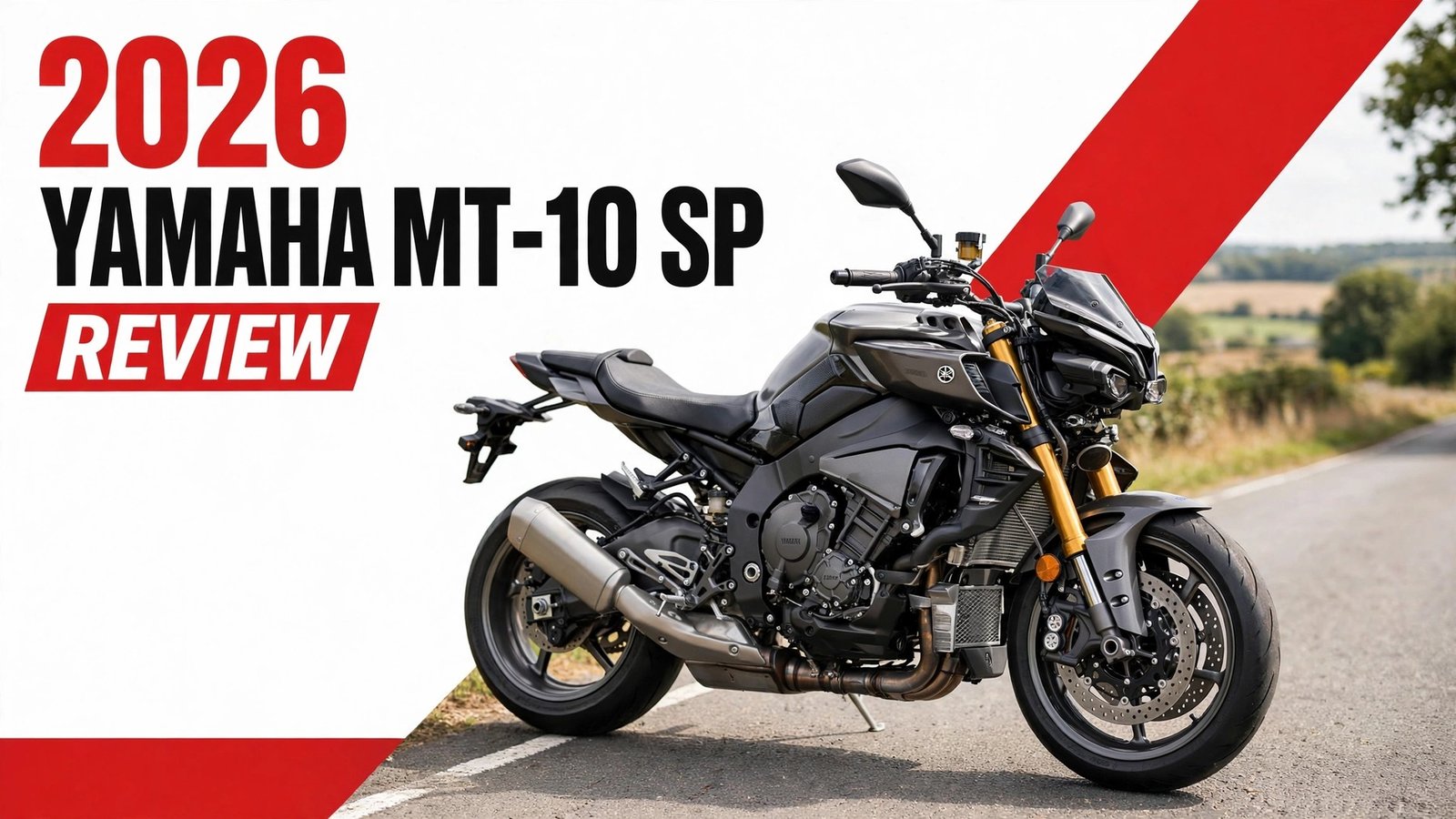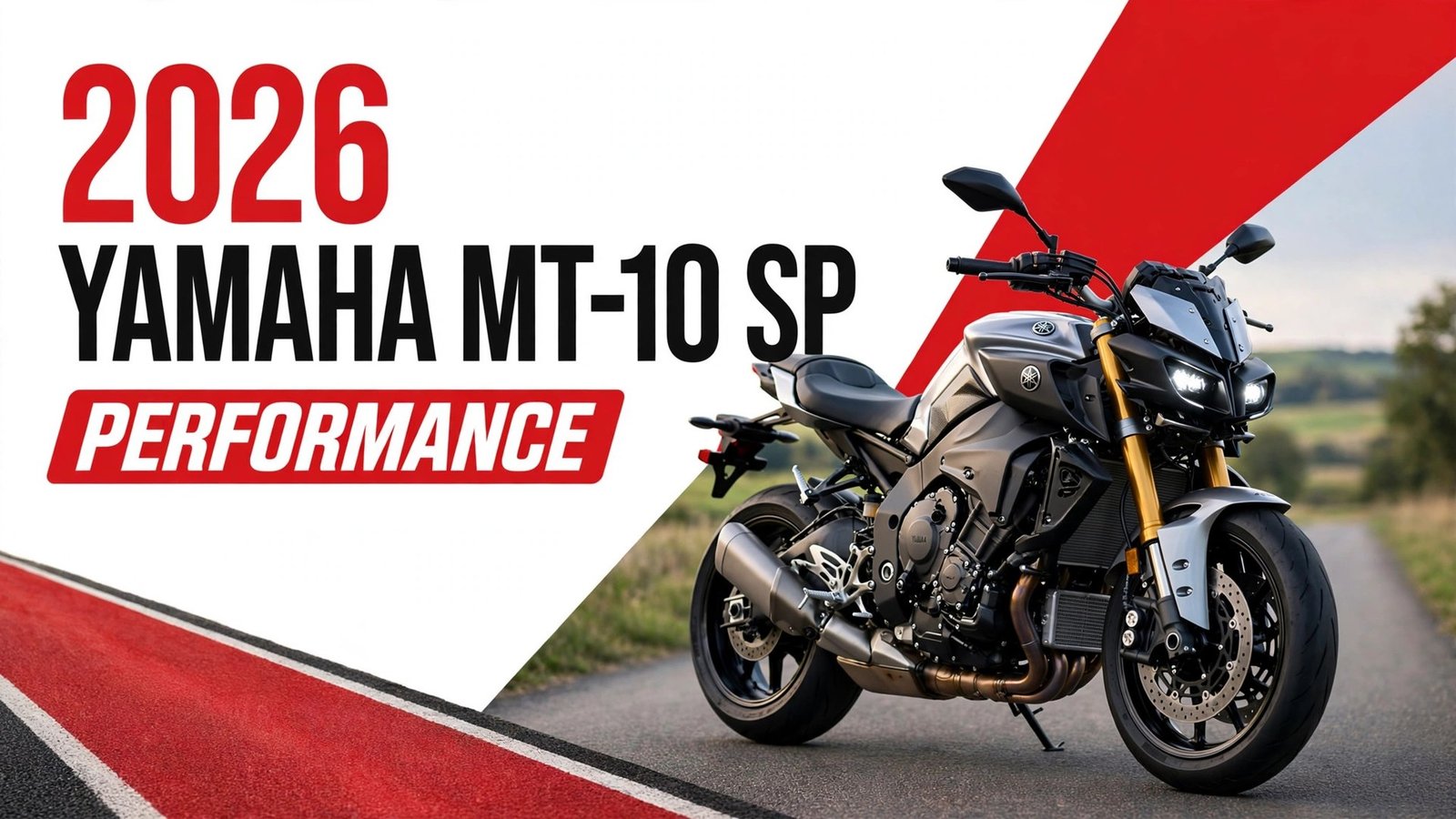
The Yamaha MT-10 SP performance story is easy to sum up: a 998cc crossplane-crank inline-four, a Cycle World dyno reading of 134.4 rear-wheel horsepower, 0-60 mph in 3.20 seconds, and a quarter mile in 10.99 seconds. Fuel economy is the trade-off: Yamaha lists 36 mpg combined, Cycle World’s test riding averaged 35.2 mpg, and the 4.5-gallon tank means realistic range of around 160 miles. Top speed needs a careful note: the often-quoted 155 mph figure is a European estimate, not a verified stock US test result. The broader MT-10 SP review covers the whole motorcycle; this article focuses on Yamaha MT-10 SP performance.
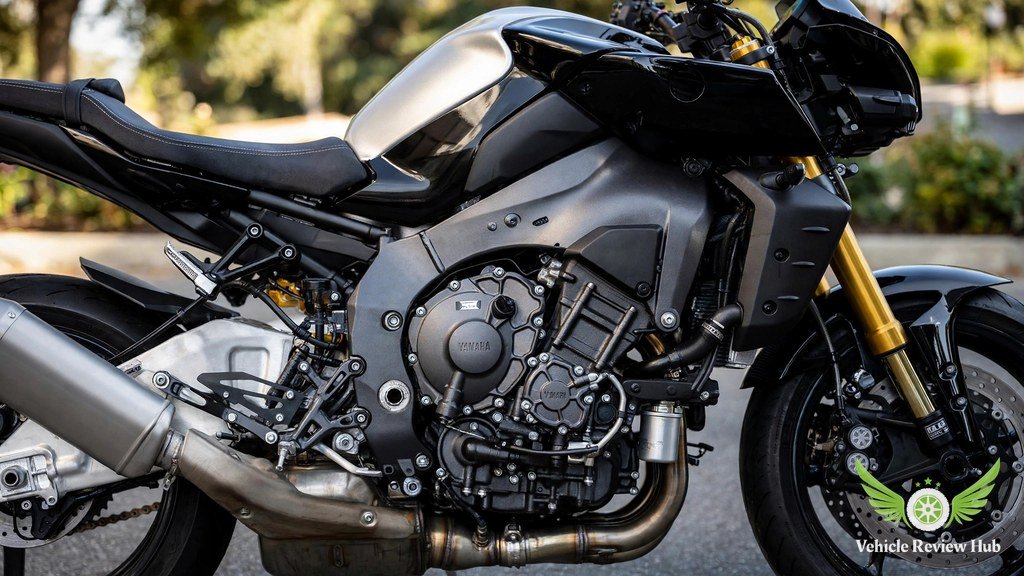
Yamaha MT-10 SP performance starts with the CP4 engine, an R1-derived 998cc inline-four whose uneven firing order sounds more like a V4 than a conventional four-cylinder. Claimed output is 163.6 hp at 11,500 rpm with 82.6 lb-ft of torque at 9,000 rpm, although those are European figures, since Yamaha does not publish US horsepower numbers.
| Yamaha MT-10 SP performance figure | Tested or official value | Source |
|---|---|---|
| Rear-wheel horsepower | 134.4 hp at 10,100 rpm | Cycle World dyno test |
| Rear-wheel torque | 74.5 lb-ft at 9,000 rpm | Cycle World dyno test |
| 0-60 mph | 3.20 seconds | Cycle World comparison test |
| Quarter mile | 10.99 seconds | Cycle World comparison test |
| Top speed | 155 mph (European estimate, not a US test) | Bennetts review |
| Fuel economy | 36 mpg official; 35.2 mpg tested average | Yamaha specification; Cycle World test |
| Fuel range | About 158-162 miles on 4.5 gallons | Calculated from mpg figures |
| Wet weight | 472 lb listed; 477 lb measured | Yamaha specification; Cycle World scales |
Yamaha MT-10 SP Engine Performance and Power Delivery
Yamaha MT-10 SP performance is built around the CP4 engine, and its character matters as much as its peak numbers. Revised 2022 tuning moved torque lower, so the SP is calm in town yet violent above 8,000 rpm.
Cycle World Dyno 134.4 RWHP at 10,100 RPM for the SP Explained
The headline dyno figure for Yamaha MT-10 SP performance comes from the Cycle World dyno test, which measured 134.4 rear-wheel horsepower at 10,100 rpm and 74.5 lb-ft of torque at 9,000 rpm on its in-house Dynojet 250i dynamometer. That is the number to quote, measured on an SP on a named dyno. Cycle World’s comparison-test SP produced a near-identical 134.5 hp at 10,900 rpm, normal dyno-to-dyno variance. Rear-wheel figures always sit below claimed crankshaft figures because of drivetrain losses, so the gap to the claimed 163.6 hp should surprise no one.
One trap to avoid: the standard MT-10 has been measured at about 138.5 rear-wheel horsepower on a different tester’s dyno. That does not mean the SP is less powerful. The two figures come from different motorcycles, dynos, and test days, and both bikes share essentially the same engine tune. The SP’s extra weight comes from suspension and brake hardware, and standard MT-10 performance figures should never be quoted as SP figures.
Six-Speed Transmission, Gear Shifting and CP4 Power Delivery
Yamaha MT-10 SP performance depends on a six-speed gearbox with an up-and-down quickshifter and an assist-and-slipper clutch. The quickshifter allows clutchless shifts in both directions, keeping the chassis settled during hard acceleration and making fast downshifts smoother. The assist function lightens clutch lever effort, while the slipper function prevents rear-wheel hop on aggressive downshifts. Reviewers note dullness below 4,000 rpm, then strong midrange and hardest pull above 8,000 rpm. Ride-by-wire throttle with an Accelerator Position Sensor Grip, plus four power modes, lets the rider soften or sharpen response for Yamaha MT-10 SP performance.
Yamaha MT-10 SP Top Speed and Acceleration
Yamaha MT-10 SP performance at full throttle is superbike-fast, but the numbers need honest labels. Acceleration figures below come from Cycle World’s 2023 comparison test, measured the same day under the same conditions. Top speed is different: no stock US test of the SP was found, so the repeated 155 mph number is a European estimate.
Why 155 MPH Is an EU Estimate and No Stock US Top Speed Test Was Found
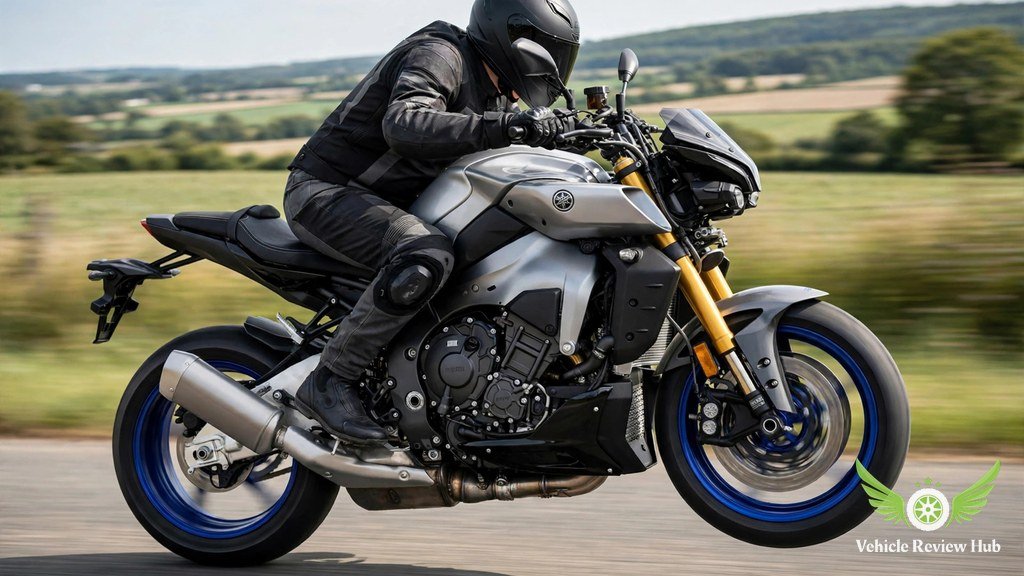
The 155 mph top speed figure for Yamaha MT-10 SP performance traces back to European coverage, including the Bennetts review, which lists top speed as 155 mph with the word “est” attached. That estimate is reasonable, since wind resistance ultimately caps a naked bike’s top speed. But it is not a GPS-verified US test result, and no stock US top-speed test of the SP surfaced in published American testing. The SP’s Variable Speed Limiter is a rider-set convenience limiter, not a factory governor. The honest summary is that Yamaha MT-10 SP performance will reach roughly 150-155 mph in stock form, depending on rider size, tuck, wind, and road.
0-60 in 3.20 Seconds and Quarter Mile in 10.99 Seconds From Comparison Test
The acceleration numbers for Yamaha MT-10 SP performance are properly tested figures. In Cycle World’s hyper-naked comparison test, the SP recorded 0-30 mph in 1.63 seconds, 0-60 mph in 3.20 seconds, 0-100 mph in 6.23 seconds, and a quarter mile in 10.99 seconds at a trap speed of 134.12 mph. That puts the SP a step behind its rivals, but the gap is small: about two-tenths to 60 mph against the Aprilia. Launching the SP takes technique, because the bike fights wheelies hard from a standing start. Knox’s first ride review shows that acceleration on the road.
For Yamaha MT-10 SP performance context, the same test recorded the Aprilia Tuono V4 Factory at 2.99 seconds to 60 mph and 10.57 seconds over the quarter mile, and the KTM 1290 Super Duke R Evo at 3.15 seconds and 10.54 seconds. Yamaha MT-10 SP performance is therefore genuinely close to the fastest naked bikes on sale, trailing mainly on weight and displacement.
Yamaha MT-10 SP Mileage and Fuel Economy
Yamaha MT-10 SP performance comes with a fuel bill. Yamaha’s official estimate is 36 mpg, Cycle World’s test average was 35.2 mpg, and the 4.5-gallon tank means roughly 160 miles of range. That suits commuting and weekend rides, but not touring, and spirited riding drops the number fast.
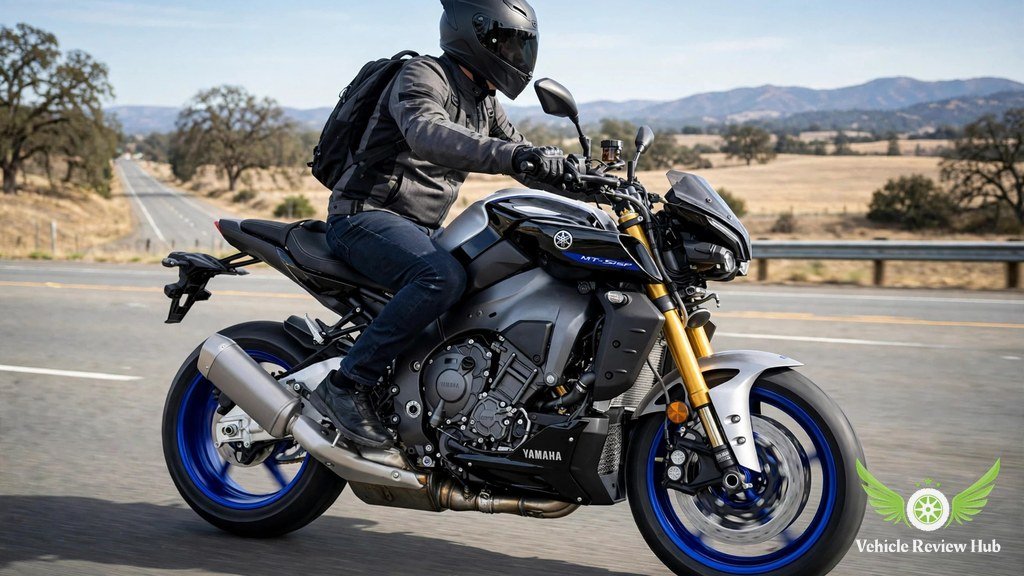
Official Yamaha 36 MPG Estimate and Cycle World Tested 35.2 MPG
Yamaha lists 36 mpg combined for the MT-10 SP, the right starting point for Yamaha MT-10 SP performance discussions. Cycle World’s comparison test then recorded an average of 35.2 mpg, close enough to confirm 36 mpg is realistic for mixed riding. Aggressive riding still beats it down: UK group testing recorded as little as 32 mpg in imperial gallons during spirited riding, about 26.6 mpg in US gallons, and that kind of riding turns the SP into a bike that needs fuel every 120 miles.
Real-World MPG, UK Imperial Conversion and Estimated Fuel Range
UK reviews of Yamaha MT-10 SP performance often quote fuel figures that look better than American ones, and the reason is the gallon, not the motorcycle. A UK imperial gallon is about 1.2 US gallons, so divide imperial mpg by 1.2 for the US equivalent. Bennetts lists a claimed 41.4 mpg and a tested 37.3 mpg for the SP, but those are imperial figures, equal to about 34.5 mpg and 31.1 mpg in US gallons. Always check which gallon a source uses.
| Riding scenario | Fuel economy (US mpg) | Estimated range on 4.5 gallons |
|---|---|---|
| Yamaha official combined estimate | 36 mpg | 162 miles |
| Cycle World tested average | 35.2 mpg | 158 miles |
| UK tested average (37.3 mpg imperial) | 31.1 mpg | 140 miles |
| Spirited riding (32 mpg imperial) | 26.6 mpg | 120 miles |
| Planning figure for most riders | 35 mpg | About 155 miles, with reserve in mind |
The practical takeaway for Yamaha MT-10 SP performance is simple: plan fuel stops every 130-150 miles, and sooner on fast rides. Yamaha MT-10 SP performance rewards riders who accept that rhythm.
Yamaha MT-10 SP Real-World Riding Performance
Yamaha MT-10 SP performance in daily use is more than dyno and drag-strip numbers. The SP must crawl through traffic, overtake on two-lane highways, and stay comfortable enough to actually ride. Its IMU electronics, semi-active suspension, and upright position shape real-world pace as much as horsepower.
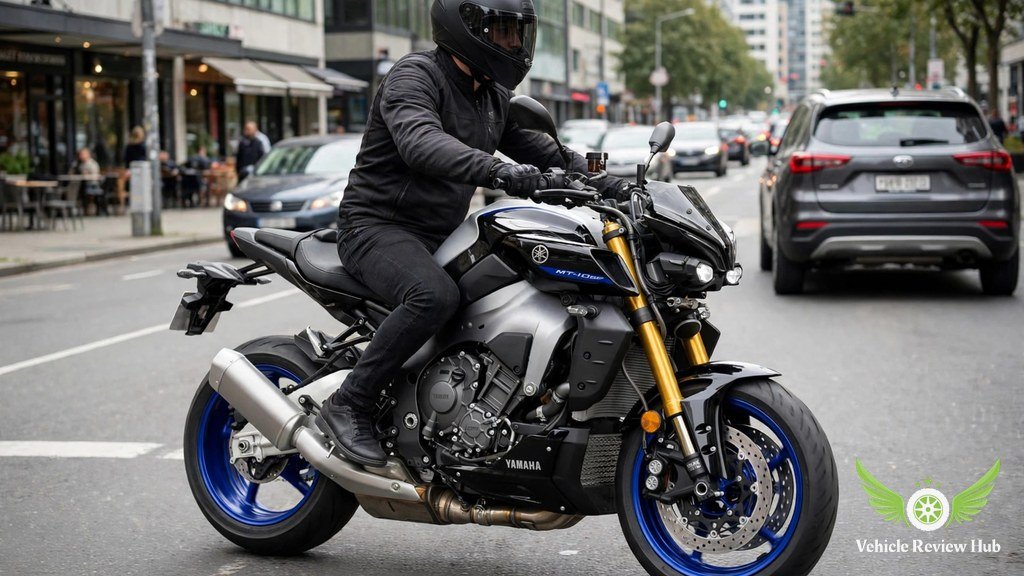
City Riding, Traffic Performance and Everyday Acceleration
In city traffic, Yamaha MT-10 SP performance is surprisingly manageable for a 472 lb liter bike, with two caveats. First, the CP4 feels slightly dull below 4,000 rpm, so keep revs in the midrange. Second, the 32.9-inch seat and 472 lb weight demand attention at stops. The ride-by-wire throttle is smooth in gentler modes, the assist clutch keeps lever effort light, and the quickshifter eases low-speed changes. Everyday acceleration is instant, with partial throttle in second or third gear clearing gaps without a downshift. That dual personality, calm in town and wild on open roads, is central to Yamaha MT-10 SP performance.
Highway Riding, Overtaking Ability and Long-Distance Limitations
On the highway, Yamaha MT-10 SP performance shines in one area and struggles in two. Overtaking is effortless: midrange torque means a top-gear roll-on is usually enough. Standard cruise control eases long highway stretches. The limitations are wind and range. The small flyscreen offers little protection, so sustained high-speed riding means full wind blast on the rider’s chest and helmet. And the 4.5-gallon tank caps highway range at roughly 160 miles. Yamaha MT-10 SP performance is therefore a brilliant overtaking tool but a mediocre tourer, limited by wind and tank size.
Yamaha MT-10 SP Handling, Braking and Stability
Yamaha MT-10 SP performance is not only about going fast in a straight line; the SP exists because of its chassis. The semi-active Öhlins suspension is the biggest difference from the standard MT-10. With an R1-derived Deltabox frame, a 55.3-inch wheelbase, and a six-axis IMU electronics suite, the SP’s handling lets ordinary riders use its power.
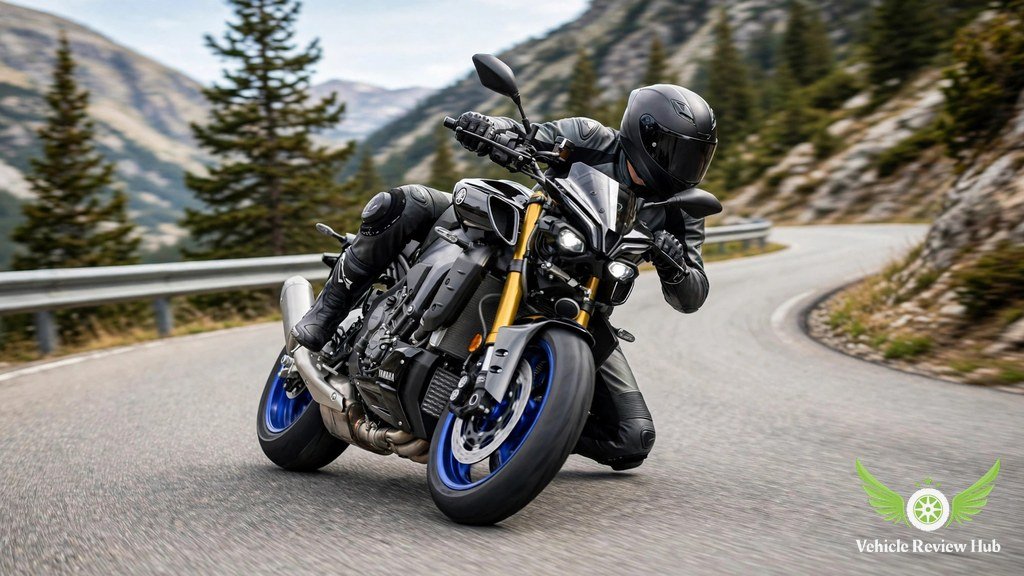
Ohlins Semi-Active Suspension, Chassis, Tires and Cornering Performance
The SP’s headline chassis feature is its Öhlins electronically controlled suspension, the first production application of Öhlins’ spool valve damping. The 43mm inverted fork and the rear shock each offer 4.7 inches of travel, and the system provides three semi-active automatic modes (A-1, A-2, A-3) plus three fully customizable manual modes (M-1, M-2, M-3), all adjusted through the 4.2-inch TFT display without tools. In automatic modes it continuously adjusts damping, and riders can tune firmness and support under braking, mid-corner, and acceleration. The RevZilla review notes this lets a rider run soft damping for comfort while dialing up support under braking and acceleration. The Deltabox frame uses the engine as a stressed member, with 24.0 degrees of rake, 4.0 inches of trail, and Bridgestone S22 tires. Yamaha MT-10 SP performance in corners is a product of the whole chassis package, not of horsepower alone.
Brembo Master Cylinder, Advics Calipers, Braided Lines and ABS Features
Yamaha MT-10 SP performance under braking comes from dual 320mm front discs with radial-mount four-piston calipers, a Brembo radial master cylinder, Advics calipers, braided lines, and a 220mm rear disc. The SP-exclusive braided lines resist expansion under hard use, keeping lever feel consistent and improving fade resistance. The Ultimate Motorcycling first look confirms braided lines as an SP-only feature, and Yamaha’s Brake Control works with lean-sensitive ABS to reduce brake slip. Cycle World measured 121.72 feet from 60-0 mph and 31.59 feet from 30-0 mph, slightly longer than both rivals, and RevZilla’s testers called lever feel slightly soft, suggesting sharper pads.
Yamaha MT-10 SP Performance Compared With Other Liter Naked Bikes
Yamaha MT-10 SP performance only makes full sense in context, and Cycle World’s 2023 hyper-naked comparison provides the cleanest context available, because all three bikes were tested together on the same equipment. The Aprilia Tuono V4 Factory and KTM 1290 Super Duke R Evo are the natural rivals: both cost more, displace more, and beat the Yamaha on outright acceleration.
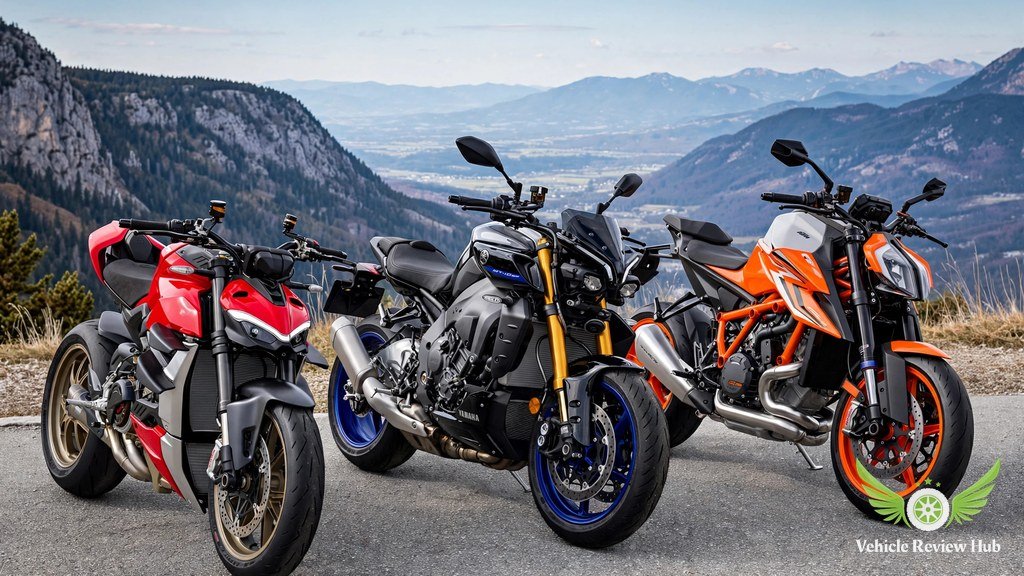
Yamaha MT-10 SP vs Aprilia Tuono V4 Factory and KTM Super Duke R Evo
The comparison numbers tell a clear story about Yamaha MT-10 SP performance. The SP is slowest to 60 mph and over the quarter mile, heaviest at 477 lb against 470 lb for the Aprilia and 471 lb for the KTM, and longest to stop from 60 mph. It is nearly the most fuel-efficient of the trio at 35.2 mpg against 29.0 for the Aprilia and 35.9 for the KTM, and its 55.3-inch wheelbase is the shortest, which helps agility. The Aprilia’s V4 and the KTM’s big V-twin produce more torque lower down, explaining their launch advantage, while the Yamaha’s crossplane four needs revs. The SP fights back on value and versatility, with an electronics suite, semi-active suspension, and cruise control matching the rivals, plus an engine character testers single out as special.
| Cycle World measured figure | Yamaha MT-10 SP | Aprilia Tuono V4 Factory | KTM 1290 Super Duke R Evo |
|---|---|---|---|
| 0-60 mph | 3.20 sec | 2.99 sec | 3.15 sec |
| Quarter mile | 10.99 sec | 10.57 sec | 10.54 sec |
| 0-100 mph | 6.23 sec | 5.79 sec | 5.64 sec |
| Braking 60-0 mph | 121.72 ft | 115.43 ft | 118.80 ft |
| Average fuel economy | 35.2 mpg | 29.0 mpg | 35.9 mpg |
| Measured wet weight | 477 lb | 470 lb | 471 lb |
| Fuel capacity | 4.5 gal | 4.8 gal | 4.2 gal |
Is the Yamaha MT-10 SP Suitable for Experienced Riders and Daily Riding?
Yamaha MT-10 SP performance makes the SP a motorcycle for experienced riders, full stop. With 134 rear-wheel horsepower, a 3.20-second 0-60 time, and a throttle that can overwhelm the rear tire, the SP punishes ham-fisted inputs, and its 472 lb weight and 32.9-inch seat add to low-speed demands. Riders stepping up from YZF-R3 performance levels or from YZF-R125 performance territory should treat the SP as a multi-step jump and spend time in gentler power modes first. For experienced riders, daily riding is genuinely realistic, and the buying guide walks through new versus used pricing. The honest limits are fuel range, wind protection, and running costs, which is where the reliability and maintenance picture matters. Compared with YZF-R7 performance, the SP is in a different league of speed and demands a different level of respect.
Yamaha MT-10 SP Performance FAQs
These direct answers cover the questions buyers ask most about Yamaha MT-10 SP performance, from dyno figures and acceleration times to fuel economy, top speed, and whether the SP works as a daily motorcycle.
How much horsepower does the Yamaha MT-10 SP make?
For Yamaha MT-10 SP performance, Cycle World’s dyno test measured 134.4 rear-wheel horsepower at 10,100 rpm and 74.5 lb-ft of torque at 9,000 rpm. Yamaha’s claimed output is 163.6 hp at 11,500 rpm, a European figure; the difference is normal drivetrain loss.
What is the Yamaha MT-10 SP 0-60 time?
For Yamaha MT-10 SP performance, the SP accelerates from 0-60 mph in 3.20 seconds in Cycle World’s comparison test, with 0-100 mph taking 6.23 seconds. Launch technique matters, since the bike fights wheelies hard.
What is the Yamaha MT-10 SP quarter mile time?
For Yamaha MT-10 SP performance, the SP covers the quarter mile in 10.99 seconds at 134.12 mph in Cycle World’s comparison test, slightly slower than the Aprilia at 10.57 seconds and the KTM at 10.54 seconds.
What is the Yamaha MT-10 SP top speed?
For Yamaha MT-10 SP performance, the commonly quoted top speed of 155 mph is a European estimate, not a verified stock US test result. In stock form the SP should reach roughly 150-155 mph depending on rider size, tuck, wind, and road.
What is the Yamaha MT-10 SP mileage and MPG?
For Yamaha MT-10 SP performance, Yamaha’s official combined estimate is 36 mpg, and Cycle World’s test average was 35.2 mpg. UK figures look higher only because they use imperial gallons: Bennetts’ tested 37.3 mpg imperial equals about 31.1 mpg US.
How far can the Yamaha MT-10 SP go on a tank?
For Yamaha MT-10 SP performance, the SP covers about 158-162 miles on its 4.5-gallon tank at average economy, and about 120 miles when ridden hard. Plan fuel stops every 130-150 miles.
Is the Yamaha MT-10 SP faster than the standard MT-10?
No meaningful straight-line difference exists between the SP and the standard MT-10, since they share essentially the same engine tune. Different dyno tests have recorded about 134.4 rear-wheel horsepower for the SP and about 138.5 for the standard bike, but those come from different bikes, dynos, and days. Yamaha MT-10 SP performance here is about suspension, brakes, and electronics, not more power.
What suspension does the Yamaha MT-10 SP have?
For Yamaha MT-10 SP performance, the SP uses Öhlins electronically controlled semi-active suspension front and rear, with a 43mm fork, 4.7 inches of travel at both ends, three automatic modes (A-1, A-2, A-3), and three manual modes (M-1, M-2, M-3). The standard MT-10 uses KYB suspension instead.
What brakes does the Yamaha MT-10 SP have?
For Yamaha MT-10 SP performance under braking, the SP has dual 320mm front discs with radial-mount four-piston calipers, a Brembo radial master cylinder, Advics calipers, SP-exclusive braided lines, and a 220mm rear disc, backed by lean-sensitive ABS and Brake Control. Cycle World measured 121.72 feet from 60-0 mph.
Is the Yamaha MT-10 SP good for beginners?
No. Yamaha MT-10 SP performance is for experienced riders: 134 rear-wheel horsepower, a 3.20-second 0-60 time, 472 lb of wet weight, and a 32.9-inch seat height. Beginners should start smaller and build skill before considering any liter-class naked bike.
Can the Yamaha MT-10 SP be ridden daily?
Yes, for experienced riders. For Yamaha MT-10 SP performance as a daily ride, the SP’s smooth ride-by-wire throttle in gentler modes, assist-and-slipper clutch, quickshifter, cruise control, and upright position make commuting realistic, but 160-mile range, wind blast, and faster tire and brake wear are real trade-offs.
Does the Yamaha MT-10 SP have cruise control?
Yes. Yamaha MT-10 SP performance on the highway benefits from standard cruise control, working through the ride-by-wire throttle, adjustable from the left handlebar switchgear.
How heavy is the Yamaha MT-10 SP?
For Yamaha MT-10 SP performance, weight matters: Yamaha lists the SP at 472 lb wet, while Cycle World measured 477 lb. The 5 lb difference from the standard MT-10’s 467 lb comes mainly from the Öhlins suspension hardware.