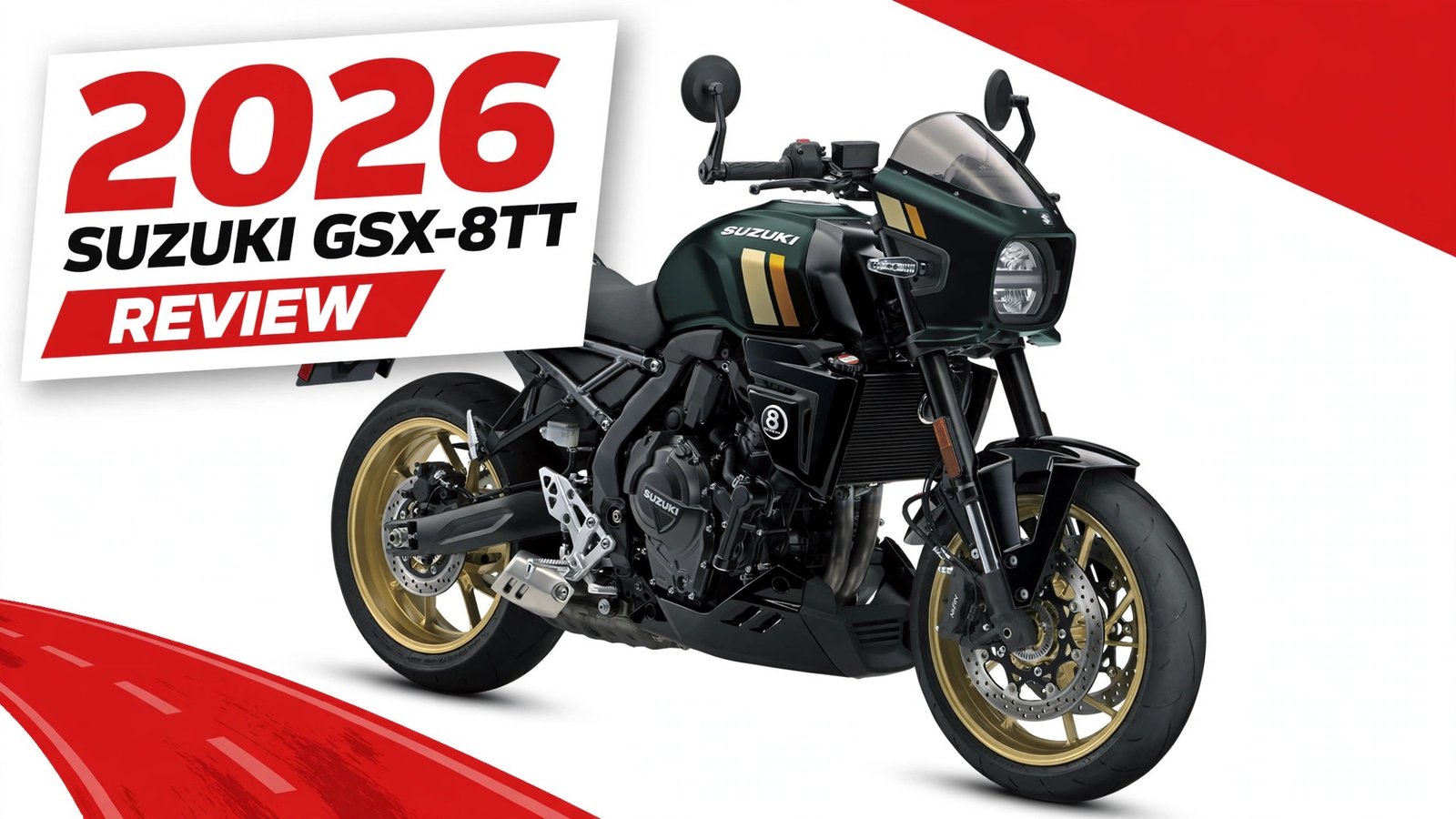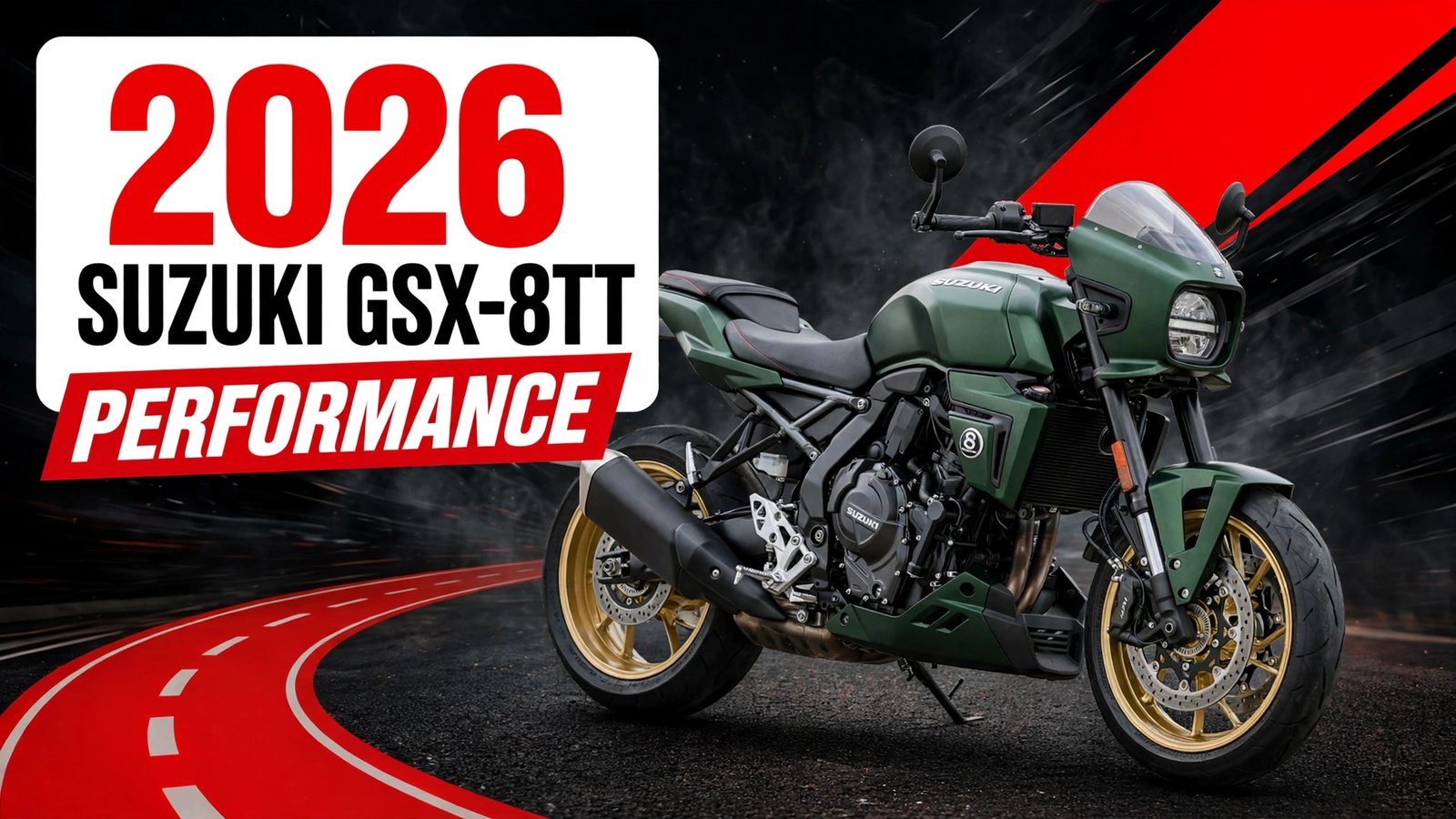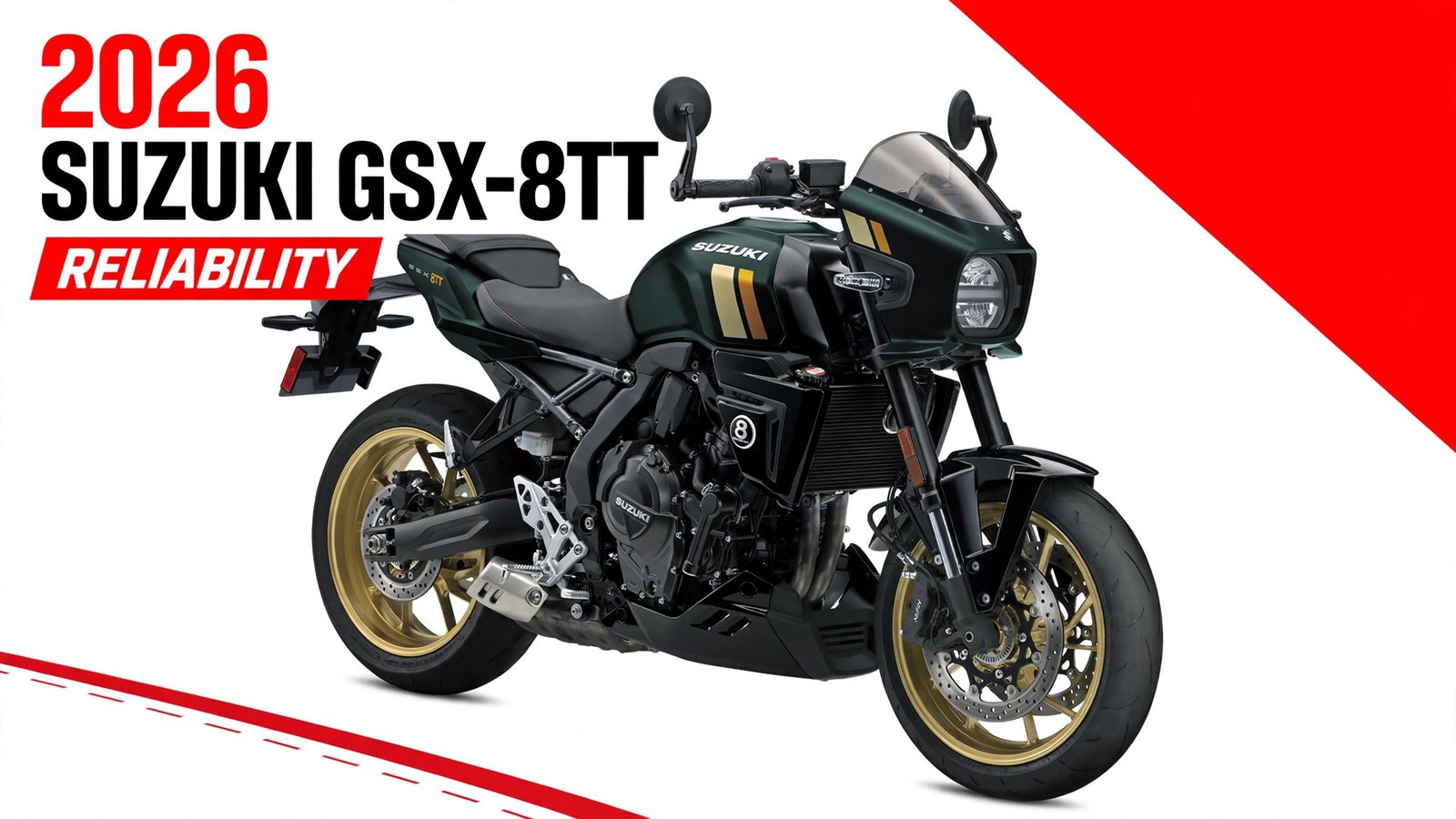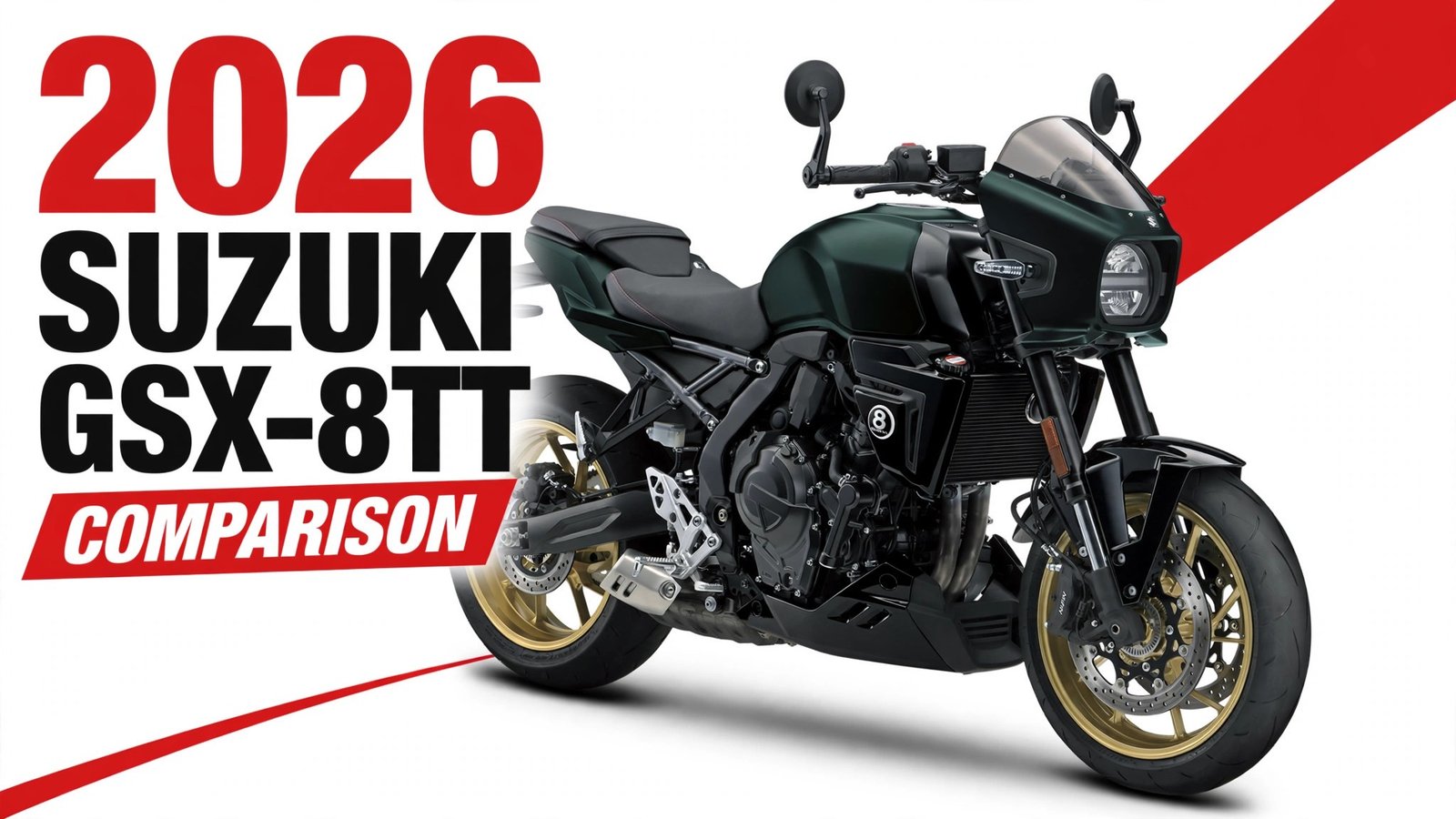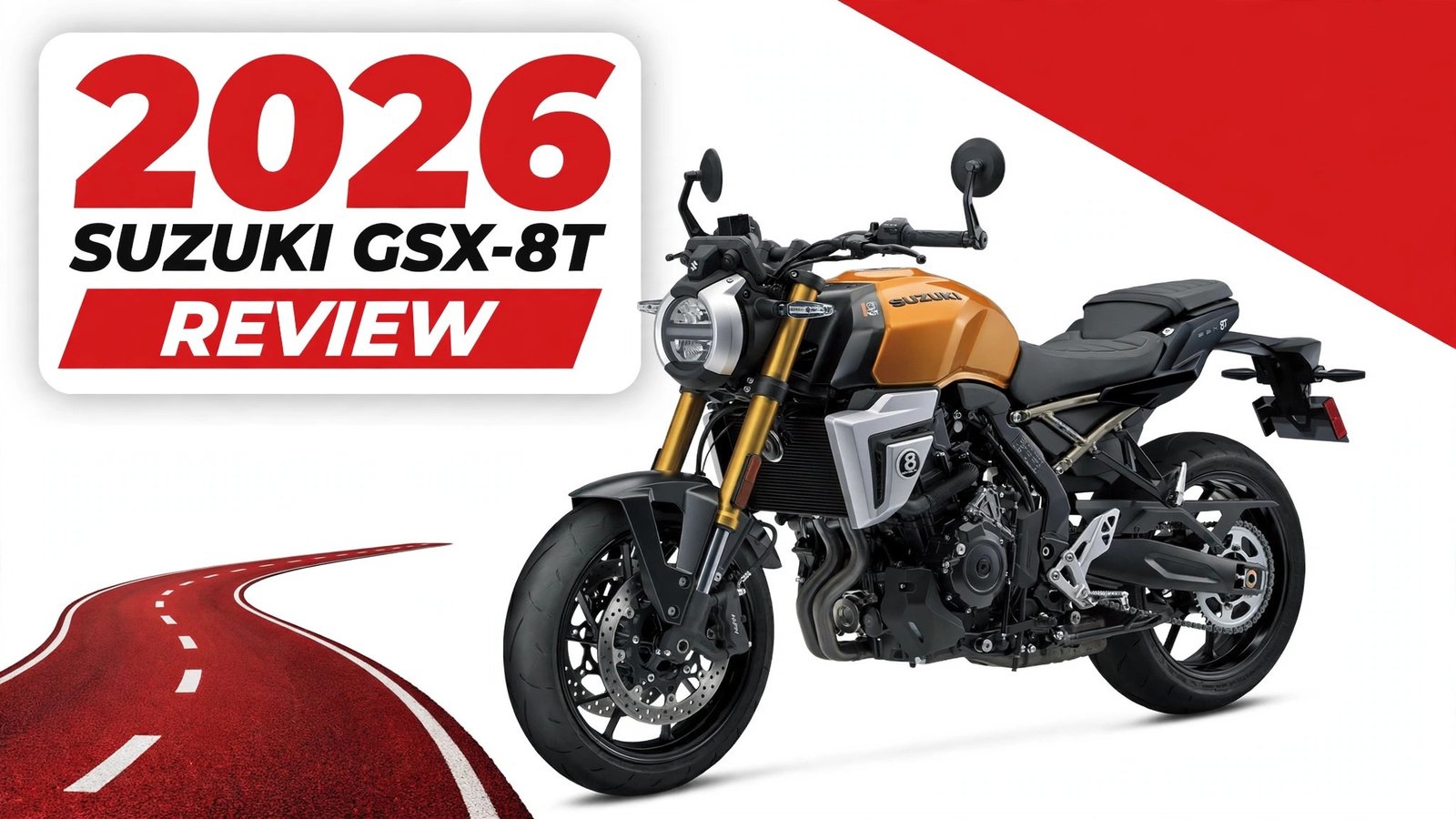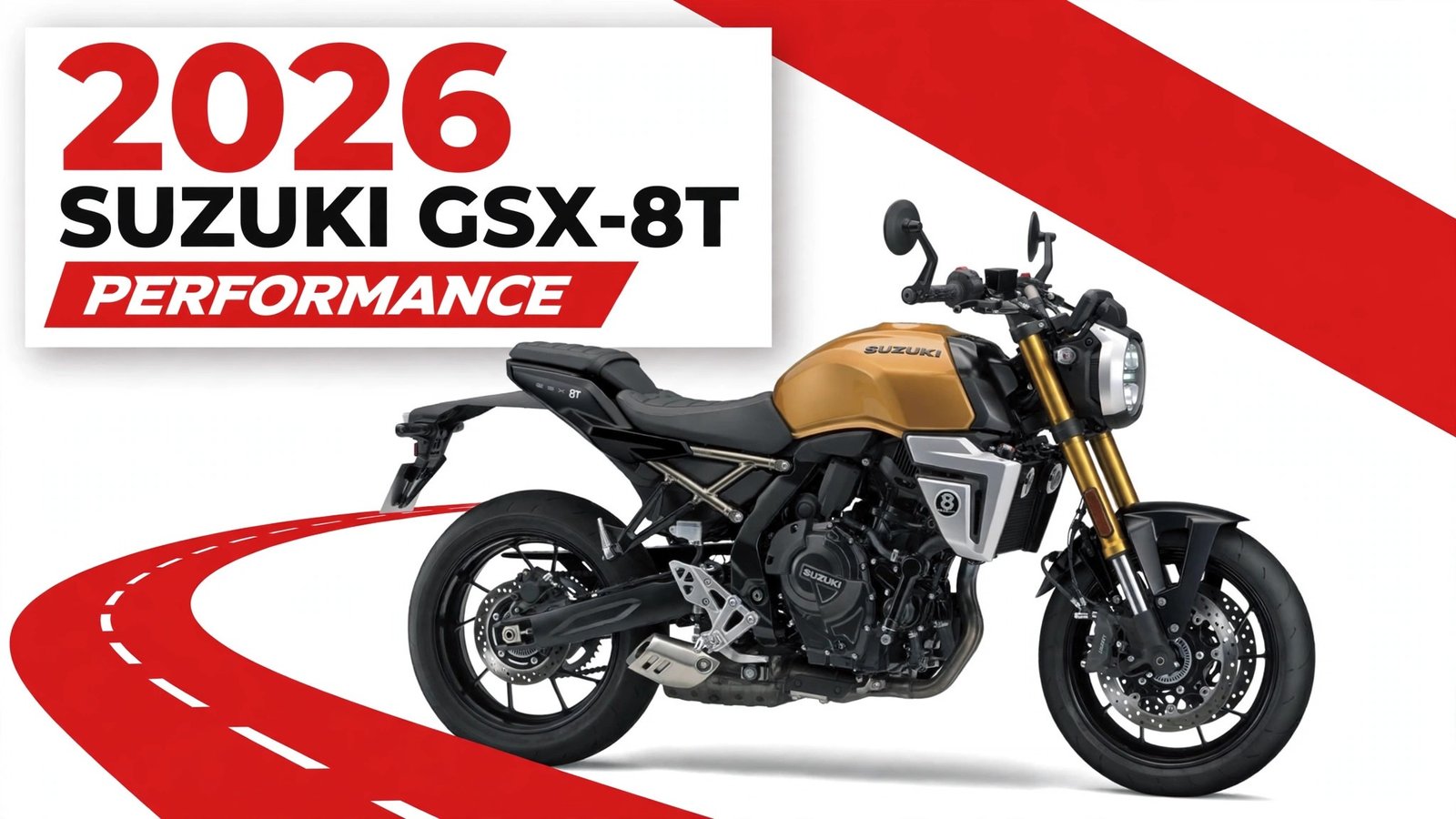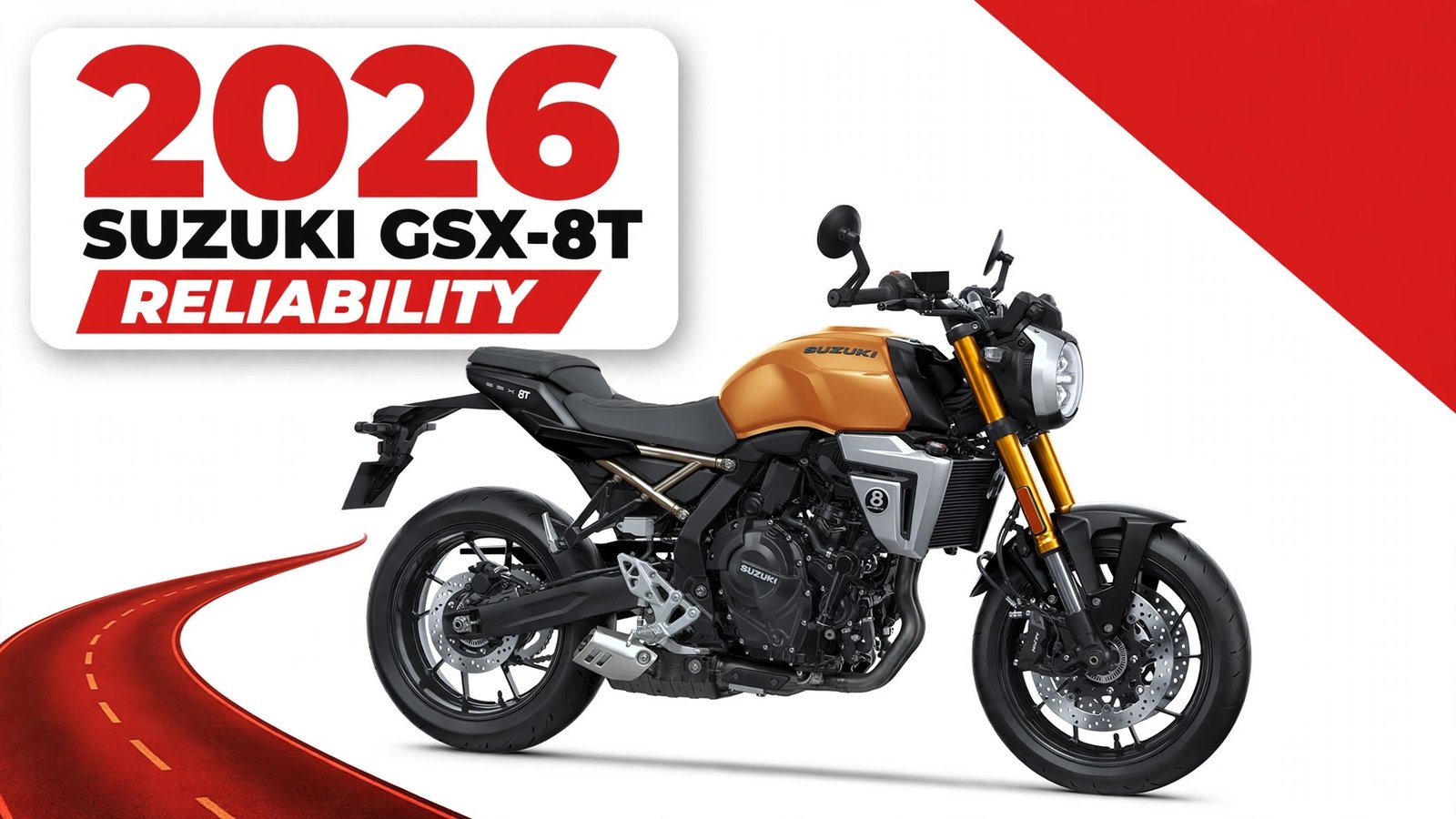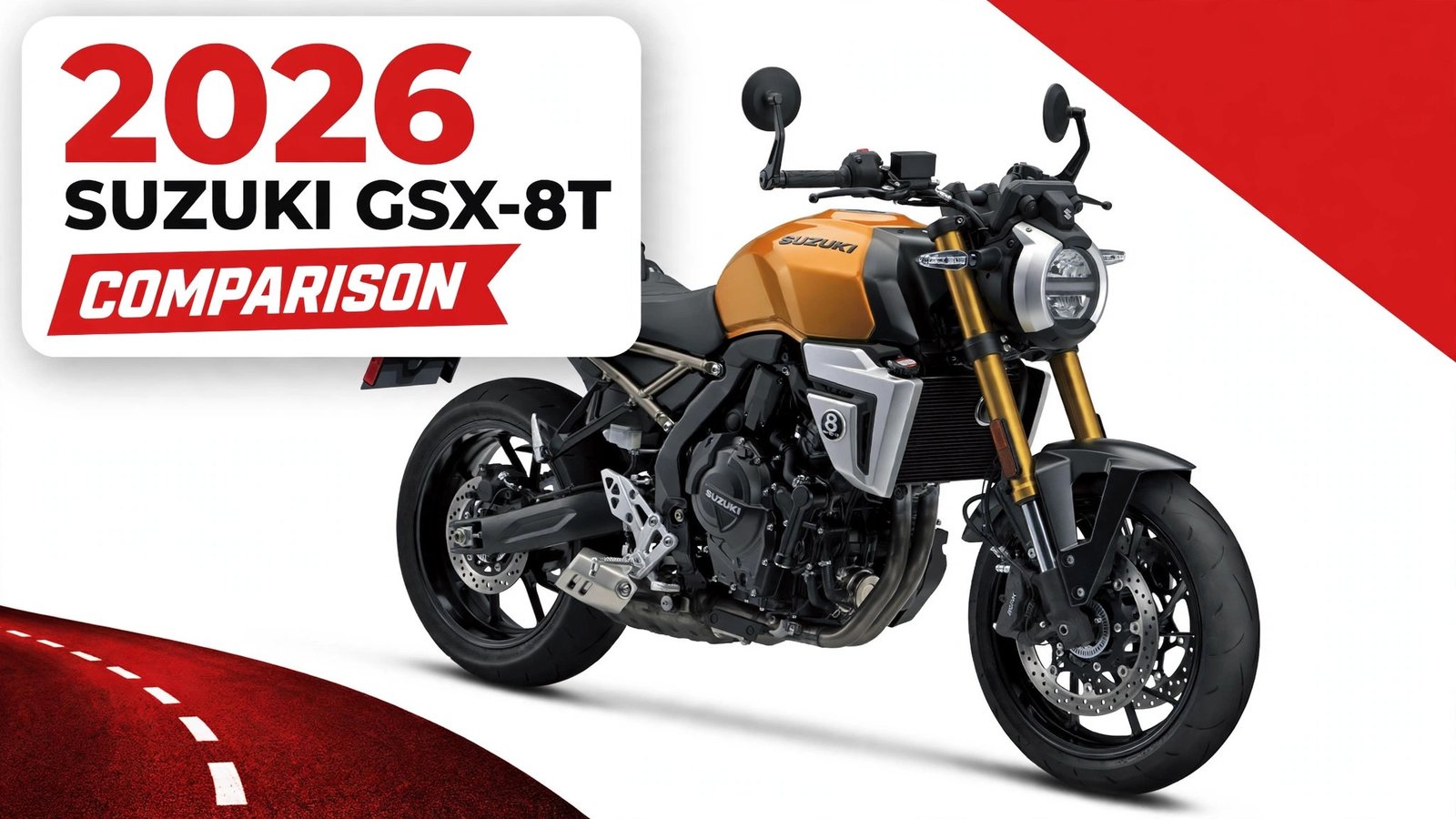
The short answer in this Suzuki GSX-8T comparison is that the 8T is the strongest, best-equipped and most expensive bike in its class — all three at once. At $10,649 plus $700 destination, $11,349 in total, it costs $2,075 more than the Yamaha XSR700, $1,665 more than the Kawasaki Z650RS and $2,050 more than the Honda CB650R. What it gives back is the most power, the biggest tank and the fullest equipment list: a standard quickshifter, a 5-inch TFT, three ride modes, four-mode traction control, a USB-C socket and a lithium-ion battery. This Suzuki GSX-8T comparison works through each rival one by one, with the prices, the specs and the verdict.
Suzuki GSX-8T Overview and Its Closest Rivals
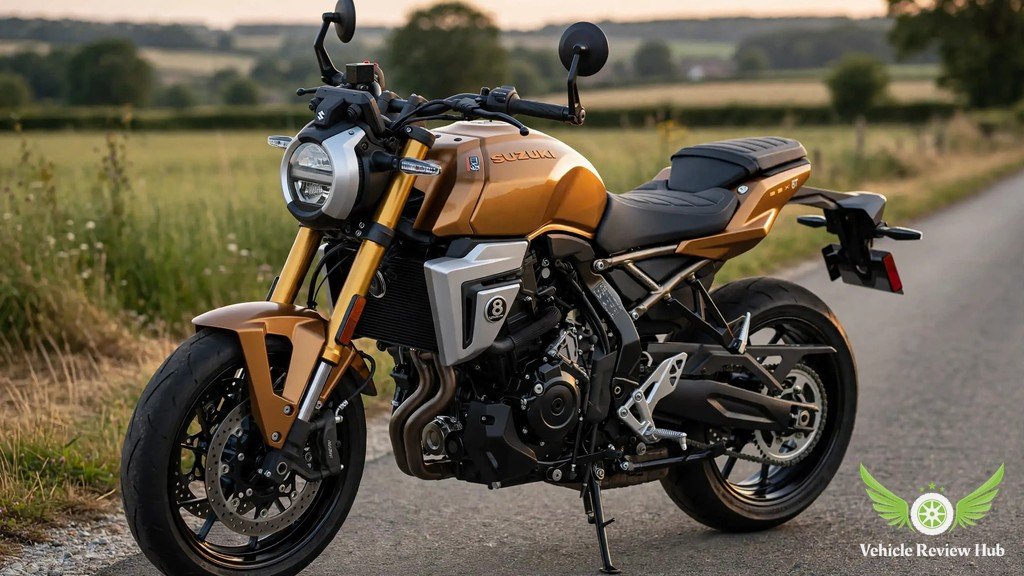
The 8T is a 2026-model naked retro roadster built on the GSX-8S platform: the same 776cc parallel twin, the same frame, the same suspension. Suzuki’s global claimed output is 81.8 hp at 8,500 rpm and 57.5 lb-ft at 6,800 rpm — Suzuki USA publishes no figures of its own. It weighs 443 lb, carries 16.5 litres (4.3 US gallons) and returns 56 mpg. The three rivals in this Suzuki GSX-8T comparison are the bikes a buyer actually cross-shops: Yamaha’s XSR700, Kawasaki’s Z650RS and Honda’s CB650R.
Why These Three Rivals: Same Class, Same Job
These three are the right rivals because they do the same job: all four are middleweight naked retro roadsters sold in the USA as 2026 models in the same $8,500 to $11,500 price band. The GSX-8T review covers the bike itself in full; this guide is about where it stands against the three machines a buyer will actually park next to it in a showroom. Left out of the main three are the Triumph Trident 660, British rather than Japanese and covered in the alternatives section; the Royal Enfield Interceptor 650, a different price class entirely at $6,149; and the Yamaha Tracer 9 GT+, not sold in the USA.
How the Four Bikes Differ at a Glance
At a glance in this Suzuki GSX-8T comparison, the 8T leads on engine size, claimed power, torque and tank capacity, and trails on price — it is the most expensive of the four by a clear margin.
| Bike | Engine | Claimed power | Torque | Weight | Tank | Seat |
|---|---|---|---|---|---|---|
| Suzuki GSX-8T | 776cc twin | 81.8 hp @ 8,500 rpm | 57.5 lb-ft @ 6,800 rpm | 443 lb | 4.3 gal | 32.0 in |
| Yamaha XSR700 | 689cc twin | 73 hp | 50 lb-ft | 410 lb | 3.7 gal | 32.9 in |
| Kawasaki Z650RS | 649cc twin | 67 hp @ 8,000 rpm | 48.5 lb-ft @ 6,700 rpm | 412.3 lb | 3.2 gal | 31.5 in |
| Honda CB650R | 649cc four | ~94 hp @ 12,000 rpm | 46.4 lb-ft @ 9,500 rpm | ~456 lb | 4.1 gal | 31.9 in |
Suzuki GSX-8T vs Yamaha XSR700
The XSR700 is the 8T’s oldest and cheapest Japanese rival, and the one that makes the value question sharpest. The 8T answers with more of everything. The question is whether the extra $2,075 buys anything the rider will feel.

Engine, Specs and Performance Side by Side
In this Suzuki GSX-8T comparison, the 8T’s 776cc twin claims 81.8 hp and 57.5 lb-ft against the XSR700’s 689cc CP2 twin, which Yamaha claims at 73 hp and 50 lb-ft — roughly 9 hp and 7.5 lb-ft in the Suzuki’s favour, and the gap is bigger than the numbers suggest, because the 8T’s torque arrives at 6,800 rpm while the Yamaha needs revs. There is no instrumented top-speed or 0–60 test of an 8T yet, so neither number is printed here; the only measured power figures for the engine family are GSX-8S sibling dyno runs, such as Cycle World’s 74 hp at 8,380 rpm — 8S data, not 8T data. On the road, the difference is weight as much as power: the XSR700 is 410 lb wet, 33 lb lighter, so it feels livelier at parking-lot speeds. The 8T answers with midrange pull and range — its 16.5-litre tank is 2.5 litres bigger than the Yamaha’s 14 litres, and at 56 mpg in US gallons it goes further between fuel stops. Yamaha claims 58 mpg for the XSR700, so the fuel bills are close. The GSX-8T performance guide covers the dyno figures in full.
Price, Equipment and Which Suits Which Rider
The XSR700 costs $8,599 plus $675 destination, $9,274 in total — $2,075 less than the 8T’s $11,349, the biggest price gap in this Suzuki GSX-8T comparison and the one the 8T has to justify. What the $2,075 buys in this Suzuki GSX-8T comparison is equipment the Yamaha does not offer at any price: a standard quickshifter, a 5-inch TFT, three ride modes, four-mode traction control, a USB-C socket and a lithium-ion battery. The XSR700 has none of those — no traction control, no ride modes, no quickshifter, and an LCD dash instead of a TFT. It does have ABS, a 41 mm fork and a preload-adjustable rear shock. The XSR700 suits the rider who wants the lightest, simplest and cheapest retro in the class and does not care about electronics; the 8T suits the rider who will actually use the equipment. If the electronics list reads like a wishlist, buy the Suzuki; if it reads like clutter, keep the $2,075.
Suzuki GSX-8T vs Kawasaki Z650RS
The Z650RS is the quietest bike in this Suzuki GSX-8T comparison — the lowest-seated, the simplest, and the one with the smallest price gap to the 8T. At $8,999 plus $685 destination, $9,684 in total, it undercuts the 8T by $1,665 — the narrowest margin of the three Japanese rivals.

Engine, Specs and Performance Side by Side
Kawasaki publishes the Z650RS’s figures itself: 67.0 hp at 8,000 rpm and 48.5 lb-ft at 6,700 rpm from its 649cc parallel twin. Against the 8T’s claimed 81.8 hp and 57.5 lb-ft, that is a gap of roughly 15 hp and 9 lb-ft — the widest power gap in this Suzuki GSX-8T comparison. The Kawasaki is a smaller engine working harder: smooth and friendly, but it has to be revved where the 8T’s bigger twin simply pulls. The Kawasaki does have one advantage the table hides: at 412.3 lb curb weight it is 31 lb lighter than the 8T, and with a 31.5-inch seat — the lowest of the four — it is the easiest bike here to get both feet down on. The trade is range: its 3.2-gallon tank is the smallest in the group, a full 1.1 gallons behind the 8T’s 4.3.
Price, Equipment and Which Suits Which Rider
At $9,684 in total against the 8T’s $11,349, the Z650RS leaves $1,665 in the buyer’s pocket — the smallest saving in this Suzuki GSX-8T comparison. The 8T’s answer is the same equipment list: a standard quickshifter, a 5-inch TFT, three ride modes, four-mode traction control, a USB-C socket and a lithium-ion battery, none of which the Kawasaki offers. The Z650RS has ABS and an assist and slipper clutch, and that is the extent of its electronics — no traction control, no ride modes, no quickshifter, and round analogue dials with a small LCD instead of a TFT. The Z650RS suits shorter riders first — its 31.5-inch seat is half an inch lower than the 8T’s — and the rider who wants the most traditional retro look and the least to learn. The 8T suits the rider who wants the power and the equipment and is willing to pay $1,665 for it. The service schedule is covered in the GSX-8T reliability guide.
Suzuki GSX-8T vs Honda CB650R
The CB650R is the odd one out in this Suzuki GSX-8T comparison: the only four-cylinder here, the only one with an automatic clutch, and the only rival whose price went down for 2026. Honda cut the price and made the E-Clutch standard on the US bike, so the CB650R arrives at $8,699 plus $600 destination — $9,299 in total, $2,050 less than the 8T.

Engine, Specs and Performance Side by Side
The CB650R’s 649cc inline-four makes about 94 hp at 12,000 rpm and 46.4 lb-ft at 9,500 rpm — press and European figures, because Honda USA publishes no horsepower figure for it, just as Suzuki USA publishes none for the 8T. On paper, in this Suzuki GSX-8T comparison, the Honda has more peak power than the 8T’s claimed 81.8 hp, and it is the only bike here that does. The paper tells only half the story: the Honda’s torque is the lowest in the group at 46.4 lb-ft, against the 8T’s 57.5, and it arrives at 9,500 rpm — the four needs revs to deliver, while the 8T’s twin pulls from the middle of the rev range. Around town and on a winding road, the Suzuki is the quicker bike in the real world; on an open road with the revs held high, the Honda’s four is the more exciting one. The CB650R is also the heaviest rival at about 456 lb, 13 lb more than the 8T, and its 15.4-litre tank — 4.1 US gallons — is only 0.2 gallons smaller, with a 31.9-inch seat, a tenth lower than the 8T’s.
Price, Equipment and Which Suits Which Rider
At $9,299 in total against the 8T’s $11,349, the CB650R saves its buyer $2,050 — and it spends some of that saving on the one piece of technology the 8T cannot match. The E-Clutch is standard on the 2026 US bike: it works the clutch for the rider at starts and shifts, while leaving the lever in place for anyone who wants it. It is not a quickshifter — it removes clutch work entirely rather than just automating the shift — and in stop-and-go traffic it is the more useful system. Honda also cut the price for 2026: the 2025 bike listed at $9,399, so the 2026 E-Clutch bike costs $700 less. The 8T’s defence is the rest of the equipment list: a standard quickshifter, three ride modes, four-mode traction control, a USB-C socket and a lithium-ion battery, plus the bigger tank. The CB650R suits the rider who wants four-cylinder character and the E-Clutch; the 8T suits the rider who wants the twin’s midrange, the quickshifter and the fullest equipment list in this Suzuki GSX-8T comparison.
Suzuki GSX-8T Price and Value Compared
Price is where this Suzuki GSX-8T comparison is decided, because the 8T’s case is not that it is cheap — it is that it is worth it. Every price below shows the destination charge separately. The video below is MOTOBOB’s first-ride review of the GSX-8T and the GSX-8TT together — it covers both bikes, so look for the naked bike with the round headlight for the 8T.

New Prices Across the Four Bikes in the USA
The mechanically identical GSX-8S is $9,249 plus $460 destination, $9,709 in total — so the 8T costs $1,400 more than its own twin on MSRP, $1,640 more on totals, the premium for the styling, the bigger tank, the battery and the USB-C socket. The faired sibling, the GSX-8TT, is $11,149, $500 more than the 8T, with the destination presumed at the same $700 — a total of about $11,849. And the sticker price is already softening in this Suzuki GSX-8T comparison: dealer advertising has the 8T at $9,753 and $9,795 within months of launch, roughly $850 to $900 under MSRP, narrowing the real-world gap to the XSR700 to about $1,200. The Suzuki USA GSX-8T page lists the $10,649 MSRP, and the RevZilla first ride review confirms it.
| Bike | MSRP | Destination | Total | Gap to 8T |
|---|---|---|---|---|
| Suzuki GSX-8T | $10,649 | $700 | $11,349 | — |
| Yamaha XSR700 | $8,599 | $675 | $9,274 | $2,075 less |
| Kawasaki Z650RS | $8,999 | $685 | $9,684 | $1,665 less |
| Honda CB650R E-Clutch | $8,699 | $600 | $9,299 | $2,050 less |
| Triumph Trident 660 | $8,995 | ~$950 (dealer-reported) | ~$9,945 | ~$1,404 less |
| Royal Enfield Interceptor 650 | $6,149 | Not verified | — | $5,200 less on MSRP |
Running Costs and Resale Value Compared
Running costs are where the 8T’s short service intervals count against it: oil and filter every 3,750 miles, spark plugs at 7,500 miles and a valve-clearance inspection at 15,000 miles — a short, frequent schedule, and an owner riding 7,500 miles a year does two oil changes a year. The rivals’ service intervals were not verified, so none are printed here. Fuel is close: the 8T returns 56 mpg in US gallons, Yamaha claims 58 mpg for the XSR700, and Triumph claims 57.6 mpg for the Trident 660. The warranty picture in this Suzuki GSX-8T comparison is clearer: the 8T, the XSR700, the Z650RS and the CB650R all carry a 12-month warranty in the USA, the Trident 660 carries a two-year unlimited-mileage warranty, and the Interceptor 650 carries a three-year unlimited-mileage warranty — the longest cover here by two full years. The Trident also stretches its service intervals to 10,000 miles — fewer dealer visits than the 8T’s 3,750-mile oil changes. On resale, no verified US figures exist for any of these bikes, so none are printed here — the 8T is too new for a resale record.
Suzuki GSX-8T Comparison Verdict and US Alternatives
The verdict in this Suzuki GSX-8T comparison: the 8T wins the comparison and loses the value argument. It is the strongest bike here, the best equipped and the most complete, and also the most expensive by a clear margin.

The Priciest Japanese Retro, Defended on Equipment
The defence of the 8T’s price is its equipment list: a standard bi-directional quickshifter, a 5-inch colour TFT, three ride modes, four-mode traction control, a USB-C socket and a lithium-ion battery, while the cheaper rivals charge extra for them or do not offer them at all. Add the biggest engine, the most claimed torque, the biggest tank and the longest range, and the $11,349 total starts to look like a complete motorcycle rather than an expensive one. The attack on the price in this Suzuki GSX-8T comparison is just as strong: the 8T costs $1,400 more than the mechanically identical GSX-8S on MSRP, and $1,665 to $2,075 more than the XSR700, the Z650RS and the CB650R on totals — and none of those rivals is a bad motorcycle. The 8T also asks for the most maintenance, and it has no cruise control, no IMU and no lean-sensitive ABS. Buy it if you will use the equipment every ride and keep the bike long enough for the premium to fade. Do not buy it if you only want the engine: the GSX-8S is the same motorcycle underneath for $1,400 less. For a bigger Suzuki, the GSX-S1000GT comparison shows what the 2026 GT+ offers.
Also Consider: Trident 660 and Interceptor 650
Two bikes outside the Japanese three deserve a hearing. The Triumph Trident 660 is the strongest non-Japanese rival here. Its 660cc triple makes a claimed 94 hp at 11,250 rpm and 50.2 lb-ft at 8,250 rpm — more peak power than the 8T’s claimed 81.8 hp, though less torque — and it weighs about 430 lb with a 3.7-gallon tank and a 31.9-inch seat. It has three ride modes, traction control, ride-by-wire and a TFT as standard, a two-year unlimited-mileage warranty, and 10,000-mile service intervals. Its price is $8,995, cut from the $9,145 announced in January 2026 before bikes reached dealers; some tables still show the older figures. The destination charge is about $950 by dealer reports, not Triumph-published — a total of about $9,945, roughly $1,404 less than the 8T. The Cycle News Trident 660 review confirms the 94 hp figure and the revised engine. The Royal Enfield Interceptor 650 is the opposite kind of alternative: a 648cc air/oil-cooled twin making 46.8 hp at 7,250 rpm and 38.6 lb-ft at 5,150 rpm, weighing 478 lb with a 3.6-gallon tank and a 31.7-inch seat. At $6,149 it costs $5,200 less than the 8T on MSRP, carries a three-year unlimited-mileage warranty, and Royal Enfield estimates 63 mpg. It has half the 8T’s power and none of its electronics, but it has classic character and the lowest price here by a wide margin.
Suzuki GSX-8T Comparison FAQs
The questions buyers actually ask, answered from the figures in this Suzuki GSX-8T comparison.
Is the Suzuki GSX-8T worth the extra money over the Yamaha XSR700?
Yes, if you will use the equipment. The 8T costs $2,075 more on totals, and it gives back 81.8 hp claimed against 73, more torque and a bigger tank, a standard quickshifter, a 5-inch TFT, three ride modes, four-mode traction control, a USB-C socket and a lithium-ion battery — none of which the Yamaha offers. If that list reads like clutter, buy the Yamaha.
Is the Suzuki GSX-8T faster than the Kawasaki Z650RS?
On paper, yes. The 8T claims 81.8 hp and 57.5 lb-ft against the Z650RS’s 67.0 hp and 48.5 lb-ft, the widest power gap in this Suzuki GSX-8T comparison. There is no instrumented top-speed or 0–60 test of an 8T yet, so no acceleration times are printed — but the 8T’s bigger twin pulls harder from the middle of the rev range.
Is the Suzuki GSX-8T better than the Honda CB650R?
In this Suzuki GSX-8T comparison, it depends on what you want. The 8T has more torque, a bigger tank, a standard quickshifter and three ride modes. The CB650R has a four-cylinder engine making about 94 hp at 12,000 rpm, an E-Clutch that works the clutch for you, and a price $2,050 lower. Buy the Suzuki for midrange pull; buy the Honda for the four and the E-Clutch.
How much more does the Suzuki GSX-8T cost than its rivals?
On totals including destination in this Suzuki GSX-8T comparison: $2,075 more than the Yamaha XSR700 ($9,274), $1,665 more than the Kawasaki Z650RS ($9,684) and $2,050 more than the Honda CB650R ($9,299). Against the Triumph Trident 660 it is about $1,404 more on an estimated total of $9,945.
Which is the cheapest bike in this comparison?
The Royal Enfield Interceptor 650 at $6,149 MSRP — $5,200 less than the 8T on MSRP, though its destination charge was not verified. Among the three main Japanese rivals in this Suzuki GSX-8T comparison, the Yamaha XSR700 is cheapest at $9,274 in total, then the Honda CB650R at $9,299 and the Kawasaki Z650RS at $9,684.
Does the Suzuki GSX-8T have a quickshifter?
Yes, a bi-directional quickshifter is standard on the 8T — one of the biggest equipment differences in this Suzuki GSX-8T comparison. The XSR700 and the Z650RS do not offer one, and the CB650R answers with the E-Clutch instead. The 8T’s downshifts are delayed with no rev-match, according to RevZilla.
Which bike has the most horsepower?
The Honda CB650R and the Triumph Trident 660 both claim about 94 hp, the highest figures in this Suzuki GSX-8T comparison — but both are press and European figures, since neither Honda USA nor Triumph publishes horsepower for the US bikes. The 8T claims 81.8 hp, the XSR700 claims 73 hp and the Z650RS publishes 67.0 hp. The 8T has the most torque at 57.5 lb-ft.
Which bike is best for beginners?
The Kawasaki Z650RS is the easiest for a newer rider: the lowest seat at 31.5 inches, the lightest weight of the four at 412.3 lb, and the simplest electronics in this Suzuki GSX-8T comparison — nothing to configure. The XSR700 is nearly as friendly at 410 lb. The 8T is not a bad first big bike, but its 443 lb, 32.0-inch seat and 81.8 hp make it more serious.
Which bike has the longest range?
The 8T, by a clear margin in this Suzuki GSX-8T comparison. Its 4.3-gallon tank is the biggest in the group, and at 56 mpg in US gallons it goes furthest between fuel stops. The CB650R is next at 4.1 gallons, then the XSR700 and the Trident 660 at 3.7, and the Z650RS last at 3.2.
Is the Suzuki GSX-8T more reliable than the Yamaha XSR700?
There is no evidence either way yet — the 8T is a 2026 model with no recalls naming it in published notices, and no long-term reliability record exists. The XSR700’s CP2 engine has been proving itself since 2015, which is a real advantage. The 8T’s maintenance is also more demanding: oil every 3,750 miles, plugs at 7,500 and a valve check at 15,000 miles.
Should I buy the GSX-8T or the GSX-8S?
In this Suzuki GSX-8T comparison, buy the 8S if you only want the engine: the same 776cc twin, frame and suspension for $9,709 in total — $1,640 less than the 8T on totals, $1,400 less on MSRP. Buy the 8T if you want the retro styling, the round headlight, the bigger 16.5-litre tank, the lithium-ion battery, the bar-end mirrors and the USB-C socket, and you are willing to pay $1,400 for them.
What about the Triumph Trident 660 and Royal Enfield Interceptor 650?
Both are worth a look — the Trident 660 claims 94 hp, has three ride modes, traction control and a TFT, costs $8,9955, and carries a two-year unlimited-mileage warranty with 10,000-mile service intervals. The Interceptor 650 costs $6,149, carries a three-year unlimited-mileage warranty, and offers classic character at half the 8T’s power. Both beat the 8T on price and warranty.