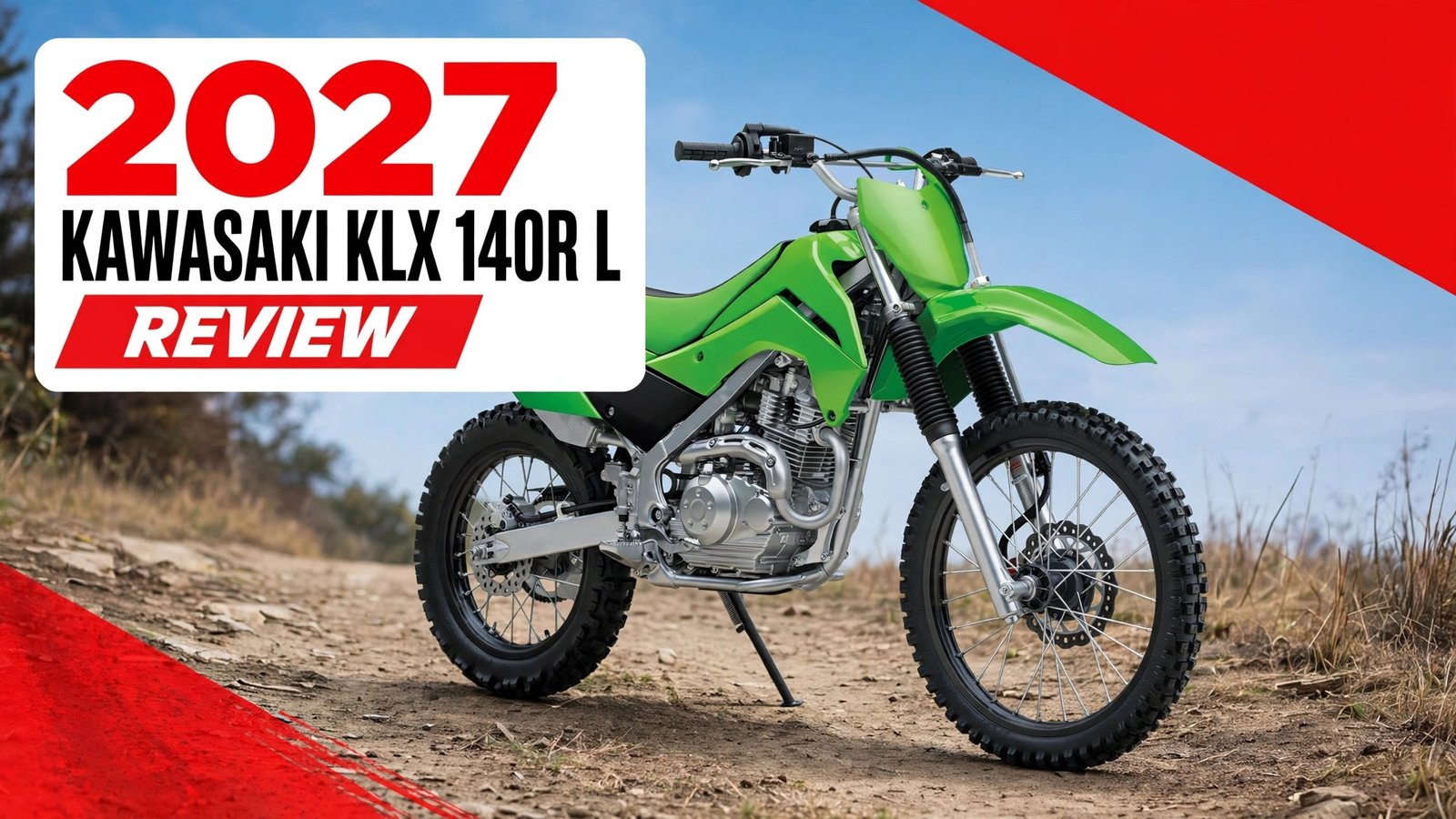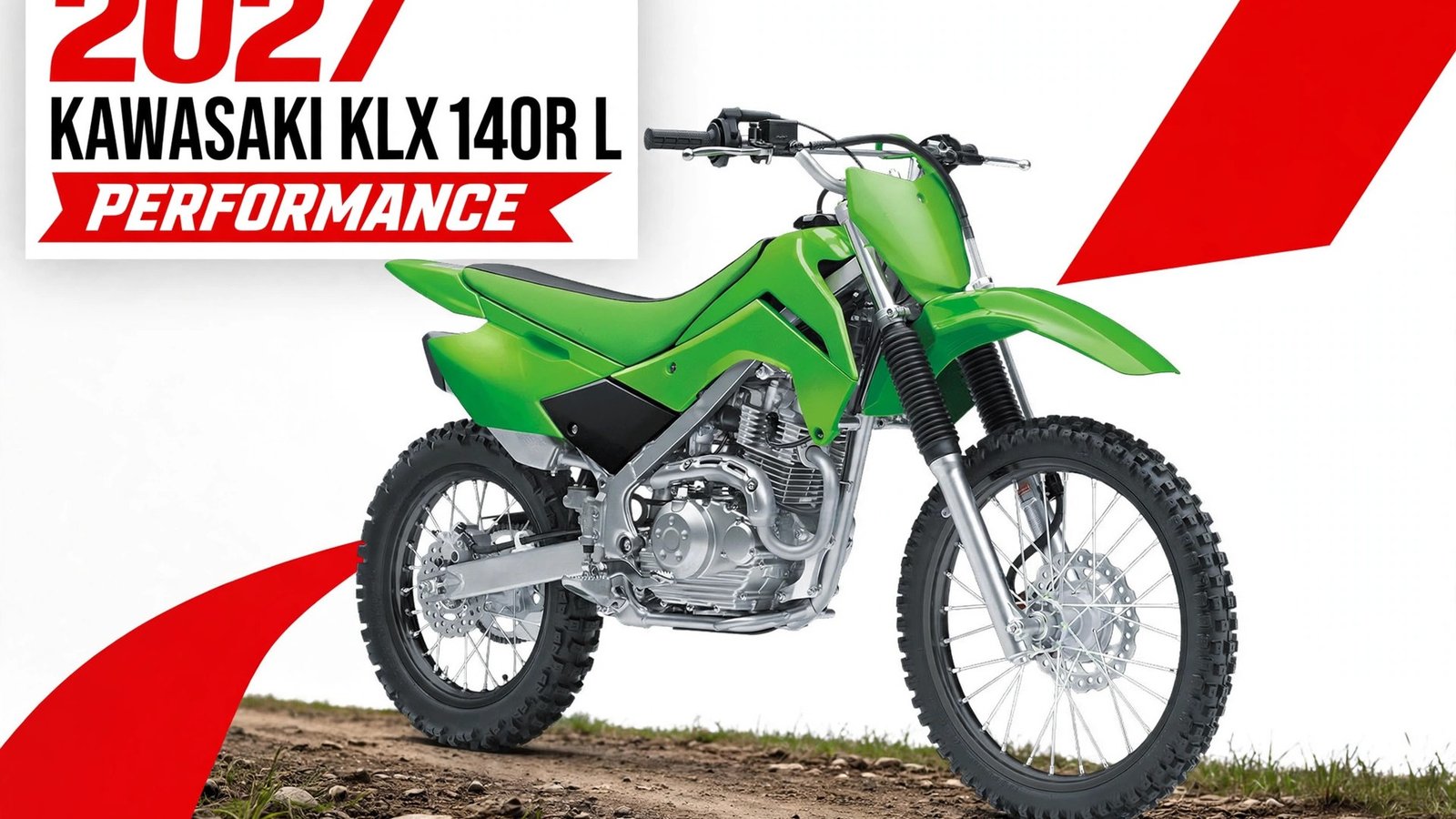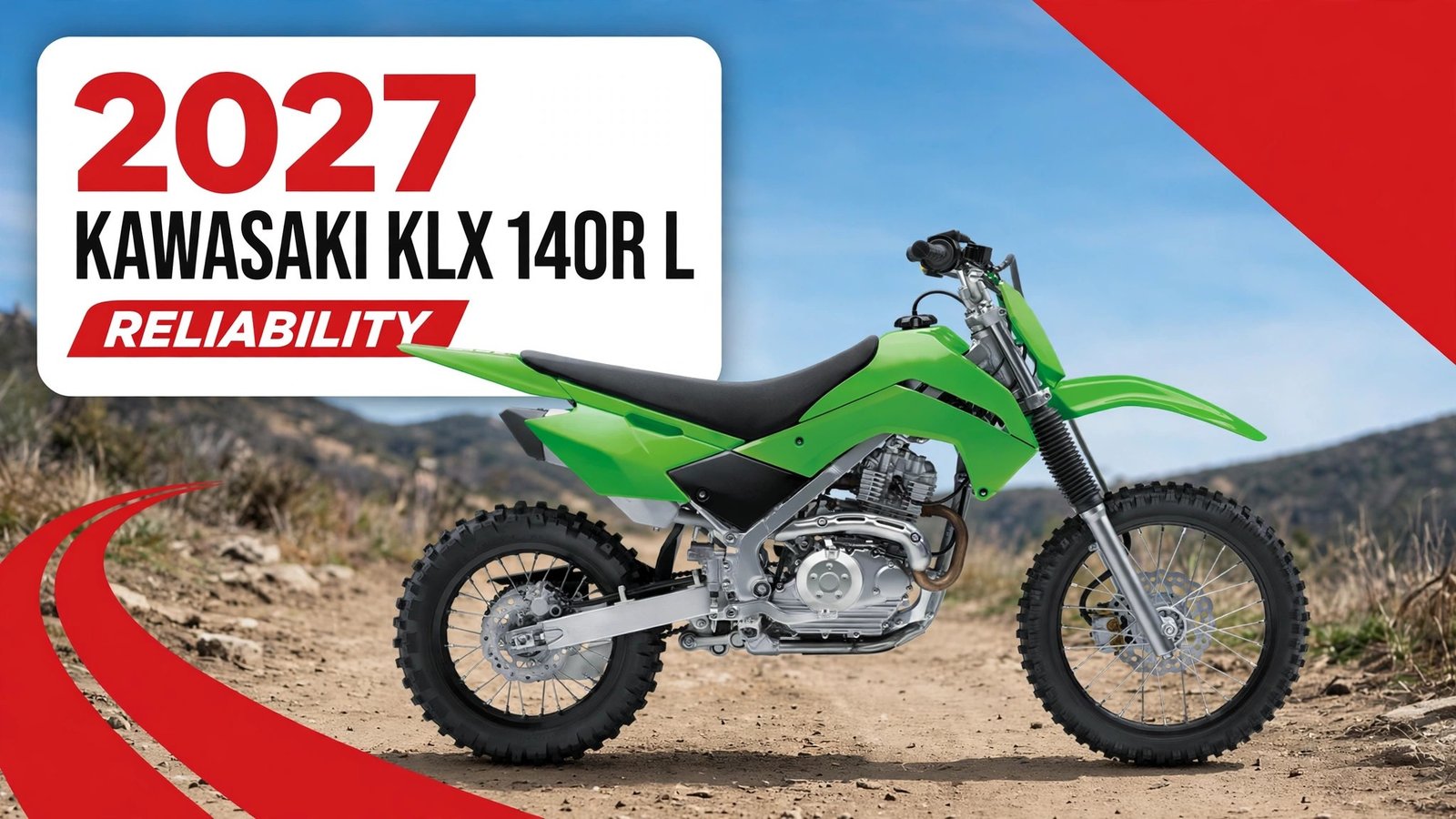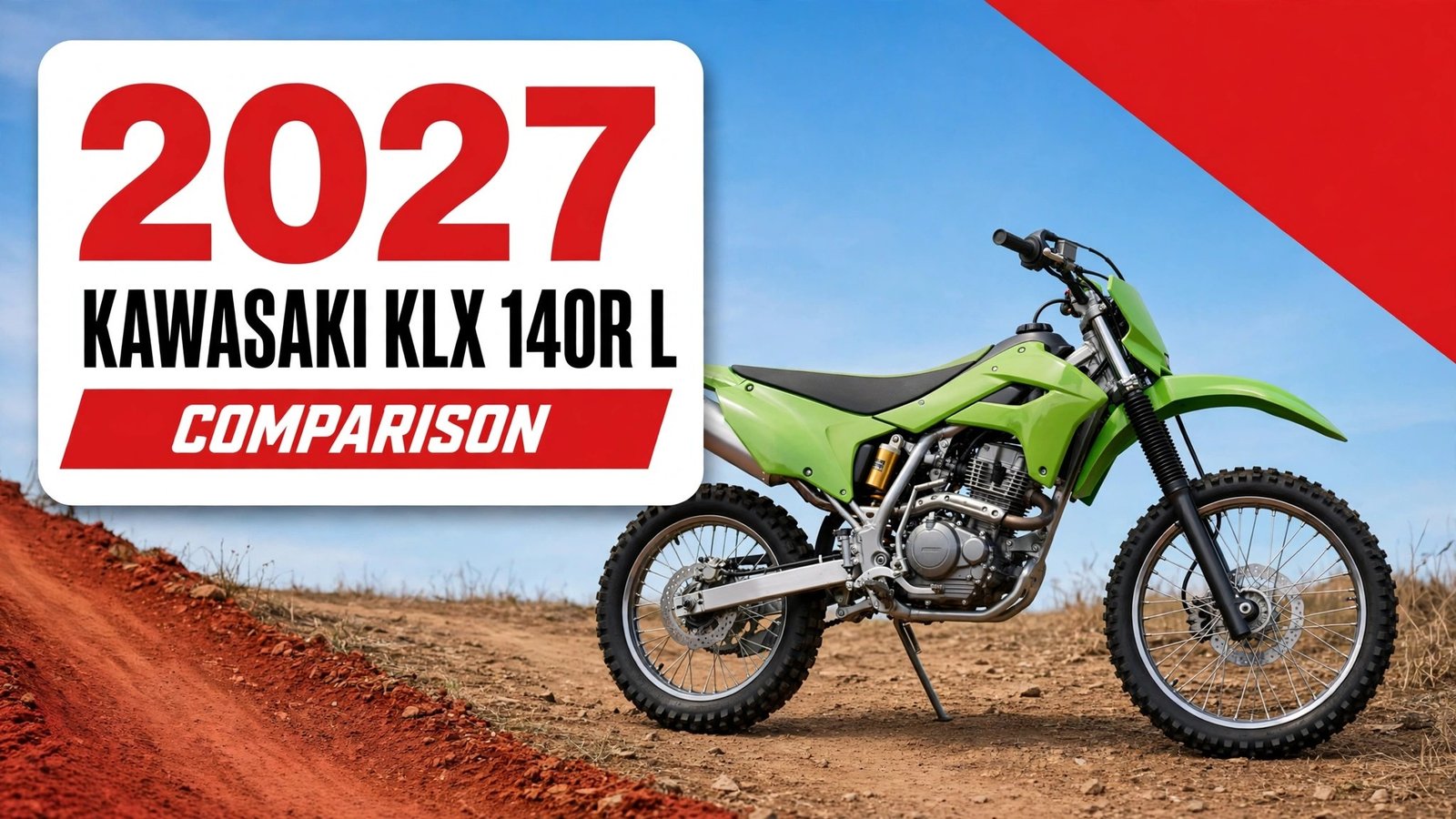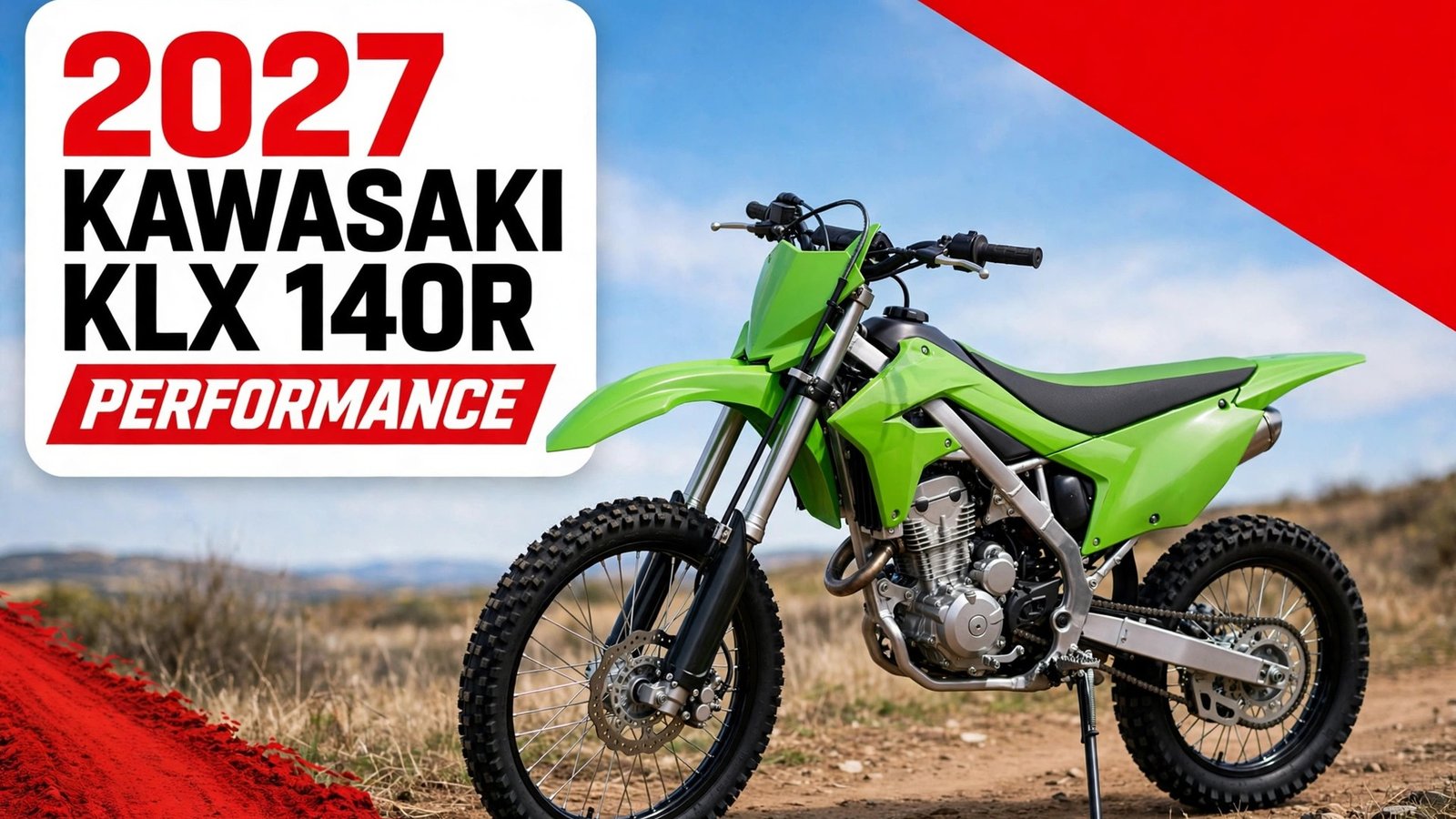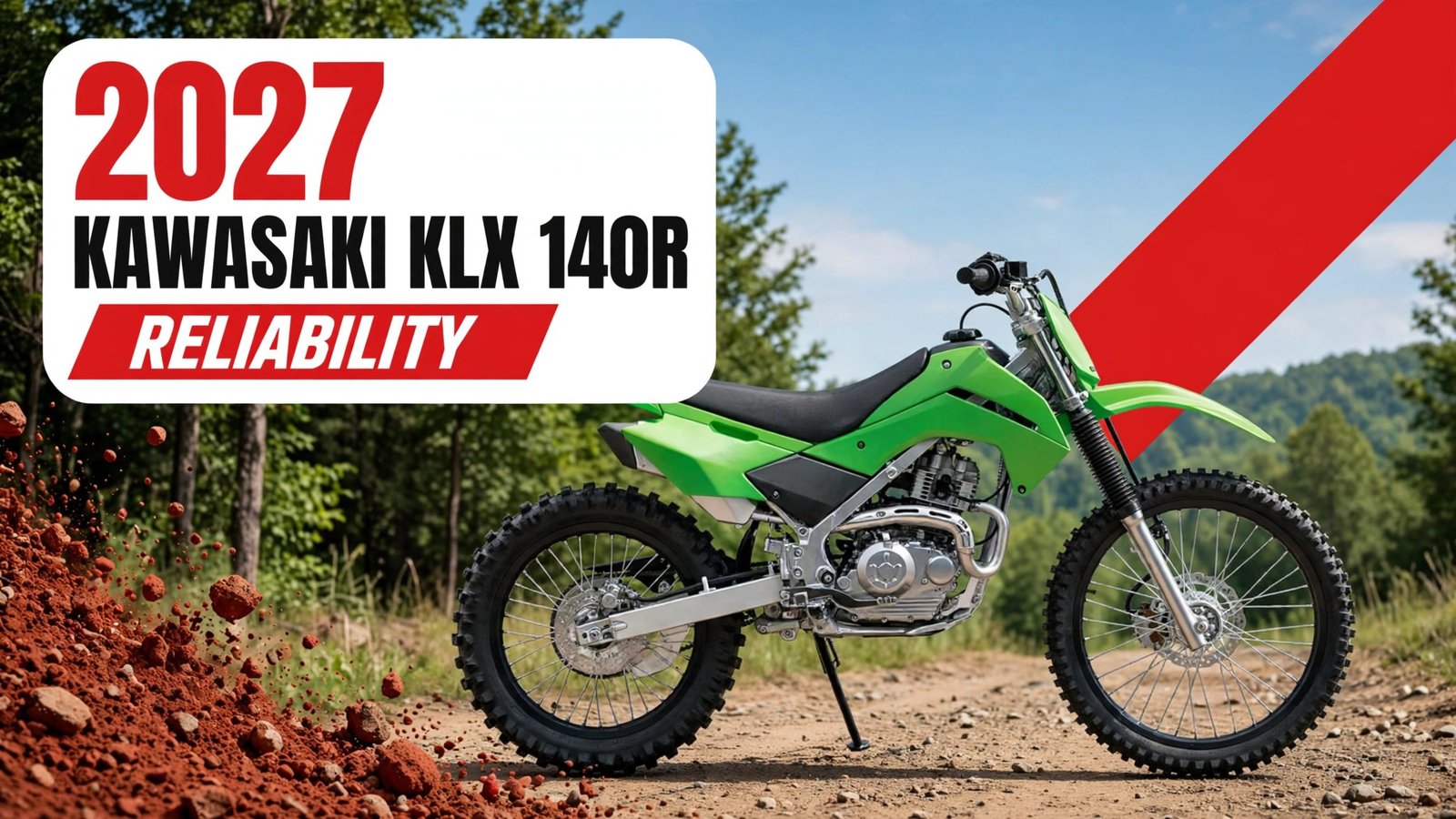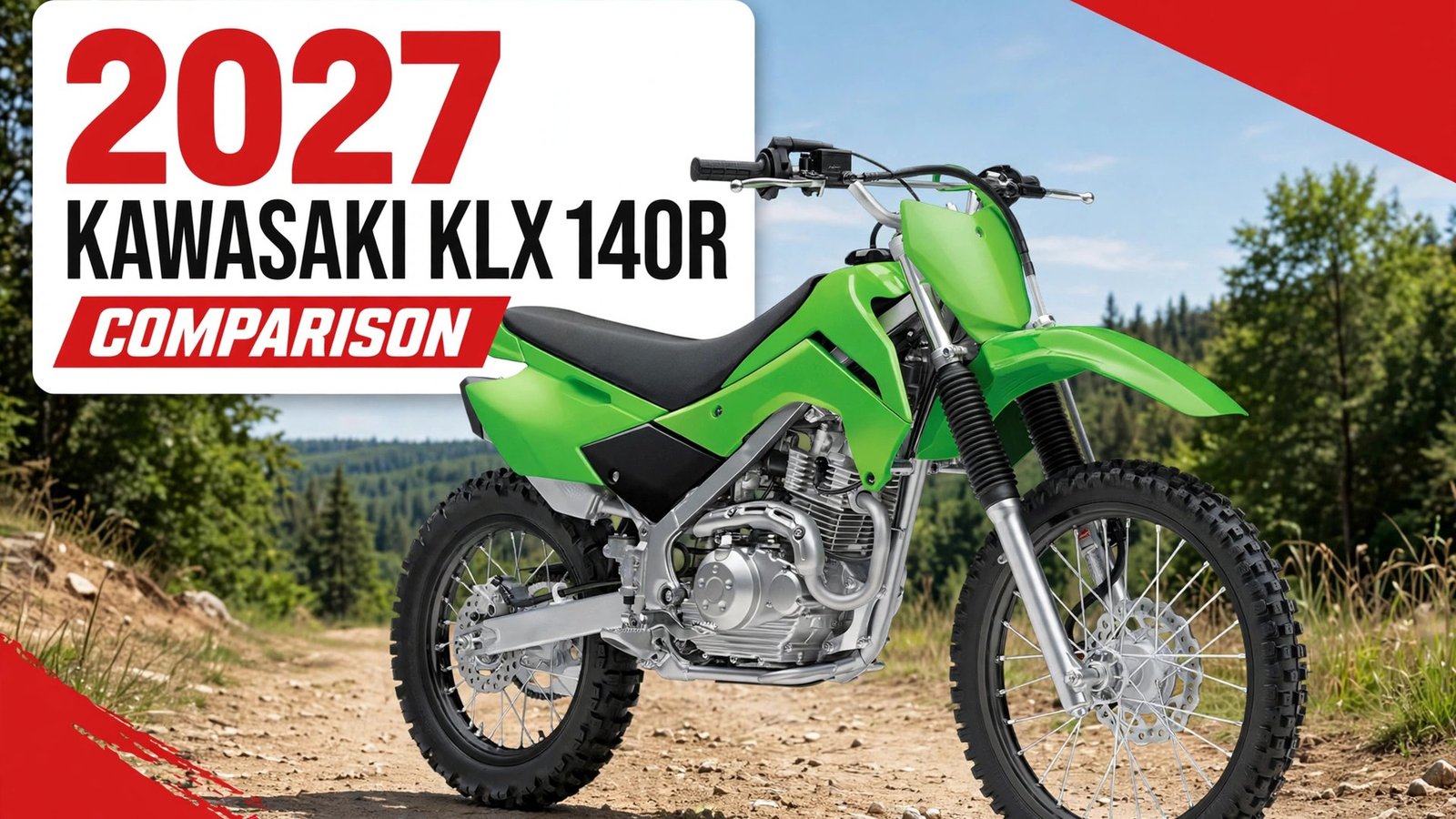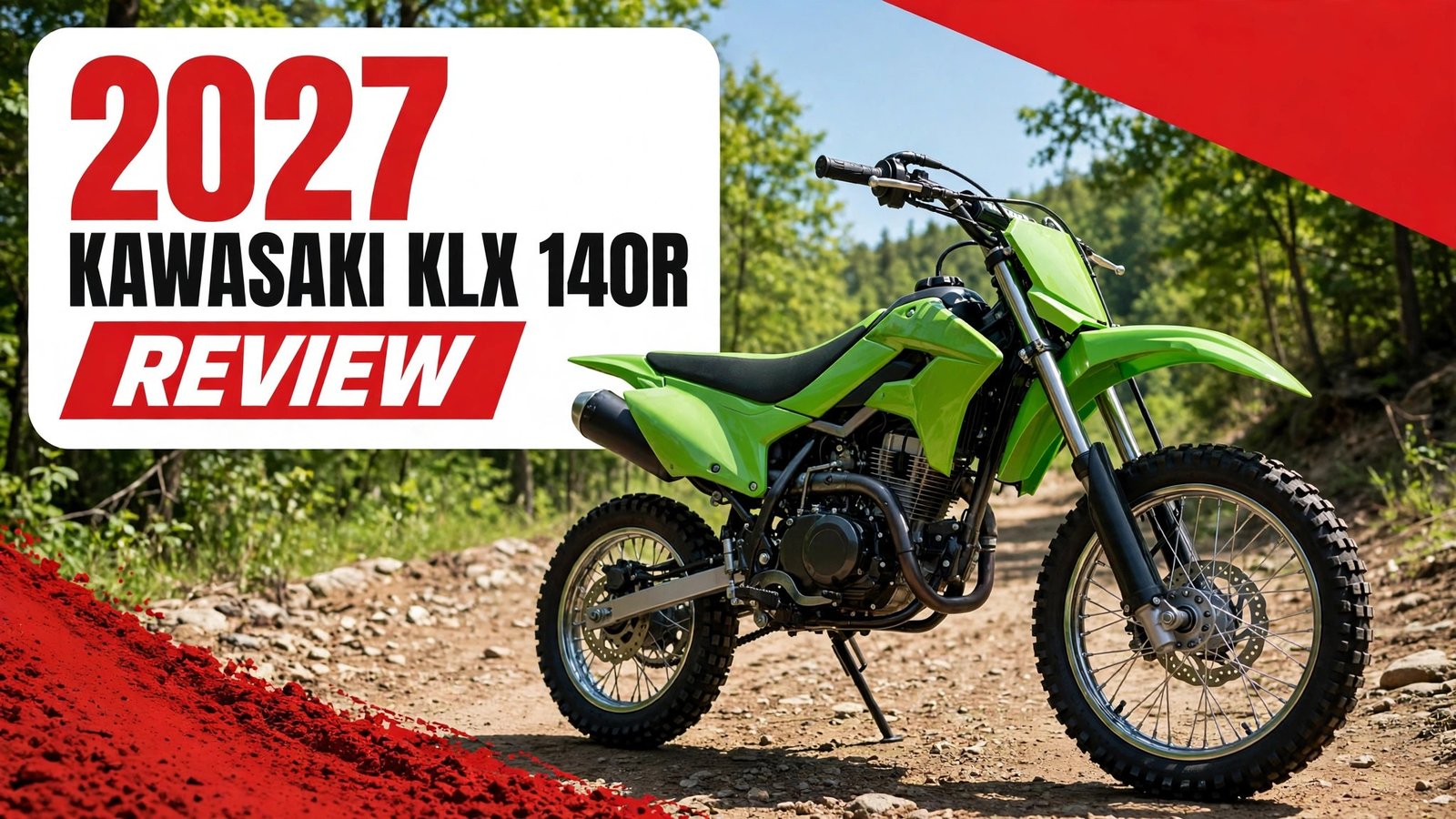
The 2027 Kawasaki KLX 140R is the biggest small trail bike Kawasaki sells in the United States: a 144cc air-cooled single with a manual clutch, a five-speed gearbox, disc brakes at both ends, and a $3,799 price tag before destination — $4,114 delivered with the $315 destination charge. This Kawasaki KLX 140R review answers the question every parent and new trail rider asks first: whether the extra displacement and the disc brakes are worth the premium over the 125cc rivals. Kawasaki USA publishes no power figure, no outlet has ever dyno-tested one, and no instrumented top-speed test exists, so this Kawasaki KLX 140R review says that plainly instead of filling the gaps with guesses.
What is verified is strong enough on its own. The KLX 140R is the only bike in its class with discs front and rear, it carries the biggest engine at 144cc, and it has been mechanically unchanged since its 2021 rename. The trade-offs are just as clear: it is still carburetted while the Honda CRF125F has fuel injection, there is no kick starter to fall back on, and the rider weight limit in the service manual is 154 lb.
Kawasaki KLX 140R Overview and Model-Year Updates
The KLX 140R is a small trail bike, not a race bike and not a street bike. It is built for closed-course trail riding, and this Kawasaki KLX 140R review treats it as exactly that: a play bike for younger and smaller riders, and a first manual-clutch bike for beginners. The family has three trims — R, L, and F — and this guide is about the standard R only.
Latest Year Is 2027, Three Trims
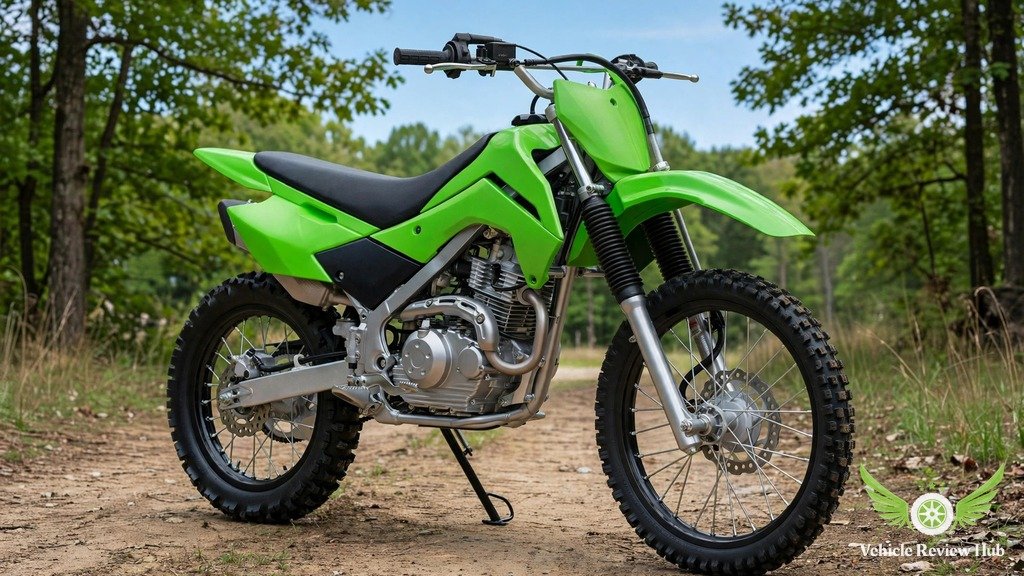
The latest model year is 2027, with three trims. The standard R runs 17-inch front and 14-inch rear wheels, the L steps up to 19/16 wheels, and the F is the full-size bike on 21/18 wheels with an adjustable piggyback shock. The 2027 prices are $3,799 for the R, $4,099 for the L, and $4,449 for the F, each before the $315 destination charge. That puts the delivered R at $4,114, the L at $4,414, and the F at $4,764. The R is the bike most buyers should look at first: the lowest, the lightest, and the cheapest. This Kawasaki KLX 140R review covers the R because it is the standard bike; the L and F are covered in their own clusters.
Renamed for 2021, Unchanged Since
The bike launched in 2008 as the KLX140, and in 2021 Kawasaki renamed the range: KLX140 became the KLX140R, KLX140L became the KLX140R L, and KLX140G became the KLX140R F. Nothing mechanical changed at the rename — it was a name change only, and this Kawasaki KLX 140R review treats it as a labelling change. The 2026 and 2027 spec-sheet PDFs are identical except for the year, which confirms the bike has been mechanically unchanged since the rename. Parts are easy to find, and a used KLX140 from before 2021 is the same machine as a new KLX140R. The smaller KLX 110R L review shows the same pattern on the 110 platform.
The video below is a sizing guide across the whole KLX140 family from Motocross Hideout, not an R-only review.
Kawasaki KLX 140R Engine and Specifications
At 144cc it is the biggest engine in the class, and the only one paired with a five-speed gearbox and disc brakes at both ends. This Kawasaki KLX 140R review starts with the engine because every other decision on the bike follows from it; the full specification table is below, and every figure in it comes from the official 2027 spec-sheet PDF or a named second source.
144cc: Biggest Engine in the Class
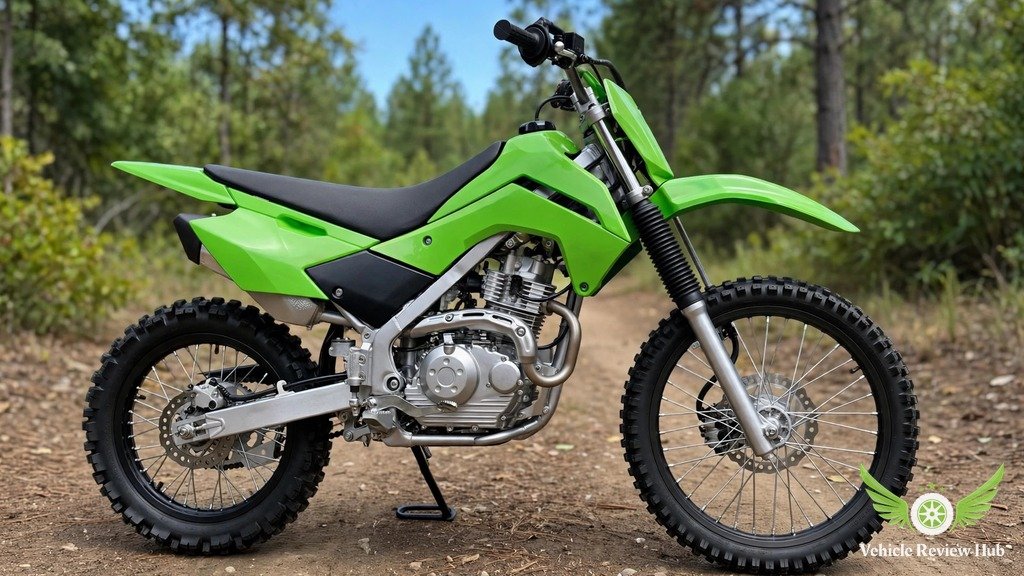
The engine is a 144cc air-cooled SOHC four-stroke single with two valves, a 58.0 by 54.4 mm bore and stroke, and a 9.5:1 compression ratio. It breathes through a Keihin PB20 carburettor — there is no fuel injection on this bike. The gearbox is a five-speed return shift with a wet multi-disc manual clutch worked by a lever on the left handlebar, and final drive is a 428 chain. The clutch is progressive enough to learn on, and teaching clutch control is part of the point of this bike. The 144cc displacement beats every rival — the Honda CRF125F, Yamaha TT-R125LE, and Suzuki DR-Z125L are all 124 or 125cc — and the extra 19 or 20cc gives the Kawasaki its low-end pull on climbs. The five-speed gives a taller top gear than the Honda’s four-speed, and this Kawasaki KLX 140R review counts that as a real advantage. Kawasaki USA publishes no power figure; the only figure anywhere is the Canadian-sheet 8.3 kW (11 PS) at 8,000 rpm with 12.0 Nm at 6,000 rpm — 11 PS, about 10.8 hp, never “11 hp”.
Rear Disc Is 186mm, Not 190
The brakes are the hardware story of this bike. The front is a single 220 mm petal disc with a dual-piston caliper, and the rear is a single 186 mm petal disc with a single-piston caliper — discs at both ends, on every trim, since launch. Two wrong figures circulate online. The first is the 190 mm rear disc — that is a non-US figure; the US rear disc is 186 mm on the official spec sheet, on TotalMotorcycle, and on Cycle World’s 2008 measurement. The second is the claim that early models had a rear drum — that is wrong too. The KLX140R has had discs at both ends since 2008, and this Kawasaki KLX 140R review calls that the bike’s biggest hardware edge; every rival runs a rear drum. Travel is 7.1 inches at each end, and ground clearance is 9.3 inches.
| Specification | 2027 Kawasaki KLX 140R |
|---|---|
| Engine | 144cc air-cooled SOHC 4-stroke single, 2-valve |
| Bore × stroke | 58.0 × 54.4 mm |
| Compression ratio | 9.5:1 |
| Fuel system | Keihin PB20 carburettor (no fuel injection) |
| Transmission | 5-speed return shift, wet multi-disc manual clutch |
| Power (Canadian sheet only) | 8.3 kW (11 PS) @ 8,000 rpm; 12.0 Nm @ 6,000 rpm |
| Start | Push-button electric start only, no kick starter |
| Front brake | Single 220 mm petal disc, dual-piston caliper |
| Rear brake | Single 186 mm petal disc, single-piston caliper |
| Front suspension | 33 mm telescopic fork, 7.1 in travel |
| Rear suspension | Uni-Trak single shock, 5-way preload, 7.1 in travel |
| Wheels / tyres | 17/14 in steel spoke; 70/100-17 / 90/100-14 |
| Seat height | 30.7 in |
| Wheelbase | 49.6 in |
| Ground clearance | 9.3 in |
| Curb weight | 205.0 lb (dry 191.7 lb) |
| Fuel capacity | 1.5 gal |
| Warranty | 6 Month Limited |
Notes: the figures in this Kawasaki KLX 140R review table come from the official 2027 KLX140R spec-sheet PDF, with the power figure from the Canadian sheet only — Kawasaki USA publishes no power figure. The rear disc is 186 mm, not 190 mm, and the bike has discs at both ends on every trim since launch.
Kawasaki KLX 140R Price and Market Availability
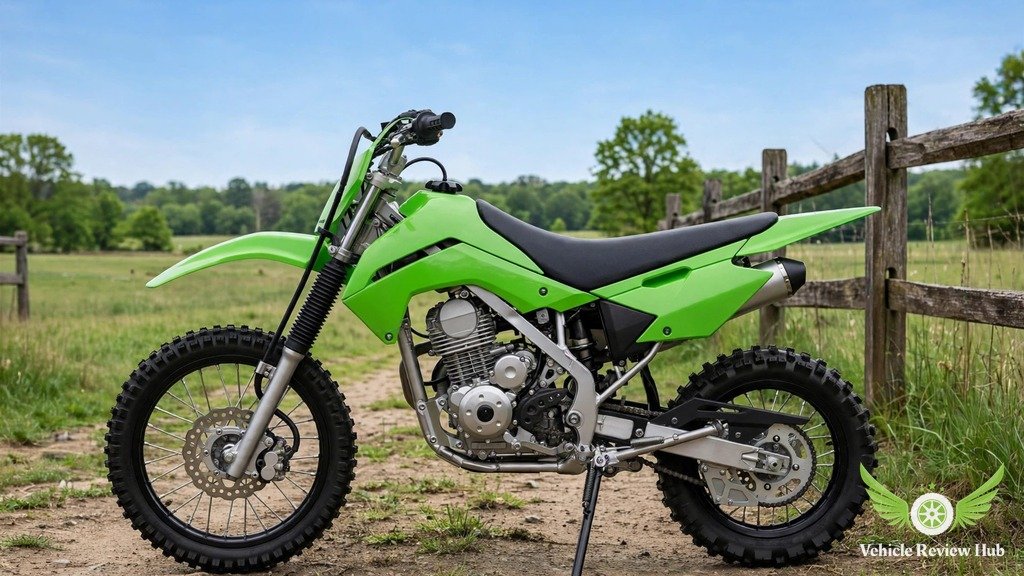
The 2027 Kawasaki KLX 140R costs $3,799 before destination, and $4,114 delivered with the $315 destination charge — the priciest small trail bike in its class for 2027, more than the Honda CRF125F, the Yamaha TT-R125LE, and the Suzuki DR-Z125L, and this Kawasaki KLX 140R review is upfront about that. The premium buys the biggest engine, a fifth gear, and discs at both ends, but it is a real premium.
Kawasaki KLX 140R Price in the USA: $3,799
The 2027 MSRP is $3,799 for the R, $4,099 for the L, and $4,449 for the F, and the destination charge is $315 on all three trims — so the delivered prices are $4,114, $4,414, and $4,764. Those figures come from Kawasaki USA’s 2027 pages, cross-checked against TotalMotorcycle. The 2026 prices were $100 lower on each trim: $3,699 for the R, $3,999 for the L, and $4,299 for the F, which put the delivered 2026 R at $4,014. Two colours are offered for 2027, Lime Green and Bright White. The bike is off-road only. This Kawasaki KLX 140R review prints the full ladder below.
Live 2026 Page Shows the Wrong Price
Here is the trap. Kawasaki’s live KLX140R page now serves 2027 content, so a shopper searching for a 2026 bike lands on a page showing $3,799 — the 2027 price. Several dealer listings show 2026 bikes “From $3,799” for the same reason, and Motorcycle.com’s compare page lists the 2026 R at $3,799 as well. The true 2026 MSRP is $3,699, confirmed by Kawasaki’s own 2026 press release and TotalMotorcycle’s 2026 page. If you are buying a leftover 2026 bike, $3,699 is the number to negotiate from — not $3,799. This Kawasaki KLX 140R review prints both years plainly: 2026 R $3,699 plus $315 equals $4,014 delivered, and 2027 R $3,799 plus $315 equals $4,114 delivered.
| Model year / trim | MSRP | Destination | Delivered |
|---|---|---|---|
| 2027 KLX 140R | $3,799 | $315 | $4,114 |
| 2027 KLX 140R L | $4,099 | $315 | $4,414 |
| 2027 KLX 140R F | $4,449 | $315 | $4,764 |
| 2026 KLX 140R | $3,699 | $315 | $4,014 |
| 2026 KLX 140R L | $3,999 | $315 | $4,314 |
| 2026 KLX 140R F | $4,299 | $315 | $4,614 |
| 2008 KLX140 (launch) | $2,699 | — | — |
Notes: the delivered prices in this Kawasaki KLX 140R review table are MSRP plus the $315 destination charge, before tax, title, and any dealer fees. The 2027 prices are from Kawasaki USA’s 2027 pages; the 2026 prices are from Kawasaki’s 2026 press release and TotalMotorcycle. The 2026 R is $3,699, not $3,799 — the higher figure is the 2027 price shown on the live page.
Kawasaki KLX 140R Design, Features and Technology
The KLX 140R is a simple bike by design, and its simplicity is the point. There is no fuel injection, no ride modes, no traction control, and no instrument cluster — not even an odometer, which is why servicing is counted in hours rather than miles. What it does have is a push-button start, a manual clutch, and the best brakes in its class. This Kawasaki KLX 140R review looks at the two design facts buyers most often get wrong: the missing kick starter and the missing power figure.
No Kick Starter, Kawasaki Says So
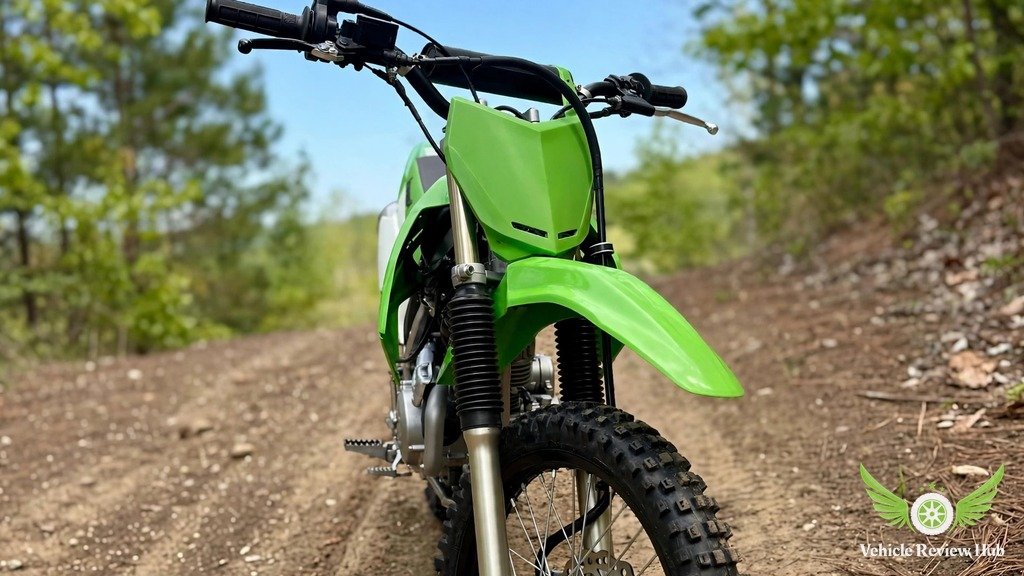
The KLX 140R starts with a push button and nothing else. There is no kick starter on any trim, and Kawasaki’s own copy says the engine “easily starts with the push of a button”. Motocross Hideout lists “no back-up kick-start” as a con on all three trims. That matters on the trail: if the battery dies, there is no backup way to start the bike. The practical answer is to keep the battery charged and carry a small jump pack on longer rides. The rivals differ: the Honda CRF125F and the Yamaha TT-R125LE both have electric start plus a kick starter, and the Suzuki DR-Z125L is kick-start only. The Kawasaki is the only one of the four with electric start and no kick backup — a genuine trade-off, not a defect, and this Kawasaki KLX 140R review says so plainly. For a beginner riding close to home it rarely matters.
Canada Publishes Power, USA Does Not
Kawasaki USA publishes no power figure for the KLX 140R. The spec sheet lists no horsepower, no torque, and no top speed. The only power figure anywhere comes from the Canadian sheet: 8.3 kW (11 PS) at 8,000 rpm, with 12.0 Nm at 6,000 rpm. That is 11 PS, about 10.8 hp, and this Kawasaki KLX 140R review will not write it as “11 hp” — PS and hp are not the same unit. The figure is also easy to confuse with a different bike: the FRP FX140, a rival pit bike, publishes 11.0 hp, and that number has been copied into KLX140R listings by aggregators. It does not belong to the Kawasaki. The engine is a mild, torquey single built for trail work — it pulls cleanly from low revs and tops out at an estimated 50 to 55 mph. Motocross Hideout quotes an owner’s estimate of about 9 hp at the rear wheel, but that is an estimate, not a dyno figure. The Motocross Hideout KLX140 guide is the best single source on the bike’s real-world performance.
Kawasaki KLX 140R Riding Experience and Comfort
On the trail the KLX 140R is a light, low, forgiving bike that is easy to ride and hard to get into trouble on. The seat is 30.7 inches high, the curb weight is 205 lb, and the power delivery is soft and predictable, so a new rider can focus on balance and clutch control instead of fighting the bike. Cycle World called the chassis “exceptional” for the class in its 2008 test of the L. This Kawasaki KLX 140R review covers the fit numbers first, because fit is what decides whether this bike works for a given rider.
Seat 30.7 Inches, Weight 205 Pounds
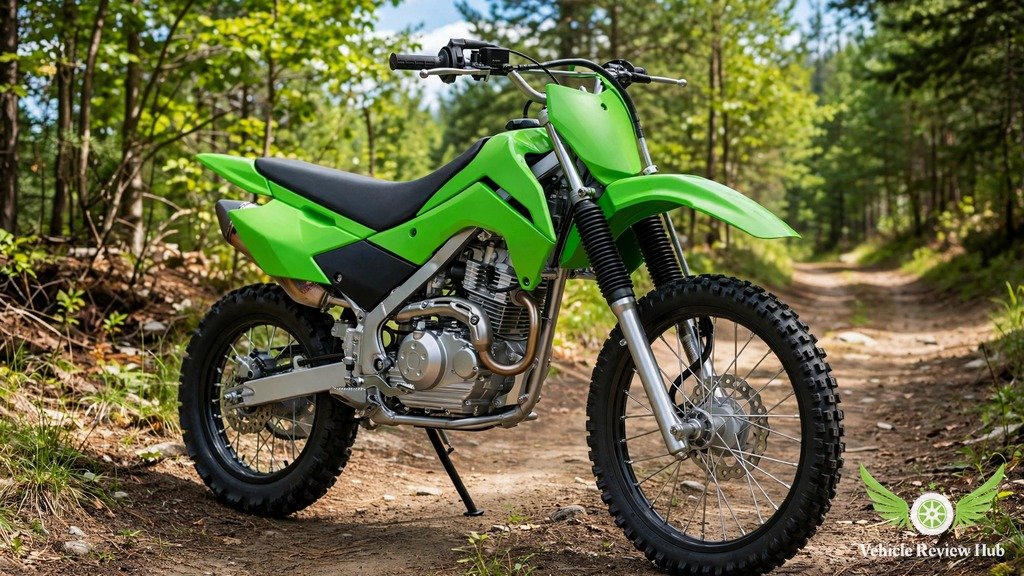
The seat height is 30.7 inches and the curb weight is 205.0 lb, with a dry weight of 191.7 lb. That combination — low and light — is the whole riding story, and this Kawasaki KLX 140R review rates it as the bike’s best fit feature. A rider around 4 feet 8 inches to 5 feet tall can touch the ground comfortably. Ground clearance is 9.3 inches and travel is 7.1 inches at each end. The fuel tank holds 1.5 gallons, and the spark arrester in the muffler means the bike is legal on public trails that require one. The one fit warning is suspension: riders over 180 lb will bottom the stock suspension easily, according to Motocross Hideout, and a Road and Trail owner at 160 lb with gear bottomed the rear shock a few times. Heavier riders should budget for stiffer springs or look at the L and F.
Rider Limit 154 lb, Standard Only
The factory service manual sets the rider weight limit at 154 lb (70 kg) for the standard R. That number surprises buyers, but the limit is real and it is in the manual. It is also specific to the standard bike: the KLX 140R L’s manual omits the weight limit, which is why the doc heading says “Standard Only”. In practice the limit reads as a guidance figure for the stock suspension rather than a hard structural ceiling — the bike will carry a heavier rider, but the suspension will bottom and the handling will suffer. Parents buying for a growing teenager should treat 154 lb as the point where the stock bike stops working well, not the point where it breaks. The smaller KLX 110R L carries the same 154 lb limit in its own manual, and the KLX 110R L reliability guide explains how that limit plays out on the smaller bike. The bike fits riders up to about 150 lb and 5 feet tall best; bigger riders should step up to the L, the F, or the KLX230R.
Kawasaki KLX 140R Review: Pros, Cons and Verdict
The verdict is simple: the KLX 140R is the best-equipped small trail bike in its class, and the most expensive one, and both facts come from the same hardware. The 144cc engine, the five-speed gearbox, and the discs at both ends are real advantages no rival matches all at once. This Kawasaki KLX 140R review weighs them honestly below.
Main Advantages and Limitations of the Kawasaki KLX 140R
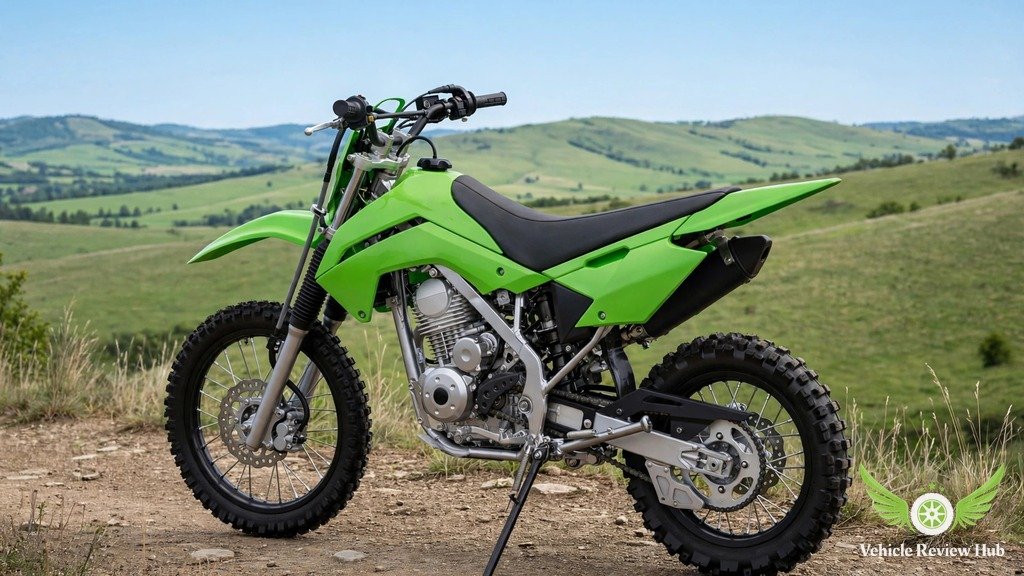
The advantages start with the engine and the brakes. The 144cc single is the biggest in the class, the five-speed gearbox gives a taller top gear than the Honda’s four-speed, and the discs at both ends are a class exclusive — every rival runs a rear drum. The electric start is easy, the clutch is progressive enough to learn on, the seat is low, the bike is light, and the chassis earned genuine praise from Cycle World in 2008. The limitations are just as concrete, and this Kawasaki KLX 140R review lists them in full below. The carburettor needs attention when fuel sits — the stock #38 pilot jet is a known weak point, and the Honda’s fuel injection simply does not have that problem. There is no kick starter, so a dead battery ends the ride. The suspension is soft for anyone over 180 lb, the rider limit is 154 lb, and the price is the highest in the class: $4,114 delivered is $215 more than the small-wheel Honda CRF125F, $175 more than the Yamaha TT-R125LE, and $165 more than the Suzuki DR-Z125L. The Cycle World 2008 KLX140L test remains the best independent verdict on the platform.
| Advantages | Limitations |
|---|---|
| Biggest engine in class — 144cc | Carburetted (Keihin PB20) — Honda has fuel injection |
| Discs at both ends — class exclusive | No kick starter — electric start only |
| 5-speed gearbox — Honda has 4 gears | Priciest in class — $4,114 delivered |
| Electric start, progressive manual clutch | Soft suspension over 180 lb |
| Low 30.7 in seat, light 205 lb curb | 154 lb rider limit (standard R only) |
| 1.5 gal tank, spark arrester fitted | No published power figure; no dyno exists |
Notes: the pros and cons in this Kawasaki KLX 140R review table come from the verified spec sheet and named sources — Cycle World 2008, Motocross Hideout, and Road and Trail. The price gap is on the small-wheel Honda basis; the Big Wheel CRF125F costs $4,299 delivered, more than the KLX 140R.
6 Month Limited Warranty
The warranty is six months limited, the same as every rival in the class. The short warranty is normal for off-road bikes. The recall record: exactly one recall, CPSC Alert #08-548 from March 2008, covering about 200 launch-year bikes with frame welds that were missing or made incorrectly. The remedy was a free inspection and repair, and no injuries were reported. There have been no recalls since. The NHTSA database shows zero recalls — weak evidence on its own, because NHTSA does not regulate off-road motorcycles. An eighteen-year production run with one early recall and no pattern of failures since is a good reliability record. This Kawasaki KLX 140R review recommends checking any used bike’s frame welds and service history before buying.
Kawasaki KLX 140R Review: Frequently Asked Questions
These are the questions buyers ask most about the KLX 140R. This Kawasaki KLX 140R review answers each one with the verified figures from the sections above. If your question is not answered here, this Kawasaki KLX 140R review has the detail in the spec and price tables above.
How much does the Kawasaki KLX 140R cost?
$3,799 before destination for the 2027 R, or $4,114 delivered. This Kawasaki KLX 140R review lists the full price ladder in the price table above.
What is the top speed of the Kawasaki KLX 140R?
There is no tested top speed; estimates put it at 50 to 55 mph. This Kawasaki KLX 140R review treats every figure as an estimate.
Does the Kawasaki KLX 140R have a kick starter?
No. It has push-button electric start only, and this Kawasaki KLX 140R review confirms there is no kick starter on any trim.
How much horsepower does the Kawasaki KLX 140R make?
Kawasaki USA publishes no figure. The Canadian sheet lists 11 PS, about 10.8 hp, and this Kawasaki KLX 140R review never writes it as 11 hp.
Is the Kawasaki KLX 140R good for beginners?
Yes. The low seat, light weight, and progressive clutch make it a strong first bike, and this Kawasaki KLX 140R review rates it best up to about 150 lb.
What is the seat height of the Kawasaki KLX 140R?
The seat is 30.7 inches high. That low seat is why this Kawasaki KLX 140R review recommends the R for smaller and younger riders.
Is the Kawasaki KLX 140R fuel injected?
No. It uses a Keihin PB20 carburettor, and this Kawasaki KLX 140R review notes the Honda is the only rival with fuel injection.
What is the difference between the KLX 140R, L, and F?
The R runs 17/14 wheels, the L 19/16, and the F 21/18 with an adjustable shock. This Kawasaki KLX 140R review covers the standard R only.
How often does the Kawasaki KLX 140R need servicing?
Servicing is counted in hours: first service at 5 hours, then oil and filter every 50 hours. This Kawasaki KLX 140R review uses the owner’s manual chart.
Does the Kawasaki KLX 140R have disc brakes?
Yes: a 220 mm front disc and a 186 mm rear disc. This Kawasaki KLX 140R review notes it is the only bike in its class with a rear disc.
Is the Kawasaki KLX 140R street legal?
No. It is off-road only, with no lights or road equipment, and this Kawasaki KLX 140R review stresses it is built for closed-course trail riding.
What is the rider weight limit on the Kawasaki KLX 140R?
The service manual sets the limit at 154 lb for the standard R. This Kawasaki KLX 140R review notes the L’s manual omits the limit.