The short answer is that the Kawasaki Ninja 400 reliability record is strong: exactly one weak point and exactly one recall. The weak point is the clutch on 2018–2019 bikes, which slips typically between 500 and 2,000 miles, and Kawasaki fixed the clutch hardware for 2020. The recall is 20V-774, a 2021 cam chain tensioner fault covering 1,770 bikes. Everything else about this Kawasaki Ninja 400 reliability guide is routine: oil and filter every 7,600 miles or once a year, a valve inspection at 15,200 miles.
This Kawasaki Ninja 400 reliability guide is built from the owner’s manual, not from forum rumour. The intervals below come from the manual chart, the clutch fault from the specialist who fixes it most often, and the recall from NHTSA’s own Part 573 report.
Kawasaki Ninja 400 Reliability Overview
The Kawasaki Ninja 400 reliability story is simple enough to state in one paragraph. The bike at the centre of the Kawasaki Ninja 400 reliability story is a 399cc parallel twin sold in the United States for six model years, 2018 to 2023, then replaced by the Ninja 500. The one part that fails early is the clutch, and the one recall it ever had was for a cam chain tensioner on 2021 bikes. A buyer who understands those two facts understands this Kawasaki Ninja 400 reliability guide.
Valve Inspection at 15,200 Miles
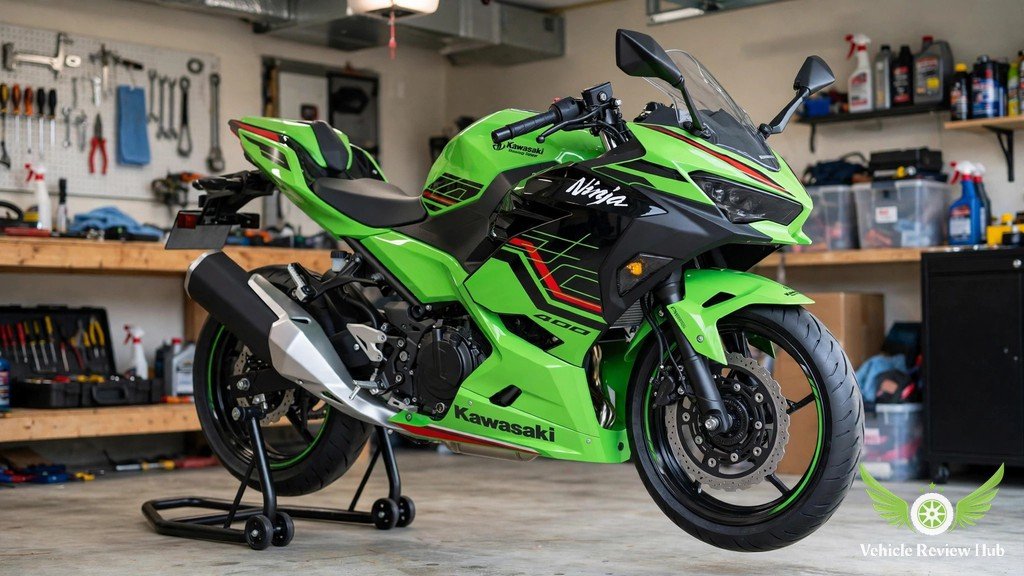
The longest interval in the Kawasaki Ninja 400 reliability schedule belongs to the valves. Kawasaki calls for a valve-clearance inspection at 24,000 km, and the manual chart’s miles column prints that as 15.2 × 1,000 miles, which is 15,200 miles. Some schedule transcriptions round that to 15,000 miles, which is the same 24,000 km converted and rounded down, but the manual’s own miles column says 15,200, and that is the figure this Kawasaki Ninja 400 reliability guide prints. The inspection repeats at 48,000 km, or 30,400 miles.
The 400’s parallel twin has a single cylinder head, so there is no second head to reach before the check. A buyer looking at a used 400 past 15,000 miles should ask whether that service was done.
How Mileage, Storage and Previous Care Affect Reliability
Mileage matters less on a 400 than the year it was built. A 2018 bike with 3,000 miles on it still has the original clutch hardware, and a 2021 bike with 12,000 miles on it still has the original cam chain tensioner unless the recall was done. The year decides which faults the bike can have; the miles decide how far along those faults are — and that is the first rule of Kawasaki Ninja 400 reliability. That is why this Kawasaki Ninja 400 reliability guide treats the model year as the first thing to check and the odometer as the second.
A 400 that sat in a garage for two years with old fuel and a dry chain can be less reliable than a 400 that was ridden every weekend and serviced on schedule, because the manual’s time-based items keep expiring whether the bike moves or not. A low-mileage bike with original rubber parts and original fluids has a service bill waiting, not nothing to do. Records matter more than mileage: a stamped service book, a receipt for the clutch update on a 2018–2019 bike, and a recall-completion check on a 2021 bike are the three documents that tell a buyer the most.
Kawasaki Ninja 400 Common Problems and Wear Items
The clutch slips, the shift can find a false neutral, and everything else is a wear item with a published interval — the Kawasaki Ninja 400 reliability picture in one sentence. This section of the Kawasaki Ninja 400 reliability guide covers the two faults owners actually report, and the one recall Kawasaki actually issued.
The Clutch Is the Weak Point
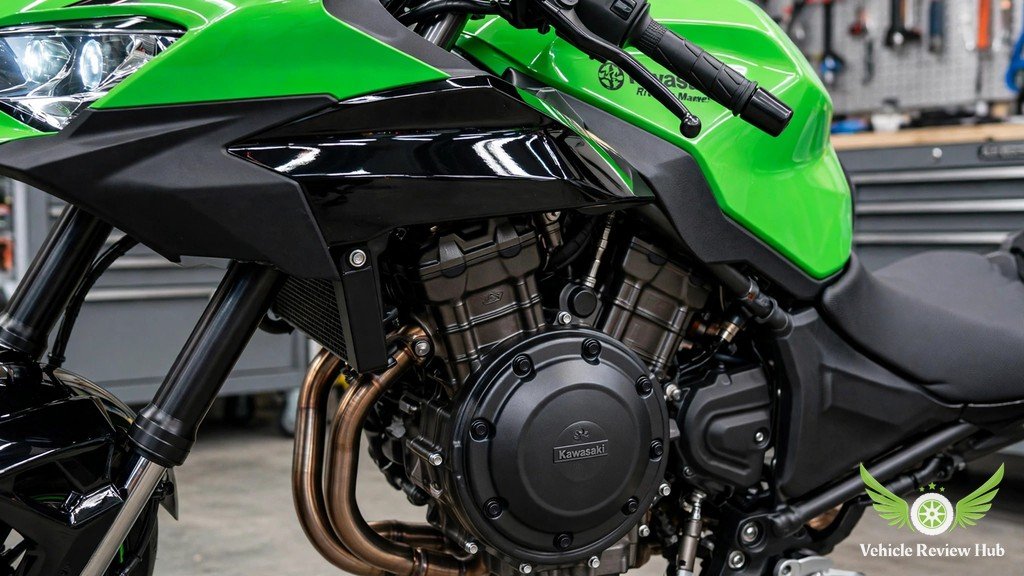
Norton Motorsports calls the clutch “definitely the most common issue with the Ninja 400”. The fault is that the clutch wears out and starts slipping during acceleration with very low miles on the bike, typically between 500 and 2,000 miles.
Three causes act together, and understanding all three matters because fixing only one of them does not cure the fault. The clutch springs are soft, the pull-rod geometry is short, and the thrust-bearing design does not hold the pressure plate square under load. A workshop typically charges roughly $350 to $700 for the springs and pull-rod work, according to Norton and the used-bike buyer’s guides, and that figure is an estimate from those sources rather than a Kawasaki price.
The fault is a 2018–2019 problem. Kawasaki revised the pull rod and the pressure-plate bearing for the 2020 model year, and the revised parts are the ones Norton now sells as the “2020+ OEM” clutch pull rod and pressure-plate bearing. A 2018–2019 bike needs proof the clutch was updated; a 2020-onwards bike already has the revised hardware. That single check is the most useful reliability test in this Kawasaki Ninja 400 reliability guide.
One Recall Only: 20V-774
The Kawasaki Ninja 400 reliability record shows exactly one recall in the United States, and it is worth stating plainly because the official database makes it easy to miss. Campaign 20V-774, Kawasaki service bulletin MC20-13, covers a 2021 camshaft chain tensioner fault on 1,770 bikes: 970 Ninja 400 ABS, 418 Ninja 400, and 382 Z400 ABS. The bikes were built between July 1 and October 27, 2020. The cause was a tensioner of insufficient strength, the result of improper heat treatment by the supplier, Tsubakimoto Chain Co., on part 12048-0111. A failed tensioner lets the cam chain slacken and the engine stall, so Kawasaki issued a do-not-drive advisory and a stop-sale on December 11, 2020, and owner notification began on December 21, 2020.
The remedy is a replacement tensioner, a ten-minute job at a dealer, and 1,621 of the 1,770 bikes had been remedied by October 2024, according to the Part 573 report itself. That leaves 149 bikes unaccounted for, which is why a buyer checking a 2021 bike should run the VIN through the NHTSA recall lookup rather than trusting the seller’s word. The recall is also the reason this Kawasaki Ninja 400 reliability guide does not cite NHTSA’s recalls API: the API returns Count:0 for every Ninja 400 model year, including 2021, which is false. The API works — it returns Count:1 for the 2024 Ninja 500 — but it undercounts the 400, exactly as it undercounted the Ninja 300’s 2013 recalls. The Part 573 report is the source, not the API.
Kawasaki Ninja 400 Maintenance Schedule and Servicing
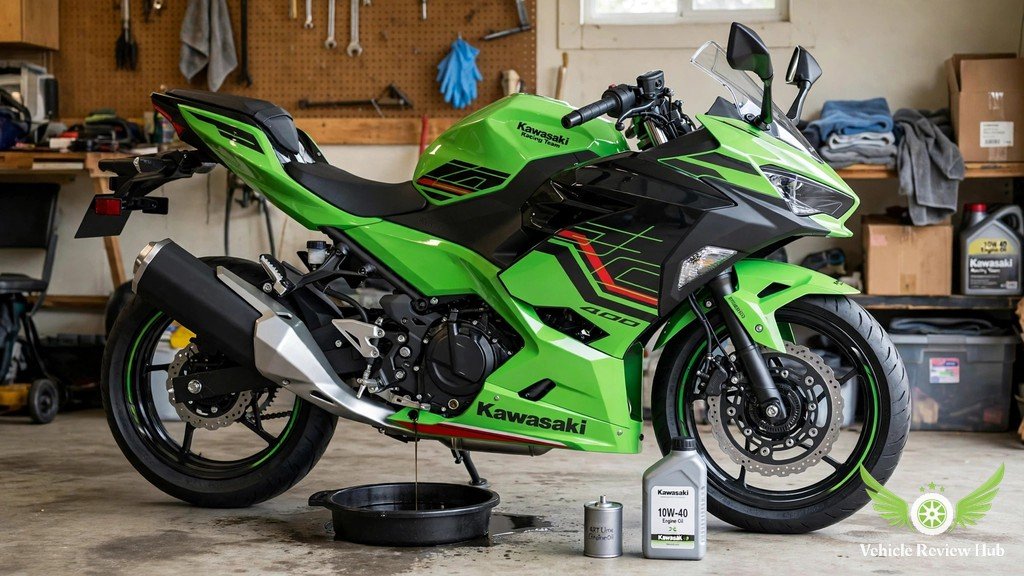
The manual’s schedule is short, regular and easy to follow, which is part of why the Kawasaki Ninja 400 reliability record is as strong as it is. Major services come every 7,600 miles or 12,000 km, or once a year, whichever comes first. The first service is at 600 miles. This section of the Kawasaki Ninja 400 reliability guide lays out the full schedule, then covers the two clutch headings the doc pairs with it.
| Interval | Replace | Inspect or check |
|---|---|---|
| 600 miles / 1,000 km (first service) | Engine oil and oil filter | Idle speed, clutch operation, brake function, tire pressures |
| Every 7,600 miles / 12,000 km or yearly | Engine oil and oil filter | Annual inspection items |
| Every 12,000 km | Spark plug (NGK LMAR9G), air filter | Engine vacuum synchronization, air suction system, drive chain wear and guide wear |
| 15,200 miles / 24,000 km | Fuel filter | Valve clearances, rear suspension lubrication |
| Every 2 years | Brake fluid (DOT-4) | Steering-stem bearing lubrication |
| Every 3 years / 36,000 km | Coolant, coolant hoses and O-rings | — |
| Every 4 years | Brake hoses; brake master-cylinder and caliper rubber parts | — |
| Every 5 years | Fuel hose | — |
Notes: intervals are from the owner’s manual chart, transcribed by maintenanceschedule.com. Oil is 2.0 L of SAE 10W-40 with filter; the drain bolt torques to 30 Nm (22 lb-ft) and the oil filter is Kawasaki 16097-0008, torqued to 17.5 Nm. That is the Kawasaki Ninja 400 reliability schedule as the manual prints it. The spark plug is NGK LMAR9G, gapped at 0.7–0.8 mm and torqued to 13 Nm. This Kawasaki Ninja 400 reliability guide does not print the aggregators’ oil figures — 2.4 L and 3.5 L with filter — because both are wrong against the manual’s 2.0 L.
Clutch Fix Arrived for 2020
The 2020 fix is a running change, not a recall, and that distinction matters to a buyer. Kawasaki revised the pull rod and the pressure-plate bearing for the 2020 model year without issuing a campaign, so no 2018–2019 owner was ever notified and no 2020 bike carries a recall stamp for it. The revised parts are the ones Norton now sells as the “2020+ OEM” pull rod and pressure-plate bearing, and the used-bike buyer’s guides agree on the rule: a 2018–2019 bike needs evidence of the update, and a 2020-onwards bike has the revised hardware from the factory.
Evidence means a receipt, not a claim. A seller who says “the clutch was done” should be able to show the invoice for the springs and the pull rod, or the bike should be a 2020 or later model. A 2018–2019 bike with no receipt and a clutch that feels soft at the lever is a bike with a $350–$700 job waiting, and a buyer should price it that way. The fix itself is permanent: once the revised pull rod and the heavier springs are in, the slip does not come back, and the clutch becomes one of the bike’s ordinary wear items rather than its defining fault.
500’s Clutch Recall Is Not Its Own
The heading means exactly what it says, and it is here because the confusion is easy. The 2024 Ninja 500 and Z500 were recalled under campaign 25V-146 for a clutch release shaft that was not properly welded, Kawasaki bulletin MC24-04. The recall exists because the 500 shares the 400’s clutch components, and the 500’s recall is the reason some listings and forums describe a “Ninja 400 clutch recall”. There is no Ninja 400 clutch recall. The 400’s clutch fault was fixed by a 2020 running change, and the 400’s only recall is the 2021 cam chain tensioner covered above.
The check is the campaign number and the model year: 25V-146 names the 2024 Ninja 500 and Z500, and no 400 of any year is in it. This Kawasaki Ninja 400 reliability guide names the trap so the reader is not misled by it.
Kawasaki Ninja 400 Tires, Brakes and Suspension Maintenance
Tires, brakes and suspension are where the manual is most precise, and where other sources are most often wrong. The tire sizes, the brake disc sizes and the chain slack all have exact manual figures, and this section of the Kawasaki Ninja 400 reliability guide prints them with the sources that disagree named alongside.
Coolant Every 3 Years
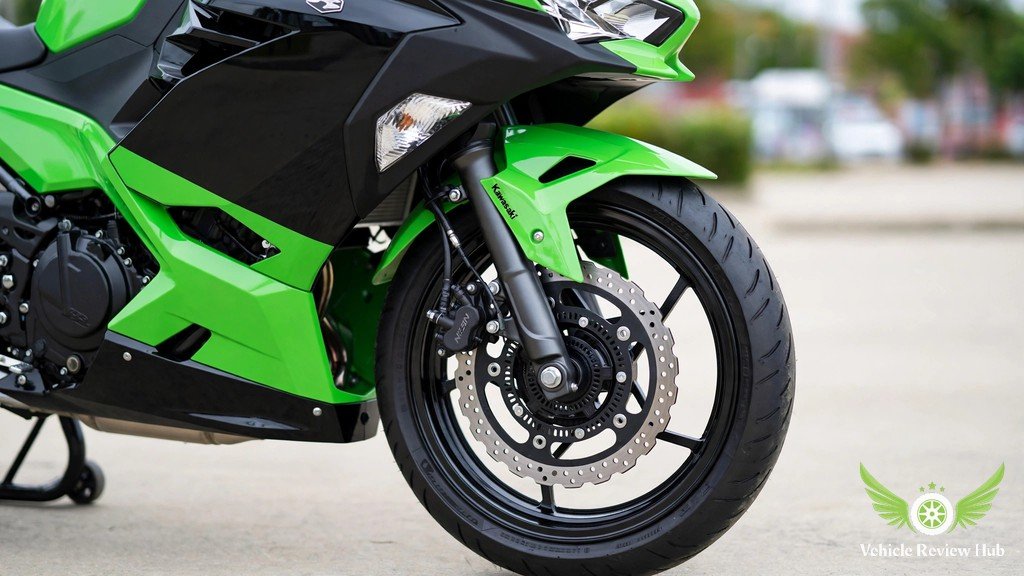
The cooling system is the most commonly skipped item in the Kawasaki Ninja 400 reliability schedule, because nothing about it announces itself. The manual calls for the coolant, hoses and O-rings to be replaced together at 36,000 km or every three years, with the level checked at every annual inspection. The coolant is a nitrate-free, phosphate-free, ethylene-glycol-based fluid, and a neglected system shows up as a hot-running engine rather than a warning light.
The hoses harden and the O-rings flatten on the calendar whether the bike is ridden or not, so a 2021 bike with 4,000 miles on it is already past its first coolant change on age alone. A buyer should ask when the coolant was last changed, and treat a blank answer as a job to do. The same logic applies to the brake fluid, which the manual replaces every two years, and to the brake hoses at four years.
Tire, Brake and Suspension Checks That Matter
The tire check starts with a figure that two sources print differently, and the manual wins. The fitted rear tire is a 150/60-17 Dunlop Sportmax GPR-300, which is what the owner’s manual, RevZilla’s 2018 first ride, Cycle World and Motorcycle.com’s full-spec listings all say. Kawasaki’s US marketing spec sheets print 150/70-17 instead, and Motorcycle.com’s own database prints both figures on the same page. The tire on the bike is 150/60-17, and the 150/70-17 figure is a spec-sheet discrepancy, not a different fitment. The front is 110/70-17 on every source.
The chain slack figure comes from the same manual, and it is worth recording how it was verified. The 2018 owner’s manual, page 120, prints “Drive Chain Slack — Standard: 20 ~ 30 mm (0.8 ~ 1.2 in.)”, measured midway between the engine sprocket and the rear wheel sprocket with the bike on its side stand, at the tightest point of the chain. That figure happens to match the Ninja 300’s chain slack, which is why this Kawasaki Ninja 400 reliability guide states the source: it was read from the 400’s own manual, not carried across from the 300.
| Item | Manual figure | Check or replace |
|---|---|---|
| Front tire | 110/70R17, 200 kPa / 28 psi cold | Check at every annual inspection |
| Rear tire (fitted) | 150/60R17, 225 kPa / 32 psi cold | Check at every annual inspection |
| Front brake | 310 mm petal disc, 2-piston Nissin caliper | Pads Kawasaki 43082-0081 / EBC FA197HH; fluid DOT-4 every 2 years |
| Rear brake | 220 mm petal disc, single-piston caliper | Pads Kawasaki 43082-0128 / EBC FA197HH (same pads front and rear) |
| Drive chain | 520 sealed chain; slack 20–30 mm (0.8–1.2 in.) | Lubricate every 400 miles; check slack every 600 miles; inspect wear every 12,000 km |
| Front fork | 41 mm telescopic, non-adjustable, 4.7 in. travel | Check for leaks at every annual inspection |
| Rear suspension | Uni-Trak, preload-adjustable, 5.1 in. travel | Lubricate at 24,000 km; check for leaks at every annual inspection |
Notes: tire sizes and pressures are from the owner’s manual tire table. The rear 150/70-17 figure printed on Kawasaki’s US marketing spec sheets is the discrepancy named above; the fitted tire is 150/60-17. Chain slack of 20–30 mm is the 2018 owner’s manual standard, page 120. Brake disc sizes are 310 mm front and 220 mm rear; one long-term test prints 286/193 mm for the discs, and both figures are wrong against the manual. This Kawasaki Ninja 400 reliability guide prints the manual figures throughout.
Kawasaki Ninja 400 Maintenance and Ownership Costs
Ownership costs on a 400 are mostly the cost of the schedule, and the schedule is mostly oil, filters and wear items. This section of the Kawasaki Ninja 400 reliability guide covers what the routine items cost in parts and what the two known faults cost to fix.
Fuel, Routine Servicing, Tires and Replacement Parts
Routine servicing is the cheapest part of Kawasaki Ninja 400 reliability. An oil and filter change needs 2.0 L of SAE 10W-40 and a Kawasaki 16097-0008 filter; the spark plug is an NGK LMAR9G and the air filter is replaced every 12,000 km.
Tires and brake pads are the wear items that vary most with how the bike is ridden. The fitted Dunlop Sportmax GPR-300 tires are a common 110/70-17 front and 150/60-17 rear, so replacements are available from every major brand at ordinary prices, and the brake pads are the same EBC FA197HH front and rear, which keeps the parts shelf simple. The two costs that are not routine are the clutch fix on a 2018–2019 bike, roughly $350 to $700 at a workshop, and the 15,200-mile valve inspection, which is a dealer job on most bikes. This Kawasaki Ninja 400 reliability guide prints those two figures as the only non-routine costs a buyer should budget for.
| Part or job | Part number or spec | Interval |
|---|---|---|
| Engine oil | 2.0 L SAE 10W-40, API SG–SM, JASO MA/MA1/MA2 | Every 7,600 miles / 12,000 km or yearly |
| Oil filter | Kawasaki 16097-0008 / Hiflofiltro HF303RC, 17.5 Nm | Every 7,600 miles / 12,000 km or yearly |
| Spark plug | NGK LMAR9G, gap 0.7–0.8 mm, torque 13 Nm | Replace every 12,000 km |
| Air filter | K&N KA-4018 | Replace every 12,000 km |
| Brake pads, front and rear | Kawasaki 43082-0081 front / 43082-0128 rear; EBC FA197HH both ends | Inspect wear at every service; replace as worn |
| Drive chain | 520 sealed chain; slack 20–30 mm | Lubricate every 400 miles; check slack every 600 miles |
| Coolant | Nitrate-free, phosphate-free ethylene-glycol coolant | Replace all every 3 years / 36,000 km |
| Brake fluid | DOT-4 | Replace every 2 years |
| Clutch fix (2018–2019) | Heavy-duty springs + revised pull rod + pressure-plate bearing | Once, if not already done; roughly $350–$700 at a workshop |
Notes: part numbers are from the manual chart transcription and the Kawasaki parts diagrams. The $350–$700 clutch figure is Norton Motorsports’ and the used-bike buyer’s guides’ estimate for the springs and pull-rod work at a workshop, not a Kawasaki price. This Kawasaki Ninja 400 reliability guide prints no resale percentage and no insurance or tire-price dollar figure, because neither has a named source at writing.
23V-515 Belongs to the ZX-4RR
The second recall trap is a ZX-4R family fault that looks like a 400 fault to anyone searching by displacement. Campaign 23V-515, Kawasaki bulletin MC23-06, covers the 2023 ZX-4RR KRT Edition, 991 units built between January 11 and March 29, 2023, for an alternator rotor that can loosen and stall the engine. Owner notification began on August 14, 2023, and 689 of the 991 bikes had been remedied by July 2024.
A buyer who sees “2023 Kawasaki 400 recall” should check the campaign number and the model name: 23V-515 names the ZX-4RR KRT Edition, and the 400’s only recall is 20V-774 on 2021 bikes. The same check applies to the ZX-4R spark-plug recall, 24V-221, which covers 1,579 ZX-4R and ZX-4RR bikes from 2023–2024 for a wrong spark plug fitted at the factory. Neither campaign touches a Ninja 400, and this Kawasaki Ninja 400 reliability guide names both so a search for “Ninja 400 recall” returns the right answer.
How to Keep a Kawasaki Ninja 400 Reliable
Keeping a 400 reliable is mostly a matter of doing the schedule and keeping the paperwork. The bike asks for little, and it asks for it on a calendar, so the owner who follows the manual and files the receipts ends up with the bike this Kawasaki Ninja 400 reliability guide describes: one clutch fix on the early bikes, one recall on the 2021s, and nothing else to chase.
Preventive Maintenance, Records and Regular Inspections
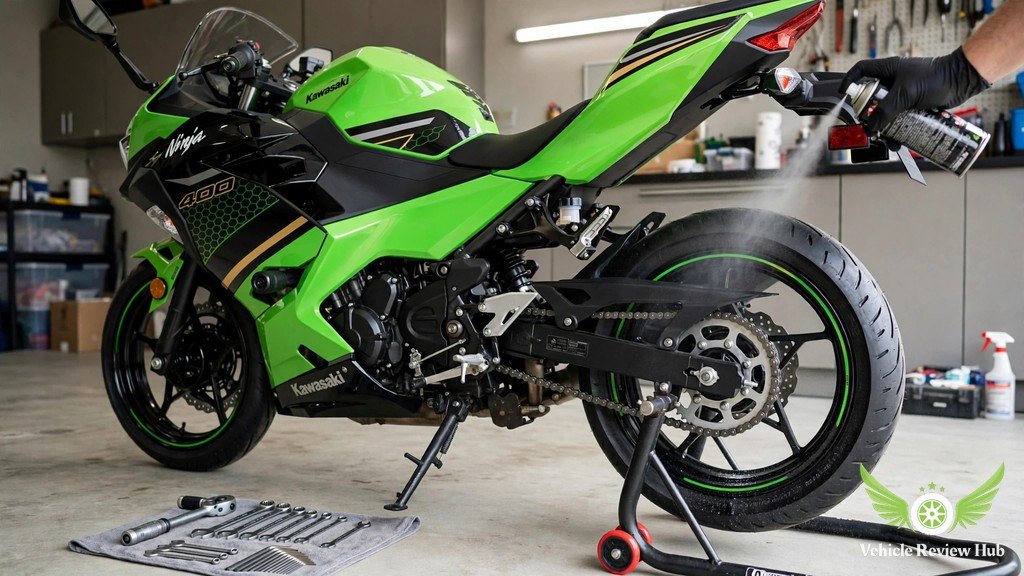
The annual inspection is the backbone of the schedule. The manual’s list covers the throttle, brakes, clutch, tires, suspension, steering, electrics and fasteners.
Records are the second half of Kawasaki Ninja 400 reliability. A service book with the oil changes stamped, a receipt for the valve inspection at 15,200 miles, a receipt for the clutch update on a 2018–2019 bike and a recall-completion printout for a 2021 bike are worth more than any inspection, because they prove the work was done rather than claiming it. The smaller Ninja 125’s reliability record shows the same pattern one class down: the bikes that last are the ones whose owners kept the schedule, not the ones whose owners kept the mileage low. Our Ninja 125 reliability guide covers that bike’s own schedule, and the lesson is the same — the manual is the maintenance plan, and the receipts are the proof.
False Neutrals Are Documented
The second shifting fault Norton documents is the false neutral: the gearbox drops into a neutral between gears, or drops out of gear under load, instead of engaging the next ratio. It is less common than the clutch slip and less widely reported, but it is a real fault on the same bikes, and it has a known fix. Norton attributes it to the shift detent spring and the shift star, and the cure is a heavy-duty shift detent spring and a race-spec shift star, with a blueprinted shift change shaft for bikes that drop gears repeatedly.
A buyer test-riding a used 400 should shift deliberately through every gear, under load and off it, and listen for a neutral that was not asked for. A single missed shift on a cold gearbox is not a fault; a gearbox that finds neutral between third and fourth more than once on a warm ride is. The fix is a workshop job, and a buyer who finds the fault should price the bike with the detent spring and shift star in mind. It is a smaller job than the clutch, and it is the last documented fault in this Kawasaki Ninja 400 reliability guide.
The Kawasaki Ninja 400 reliability verdict is the one the numbers point to. The Kawasaki Ninja 400 reliability verdict is simple: a 2020-onwards Ninja 400, serviced on the manual’s schedule, with the valve inspection done at 15,200 miles and the 2021 tensioner recall completed where it applies, is a motorcycle with no known weak point left to fix. The 2018–2019 bike needs one clutch job and then joins it. This Kawasaki Ninja 400 reliability guide ends where it started — one clutch, one recall, and a manual that asks for very little.
Kawasaki Ninja 400 Reliability Frequently Asked Questions
These are the questions buyers ask most about the Ninja 400’s reliability, answered from the owner’s manual and the recall records in this Kawasaki Ninja 400 reliability guide. The short version is one weak point, one recall, and a schedule that asks for very little.
Is the Kawasaki Ninja 400 reliable?
Yes. The record is strong: exactly one weak point and exactly one recall. The weak point is the clutch on 2018 and 2019 bikes, which slips typically between 500 and 2,000 miles, and Kawasaki fixed the clutch hardware for 2020. The recall is 20V-774, a 2021 cam chain tensioner fault covering 1,770 bikes. Everything else in this Kawasaki Ninja 400 reliability guide is routine: oil and filter every 7,600 miles or once a year, and a valve inspection at 15,200 miles.
What is the Ninja 400’s one recall?
The one recall this Kawasaki Ninja 400 reliability guide records is campaign 20V-774, covering a 2021 camshaft chain tensioner fault on 1,770 bikes: 970 Ninja 400 ABS, 418 Ninja 400 and 382 Z400 ABS, built between July 1 and October 27, 2020. The cause was a tensioner of insufficient strength, and a failed tensioner can stall the engine. Kawasaki issued a do-not-drive advisory and a stop-sale on December 11, 2020, and 1,621 of the 1,770 bikes had been remedied by October 2024. A buyer checking a 2021 bike should run the VIN through the NHTSA recall lookup, because the NHTSA recalls API returns zero recalls for every Ninja 400 year, which is false. This Kawasaki Ninja 400 reliability guide cites the Part 573 report, not the API.
What is wrong with the Ninja 400 clutch?
The clutch wears out and starts slipping during acceleration with very low miles on the bike, typically between 500 and 2,000 miles, on 2018 and 2019 bikes. Three causes act together: soft springs, short pull-rod geometry and a thrust bearing that does not hold the pressure plate square. Kawasaki revised the pull rod and the pressure-plate bearing for the 2020 model year, so a 2020-onwards bike already has the revised hardware. A workshop typically charges roughly $350 to $700 for the springs and pull-rod work, according to Norton Motorsports and the used-bike buyer’s guides. The same bikes can also find false neutrals, which Norton attributes to the shift detent spring and the shift star. This Kawasaki Ninja 400 reliability guide treats the clutch receipt as the most useful reliability test on an early bike.
What is the Ninja 400 maintenance schedule?
Major services come every 7,600 miles or 12,000 km, or once a year, with oil and filter changed at each service, and the first service is at 600 miles. The valve clearances are inspected at 15,200 miles, or 24,000 km. An oil and filter change needs 2.0 litres of SAE 10W-40 and a Kawasaki 16097-0008 filter, the spark plug is an NGK LMAR9G gapped at 0.7 to 0.8 mm and replaced every 12,000 km, and the coolant, hoses and O-rings are replaced together every three years or 36,000 km. Brake fluid is DOT-4 and is replaced every two years. This Kawasaki Ninja 400 reliability guide follows the owner’s manual chart, and it does not print the aggregators’ oil figures of 2.4 or 3.5 litres.
What tyre sizes and chain slack does the Ninja 400 use?
The fitted rear tyre is a 150/60-17 Dunlop Sportmax GPR-300, which is what the owner’s manual, RevZilla’s first ride and Cycle World all say. Kawasaki’s US marketing spec sheets print 150/70-17 instead, and this Kawasaki Ninja 400 reliability guide names that split rather than hiding it. The front tyre is 110/70-17 on every source, and the cold pressures are 28 psi at the front and 32 psi at the rear. The drive chain is a 520 sealed chain with 20–30 mm of slack from the 400’s own 2018 owner’s manual, lubricated every 400 miles with the slack checked every 600 miles.
Does the Ninja 500’s clutch recall affect the Ninja 400?
No. Campaign 25V-146 is the 2024 Ninja 500 and Z500 clutch recall, for a clutch release shaft that was not properly welded, and no 400 of any year is in it. The confusion is understandable, because the 500 shares the 400’s clutch components, but the recall is the 500’s, not the 400’s. The same check applies to 23V-515, which belongs to the 2023 ZX-4RR KRT Edition, and 24V-221, which belongs to the 2023 to 2024 ZX-4R and ZX-4RR. The 400’s only recall is 20V-774, and this Kawasaki Ninja 400 reliability guide names each trap so a search for a Ninja 400 recall returns the right answer.