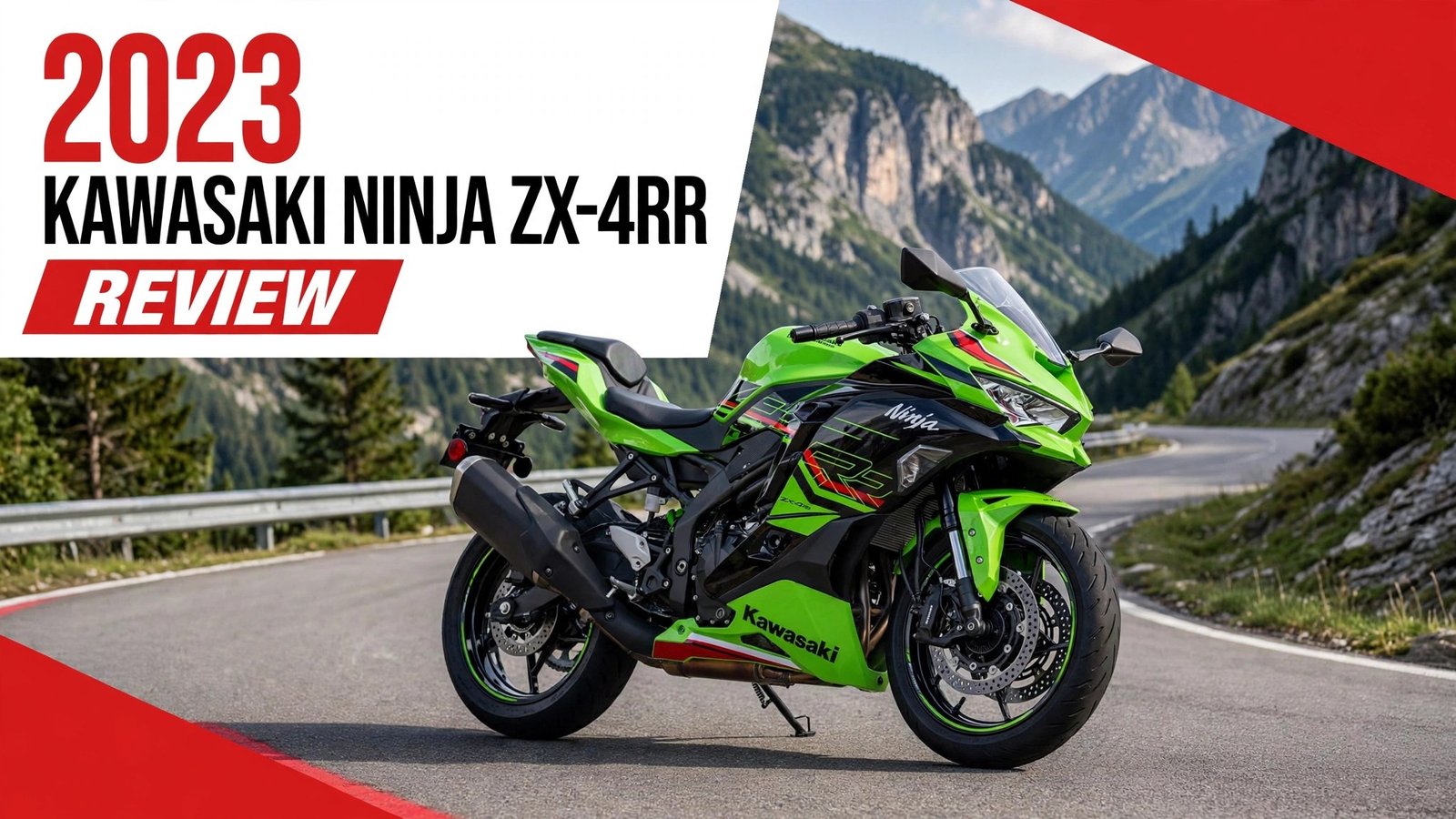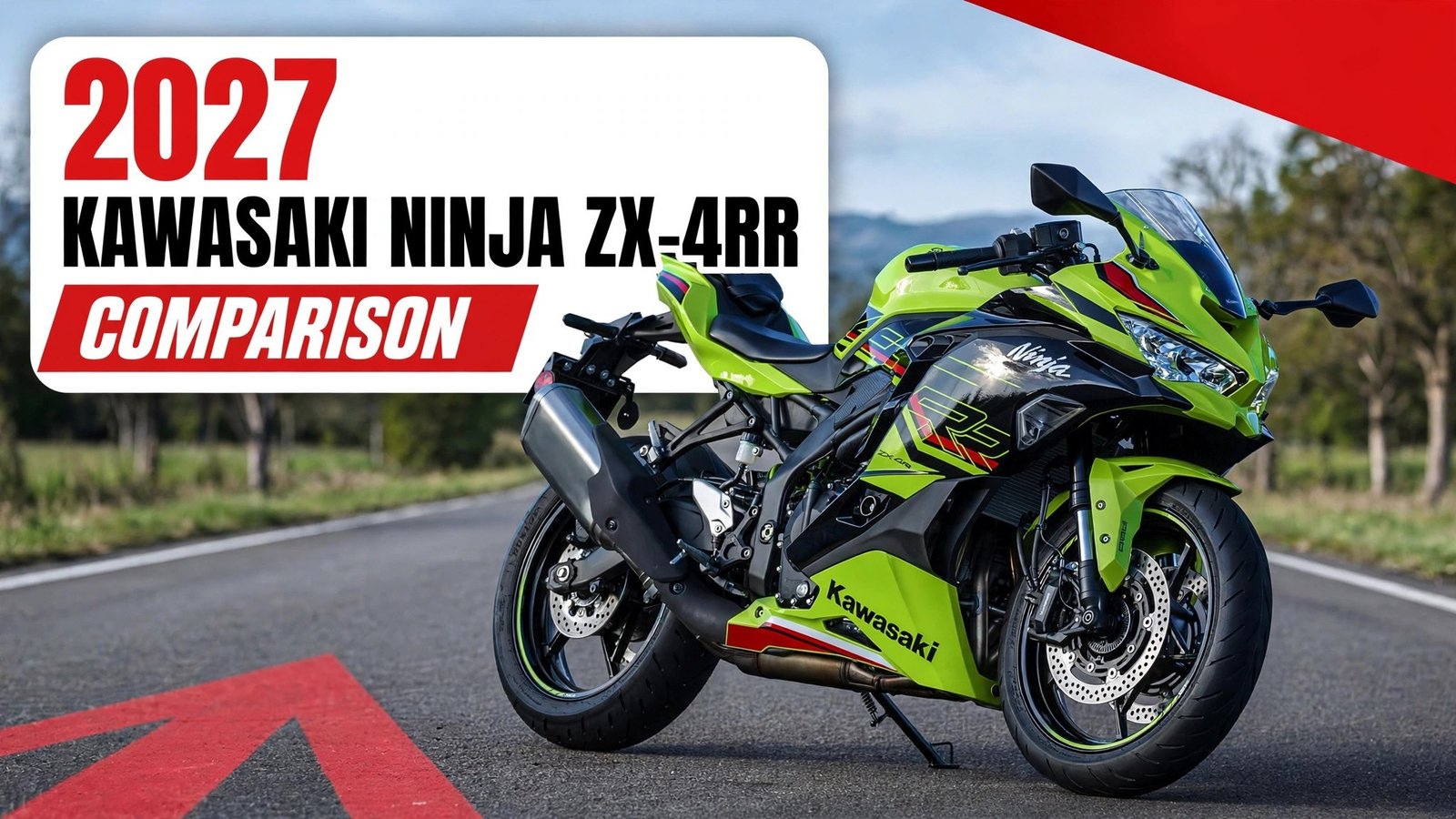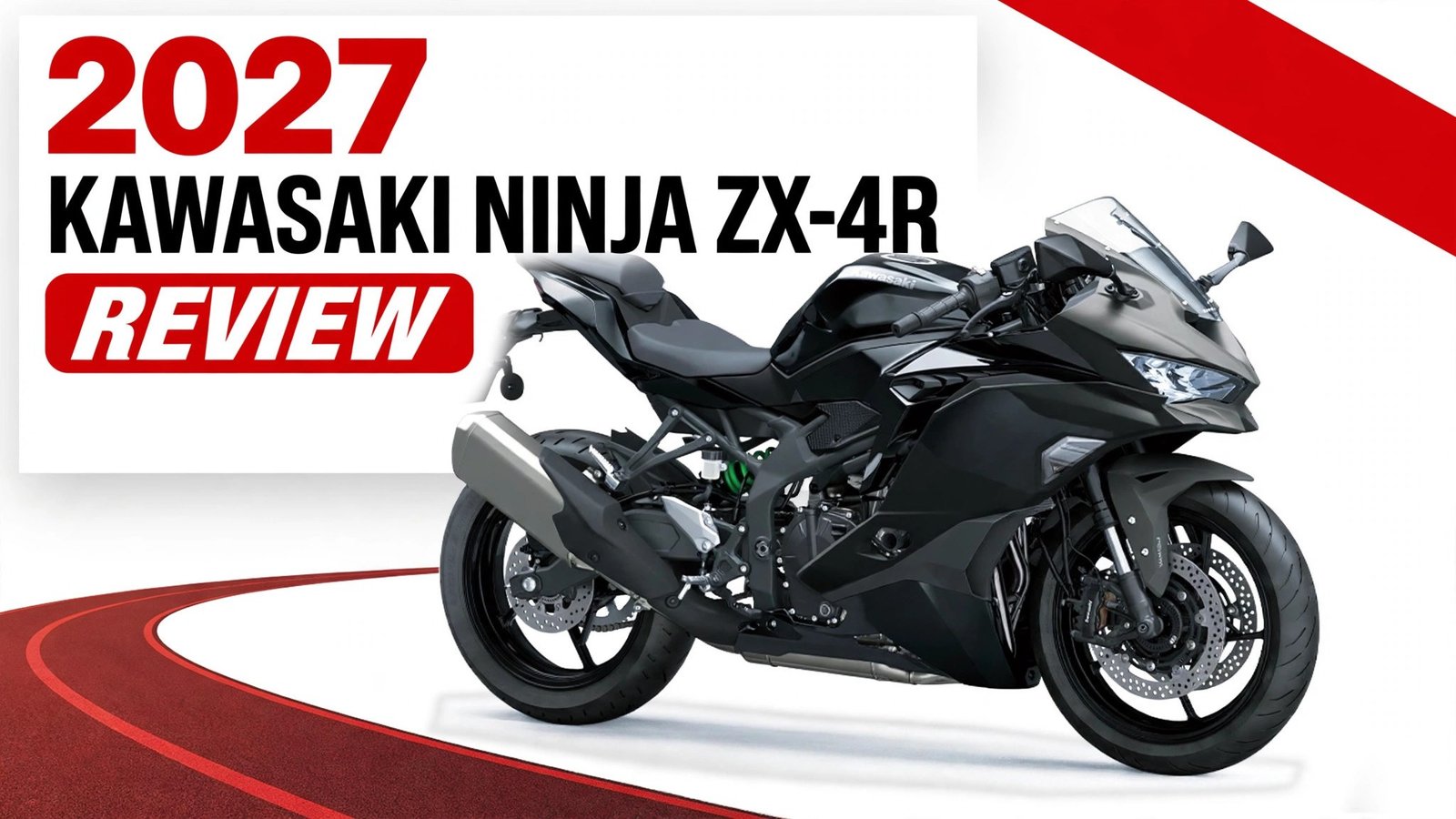
The 2027 Kawasaki Ninja ZX-4R ABS costs $9,299 before destination, and for that money Kawasaki sells the only new 400cc inline-four sportbike in America — with its top end deliberately cut off. The US bike claims just 56.0 hp at 11,500 rpm, where the same 399cc four makes 76 hp in Europe, because American noise regulations cap the revs where the power lives. This Kawasaki Ninja ZX-4R review works through what that means: the model-year history, the engine and its missing top end, the real prices, the equipment, and the riding experience. The short version is that this Kawasaki Ninja ZX-4R review finds a brilliant little chassis and a screaming four-cylinder engine, sold in America with its best third missing — and priced $2,000 to $4,000 above the twin-cylinder bikes in its showroom.
Kawasaki Ninja ZX-4R Overview and Model-Year Updates
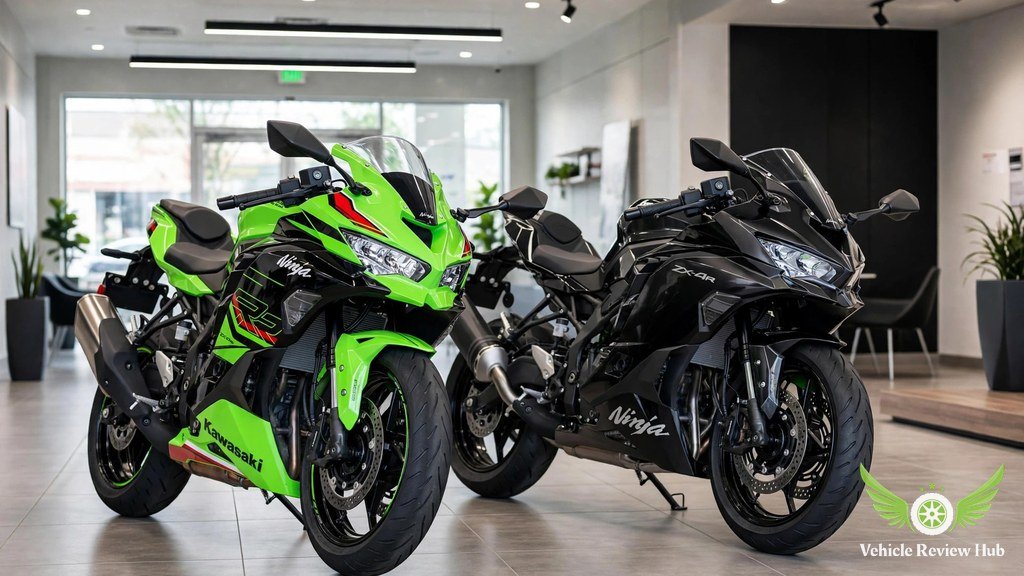
Understanding this Kawasaki Ninja ZX-4R review starts with the model-year story: the plain R is not the bike Kawasaki launched. America got the expensive RR first, and the cheaper R only arrived a year later — a launch order that still shapes used prices today.
2023 Was RR KRT Only
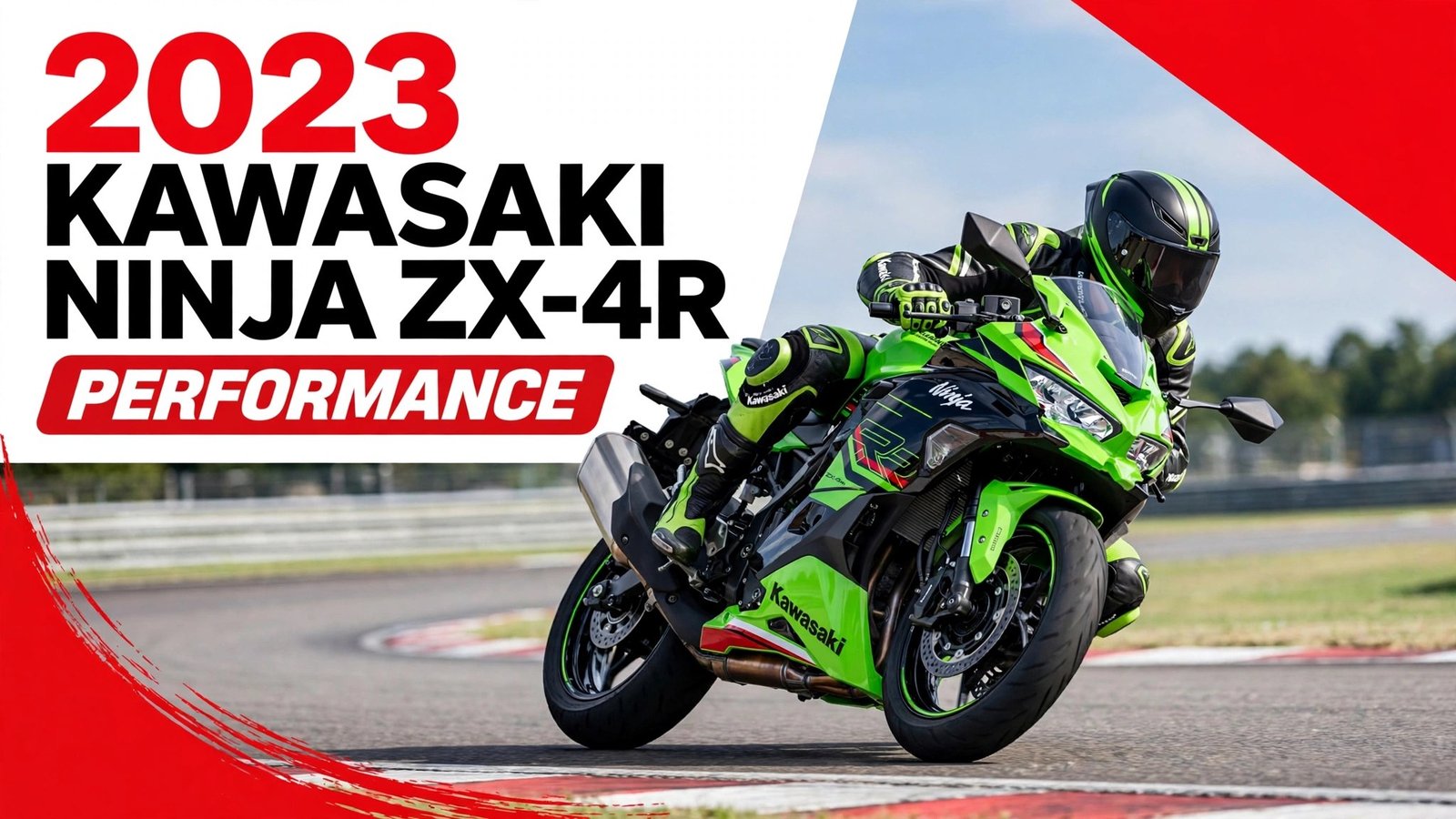
In 2023 the only ZX-4 sold in the United States was the Ninja ZX-4RR KRT Edition, in Lime Green and Ebony, at $9,699 plus $435. There was no plain R, no base RR, and no cheaper way into the bike. Kawasaki launched with the fully loaded version on purpose: quickshifter, preload-adjustable fork and fully adjustable rear shock all standard. Rider Magazine’s Thunderhill first ride — the test this Kawasaki Ninja ZX-4R review draws on for the riding section — was run on that KRT bike. If you are shopping for a used 2023 ZX-4, every single one is an RR KRT, and every one needs its alternator-rotor recall (23V-515) verified by VIN before you buy.
Plain R Arrived for 2024
The plain ZX-4R arrived for 2024, in Metallic Spark Black only, at $9,399 plus $450 destination. It is the same engine, frame and electronics as the RR, minus three things: the bidirectional quickshifter, the fork preload adjustment and the fully adjustable BFRC Lite rear shock. That is the whole difference, and it is worth $500 against the base RR that year. The 2024 RR range also grew a 40th Anniversary Edition at $10,299, with the KRT Edition at $10,099. This Kawasaki Ninja ZX-4R review treats the R as the street bike of the pair and the RR as the track-day bike — how Kawasaki priced them, and how most buyers should choose.
Kawasaki Ninja ZX-4R Engine and Specifications
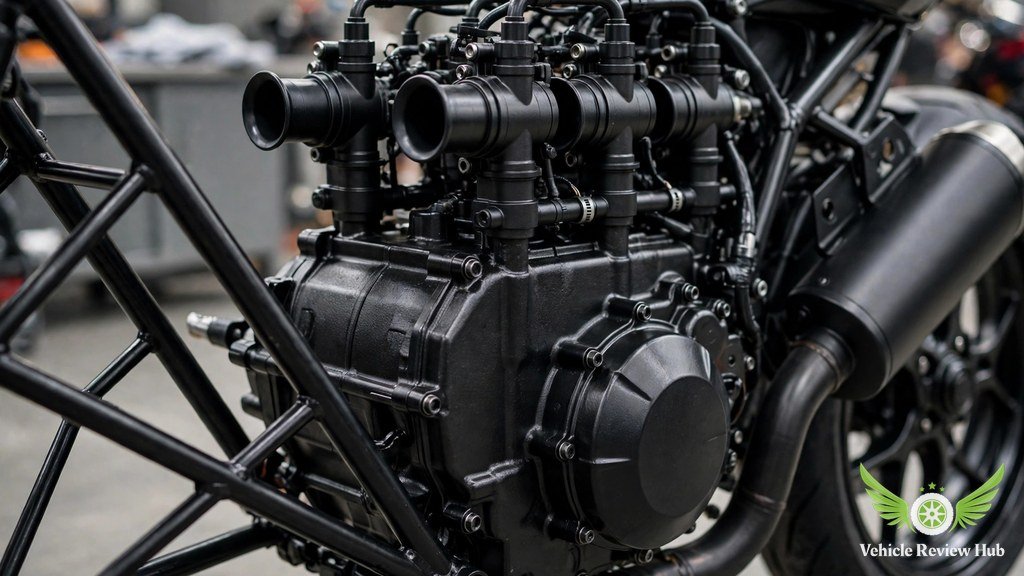
The engine is the whole reason this bike exists, and the whole reason it frustrates — so this Kawasaki Ninja ZX-4R review starts with the numbers as Kawasaki prints them, then explains why the American numbers sit so far from the European ones.
US Claim Is Just 56 HP
Kawasaki’s own US spec sheets claim 56.0 hp at 11,500 rpm and 26.5 lb-ft of torque at 11,000 rpm from the 399cc liquid-cooled inline-four — a 57.0 × 39.1 mm bore and stroke, a 12.3:1 compression ratio, four 34 mm throttle bodies and a 16,000 rpm tach. The same engine in Europe is rated at 76 hp at 14,500 rpm, or 79 hp with ram air; Australia gets 73.8 hp. The difference is the North American noise-emissions tune, which caps the revs where the power lives: RevZilla’s first ride describes “the unmistakable flat-spot in power above about 11,500 rpm. It’s a noise-emissions thing, we’re told.” Cycle World’s dyno test put a stock US bike on its Dynojet and measured 56.3 hp at 11,700 rpm and 25.8 lb-ft at 11,300 rpm — almost exactly the claim, which is why this Kawasaki Ninja ZX-4R review treats 56 hp as the honest stock number and not a conservative estimate. Unit discipline: 42 kW is 56.3 hp, which is 57 PS — the same power in different units — and the US torque peak arrives 2,000 rpm lower than the European bike’s. The engine runs on regular 87-octane fuel, which this Kawasaki Ninja ZX-4R review notes as a small saving on a bike that is otherwise expensive to own.
No IMU, Says RevZilla
The ZX-4R has no inertial measurement unit, and RevZilla’s first ride says so in its own words: “I tried TC level 3 (wheel-speed informed, there is no IMU).” That single fact defines the electronics: the three-mode KTRC traction control works from wheel-speed sensors only, so it cannot do lean-angle-sensitive intervention, cornering ABS or slide control, and the ABS is a conventional non-cornering system. Against the 2026 Yamaha YZF-R7, with a six-axis IMU, and the Suzuki GSX-8R, with a three-axis IMU-based system, the ZX-4R’s electronics are a generation behind — and this Kawasaki Ninja ZX-4R review says so plainly, because a buyer comparing spec sheets deserves to know. What the bike does have is a 4.3-inch full-colour TFT display with a Circuit Mode, RIDEOLOGY THE APP connectivity, four ride modes (Sport, Road, Rain and a customisable Rider mode), and all-LED lighting. RevZilla’s honest complaints are worth repeating: the dash buttons need a long hold to switch ride modes — “distracting and a little clumsy” — and in Rider mode the trip meter and engine temperature disappear.
| Specification | Kawasaki Ninja ZX-4R (US) |
|---|---|
| Engine | 399cc liquid-cooled DOHC 16-valve inline-four |
| Power (US claim) | 56.0 hp at 11,500 rpm |
| Torque (US claim) | 26.5 lb-ft at 11,000 rpm |
| Power (Europe) | 76 hp at 14,500 rpm (79 hp with ram air) |
| Transmission | 6-speed, assist-and-slipper clutch |
| Fuel capacity | 4.0 gallons (87-octane regular) |
| Seat height | 31.5 in |
| Curb weight (claimed) | 414.5 lb |
| Front tyre / rear tyre | 120/70ZR-17 / 160/60ZR-17 Dunlop Sportmax GPR300 |
| Warranty | 12-month limited warranty |
Note: All figures above are from Kawasaki’s US spec sheets unless noted. The European power figure is a different tune of the same engine, not a different bike — this Kawasaki Ninja ZX-4R review never presents 76 hp as a US figure, and the rear tyre is 160/60-17, not the Ninja 400’s 150/60-17.
Kawasaki Ninja ZX-4R Price and Market Availability
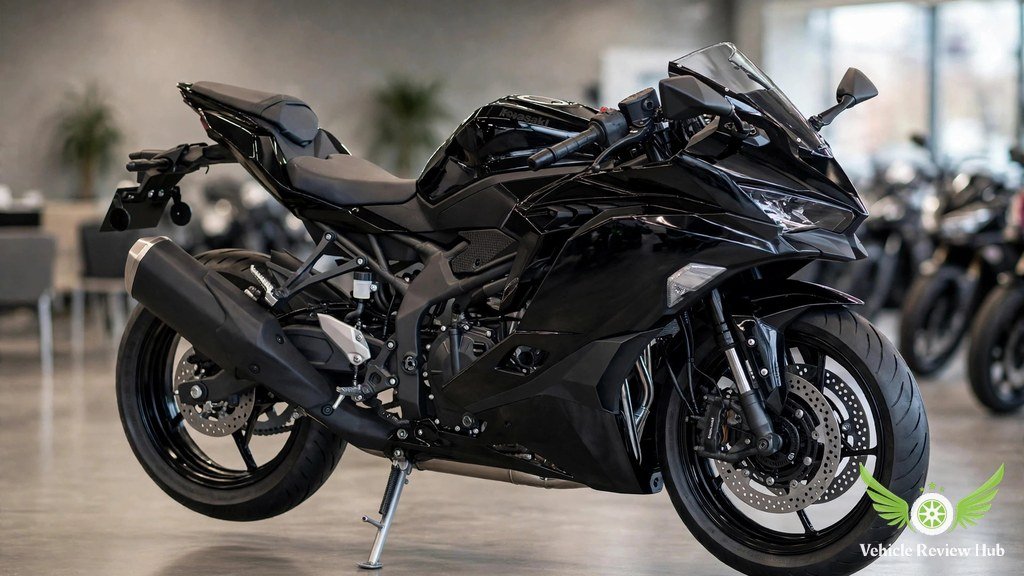
Price is where the ZX-4R’s story gets strange, because the cheapest year to buy one new was not the first year. This Kawasaki Ninja ZX-4R review prints the full year-by-year table: the cut, the rise, and where the 2027 bike sits.
Kawasaki Ninja ZX-4R Price in the USA: $9,299 (2027)
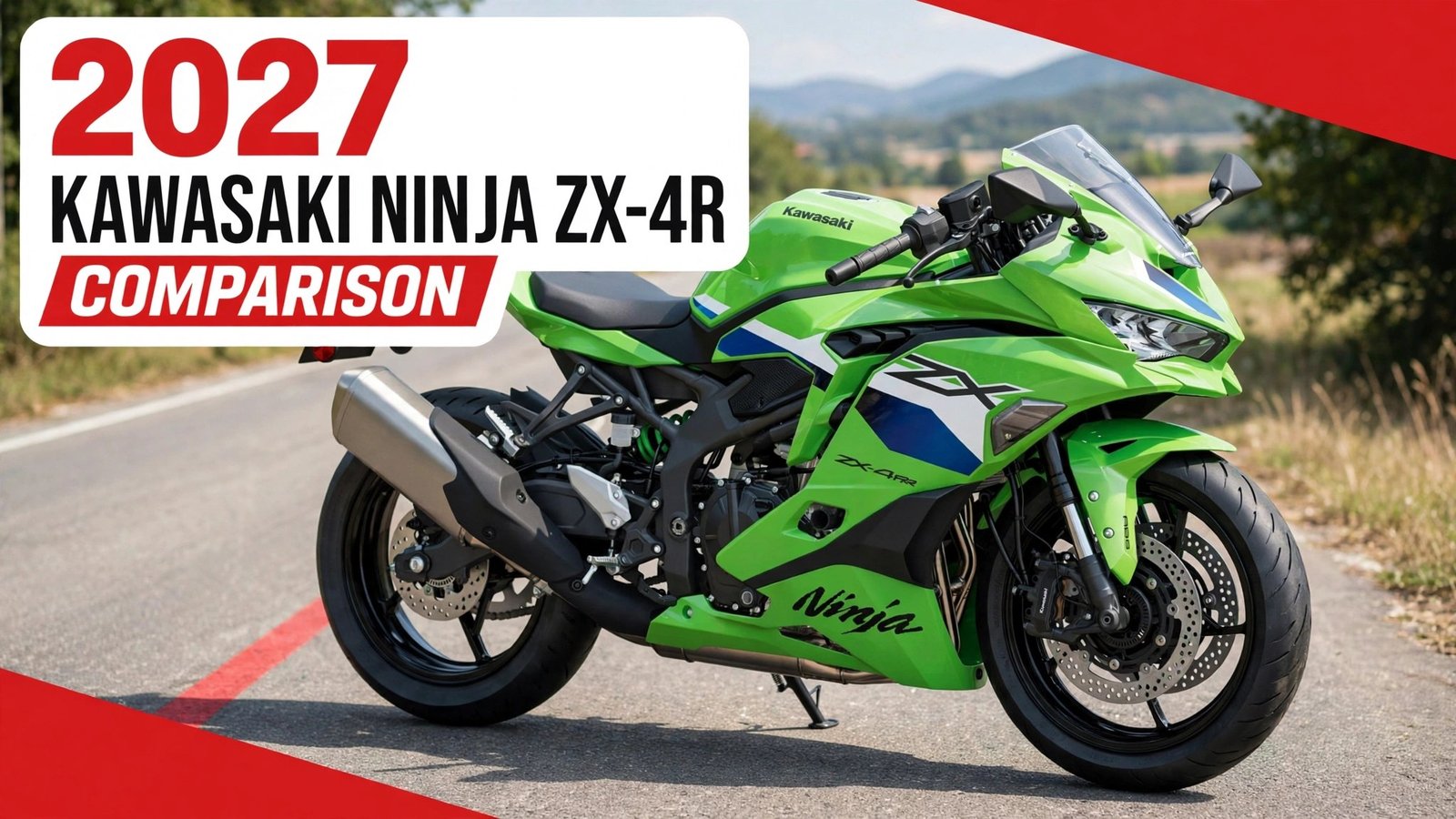
The 2027 ZX-4R ABS is $9,299 plus $650 destination, and the 2027 ZX-4RR ABS is $9,999 plus $650. The 2024 R was $9,399 plus $450, and then 2025 brought a real price cut: the 2025 R ABS dropped to $8,999 plus $600, or $9,599 delivered — $400 less than the 2024 bike. Kawasaki’s own 2025 spec sheet confirms it, printing “BASE MSRP ABS $8,999”. The 2025 RR also fell to $9,699, with KRT paint free over the base RR. Then 2026 put $300 back on: the R rose to $9,299, where it has stayed for 2027 — the current figure in this Kawasaki Ninja ZX-4R review. The lesson for buyers is simple, and this Kawasaki Ninja ZX-4R review states it plainly: a leftover 2025 R was the cheapest new ZX-4R ever sold in America, and a used 2024 R — listed between $7,999 and $9,299 in November 2026 — is now the cheapest way in. The full ZX-4RR comparison weighs the R against the RR, the R7 and the GSX-8R on the same delivered prices.
KRT Survives as a Colour Only
There is no 2027 KRT Edition. Lime Green survives for 2027 as an RR colour, not as a separate trim. The KRT story ran its course: a $200 paint premium in 2024, free paint in 2025, then no KRT trim at all. For used buyers, a 2023 KRT’s green paint was never a separate model — it was the launch colour of the only bike Kawasaki sold that year. Pay for condition and mileage, not for the letters on the fairing — advice this Kawasaki Ninja ZX-4R review repeats in the verdict.
| Model year | ZX-4R ABS | ZX-4RR ABS | ZX-4RR KRT Edition | Destination |
|---|---|---|---|---|
| 2023 | Not sold | Not sold | $9,699 | $435 |
| 2024 | $9,399 | $9,899 | $10,099 | $450 |
| 2025 | $8,999 | $9,699 | $9,699 (paint free) | $600 |
| 2026 | $9,299 | $9,999 | Lime Green is a colour | $650 |
| 2027 | $9,299 | $9,999 | No KRT Edition | $650 |
Note: Delivered prices: 2023 KRT $10,134; 2024 R $9,849, RR $10,349, KRT $10,549; 2025 R $9,599, RR/KRT $10,299; 2026 R $9,949, RR $10,649; 2027 R $9,949, RR $10,649. Every figure comes from Kawasaki’s spec sheets, Motorcycle.com’s specs database, Cycle World or dealer brochures that state MSRP explicitly — never from a dealer listing used as MSRP. This Kawasaki Ninja ZX-4R review uses the 2025 sheet’s own “BASE MSRP ABS” label as proof $8,999 is the ABS price that year.
Kawasaki Ninja ZX-4R Design, Features and Technology
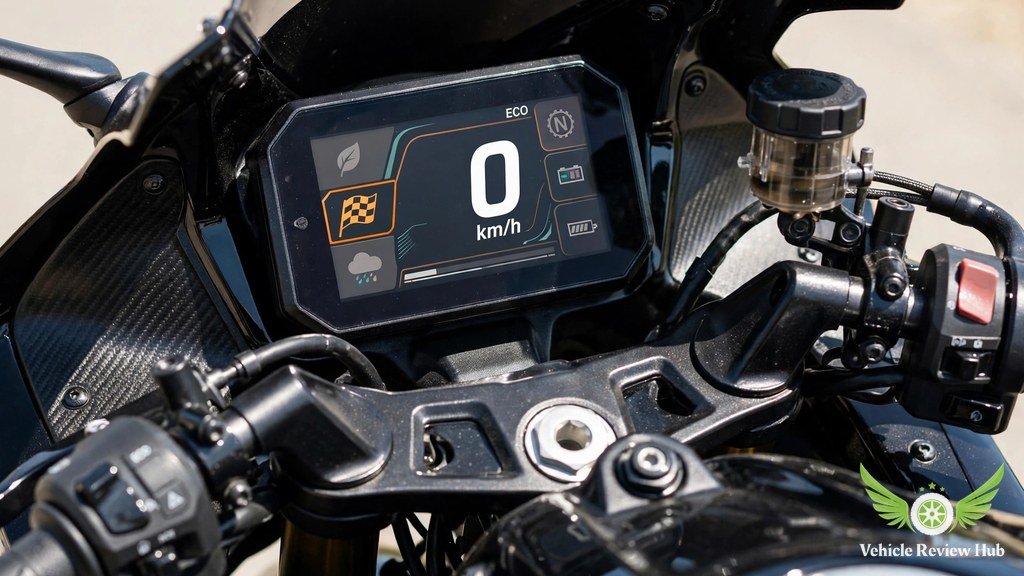
Park the R next to the RR and you will struggle to tell them apart, because almost everything is shared. This Kawasaki Ninja ZX-4R review separates what the two bikes share from the three things the RR buys, and names the two traps that catch writers who copy spec sheets unchecked.
RR Buys Quickshifter and BFRC-Lite
The RR adds exactly three things over the R. First, the KQS bidirectional quickshifter, which works up and down with an auto-blip — standard on the RR, an optional accessory on the R. Motorcycle.com praised it on upshifts and found the downshift timing “felt off”. Second, fork spring-preload adjustment: the RR’s 37 mm Showa SFF-BP fork has preload; the R’s fork is non-adjustable. Third, the fully adjustable BFRC Lite rear shock — preload, compression and rebound damping, 4.9 inches of travel against the R’s 4.4 inches. Everything else is shared: the engine, the steel trellis frame, the dual 290 mm front discs, the 4.0-gallon tank, the 31.5-inch seat and the all-LED lighting. Ultimate Motorcycling’s 13 fast facts cover the same split in detail. Two traps to avoid, and this Kawasaki Ninja ZX-4R review names both: the RR fork has no damping adjustment at all — Kawasaki’s own spec sheet lists preload only, and RevZilla’s first ride states flatly that “there isn’t any damping adjustment”, so Cycle World’s model-page claim of rebound and compression adjustment is wrong. The frame is high-tensile steel, not aluminium — MCN’s first ride wrote “aluminum frame” and that is wrong too. Which fork leg carries the preload adjustment is disputed between RevZilla and Cycle World, so this blog names no side until the owner’s manual settles it.
Built in Thailand (ML5 VINs)
Every US ZX-4R and ZX-4RR was built in Thailand, and every US VIN starts with ML5. That matters: the recall ranges are written in ML5 VINs, so a buyer checking a used bike needs the full 17 characters. The 2023 RR KRT’s alternator-rotor recall, for example, covers VINs from ML5ZXCS11PDA00082 to ML5ZXCS10PDA01482. Colours follow the year, and this Kawasaki Ninja ZX-4R review keeps them straight: the plain R is Metallic Spark Black every year, the 2023 KRT is Lime Green and Ebony only, the 2024 RR 40th Anniversary is Lime Green, Pearl Crystal White and Blue, and the 2025 RR wears Metallic Matte Whitish Silver and Metallic Flat Spark Black. Never buy a Lime Green bike that someone is selling as a plain R — the R was never green, as this Kawasaki Ninja ZX-4R review notes.
Kawasaki Ninja ZX-4R Riding Experience and Comfort
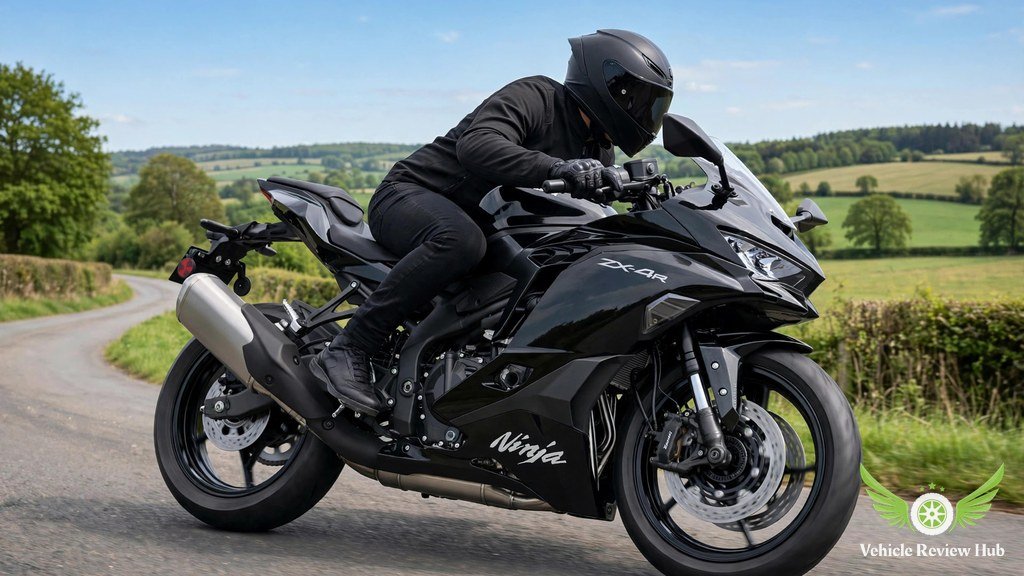
On the road the ZX-4R is two bikes in one: a polite, compact commuter below 10,000 rpm and a screaming little supersport above it. This Kawasaki Ninja ZX-4R review leans on the first rides for the riding impression, because the testers rode the bike where it was designed to be ridden — Thunderhill Raceway and 140 miles of California back roads.
The Only Small Four on Sale
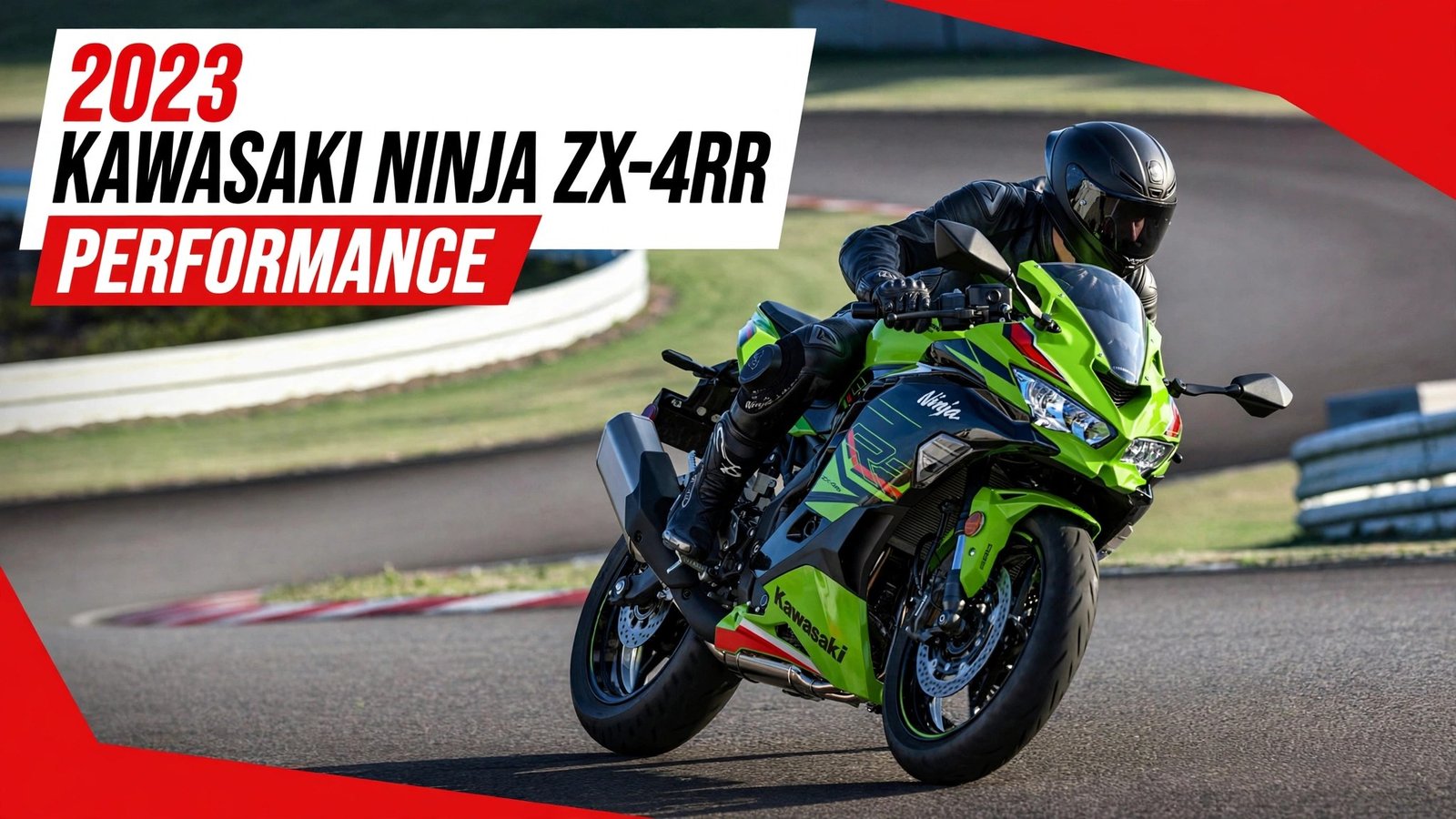
The ZX-4R is the only new 400cc inline-four sportbike sold in the United States — the fact this Kawasaki Ninja ZX-4R review keeps coming back to. Its lineage runs back to the 1988–1999 ZXR400 in Japan, and its closest living relative is the Asia-only ZX-25R, never sold here. Against the twin-cylinder Ninja 400 review bike in the same showroom, the four is smoother, louder and far more alive at the top of the rev range — and thousands of dollars more expensive. The riding position is compact but not punishing: RevZilla’s 6’2″ tester called the bike “far from too small”. The 31.5-inch seat is low for a supersport, the clutch pull is light, and both hand levers adjust. On the street RevZilla rode 140 miles and called the bike “still felt pretty neutral for a sport bike, almost inviting”, with a “delightful” quickshifter. On track the RR is a genuine tool: Rider Magazine’s first ride called it “a riot to thrash around the undulating Thunderhill racetrack”, and Roadracing World recorded 107 mph through Turn 9. The engine “seems happy to live above 10,000 rpm, wailing like a banshee but still nice ‘n smooth”, in RevZilla’s words — and this Kawasaki Ninja ZX-4R review agrees that the sound and the revs are the reason to buy the bike, because the numbers alone do not justify it.
Rider Magazine filmed its 2023 first ride of the ZX-4RR KRT Edition at Thunderhill Raceway — footage of the launch bike, not a review of the plain R, which did not exist when it was filmed:
12 Month Limited Warranty
Kawasaki covers every ZX-4R and ZX-4RR with a 12-month limited warranty, and Kawasaki Protection Plus extended coverage is available at 12, 24, 36 or 48 months. That short factory term matters more here, for two reasons this Kawasaki Ninja ZX-4R review wants buyers to understand. First, the maintenance schedule is the most demanding of any Ninja in this line: service every 7,600 miles, with oil, filter and all four spark plugs changed at every service, and a valve check at 15,200 miles. Second, the ECU flash that unlocks the engine’s real power voids the warranty — RevZilla’s owner source: “every owner has to flash the ECU and void their warranty if they want to feel the true character of the engine”. Insurance is the other hidden cost: the same owner reported that insuring the ZX-4RR alone costs “notably more” than his Ducati Hyperstrada 821 and Husqvarna 701 Supermoto combined. No premium figure was published, so none is printed here — but this Kawasaki Ninja ZX-4R review says to budget for the insurance quote before you budget for the bike.
Kawasaki Ninja ZX-4R Review: Pros, Cons and Verdict
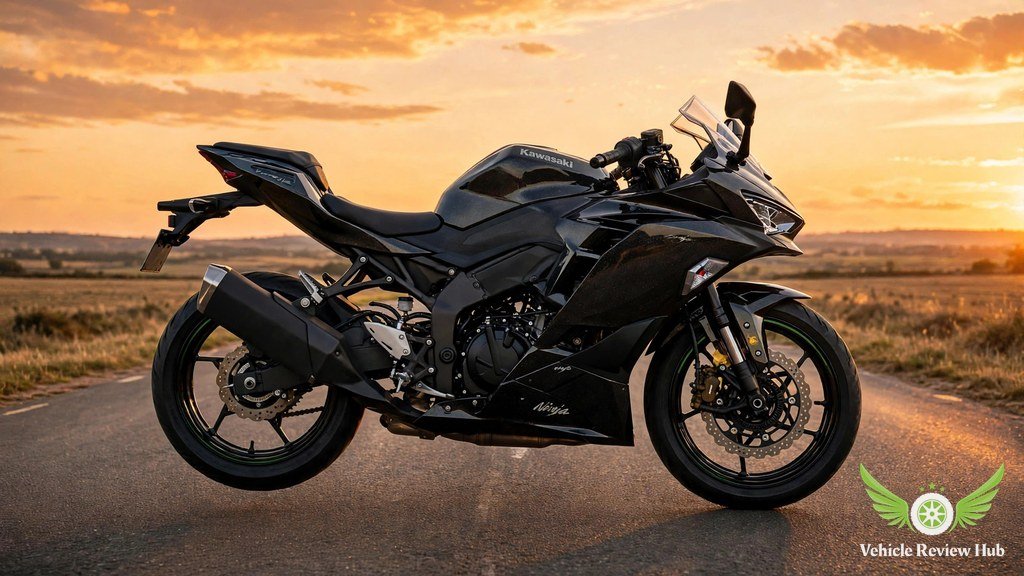
The verdict on this bike is simple, and this Kawasaki Ninja ZX-4R review has been building to it: buy it for the sound, the revs and the chassis — not for the numbers, because on paper it loses to its rivals on power, torque and price, and wins only on character.
Main Advantages and Limitations of the Kawasaki Ninja ZX-4R
The advantages are real and specific — this Kawasaki Ninja ZX-4R review lists them first. The 399cc inline-four is the only small four in America, it revs to a 16,000 rpm tach, and it sounds like nothing else under $10,000. The chassis is genuinely premium: a steel trellis frame, a 37 mm Showa SFF-BP fork, radial brakes and a TFT dash with ride modes, on a low 31.5-inch seat. Cycle World’s Ten Best named the RR its Best Lightweight Streetbike for 2023, and Motorcycle.com’s first ride gave the platform an Editor Score of 86%. The US tune caps the engine at 56 hp, the bike weighs 414.5 lb claimed — essentially the same as a Ninja 650 — while making far less power, there is no IMU and no cornering ABS, the warranty is only 12 months, and new spark plugs are due at every 7,600-mile service. The ZX-4R performance guide measures the gap in full, as this Kawasaki Ninja ZX-4R review summarizes: 56.3 hp on Cycle World’s dyno, 124 mph by GPS, and 70-plus hp only after an ECU flash that voids the warranty. For contrast, the Ninja 500 review shows what $5,299 buys in a twin.
| Advantages | Limitations |
|---|---|
| Only 400cc inline-four sportbike on sale new in the US | US tune caps power at 56.0 hp; Europe gets 76 hp |
| Revs to a 16,000 rpm tach with a superbike soundtrack | 414.5 lb claimed — as heavy as a Ninja 650 |
| Premium chassis: steel trellis frame, SFF-BP fork, radial brakes | No IMU, no cornering ABS, wheel-speed KTRC only |
| 4.3-inch TFT dash, ride modes, quickshifter (RR) | 12-month warranty; flash voids it |
| Low 31.5-inch seat fits most riders | Spark plugs changed at every 7,600-mile service |
| Cycle World Best Lightweight Streetbike 2023 | $9,299 — $2,000 to $4,000 above twin-cylinder rivals |
Note: The table balances platform awards against ownership realities. The RR’s Cycle World award and Motorcycle.com’s 86% Editor Score belong to the platform the R shares, and this Kawasaki Ninja ZX-4R review credits them as platform awards with the RR named.
ZX-4R SE Never Came to the US
The ZX-4R SE is a real trim, sold in Japan, Asia and Europe, and it never came to America. The SE is the mid-spec bike — standard R hardware plus a preload-adjustable fork, the bidirectional quickshifter, a smoked windscreen, a USB port and frame sliders — and it weighs 1 kg more than the R. None of that is available as a US model, and no dollar price for it exists. Every piece of SE kit is available as a Kawasaki accessory for the US R, so a buyer who wants the quickshifter and the smoked screen can add them. That is the honest end of this Kawasaki Ninja ZX-4R review: the American R is the base bike of a brilliant little platform, sold with its top end missing and its mid-spec trim kept overseas — and still worth a serious look for the sound alone.
Kawasaki Ninja ZX-4R Review Frequently Asked Questions
The ZX-4R raises the same questions everywhere, because it looks like a different kind of bike than it is priced like. These are the direct answers from this Kawasaki Ninja ZX-4R review.
How much does the Kawasaki Ninja ZX-4R cost?
The 2027 ZX-4R ABS is $9,299 plus $650 destination, or $9,949 delivered. The cheapest year to buy one new was 2025, when the R ABS was $8,999 plus $600 — $9,599 delivered — a $400 cut from the 2024 bike’s $9,399. This Kawasaki Ninja ZX-4R review prints the full year-by-year price table in the price section above, including the 2023 RR KRT launch price of $9,699.
How much horsepower does the US ZX-4R make?
Kawasaki’s US spec sheet claims 56.0 hp at 11,500 rpm and 26.5 lb-ft at 11,000 rpm, and Cycle World’s dyno test measured 56.3 hp at 11,700 rpm — the claim and the test agree. Europe rates the same engine at 76 hp, or 79 hp with ram air, because the US bike is capped by noise regulations. This Kawasaki Ninja ZX-4R review never presents the European figure as a US number.
What is the difference between the ZX-4R and the ZX-4RR?
The same engine, frame and electronics. The RR adds the bidirectional quickshifter, fork preload adjustment and the fully adjustable BFRC Lite rear shock, and in 2027 it costs $700 more than the R ($9,999 against $9,299). Buy the RR for track days and the R for the street — this Kawasaki Ninja ZX-4R review frames the choice the way Kawasaki priced the pair.
Does the ZX-4R have an IMU?
No. This Kawasaki Ninja ZX-4R review notes that RevZilla’s first ride states it directly: the traction control is wheel-speed based, “there is no IMU”. The three-mode KTRC cannot do lean-angle-sensitive intervention, and the ABS is a conventional non-cornering system — a generation behind the IMU-equipped R7 and GSX-8R.
Was there a ZX-4R in 2023?
Not the plain R. America got only the ZX-4RR KRT Edition in 2023, at $9,699 plus $435 destination, and the plain R arrived for 2024 at $9,399. This Kawasaki Ninja ZX-4R review notes the consequence: every 2023 ZX-4 is an RR KRT, and its alternator-rotor recall (23V-515) must be verified by VIN.
Is the ZX-4R SE sold in the US?
No. The SE — quickshifter, smoked screen, USB port and frame sliders as standard — is a Japan, Asia and Europe trim only, as this Kawasaki Ninja ZX-4R review explains above. Its kit is available as Kawasaki accessories for the US R, but the trim itself was never sold here and no dollar price for it exists.