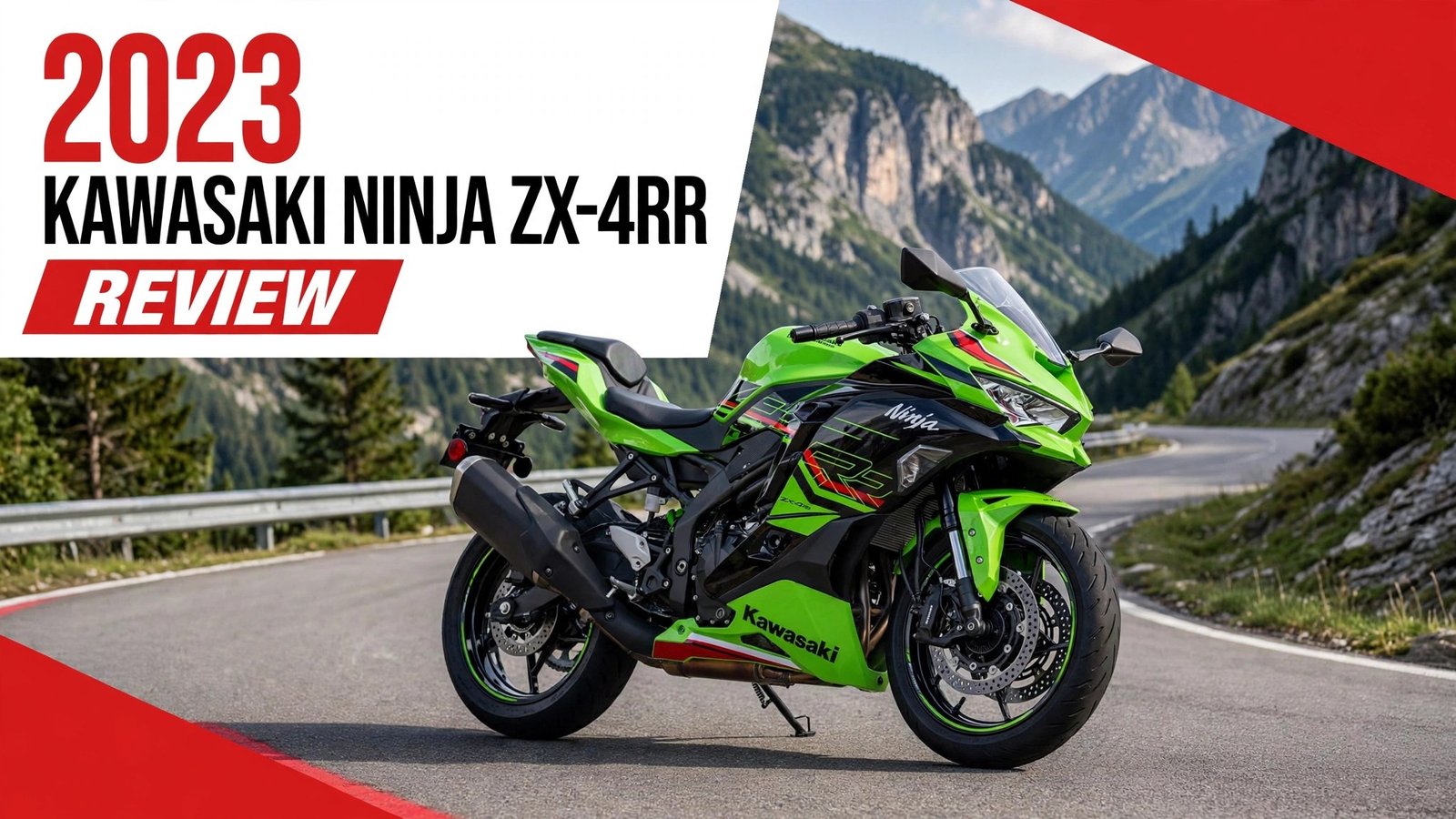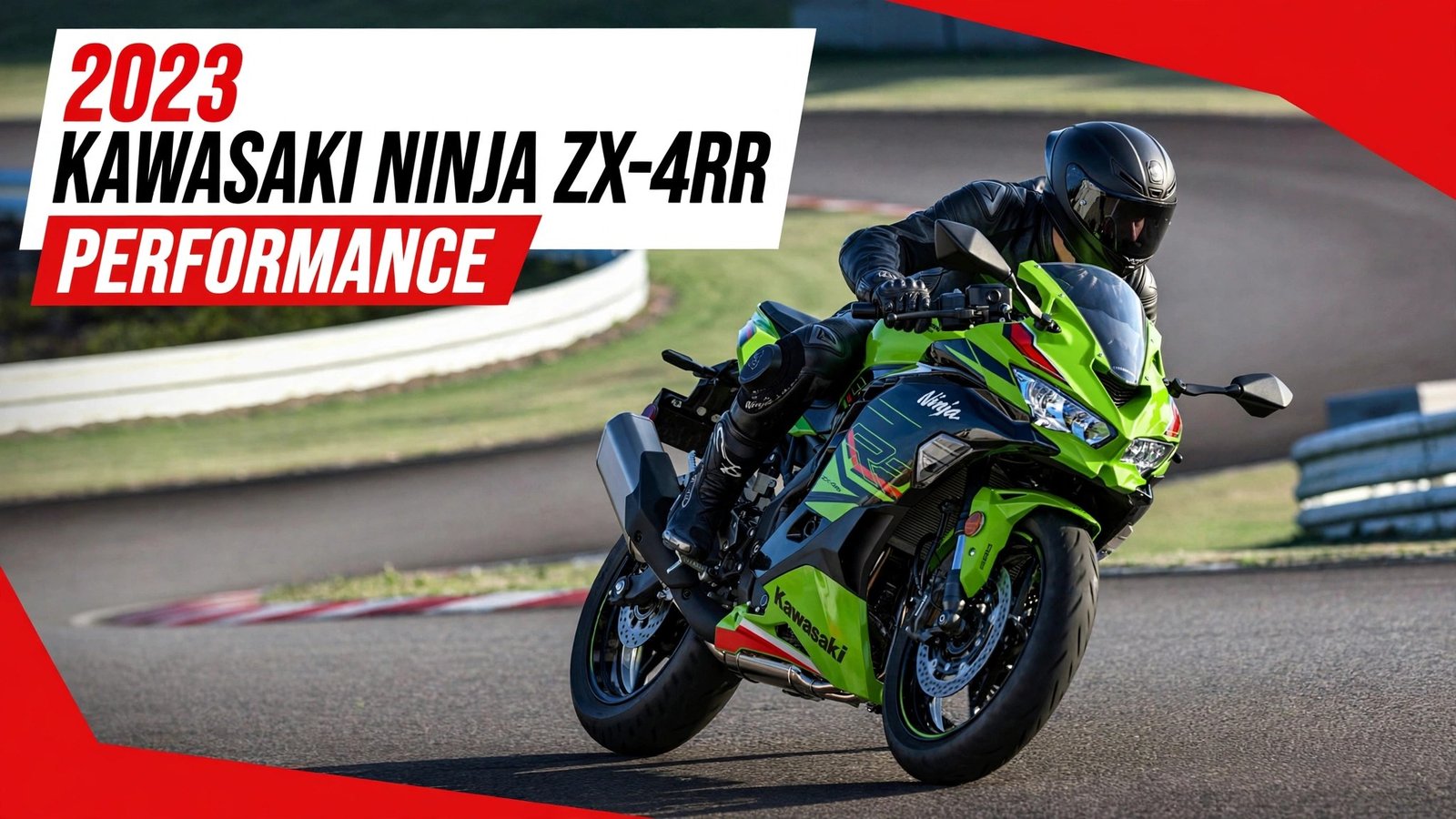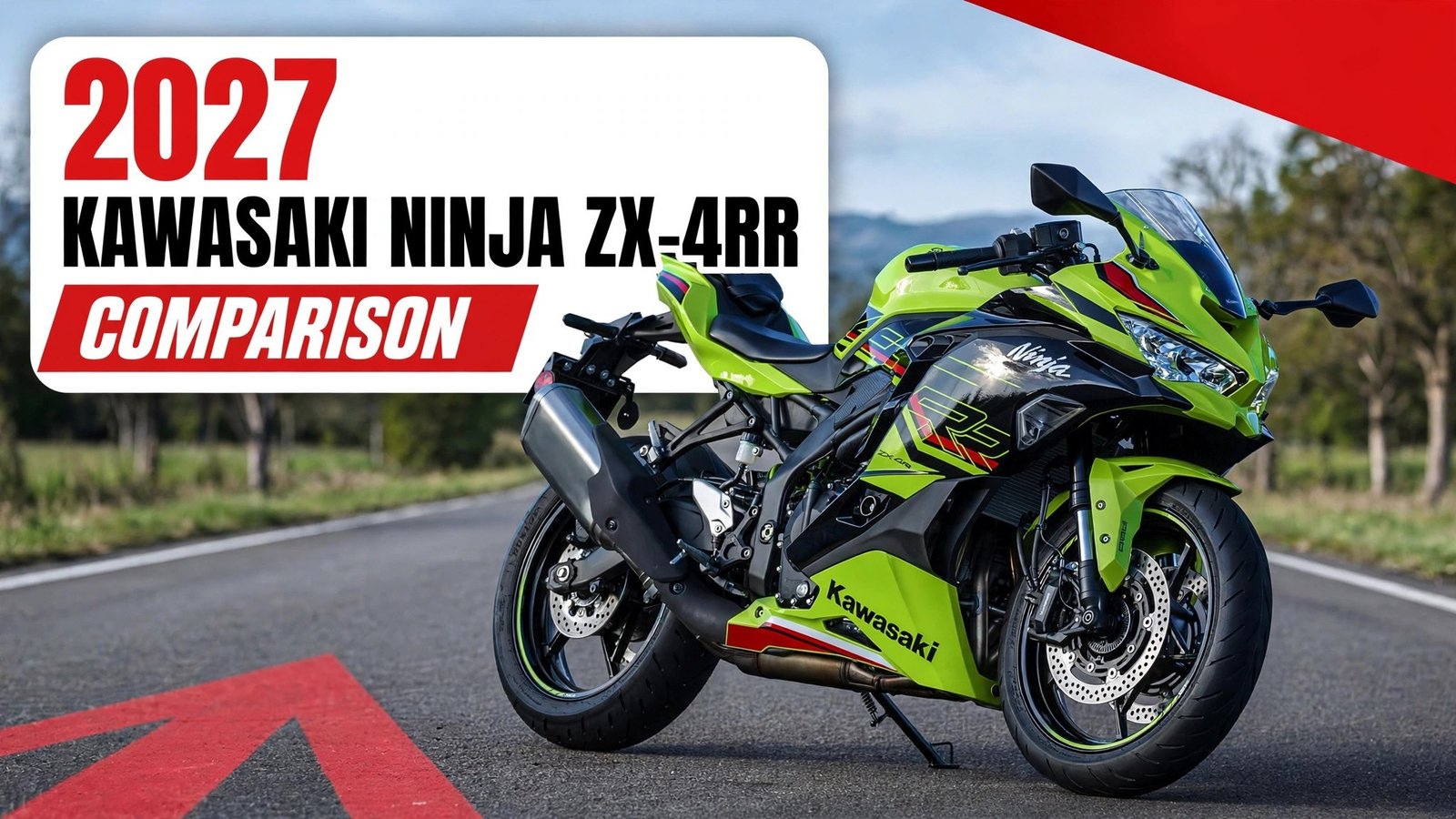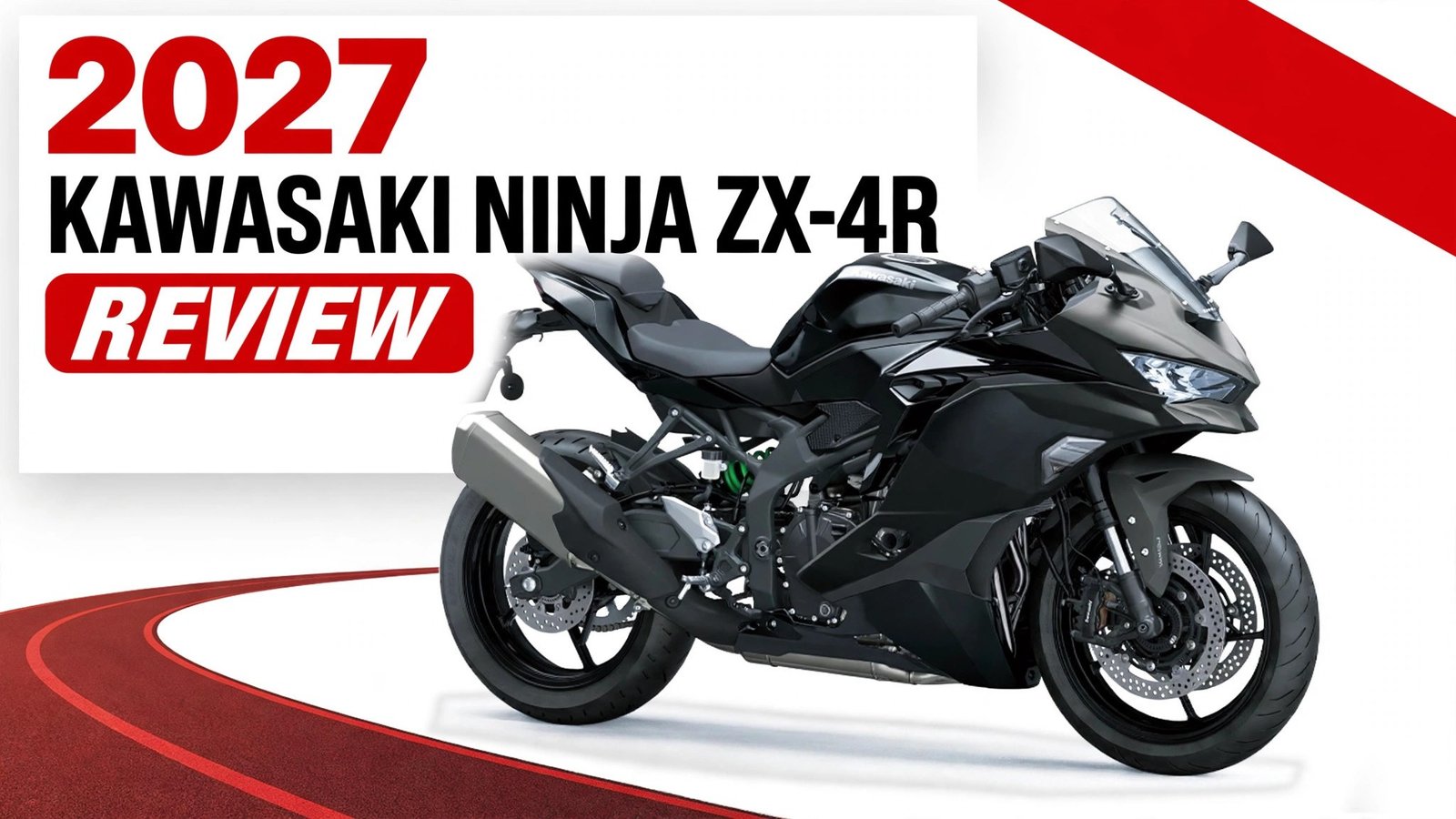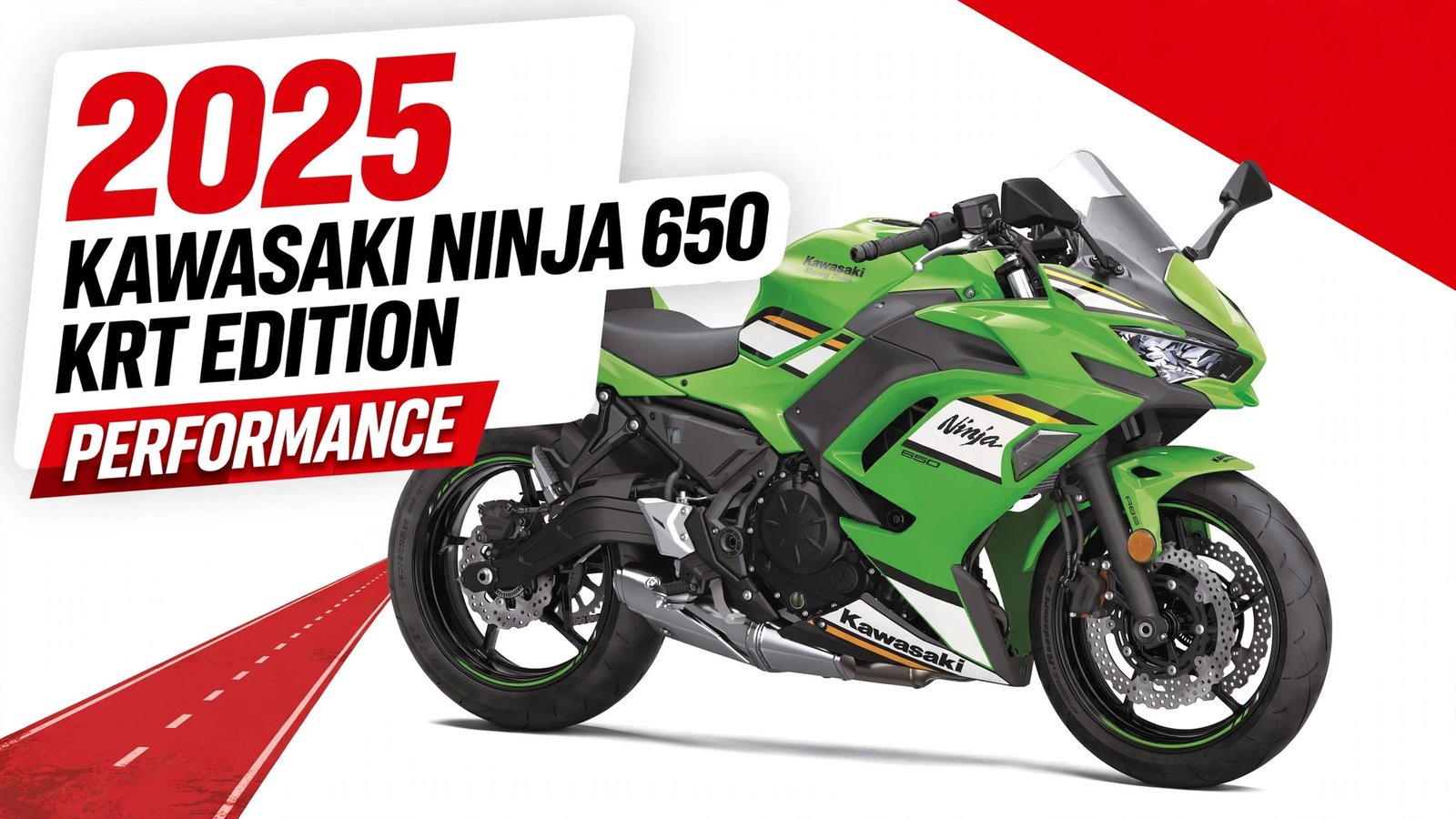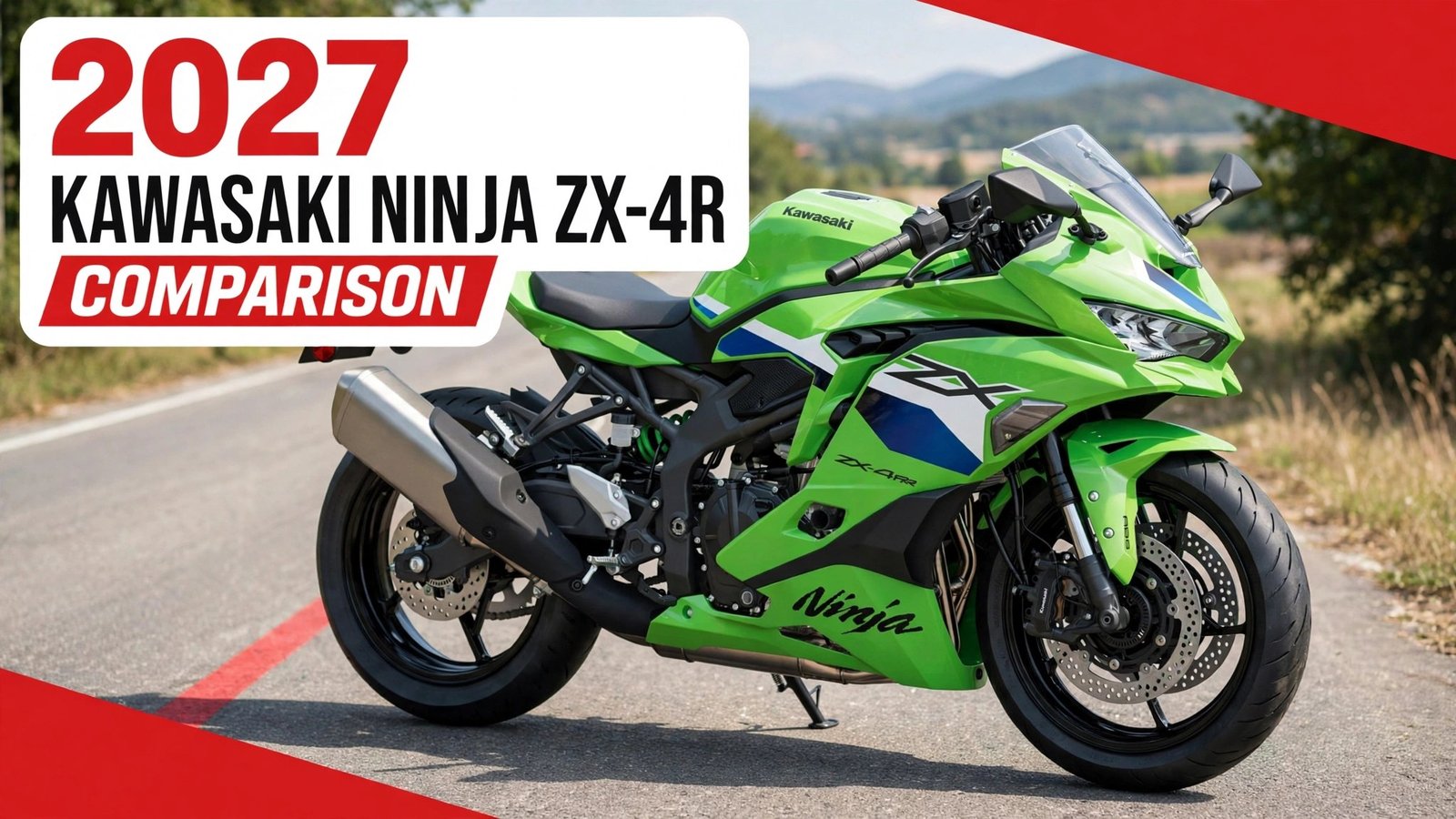
The 2027 Kawasaki Ninja ZX-4R ABS costs $9,299 before destination, and on paper the weakest bike in its class. The US bike claims 56.0 hp at 11,500 rpm, while the R7 claims about 73 hp for $100 more and the GSX-8R claims 82 hp for $100 less. This Kawasaki Ninja ZX-4R comparison checks every price, power figure and weight against the manufacturers’ current sheets. This Kawasaki Ninja ZX-4R comparison finds the ZX-4R losing almost every numbers argument — and still the bike to buy if you want a screaming four-cylinder and a genuine supersport chassis.
That contradiction is the whole story of this Kawasaki Ninja ZX-4R comparison. The ZX-4R is the only new 400cc inline-four sportbike on sale in America, the only one of the four that won a Cycle World Ten Best award, and the only one that revs to 16,000 rpm. It is also the most expensive per horsepower, the least torquey, and the only one without an IMU.
Kawasaki Ninja ZX-4R Overview and Its Closest Rivals
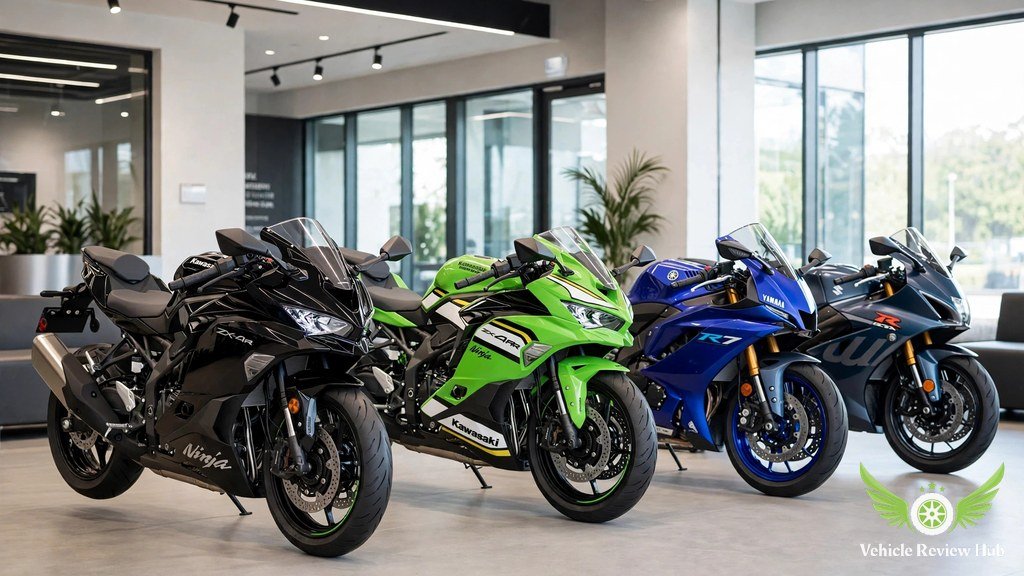
Four bikes sit within $700 of each other. The ZX-4R and its RR twin share a 399cc inline-four making 56 hp. The Yamaha YZF-R7 uses a 689cc parallel twin making about 73 hp. The Suzuki GSX-8R uses a 776cc parallel twin making 82 hp. This Kawasaki Ninja ZX-4R comparison lines them up on US prices, power, torque, weight, electronics and suspension.
Loses Every Numbers Argument
On the numbers buyers compare first, the ZX-4R loses to all three rivals in this Kawasaki Ninja ZX-4R comparison. It makes 56 hp and 26.5 lb-ft against the R7’s 73 hp and 50.2 lb-ft and the GSX-8R’s 82 hp and 57.5 lb-ft. Per horsepower it costs $166, against $129 for the R7 and $112 for the GSX-8R. The electronics gap is just as wide: no IMU, no cornering ABS and no slide control, while the 2026 R7 carries a six-axis IMU; the GSX-8R has no IMU either. The exceptions: 37.5 lb lighter than the GSX-8R, 2.5 lb lighter than the R7, a 16,000-rpm ceiling, the only four-cylinder here. The heading is rhetorical: in this Kawasaki Ninja ZX-4R comparison the ZX-4R loses on power, torque and value, and wins on revs, sound and weight. See the full ZX-4R review.
How the Four Bikes Differ at a Glance
Every rival figure below was checked against Yamaha’s and Suzuki’s current spec sheets. The 2026 R7 is heavily revised, and older figures are wrong: it weighs 417 lb, not 414, its seat is 32.7 inches, not 32.1, and its torque is 50.2 lb-ft, not the rounded 49. The GSX-8R weighs 452 lb, not 445, with a non-adjustable 41 mm Showa fork. This Kawasaki Ninja ZX-4R comparison prints the corrected figures, not the circulating ones.
| Specification | 2027 ZX-4R ABS | 2027 ZX-4RR ABS | 2026 Yamaha YZF-R7 | 2027 Suzuki GSX-8R |
|---|---|---|---|---|
| Engine | 399cc inline-four | 399cc inline-four | 689cc CP2 parallel twin | 776cc parallel twin |
| Power (US claim) | 56 hp @ 11,500 rpm | 56 hp @ 11,500 rpm | 73 hp @ 8,750 rpm | 82 hp @ 8,500 rpm |
| Torque (US claim) | 26.5 lb-ft @ 11,000 rpm | 26.5 lb-ft @ 11,000 rpm | 50.2 lb-ft @ 6,500 rpm | 57.5 lb-ft @ 6,800 rpm |
| Curb weight | 414.5 lb | 414.5 lb | 417 lb (wet) | 452 lb |
| Front fork | 37 mm Showa SFF-BP, non-adjustable | 37 mm Showa SFF-BP, preload only | 41 mm inverted KYB, adjustable | 41 mm Showa SFF-BP, non-adjustable |
| MSRP | $9,299 | $9,999 | $9,399 | $9,199 |
| Destination | $650 | $650 | $675 | $750 |
| Delivered price | $9,949 | $10,649 | $10,074 | $9,949 |
Note: R7 power is the figure Yamaha’s US outlets cite (73 hp at 8,750 rpm); Yamaha’s US spec sheet publishes no horsepower figure. 50.2 lb-ft is 68 Nm; 57.5 lb-ft is 78 Nm. Suzuki’s 2027 GSX-8R destination charge is $750, per dealer listings. In this Kawasaki Ninja ZX-4R comparison the RR’s $179 per horsepower is the worst of the four: the R’s 56 hp at a $700 premium.
Kawasaki Ninja ZX-4R vs Kawasaki Ninja ZX-4RR
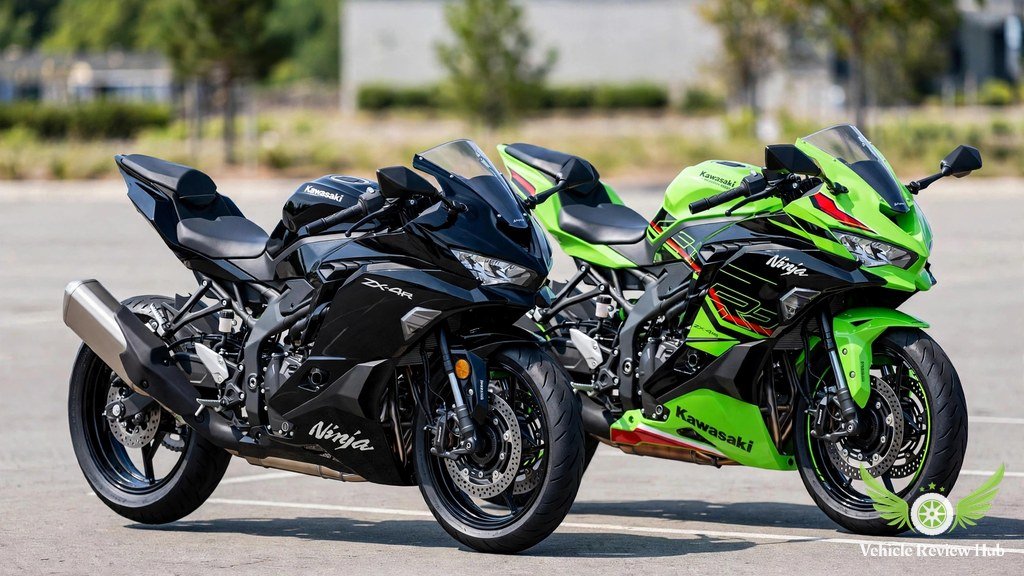
The first rival is the bike’s own twin, the easiest call in this Kawasaki Ninja ZX-4R comparison. The ZX-4R and the ZX-4RR are the same motorcycle with three differences: the RR adds a bidirectional quickshifter, fork preload adjustment and a fully adjustable BFRC Lite rear shock. Everything else is identical. The question is whether those three parts are worth $700: $9,299 for the R against $9,999 for the RR, both before the same $650 destination.
Engine, Specs and Performance Side by Side
There is no performance difference to find. Both use the same 399cc inline-four and US tune: 56.0 hp at 11,500 rpm, 26.5 lb-ft at 11,000 rpm. Cycle World’s dyno test measured 56.3 hp at 11,700 rpm and 25.8 lb-ft at 11,300 rpm on the RR — the same figure applies to the R, because the engine and exhaust are the same. Top speed is the same — RevZilla’s GPS-verified 124 mph, 131 mph indicated, on a stock RR — and both weigh 414.5 lb. The ZX-4R performance figures apply equally to both, so this Kawasaki Ninja ZX-4R comparison treats the RR’s edge as suspension and quickshifter only.
| Specification | 2027 ZX-4R ABS | 2027 ZX-4RR ABS |
|---|---|---|
| Engine | 399cc inline-four | 399cc inline-four |
| Power (US claim) | 56.0 hp @ 11,500 rpm | 56.0 hp @ 11,500 rpm |
| Torque (US claim) | 26.5 lb-ft @ 11,000 rpm | 26.5 lb-ft @ 11,000 rpm |
| Dyno (Cycle World) | 56.3 hp @ 11,700 rpm | 56.3 hp @ 11,700 rpm |
| Curb weight | 414.5 lb | 414.5 lb |
| Front fork | 37 mm Showa SFF-BP, non-adjustable | 37 mm Showa SFF-BP, preload only |
| Rear shock | Showa, preload only, 4.4 in travel | Showa BFRC Lite, preload + compression + rebound, 4.9 in travel |
| MSRP / delivered | $9,299 / $9,949 | $9,999 / $10,649 |
Note: The dyno figure is Cycle World’s measured rear-wheel output on the RR; it applies to the R too. Neither bike has an IMU, and the RR’s fork has preload adjustment only — no damping adjustment, despite one outlet’s model page claiming otherwise. This Kawasaki Ninja ZX-4R comparison treats the two as one bike with a $700 equipment package.
Price, Equipment and Which Suits Which Rider
The $700 gap buys three things, and their value depends on how the bike will be used. The KQS quickshifter is a $522.17 accessory kit for the R: fit one for $9,821.17 all-in — $177.83 less than the RR before installation — and still lack the preload fork and BFRC Lite shock. The shock justifies the RR: fully adjustable, 4.9 inches of travel, against the R’s preload-only 4.4. In this Kawasaki Ninja ZX-4R comparison the RR is the better buy for track days, and the R for a street rider who will never touch a clicker. There is no 2027 KRT Edition: from 2025, KRT is a colour, not a trim. Buy the R for the street, the RR for the track.
Kawasaki Ninja ZX-4R vs Yamaha YZF-R7
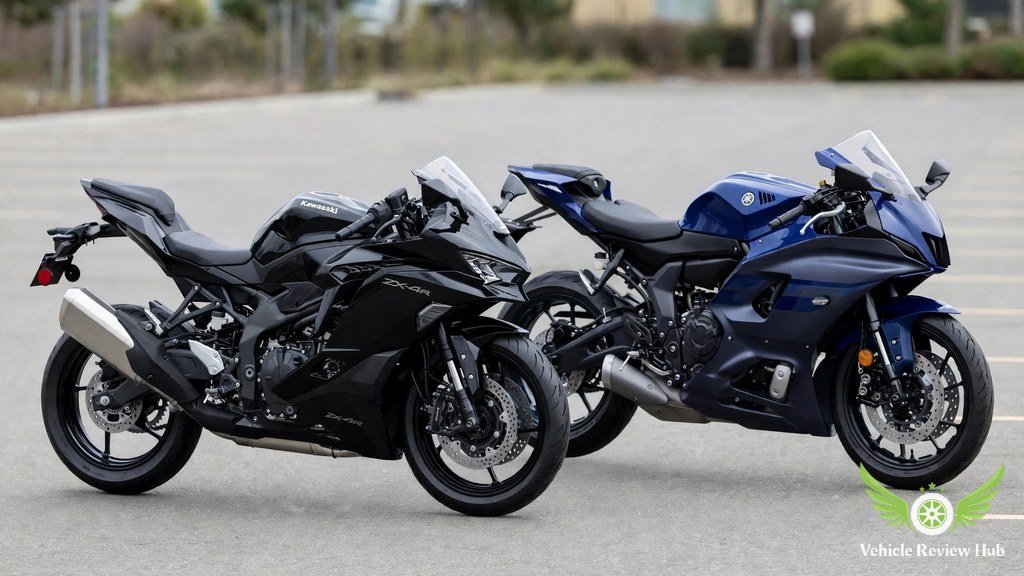
The R7 is the rational buy in this Kawasaki Ninja ZX-4R comparison. The 2026 Yamaha YZF-R7 costs $9,399 — $100 more than the 2027 ZX-4R — and delivers at $10,074 with its $675 destination charge, against the ZX-4R’s $9,949. For that money it makes about 73 hp and 50.2 lb-ft from its 689cc CP2 twin, against the Kawasaki’s 56 hp and 26.5 lb-ft. That is roughly 30 percent more power and about 89 percent more torque, available from 6,500 rpm instead of 11,000.
Engine, Specs and Performance Side by Side
The 2026 R7 is heavily revised, and older figures are wrong — this Kawasaki Ninja ZX-4R comparison uses only the current spec sheet. The 2026 model adds a six-axis IMU, ride-by-wire, a third-generation quickshifter, cruise control, a 5-inch TFT and a Brembo radial-mount master cylinder, over an adjustable 41 mm inverted KYB fork. It weighs 417 lb wet, with a 32.7-inch seat and a 3.7-gallon tank. The ZX-4R answers with a 399cc four-cylinder that revs to 16,000 rpm — the same engine claims 76 hp in Europe — a 31.5-inch seat, a 4.0-gallon tank, and a 2.5-lb weight advantage. RevZilla’s first ride recorded the ZX-4R’s GPS-verified 124 mph top speed. A 2023 story claiming the ZX-4RR beat an R7 was about the Asian-market bike’s 151-mph video, not the US bike. See Yamaha’s R7 page for the current spec sheet.
| Specification | 2027 ZX-4R ABS | 2026 Yamaha YZF-R7 |
|---|---|---|
| Engine | 399cc inline-four | 689cc CP2 parallel twin |
| Power (US claim) | 56.0 hp @ 11,500 rpm | 73 hp @ 8,750 rpm |
| Torque (US claim) | 26.5 lb-ft @ 11,000 rpm | 50.2 lb-ft @ 6,500 rpm |
| Curb / wet weight | 414.5 lb | 417 lb (wet) |
| IMU / electronics | No IMU; KTRC 3-mode, 4 ride modes | 6-axis IMU, ride-by-wire, cruise, 3rd-gen quickshifter |
| Front fork | 37 mm Showa SFF-BP, non-adjustable | 41 mm inverted KYB, adjustable |
| MSRP / delivered | $9,299 / $9,949 | $9,399 / $10,074 |
| Price per hp | $166 | $129 |
Note: Yamaha’s US sheet publishes no horsepower figure; 73 hp at 8,750 rpm is what its outlets cite, and 50.2 lb-ft is 68 Nm. The R7’s $675 destination comes from dealer disclosures; the 70th Anniversary Edition costs $9,699. In this Kawasaki Ninja ZX-4R comparison the R7 wins on power, torque, electronics and fork, and loses only on revs, seat, tank and weight.
Price, Equipment and Which Suits Which Rider
At $125 apart delivered, price does not decide this pair — character does. The R7 is faster everywhere except the last 3,000 rpm of the tach, easier to ride fast, and better equipped: a six-axis IMU, cruise control and an adjustable fork against the ZX-4R’s wheel-speed traction control and non-adjustable suspension. The ZX-4R’s case is sound and feel, not numbers. This Kawasaki Ninja ZX-4R comparison calls the R7 the rational buy and the ZX-4R the emotional buy.
Kawasaki Ninja ZX-4R vs Suzuki GSX-8R
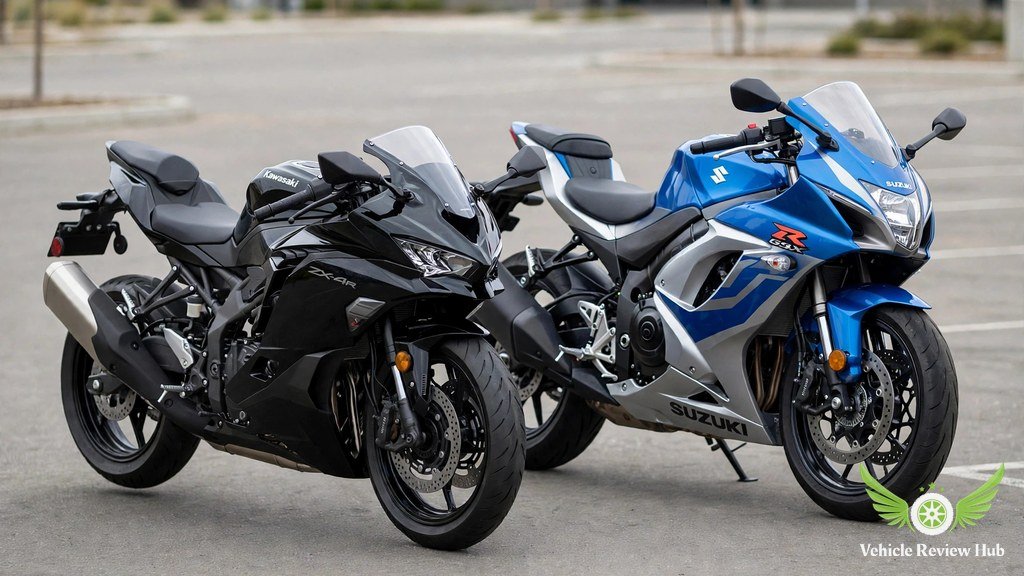
The GSX-8R is the most powerful bike in this Kawasaki Ninja ZX-4R comparison, and the most torque-rich. Its 776cc twin claims 82 hp at 8,500 rpm and 57.5 lb-ft at 6,800 rpm — 46 percent more power and 117 percent more torque than the ZX-4R — for $9,199, $100 less than the 2027 R and $800 less than the 2027 RR. It is also the heaviest here at 452 lb, the most comfortable, and the easiest to ride fast. No other bike in this Kawasaki Ninja ZX-4R comparison offers this much torque for the money. The comparison is a small genuine supersport against a faired roadster that looks like one.
Engine, Specs and Performance Side by Side
Two corrections belong in this Kawasaki Ninja ZX-4R comparison, because several tables print the GSX-8R wrong. First, the 8R has no IMU: its traction control works from wheel-speed sensors, with no cornering ABS or lean-sensitive electronics. Second, its 41 mm Showa fork is not adjustable, and its rear shock is preload-only, both with 5.1 inches of travel. What the 8R does have is massive midrange torque, ride-by-wire, a bidirectional quickshifter and dual 310 mm discs with radial Nissin calipers. Ultimate Motorcycling’s GSX-8R buyer’s guide and TotalMotorcycle’s 2026 GSX-8R specs confirm all of it. Cycle World dynoed the 8R at 72.75 hp, well under its 82-hp claim.
| Specification | 2027 ZX-4R ABS | 2027 Suzuki GSX-8R |
|---|---|---|
| Engine | 399cc inline-four | 776cc parallel twin |
| Power (US claim) | 56.0 hp @ 11,500 rpm | 82 hp @ 8,500 rpm |
| Torque (US claim) | 26.5 lb-ft @ 11,000 rpm | 57.5 lb-ft @ 6,800 rpm |
| Dyno (Cycle World) | 56.3 hp @ 11,700 rpm | 72.75 hp |
| Curb weight | 414.5 lb | 452 lb |
| IMU / electronics | No IMU; KTRC 3-mode, 4 ride modes | No IMU; wheel-speed TC, 3 ride modes, 4-level TC |
| Front fork | 37 mm Showa SFF-BP, non-adjustable | 41 mm Showa SFF-BP, non-adjustable |
| Rear tyre | 160/60ZR-17 Dunlop GPR300 | 180/55ZR-17 Dunlop RoadSport 2 |
| MSRP | $9,299 | $9,199 |
| Price per hp | $166 | $112 |
Note: The GSX-8R’s 82 hp is 61 kW, or 83 PS — never print the PS figure as horsepower. Its 57.5 lb-ft is 78 Nm. Suzuki’s 2027 GSX-8R destination charge is $750, per dealer listings, for a $9,949 delivered price. In this Kawasaki Ninja ZX-4R comparison the 8R wins on power, torque and comfort, and loses on weight, revs and character.
Price, Equipment and Which Suits Which Rider
The price trap is the bluntest fact in this Kawasaki Ninja ZX-4R comparison: the GSX-8R costs $100 less than the R and gives 26 hp more, so the ZX-4R costs more per horsepower than either rival. Suzuki cut the 8R to $9,199 for 2027 — $500 below its 2026 price. But they are not the same kind of machine. The 8R is a faired roadster in supersport clothing: upright, torquey and easy to ride fast. The ZX-4R is a genuine supersport: a committed position, and an engine that only comes alive above 10,000 rpm. Comfort and torque? Buy the 8R. A race-replica experience at 400cc? Buy the ZX-4R. See the Ninja 650 review and the Ninja 400 review.
Kawasaki Ninja ZX-4R Price and Value Compared
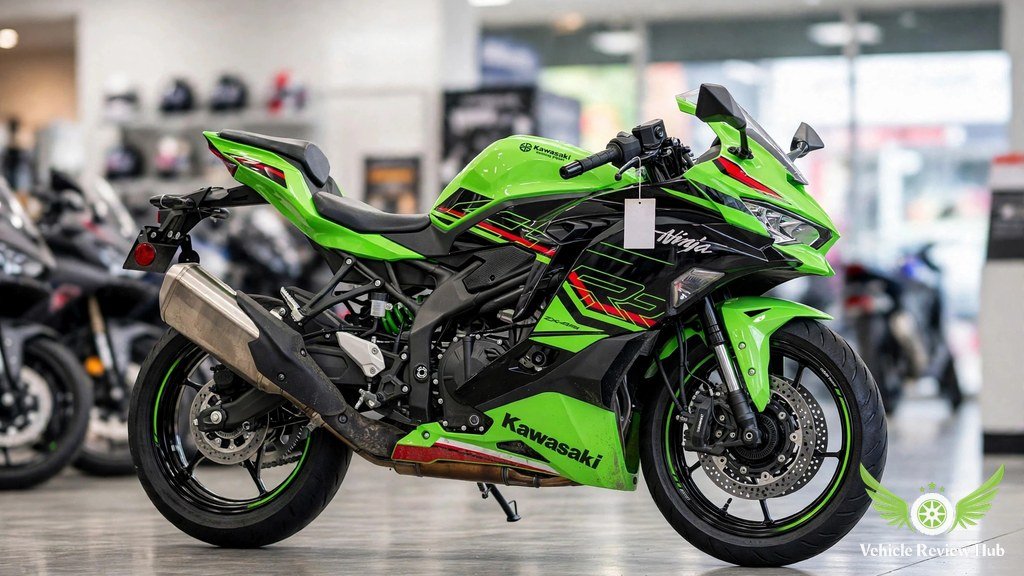
New prices tell only half the value story. The 2025 price cut made the R the cheapest new ZX-4R ever at $8,999; the 2026 price rose $300 to $9,299 and stayed there for 2027, which makes a used 2024 the value pick. This Kawasaki Ninja ZX-4R comparison checks the used market with November 2026 listing prices — asking prices, not transaction prices.
Used KRTs Hold No Premium
The KRT paint buys nothing on the used market, and the listings prove it. A 2023 KRT with 4,420 miles was listed at $8,999, while a 2024 base RR with 2,600 miles was listed at $8,896. A 2024 RR with 425 miles was listed at $7,995, and a new leftover 2024 KRT with 238 miles at $9,899 — the base RR’s price. The KRT was a $200 paint premium when new in 2024, and the paint was free in 2025. This Kawasaki Ninja ZX-4R comparison advises buying the cheapest clean RR regardless of paint — never pay extra for KRT.
| Used listing (Nov 2026) | Miles | Asking price | New price | Discount |
|---|---|---|---|---|
| 2024 ZX-4RR ABS, SF Moto | 2,600 | $8,896 | $9,899 | About $1,000 |
| 2023 ZX-4RR KRT Edition, Heartland Honda | 4,420 | $8,999 | $9,699 | $700 |
| 2024 ZX-4RR, BMW Motorcycles SE Michigan | 425 | $7,995 | $9,899 | About $1,900 |
| 2024 ZX-4RR KRT Edition ABS, new leftover, Plano Kawasaki Suzuki | 238 | $9,899 | $10,099 | $200 |
Note: All prices are November 2026 listing prices — asking prices, not completed sales. The 2023 KRT listing was not re-verified in this pass. In this Kawasaki Ninja ZX-4R comparison the used market’s message is consistent: condition and miles set the price, paint does not.
Running Costs and Resale Value Compared
The ZX-4R is also the most expensive bike in this group to run. The manual calls for all four spark plugs changed at every service, every 7,600 miles — four NGK LMAR9G plugs per visit. Insurance is notably expensive too, according to RevZilla’s owner sources. The one saving is fuel: 87-octane regular, around 41 mpg by EPA-style estimate. The ZX-4R reliability guide has the full schedule. Resale is holding well, roughly 10 to 20 percent off new. In this Kawasaki Ninja ZX-4R comparison a used 2024 R at about $8,000 is the value pick — $1,300 less than a new 2027 R before destination. The Ninja 500 review is the contrast: a new 500 starts at $5,299.
Kawasaki Ninja ZX-4R Comparison Verdict and US Alternatives
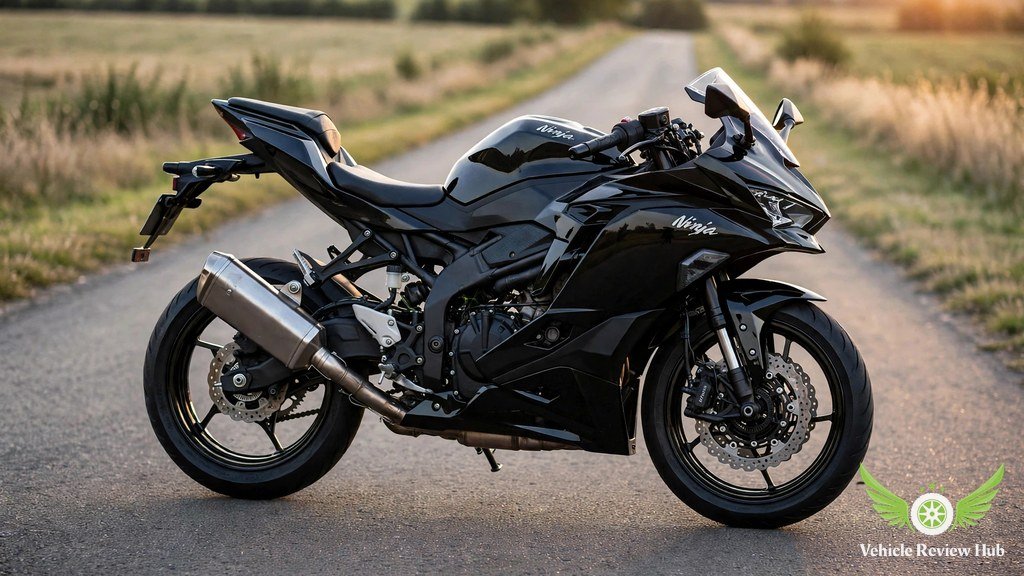
The verdict of this Kawasaki Ninja ZX-4R comparison is the doc’s own: buy the ZX-4R for the sound, the revs and the chassis, not for the numbers, because it loses those. The R7 is faster for the same money; the GSX-8R stronger for $100 less; the RR the same bike with a better shock for $700 more. None of that changes what the ZX-4R is: the only new four-cylinder 400 in America.
Verdict: Buy It for the Sound
Buy the RR over the R for track days: the BFRC Lite shock alone justifies the $700. Buy the R for the street, and fit the $522.17 quickshifter kit later if you miss it. Buy used: a clean 2024 R at about $8,000 is the value pick. Do not buy it as a first big bike without an MSF course and an insurance quote — the power lives above 10,000 rpm and the insurance is notably expensive. And do not buy it to beat the R7 or the GSX-8R on a straight road. This Kawasaki Ninja ZX-4R comparison ends where it started: the ZX-4R is the emotional buy in a rational price class.
RS 660 Is the Power Ceiling
If 56 hp is not enough, the Aprilia RS 660 is where this class ends and the next one begins. Its 659cc twin makes 105 hp at 10,400 rpm and 51.6 lb-ft at 8,400 rpm, and it weighs 403 lb wet — lighter, nearly twice as powerful, with an IMU. Aprilia’s US store lists the base at $11,849 and the 2026 Factory — Shakedown Yellow only — at $14,149, $2,300 more than the base and $4,850 more than a 2027 ZX-4R; Motorcycle.com’s comparison shows the 2025 Factory at $13,999. In this Kawasaki Ninja ZX-4R comparison the RS 660 is the power ceiling, not a rival. The flash is the other way up: a 2 Wheel DynoWorks flash takes the stock bike past 70 hp, and a Graves slip-on with a tune reads 76 rear-wheel horsepower — but the flash voids the 12-month warranty and leaves the bike not street legal. See Ultimate Motorcycling’s 13 fast facts on the ZX-4RR. Flash the Kawasaki and keep the sound you love, or pay the Aprilia premium for power with a warranty.
Kawasaki Ninja ZX-4R Comparison: Frequently Asked Questions
The questions below answer this Kawasaki Ninja ZX-4R comparison in short form, with the same verified figures as above. Every price is a US price with destination where published, every power figure the US claim unless labelled otherwise, and every used price a November 2026 listing price.
Should I buy the ZX-4R or the ZX-4RR?
Buy the RR for track days and the R for the street. The two share the same engine and 56 hp, and the RR costs $700 more in 2027 for the quickshifter, fork preload and the BFRC Lite shock. A street rider can buy the R, fit the $522.17 kit later, and keep $177.83 before installation. In this Kawasaki Ninja ZX-4R comparison the RR is the better buy only when the adjustability is used.
Is the ZX-4R faster than the Yamaha R7?
No. The R7 makes about 73 hp and 50.2 lb-ft against the ZX-4R’s 56 hp and 26.5 lb-ft, at the same money, and it is the faster bike on any road. The ZX-4R’s answer is revs and sound, not speed: a 16,000-rpm four-cylinder against a twin that runs out around 11,000 rpm. This Kawasaki Ninja ZX-4R comparison calls the R7 the rational buy and the ZX-4R the emotional buy.
Is the ZX-4R better than the Suzuki GSX-8R?
Not on the numbers. The GSX-8R makes 82 hp and 57.5 lb-ft for $100 less, and it is the easier street bike. The ZX-4R is 37.5 lb lighter, revs to 16,000 rpm, and is a genuine supersport where the 8R is a faired roadster. In this Kawasaki Ninja ZX-4R comparison the choice is character, not spec: comfort and torque point to the Suzuki.
Do used ZX-4RR KRT Editions hold a premium?
No. A 2023 KRT with 4,420 miles was listed at $8,999, while a 2024 base RR with 2,600 miles was listed at $8,896. The KRT was a $200 paint premium when new in 2024, and the paint was free in 2025. This Kawasaki Ninja ZX-4R comparison advises buying the cheapest clean RR regardless of paint.
What is the cheapest way into a ZX-4R?
A used 2024 R at $7,999 to $9,299, or a new leftover 2024 KRT at $9,899 against its $10,099 MSRP. The cheapest new year was 2025, at $8,999 after the price cut. A used 2024 R at about $8,000 is the value pick in this Kawasaki Ninja ZX-4R comparison, $1,300 less than a new 2027 R before destination.
What if I want more power than the ZX-4R?
The Aprilia RS 660 is the power ceiling: 105 hp and 51.6 lb-ft, at $11,849 for the base bike and $14,149 for the 2026 Factory. Or flash the ZX-4R past 70 hp — but the flash voids the 12-month warranty and leaves the bike not street legal. In this Kawasaki Ninja ZX-4R comparison the advice is simple: pay the Aprilia premium for power with a warranty, or flash the Kawasaki and keep the sound.