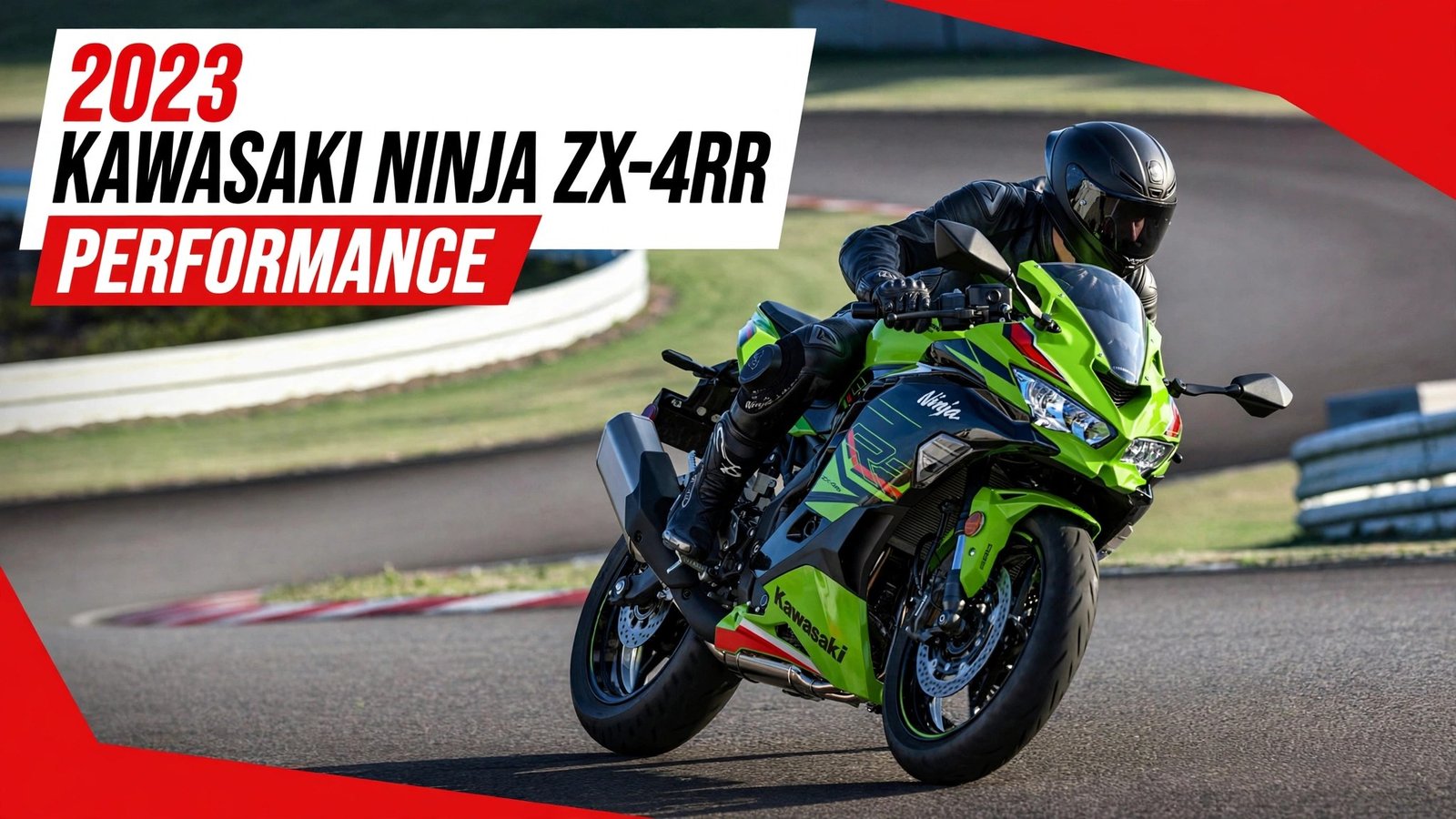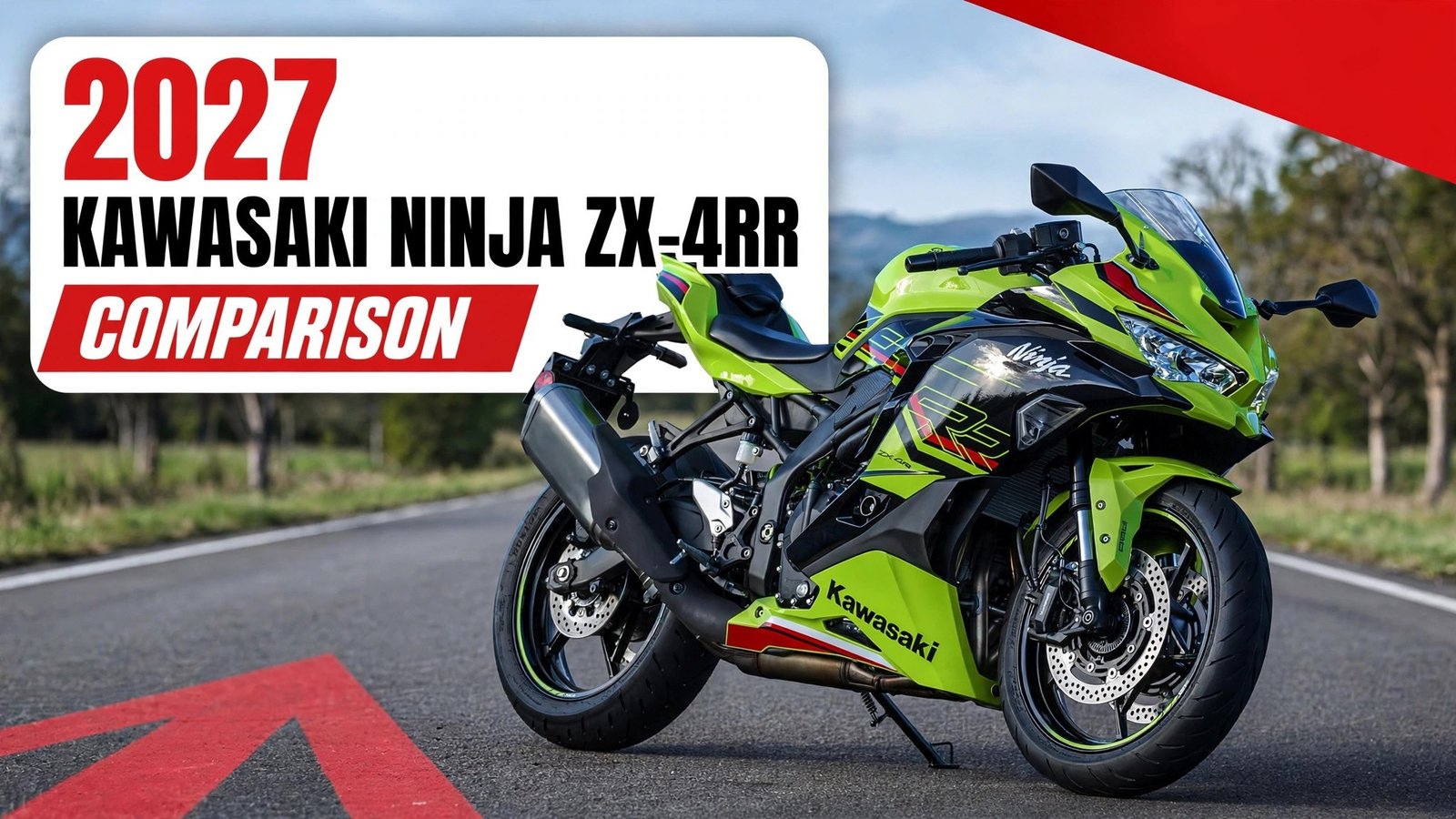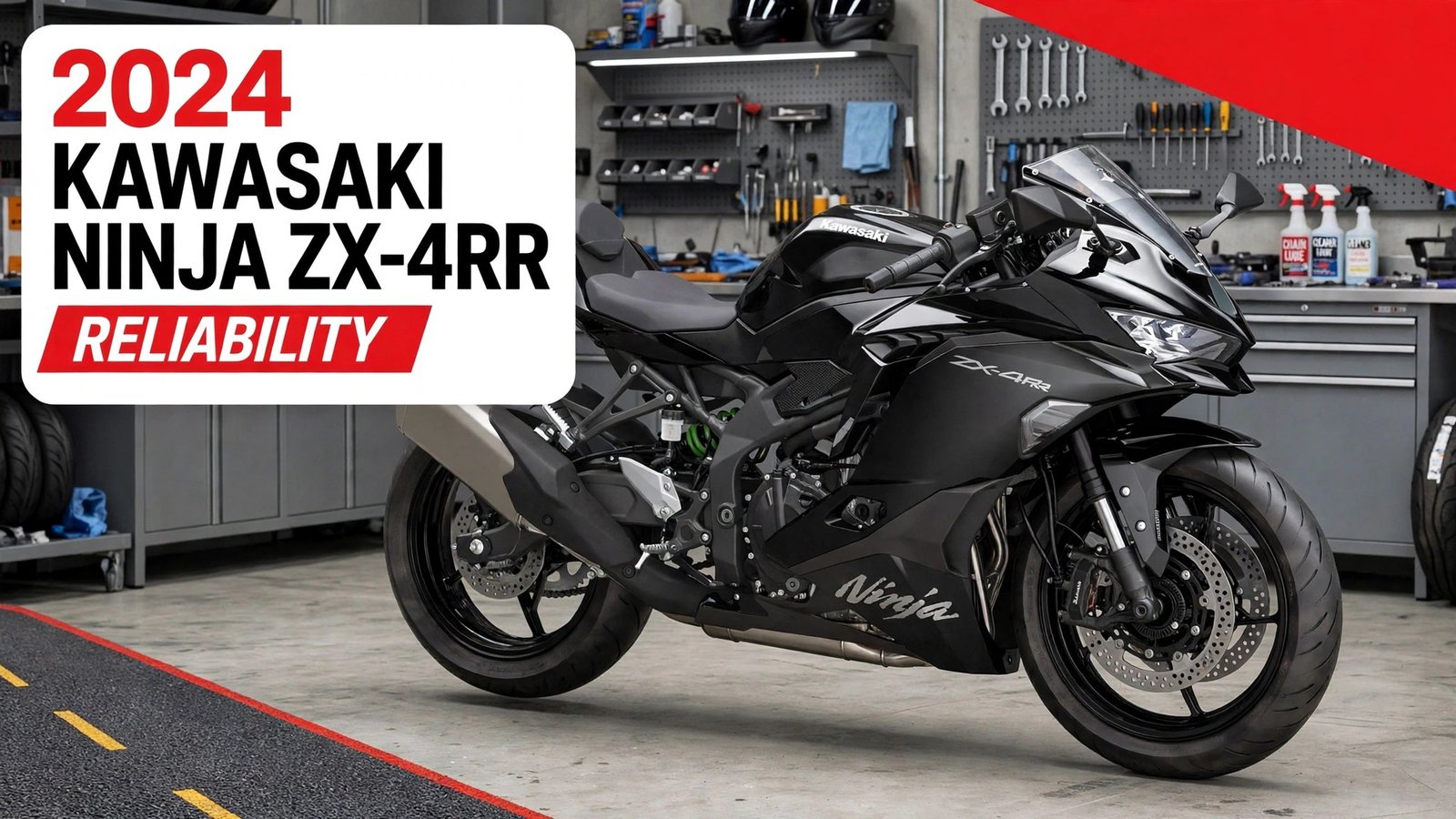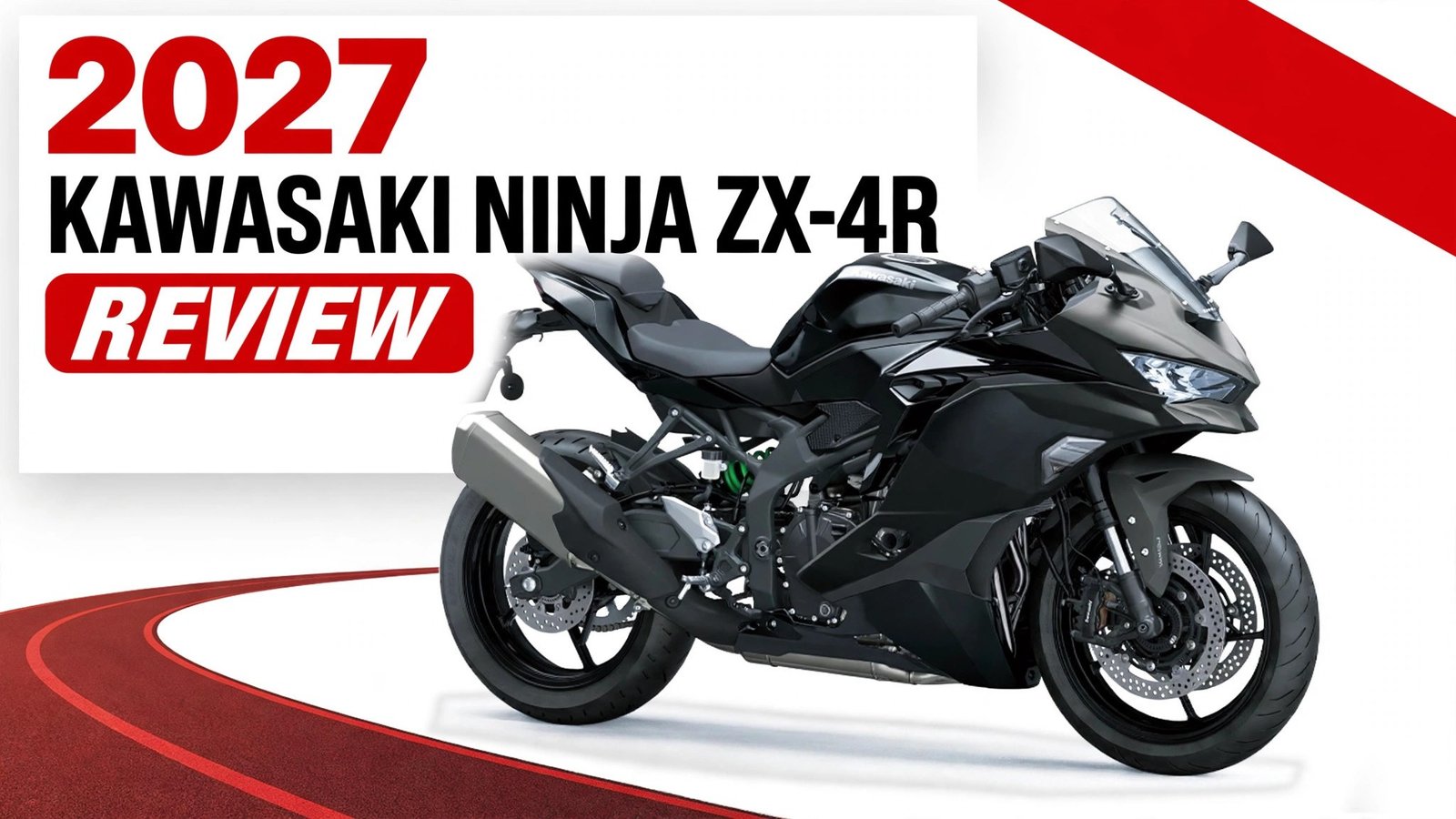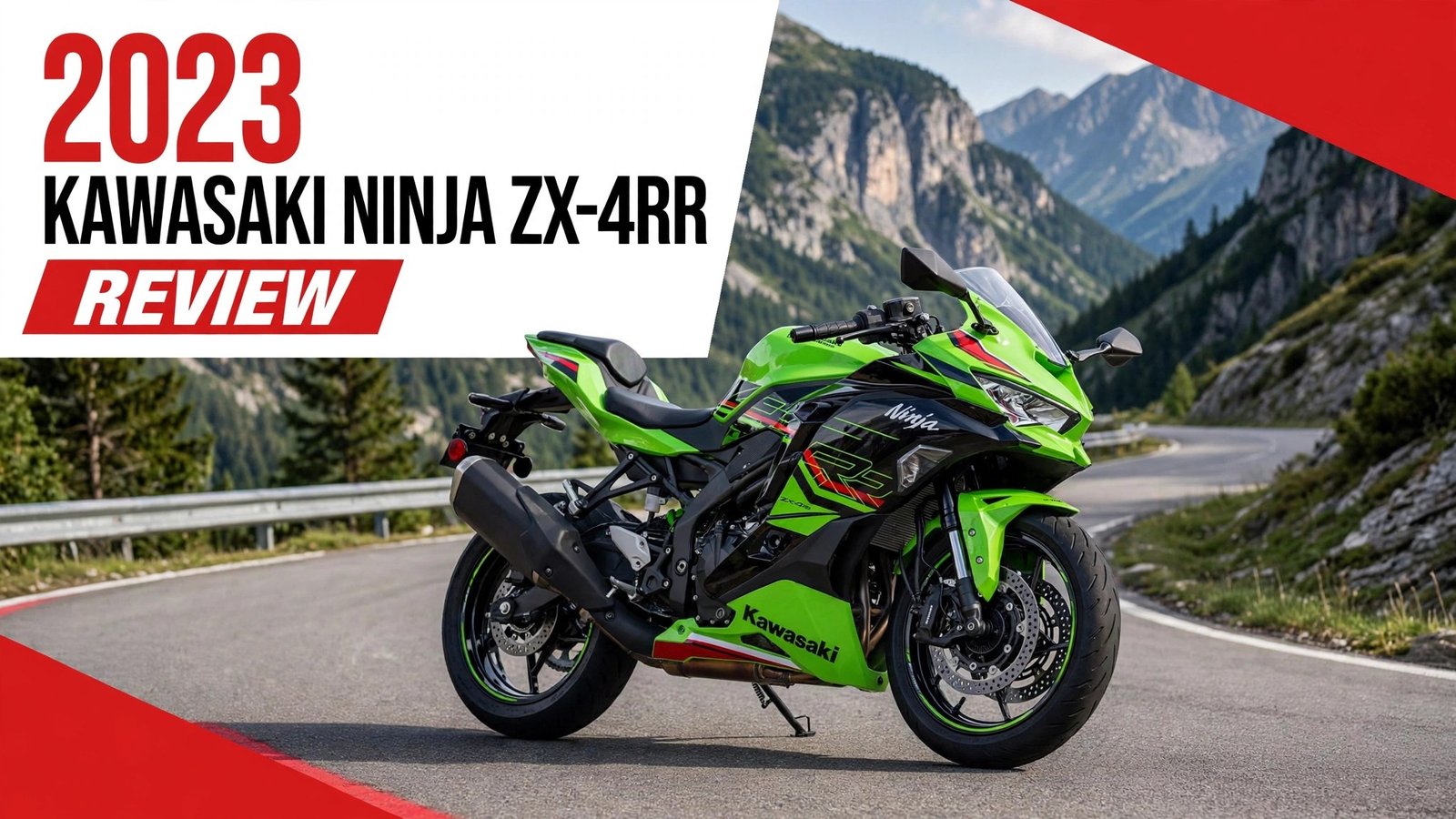
The 2023 Kawasaki Ninja ZX-4RR arrived in America as the only ZX-4 you could buy — a Lime Green KRT Edition at $9,699 — and every first ride, dyno run and award from the launch year belongs to this bike. This Kawasaki Ninja ZX-4RR review checks the RR on its own terms: the same 56-horsepower engine as the R, the same 414.5-pound claimed weight, and a $700 premium that buys exactly three things.
The short answer: the RR is the bike Kawasaki actually launched, and the R is the RR with three parts removed. The quickshifter, the preload fork and the fully-adjustable rear shock are the whole difference — whether they are worth $700 depends on how you ride. This Kawasaki Ninja ZX-4RR review works through the model years, the engine, the prices and the riding experience.
Kawasaki Ninja ZX-4RR Overview and Model-Year Updates
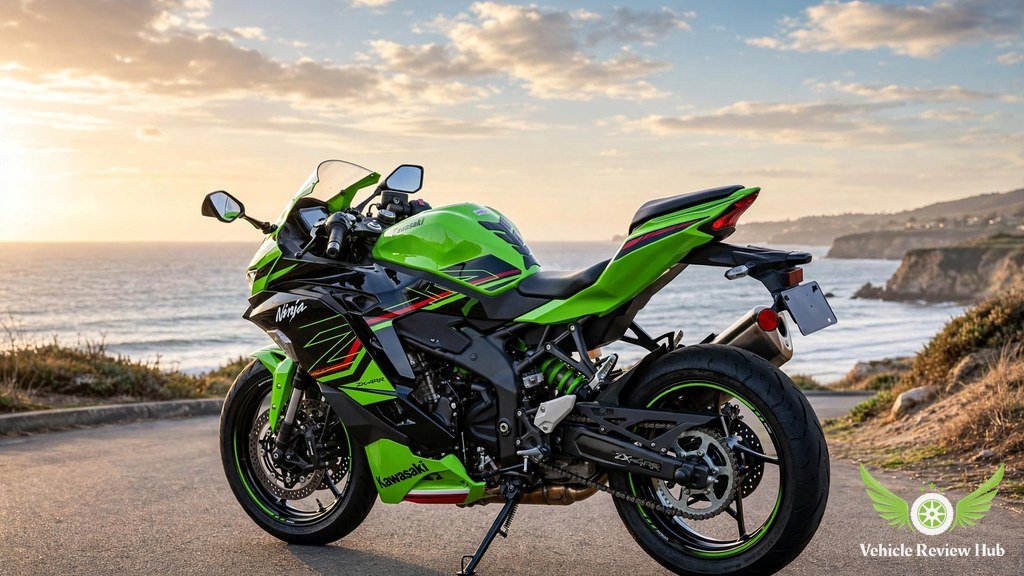
Kawasaki launched the ZX-4 range in America with the RR only; the plain R came a year later. That shapes this Kawasaki Ninja ZX-4RR review: the RR is the original bike, the Ten Best winner, the bike every magazine tested first.
Launch Year Was KRT Only
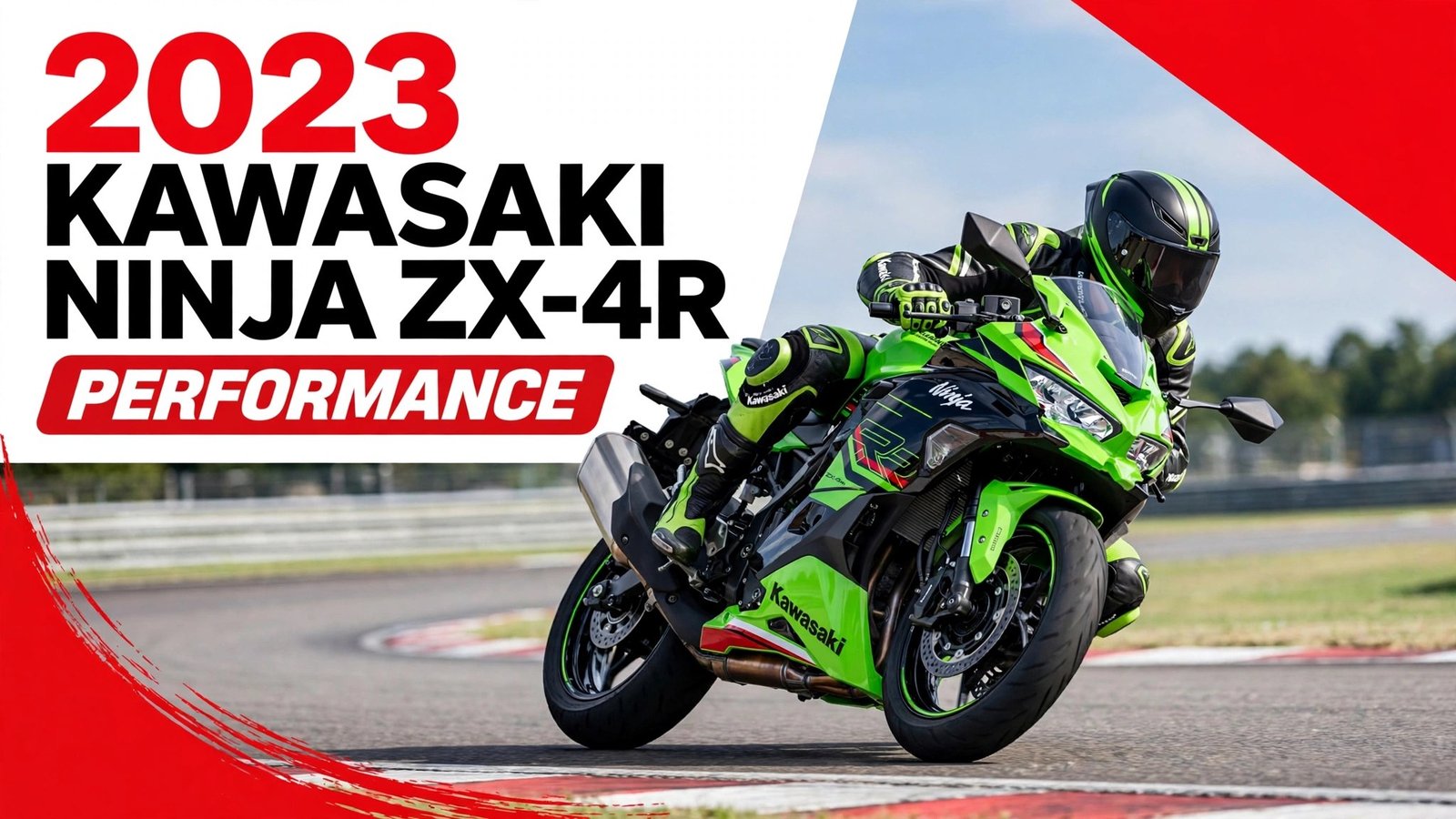
In 2023 the only ZX-4 sold in the United States was the Ninja ZX-4RR KRT Edition (ZX400SPFNL), finished in Lime Green and Ebony at $9,699 plus $435 destination — $10,134 on the road. Kawasaki’s 2023 sheet listed the base price as “TBA”; the $9,699 comes from the launch announcement, confirmed by the Rider Magazine first ride, the Motorcycle.com first ride and Cycle World. Every 2023 ZX-4 on American roads is an RR KRT, and this Kawasaki Ninja ZX-4RR review treats the launch year as the RR’s year alone.
The whole 2023 run — 991 bikes, built January 11 to March 29, 2023 — was recalled for a loose alternator rotor bolt (23V-515), so check any 2023 KRT against the NHTSA recalls search before paying; the full story is in the reliability guide. This Kawasaki Ninja ZX-4RR review names the campaign number because a loose rotor bolt is a stall, not a warning light.
40th Anniversary Topped 2024
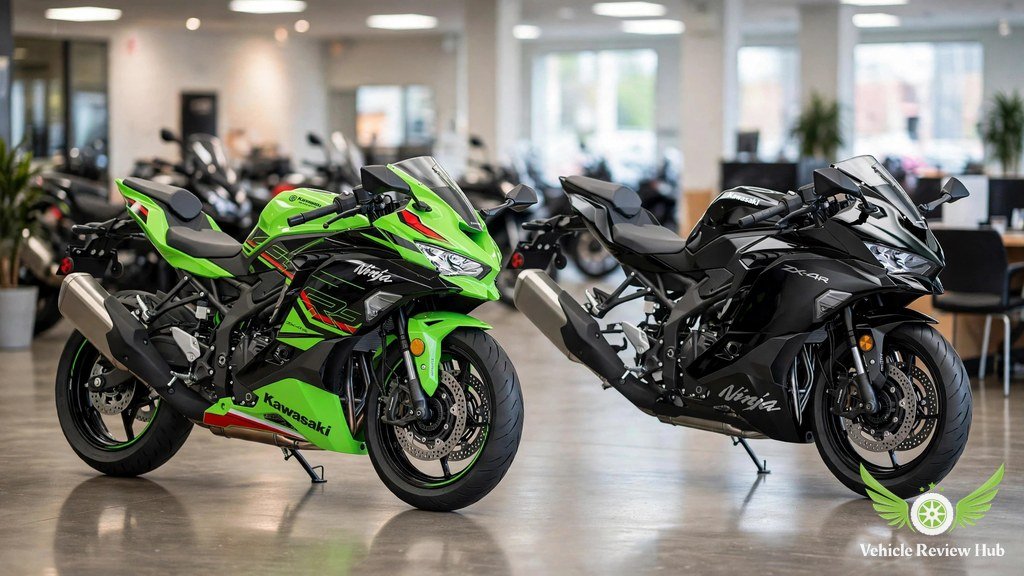
The range filled out in 2024. The plain ZX-4R ABS arrived at $9,399 (ZX400PRFNL, Metallic Spark Black), the base RR at $9,899 (ZX400SRFBL), the KRT Edition at $10,099 (ZX400SRFNL) and the 40th Anniversary Edition at $10,299 (ZX400SRFAL) — the most expensive ZX-4 of the year, $200 over the KRT and $400 over the base RR. The 40th wore Lime Green, Pearl Crystal White and Blue, with the same hardware as every other RR. Note the sheets: Kawasaki’s 2024 price line reads “BASE MSRP NON-ABS” — the series base, not the ABS model’s price, so never quote the sheet’s $9,499 as the 2024 RR’s price.
The 40th is the one to watch used — the only ZX-4 with a paint scheme that might hold a small premium. Kawasaki’s KRT paint tells the same story on the Ninja 650: the KRT Edition review shows the paint is free there too. This Kawasaki Ninja ZX-4RR review keeps the launch order in mind: the RR is the real bike, and the R is the cut-price version.
Kawasaki Ninja ZX-4RR Engine and Specifications
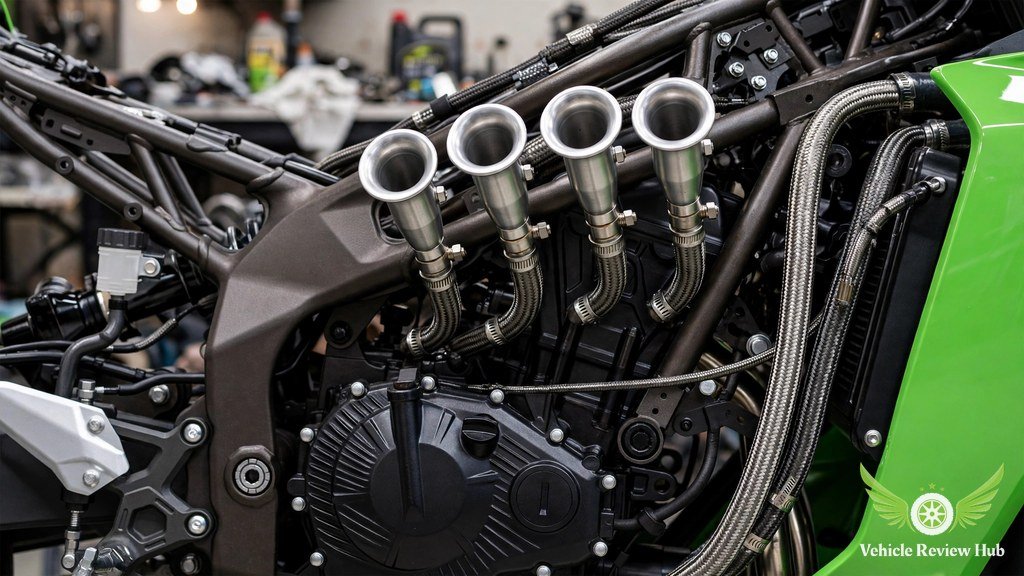
The RR’s engine is a 399cc inline-four, the same as the R’s in every respect that matters. This Kawasaki Ninja ZX-4RR review states the power figure plainly, then explains why the American bike makes so much less.
US Tune Claims 56 HP
Kawasaki’s US sheets claim 56.0 hp at 11,500 rpm and 26.5 lb-ft at 11,000 rpm from a 399cc liquid-cooled four — 57.0 x 39.1 mm, 12.3:1, four 34 mm throttle bodies, ride-by-wire. Kawasaki’s NHTSA submission says the same: 42 kW, or 56.3 hp (57 PS) — the same power in different units. The RR makes exactly the same power as the R, and any source that calls the RR faster or more powerful than the R is wrong — a point this Kawasaki Ninja ZX-4RR review repeats because the confusion is everywhere. The Cycle World dyno test of a stock 2023 RR measured 56.3 hp at 11,700 rpm and 25.8 lb-ft at 11,300 rpm on its Dynojet 250i — claim and wheel figure agree.
Everywhere else the same engine makes far more. Europe claims 57 kW (76.4 hp) at 14,500 rpm, or 59 kW (79.1 hp) with ram air. The European bike makes 28.8 lb-ft at 13,000 rpm — its torque peak sits 2,000 rpm higher. The reason is noise regulation: Kawasaki Canada states both bikes are capped at 11,500 rpm in Canada, and the RevZilla first ride of the RR describes “the unmistakable flat-spot in power above about 11,500 rpm. It’s a noise-emissions thing, we’re told.” The plateau is the tune working as designed, not a fault, and this Kawasaki Ninja ZX-4RR review never presents the US bike’s 56 hp as a defect. TopSpeed confirmed the same gap from dyno data, calling the US bike severely underpowered against its European twin.
| Specification | 2027 ZX-4RR ABS |
|---|---|
| Engine | 399cc liquid-cooled inline-four, DOHC 16-valve |
| Power (US claim) | 56 hp @ 11,500 rpm (42 kW) |
| Torque (US claim) | 26.5 lb-ft @ 11,000 rpm (36 Nm) |
| Bore x stroke | 57.0 x 39.1 mm |
| Compression ratio | 12.3:1 |
| Transmission | 6-speed, return shift, assist-and-slipper clutch |
| Frame | Trellis, high-tensile steel |
| Front suspension | 37 mm Showa SFF-BP fork, preload adjustable, 4.7 in travel |
| Rear suspension | Showa BFRC Lite, fully adjustable, 4.9 in travel |
| Front brakes | Dual 290 mm discs, radial 4-piston Nissin calipers, ABS |
| Rear brake | Single 220 mm disc, single-piston caliper, ABS |
| Tyres | Dunlop Sportmax GPR300, 120/70ZR-17 / 160/60ZR-17 |
| Wheelbase | 54.3 in (1,380 mm) |
| Seat height | 31.5 in (800 mm) |
| Curb weight (claimed) | 414.5 lb (188 kg) |
| Fuel capacity | 4.0 gal (15.2 L) |
| Warranty | 12-month limited |
Note: The power figures above are Kawasaki’s US claims; the European bike’s 76 hp is a different tune, not a different engine, and this Kawasaki Ninja ZX-4RR review uses the US figures throughout. The frame is high-tensile steel trellis — one first ride called it aluminum, and that is wrong.
No IMU or Cornering ABS
The ZX-4RR has no IMU. RevZilla’s first ride says it plainly: “I tried TC level 3 (wheel-speed informed, there is no IMU).” So the three-mode KTRC works from wheel-speed sensors only — no lean-angle intervention, no cornering ABS, no slide control — and the ABS is a conventional non-cornering system. The 2026 Yamaha YZF-R7 carries a six-axis IMU, so the RR is a generation behind its closest rival here, and this Kawasaki Ninja ZX-4RR review says so rather than burying it. The full rival-by-rival electronics comparison is in the ZX-4RR comparison.
What the bike does have is a 4.3-inch full-colour TFT with RIDEOLOGY connectivity, four ride modes (Sport, Road, Rain, customisable Rider) linking KTRC and the Full/Low power modes, an Economical Riding Indicator, all-LED lighting and a Circuit Mode. Two honest complaints from RevZilla’s test: the dash buttons need a long hold to switch ride modes — “distracting and a little clumsy” — and in Rider mode the trip meter and engine temperature disappear.
Kawasaki Ninja ZX-4RR Price and Market Availability

The RR costs $700 more than the R in 2027, and that gap has a history worth knowing. This Kawasaki Ninja ZX-4RR review prints every model-year price from Kawasaki’s sheets and dealer brochures.
Kawasaki Ninja ZX-4RR Price in the USA: $9,999 (2027)
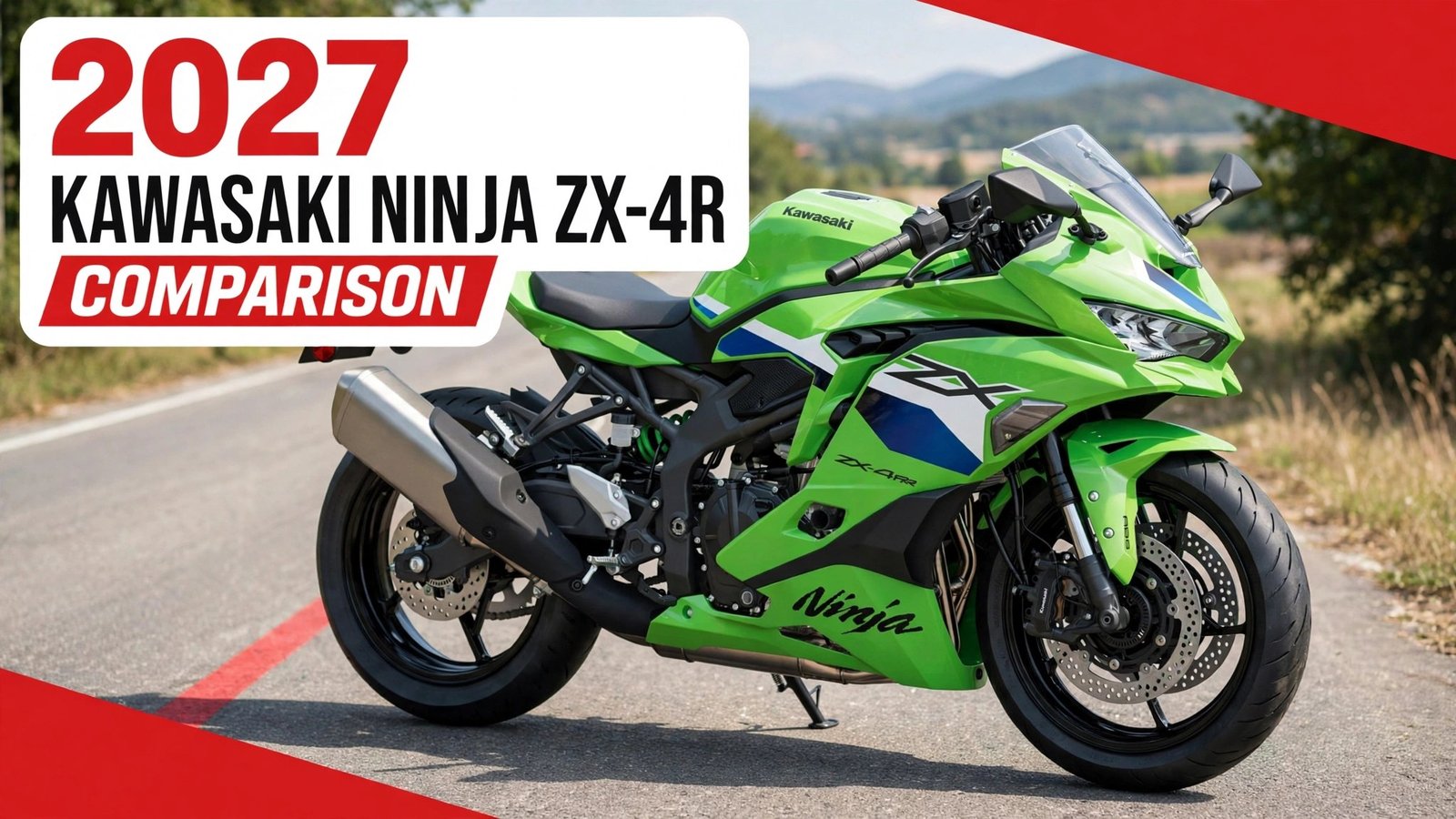
The 2027 ZX-4RR ABS is $9,999 plus $650 destination — $10,649 delivered; the 2027 R is $9,299 plus the same $650, or $9,949 delivered, so the RR premium is $700. There is no 2027 KRT Edition: Lime Green survives as an RR colour alongside Metallic Matte Graphenesteel Gray with Metallic Spark Black and Galaxy Silver, while the 2027 R (ZX400PVFNL) comes in Metallic Spark Black only. The 2027 RR’s model code is ZX400SVFAL. This Kawasaki Ninja ZX-4RR review uses delivered prices throughout, because destination has moved from $435 in 2023 to $650 in 2027 and the MSRP alone understates what you pay.
In 2025 Kawasaki cut the RR to $9,699 (plus $600 destination, $10,299 delivered) and the R to $8,999 — and the KRT paint went free, so the 2025 KRT cost the same $9,699 as the base RR. The 2025 KRT’s model code is ZX400SSFAL, and Kawasaki’s dealer system lists that same code for the base 2025 RR — in 2025 the KRT is a colour option under one code, not a separate model, which is why this Kawasaki Ninja ZX-4RR review prints the code once for both trims. Prices rose $300 for 2026 (2026 RR code ZX400STFAL) and held for 2027.
Premium $500, Then $700
In 2024 the gap was $500 ($9,399 against $9,899). In 2025 the R fell $400 while the RR fell only $200, so the gap widened to $700 ($8,999 against $9,699) and has stayed there since. At $500 the RR was an easy yes for anyone who wanted the kit; at $700 the buyer has to want the shock too. This Kawasaki Ninja ZX-4RR review prices the kit both ways below, so the $700 is a calculation, not a feeling.
Here is the calculation. Kawasaki sells the KQS quickshifter kit for the R at $522.17 (part number 99994-1886), so an R with the factory quickshifter costs $9,821.17 — $177.83 under the RR. But that kit buys only the quickshifter, not the preload fork and not the BFRC Lite rear shock. If you want the shock, the RR’s $700 is a bargain; if you only want the quickshifter, it is a $178 overpayment. That is the whole $700 question, and this Kawasaki Ninja ZX-4RR review comes back to it in the verdict.
| Model year | ZX-4R ABS | ZX-4RR ABS | ZX-4RR KRT Edition | ZX-4RR 40th Anniversary | Destination |
|---|---|---|---|---|---|
| 2023 | — (not sold) | — (not sold) | $9,699 | — | $435 |
| 2024 | $9,399 | $9,899 | $10,099 | $10,299 | $450 |
| 2025 | $8,999 | $9,699 | $9,699 (paint free) | — | $600 |
| 2026 | $9,299 | $9,999 | — (Lime Green is a colour) | — | $650 |
| 2027 | $9,299 | $9,999 | — (no KRT Edition) | — | $650 |
Note: All prices are US MSRP plus destination, from Kawasaki’s sheets and dealer brochures. Delivered prices: 2023 KRT $10,134; 2024 R $9,849, RR $10,349, KRT $10,549, 40th $10,749; 2025 R $9,599, RR $10,299, KRT $10,299; 2026 R $9,949, RR $10,649; 2027 R $9,949, RR $10,649. The 2025 KRT paint was free, so both 2025 RR trims cost $9,699; this Kawasaki Ninja ZX-4RR review uses delivered prices throughout.
Kawasaki Ninja ZX-4RR Design, Features and Technology
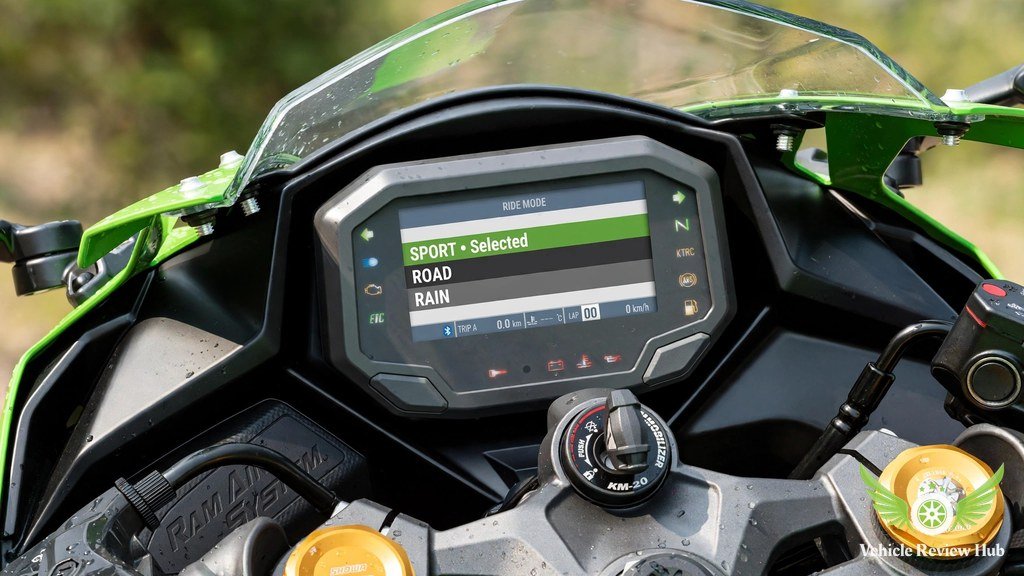
The RR’s premium buys exactly three items; everything else is shared with the R. This Kawasaki Ninja ZX-4RR review lists the three, then what does not change. Ultimate Motorcycling’s 13 fast facts run through the same kit list.
Premium Buys Exactly Three Items
First, the KQS bidirectional quickshifter — up and down, with auto-blip — standard on the RR, an accessory on the R. Second, fork spring-preload adjustment on the 37 mm Showa SFF-BP fork, where the R’s fork is non-adjustable. Third, the Showa BFRC Lite rear shock: a horizontal back-link unit with a piggyback reservoir, fully adjustable for preload, compression and rebound, with 4.9 inches of travel against the R’s 4.4. Those three are the entire difference, and this Kawasaki Ninja ZX-4RR review treats any other claimed difference as a mistake until a spec sheet proves it.
The RR fork has preload adjustment only — no damping adjustment. Kawasaki’s spec sheet lists the fork as preload-adjustable and nothing more, RevZilla’s first ride states “there isn’t any damping adjustment”, and Bennetts lists the missing fork damping as a con. One well-known model page claims rebound and compression damping for the fork; that claim is wrong and this Kawasaki Ninja ZX-4RR review does not repeat it. Preload is adjusted on one leg — the two outlets that name a leg disagree, so no side is named here.
Weight Delta Is Zero
The RR weighs the same as the R: 414.5 lb claimed, every year, for both bikes. The quickshifter, the preload adjuster and the BFRC Lite shock together weigh the same as the parts they replace, within Kawasaki’s rounding — the $700 buys capability without a weight penalty. This Kawasaki Ninja ZX-4RR review keeps claimed and measured weights separate, because the scales tell a slightly different story.
Cycle World weighed its 2023 RR test bike at 418 lb, and RevZilla’s spec table lists 420 lb — both a few pounds over the claim, both measured on RR test bikes. That puts the RR in the same weight class as the Ninja 650 (425.6 lb claimed) and the Yamaha YZF-R7 (417 lb), while making 11 to 16 hp less — a fact the Ninja 650 review makes plain. The full ZX-4R review tells the same story from the R’s side, with the same 414.5 lb claim and the same measured weights.
Kawasaki Ninja ZX-4RR Riding Experience and Comfort

On the road the RR is two bikes: a friendly, compact street bike below 10,000 rpm and a screaming four above it. This Kawasaki Ninja ZX-4RR review covers the street manners, the quickshifter and the track behaviour, then answers the beginner question the video below asks.
Quickshifter Smooth, Except
The quickshifter is the RR’s signature part, and it is very good with one exception. Motorcycle.com’s first ride of the RR found it “worked great on upshifts, but on downshifts, the interval timing felt off to me.” That is the heading in the tester’s own words. On the street the quickshifter is delightful; RevZilla’s 140-mile street ride found it a little strained on the track, where the shifts come faster.
Roadracing World found the other quirk at the track: the bike “had a tendency to catch a false neutral downshifting between the 4th and 3rd-gear, so I had to be really deliberate on that downshift if I was using auto-blip.” It is a shift-technique quirk, not a transmission failure and not a recall — a false neutral is an incomplete shift, fixed by pulling the clutch and shifting deliberately. This Kawasaki Ninja ZX-4RR review mentions it because it is the one RR-specific riding note a buyer should know.
Used Bikes Direct asks the beginner question directly in its review of the RR itself — “Should Your First Bike Be a ZX-4RR?” — and the answer is the same one this Kawasaki Ninja ZX-4RR review reaches: the bike starts out manageable, the electronics give new riders a real safety net, and once you rev it out it pulls harder than most beginner bikes. It is a beginner-focused review of the RR, not a first ride and not a track test.
12 Month Limited Warranty
Every ZX-4RR carries a 12-month limited warranty, all years, R and RR. Kawasaki Protection Plus extended coverage runs 12, 24, 36 or 48 months. The warranty matters more than usual on this bike because of the one modification every owner talks about: an ECU flash. Flashing the bike voids the warranty — RevZilla’s owner source put it bluntly: “every owner has to flash the ECU and void their warranty if they want to feel the true character of the engine.” A flash is a track-only modification, and this Kawasaki Ninja ZX-4RR review states the warranty consequence plainly.
The other cost is insurance. RevZilla’s owner interview reported insuring the ZX-4RR alone cost notably more than his Ducati Hyperstrada 821 and Husqvarna 701 Supermoto combined. No premium figure was published, so none is printed here — but get a quote before you buy. The ZX-4RR performance guide covers the flash figures in detail.
Kawasaki Ninja ZX-4RR Review: Pros, Cons and Verdict
The $700 is good value for one rider and wasted money for another — this Kawasaki Ninja ZX-4RR review ends with the balance sheet.
Main Advantages and Limitations of the Kawasaki Ninja ZX-4RR
The advantages are the engine, the chassis and the kit; the limitations are the price per horsepower, the missing IMU and the running costs — this Kawasaki Ninja ZX-4RR review weighs them below. Motorcycle.com’s first ride scored the bike 86% — Engine 18/20, Suspension 12/15, Transmission 7/10, Brakes 9/10, Instruments 4/5, Ergonomics 9/10, Appearance 9/10, Desirability 10/10, Value 8/10 — and the Cycle World Ten Best 2023 list named the 2023 RR its Best Lightweight Streetbike.
| Advantages | Limitations |
|---|---|
| The only new 400cc inline-four sportbike sold in the US | Same 56 hp as the R — $179 per hp, the priciest in its group |
| 16,000-rpm ceiling with a genuine four-cylinder sound | No IMU, no cornering ABS, no lean-angle electronics |
| KQS quickshifter, preload fork, fully-adjustable BFRC Lite shock | Plugs, oil and filter changed at every 7,600-mile service |
| Cycle World Ten Best 2023 winner, Best Lightweight Streetbike | Insurance notably expensive for a 400 |
| 31.5-inch seat, compact riding position, 414.5 lb claimed | Power plateau above 11,500 rpm on the US tune |
| 87-octane fuel, 4.3-inch TFT, four ride modes, RIDEOLOGY | Quickshifter downshift timing feels off; rear shock soft for heavier riders |
Note: The pros and cons above are the ones this Kawasaki Ninja ZX-4RR review verified from the test rides and the spec sheets.
KRT Is Just a Colour Now
From 2025 the KRT livery is a colour, not a trim, and there is no 2027 KRT Edition — Lime Green survives as an RR colour, and the 2025 KRT cost the same $9,699. On the used market that means a KRT badge buys nothing: a 2023 KRT with 4,420 miles listed at $8,999 in November 2026 while a 2024 base RR with 2,600 miles listed at $8,896, and a new-leftover 2024 KRT sold at $9,899 — the base RR’s price. Buy the cheapest clean RR regardless of paint, and check both recalls — the rotor bolt (23V-515) and the cracked spark plugs (24V-221, 1,579 bikes) — on any 2023 KRT before paying. This Kawasaki Ninja ZX-4RR review says it plainly because the KRT name still tempts buyers to pay extra for it.
The verdict: buy the RR over the R if you will use the quickshifter and the suspension — for track days, for canyon carving — and buy it for the sound, the revs and the chassis, not for the numbers. On paper it loses to the R7 on power, torque and price, as the ZX-4R comparison shows. For the rider who wants a screaming four and a genuine supersport chassis at under $10,000, there is still nothing else new to buy — which is why this Kawasaki Ninja ZX-4RR review recommends the RR over the R for the rider who will actually use it.
Kawasaki Ninja ZX-4RR Review: Frequently Asked Questions
The six questions buyers ask most, answered from the facts in this Kawasaki Ninja ZX-4RR review.
How much does the Kawasaki Ninja ZX-4RR cost?
The 2027 ZX-4RR ABS is $9,999 plus $650 destination, $10,649 delivered. The 2023 launch bike — the RR KRT Edition — was $9,699 plus $435. Prices fell in 2025, when the RR cost $9,699, and rose again in 2026–27. This Kawasaki Ninja ZX-4RR review uses delivered prices throughout, because destination has climbed from $435 to $650.
What is the difference between the ZX-4R and the ZX-4RR?
Three things: the RR has a bidirectional quickshifter, fork preload adjustment, and a fully-adjustable BFRC Lite rear shock. Same engine, same 56 hp, same 414.5 lb weight. This Kawasaki Ninja ZX-4RR review repeats the point because it is the most confused fact about the bike.
How much horsepower does the US ZX-4RR make?
56 hp at 11,500 rpm, 26.5 lb-ft of torque at 11,000 rpm. European bikes make 76 hp (79 with ram air) because the US bike is tuned down for noise regulations — the plateau above 11,500 rpm is the tune, not a fault. This Kawasaki Ninja ZX-4RR review uses the US figures throughout.
Does the ZX-4RR have an IMU?
No. Its traction control works from wheel-speed sensors only — no cornering ABS, no lean-angle electronics. The bike does have a 4.3-inch TFT display, four ride modes and a bidirectional quickshifter. The 2026 Yamaha YZF-R7, by contrast, carries a six-axis IMU. This Kawasaki Ninja ZX-4RR review states it plainly because listings still claim lean-sensitive electronics for the bike.
Was there a ZX-4R in 2023?
No. In 2023 the only ZX-4 sold in the US was the ZX-4RR KRT Edition; the plain R arrived in 2024 at $9,399, a year after the RR launched. This Kawasaki Ninja ZX-4RR review covers the recall in the model-year section above.
Is the ZX-4R SE sold in the US?
No. The SE — quickshifter, smoked screen, USB port, frame sliders — is sold in Japan, Asia and Europe only. Its parts are available as US accessories, and the RR already has the SE’s two mechanical upgrades as standard, plus the BFRC Lite shock the SE does not have. This Kawasaki Ninja ZX-4RR review prints no SE price in dollars, because the trim was never sold here.