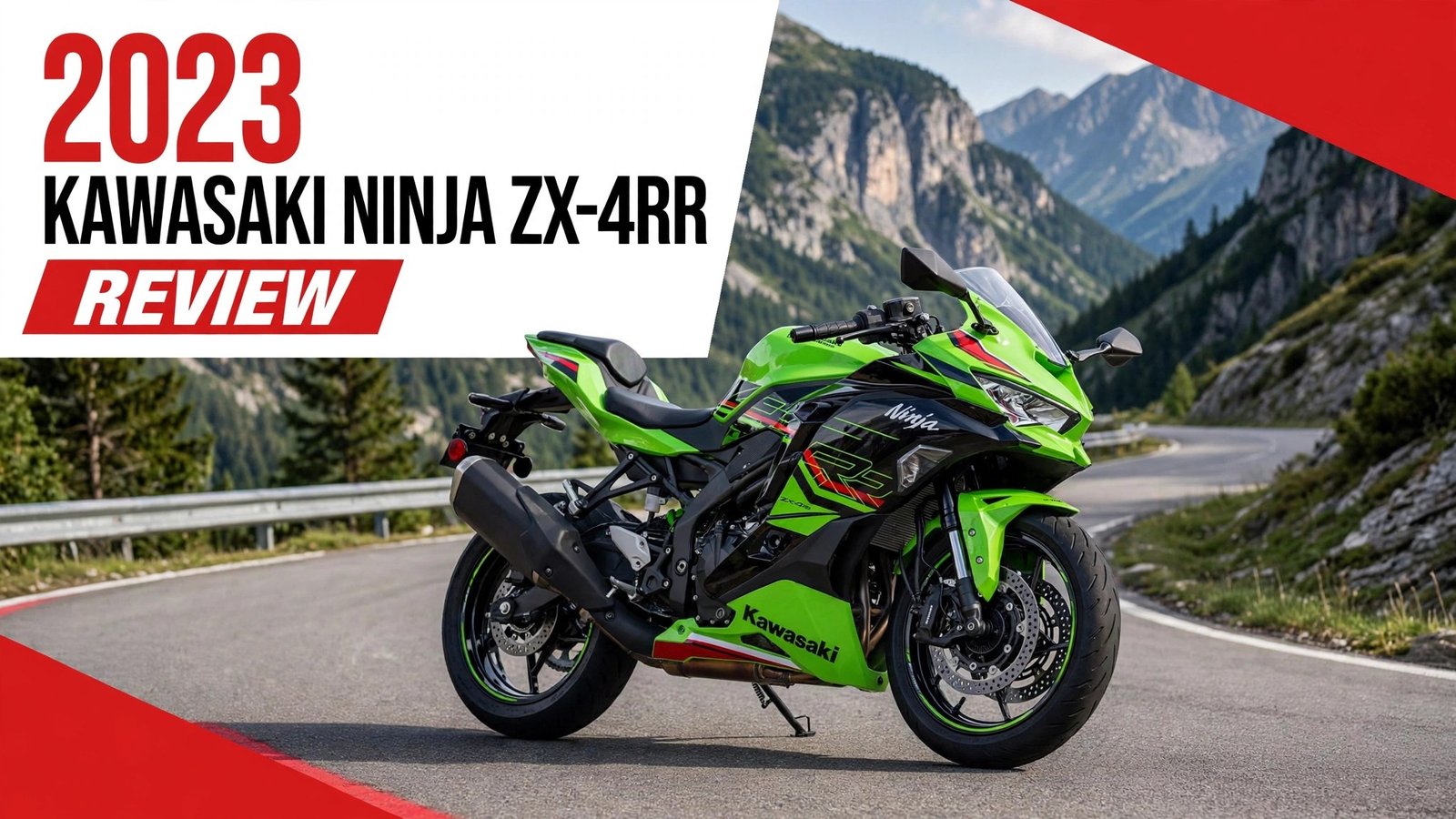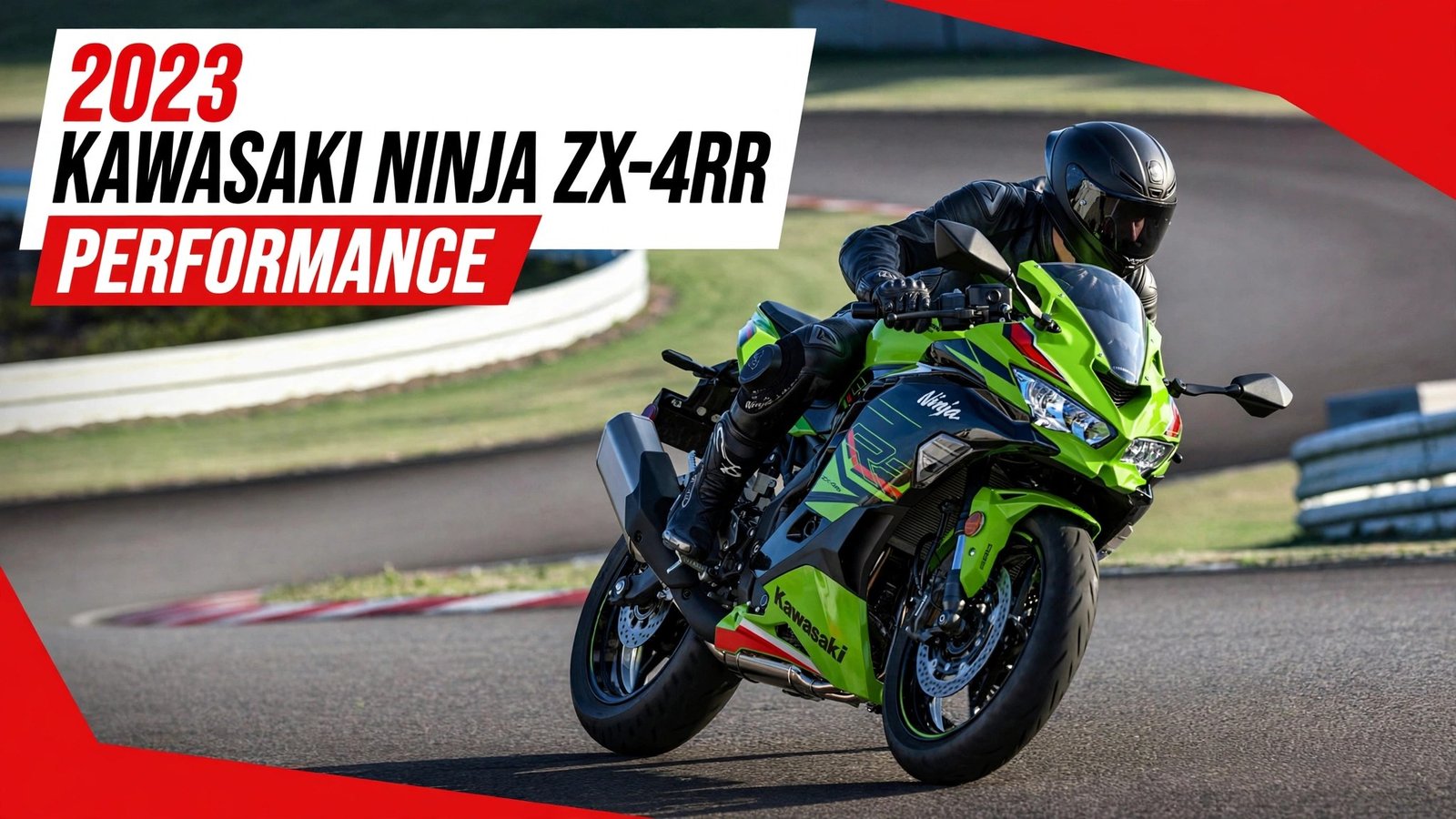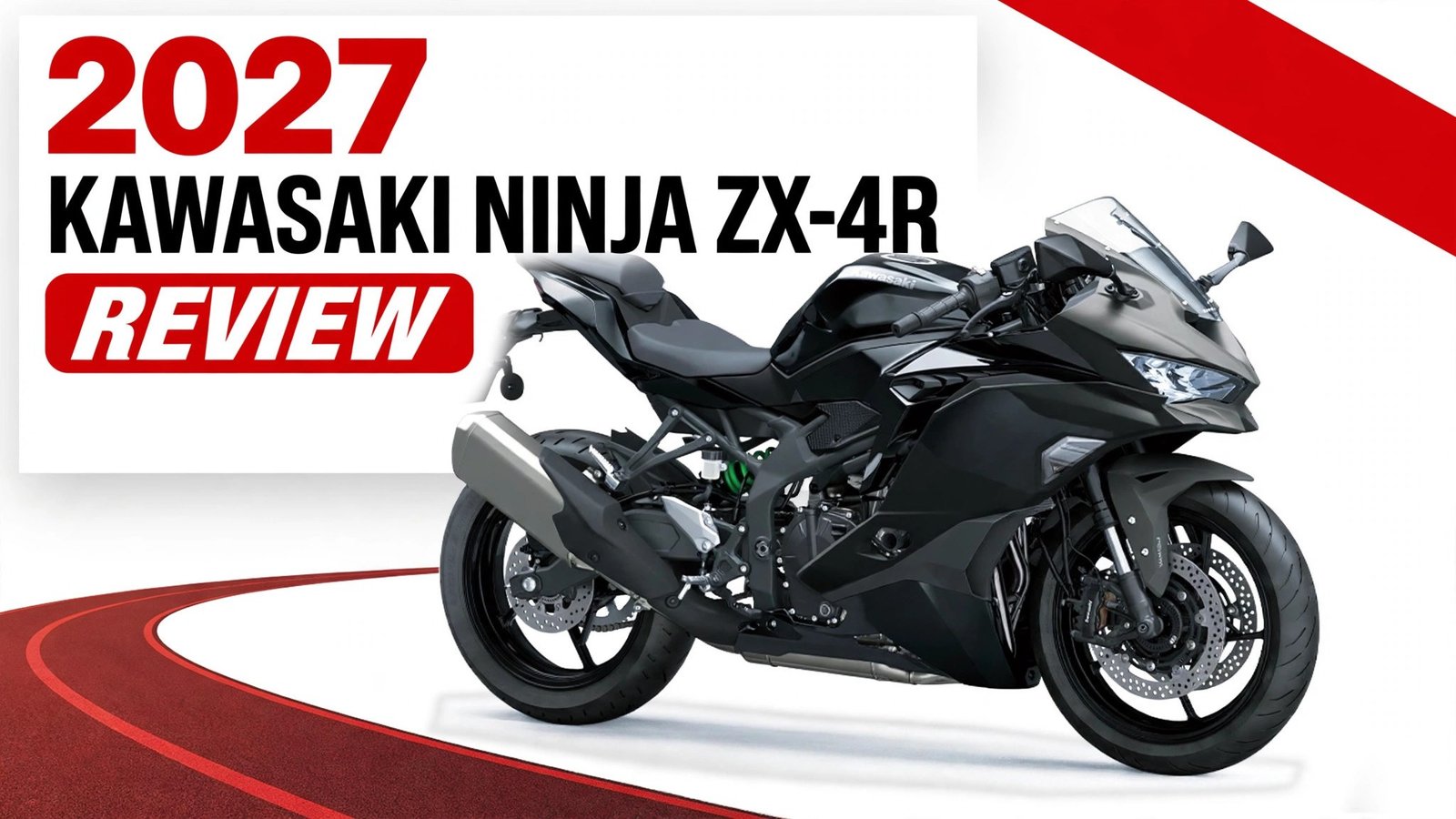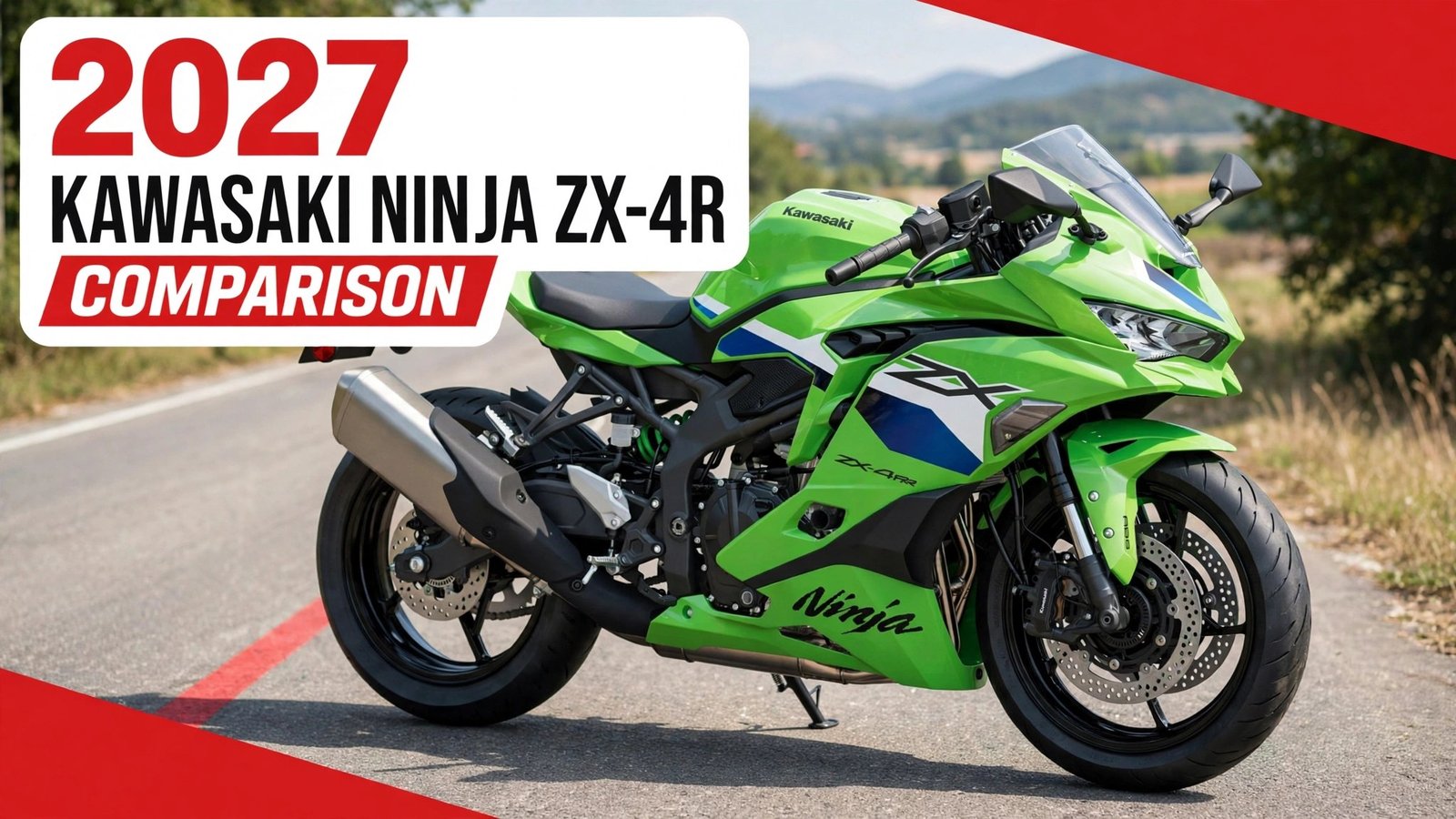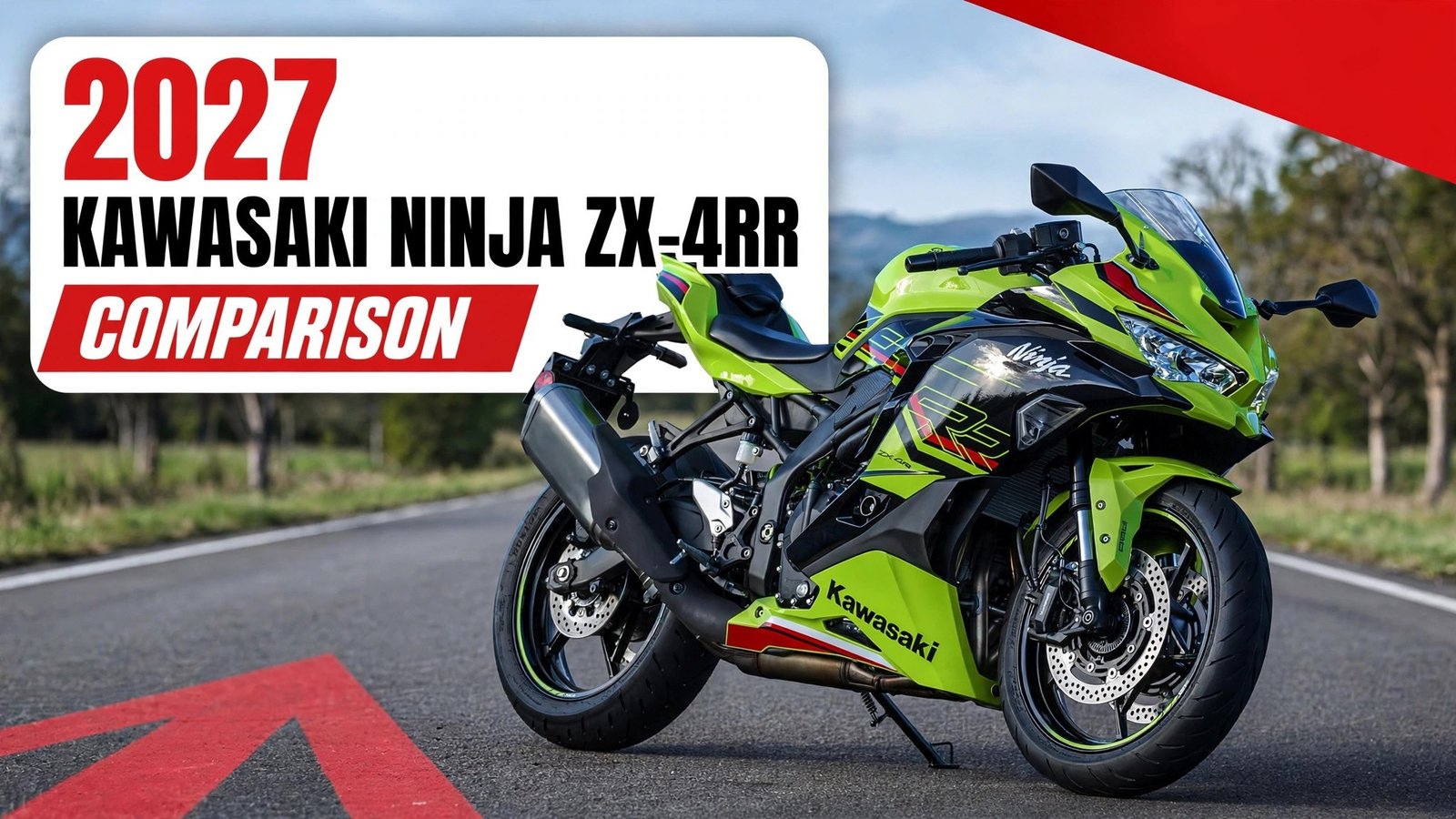
The Kawasaki Ninja ZX-4RR comparison starts with an awkward truth: the RR is the most expensive way to buy 56 horsepower in this group, at $179 per horsepower, and it still wins buyers. It wins them on sound, on revs and on being the only new 400cc inline-four sportbike sold in America. This Kawasaki Ninja ZX-4RR comparison puts the 2027 RR against the three bikes a buyer actually cross-shops it with — its own twin, the Kawasaki Ninja ZX-4R, the Yamaha YZF-R7, and the Honda CBR600RR — on price, power, equipment and value.
Kawasaki Ninja ZX-4RR Overview and Its Closest Rivals
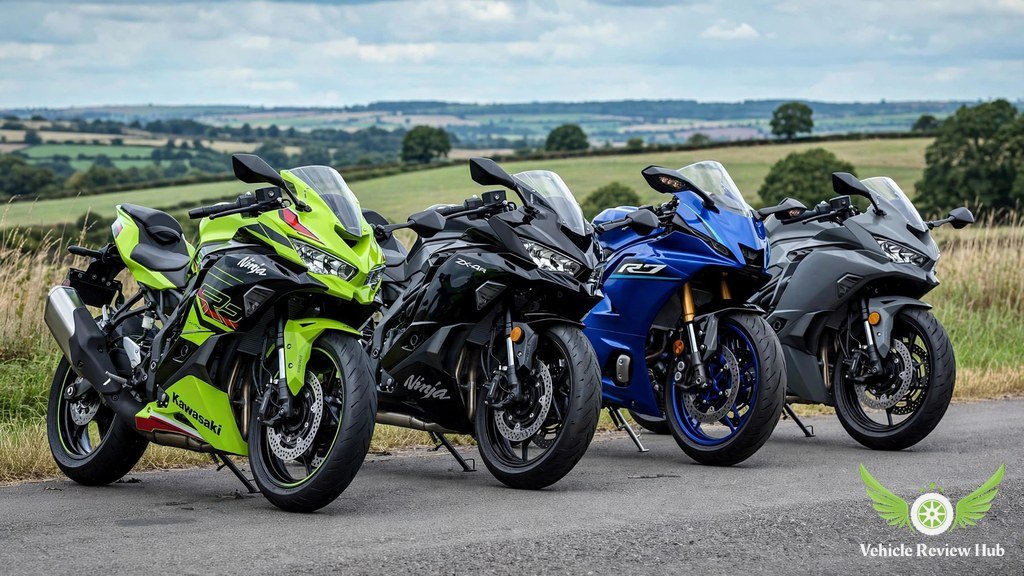
Four bikes, four different answers to the same question. The ZX-4R is the RR with three parts removed, the R7 is the faster, cheaper twin, and the CBR600RR is a real 600cc supersport with roughly twice the RR’s power. The RR loses the numbers game and still makes sense for the right rider.
Priciest Way to Buy 56 HP
The arithmetic is blunt. The 2027 ZX-4RR ABS costs $9,999 plus $650 destination, $10,649 delivered, for 56 horsepower — $179 per horsepower. The plain R costs $9,299, or $166 per horsepower. The Yamaha YZF-R7 costs $9,399, or $130 per horsepower. The Honda CBR600RR costs $11,499, or about $97 to $102 per horsepower on the quoted power figure. The RR is the most expensive bike per horsepower in this Kawasaki Ninja ZX-4RR comparison even though the CBR costs $1,500 more outright, and the performance numbers explain why: the US RR makes 56 hp because its tune is capped for noise regulations, while the R7 makes 72.4 hp and the CBR is quoted at 113 to 118 hp. But the RR is also the only bike here with a bidirectional quickshifter and a fully-adjustable rear shock for under $10,000.
How the Four Bikes Differ at a Glance
| Item | 2027 ZX-4RR ABS | 2027 ZX-4R ABS | 2026 Yamaha YZF-R7 | 2026 Honda CBR600RR |
|---|---|---|---|---|
| Engine | 399cc inline-4 | 399cc inline-4 | 689cc CP2 parallel twin | 599cc inline-4 |
| Power (US claim) | 56 hp @ 11,500 rpm | 56 hp @ 11,500 rpm | 72.4 hp @ 8,750 rpm | No Honda figure (quoted 113–118 hp) |
| Curb / wet weight | 414.5 lb | 414.5 lb | 417 lb wet | 419 lb (434 lb ABS) |
| Quickshifter | Yes, bidirectional | No (accessory $522.17) | Yes, 3rd-gen, up and down | No |
| IMU | No | No | Yes, 6-axis | No |
| Traction control | Yes, KTRC 3-mode (wheel-speed) | Yes, KTRC 3-mode | Yes, IMU-based | No |
| Fork | 37 mm SFF-BP, preload only | 37 mm SFF-BP, non-adjustable | 41 mm inverted KYB, adjustable | 41 mm Showa BPF, fully adjustable |
| Rear shock | BFRC Lite, fully adjustable, 4.9 in | Preload only, 4.4 in | Adjustable | Unit Pro-Link HMAS, fully adjustable, 5.1 in |
| MSRP | $9,999 | $9,299 | $9,399 | $11,499 ($12,499 ABS) |
| Delivered | $10,649 | $9,949 | $10,074 | $12,099 ($13,099 ABS) |
| Price per hp | $179 | $166 | $130 | ~$97–102 (on quoted figure) |
Note: The CBR600RR’s power and price-per-hp figures rest on the quoted 113–118 hp range, not a Honda claim, because Honda publishes no US power figure for the bike. The R7’s quickshifter in this Kawasaki Ninja ZX-4RR comparison is Yamaha’s third-generation system, confirmed bidirectional, and its 3.7-gallon tank is confirmed from Yamaha’s own 2026 spec sheet. A Kawasaki Ninja ZX-4RR comparison is only honest if the CBR’s power stays labelled as quoted, and this table does that.
Kawasaki Ninja ZX-4RR vs Kawasaki Ninja ZX-4R
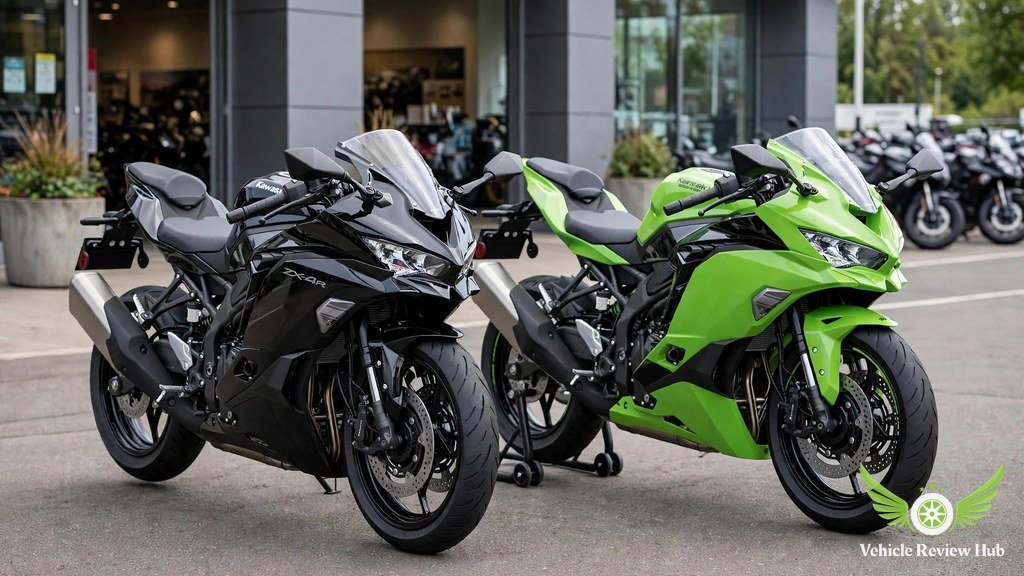
This is the comparison most buyers actually make, and it is the simplest one in the group: the R is the RR with three parts removed. Same engine, same tune, same 56 hp, same weight, same brakes, same dash. The only question is whether the three parts are worth $700. The ZX-4R comparison reaches the same conclusion from the other side.
Engine, Specs and Performance Side by Side
There is no performance difference to find in this Kawasaki Ninja ZX-4RR comparison. Both bikes use the same 399cc inline-four, the same 57.0 x 39.1 mm bore and stroke, the same 12.3:1 compression and the same ride-by-wire system. Both make 56.0 hp at 11,500 rpm and 26.5 lb-ft at 11,000 rpm, and both hit the same power plateau above 11,500 rpm because both carry the same US noise-regulation tune. Cycle World’s dyno test measured 56.3 hp at 11,700 rpm on the RR. The only mechanical differences are the three RR items: the KQS bidirectional quickshifter with auto-blip, fork spring-preload adjustment, and the fully-adjustable Showa BFRC Lite rear shock with 4.9 inches of travel against the R’s preload-only rear with 4.4 inches.
| Item | 2027 ZX-4RR ABS | 2027 ZX-4R ABS |
|---|---|---|
| Engine | 399cc inline-4, 57.0 x 39.1 mm, 12.3:1 | 399cc inline-4, 57.0 x 39.1 mm, 12.3:1 |
| Power / torque (US claim) | 56 hp @ 11,500 rpm / 26.5 lb-ft @ 11,000 rpm | 56 hp @ 11,500 rpm / 26.5 lb-ft @ 11,000 rpm |
| Dyno (Cycle World) | 56.3 hp @ 11,700 rpm, 25.8 lb-ft @ 11,300 rpm | Same engine and tune; no separate figure |
| Curb weight (claimed) | 414.5 lb | 414.5 lb |
| Quickshifter | KQS bidirectional, standard | No; accessory kit $522.17 (P/N 99994-1886) |
| Fork | 37 mm SFF-BP, preload only, 4.7 in | 37 mm SFF-BP, non-adjustable, 4.7 in |
| Rear shock | BFRC Lite, fully adjustable, 4.9 in | Preload only, 4.4 in |
| Brakes / tyres | Dual 290 mm Nissin / 120/70-17, 160/60-17 | Dual 290 mm Nissin / 120/70-17, 160/60-17 |
| MSRP / delivered (2027) | $9,999 / $10,649 | $9,299 / $9,949 |
Note: The RR’s fork preload is adjusted on one fork leg — RevZilla’s first ride and Cycle World’s model page disagree on which leg, so no side is named in this Kawasaki Ninja ZX-4RR comparison. The weight delta between the two bikes is zero. A Kawasaki Ninja ZX-4RR comparison that claims the RR is faster than the R is wrong, and this one does not make that claim.
Price, Equipment and Which Suits Which Rider
The 2027 gap in this Kawasaki Ninja ZX-4RR comparison is $700: $9,299 for the R, $9,999 for the RR, both plus $650 destination. The quickshifter alone costs $522.17 as a Kawasaki accessory for the R, part number 99994-1886. Fit the kit to an R and the bike costs $9,821.17 — $177.83 under the RR — but the kit buys only the quickshifter, not the preload fork and not the BFRC Lite shock. So the RR’s $700 is a bargain if you want the shock, and a $178 overpayment if you only want the quickshifter. The RR suits the track-day rider, the canyon rider, and anyone who will actually use suspension adjustability. The 2026 R comes in Metallic Spark Black only, confirmed from Kawasaki dealer brochures, while the 2026 RR also offers Lime Green. In 2025 the KRT livery was a colour option under one model code, ZX400SSFAL, shared by the base RR and the KRT Edition, and the review covers that paint story in full.
Kawasaki Ninja ZX-4RR vs Yamaha YZF-R7
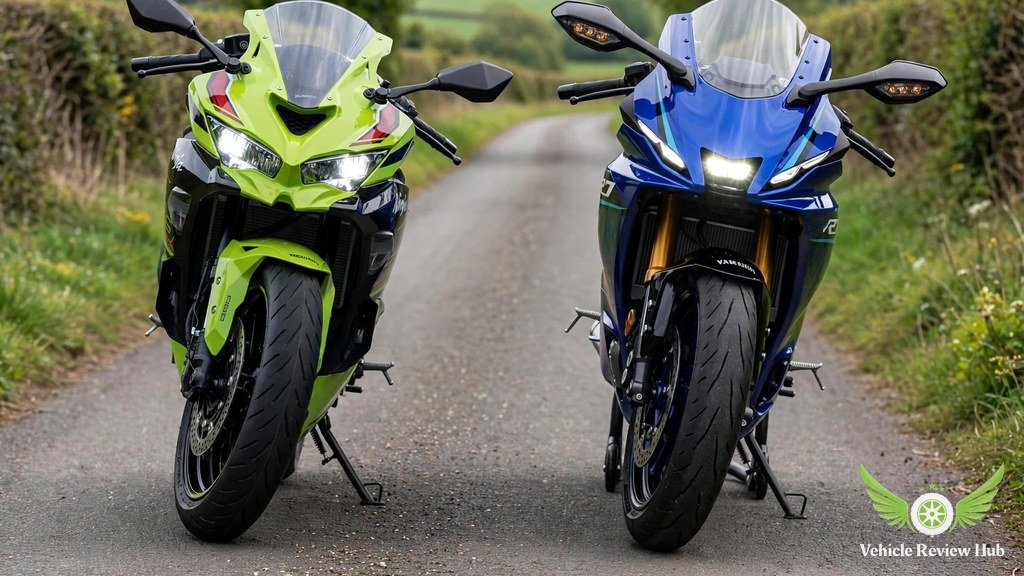
The R7 is the RR’s hardest rival because it wins the rational argument and loses the emotional one. It is faster, torquier and cheaper, and since the 2026 refresh it is better equipped with electronics. The RR answers with a four-cylinder engine that revs to 16,000 rpm, a sound no twin can make, and a Cycle World Ten Best award the R7 has never won.
Engine, Specs and Performance Side by Side
The engines could hardly be more different. The R7’s 689cc CP2 parallel twin makes 72.4 hp at 8,750 rpm and 50.2 lb-ft at 6,500 rpm — roughly 30 percent more power and 90 percent more torque than the RR, delivered 2,500 rpm lower in the rev range. Ultimate Motorcycling’s comparison test at Streets of Willow and Motorcycle.com’s uncorked test, with both bikes ECU-flashed on track, reach the same conclusion: the R7 is the faster, more practical bike, and the RR is the more special one. One headline to ignore: a 2023 TopSpeed story claimed the ZX-4RR went faster than an R7, but that was about an Asian-market bike’s 151-mph video, not a US bike, and it has no place in a US Kawasaki Ninja ZX-4RR comparison. The RR’s own measured top speed is 124 mph by GPS, verified by RevZilla.
| Item | 2027 ZX-4RR ABS | 2026 Yamaha YZF-R7 |
|---|---|---|
| Engine | 399cc inline-4 | 689cc CP2 parallel twin |
| Power | 56 hp @ 11,500 rpm | 72.4 hp @ 8,750 rpm |
| Torque | 26.5 lb-ft @ 11,000 rpm | 50.2 lb-ft @ 6,500 rpm |
| Weight | 414.5 lb claimed | 417 lb wet |
| Seat / tank | 31.5 in / 4.0 gal | 32.7 in / 3.7 gal |
| Quickshifter | KQS bidirectional, standard | 3rd-gen, up and down, standard |
| IMU / electronics | No IMU; KTRC wheel-speed, 4 ride modes, TFT | 6-axis IMU, ride-by-wire, cruise, 5-in TFT |
| Fork / shock | 37 mm SFF-BP preload / BFRC Lite fully adjustable | 41 mm inverted KYB adjustable / adjustable |
| Brakes | Dual 290 mm, radial Nissin | Dual 298 mm, Brembo radial master |
| MSRP / delivered | $9,999 / $10,649 | $9,399 / $10,074 |
Note: The R7 figures in this Kawasaki Ninja ZX-4RR comparison are the corrected 2026 figures — 72.4 hp, 50.2 lb-ft, 417 lb wet, 32.7-inch seat — verified from Yamaha’s own 2026 spec sheet and dealer brochures. The 2026 R7’s third-generation quickshifter is bidirectional, with clutchless upshifts and downshifts under both acceleration and deceleration, and its 3.7-gallon tank is confirmed from the same sheet. A Kawasaki Ninja ZX-4RR comparison must not repeat the older, wrong R7 figures that circulated in earlier drafts.
Price, Equipment and Which Suits Which Rider
The R7 costs $600 less than the RR: $9,399 against $9,999, or $10,074 against $10,649 delivered. The 70th Anniversary Edition is $9,699, still $300 under the base RR. Yamaha’s own R7 page lists the full 2026 electronics package. What the RR gives back in this Kawasaki Ninja ZX-4RR comparison is the fully-adjustable BFRC Lite rear shock, the lower seat and the sound. The R7 suits the rider who wants the faster bike for less money; the RR suits the rider who wants a four-cylinder and will ride track days. The Ninja 650 comparison makes the same argument. Buy the R7 if speed per dollar is the test; buy the RR if the test is how the bike makes you feel at 14,000 rpm — and that is the honest end of this Kawasaki Ninja ZX-4RR comparison pairing.
Kawasaki Ninja ZX-4RR vs Honda CBR600RR
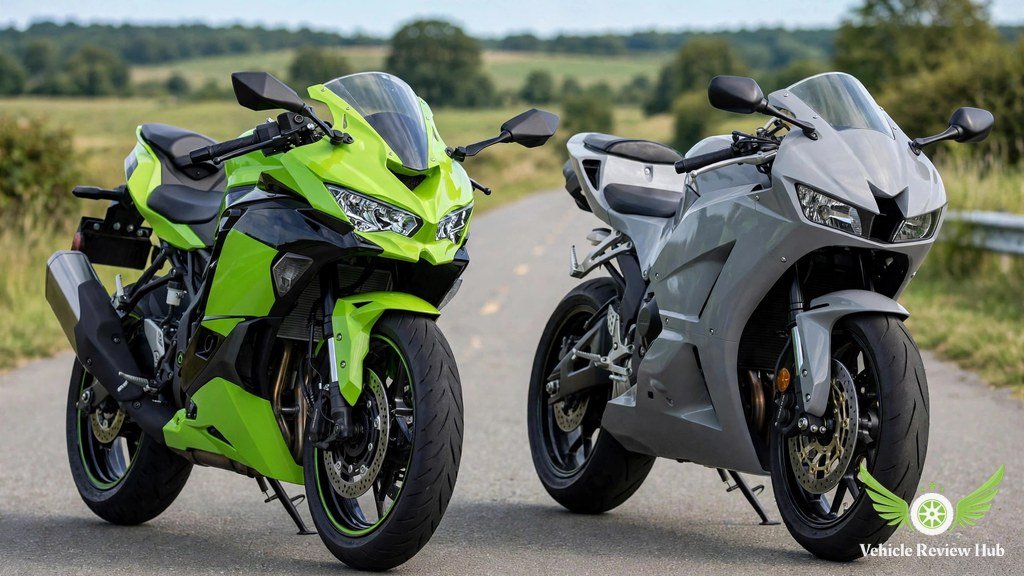
The CBR600RR is the honest ceiling of this comparison. It is a real 600cc supersport — roughly twice the RR’s power, fully-adjustable suspension, bigger brakes — for $1,500 more. This part of the Kawasaki Ninja ZX-4RR comparison is a straight trade: power and chassis against electronics and money.
Engine, Specs and Performance Side by Side
Start with the power, and start with the conflict, because Honda publishes no US power figure for the CBR600RR. The 599cc inline-four is generally quoted at 113 hp at 13,500 rpm on Honda’s older US spec sheets, or 118 hp at 13,500 rpm in other spec sources — a 5-hp disagreement that has never been settled, because Honda will not settle it. Either way the CBR makes roughly double the RR’s 56 hp. The chassis is where the CBR earns its price: a 41 mm inverted Showa Big Piston Fork and a Unit Pro-Link HMAS rear shock, both fully adjustable, dual 310 mm front discs, and an aluminum twin-spar frame. Honda’s own CBR600RR page confirms the 32.4-inch seat, the 419 lb base and 434 lb ABS curb weights, and the $11,499 and $12,499 prices. The RR’s whole argument is electronics: KTRC traction control, four ride modes, a 4.3-inch TFT dash and a bidirectional quickshifter, all standard. The CBR has none of that — its only electronic rider aid is the Honda Electronic Steering Damper, and ABS is optional.
| Item | 2027 ZX-4RR ABS | 2026 Honda CBR600RR |
|---|---|---|
| Engine | 399cc inline-4 | 599cc inline-4 |
| Power | 56 hp @ 11,500 rpm (Kawasaki claim) | No Honda figure; quoted 113–118 hp @ 13,500 rpm |
| Torque | 26.5 lb-ft @ 11,000 rpm | 48.7 lb-ft @ 11,250 rpm |
| Rear-wheel dyno | 56.3 hp (Cycle World, stock) | ~100–105 hp (published tests) |
| Weight | 414.5 lb claimed | 419 lb base / 434 lb ABS |
| Seat / tank | 31.5 in / 4.0 gal | 32.4 in / 4.8 gal |
| Quickshifter | KQS bidirectional, standard | No |
| Electronics | KTRC, 4 ride modes, TFT, no IMU | No TC, no modes, no TFT, cable throttle, HESD only |
| Fork / shock | 37 mm SFF-BP preload / BFRC Lite fully adjustable | 41 mm Showa BPF fully adjustable / HMAS fully adjustable |
| Brakes | Dual 290 mm, radial Nissin, ABS | Dual 310 mm, radial 4-piston, ABS optional |
| MSRP / delivered | $9,999 / $10,649 | $11,499 / $12,099 ($12,499 / $13,099 ABS) |
Note: The CBR’s seat and weight figures are the 2026 dealer-brochure figures — 32.4 inches, 419 lb base, 434 lb ABS — confirmed from Honda’s own current CBR600RR page. Older spec sheets list 32.3 inches and 410 lb; this comparison uses the current figures. Only the verified 2026 prices are printed in this Kawasaki Ninja ZX-4RR comparison; the 2023 price history is not fully verified and is left out. A Kawasaki Ninja ZX-4RR comparison that printed a single settled CBR power figure would be inventing one, so the range stays.
Price, Equipment and Which Suits Which Rider
The CBR costs $1,500 more than the RR for the base bike in this Kawasaki Ninja ZX-4RR comparison, and $2,500 more with ABS: $11,499 against $9,999, or $12,099 against $10,649 delivered. The CBR suits the track-day rider who wants the fastest bike here; the RR suits the rider who wants modern electronics, a quickshifter and $1,500 in the pocket. If you want the fastest bike and the best suspension here, the CBR is worth the $1,500, and that is the verdict of this Kawasaki Ninja ZX-4RR comparison on this pairing.
Kawasaki Ninja ZX-4RR Price and Value Compared
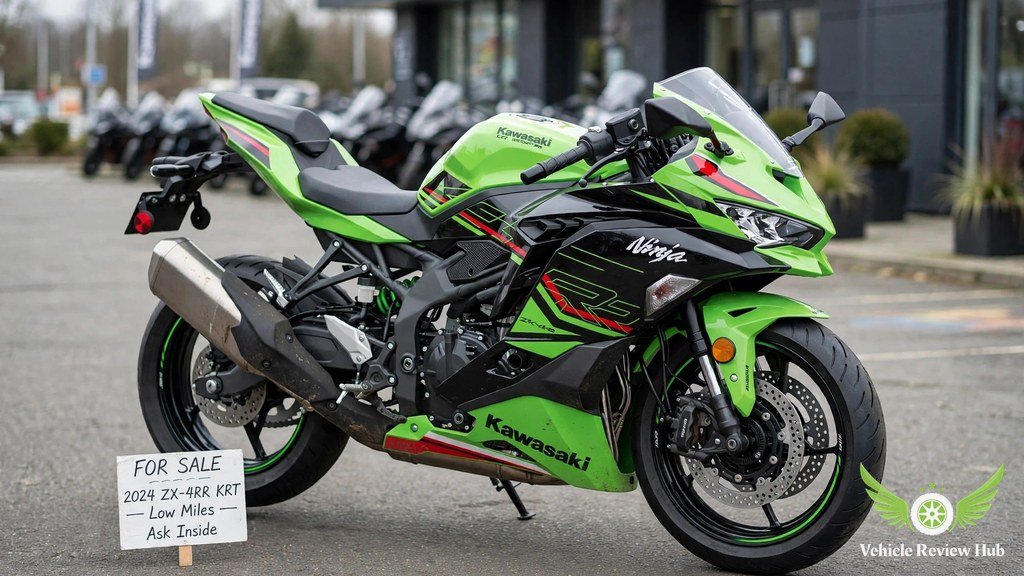
New prices tell half the value story in this Kawasaki Ninja ZX-4RR comparison; the other half is used prices and running costs.
No KRT Premium Used
The KRT paint holds no premium on the used market in this Kawasaki Ninja ZX-4RR comparison, and the listings prove it. A 2023 KRT Edition with 4,420 miles listed at $8,999 while a 2024 base RR with 2,600 miles listed at $8,896 — the KRT’s $200 new premium in 2024 buys nothing used, and the 2025 KRT paint was free when new anyway. Before paying, check both recalls on any 2023 KRT — the alternator rotor bolt recall, 23V-515, covering all 991 launch bikes, and the spark-plug recall, 24V-221, covering 1,579 bikes of which 1,439 are RRs — plus the frame drain-hole bulletin, MC24-04, on the same 2023 KRT bikes. The reliability guide walks through both recalls and the bulletin in full, and the KRT Edition comparison reaches the same no-premium conclusion for the Ninja 650’s KRT paint.
| Listing (November 2026 snapshot) | Mileage | Asking price | New price |
|---|---|---|---|
| 2024 ZX-4RR ABS, SF Moto, San Francisco | 2,600 mi, one owner | $8,896 | $9,899 |
| 2023 ZX-4RR KRT Edition, Heartland Honda, Arkansas | 4,420 mi | $8,999 | $9,699 |
| 2024 ZX-4RR, BMW Motorcycles SE Michigan | 425 mi | $7,995 | $9,899 |
| 2024 ZX-4RR KRT Edition ABS, new leftover, Plano Kawasaki | 238 mi | $9,899 | $10,649 (2027 RR) |
Note: These are listing prices from Cycle Trader and dealer sites in November 2026, not transaction prices, and listings change weekly. The three headline listings — the $8,896 SF Moto bike, the $7,995 Michigan bike and the $9,899 Plano leftover — were re-confirmed live at writing time for this Kawasaki Ninja ZX-4RR comparison. A Kawasaki Ninja ZX-4RR comparison should never present a listing price as a sale price, and this one does not.
Running Costs and Resale Value Compared
The RR’s running costs are the highest in this Kawasaki Ninja ZX-4RR comparison, and the reason is the service schedule: oil, filter and all four spark plugs at every service, every 7,600 miles, plus a valve clearance check every 15,200 miles. Insurance is the other cost that surprises buyers: one owner’s account, reported by RevZilla, found insuring the ZX-4RR alone cost notably more than a Ducati Hyperstrada 821 and a Husqvarna 701 Supermoto combined, so a quote belongs in the budget before the purchase. Fuel is the RR’s one saving — 87-octane regular at about 41 miles per gallon on the EPA-style estimate, roughly 165 miles from the 4.0-gallon tank. The Ninja 300 comparison shows the same pattern at the entry level, where the cheapest bike to buy is rarely the cheapest bike to keep.
Kawasaki Ninja ZX-4RR Comparison Verdict and US Alternatives
The verdict is the same one this Kawasaki Ninja ZX-4RR comparison has been building toward: buy the RR for the kit and the character, not for the numbers.
Verdict: Kit and Character
In this Kawasaki Ninja ZX-4RR comparison, the $700 over the R buys a quickshifter, a preload fork and a genuinely adjustable rear shock — the three things that make the RR a track-day bike rather than a street bike with a loud engine. Do buy used if you can find a clean 2024 — a nearly-new RR at about $8,000 is the value pick of the range, and a new-leftover 2024 KRT at $9,899 is the same bike as a 2027 RR for $750 less. The RR is the track-day buy against the R, the emotional buy against the R7, and the modern buy against the CBR. The TopSpeed report on the US bike’s tune explains why the numbers look the way they do, and the RevZilla first ride explains why riders forgive them. The Suzuki GSX-8R, a 776cc twin at $9,199 for 2027 with 82 hp claimed, costs less and makes more power, but it has no IMU and a non-adjustable 41 mm fork — see the Ultimate Motorcycling GSX-8R buyer’s guide.
RS 660 Sets the Ceiling
If 56 hp is not enough and you will not flash the ZX-4RR, the Aprilia RS 660 is where this class ends. The 659cc twin makes 105 hp, the base bike costs $11,849, and the 2026 Factory in Shakedown Yellow only costs $14,149. At $113 per horsepower against the RR’s $179, the RS 660 is cheaper per horsepower — the ceiling’s whole point. Motorcycle.com’s comparison tool confirms the 2026 Factory at $14,149 against the 2025 Factory at $13,999. An ECU flash takes the RR past 70 hp at the wheel, but it voids the warranty and is track-only. If you want more power with a warranty, the RS 660 is the answer — and the RR buyer who chooses the Kawasaki anyway has chosen character over power, knowingly, which is the only honest way to choose it in this Kawasaki Ninja ZX-4RR comparison.
Kawasaki Ninja ZX-4RR Comparison: Frequently Asked Questions
The answers below give the direct version of each question about this Kawasaki Ninja ZX-4RR comparison.
Should I buy the ZX-4RR or the ZX-4R?
Buy the RR if you will ride track days or use the suspension adjustability — the $700 buys a quickshifter, fork preload and a fully-adjustable rear shock. Buy the R if you ride street only, or fit the $522.17 quickshifter kit and save $178. A Kawasaki Ninja ZX-4RR comparison comes down to that $700, and the shock is what makes it worth paying.
Is the ZX-4RR faster than the Yamaha R7?
No. The R7 makes 72.4 hp and 50.2 lb-ft against the RR’s 56 hp and 26.5 lb-ft, and costs $600 less. The RR’s answer is revs, sound and character — not speed. In a Kawasaki Ninja ZX-4RR comparison the R7 is the faster bike on any road, and the RR is the more special one.
Is the ZX-4RR better than the Honda CBR600RR?
On equipment, yes — in this Kawasaki Ninja ZX-4RR comparison the RR has a quickshifter, ride modes, traction control and a TFT dash that the CBR does not. On power, no — the CBR makes roughly double the RR’s horsepower, quoted at 113 to 118 hp against the RR’s 56. A Kawasaki Ninja ZX-4RR comparison has to give both halves of that answer, because either half alone is misleading.
Do used ZX-4RR KRT Editions hold a premium?
No. Used KRT bikes list at the same money as base RRs in the same condition, because the KRT paint was free in 2025 and only $200 in 2024. Buy the cheapest clean RR. A Kawasaki Ninja ZX-4RR comparison of used prices shows a 2023 KRT at $8,999 against a 2024 base RR at $8,896 — the paint buys nothing.
What is the cheapest way into a ZX-4RR?
A clean used 2024 — nearly-new RRs have listed around $8,000, and new-leftover 2024 KRT bikes have sold at $9,899, $750 under a 2027 RR. Always check both recalls on a 2023 KRT first. A Kawasaki Ninja ZX-4RR comparison of new against used points at the 2024 leftovers, not at the 2027 showroom bike.
What if I want more power than the ZX-4RR?
An ECU flash takes it past 70 hp at the wheel but voids the warranty and is track-only. If you want more power with a warranty, the Aprilia RS 660 makes 105 hp from $11,849 — that is where this class ends. A Kawasaki Ninja ZX-4RR comparison ends at the RS 660, because the flash is not a warranty-preserving answer.