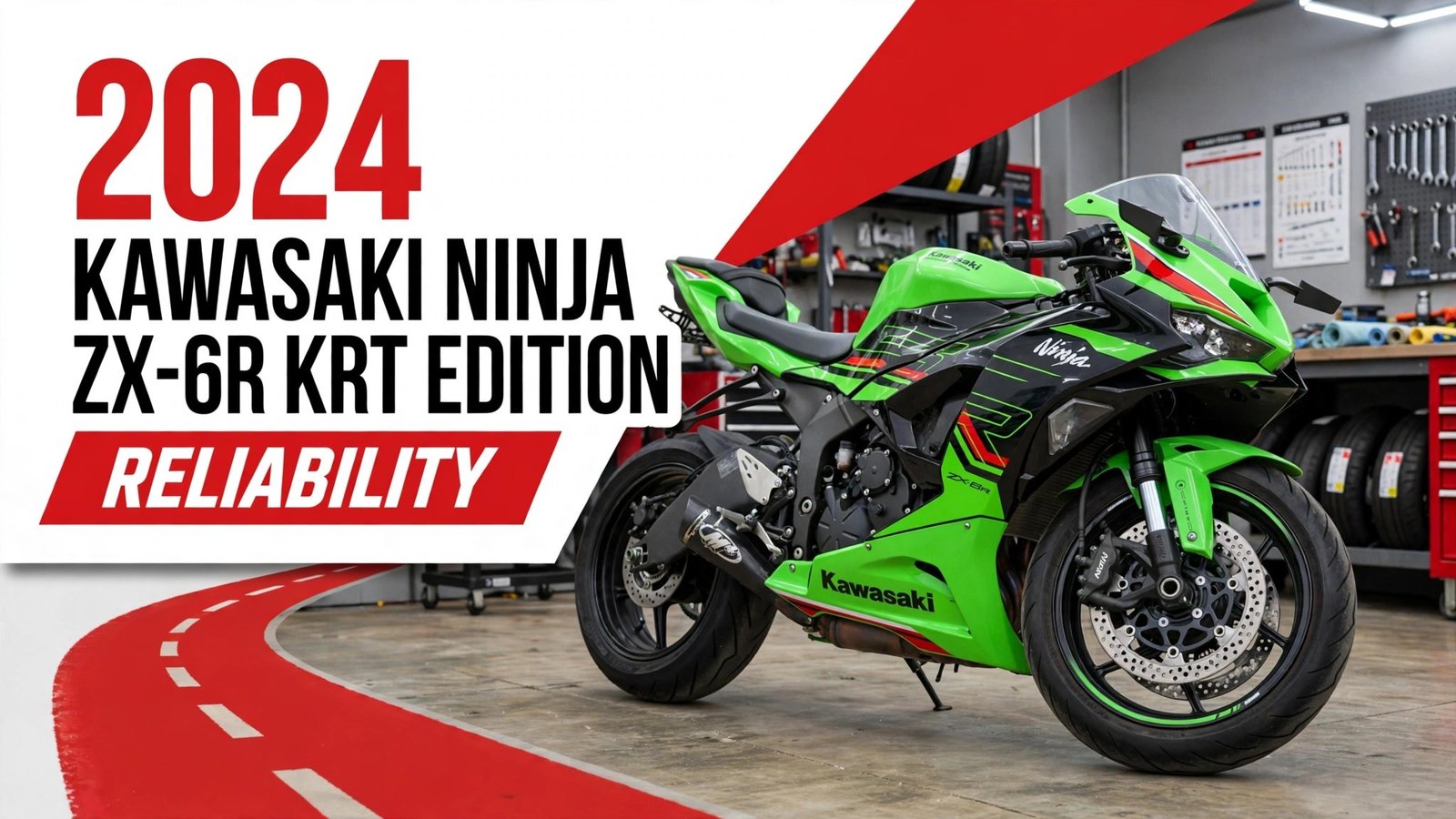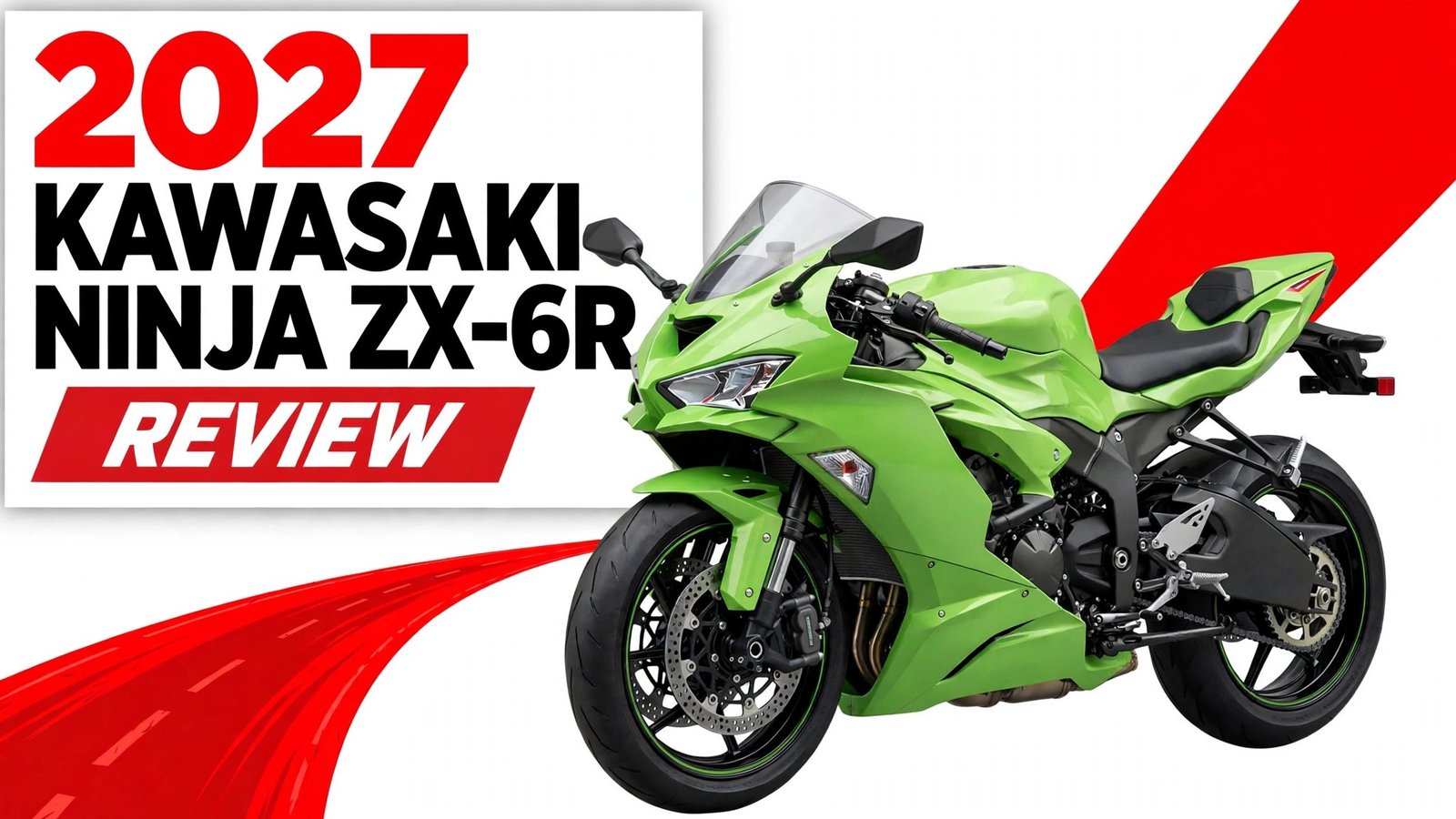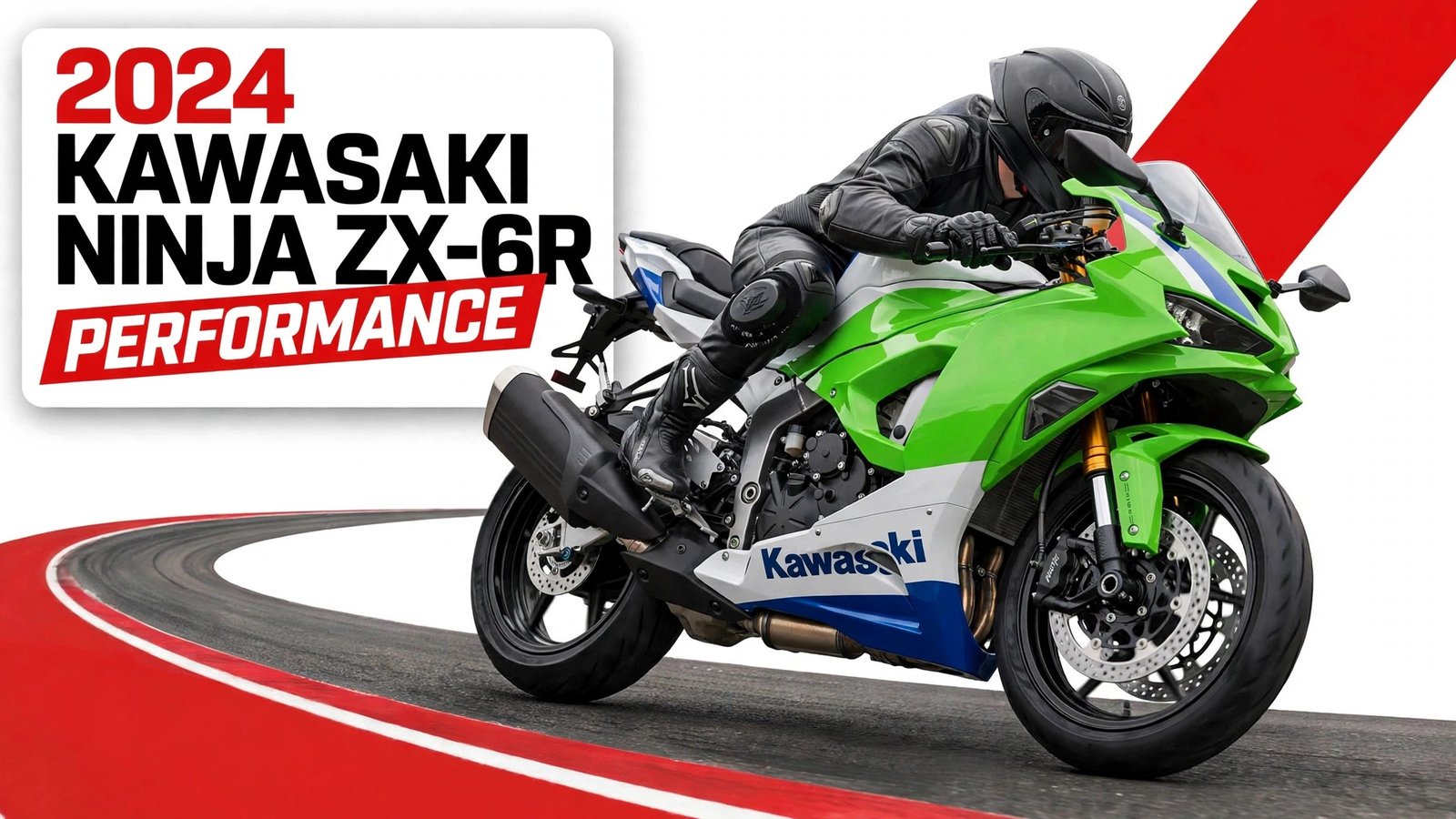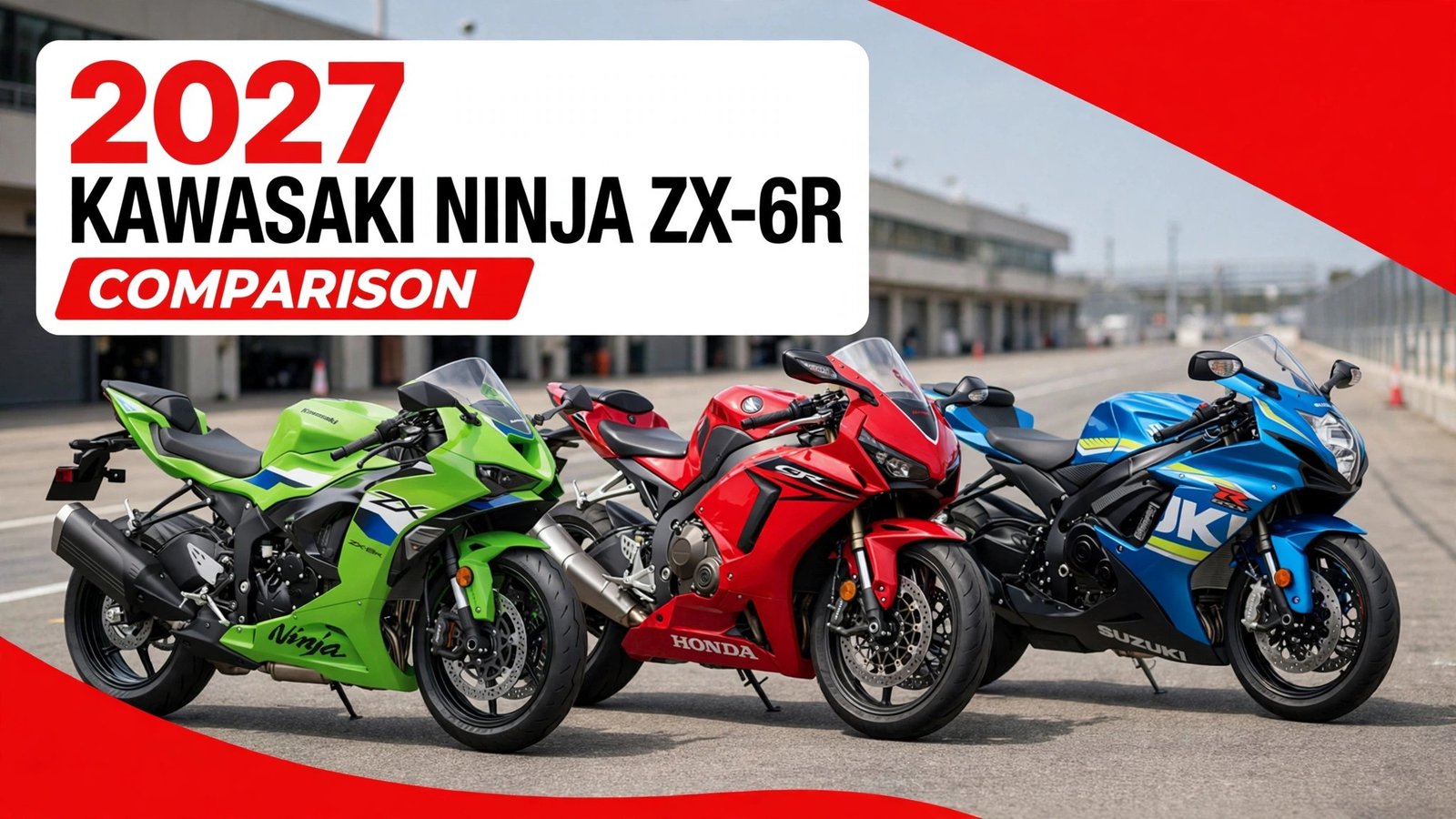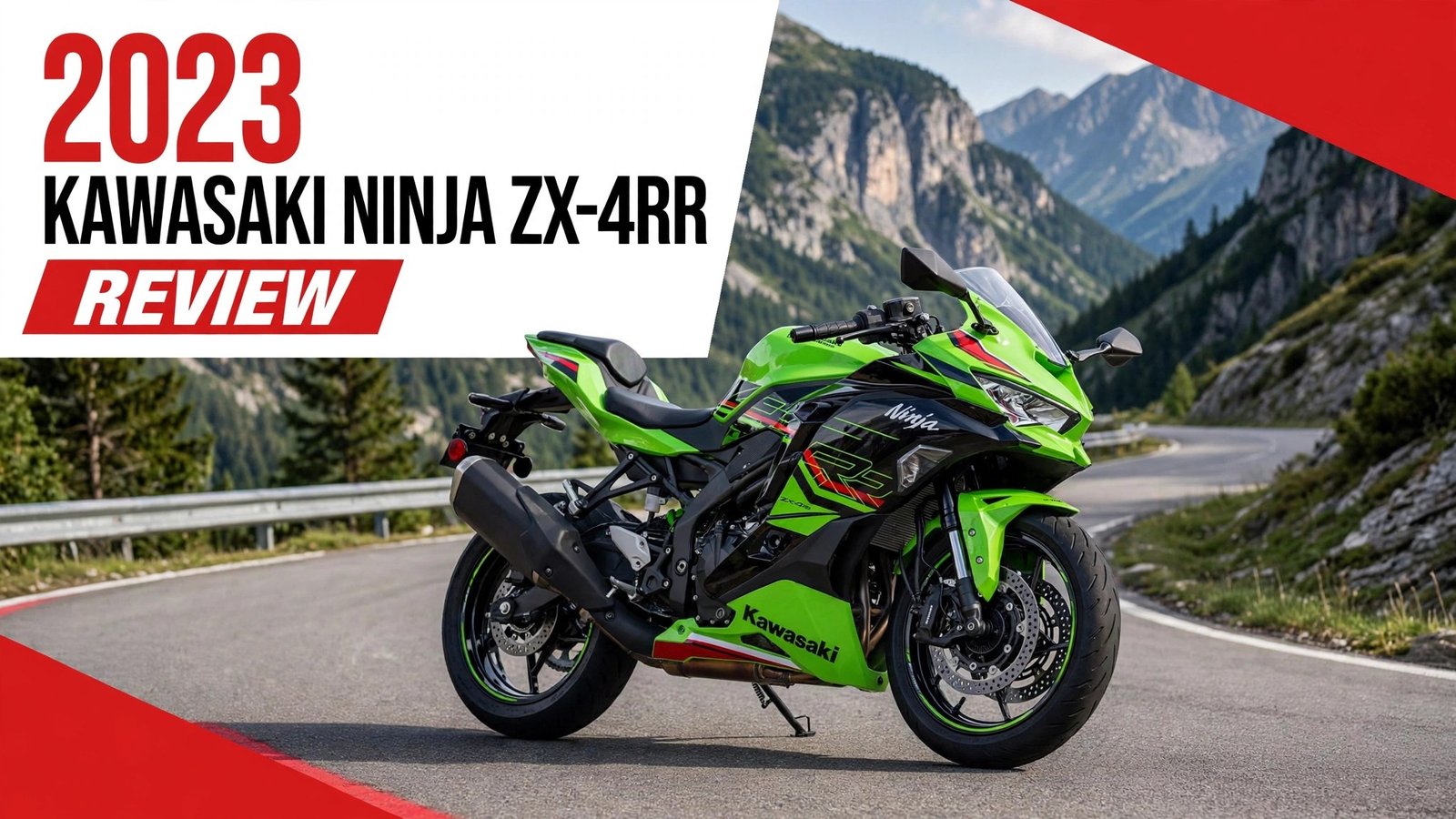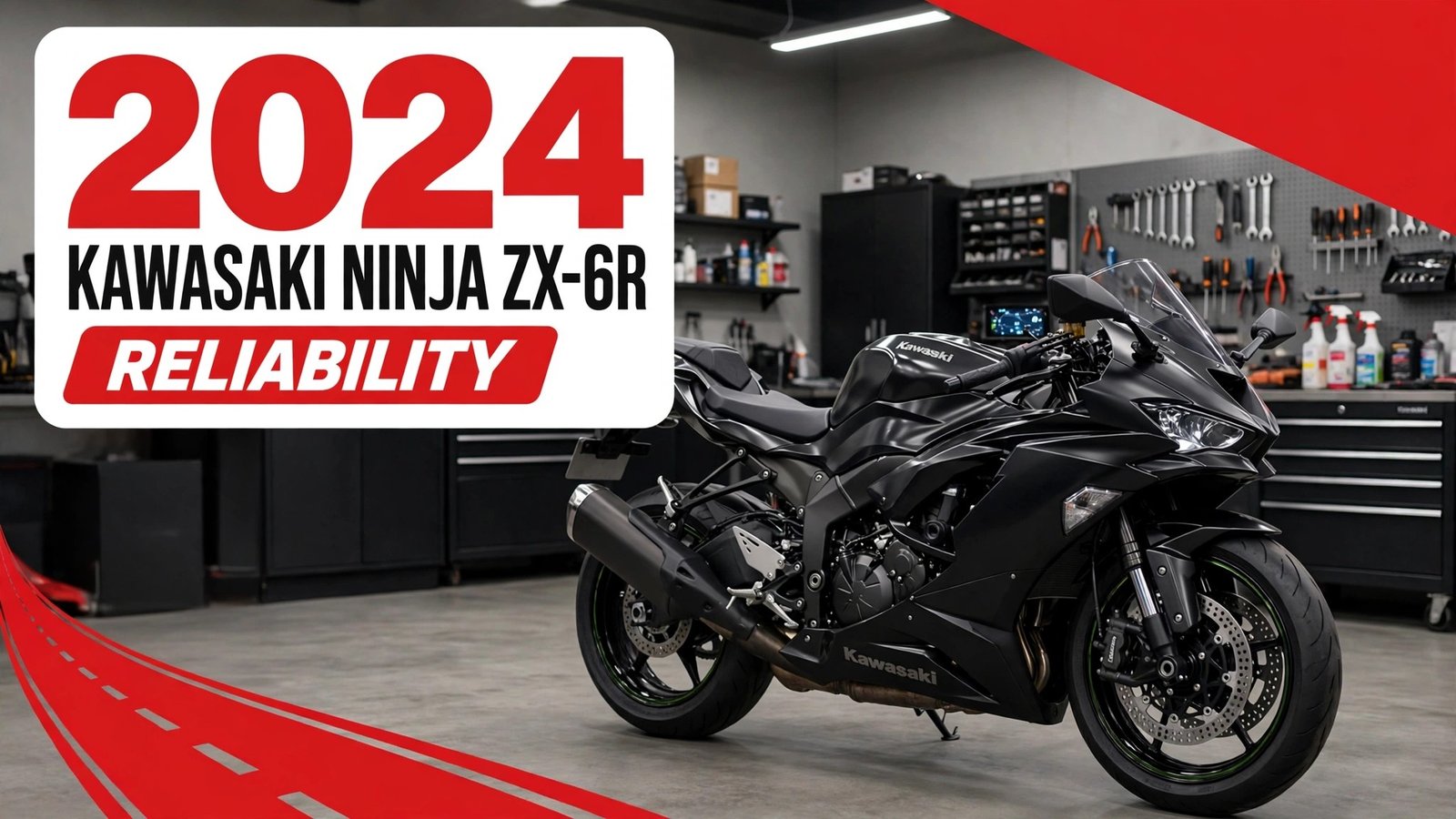
The Kawasaki Ninja ZX-6R is mostly a reliable motorcycle — except for the 2024 to 2026 bikes, which carry two do-not-ride crankshaft recalls, one of which had to be redone because the first fix could cause the same failure. That is the short answer this Kawasaki Ninja ZX-6R reliability guide gives before anything else, because the recall paperwork decides whether a used 2024 or 2025 bike is a good buy or a bike that must not be ridden at all. Everything else about the 636 is straightforward: a long-lived 636cc inline-four, a cable throttle, no IMU, and a maintenance schedule that got twice as strict in 2024.
What follows is the full picture: the two crankshaft recalls and how to prove both fixes were done, the older voltage-regulator recall, the service intervals that changed in 2024, and the wear items that actually cost money. Every figure carries its source and its year, and where a figure could not be verified, this Kawasaki Ninja ZX-6R reliability guide says so instead of guessing.
Kawasaki Ninja ZX-6R Reliability Overview
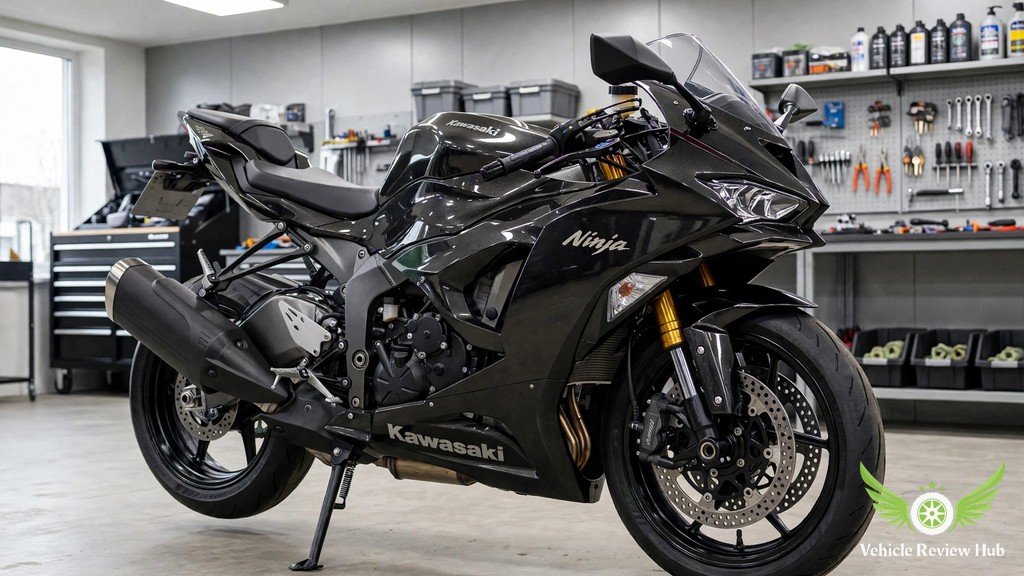
The ZX-6R has been on sale in the United States since the mid-1990s, and the current 636 has been in production since 2013 — a long run for a supersport. That long run means the engine, chassis and electronics are known quantities, and most faults a buyer will meet are documented rather than surprising. This Kawasaki Ninja ZX-6R reliability guide rates the pre-2024 bikes as the safest used buys in the line, because their only recall is a 2012 voltage-regulator campaign, while the 2024 to 2026 bikes need their recall paperwork checked first.
Valve Checks Halved for 2024
The biggest ownership change in the 2024 update is the valve-check interval, not the TFT dash or the revised cams. Kawasaki halved it from 15,200 miles on the 2013 to 2023 bikes to 7,600 miles on the 2024 and later bikes, which doubles how often a 2024 buyer pays for a valve check. The performance guide covers what the revised cams did to the power delivery; here the point is the cost, because a valve check is the most expensive routine service this bike will ever need.
The halved interval applies to every 2024 and later bike, and the older 15,200-mile interval still applies to the 2013 to 2023 generation. A buyer looking at a used 2024 bike with 8,000 miles on it should expect the first valve check to be due or just done, and should ask for the receipt.
How Mileage, Storage and Previous Care Affect Reliability
Mileage alone does not decide whether a ZX-6R is reliable — how it was ridden and stored matters more. A 636 serviced on schedule, kept indoors and ridden regularly will usually be a better buy than a low-mileage bike that sat for two years: seals dry out, fuel goes stale, brake fluid absorbs moisture and tyres age out before they wear out. This Kawasaki Ninja ZX-6R reliability guide weighs the service history heavier than the odometer reading.
Storage is the quiet factor. A bike kept in a dry garage with a battery tender and fresh fluids ages slowly; a bike left outside, or stored over winter without fuel stabiliser, can need tyres, a battery, brake fluid and a chain service. When you inspect a used ZX-6R, this Kawasaki Ninja ZX-6R reliability guide says to look at the chain, the tyre dates, the brake fluid colour and the fork seals as closely as you look at the fairings.
| Generation | Valve-check interval | Recall history | Used-buy verdict |
|---|---|---|---|
| 2013–2023 | 15,200 miles | 12V-064 voltage regulator (2012, older bikes) | Safest used buy; check service records |
| 2024–2025 | 7,600 miles | 25V376 + 25V798 crankshaft, both do-not-ride | Buy only with both fixes proven |
| 2026 | 7,600 miles | 25V798 crankshaft, do-not-ride | Check 25V798 completion before riding |
| 2027 | 7,600 miles | No recall in the record | New bike; standard checks only |
Note: This Kawasaki Ninja ZX-6R reliability guide uses the Part 573 figures for both crankshaft campaigns throughout.
Kawasaki Ninja ZX-6R Common Problems and Wear Items
Common problems on the ZX-6R are dominated by one thing: the crankshaft recalls on the 2024 to 2026 bikes. Beyond those campaigns, the wear items are the ordinary ones for a 600-class supersport — chain, tyres, brake pads and fork seals — and the engine itself has no pattern of failures in the record. This Kawasaki Ninja ZX-6R reliability guide deals with the recalls first because they are safety campaigns.
Do-Not-Ride Crankshaft Recall
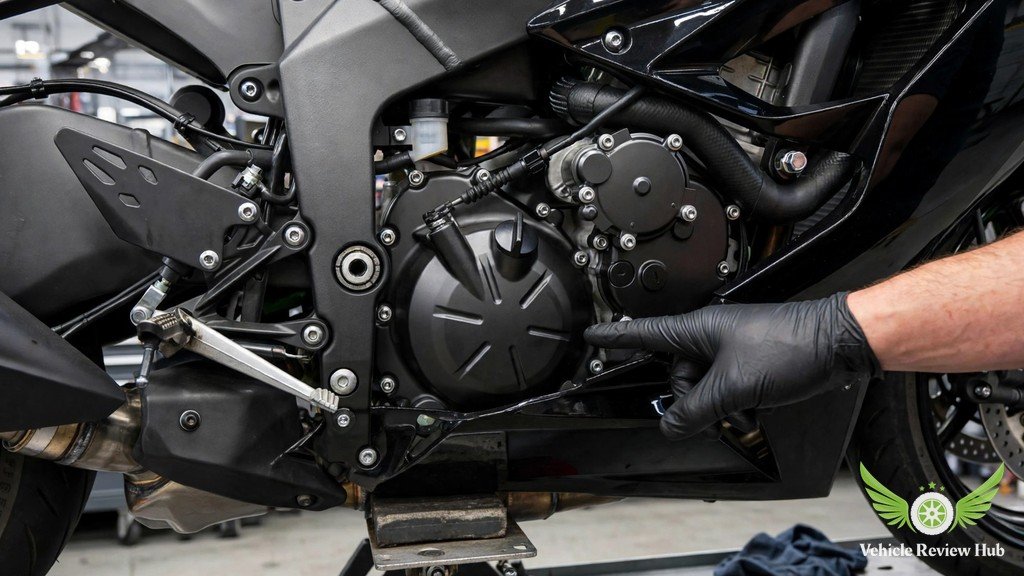
In June 2025 Kawasaki recalled 17,792 model-year 2024 and 2025 ZX-6Rs under campaign 25V376, and the instruction to owners was blunt: do not ride. Over-torqued crankcase bolts could damage the number five crankshaft bushing, and a damaged bushing can seize the engine and stall the bike. The defect is a sudden loss of power, which is why the recall carries a do-not-ride instruction rather than a ride-in-when-convenient one. NHTSA’s Part 573 report is the source for the unit count and the defect description, and this Kawasaki Ninja ZX-6R reliability guide prints its figures.
A bike repaired under 25V376 carries a white mark on the left side of the crankcase — the only proof that matters on a used 2024 or 2025 bike. The remedy is free, as with all safety recalls, but the bike is not rideable in the meantime — a buyer who finds an unrepaired bike should not ride it home.
First Fix Must Be Redone
In November 2025 Kawasaki issued a second recall, 25V798, covering 2024 to 2026 bikes — 19,823 units per the Part 573 report — because the 25V376 repair process itself could over-tighten the bolts the same way. Every bike fixed under the first recall must be fixed again, using an angle-tightening method instead of the original torque method. A bike that carries only the left-side white mark has had the first fix and not the second. This Kawasaki Ninja ZX-6R reliability guide is blunt about that because the distinction is the whole point of the second campaign.
The re-repaired bikes carry a white mark on the right side of the crankcase — the proof a used buyer needs. The left mark proves the first repair; the right mark proves the re-repair, and this Kawasaki Ninja ZX-6R reliability guide treats that right-side mark as the proof that matters. No published completion figure exists for 25V798, so this Kawasaki Ninja ZX-6R reliability guide does not print one — any percentage quoted for the second campaign is invented.
| Campaign | Bikes covered | Units | Proof of repair |
|---|---|---|---|
| 25V376 (June 2025) | 2024–2025 ZX-6R | 17,792 | White mark, left side of crankcase |
| 25V798 (November 2025) | 2024–2026 ZX-6R | 19,823 (Part 573) | White mark, right side of crankcase |
| 12V-064 (2012) | 2009–2012 ZX-6R, 2008–2011 ZX-10R | 20,512 | Regulator replaced, free of charge |
Note: The 25V798 count is 19,823 per the Part 573 report (the acknowledgement letter lists 20,301), and the 12V-064 count is 20,512 per the quarterly report (the acknowledgement letter says 20,544). This Kawasaki Ninja ZX-6R reliability guide prints the Part 573 and quarterly figures and names the others here.
Kawasaki Ninja ZX-6R Maintenance Schedule and Servicing
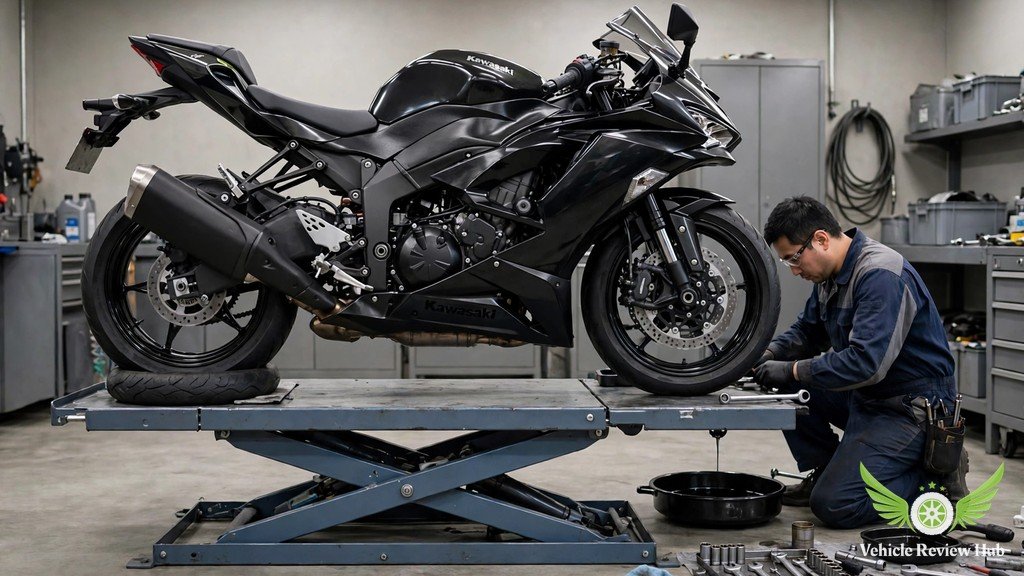
The ZX-6R’s service schedule is strict: every 7,600 miles on the 2024 and later bikes, with oil, filter and all four spark plugs changed at every service. The 2013 to 2023 bikes keep the older 15,200-mile valve interval. This Kawasaki Ninja ZX-6R reliability guide lays the schedule out in one table below, because the 2024 change is the most expensive difference between the old bike and the new one.
25V376 Then 25V798
First, check whether the bike is covered by 25V376 — all 2024 and 2025 bikes are — and whether the left-side white mark is there. Then check whether it is covered by 25V798 — all 2024 to 2026 bikes are — and whether the right-side white mark is there. A 2024 or 2025 bike with only the left mark still needs the second fix. Check the 17-character VIN on NHTSA’s recall lookup or with a Kawasaki dealer, and ask for the completion letter as well as the marks — the letter is the paper trail that matches the marks on the engine.
Kawasaki mailed the remedy owner letters for the second campaign on December 15 to 17, 2025. If a seller cannot show either the marks or the letter, treat the bike as unrepaired. A do-not-ride recall with an unfinished fix is not a bargaining chip — this Kawasaki Ninja ZX-6R reliability guide says plainly that the bike should not be ridden.
18V-089 Is ZX-10R Only
One recall that buyers sometimes attach to the ZX-6R does not belong to it at all, and this Kawasaki Ninja ZX-6R reliability guide keeps the record straight: campaign 18V-089 covers the ZX-10R only, and it does not cover the ZX-6R in any model year. The recall record is clear, and this Kawasaki Ninja ZX-6R reliability guide keeps the two bikes apart: a used ZX-6R has no 18V-089 exposure, and a seller who cites it as a ZX-6R recall is mistaken about which bike it covers.
The 12V-064 voltage-regulator recall does cover the ZX-6R, and this Kawasaki Ninja ZX-6R reliability guide keeps it separate from the 2024 campaigns — but only the 2009 to 2012 bikes, alongside the 2008 to 2011 ZX-10R, a 600-era fix covered in the ownership-costs section below.
| Service item | 2013–2023 bikes | 2024 and later bikes |
|---|---|---|
| Service interval | Every 7,600 miles | Every 7,600 miles |
| Engine oil + filter | 3.1 L, SAE 10W-40, every service | 3.1 L, SAE 10W-40, every service |
| Spark plugs (all four) | Every service | Every service |
| Valve clearance check | Every 15,200 miles | Every 7,600 miles |
| Chain slack check | Every 600 miles / 1,000 km | Every 600 miles / 1,000 km |
| Chain lubrication | Every 400 miles / 600 km | Every 400 miles / 600 km |
Note: The spark-plug part number is not settled in the sources consulted — CR9EIA-9 and CR9E both appear — and neither is the oil-filter part number, where 49065-0024 and 16097-0008 both appear. This Kawasaki Ninja ZX-6R reliability guide prints neither as settled fact; confirm against the service manual or a Kawasaki dealer before ordering. The air-filter part number is 11013-0036, and its change interval is not stated in the owner’s-manual excerpts consulted.
Kawasaki Ninja ZX-6R Tires, Brakes and Suspension Maintenance
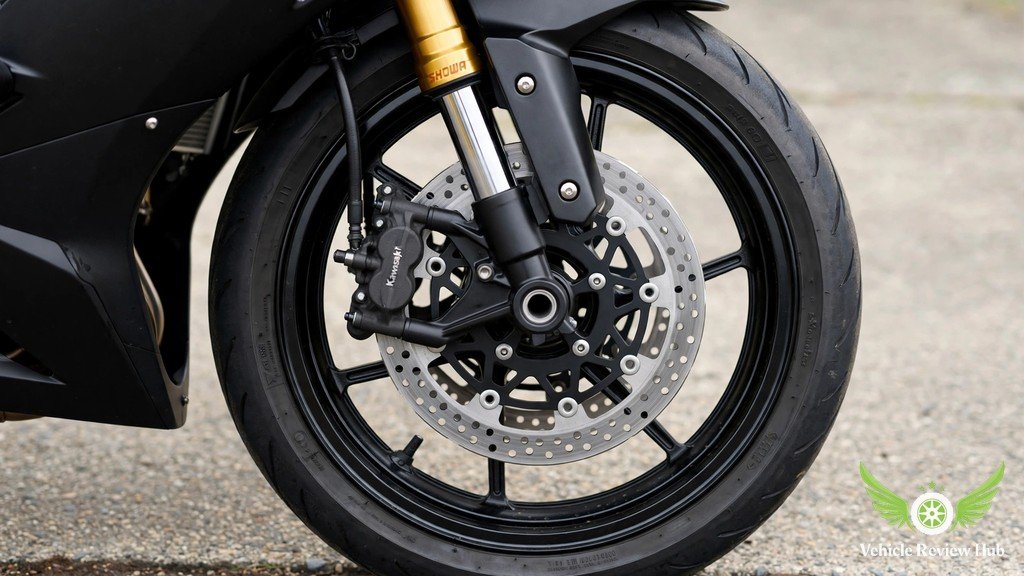
Tyres, brakes and suspension are where a ZX-6R shows its age first, and where a careful owner saves money by catching wear early. The running gear is fully adjustable at both ends, the brakes are dual 310 mm front discs with radial monobloc calipers, and the chain is a 520 with 112 links on a 15-tooth front and 43-tooth rear sprocket. This Kawasaki Ninja ZX-6R reliability guide covers the checks that matter, with the ZX-6R’s own figures.
7,600-Mile Valve Checks Now
On a 2013 to 2023 bike the valve check came every 15,200 miles; on a 2024 and later bike it comes every 7,600 miles, which for a regular rider can mean every year. The check is the same job — measure the clearances, re-shim where they have drifted — but it now happens twice as often, and the labour is the expensive part. The valve clearances themselves are not published in the sources consulted, so this Kawasaki Ninja ZX-6R reliability guide does not print them; the service manual is the authority.
A 2024 bike that has done 15,200 miles has had two valve checks where a 2023 bike at the same mileage has had one. The ZX-6R review covers the 2024 update in full; here the point is practical — the 7,600-mile interval is the most important number in the 2024 owner’s manual after the recall campaigns.
Tire, Brake and Suspension Checks That Matter
Tyre pressures are 36 psi at the front and 42 psi at the rear, cold — the ZX-6R’s own figures, not the lower figures that belong to the smaller Ninjas. Check them cold, before the ride. Chain slack is 30 to 40 mm at the loosest point, checked every 600 miles and lubricated every 400 miles, and the rear axle nut torques to 130 Nm, or 96 lb-ft. This Kawasaki Ninja ZX-6R reliability guide prints these numbers because owners get them wrong most often by borrowing figures from another model.
The 2024 update brought round front rotors in place of the petal-shaped ones, and the Bosch 9.3MP ABS runs on the ABS models only — the non-ABS bike has no ABS at all. Check pad thickness, disc condition and fork-seal weeping at every service: the bike has no IMU and no cornering ABS, so no lean-sensitive system covers for worn brakes or tired suspension.
Kawasaki Ninja ZX-6R Maintenance and Ownership Costs
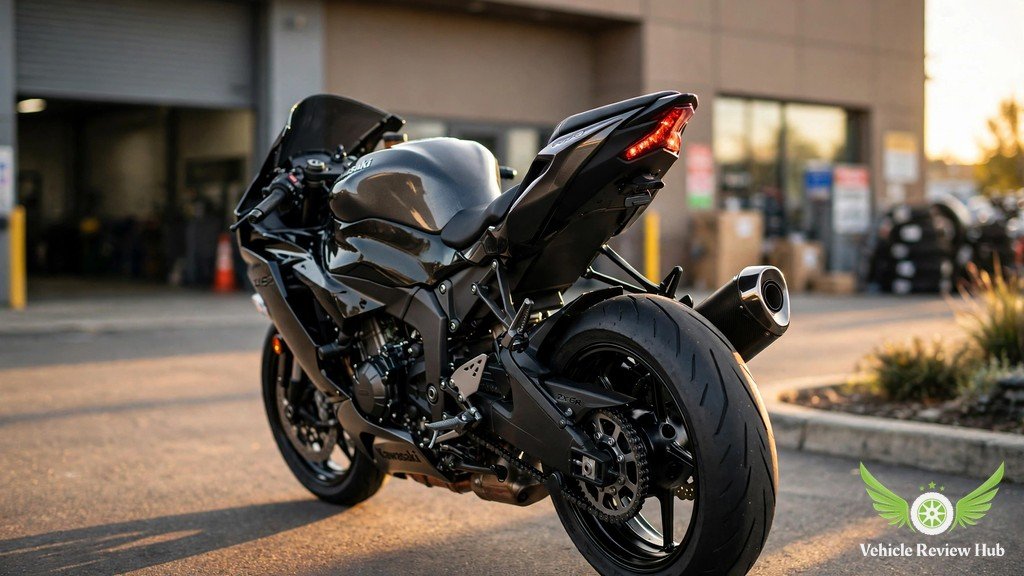
Owning a ZX-6R costs more than the purchase price: fuel, tyres, chain, brake pads and the services themselves. The 2027 bike is $11,599 for the base model and $12,599 for the ABS model, plus a $685 destination charge — $12,284 and $13,284 delivered — and there is no KRT Edition for 2027, so there is no paint premium to pay. The warranty is 12 months, which is short for the class. This Kawasaki Ninja ZX-6R reliability guide adds up the running costs below without inventing dealer labour rates, because those vary by region and by shop.
Fuel, Routine Servicing, Tires and Replacement Parts
Fuel is the most predictable cost. The EPA estimate for the 2024 bike is 40.6 mpg, which gives about 183 miles from the 4.5-gallon tank. Routine servicing is the 7,600-mile cycle — 3.1 litres of SAE 10W-40 with a new filter, plus all four spark plugs at every service on the 2024 and later bikes — and the valve check now falls on the same cadence. Tyres and the chain are wear items. This Kawasaki Ninja ZX-6R reliability guide treats the service history as the best predictor of future costs: a bike with full records has no hidden bills waiting.
Replacement parts are generally available and reasonably priced for a bike with this production run, and pattern parts exist for most wear items — which is why this Kawasaki Ninja ZX-6R reliability guide calls parts supply a strength of the 636. The parts worth buying genuine are the ones the recalls touch — the crankcase hardware and the regulator on the older bikes — because a safety campaign is not the place to save money.
12V-064 Was a 600-Era Fix
The oldest recall in the ZX-6R’s record is 12V-064, a 2012 campaign for a faulty voltage regulator and rectifier that could fail and leave the bike without charging. It covered 20,512 units — the 2009 to 2012 ZX-6R and the 2008 to 2011 ZX-10R — and the remedy was a free replacement regulator. The acknowledgement letter lists 20,544 units, a small conflict this Kawasaki Ninja ZX-6R reliability guide notes here so a reader who finds the other figure is not misled.
The 12V-064 story shows what the ZX-6R’s record looks like over a long run: one old electrical campaign, then more than a decade with no recall at all, then two crankshaft campaigns in a single year.
| Cost item | Figure | Notes |
|---|---|---|
| 2027 base, delivered | $12,284 | $11,599 + $685 destination |
| 2027 ABS, delivered | $13,284 | $12,599 + $685 destination |
| Fuel economy (EPA, 2024) | 40.6 mpg | About 183 miles per 4.5-gallon tank |
| Engine oil per service | 3.1 L with filter | SAE 10W-40, every 7,600 miles |
| Warranty | 12 months | Limited warranty, all model years |
Note: Dealer labour rates vary too much by region to print as a single figure, so this Kawasaki Ninja ZX-6R reliability guide does not quote them. The figures in the table are the numbers that can be verified from Kawasaki’s own material.
How to Keep a Kawasaki Ninja ZX-6R Reliable
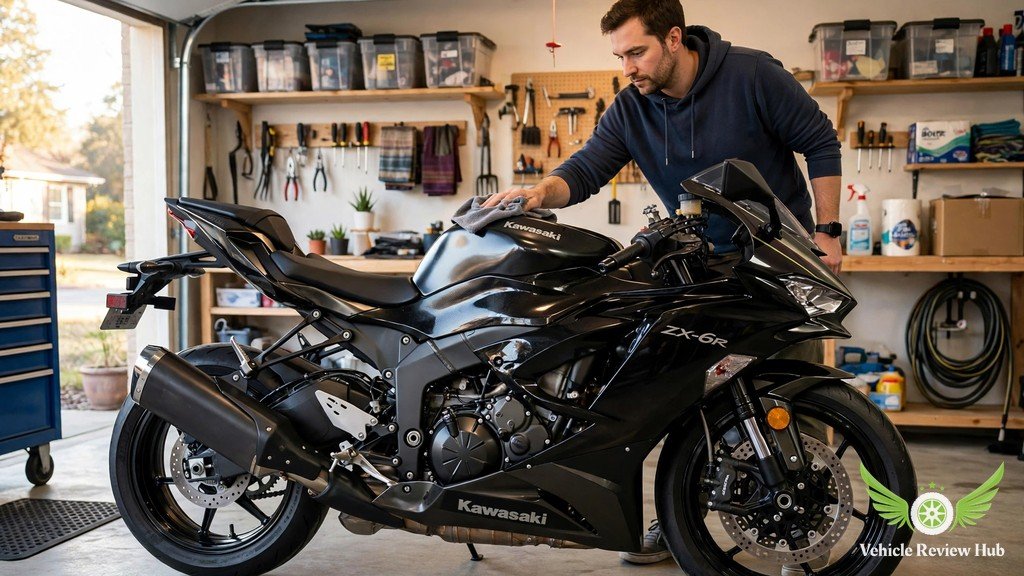
Keeping a ZX-6R reliable is mostly doing the ordinary things on time: oil and plugs every 7,600 miles, a valve check on the same cadence from 2024, a chain lubed every 400 miles and checked every 600, tyres at 36 psi front and 42 psi rear.
Preventive Maintenance, Records and Regular Inspections
The single best habit is keeping records. Every service, every tyre, every chain and every recall letter, filed in one place, turns a used bike from a gamble into a known quantity — and it is the first thing a buyer should ask for. A bike with a full folder of receipts is worth more than the same bike without one, and this Kawasaki Ninja ZX-6R reliability guide treats that folder as part of the bike’s value. The Ninja 650 reliability guide makes the same point about its bike, and it applies here with more force, because the ZX-6R’s service intervals are short enough that a missing year of records can hide a missed valve check.
Regular inspections are the other habit this Kawasaki Ninja ZX-6R reliability guide recommends. A weekly look at the chain, the tyre pressures, the brake fluid and the coolant takes five minutes and catches small problems before they become expensive ones.
Completion Letter Proves 25V798
The last thing to check before you buy a 2024 to 2026 bike is the completion letter for 25V798. The white marks on the crankcase are the physical proof — left for the first fix, right for the re-repair — but the letter is the paper that matches them, and a dealer can confirm the bike’s status from the VIN. MCN’s 2024 review covers the updated bike in full, including the 115 bhp it made on MCN’s dyno, but it cannot tell you whether the bike in front of you has had its recalls done — only the marks, the letter and the VIN check can do that. This Kawasaki Ninja ZX-6R reliability guide closes on that point: a 2024 or 2025 bike needs both marks, a 2026 bike needs the right-side mark, and a bike with neither should not be ridden until Kawasaki’s fix is done.
Buy the bike with its paperwork in order and it is a reliable motorcycle by any honest measure — a proven 636, simple systems, and a strict but not unreasonable service schedule. That is why this Kawasaki Ninja ZX-6R reliability guide puts the recall check first and the maintenance second: the maintenance keeps a good bike good, and the recall check proves the bike is good to ride at all.
Kawasaki Ninja ZX-6R Reliability: Frequently Asked Questions
The answers below give the direct version of each question, with the figures and the sources behind them.
Is the Kawasaki Ninja ZX-6R reliable?
Mostly yes — except for the 2024–2026 bikes, which carry two do-not-ride crankshaft recalls (25V376 and 25V798). Pre-2024 bikes have only the old 2012 voltage-regulator recall in their history, and this Kawasaki Ninja ZX-6R reliability guide rates them the safest used buys in the line.
What is the 25V376 recall on the ZX-6R?
It covers 17,792 model-year 2024–2025 ZX-6Rs — the recall this Kawasaki Ninja ZX-6R reliability guide puts first for any used buyer. Over-torqued crankcase bolts can damage the #5 crankshaft bushing, causing the engine to seize and stall. Owners were told not to ride until repaired; fixed bikes carry a white mark on the left side of the crankcase.
Why did the first ZX-6R recall fix have to be redone?
The 25V376 repair process itself could over-tighten the crankcase bolts, so Kawasaki issued a second recall, 25V798, covering 2024–2026 bikes (19,823 per the Part 573 report). Bikes fixed under the first recall must be re-repaired using an angle-tightening method; re-repaired bikes carry a white mark on the right side of the crankcase. That right-side mark is the proof this Kawasaki Ninja ZX-6R reliability guide tells every used buyer to look for.
How often does the ZX-6R need a valve check?
Every 7,600 miles on 2024 and later bikes — Kawasaki halved the interval from the 15,200 miles used on 2013–2023 models. That doubles the valve-check cost for a 2024+ buyer, which is why this Kawasaki Ninja ZX-6R reliability guide calls it the single biggest running-cost change in the 2024 update.
How much oil does the Ninja ZX-6R take?
3.1 litres with a new filter (SAE 10W-40). Oil, filter and all four spark plugs are replaced at every 7,600-mile service on 2024+ bikes, and the chain slack is 30–40 mm at the loosest point.
How do I check if my ZX-6R is affected by the recalls?
Check the 17-character VIN on NHTSA’s recall lookup or with a Kawasaki dealer — the check this Kawasaki Ninja ZX-6R reliability guide puts before any other advice. A white mark on the left of the crankcase means the 25V376 repair was done; a white mark on the right means the 25V798 re-repair was done. Kawasaki mailed the remedy owner letters on December 15–17, 2025.